16 Living and Dining Room Combo Ideas That Feel Stylish and Functional
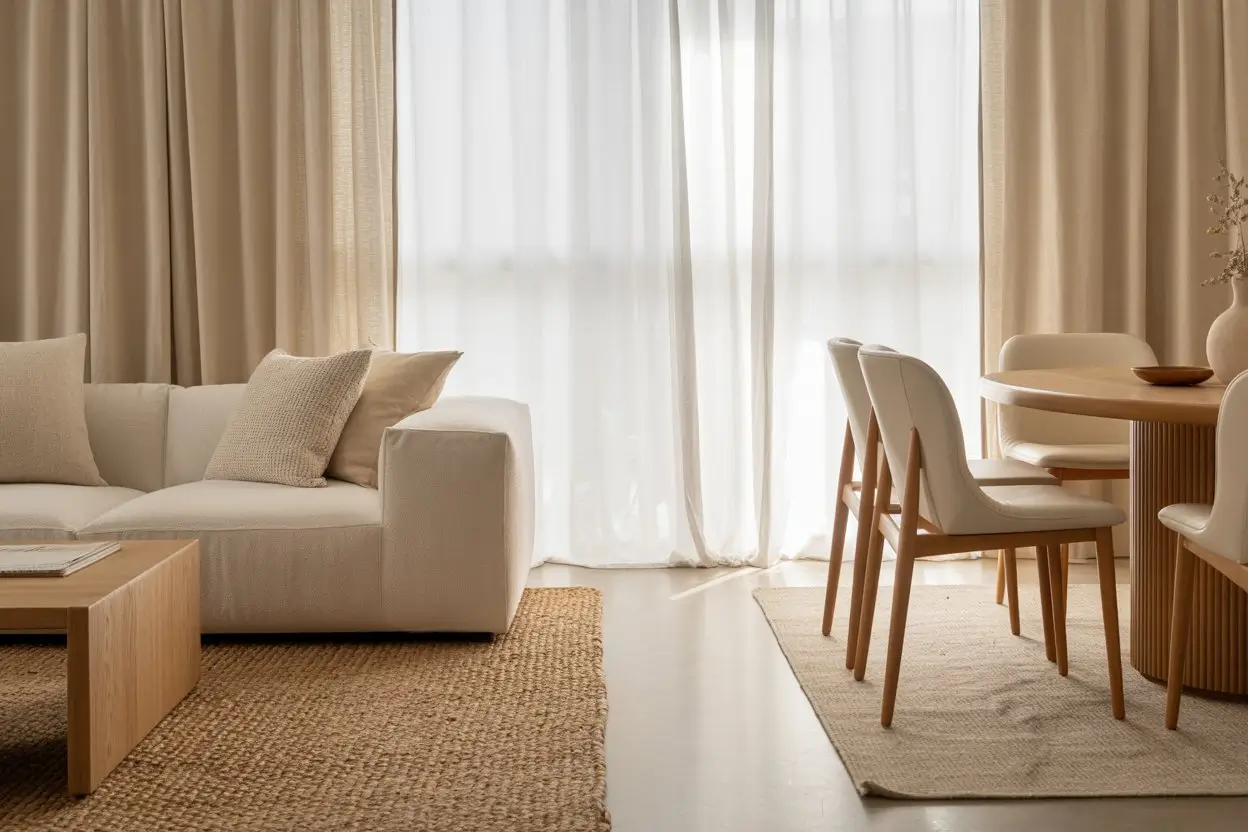
Combining your living and dining space can feel tricky, but it can also become the most stylish and functional area in your home. The key is not just placing furniture together, but designing a space that feels intentional, balanced, and visually inspiring. In this guide, you’ll discover living and dining room combo ideas that are practical, unique, and easy to apply. Each idea focuses on layout, color, texture, and lighting so you can create a space that feels both cozy and organized without clutter.
Let’s start with the first 16 ideas you can actually use right away.
1. Use a Soft Color Shift to Define Each Zone
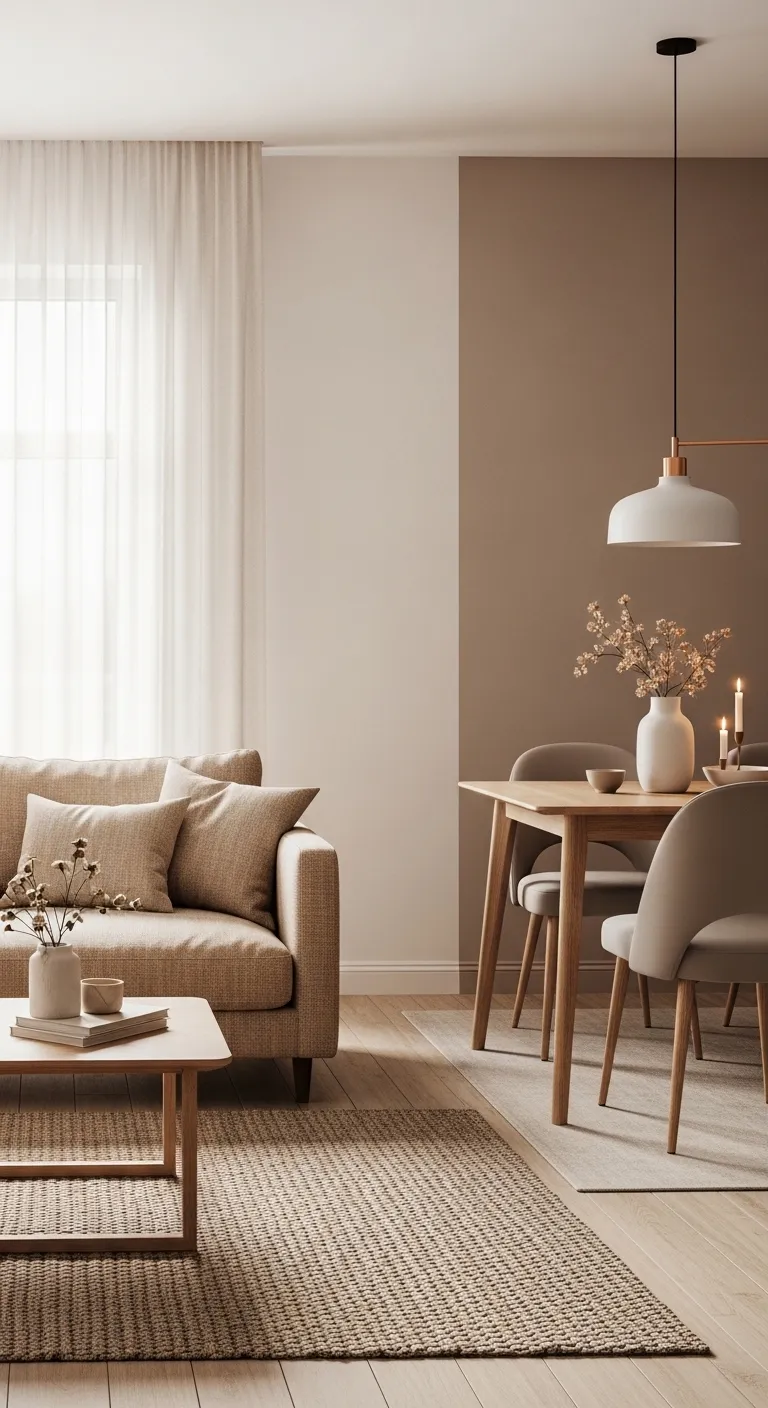
Create a natural separation by using two closely related colors instead of walls. Paint the living area in a warm beige and the dining space in a slightly deeper taupe. This subtle shift visually divides the room without breaking flow. Use a fabric sofa with textured cushions in the living area, then echo the same tones in dining chairs but with a smoother finish. Add a woven rug under the coffee table and a flat, easy-to-clean rug under the dining table. Keep lighting slightly warmer in the living zone and a bit brighter above the dining table to reinforce the difference without making the space feel disconnected.
2. Anchor Both Areas with Matching Wood Tones
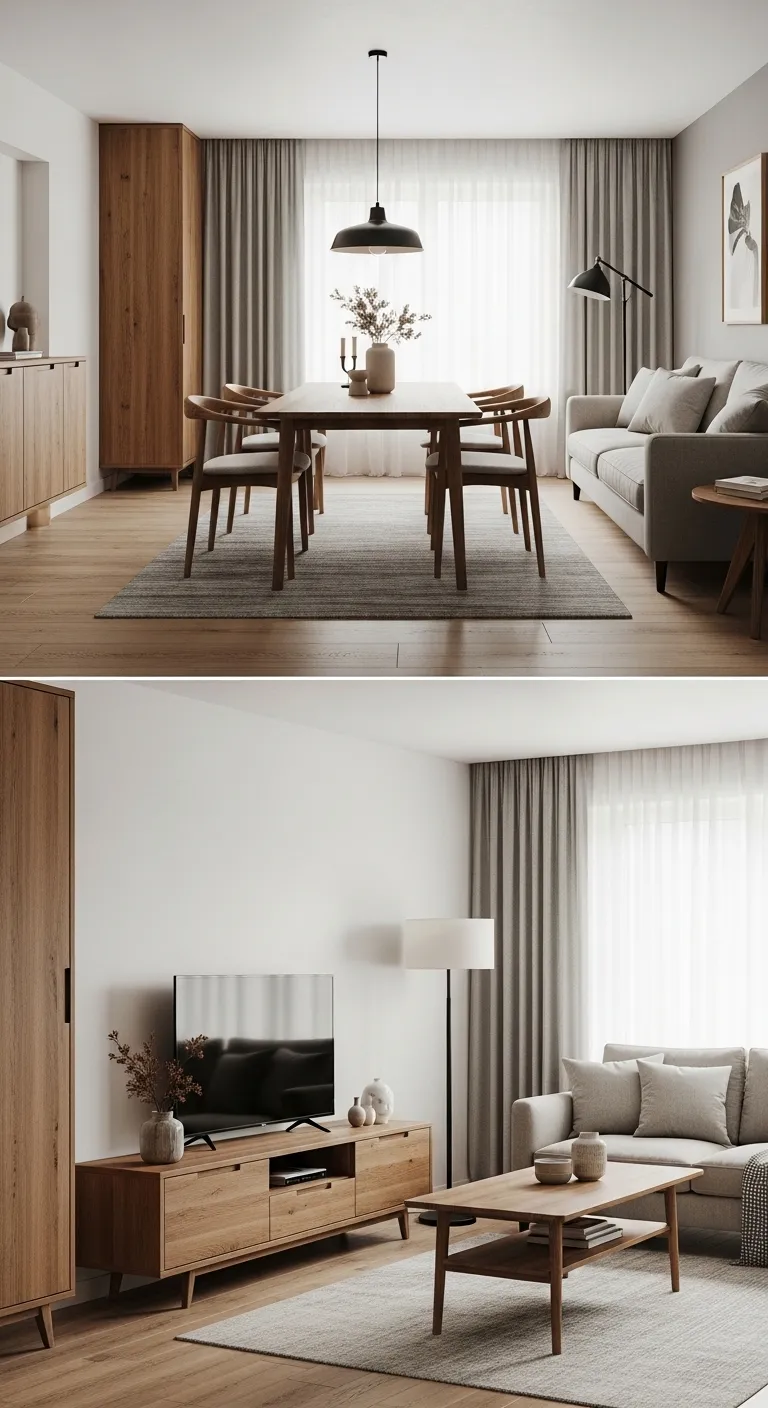
Use the same wood tone across furniture to unify the space while keeping functions separate. Choose a medium oak finish for your dining table and repeat it in your coffee table or TV console. This creates harmony even if layouts differ. Pair the dining table with structured chairs, while the living area can have softer shapes like a curved armchair or plush sofa. Add linen curtains and a neutral rug to soften the overall look. A single statement pendant above the dining table paired with a floor lamp in the living space keeps both areas visually balanced while maintaining their purpose.
3. Float the Sofa as a Natural Divider
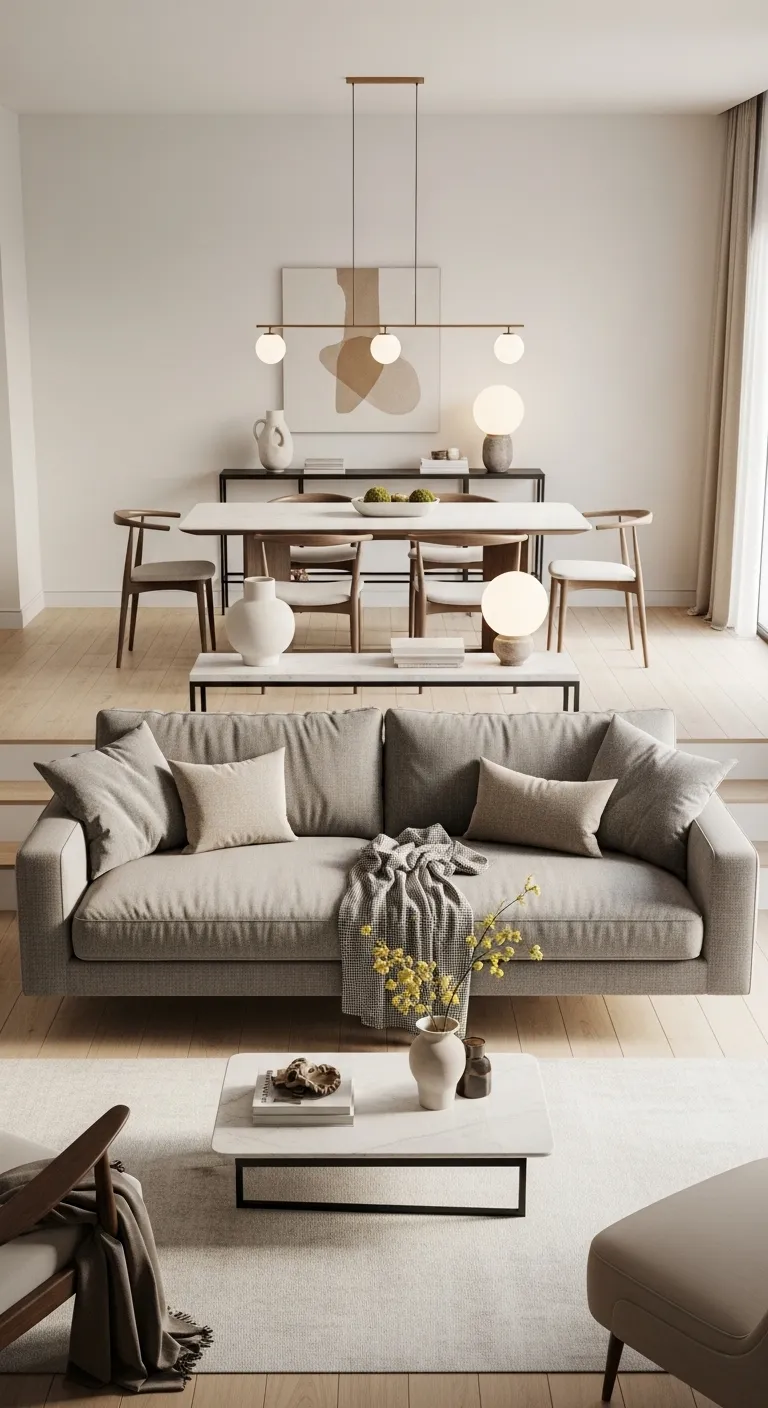
Place your sofa in the center of the room instead of pushing it against a wall. Let the back of the sofa act as a boundary between the living and dining areas. Behind the sofa, position a sleek dining table with minimal chairs to keep the layout open. Use a narrow console table behind the sofa to add function and style. Decorate it with a ceramic vase or soft lighting. This layout works best with neutral tones and layered textures like boucle, cotton, and light wood, creating a clean yet inviting flow.
4. Use Lighting to Separate Without Walls
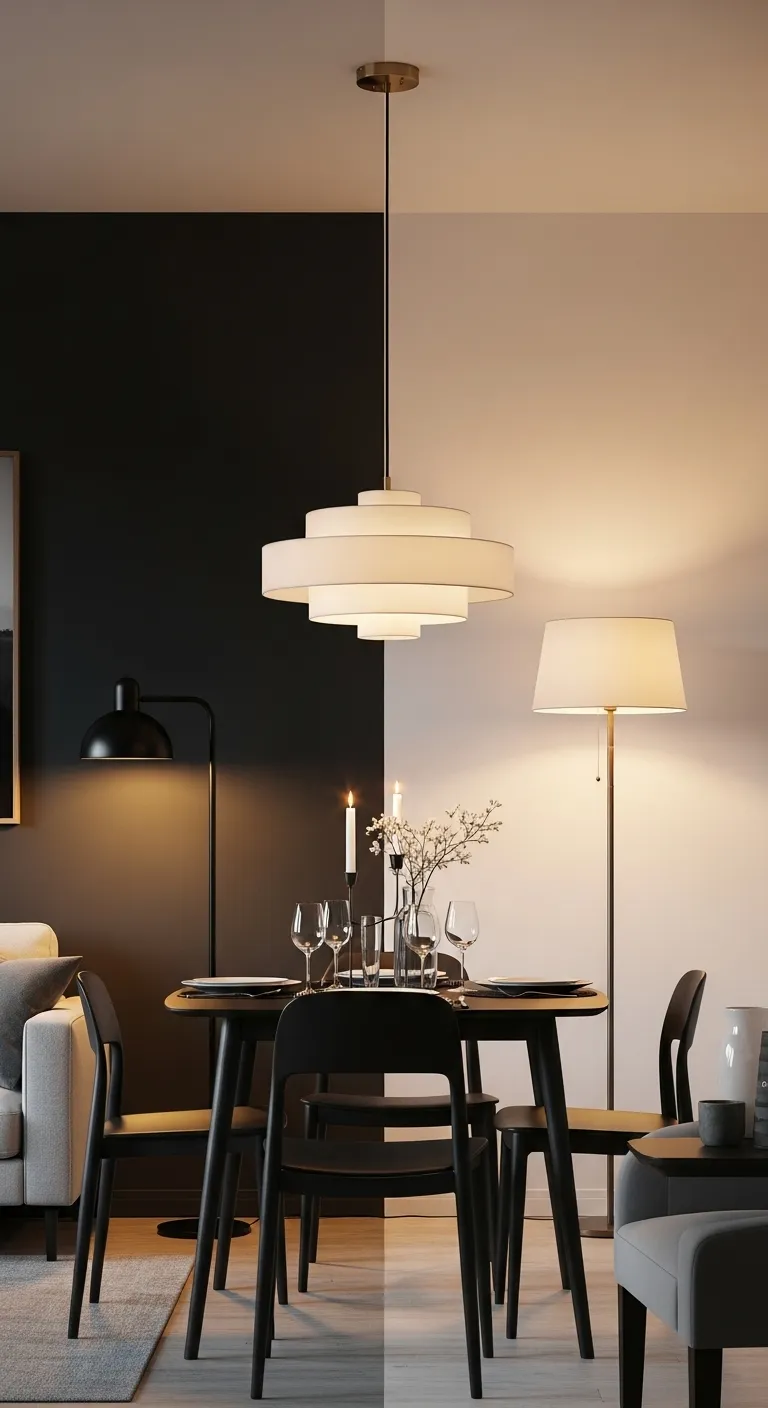
Lighting can quietly divide your space without adding any physical barrier. Hang a bold pendant or chandelier directly above the dining table to create a focal point. In the living area, use layered lighting such as floor lamps, table lamps, and soft ambient lights. Choose warm bulbs for a cozy feel. Keep finishes consistent like matte black or brushed gold to maintain cohesion. This method works especially well in small spaces where you want to keep everything open but still visually organized.
5. Create a Statement Dining Corner
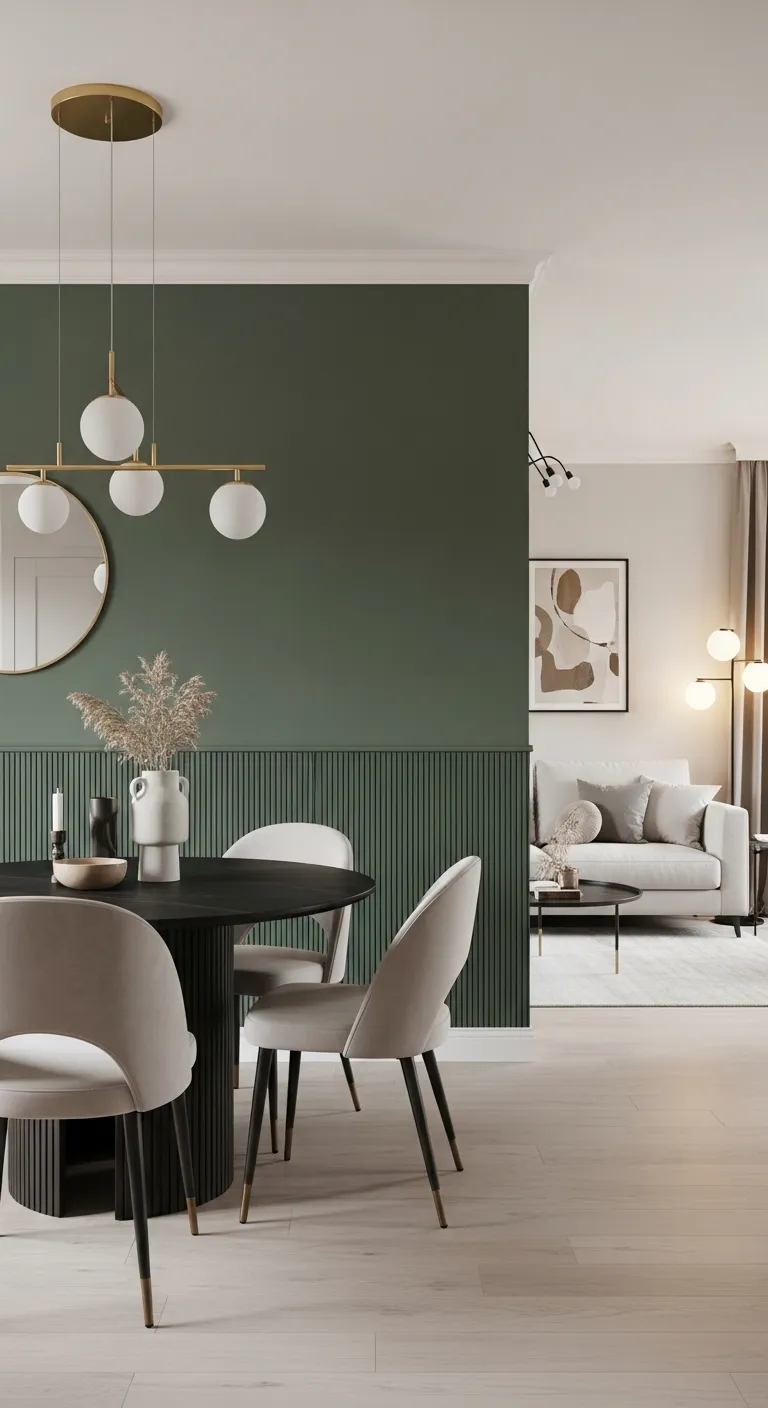
Turn your dining space into a standout feature instead of blending it in. Use a bold wall color like deep green or muted navy behind the dining table. Add textured elements such as paneling or a large framed artwork. Keep the living area lighter and softer in contrast. Use simple neutral furniture in the living zone so the dining area becomes the highlight. A round dining table with velvet chairs adds softness and elegance, making the space feel curated instead of crowded.
6. Layer Rugs to Define Each Area Clearly
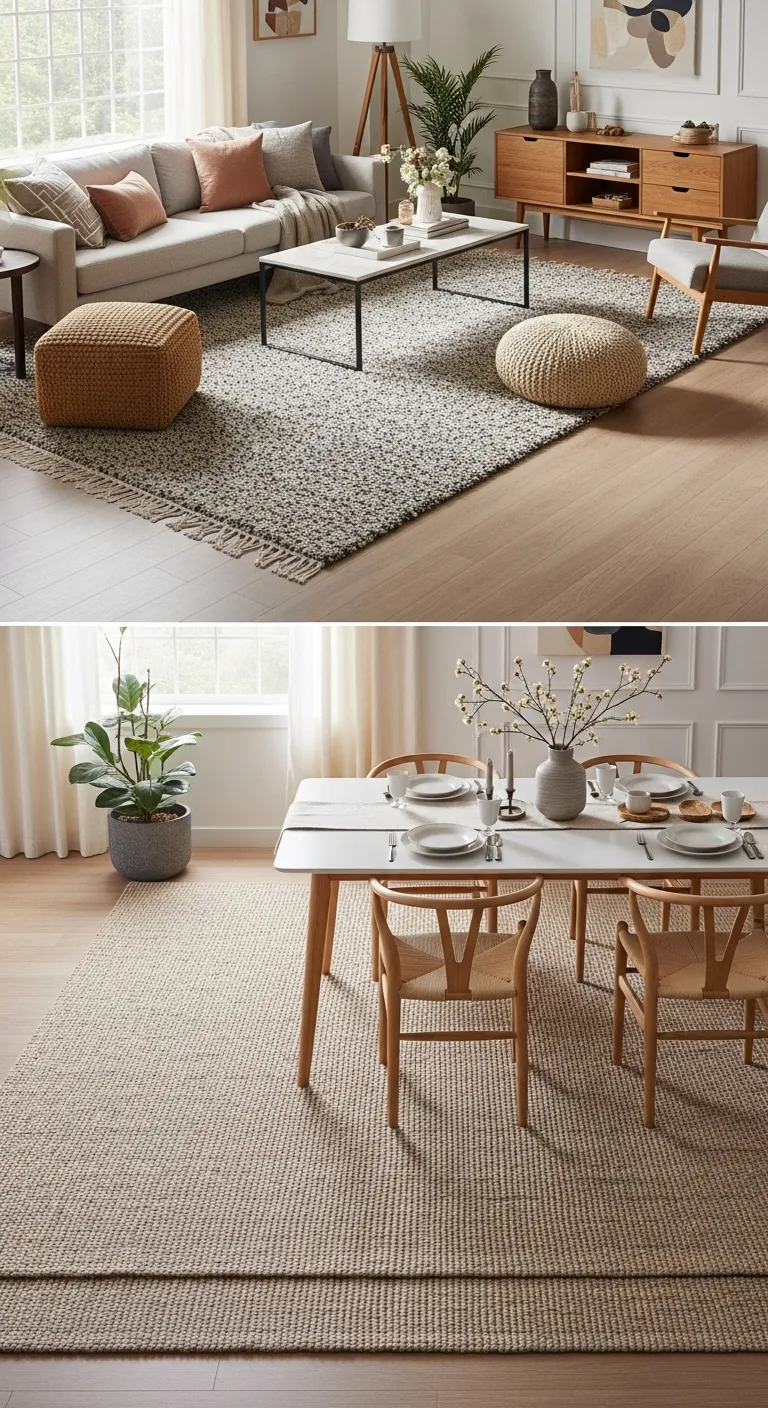
Rugs can instantly create zones without any construction. Place a large, soft rug under your living area seating to anchor the space. For the dining area, use a low-pile or flat weave rug that is easy to clean. Choose patterns that complement each other but are not identical. For example, a subtle geometric pattern in the dining area and a soft textured rug in the living space. Keep color tones aligned so the room still feels cohesive. This approach adds warmth, depth, and clear visual separation.
7. Use a Glass Partition for Light Separation
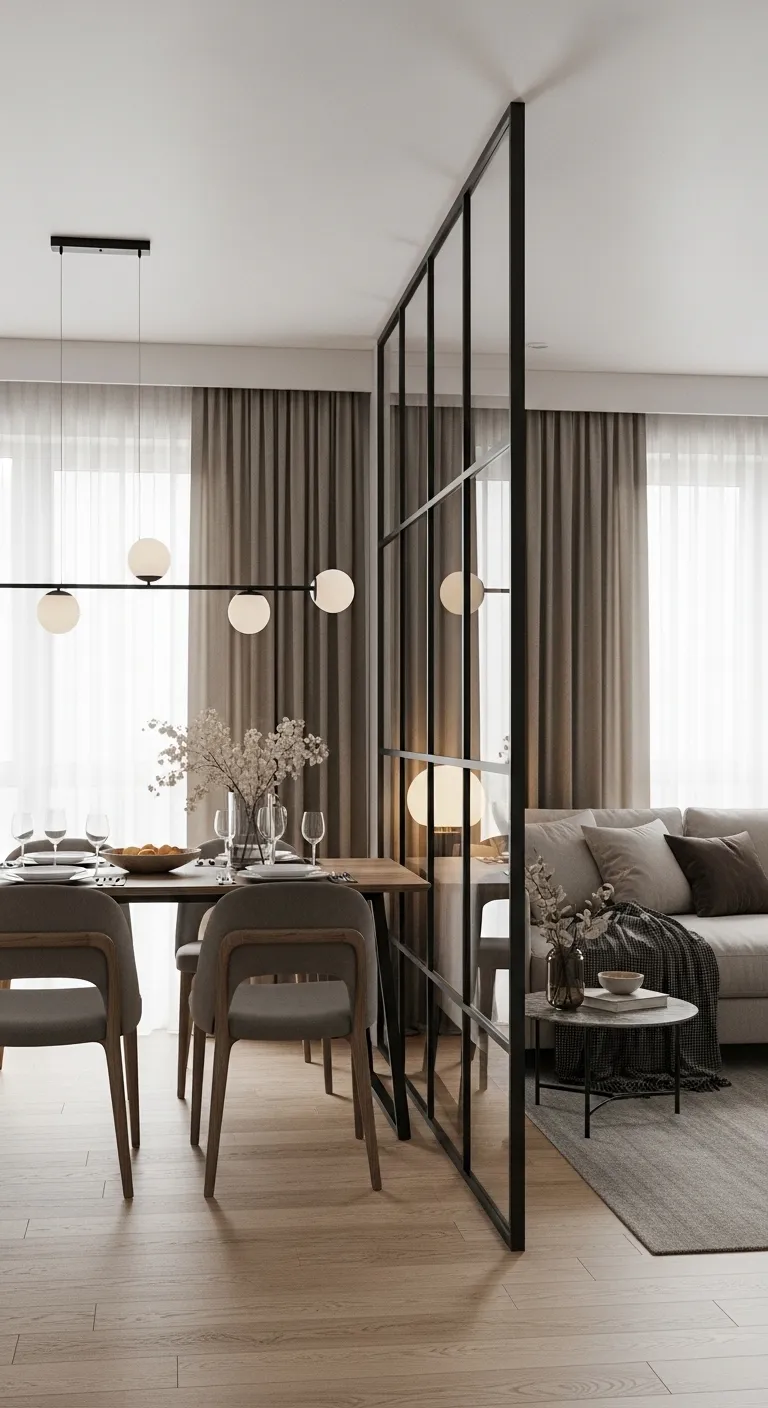
A glass divider can create a boundary while keeping the space open and bright. Choose a black metal frame for a modern look or a wooden frame for a softer style. This allows natural light to pass through while still defining each zone. Place the dining area closer to natural light sources like windows, and keep the living area slightly more relaxed and cozy. Add sheer curtains to soften the overall feel. This setup works well if you want structure without making the room feel smaller.
8. Mix Seating Styles for Visual Interest
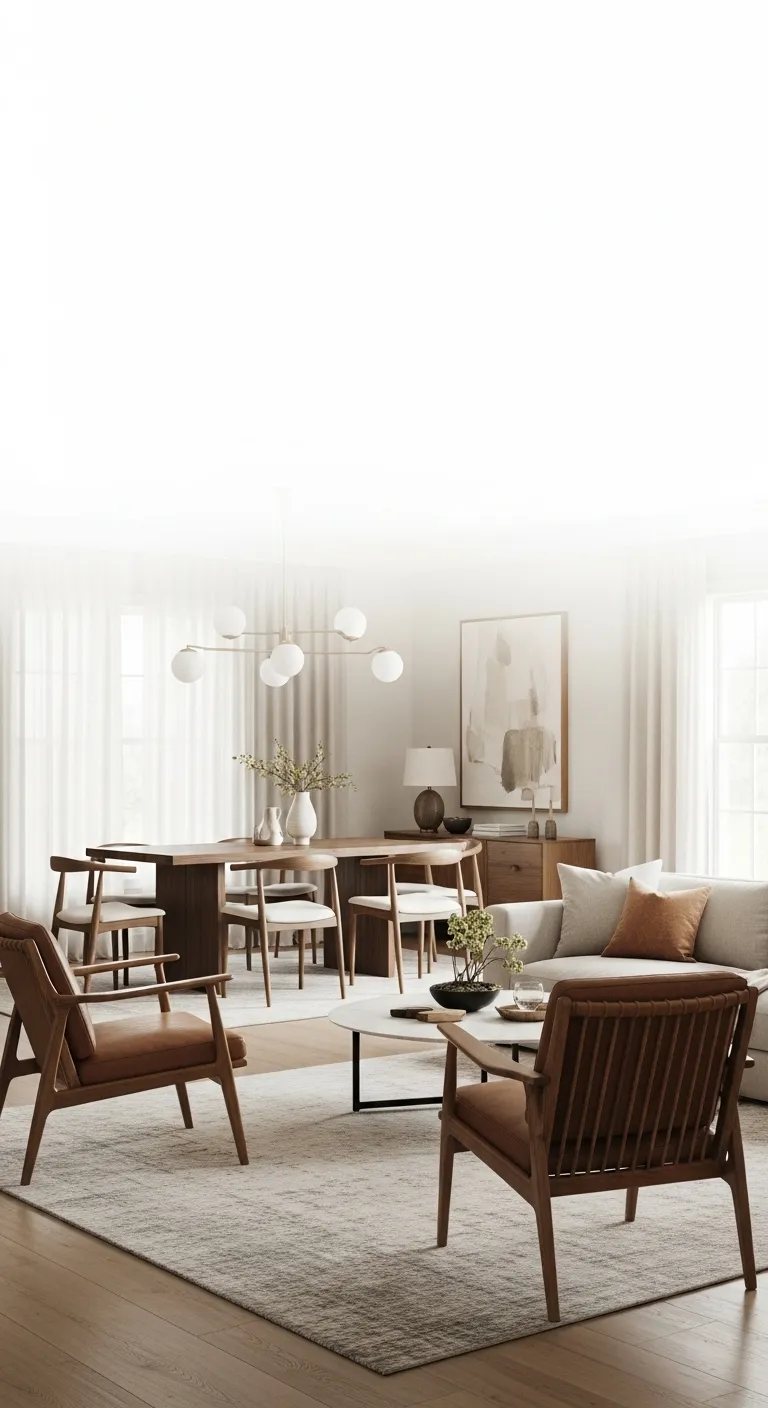
Instead of matching everything, create contrast through seating. Use a structured dining set with clean lines, and pair it with a soft, relaxed sofa in the living area. Add an accent chair with a different texture like leather or rattan to break monotony. Keep a consistent color palette so the mix feels intentional. This approach makes the space look styled and layered rather than flat. It also allows flexibility in how you use the room, especially when hosting guests.
9. Align Furniture in One Direction for Flow
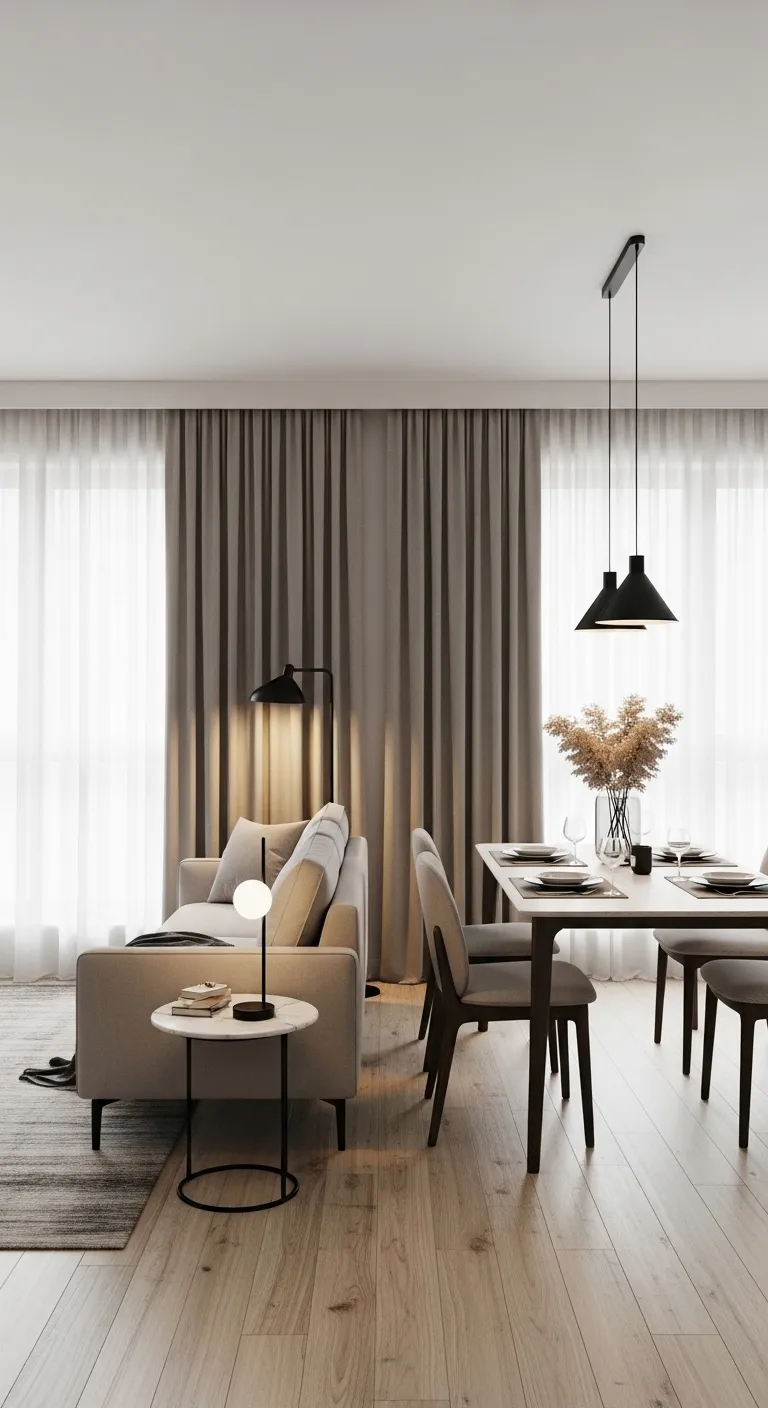
Keep both living and dining furniture aligned in the same direction to create a smooth visual flow. For example, position the sofa and dining table parallel to each other. This avoids a cluttered or chaotic layout. Use long curtains, linear lighting, or a rectangular rug to enhance this sense of direction. Choose slim furniture pieces to avoid overcrowding. This layout works best in narrow rooms where maintaining openness is essential.
10. Add a Functional Storage Divider
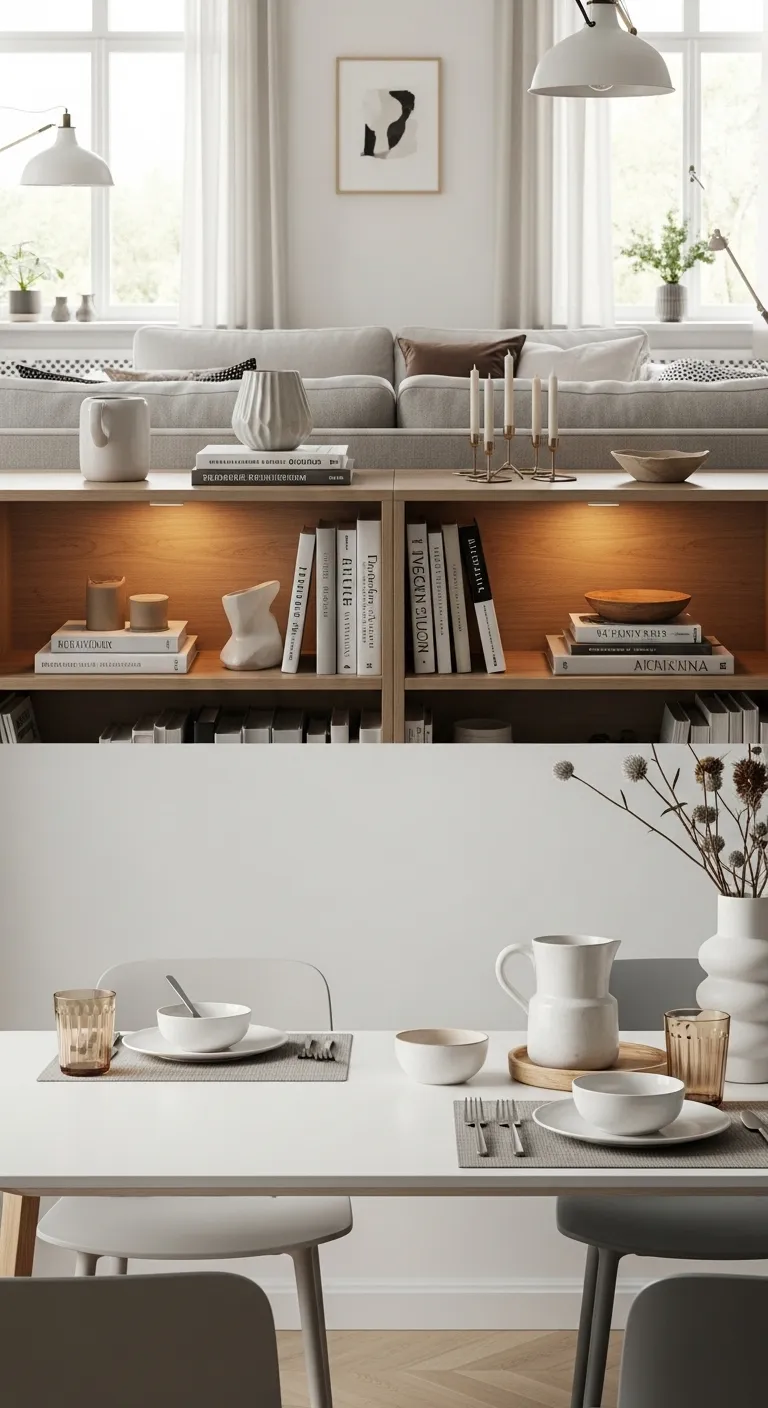
Use a low shelf or cabinet to separate the two areas while adding storage. Place books, decor, or baskets on the living side and dining essentials on the other. Keep the height low to maintain visibility across the room. Choose open shelving for a light look or closed storage for a cleaner feel. Materials like wood and metal add structure without heaviness. This idea is perfect for small homes where every piece of furniture needs to serve more than one purpose.
11. Frame the Dining Area with a Ceiling Detail
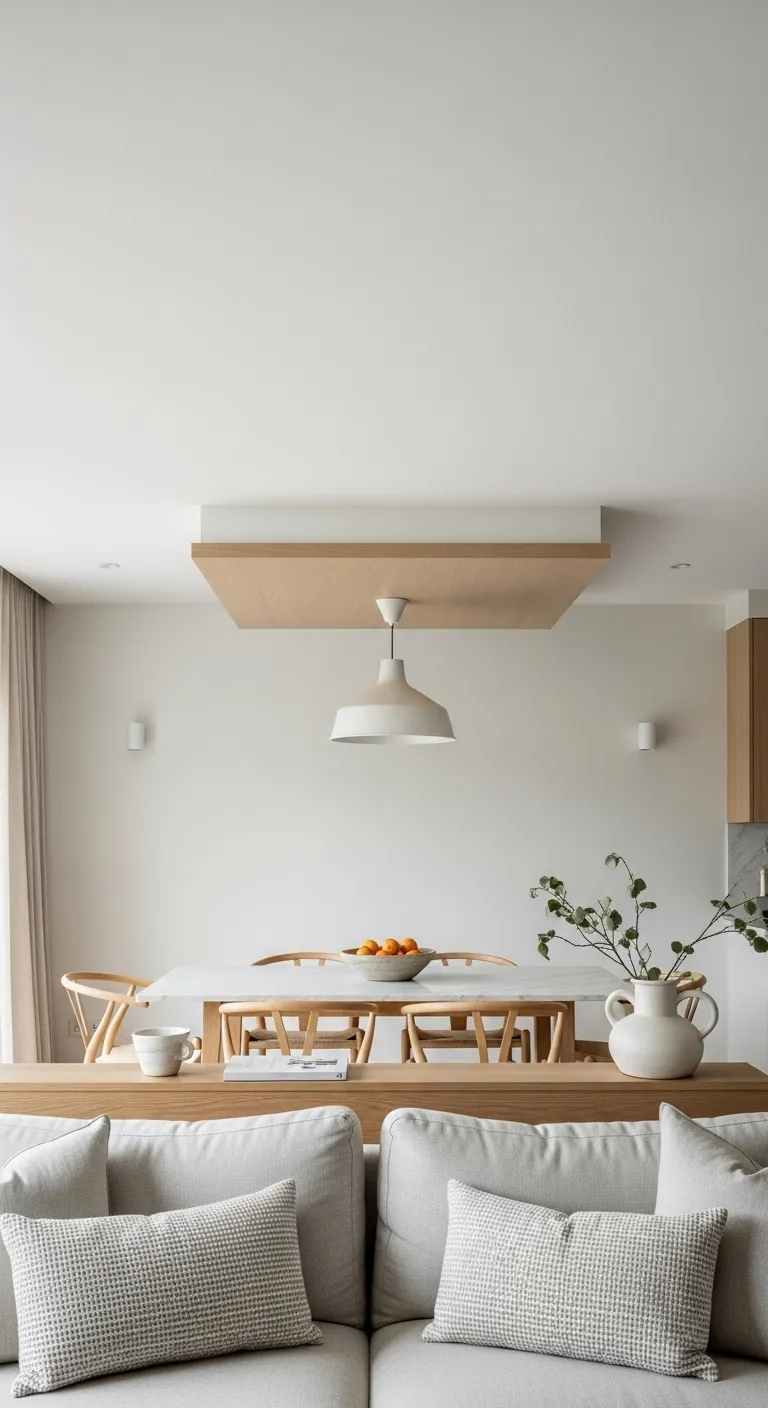
Create a visual boundary by treating the ceiling above your dining table differently. Add a simple wooden beam design, a painted rectangle, or a subtle tray ceiling effect. Keep the living area ceiling plain so the dining zone feels defined from above. Pair this with a centered pendant light to strengthen the focus. Use natural textures like wood, linen, and matte finishes to keep the space calm and cohesive. This approach works well when you don’t want to change walls or floors but still need a clear separation that feels intentional and styled.
12. Place the Dining Area Near a Window for Natural Focus
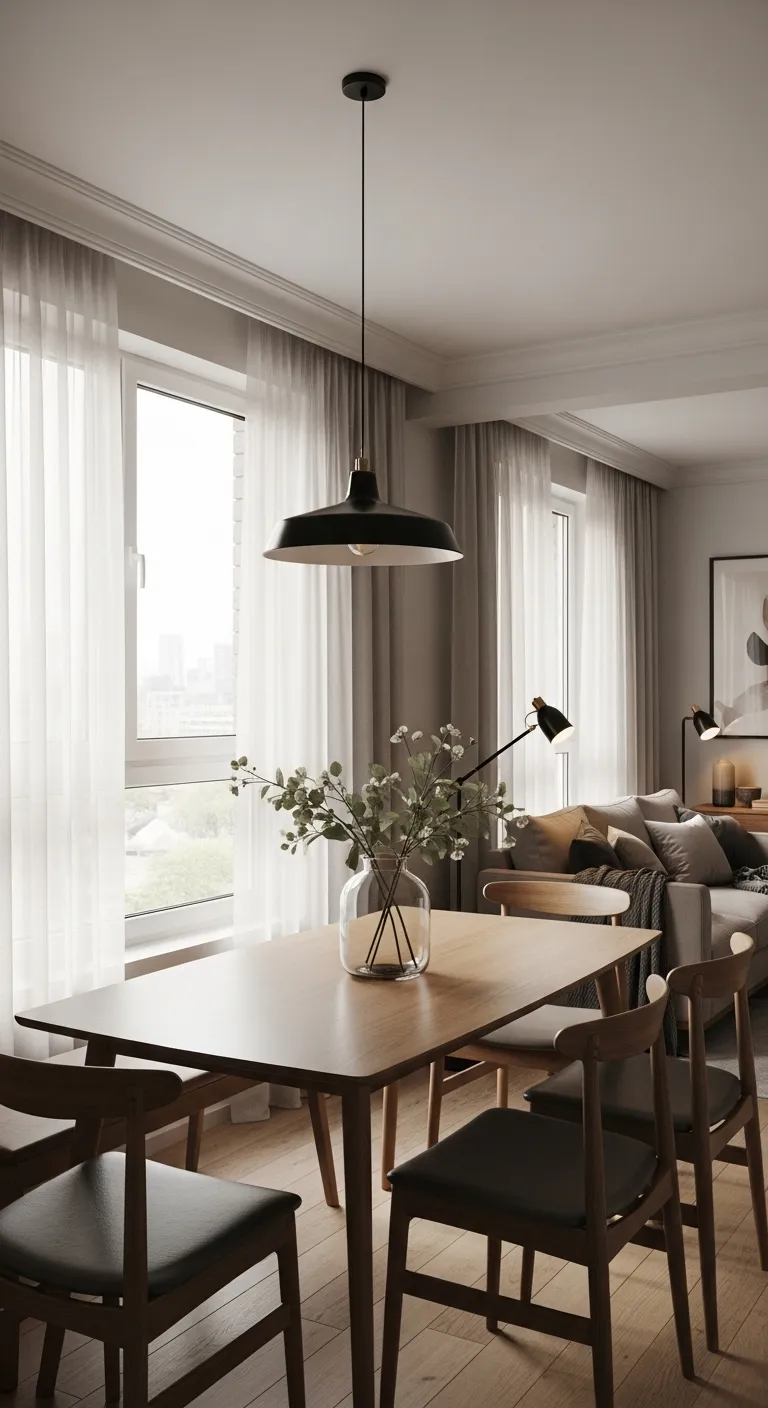
Position your dining table close to a window to naturally separate it from the living space. Daylight instantly highlights the dining zone and makes it feel fresh and open. Use light curtains or sheer fabrics to let sunlight filter through softly. Keep the living area slightly deeper in the room with warmer tones and softer lighting for contrast. Add a simple centerpiece like a glass vase or greenery on the dining table to reflect natural light. This layout feels balanced and makes everyday meals more inviting.
13. Use a Bold Artwork Line to Divide the Space
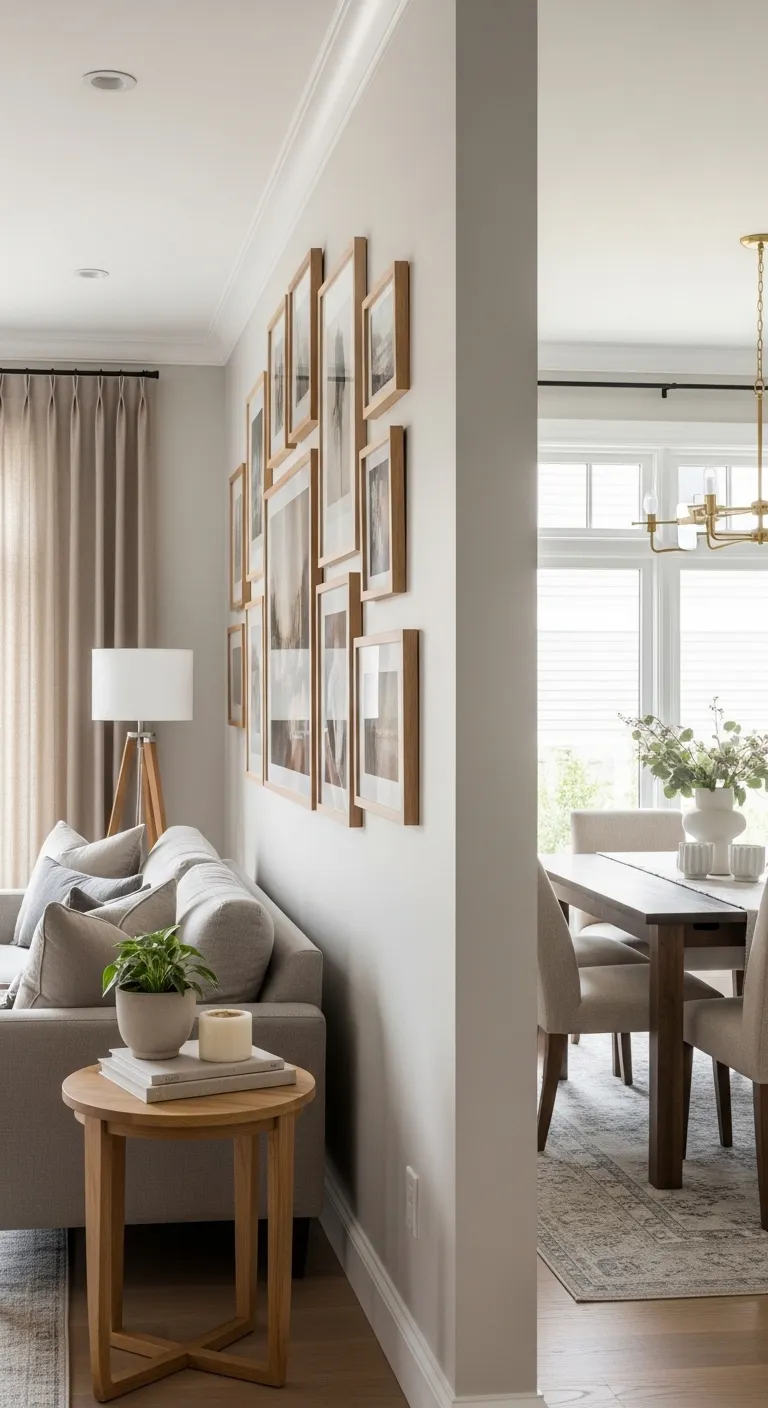
Hang a row of artwork or a gallery wall that visually marks the transition between living and dining areas. Place it behind the sofa or along the wall where the two zones meet. Choose cohesive frames but vary the artwork styles slightly for interest. Keep colors aligned with your overall palette so nothing feels disconnected. In the dining area, keep decor simpler to avoid visual overload. This method creates a clear boundary using design instead of furniture, making the space feel curated and intentional.
14. Elevate One Area with a Platform or Slight Level Change
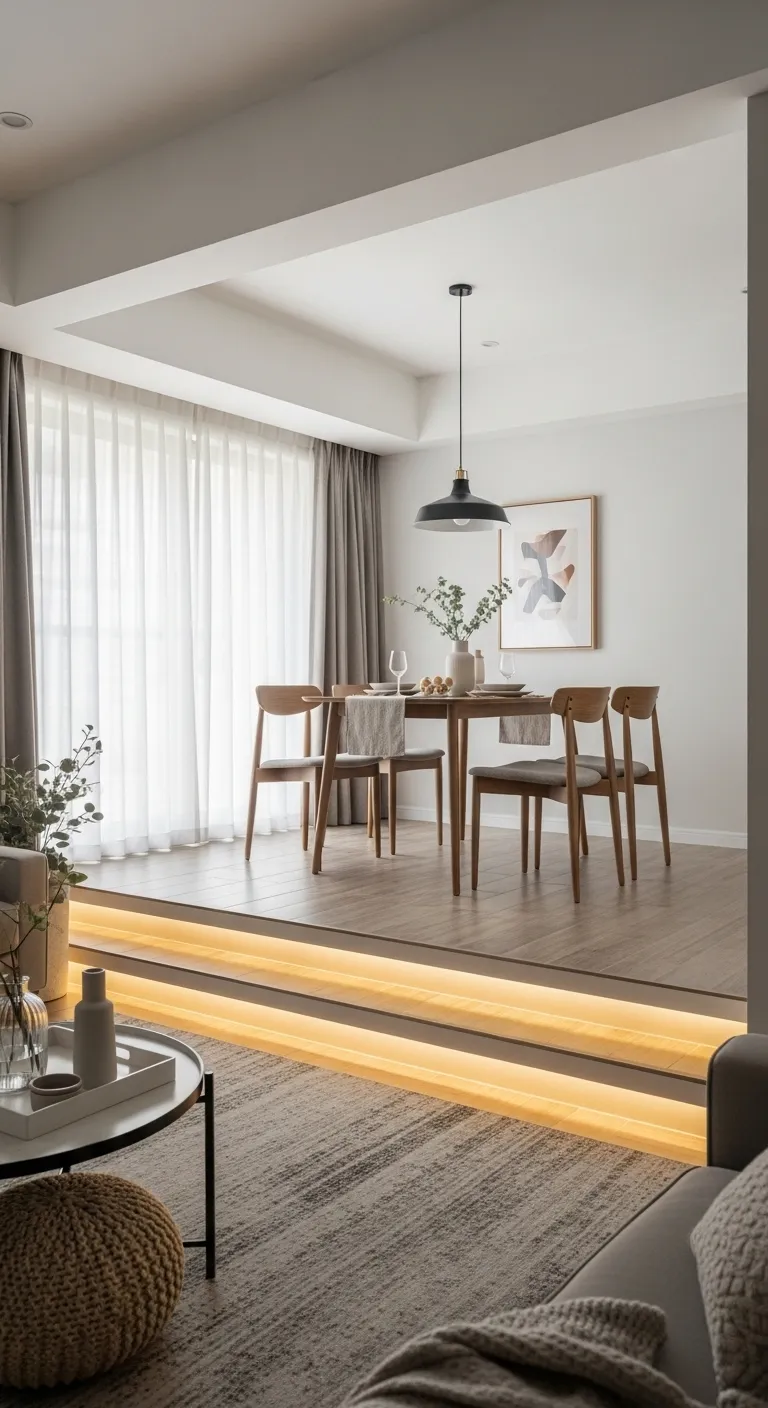
If your layout allows, create a subtle height difference between the two zones. Even a small raised platform under the dining table can define the space clearly. Use wood or tiles for the elevated section while keeping the living area flooring softer, like a rug or carpet. Add built-in lighting along the edge of the platform for a modern touch. This creates depth and structure without closing off the room. It works especially well in open-plan homes where you want a strong visual separation.
15. Create Symmetry with Back-to-Back Layouts
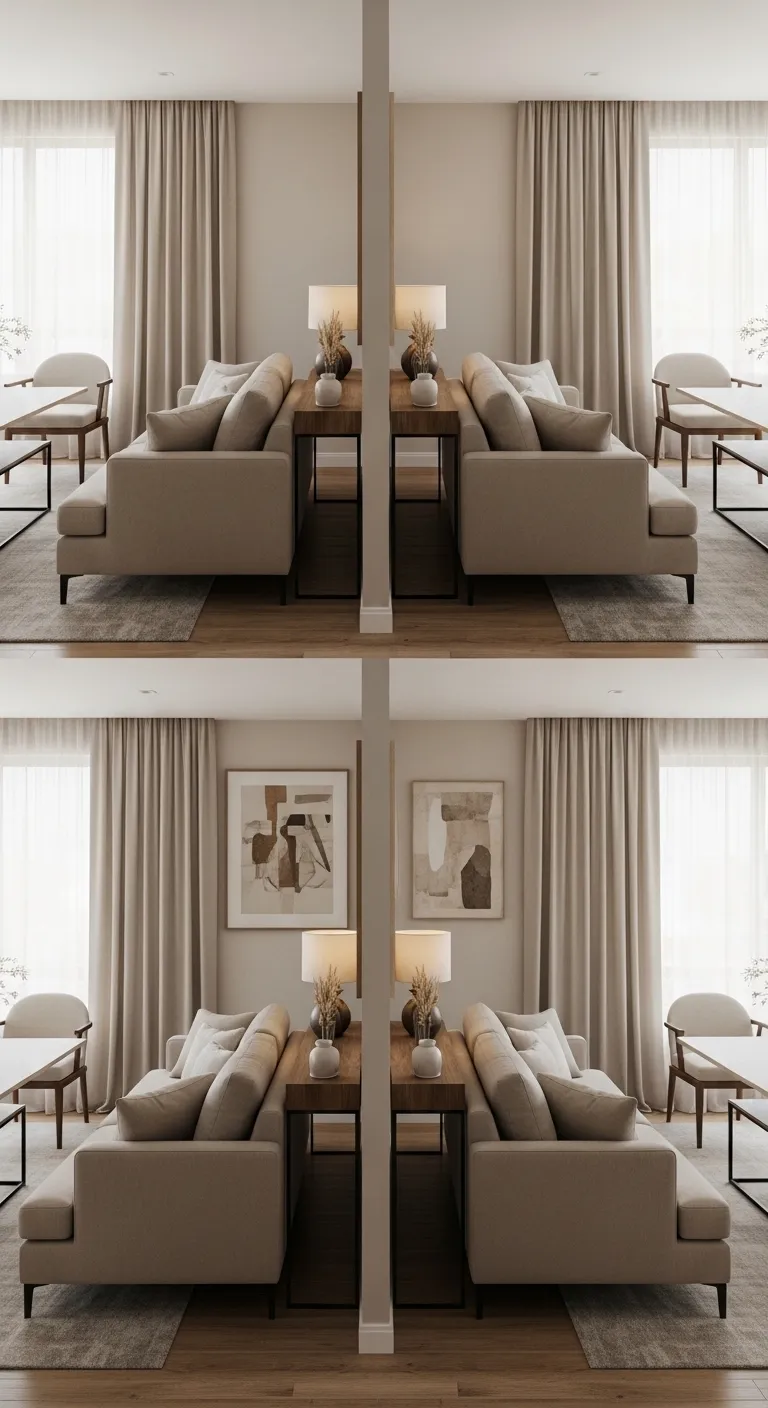
Place the dining table and sofa back-to-back in a symmetrical arrangement. Align both pieces neatly so they share a central axis. Add a console table or slim storage unit between them to enhance the structure. Use matching decor elements like similar color tones or repeated materials to keep the look balanced. This layout feels organized and clean, especially in rectangular spaces. It also allows easy movement around both areas without making the room feel crowded.
16. Blend Both Spaces with a Single Statement Theme
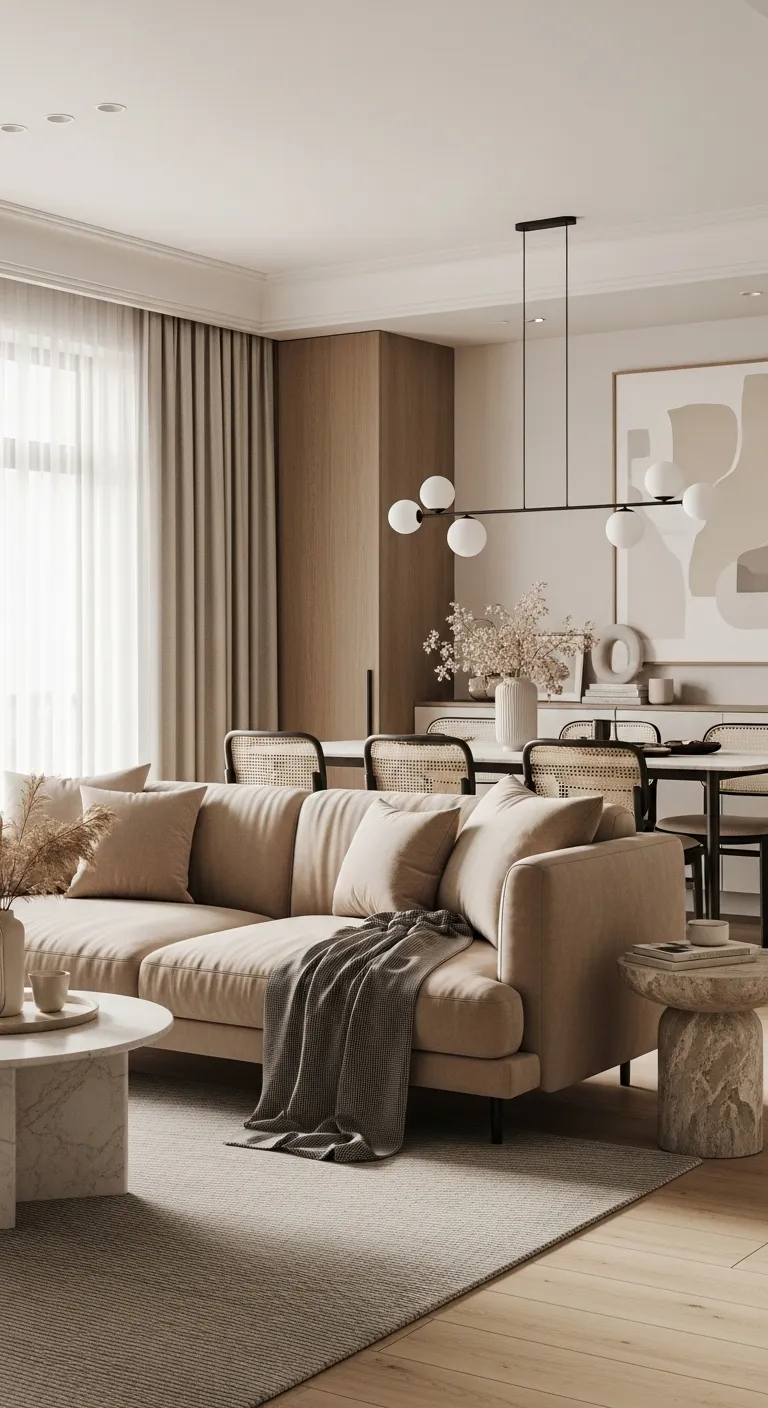
Instead of separating the spaces strongly, unify them with one clear design theme. Choose a style like warm minimal, modern rustic, or soft contemporary and apply it consistently across both areas. Use the same color palette, materials, and textures in different ways. For example, repeat a soft cream tone in the sofa, dining chairs, and curtains, while varying textures like wood, fabric, and stone. Keep decor minimal but intentional. This approach makes the entire space feel larger, smoother, and visually connected.
Conclusion
Designing a combined space becomes easy when every detail has a purpose. These living and dining room combo ideas help you define zones without clutter, using color, layout, lighting, and texture in smart ways. Focus on balance, keep materials consistent, and use subtle design tricks instead of heavy dividers.
Start by applying one or two ideas that fit your space, then build around them. Save the ideas that inspire you most and turn your combo room into a space that feels both stylish and functional every day.