21 Dreamy Green Living Room Ideas for a Calm Home

Green changes how a room feels the moment you walk in. It softens harsh light, quiets busy décor, and brings the calm of nature indoors without trying too hard. If your living room feels loud, dull, or unfinished, the right shade of green can fix that faster than a full renovation.
In this guide, you’ll discover dreamy green living room ideas that feel fresh, modern, and realistic for everyday homes. You’ll learn how to style color, layer textures, choose furniture, and create layouts that feel peaceful but still practical. Every idea is designed to be save-worthy, easy to apply, and beautiful from every angle.
1. Misty Sage Walls with Warm Wood Layers
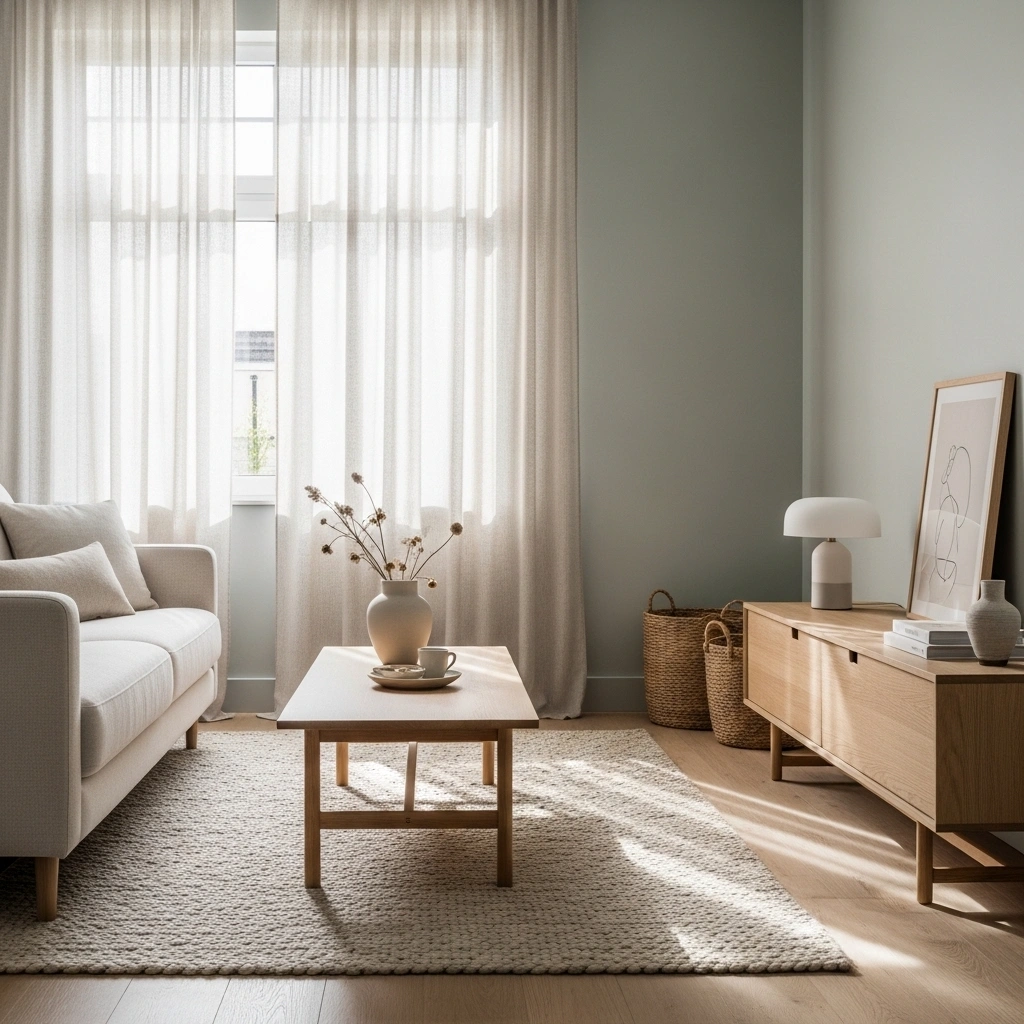
Misty sage walls create a soft, calming base that feels light and breathable. This gentle green carries gray undertones, which keep it from feeling too bold or too pale. In daylight, it looks airy and fresh. In the evening, it turns warm and cozy under soft lighting. Pair it with natural oak furniture, woven baskets, and cream upholstery to build a quiet, layered look. Add linen curtains that filter sunlight gently and keep the space feeling relaxed.
To apply this idea, paint all four walls in a muted sage for a cocoon effect. Choose low-profile wooden furniture so the room feels open, not crowded. Add a textured jute rug to ground the seating area without overpowering the color. Use warm white bulbs instead of cool lighting to keep the green soft. Finish with ceramic vases or clay planters for a natural touch that enhances the calm mood.
2. Deep Forest Green Accent Wall with Brass Touches
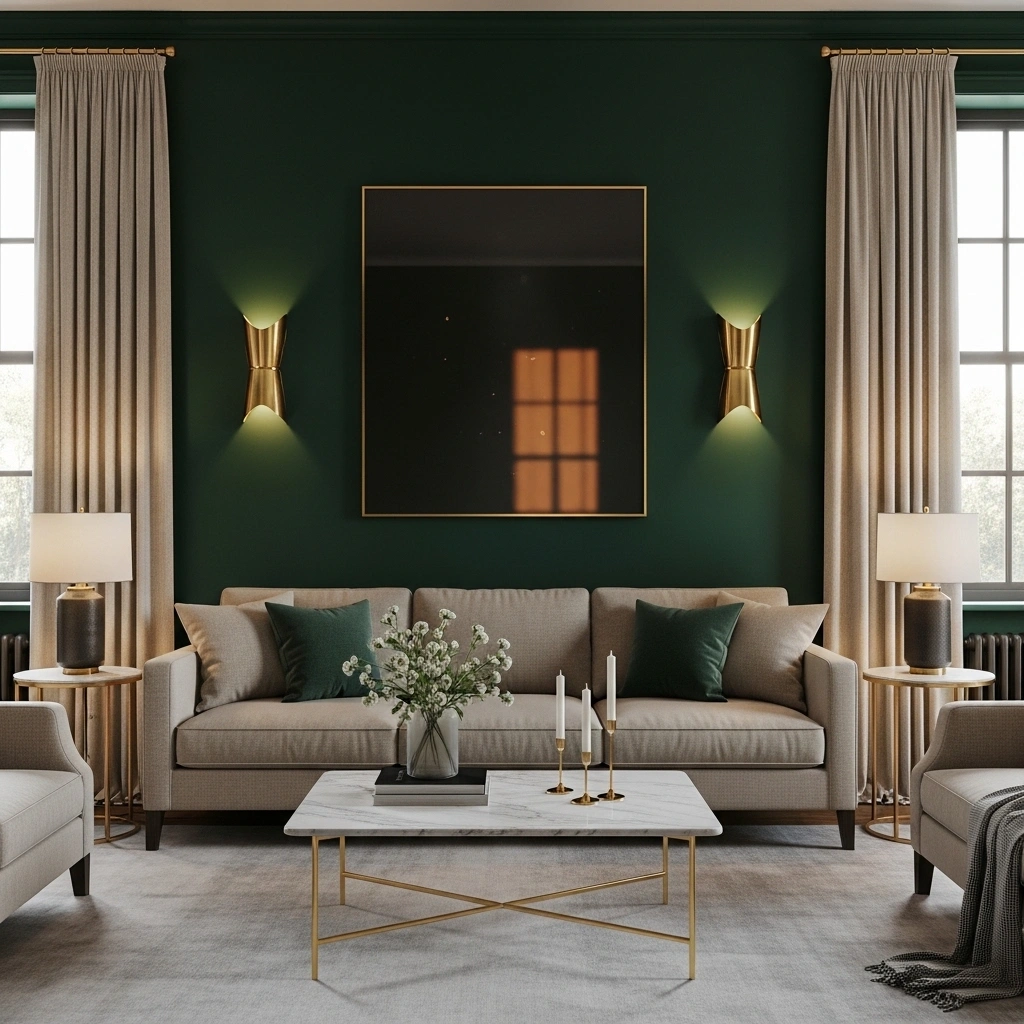
A deep forest green accent wall creates instant depth and drama. This rich shade feels grounding and elegant, especially behind a sofa or fireplace. When paired with brass lamps, gold-framed art, or warm metallic details, the space feels refined but welcoming. Dark green absorbs light beautifully, making cream or beige furniture stand out. Velvet cushions and textured throws add softness against the bold background.
Place the accent wall where your eye naturally lands when entering the room. Keep the remaining walls neutral to balance the intensity. Choose a light-colored sofa to prevent the space from feeling heavy. Add two brass wall sconces to frame artwork and reflect warm light. Use layered lighting, including table lamps and floor lamps, so the green feels rich rather than shadowy.
3. Olive Green Sofa as the Statement Piece
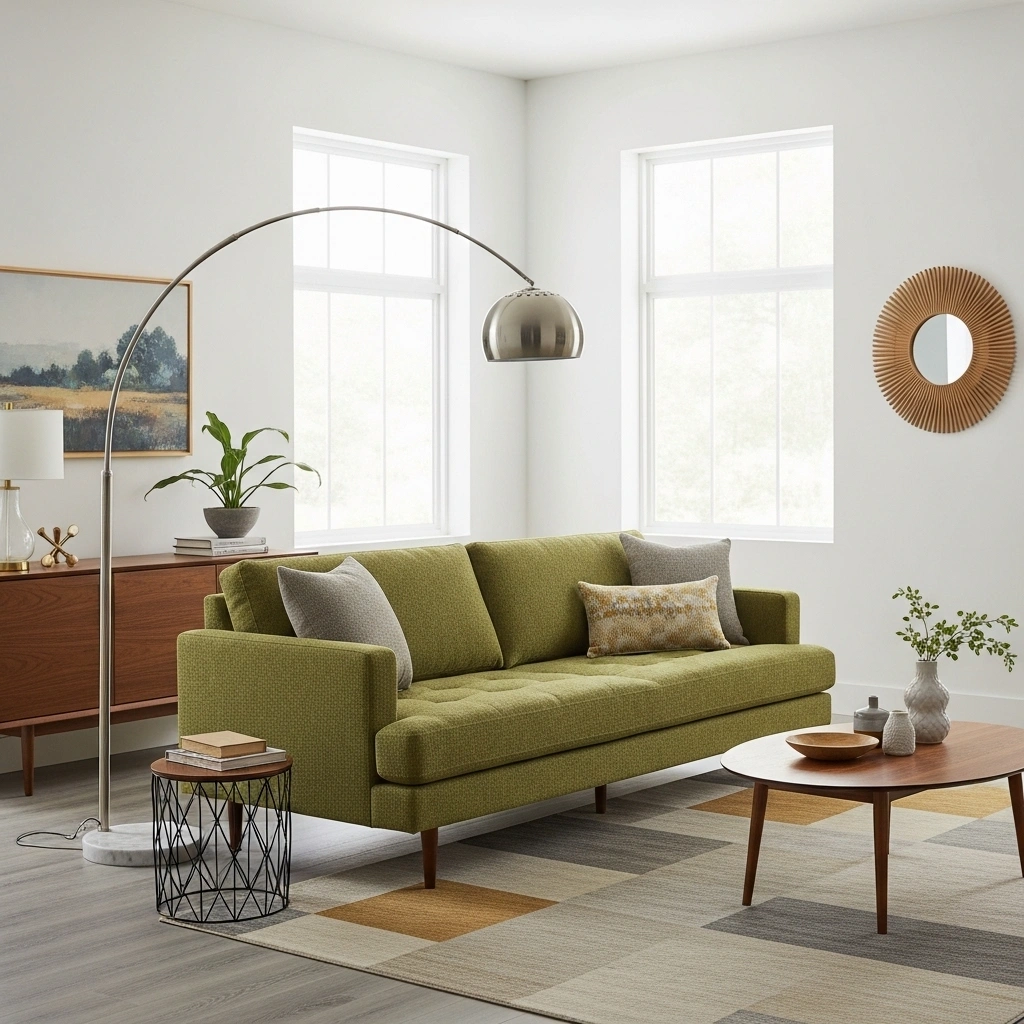
An olive green sofa brings color into the room without painting the walls. This earthy tone feels grounded and warm, especially in homes with beige, cream, or light gray backdrops. Olive works beautifully with natural wood, black accents, and warm textiles. It creates a cozy atmosphere without feeling too dark. Soft cushions in rust, ivory, or muted mustard add dimension without clashing.
Center the sofa on a neutral rug to make it the focal point. Keep surrounding décor simple so the green stands out naturally. Choose slim-legged furniture to maintain visual space. Add layered throw blankets for texture and comfort. Balance the room with greenery or framed art that ties back to the sofa’s undertones for a cohesive design.
4. Pale Pistachio for a Light-Filled Room
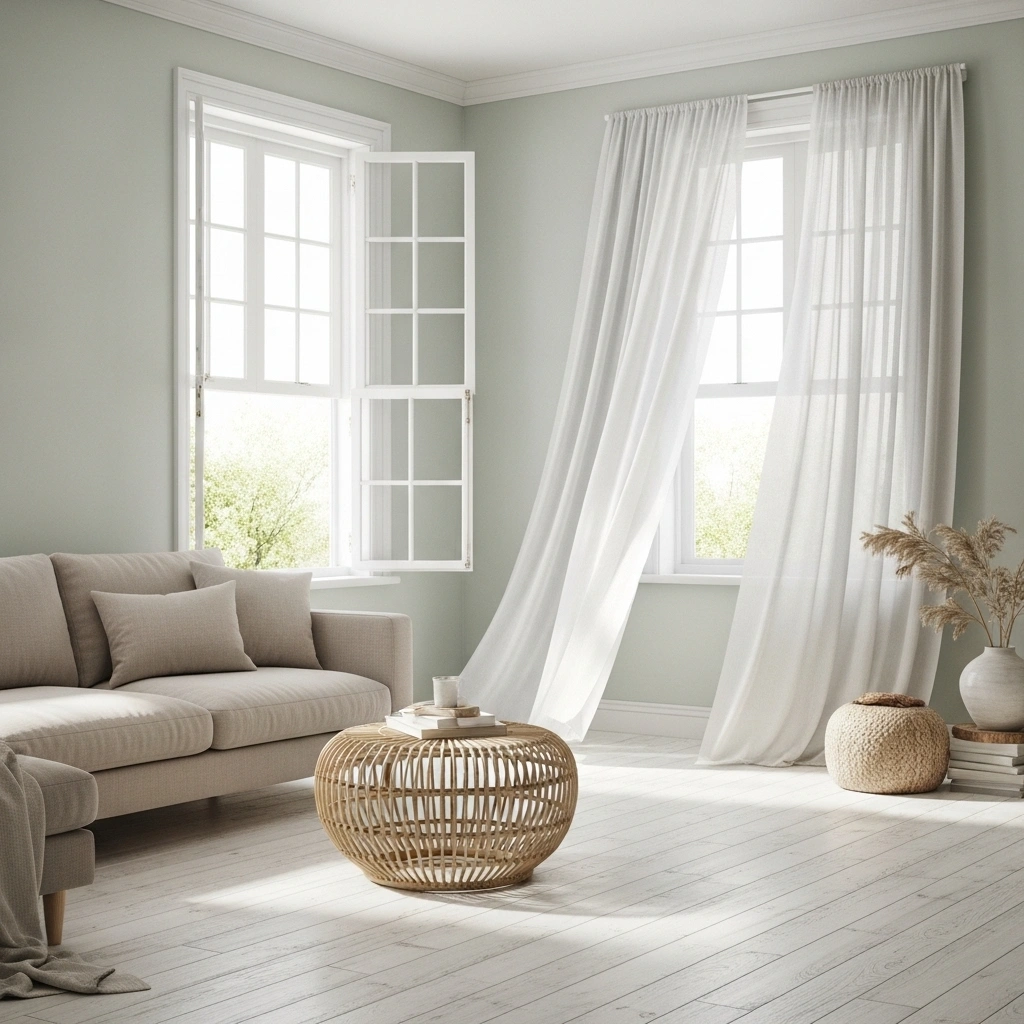
Pale pistachio walls feel fresh, uplifting, and slightly playful. This lighter shade of green reflects sunlight beautifully, making smaller living rooms appear bigger. It pairs well with white trim and light wood finishes. The color feels especially dreamy with sheer curtains and minimal décor. Add soft beige seating to keep the palette calm and cohesive.
Paint the walls in pistachio and keep the ceiling bright white for contrast. Use clear or glass décor elements to prevent visual heaviness. Incorporate soft textures like boucle or cotton upholstery. Add one darker green element, such as a chair or artwork, to create subtle contrast. This approach keeps the room airy but visually interesting.
5. Layered Green Tones for Depth
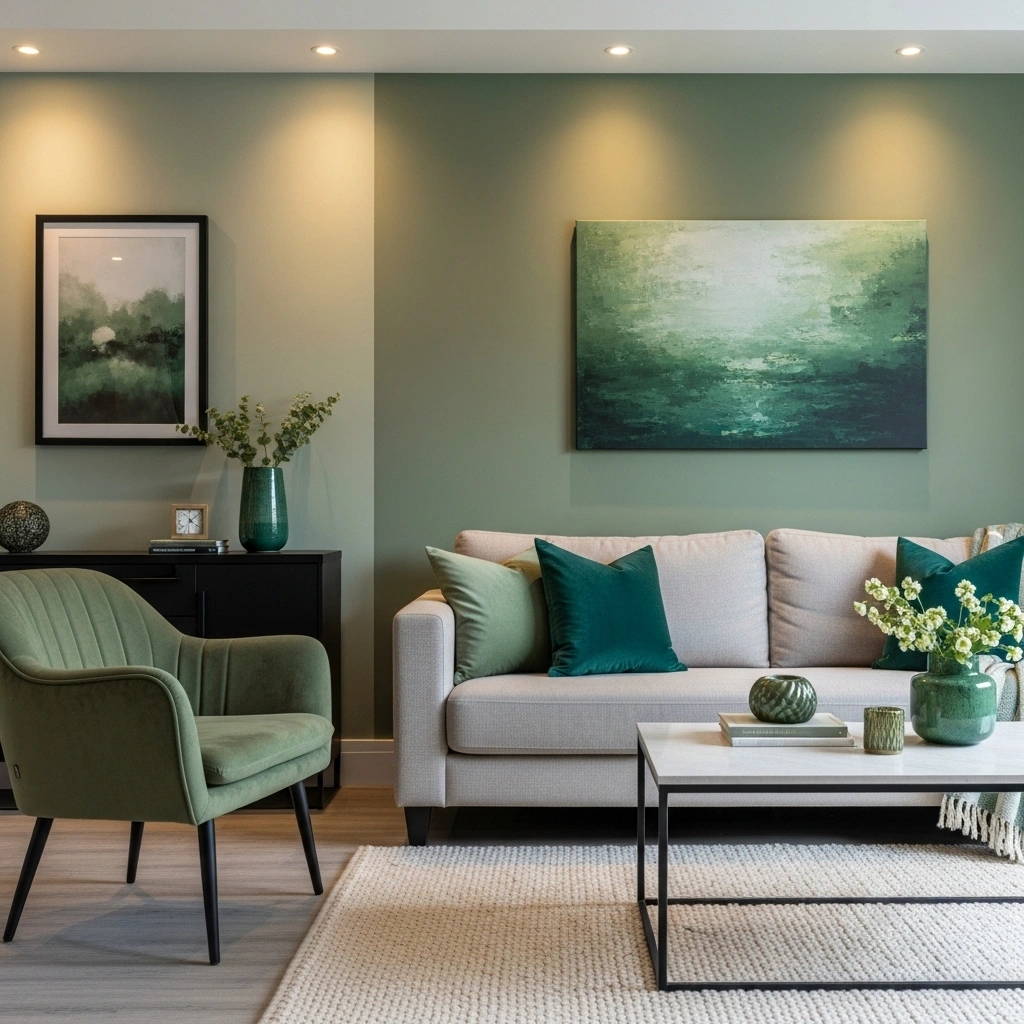
Layering multiple green shades creates a designer-inspired look. Combine sage walls, emerald cushions, and olive décor accents for a rich, dimensional feel. When different green tones blend naturally, the room feels balanced and thoughtful. Mix matte and glossy finishes to enhance texture. Add cream or warm beige elements to soften the layers.
Start with one main green tone and build around it. Choose textiles in slightly darker or lighter variations. Use plants to introduce organic shades of green. Keep furniture shapes simple so color becomes the focus. Add warm lighting to tie the layers together without overwhelming the space.
6. Botanical Gallery Wall with Green Backdrop
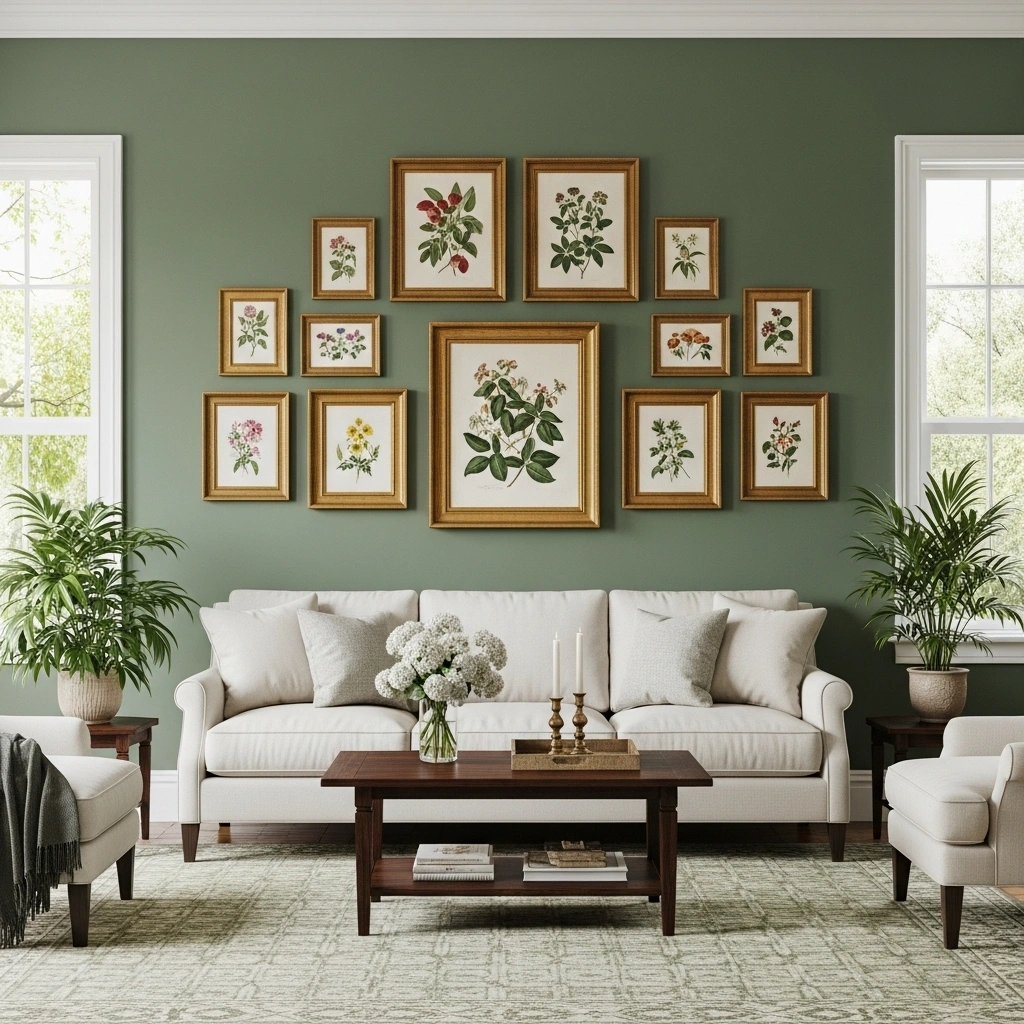
A botanical gallery wall against a soft green background creates a nature-inspired focal point. Framed leaf prints, pressed flowers, or landscape art add visual storytelling. The green backdrop enhances the organic theme. Light wood or gold frames add warmth without overpowering the artwork. The overall mood feels fresh and peaceful.
Paint the wall in a muted green and arrange artwork in a balanced grid. Keep spacing consistent for a clean look. Use similar frame finishes to maintain harmony. Add a bench or console beneath the gallery to anchor the display. Include a small table lamp to highlight the art and create evening ambiance.
7. Green and Linen Textures for Soft Comfort
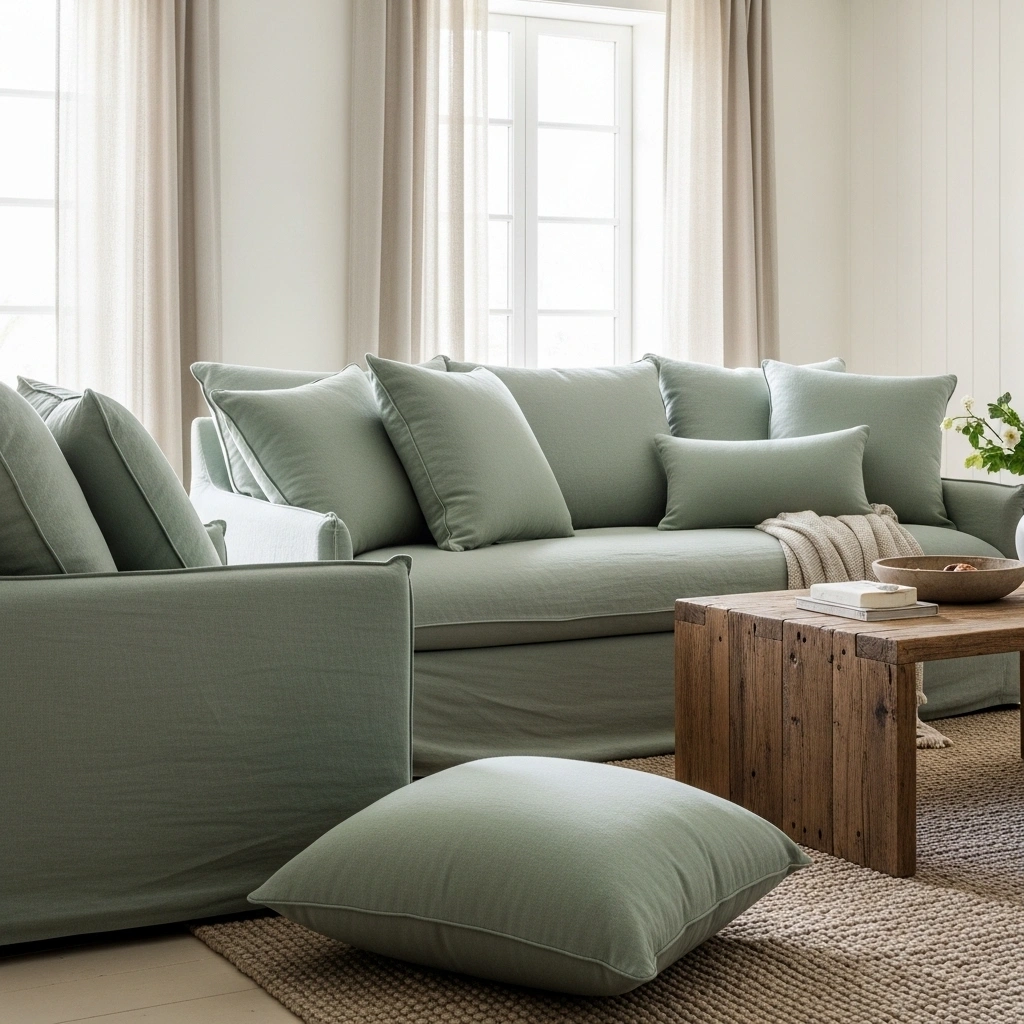
Green paired with natural linen creates an effortless, calming space. Soft green cushions, linen curtains, and textured throws bring subtle color without bold statements. The combination feels relaxed and breathable. Light cream sofas and woven elements enhance the softness. This style works beautifully in modern and farmhouse homes.
Use linen slipcovers for an easy refresh. Choose muted green textiles instead of bright shades. Layer rugs for added warmth underfoot. Add woven baskets for hidden storage. Keep accessories minimal to maintain the airy atmosphere.
8. Moss Green Built-In Shelving
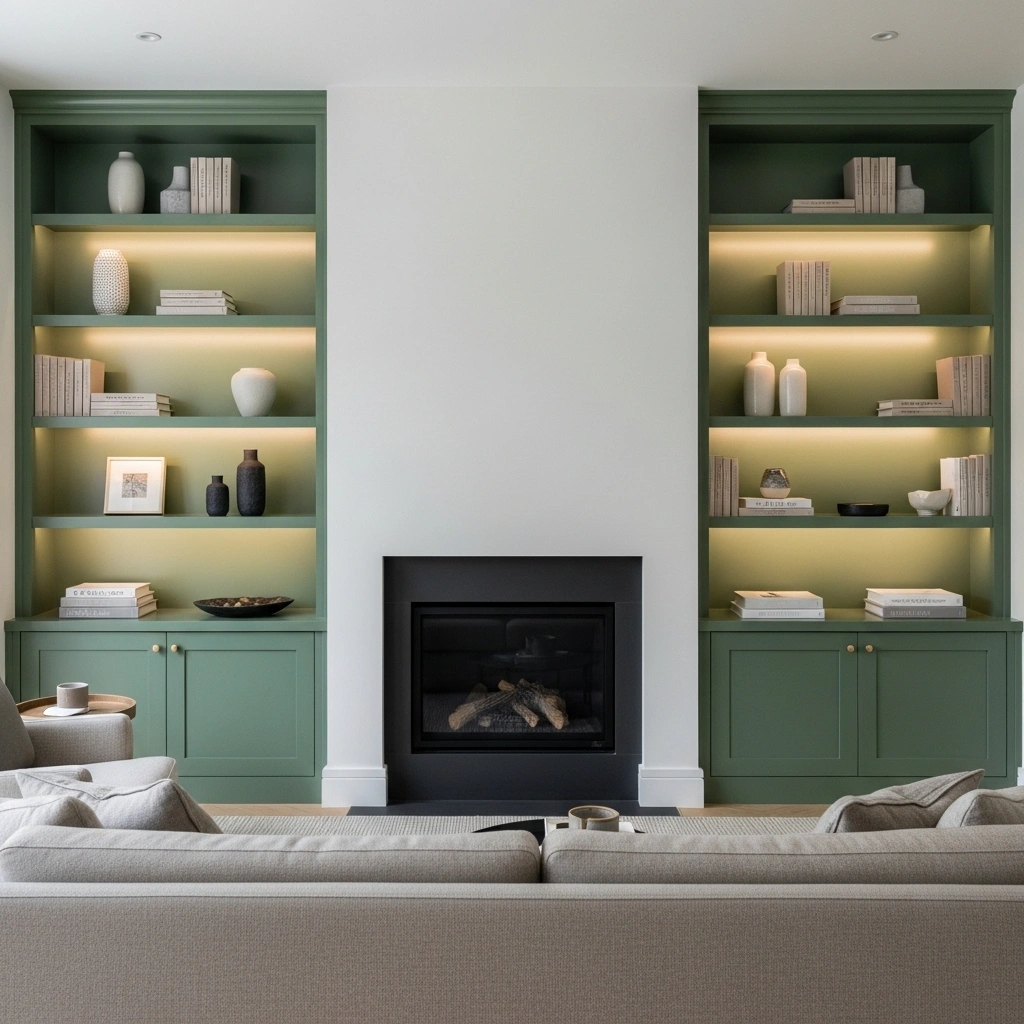
Moss green built-ins create character and architectural charm. This earthy shade highlights books, ceramics, and décor pieces beautifully. The color feels grounding and rich without feeling too dark. Paired with neutral walls, it adds contrast and personality. Warm lighting inside shelves enhances depth.
Paint shelves in moss green and style with balanced spacing. Mix books with sculptural décor. Keep some negative space to avoid clutter. Add small LED lights inside the shelving. Choose neutral seating to let the built-ins shine.
9. Green Velvet Armchairs for Luxe Comfort
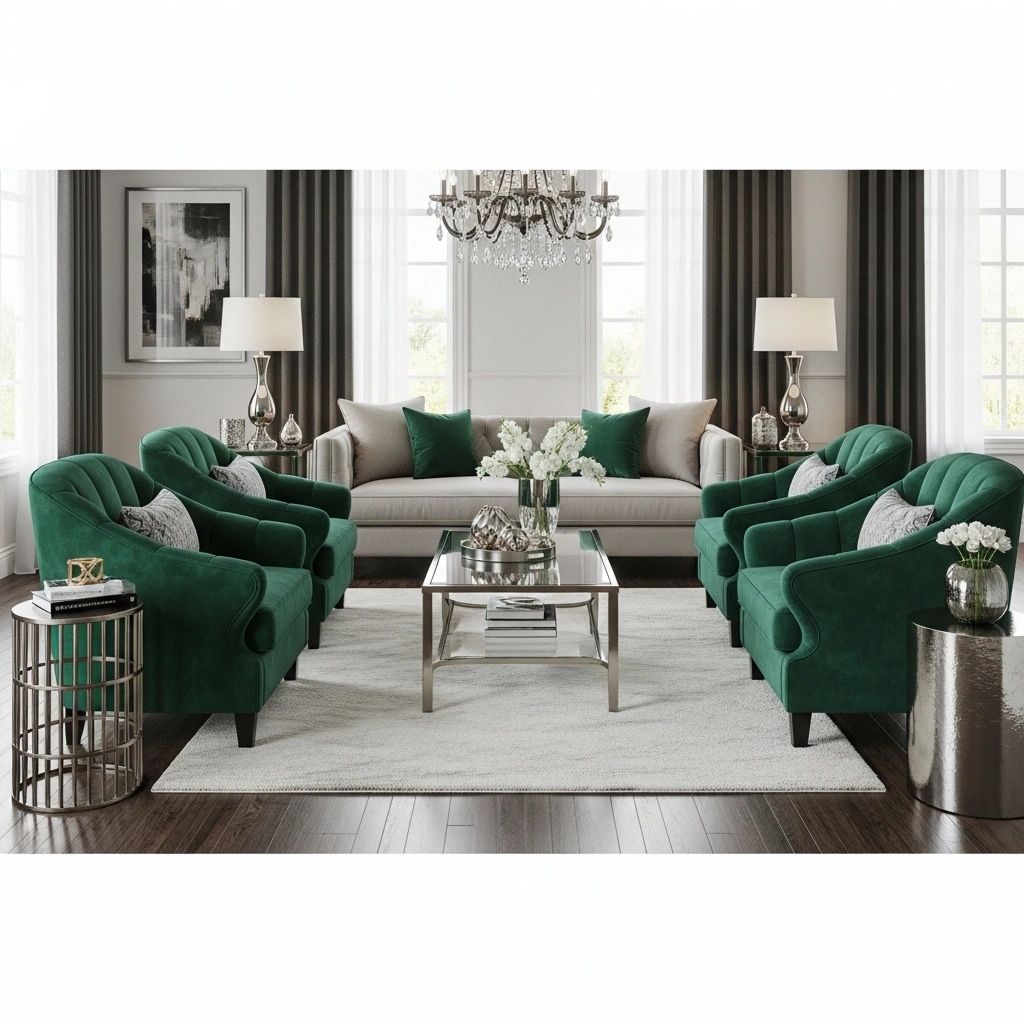
Green velvet armchairs introduce softness and luxury. The fabric reflects light differently throughout the day, creating visual interest. Deep emerald or jewel tones feel bold and elegant. When paired with a neutral sofa, the chairs stand out as statement pieces. Add a marble or glass side table for balance.
Place the chairs across from the sofa to create conversation flow. Add a floor lamp behind one chair for cozy reading light. Use textured cushions for added comfort. Keep surrounding décor understated. This keeps the velvet as the highlight.
10. Green Ceiling for a Subtle Surprise
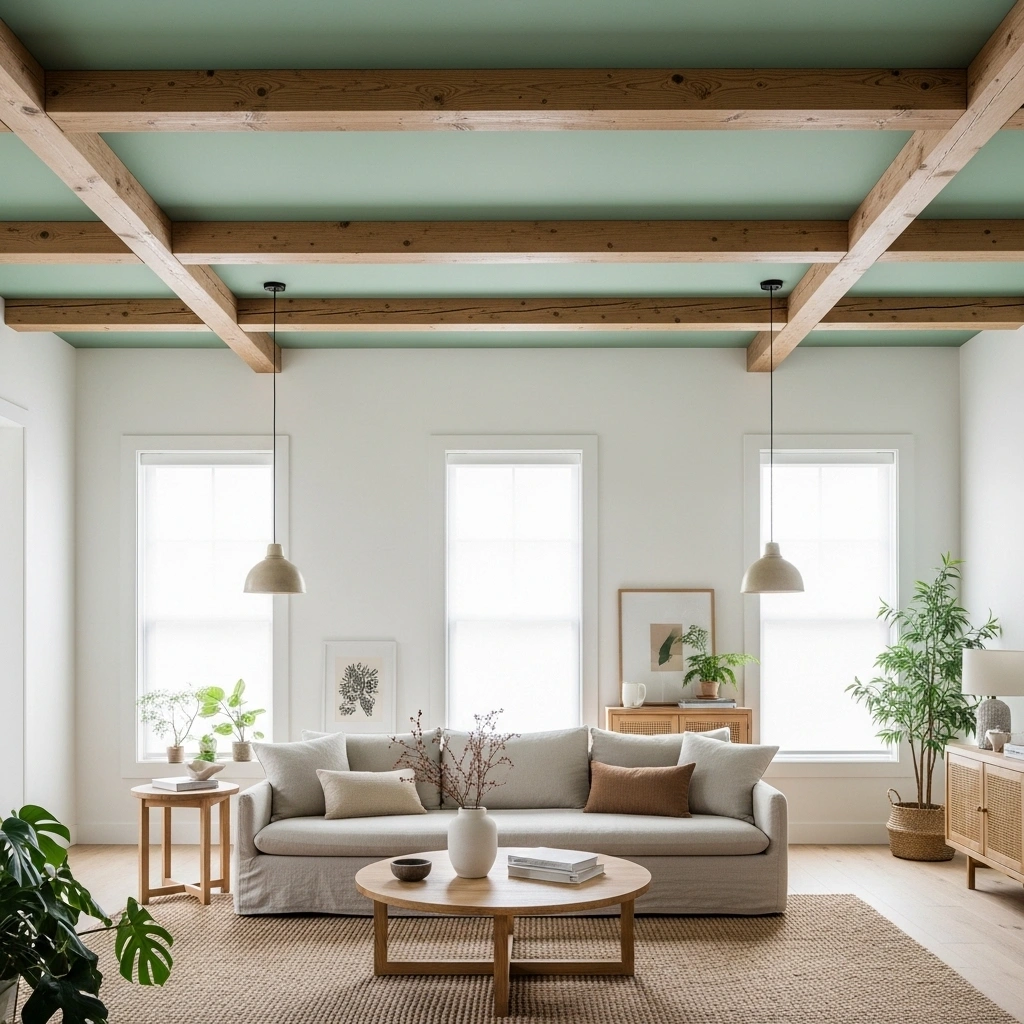
A green ceiling creates a unique and dreamy effect. Soft sage or pale olive overhead adds warmth without overwhelming walls. It draws the eye upward and makes the room feel styled. White or cream walls keep the look balanced. Natural light enhances the soft tone beautifully.
Paint the ceiling in a lighter green than the walls. Keep crown molding white for contrast. Add a woven pendant light to enhance texture. Maintain simple wall décor to avoid visual clutter. This unexpected detail feels custom and thoughtful.
11. Matte Emerald Walls with Black Accents
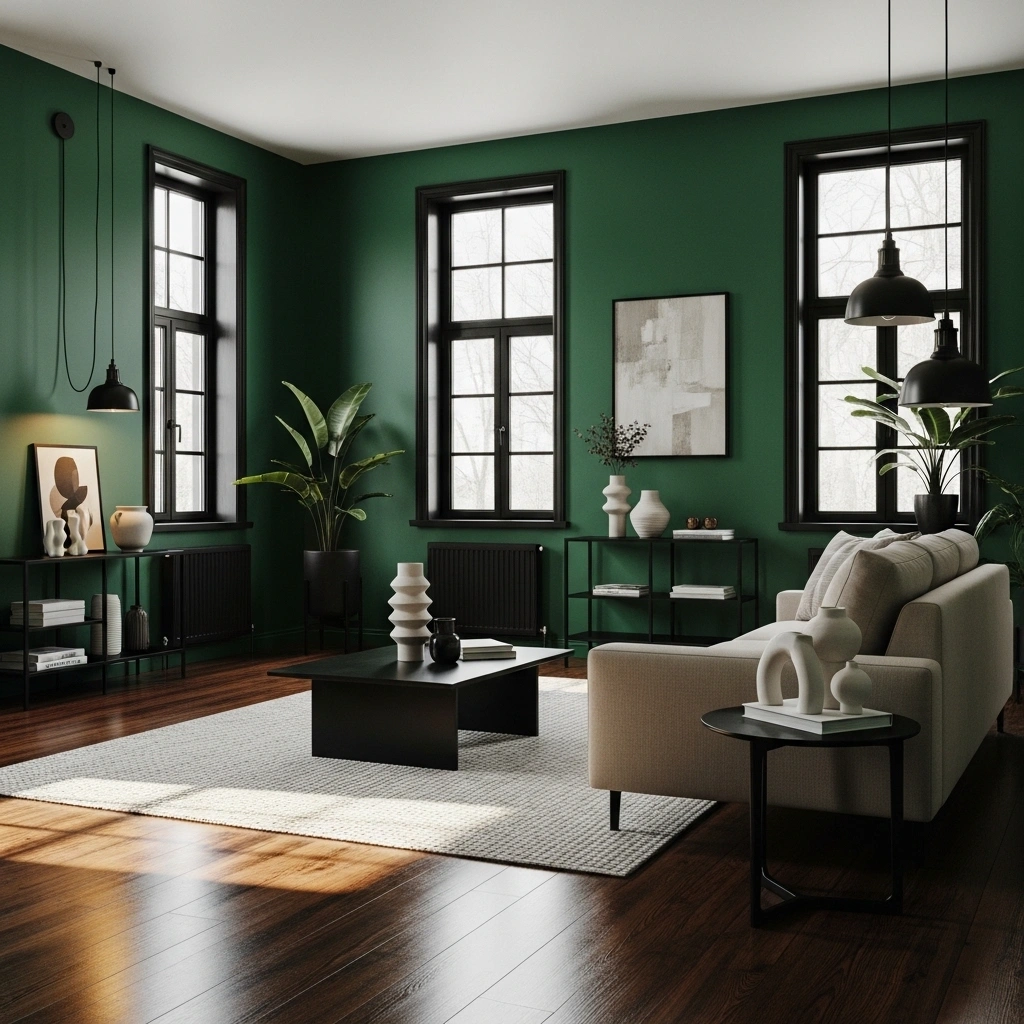
Matte emerald walls feel bold yet modern. The deep green absorbs light softly, creating a cozy but sleek environment. Black metal accents add sharp contrast. Clean-lined furniture keeps the space contemporary. Light beige rugs prevent heaviness.
Choose matte paint for a soft finish. Add black-framed mirrors or shelving. Use minimal artwork to avoid clutter. Layer lighting to brighten dark corners. Keep textiles neutral for balance.
12. Soft Green and Cream Minimalist Harmony
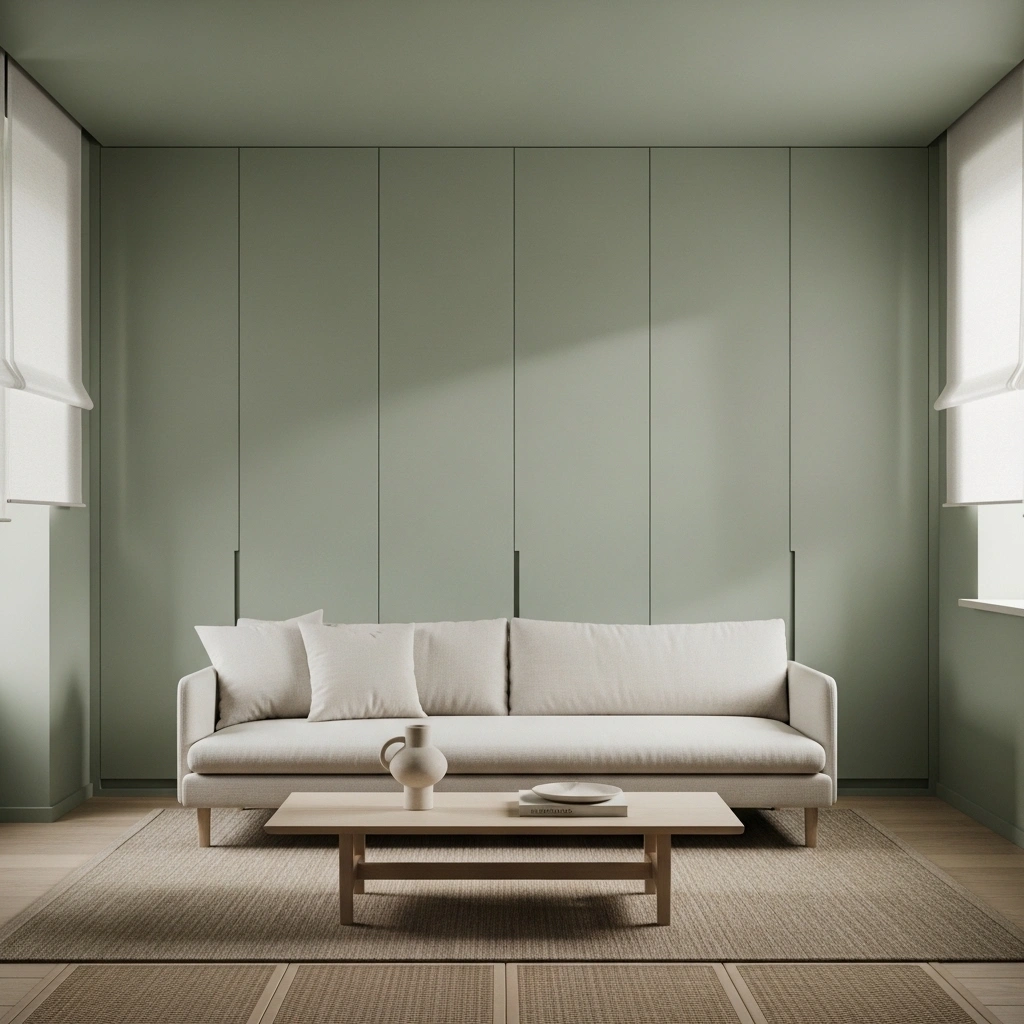
A soft green and cream palette creates a peaceful minimalist living room that feels light and open. Choose a muted eucalyptus or dusty sage for the walls to keep the tone gentle and airy. Cream sofas and off-white curtains reflect natural light and prevent the green from feeling flat. Light wood floors and simple ceramic décor enhance the calm mood. The overall look feels clean, breathable, and perfectly balanced without looking empty.
To recreate this look, stick to two main colors and one warm wood tone only. Choose a low-profile cream sofa with slim legs to maintain visual space. Add one textured rug in a warm neutral shade to anchor the seating area. Keep décor minimal but intentional, such as a single large art piece or sculptural lamp. Use warm white lighting to soften the contrast and keep the space inviting.
13. Dark Green and Walnut for Cozy Depth
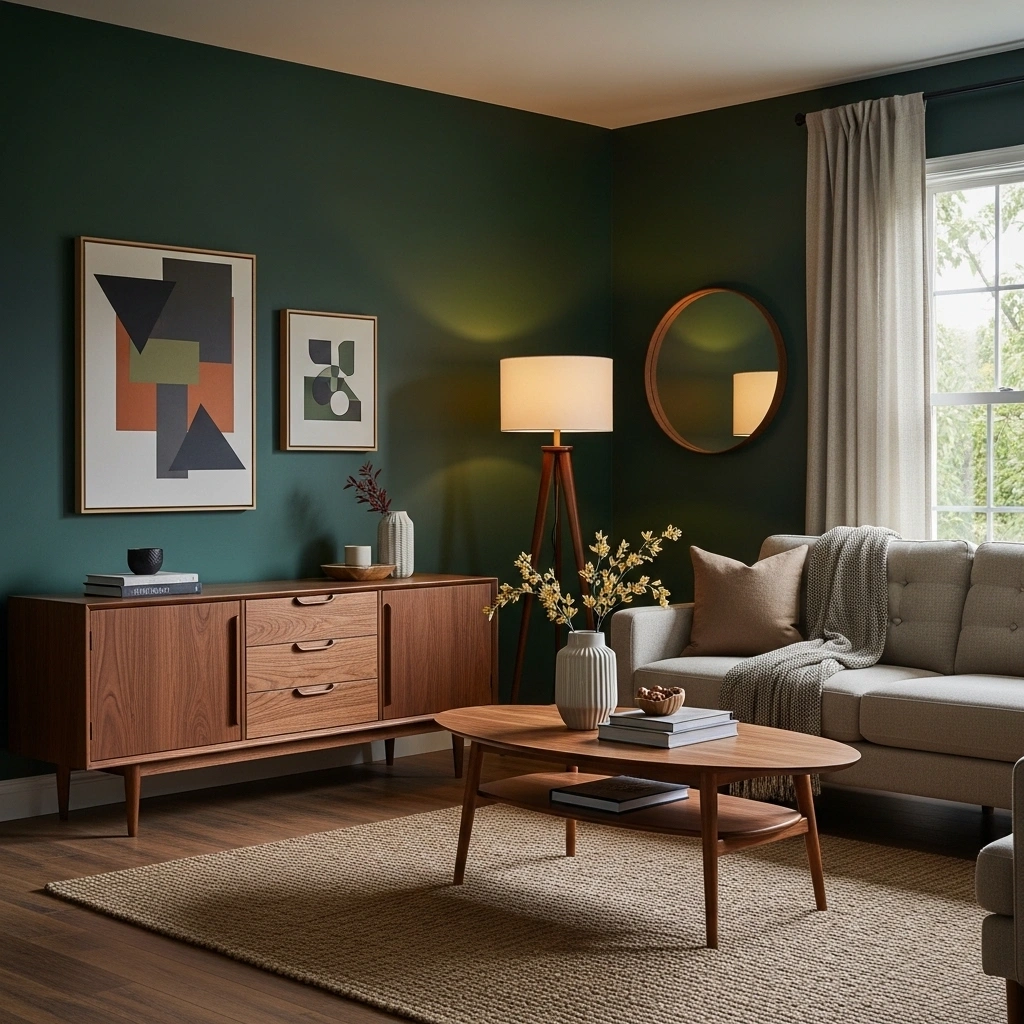
Dark green walls paired with walnut wood create a grounded and cozy living room atmosphere. This combination feels rich yet comforting, especially in spaces with medium or low natural light. The warmth of walnut balances the cool undertones of deep green beautifully. Add caramel cushions or tan leather accents to introduce subtle contrast. Soft layered lighting makes the room feel intimate rather than heavy.
Paint the walls in a muted dark green instead of glossy shades for a softer finish. Choose walnut coffee tables, shelving, or a media console to add warmth naturally. Keep upholstery in beige or warm cream to prevent visual overload. Add brass or antique gold lamps for gentle highlights. Place a textured rug under the seating area to tie all elements together smoothly.
14. Moss Green Sectional as the Anchor
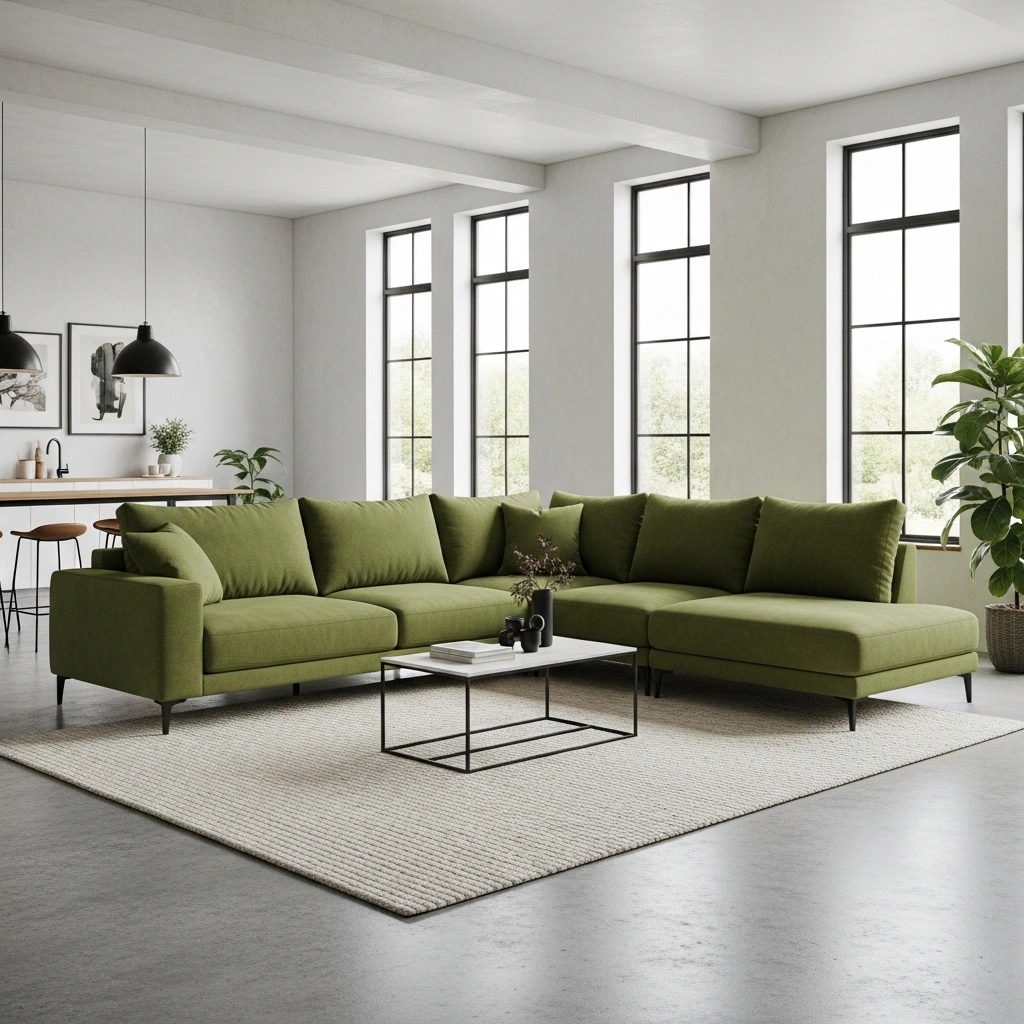
A moss green sectional can instantly define your living room layout. This earthy tone feels calm and versatile, working beautifully with neutral walls and natural materials. The color adds personality without demanding attention like brighter greens. Paired with light wood tables and woven textures, the space feels relaxed and welcoming. Layered cushions in cream and rust bring depth and softness.
Position the sectional to create a clear conversation zone, especially in open layouts. Place a large neutral rug underneath to visually anchor the furniture. Add a round coffee table to soften the structured lines of the sectional. Include floor lighting behind one corner to highlight the shape at night. Keep wall décor simple so the sectional remains the main focus.
15. Smoky Green with Black Metal Frames
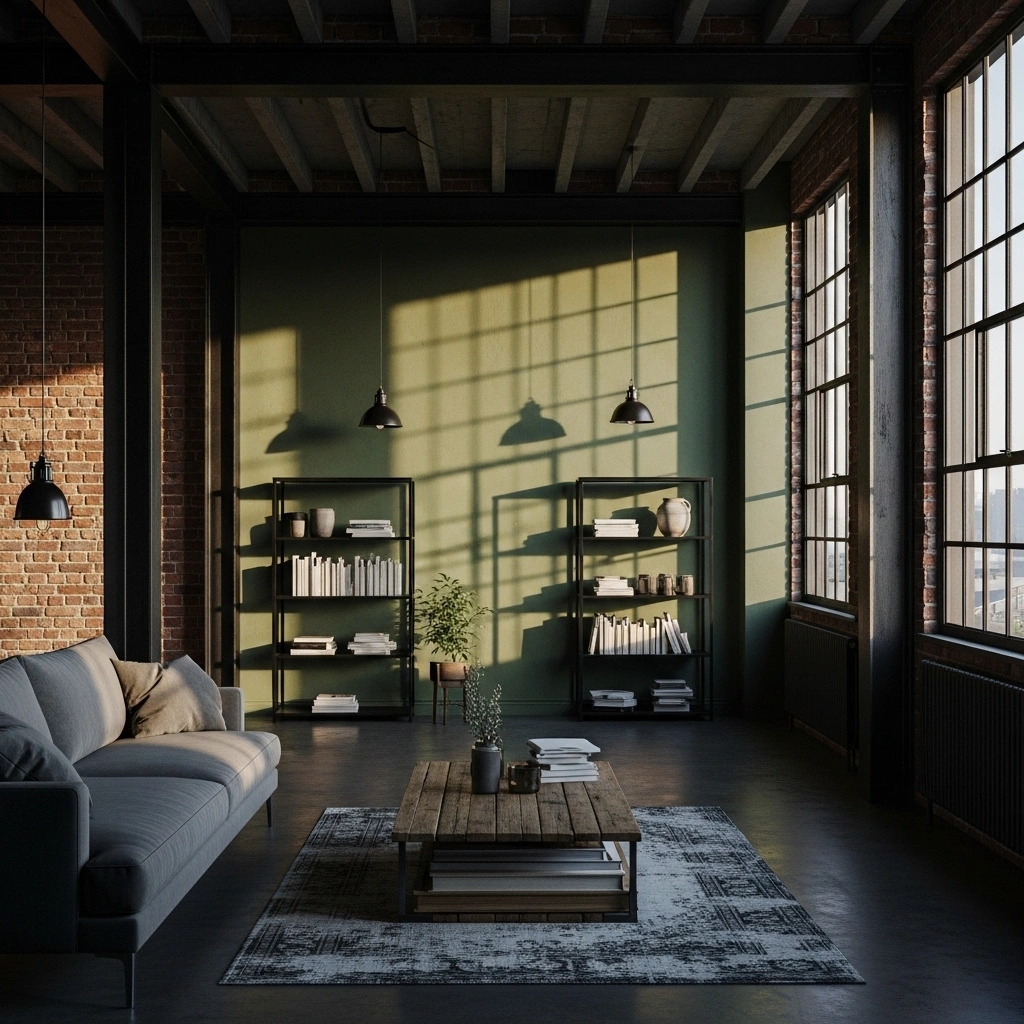
Smoky green walls combined with black metal accents create a modern yet calm vibe. This muted green has gray undertones, which makes it feel sophisticated and balanced. Black-framed mirrors, shelves, or light fixtures provide crisp contrast. The overall space feels contemporary without losing warmth. Add textured cushions and soft throws to prevent the look from feeling too sharp.
Choose matte paint to avoid glare and maintain a soft finish. Place a large black-framed mirror to reflect light and open up the room. Pair the color with light beige or oatmeal sofas for balance. Add wood elements to warm up the black accents. Use layered lighting to soften shadows and enhance depth in the evenings.
16. Sage and Stone Textured Layers
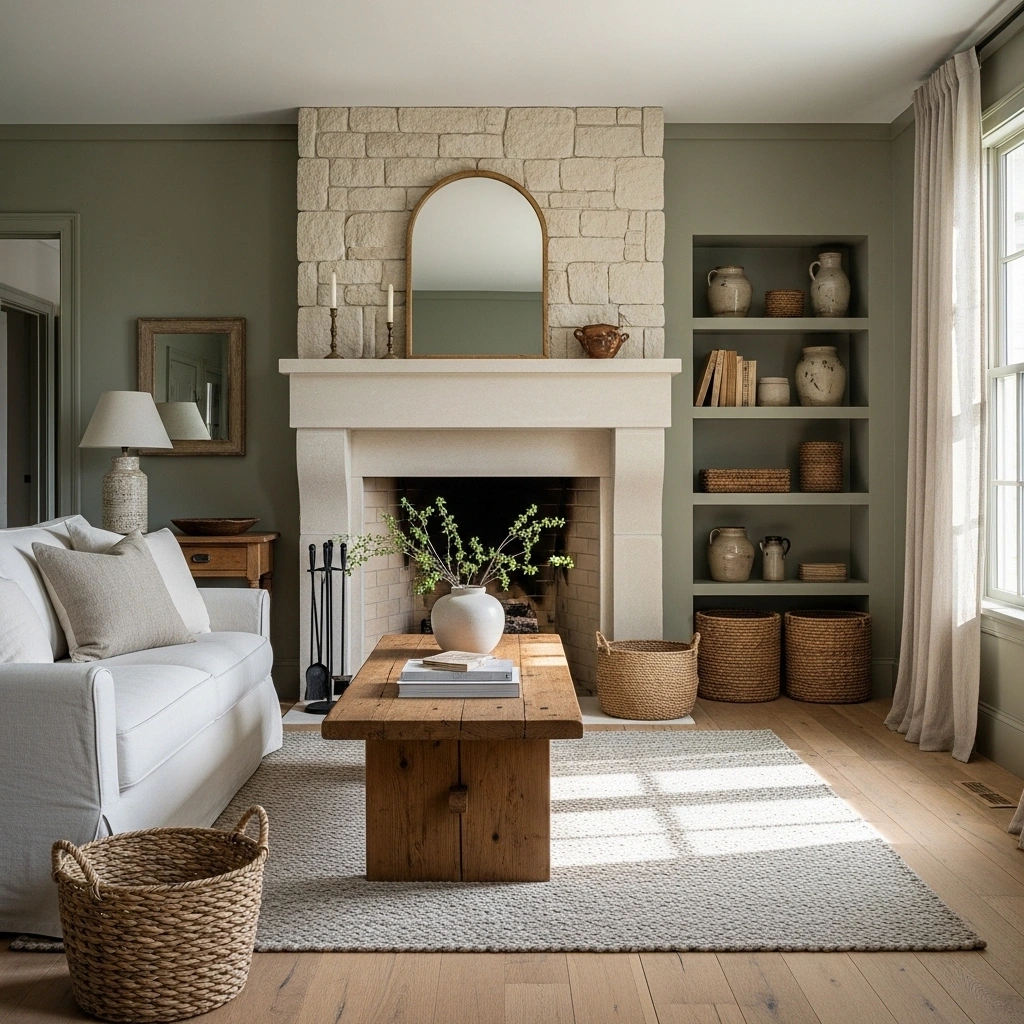
Sage green paired with stone-inspired textures creates a grounded, organic feel. Think plaster-style walls, textured rugs, and raw ceramic décor pieces. The green acts as a calming base while stone elements add quiet character. This combination feels earthy yet refined. Soft sunlight enhances the layered textures beautifully throughout the day.
To apply this idea, use textured wall paint or limewash for subtle depth. Add a stone-look coffee table or clay-toned accessories for contrast. Keep furniture shapes simple and soft-edged. Layer woven baskets for storage and warmth. Use neutral upholstery to allow the textures and green tones to stand out naturally.
17. Emerald and Glass for Light Reflection
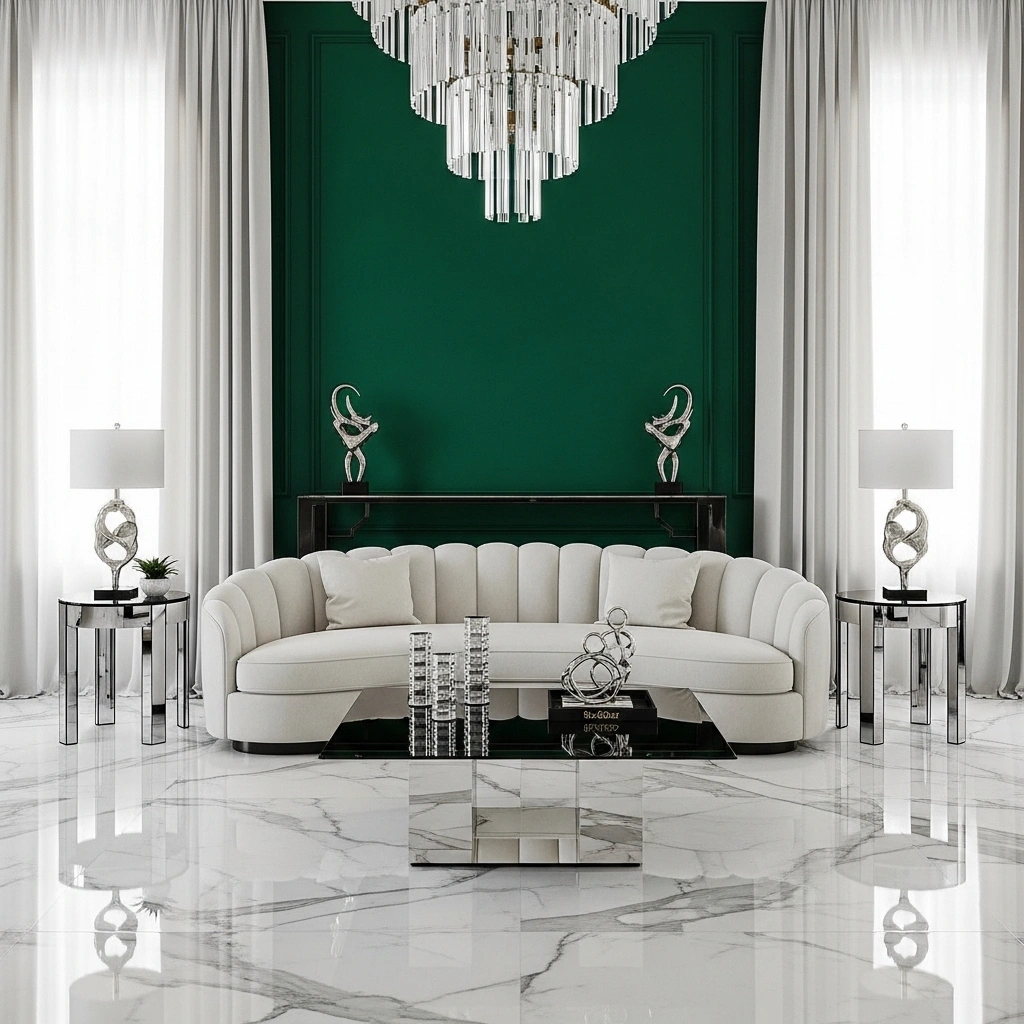
Emerald green paired with glass elements creates a bright yet dramatic space. The deep color feels bold, but glass coffee tables or side tables prevent heaviness. Light reflects beautifully across glossy surfaces, adding dimension. Soft white curtains balance the richness of emerald. The result feels elegant but still breathable.
Paint one main wall in emerald and keep the rest neutral for balance. Add a glass or acrylic coffee table to visually lighten the room. Choose metallic accents in gold or brushed brass for warmth. Keep seating neutral and soft to avoid overwhelming the space. Use layered lamps to enhance the green at night.
18. Olive and Terracotta Warmth
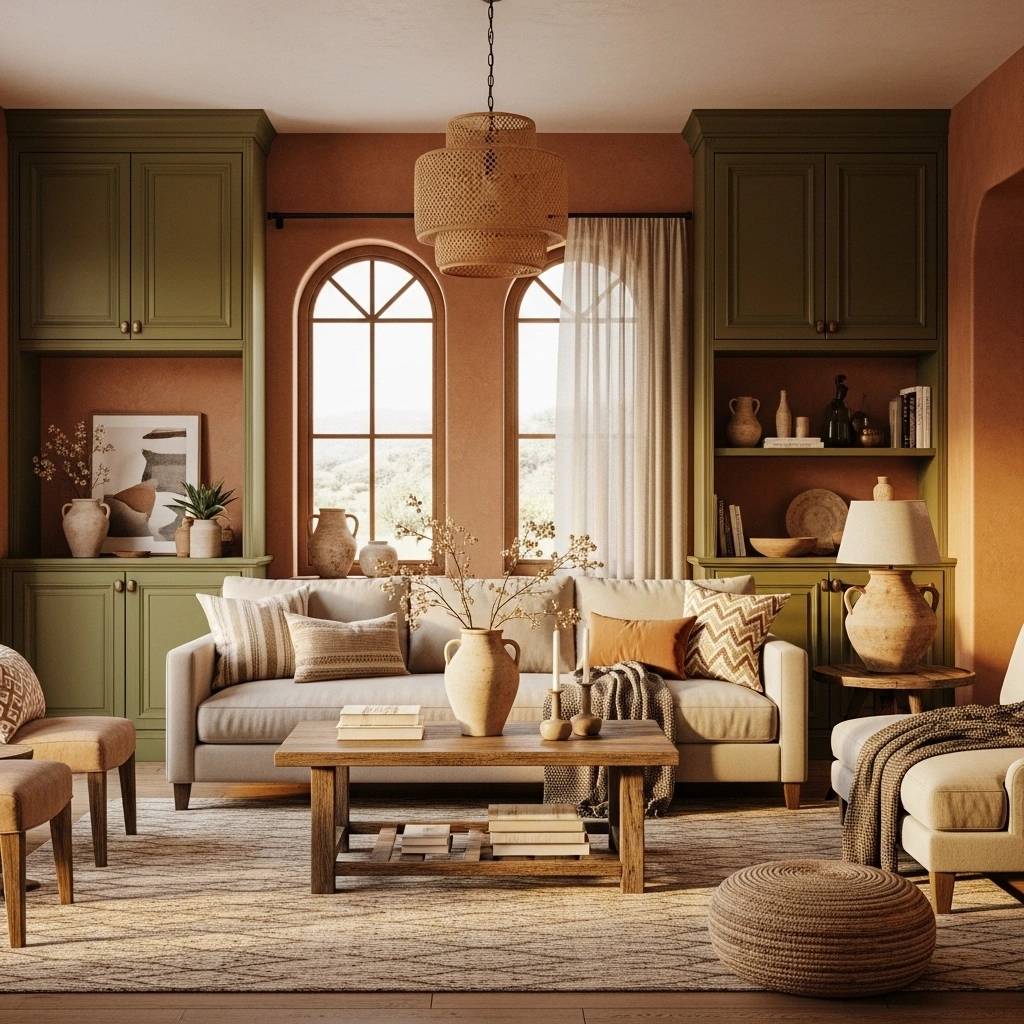
Olive green combined with terracotta accents creates a cozy, inviting living room. This pairing feels natural and slightly Mediterranean in tone. Olive walls or sofas act as a grounding base. Terracotta cushions, pottery, or artwork introduce warmth. Cream and beige details keep everything balanced and calm.
Start with an olive sofa or accent wall as the foundation. Add terracotta planters or textured throw pillows for warmth. Use natural fiber rugs to soften the floor area. Incorporate wooden side tables for cohesion. Keep lighting warm to enhance the earthy color palette.
19. Pale Green with Sheer White Curtains
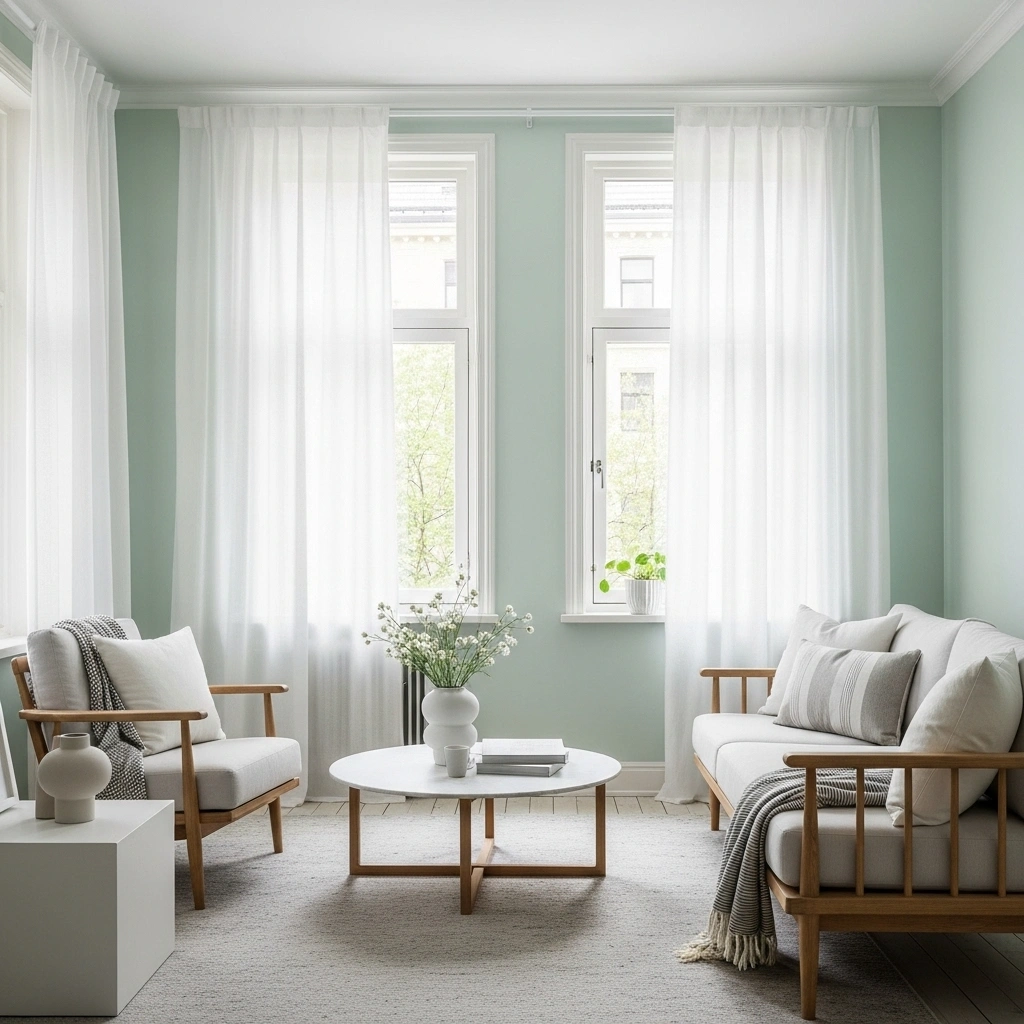
Pale green walls paired with sheer white curtains create a soft and dreamy look. This combination feels fresh and light, especially in rooms with large windows. Sunlight filters gently through the fabric, giving the green a glowing effect. Light wood furniture enhances the airy mood. The space feels peaceful and open.
Choose a very soft green with slight gray undertones to avoid brightness. Hang curtains higher than the window frame to create height. Keep furniture light in tone and simple in shape. Add a textured cream rug for subtle grounding. Use delicate table lamps for soft evening ambiance.
20. Hunter Green with Cozy Reading Nook
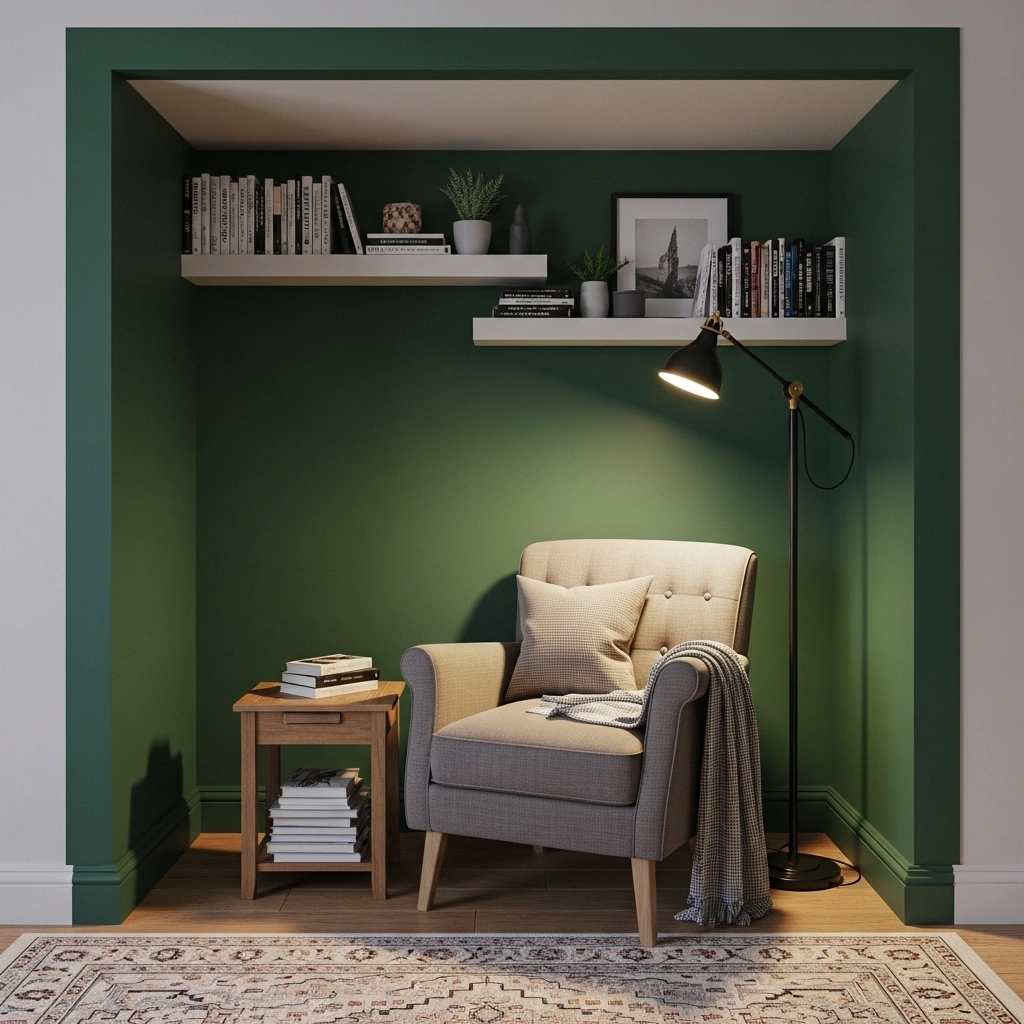
Hunter green creates the perfect backdrop for a cozy reading corner. This deeper shade feels intimate and comforting. Paired with a soft armchair and warm lighting, it creates a retreat within the living room. Add a small bookshelf or floating shelves for charm. The space feels purposeful and inviting.
Paint only the nook wall in hunter green for focus. Place a plush chair with a textured throw in front of it. Add a tall floor lamp for direct reading light. Keep surrounding walls lighter for contrast. Use a small side table to hold books and keep the area functional.
21. Muted Green with Layered Indoor Plants
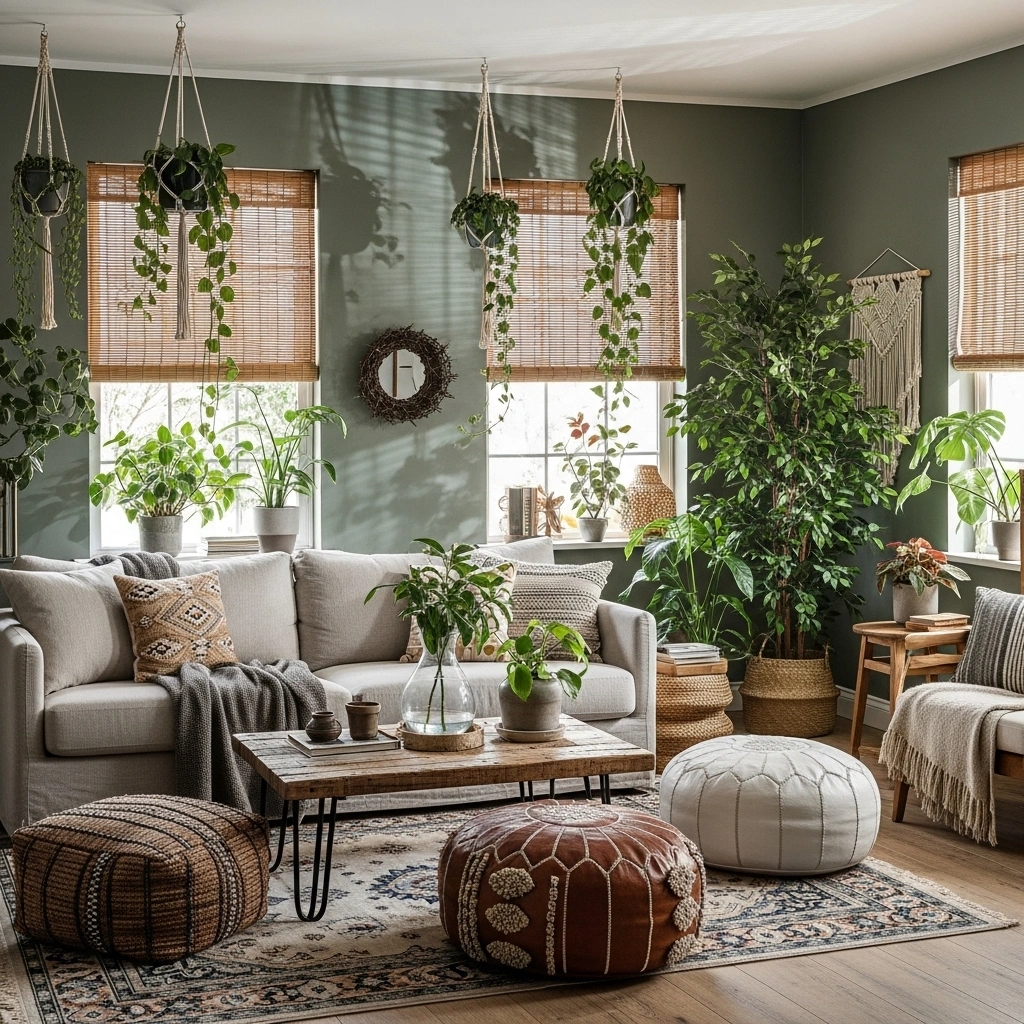
Muted green walls combined with layered indoor plants amplify the calming effect. The subtle wall color enhances natural greenery without overpowering it. Different leaf shapes and heights create depth and movement. Light wood and neutral fabrics keep the look balanced. The overall feel is fresh, organic, and relaxing.
Choose a soft green shade that complements plant tones rather than matching them exactly. Arrange plants at different levels using stands or shelves. Keep pots in neutral clay or white finishes. Avoid overcrowding by spacing greenery evenly. Add soft lighting near plants to highlight their natural texture at night.
Conclusion
A green living room does more than add color. It changes the energy of your home. From soft sage walls to deep hunter green corners, every shade creates a different mood. Light greens feel fresh and airy. Dark greens feel grounded and cozy. The right tone helps your space feel calm, balanced, and welcoming every single day.
The best part is that you do not need a full renovation to make it happen. A green sofa, an accent wall, layered textiles, or even a painted ceiling can completely shift the atmosphere. When you combine thoughtful lighting, warm wood, and natural textures, the room feels intentional and peaceful.
Start small if you feel unsure. Test one wall. Add one green statement piece. Layer slowly. A dreamy, calming living room grows through smart choices, not rushed decisions.
Now you have 21 save-worthy ideas to guide you. Choose the one that matches your home’s light, layout, and personality—and begin creating a space that truly feels like a calm retreat.