21 Purple Aesthetic Bathroom Ideas to Create a Luxurious & Dreamy Space
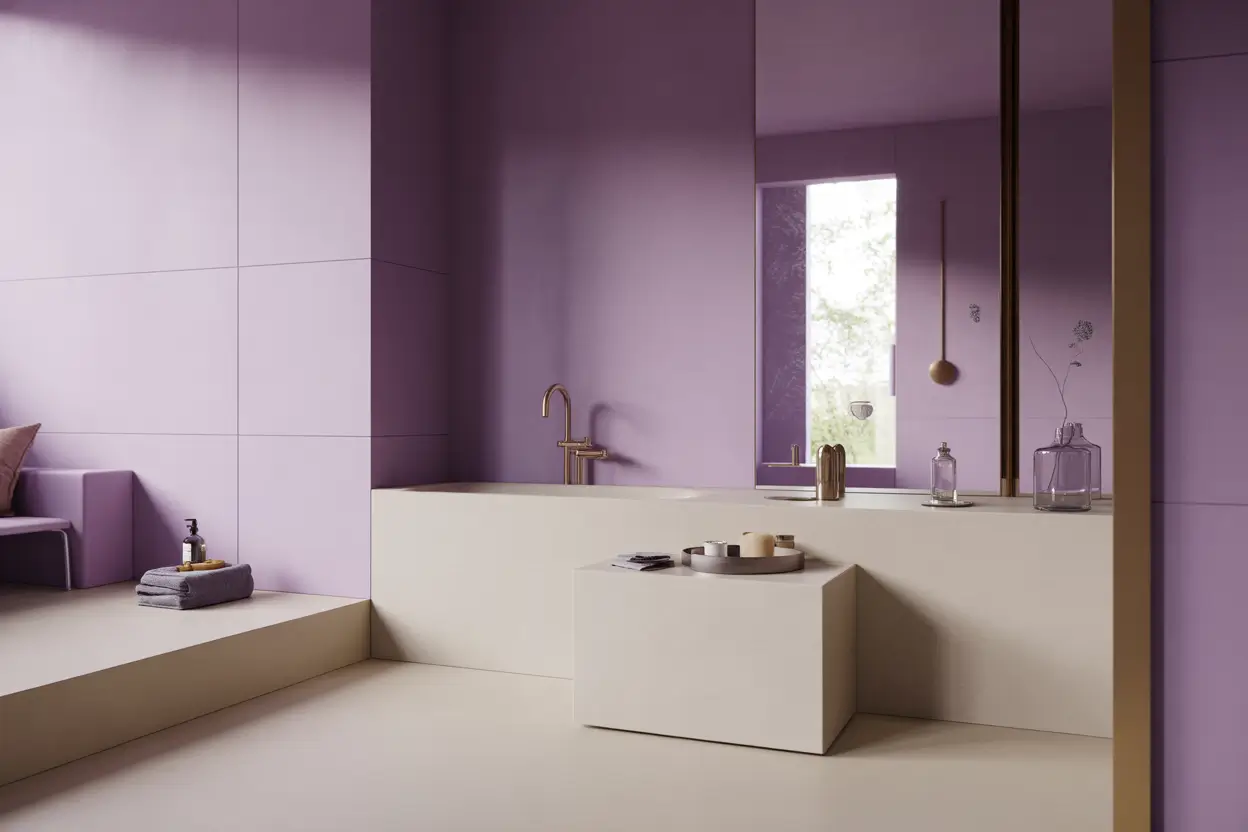
A purple aesthetic bathroom can feel calm, rich, and a little dreamy at the same time. If your bathroom looks plain or unfinished, adding purple in the right way can completely shift the mood without a full renovation. The key is not just color, but how you layer tones, textures, lighting, and materials so everything feels intentional.
In this guide, you’ll find 21 purple aesthetic bathroom ideas that go beyond basic decor. Each idea shows you how to combine shades like lavender, plum, and violet with real materials such as tile, wood, glass, and metal. You’ll also see how lighting and layout can change how purple looks throughout the day.
1. Layered Lavender Walls with Subtle Texture Finishes
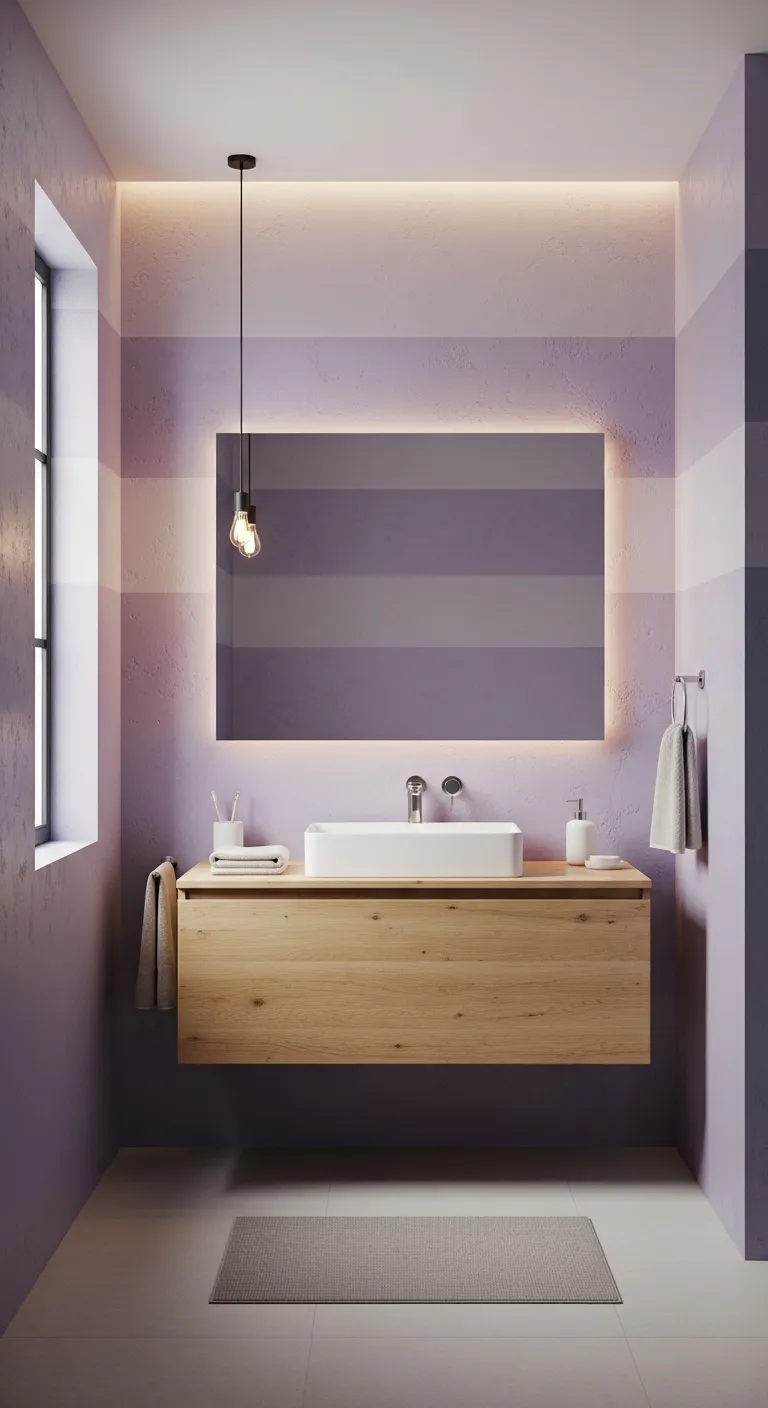
Layered lavender walls create a soft but detailed background that feels styled instead of flat. Instead of using one plain paint, combine two close lavender tones using techniques like limewash or a soft brushed finish. This adds movement and depth without making the walls busy. Pair this with smooth white tiles or a simple vanity so the wall texture remains the focal point. Warm LED lighting placed above or beside the mirror will enhance the texture and bring out slight tonal shifts in the lavender.
To ground the look, introduce light wood elements like a small stool or vanity base. This prevents the space from feeling too pastel-heavy. Keep accessories minimal—one ceramic soap dispenser or a single vase works better than clutter. This approach works especially well in small bathrooms because it adds interest without taking up physical space.
2. Deep Plum Feature Wall with Balanced Reflective Surfaces
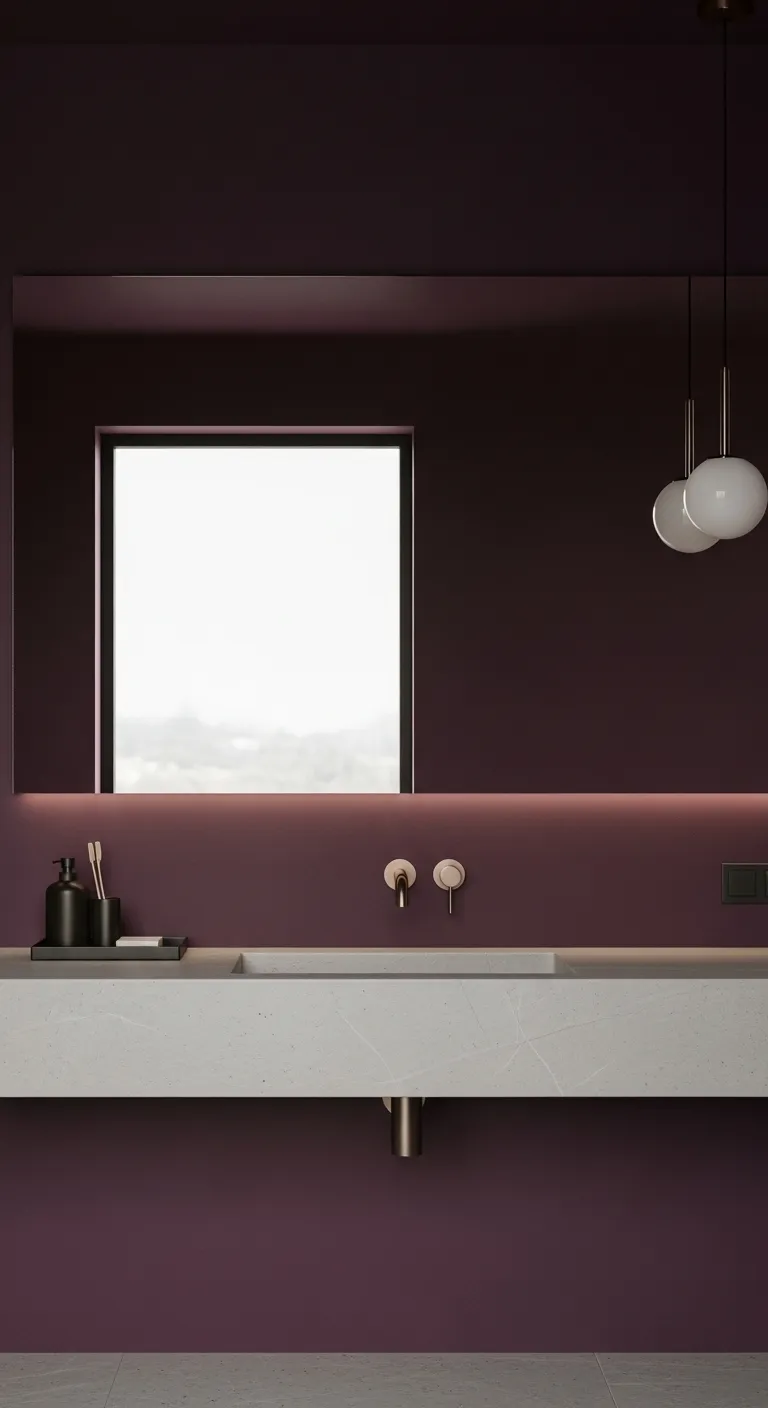
A deep plum wall adds richness, but the key is controlling how heavy it feels. Instead of pairing it with matte everything, balance it with reflective surfaces like a large mirror, glossy tiles, or even a glass shower panel. Place the plum wall behind the vanity or bathtub so it anchors the space visually. Use a satin finish rather than flat paint so it reflects just enough light to avoid looking dull.
Introduce metallic accents like brushed gold or champagne fixtures. These tones warm up the plum and prevent it from feeling too dark or cold. A backlit mirror works especially well here because it creates a glow that softens the depth of the color. Keep the rest of the palette controlled—off-white, soft beige, or pale gray. This allows the plum to stand out without overwhelming the entire bathroom.
3. Purple Marble Elements for a Natural Luxury Look
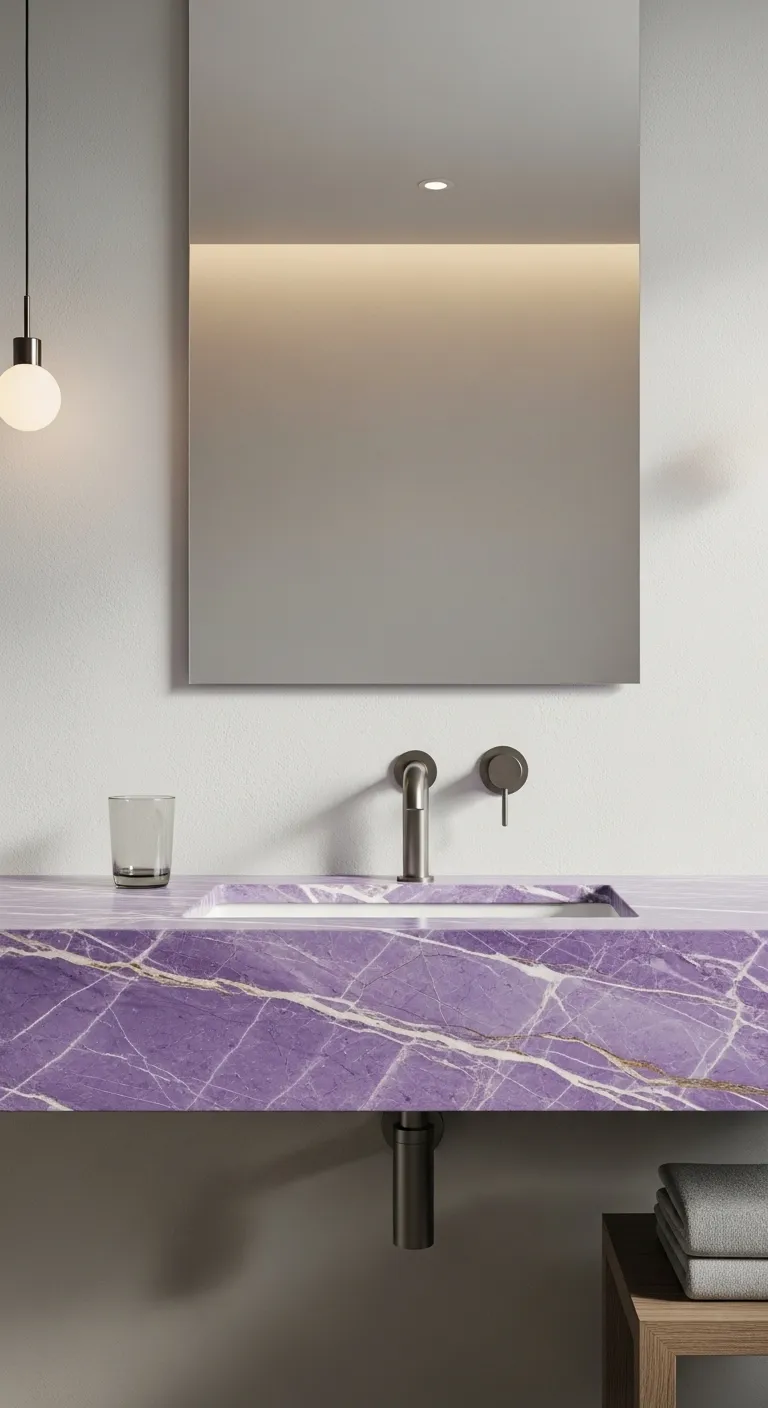
Purple marble instantly elevates a bathroom because it combines color with natural pattern. Instead of covering the entire space, use it strategically—such as on a vanity countertop, backsplash, or a vertical panel in the shower.
Look for marble with soft veining in white, gray, or even hints of gold. This variation keeps the purple from feeling flat and adds visual movement. Pair it with simple cabinetry so the stone remains the highlight.
Lighting plays a big role here. Use focused lighting like wall sconces or pendant lights to bring out the marble’s natural patterns. Avoid overly bright white lighting, as it can wash out the richness of the stone. To complete the look, keep accessories minimal and refined. Think glass containers, neutral towels, and clean lines. This idea works best when you let the material speak for itself.
4. Lilac and Warm Wood Combination for a Balanced Feel
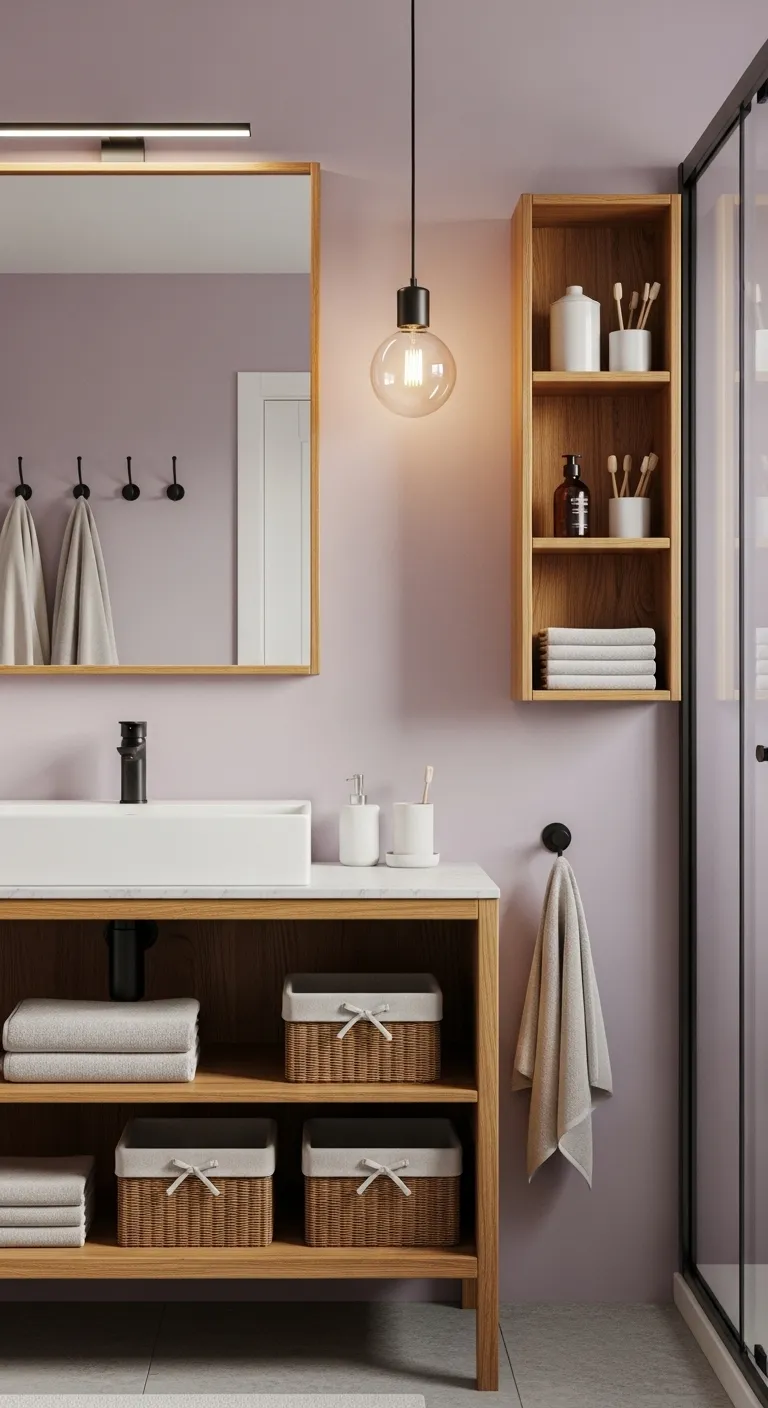
Lilac can sometimes feel too soft on its own, but pairing it with warm wood creates a balanced and grounded space. Use lilac on the walls or tiles, then introduce wood through a vanity, shelving, or even a mirror frame. Choose wood tones that are slightly warm—like oak or walnut—to contrast gently with the coolness of lilac. This mix creates a cozy but still fresh atmosphere.
Add soft lighting, preferably warm white, to enhance the natural tones of the wood. Avoid harsh lighting, as it can make lilac look washed out. For styling, include woven baskets or textured storage pieces. These add depth without introducing new colors. This idea works well if you want a bathroom that feels calm but not overly feminine or pastel-heavy.
5. Gradient Purple Tile Shower for a Visual Flow Effect
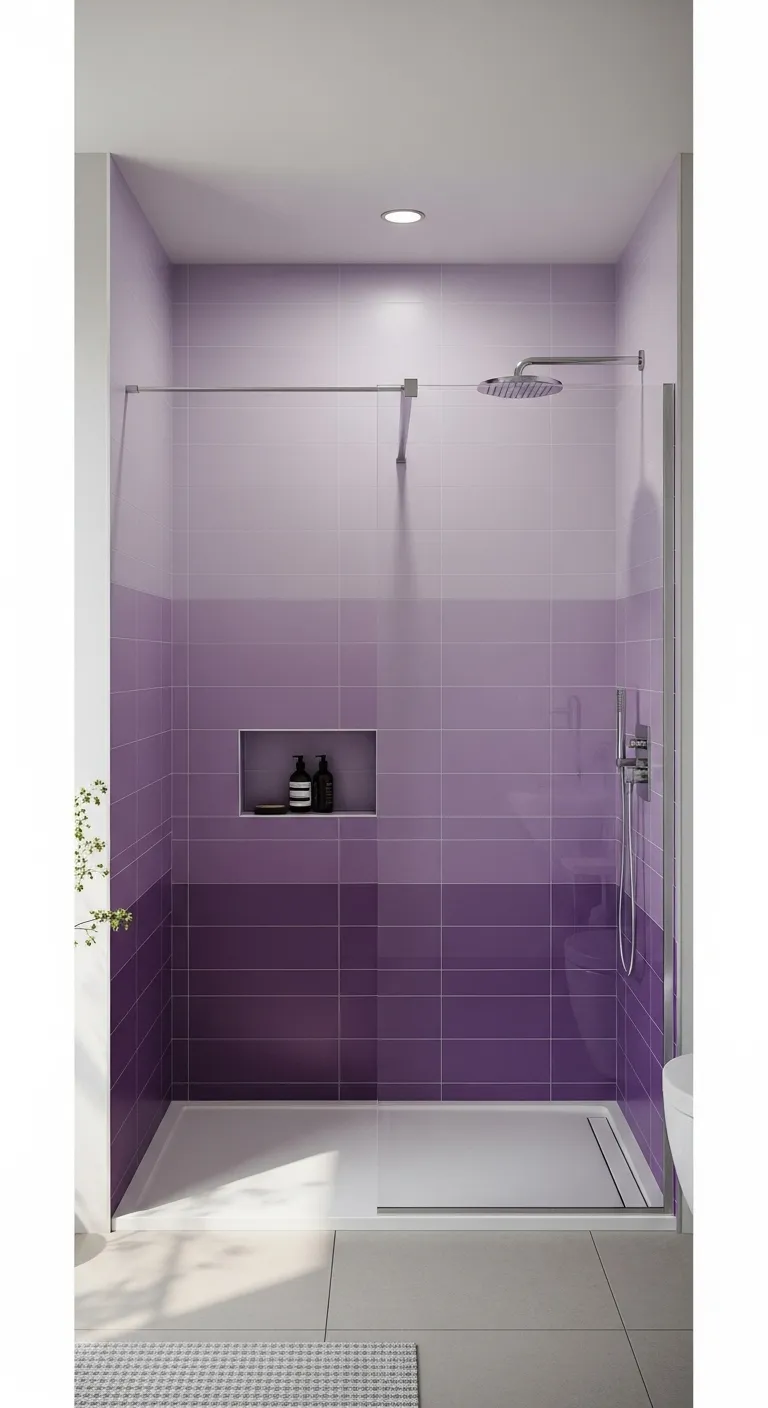
A gradient tile design creates a smooth transition from light to dark purple, adding movement to your bathroom. Start with pale lavender tiles at the top and gradually shift to deeper violet or plum tones toward the bottom. This vertical flow draws the eye upward, making the space feel taller. It also creates a unique focal point without needing extra decor. Use simple grout in a neutral tone so the gradient remains the focus. Pair the shower with clear glass panels to keep the design visible and uninterrupted.
Keep surrounding elements minimal—white walls, a neutral vanity, and simple fixtures. This ensures the gradient effect stands out clearly. For lighting, install overhead and side lighting to highlight the color transition. This idea works especially well in modern bathrooms where clean design meets bold visual interest.
6. Matte Violet Fixtures for a Subtle Statement
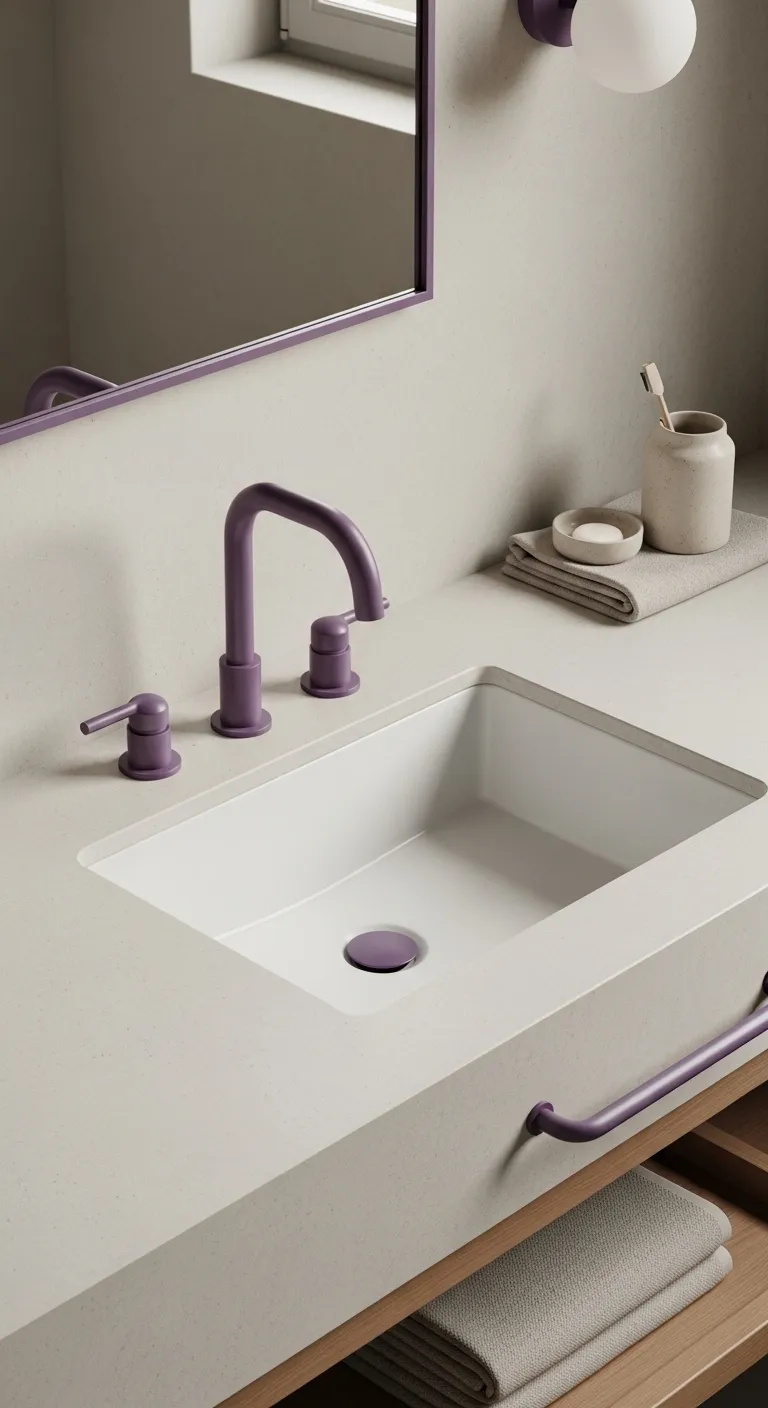
Instead of focusing only on walls or tiles, bring purple into the bathroom through fixtures. Matte violet faucets, shower handles, or even cabinet hardware create a subtle but distinctive look. This works best when the rest of the bathroom stays neutral. Think white, gray, or soft stone finishes that allow the violet details to stand out without competing. Matte finishes reduce glare and give a more refined appearance compared to glossy surfaces. They also feel more modern and less decorative.
Pair these fixtures with simple shapes and clean lines. Avoid overly ornate designs, as they can clash with the minimal aesthetic. This idea is perfect if you want to experiment with purple without committing to large surfaces. It’s also easier to update later if you want a different look.
7. Purple Backlit Mirror for Ambient Lighting
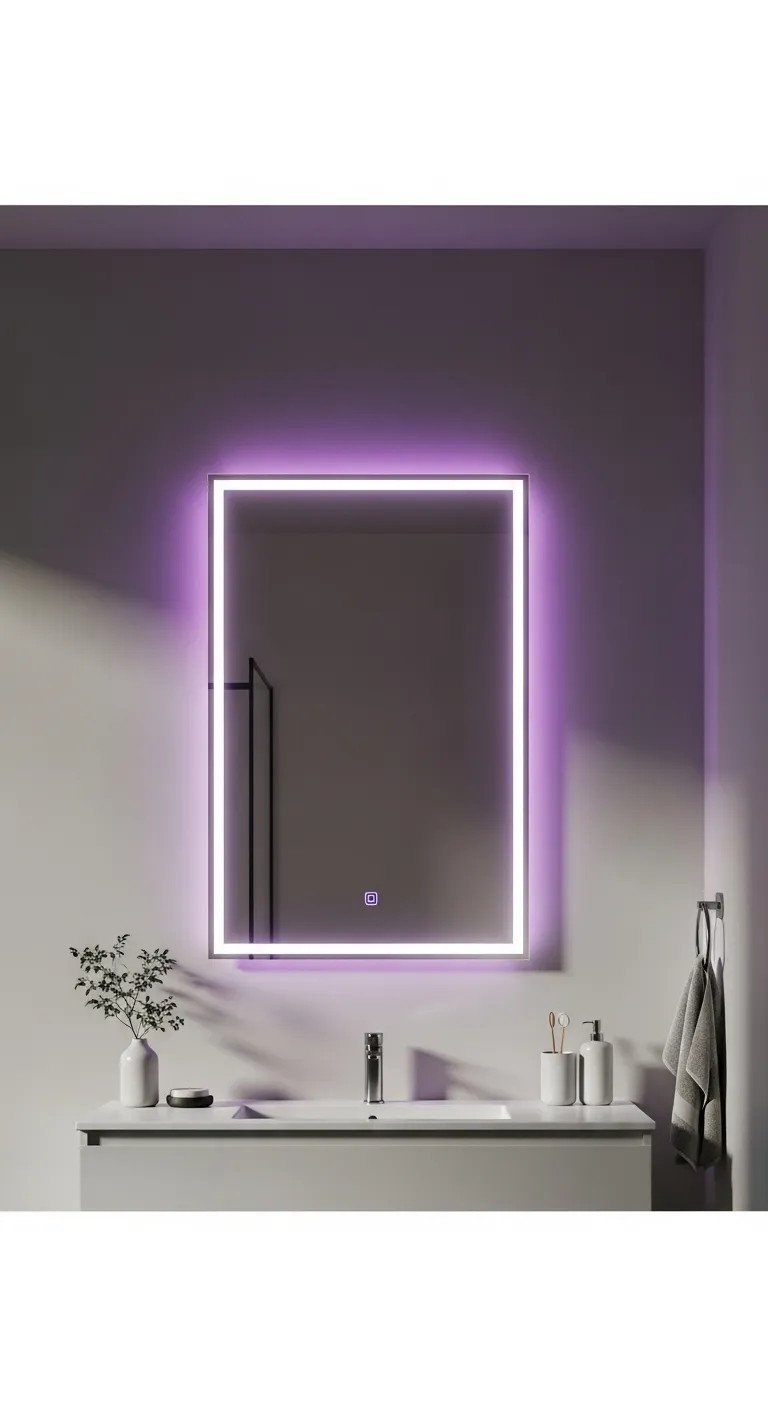
A backlit mirror with a soft purple glow adds atmosphere without overwhelming the space. Instead of using bright colored lights, choose a subtle lavender or violet tone that blends with the overall design. This lighting works best in the evening, creating a calm and slightly luxurious mood. It also highlights the mirror area, making it a focal point.
Pair this with neutral walls or very soft purple tones so the lighting doesn’t clash. Keep other lighting sources warm and balanced to avoid harsh contrasts. Use a frameless or thin-frame mirror for a clean look. This allows the glow to feel more integrated rather than decorative. This idea is especially useful in small bathrooms where you want to add visual interest without adding more physical elements.
8. Textured Purple Wallpaper with Minimal Decor
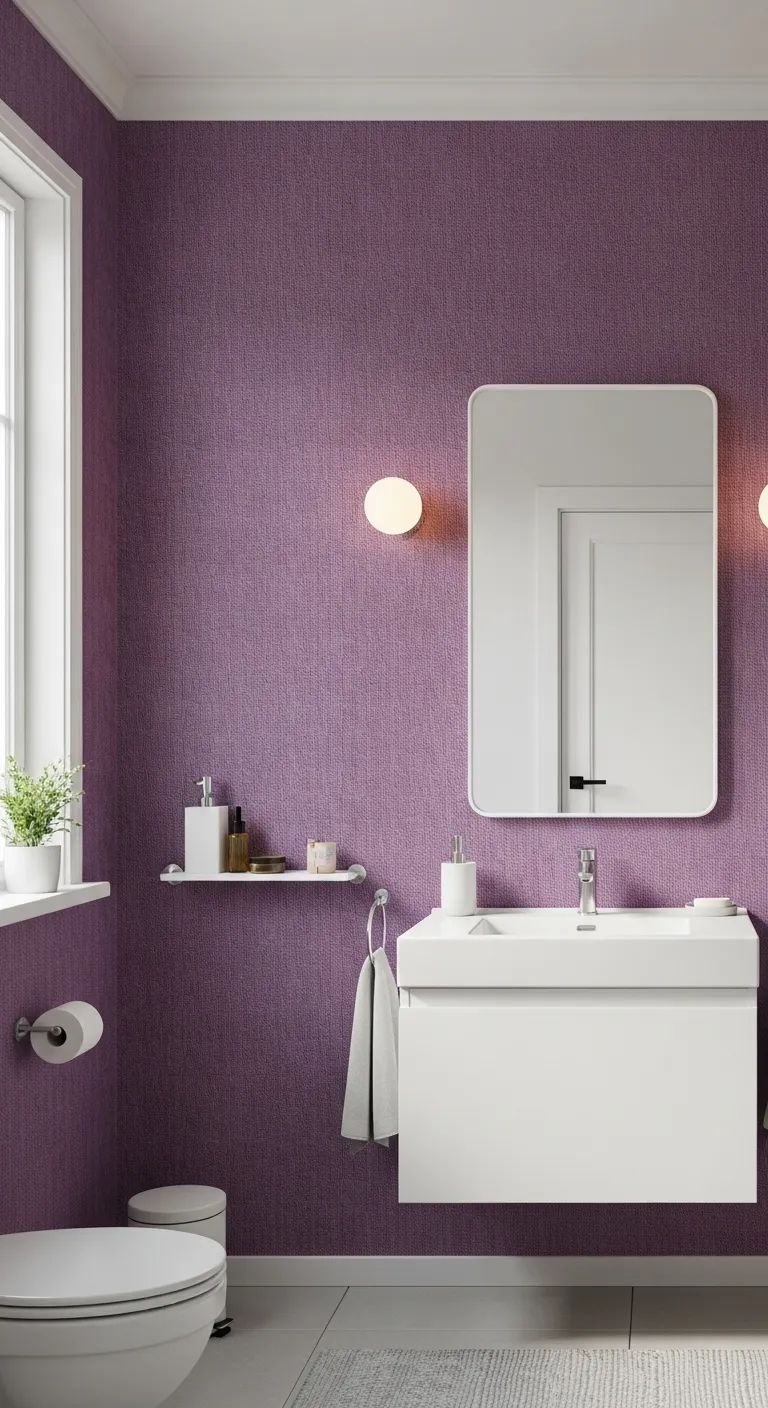
Textured wallpaper in a purple tone can add depth without needing multiple materials. Choose designs with subtle patterns like linen texture, soft waves, or abstract brush effects. Apply it to one wall to avoid overwhelming the space. Pair it with simple fixtures and minimal decor so the texture remains the focus.
Lighting should be soft and directional to enhance the texture. Wall sconces or angled ceiling lights work well here. Avoid mixing too many patterns in the same space. Let the wallpaper be the main design element and keep everything else simple. This idea works well if you want a quick transformation without changing tiles or major fixtures.
9. Purple Glass Accessories for Light Reflection
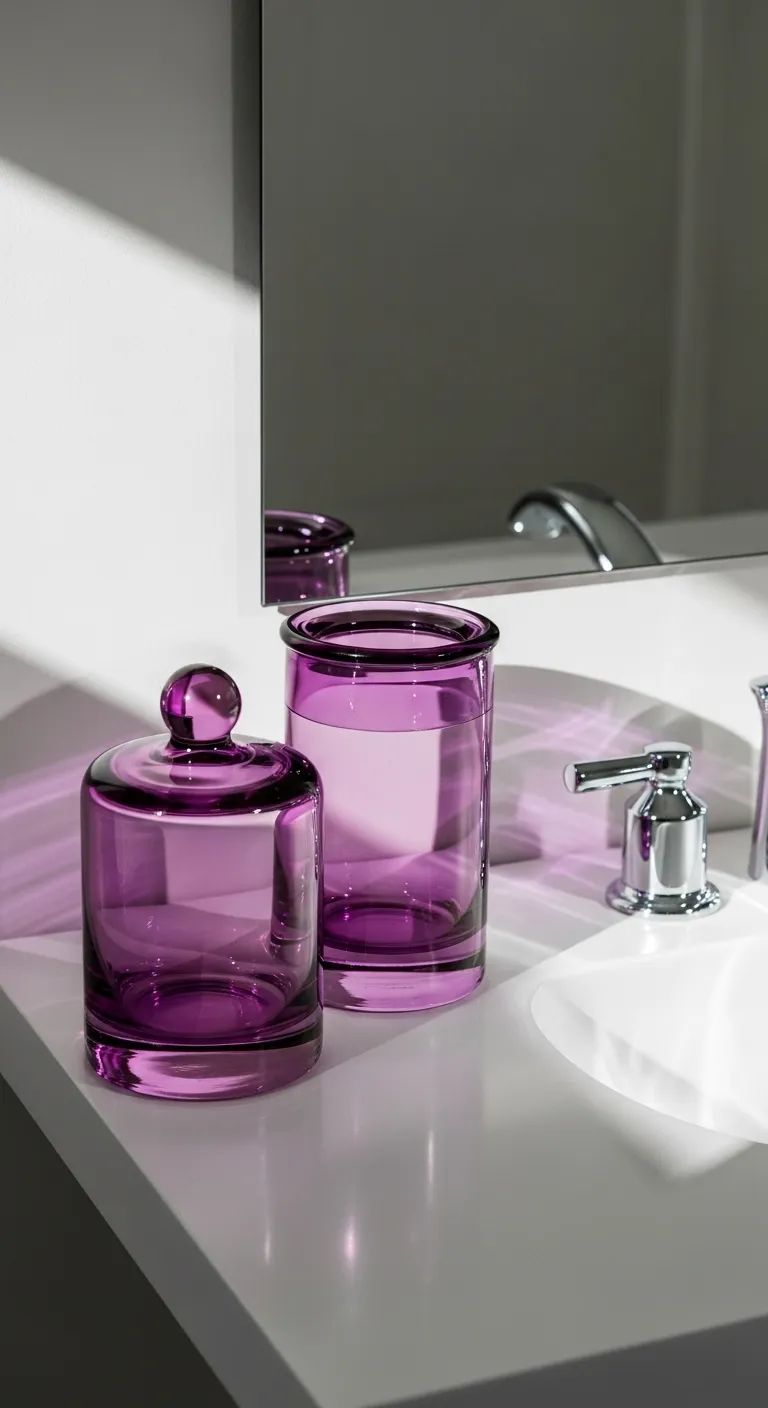
Purple glass elements like soap dispensers, jars, or small decor pieces can reflect light beautifully and add subtle color without dominating the space. Choose translucent or slightly tinted glass rather than opaque items. This allows light to pass through and creates a soft glow effect.
Place these items near natural or artificial light sources to enhance their appearance. Even a small window or vanity light can make a difference. Pair them with neutral surfaces like white or marble so the glass stands out gently. Avoid overcrowding—two or three pieces are enough. This idea is simple but effective, especially for renters or anyone looking for a non-permanent update.
10. Mixed Purple Textiles for a Cozy Layered Look
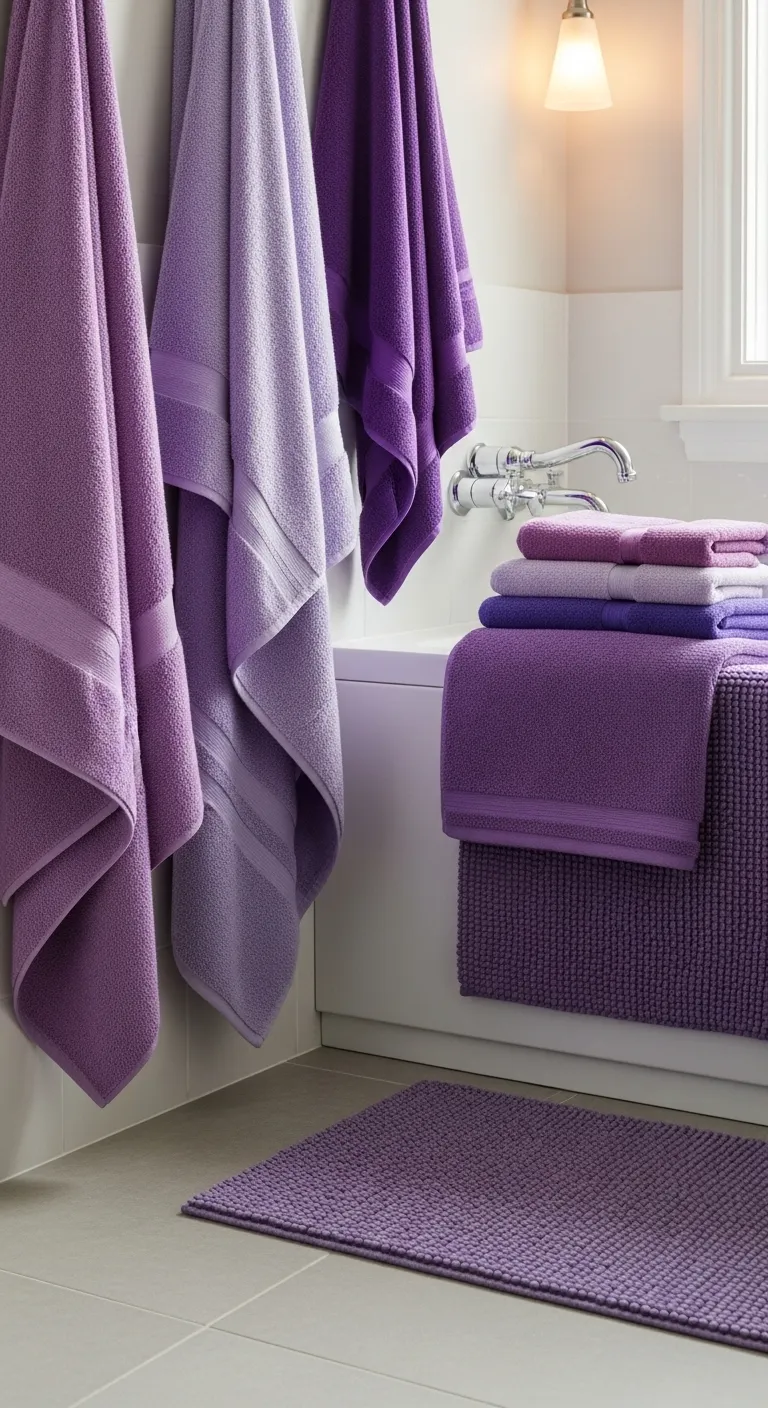
Layering different purple textiles can make a bathroom feel warm and styled without changing permanent elements. Use towels, bath mats, and even shower curtains in varying shades like lavender, mauve, and deep violet.
Focus on texture differences—combine soft cotton towels with a slightly thicker bath mat or a waffle-textured fabric. This creates depth even within the same color family. Keep the base of the bathroom neutral so the textiles stand out. White or light gray walls work best here. Rotate textiles seasonally if you want to refresh the look without buying new decor. This makes the space feel updated with minimal effort.
This approach is practical, budget-friendly, and easy to change whenever you want a different vibe.
11. Amethyst-Inspired Stone Basin as a Focal Point
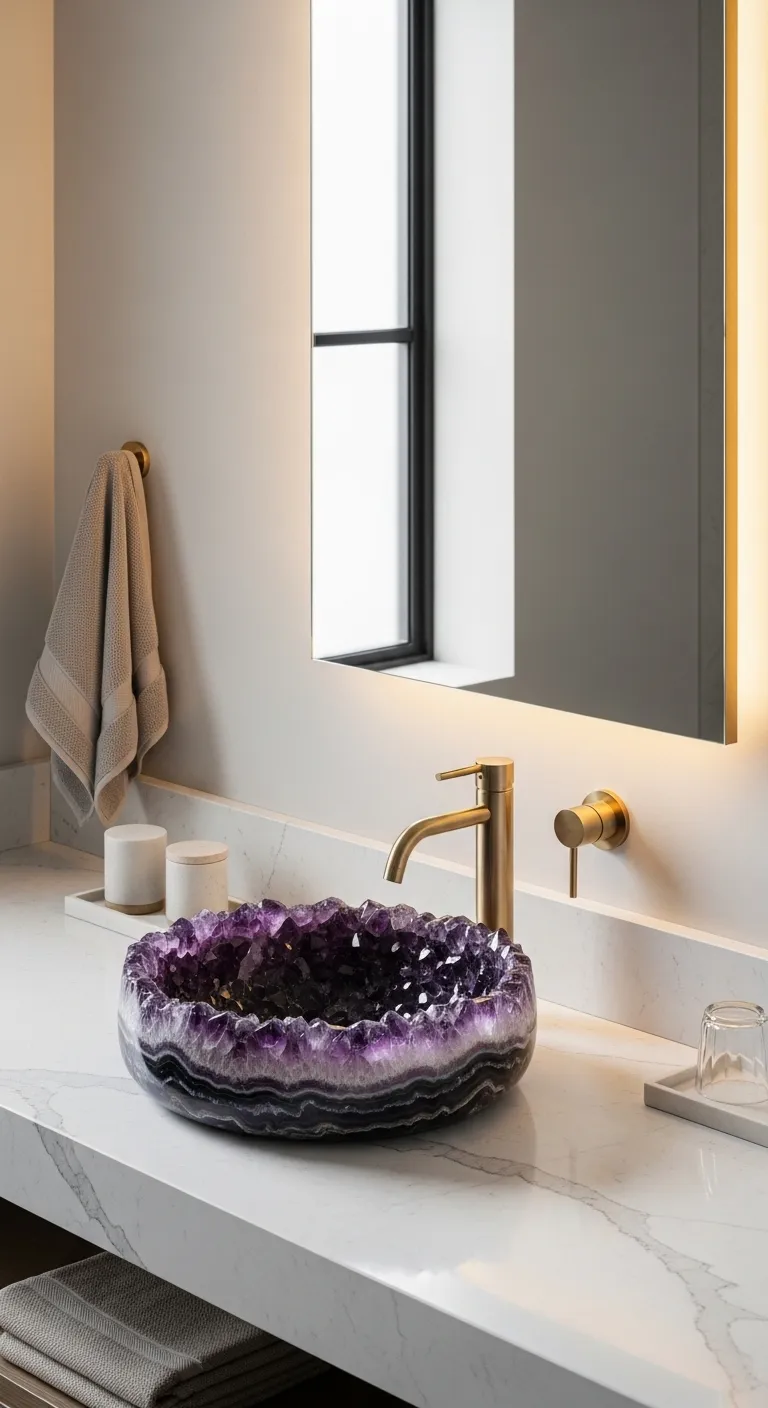
An amethyst-style basin turns your sink area into a statement without needing extra decoration. Look for basins with natural crystal patterns or resin finishes that mimic the layered look of amethyst stone. This instantly adds depth, shine, and a unique visual anchor. Keep the countertop simple—white quartz or light concrete works best so the basin stands out clearly. Pair it with a minimal faucet in brushed gold or matte black to create contrast without distraction.
Lighting matters here. Use focused lighting above the sink to highlight the texture and subtle color variations in the basin. Avoid overly bright cool lighting, as it can flatten the richness of the purple tones. Keep surrounding decor minimal. One small tray or a neutral soap dispenser is enough. This idea works best when the basin becomes the main visual element in the space.
12. Two-Tone Purple Walls for Structured Depth
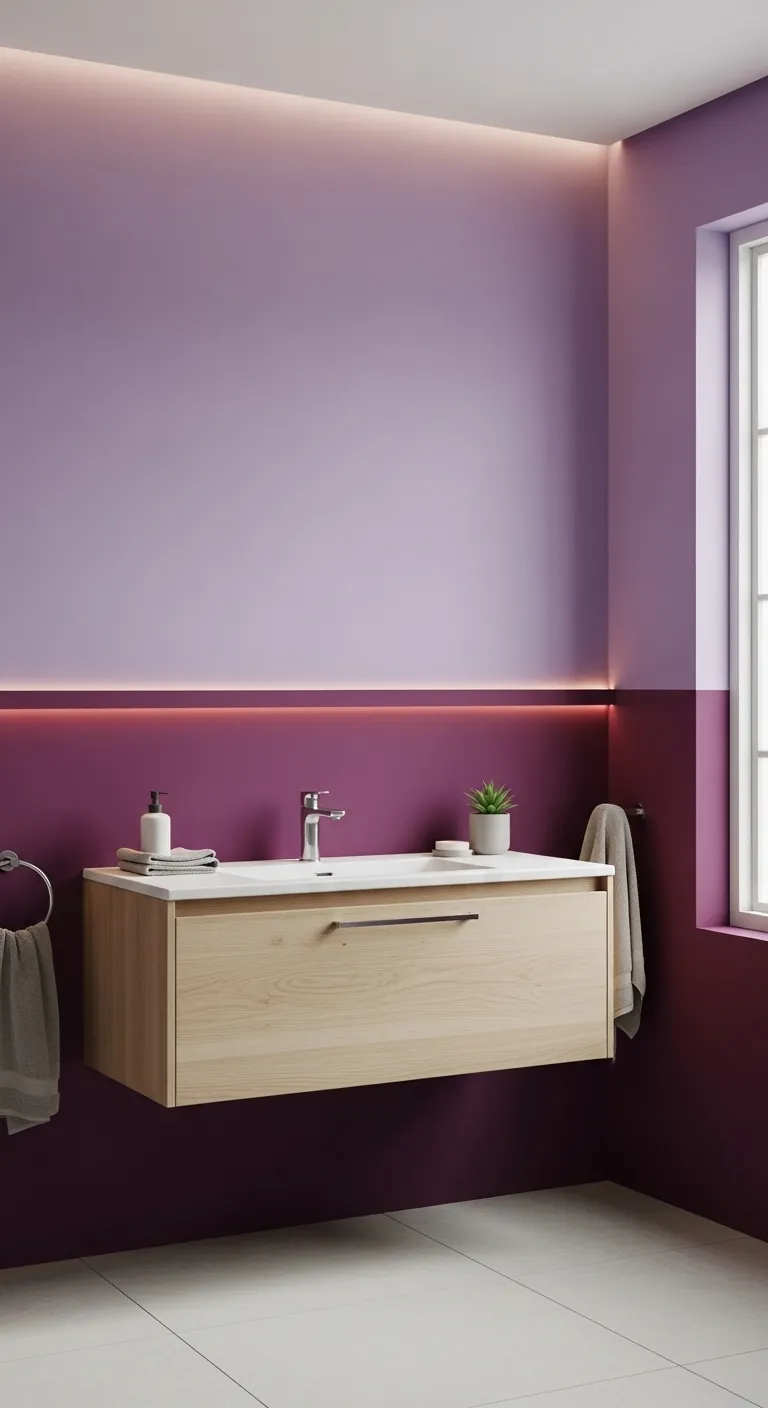
Using two shades of purple on the same wall creates structure and prevents the space from feeling flat. Paint the lower half in a deeper tone like plum or violet, and the upper half in a lighter lavender shade. Add a thin divider line or molding between the two sections to create a clean separation. This detail makes the design feel intentional rather than accidental.
Pair this wall with simple tiles or a neutral vanity to avoid visual overload. The contrast between light and dark purple naturally adds dimension to the room. Use warm lighting to soften the transition between shades and keep the space inviting. This technique works especially well in medium-sized bathrooms where you want visual interest without adding clutter.
13. Frosted Purple Glass Shower Panels for Privacy and Style
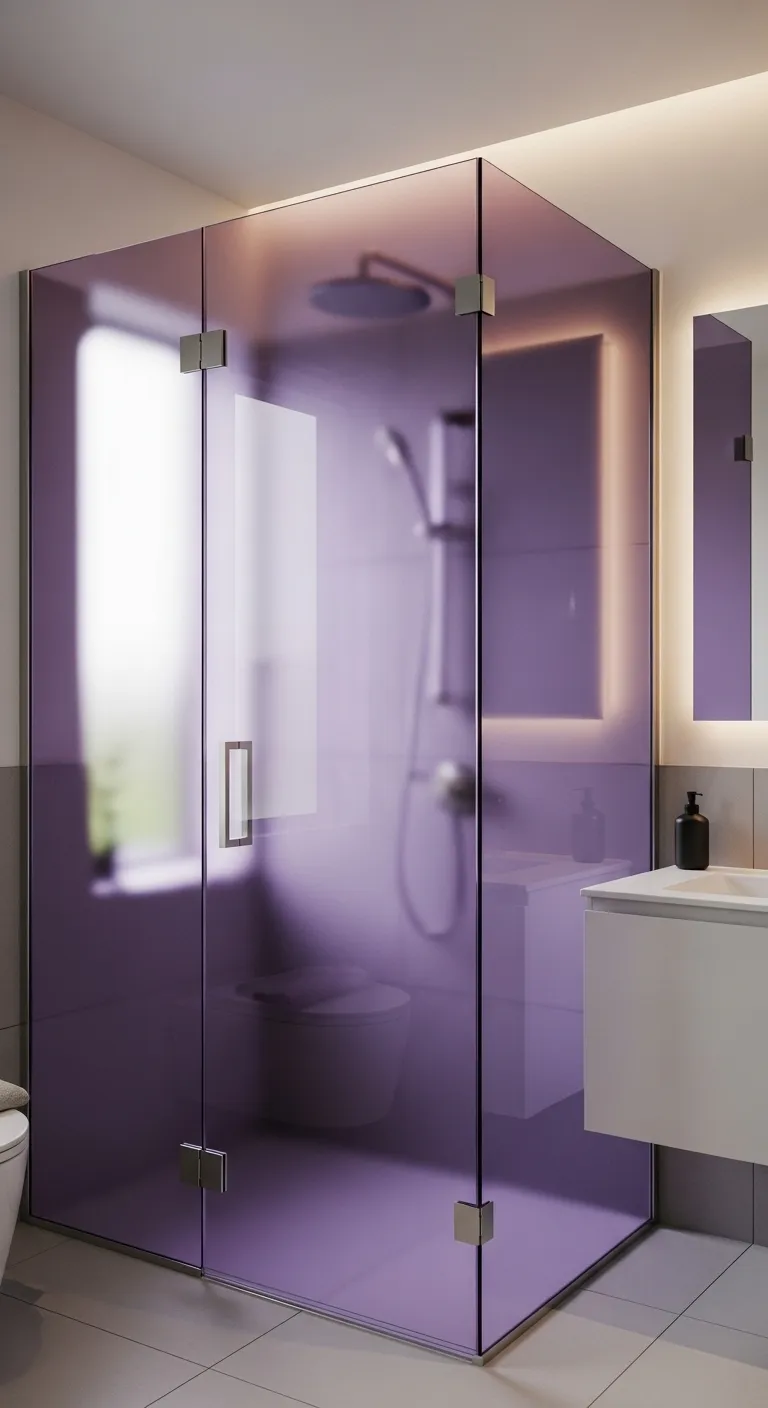
Frosted purple-tinted glass panels offer both function and design. They provide privacy while softly diffusing light, creating a calm and slightly dreamy effect inside the shower area. Choose a very light purple tint to avoid making the space feel enclosed. The frosted finish helps scatter light, which keeps the bathroom feeling open. Pair these panels with neutral tiles—white, light gray, or soft beige—to balance the color. Use minimal metal framing or frameless designs for a clean look.
Install soft overhead lighting inside the shower to enhance the glow through the glass. This creates a gentle color effect without needing additional decor. This idea works well in modern bathrooms where you want a subtle but noticeable design feature.
14. Purple Ceiling Accent for an Unexpected Twist
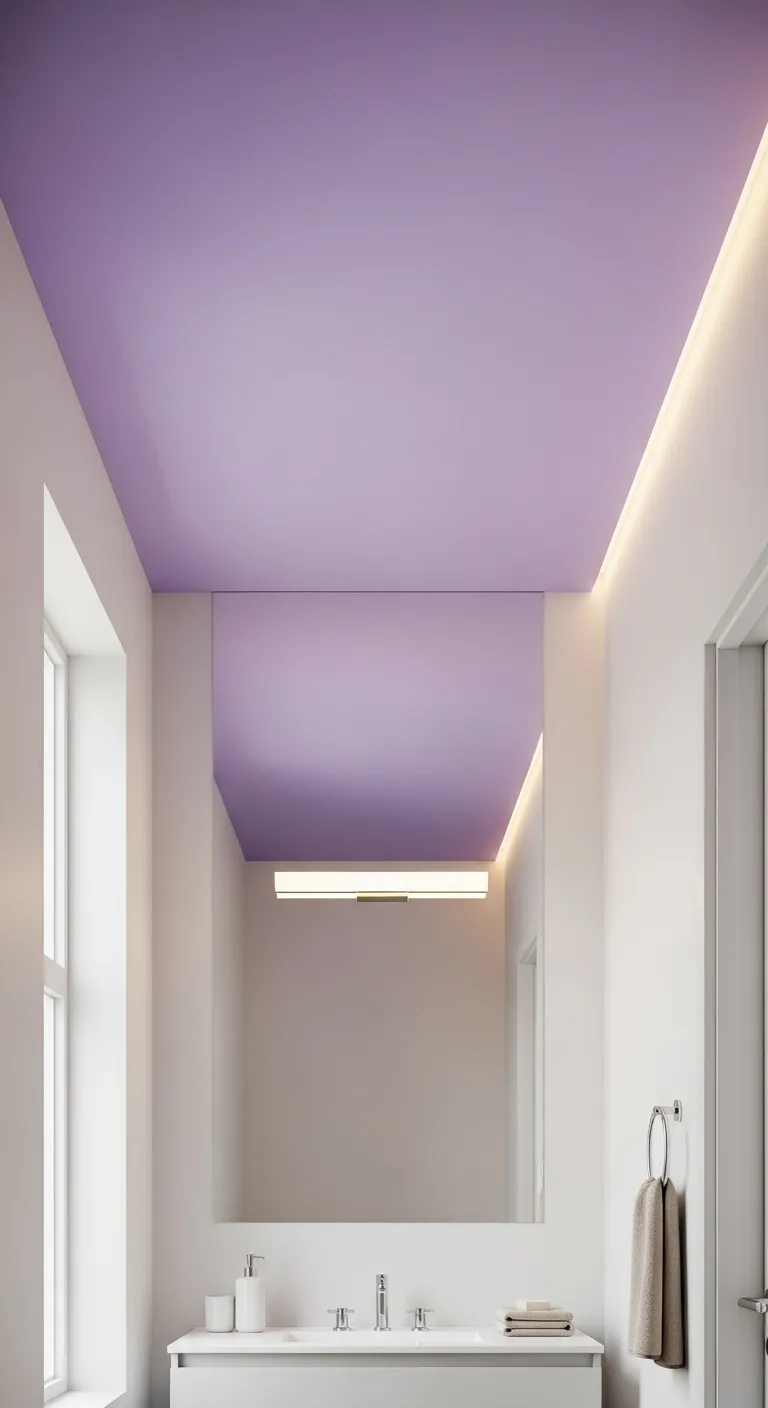
Painting the ceiling in a soft purple tone adds interest without taking up wall space. This works especially well in bathrooms with white or neutral walls, where the ceiling becomes a hidden focal point. Choose a light lavender or muted violet so the color feels airy rather than heavy. A satin finish helps reflect light slightly, preventing the ceiling from looking dull.
Pair this with simple lighting fixtures that direct light upward. This highlights the ceiling color and creates a soft glow across the room. Keep wall decor minimal so the ceiling remains the highlight. This approach adds personality in a subtle way, making the space feel thoughtfully designed without being overwhelming.
15. Velvet Purple Vanity Stool for Soft Texture Contrast
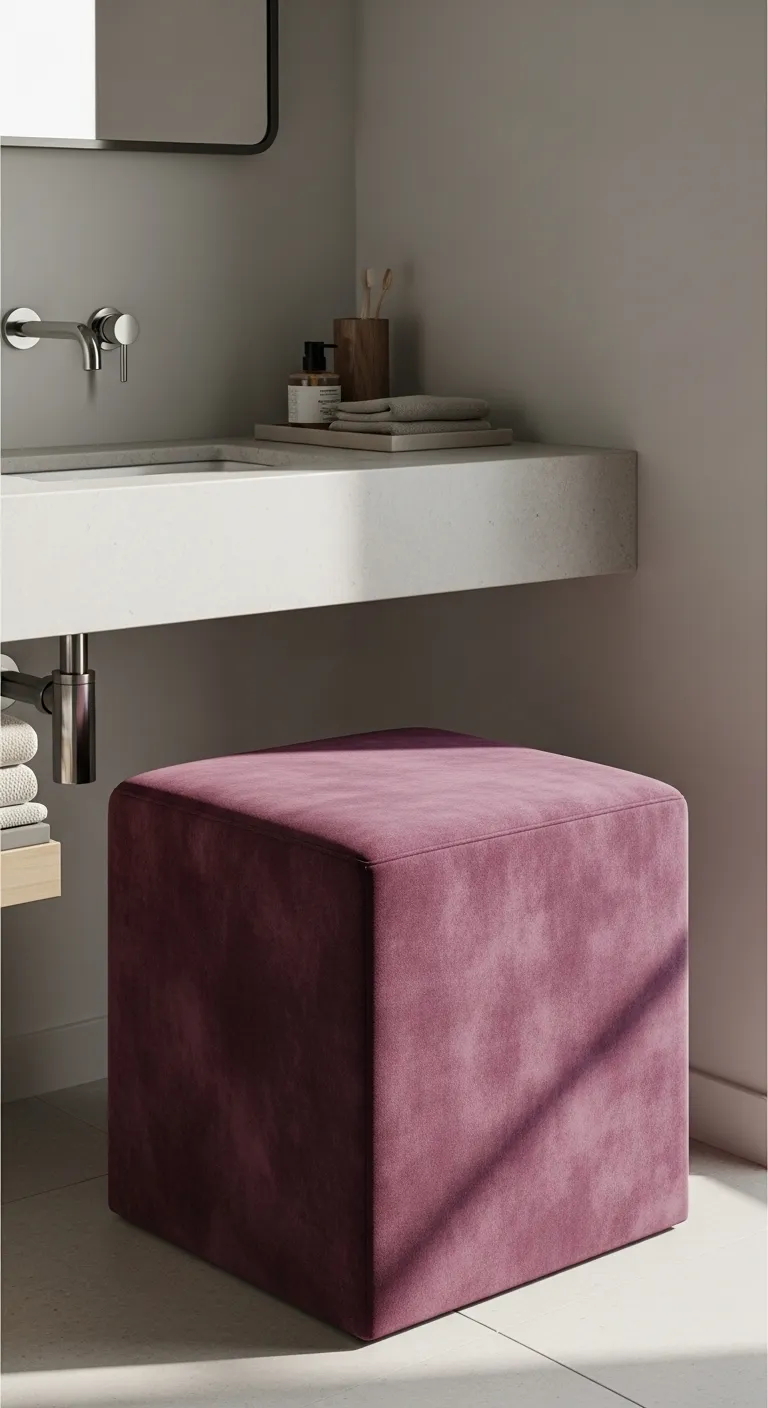
A small velvet stool in a rich purple tone adds softness and comfort while introducing texture. Place it near the vanity or in a corner where it feels functional rather than decorative. Choose deep shades like plum or aubergine for a more grounded look. Velvet reflects light differently than other materials, which adds depth even in a small piece. Pair the stool with smooth surfaces like marble or tile to create contrast. This mix of soft and hard textures makes the space feel more layered. Keep the rest of the seating area simple. Avoid adding too many soft elements, as it can make the bathroom feel cluttered. This idea works well if you want to add purple without changing walls or fixtures.
16. Purple Mosaic Niche in the Shower Wall
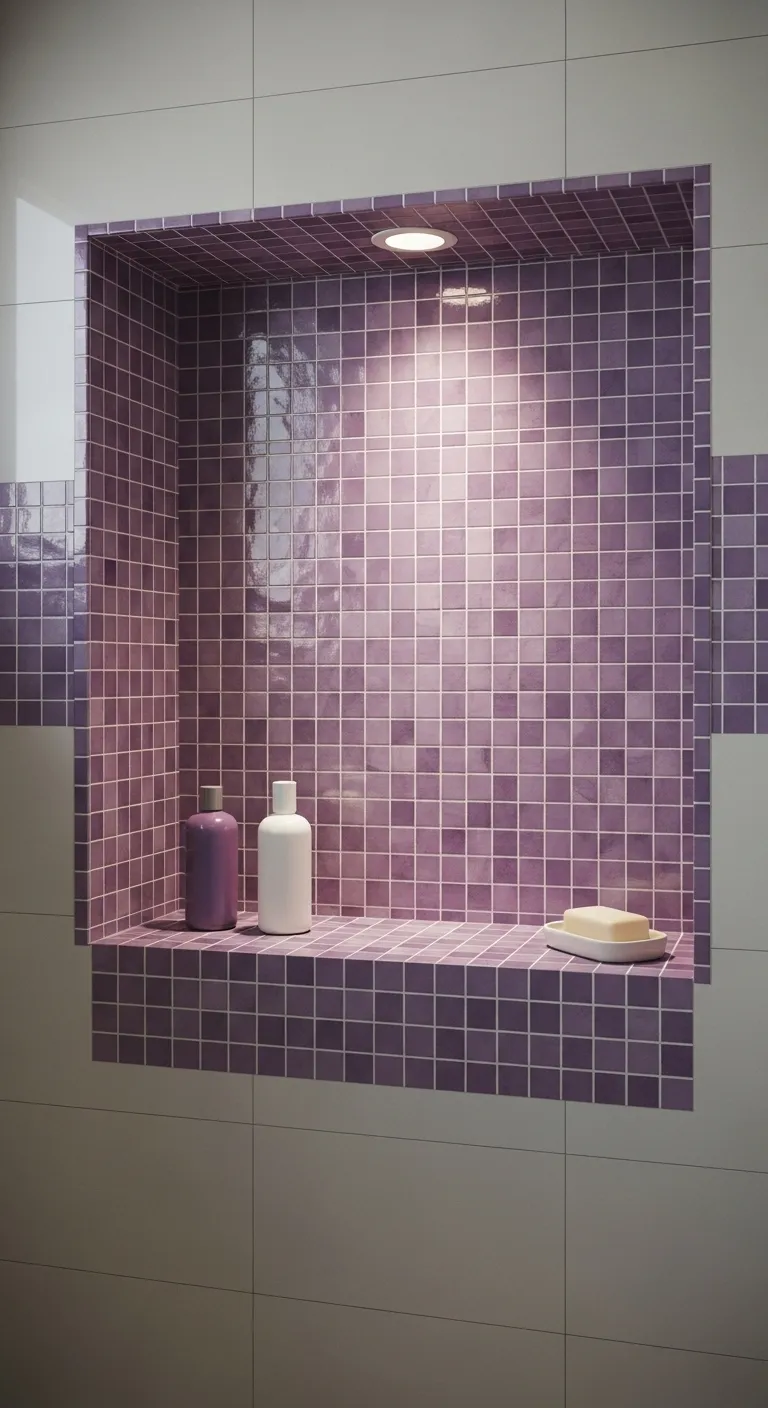
A built-in shower niche lined with purple mosaic tiles creates a small but impactful design feature. Instead of covering the entire shower, focus on this single area to add detail without overwhelming the space. Choose small tiles with slight variations in tone to create depth. Glass or glossy finishes work best because they reflect light and make the niche stand out.
Keep the surrounding tiles neutral so the mosaic becomes the focal point. White or light gray tiles provide the best contrast. Add a small recessed light above the niche to highlight the texture and color. This makes the feature more noticeable, especially in the evening. This idea is practical and decorative at the same time, making storage feel intentional.
17. Purple and Concrete Mix for a Modern Edge
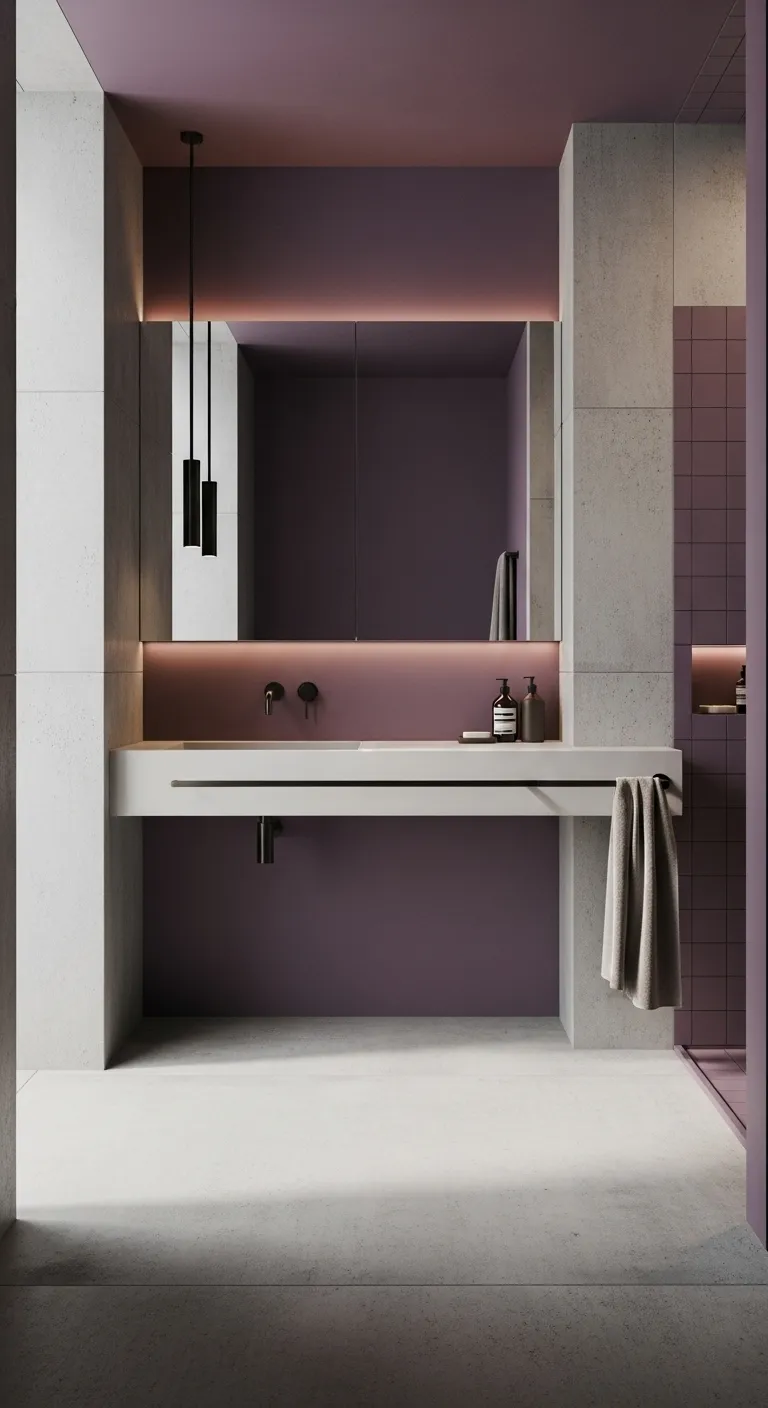
Combining purple with raw concrete creates a modern and slightly industrial feel. Use concrete for walls, countertops, or floors, and introduce purple through paint, tiles, or accessories. Choose muted purple tones like dusty lavender or grayish violet to match the raw texture of concrete. Bright shades may feel out of place in this setup. Add black or dark metal fixtures to complete the modern look. These elements tie the materials together without adding extra color. Lighting should be soft but directional to highlight the texture of the concrete and the subtle tones of purple. This combination works well in contemporary bathrooms where you want something different from traditional designs.
18. Layered Purple Lighting for a Dynamic Mood
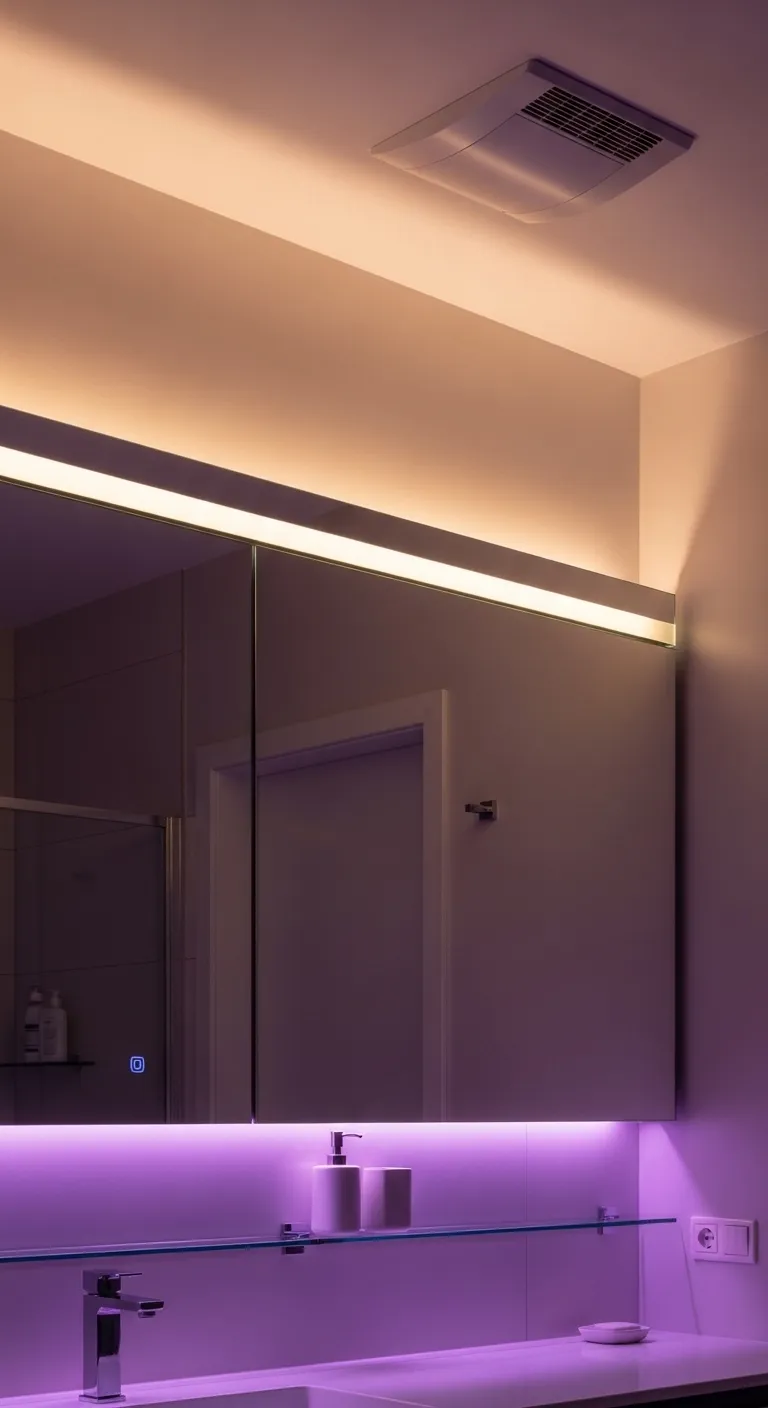
Instead of relying on one light source, use multiple layers of lighting with slight purple tones. Combine overhead lighting, mirror lighting, and accent lighting to create depth. Use very subtle purple-tinted LED strips under shelves or behind mirrors. This adds a soft glow without making the space look artificial.
Balance this with warm white lighting so the bathroom remains functional for daily use. The mix of tones creates a dynamic atmosphere that changes throughout the day. Keep surfaces neutral so the lighting becomes the main feature. This approach works especially well in the evening when softer lighting enhances the overall mood.
19. Purple Framed Mirror as a Defined Centerpiece
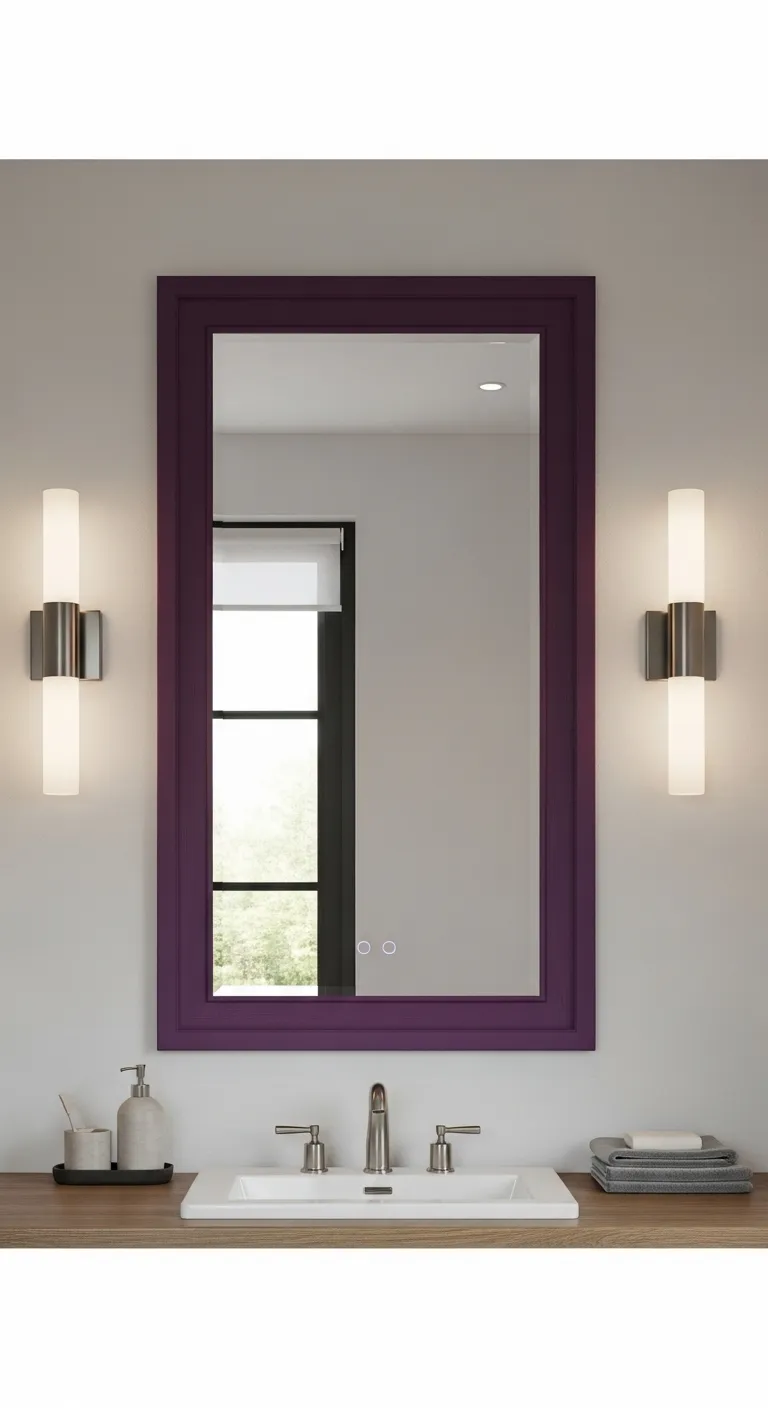
A mirror with a purple frame adds structure and color without changing large surfaces. Choose a frame in a matte or slightly textured finish for a more refined look. Deep shades like eggplant or plum work best for frames because they create contrast against lighter walls. Pair this with simple wall colors to keep the focus on the mirror. Position lighting on either side of the mirror to highlight the frame and create balanced illumination. Avoid overhead-only lighting, as it can create shadows. Keep the vanity area clean and uncluttered so the mirror remains the focal point. This idea is simple but effective for adding a clear design element.
20. Purple Terrazzo Flooring for Subtle Pattern Play
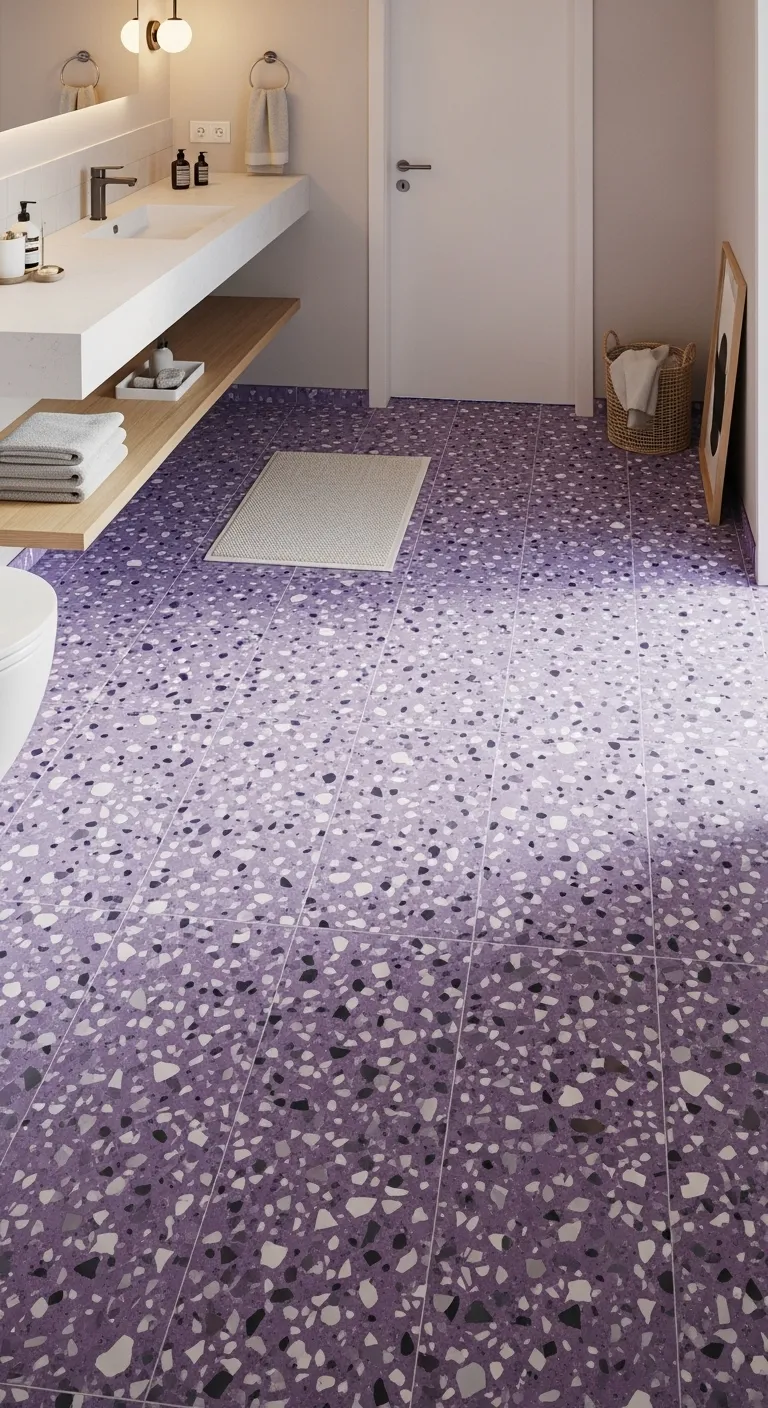
Purple terrazzo flooring introduces color through small, scattered fragments rather than large surfaces. This creates a balanced look that feels detailed but not overwhelming. Choose terrazzo with a mix of purple, white, and gray chips to maintain a neutral base. The variation in pattern adds visual interest without requiring additional decor.
Pair the flooring with simple walls and minimal accessories so the pattern remains noticeable. Avoid adding too many competing textures. Use soft lighting to enhance the subtle color variations in the floor. This helps bring out the details without making them too bold.
This idea works well if you want a long-lasting design that feels modern and easy to maintain.
21. Monochrome Purple Palette with Tonal Variation
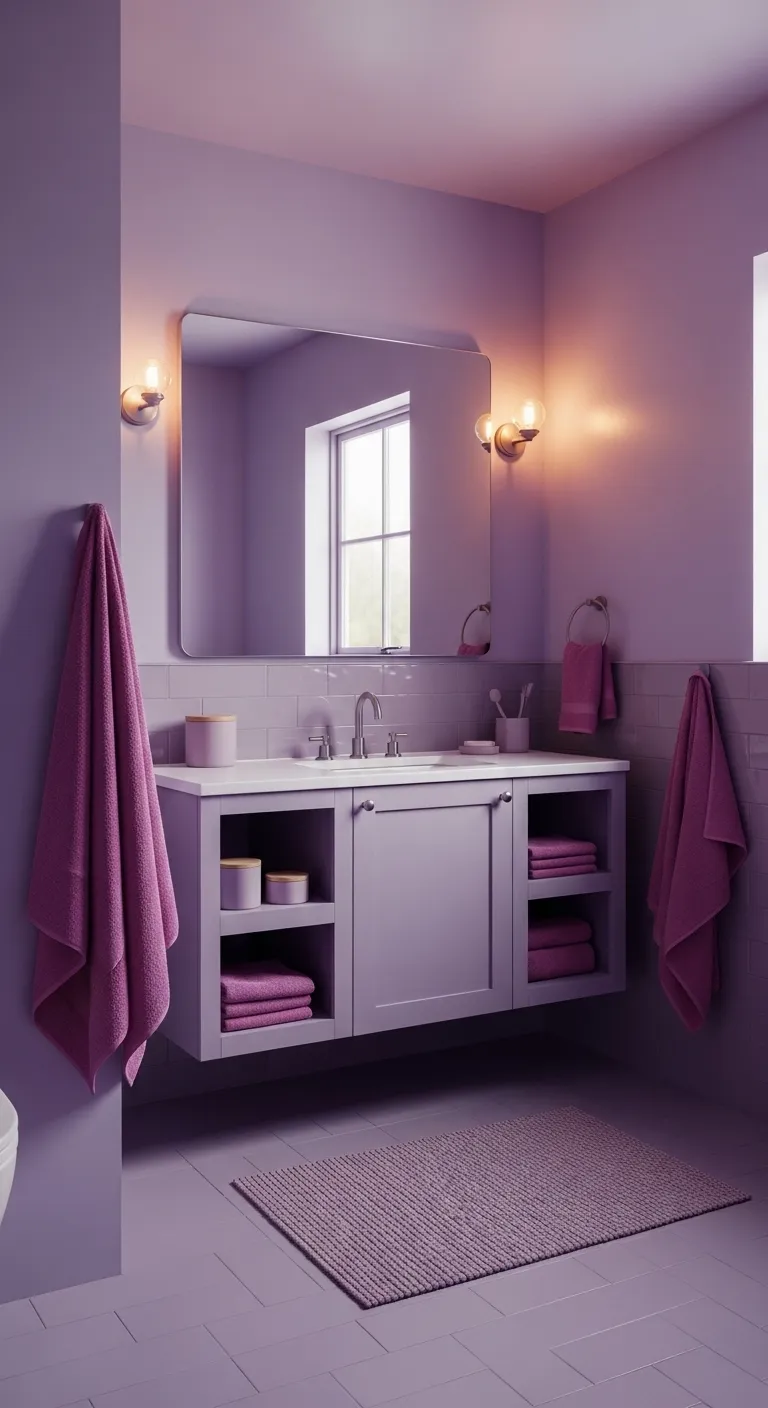
A monochrome purple bathroom uses multiple shades of the same color to create a cohesive look. Instead of mixing different colors, focus on layering tones like lavender, lilac, violet, and plum. Start with a base shade for the walls, then introduce darker tones through tiles or furniture. Add lighter shades through textiles and accessories. The key is variation in texture—combine matte walls, glossy tiles, and soft fabrics to prevent the space from feeling flat. Use neutral lighting to keep the colors true and balanced. Avoid colored lighting here, as it can distort the tones. This approach creates a fully immersive space that feels designed and intentional without relying on contrast from other colors.
Conclusion
A well-designed purple aesthetic bathroom is not just about color—it’s about how you layer tones, textures, materials, and lighting to create a complete experience. From soft lavender walls to bold plum accents and subtle glass details, each idea offers a different way to bring personality into your space. You don’t need to apply everything at once. Start with one or two ideas that fit your layout and budget, then build from there. Small changes like lighting, textiles, or a feature wall can already make a noticeable difference.
Save the ideas that stand out to you and begin shaping a bathroom that feels calm, stylish, and truly your own.