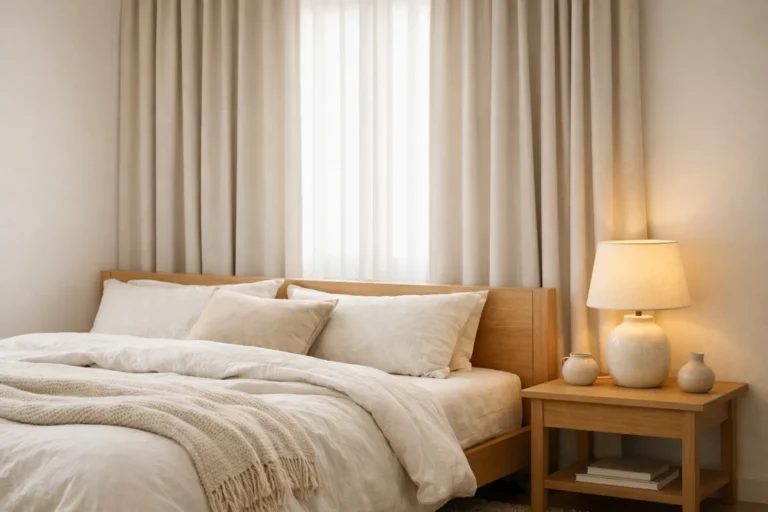
21 White Curtains for Crisp, Clean, and Elegant Interiors
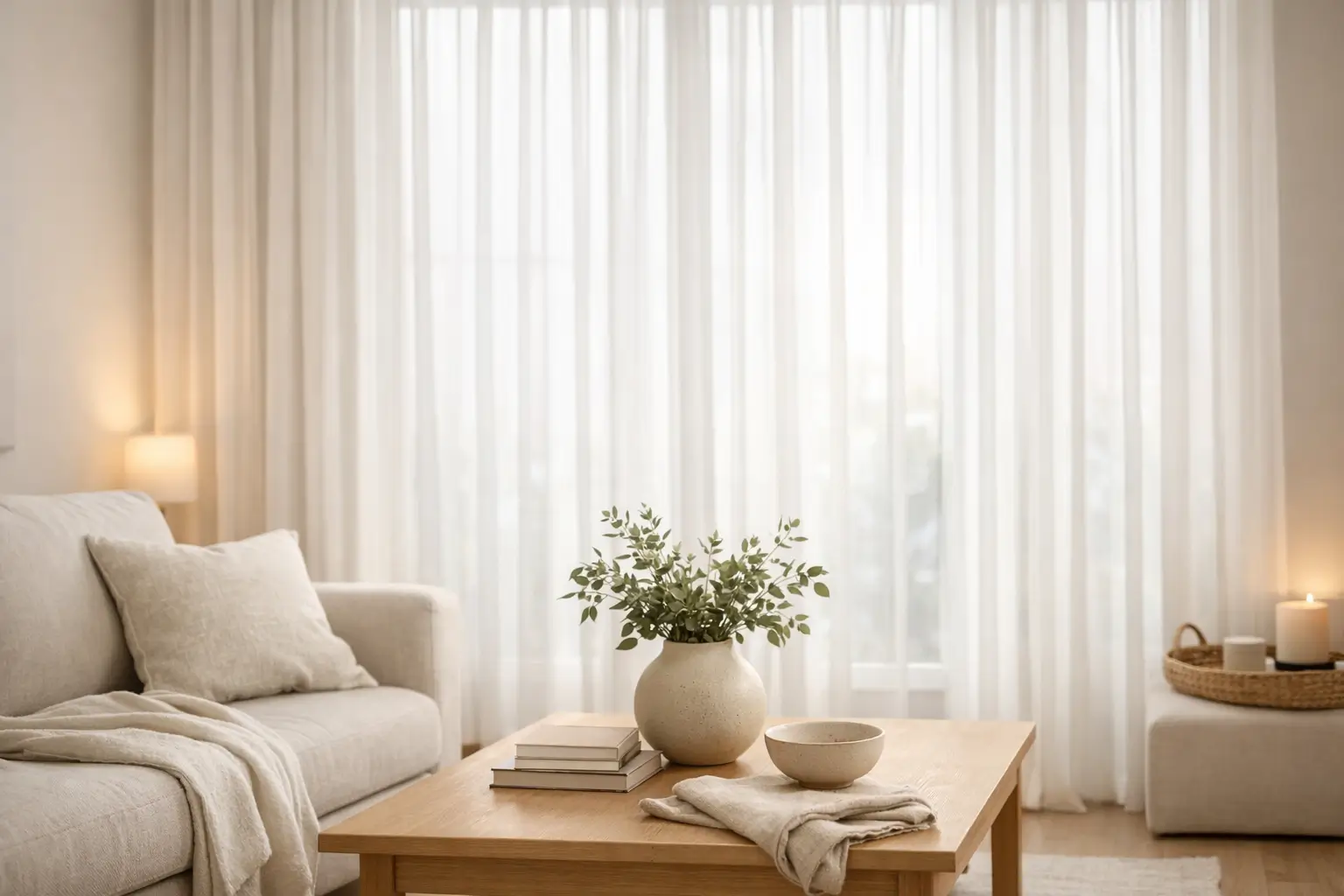
White curtains can change how a room feels in seconds. They soften light, brighten dark corners, and make spaces feel calm and open. If your home feels heavy or cluttered, the right curtain choice can instantly create a clean and elegant look without a full makeover.
In this guide, you’ll find 21 white curtain ideas for crisp, clean, and elegant interiors, designed to feel fresh, practical, and easy to apply. Each idea focuses on real styling choices like fabric, light flow, layering, and placement so you can use them easily in your own space.
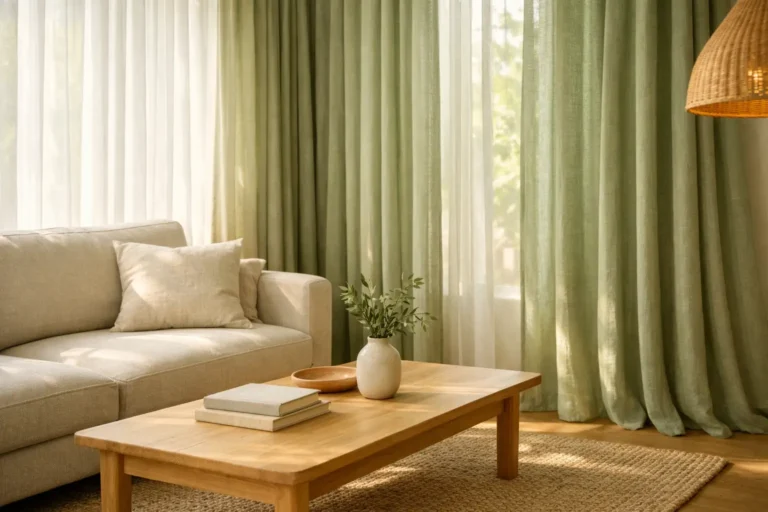
1. Sheer White Curtains That Diffuse Soft Morning Light
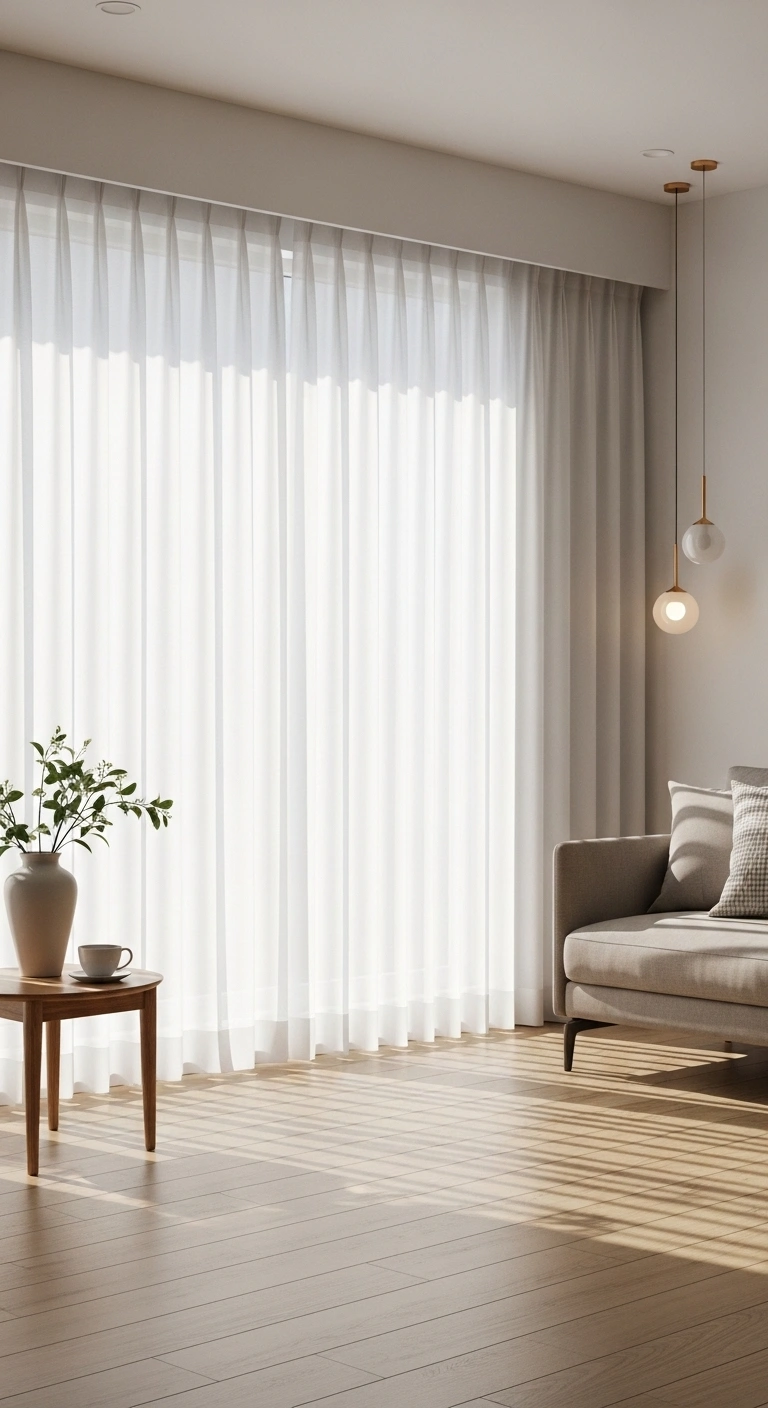
Sheer white curtains create a calm, glowing effect by gently filtering sunlight. This idea works best in rooms where you want natural light without harsh brightness. The fabric allows light to pass through while still adding a soft visual layer to your windows.
Choose lightweight voile or chiffon for a smooth, airy texture. Hang the curtains slightly above the window frame to make the room feel taller. Let them fall just to the floor for a clean finish. Pair them with light wood furniture or pale flooring to enhance brightness.
This setup works especially well in spaces that receive direct sunlight, as it softens the light and creates a relaxed, peaceful mood throughout the day.
2. Floor-Length White Linen Curtains for Relaxed Elegance
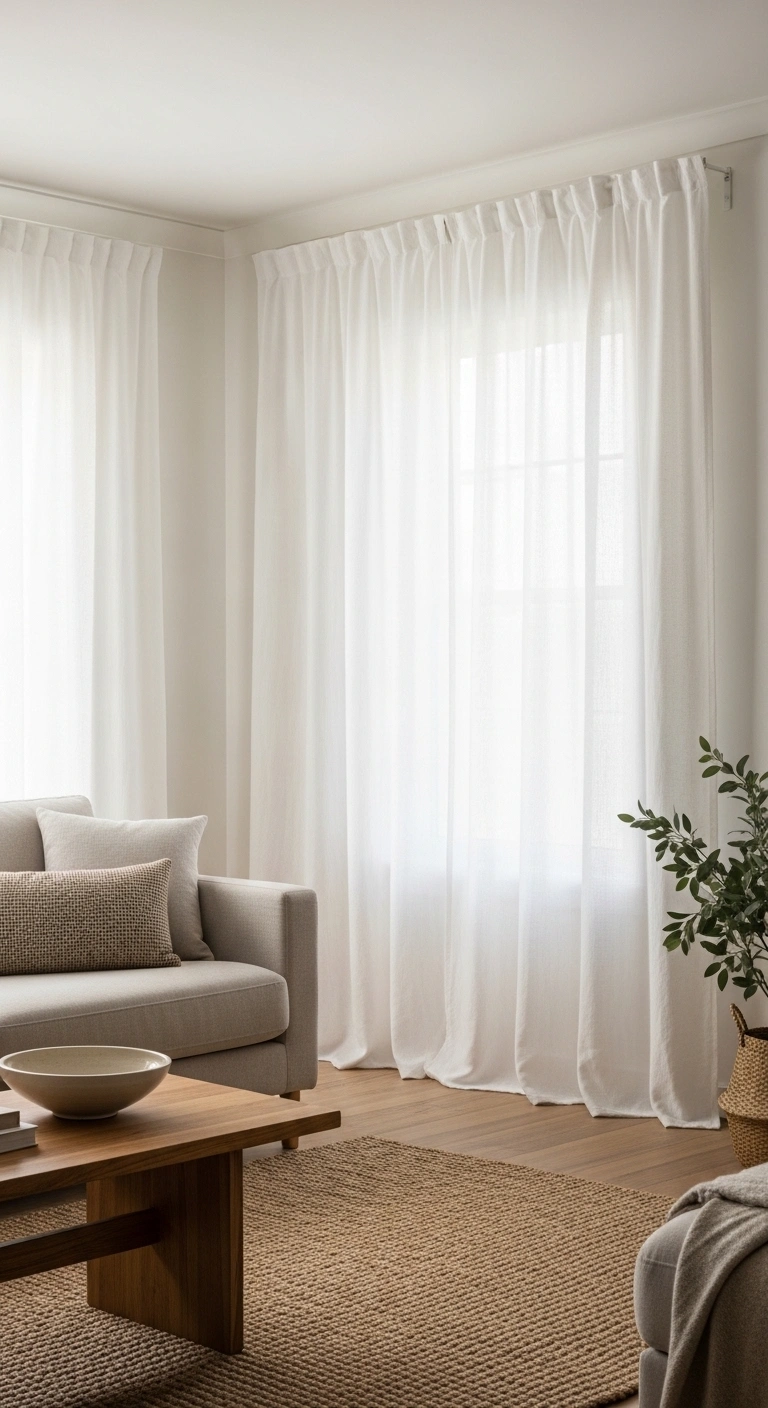
White linen curtains bring a natural texture that feels both elegant and comfortable. The slight wrinkles in linen add character without making the space look messy. This makes them perfect for living rooms or bedrooms that need softness with structure.
Install the curtain rod higher than the window to create the illusion of height. Let the fabric lightly touch the floor for a polished look. Linen looks best when it falls naturally, so avoid over-ironing.
Pair these curtains with neutral tones like beige, warm gray, or wooden furniture to create a balanced and inviting atmosphere.
3. Layered White Curtains with Hidden Blackout Panels
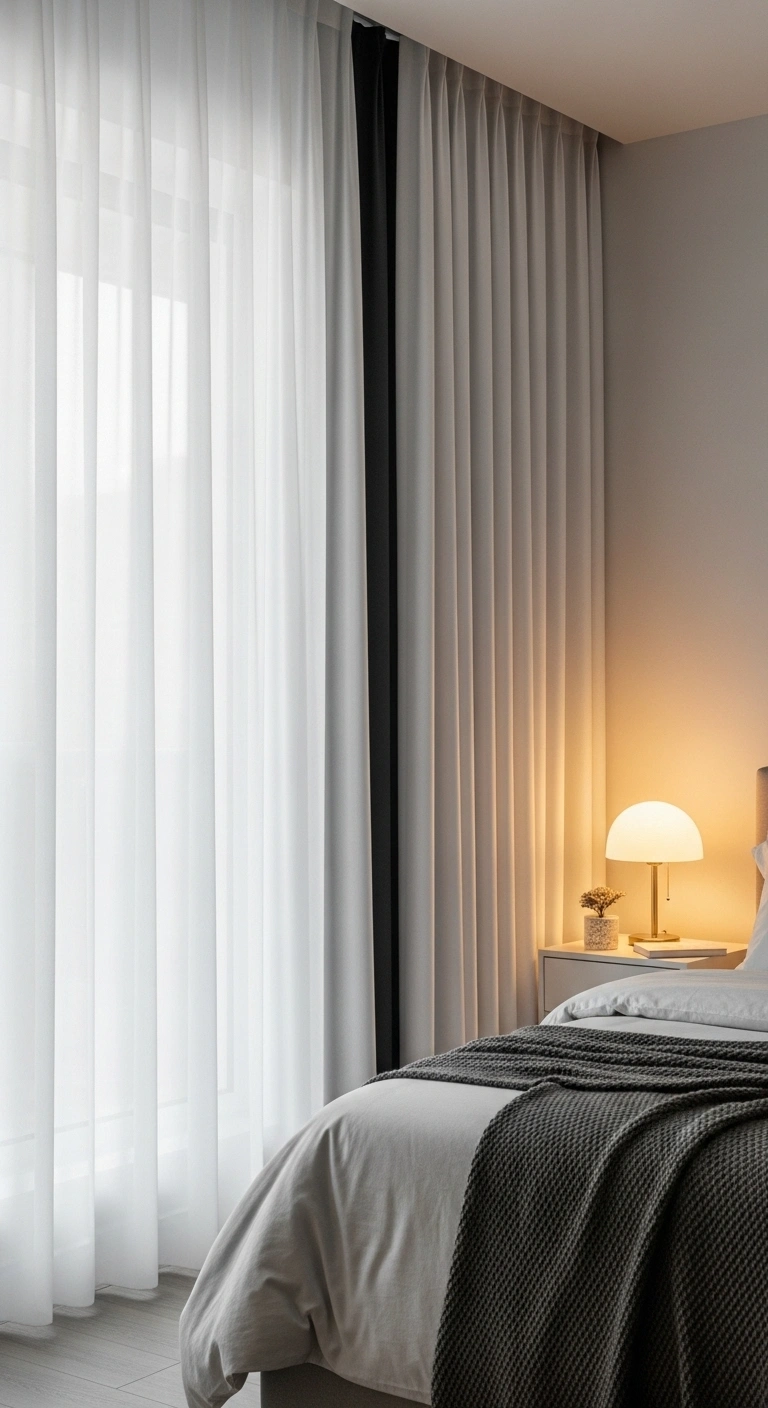
Layered curtains give you flexibility while keeping the design clean. A sheer or light white curtain on the outside allows daylight in, while a hidden blackout layer inside blocks light when needed.
Use a double rod system to keep both layers easy to manage. During the day, keep the blackout panel pushed back and let the outer curtain flow freely. At night, close both layers for full privacy and darkness.
This setup works well in bedrooms or media rooms where light control matters, while still keeping the space visually soft and uncluttered.
4. Crisp White Curtains with Subtle Vertical Texture
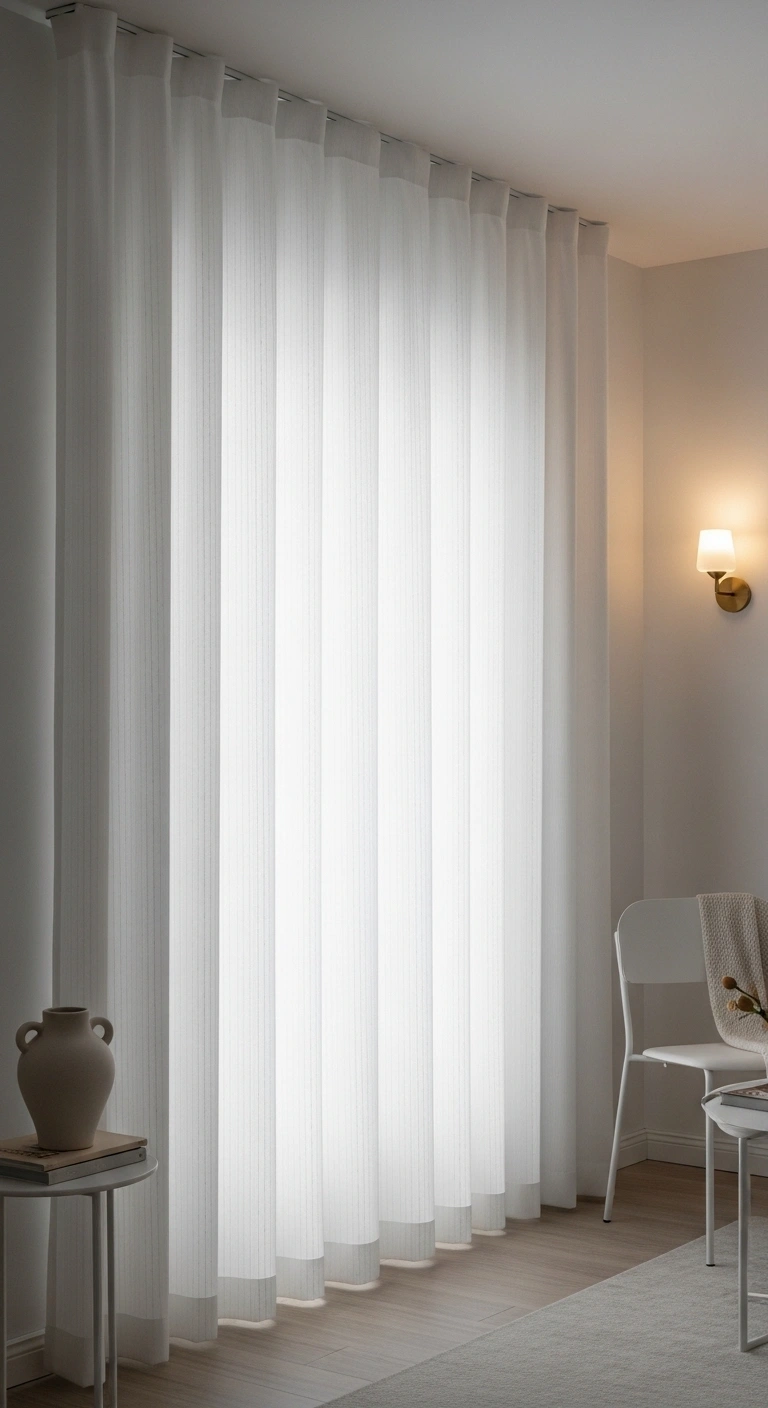
Curtains with fine vertical textures add depth without making the space feel busy. Thin woven lines or soft pleats draw the eye upward, making ceilings feel higher and rooms appear more spacious.
Choose structured fabrics that hold their shape. Avoid heavy patterns so the design stays clean and modern. This style fits well in minimalist interiors where every detail matters.
Keep the rest of the decor simple so the texture becomes a quiet highlight rather than a distraction.
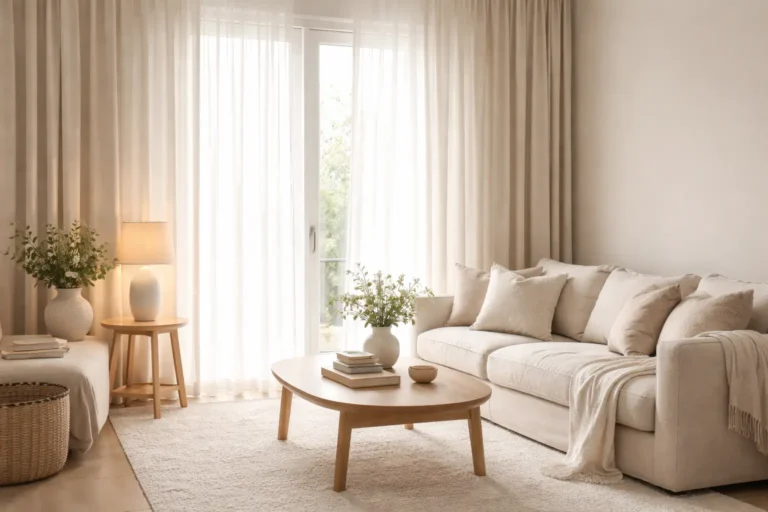
5. White Curtains with Soft Warm Undertones
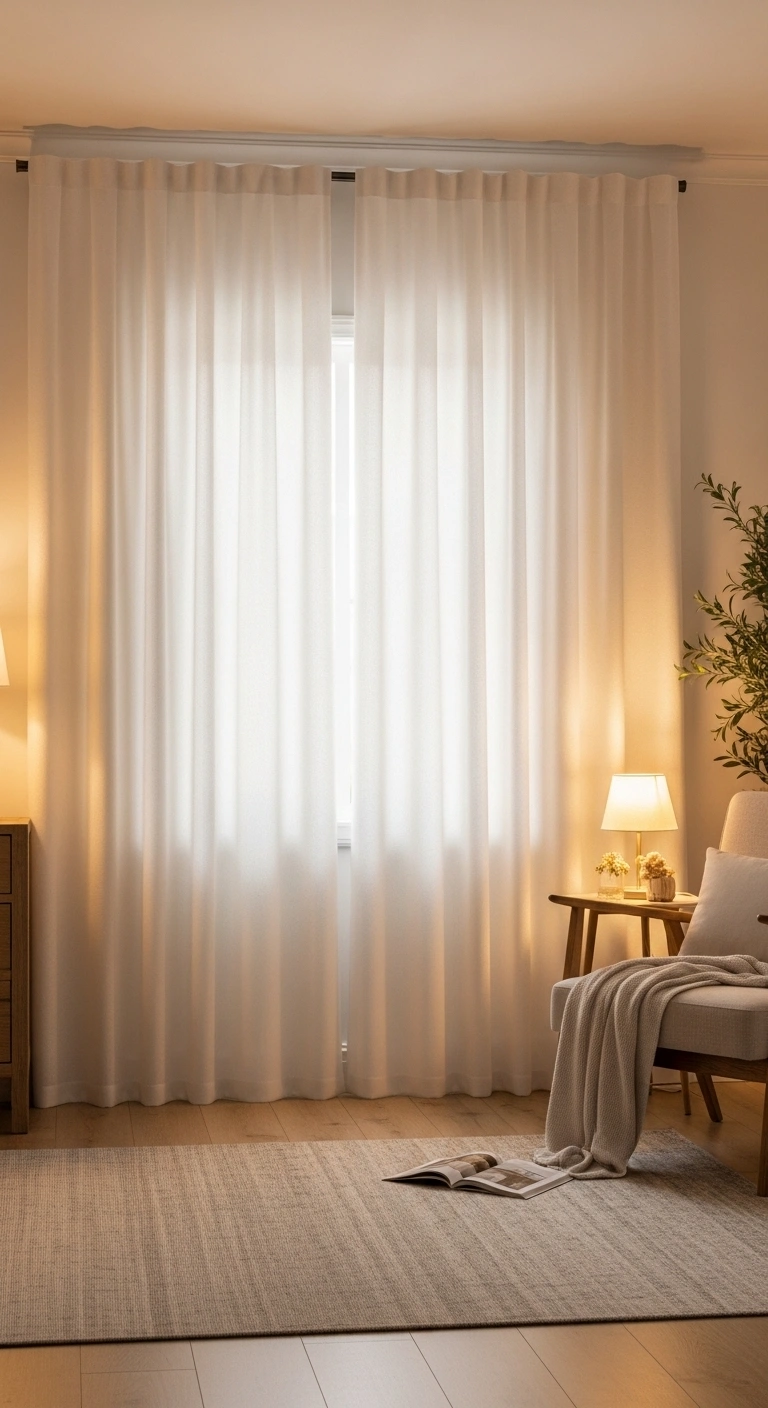
White curtains with warm undertones like ivory or cream create a more inviting feel. Pure white can sometimes look too sharp, especially under warm lighting. A softer shade keeps the space bright while adding comfort.
Pair these curtains with warm light bulbs and natural materials like wood or woven decor. This helps balance the room and creates a cozy yet clean look.
This idea works especially well in spaces where you want a soft, welcoming atmosphere without losing the brightness of white.
6. Minimal Rod Pocket White Curtains for Clean Lines
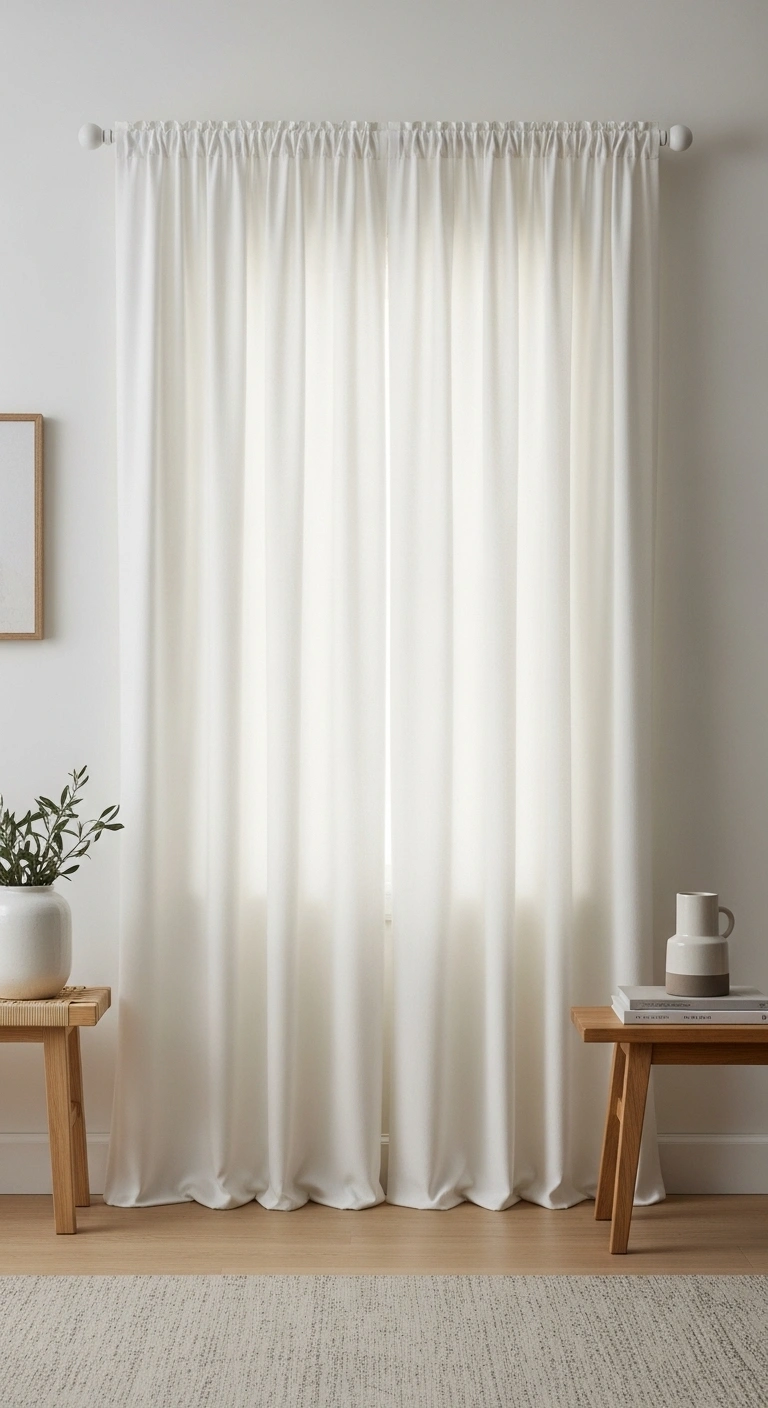
Rod pocket curtains offer a simple and seamless look. The fabric gathers softly at the top, creating a smooth and continuous flow without visible hooks or rings.
Choose lightweight or medium-weight fabric so the folds look soft instead of bulky. Keep the curtain length neat and precise to maintain a polished appearance.
This style works well in smaller rooms or spaces where you want to reduce visual clutter and keep everything looking simple and organized.
7. White Curtains Framed with Thin Black Edges
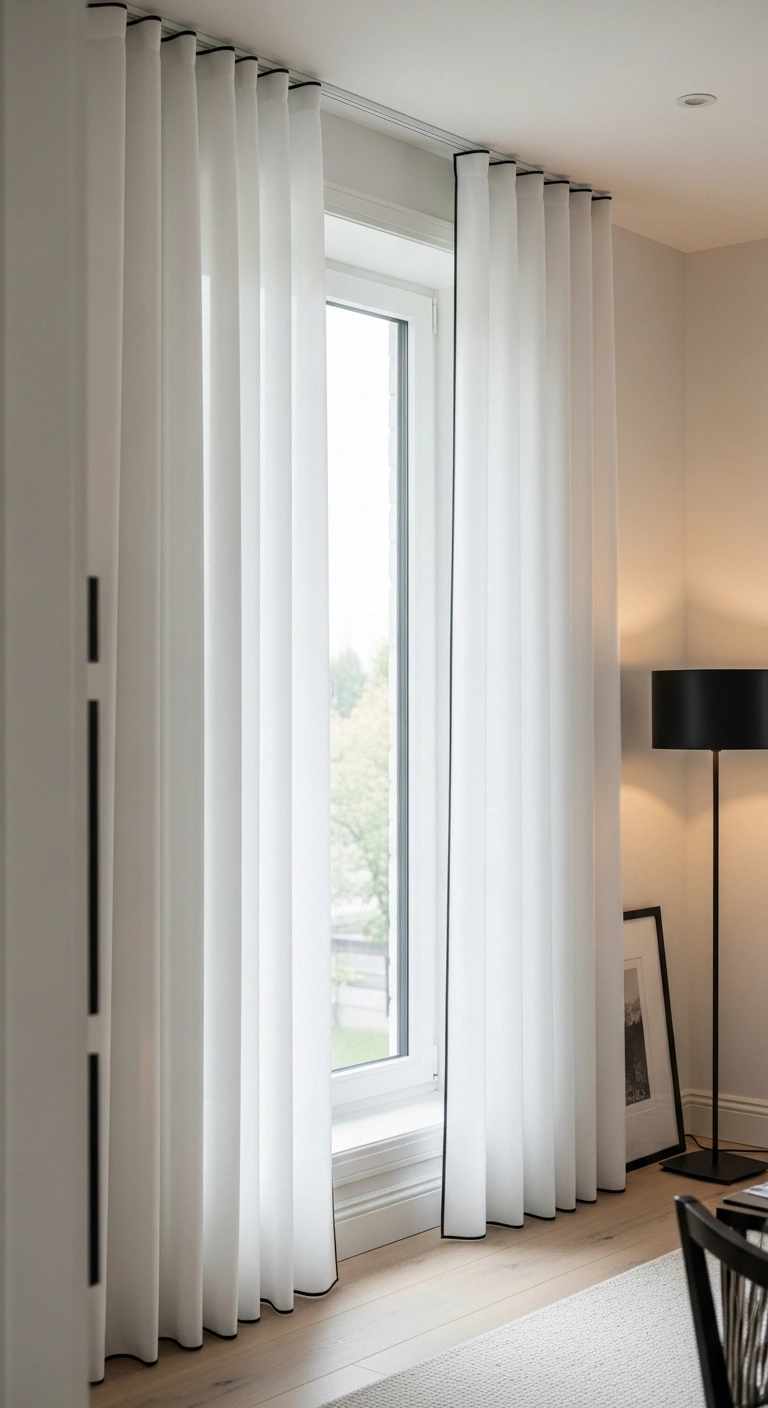
Adding a thin black border to white curtains creates a sharp, modern contrast. It frames the window and adds structure without overpowering the space.
Keep the border slim for a refined look. Pair it with black accents like frames, lamps, or furniture legs to tie the room together.
This small detail can instantly make plain white curtains feel more intentional and visually interesting.
8. Light Filtering Cotton Curtains for Everyday Use

Cotton curtains offer a balance between light and privacy. They allow natural light to enter while still softening outside visibility, making them perfect for everyday living spaces.
Choose soft white cotton with a smooth finish for a clean look. Avoid overly thick fabric so the room stays bright and open. Cotton is also easy to wash, which makes it practical for daily use.
These curtains work well in family rooms or dining areas where you want comfort, brightness, and easy maintenance all in one.
9. White Curtains Paired with Natural Wood Rods
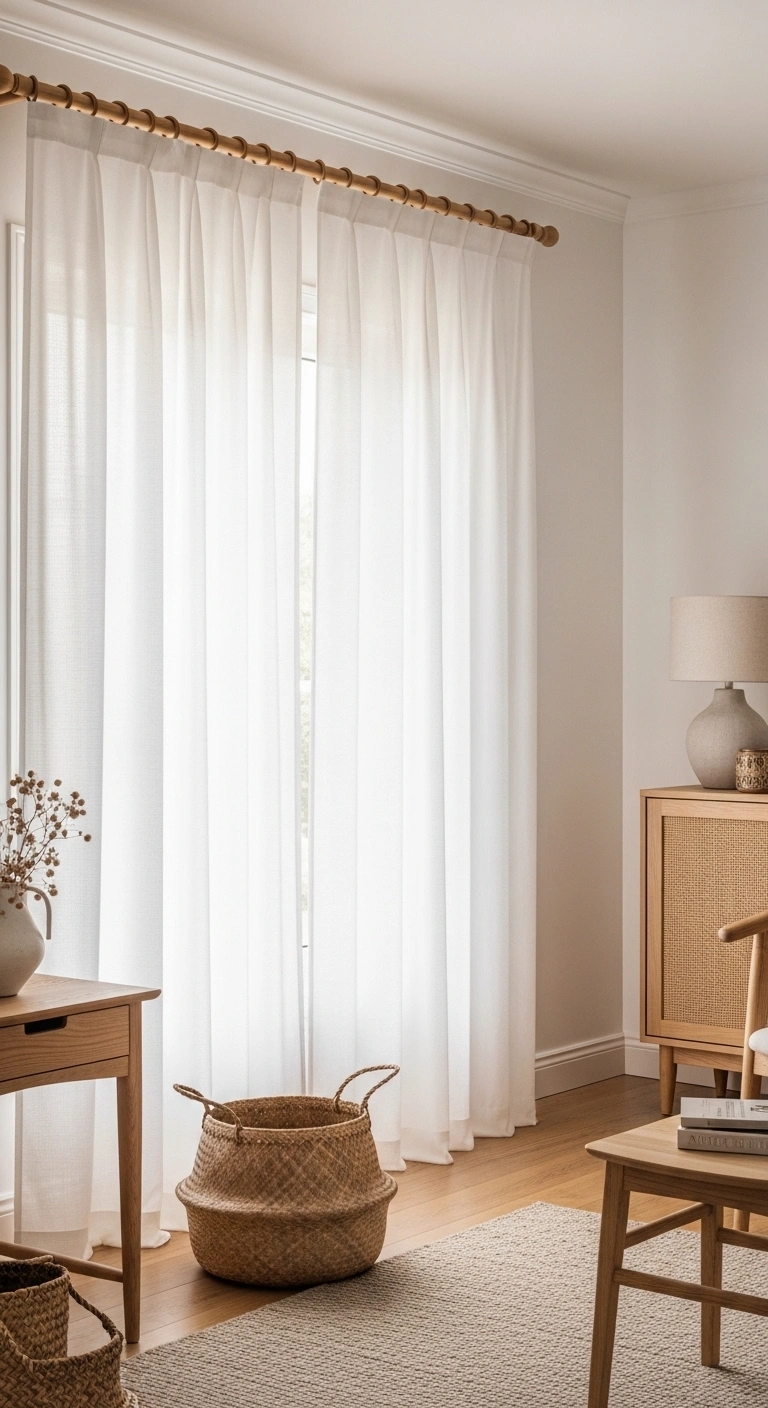
Pairing white curtains with wooden rods adds warmth and contrast in a subtle way. The natural grain of the wood breaks the monotony of white while keeping the overall look soft and balanced.
Choose light or medium wood tones for a fresh feel. This combination works especially well in cozy or modern interiors that use natural materials.
Keep the rest of the decor simple so the wood detail stands out just enough without becoming too bold.
10. Softly Pooled White Curtains for a Luxurious Feel
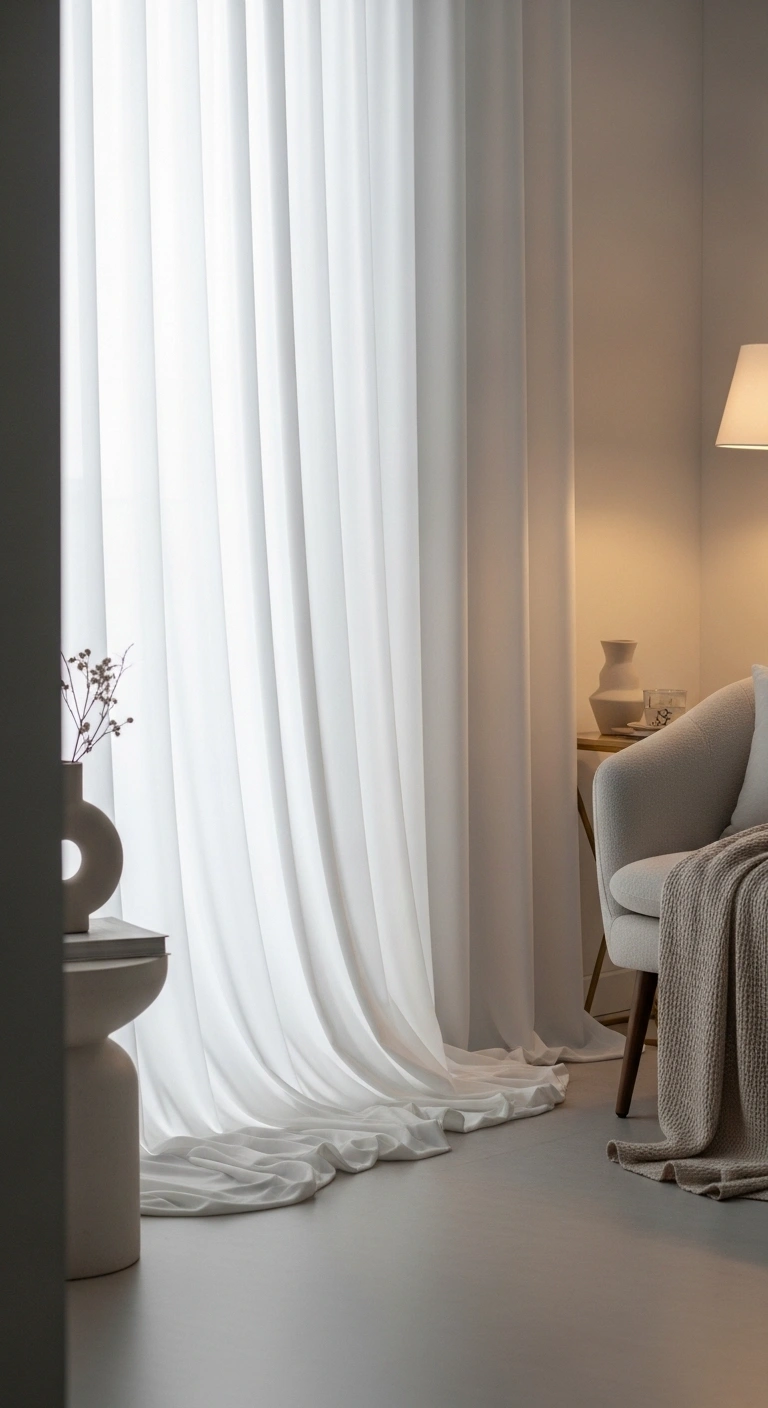
Letting curtains gently pool on the floor creates a relaxed yet elegant look. The extra fabric adds softness and a sense of comfort while still feeling refined.
Use slightly longer curtains so they extend a few inches beyond the floor. Choose flowing fabrics like linen or soft cotton for the best effect. Avoid stiff materials, as they will not drape well.
This style works best in bedrooms or formal living spaces where you want to add a touch of quiet luxury without making the room feel heavy.
11. Tailored Pleated White Curtains for a Structured Look
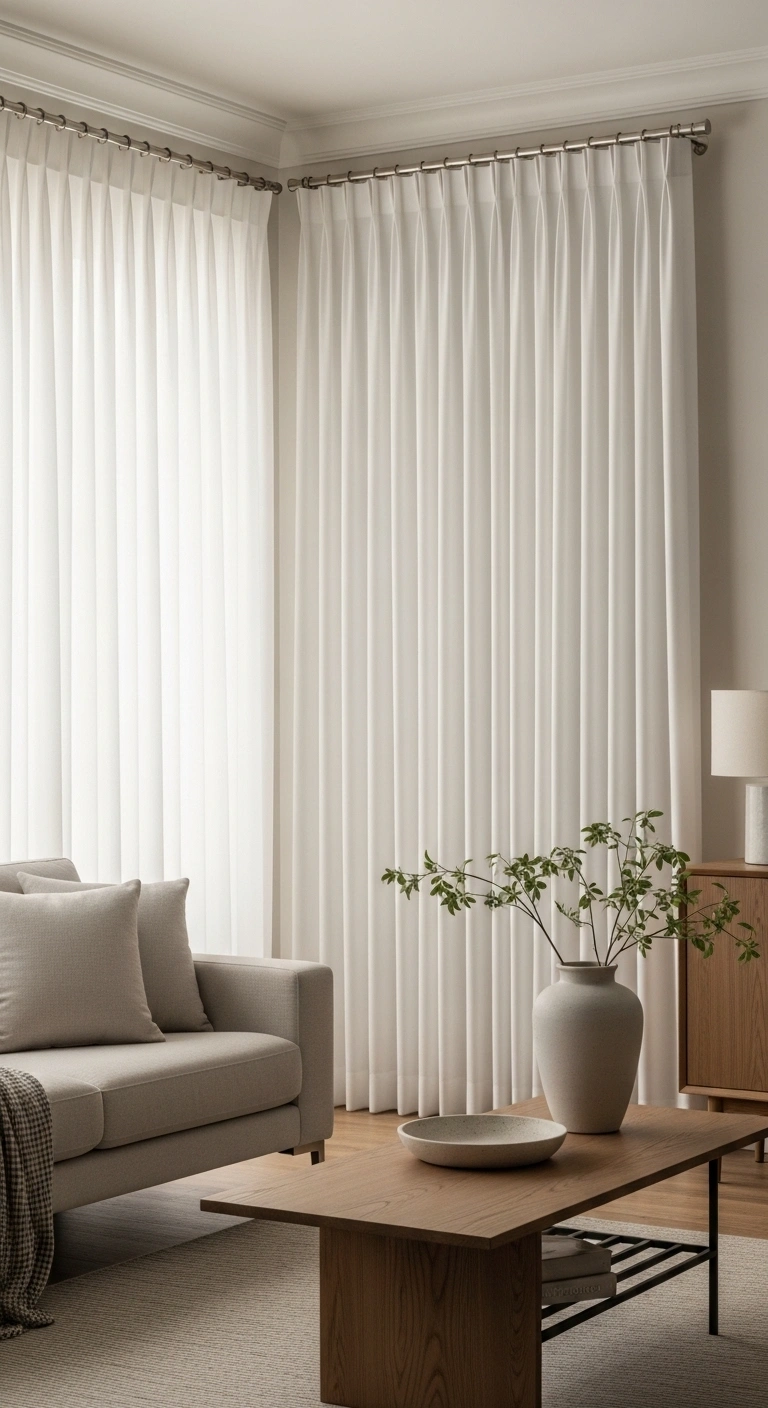
Pleated white curtains bring a clean and tailored appearance to any room. The evenly spaced folds create a structured flow that feels organized and refined. This style works well in spaces where you want a polished and balanced design.
Choose pinch pleats or box pleats for a crisp finish. Use a sturdy fabric that holds its shape so the pleats stay defined over time. Hang the curtains high and wide to give the illusion of larger windows.
Pair them with simple furniture and neutral tones to keep the look cohesive. This idea fits perfectly in formal living rooms or home offices where a neat and composed atmosphere matters.
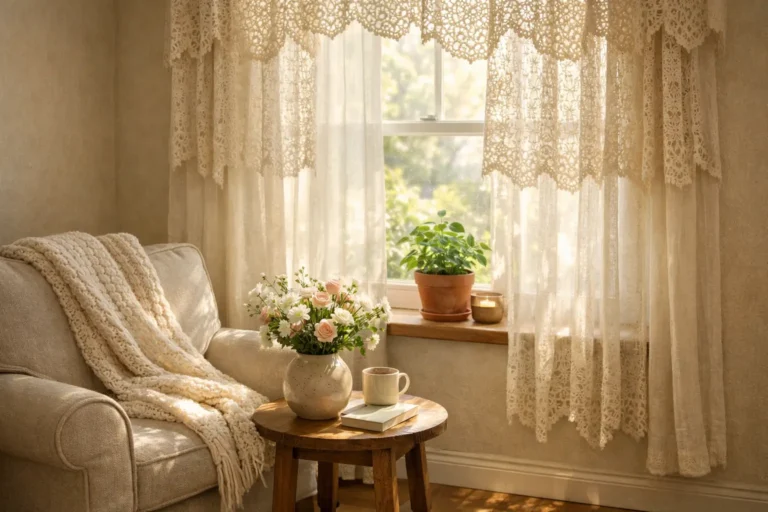
12. White Curtains with Soft Embroidered Details
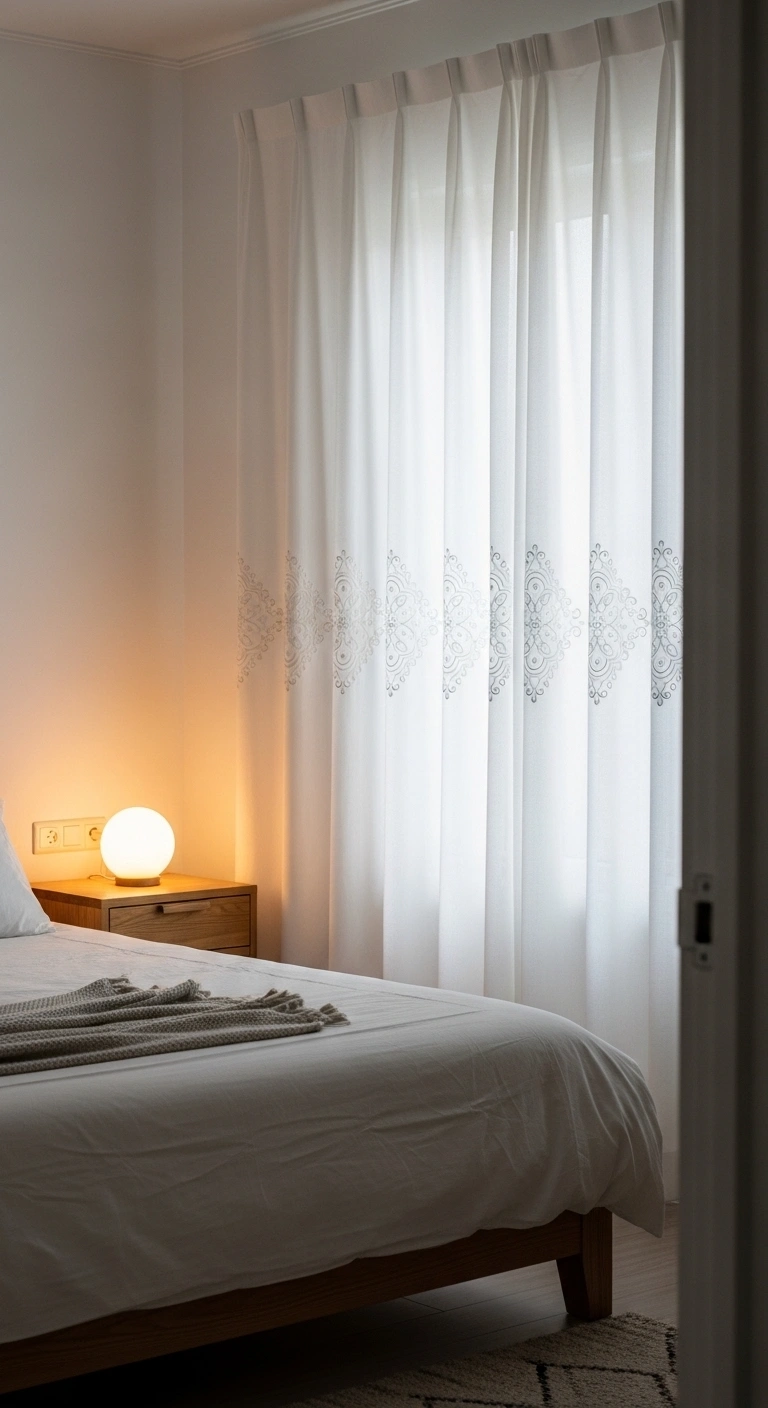
White curtains with subtle embroidery add a delicate layer of texture without overwhelming the space. Small stitched patterns or fine detailing create visual interest while keeping the overall look light and elegant.
Choose simple designs like tiny florals or geometric lines in the same white tone. This keeps the curtain clean while adding depth up close. Let natural light highlight the embroidery for a soft, glowing effect.
These curtains work beautifully in bedrooms or cozy corners where you want a gentle and calming feel without adding bold patterns.
13. Semi-Sheer White Curtains for Balanced Privacy
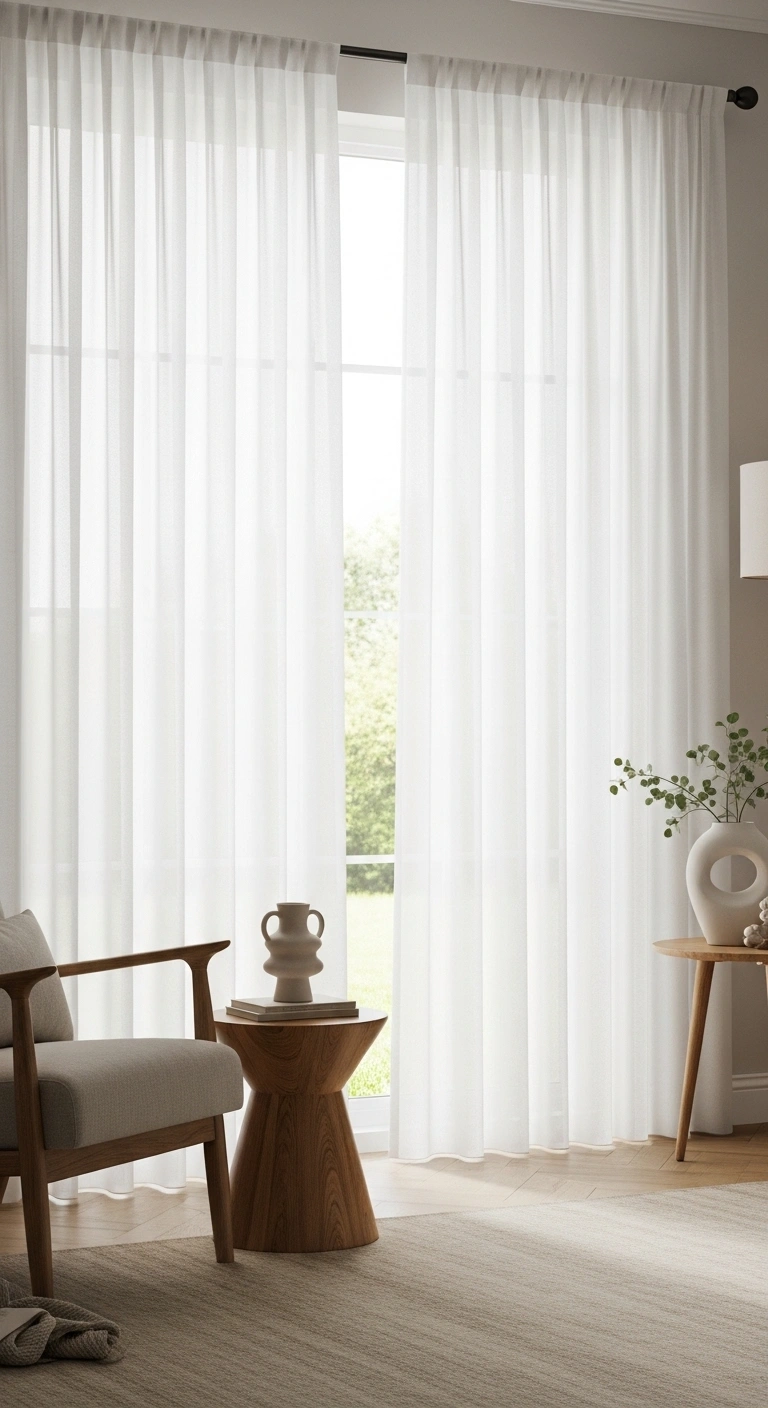
Semi-sheer curtains offer a middle ground between full transparency and full coverage. They allow light to enter while providing more privacy than sheer fabrics. This makes them ideal for spaces that face busy streets or nearby homes.
Choose a slightly thicker weave that softens light without blocking it completely. Keep the color a clean white to maintain brightness.
This option works well in living rooms or kitchens where you want natural light during the day but still need a sense of privacy and comfort.
14. White Curtains with Hidden Ceiling Tracks
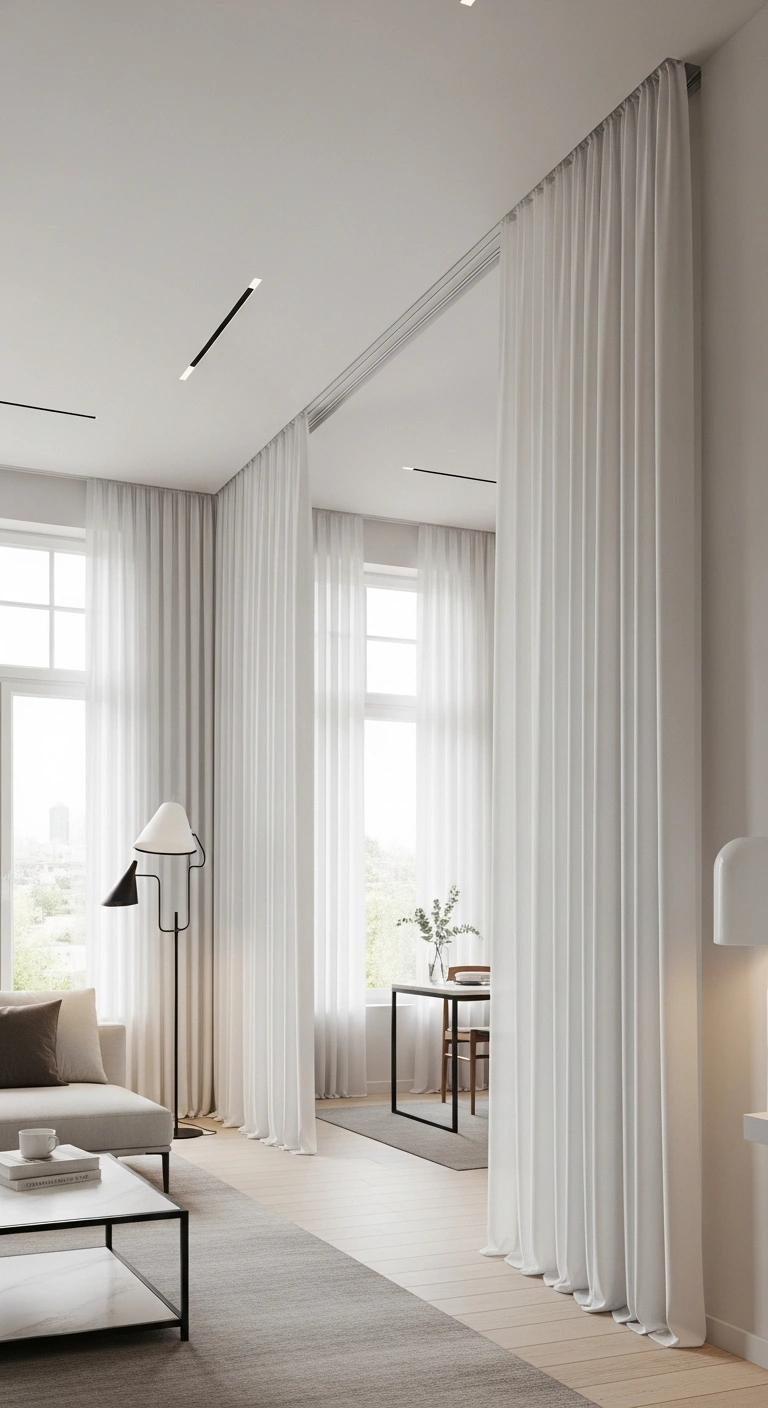
Ceiling-mounted curtain tracks create a seamless and modern look. By hiding the hardware, the curtains appear to fall directly from the ceiling, making the room feel taller and more open.
Use full-length white curtains that extend from ceiling to floor for maximum impact. Keep the fabric smooth and flowing to maintain a clean line.
This idea works especially well in modern interiors or smaller spaces where height and openness can transform the overall feel of the room.
15. Lightweight White Curtains for Breezy Movement
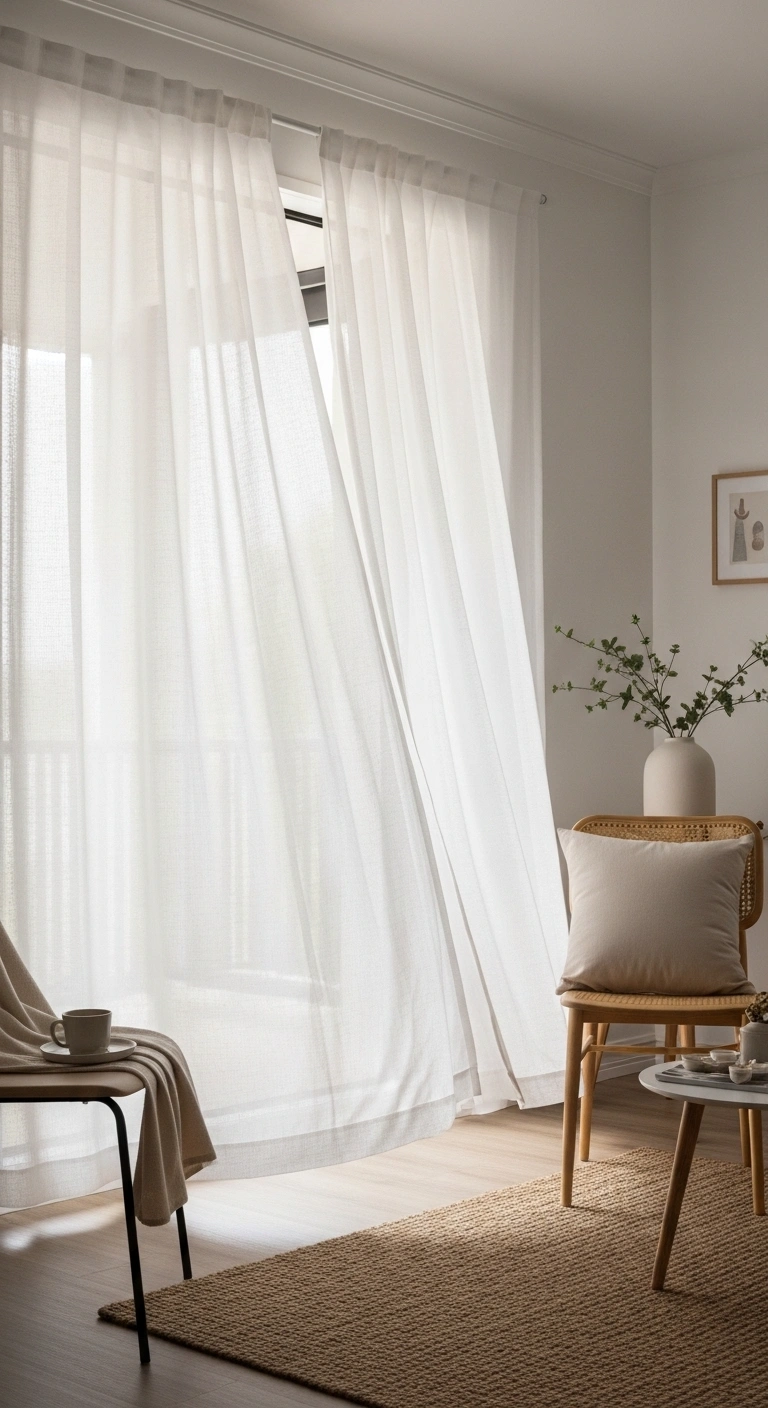
Lightweight curtains that move with air create a soft and relaxed atmosphere. Even a small breeze can bring gentle motion, making the room feel fresh and alive.
Choose thin fabrics like voile or soft cotton blends. Keep windows slightly open when possible to allow natural airflow.
This idea works best in rooms with good ventilation, such as bedrooms or living areas near balconies. The movement adds life to the space without adding clutter or heavy design elements.
16. White Curtains Styled with Tie-Backs for Shape
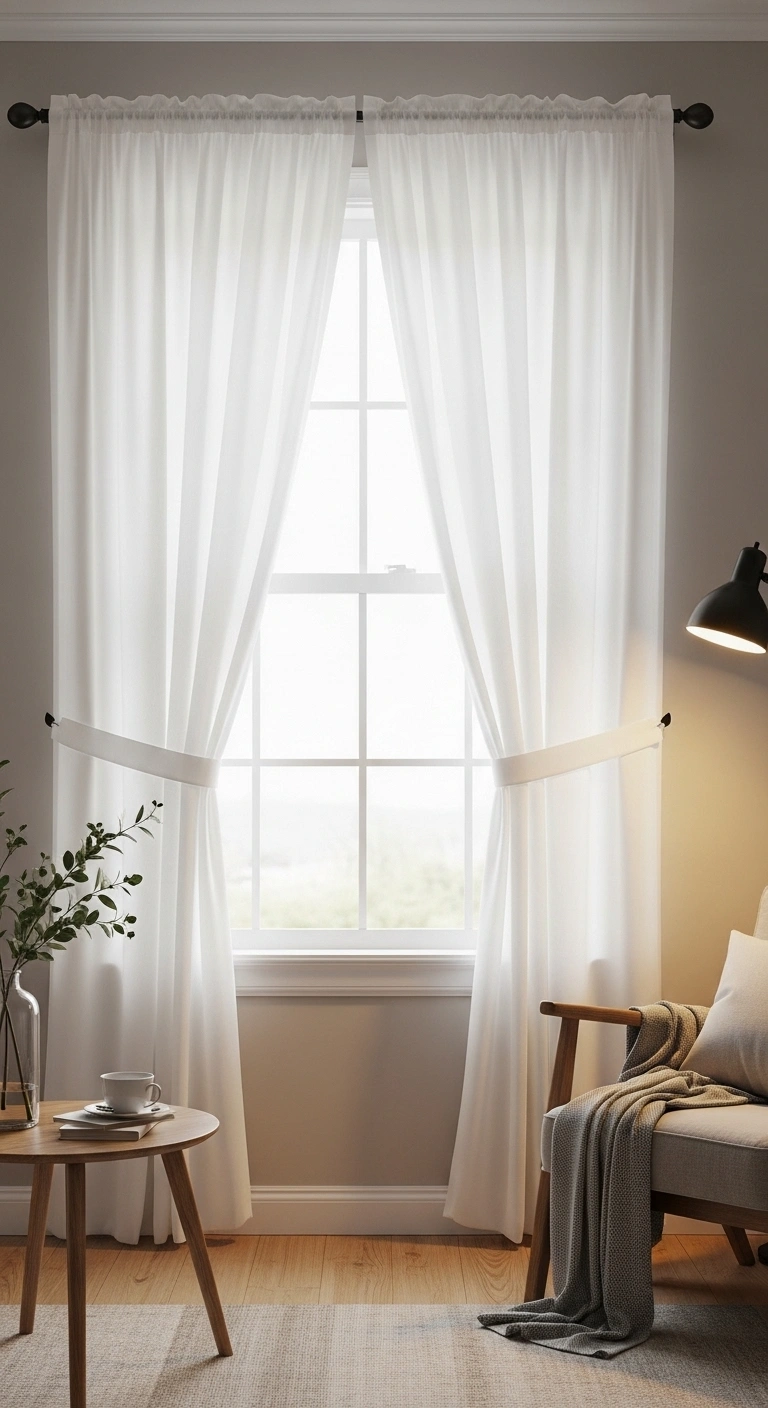
Tie-backs help shape your curtains while keeping them functional. They allow more light into the room and create a clean, framed look around the window.
Use fabric tie-backs for a soft appearance or simple cords for a minimal touch. Position them at mid-height or slightly lower for a relaxed feel.
This approach works well in spaces where you want flexibility between open and closed curtains without constantly adjusting them throughout the day.
17. Double Panel White Curtains for Wide Windows
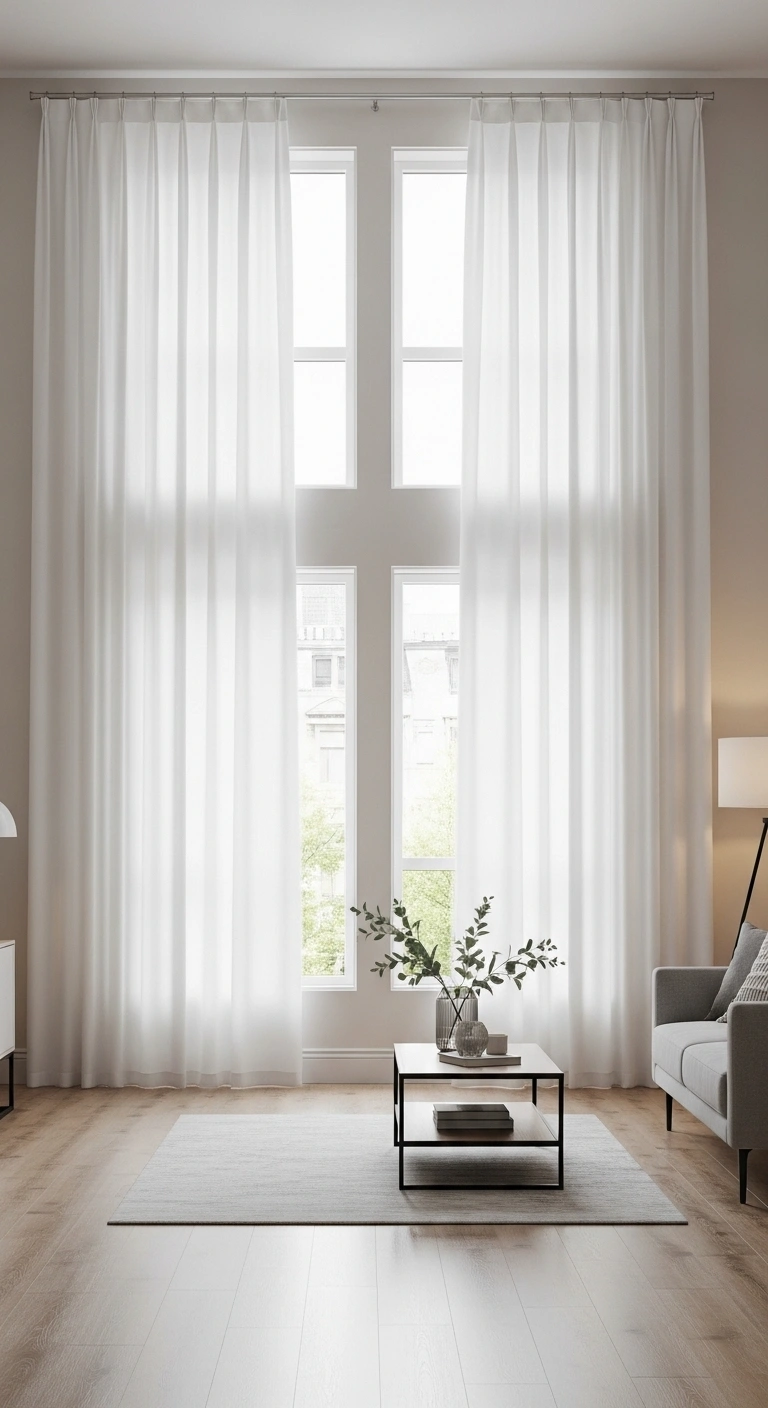
Wide windows need balanced coverage, and double panel curtains provide that symmetry. Two panels on each side create fullness and help the window look proportional.
Choose equal-width panels and ensure they hang evenly. Keep the fabric light so the layers do not feel bulky.
This idea works especially well in large living rooms or open spaces where wide windows are a key feature. It helps frame the view while maintaining a clean and elegant style.
18. White Curtains with Matte Metal Hardware
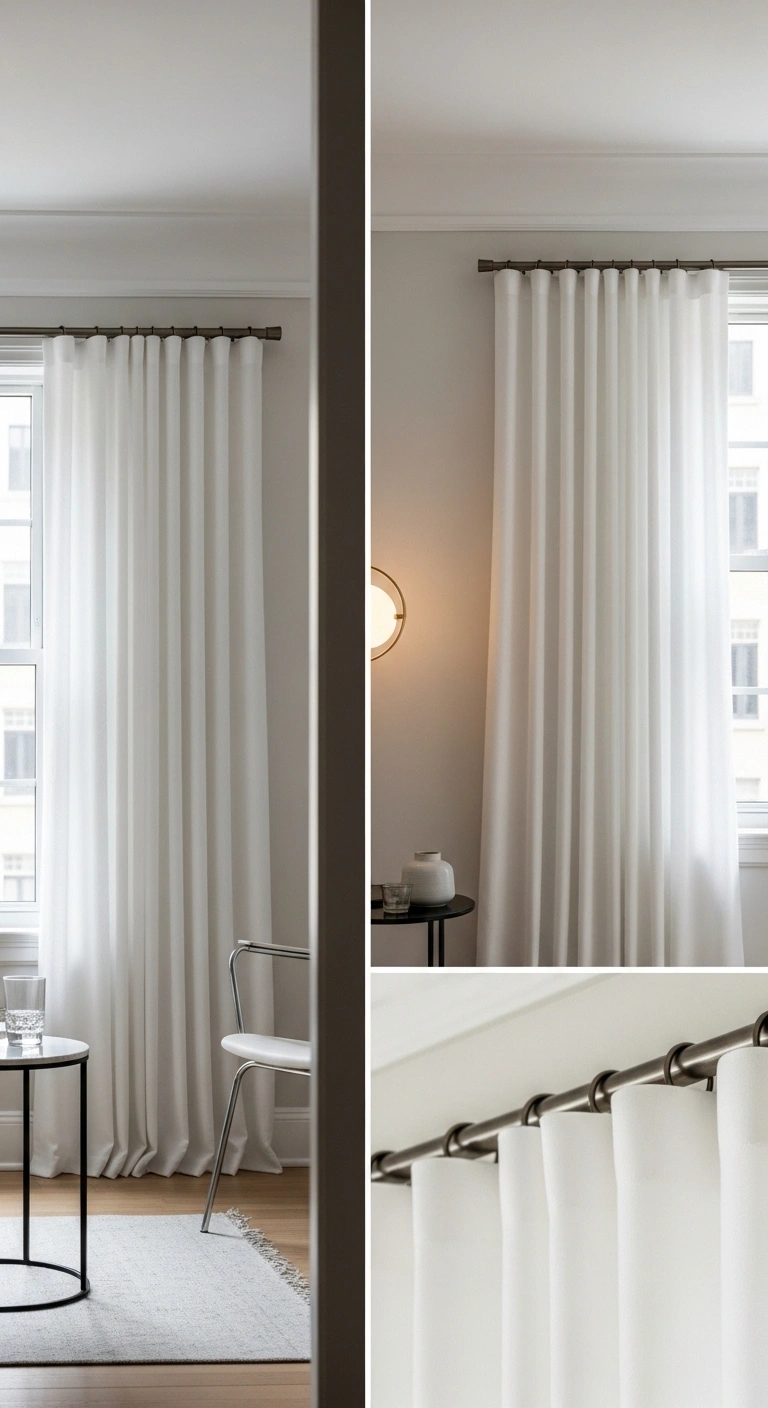
Pairing white curtains with matte metal rods or rings adds a subtle modern touch. Finishes like brushed nickel or soft black create contrast without being too bold.
Keep the hardware simple and smooth to maintain the clean aesthetic. Avoid overly decorative designs that can distract from the curtain itself.
This combination works well in contemporary interiors where small details help define the overall look.
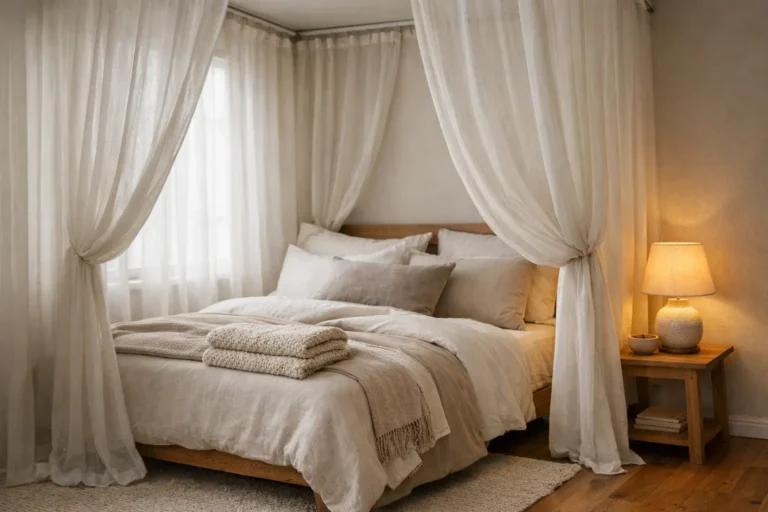
19. Soft Layered White-on-White Curtain Styling
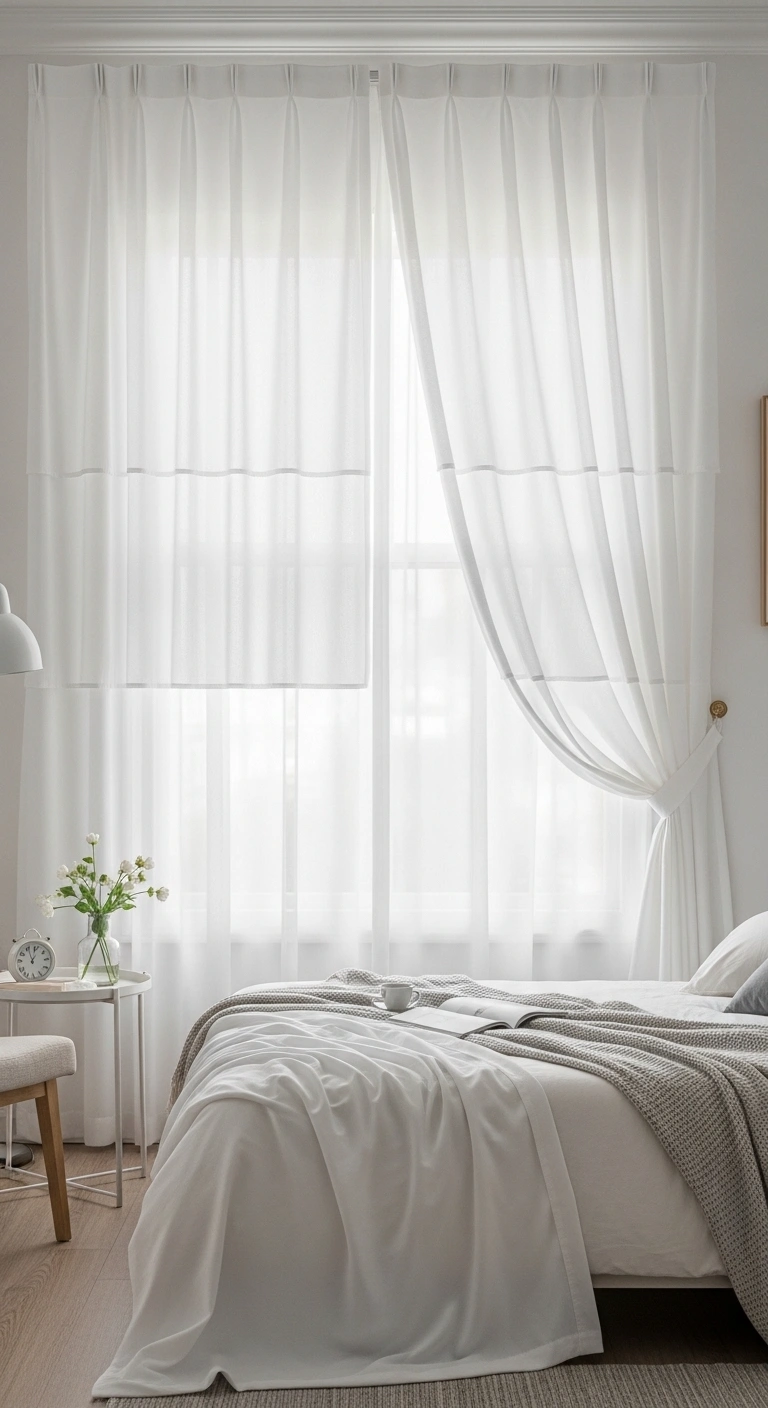
Layering different shades or textures of white creates depth without adding color. You can combine sheer and solid fabrics or mix smooth and textured materials for a subtle contrast.
Keep all layers within a soft white palette so the look stays cohesive. Allow each layer to move naturally for a relaxed feel.
This idea works well in bedrooms or calm spaces where you want a soft, layered look without introducing bold elements.
20. White Curtains Framing Large Glass Doors
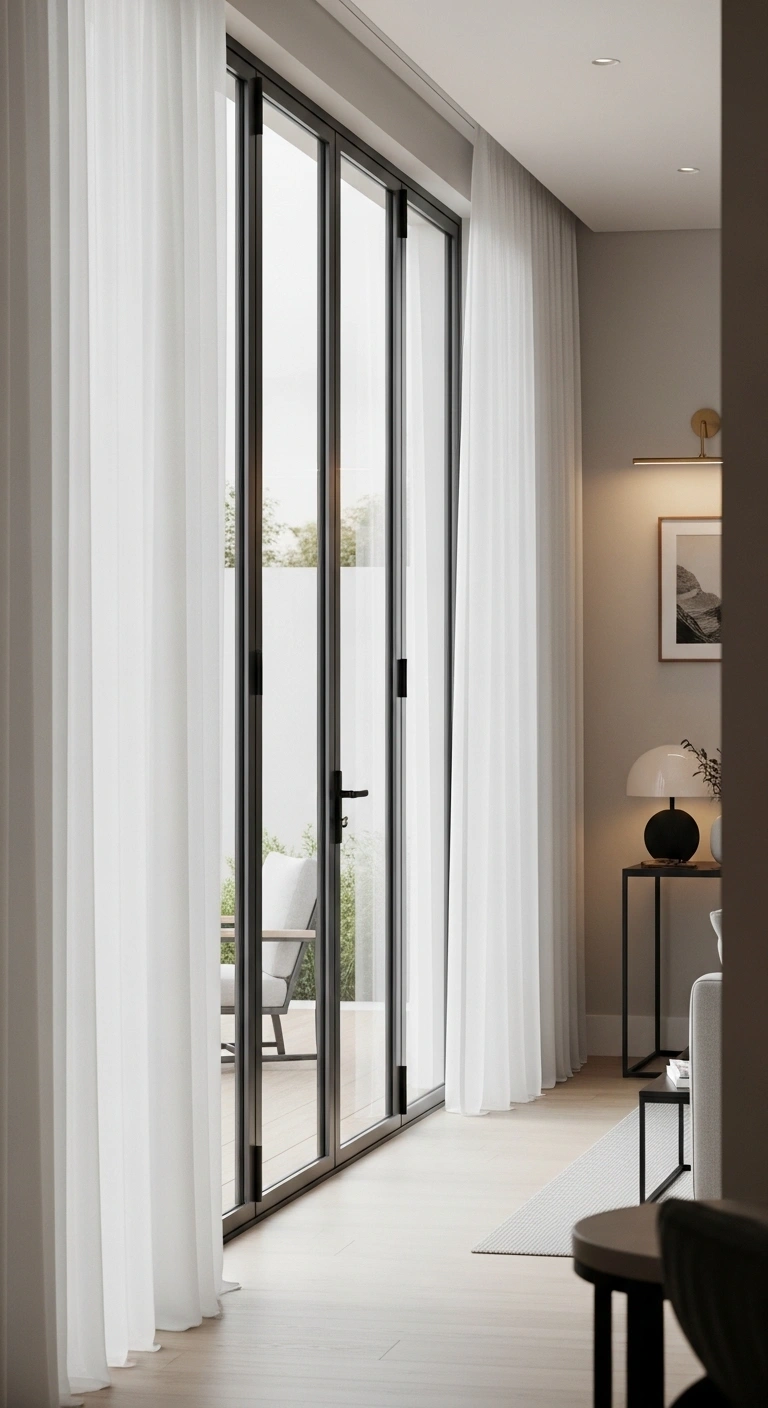
White curtains work beautifully with glass doors by softening the hard edges and adding flow to the space. They help connect indoor and outdoor areas while maintaining privacy when needed.
Use long, flowing panels that can easily slide open. Keep the fabric light so it does not block the view completely.
This setup works well for patio doors or balcony entrances, creating a smooth transition between spaces while keeping the room bright.
21. Crisp White Curtains with Sharp Floor Alignment
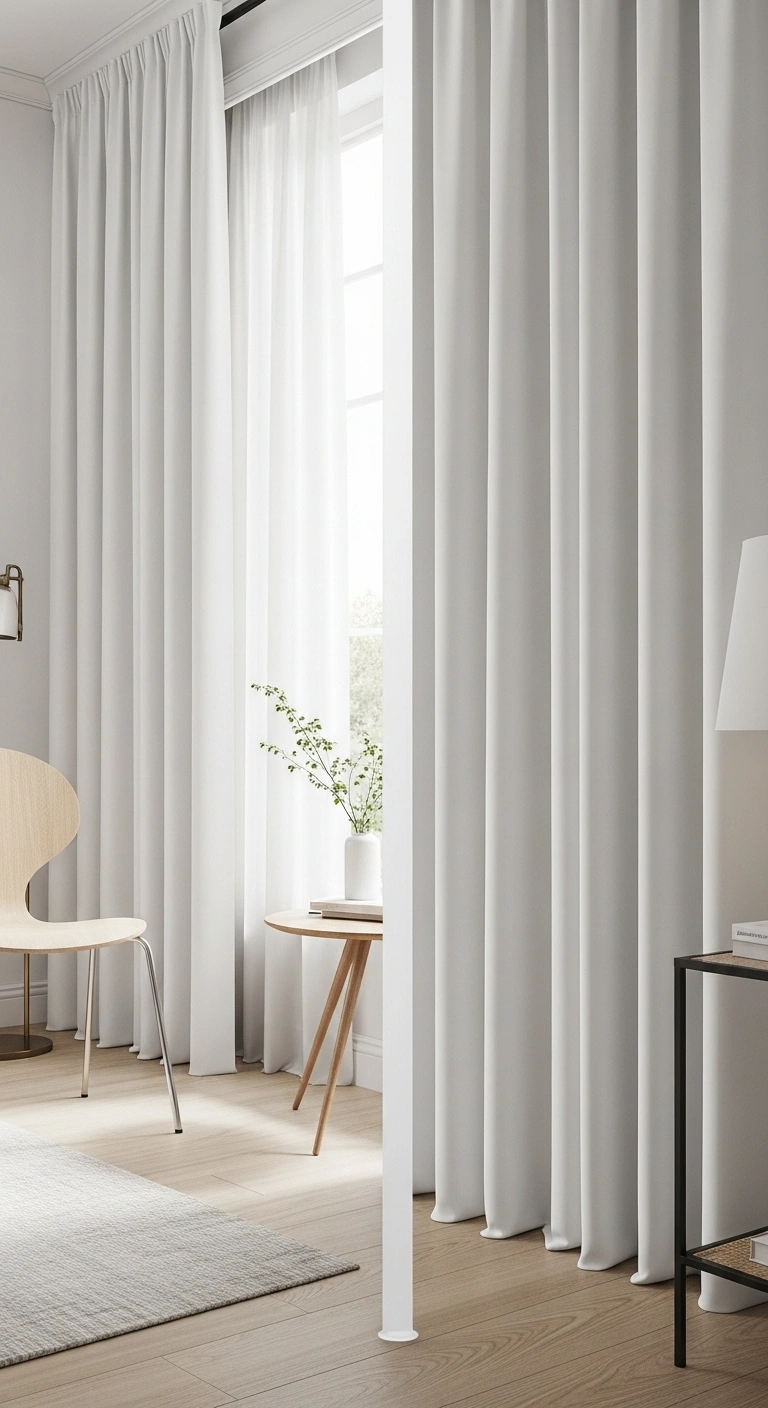
Curtains that end exactly at the floor create a sharp and clean finish. This precise alignment gives the room a neat and intentional look.
Measure carefully so the fabric just touches the floor without bunching. Choose structured materials that hang straight for the best effect.
This style works well in modern or minimal interiors where clean lines and precision define the overall design.
Conclusion
White curtains are one of the simplest ways to make your home feel brighter, calmer, and more elegant. From soft sheer layers to structured pleats, each idea offers a unique way to shape light, add texture, and improve the overall look of your space.
The key is to choose the right fabric, length, and placement based on how you use the room. Small details like curtain height, layering, or hardware can make a big difference in how everything feels together.
Try one or two of these ideas to refresh your space. Save your favorites and come back to them when you’re ready to update another room.