22 Small Narrow Hallway Design Ideas You’ll Love

Does your hallway feel tight, dark, or wasted? A narrow hallway often becomes a forgotten strip between rooms. But with the right design moves, it can turn into one of the most stylish areas in your home.
In this guide, you’ll discover smart, practical, and visually inspiring narrow hallway design ideas that make small spaces feel wider, brighter, and more intentional. Each idea focuses on layout, lighting, texture, and function—so you can apply them right away.
Let’s start with the first 10 ideas.
1. Use Vertical Paneling to Stretch the Space
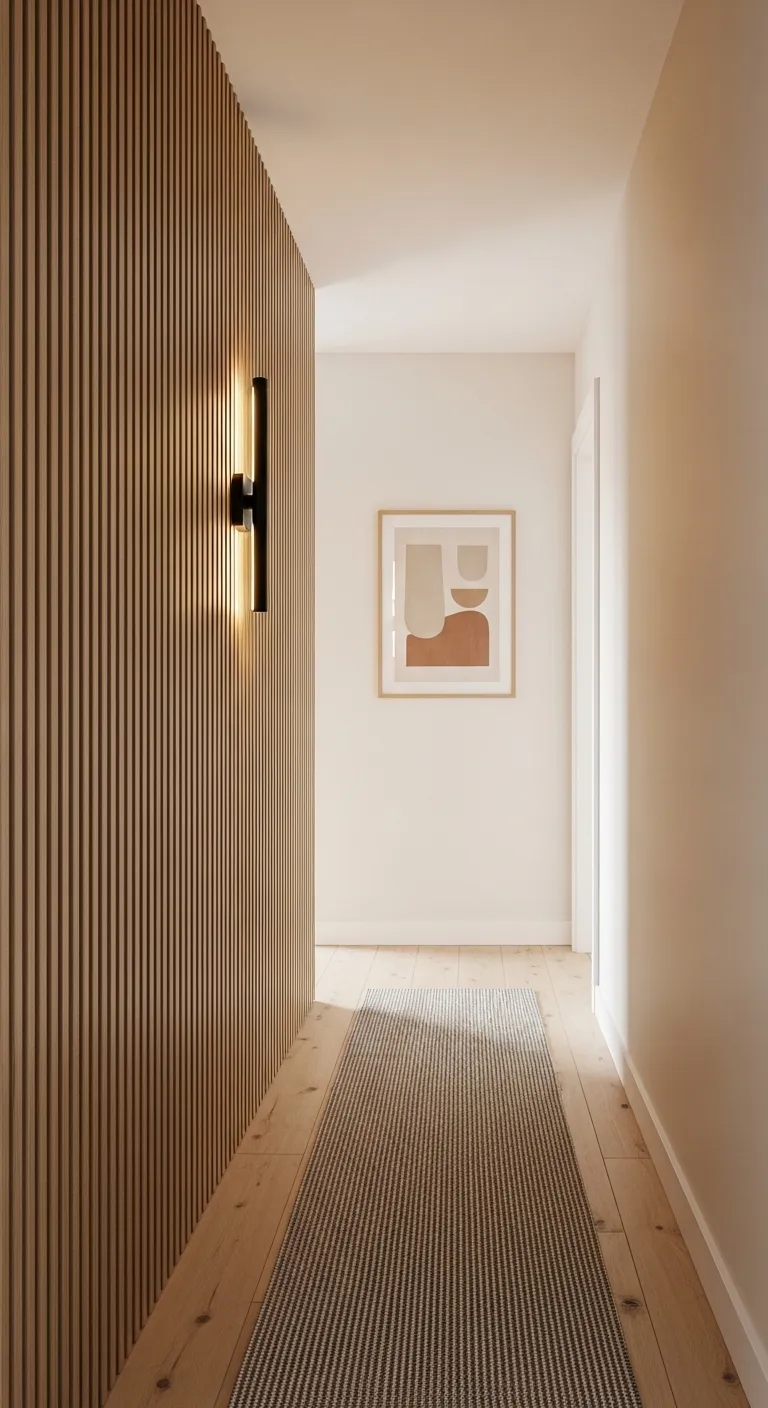
Vertical lines instantly draw the eye upward and make your hallway feel taller. Install slim wood slats, subtle vertical grooves, or even painted pinstripes in soft neutral tones like warm white, misty gray, or pale sand.
Keep the panel width narrow and evenly spaced. This creates rhythm without clutter. If your hallway lacks natural light, choose light oak or painted MDF instead of dark wood. Add slim black wall sconces between panels for contrast.
This trick works especially well in tight corridors because it adds texture without taking up depth. You get visual interest while keeping floor space fully open.
2. Install a Floating Shelf Gallery Strip
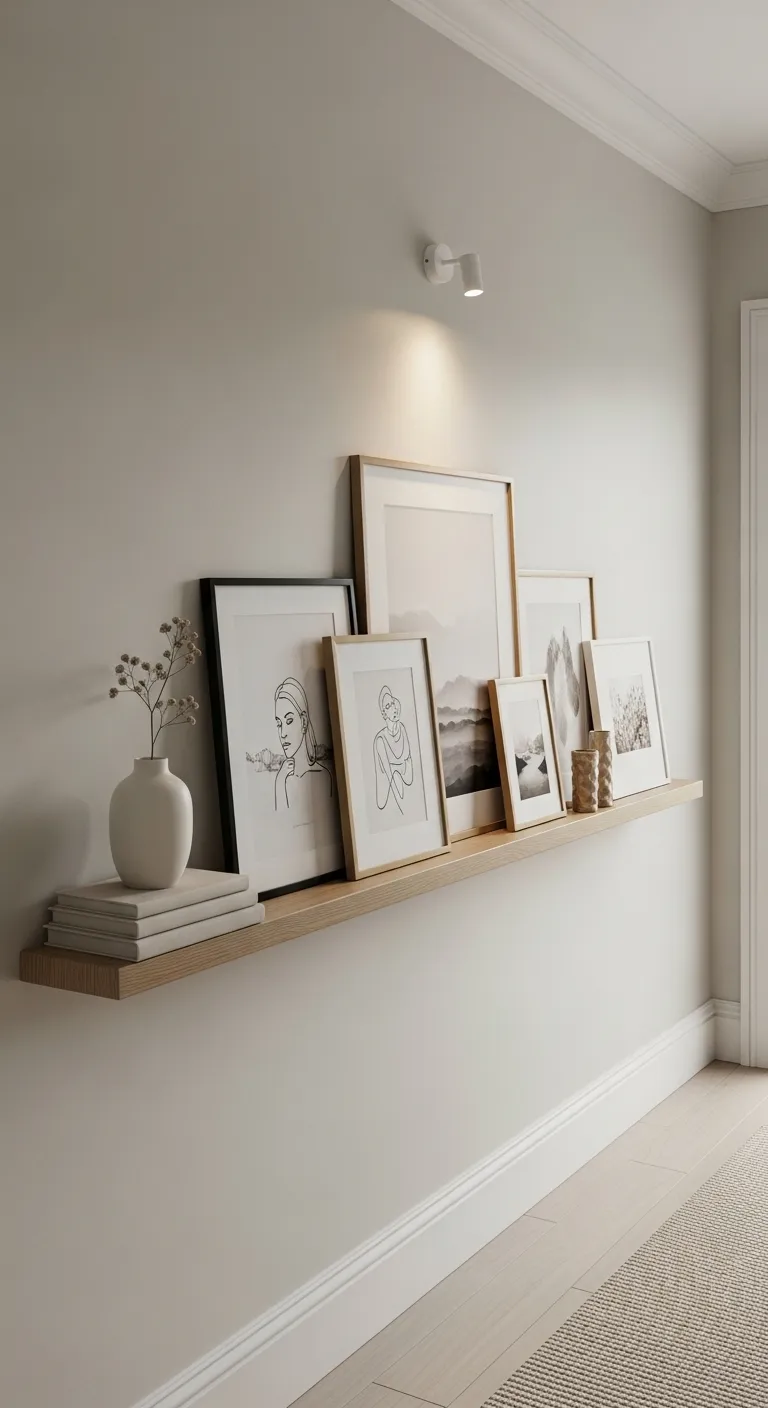
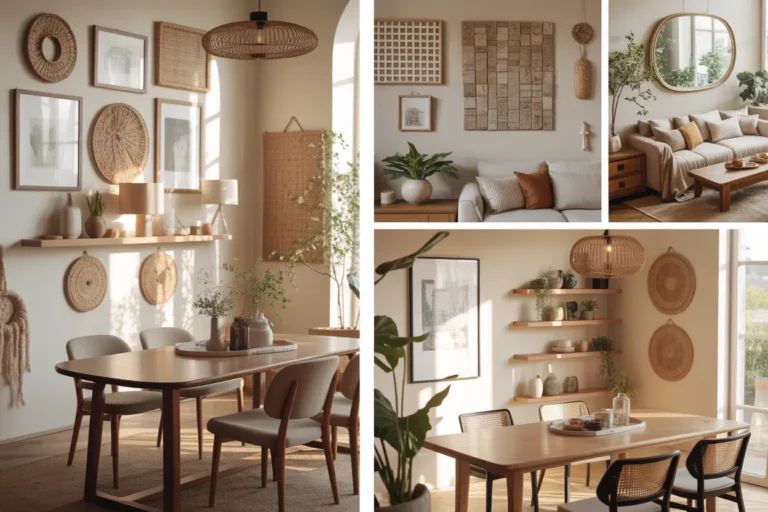
Instead of bulky console tables, install a thin floating picture ledge about chest height. Keep it no deeper than 6 inches. This allows styling without blocking walking space. Layer small framed art, leaning mirrors, and ceramic pieces in similar color palettes.
Stick to one main tone—like terracotta and cream or black and beige—to avoid visual noise.Add a small rechargeable wall light above the ledge to create soft shadows in the evening. The layered look adds personality while keeping the floor clean and wide.
3. Paint the Ceiling a Soft Contrast Color
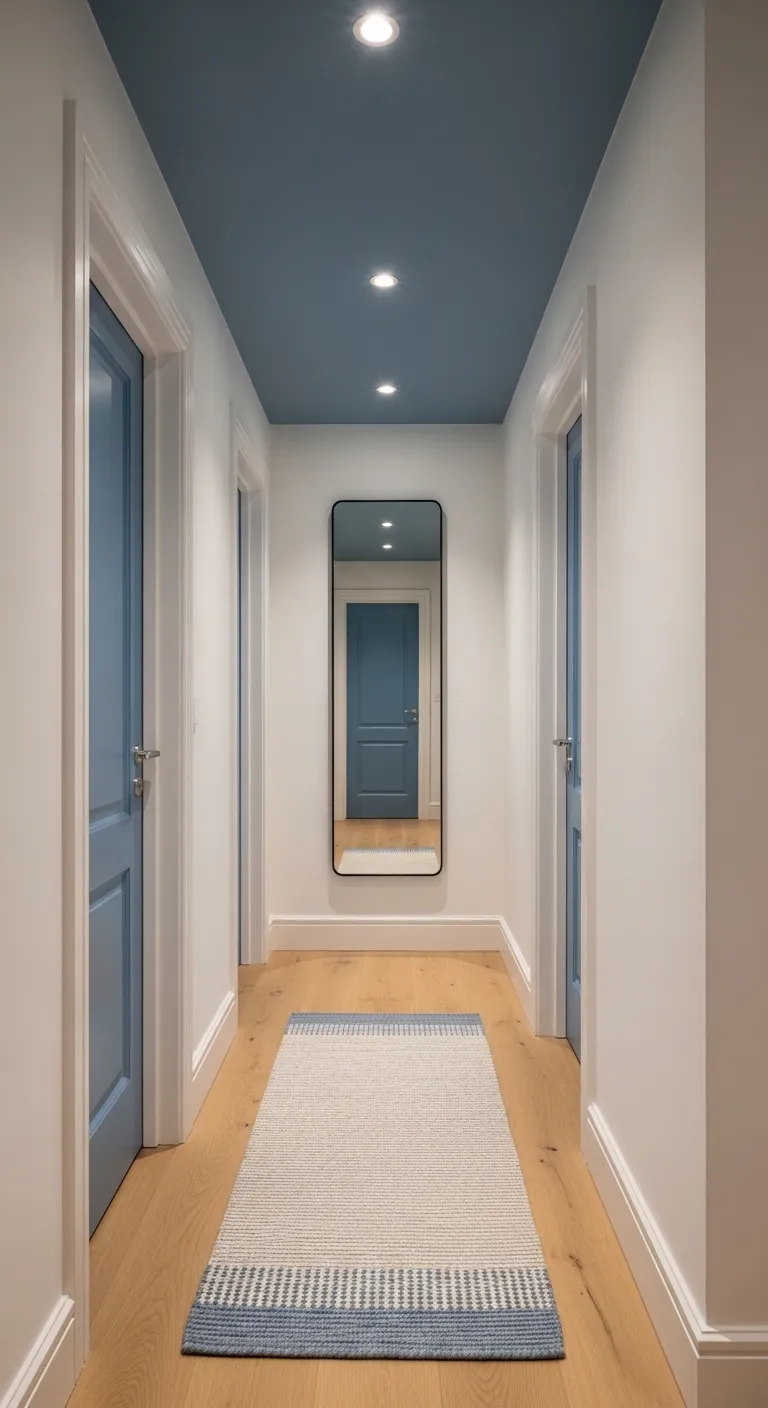
Most people ignore the ceiling in a hallway. Instead, paint it a soft contrasting shade. Try dusty blue over white walls or muted sage over warm cream. This creates depth and gently shifts focus upward. It makes the walls feel less close together.
Choose matte finishes to avoid glare in tight lighting. Pair the ceiling color with a slim runner rug that shares the same undertone. This creates subtle harmony from top to bottom and makes the space feel designed, not accidental.
4. Use a Continuous Runner to Guide the Eye
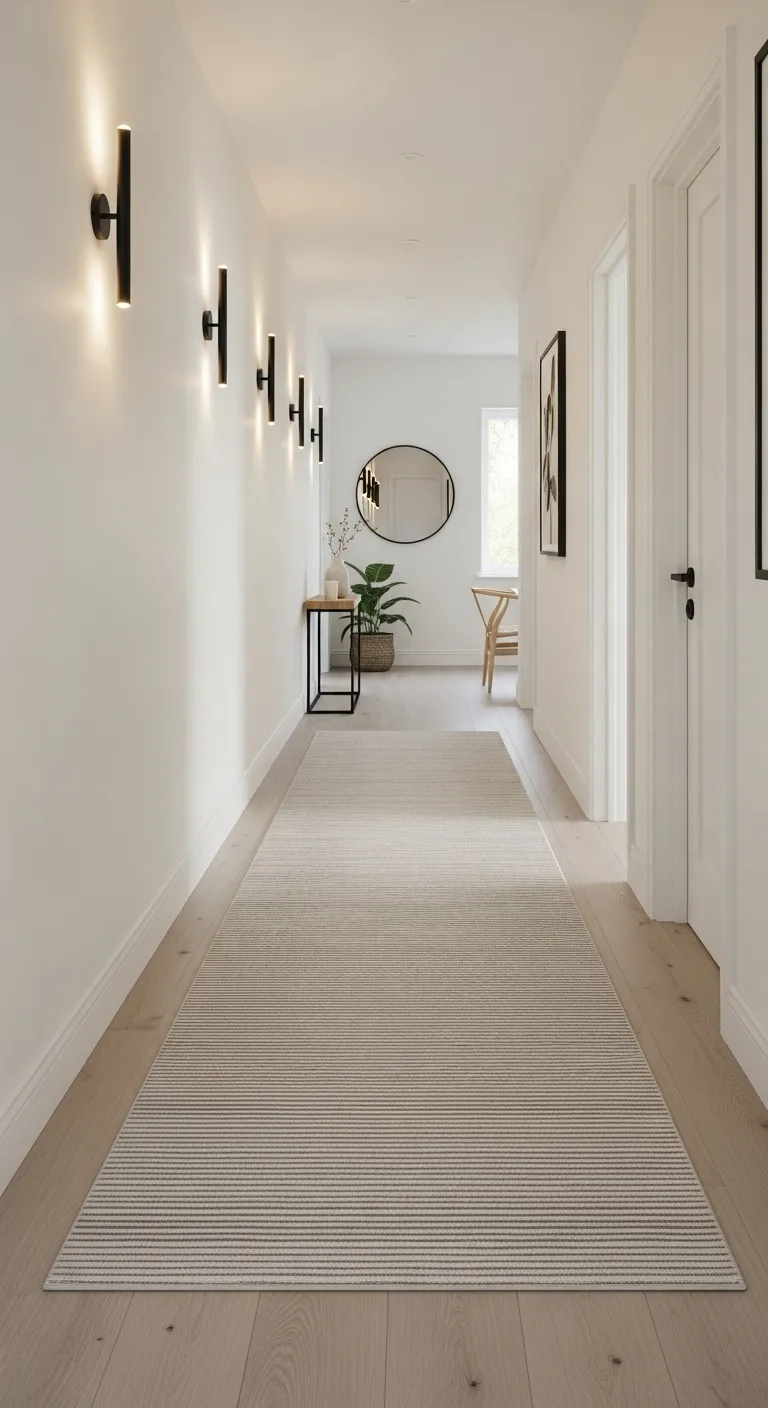
A long runner visually lengthens your hallway and makes it feel intentional. Choose one with subtle linear patterns that run lengthwise. Avoid wide horizontal stripes—they can make the hallway feel boxed in. Textures matter. A low-pile woven rug works best in high-traffic areas.
Try natural jute blended with cotton for softness and durability. To make the hallway feel wider, leave 3–4 inches of visible floor on both sides. That border creates breathing space and makes the runner feel custom-fitted.
5. Add a Mirror Panel Wall
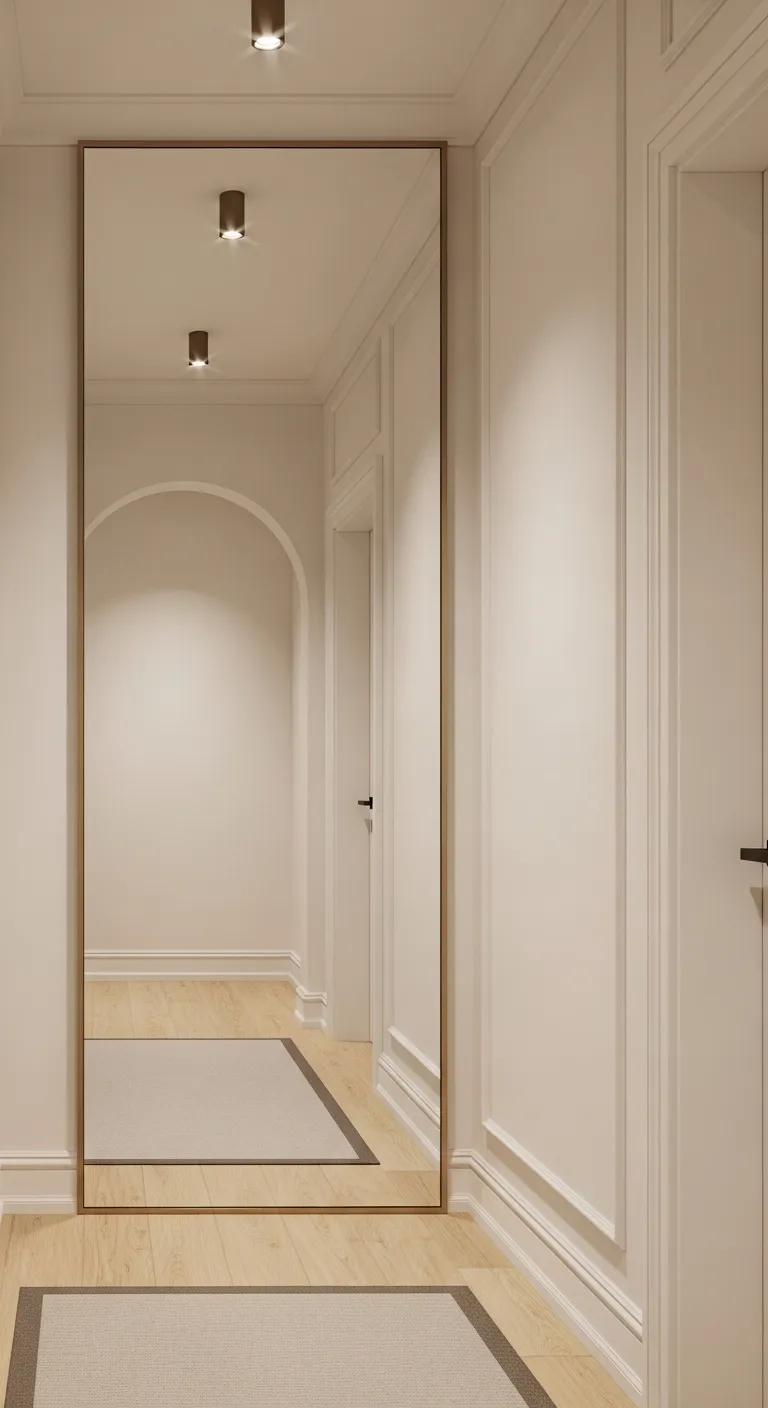
Mirrors are powerful in narrow hallway design ideas. Instead of a small framed mirror, consider one large vertical mirror panel or a set of slim rectangular panels. Place it opposite a light source. This doubles brightness instantly.
Choose thin black or brass frames for a modern look. For a softer style, try an arched mirror with a light wood frame. The curve breaks the straight lines of the hallway and makes the space feel less rigid.
6. Install Slim Wall-Mounted Lighting
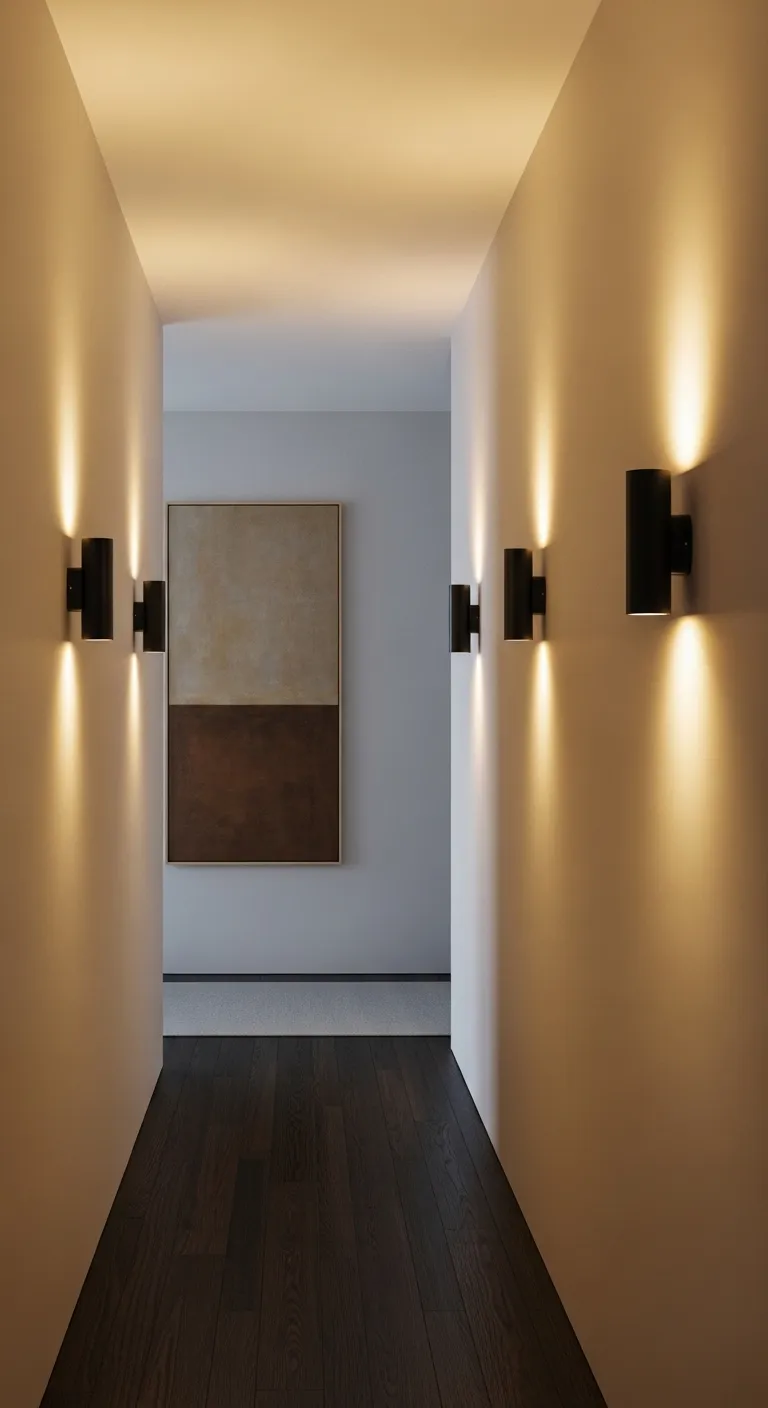
Ceiling lights alone can cast shadows in tight spaces. Instead, use slim wall sconces placed evenly along one side. Choose warm white bulbs (2700K–3000K) to create a cozy glow.
Avoid bulky fixtures. Flat or cylindrical designs keep the wall profile clean. Spacing tip: Install them about 60–66 inches from the floor for balanced light. This creates layered lighting and makes the hallway feel wider and more welcoming.
7. Create a Two-Tone Wall Split
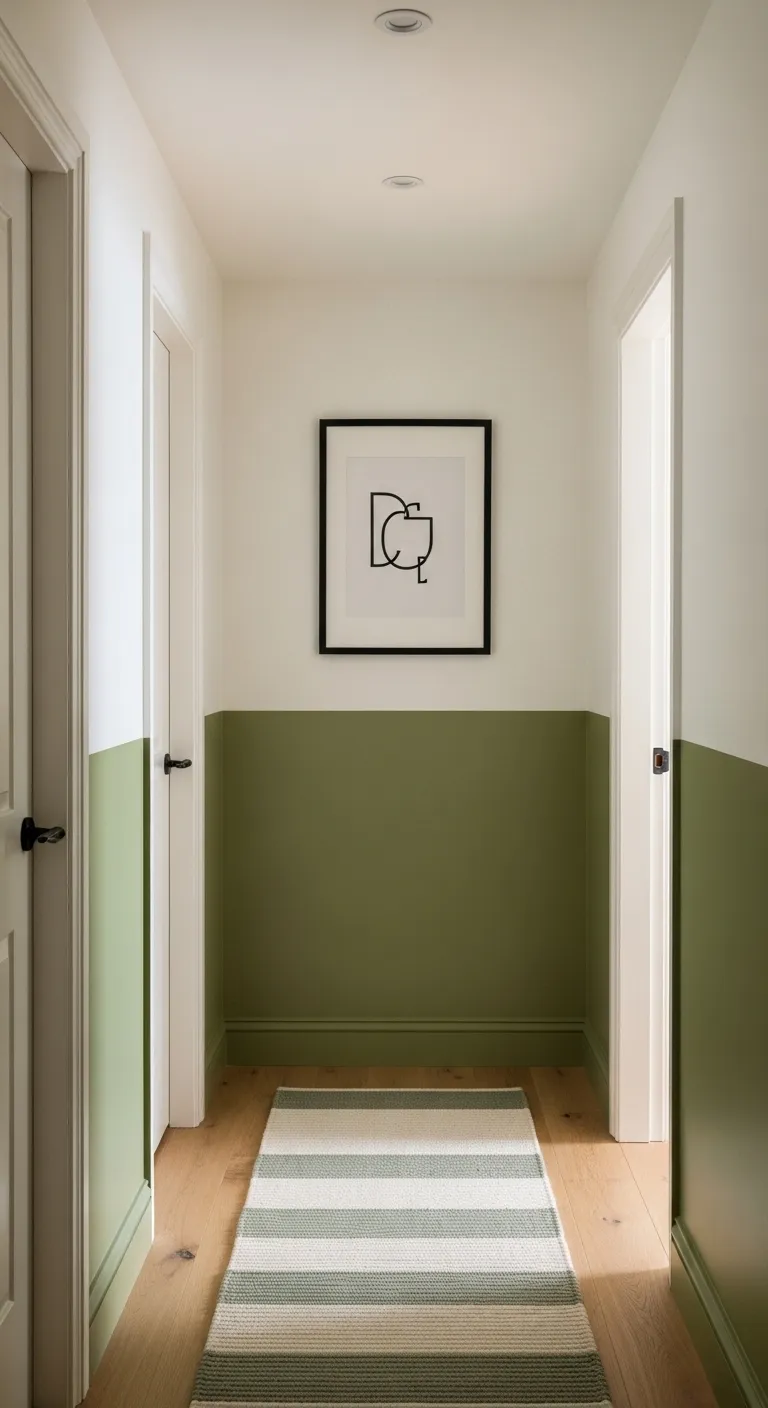
Paint the lower third of your hallway walls a slightly darker shade than the upper part. This grounds the space and prevents it from feeling tall and narrow. Try warm beige on top and soft clay below.
Or white above with muted olive beneath. Add a slim molding strip where the colors meet for a clean line. This technique adds structure and visual interest without taking up physical space.
8. Use Hidden Storage Benches at Entry Points
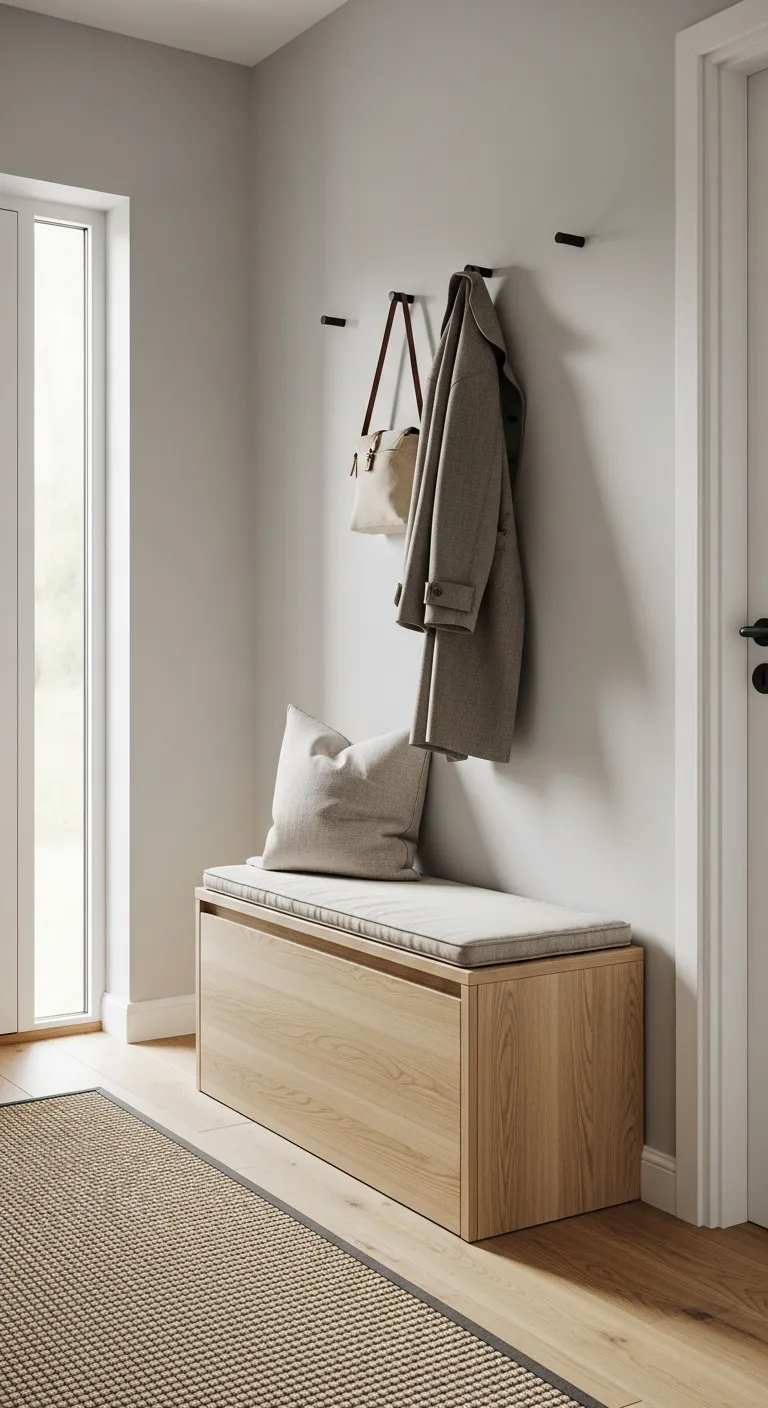
If your hallway connects to an entry, add a slim storage bench no deeper than 12 inches. Choose one with lift-up storage for shoes or seasonal items. Keep the design minimal—light wood, white, or soft gray. Add one textured cushion in linen or boucle for comfort. Place a single wall hook above for bags or jackets. This makes the hallway practical without cluttering the walkway.
9. Add Recessed Wall Niches
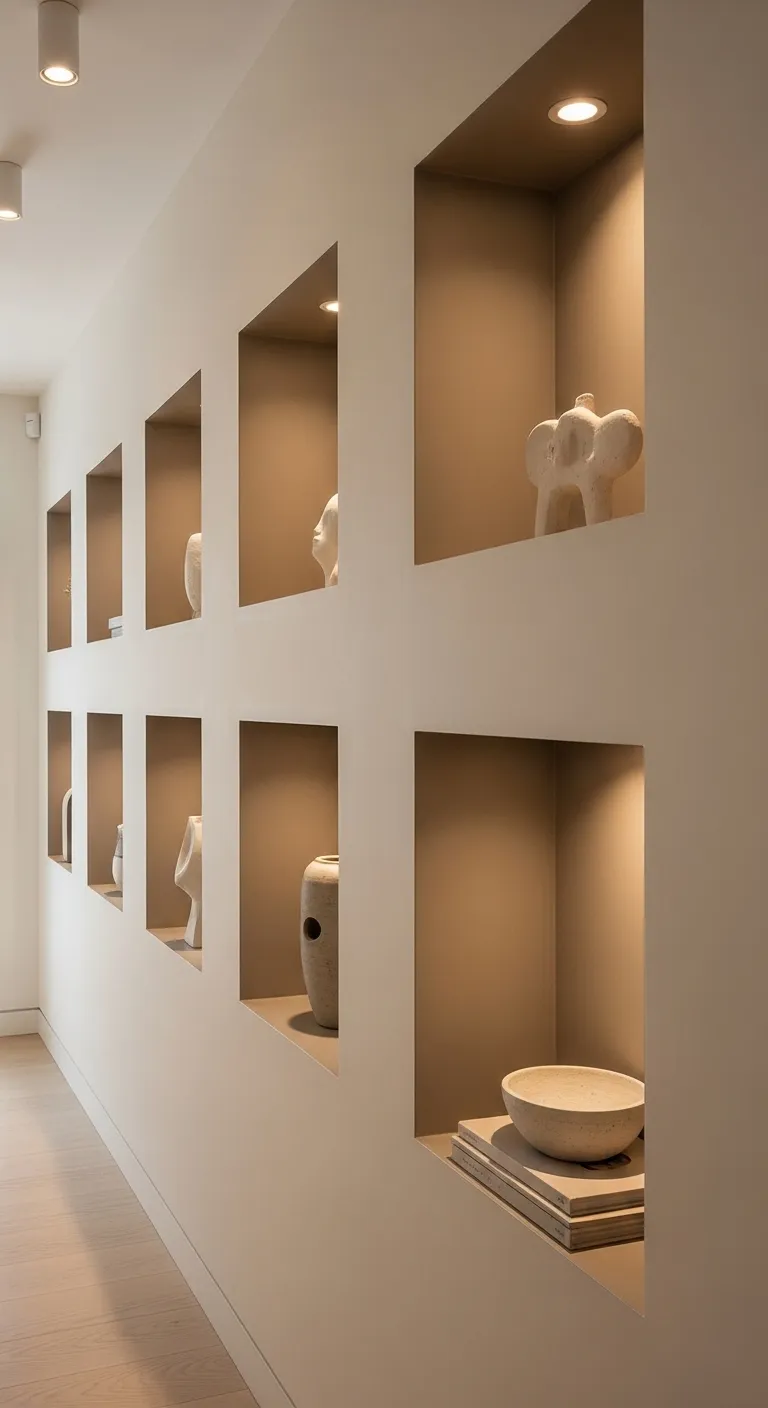
If you are renovating, consider built-in wall niches. These sit inside the wall, so they don’t reduce width. Paint the niche interior a slightly deeper shade than the wall. Add small LED strip lighting inside for soft glow. Display one sculptural object or a small stack of books. Keep styling minimal. Too many items defeat the purpose of visual calm.
10. Use Glass or Frosted Doors to Borrow Light
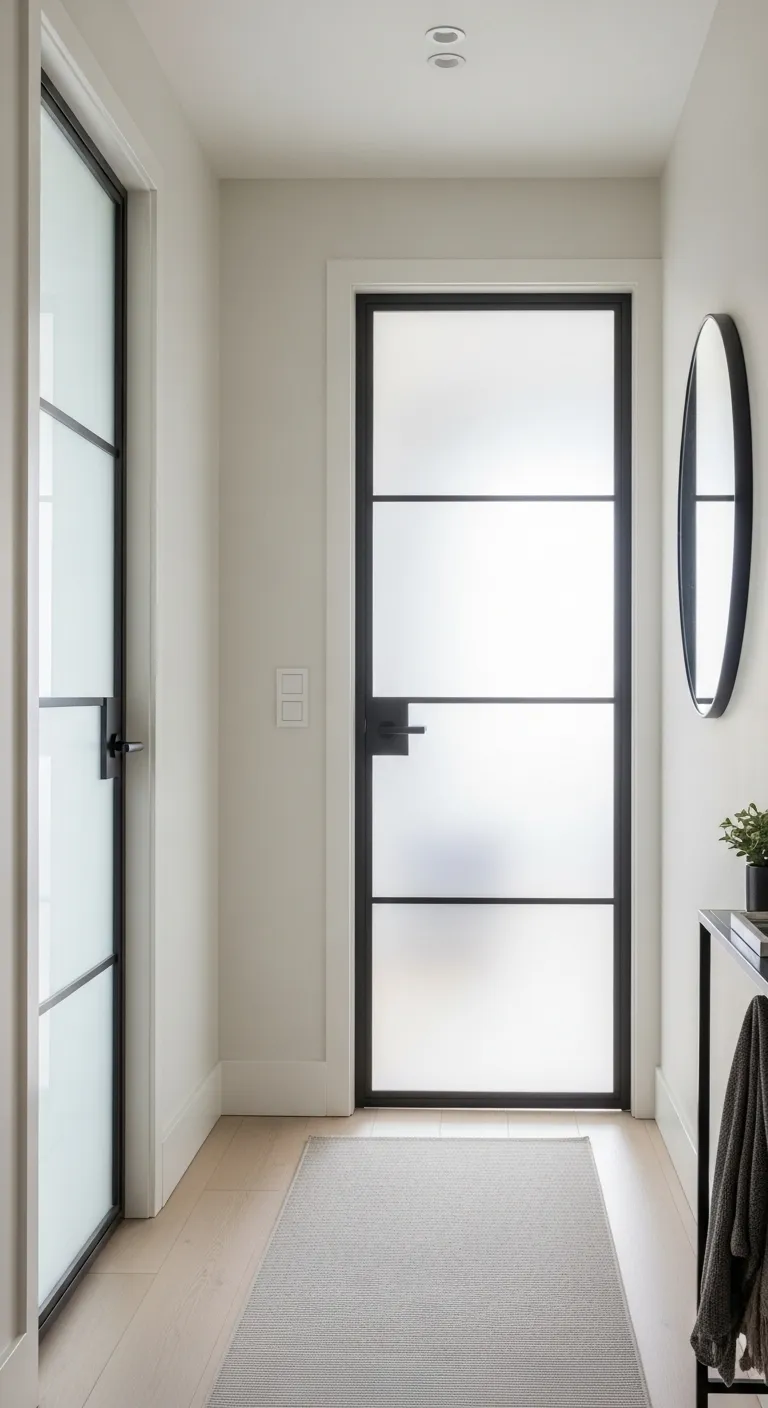
Solid doors can make hallways feel enclosed. Replace one or two doors with frosted or clear glass panels. Frosted glass keeps privacy while allowing light to pass through. Black metal frames add contrast. Light wood frames create softness. This simple change increases brightness and makes the corridor feel connected to the rest of your home.
11. Install Floor-to-Ceiling Slim Built-In Cabinets
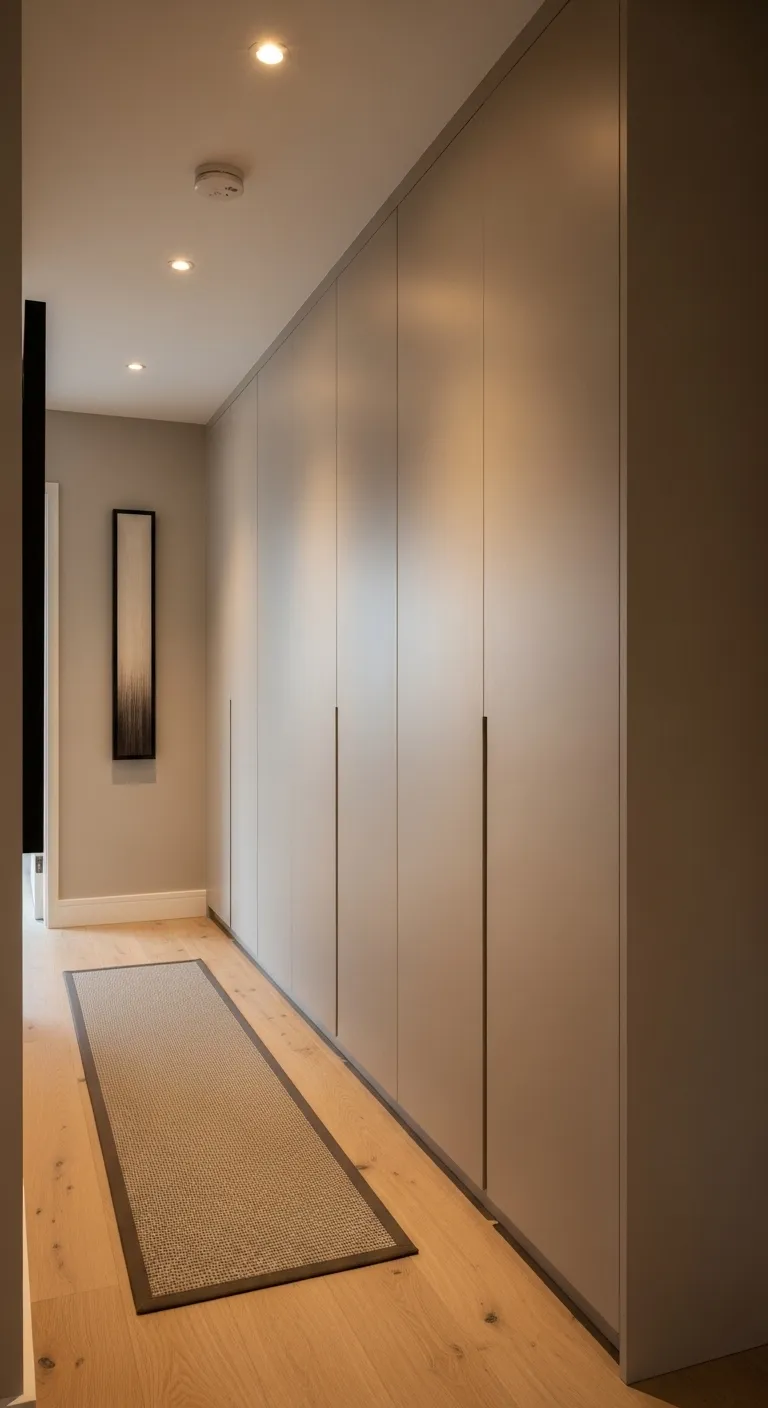
Floor-to-ceiling built-ins maximize vertical storage without widening the footprint. Keep cabinet depth between 10–14 inches so you preserve walking space. Use flat-panel doors in the same color as your walls to make them visually disappear.
Add push-to-open hardware to avoid protruding handles. Paint everything in soft greige, warm white, or muted taupe for a seamless look. If your hallway lacks light, choose a satin finish to softly reflect brightness.
This solution turns a tight corridor into hidden storage for coats, linens, or cleaning supplies—without visual clutter.
12. Use Diagonal Flooring to Visually Widen
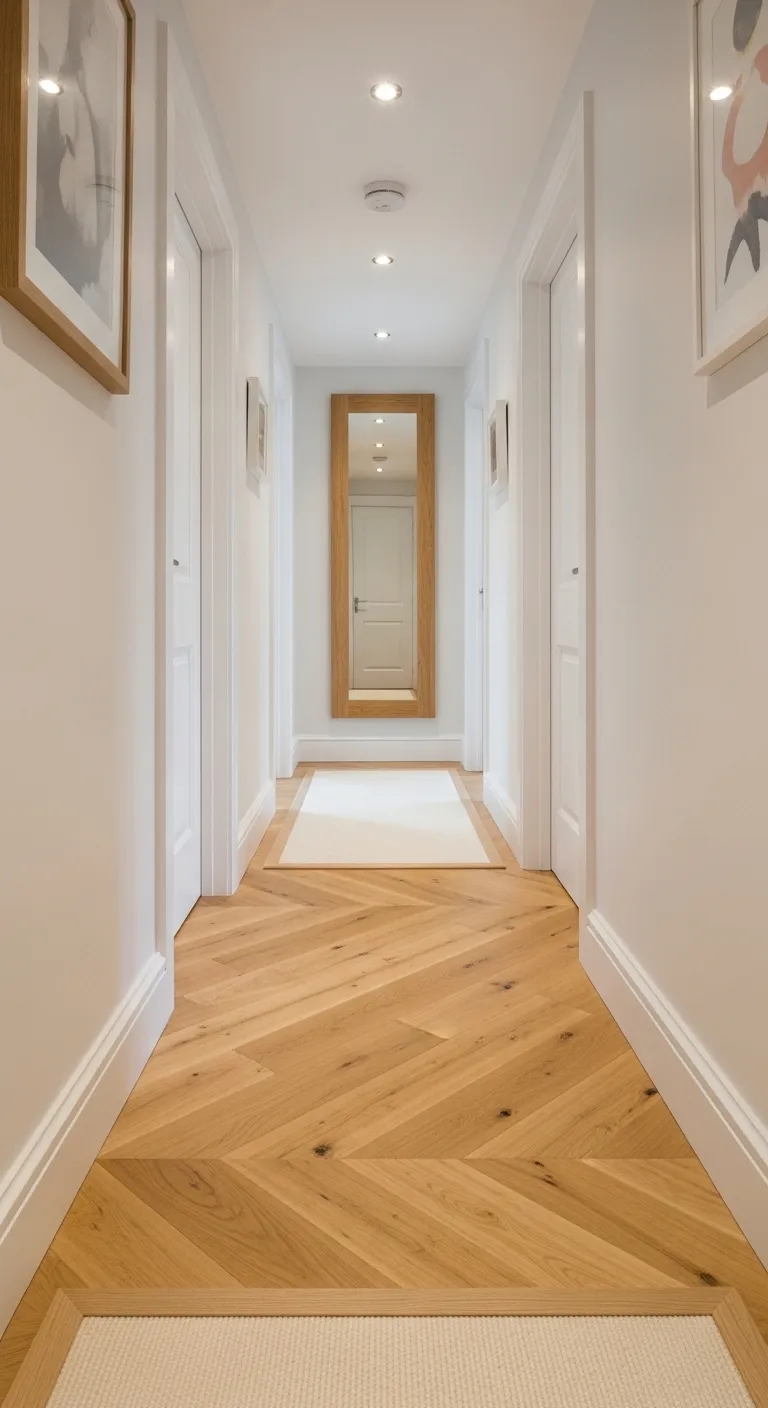
Install planks or tiles on a diagonal rather than straight. The angled lines trick the eye and create the illusion of width. Light oak, pale maple, or soft gray wood tones work best. Avoid dark, high-contrast patterns that make the space feel busy.
For tile, choose elongated rectangular tiles placed diagonally with thin grout lines. This technique adds subtle movement underfoot and makes the hallway feel dynamic instead of boxed in.
13. Add a Soft Arch Detail
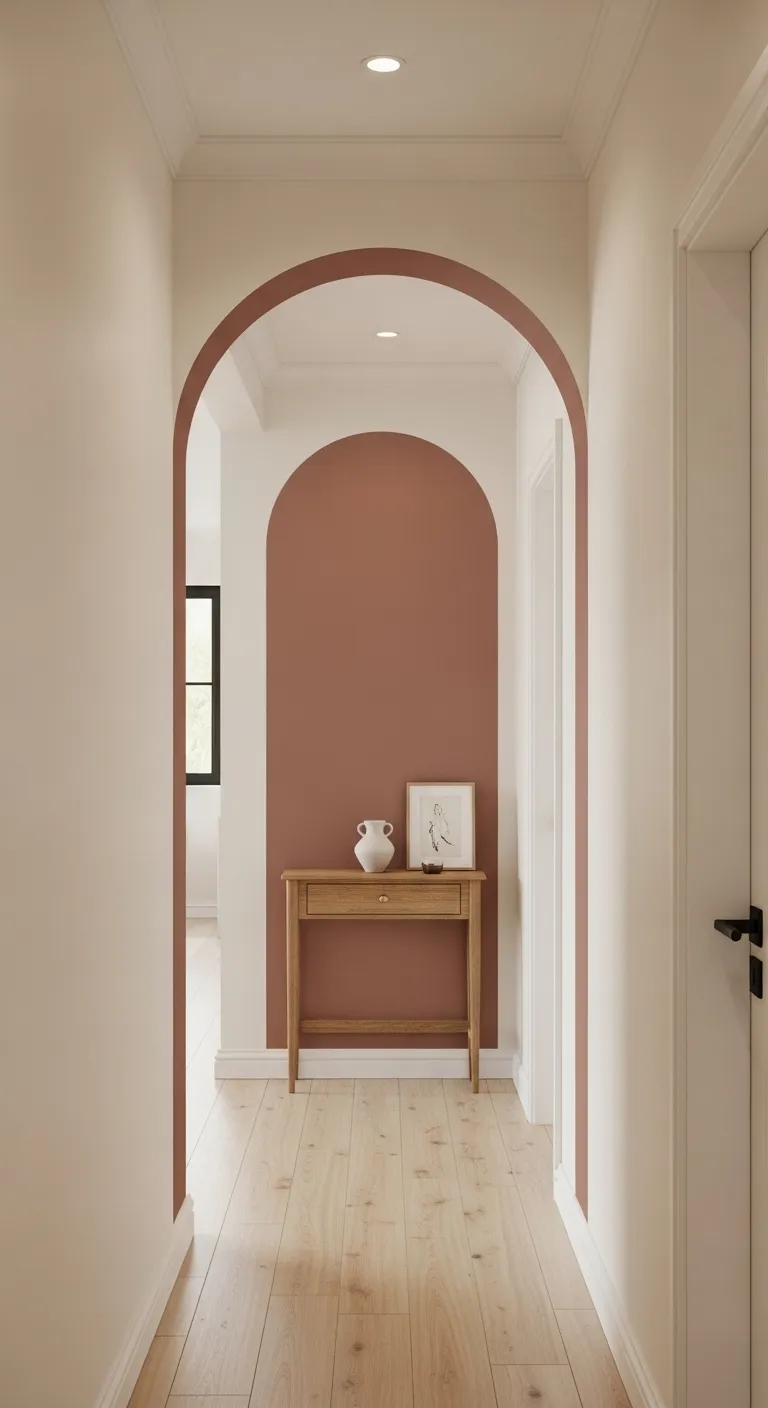
Introduce a soft arch at the end of the hallway or as a painted wall detail. Curves reduce the rigid tunnel feeling of narrow spaces. You can paint a full-height arch in a muted tone like clay, sage, or dusty blush. Keep edges clean and symmetrical.
If possible, frame a doorway with a rounded arch instead of a sharp corner. Pair the curve with round mirrors or globe wall lights to reinforce softness. This instantly changes the mood from tight to welcoming.
14. Create a Slim Wall Desk Nook
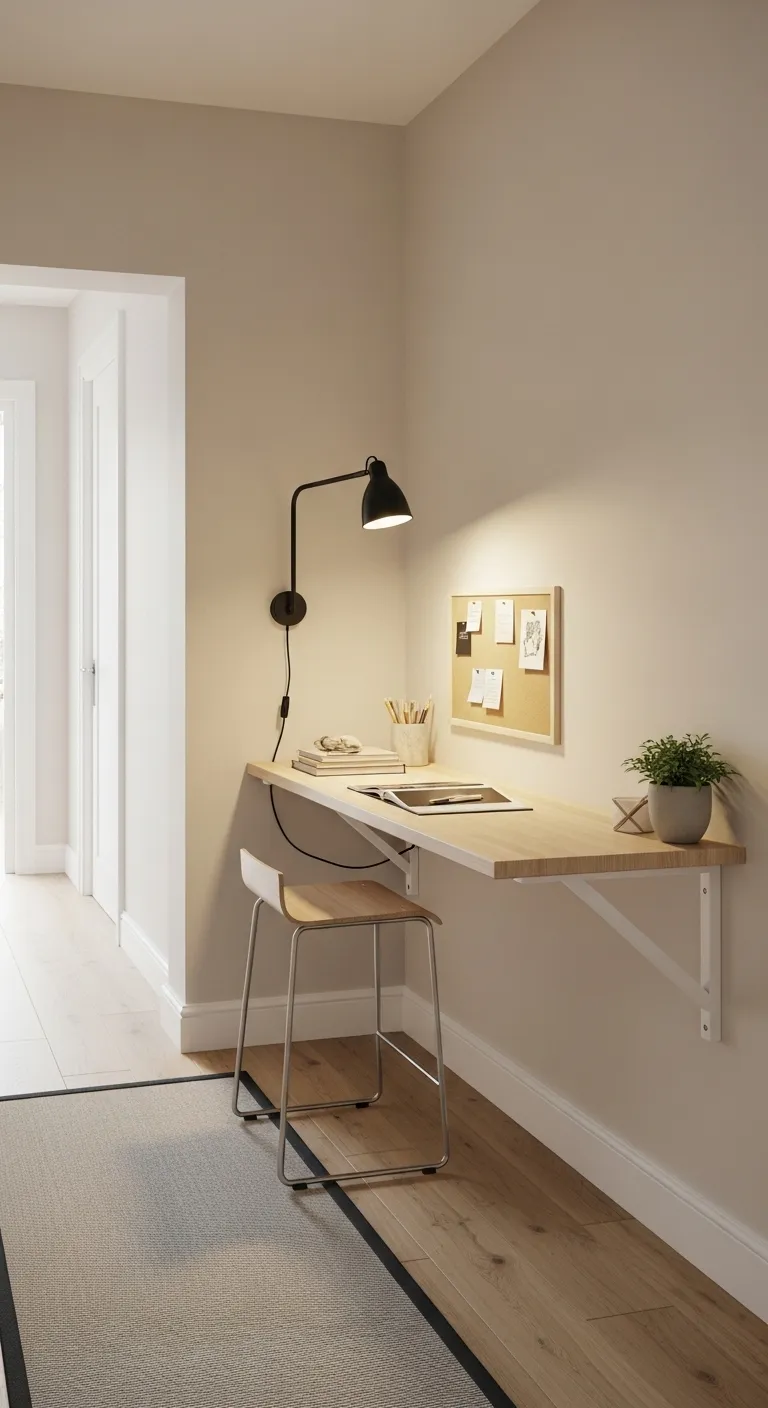
Turn unused hallway width into a compact workspace. Install a floating desk shelf 12 inches deep. Mount it at standard desk height and add a slim stool that tucks completely underneath. Keep the palette calm—light wood top with white brackets.
Install a small plug-in wall lamp above for focused lighting. Add one small cork board or magnetic strip for notes. This works best in hallways wider than 36 inches. It transforms transition space into a productive corner without overcrowding.
15. Layer Subtle Wall Textures
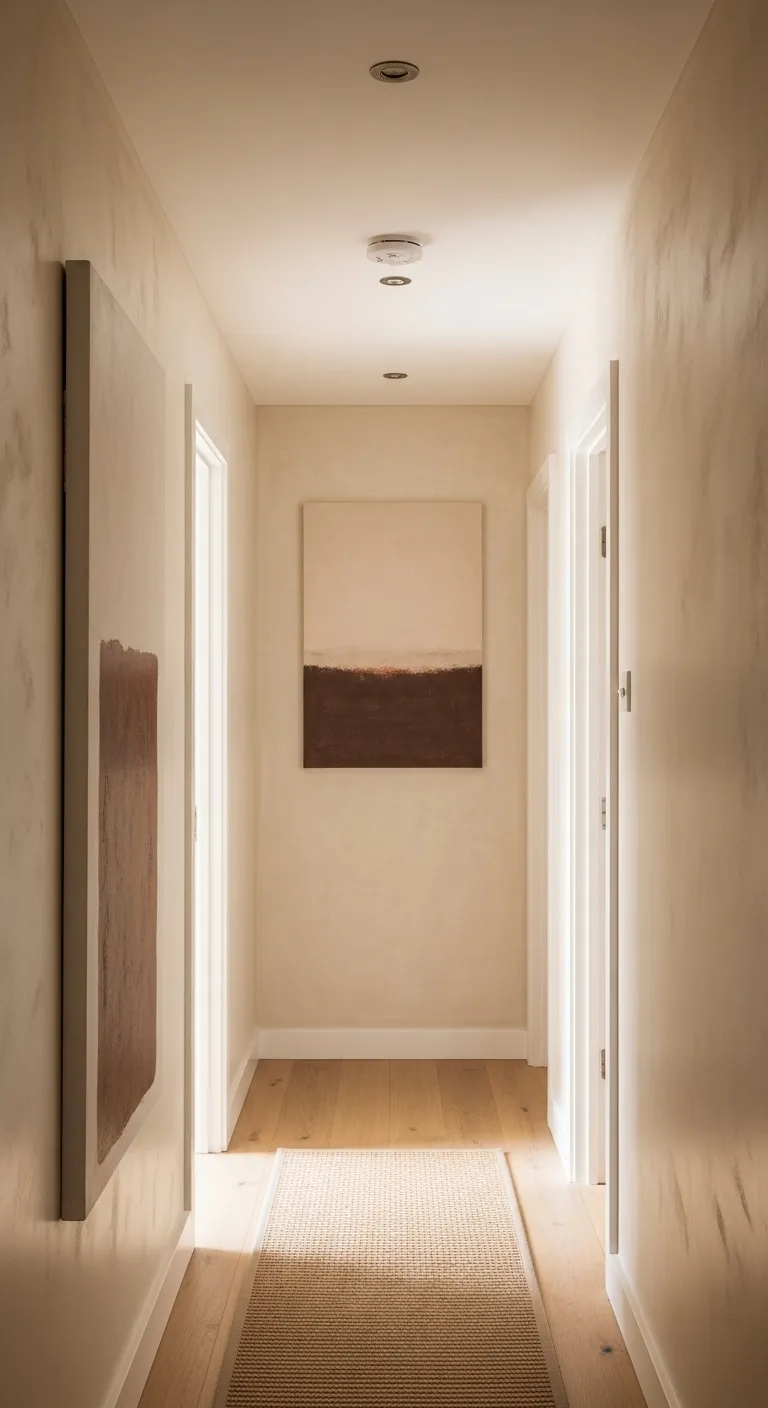
Instead of bold color, use texture. Limewash, microcement, or soft plaster creates movement without shrinking the space. Stick to light, warm neutrals like cream, sand, or mushroom. The slight tonal variation reflects light gently and prevents flat walls from feeling harsh.
Avoid heavy patterns. Keep texture subtle so the hallway stays airy. This approach feels modern and calming while adding quiet visual depth.
16. Install Recessed Floor Lighting
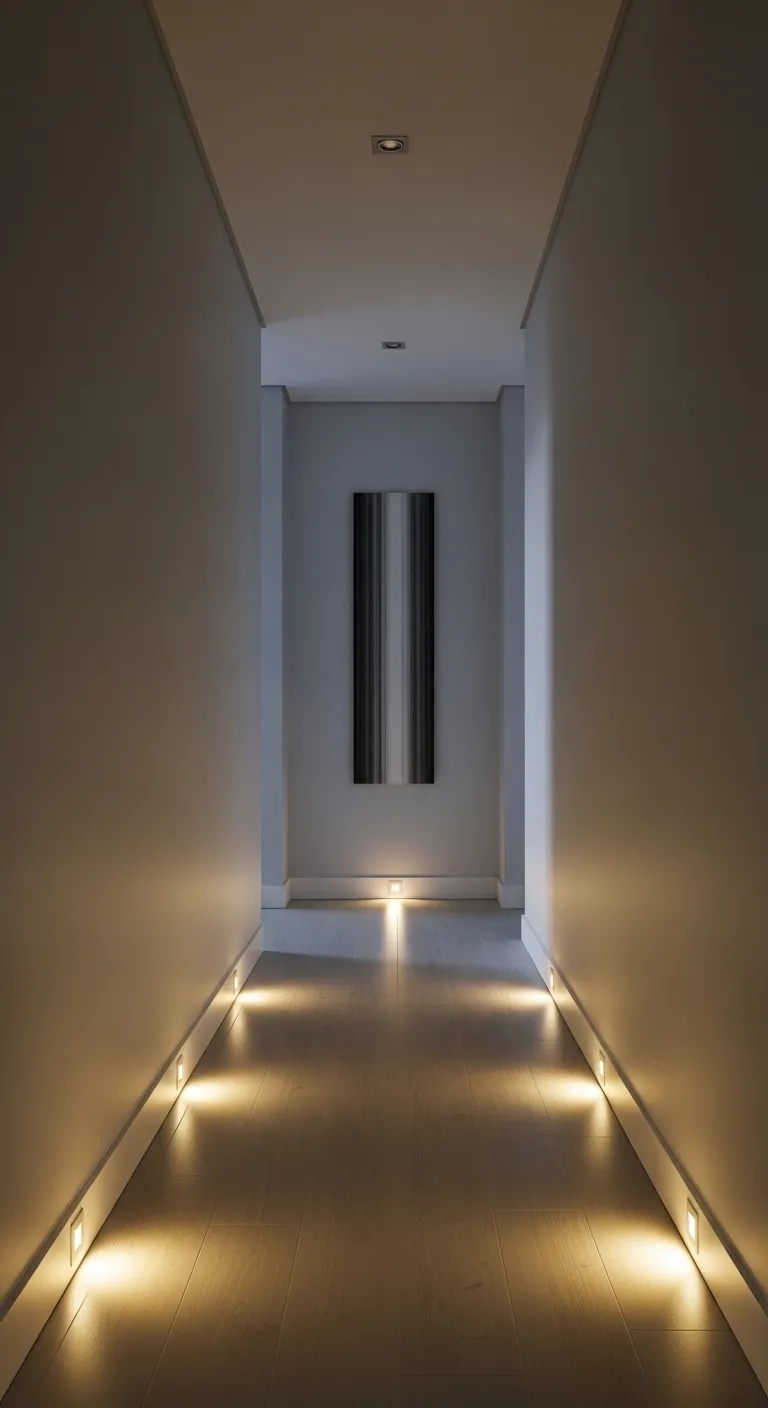
Add LED strip lighting along the baseboards or recessed near the floor. This creates a soft glow that guides movement at night. Choose warm white lighting to keep it cozy. Hide wiring completely for a clean look.
The glow visually expands the lower wall and makes the hallway feel less narrow. This also improves safety without harsh overhead lighting. The layered light effect feels intentional and modern.
17. Paint Doors the Same Color as Walls
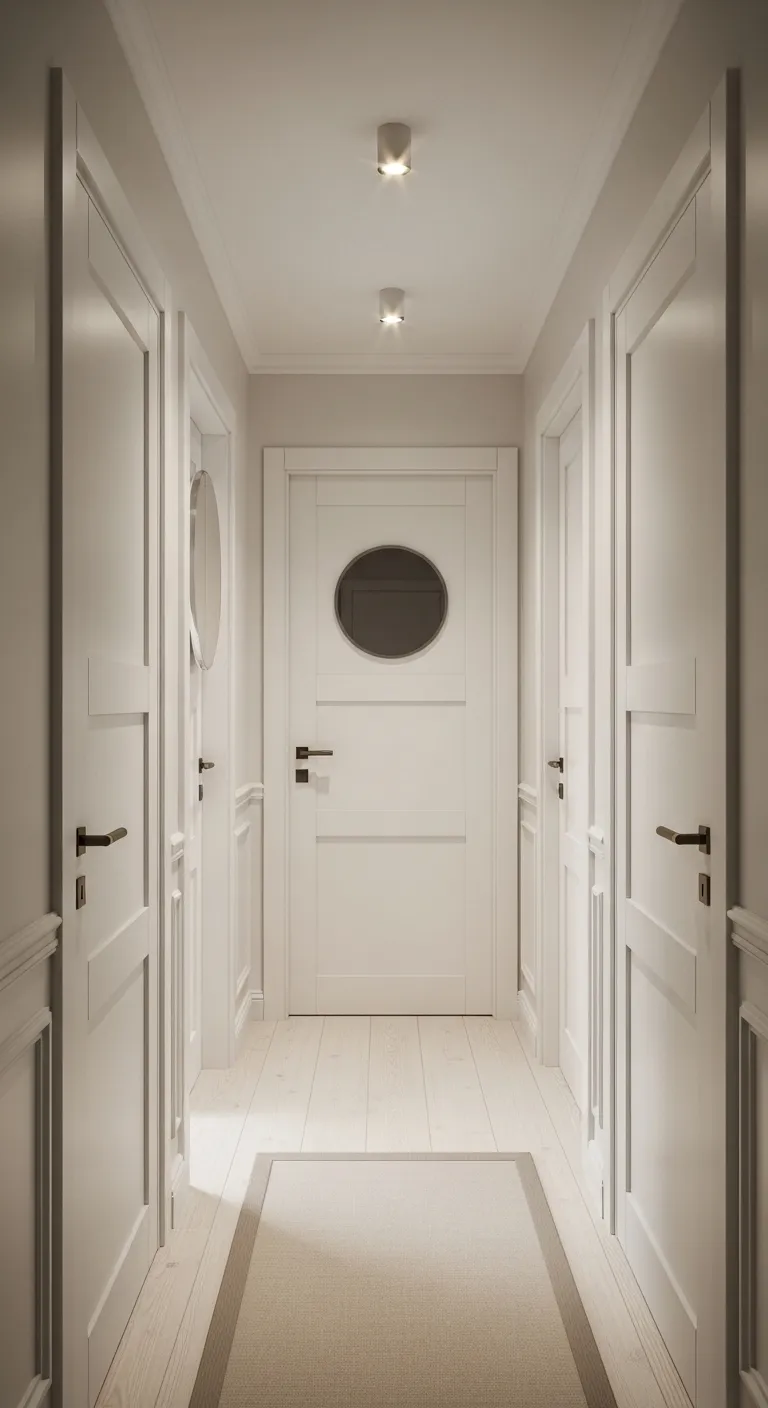
Multiple doors can break up a narrow hallway and create visual noise. Paint doors, trim, and walls the same shade. Choose soft tones like warm white, pale gray, or muted beige.
This creates a seamless flow and reduces sharp contrasts. Add matte black or brushed brass hardware for subtle definition. The unified color palette makes the hallway feel calmer and more expansive.
18. Add a Statement End Wall
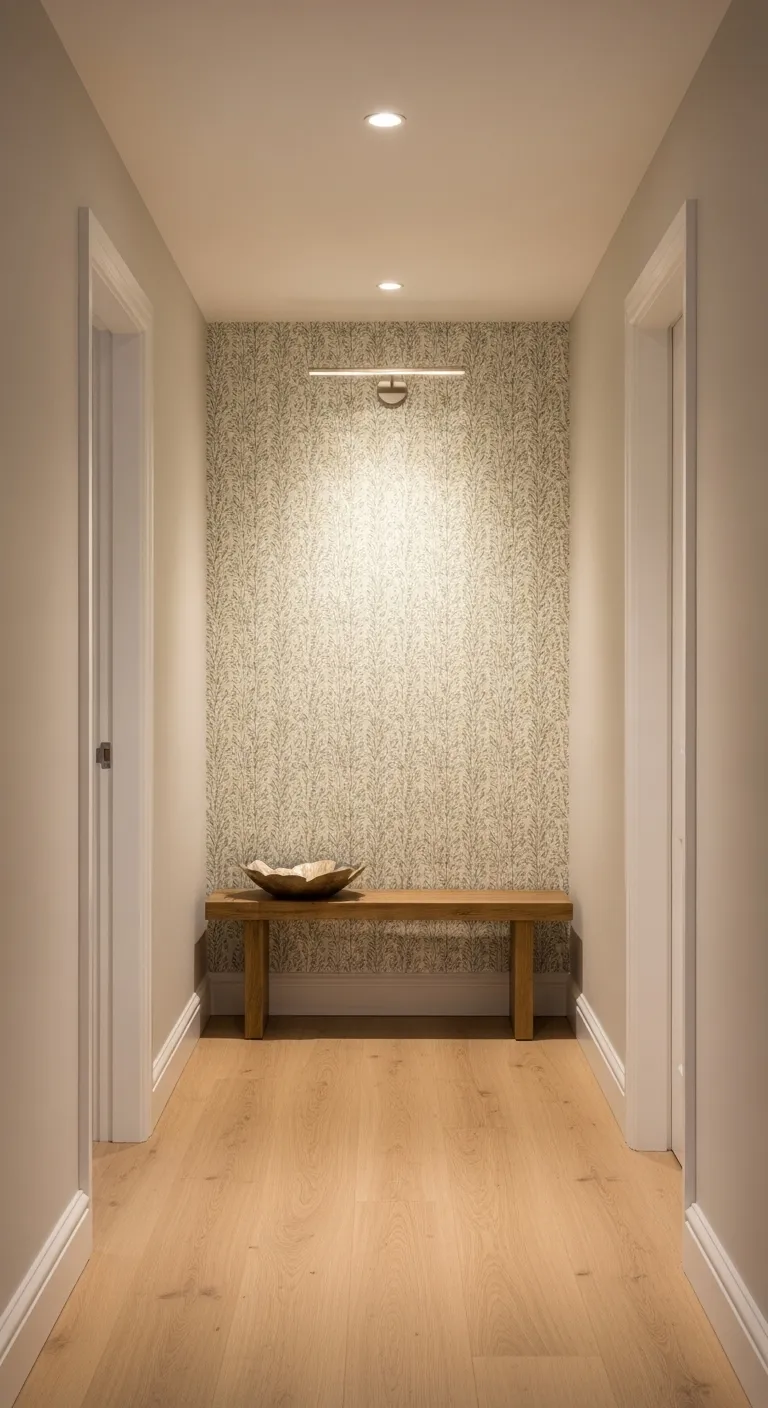
Make the far end of your hallway the focal point. Use bold wallpaper, a deep paint shade, or a large framed artwork. Choose vertical patterns or subtle botanical prints. Avoid heavy horizontal lines. Add a slim spotlight above to highlight the feature.
This draws the eye forward and creates depth. The hallway feels longer and purposeful instead of tight and forgotten.
19. Use Transparent Console Tables
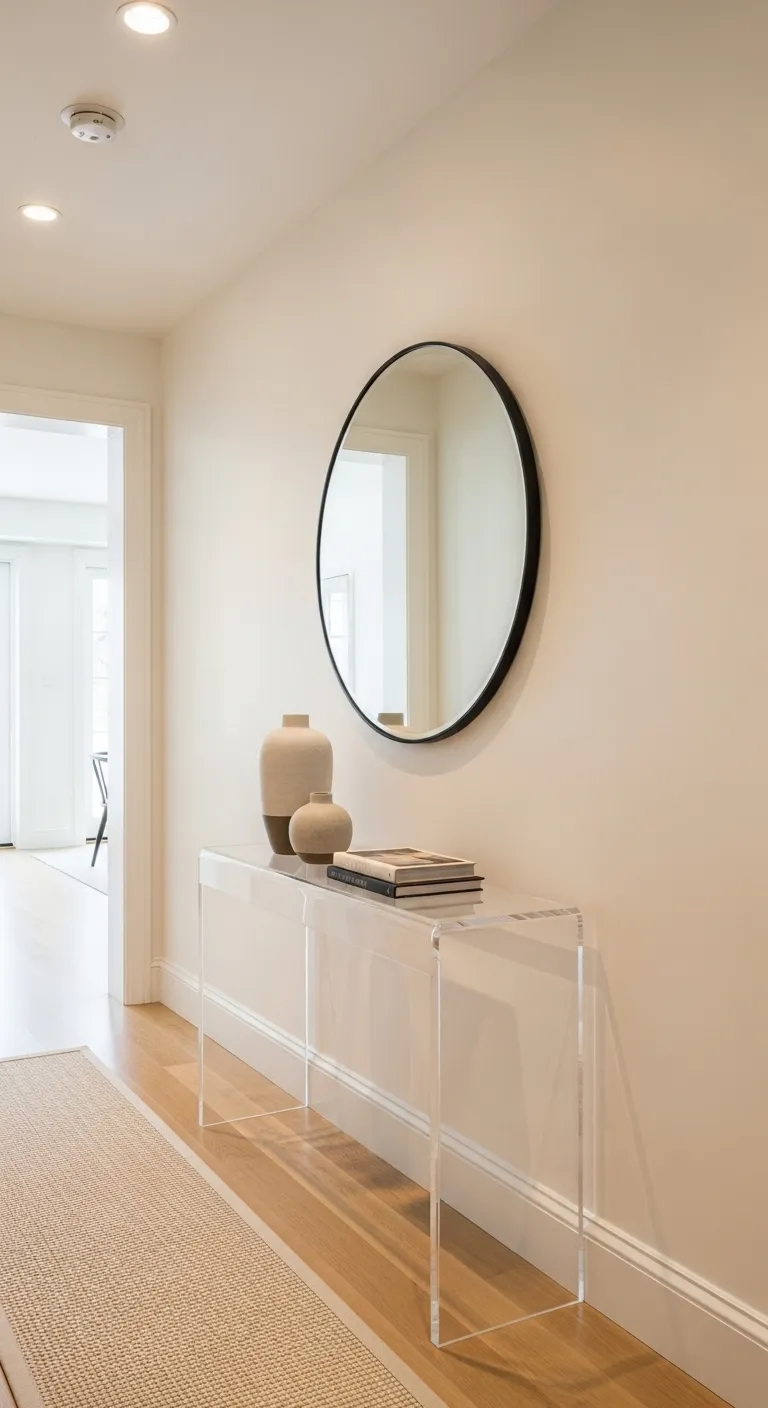
Acrylic or glass console tables provide function without visual weight. Keep depth minimal and style with restraint. Add one ceramic vase, a small stack of books, and a narrow tray. Avoid clutter. The transparent material allows light to pass through, keeping the hallway airy. Pair with a round mirror above to soften edges and reflect light.
20. Introduce Layered Ceiling Lighting
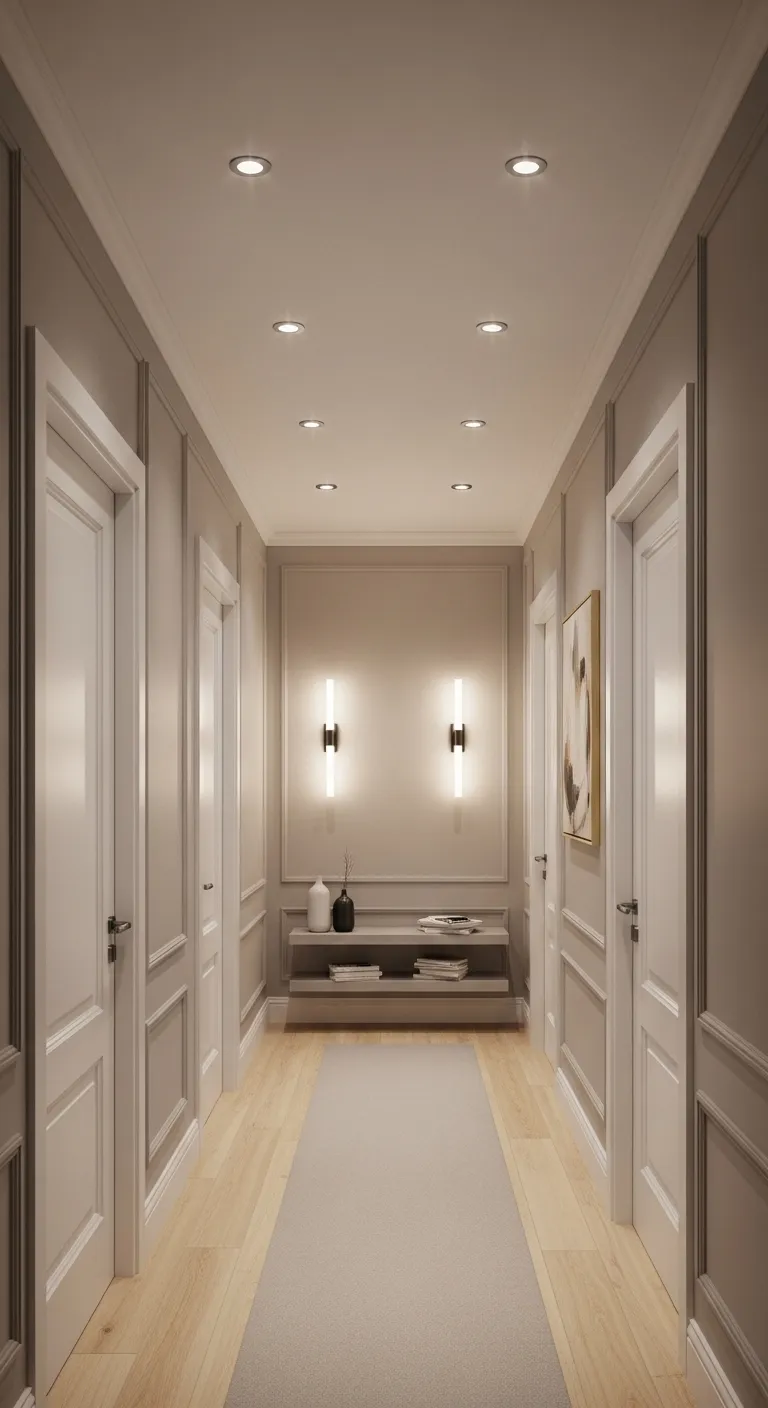
Replace one central ceiling light with multiple recessed spotlights spaced evenly. This eliminates dark corners. Use dimmable fixtures for flexibility. Combine with wall sconces or floor-level lighting for layers. Keep fixtures minimal and flush to avoid lowering the ceiling visually. Balanced lighting prevents shadows that make walls feel closer together.
21. Hang Oversized Art Vertically
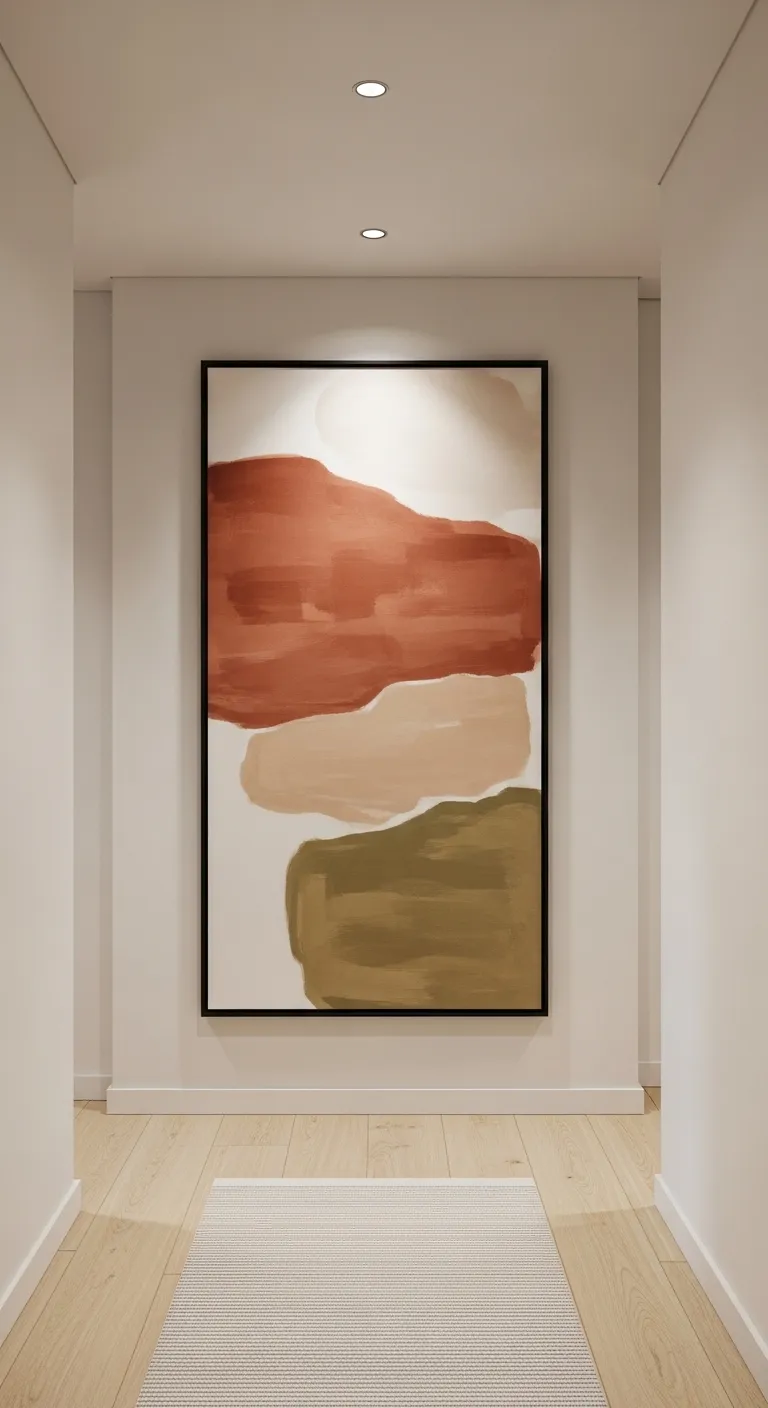
Instead of many small frames, use one tall vertical artwork. This keeps the wall clean and elongates the space. Choose abstract art with soft neutral tones or muted earthy colors. Keep frames slim and simple. Center the piece at eye level and allow negative space around it. This creates impact without clutter.
22. Use Light-Reflecting Paint Finishes
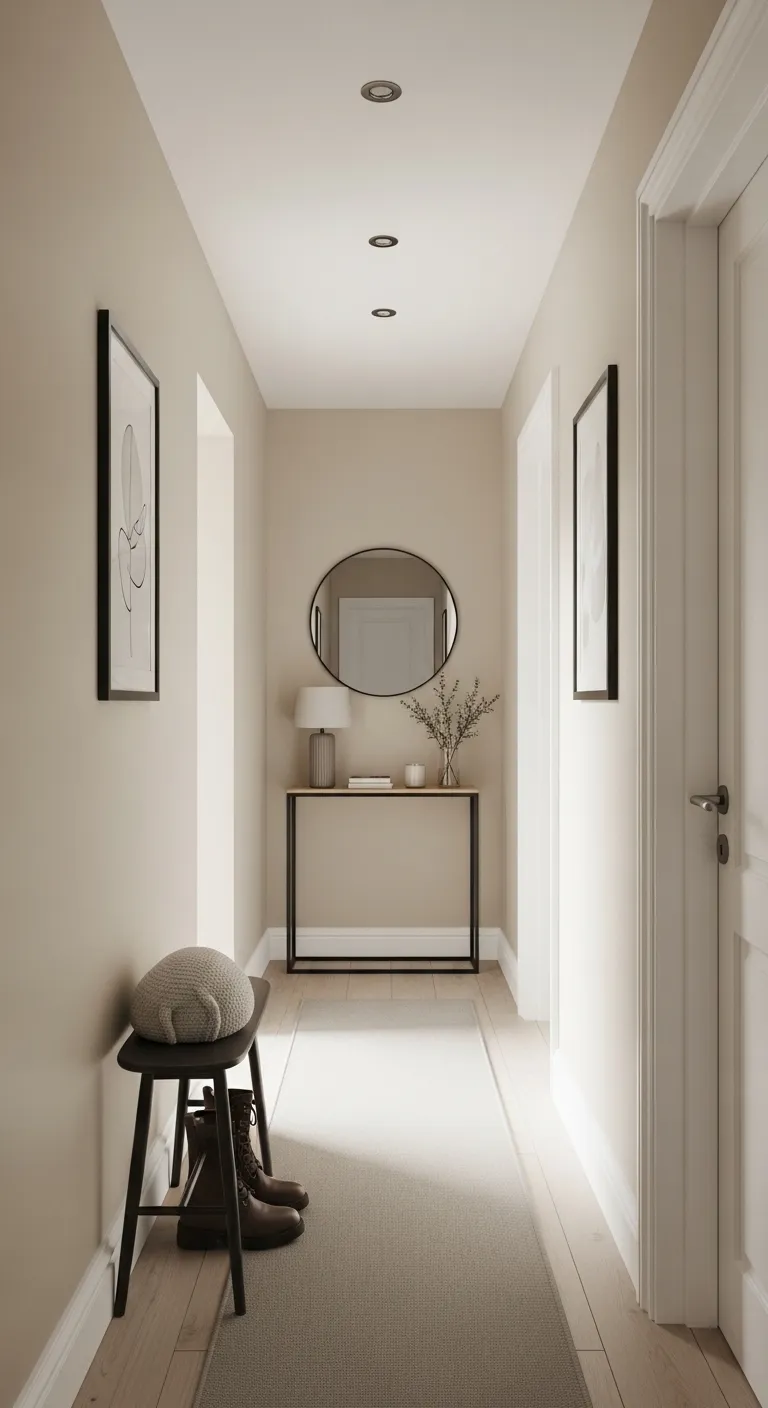
Choose satin or eggshell finishes instead of flat matte in very dark hallways. These finishes bounce light gently and reduce dullness. Stick to light neutrals—warm white, soft beige, or pale gray. Avoid heavy gloss that shows imperfections.
Combine with good lighting and minimal décor. The subtle sheen helps the hallway feel brighter and slightly wider without dramatic changes.
Conclusion
A narrow hallway does not need to feel tight or forgotten. With the right layout choices, lighting layers, textures, and color strategies, you can transform it into a clean, stylish, and functional passage.
Focus on vertical lines, seamless color palettes, hidden storage, and thoughtful lighting. Choose one or two ideas that fit your space and start there. Save your favorite narrow hallway design ideas, and begin turning that small corridor into a space you truly love walking through every day.