24 Living Room Dining Room Combo Layouts That Maximize Space
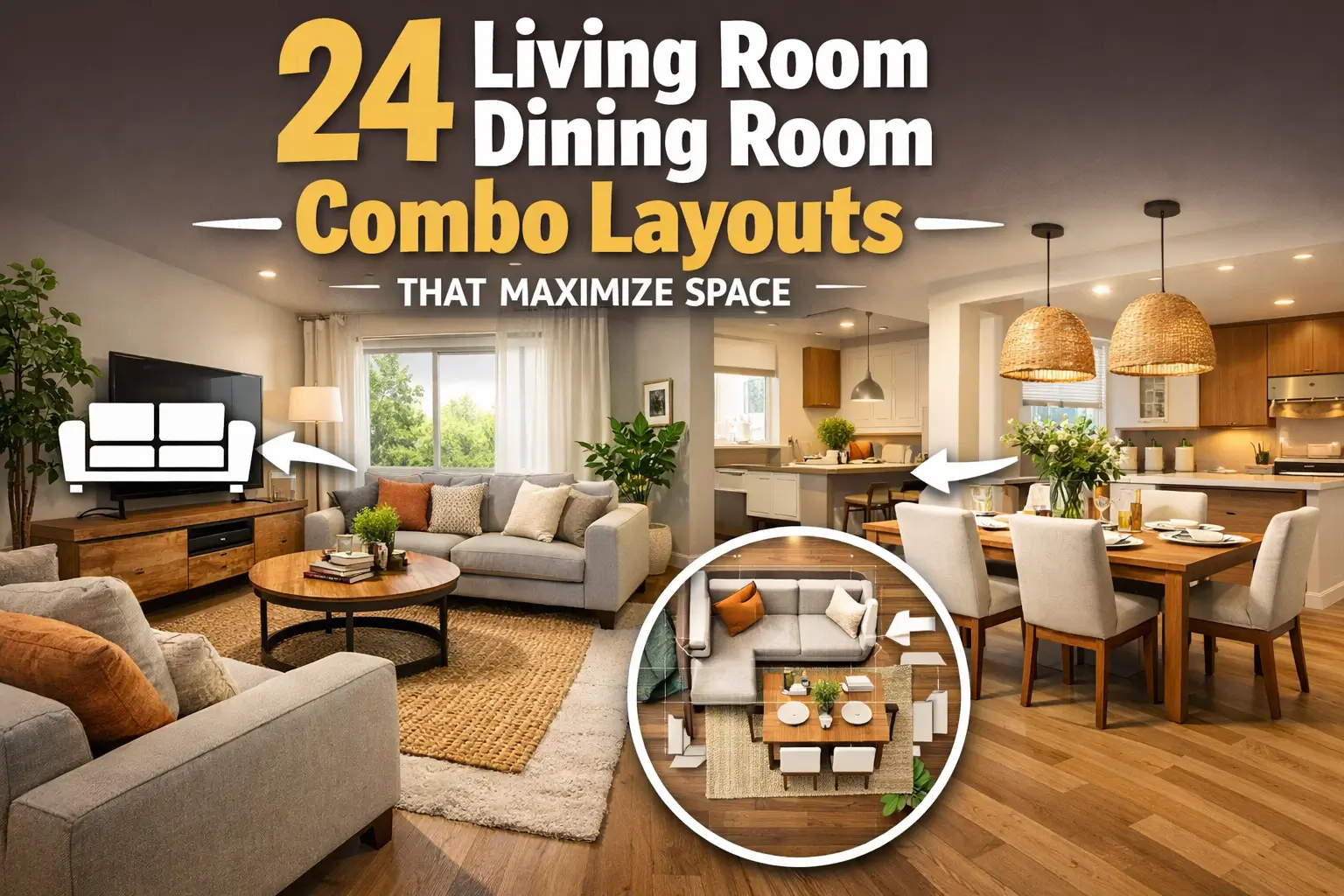
Open spaces feel modern and flexible, but combining a living room and dining room can also feel tricky. Many people struggle with furniture placement, walking space, and keeping the room visually balanced. The good news is that smart layouts can make one room serve two purposes without feeling crowded.
This guide shares 24 Living Room Dining Room Combo Layouts That Maximize Space and help you organize furniture, lighting, and décor in a way that feels natural and functional. Each idea focuses on practical placement, visual separation, and comfort. You will find layouts that work for apartments, small homes, and open floor plans.
If you want a space that feels bigger, brighter, and easier to use, these layout ideas will help you design a room that works beautifully every day.
1. Sofa Facing the Dining Area for a Natural Flow
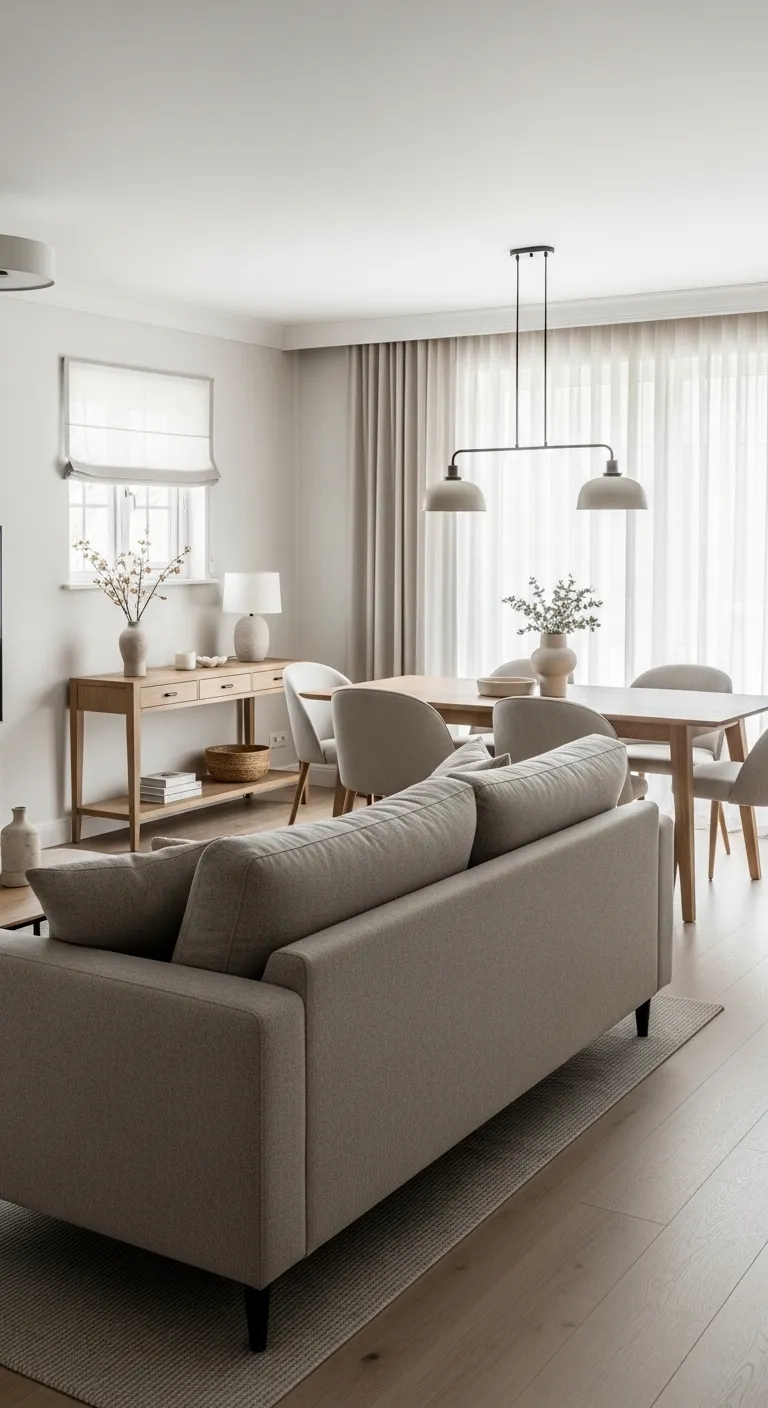
One of the easiest living room dining room combo layouts places the sofa facing the dining area. This layout creates a smooth visual flow between both zones while keeping them connected.
Place the sofa in the center of the room instead of against the wall. The back of the sofa acts like a gentle divider between the living space and the dining area. Add a slim console table behind the sofa and place a table lamp or small plant on top. This small detail visually separates the two spaces without adding walls.
Position the dining table directly behind the sofa, leaving enough walking space between them. A rectangular table works especially well here because it follows the same direction as the sofa.
Choose colors that connect both zones. For example, if the living room has soft beige seating, add beige cushions on the dining chairs. Warm lighting above the table also helps define the dining area without making the room feel divided.
2. Use a Large Area Rug to Define the Living Space
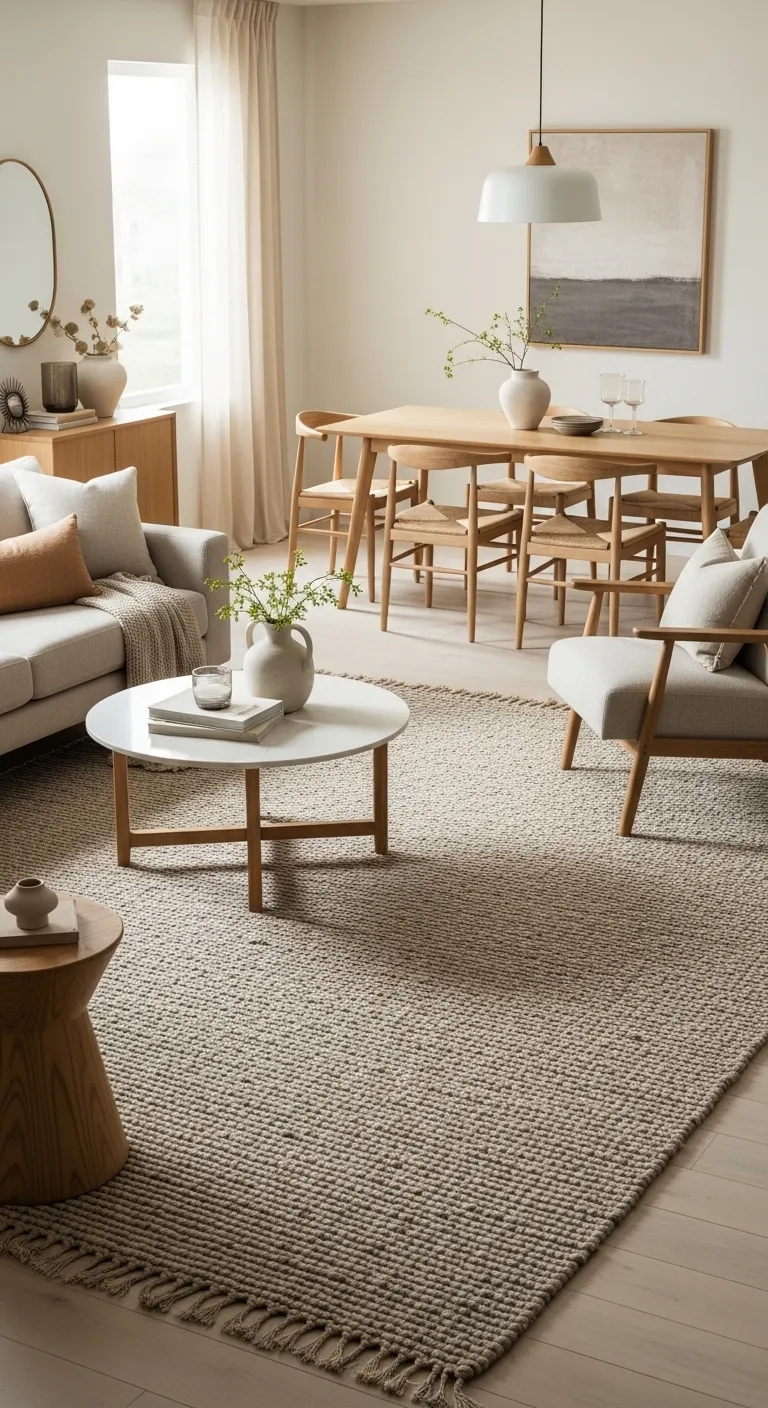
A large rug instantly creates a visual boundary between the living room and dining area while keeping the room open. This simple trick works especially well in small apartments.
Place a soft textured rug under the sofa, coffee table, and accent chairs. The rug should be large enough so that at least the front legs of each piece of furniture sit on it. This anchors the living room and keeps it from blending into the dining space.
Choose a rug with subtle patterns or layered textures like woven wool, soft neutral stripes, or faded geometric prints. These details add depth without overwhelming the room.
Keep the dining table outside the rug area. A natural wood or light oak table works beautifully next to a textured rug because it creates contrast between the two zones. This layout keeps both spaces clearly organized while maintaining a relaxed open-plan feel.
3. Place the Dining Table Near the Window for Natural Light
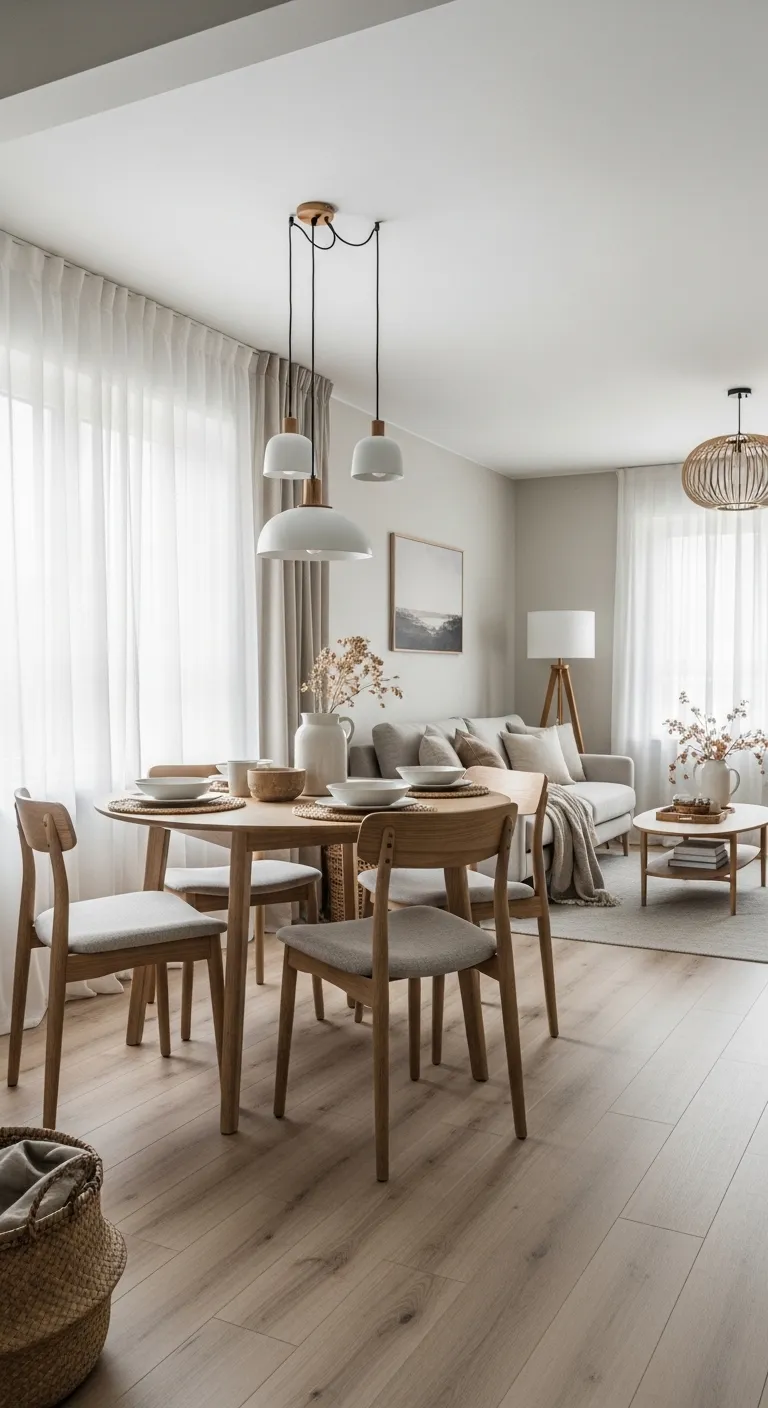
Natural light can easily define the dining space in a combo layout. Placing the dining table near a window creates a bright and inviting eating area while the living room remains cozy.
Position the dining table where sunlight enters during the day. Round tables work well near windows because they soften the room’s layout and improve walking flow.
Use light curtains or sheer drapes so sunlight continues to fill the space. When daylight hits the dining table, it naturally becomes a focal point of the room.
Keep the living area slightly deeper in the room with comfortable seating, a coffee table, and layered lighting such as floor lamps or wall sconces. A soft color palette helps both spaces blend together. Light wood furniture, warm cream walls, and soft gray upholstery keep the entire room feeling calm and spacious.
4. Use an Open Bookshelf as a Stylish Divider
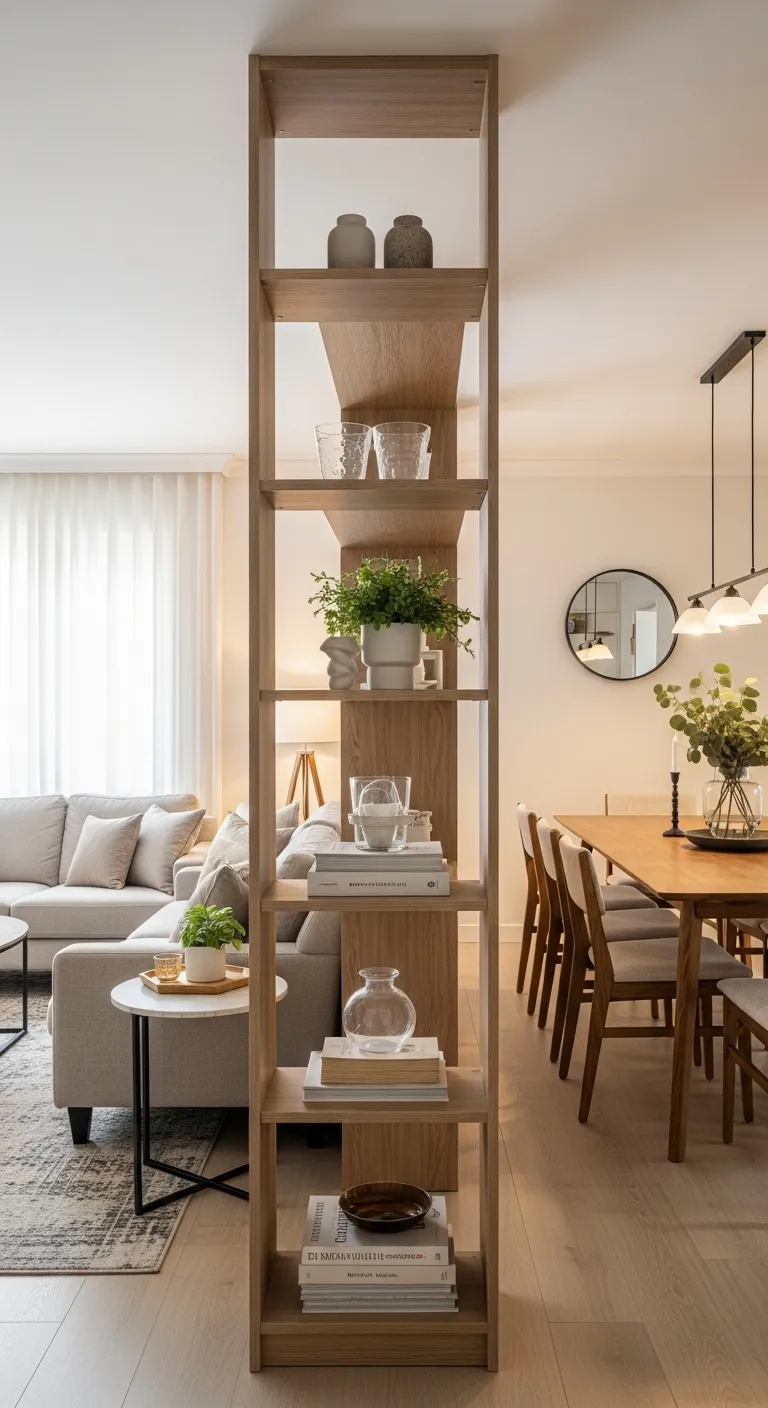
An open bookshelf creates separation without blocking light or making the room feel smaller. This is one of the most practical living room dining room combo layouts for apartments.
Place a tall open bookshelf between the sofa and dining table. Because the shelves are open, light still moves through the space and the room feels airy.
Style the shelves carefully. Add stacked books, ceramic vases, woven baskets, and small plants. Keep the décor balanced so both sides of the shelf look intentional.
Use the living room side for decorative items like candles and art pieces. Use the dining room side for functional items such as serving bowls or cookbooks. Choose materials that complement the room. Light wood shelves feel warm and natural, while black metal shelves add a modern look.
This layout gives both spaces clear identity while keeping the room visually connected.
5. Float the Dining Table Behind Two Accent Chairs
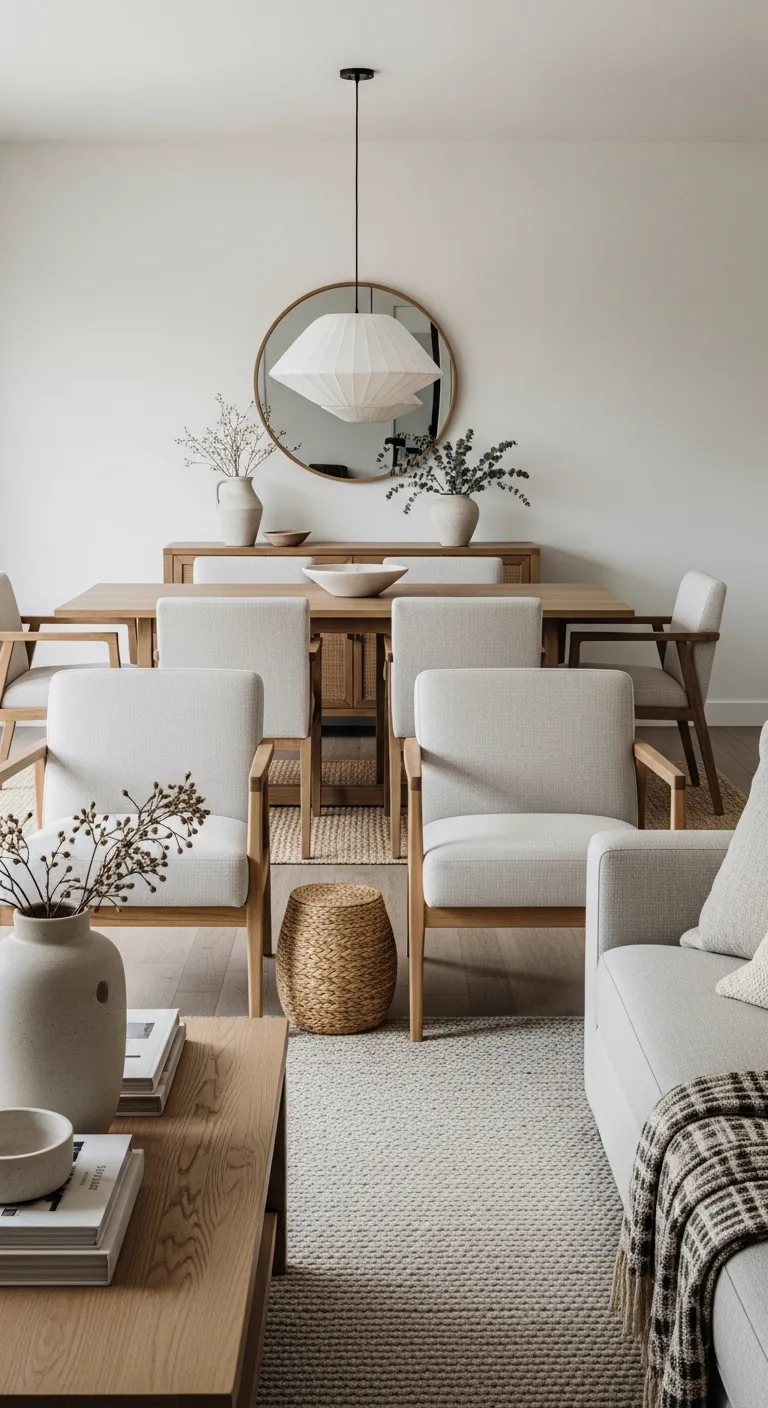
Instead of placing the dining table against a wall, float it behind a pair of accent chairs. This creates a layered layout that feels stylish and spacious.
Start by arranging the sofa facing the main focal point, such as a TV or fireplace. Place two accent chairs across from the sofa to complete the seating area. Behind these chairs, position the dining table. The chairs create a subtle boundary between the living and dining spaces.
Choose chairs with lighter frames so they do not visually block the dining area. Upholstered chairs in soft fabrics like linen or boucle add texture without heaviness.
Above the dining table, hang a pendant light or chandelier. This overhead lighting highlights the dining zone and balances the furniture placement. This layered layout adds depth and makes the room feel thoughtfully designed.
6. Use a Narrow Console Table as a Divider
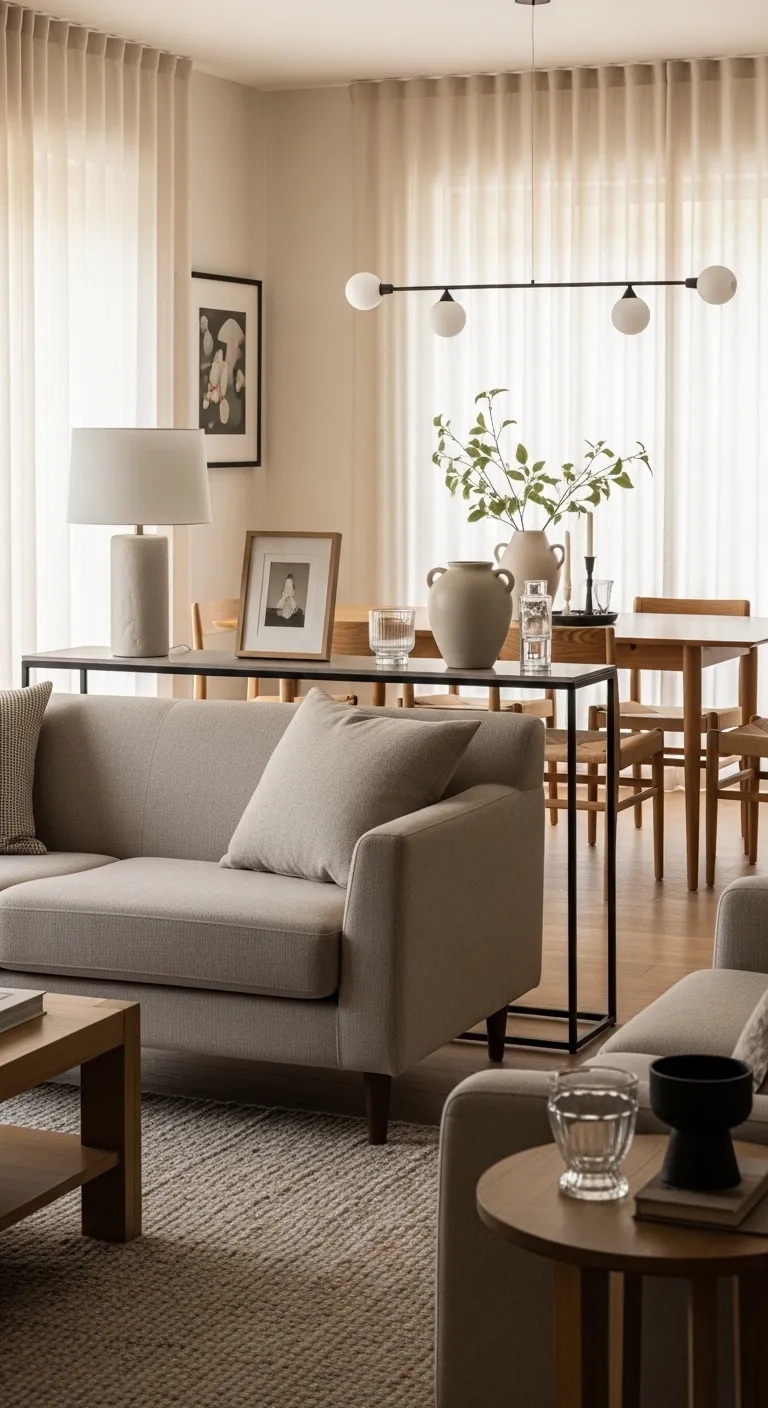
A narrow console table can quietly divide a living room and dining area while also adding storage and style. Place the console table behind the sofa. The table acts as a visual break between the two spaces but does not interrupt the open feel of the room.
Decorate the console with a tall lamp, framed artwork, or a textured vase with branches. These vertical elements create height and help define the area. Behind the console table, position the dining table. Leave enough space so chairs can move comfortably.
Choose a console table with drawers or shelves. This provides storage for items like placemats, candles, or remote controls. The key to this layout is simplicity. A slim console keeps the room open while giving both areas clear structure.
7. Arrange Furniture in an L Shape to Separate Zones
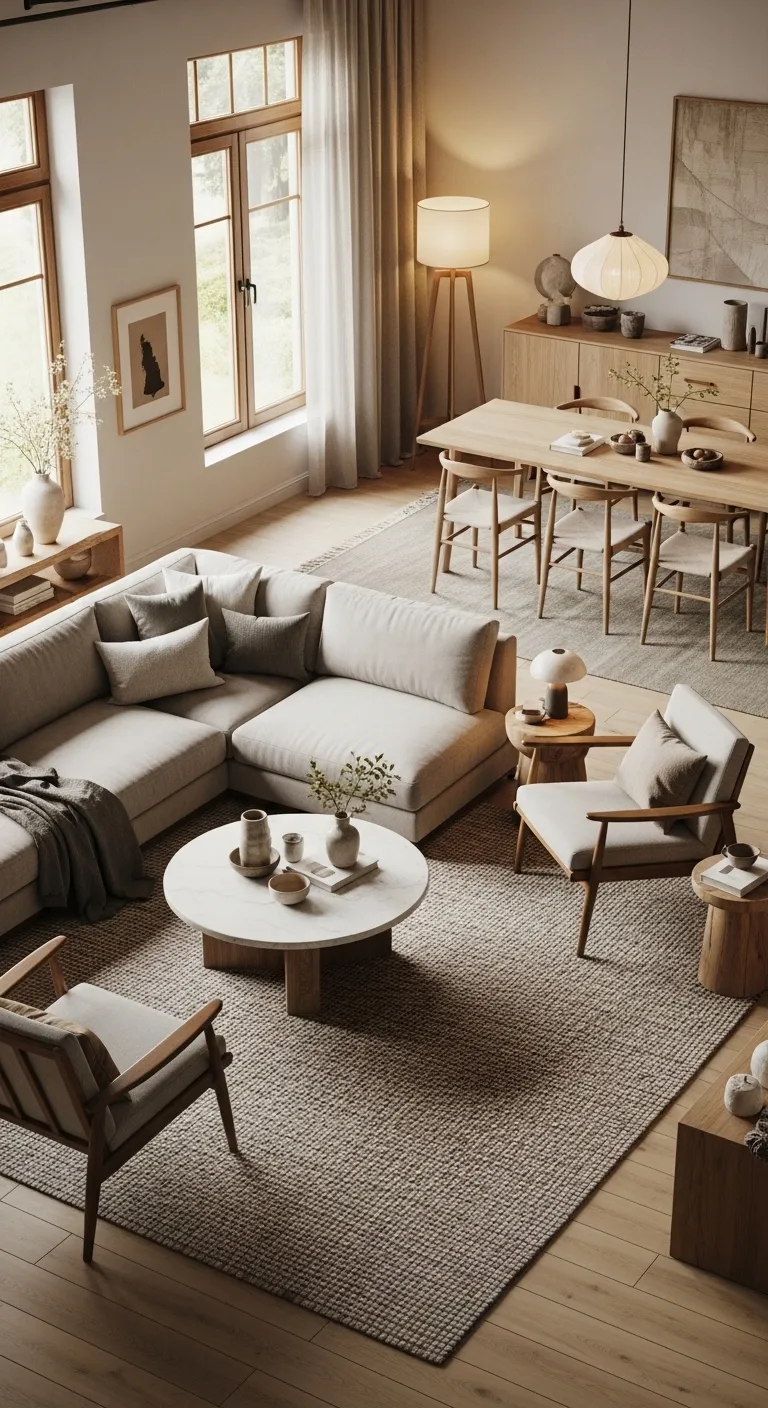
An L shaped furniture arrangement naturally divides the living and dining spaces without using walls.
Place the sofa along one wall and position two chairs at a right angle to form an L shaped seating area. This arrangement frames the living room and creates a comfortable conversation space.
Use a round coffee table in the center to soften the angles and keep the layout balanced. The open side of the L shape becomes the perfect place for the dining table. Because the seating area forms a visual corner, the dining space automatically feels separate.
Choose dining chairs in a complementary color to the living room upholstery. For example, if the sofa is light gray, try charcoal or navy dining chairs. This layout feels organized while still allowing easy movement throughout the room.
8. Place the Sofa Back Toward the Dining Area
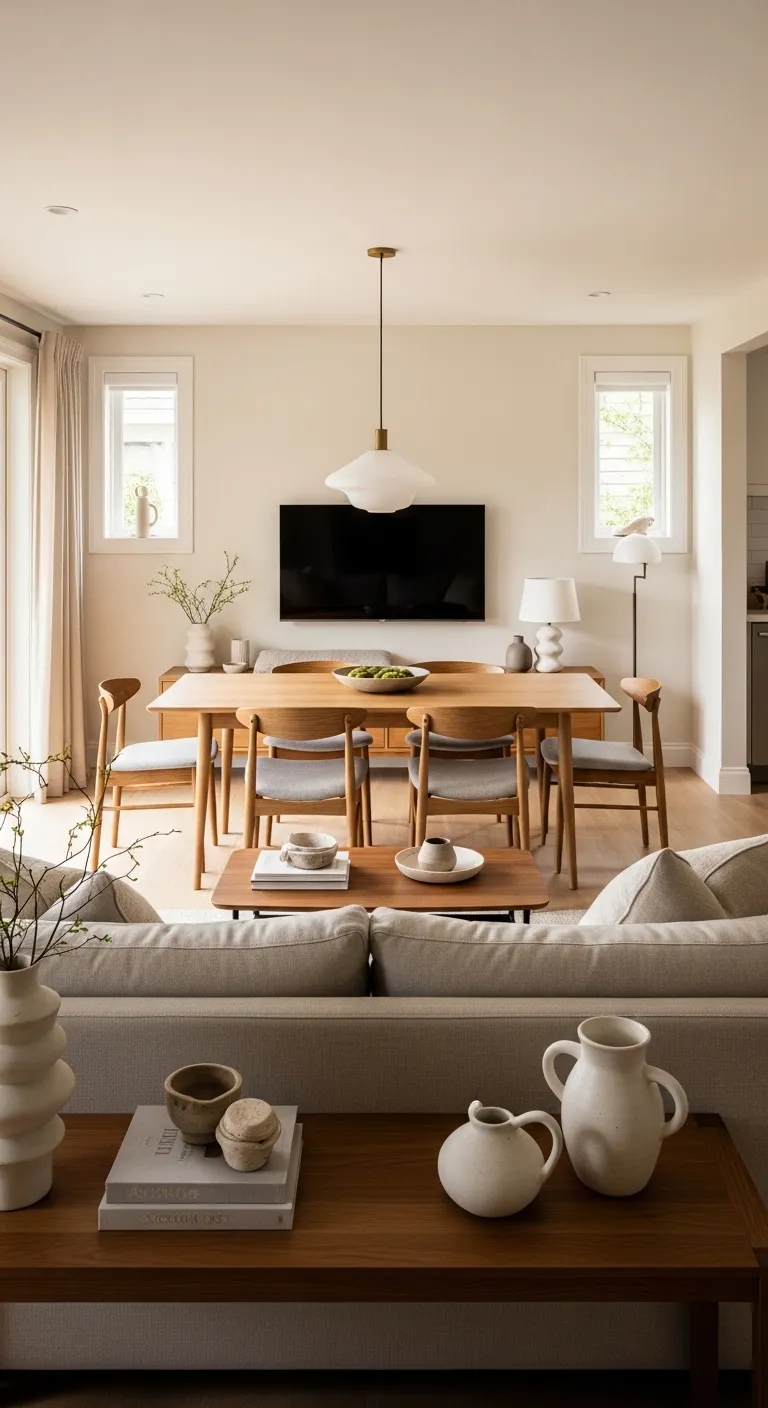
Turning the back of the sofa toward the dining table is a simple but effective layout strategy. Position the sofa so it faces the main focal point of the living room. The back of the sofa then naturally separates the seating area from the dining space.
Add a low bench or slim table behind the sofa to strengthen the visual boundary. This extra layer makes the room feel more intentional. Use a statement light fixture above the dining table. Warm pendant lights help draw attention to the dining zone.
To keep the room cohesive, repeat materials across both spaces. If the coffee table uses natural wood, choose a dining table with a similar tone. This layout keeps both zones clear while maintaining an open and welcoming environment.
9. Use Matching Chairs in Both Areas for Cohesion
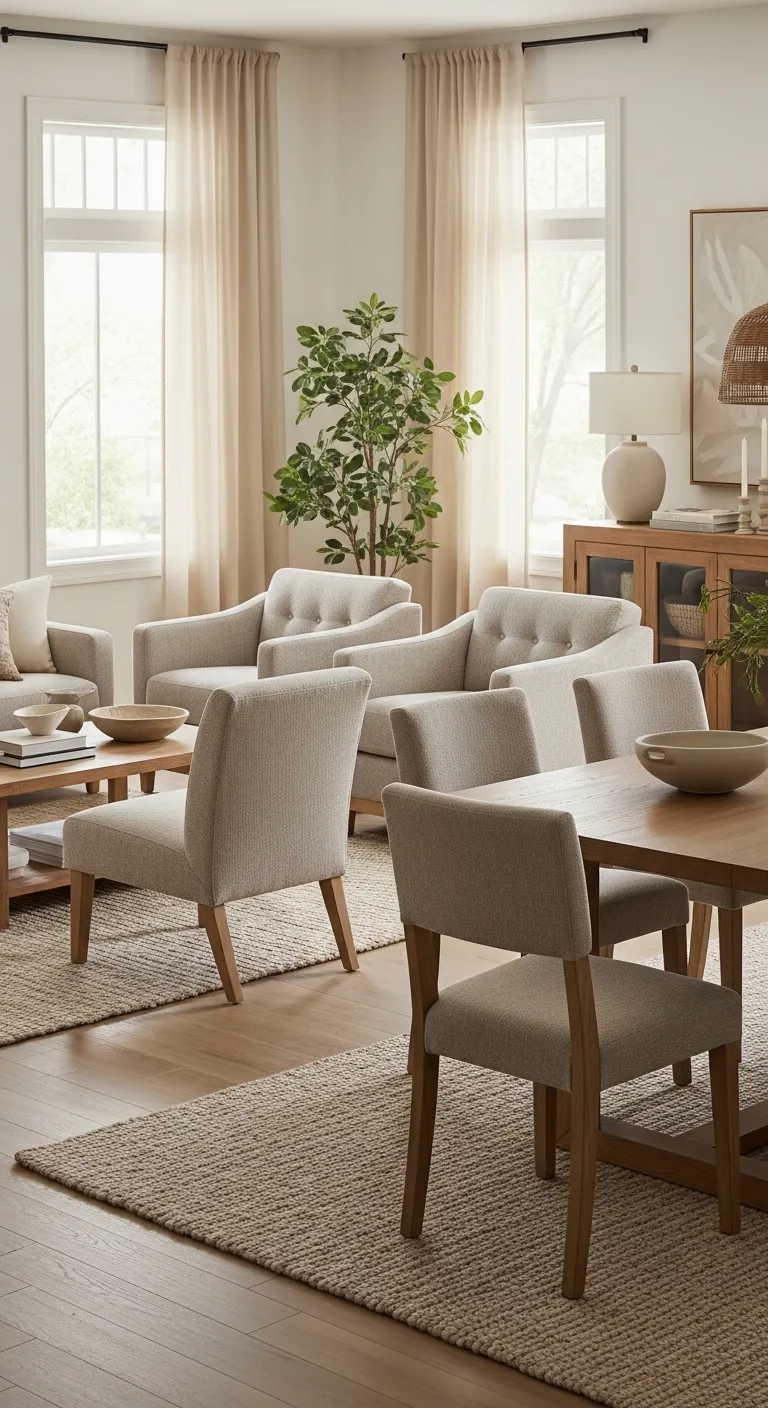
When two spaces share one room, repeating furniture styles can help the layout feel unified. Choose accent chairs in the living room that match the dining chairs. The shapes do not need to be identical, but similar materials or colors create harmony.
For example, wooden framed dining chairs can pair beautifully with wooden accent chairs in the living room. Arrange the sofa and chairs around a coffee table to form the living area. Place the dining table slightly behind or beside this seating arrangement.
Because both areas share similar materials, the entire room feels balanced rather than divided. This layout works especially well in smaller spaces where visual simplicity makes the room feel larger.
10. Place a Round Dining Table Beside the Living Area
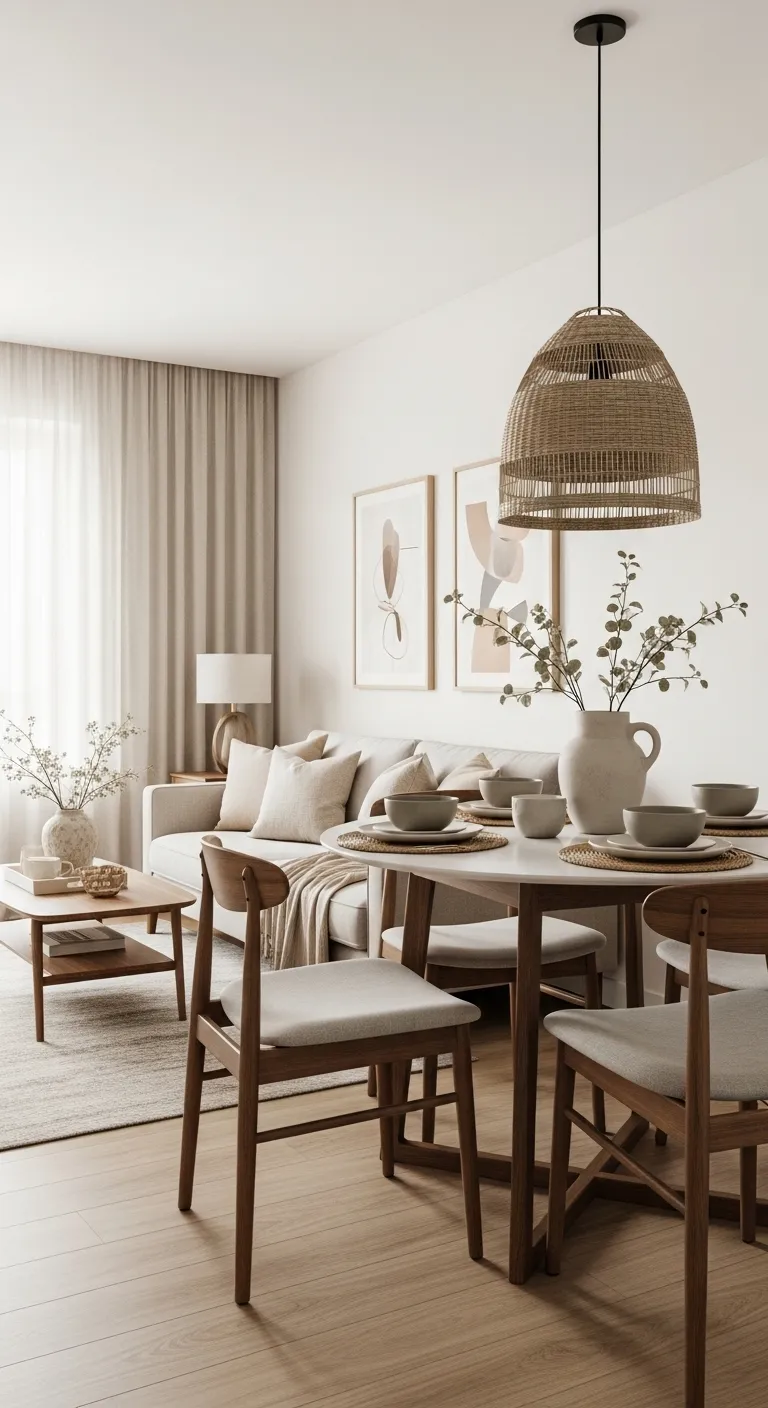
A round dining table can fit comfortably beside the living room without interrupting the layout. Round tables require less walking space than rectangular tables, which makes them perfect for combo rooms.
Position the table beside the living room seating area instead of directly behind it. This creates a side-by-side layout rather than a front-to-back arrangement. Choose slim dining chairs that slide easily under the table. Light wood or curved backs keep the area visually open.
Add a pendant light directly above the table to anchor the dining space. A woven or fabric shade adds warmth and texture. This layout works well for small homes because it keeps pathways open while still allowing space for both relaxing and dining.
11. Angle the Sofa to Create Two Natural Zones
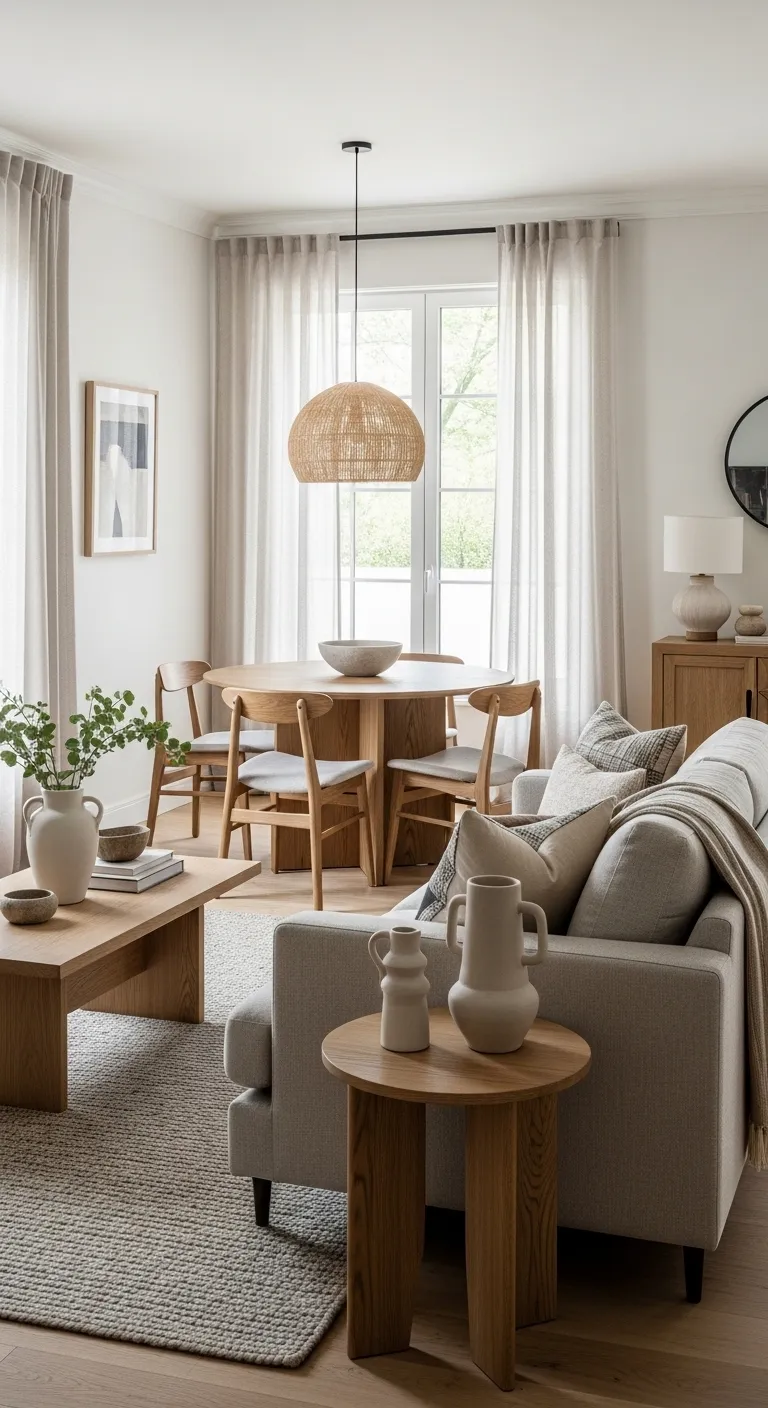
Angling the sofa slightly can reshape the room and create two clear zones without adding walls or dividers. This layout works well in square rooms where straight furniture placement feels too rigid.
Place the sofa at a gentle angle facing the TV or main focal point. This small shift opens a triangular area behind the sofa that becomes a natural spot for the dining table. The angle guides movement through the room and prevents the space from feeling boxed in.
Choose a round or oval dining table to complement the angled layout. Curved shapes soften the geometry and keep the room flowing naturally.
A textured pendant light above the table helps anchor the dining area. Try woven rattan, soft linen shades, or frosted glass to create warm lighting that contrasts with the living room floor lamp or table lamps.
12. Create a Center Walkway Between Both Areas
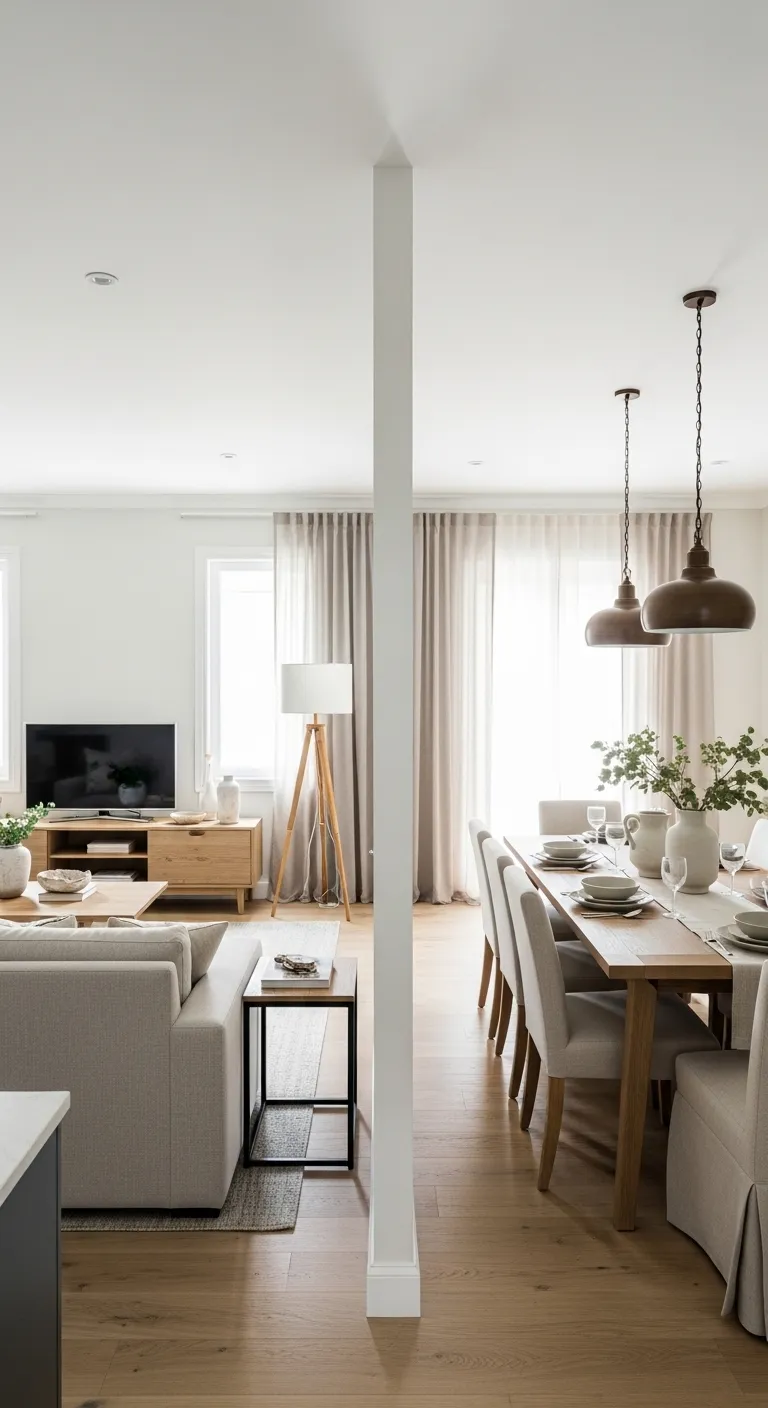
A clear walkway can organize the entire room and make both spaces easier to use. This layout works especially well in rectangular rooms.
Place the living room furniture on one side of the room. Position the sofa facing a media console or focal wall and add one or two accent chairs to complete the seating area. On the opposite side of the room, place the dining table parallel to the living area. Leave a clear path running through the center of the room so people can walk easily between spaces.
Choose a narrow rectangular dining table if the room feels tight. Light wood finishes or glass tabletops keep the space feeling open. Layer soft lighting in both areas so each zone feels intentional. A warm pendant above the dining table and a floor lamp beside the sofa help visually balance the room.
This layout keeps traffic flowing smoothly while maximizing usable space.
13. Tuck the Dining Area Into a Corner Nook
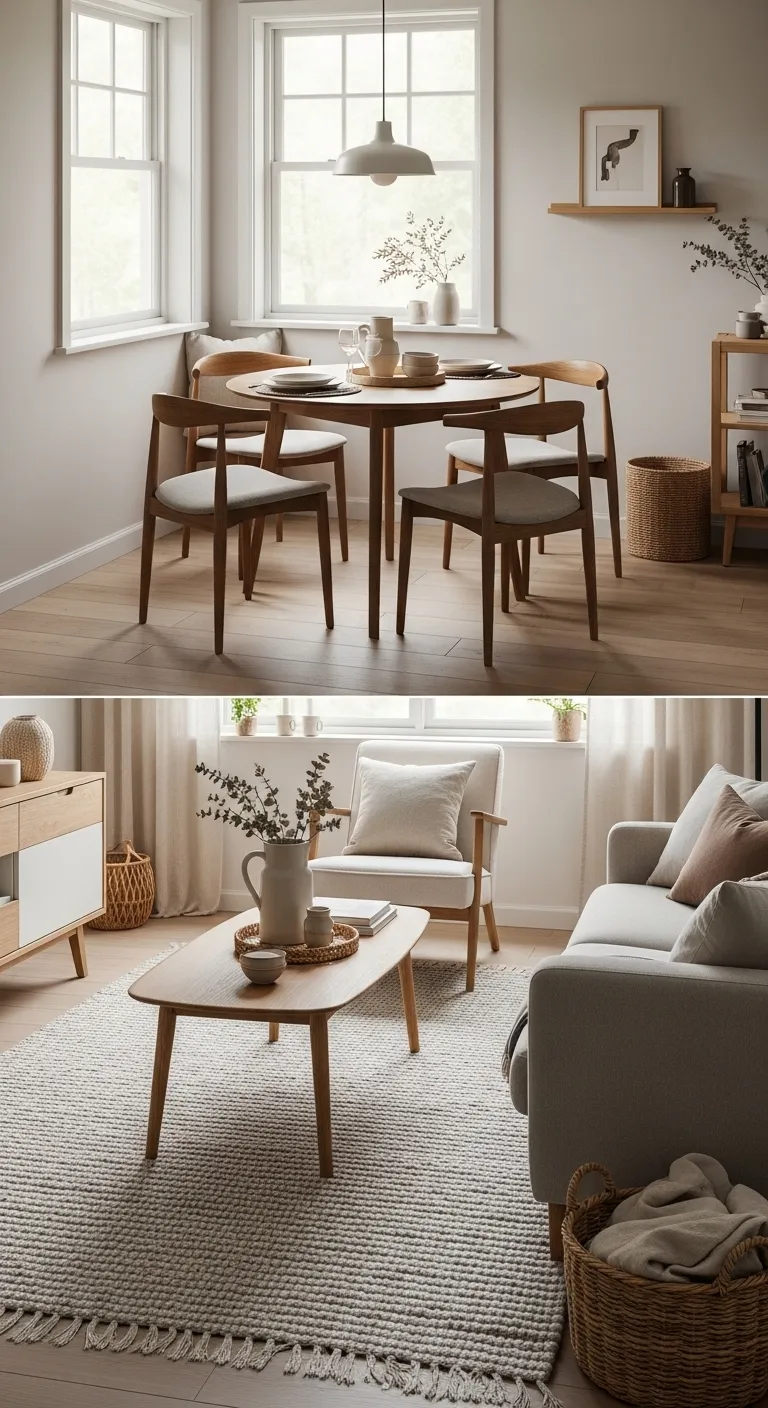
Corner spaces often go unused, but they can easily become a cozy dining area in a combo layout. Place a small round or square dining table in the corner of the room. Add two or four chairs depending on the available space. This compact arrangement leaves the rest of the room open for the living area.
To define the nook, hang a single pendant light above the table. The focused lighting instantly creates a dining zone even though it sits within the larger room.
Use a textured wall element to highlight the nook. Soft wallpaper patterns, vertical wood panels, or a gallery wall can give the corner its own identity. Keep the living room layout simple with a sofa, coffee table, and one accent chair. This balance ensures the room does not feel crowded.
14. Use a Long Dining Table as a Visual Divider
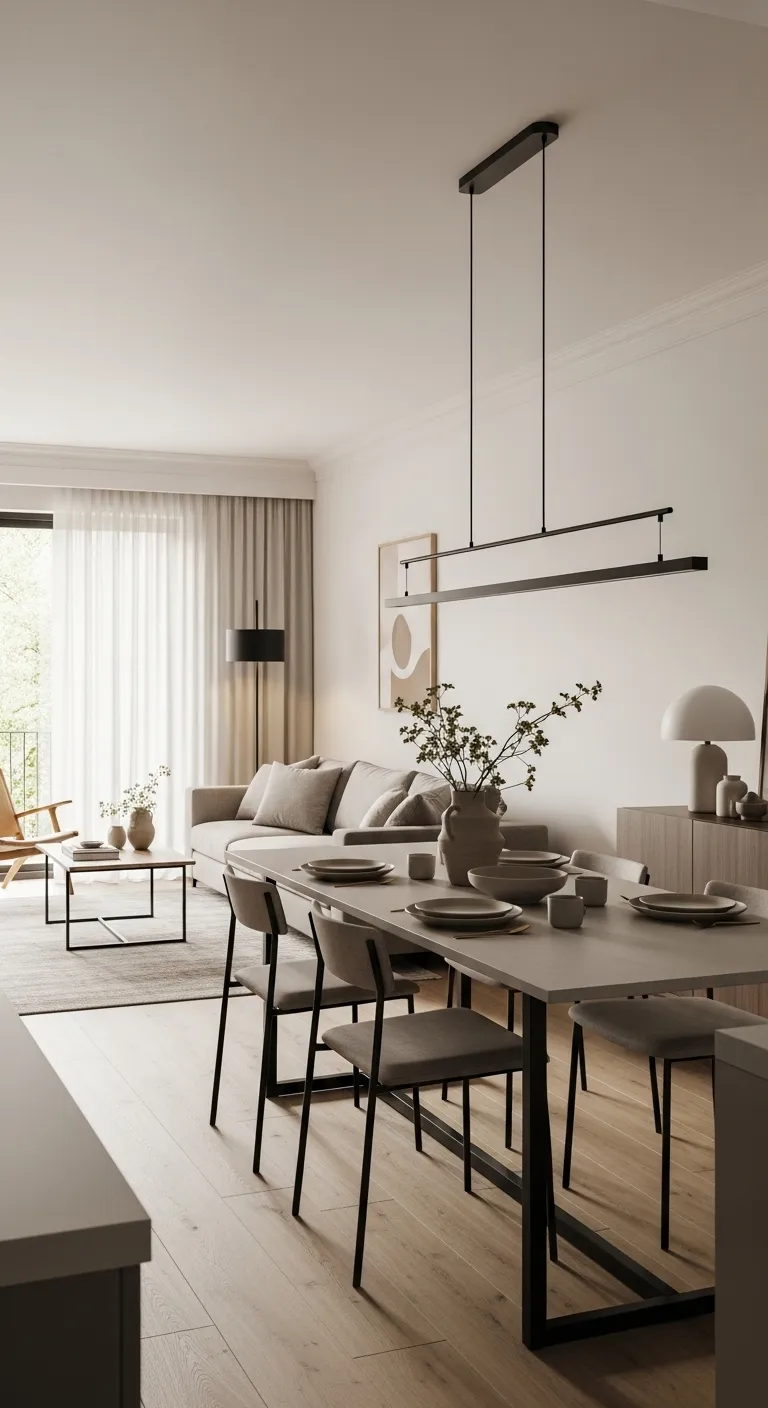
A long dining table can act as a natural boundary between the living room and dining space. Place the dining table in the middle of the room so it sits between the two zones. This arrangement works well in open floor plans where the living room sits near one wall.
Position the sofa facing away from the table to establish the living area. The back of the sofa and the dining table together create a strong visual separation. Choose a table with slim legs so the space still feels open. Wood finishes like oak or walnut add warmth and contrast with upholstered seating.
Above the table, hang a linear pendant light that runs the length of the table. This lighting emphasizes the dining zone and keeps the layout balanced. This layout transforms the dining table into both a functional piece and a spatial organizer.
15. Build a Dual Purpose Island Style Dining Table
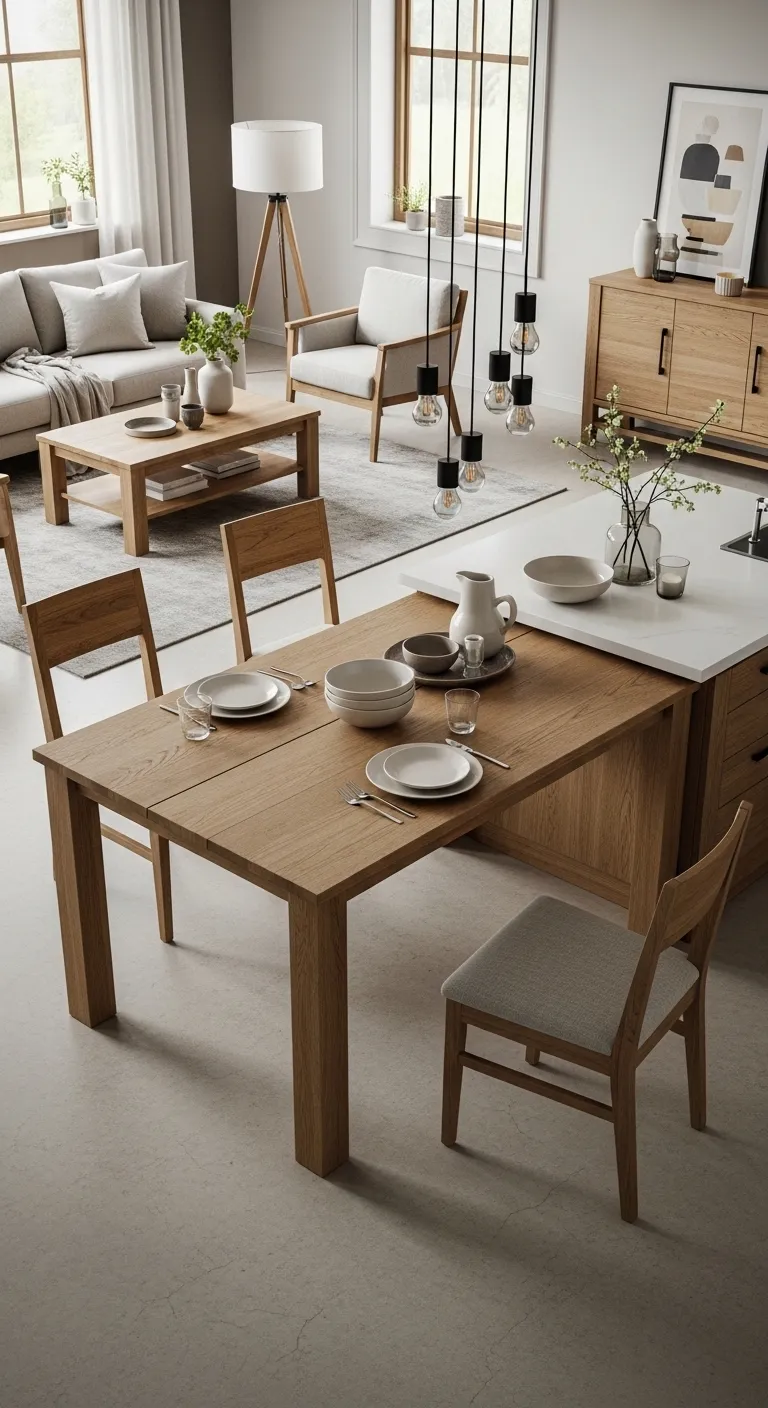
In some layouts, the dining table can function almost like a kitchen island for the room.
Place a rectangular dining table in the center of the space with chairs only on two sides. Leave the other sides open so the table can also serve as a workspace, buffet area, or display surface.
Position the living room seating area facing the table from one side. The table becomes a flexible boundary that still feels accessible from all directions. Choose durable materials like solid wood or stone tops so the table handles daily use. Add textured placemats or a long runner to bring warmth to the surface.
A cluster of small pendant lights above the table creates a focal point that visually anchors the room. This layout works well for small homes where every piece of furniture needs to serve multiple functions.
16. Place the Dining Table Behind a Sectional Sofa
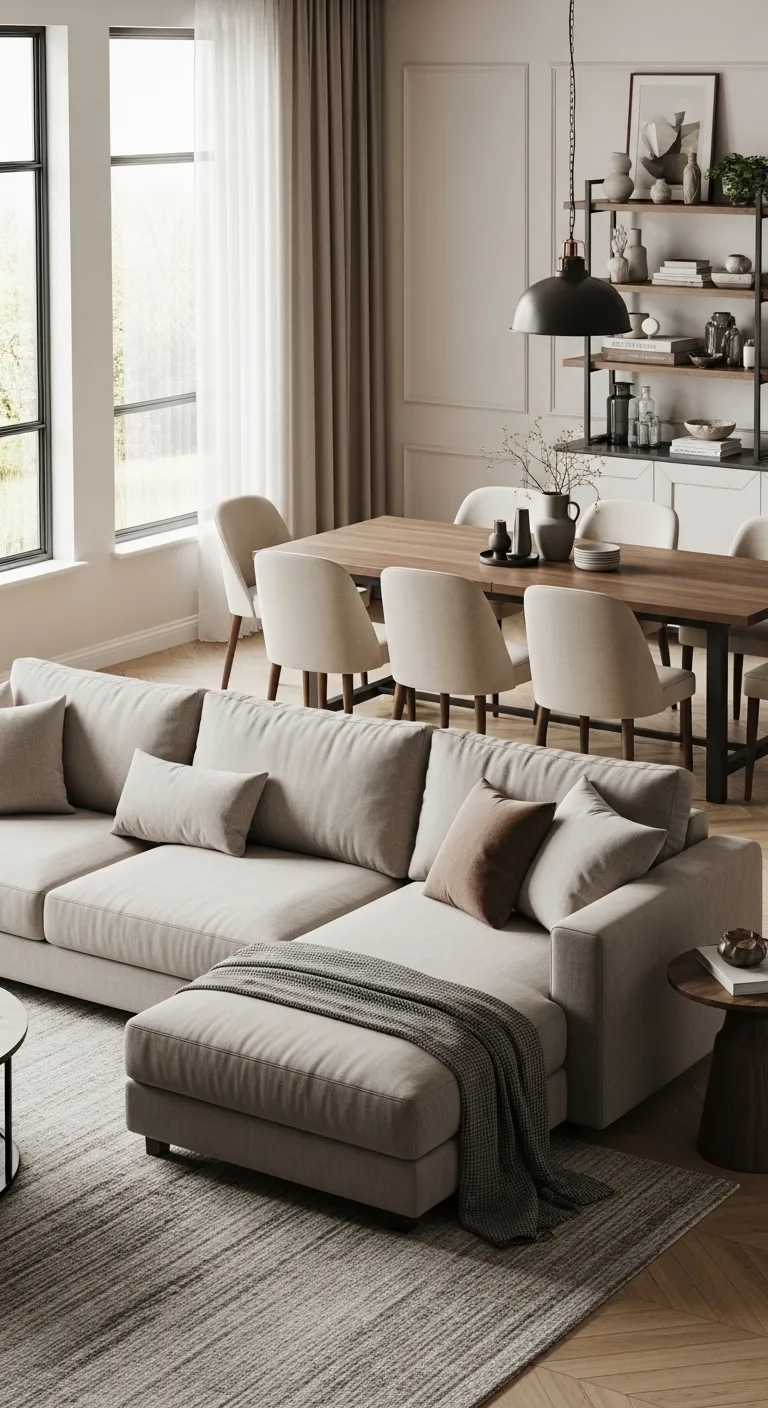
Sectional sofas naturally create defined seating areas, making them ideal for combo layouts.
Position the sectional so its longer side faces the main living room focal point. The shorter side can act as a divider between the living and dining areas.
Behind the sectional, place the dining table parallel to the back of the sofa. This arrangement keeps both zones close while still feeling separated.
Choose a dining table that mirrors the length of the sofa section. This proportional balance makes the room look more organized.
Add soft lighting above the table and layered lighting in the living room such as table lamps or wall sconces.
17. Frame the Dining Area With Tall Plants
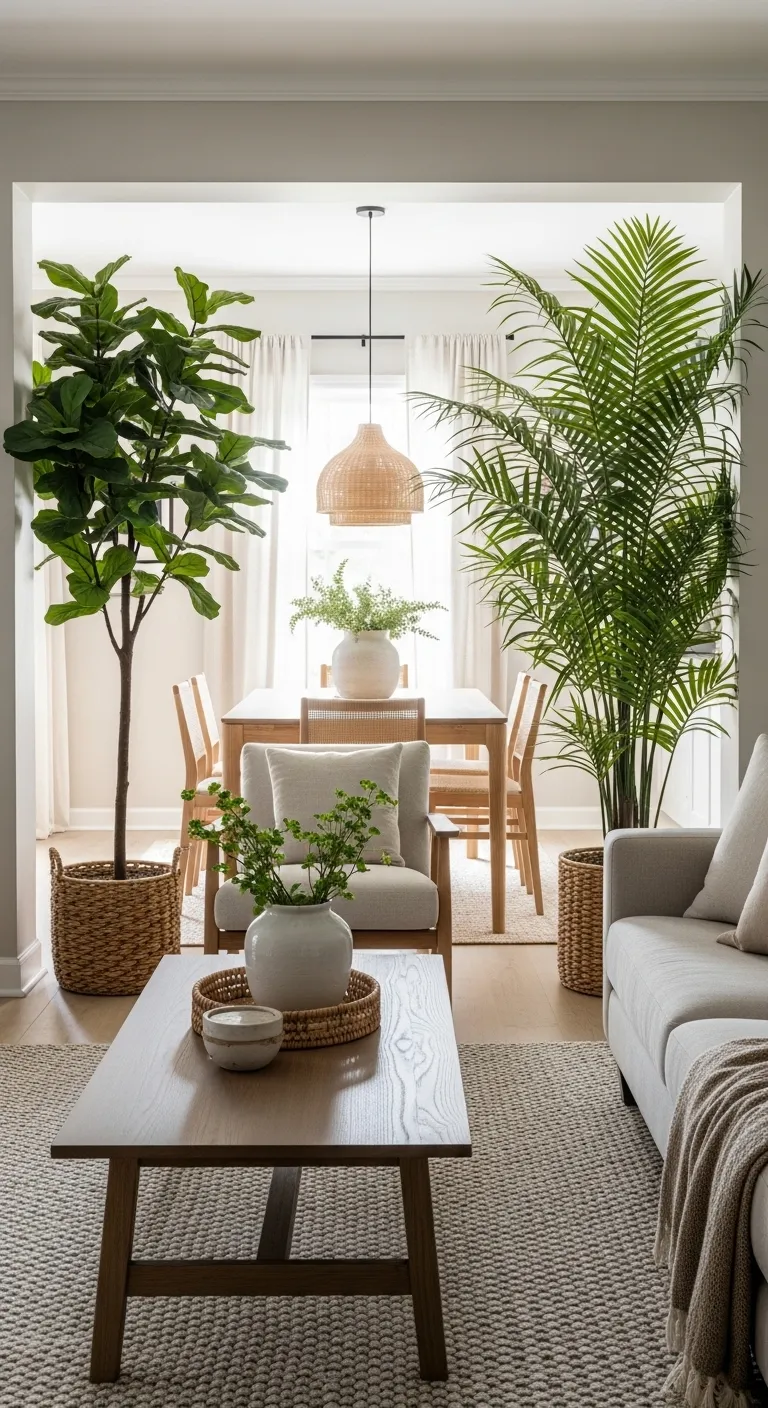
Tall plants can subtly divide spaces while keeping the room airy and vibrant.
Place the dining table slightly behind the living room seating area. Then position two tall indoor plants on either side of the dining space. This creates a soft frame around the table.
Plants like fiddle leaf figs, rubber plants, or tall palms add height and texture while keeping the layout natural.
Use woven baskets or ceramic planters that complement the color palette of the room. Earthy tones like terracotta, sand, and olive green blend beautifully with wood furniture.
The living area can remain open with a sofa, coffee table, and accent chair. Because the plants visually frame the dining table, both areas feel distinct without needing heavy furniture dividers.
18. Align the Dining Table With the Sofa Length
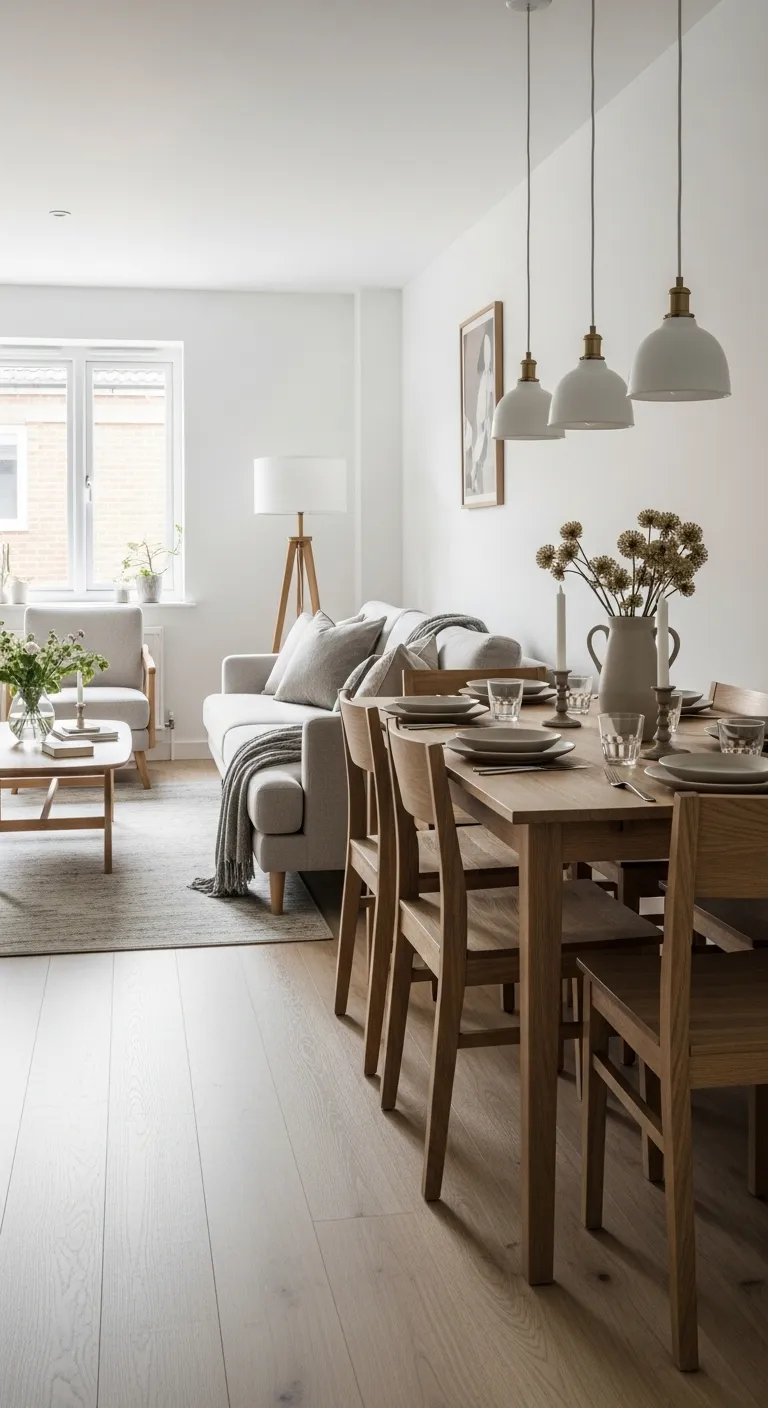
Aligning furniture lengths can create visual harmony in shared spaces.
Place the sofa along one side of the room and position the dining table parallel to it. When both pieces follow the same direction, the room feels longer and more organized.
Keep the coffee table centered between the sofa and chairs so the living room remains balanced.
Choose a dining table length that visually matches the sofa. For example, if the sofa seats three people, a medium sized rectangular table maintains the same scale.
Use similar materials in both areas to strengthen the connection. A wooden coffee table paired with a wooden dining table creates continuity.
This layout works especially well in narrow rooms because it keeps the furniture aligned and avoids cluttered angles.
19. Create a Layered Layout With a Bench Dining Setup
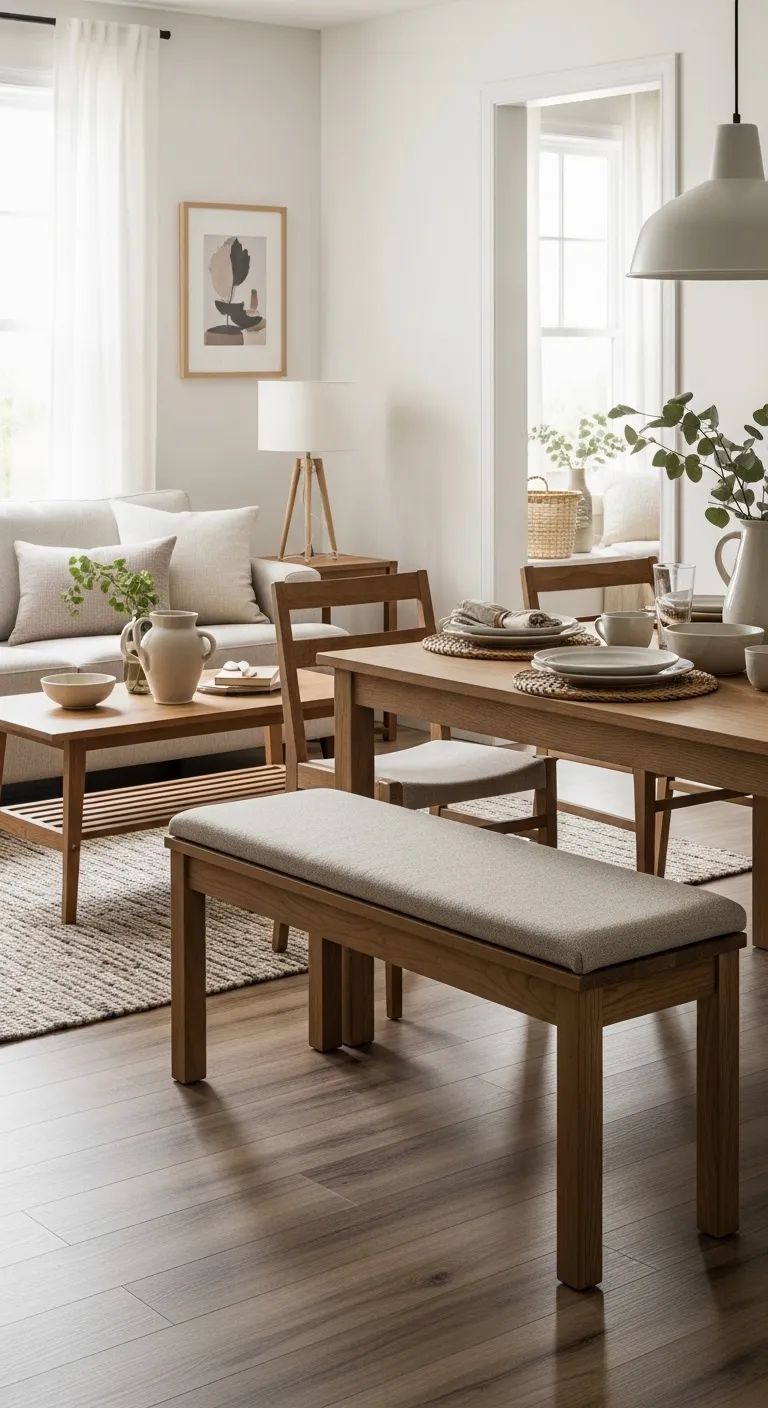
Dining benches can save space and create a layered layout in combo rooms. Place a dining bench on the side of the table closest to the living room. Because the bench has a low profile, it keeps sightlines open between the two spaces.
Use chairs on the opposite side of the table for comfort and flexibility. Position the sofa directly across from the dining bench so the two pieces visually align. This layered arrangement keeps the room feeling open and balanced.
Choose soft upholstery for the bench or add textured cushions for comfort. Linen, boucle, or cotton fabrics introduce warmth without making the space heavy. Add a warm pendant light above the table to highlight the dining area and keep the layout visually grounded. This setup saves space while adding a casual and welcoming feel.
20. Use a Statement Light Fixture to Define the Dining Zone
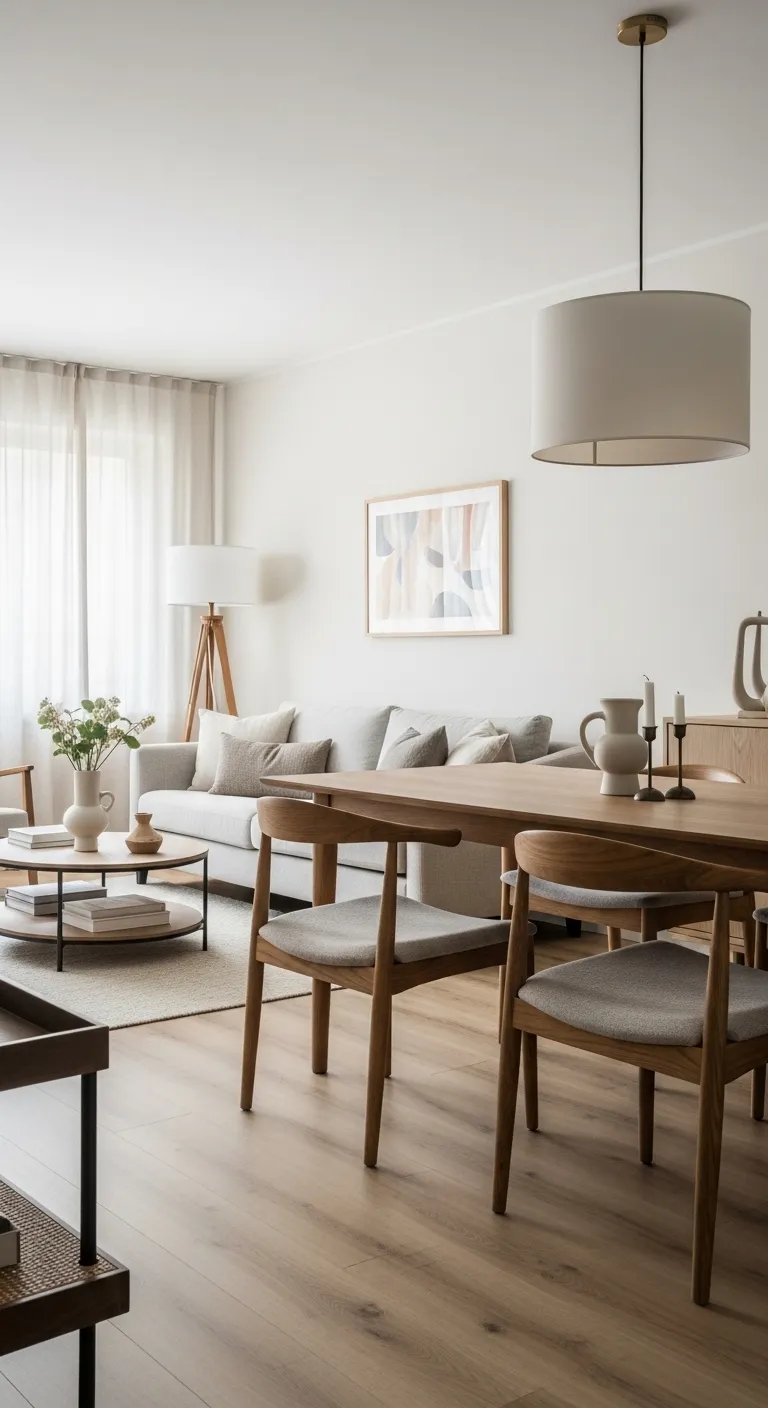
Lighting can define spaces even when furniture remains close together. Place the dining table near the living area but install a bold light fixture directly above it. A sculptural chandelier or oversized pendant instantly signals that this is the dining space.
Choose materials that stand out slightly from the living room lighting. For example, if the living room uses fabric lampshades, try a metal or glass pendant above the table. The contrast in lighting styles creates visual separation without rearranging the entire room.
Keep the furniture arrangement simple with a sofa, coffee table, and accent chairs forming the living area. The dining table sits just beyond this seating zone. Warm bulbs and dimmable lighting help create a cozy atmosphere during evening meals.
21. Turn the Dining Table Perpendicular to the Sofa
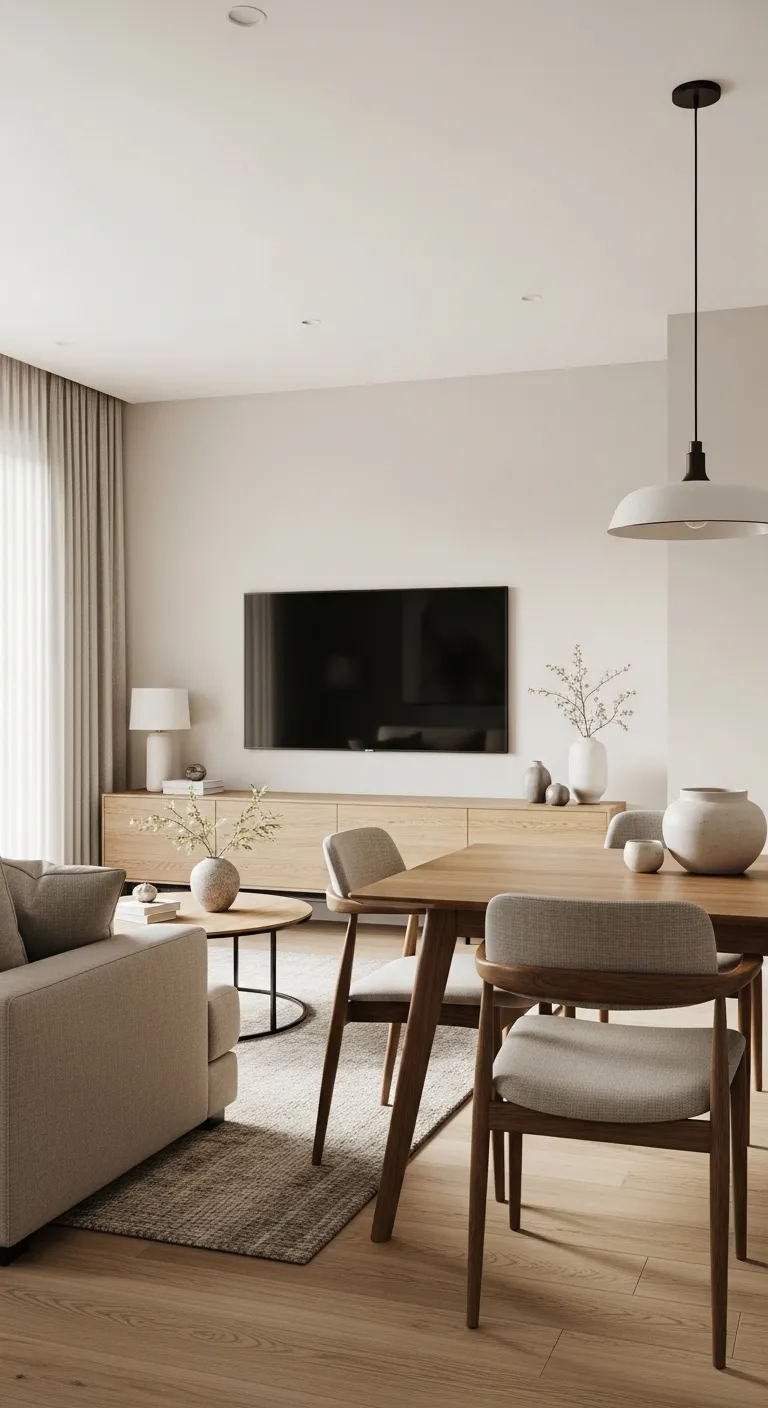
Turning the dining table perpendicular to the sofa can instantly change how the room feels. Instead of placing both pieces in the same direction, this layout creates a cross pattern that separates the spaces naturally.
Position the sofa facing the main focal point such as a TV wall or fireplace. Then place the dining table at a right angle behind the sofa. This placement creates two clear zones without blocking movement through the room.
Choose a rectangular or oval dining table so the perpendicular placement feels balanced. Slim dining chairs keep the layout light and prevent the room from looking crowded.
Add a soft rug under the living room seating area while leaving the dining space rug free. The contrast between the rug and the open floor subtly separates the two zones.
Warm pendant lighting above the table helps anchor the dining area and adds a cozy atmosphere in the evening.
22. Slide the Dining Table Against a Partial Wall
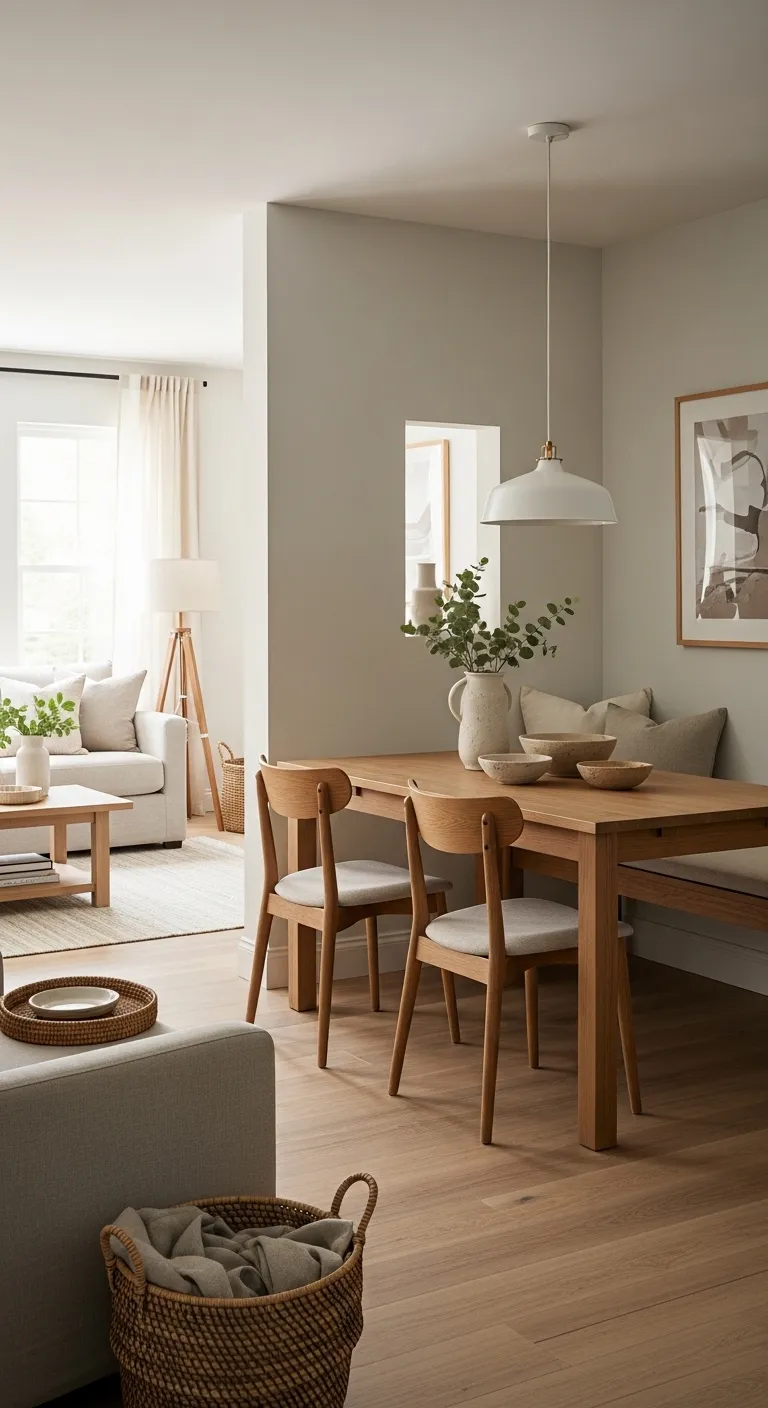
If your space has a half wall, column, or architectural corner, use it to anchor the dining area. This layout keeps the table close to the edge of the room so the living space stays open.
Place the dining table along the partial wall with chairs on the open sides. This positioning saves space while still allowing people to move easily around the table.
A bench along the wall can replace chairs on one side. Benches slide neatly under the table and make the layout feel compact and organized.
Use wall décor above the table to strengthen the dining zone. A large framed print, floating shelf, or vertical wood paneling adds visual structure.
The living room can then occupy the central area of the room with a sofa, coffee table, and accent chair. This arrangement keeps the room feeling balanced and uncluttered.
23. Create a Soft Divider With a Low Cabinet
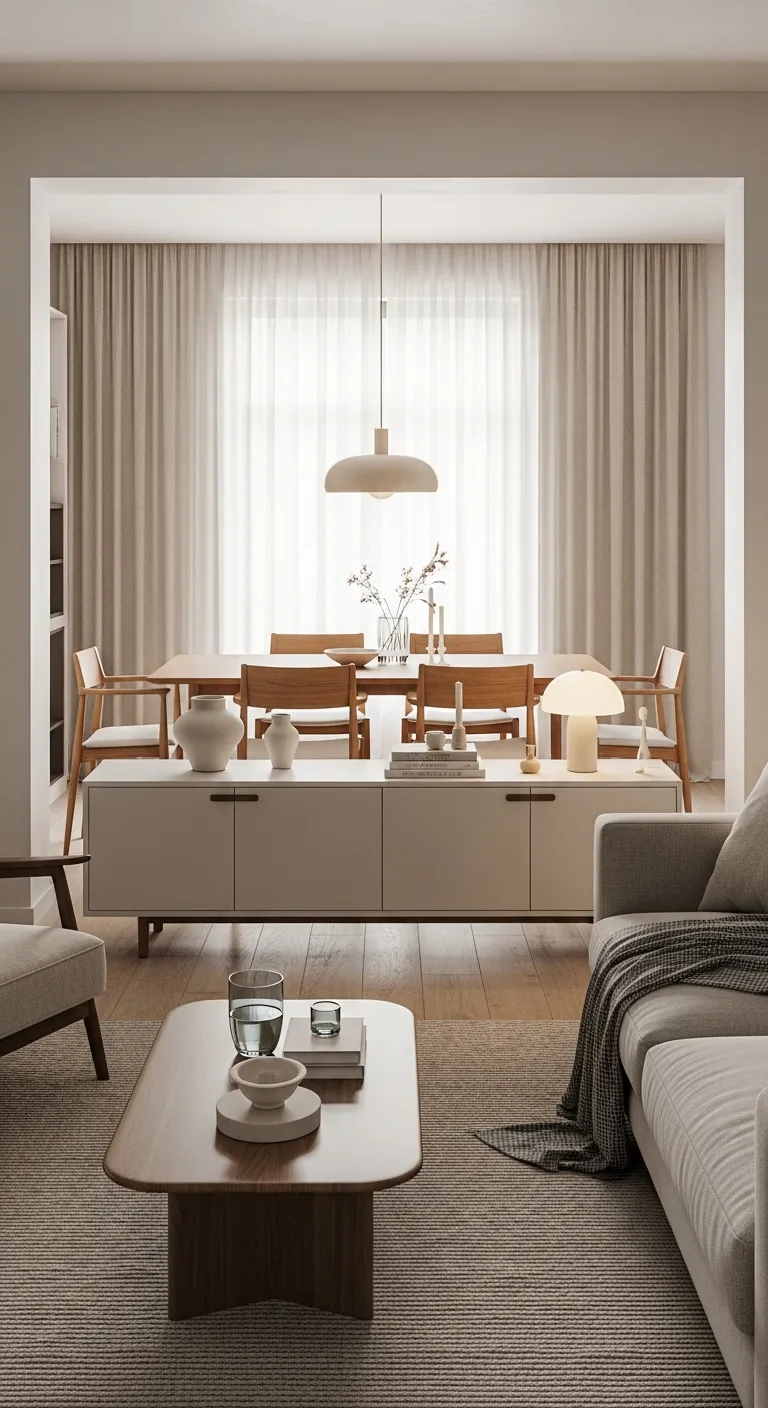
A low cabinet or sideboard can separate the living and dining spaces while adding useful storage.
Place the cabinet between the two zones so it runs parallel to the dining table. Because the cabinet stays low, it does not block light or sightlines across the room.
Use the top surface for decorative elements like candles, a ceramic bowl, or a small lamp. These items add warmth and personality while reinforcing the separation between spaces.
Position the dining table behind the cabinet so it forms a clear dining area. Choose chairs with soft upholstery or woven textures to bring comfort and visual interest.
The living room can sit on the opposite side with a sofa facing the focal wall. This layout adds storage while helping the entire room feel structured and intentional.
24. Place Both Zones Around a Shared Center Rug
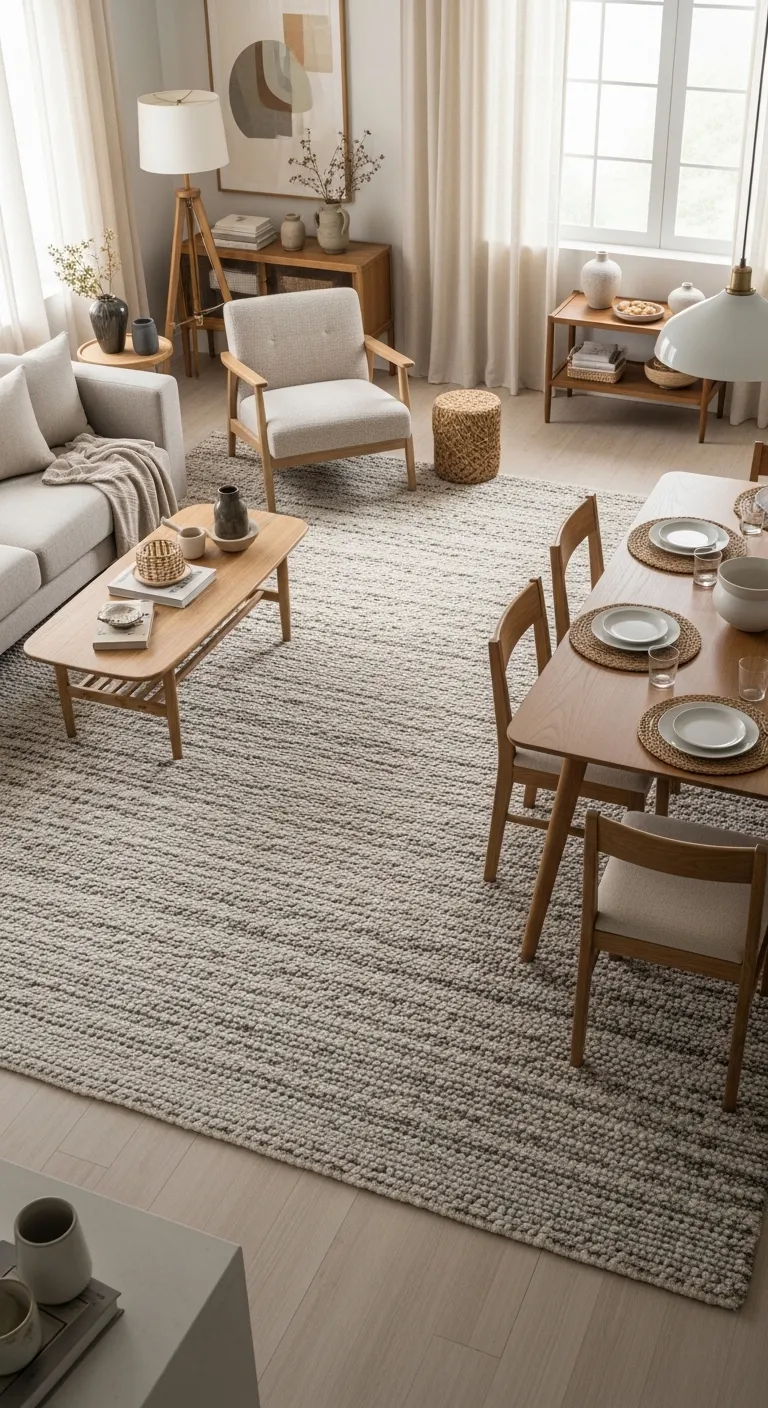
In smaller homes, a single large rug can connect both areas while still defining each zone. Choose a rug large enough to extend under part of the dining table and the living room seating area. This shared foundation visually unites the entire room.
Place the sofa and chairs on one side of the rug and the dining table on the other side. Even though both areas sit on the same rug, their furniture arrangements clearly define their purposes.
Use different textures within the two spaces to add variety. Soft fabric upholstery works well in the living area, while wooden chairs or woven seats bring contrast to the dining area.
A warm pendant light above the table and layered lighting near the sofa help create two comfortable zones within the same open space.
Conclusion
Designing a shared living and dining space does not have to feel complicated. The key is creating clear zones while keeping the room open and comfortable. Smart furniture placement, thoughtful lighting, and balanced materials can transform a single room into a functional multi purpose space.
These 24 Living Room Dining Room Combo Layouts That Maximize Space show how small adjustments can make a big difference. From floating sofas and angled seating to corner dining nooks and plant dividers, each layout offers a practical way to organize the room without making it feel crowded.
Focus on flow, comfort, and visual balance when arranging furniture. Choose materials and colors that connect both areas so the room feels cohesive.
Save your favorite ideas and experiment with layouts that suit your space. Even simple changes in placement or lighting can make your living room dining combo feel more spacious and inviting.