26 White Kitchen Ideas That Feel Fresh, Warm, and Worth Saving
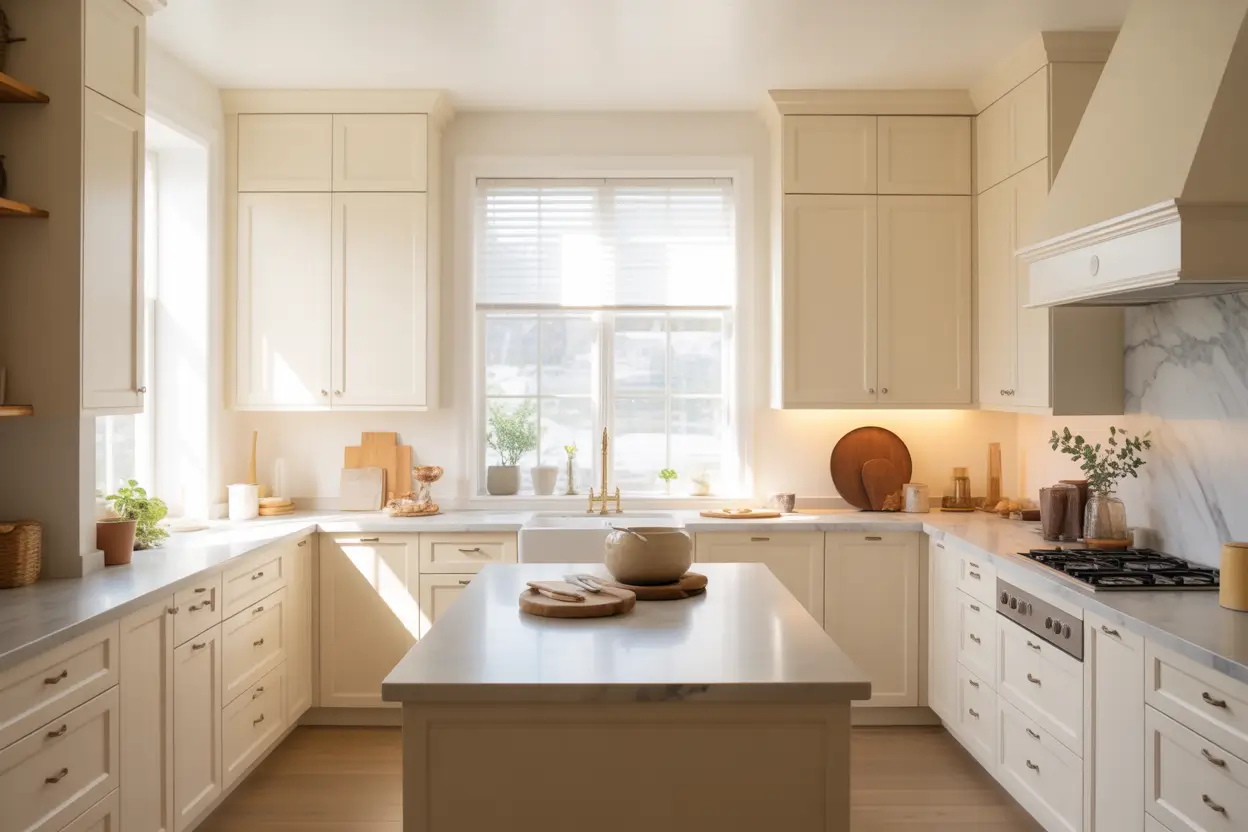
A white kitchen sounds simple, but making it feel special takes intention. If you only use one shade, flat surfaces, and basic layouts, the space quickly feels cold and empty. The goal is not just to make your kitchen white, but to make it feel alive, textured, and thoughtfully designed.
In this guide, you will explore 26 white kitchen ideas that help you build depth using materials, lighting, layout, and subtle contrast. These are not generic tips. Each idea shows you exactly how to create a kitchen that feels warm, modern, and worth saving.
1. Build Depth by Layering Warm White Tones Across Surfaces
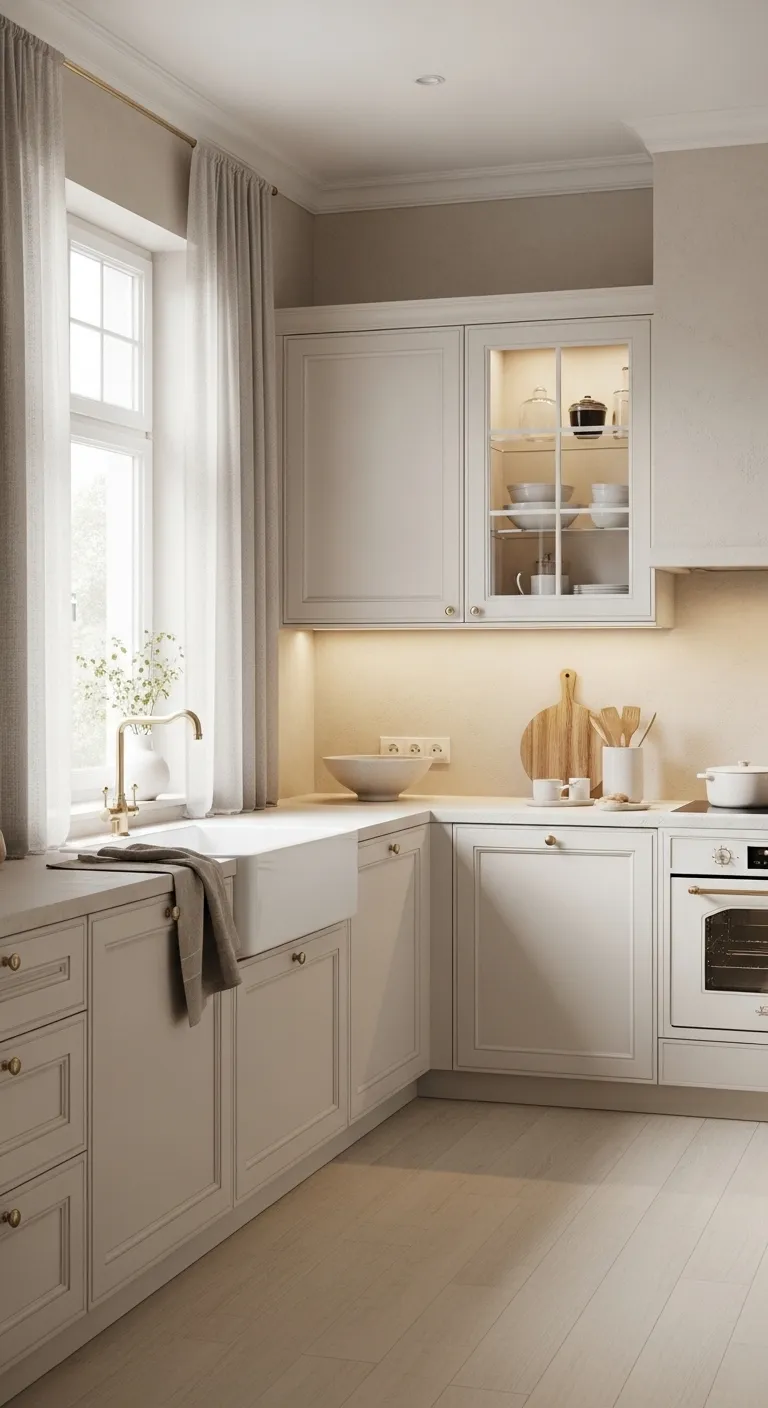
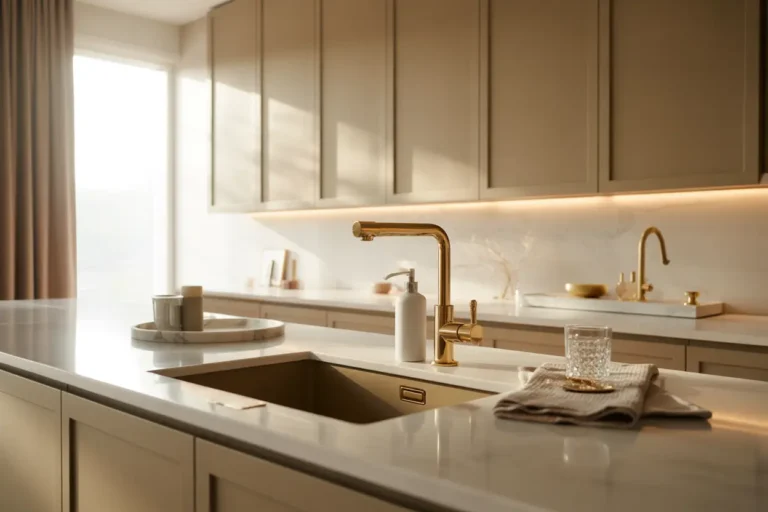
The easiest mistake in a white kitchen is using the exact same shade everywhere. That creates a flat, almost clinical look. Instead, you should layer warm whites so the space feels soft and dimensional. Start with cabinets in a creamy white rather than a stark bright tone. Pair them with slightly warmer walls that have a hint of beige undertone. For trim and ceiling, use a cleaner white so edges stay crisp. This subtle variation creates contrast that your eye can feel even if you cannot immediately name it.
Now bring in texture to enhance those tones. A plaster-style backsplash or lightly textured wall paint adds softness. Linen curtains or Roman shades introduce a gentle fabric layer that breaks hard surfaces. Lighting plays a big role here. Use warm LED lights instead of cool white. When light hits these layered whites, your kitchen feels cozy during evenings instead of cold and sterile. This approach works especially well in smaller kitchens where every detail matters.
2. Anchor the Space with a Natural Wood Range Hood
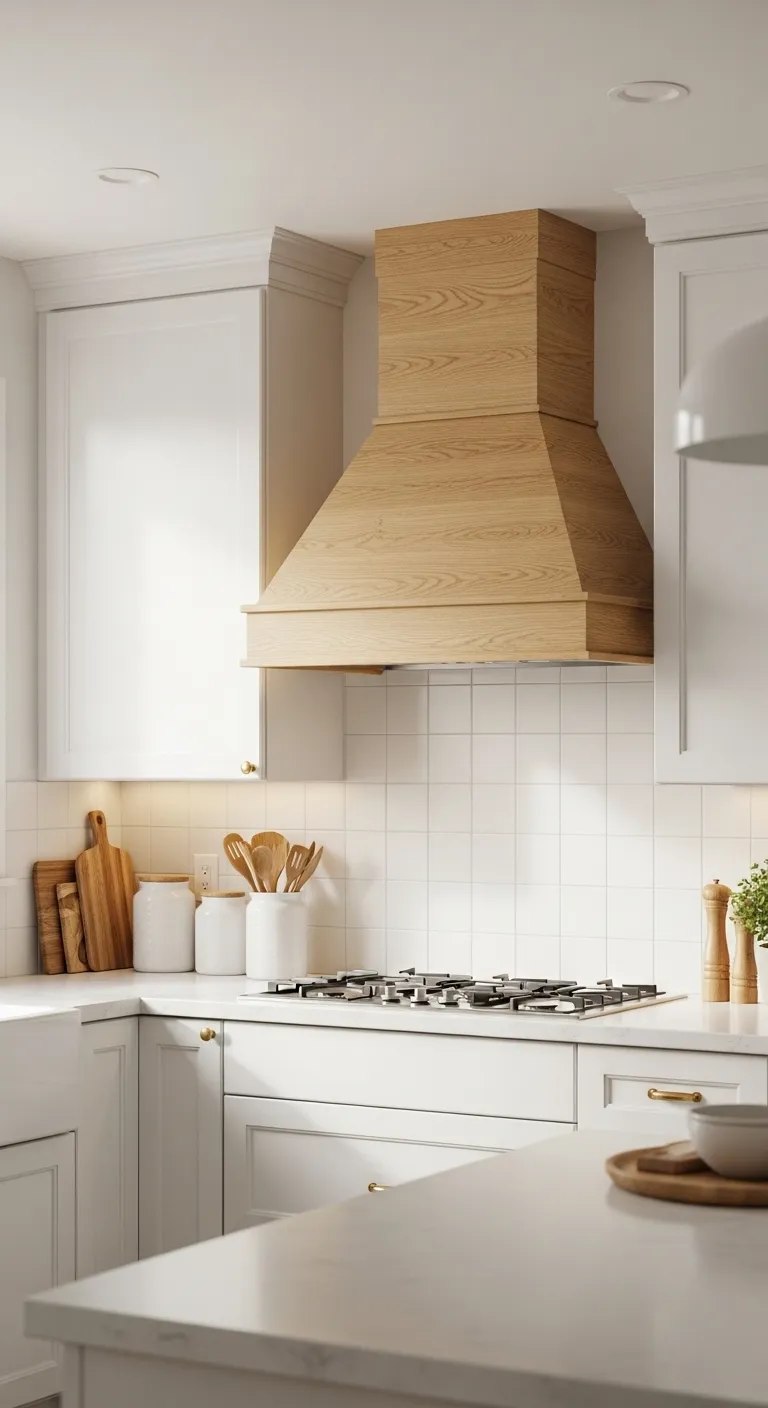
A white kitchen needs at least one strong element to ground it. A wooden range hood does this perfectly without overpowering the space. Choose a wood tone based on the mood you want. Light oak creates a calm, airy look that feels modern and relaxed. Walnut or medium oak adds richness and gives the kitchen a more defined presence. The key is to let the wood be visible and not overly polished so you keep that natural texture.
Design the hood with simple, clean lines. Avoid heavy carvings or bulky shapes. A smooth, slightly curved or straight-edged hood blends well with modern white cabinetry. To make it stand out, keep the surrounding area minimal. Use a simple white tile backsplash behind it and avoid busy patterns nearby. You can also repeat the wood tone in small details like cutting boards, bar stools, or open shelving to create a connected look across the kitchen.
3. Replace Flat Backsplashes with Light-Responsive Textured Tiles
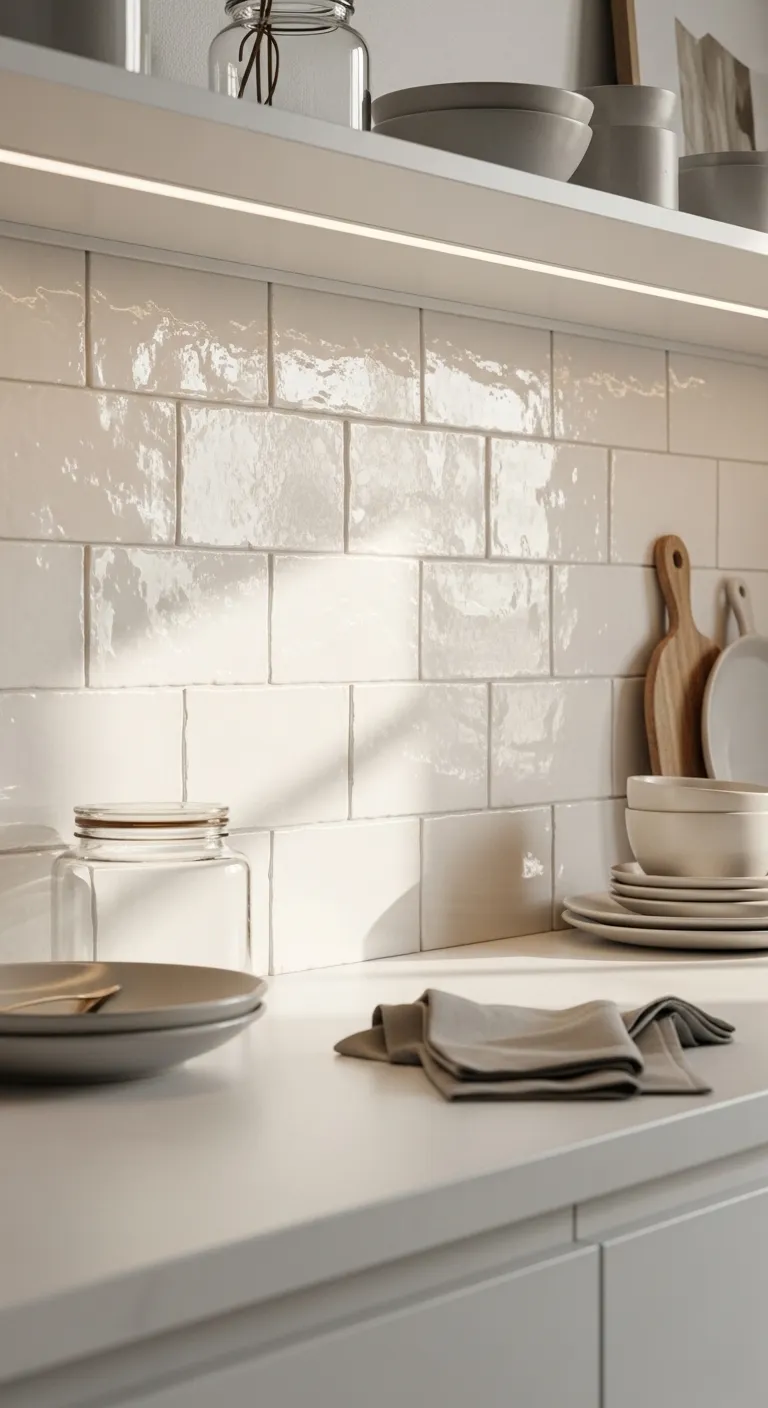
A flat backsplash makes a white kitchen feel one-dimensional. Instead, use tiles that react to light and create subtle movement. Handmade-style tiles like zellige or softly uneven ceramic tiles are ideal. Their slightly imperfect surfaces reflect light in different directions, which adds depth throughout the day. In the morning, natural sunlight highlights texture. At night, under-cabinet lighting creates a soft glow that makes the wall feel almost alive.
You can also explore fluted or ridged tiles if you want a more modern direction. These create gentle vertical shadows that add structure without using bold colors. Grout choice matters here. Instead of bright white grout, choose a slightly warm tone that blends with the tile. This keeps the look soft while still defining the pattern. This small change can transform a basic white kitchen into something visually rich without adding clutter or color.
4. Combine Matte and Glossy Finishes for Subtle Contrast
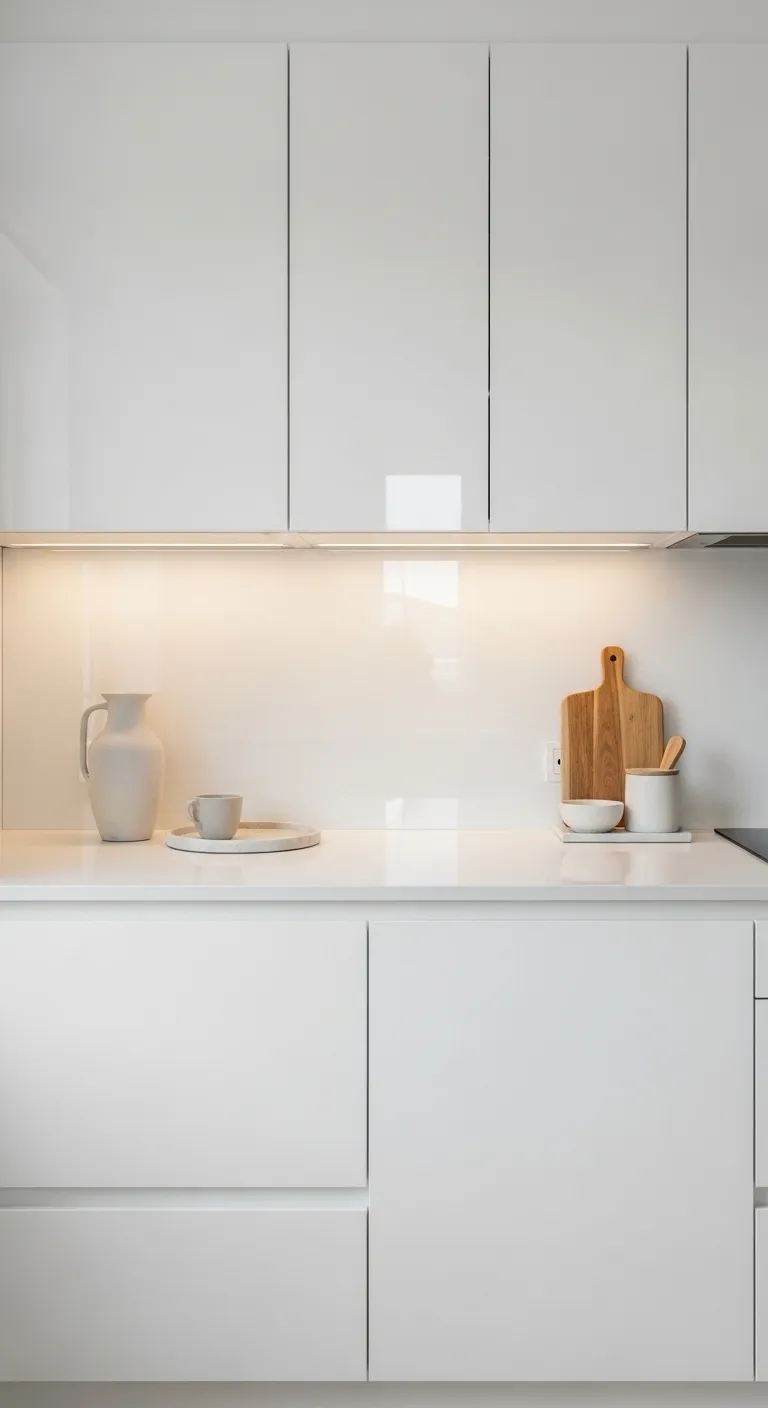
When everything has the same finish, even a well-designed kitchen can feel dull. Mixing finishes adds depth without changing your color palette. Start with matte cabinets. They absorb light and create a calm, grounded base. Then introduce glossy or polished surfaces through your backsplash or countertops. A glossy tile reflects light and brings energy into the space. You can also use satin or brushed finishes for hardware to create a middle layer between matte and gloss. This keeps everything balanced and avoids extremes. For example, matte shaker cabinets paired with a glossy ceramic backsplash and lightly polished quartz countertops create a layered look that feels intentional. Each surface interacts with light differently, which makes the kitchen visually engaging even though it stays entirely white.
5. Open Up the Kitchen with Carefully Styled Shelving
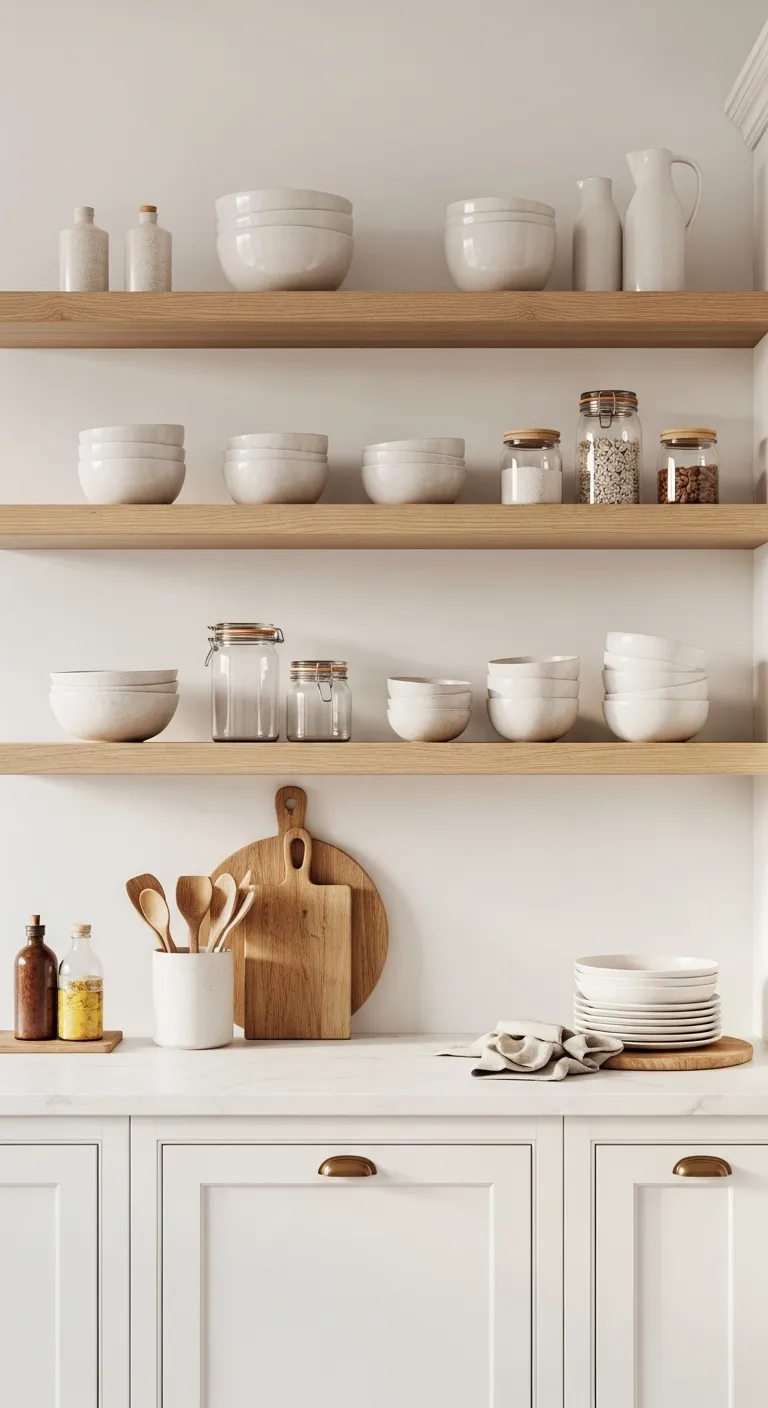
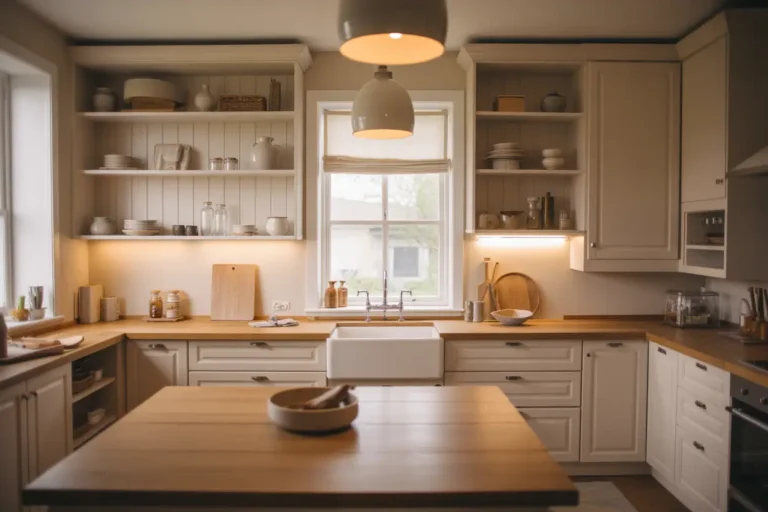
Too many upper cabinets can make a white kitchen feel boxed in. Replacing a section with open shelving creates breathing space and visual interest. Use simple wood or painted shelves that match your cabinetry tone. Then style them with a limited number of items. Think ceramic bowls, glass jars, neutral cookbooks, and a few wooden pieces. The goal is not to fill the shelves, but to create a curated display. Keep colors consistent. Stick to whites, soft neutrals, and natural materials so the shelves blend into the overall design. Avoid bright or mismatched items that break the calm feel. Spacing is important. Leave gaps between objects so each piece stands out. This makes the kitchen feel organized and intentional instead of cluttered.
6. Introduce Soft Neutral Accents to Warm Up the Space
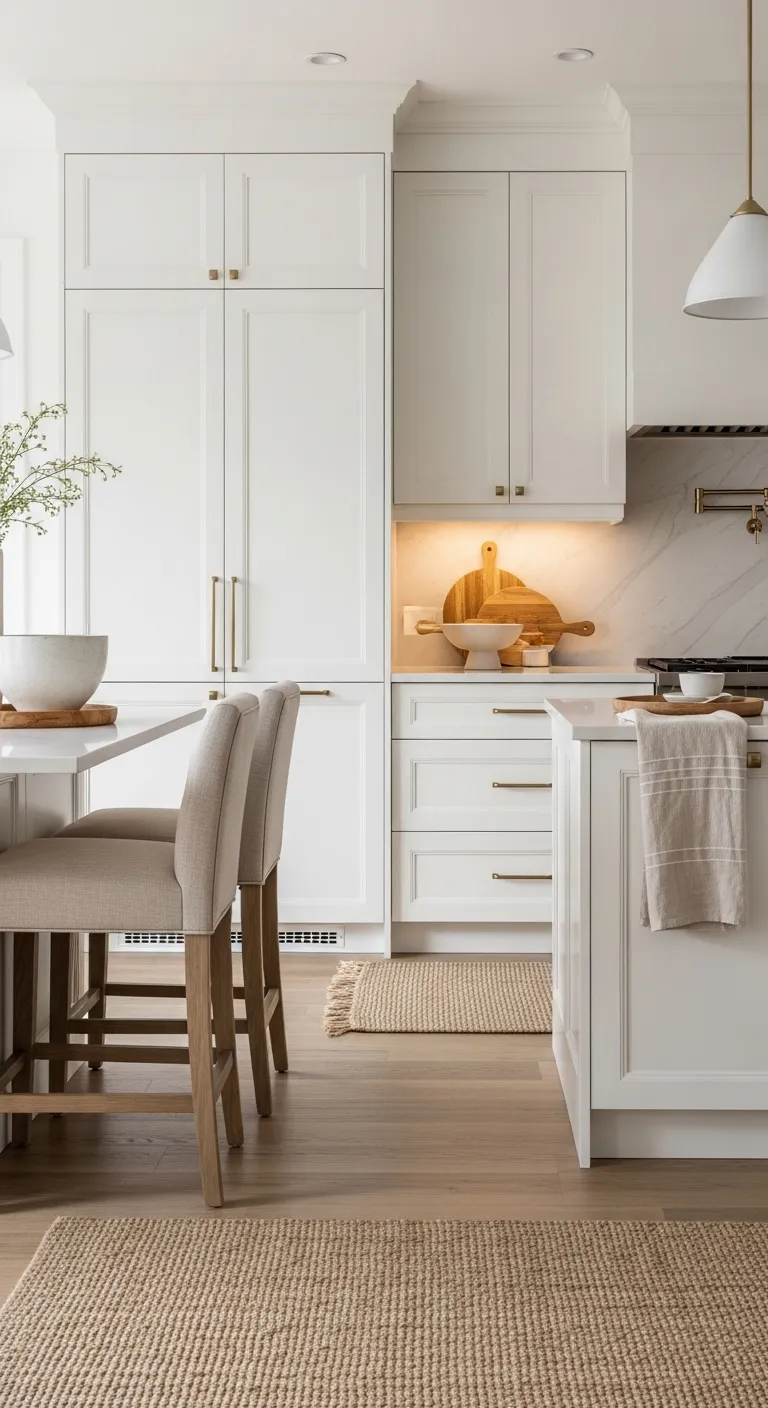
A white kitchen feels more inviting when you add subtle color through neutrals. Soft beige, sand, or warm taupe tones can completely change the mood. You can bring these tones in through seating, textiles, or small decor pieces. Upholstered bar stools in a sandy fabric add comfort and warmth. A woven rug introduces texture while grounding the space. Even small elements like a linen runner on the island or neutral-toned ceramics can make the kitchen feel more lived-in. The key is to keep these accents soft and cohesive. Avoid high contrast. Instead, let these tones gently blend with your white base so the space feels calm and balanced.
7. Create a Soft Glow with Layered Lighting Instead of One Source
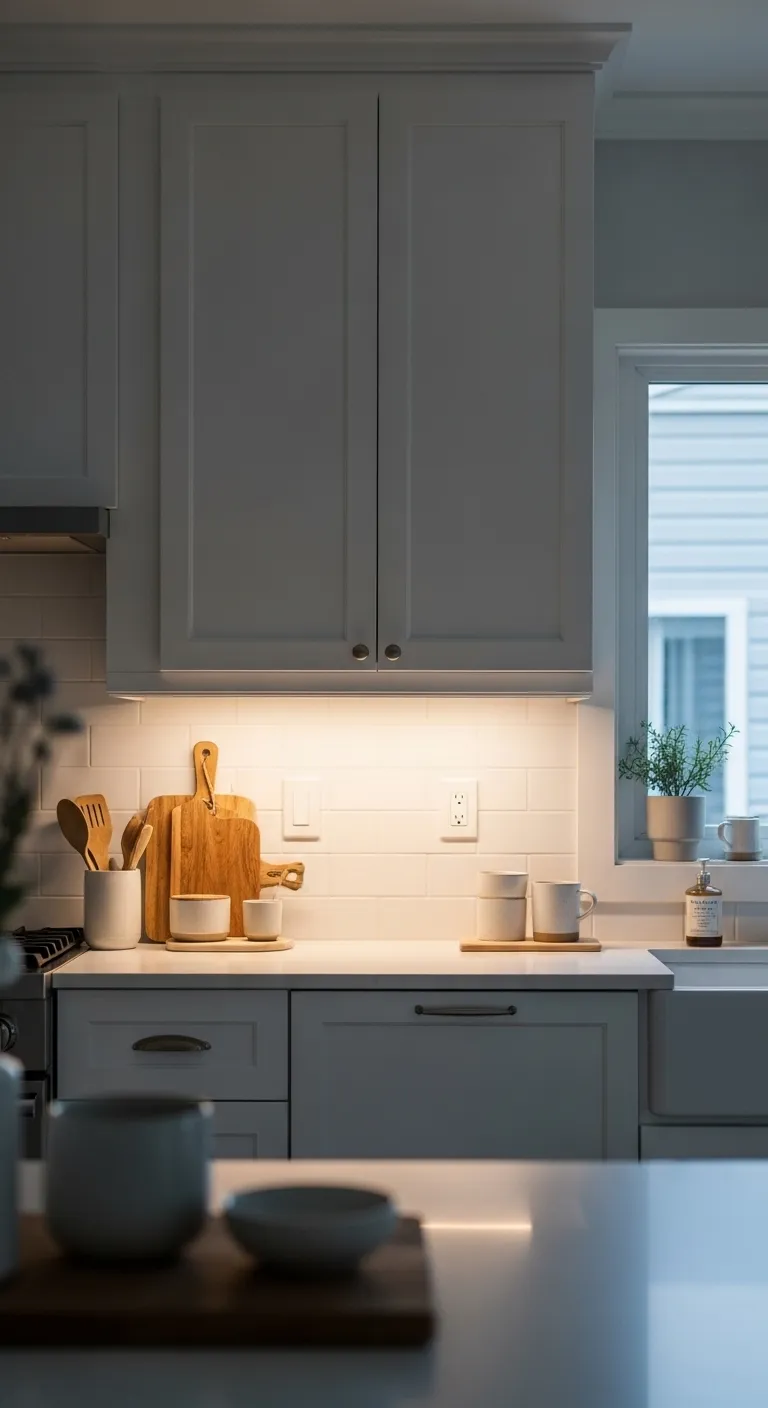
Many kitchens rely on a single overhead light, which creates harsh shadows. A well-lit white kitchen uses layers of light to feel warm and functional. Start with under-cabinet lighting. This highlights your backsplash and adds depth to the walls. Choose warm lighting so the space feels inviting in the evening. Add pendant lights above the island for focused illumination. Select fixtures with soft finishes like brushed metal, glass, or even fabric shades to keep the look cohesive. Finally, include ambient lighting such as recessed lights or wall sconces. This fills in darker areas and creates an even glow across the kitchen. By combining these layers, your kitchen shifts from bright and functional during the day to soft and cozy at night.
8. Use Marble or Quartz with Gentle Veining for Movement
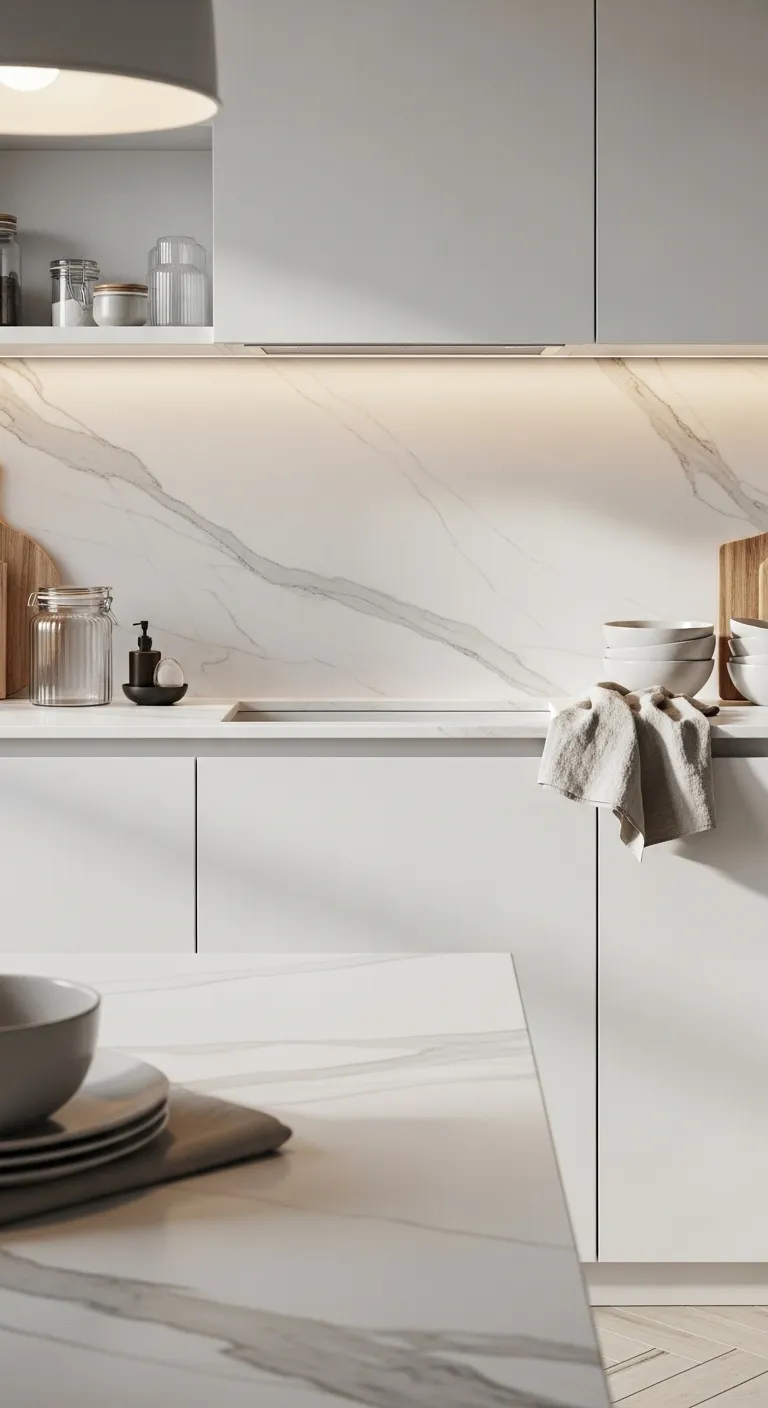
A plain white countertop can feel too simple. Adding stone with soft veining introduces natural movement without overwhelming the design. Choose marble or quartz with subtle gray, beige, or warm undertones. Avoid bold, high-contrast patterns if you want a calm look. The goal is to create quiet detail that reveals itself over time. Extend the material up the wall as a full-height backsplash if possible. This creates a seamless look and makes the kitchen feel more refined. Pair this with simple cabinetry so the stone becomes the main feature. The natural lines of the veining add interest without needing extra decoration.
9. Design a Two-Tone Island That Still Feels White
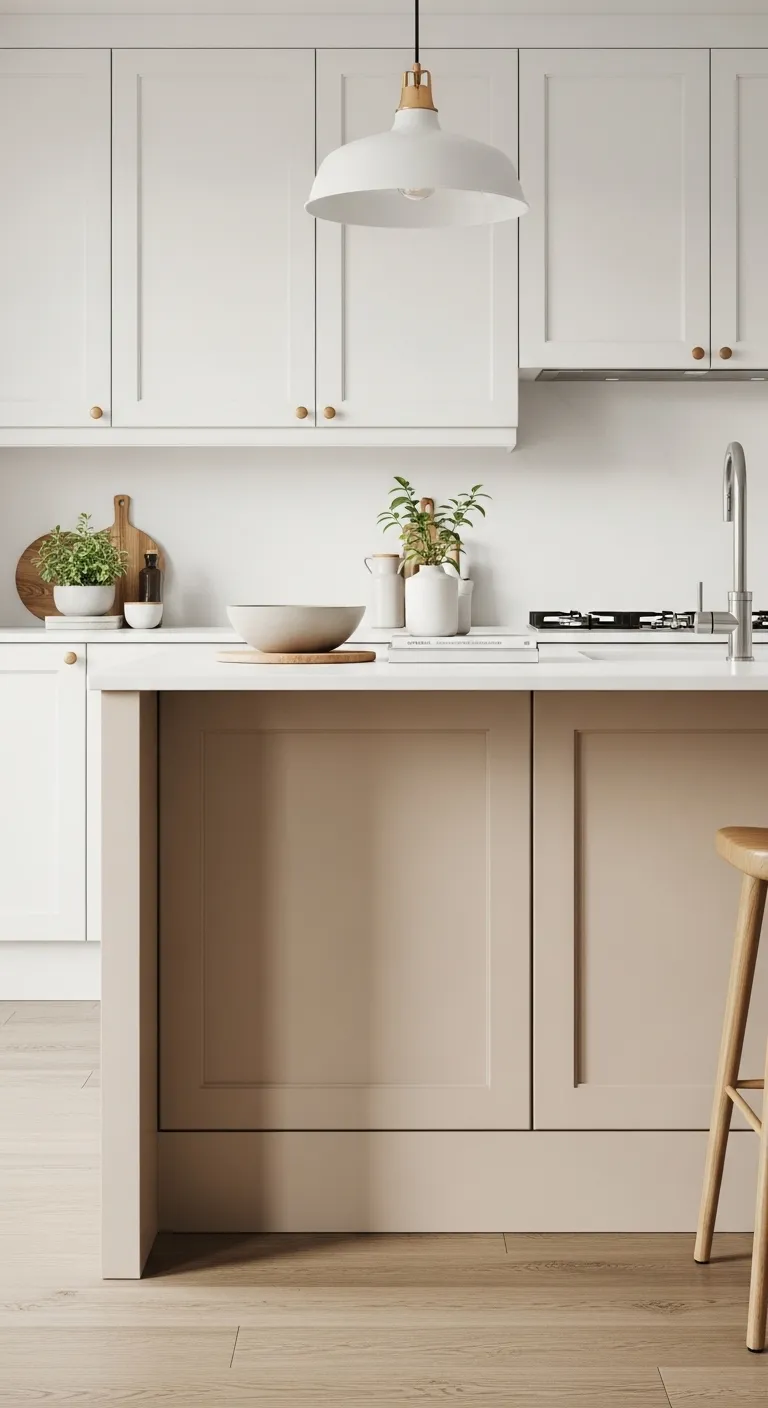
If your entire kitchen is white, your island is the perfect place to introduce variation without breaking the theme. Instead of going dark, use a slightly different tone or material. For example, a soft beige island base with a white countertop keeps the palette light while adding contrast. You can also use a wood base for the island while keeping surrounding cabinets white. This creates a focal point and helps define the layout. Add subtle details like paneling or texture on the island to make it stand out even more. This approach keeps your kitchen cohesive but prevents it from feeling repetitive.
10. Bring Life with Indoor Plants and Natural Elements
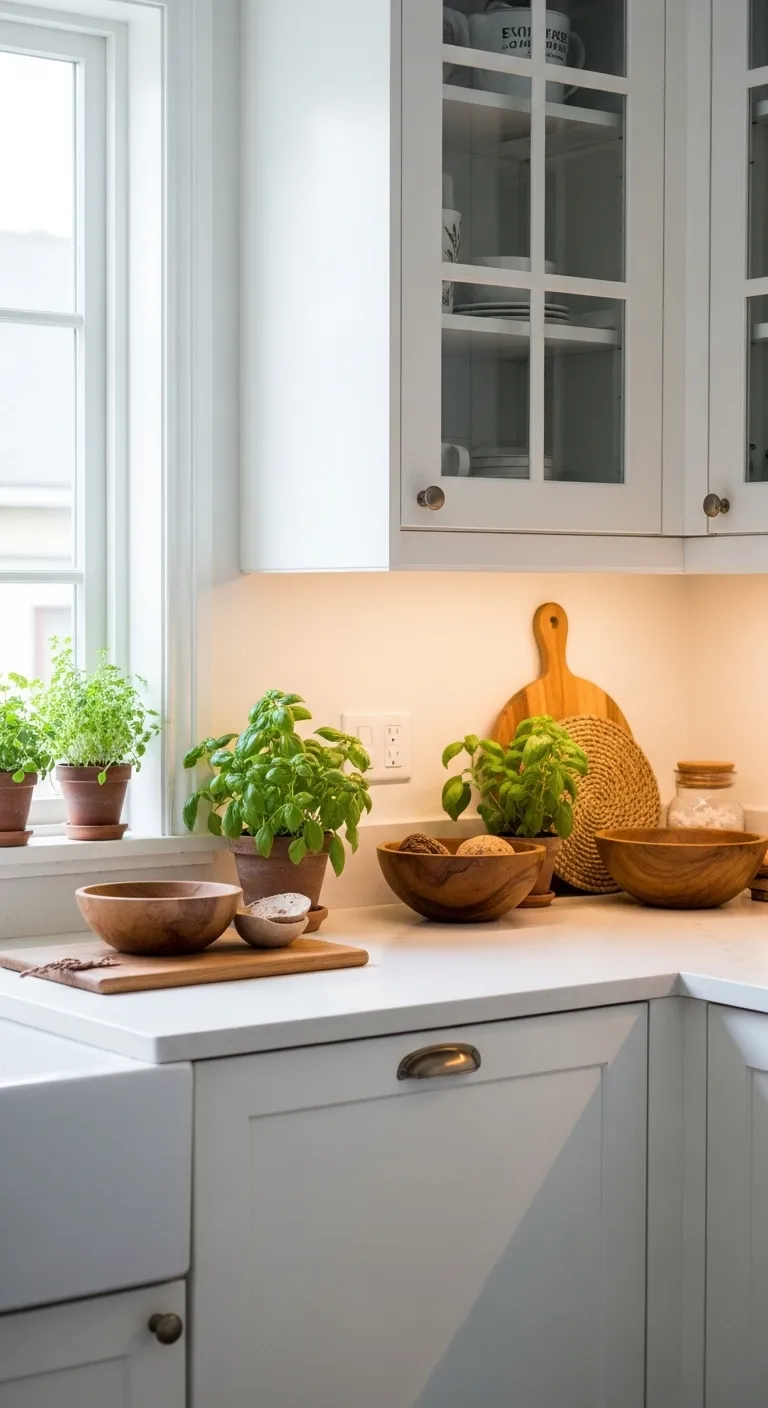
A white kitchen feels more complete when you add something organic. Plants introduce color, texture, and movement in a simple way. Choose easy plants like herbs, small potted greens, or even olive branches in a vase. Place them near windows, on open shelves, or on the countertop. You can also include natural elements like wooden bowls, stone trays, or woven baskets. These materials contrast beautifully with white surfaces and make the kitchen feel more grounded. Keep the arrangement simple and intentional. A few well-placed pieces work better than too many scattered items.
11. Frame the Kitchen with Floor-to-Ceiling Cabinetry

If your kitchen feels scattered or unfinished, floor-to-ceiling cabinetry creates a clean, structured look. This approach makes the entire wall feel intentional and visually strong. Use tall white cabinets that extend all the way up instead of leaving awkward gaps near the ceiling. This removes dust-collecting space and makes the kitchen look more polished. To avoid a heavy feel, choose simple flat-panel or slim shaker doors. Break the height visually by adding a section of glass-front cabinets or a niche for open shelving. This keeps the wall from feeling too solid while still maintaining that seamless look. This idea works especially well in smaller kitchens because it draws the eye upward and makes the room feel taller and more expansive.
12. Add a Hidden Coffee or Prep Station Behind Cabinet Doors
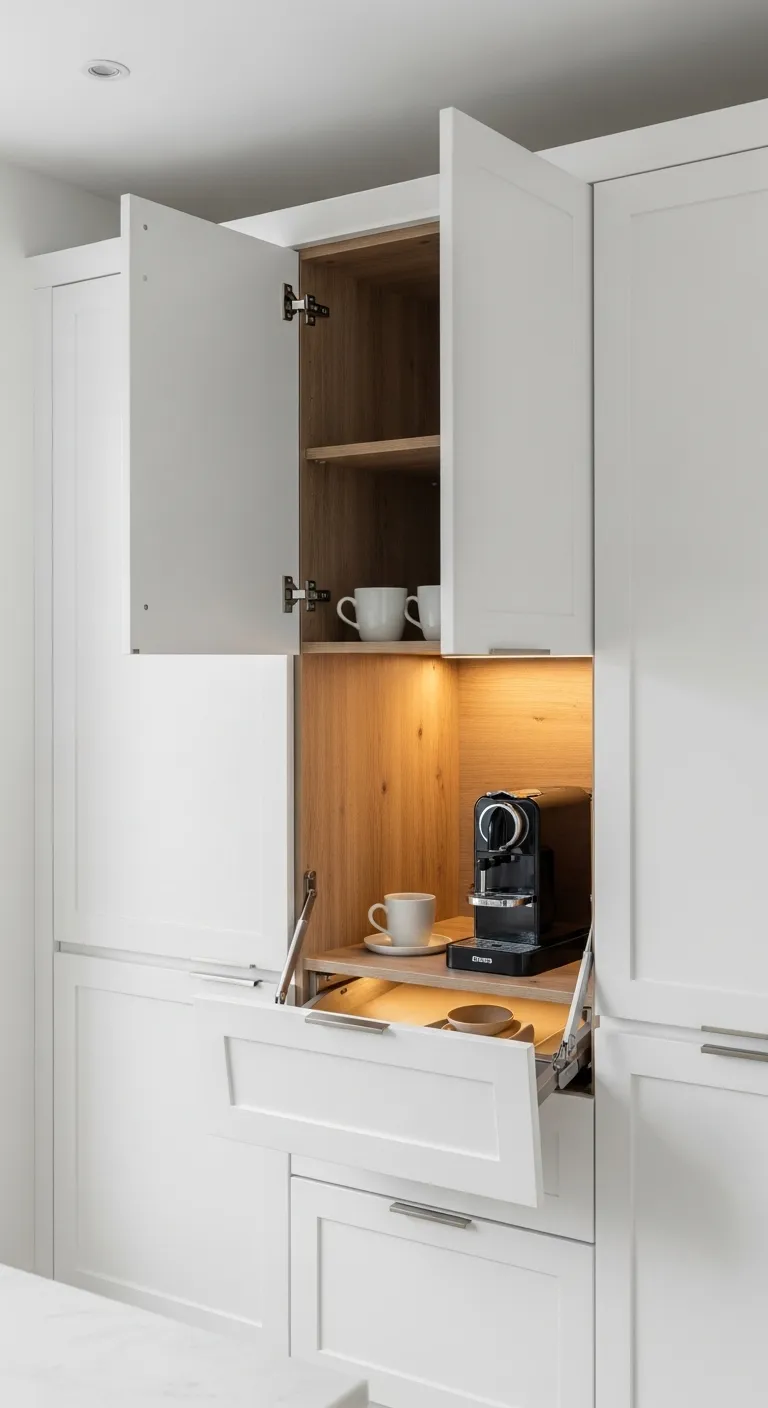
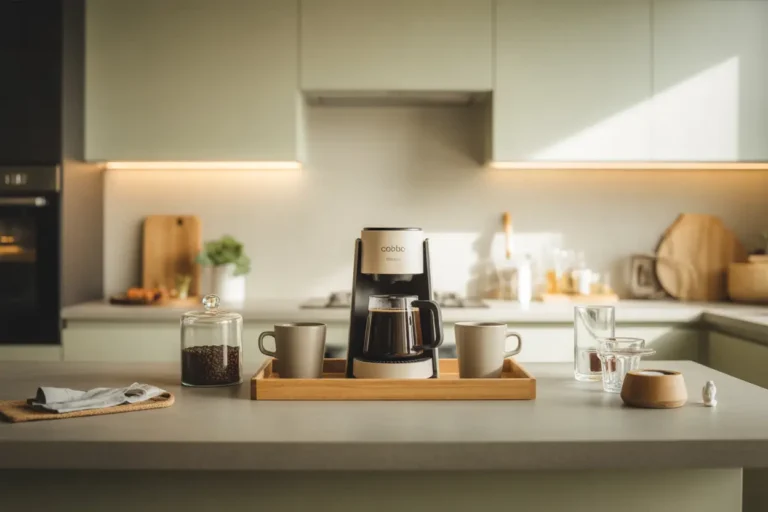
A white kitchen looks best when surfaces stay clean and uncluttered. A hidden station helps you achieve that without sacrificing function. Design a section of cabinetry that opens to reveal a coffee setup or prep area. Inside, you can include a small countertop, outlets, and shelves for mugs or appliances. When closed, it blends perfectly with the rest of your cabinets. Use the same white finish on the doors so it stays visually seamless. Inside, you can introduce a slightly different material like wood or a soft neutral tone for contrast. This idea keeps your kitchen looking calm and organized while still supporting your daily routine.
13. Use Vertical Paneling to Add Subtle Architectural Detail
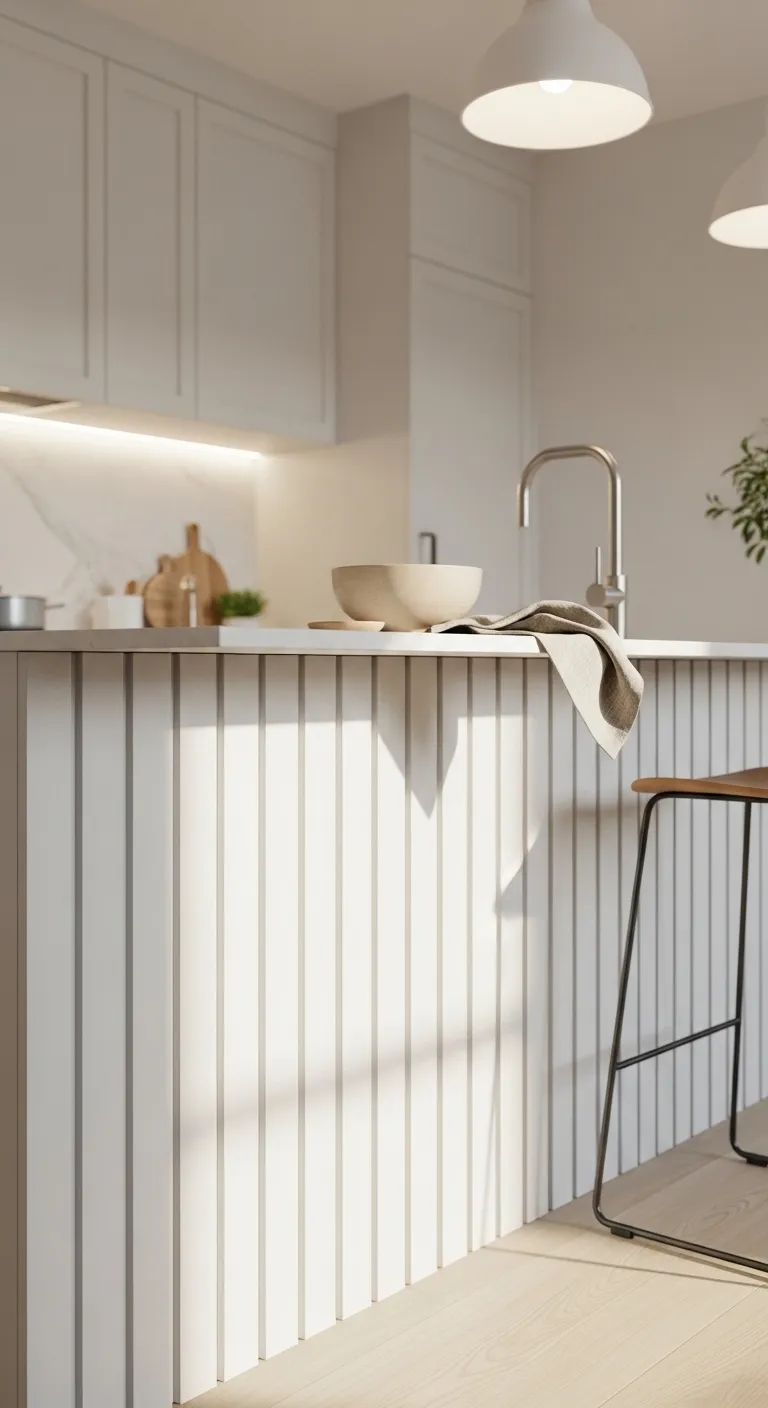
Flat cabinet doors and plain walls can feel too simple. Vertical paneling introduces structure without adding color. You can apply thin slatted panels to an island, a cabinet section, or even a feature wall. Keep everything in white, but let the shadows between the slats create depth. This works especially well on an island base. It adds texture and makes the island feel like a designed feature rather than just another cabinet block. Pair this with simple hardware and clean countertops so the paneling becomes the quiet highlight of the space.
14. Choose Statement Lighting That Acts Like Jewelry
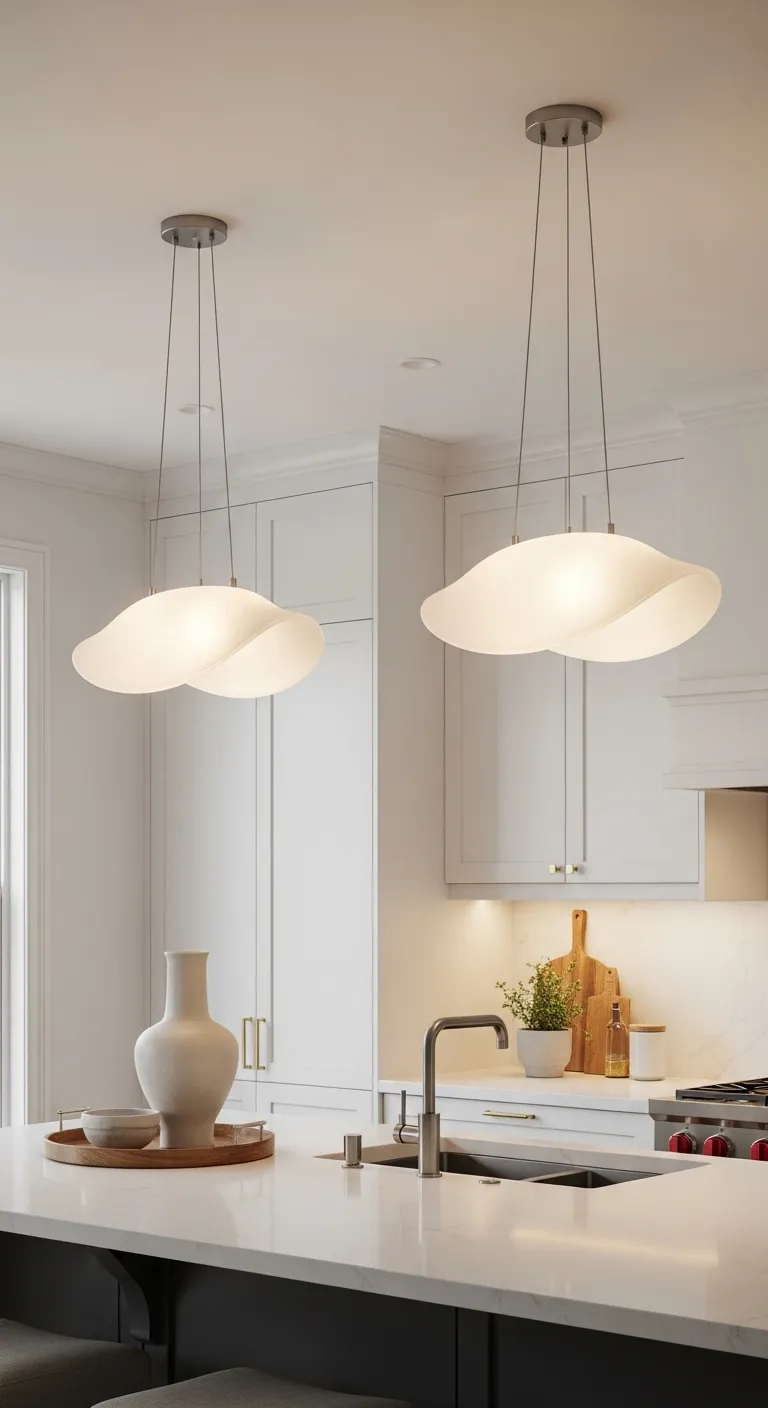
Lighting is not just functional. It can define the entire mood of your kitchen. Instead of basic fixtures, choose pendant lights or chandeliers that feel sculptural. Think soft curves, layered glass, or brushed metal finishes. In a white kitchen, these pieces stand out clearly. Position them above the island or dining area where they naturally draw attention. Keep the rest of the space simple so the lighting becomes a focal point. Warm light bulbs enhance the effect and make the kitchen feel inviting rather than stark. This single change can elevate even the most minimal kitchen design.
15. Incorporate a Softly Contrasting Countertop Edge Detail
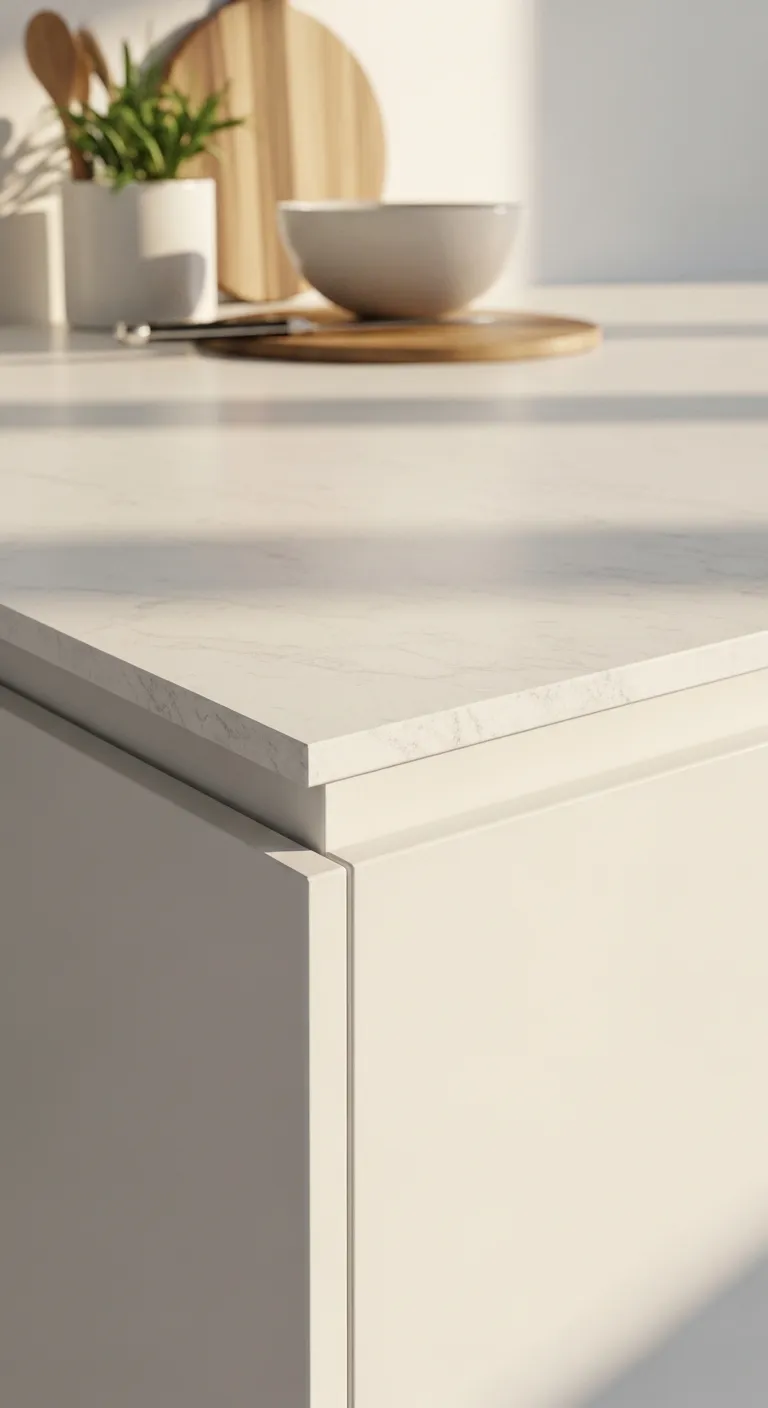
Most people focus on the surface of the countertop but ignore the edge. This is a missed opportunity. Choose a slightly thicker countertop or a layered edge profile to create subtle contrast. For example, a double-layered quartz edge adds depth without changing color. You can also use a rounded or beveled edge instead of a sharp straight cut. This softens the look and makes the kitchen feel more refined. These small details are not immediately obvious, but they contribute to a more thoughtful and custom appearance.
16. Blend Appliances Seamlessly with Panel-Ready Designs
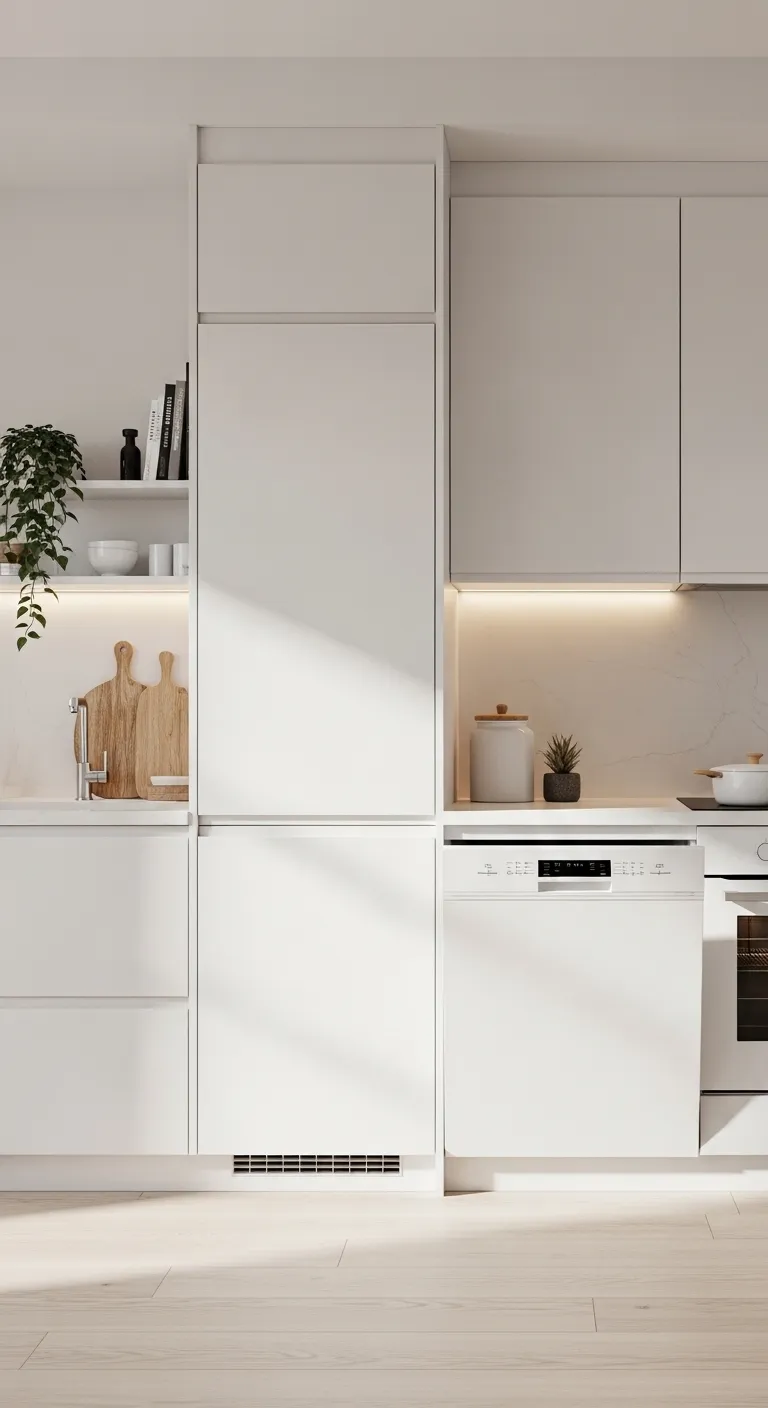
Visible appliances can break the flow of a white kitchen. Panel-ready appliances solve this problem. Cover your fridge and dishwasher with panels that match your cabinets. This creates a continuous surface where everything feels integrated. Use minimal handles or hidden pulls to keep the look clean. The goal is to make appliances almost disappear into the design. This approach works especially well in open-concept spaces where the kitchen is always visible. It keeps the area looking calm and cohesive.
17. Add a Subtle Pattern Through White-on-White Flooring
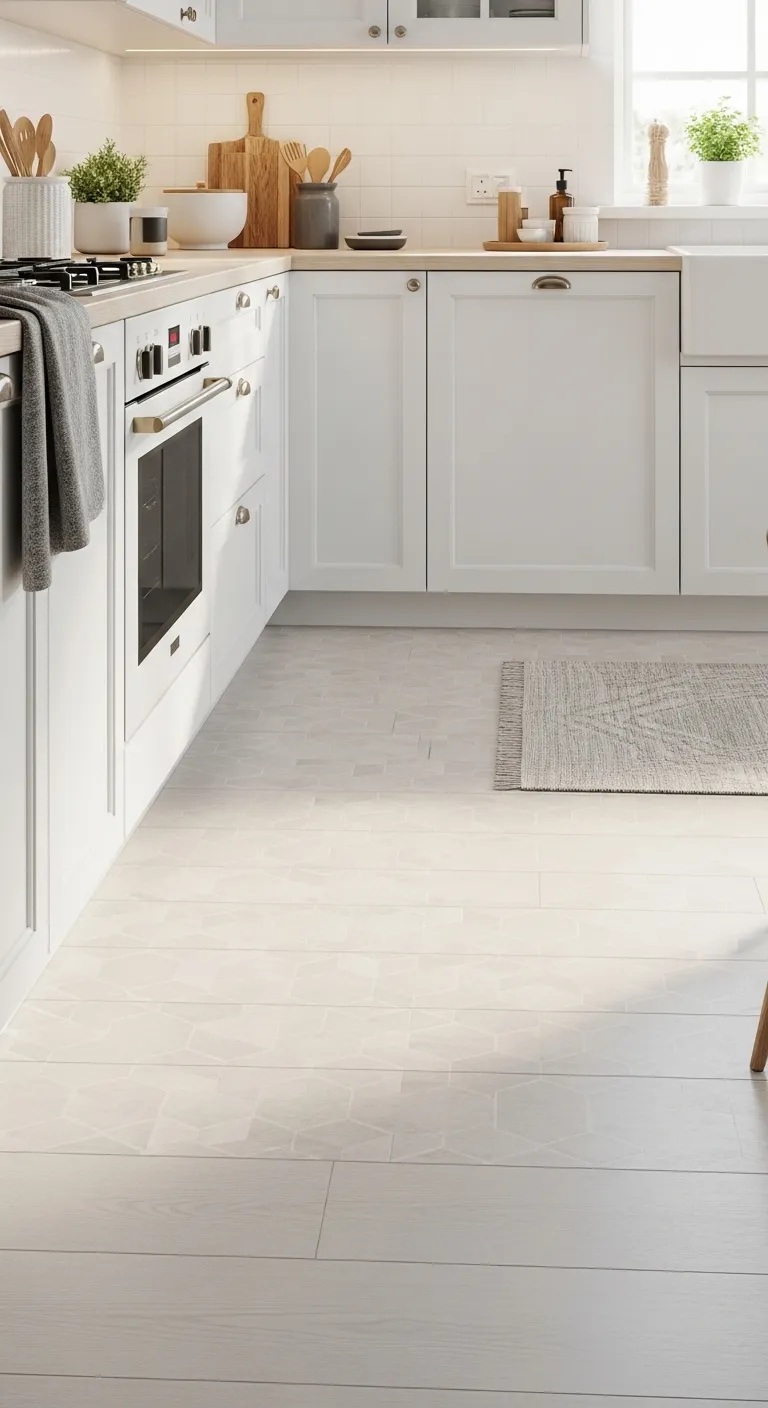
Flooring is often overlooked in white kitchens, but it can add quiet interest without introducing bold color. Choose tiles with a very soft pattern in white or off-white tones. For example, a faint geometric design or lightly veined stone creates movement underfoot. If you prefer wood, go for very light oak or whitewashed planks with visible grain. This adds texture while keeping the palette soft. The key is subtlety. The pattern should be noticeable only when you look closely, so it enhances the design without distracting from it.
18. Design a Niche or Alcove for Functional Beauty
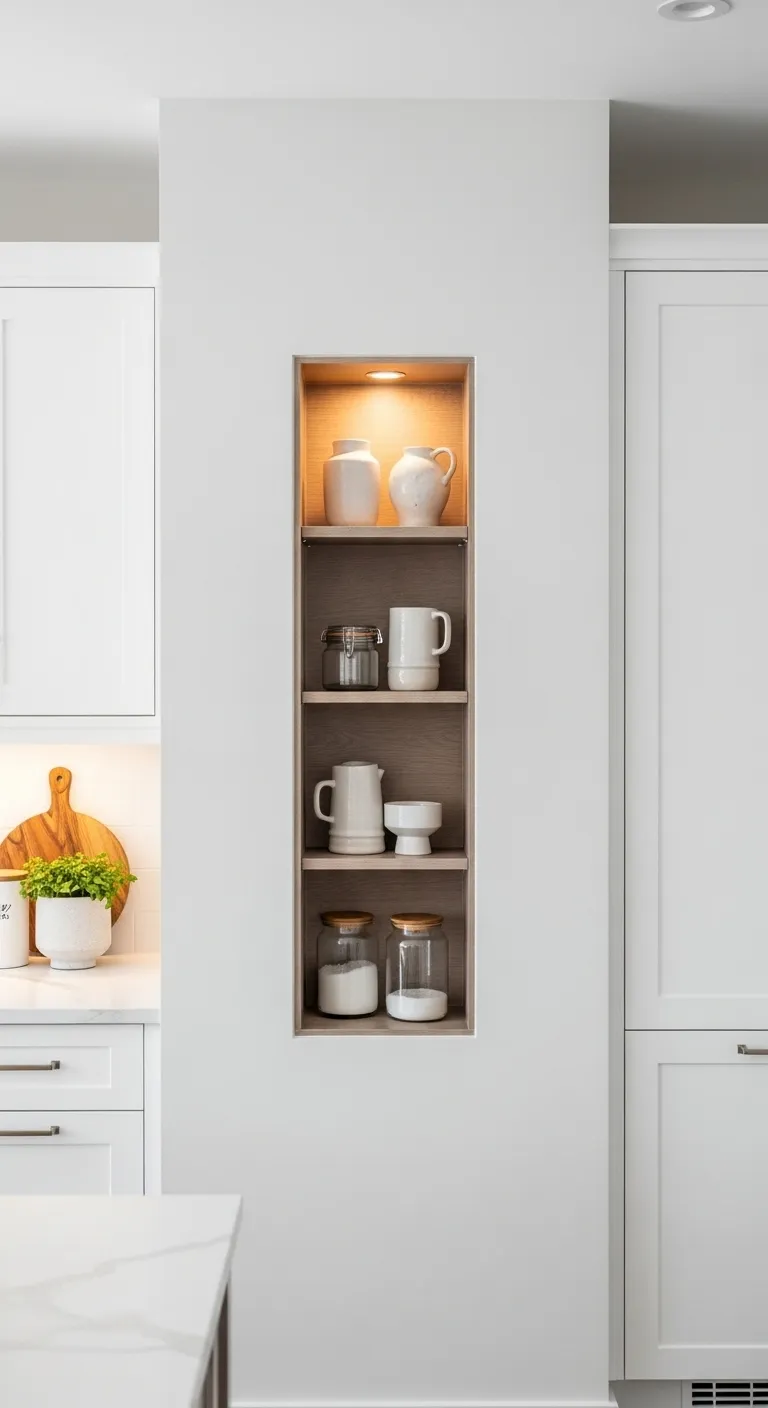
Instead of keeping all walls flat, carve out a small niche for both function and style. You can create a recessed area for a coffee corner, spice storage, or decorative display. Line the back with a slightly different material like textured tile or wood. Keep the outer frame white so it blends with the kitchen. The contrast inside the niche draws attention in a controlled way. This adds depth to the layout and makes the kitchen feel more custom and thoughtfully designed.
19. Use Oversized Hardware as a Design Feature
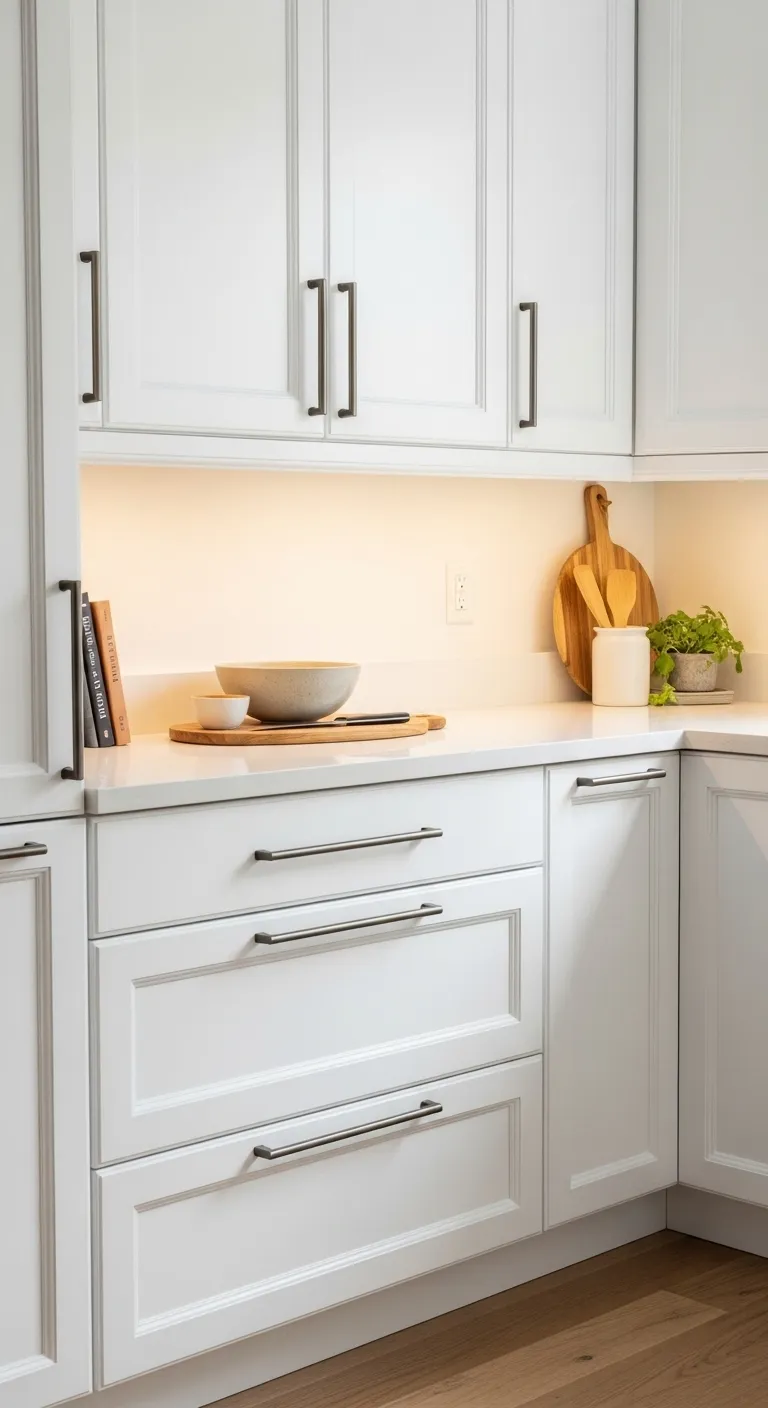
Hardware is often small and understated, but scaling it up can create a bold yet clean look. Choose longer handles or pulls in finishes like brushed nickel, soft brass, or matte black. On white cabinets, these stand out clearly without overwhelming the space. Keep the design simple and consistent across all cabinets. This creates rhythm and structure throughout the kitchen. Oversized hardware also feels more comfortable to use, combining style with practicality.
20. Introduce Soft Contrast with a Painted Ceiling
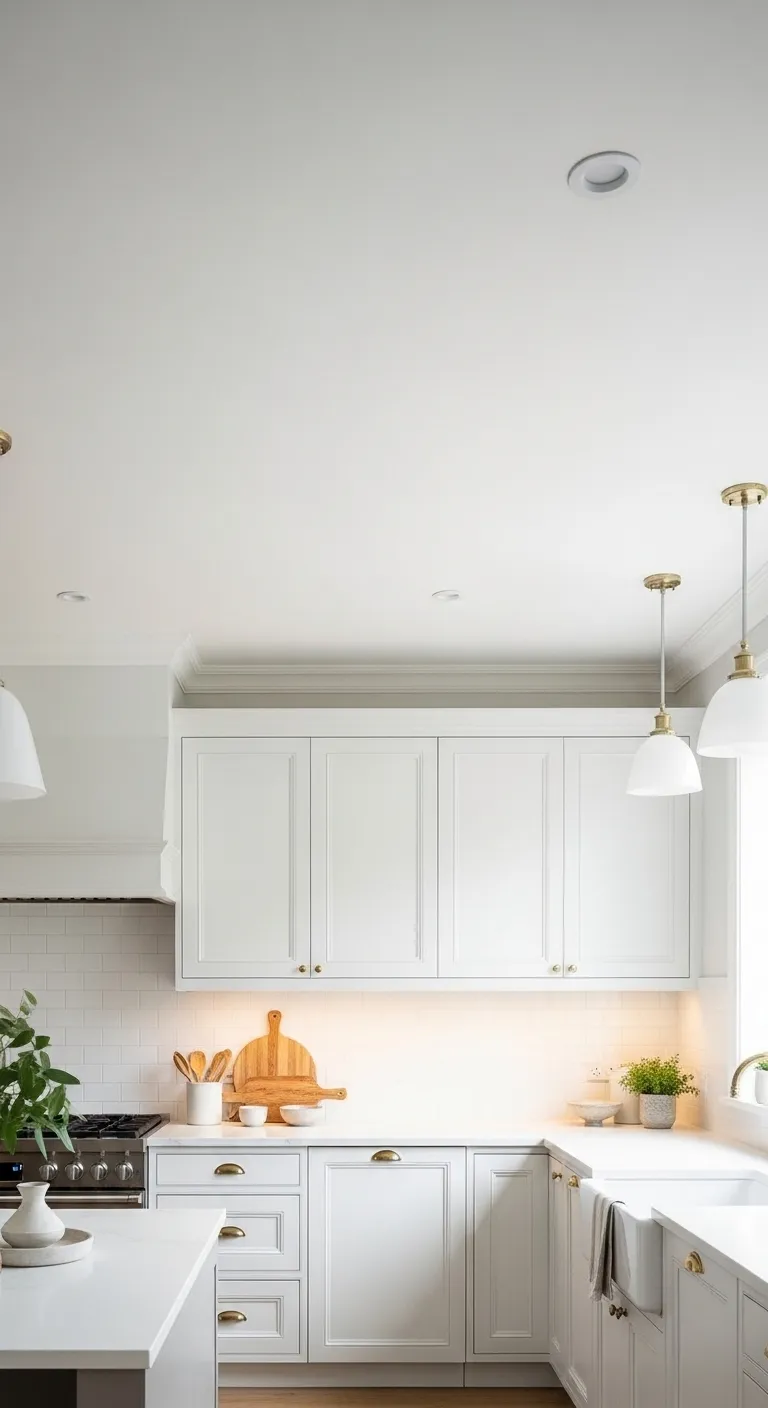
Most kitchens leave the ceiling plain white, but adding a slight variation can transform the space. Paint the ceiling in a very soft off-white or warm neutral tone. This creates a gentle contrast with the walls and cabinets. If your kitchen has beams or molding, highlight them with a slightly different shade. This adds dimension and draws attention upward. Keep the difference subtle so the space still feels cohesive. The goal is to create depth, not a strong color break.
21. Use Glass-Front Cabinets to Break Solid White Blocks
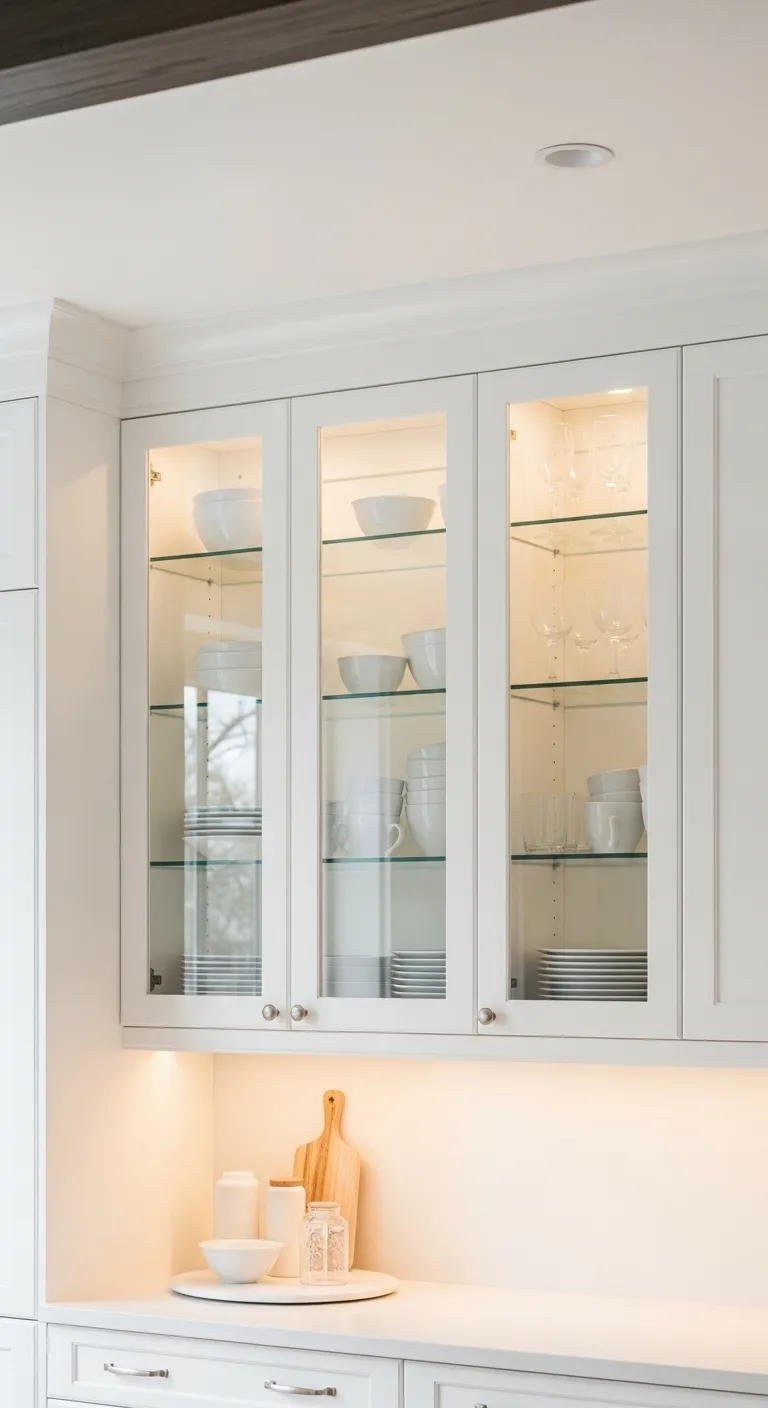
Too many solid cabinet fronts can make a white kitchen feel heavy, even if the color is light. Glass-front cabinets help you visually “open up” sections without removing storage. Choose clear or lightly frosted glass depending on how much you want to reveal. Inside, keep items minimal and cohesive. Stack white dishes, neutral bowls, or glassware so it feels curated rather than busy. Add a soft interior light inside these cabinets. This creates a gentle glow at night and adds another lighting layer to your kitchen. Place glass cabinets near eye level, not too high. This keeps them functional while also acting as a visual break in long cabinet runs.
22. Create Contrast with a Deep Sink and Minimal Fixtures
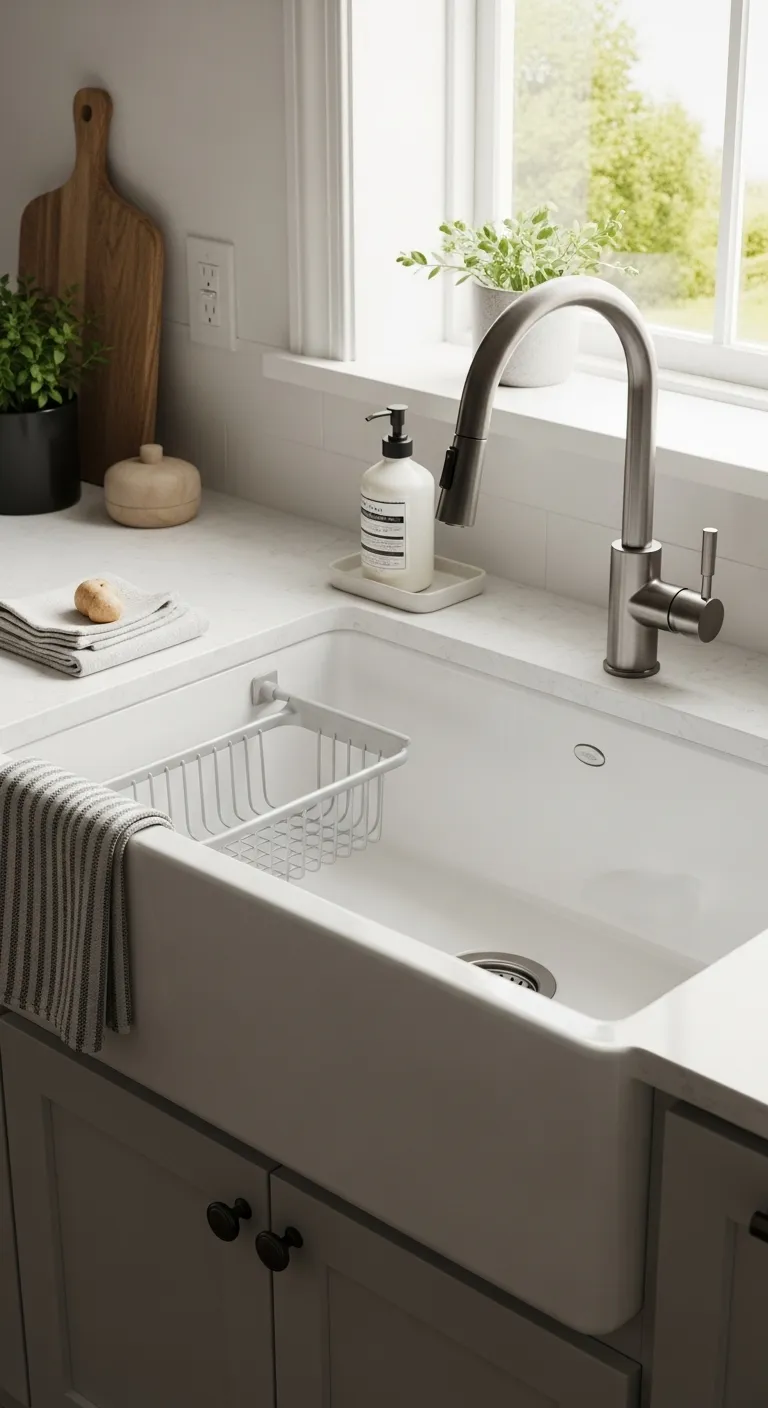
Your sink area is used daily, so it deserves thoughtful design. Instead of blending everything in white, introduce a subtle contrast here. A deep farmhouse sink in a soft off-white or light stone tone adds dimension while staying within the palette. Pair it with a sleek faucet in brushed metal or matte black for a clean, modern edge. Keep the surrounding countertop simple so the sink area feels intentional, not cluttered. You can also add a small ledge or integrated space for soap and essentials to maintain a clean look. This creates a focal point that feels practical and visually balanced.
23. Add a Slim Console or Secondary Surface Along an Empty Wall
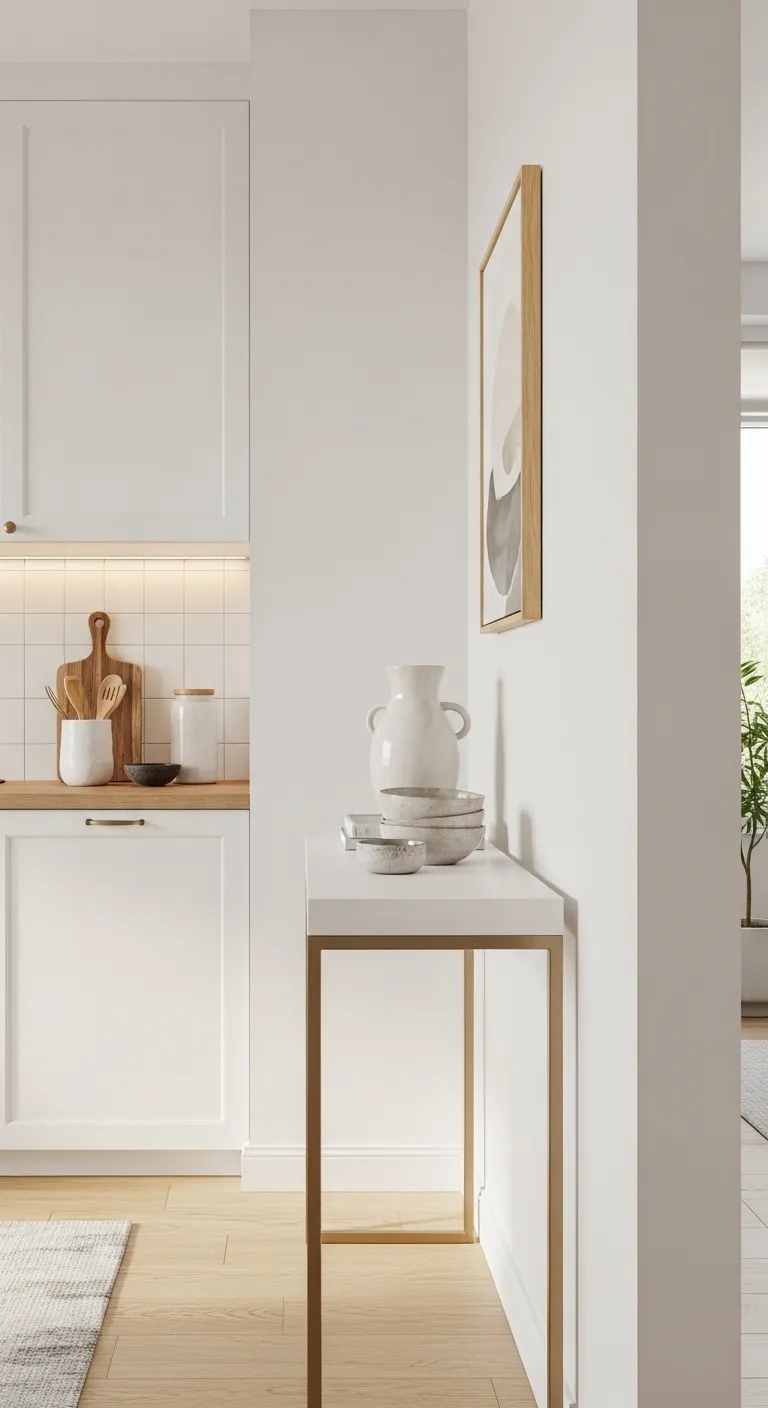
If you have an unused wall, do not leave it blank. A slim console or secondary counter adds both function and depth. Choose a narrow surface in wood or a soft neutral tone. Use it for light prep, serving, or even as a coffee extension area. Above it, add simple art, a mirror, or a small shelf. This creates layering within the space instead of keeping everything in one main work zone. It also makes your kitchen feel more dynamic and lived-in. Keep styling minimal so the area supports the design instead of competing with it.
24. Frame Windows with Soft Textiles Instead of Leaving Them Bare
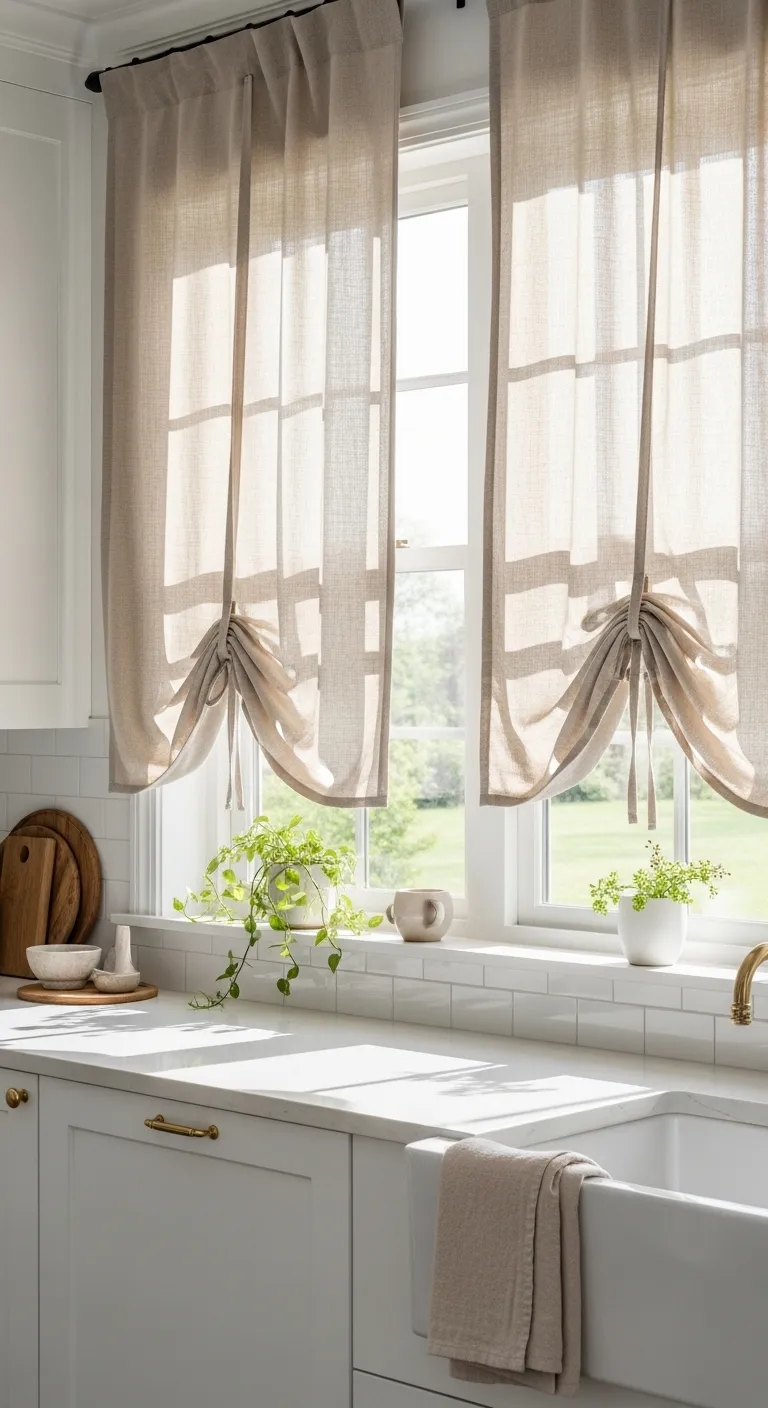
Many white kitchens leave windows uncovered, but adding soft textiles can transform the feel of the space. Use light linen curtains or relaxed Roman shades in warm white or beige tones. These soften the hard lines of cabinetry and bring in a gentle movement when light passes through. Avoid heavy or dark fabrics. The goal is to filter light, not block it. This small addition makes the kitchen feel more comfortable and less like a purely functional space, especially in open-plan homes.
25. Highlight the Island with Subtle Base Lighting
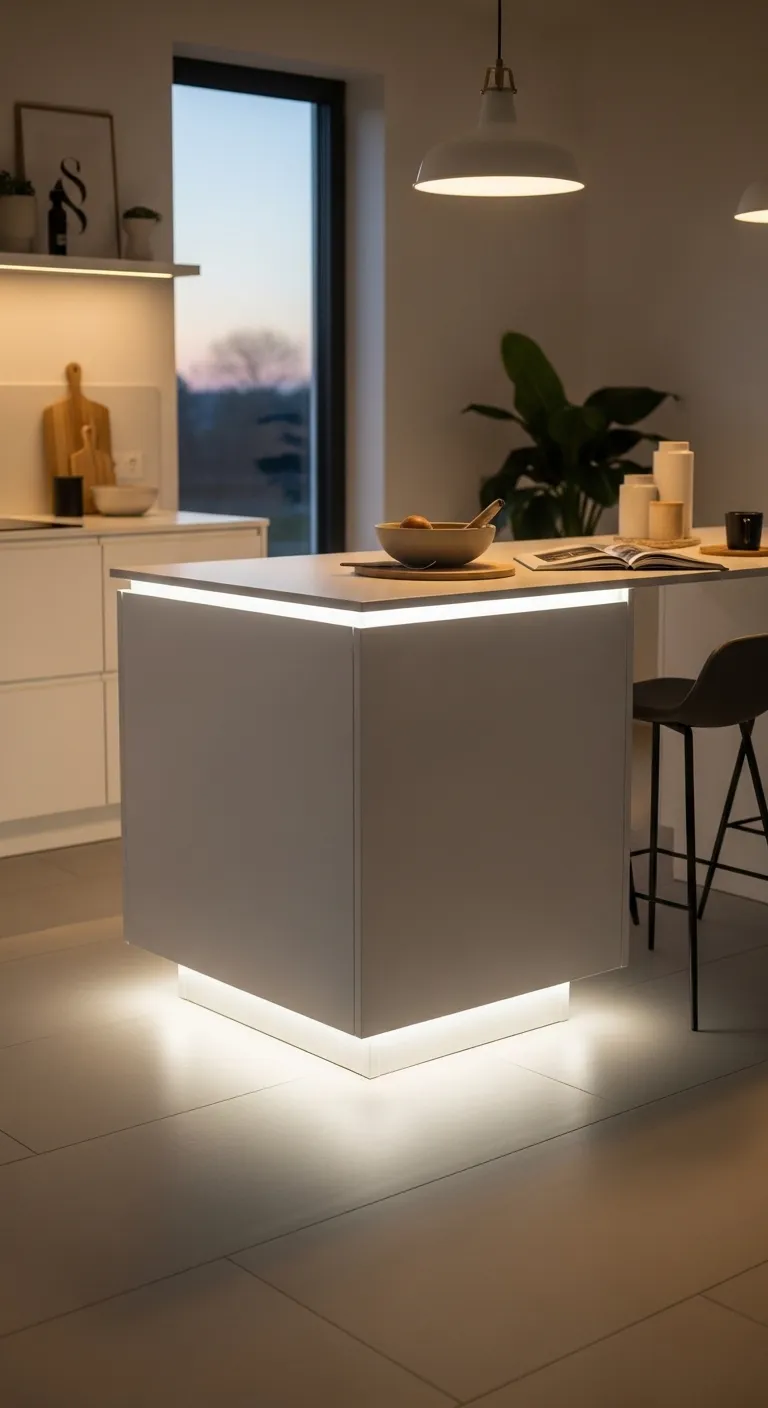
Your island can become a standout feature with one simple upgrade: base lighting. Install a soft LED strip along the bottom edge of the island. This creates a floating effect, especially in the evening. It also adds depth to the lower part of the kitchen, which is often ignored. Keep the light warm and diffused so it feels ambient, not harsh. This works beautifully with matte finishes and textured surfaces. This idea adds a modern touch while also improving nighttime visibility without turning on full overhead lights.
26. Keep One Area Intentionally Minimal for Visual Rest
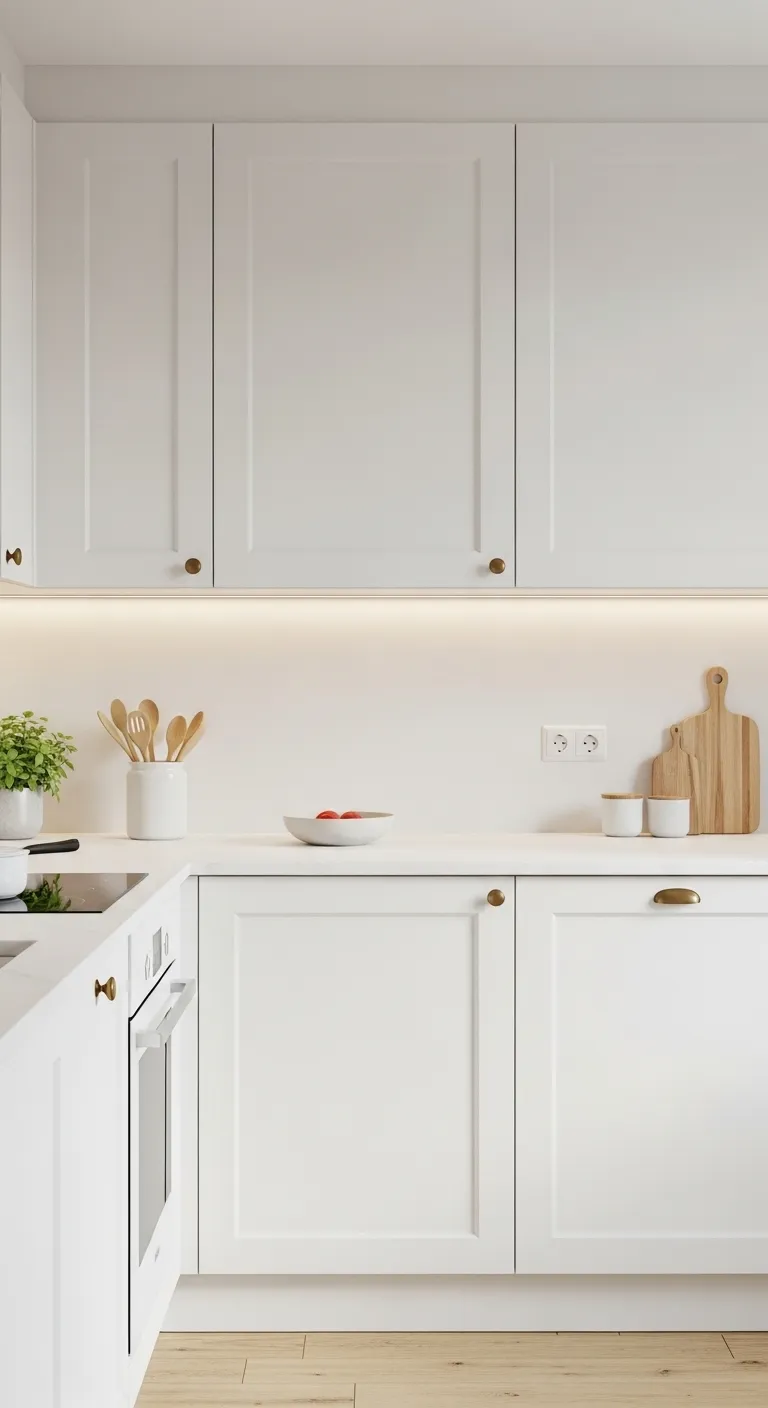
Not every part of your kitchen needs detail. In fact, one of the most powerful design moves is knowing where to stop. Choose one section, such as a wall or a stretch of countertop, and keep it completely minimal. No decor, no extra styling, just clean surfaces. This gives the eye a place to rest and makes the rest of your design choices stand out more. It also enhances the calm, open feeling that makes white kitchens so appealing. Balance is key. When some areas are detailed and others are quiet, your kitchen feels thoughtfully designed instead of overwhelming.
Conclusion
A beautiful white kitchen is never just about color. It is about how you use texture, light, layout, and subtle contrast to create depth. These 26 white kitchen ideas show you how to move beyond a basic look and design a space that feels warm, layered, and intentional. From lighting and materials to small architectural details, every choice adds to the overall experience. Start with a few ideas that fit your space and build from there. Even small changes can completely shift how your kitchen feels.
Save the ideas that stood out to you and begin shaping a kitchen that feels truly yours.