32 Kitchen Counter Coffee Bar Ideas That Look Stylish and Stay Organized
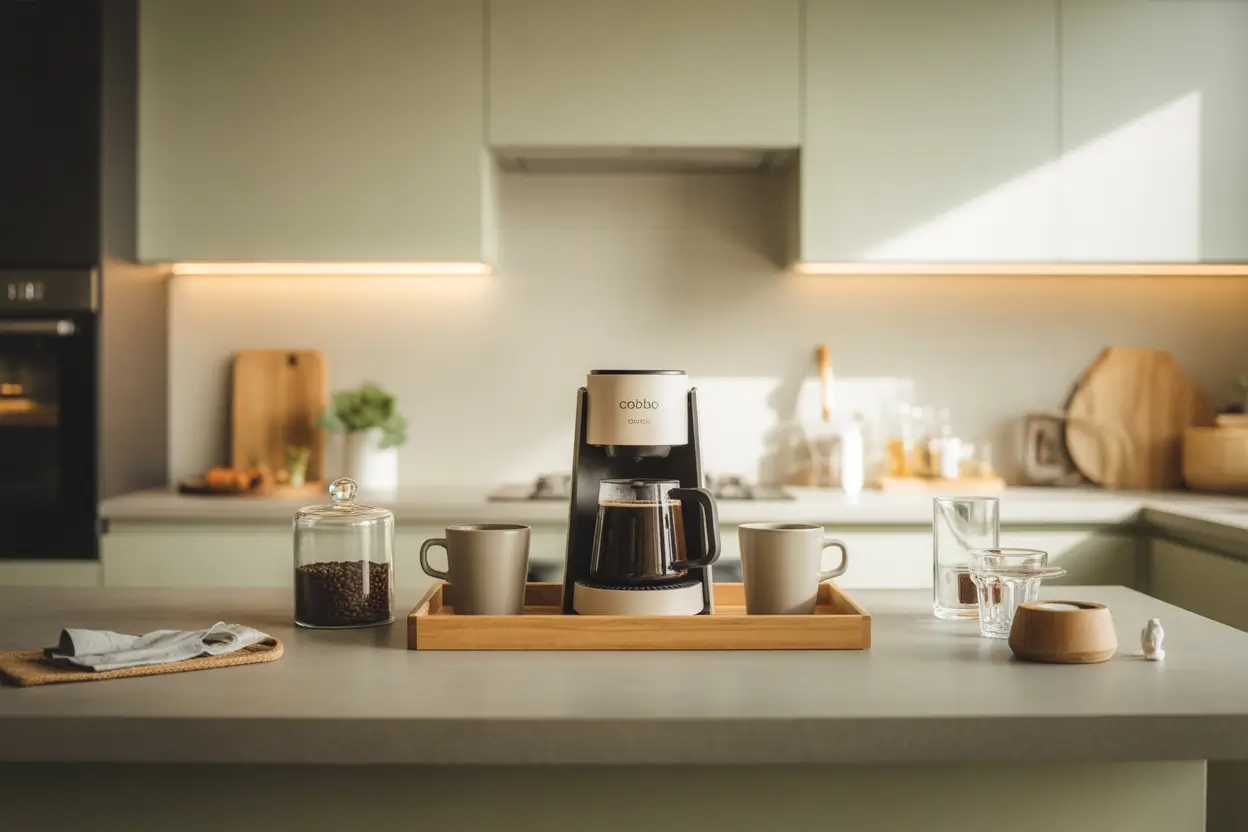
Your kitchen counter can do more than just hold appliances. With the right setup, it can become a cozy and functional coffee bar that makes your daily routine feel smoother and more enjoyable. Instead of searching for mugs, sugar, or coffee supplies every morning, everything stays organized in one dedicated space that also looks visually appealing.
This guide shares 32 kitchen counter coffee bar ideas that focus on real, usable design improvements. You will not find basic or repeated suggestions here. Each idea helps you improve layout, storage, lighting, and overall styling in a way that feels intentional and easy to maintain.
Whether your kitchen is small or spacious, these ideas will help you create a coffee corner that feels warm, organized, and worth using every day. You can pick one idea or combine a few to build a setup that matches your style and routine.
1. Define a Dedicated Coffee Zone with Visual Boundaries
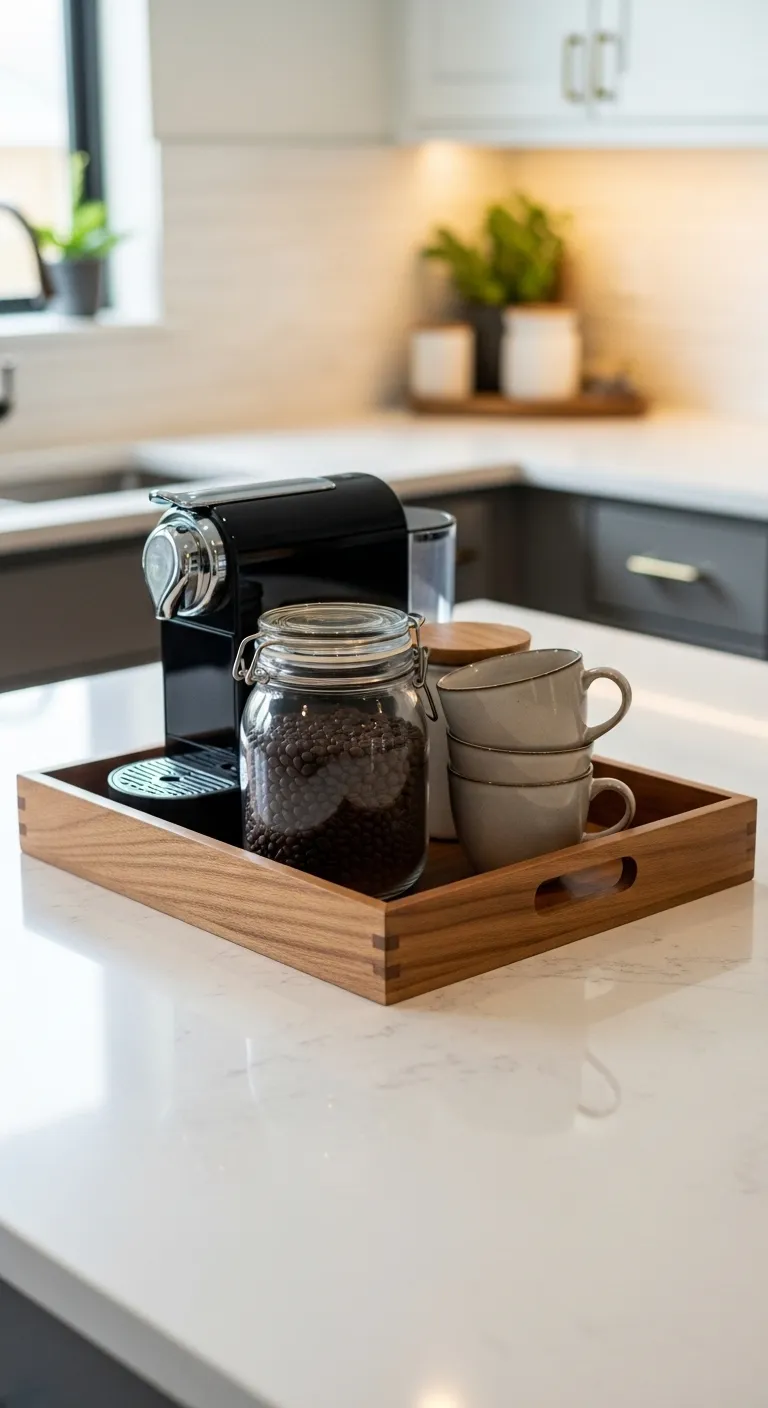
Start by clearly separating your kitchen counter coffee bar from the rest of the workspace. Most kitchens feel cluttered because everything blends together without purpose. Create a defined zone using contrast. Place a wooden board, stone slab, or textured mat under your coffee setup so it visually stands apart from the rest of the counter.
This simple layering trick makes the space feel intentional. Keep your coffee machine, jars, and mugs grouped closely within this boundary. Avoid spreading items across the counter because that breaks the visual structure. If possible, position the coffee zone near a wall or corner to naturally frame it.
You can also use a small vertical element like a short backsplash panel or peel and stick tile behind the setup to strengthen the boundary. This approach gives your coffee bar a “mini station” feel without needing extra furniture, making it perfect for both compact and large kitchens.
2. Build Vertical Interest with Layered Heights
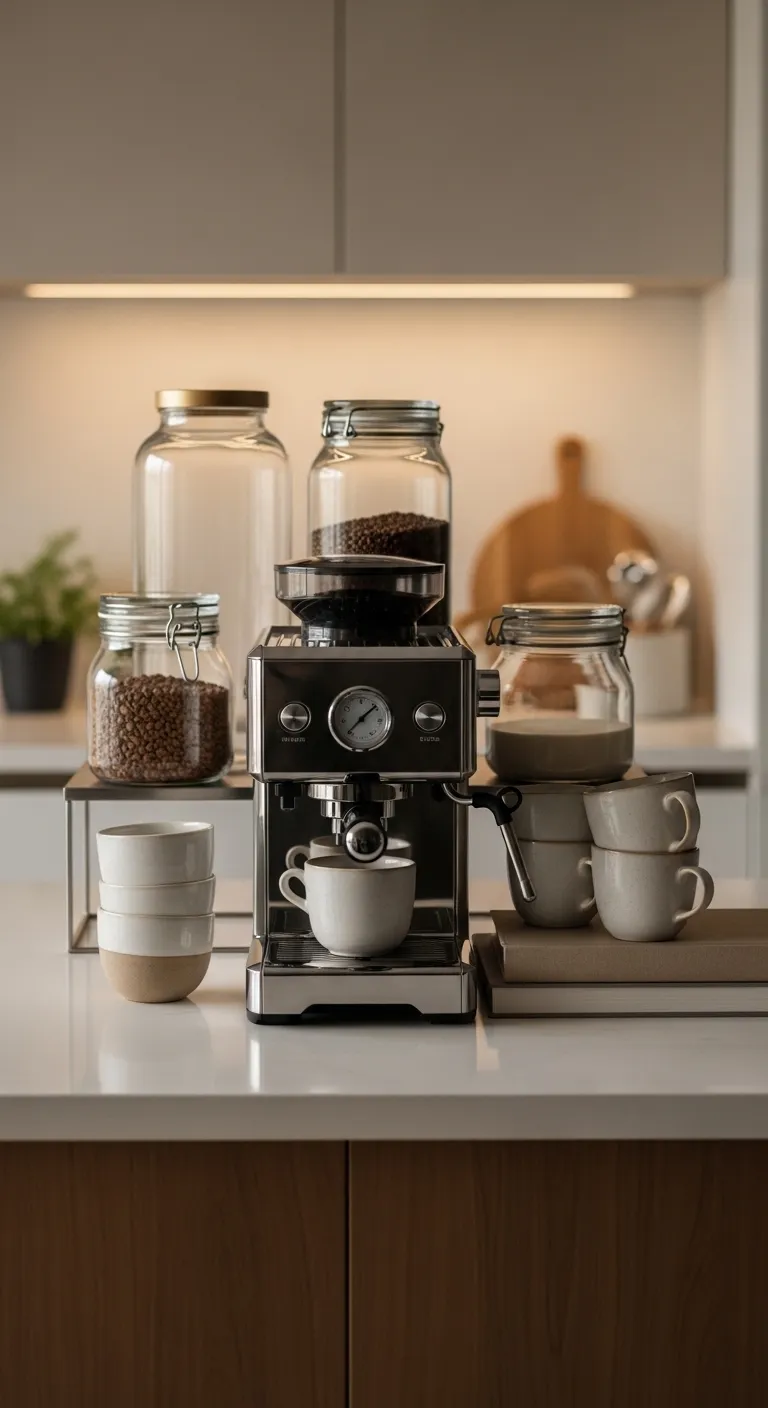
Flat layouts look dull and unplanned. A well-designed coffee bar always uses height variation to create depth. Start by placing your coffee machine as the base element. Then add taller items like glass jars filled with beans or syrups behind it. Place shorter elements like sugar bowls or cups in front. This layered arrangement guides the eye naturally and makes the setup look styled instead of random. Use stackable mug stands or tiered trays to elevate some pieces without adding clutter. Even a small riser under jars can make a big difference.
Keep spacing tight so the arrangement feels cohesive. Avoid placing items at the same height across the counter because that creates a flat and lifeless look. By simply adjusting height levels, your coffee bar instantly feels more premium and thoughtfully designed without adding more items.
3. Use Warm Under Cabinet Lighting for Atmosphere

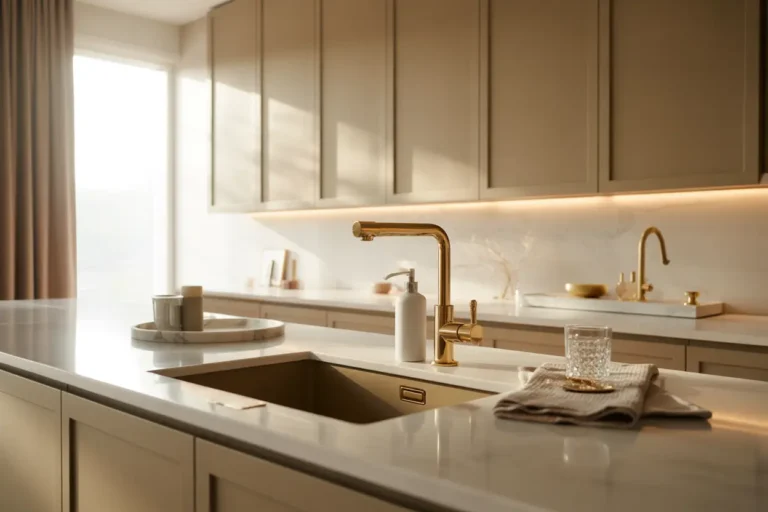
Lighting transforms a basic setup into a cozy experience. Install warm under cabinet lighting directly above your kitchen counter coffee bar to create a soft glow. This makes early mornings feel calmer and evenings more relaxing. Choose warm white tones instead of bright white lights. The softer color adds warmth and reduces harsh shadows. LED strip lights are easy to install and can be hidden under cabinets for a clean look.
Focus the light only on the coffee area instead of the whole counter. This creates a spotlight effect that draws attention to your setup. It also helps highlight textures like wood trays, ceramic mugs, and glass jars. Lighting is not just functional here. It shapes mood. A well lit coffee corner feels like a small café inside your kitchen, making your routine feel slower and more enjoyable without any major renovation.
4. Combine Open Display with Hidden Storage

A smart coffee bar setup balances what you show and what you hide. Keep everyday essentials like mugs and coffee jars visible for easy access. Store less attractive items like filters, extra packets, or cleaning tools inside cabinets or drawers. This mix keeps your counter clean while still looking styled. Use small containers or boxes inside drawers to keep everything organized. On the counter, limit visible items to a curated selection that matches your color theme.
You can also add a small lidded container for frequently used items so they stay accessible but visually tidy. Avoid overcrowding the surface because too many visible items reduce the overall impact. This approach makes your coffee bar both practical and aesthetic. You get the convenience of easy access without sacrificing the clean and intentional look of your kitchen.
5. Introduce a Strong Backdrop for Visual Focus
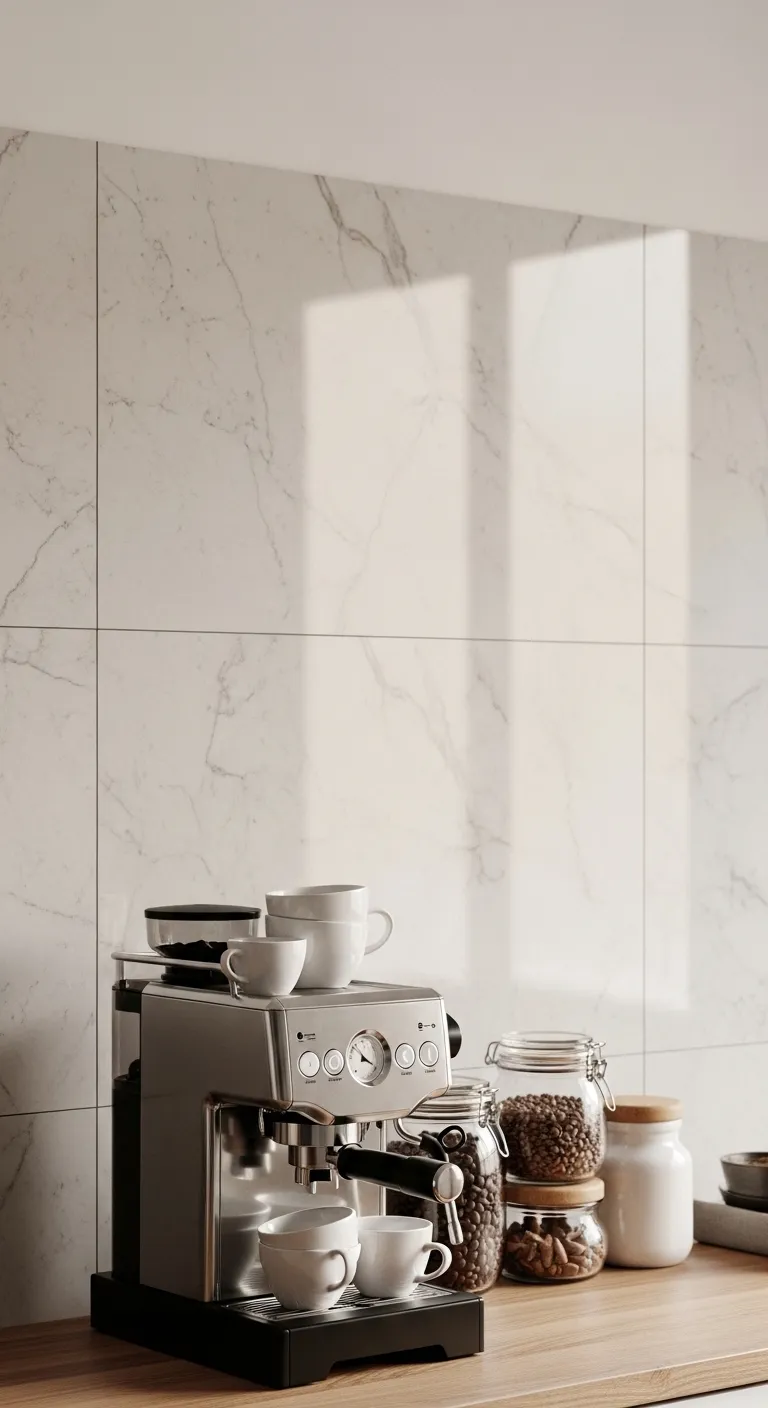
A coffee bar without a backdrop often feels incomplete. Add a visual anchor behind your setup to give it depth and character. This could be a peel and stick tile, a wooden panel, or even a painted section of the wall in a contrasting color. Choose a texture or pattern that complements your kitchen but still stands out. For example, a subtle marble pattern or matte black panel can create a bold yet balanced look.
The backdrop helps frame your coffee bar and makes it feel like a designed feature instead of an afterthought. It also enhances the appearance of everything placed in front of it. Keep the design simple so it does not overpower the setup. The goal is to support the coffee station visually, not distract from it. A strong backdrop instantly upgrades even the simplest arrangement.
6. Use Matching Containers for a Clean Look
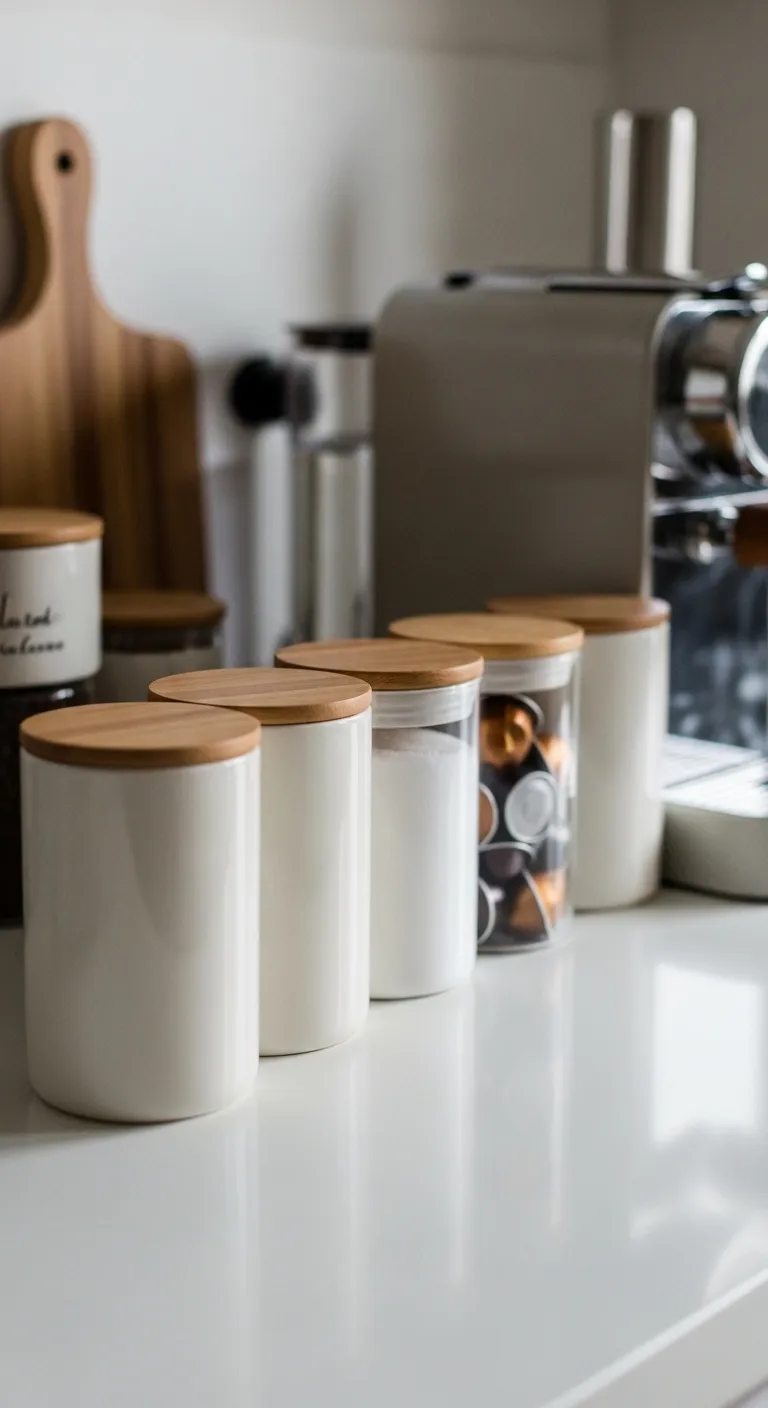
Visual clutter often comes from mismatched packaging. Transfer your coffee beans, sugar, and other essentials into matching containers to create a clean and cohesive coffee bar design. Choose glass jars for a light and airy feel or matte ceramic containers for a softer look. Keep labels minimal or uniform to maintain consistency. This small change makes your setup look more organized and premium.
Arrange the containers in a straight line or tight cluster to keep the layout structured. Avoid mixing too many styles or colors because that breaks visual harmony. Matching containers also make it easier to track what you have and refill when needed. This idea combines organization with aesthetics, making your coffee bar both practical and visually appealing.
7. Add a Small Seating Element Nearby
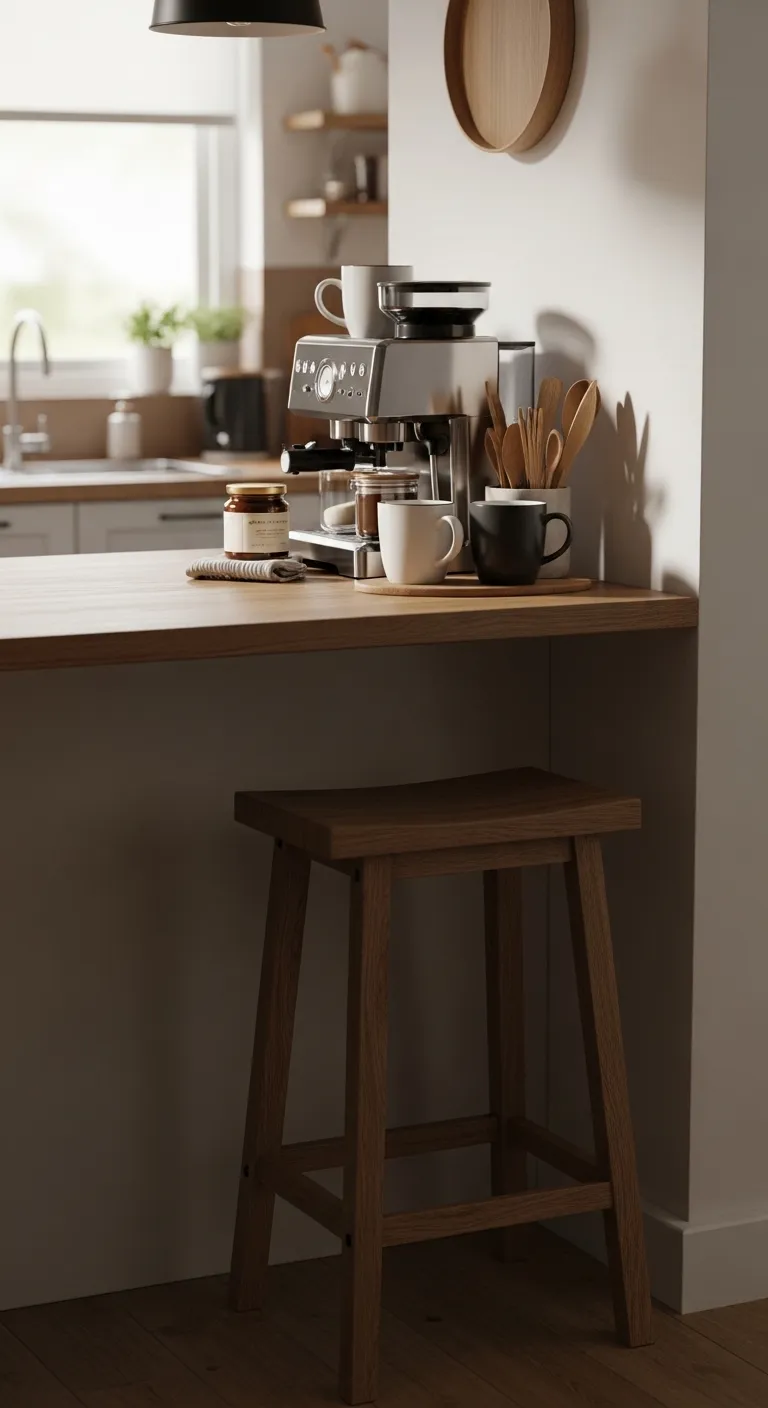
If space allows, place a small stool or chair near your kitchen coffee bar. This transforms the area from just a preparation spot into a place where you can pause and enjoy your drink. Choose a compact seat that fits neatly under the counter or beside it. Materials like wood or metal work well depending on your kitchen style. Keep it simple so it does not crowd the space.
This small addition changes how you use the area. Instead of making coffee and leaving, you create a moment to sit and relax. It also makes the setup feel more like a café corner rather than just another kitchen function. Even in smaller kitchens, a slim stool can make a big difference in both usability and overall experience.
8. Incorporate Natural Elements for Warmth
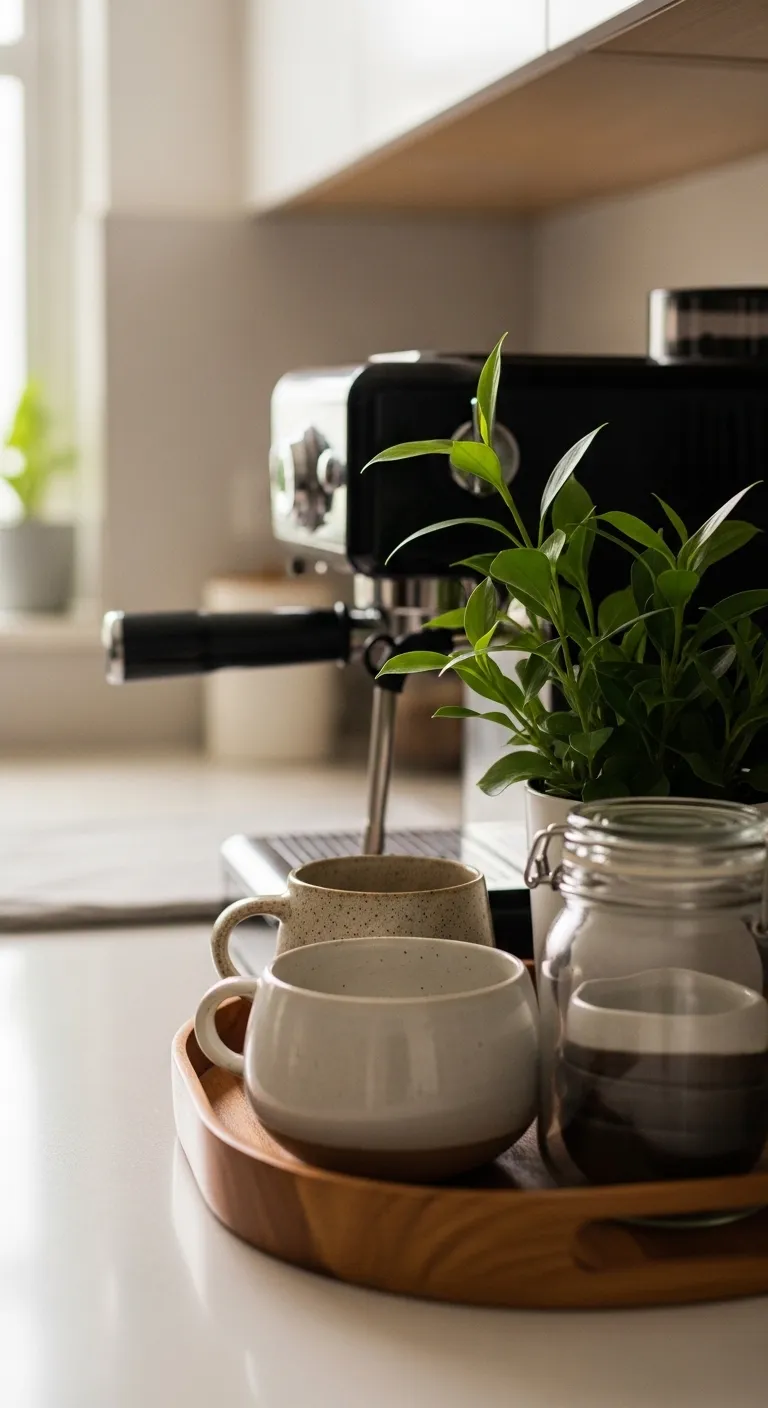
Bring life into your coffee bar by adding natural elements like plants or wood textures. A small plant instantly softens the space and makes it feel more inviting. Choose low maintenance plants that can handle indirect sunlight. Place them beside or slightly behind your coffee setup to add depth without blocking access. You can also use wooden trays or coasters to introduce organic texture.
Natural materials balance out hard surfaces like stone and metal, making the area feel warmer. Avoid adding too many decorative items. One or two well placed elements are enough to create impact. This idea works especially well if your kitchen feels too sleek or cold. Adding natural touches makes your coffee bar feel more relaxed and comfortable.
9. Keep a Functional Workflow Layout
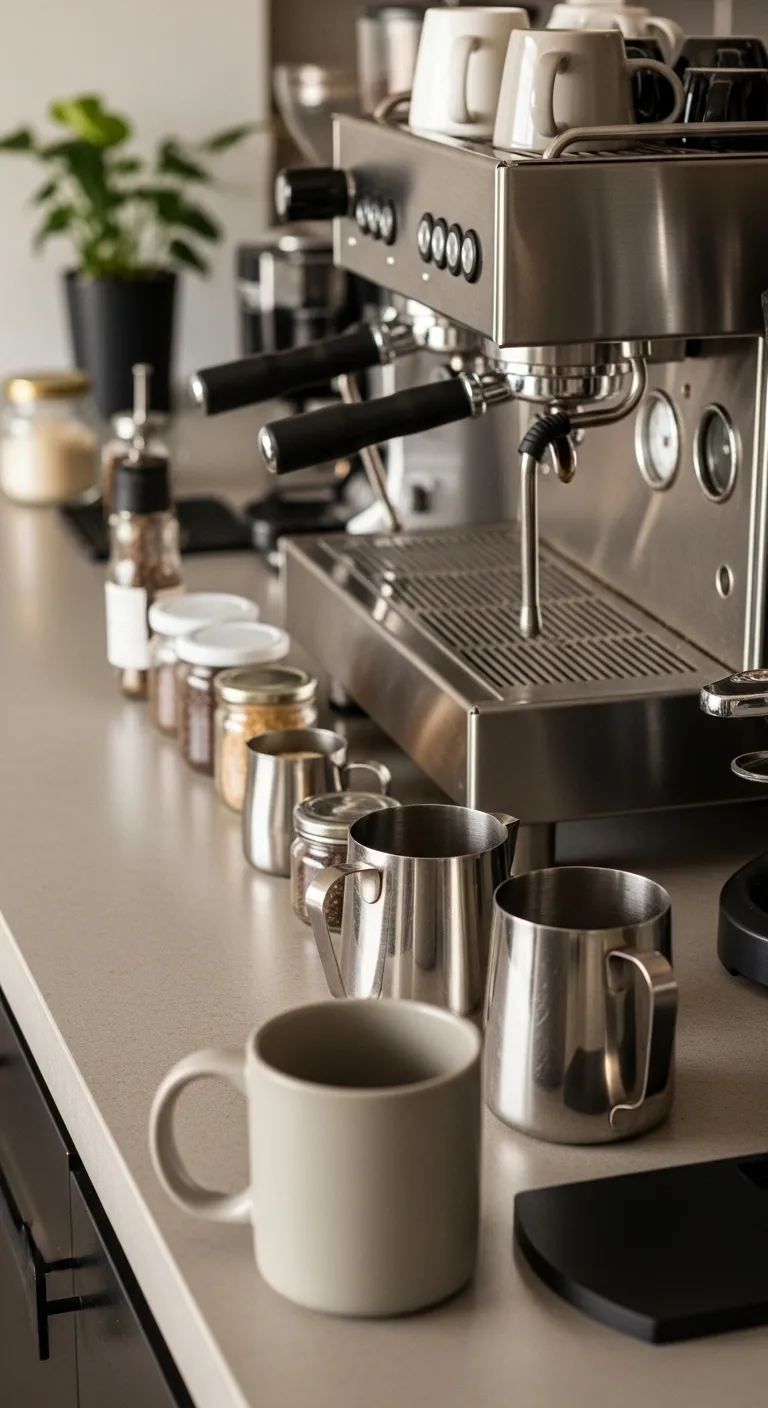
A good kitchen counter coffee bar is not just about looks. It should also follow a logical workflow. Arrange items in the order you use them. Start with the coffee machine, then place cups, followed by sugar or add ins. This setup reduces unnecessary movement and makes your routine faster. Keep frequently used items within easy reach and store occasional items slightly away.
Avoid placing obstacles between key elements. The path from machine to cup should feel smooth and natural. This is especially important in smaller kitchens where space is limited. A well planned layout improves both efficiency and overall experience. It ensures your coffee bar is not only stylish but also easy to use every day.
10. Use a Signature Color Accent
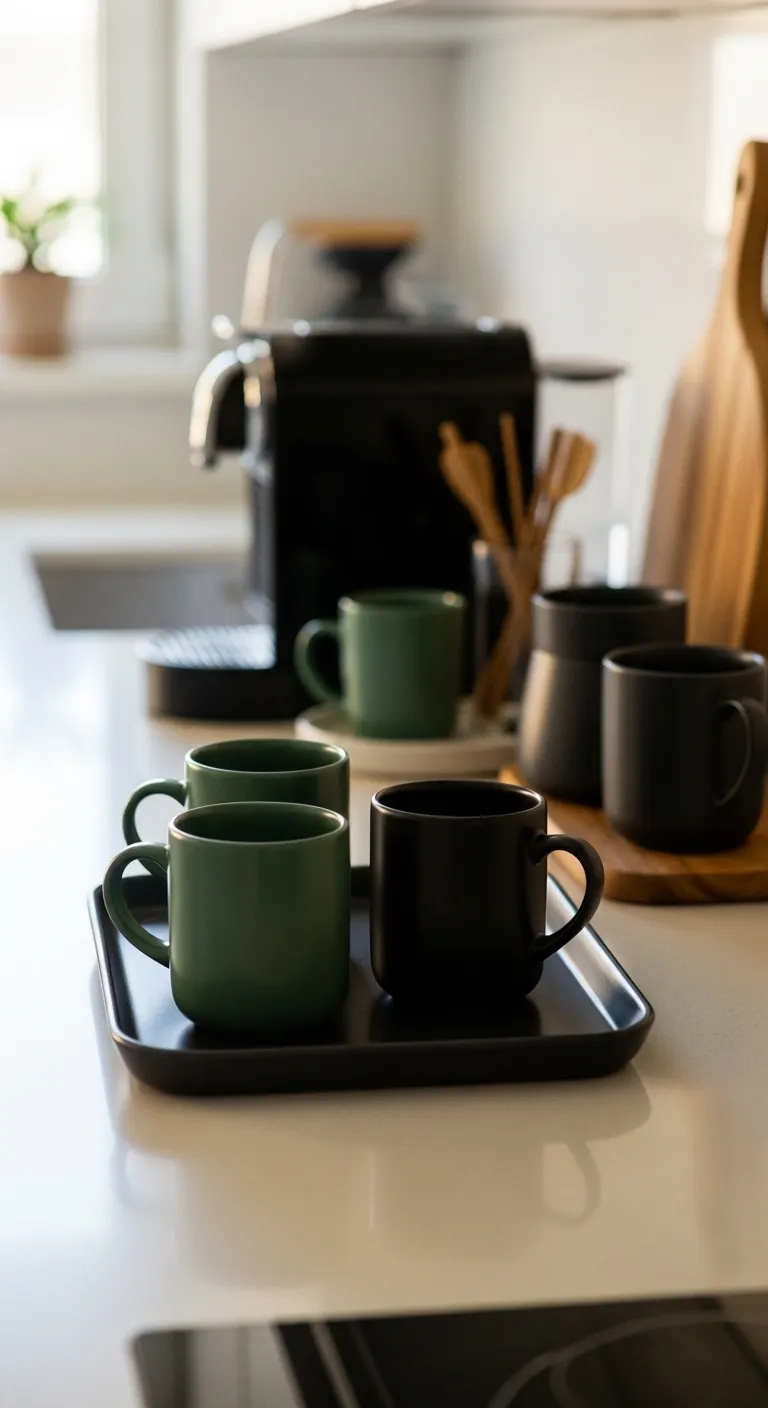
Introduce one strong color into your coffee bar design to make it stand out. This could be through mugs, a tray, or even a small appliance. The key is consistency. Choose a color that complements your kitchen but still adds contrast. For example, deep green, matte black, or warm terracotta can create a strong visual impact.
Repeat this color in two or three elements to create a cohesive look. Avoid using too many accent colors because that can make the space feel chaotic. This approach gives your coffee bar a clear identity. Even a simple setup looks intentional when tied together with a consistent color theme. It is a small change that delivers a strong visual result.
11. Carve Out a Corner Nook for a Compact Setup

Use an unused corner of your counter to build a focused kitchen counter coffee bar that feels tucked in and efficient. Corners naturally create boundaries, which helps your setup feel intentional without needing extra dividers. Place your coffee machine at the back corner and angle it slightly outward for easy access. Arrange mugs and jars along the sides to follow the corner shape.
This layout keeps everything within reach while using space that often goes wasted. Add a small corner shelf or triangular riser to maximize vertical storage without crowding the counter. Keep the front area clear so the space does not feel cramped. Choose lighter colors in tight corners to prevent a boxed in feeling. This setup works especially well in small kitchens where every inch matters, turning an overlooked spot into a highly functional coffee zone.
12. Integrate a Slim Drawer Organizer for Essentials
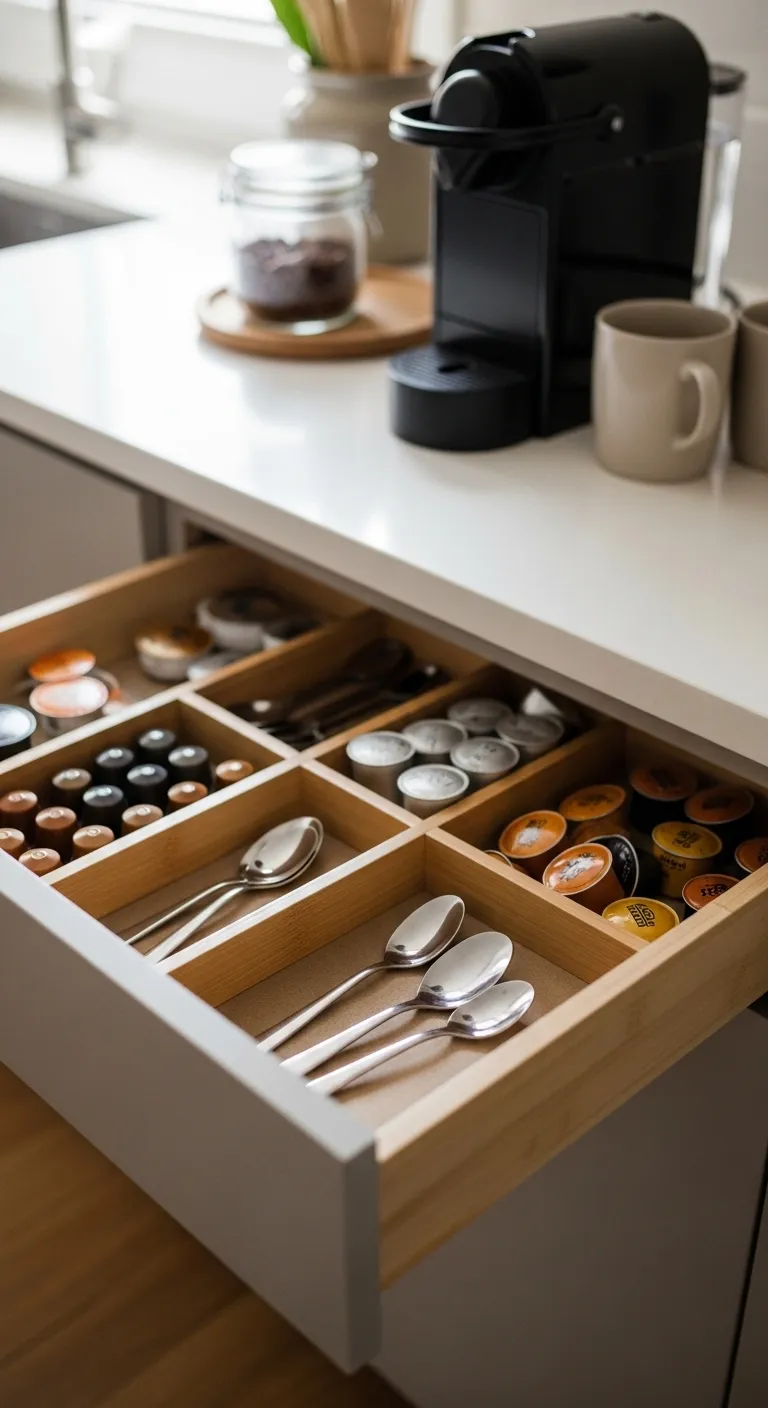
Most clutter comes from small scattered items. Add a slim drawer directly under your coffee bar to store spoons, pods, filters, and sachets in a structured way. Use dividers to assign a fixed place for each item so nothing overlaps or gets lost. Keep only daily essentials in this drawer. This ensures quick access while preventing overflow. On the counter, display only the items you use frequently, keeping the surface visually clean.
A well organized drawer supports a minimal look above. It also improves your daily routine by reducing time spent searching for items. Choose neutral organizers or wooden dividers to match your kitchen style. This hidden organization system keeps your coffee bar efficient and clutter free without sacrificing convenience or design.
13. Style with a Balanced Symmetrical Layout
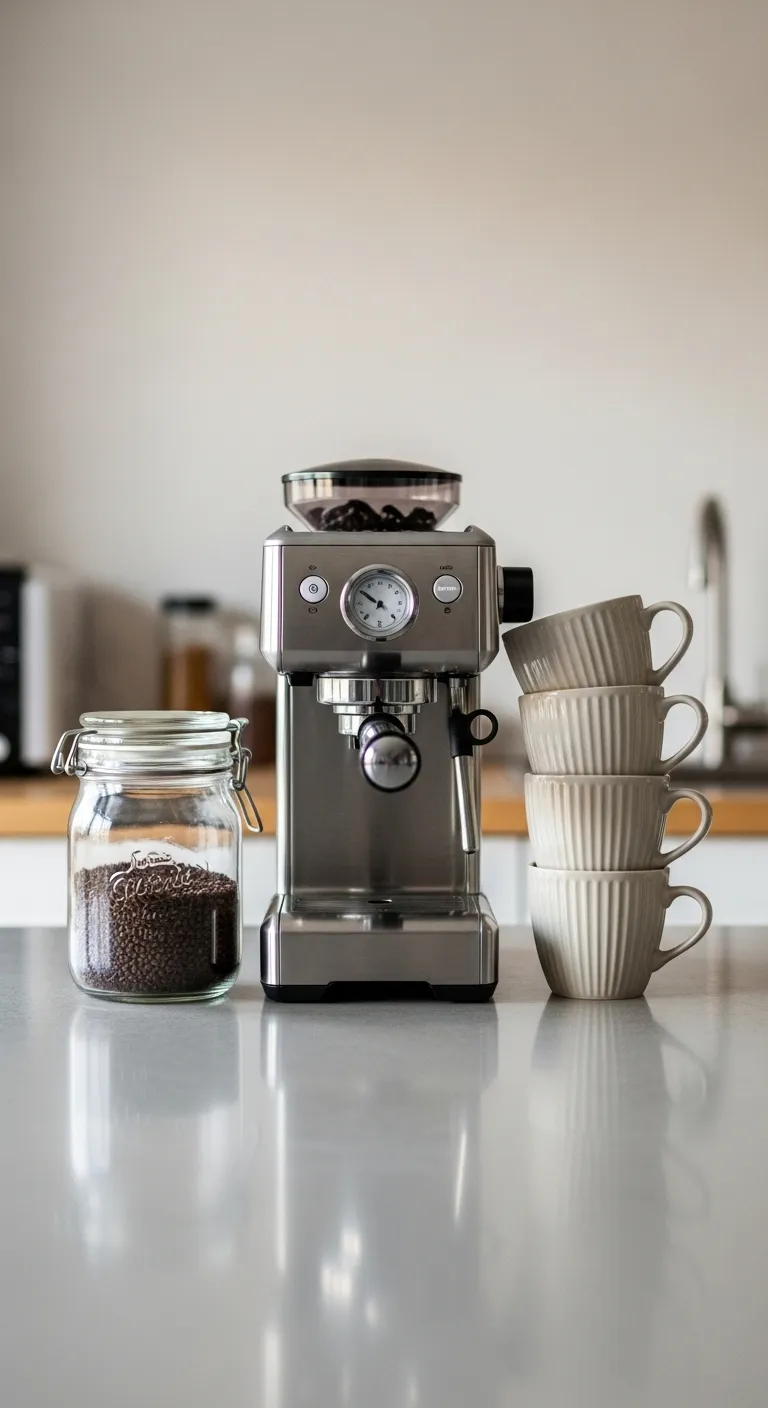
Symmetry creates a calm and visually pleasing coffee bar design. Start by placing your coffee machine at the center or slightly off center. Then balance both sides with similar visual weight. For example, place a jar on one side and a stack of cups on the other. The goal is not to match items exactly, but to balance height and volume. If one side feels heavier, adjust by adding or removing an item. This creates a structured look that feels clean and intentional. Keep spacing equal to maintain alignment. Avoid overcrowding one side because it disrupts the balance. Symmetry works especially well in modern kitchens where clean lines matter. This method helps your coffee bar feel organized and visually satisfying without needing extra decoration.
14. Introduce a Textured Runner for Depth
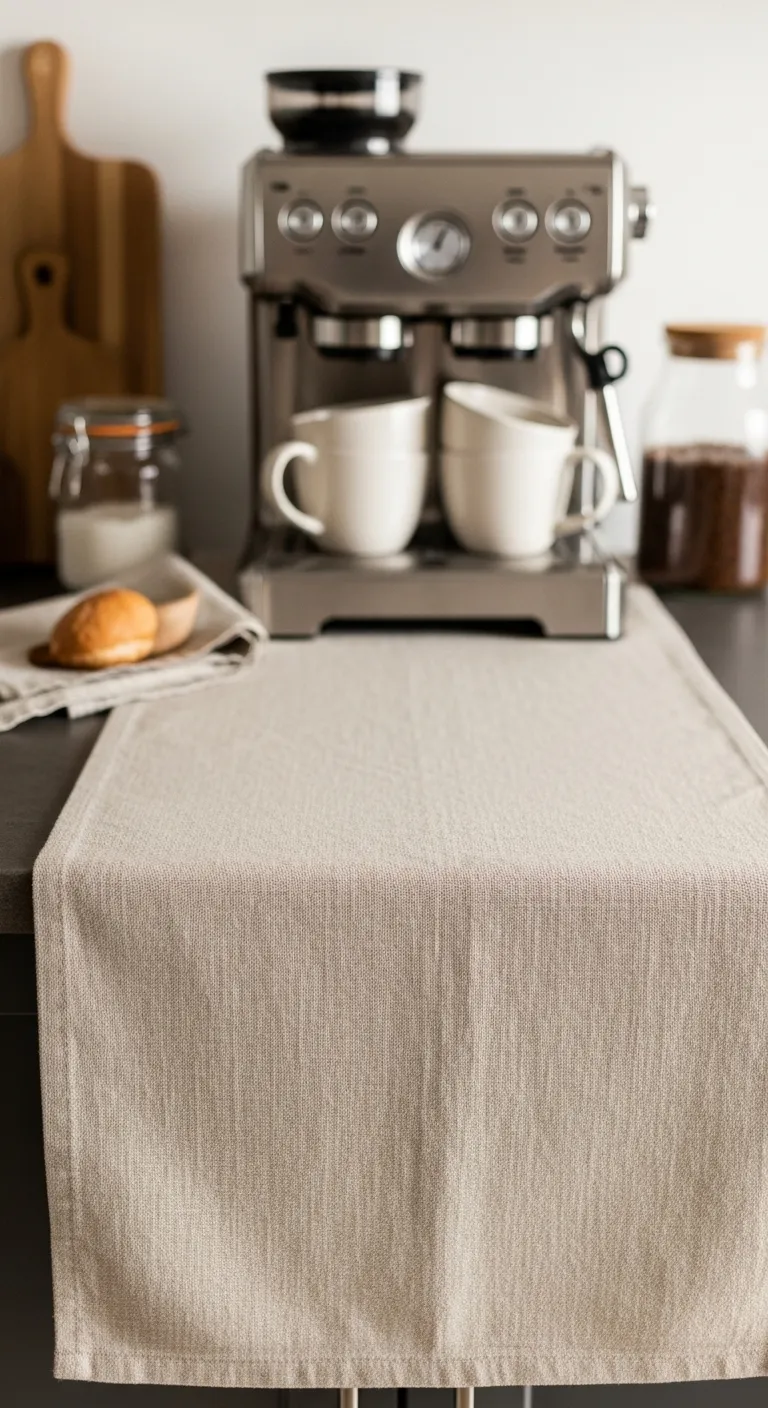
Place a narrow runner or fabric mat under your coffee station to add softness and texture. This breaks the hardness of stone or laminate counters and makes the space feel more layered. Choose materials like linen, woven cotton, or jute depending on your kitchen style. Neutral tones work best, but subtle patterns can add interest without overpowering the setup. Keep the runner slightly longer than your coffee arrangement so it frames the entire area. This creates a defined base that ties all elements together. Make sure the fabric is easy to clean and does not absorb spills easily. This idea adds warmth while maintaining practicality, making your coffee bar feel more inviting and complete.
15. Add a Vertical Mug Rail for Easy Access
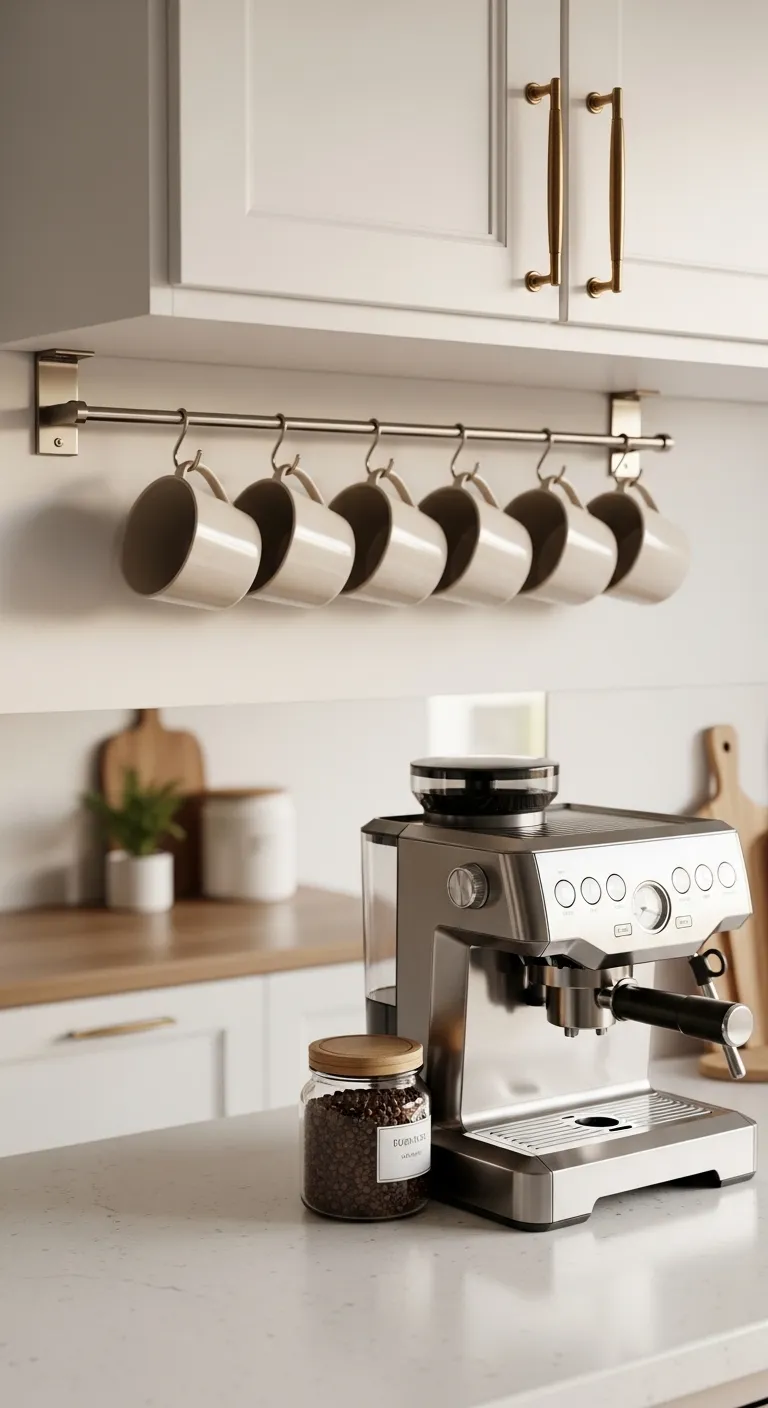
Instead of stacking mugs, install a slim rail or hook strip above your kitchen counter coffee bar. This keeps mugs accessible while freeing up counter space. Arrange mugs in a straight line for a clean look. Choose hooks in finishes that match your kitchen hardware for consistency. This adds a subtle design detail without overwhelming the space. Hanging mugs also introduces vertical movement, which makes the setup feel more dynamic. Keep the number of mugs limited to avoid clutter. This solution works especially well in smaller kitchens where storage is limited. It combines function and style while keeping your coffee bar organized and easy to use.
16. Use a Compact Appliance Layout Strategy
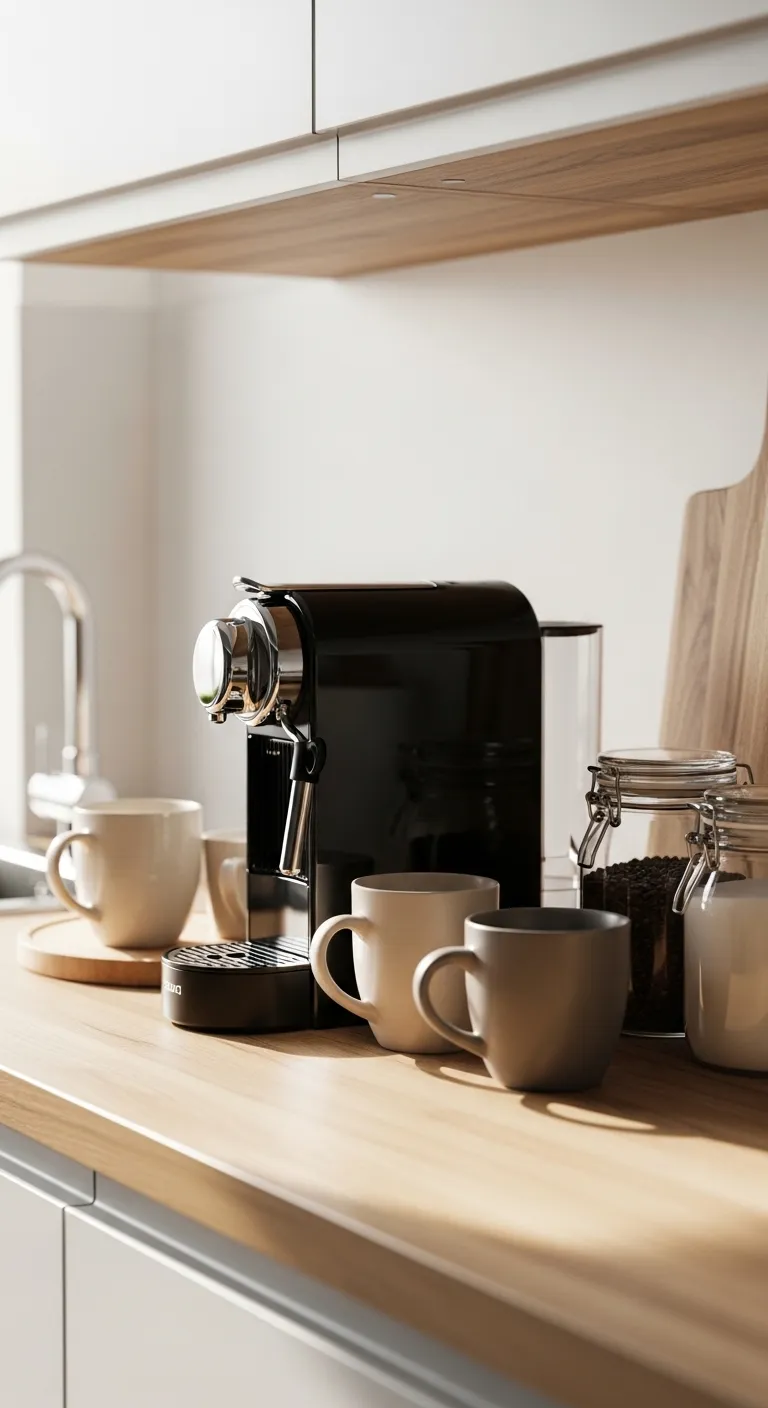
Large appliances can dominate your coffee bar setup if not arranged properly. Position your coffee machine slightly to one side instead of placing it directly in the middle. This creates room for supporting items without crowding. Keep enough space around the machine for easy use, especially when pouring or cleaning. Avoid pushing everything too close together because it reduces functionality.
If you use multiple appliances, place them in a linear arrangement instead of clustering them. This keeps the layout clean and easy to navigate. This approach ensures your coffee bar remains efficient while still looking organized. It prevents the setup from feeling heavy or overcrowded.
17. Create a Morning Ready Setup for Efficiency
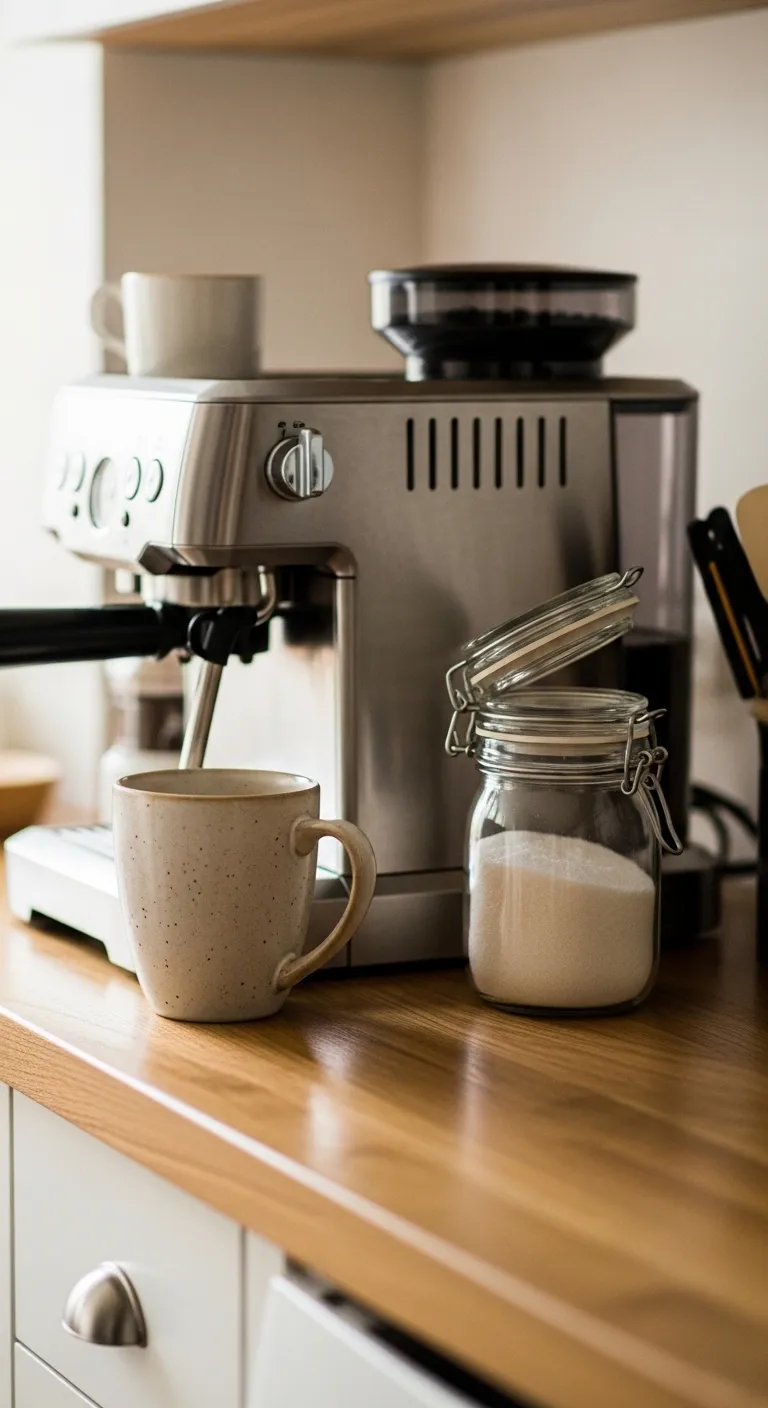
Design your coffee bar so it is ready to use without preparation. Keep your most used mug, spoon, and ingredients in a fixed position every day. This reduces decision making and speeds up your routine. Arrange items in the order you use them. Place your cup closest to you, followed by the machine, then add ins. This creates a natural flow that feels effortless. Refill jars and restock supplies regularly so the setup always feels complete. Avoid storing empty or rarely used items in this area. This method focuses on usability rather than decoration. It ensures your coffee bar supports your daily habits while still maintaining a clean and styled look.
18. Introduce Glass Elements for Light Reflection
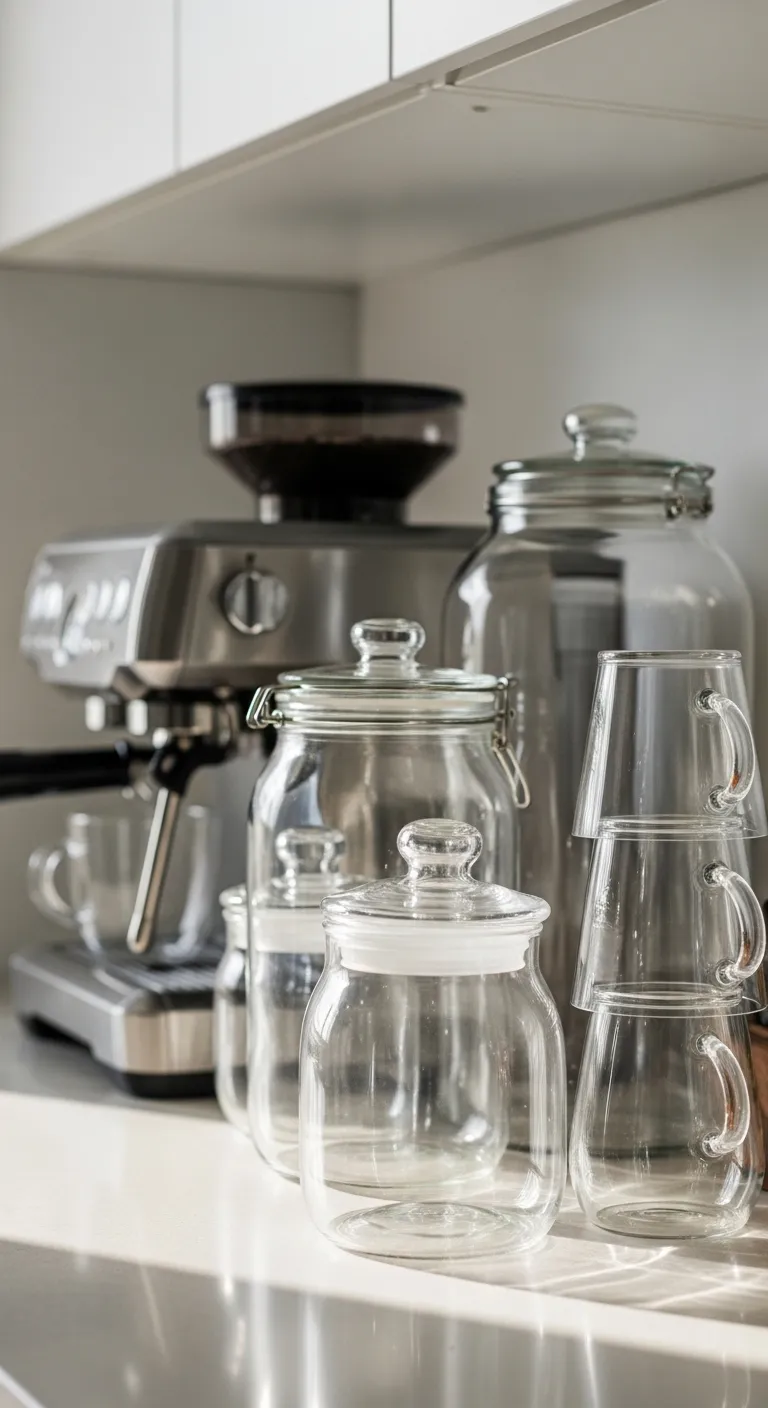
Add glass jars, cups, or containers to your coffee bar design to reflect natural light and make the space feel brighter. Glass creates a clean and airy look that works well in both small and large kitchens. Use clear containers for coffee beans, sugar, or pods to keep everything visible and organized. This also adds a subtle visual texture without adding color. Place glass items near light sources to maximize reflection. Avoid overusing glass because too many reflective surfaces can feel cluttered. This idea enhances brightness and gives your coffee bar a polished finish while keeping the design simple and functional.
19. Keep a Minimal Decor Anchor Piece
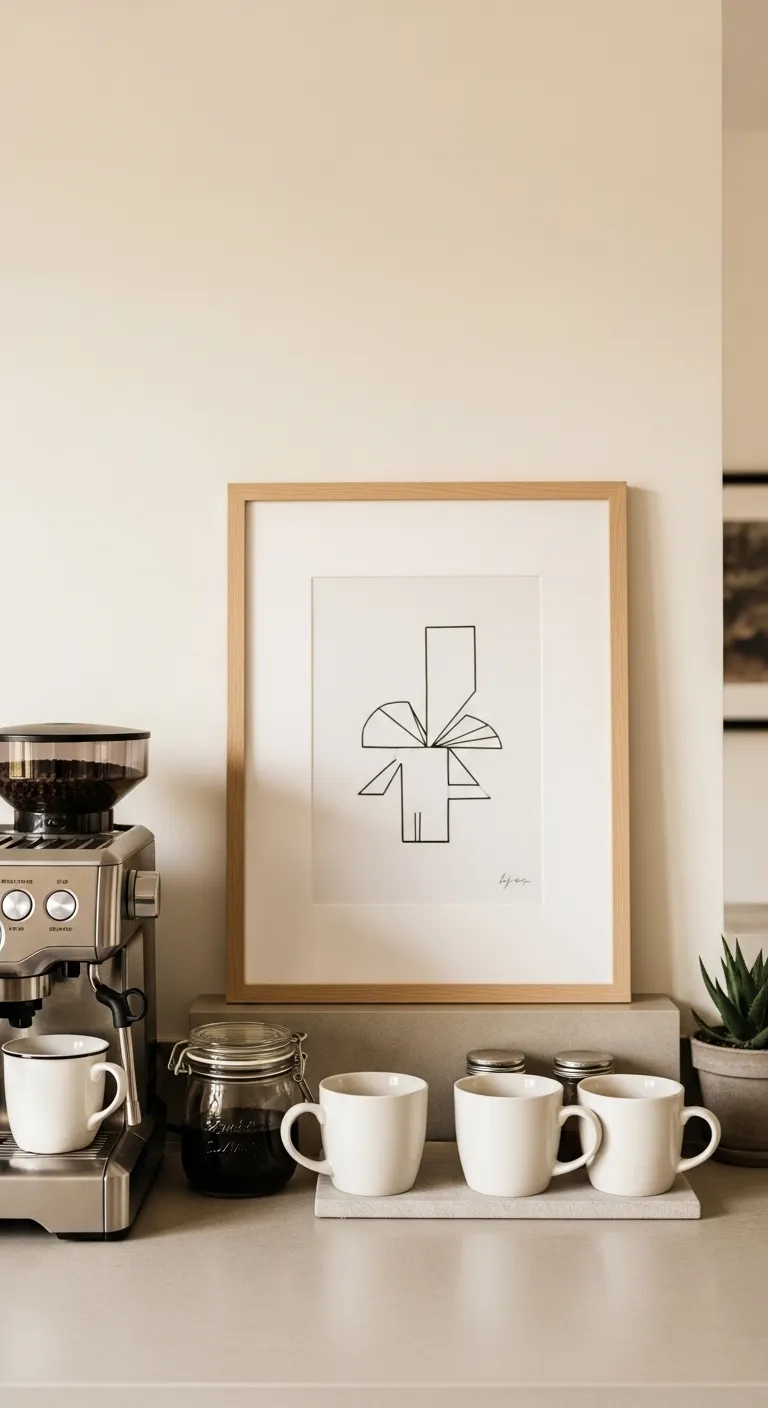
Every coffee bar needs one focal element that anchors the entire setup. This could be a framed print, a small sign, or a decorative object placed behind or beside the arrangement. Choose something that reflects your style but keeps the design simple. Avoid overly detailed pieces that distract from the setup. The goal is to support the space, not dominate it. Position the anchor piece slightly above or behind the coffee area to create depth. Keep surrounding items minimal so the focal point stands out. This small addition gives your coffee bar personality while maintaining a clean and intentional look.
20. Maintain Clear Counter Space Around the Setup
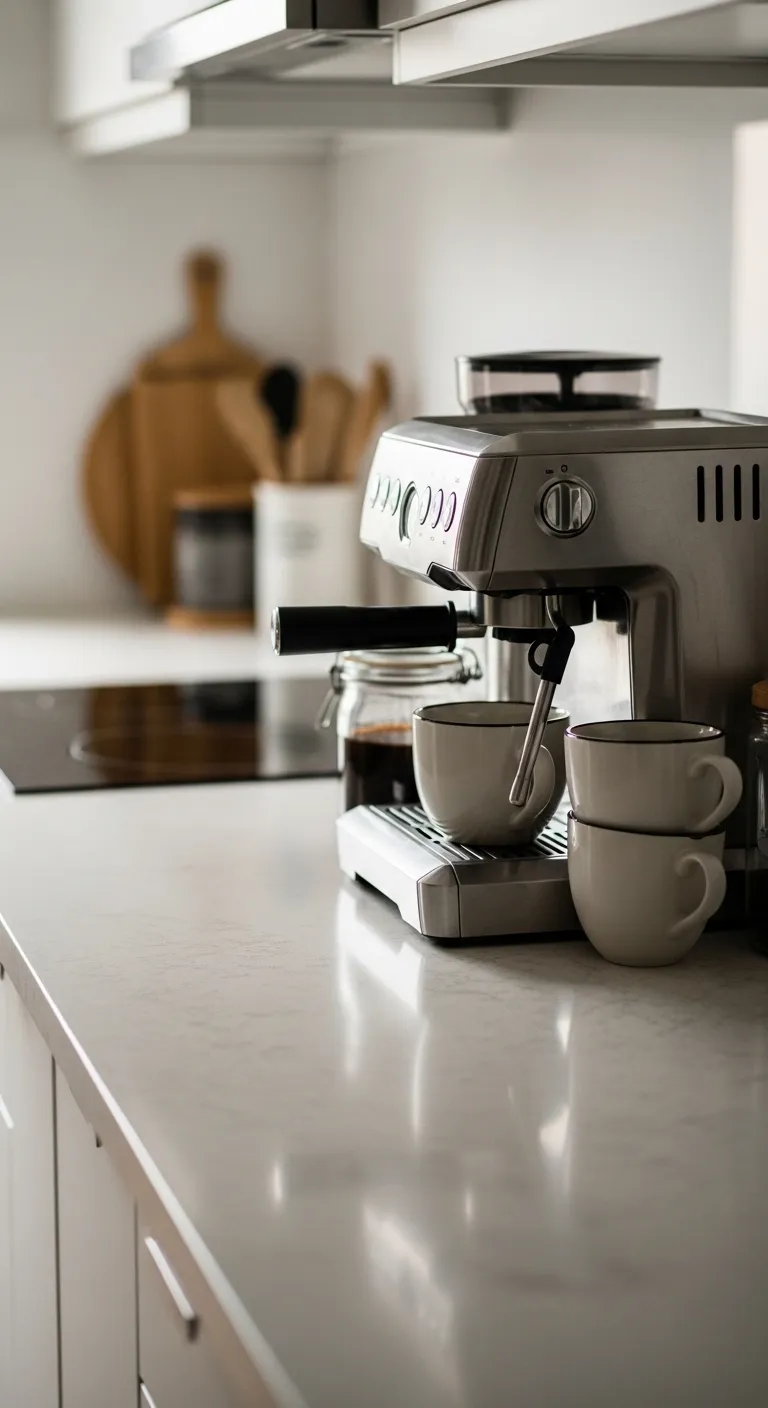
One of the most overlooked design principles is negative space. Leave some empty counter area around your kitchen counter coffee bar so it can breathe visually. Avoid extending the setup across the entire counter. Keep it contained within a defined section. This makes the area feel organized and not overwhelming. Clear space also improves usability by giving you room to prepare drinks without obstruction. It prevents the setup from feeling crowded. This simple habit keeps your coffee bar looking clean, functional, and well designed. It proves that sometimes adding less creates a stronger impact.
21. Create a Zoned Backsplash Strip for a Built In Feel
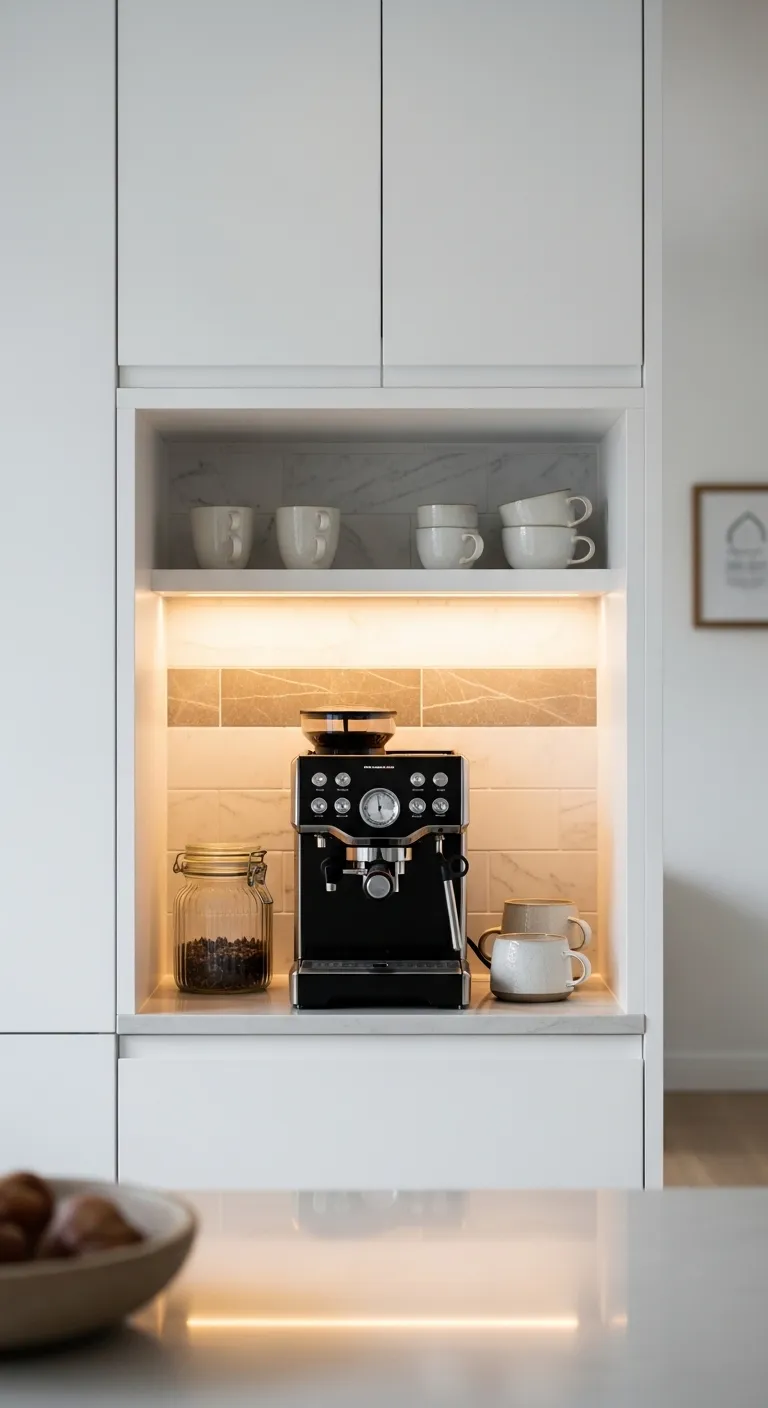
Turn your kitchen counter coffee bar into a defined feature by adding a narrow backsplash strip only behind that section. Use peel and stick tiles, fluted panels, or a painted block that runs from counter to cabinet. This creates a visual frame that feels intentional, almost like a built in niche. Choose a finish that contrasts slightly with your main backsplash so the coffee area stands out without clashing. Keep edges clean and aligned with cabinets for a tailored look. This approach works especially well in rental spaces because it adds structure without permanent changes. The key is precision. Keep the strip limited to the coffee zone so it does not blend into the rest of the kitchen. This creates a strong focal point while maintaining overall balance.
22. Use a Sliding Board for Flexible Workspace
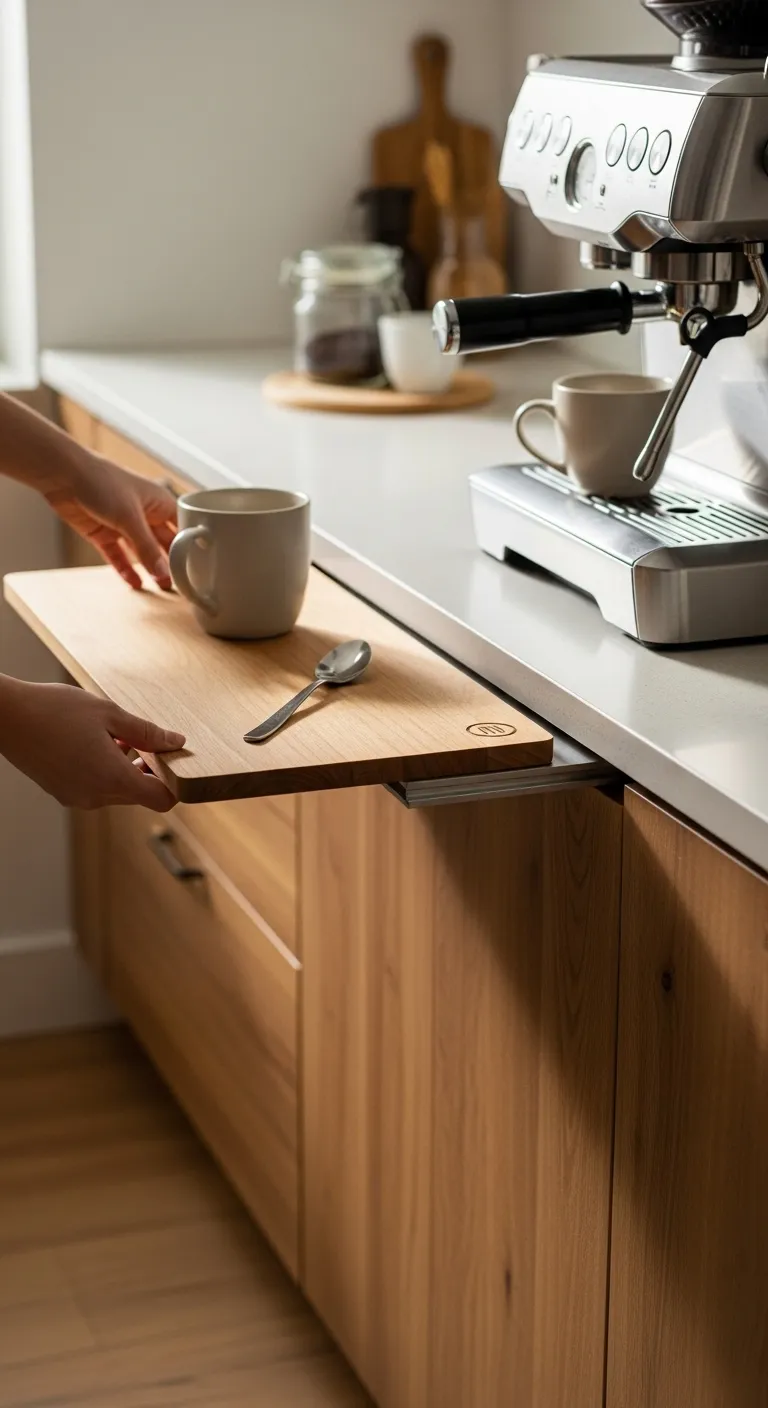
Add a slim wooden or stone board under your coffee bar setup that can slide forward when needed. This gives you extra prep space for pouring, mixing, or placing cups without crowding the main counter. Keep the board slightly larger than your coffee machine base so it feels integrated. When not in use, slide it back to maintain a clean surface. Choose a material that complements your countertop to keep the look cohesive. This idea works well in tight kitchens where space is limited. It adds flexibility without requiring additional furniture. The movement also makes the setup feel dynamic and functional rather than static.
23. Design a Color Layering System Instead of One Accent
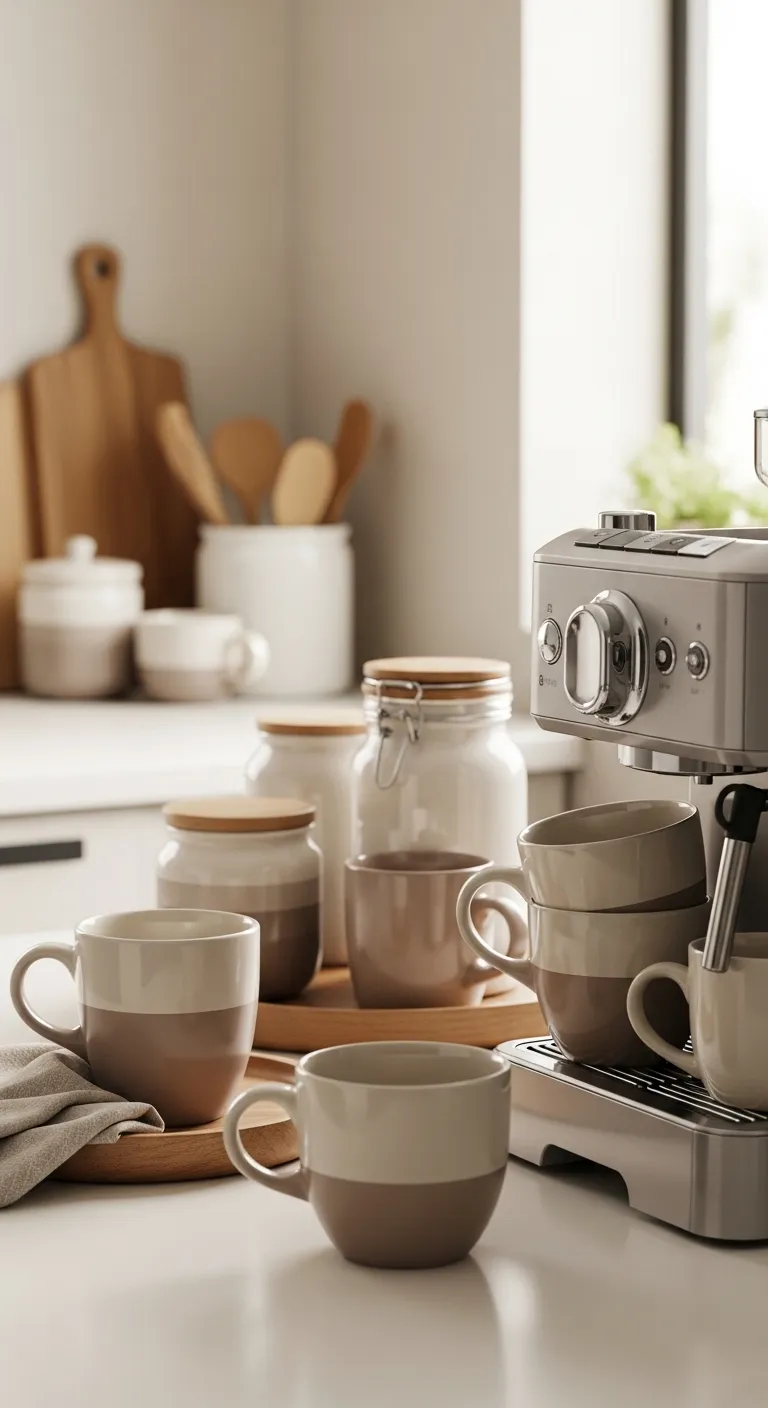
Instead of relying on a single bold color, build your coffee bar design using layered tones from the same color family. For example, combine light beige, warm taupe, and deeper brown through mugs, trays, and containers. This creates depth while keeping the palette calm and cohesive. It also avoids the harsh contrast that a single accent color can sometimes create. Use subtle variation in finishes like matte, gloss, and natural textures to enhance the effect. Keep repetition consistent so the eye moves smoothly across the setup. This approach feels more refined and balanced, especially in modern kitchens where soft transitions matter more than bold statements.
24. Add a Compact Pull Out Shelf Above Counter Level
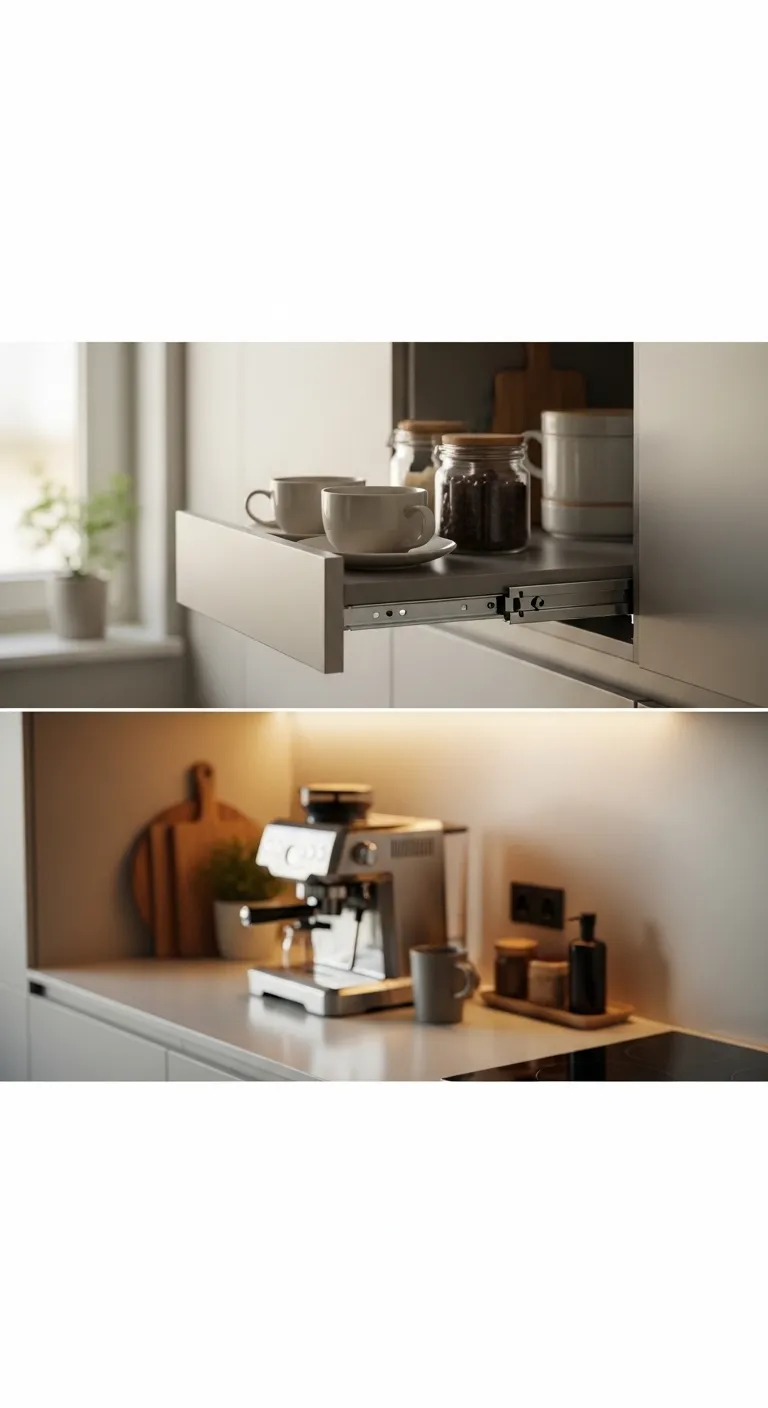
Install a small pull out shelf just above your kitchen counter coffee bar to create a secondary working layer. This can hold lighter items like cups or small jars while keeping the main counter free. When extended, it gives you extra space to prepare drinks or organize items temporarily. When closed, it disappears into the cabinetry, maintaining a clean look. Choose a slim design so it does not feel bulky. This solution adds function without clutter. It is especially useful in kitchens where upper cabinets feel too high and counter space is limited. It creates a multi level setup that improves usability.
25. Introduce a Soft Contrast Through Material Mixing
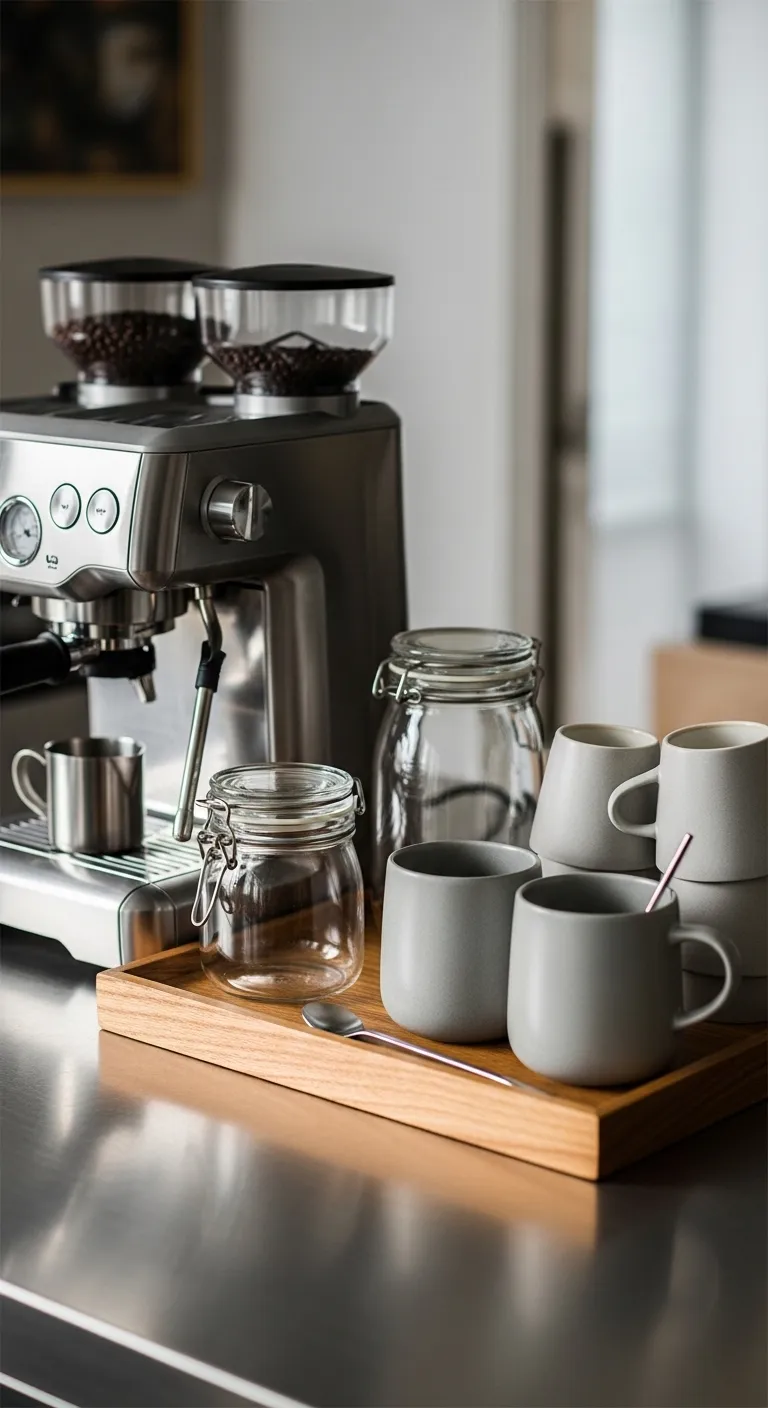
A strong coffee bar setup often comes from mixing materials rather than adding more items. Combine wood with metal, glass with ceramic, or stone with fabric to create subtle contrast. For example, place a wooden tray under a sleek coffee machine or pair matte ceramic mugs with glossy glass jars. This layering makes the setup feel richer and more intentional. Keep the number of materials limited to avoid visual noise. Two to three textures are enough to create depth. The goal is balance, not complexity. This idea enhances the overall design without requiring extra space or storage, making your coffee bar feel thoughtfully styled.
26. Use a Narrow Vertical Divider for Subtle Separation
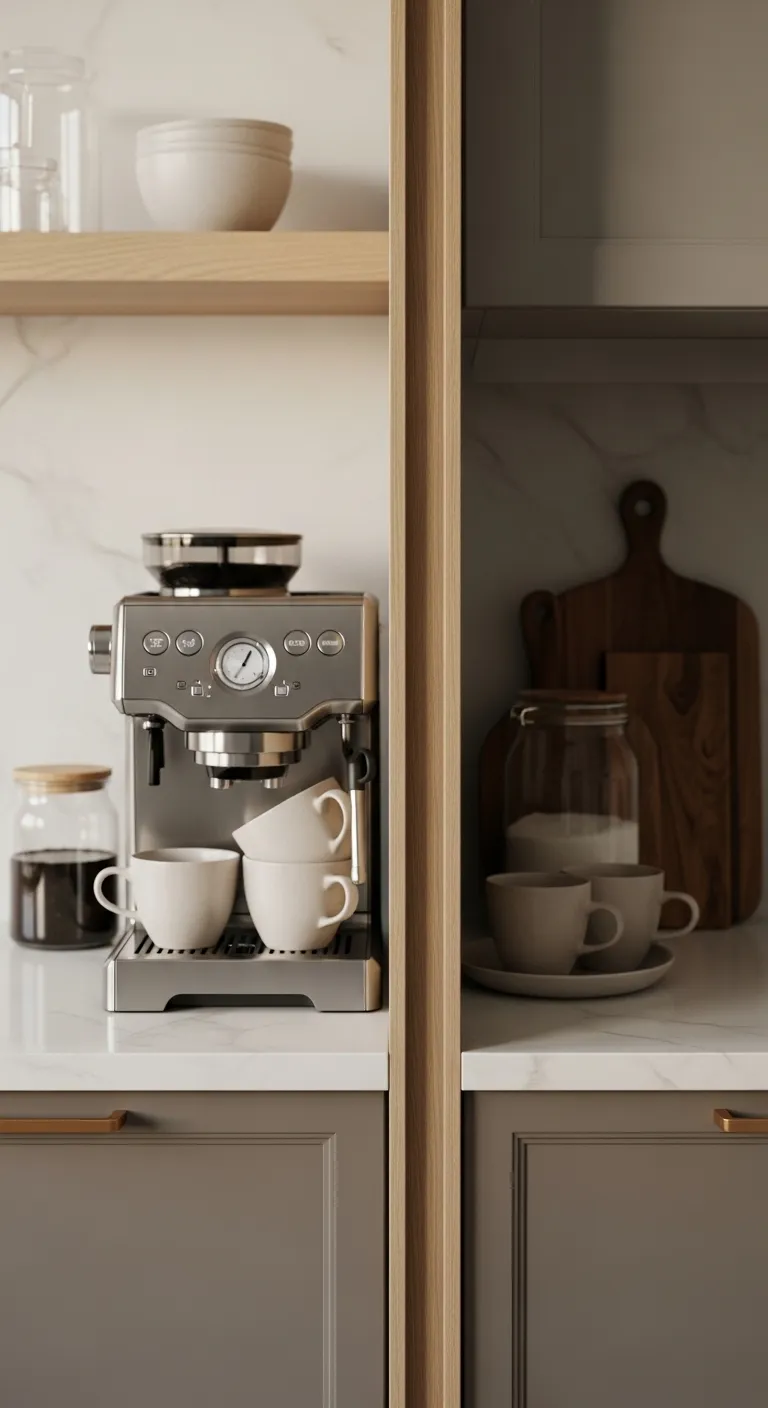
Place a slim vertical divider or panel beside your coffee bar to separate it from the rest of the counter. This can be a wooden slab, metal strip, or even a decorative board. This subtle boundary creates a sense of structure without fully enclosing the space. It also helps prevent items from spreading beyond the coffee zone. Keep the divider low profile so it does not block light or visibility. This approach works well in open kitchens where visual organization matters. It gives your coffee bar a defined edge while maintaining flow across the counter.
27. Keep a Rotating Seasonal Styling Element
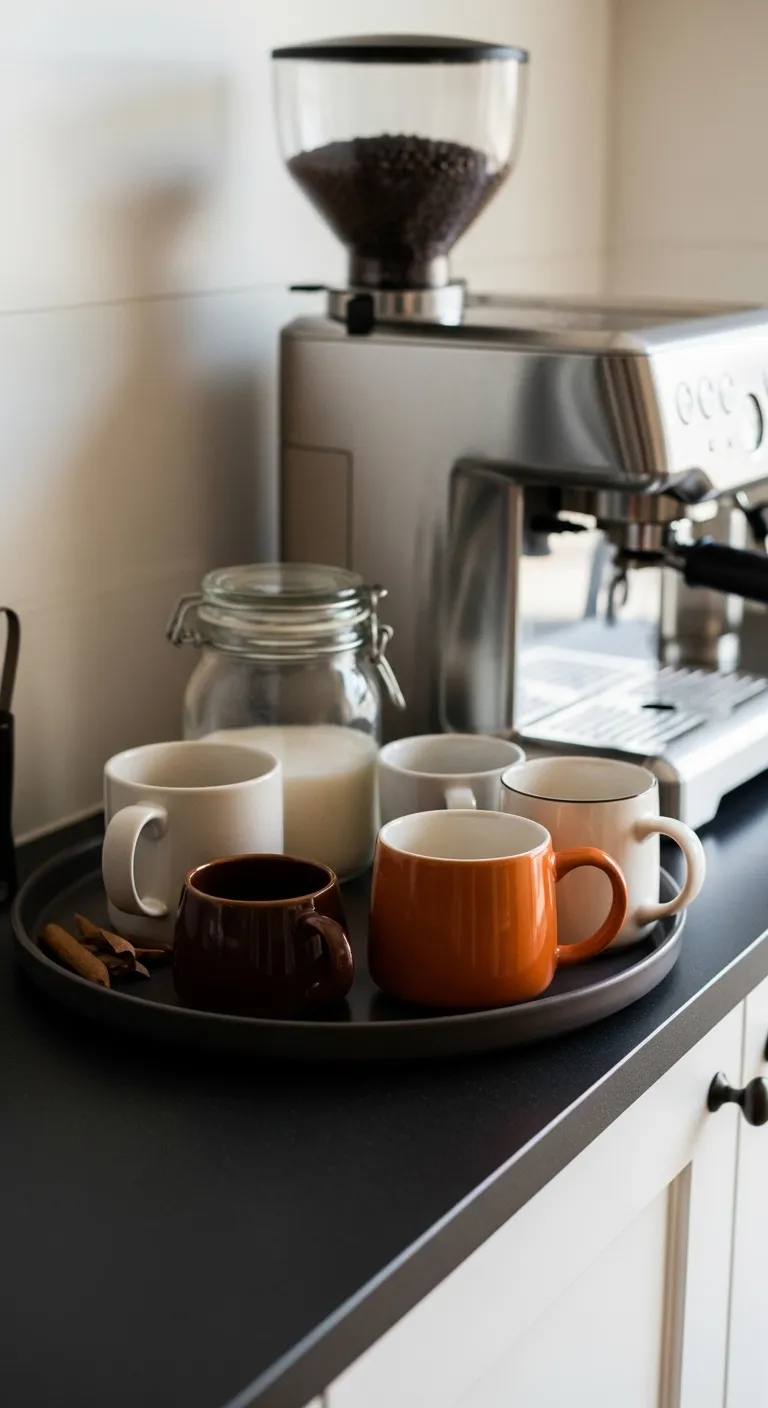
Refresh your coffee bar design by changing one small element based on the season. This could be a different set of mugs, a new container style, or a subtle color shift. Keep changes minimal so the base setup remains consistent. For example, switch to warmer tones in cooler months and lighter tones in warmer seasons. This keeps the space feeling fresh without requiring a full redesign. Avoid over decorating. Focus on one or two updates that enhance the mood. This habit keeps your coffee bar visually engaging throughout the year.
28. Align Everything to a Clean Edge Line
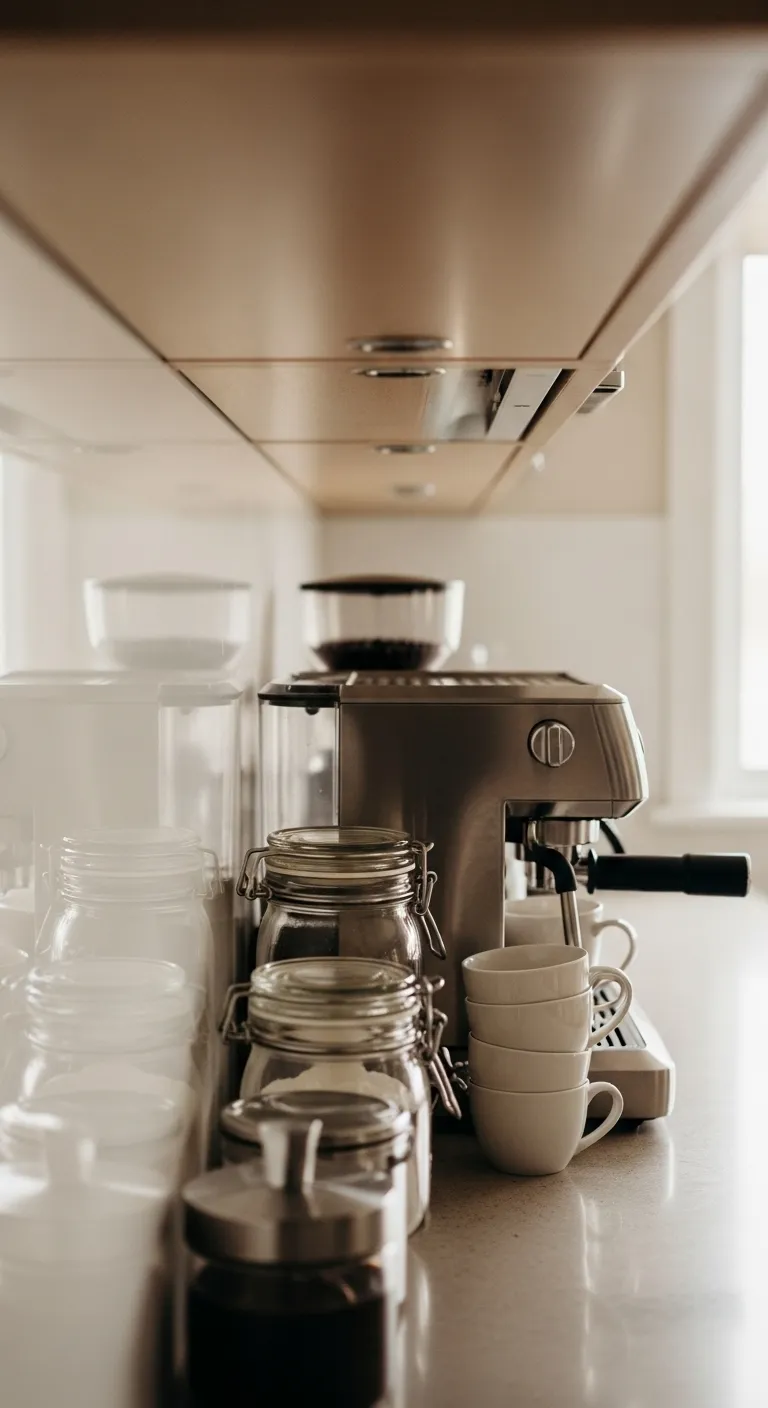
Create a polished look by aligning all items in your kitchen counter coffee bar along a straight edge. This could be the back wall, the edge of a tray, or a visual guideline you set. Keep jars, machines, and cups in a neat line to avoid a scattered appearance. This simple adjustment makes the setup feel organized and intentional. Avoid placing items at random angles because it breaks the visual flow. Alignment works especially well in modern and minimal kitchens where clean lines define the space. This technique improves the overall look without adding or removing anything.
29. Design a Concealed Micro Storage System Within Reach
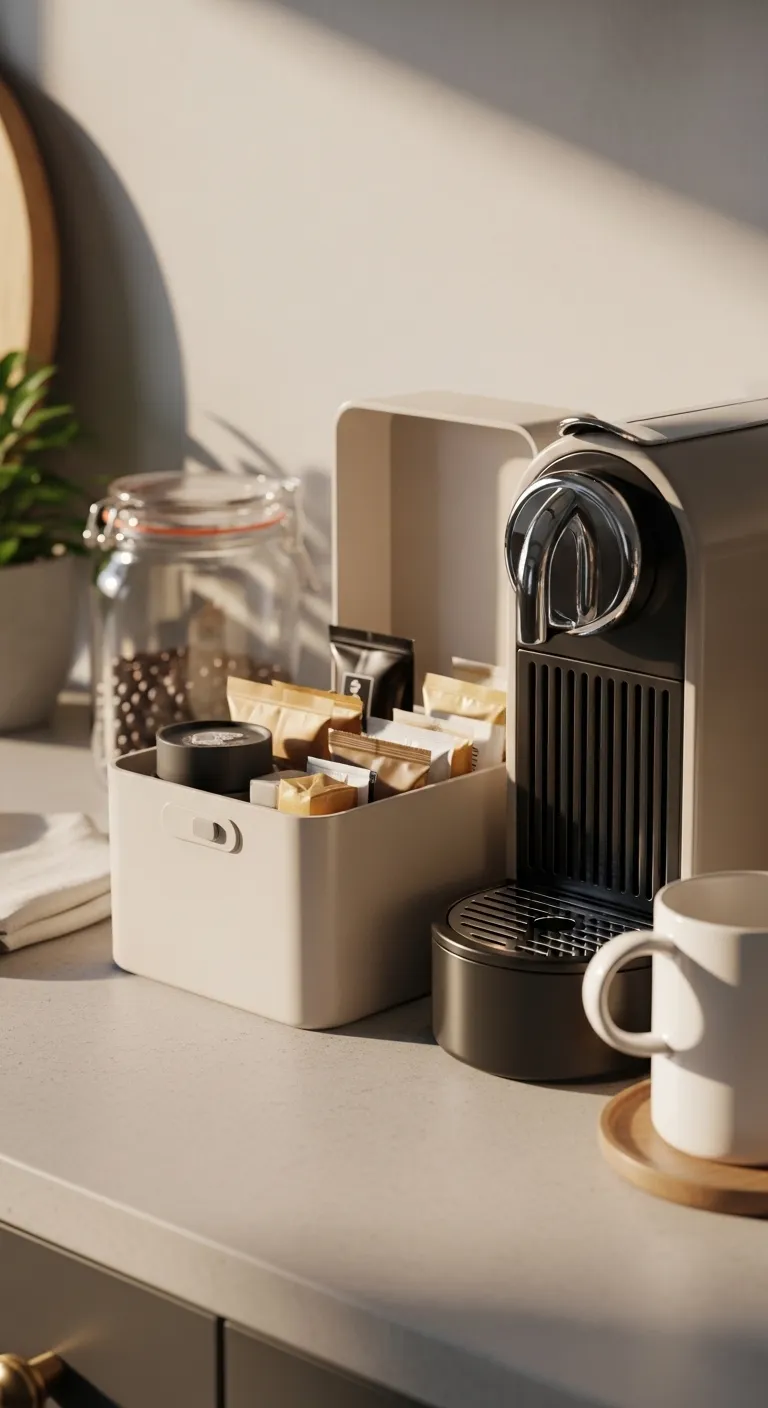
A well functioning coffee bar setup hides clutter without pushing essentials too far away. Create a concealed micro storage system directly within arm’s reach of your main station. This could be a slim lidded box, a shallow drawer insert, or a compact container placed behind visible items.
The goal is to store frequently used but visually messy items like pods, sachets, stirrers, or filters without exposing them. Keep this storage low profile so it does not dominate the counter. Choose materials that match your setup, such as matte wood or neutral ceramic, so it blends naturally.
Position this storage slightly behind or to the side of your main workflow so it stays accessible but not distracting. This system allows you to maintain a clean surface while still keeping everything functional. It removes visual noise and ensures your coffee bar always looks controlled and organized.
30. Build a Dual Function Coffee and Tea Workflow Without Overlap
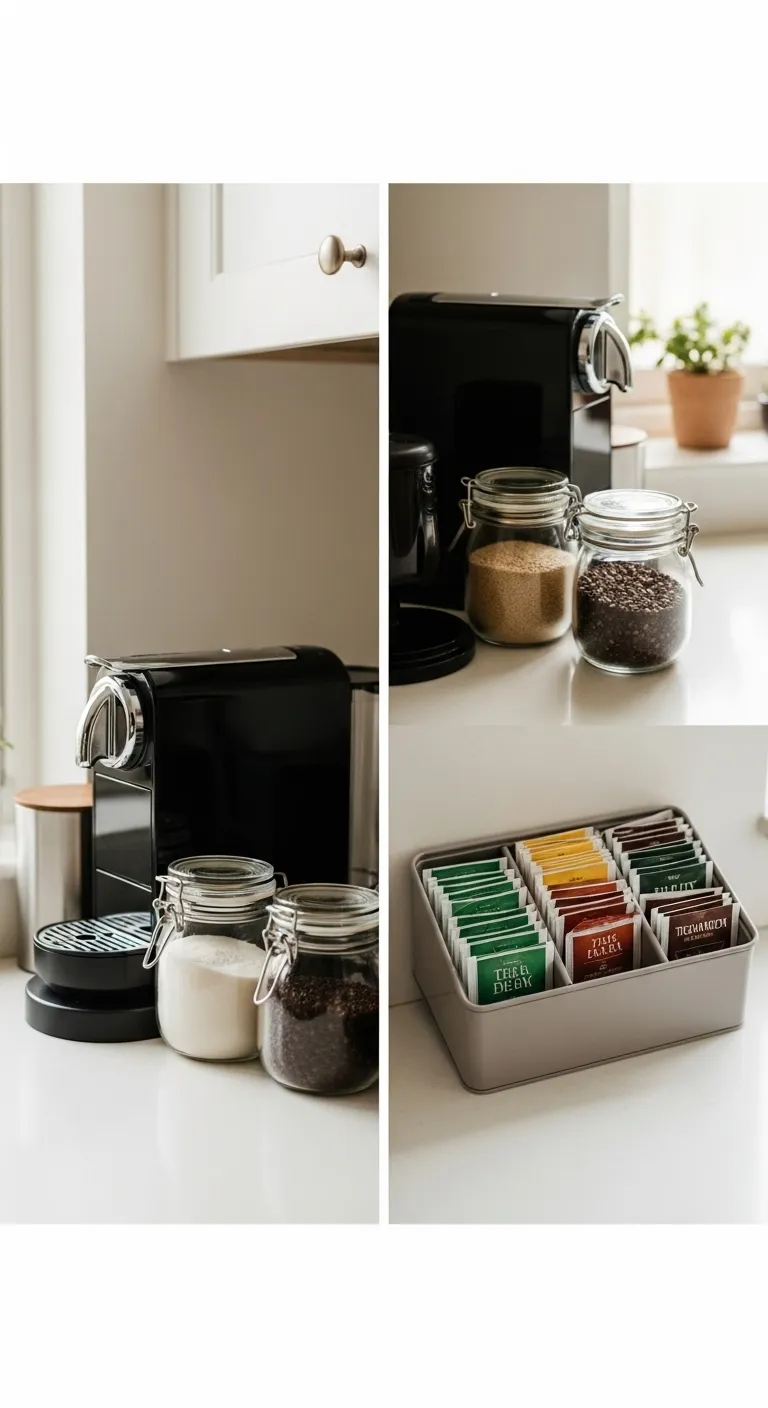
Instead of simply placing tea items next to coffee, design a dual function coffee bar where both workflows exist without interfering with each other. Divide your setup into two subtle zones. Keep the coffee side closer to the machine and dedicate a smaller adjacent area for tea essentials. Use matching containers but vary placement to maintain clarity. For example, keep coffee jars grouped tightly near the machine while placing tea containers in a slightly separated line or behind them. This creates distinction without breaking visual harmony.
Ensure both workflows follow their own logical order so you do not cross over items while preparing drinks. This improves efficiency and keeps the space from feeling mixed or cluttered. A well planned dual setup adds versatility while still maintaining a clean and intentional design that supports different daily routines.
31. Introduce a Controlled Sensory Layer Without Overpowering the Space
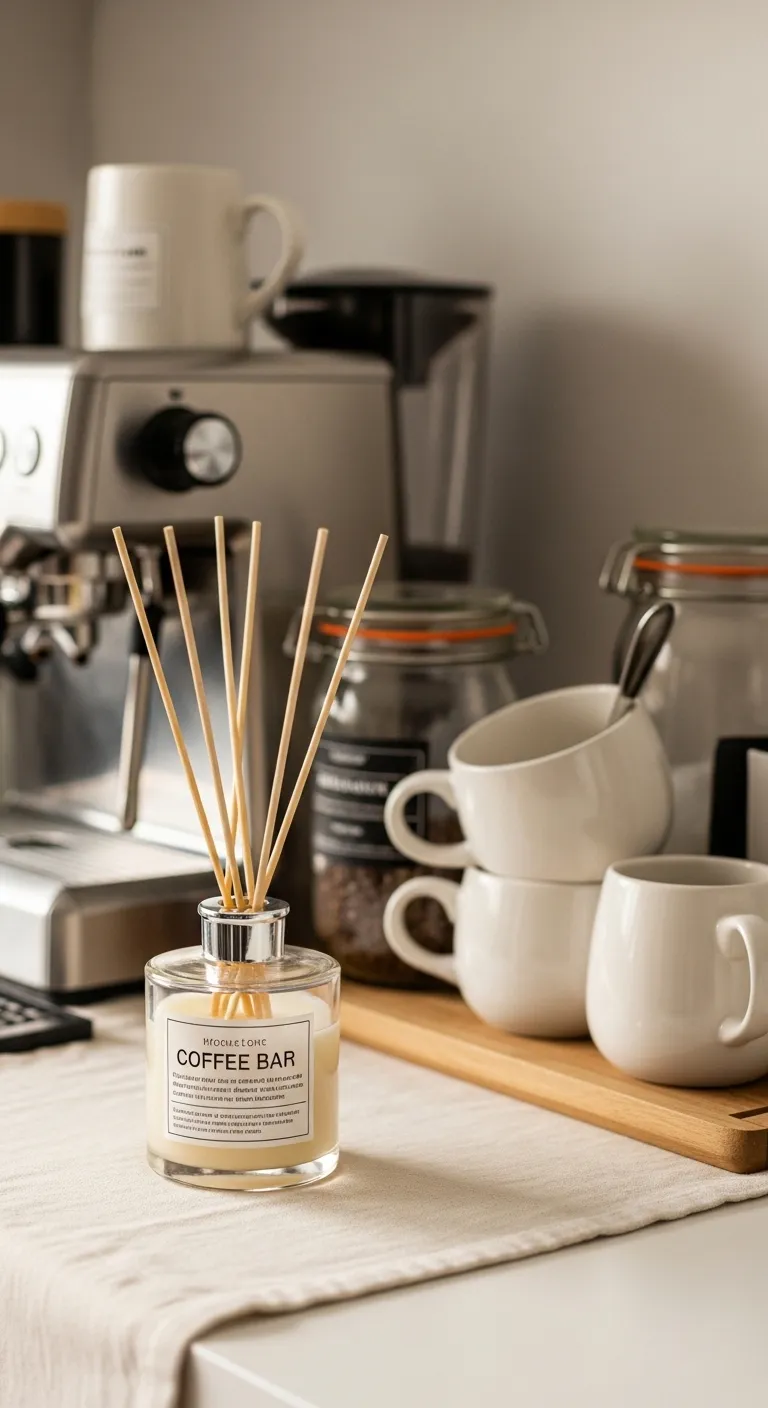
A refined coffee bar design engages more than just visuals. Introduce a subtle sensory layer that enhances the experience without distracting from the main function. This could be a mild natural scent, a soft texture, or even the gentle sound of a small element like a ceramic spoon resting on a dish.
Place a lightly scented candle or diffuser at the edge of your setup, not in the center. Choose scents that complement coffee, such as vanilla or light wood tones. Avoid strong fragrances that compete with the aroma of fresh coffee.
You can also add a tactile element like a textured coaster or a soft cloth under your cups. These details create a more immersive experience without adding clutter. The key is control. Keep every sensory addition minimal and intentional so it enhances the space rather than overwhelming it.
32. Establish a Daily Reset System to Preserve Design Quality
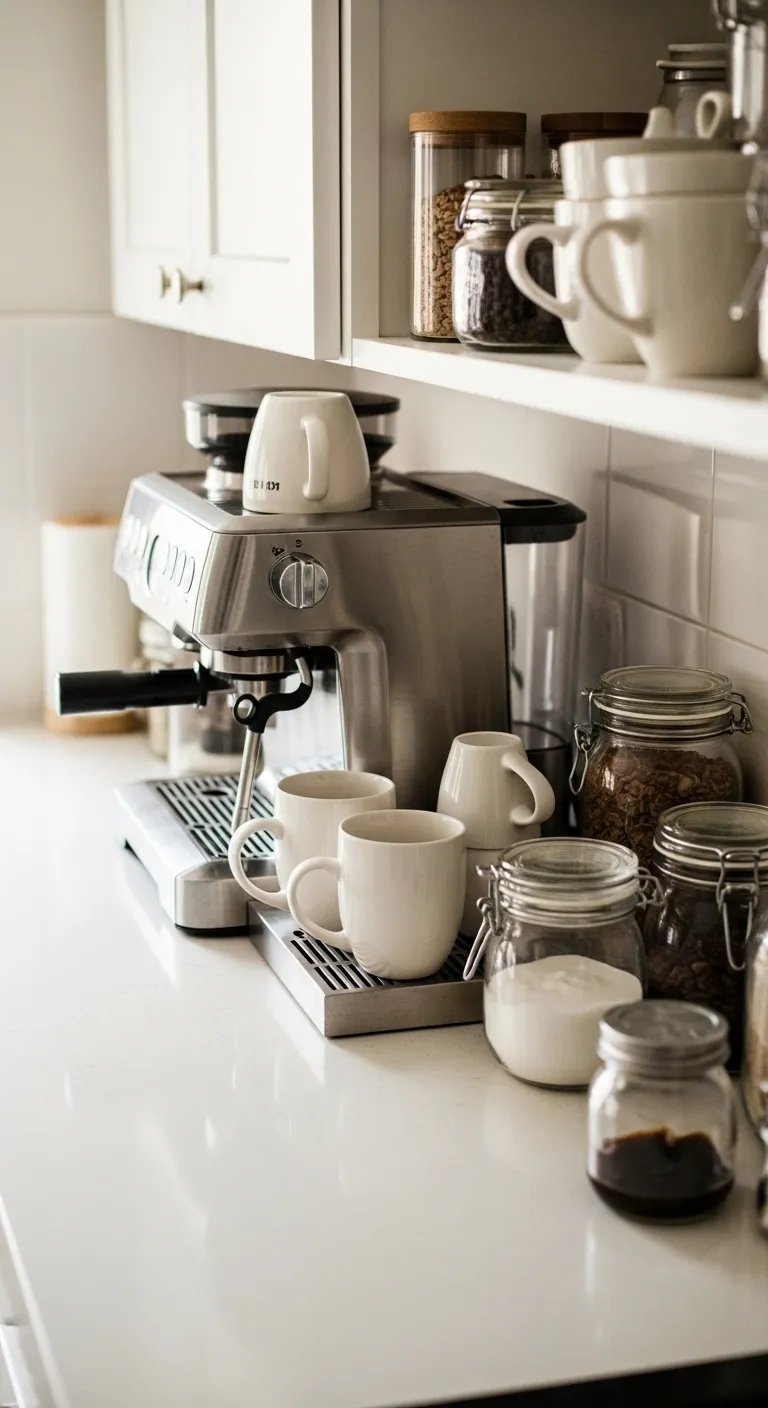
Even the best kitchen counter coffee bar loses its impact if it is not maintained. Create a simple daily reset system that keeps your setup looking as intentional as the day you arranged it. This is not about deep cleaning but about restoring structure.
After each use, return items to their exact positions. Wipe the surface, align containers, and ensure no item drifts outside the defined zone. This habit prevents gradual clutter buildup that often ruins well designed spaces. Schedule a weekly quick reset where you refill jars, remove unused items, and adjust placement if needed. This keeps the setup functional and visually fresh. Consistency is what separates a styled coffee bar from a messy counter.
A reset system ensures your coffee bar remains efficient, clean, and visually strong over time without requiring constant effort or redesign.
Conclusion
A well designed kitchen counter coffee bar is not about adding more items. It is about arranging what you already use in a smarter and more intentional way. When your layout follows a clear structure, your storage stays controlled, and your design feels balanced, the entire space starts working better for you.
Throughout these ideas, the focus stayed on real improvements you can apply immediately. From defining a dedicated zone to refining alignment, layering materials, and maintaining a daily reset system, each step helps turn a simple counter into a functional and visually satisfying setup.
Save the ideas that match your style, test them in your space, and adjust based on how you actually use your kitchen.