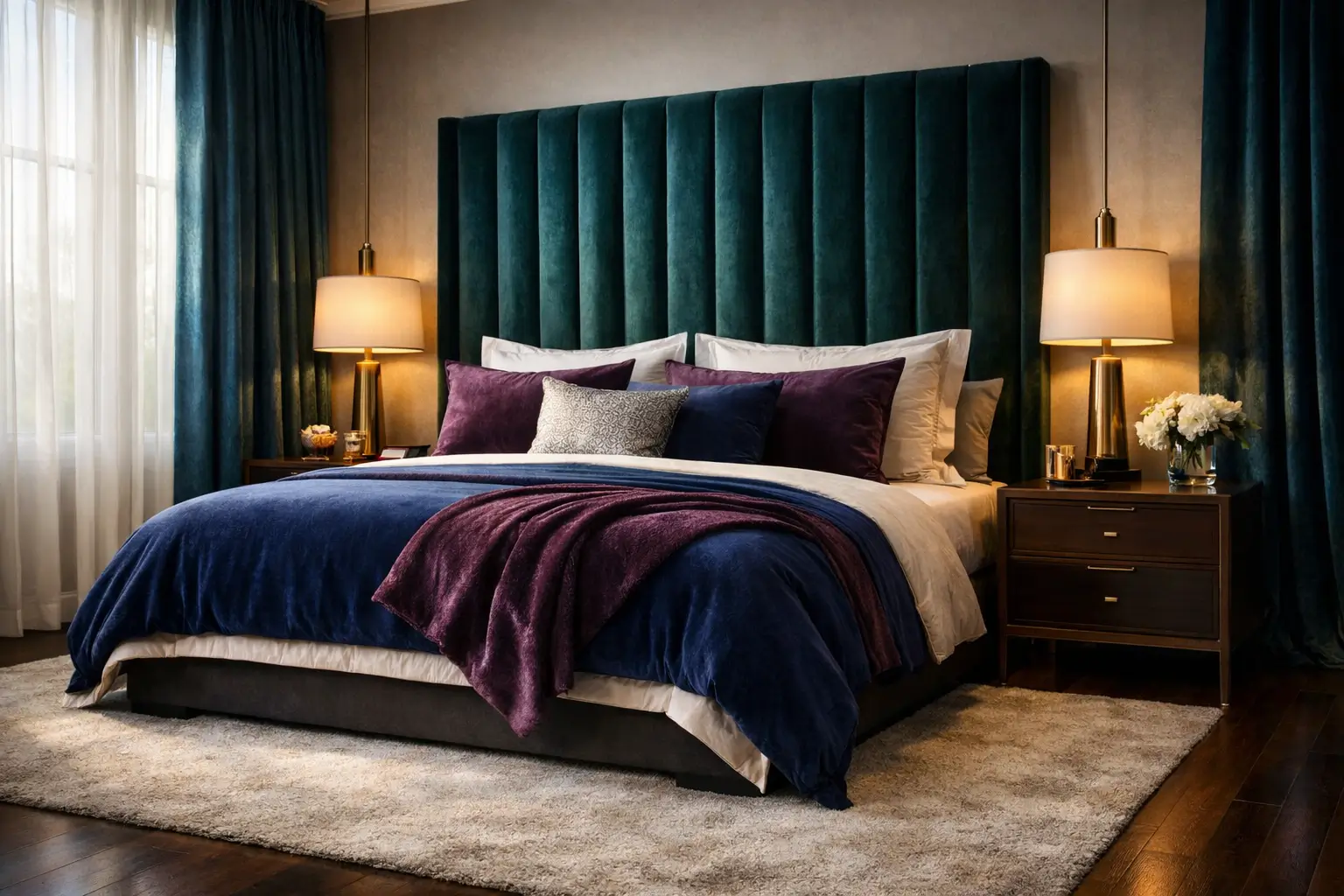
20 Bedroom Design Trends Worth Trying in Your Home
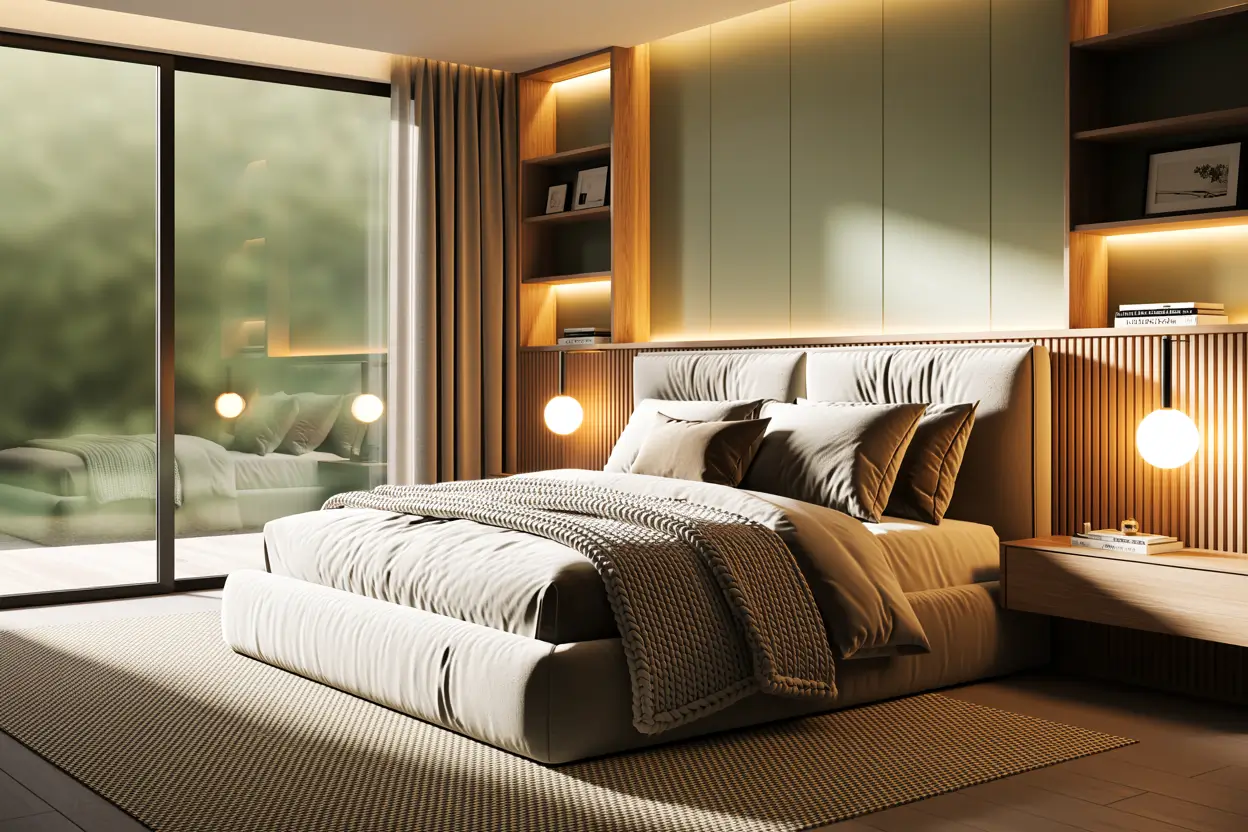
Your bedroom should feel like a place you actually want to fall asleep in, not a room you decorated once and never touched again. These bedroom design trends mix comfort with real style, so your space feels calm instead of cluttered.
This guide walks you through 20 doable ideas, and each one comes with something you can actually use: a shopping checklist, a cost range, a step-by-step method, or a clear pros-and-cons breakdown. You will find bedroom decor ideas for every budget, from a $20 pillow swap to a full furniture change.
Pick one idea, follow its steps, and see how the room feels before you move on to the next.
1. Warm Minimalism with Sculptural Furniture
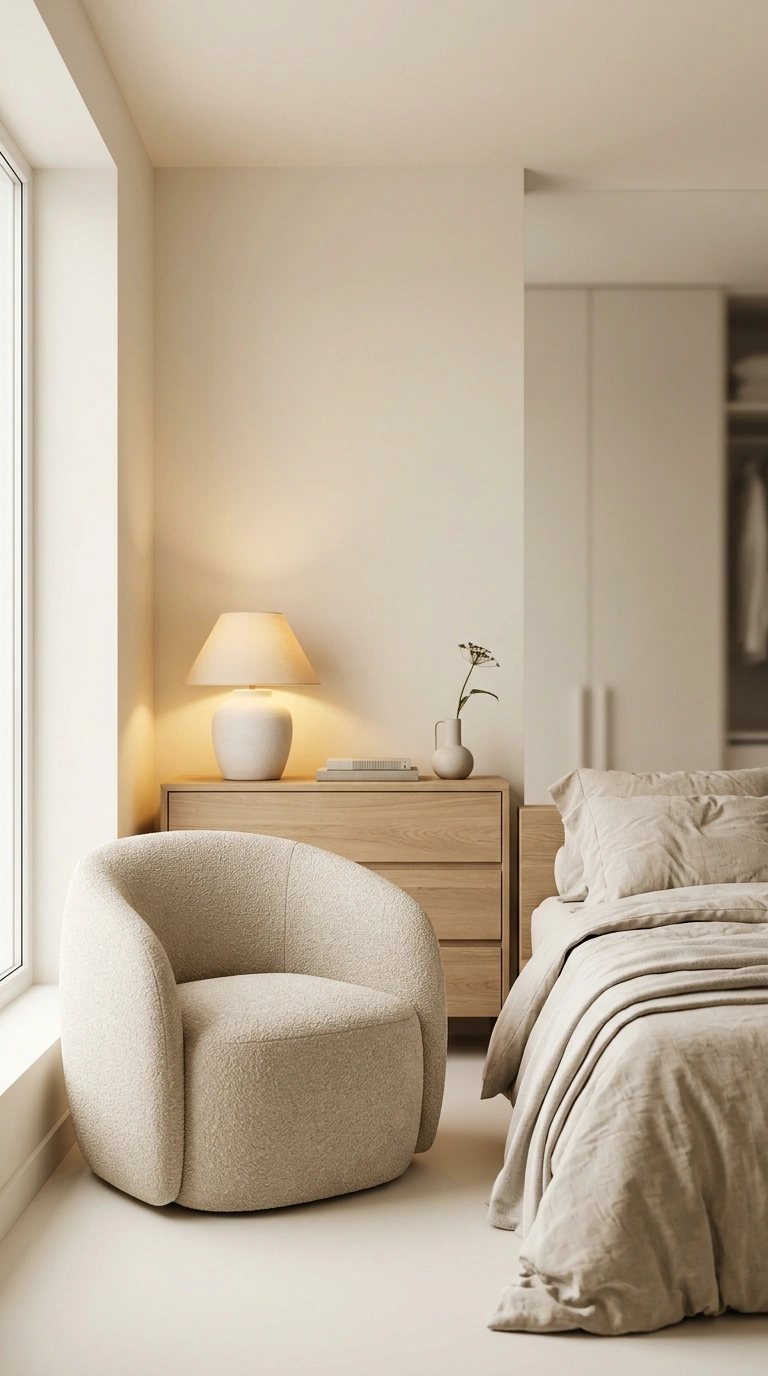
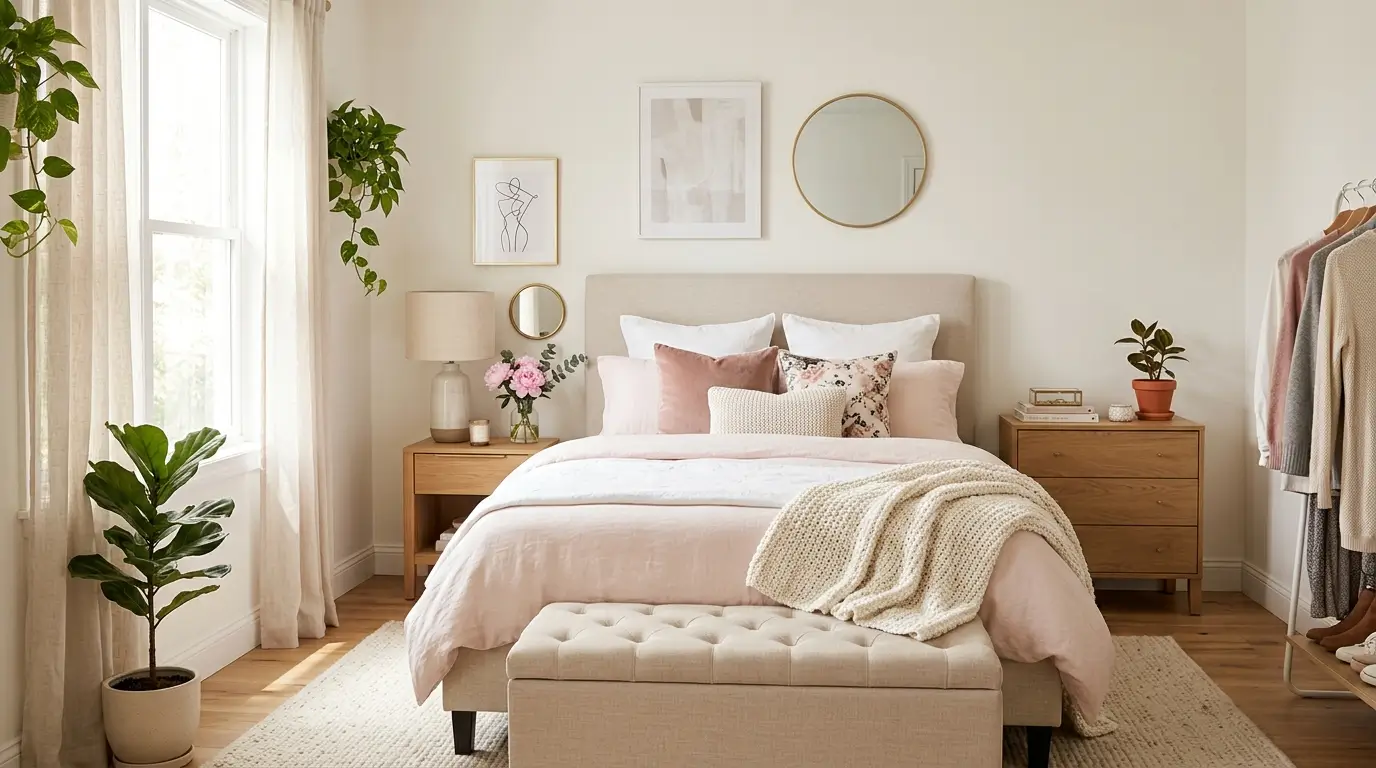
Minimalism gets a bad reputation for feeling cold, and that’s usually because people confuse “empty” with “warm minimalism.” The real version keeps a warm ivory and oat beige palette but never strips a room of texture. The difference comes down to what you keep and what you remove. A single sculptural chair or curved nightstand in smooth oak becomes the room’s focal point instead of a wall full of decor.
| Cold Minimalism (avoid) | Warm Minimalism (aim for) |
|---|---|
| White walls, white bedding, no texture | Warm ivory walls, textured linen bedding |
| Bright overhead lighting | Warm 2700K lamp light only |
| Sharp-edged, glossy furniture | One rounded, matte-finish piece |
| Empty surfaces everywhere | One or two curated objects per surface |
Try this first: Swap your overhead light for a warm-toned table lamp. This one change affects how every other color in the room reads at night.
2. Curved Headboards for Softer Architecture
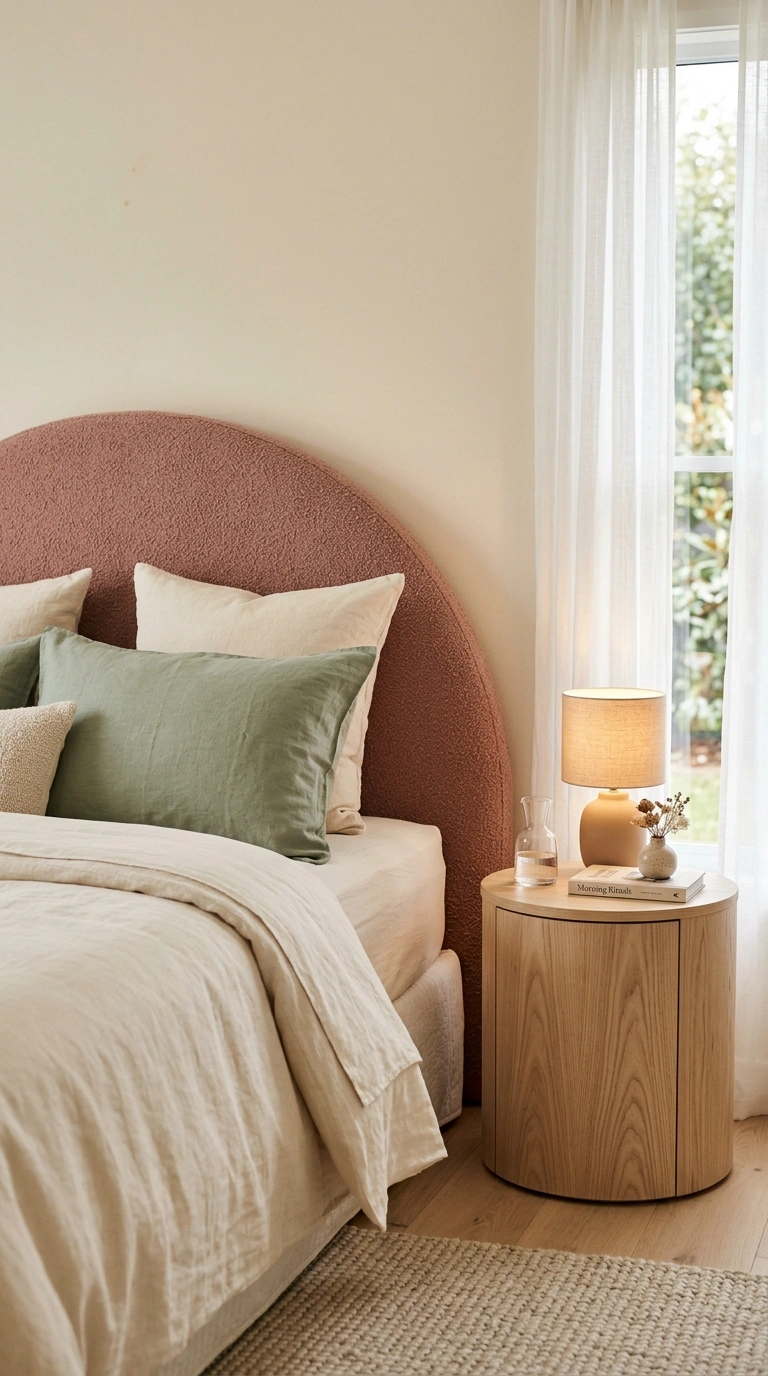
Sharp corners are fading out of bedroom design. Curved and arched headboards in bouclé or velvet, especially in dusty rose or soft sage, soften the whole room and make low ceilings feel taller because the eye follows the curve upward.
You don’t need to buy a new bed frame to get this look. Here’s how to add the curve without replacing furniture:
- Measure your existing headboard width and order a curved headboard cushion or slipcover sized to fit.
- Choose a fabric with some texture, like bouclé or ribbed velvet, so the curve catches light instead of looking flat.
- Add one curved accessory nearby, like a round mirror or an arched wall shelf, to repeat the shape.
- Keep the nightstands simple so the headboard curve stays the focal point.
Cost range: A headboard cushion runs $80-$200. A full curved bed frame runs $400-$1,200.
3. Layered Earthy Neutrals
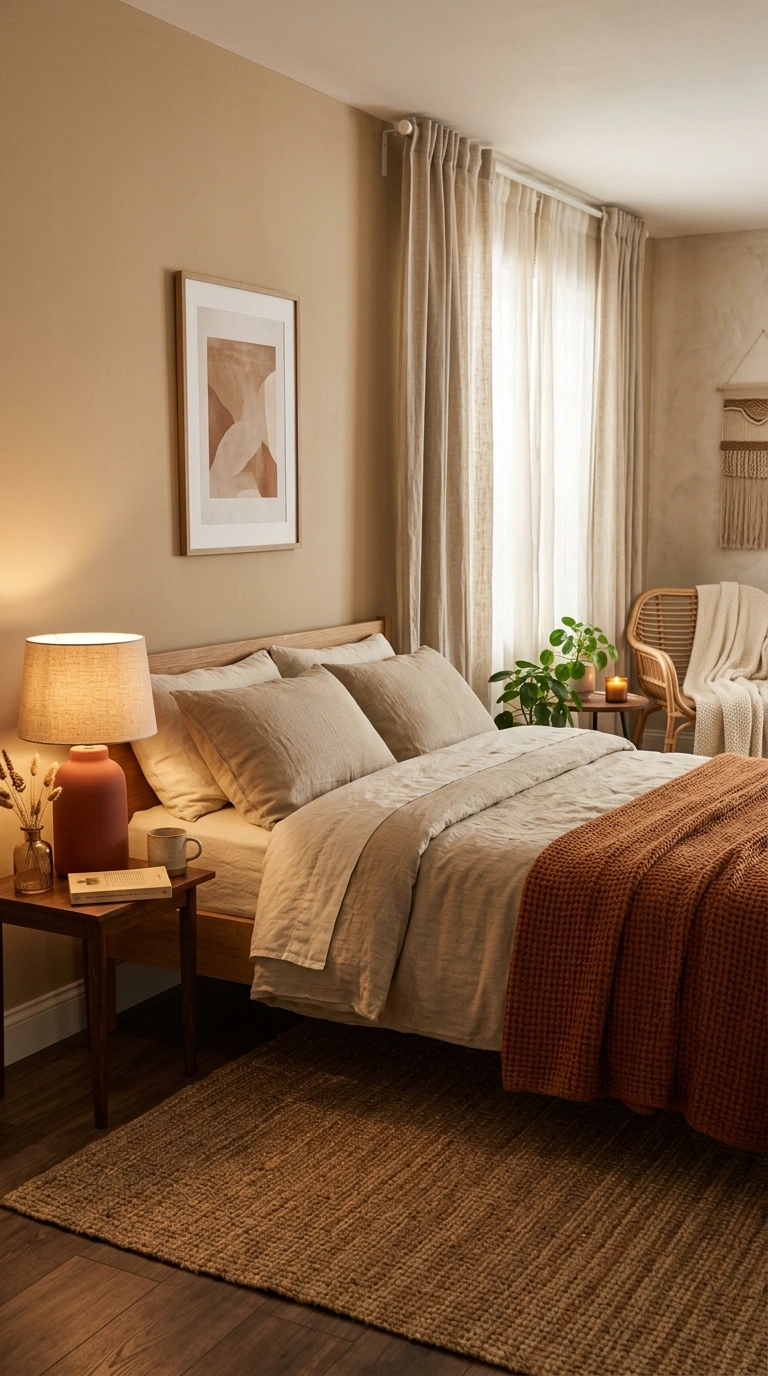
Terracotta, clay, and sand tones layered together build a bedroom that feels grounded and warm without going dark. Mix a rust orange throw with warm sand walls and a clay red ceramic lamp, and let natural jute rugs and raw linen curtains carry the texture instead of more color.
Your three-shade starter palette:
| Shade | Where to Use It |
|---|---|
| Warm Sand | Walls or large furniture pieces |
| Rust Orange | Throw blankets, one accent chair |
| Clay Red | Small accessories: lamp, vase, frame |
The most common mistake here is adding a fourth or fifth earthy shade “because they’re all neutral.” They’re not interchangeable. Stop at three, and let the textures (jute, linen, raw wood) do the rest of the work.
4. Moody Jewel-Tone Accent Walls
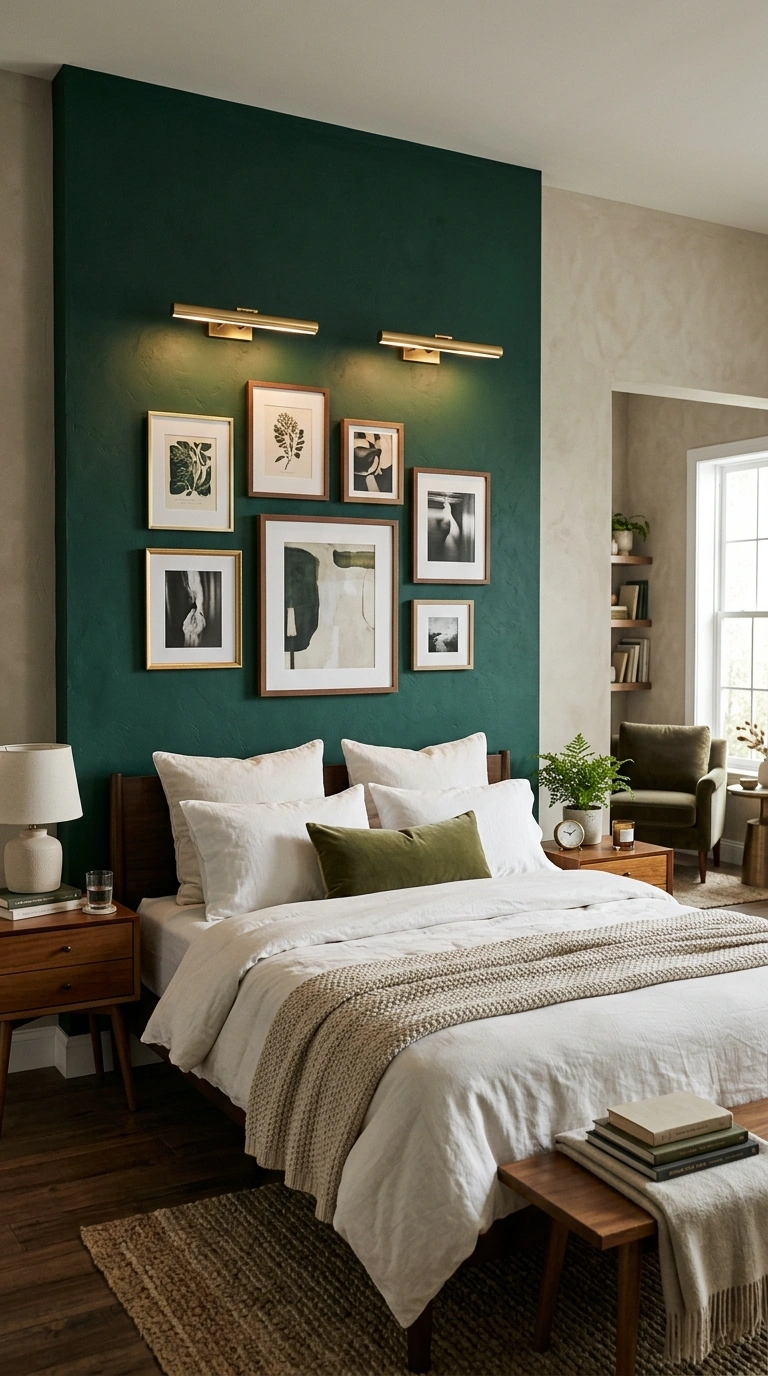
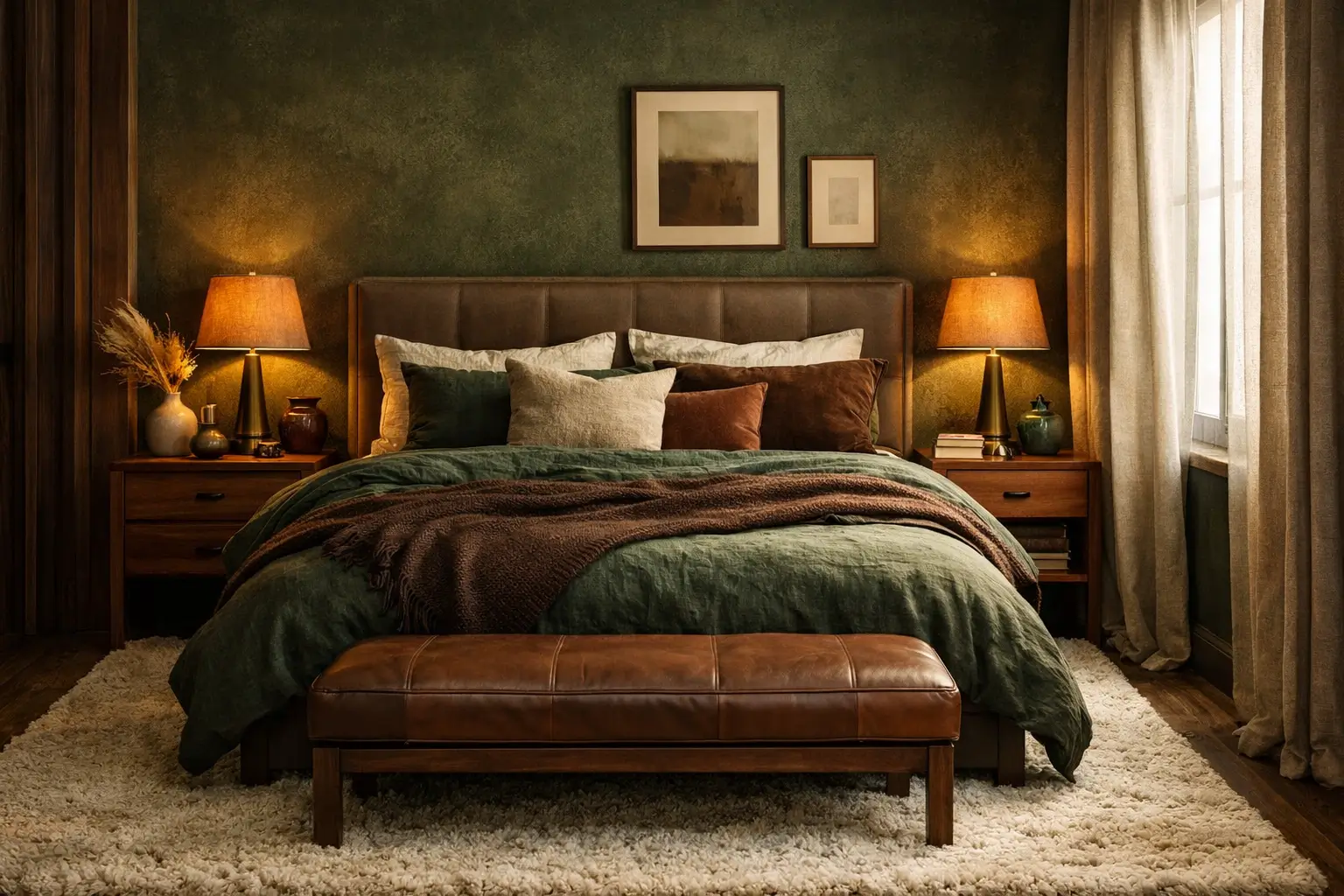
One emerald green or deep plum wall behind the bed adds drama without overwhelming the room, but this trend isn’t right for every bedroom. Before you buy paint, weigh it honestly:
Works well if:
- Your bedroom gets strong natural light during the day
- You already have warm wood or brass furniture to balance the color
- You want one bold focal point, not an all-over dark room
Skip it if:
- Your bedroom is small and north-facing with little daylight
- You rent and can’t repaint before moving out
- You already have a lot of pattern elsewhere in the room
If it’s a yes, keep the other three walls in soft white or greige, and add brass picture lights above the bed frame so the color still glows after dark.
Try this first: Test the paint on a large poster board and check it under lamp light at night before committing to a full wall.
5. Limewash Plaster Walls
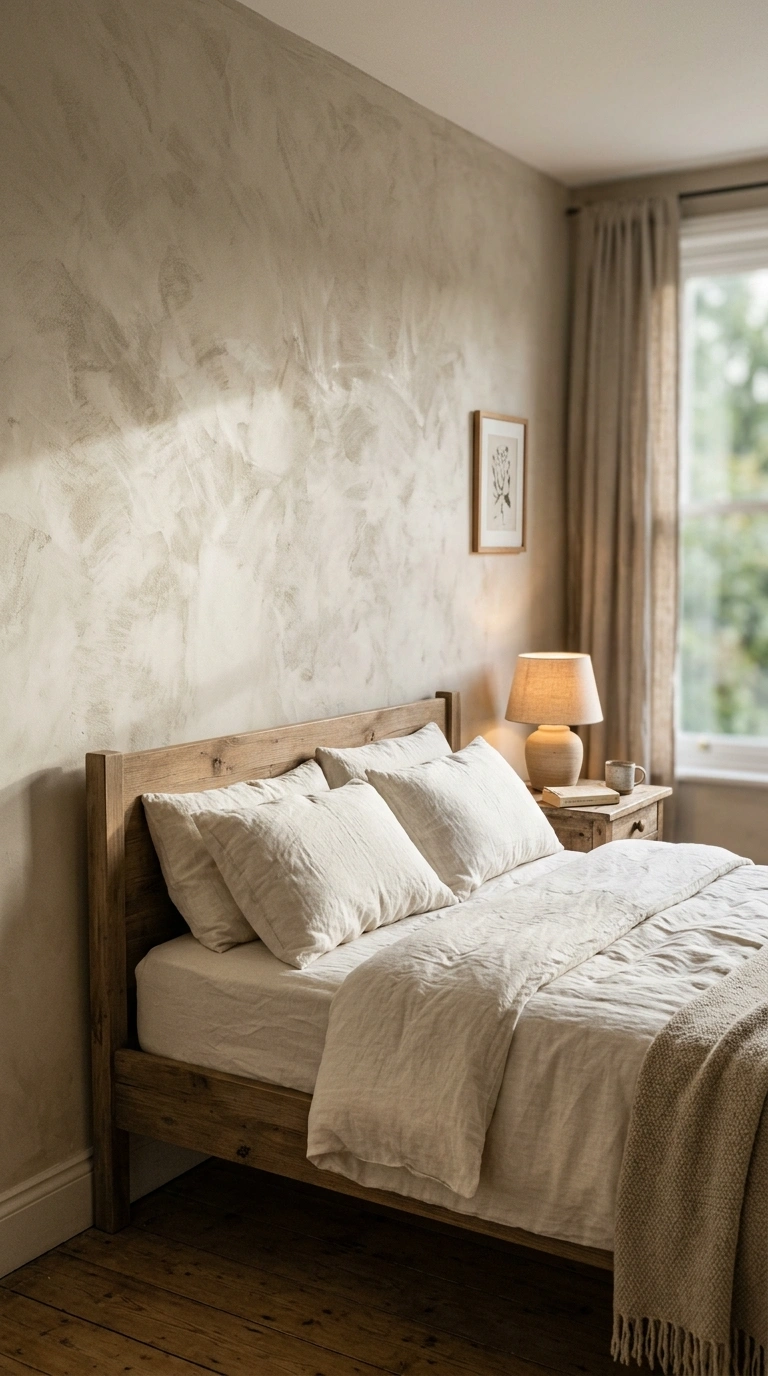
Limewash paint creates a soft, cloudy texture that flat paint cannot copy, in shades like warm putty or chalky white. Because it’s a technique, not just a color, here’s exactly how to apply it yourself:
- Clean and lightly sand the wall so the plaster has something to grip.
- Dilute the limewash slightly with water, following the product’s ratio guide.
- Apply with a natural bristle brush in loose, uneven, cross-hatched strokes — resist the urge to smooth it out.
- Let the first coat dry fully, then apply a second thin coat for depth.
- Leave the texture slightly uneven. Perfect uniformity is what ruins the limewash effect.
Cost range: A gallon of limewash runs $60-$120 and covers roughly 200 square feet, so most bedroom accent walls need just one can.
6. Japandi Fusion Bedrooms
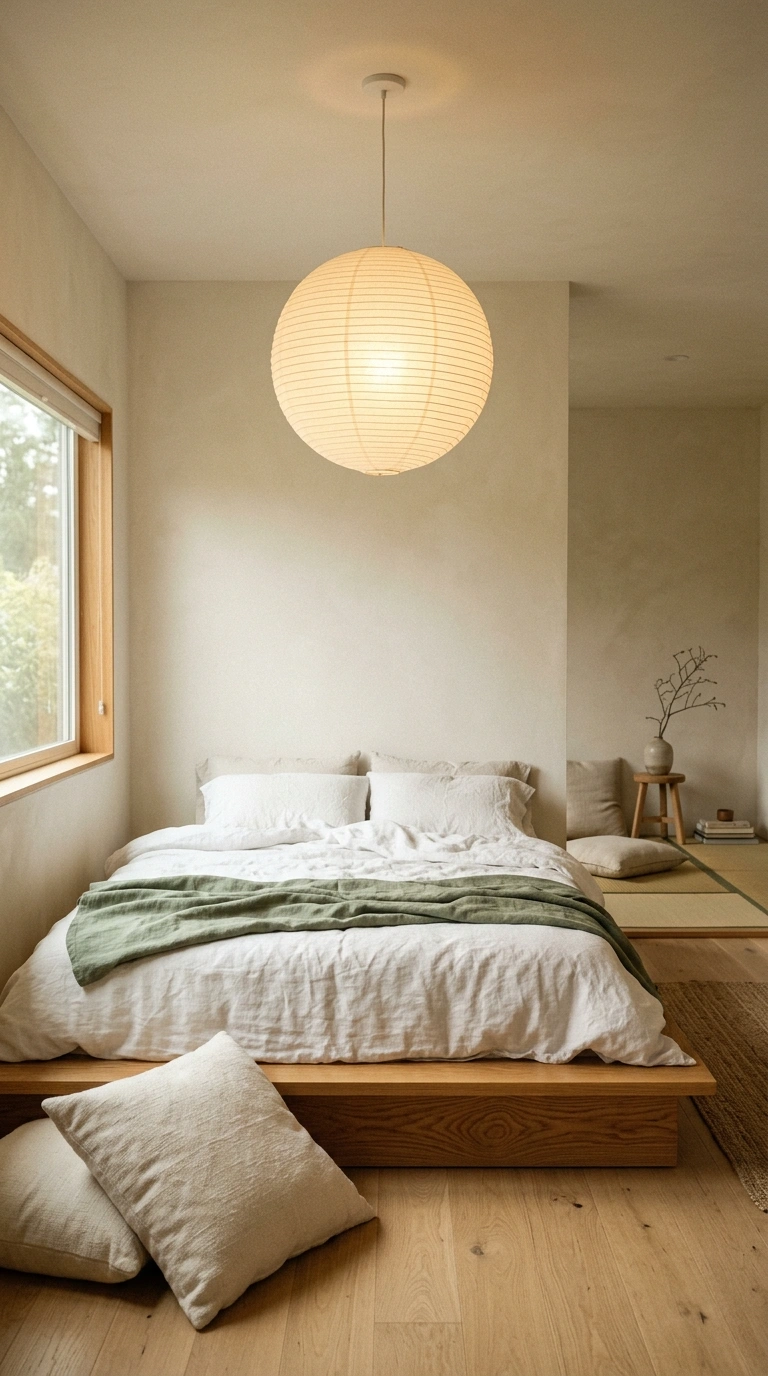
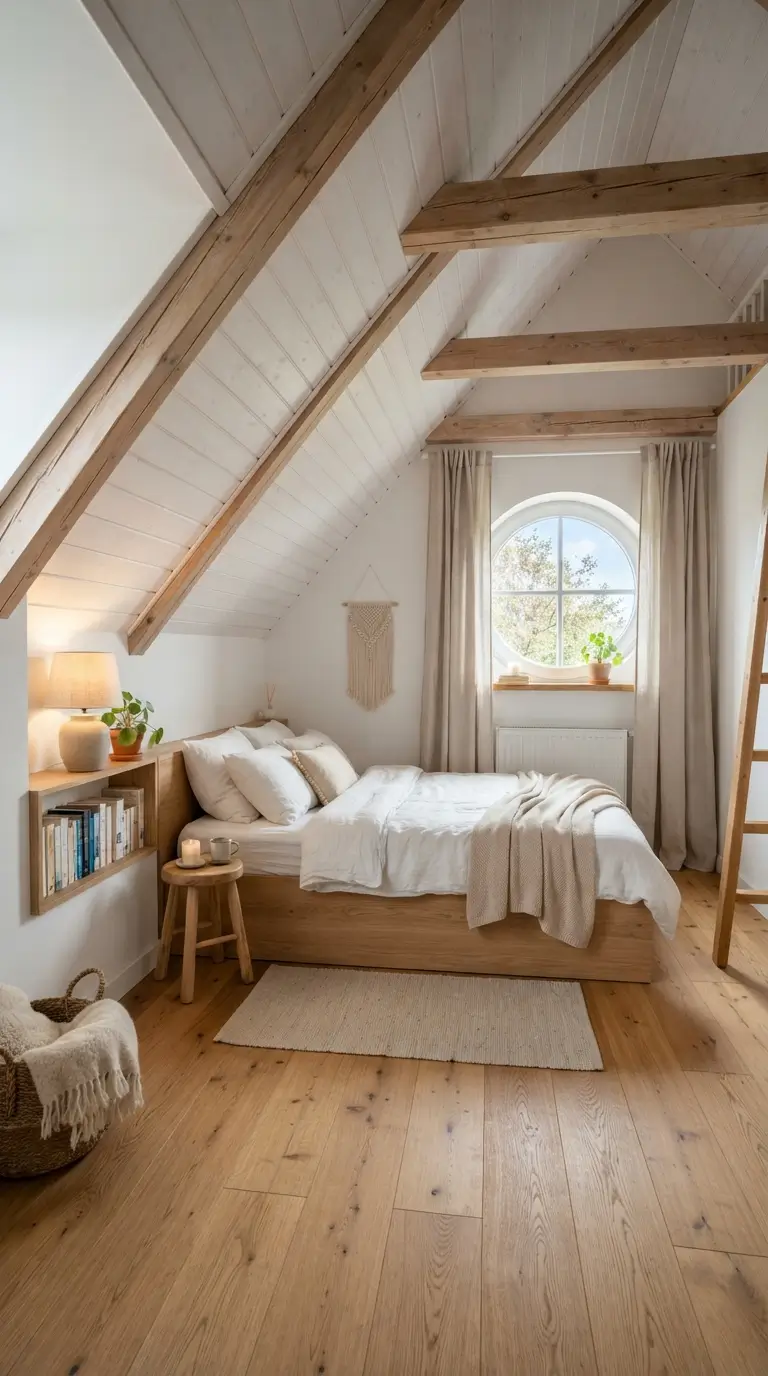
Japandi blends Japanese simplicity with Scandinavian warmth: low wooden furniture in honey oak, paper pendant lamps, and a strict no-clutter rule. The palette stays to warm white, natural wood, and one muted accent like sage green.
Your Japandi shopping checklist:
- Low platform bed frame in natural or honey oak
- Paper or rice-paper pendant lamp
- Floor cushion or low bench (skip the tall armchair)
- One sage green or muted-tone textile (throw, cushion, or curtain)
- Woven natural-fiber rug (avoid synthetic shag)
Choose furniture with visible wood grain instead of painted pieces. Painted wood breaks the Japandi feel faster than almost any other mistake.
7. Mixed Antique Metals
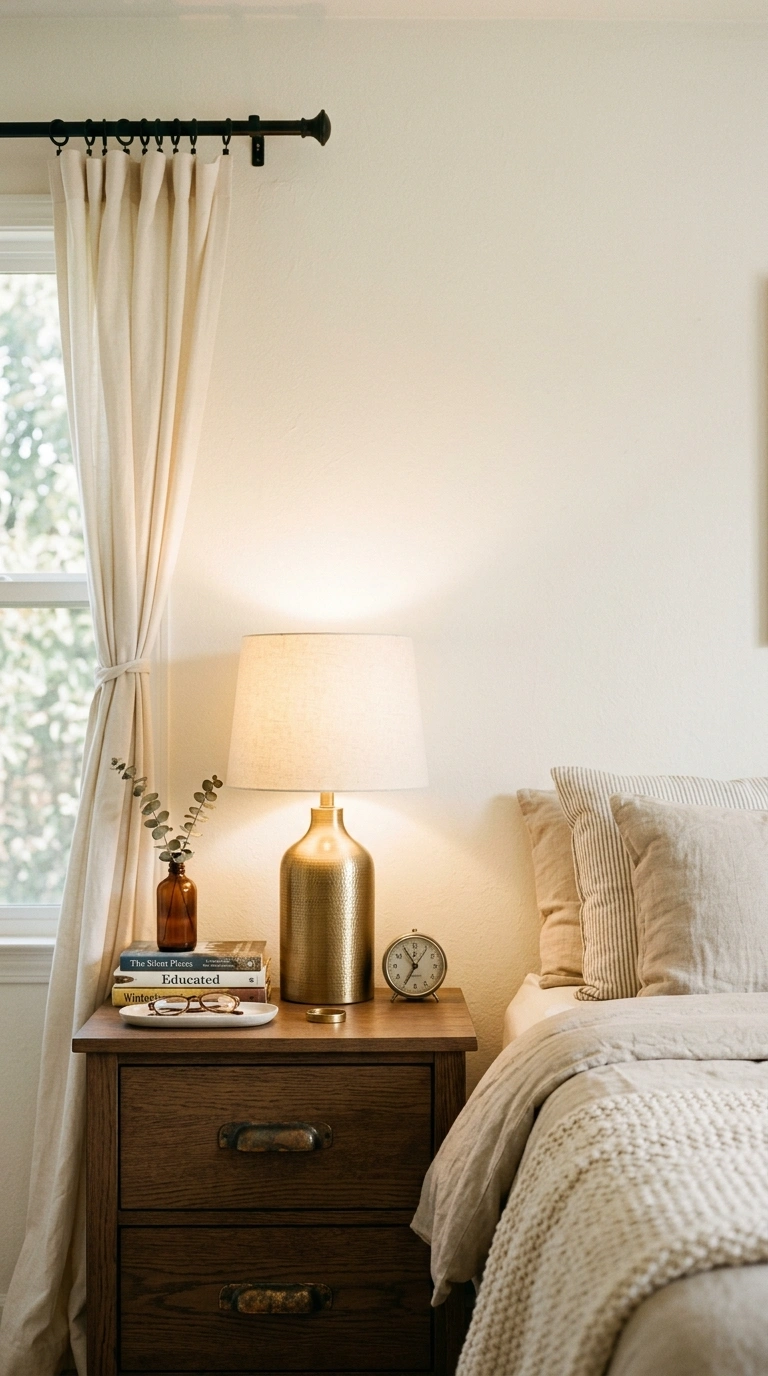
Brushed brass, aged bronze, and matte black hardware mixed together add depth without needing extra color. The trick most people get wrong is using all three metals equally, which ends up looking uncoordinated instead of collected.
The 60-30-10 rule for mixing metals:
| Metal | Percentage of Hardware | Where to Use |
|---|---|---|
| Brushed Brass | 60% | Lamp bases, larger fixtures |
| Aged Bronze | 30% | Drawer pulls, smaller accents |
| Matte Black | 10% | Curtain rods, one statement piece |
This trend works in almost any color scheme because metals act as neutral accents rather than bold statements. Pick your dominant metal first, then add the other two in decreasing amounts.
8. Sheer Canopy Beds, Reimagined
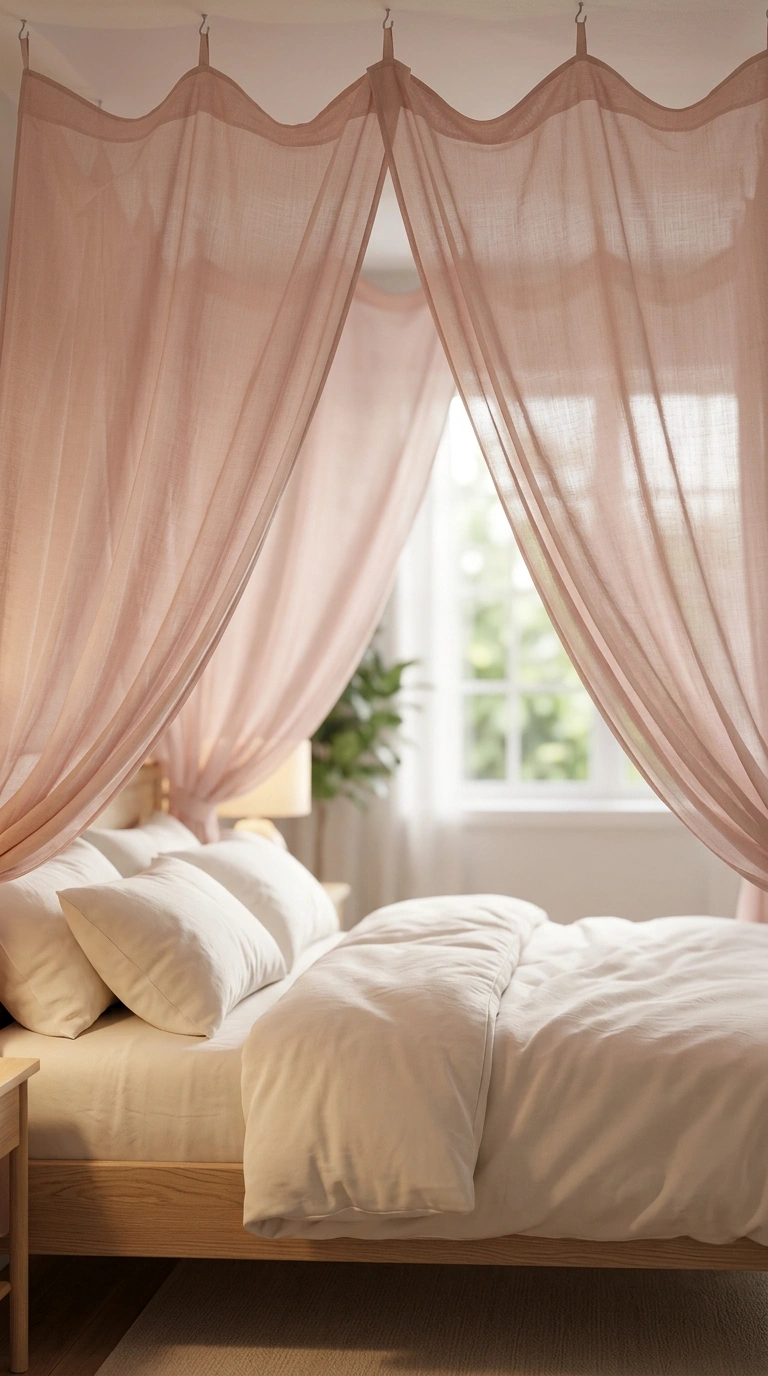
Modern canopy beds skip the heavy fabric of the past. Sheer ivory or soft blush linen panels hang loosely from a simple frame, moving with air from an open window instead of blocking light.
Two ways to get this look, at two different price points:
| Approach | What You Do | Cost |
|---|---|---|
| Budget version | Hang sheer fabric from ceiling-mounted hooks above your existing bed | $30-$70 |
| Full version | Buy a four-poster or canopy frame bed | $500-$1,500+ |
If you’re not ready to commit to a new bed frame, the ceiling-hook method gives you 90% of the visual effect for a fraction of the cost, and you can remove it easily if you change your mind.
9. Built-In Reading Nooks
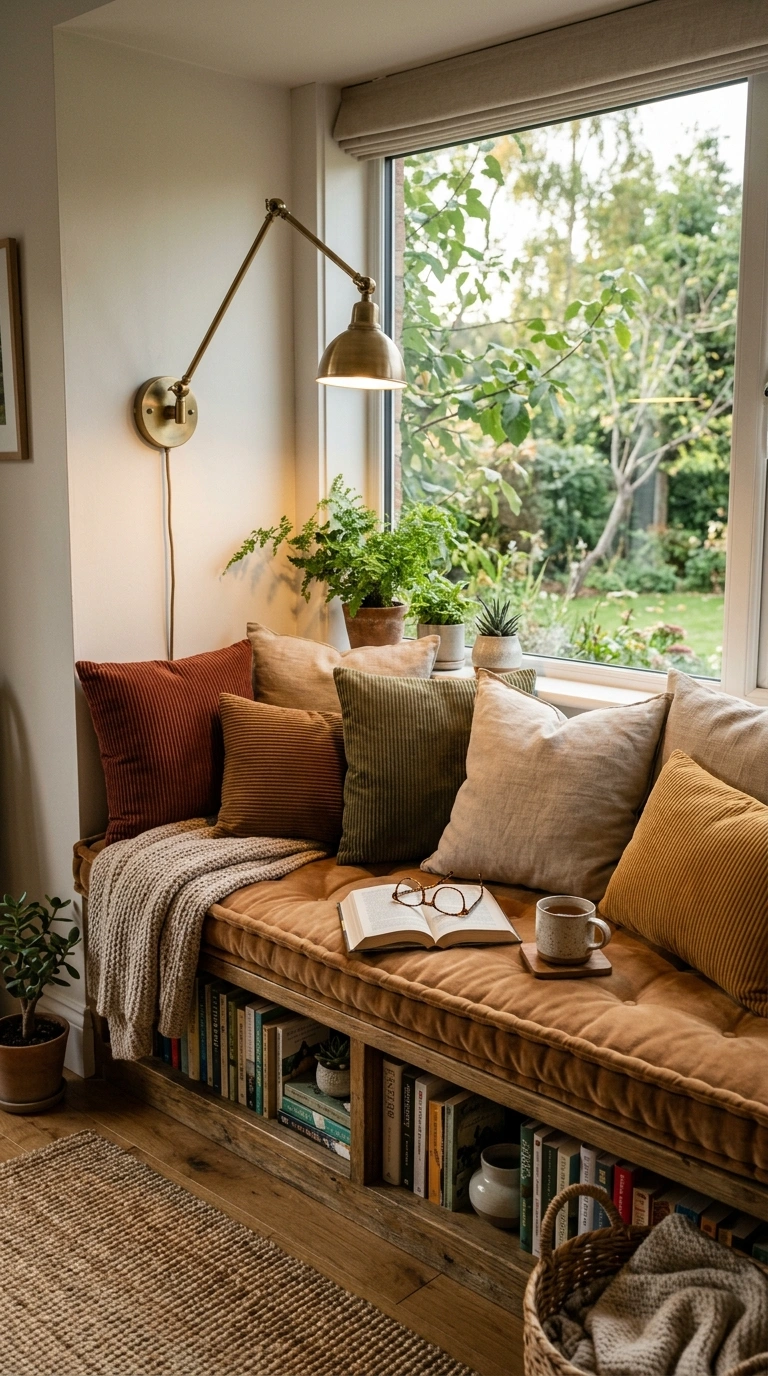
A small nook by the window with a cushioned bench in warm caramel velvet turns unused corner space into a favorite spot. This one takes a bit more planning, so here’s a weekend-sized build plan:
- Measure the corner — most window nooks work with 24-30 inches of depth.
- Build or buy a bench sized to that depth, cushioned in a durable fabric like velvet or corduroy.
- Add a low bookshelf beside or beneath the bench instead of a tall unit, to keep the corner open.
- Layer 2-3 cushions in different textures (linen, corduroy) so the nook feels finished, not sparse.
- Mount a brass reading lamp with a warm bulb directly above or beside the seat.
Cost range: A DIY bench build runs $100-$250 in materials. A pre-made window seat bench runs $300-$700.
10. Checkerboard Flooring Accents
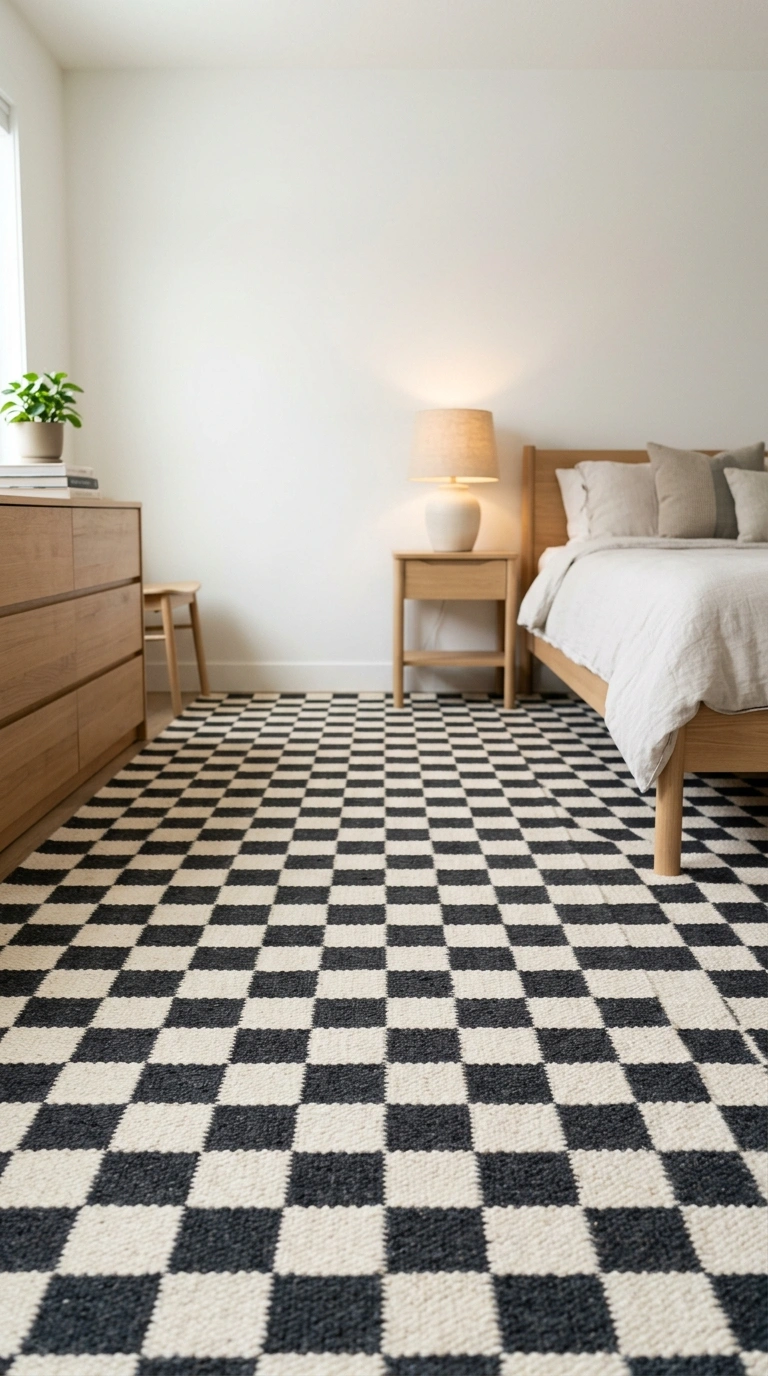
A checkerboard pattern in cream and charcoal adds graphic interest to an otherwise simple room, but you have three ways to get there, and they are not equal in cost or commitment:
| Method | Commitment | Approx. Cost |
|---|---|---|
| Checkerboard area rug | Fully reversible | $80-$300 |
| Painted directly on existing wood floor | Semi-permanent, paintable over | $50-$150 (DIY) |
| New tiled or vinyl checkerboard floor | Permanent | $800-$3,000+ |
Start with the rug. It lets you live with the graphic pattern before deciding whether you want it permanently underfoot. Keep the walls and furniture plain so the floor pattern has room to stand out.
11. Scalloped Furniture Edges
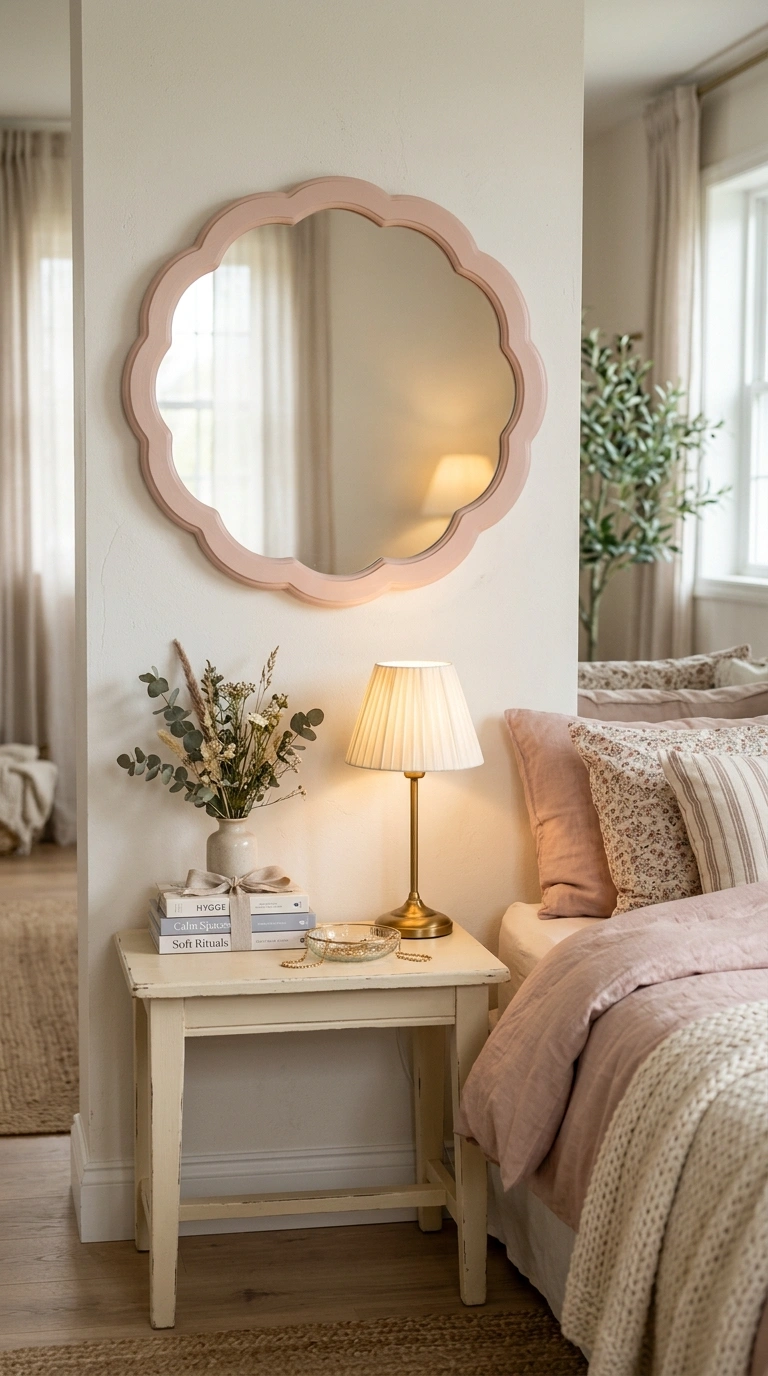
Scalloped, wave-like edges on headboards, mirrors, and side tables add a soft, playful detail, especially in soft blush or warm cream finishes. The repeated curve feels feminine without being overly delicate, which works for both kids’ rooms and adult bedrooms.
Where to start, from easiest to most involved:
- A single scalloped mirror — the easiest swap, instant impact
- A scalloped side table or nightstand
- A scalloped-edge headboard or full bed frame
Start at the top of that list. A scalloped mirror costs far less than a full bed frame and tells you quickly whether you like the detail before you commit further.
12. Statement Ceilings
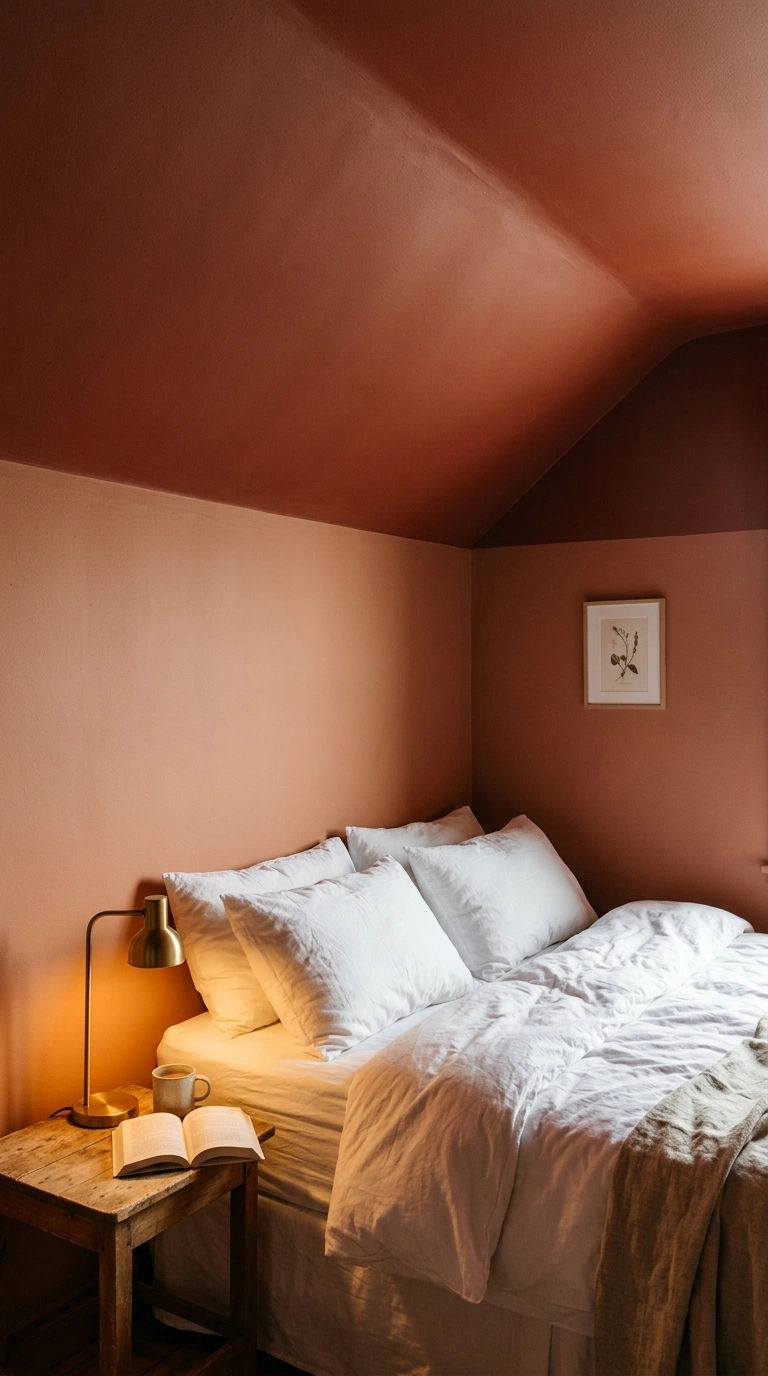
The fifth wall is finally getting attention. A painted ceiling in deep terracotta, or a wallpapered ceiling in a small floral print, makes a small bedroom feel cozy instead of cramped, because the color wraps the whole room rather than boxing it in with a bright white cap overhead.
The mistake most people make is painting the ceiling darker than the walls without adjusting the wall color to match. That combination makes the room feel like it’s closing in rather than wrapping around you.
Fix it: Paint the ceiling one shade darker than your boldest wall color, not several shades darker. The transition should feel intentional, not like an afterthought.
13. Grandmillennial Florals with Modern Lines
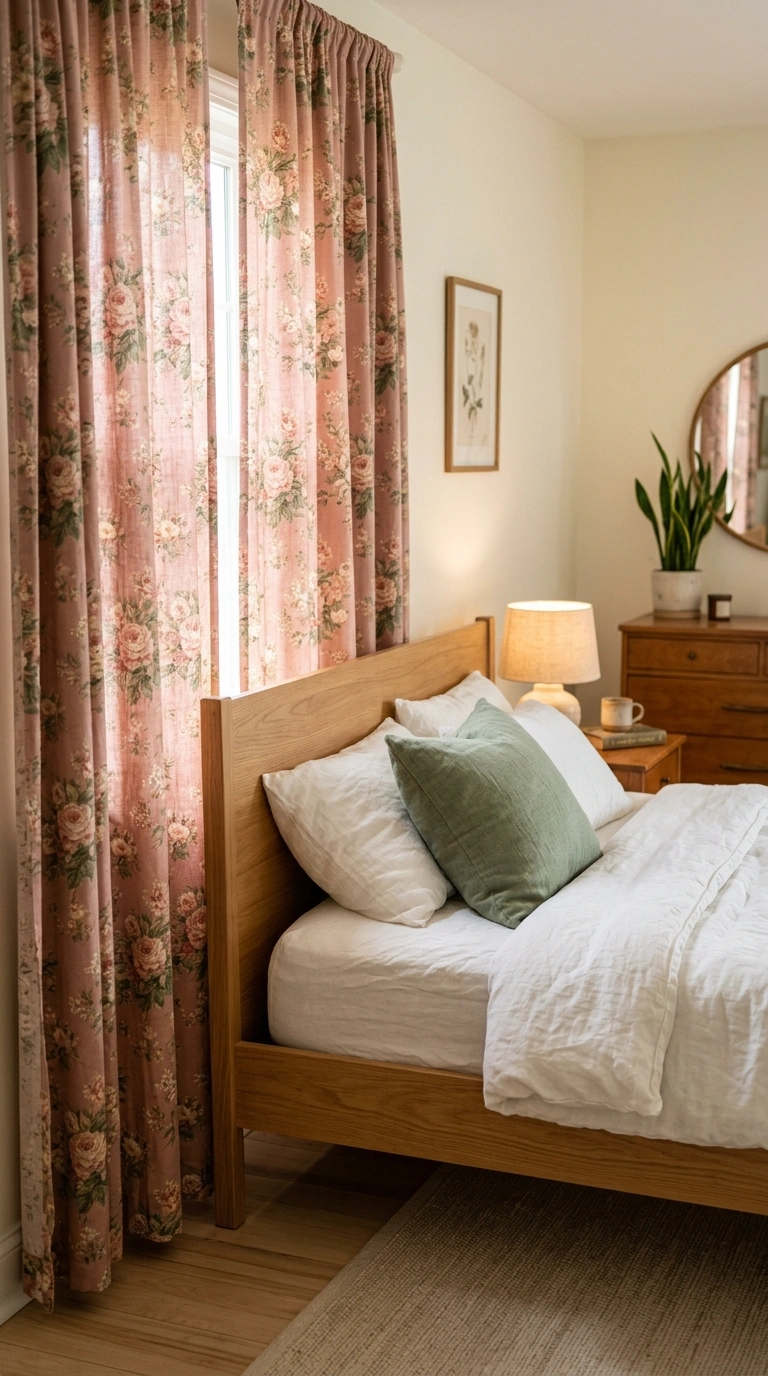
Vintage floral fabrics in dusty rose and sage green get paired with clean, modern furniture shapes, like a floral curtain against a simple platform bed. This trend lives or dies on restraint.
Do:
- Use floral fabric on exactly one item (a curtain, a pillow, or a headboard)
- Pair it with solid-colored, modern-shaped furniture
- Pick a floral print with a muted, not saturated, color palette
Don’t:
- Mix two different floral prints in the same room
- Add floral wallpaper AND floral textiles
- Use floral fabric on more than one furniture piece
One floral piece reads as a curated statement. Three floral pieces reads as clutter, no matter how well the individual prints coordinate.
14. Low Platform Beds
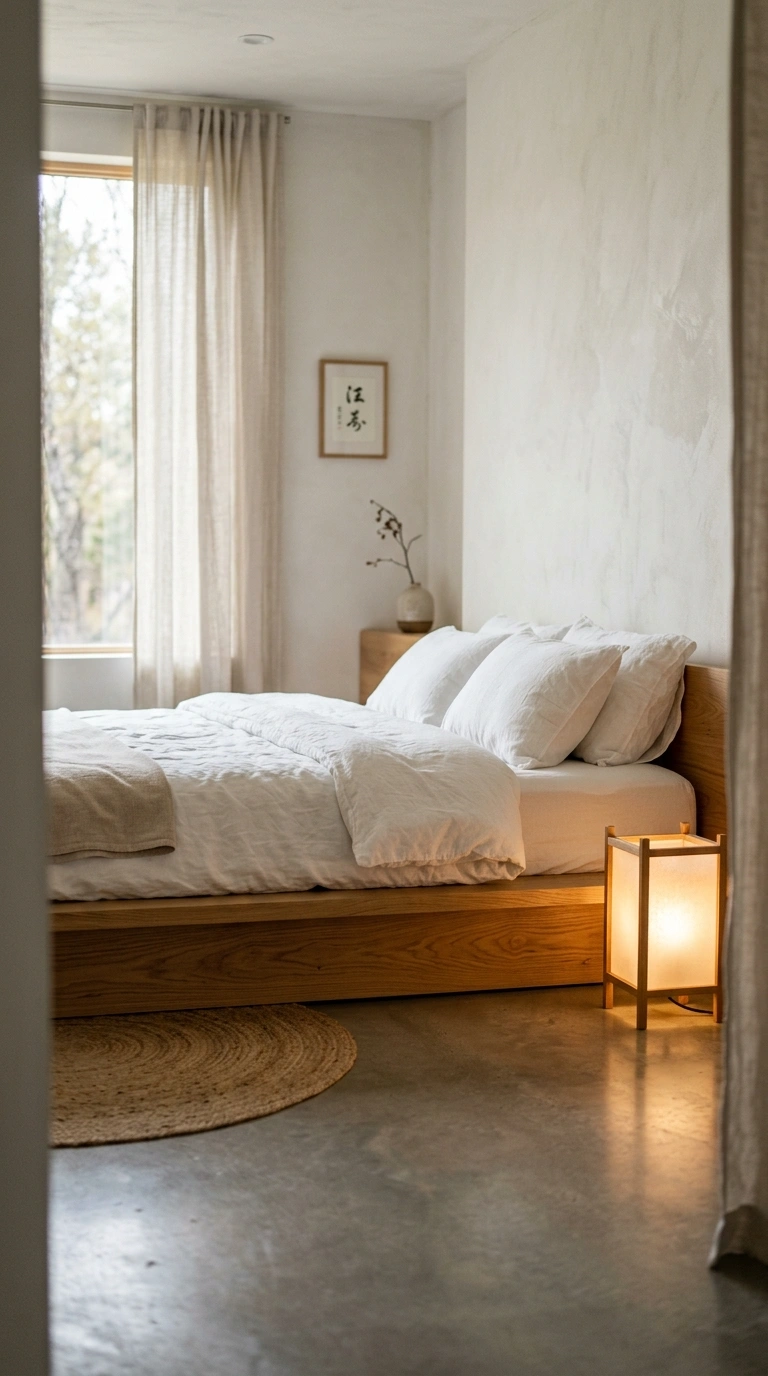
Low-to-the-ground platform beds in honey oak or matte black create a calm, zen feeling, but whether they work depends on your ceiling height more than your taste.
| Ceiling Height | Recommendation |
|---|---|
| Under 8.5 feet | Low platform bed strongly recommended — adds visual height |
| 8.5-9.5 feet | Works well either way |
| Over 9.5 feet | Optional — a taller bed frame can also feel proportional |
Pair the low bed with floor-level lighting, like a small lantern or an uplight, instead of tall table lamps that will look oversized next to a low frame.
15. Bouclé Textured Seating
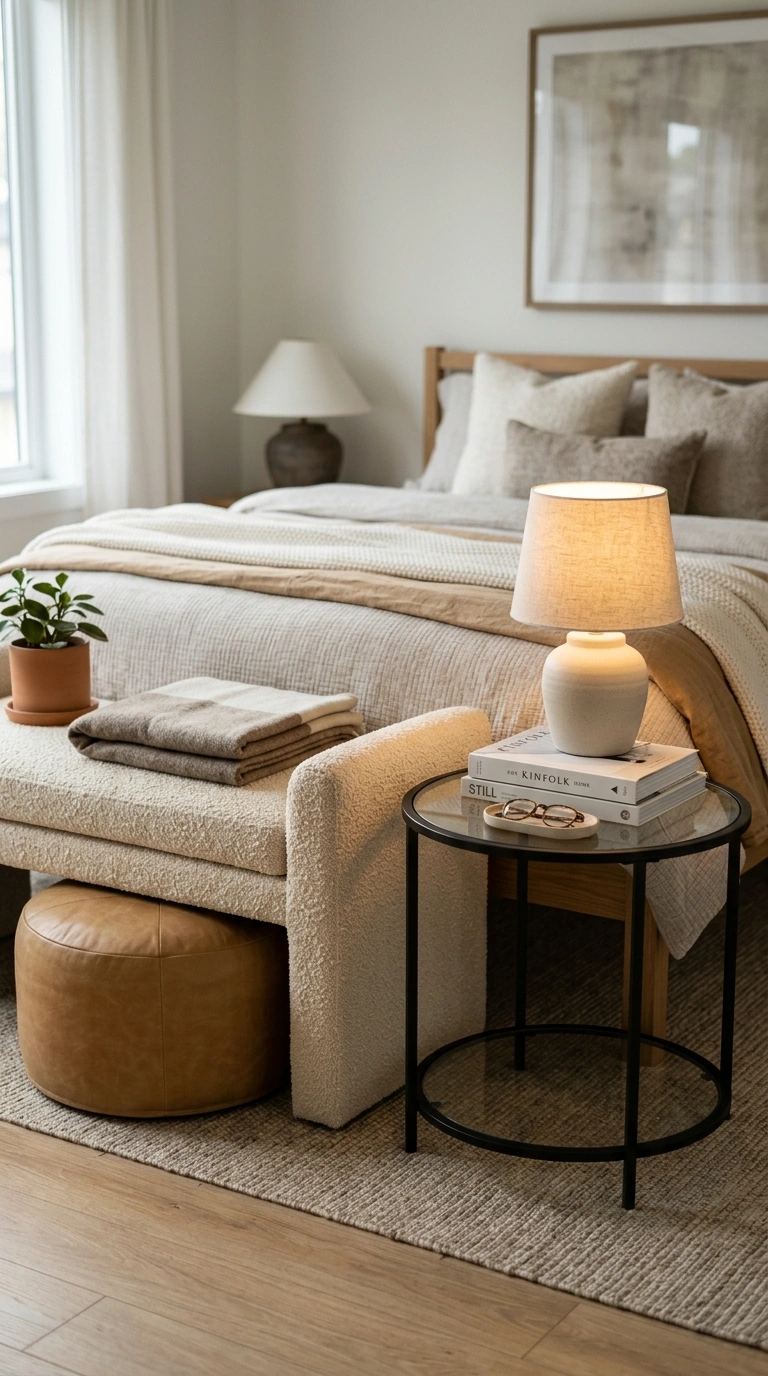
A small bouclé bench or accent chair in warm cream or oatmeal adds tactile softness at the foot of the bed. The nubby texture catches light differently than smooth fabric, so pair it with something smoother nearby, like a leather ottoman or a glass side table, so the bouclé stands out by contrast rather than blending in.
A quick care note most articles skip: bouclé fabric loops can snag on pet claws and buttons over time. If you have pets or young kids, choose a tighter bouclé weave or a performance-fabric bouclé blend, both of which resist snagging far better than the loose, oversized-loop versions.
If floor space is tight, choose a bench over a full chair. It gives you the texture without eating into your walking path.
16. Slatted Wood Accent Walls
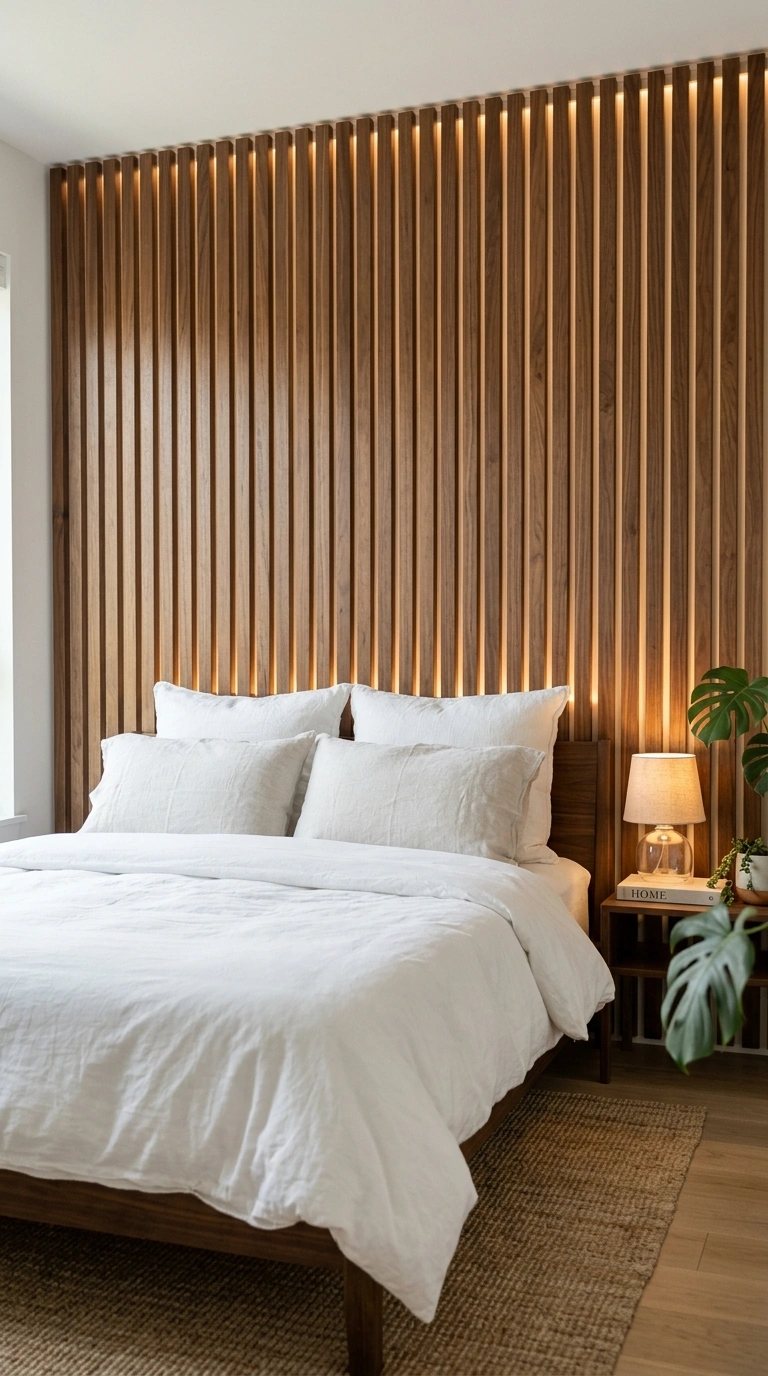
Vertical wood slats in warm walnut or light ash behind the bed add texture and a subtle architectural feel, especially with LED strip lighting built in behind the slats for a soft glow at night. This is the most involved trend on this list, so plan accordingly.
What you’ll need:
- Wood slat panels or individual furring strips (pre-cut or cut to size)
- Wood glue and a level
- LED strip lighting (optional, for the backlit effect)
- Wood stain or sealant in your chosen tone
Basic steps: Mark your spacing (about 2 inches between slats works best), attach a mounting batten to the wall, glue and level each slat working from the center outward, then stain and seal.
Cost range: $300-$800 for a standard accent wall, DIY-installed. This trend works especially well in bedrooms without a traditional headboard, since the wall itself becomes the design focus.
17. Color-Drenched Rooms
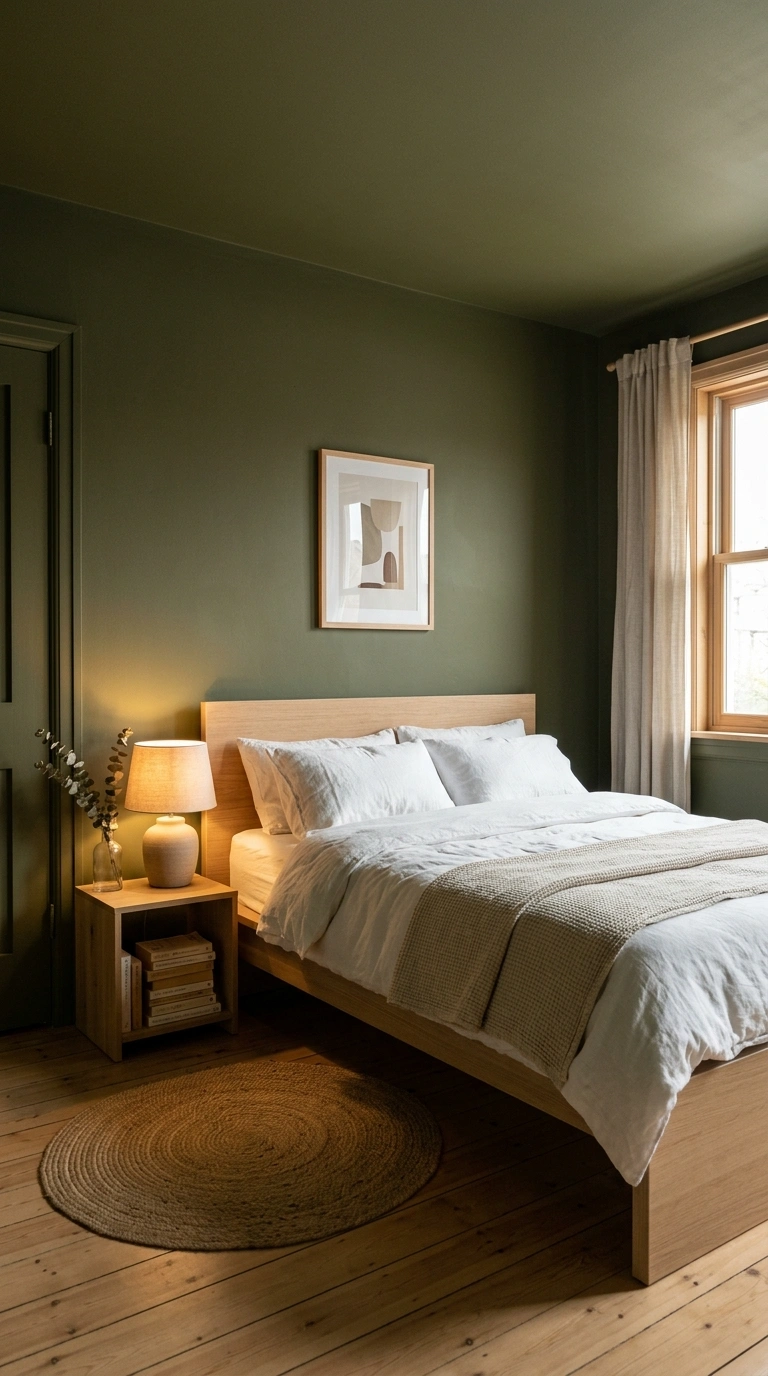
Color drenching means painting the walls, ceiling, and trim the same shade, like deep terracotta or muted olive, so the room feels wrapped rather than boxy. Before you buy gallons of paint, run through this checklist:
- Have you tested the color on all three surfaces (wall, ceiling, trim) together, not just the wall?
- Are you using a matte finish, which absorbs light softly instead of reflecting it harshly?
- Is your furniture in natural wood or white tones, so it doesn’t compete with the drenched color?
- Have you checked the room in both daylight and lamp light, since drenched colors shift more dramatically between the two?
Skipping that last step is the most common regret. A color that looks perfect at noon can feel heavy and dark by 9 p.m.
18. Layered Vintage Rugs
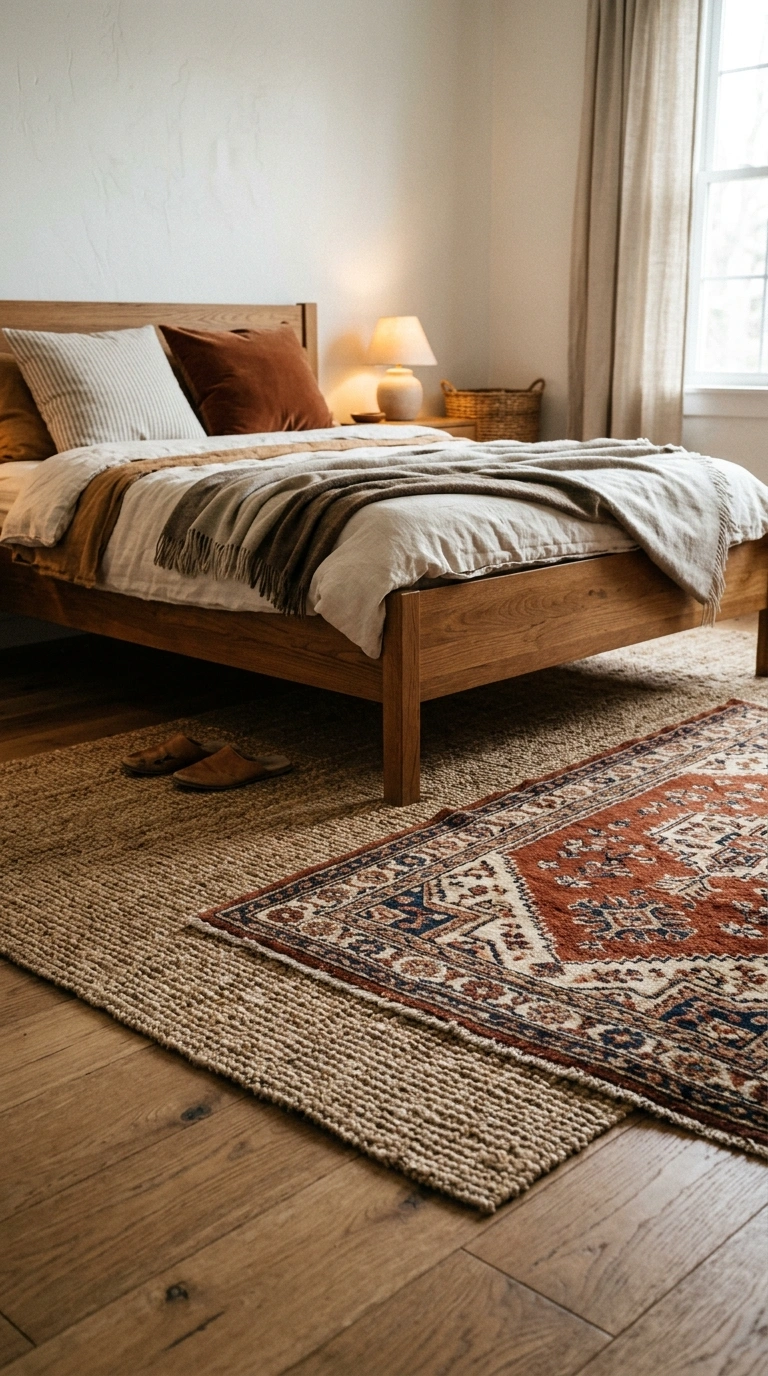
Two rugs layered together, like a jute base with a smaller vintage Persian-style rug in rust and cream on top, add warmth and pattern underfoot. The proportion between the two rugs makes or breaks the look.
The sizing formula: your top rug should cover roughly two-thirds of your base rug’s surface area, with the base rug’s edge showing evenly around all sides. If the top rug covers more than 80% of the base, the layering effect disappears. If it covers less than 50%, it looks like a mistake rather than a design choice.
Choose rugs with some color overlap so the two layers feel connected instead of randomly stacked.
19. Hidden Storage Furniture
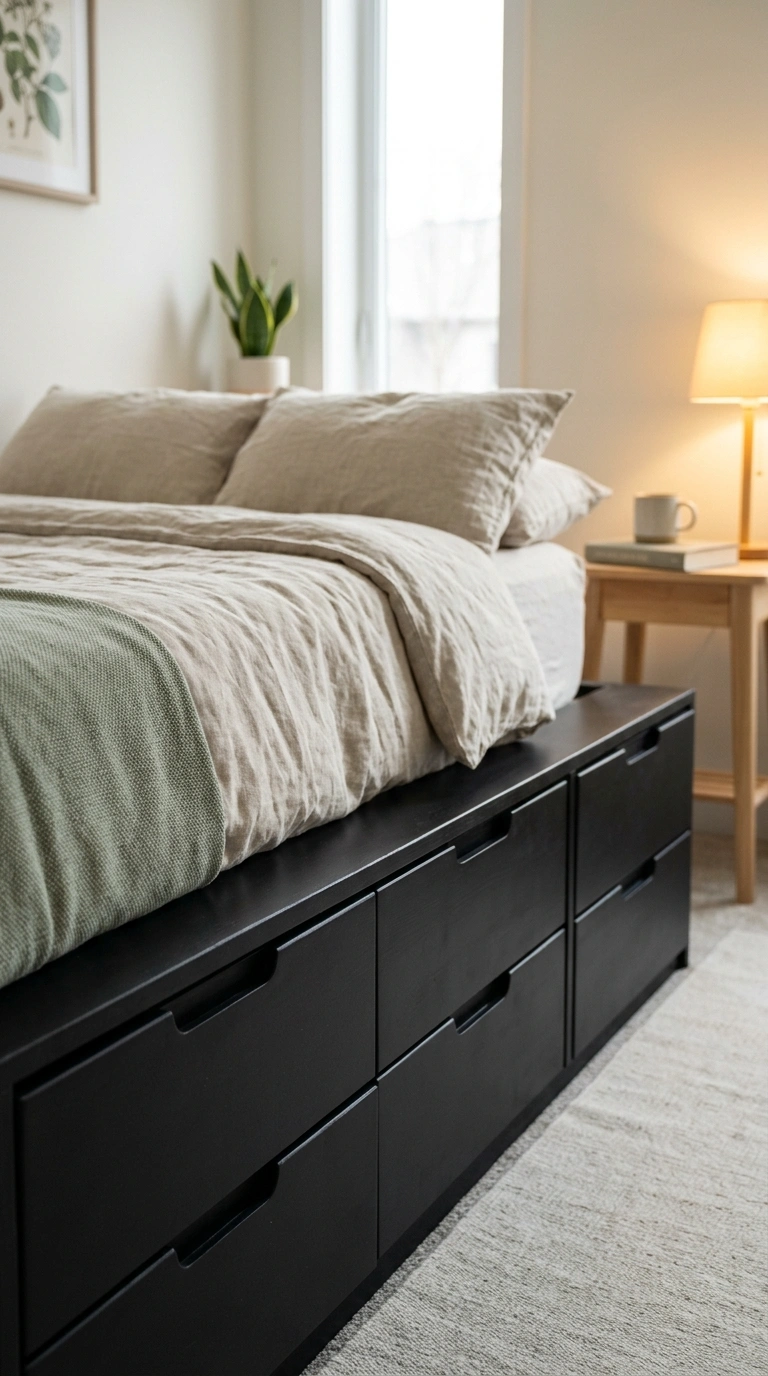
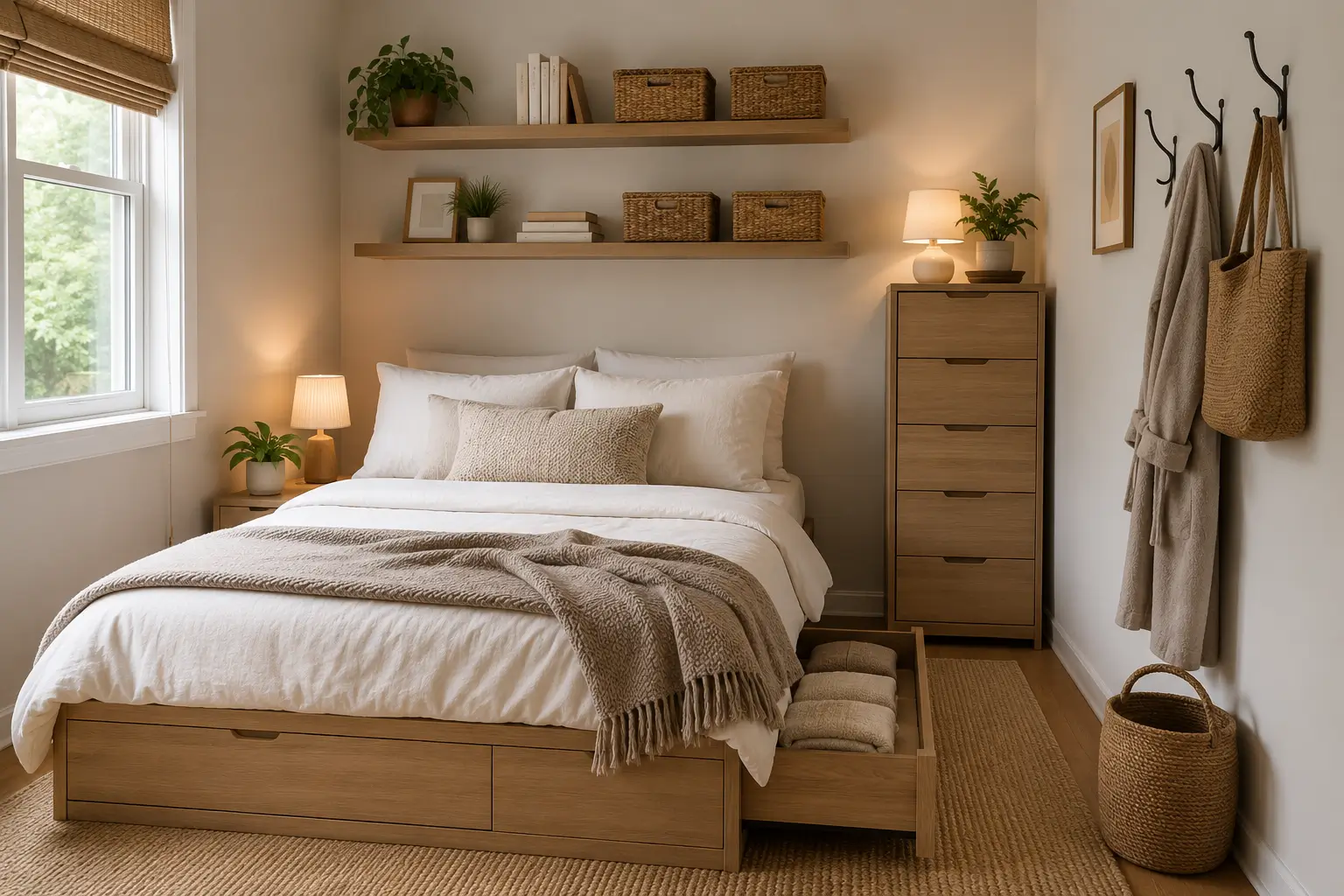
Beds and benches with hidden storage compartments keep small bedrooms clutter-free without sacrificing style, but you have two real paths here, and they suit different situations:
| Option | Pros | Cons |
|---|---|---|
| Storage bed with drawers | Large capacity, no extra furniture footprint | Higher cost, harder to move |
| Storage bench or ottoman | Cheaper, flexible placement | Less capacity, one more piece of furniture |
If your bedroom is genuinely small, the storage bed usually wins because it doesn’t add a second footprint to the room. If you’re mainly storing extra blankets or seasonal items, a bench costs less and does the job just fine.
Before you buy: measure the drawer depth against your existing bed frame height. Under-bed storage only works if the drawers can fully clear the frame.
20. Botanical Nature Art
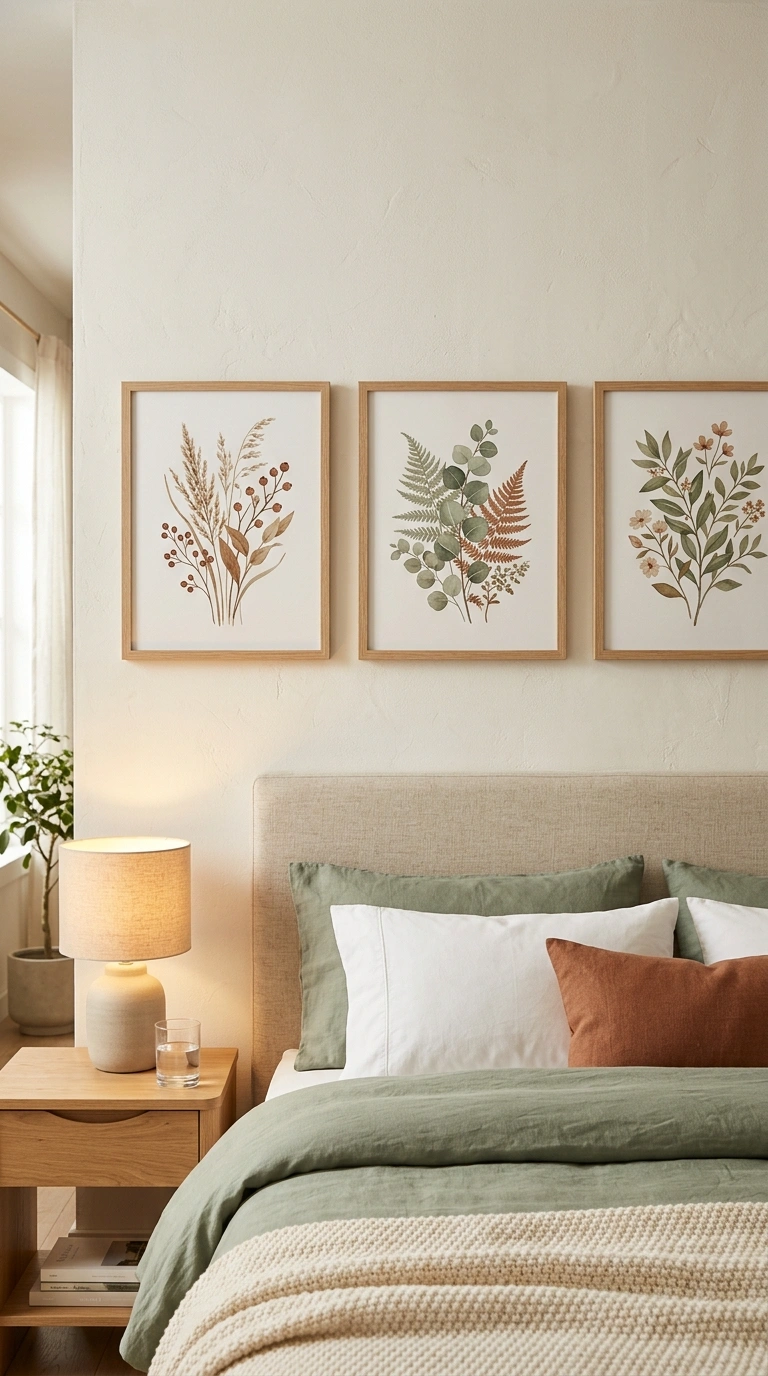
Large-scale botanical prints in muted, earthy tones bring the outdoors in without needing real plants, in shades like sage green, warm rust, and soft cream that match your existing palette.
The gallery grouping formula:
- Use an odd number of prints (3 works best for most walls)
- Keep frames matching in color and material, even if print sizes vary slightly
- Space prints 2-3 inches apart, no more
- Center the grouping so its middle point sits at eye level when seated on the bed, roughly 60 inches from the floor
Three smaller matching prints almost always look more intentional above a bed than one oversized piece, and they’re easier to swap out individually if your taste changes later.
Pick one trend that matches your bedroom’s size, light, and your budget this week, and follow its exact steps before adding a second idea on top. Small, well-executed changes, like a properly sized layered rug or a correctly spaced gallery wall, make a bigger difference than five half-finished ideas at once.
Save your favorite trends to Pinterest so you can find them again when you’re ready to shop.
Key Takeaways
- Warm minimalism depends on texture and lighting, not empty surfaces — an empty white room is cold, not minimal.
- DIY techniques like limewash and slatted wood walls need real steps, not just inspiration; follow the exact process to avoid a patchy result.
- Jewel-tone walls and color-drenched rooms aren’t right for every bedroom — check your natural light and existing furniture first.
- Layering rugs and grouping art both follow specific proportion rules; getting the sizing wrong makes the look feel accidental instead of styled.
- Mixing metals works best with a dominant metal covering roughly 60% of your hardware, not an equal three-way split.
- Storage beds suit small bedrooms better than storage benches, since they don’t add a second furniture footprint.
- Test any bold paint color under both daylight and lamp light before committing, since the look can shift dramatically after dark.
Frequently Asked Questions
What is the most popular bedroom design trend right now?
Warm minimalism and Japandi-style bedrooms lead current bedroom design trends because they focus on calm, clutter-free spaces built with natural materials like oak and linen, rather than empty, stark rooms.
How do I update my bedroom without a full renovation?
Start with a low-effort, high-impact swap: a curved mirror, a layered rug sized correctly, or a warm-toned lamp instead of overhead lighting. These changes cost under $100 and noticeably shift how the room feels.
What colors are trending for bedrooms this year?
Earthy neutrals like terracotta and sand, along with moody jewel tones like emerald and deep plum, are popular bedroom color trends, but jewel tones work best in rooms with strong natural light.
Are dark bedroom walls still in style?
Yes, but they’re not right for every room. Color-drenched rooms and jewel-tone accent walls work best paired with warm lighting and natural wood furniture, and in spaces that get decent daylight during the day.
How can I make a small bedroom feel bigger with these bedroom decor ideas?
Choose a low platform bed if your ceiling is under 8.5 feet, add a storage bed instead of a separate storage bench, and use a statement ceiling color one shade darker than your walls to avoid a boxed-in feeling.