22 Small Narrow Hallway Ideas to Make the Most of Your Space
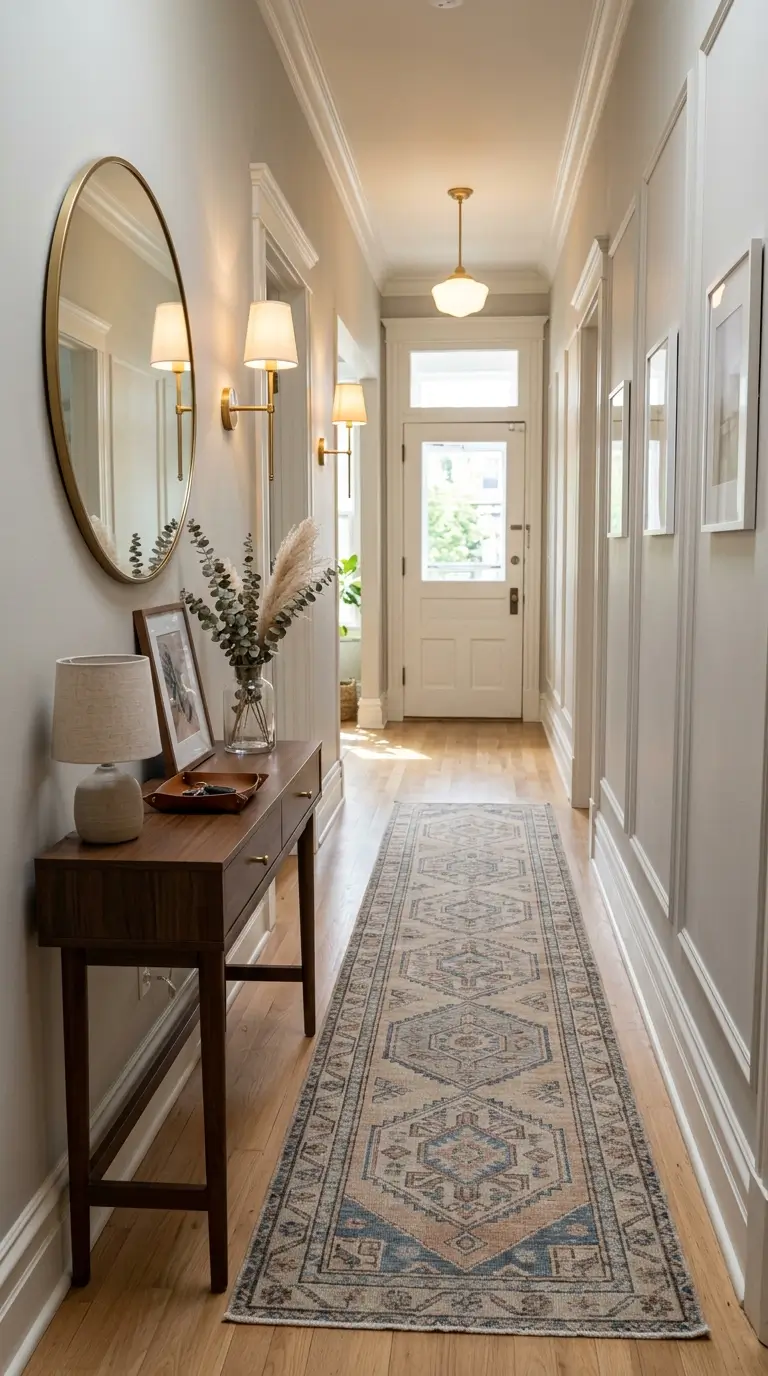
Hallways get ignored more than almost any other space in a home, mostly because they feel too narrow or too awkward to bother decorating. I used to think the same thing about mine, until I realized a hallway is actually one of the easiest spaces to make a big visual impact in, precisely because expectations for it are so low. Nobody expects a hallway to be styled, so even a small effort tends to stand out. A narrow hallway also has a few specific challenges that a living room or bedroom does not, mostly around width and light, but there are real solutions for both. Below are 22 ideas to help you make the most of a small, narrow hallway, whether you are working with a long straight corridor or a short connector between two rooms. Try a few that fit your space, and you will likely be surprised at how much difference a hallway can make to how a whole home feels.
1. Console Table Runway
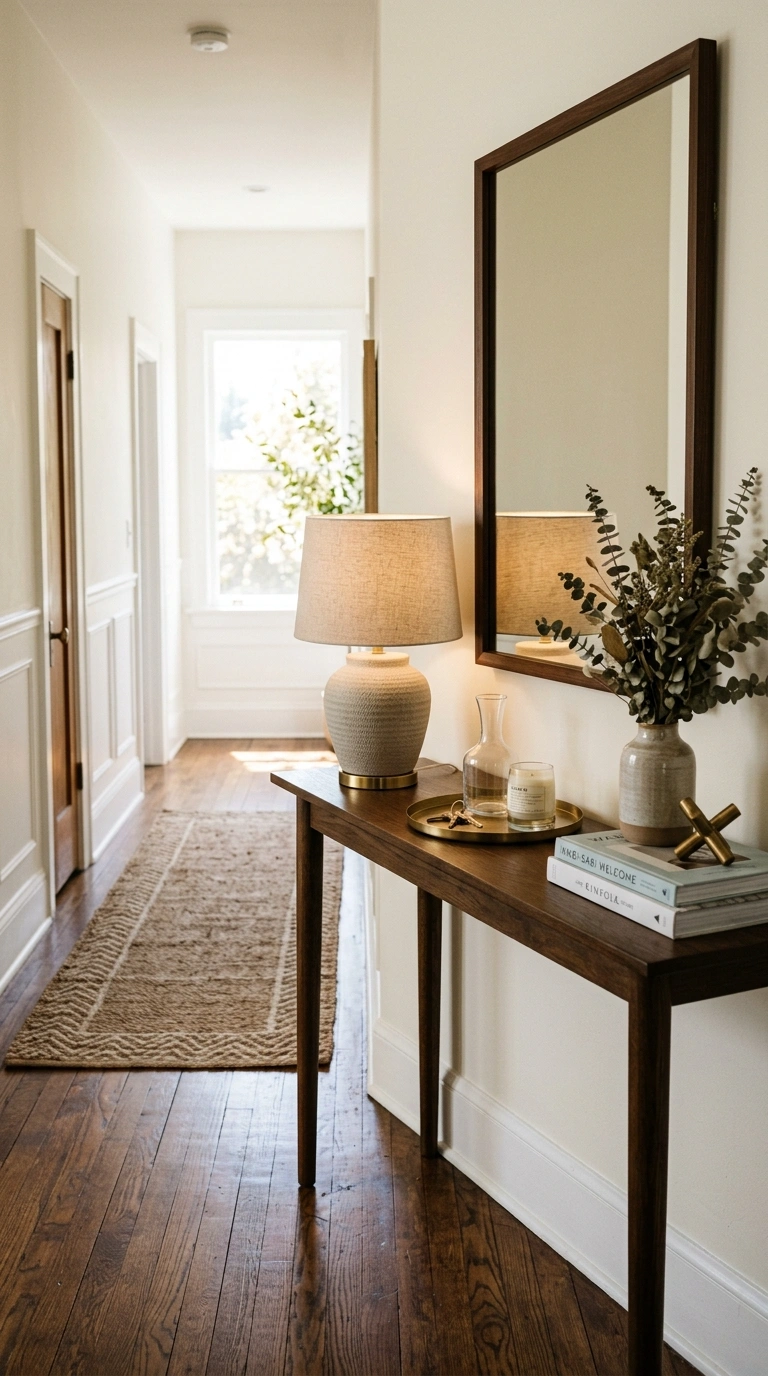
A slim, narrow console table pushed against one wall gives a hallway a sense of purpose and a spot to catch keys, mail, or a small vase, without eating into the already limited walking space. Choose a table no deeper than 12 to 14 inches so it does not create a bottleneck for anyone passing through. Style the top simply, with a lamp, a small tray, and one or two decorative objects, rather than letting it become a catch all for clutter. This idea works especially well in a hallway that leads from an entryway into the main part of the house, giving guests a clear, welcoming stop along the way. A console with a shelf underneath adds a bit of hidden storage for shoes or bags, making the piece both decorative and genuinely useful in a busy household.
2. Gallery Wall Runner
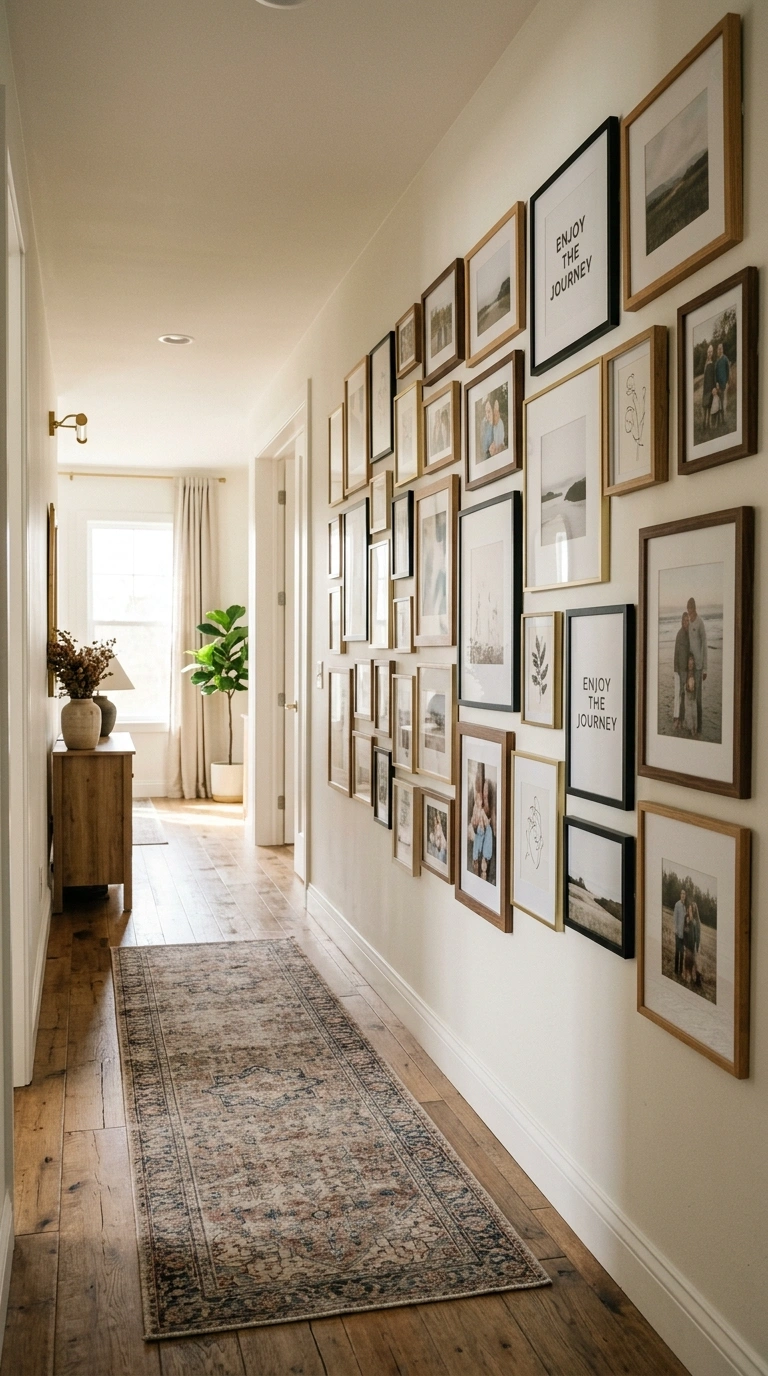
A long, narrow gallery wall running the length of a hallway turns an otherwise plain corridor into one of the most personal, interesting spaces in the home. Space the frames evenly, usually about 57 inches from the floor to the center of each frame, and keep two to three inches between pieces so the arrangement feels intentional rather than crowded. Mix frame sizes and orientations, but keep the finishes consistent, mostly wood or black metal, so the wall reads as one cohesive collection rather than a random assortment. This idea works especially well in longer hallways, since it gives you plenty of wall space to fill with family photos, art prints, or a mix of both. It also gives visitors something to look at while walking through, turning a functional passage into part of the home’s story.
3. Runner Rug Choice
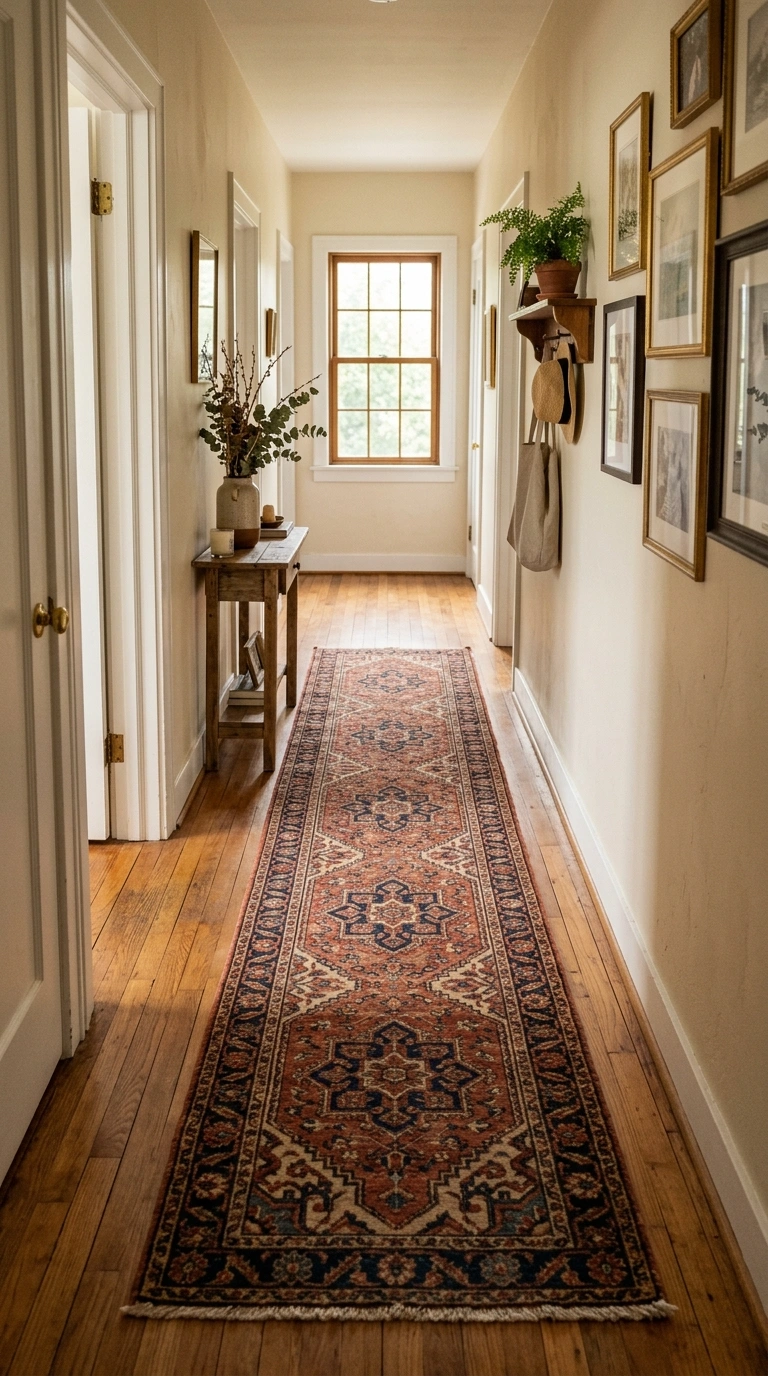
A long, narrow runner rug down the center of a hallway softens hard flooring and adds a clear visual path from one end of the space to the other. Choose a rug with a busier pattern or a darker color than your main living spaces, since hallway rugs tend to see more foot traffic and hide dirt better in a patterned design. Leave a few inches of flooring visible on either side of the runner rather than choosing one that stretches wall to wall, which keeps the hallway from feeling even narrower than it already is. This idea is both practical and decorative, muffling footstep noise while adding warmth and texture to a space that is often just hard flooring and blank walls. Choose a low pile rug so it does not create a tripping hazard in a tight walking area.
4. Wall Mounted Sconces
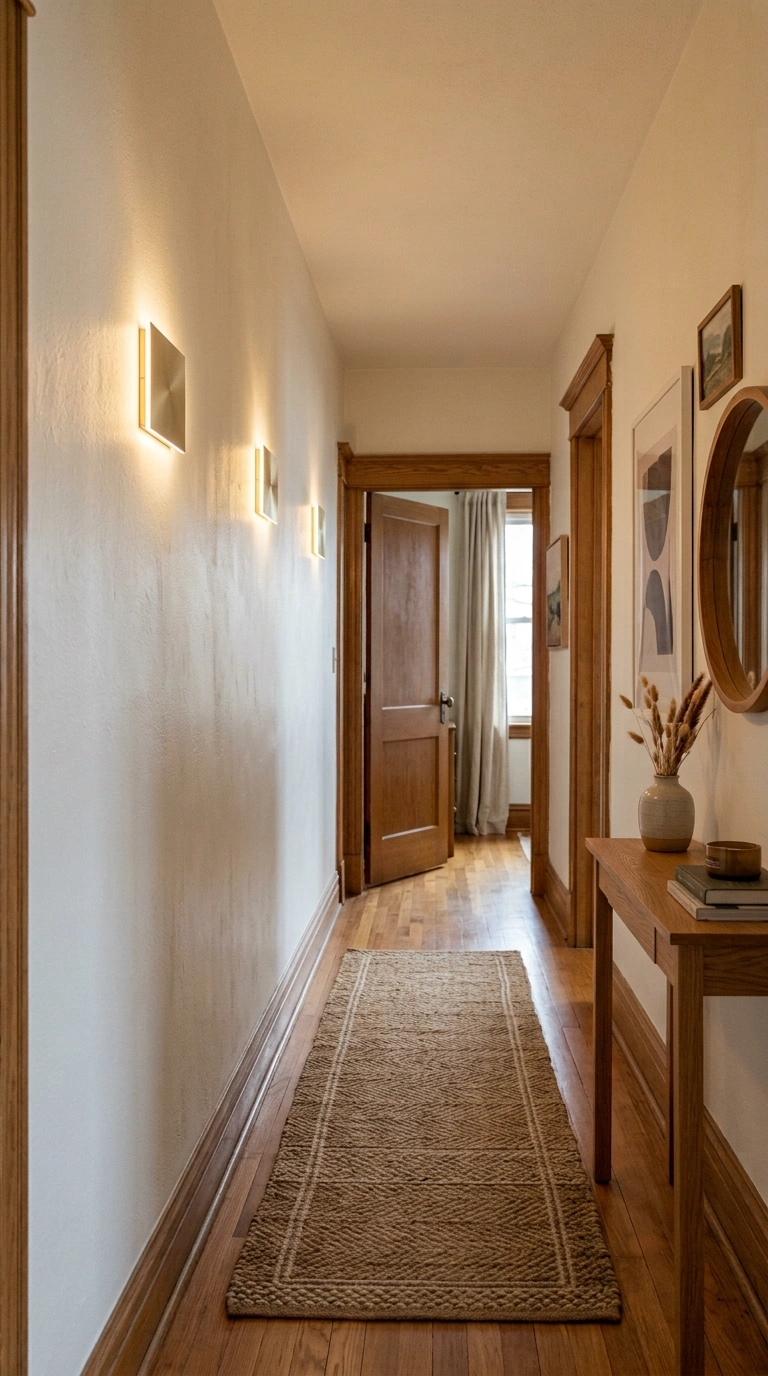
Wall mounted sconces, spaced evenly along a hallway, provide better and more even lighting than a single overhead fixture at one end of the space. This is especially useful in longer hallways, where a single light source often leaves the far end feeling dim and uninviting. Choose simple, low profile sconces that do not protrude too far from the wall, since a narrow hallway cannot afford fixtures that stick out and get bumped into while walking through. Space them every four to six feet along the wall for even, layered lighting throughout the space. This idea requires some electrical work, so it may need a professional unless you are comfortable with existing wiring, but it makes a noticeable difference in how warm and finished a hallway feels, especially in the evening when natural light is not an option.
5. Mirror Wall Trick
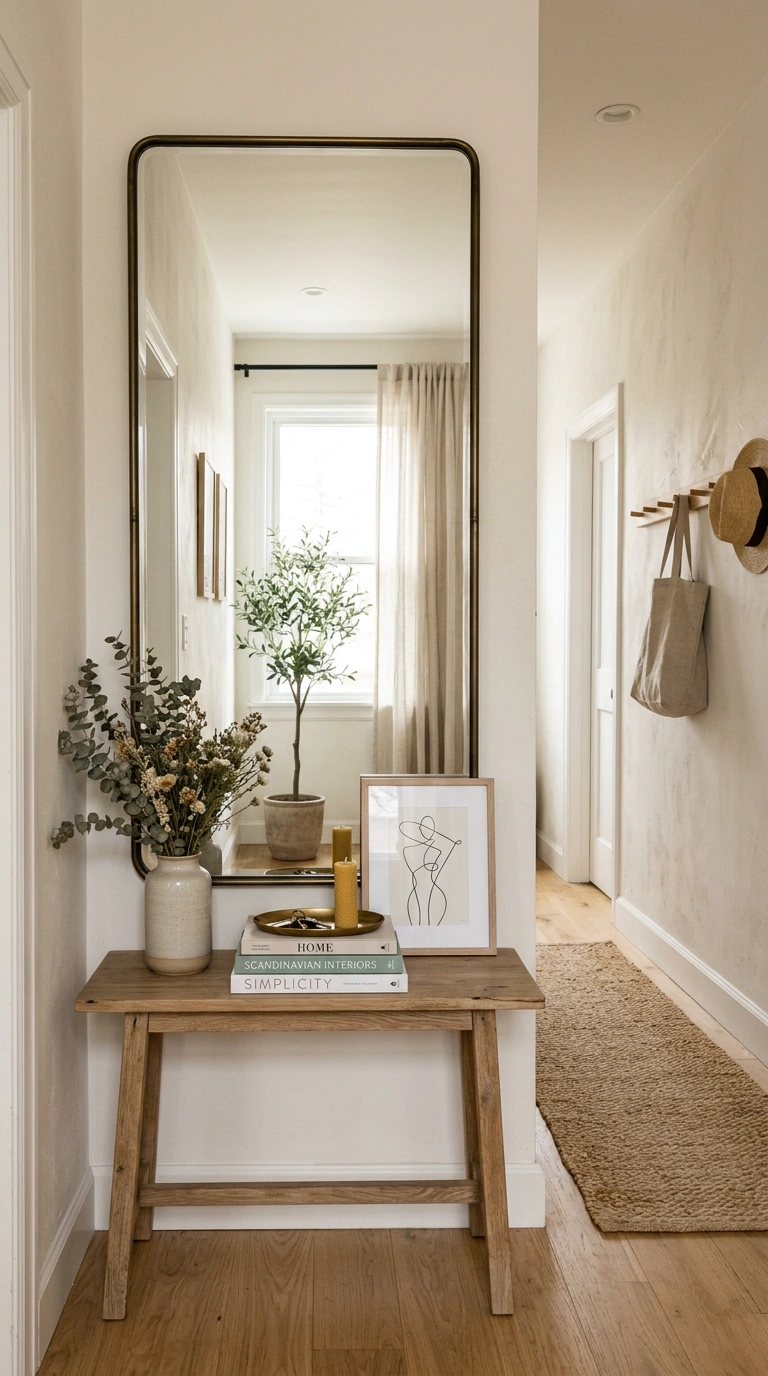
A large mirror, or a series of smaller mirrors, hung along one wall of a narrow hallway reflects light and makes the space feel considerably wider than it actually is. Choose a mirror that is tall rather than wide if your hallway is especially narrow, since a wide mirror can start to feel bulky in a tight passage. Position it across from a window or light source if possible, so it reflects natural daylight further down the hallway. This is one of the most effective tricks on this list for a hallway that feels cramped or dark, since mirrors do more to visually expand a small space than almost any other single decorating choice. Pair the mirror with a slim console table below it for a finished, intentional vignette rather than a mirror hung on its own.
6. Floating Shelf Display
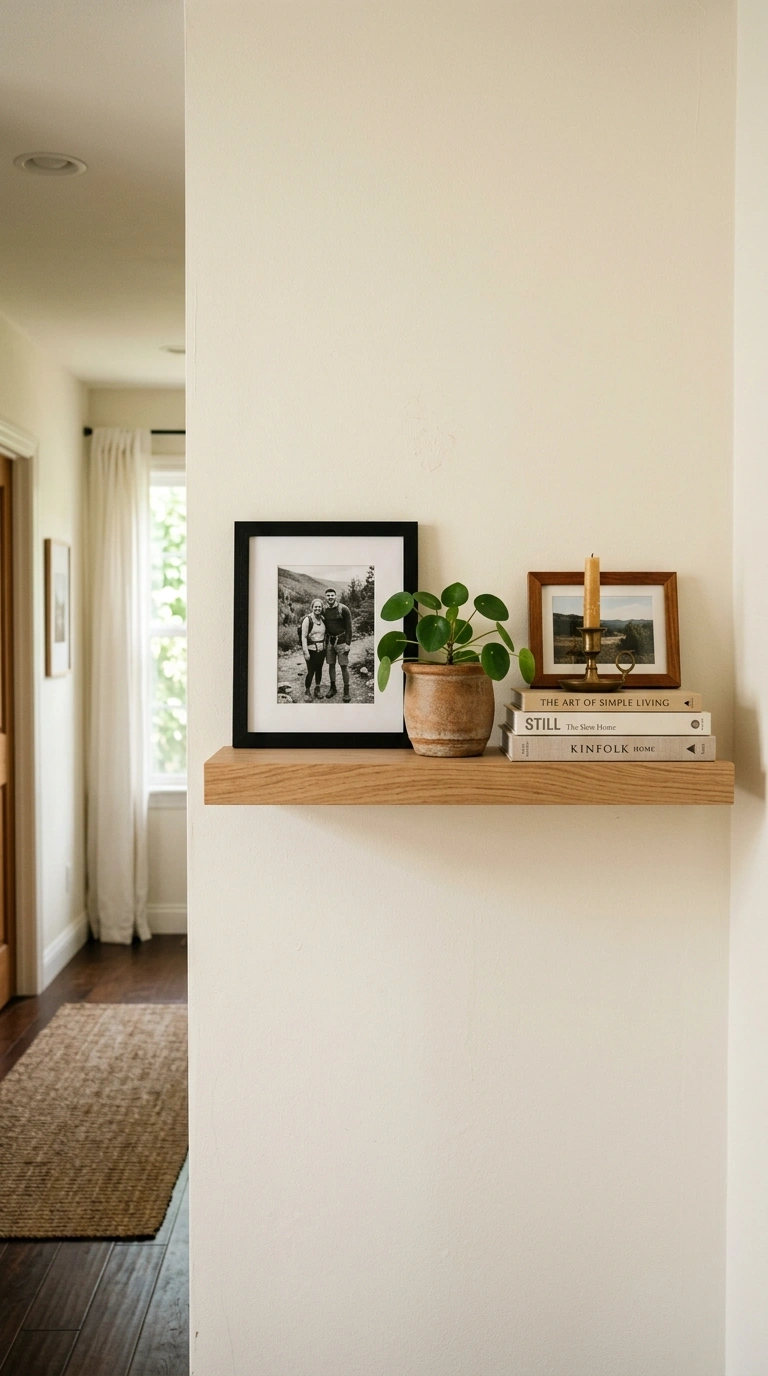
A single floating shelf, mounted at eye level along a hallway wall, gives you a place to display a few small objects, like framed photos, a small plant, or a stack of books, without taking up any floor space. Style the shelf with just three or four items, leaving plenty of negative space so the arrangement does not feel cluttered in a narrow passage. This idea works especially well in hallways too tight for a console table, since a shelf adds decorative interest without creating a bottleneck for anyone walking through. Choose a shelf in a simple wood or painted finish that matches your existing trim or door color for a cohesive look. This is a low cost, low commitment idea that still makes a noticeable difference in how finished and considered the hallway feels.
7. Vertical Stripe Paint
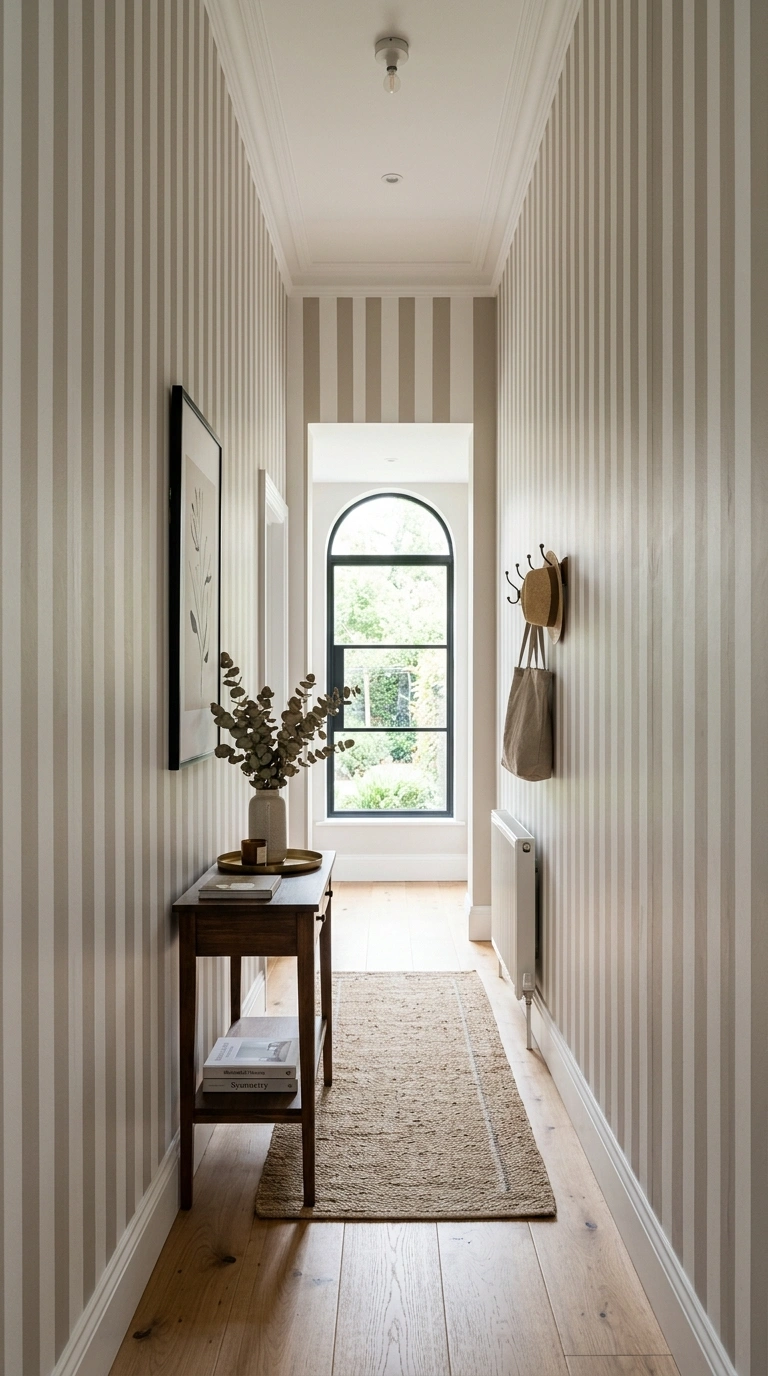
Painting vertical stripes on a hallway wall, alternating between a wall color and white, or two closely related tones, tricks the eye into perceiving a taller, more open space than the hallway’s actual dimensions. Use painter’s tape to create clean, even stripes, keeping the width consistent throughout, usually somewhere between six and twelve inches depending on the scale of the space. This idea works particularly well in a hallway with a low ceiling, since the vertical lines draw the eye upward rather than emphasizing the narrow width of the walls. Keep the color contrast fairly subtle rather than using two starkly different colors, so the stripes read as a sophisticated architectural detail rather than a bold, busy statement. This is a moderate weekend project that requires some patience with taping but delivers a genuinely transformative result.
8. Slim Bench Seat
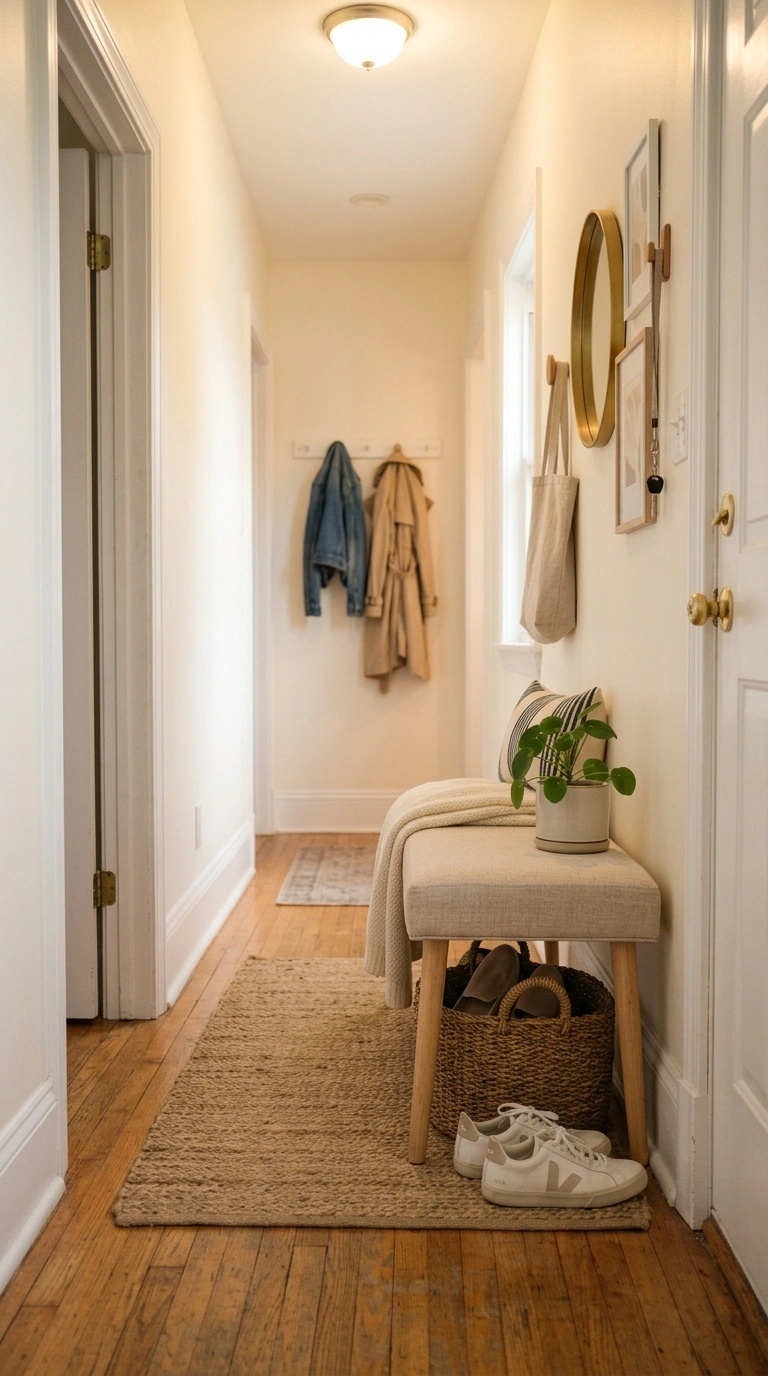
A slim bench, no deeper than 12 inches, placed at the end of a hallway or near an entry point, gives you a spot to sit while putting on shoes without creating an obstacle in the walking path. Choose a bench with simple, tapered legs and a cushioned or upholstered top in a durable fabric, since this piece will likely see daily use. Add a small basket underneath for shoes or bags, keeping the floor around the bench clear and tidy. This idea works especially well at the junction between an entryway and a hallway, giving that transition point a clear function beyond just passing through. It is a practical addition that also adds a soft, inviting texture to a space that is often just hard flooring and blank walls from end to end.
9. Statement Light Fixture
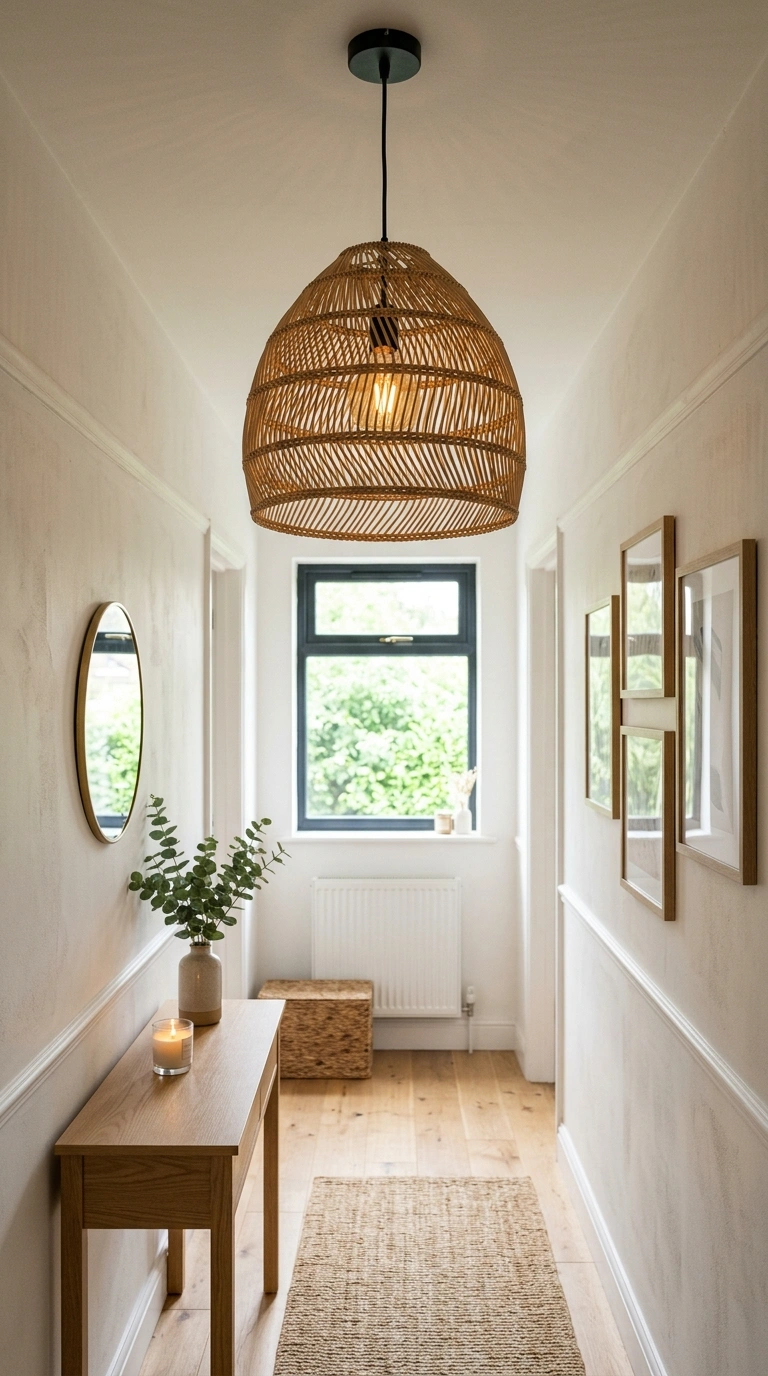
A single, eye catching pendant or flush mount light fixture at the center of a hallway ceiling draws the eye upward and becomes a small design moment in a space that is otherwise easy to overlook. Choose a fixture with an interesting shape or texture, like a woven rattan pendant or a sculptural glass globe, rather than a plain builder grade fixture. This works especially well in shorter hallways or landings, where a single fixture is doing all the visual work for the entire space. Keep the scale appropriate to the hallway’s width, choosing something more compact than you might use in a larger room. This is one of the most affordable and highest impact updates on this list, since swapping a light fixture usually takes less than an hour and instantly elevates the whole feel of the passage.
10. Hooks and Baskets
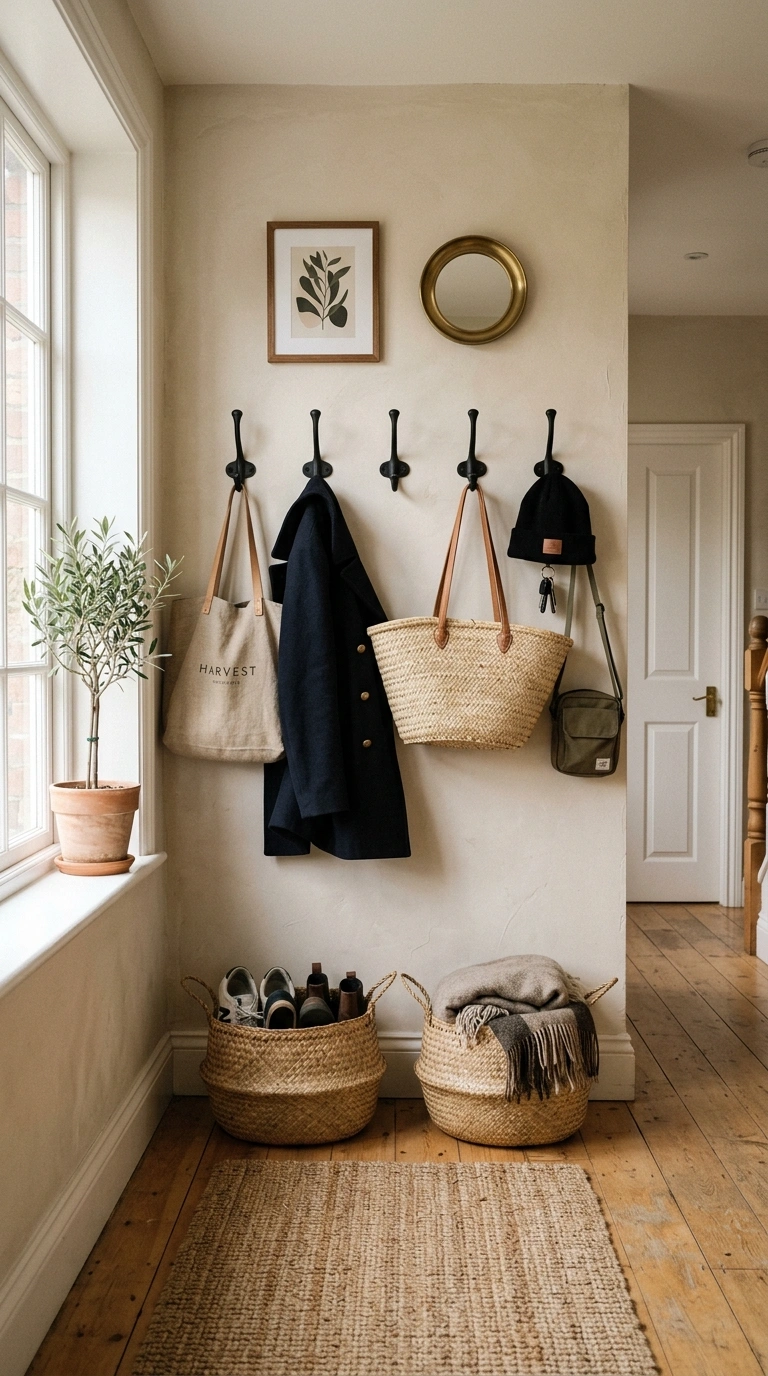
A row of simple hooks, mounted at a consistent height along a hallway wall, gives every member of the household a designated spot for bags, coats, or scarves, keeping clutter off the floor and out of other rooms. Pair the hooks with a woven basket or two on the floor beneath them for shoes or additional storage. Choose hooks in a simple black metal or brass finish, spaced evenly along the wall for a clean, organized look rather than a random scattering. This idea is especially useful in hallways that double as a secondary entry point from a garage or side door, where coats and bags tend to pile up otherwise. It is a practical, low cost solution that solves a real everyday problem while still looking intentional and styled.
11. Bold Wallpaper Accent
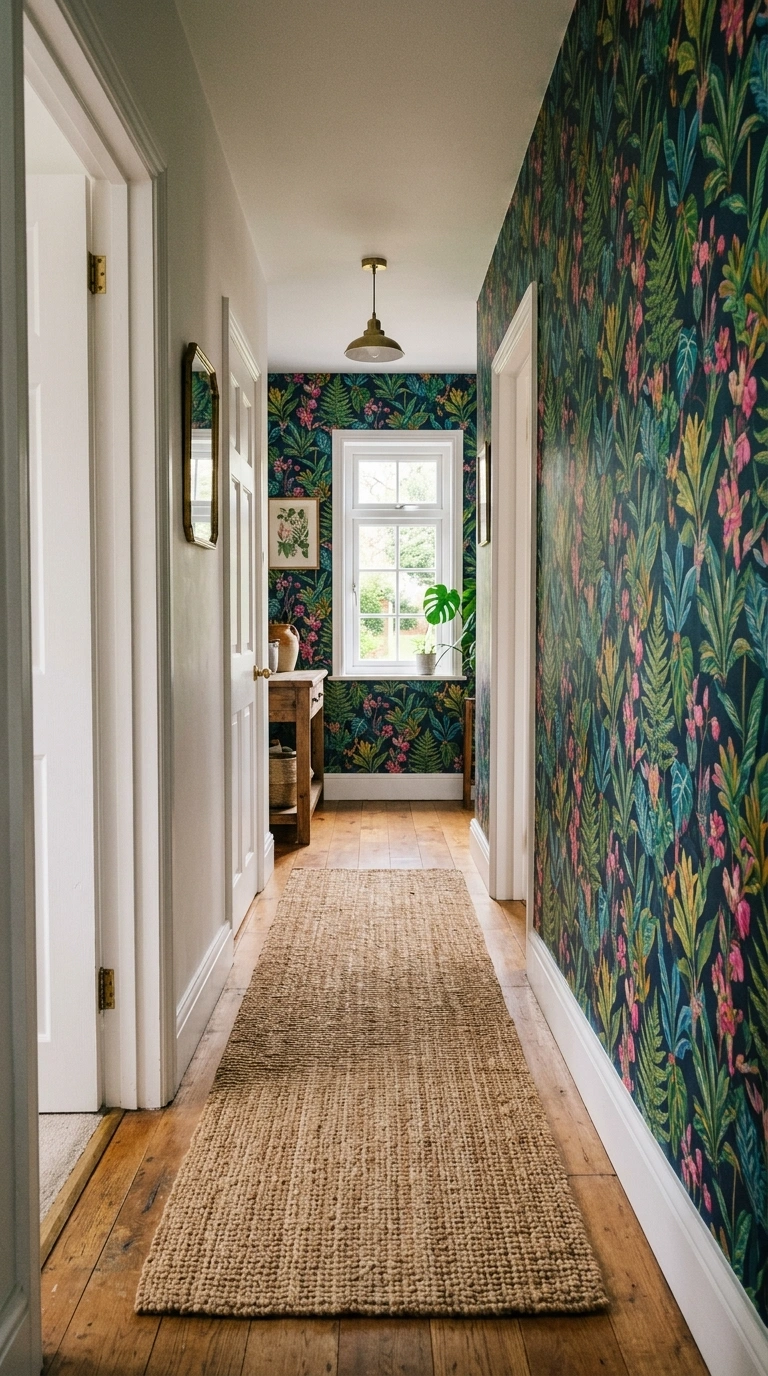
A hallway is one of the best places in a home to try a bold or busy wallpaper pattern, since the smaller, contained nature of the space makes an intense pattern feel exciting rather than overwhelming the way it might in a larger room. Choose a pattern with movement, like a botanical print or a geometric design, and consider running it the full length of the hallway for maximum impact. Pair the wallpaper with simple white trim and a plain runner rug so the pattern remains the clear focal point of the space. This idea works especially well for anyone who loves a specific pattern but has been hesitant to commit to it in a larger, more frequently redecorated room. A hallway offers a lower stakes place to experiment with something bold and memorable.
12. Picture Ledge Shelving
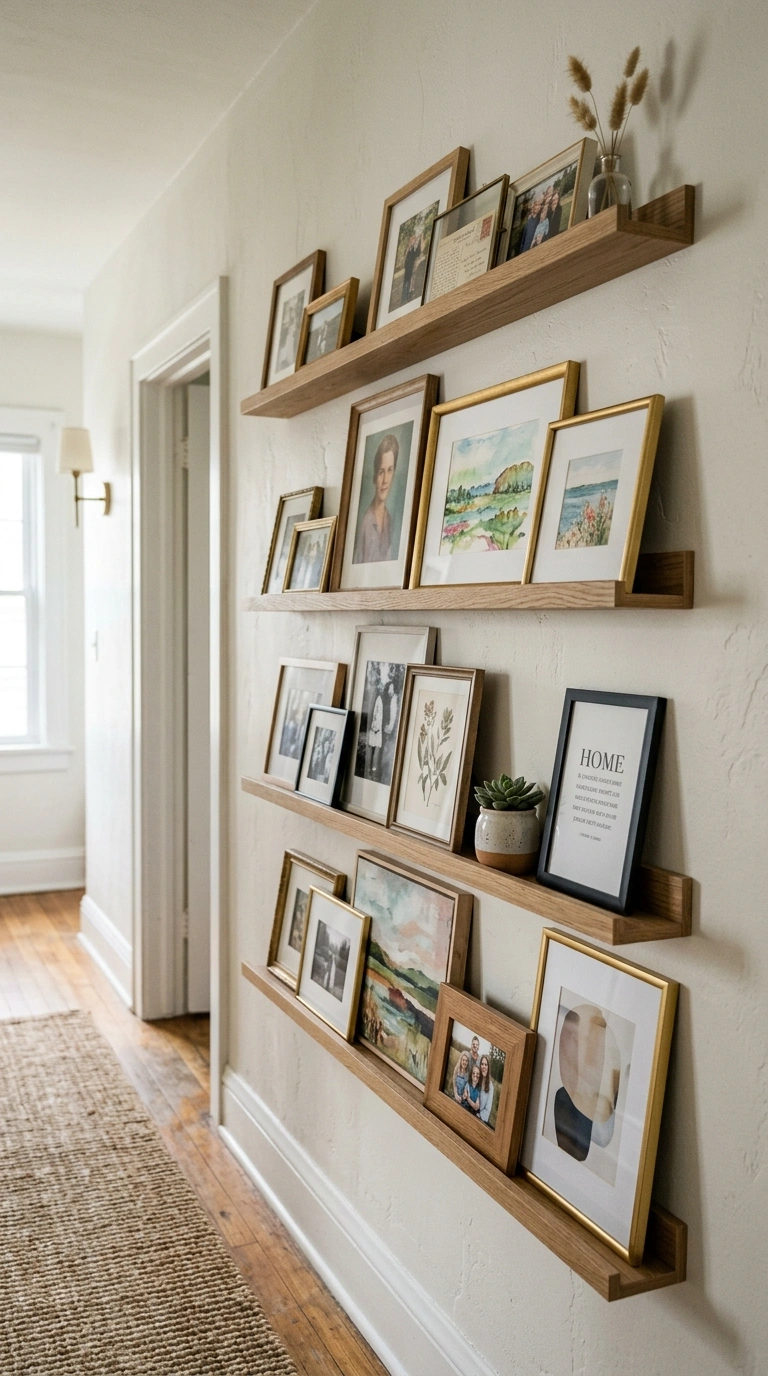
Narrow picture ledge shelves, mounted in a row along a hallway wall, let you display a rotating collection of framed art and photos without committing to permanent nail holes for each piece. Lean the frames against the wall rather than hanging them, overlapping a few slightly for a more layered, collected look. This idea is especially useful for anyone who likes to update their displayed photos and art regularly, since rearranging a picture ledge takes seconds compared to rehanging a traditional gallery wall. Choose ledges in a simple painted or natural wood finish that blends with your existing trim. This works especially well in narrow hallways, since the shelves themselves only protrude a couple of inches from the wall, preserving as much walking space as possible while still adding real visual interest.
13. Narrow Console Storage
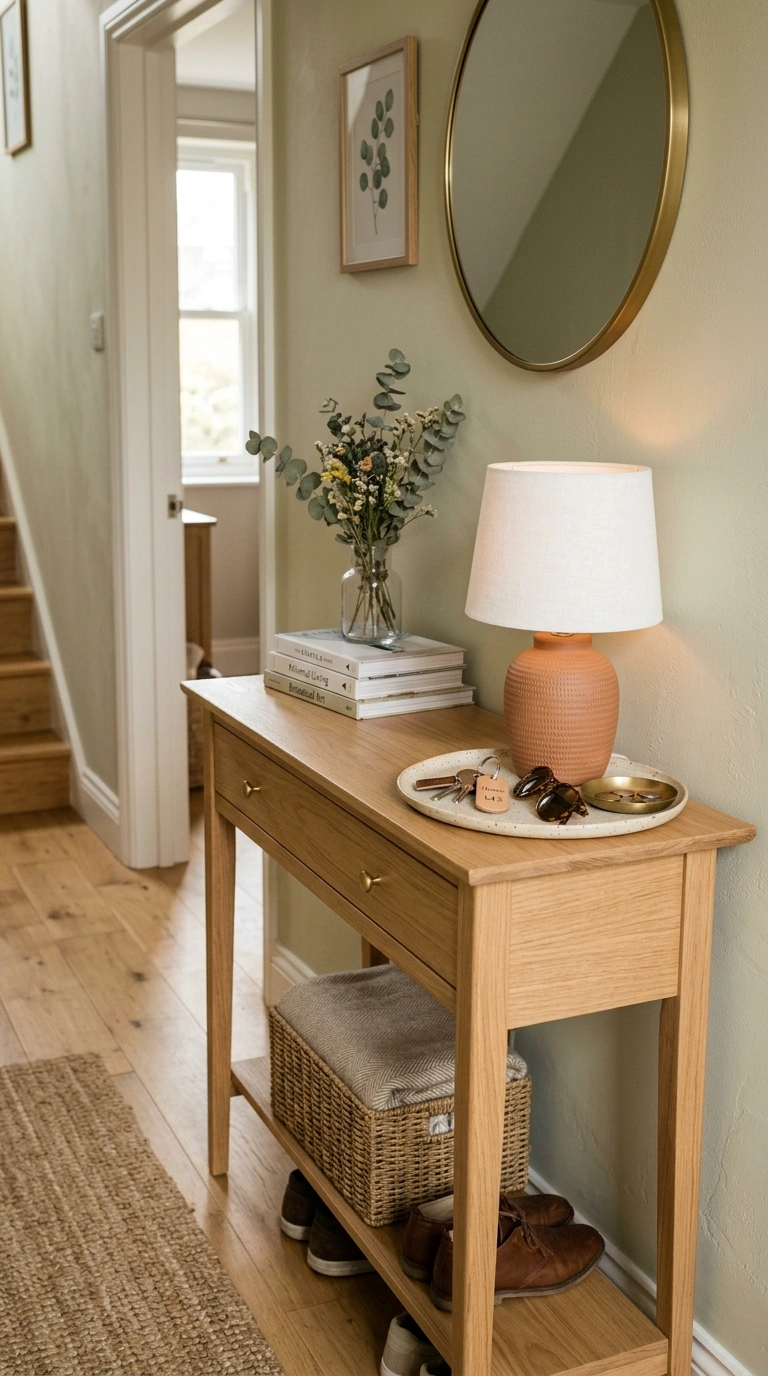
A console table with drawers or closed cabinet doors, rather than an open shelf design, gives a hallway hidden storage for mail, keys, sunglasses, and other small items that tend to accumulate near an entry point. Choose a piece no deeper than 12 to 14 inches to avoid narrowing the walking path, and look for one with at least one drawer for genuinely useful storage rather than just a decorative surface. Style the top with a small tray for keys, a lamp, and one or two decorative objects, keeping the surface itself relatively clear. This idea works especially well in households where mail and keys tend to pile up on any available surface, giving those items a designated, hidden home instead of a visible pile at the front of the house.
14. Arched Doorway Detail
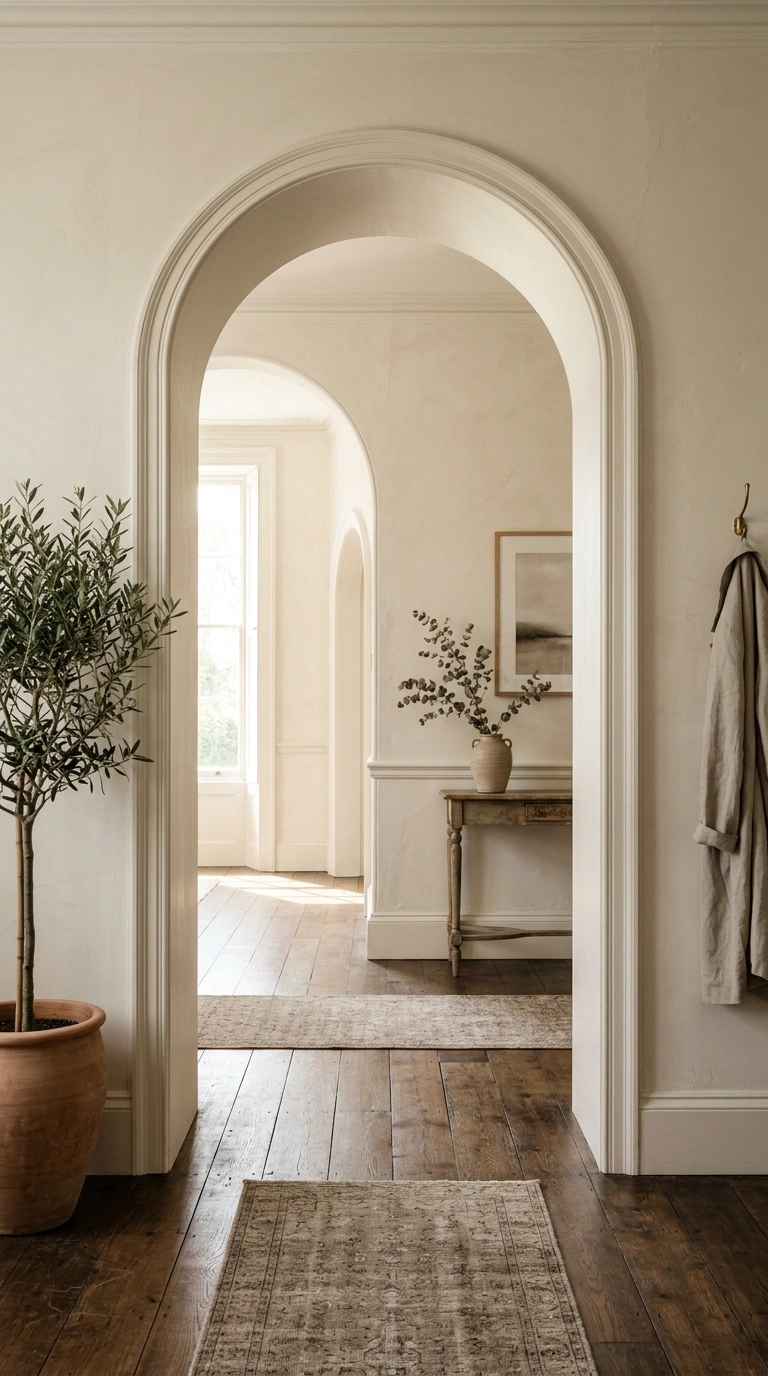
If your hallway connects to another room through a doorway, adding an arched detail to that opening, either through actual construction or a decorative arch molding kit, softens the transition and adds architectural interest to an otherwise plain passage. This detail works especially well in homes with a more traditional or European inspired style, though it can also feel fresh and current in a more modern space depending on the finish and paint color you choose. Paint the arch the same color as the surrounding walls for a subtle, architectural statement, or a contrasting color for a bolder look. This is a bigger project than most ideas on this list, typically requiring a contractor for a structural arch, but it creates a lasting, meaningful change to how the hallway and adjoining room relate to each other.
15. Layered Rug Runners
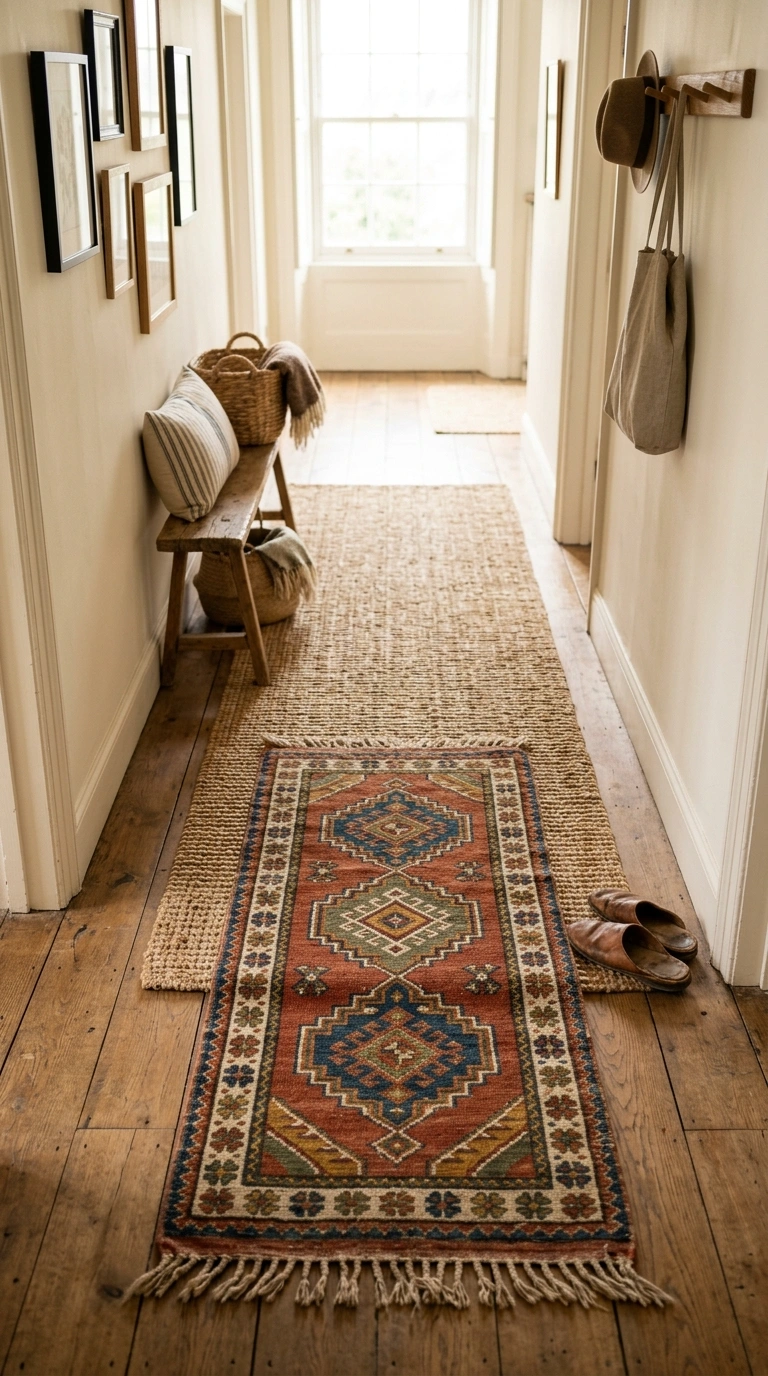
Two runner rugs, layered with a larger jute or sisal runner underneath and a smaller patterned runner on top, add texture and pattern to a hallway floor without needing a single busy rug to do all the visual work. This layered approach works especially well in longer hallways, where a single rug can start to feel monotonous over a long stretch. Position the smaller top rug closer to one end of the hallway, like near an entry point, rather than centering it along the entire length, for a more natural, considered look. This idea adds warmth underfoot in a space that is often just hard flooring, while also giving you two opportunities to introduce pattern or color into a hallway that might otherwise rely entirely on wall decor for visual interest.
16. Wall Niche Display
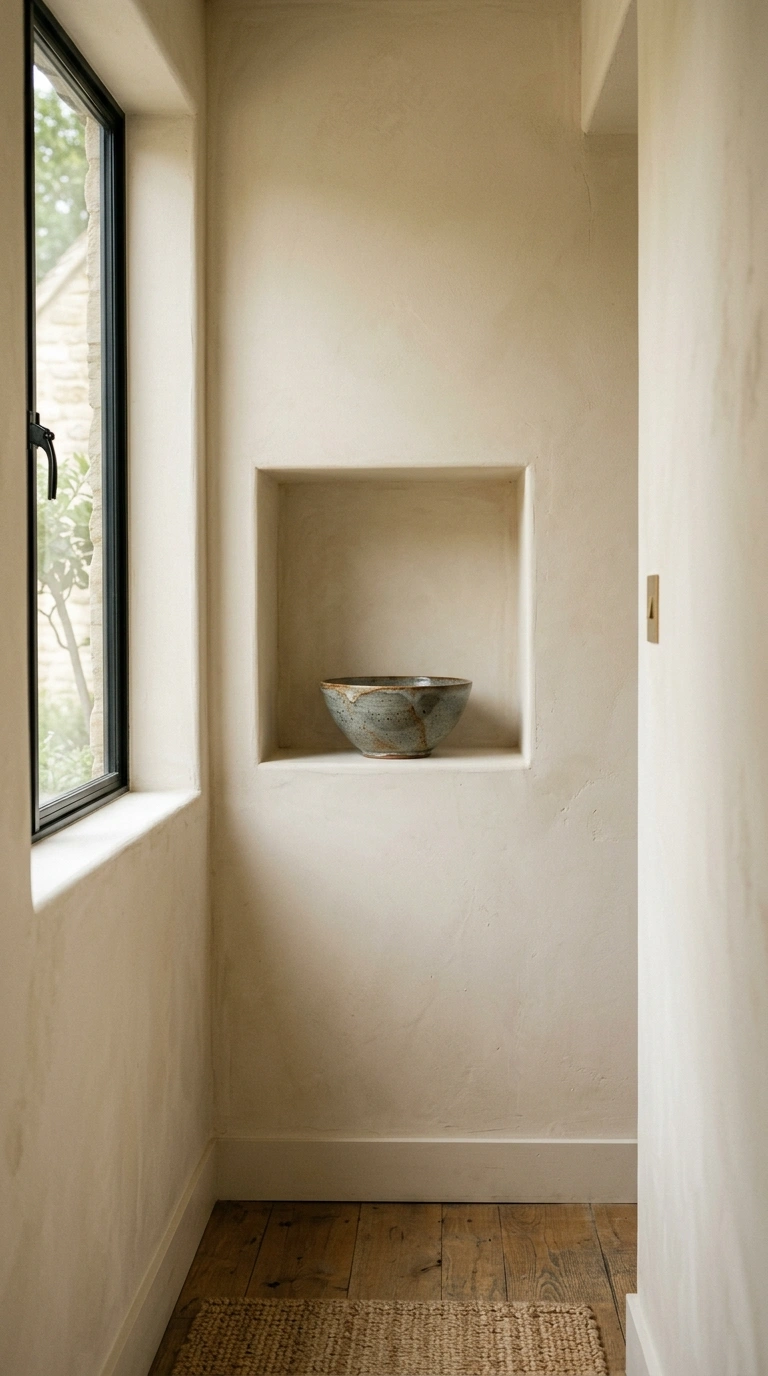
A small recessed wall niche, built into an interior hallway wall, creates a built in display spot for a single object, like a small plant, a piece of art, or a decorative bowl, without taking up any floor space at all. This detail requires some construction, since it involves opening up the wall between the studs, but it creates a genuinely custom, architectural feature in a space that would otherwise remain completely flat and undecorated. Style the niche simply, with just one or two objects, so it reads as an intentional design moment rather than a cluttered shelf. This idea works especially well in very narrow hallways where even a small floating shelf might feel like it is encroaching on the walking path, since a recessed niche adds zero depth to the wall itself.
17. Corner Plant Styling
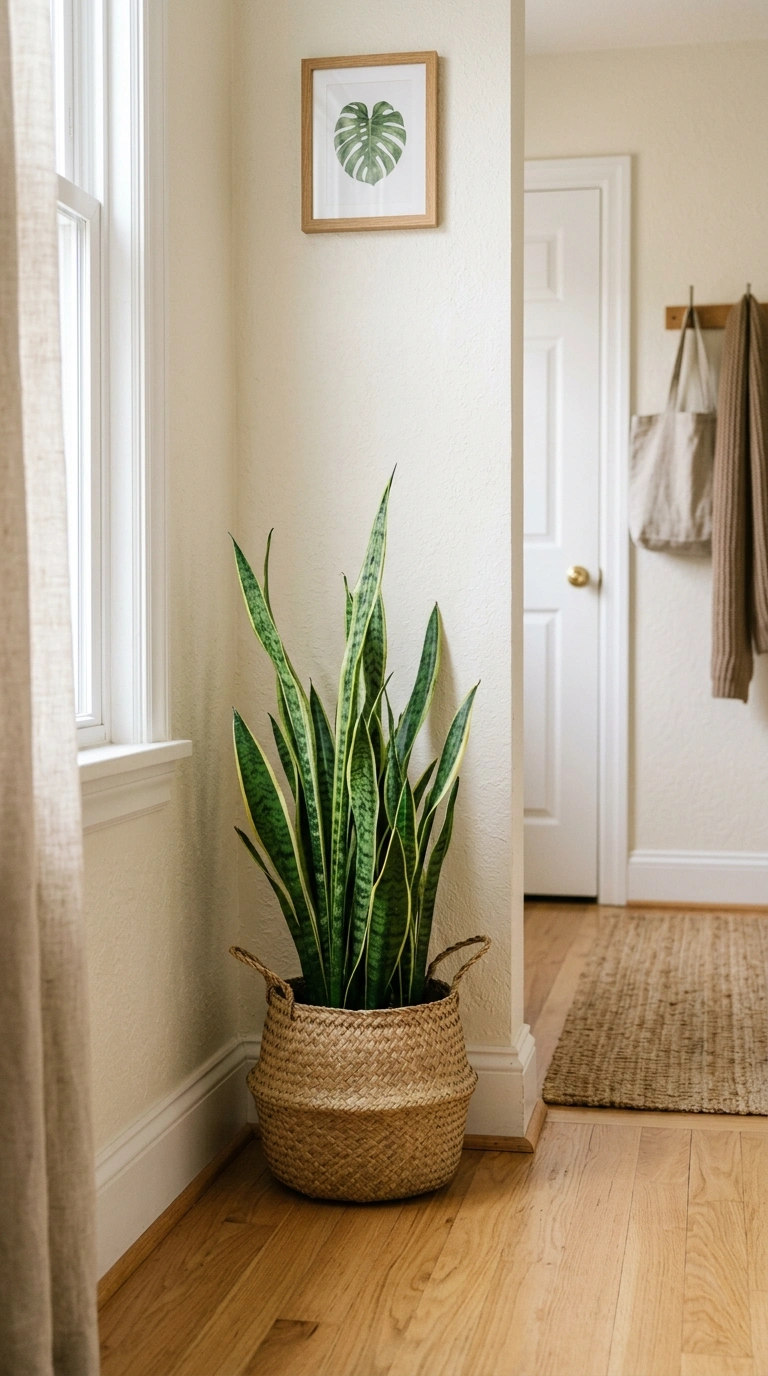
A tall, narrow potted plant, placed in an unused corner where a hallway meets another room, softens the hard angles of the space and adds a bit of life and greenery to an area that might otherwise feel purely functional. Choose a plant with a narrow, upright growth habit, like a snake plant or a slim fiddle leaf fig, rather than anything that spreads wide and might block the walking path. Place it in a simple woven basket planter or a ceramic pot that complements your existing hallway finishes. This idea works especially well at the junction point between a hallway and a living space, marking the transition between the two areas naturally. It is a low cost, low commitment way to add warmth to a corner that would otherwise remain empty.
18. Coat Closet Nook
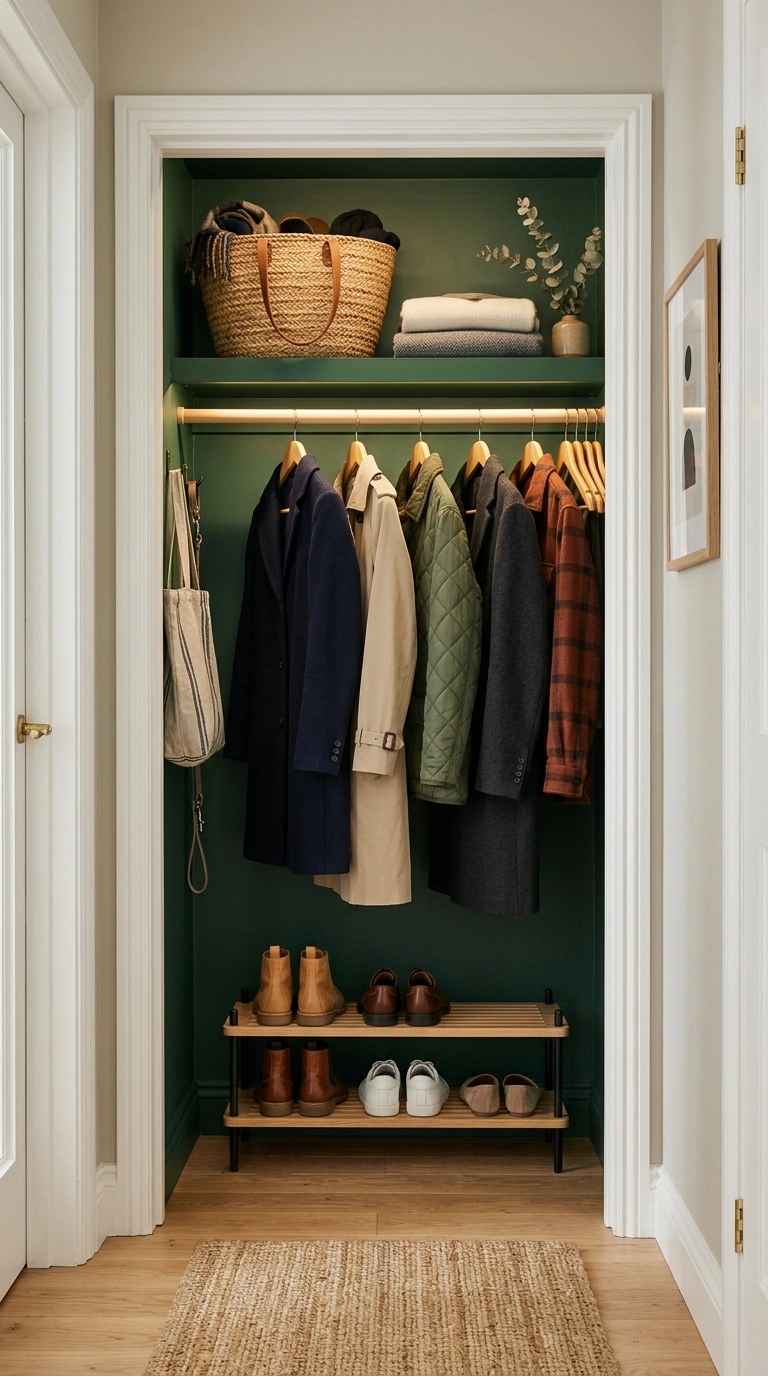
If your hallway includes a coat closet, styling the interior with matching hangers, a shoe rack, and a small basket for accessories turns a purely functional space into one that feels considered every time you open the door. Paint the interior of the closet a soft, contrasting color, like a deep green or navy, for a small surprise moment that adds character to an otherwise overlooked space. Add a battery operated light if the closet does not already have one, making it easier to find things quickly. This idea is especially useful in hallways that serve as the main entry point from a garage or front door, since a well organized coat closet keeps clutter contained rather than spilling out into the hallway itself, making the whole space feel more finished and tidy.
19. Board and Batten Wall
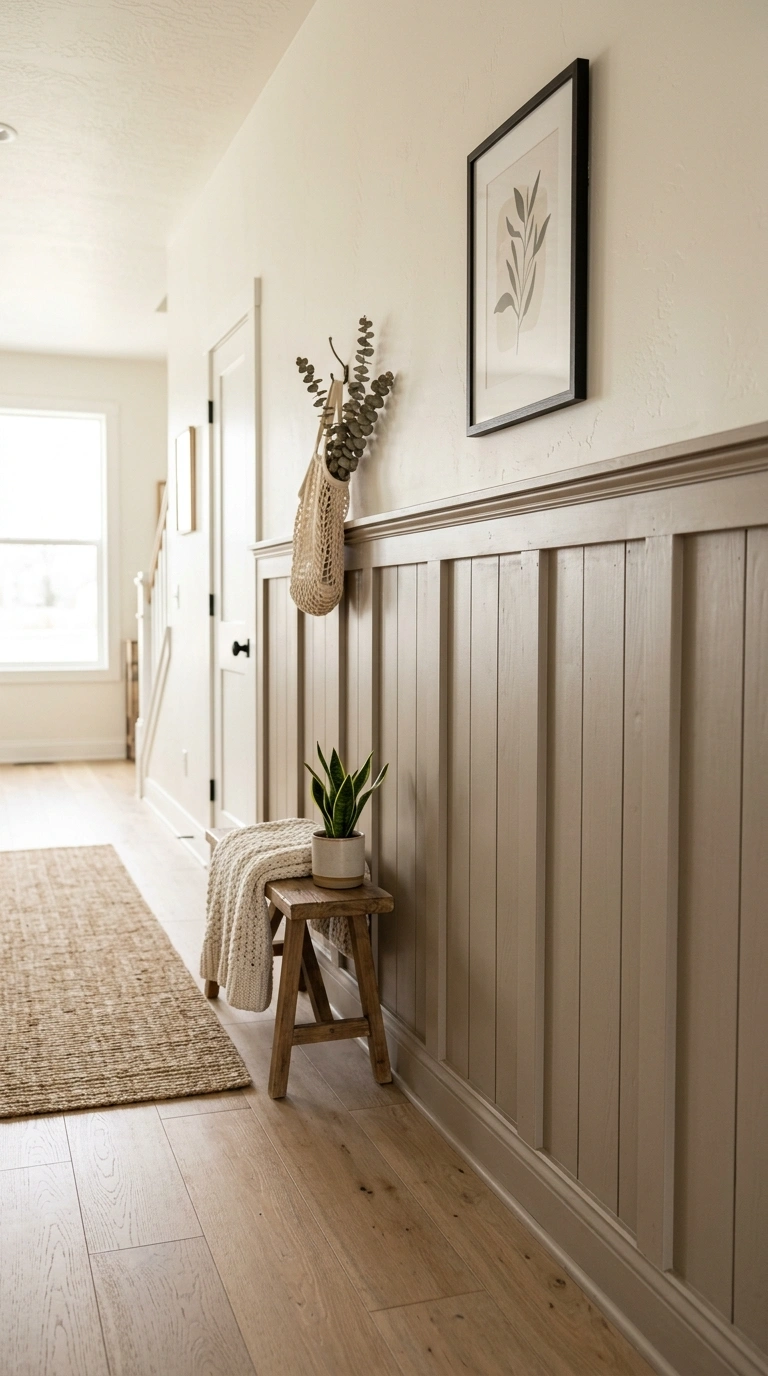
Board and batten paneling, installed along the lower half of a hallway wall and painted a soft neutral or a deeper accent color, adds architectural texture and a bit of durability to a space that sees frequent foot traffic and occasional bumps from bags or furniture being carried through. This detail works especially well when paired with a chair rail or cap at the top of the paneling, creating a clear visual break between the paneled lower section and the painted or wallpapered upper wall. Choose a paint color for the paneling that is either the same as the upper wall for a subtle, textural look, or a contrasting tone for a bolder, more defined statement. This is a moderate weekend project for anyone comfortable with basic trim work, and it adds real durability along with visual interest.
20. Ceiling Pendant Row
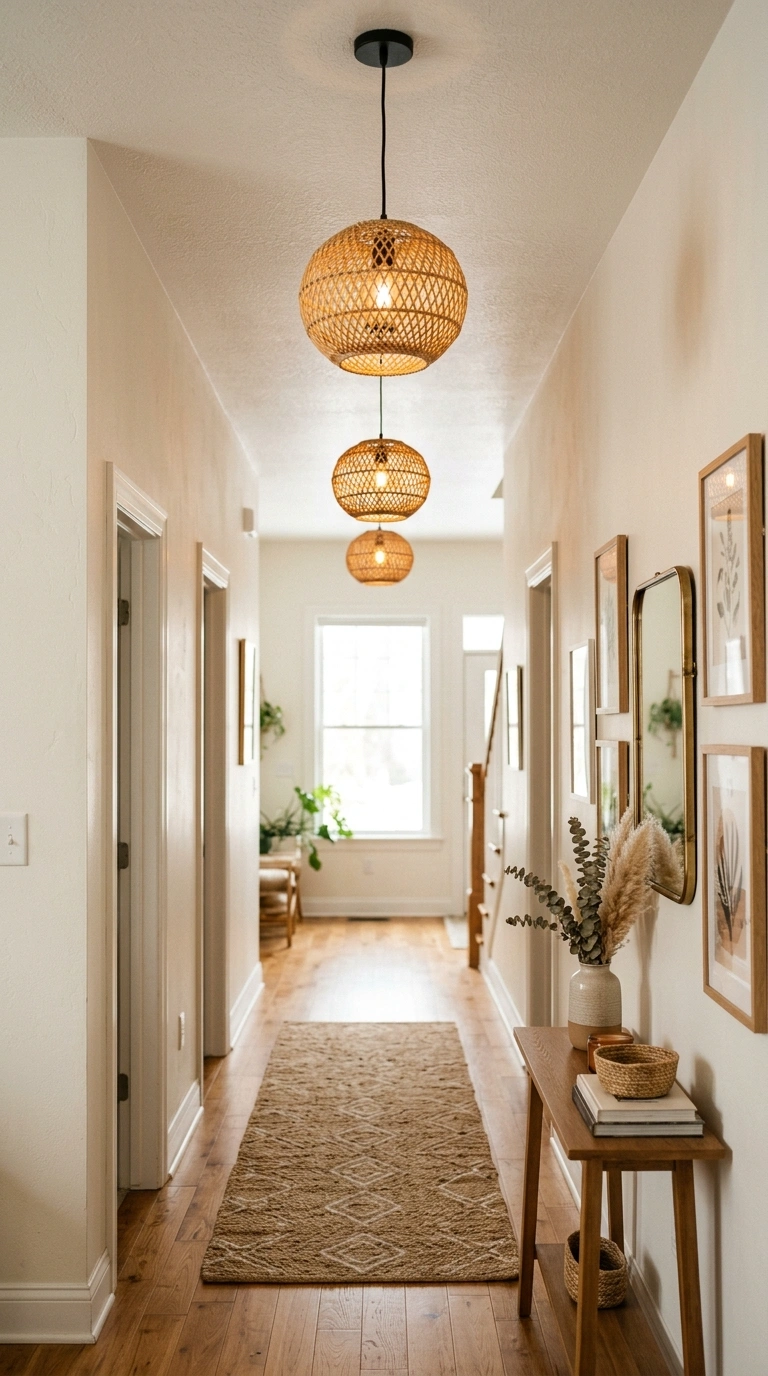
A series of two or three small pendant lights, hung in a row along the length of a longer hallway ceiling, creates a more custom, intentional lighting plan than a single central fixture. Space the pendants evenly, choosing a simple, cohesive style, like woven rattan shades or small glass globes, so the repetition feels rhythmic rather than random. This idea works especially well in hallways with higher ceilings, where a single flush mount fixture might otherwise feel lost or insufficient for the length of the space. Keep the pendant cords or stems a consistent length so the fixtures hang at the same height throughout the hallway. This is a moderate project involving some electrical work, but it creates a genuinely elevated, boutique feeling in a space that most homes leave completely overlooked.
21. Bench With Hooks
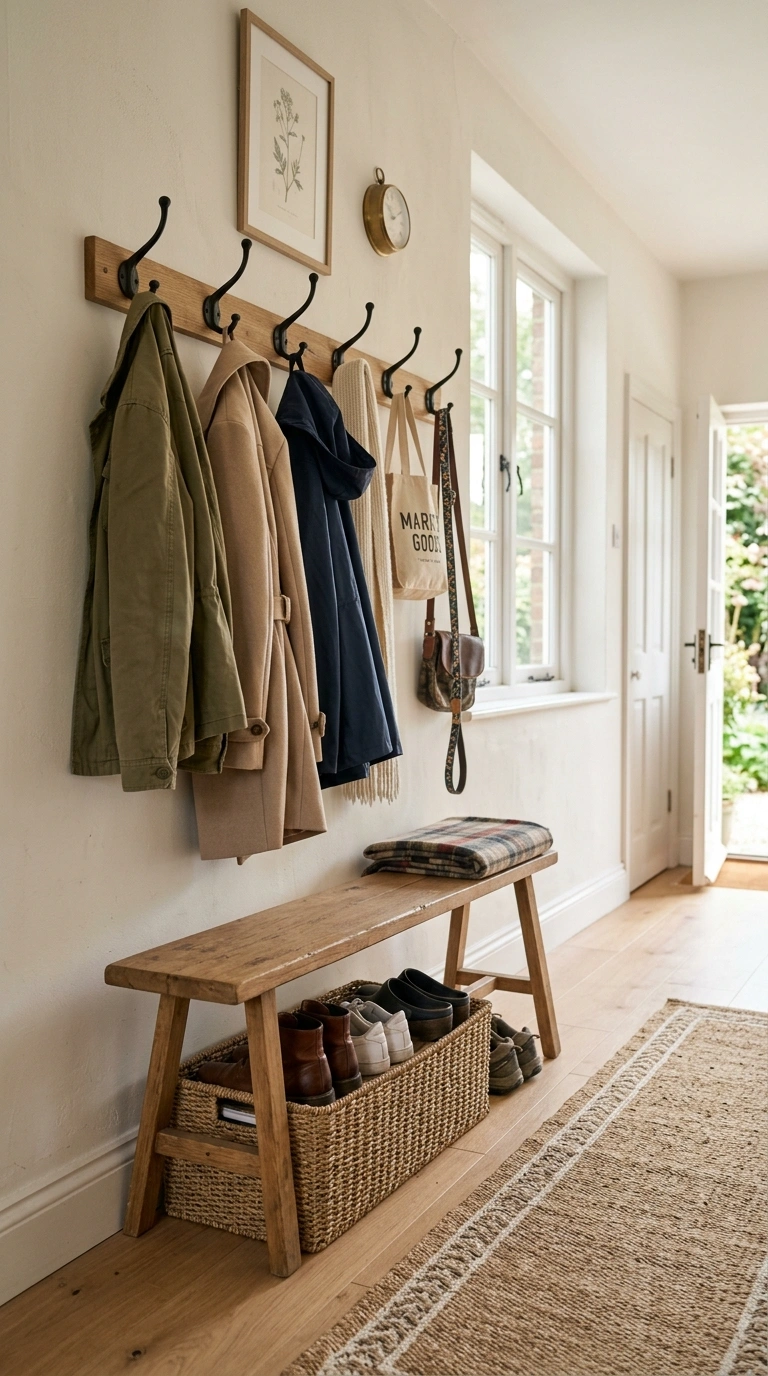
A combination piece featuring a bench seat with a row of hooks mounted directly above it creates an efficient, all in one landing zone at the end of a hallway or near an entry point. Choose a bench with a slim profile and a durable, easy to clean seat cushion, paired with simple black metal or brass hooks spaced evenly above it. This piece works especially well in households with kids, since it gives everyone a designated spot to sit while putting on shoes and a place to hang bags or coats immediately after walking in. Add a woven basket underneath the bench for shoes, keeping the floor around it clear and tidy. This is one of the more practical, multi functional ideas on this list, solving several everyday organization problems in one compact footprint.
22. Framed Mirror Cluster
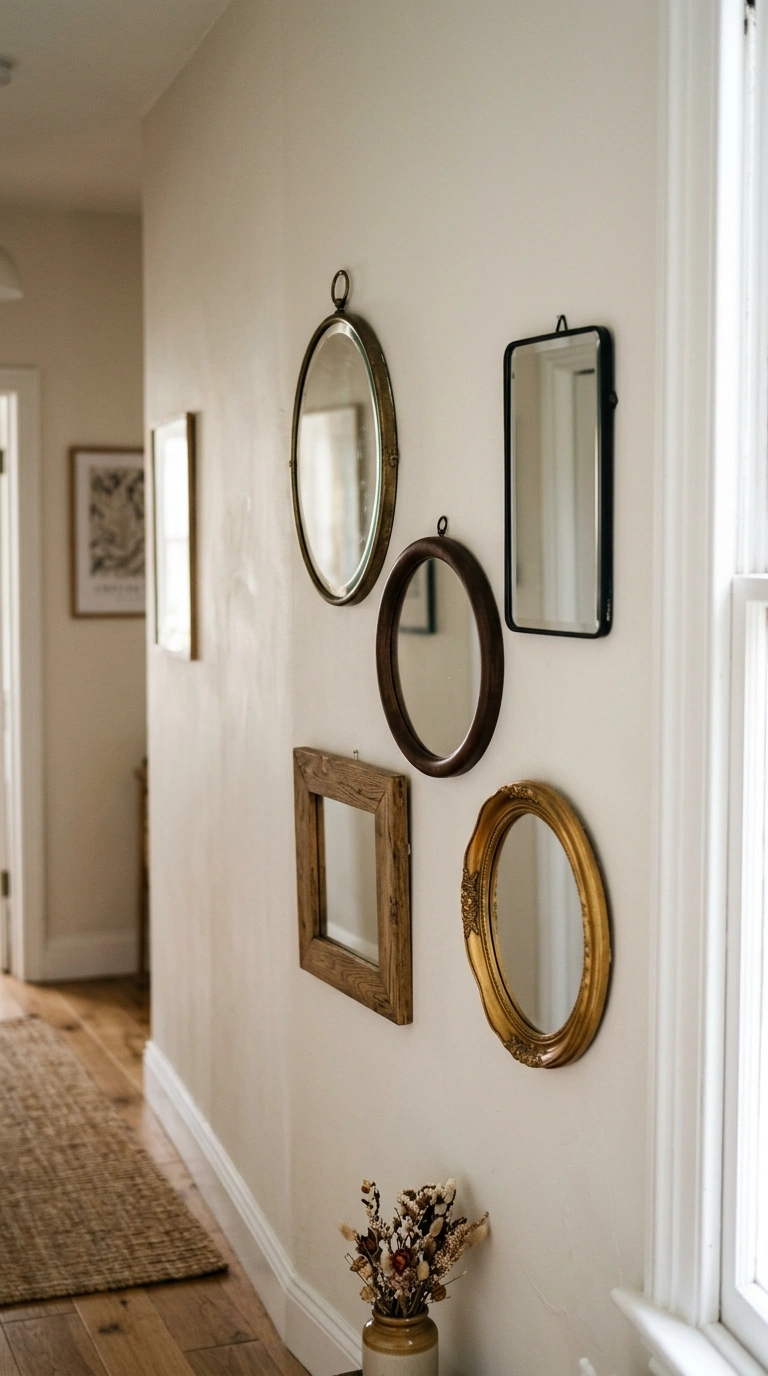
A cluster of three to five small framed mirrors, arranged together on one wall of a narrow hallway, creates visual interest and reflects light throughout the space, similar to a single large mirror but with a more collected, gallery like feel. Choose mirrors in varying shapes, like a mix of round, oval, and rectangular frames, but keep the frame finishes consistent, mostly wood or black metal, so the cluster reads as one cohesive grouping rather than a random assortment. Lay the mirrors out on the floor first to plan the spacing before hanging anything, aiming for a loose, slightly asymmetrical arrangement rather than a perfectly even grid. This idea works especially well in hallways that get some natural light from a nearby window, since the mirrors will bounce that light further down the length of the space.
You do not need a full renovation to make a narrow hallway feel bigger and more finished. Start with something simple, like a runner rug or a mirror, and add more as you find the time and budget. Save this list to Pinterest so you have it ready the next time you are ready to give your hallway some attention.