18 Neutral Bedrooms That Feel Warm, Layered, and Stylish
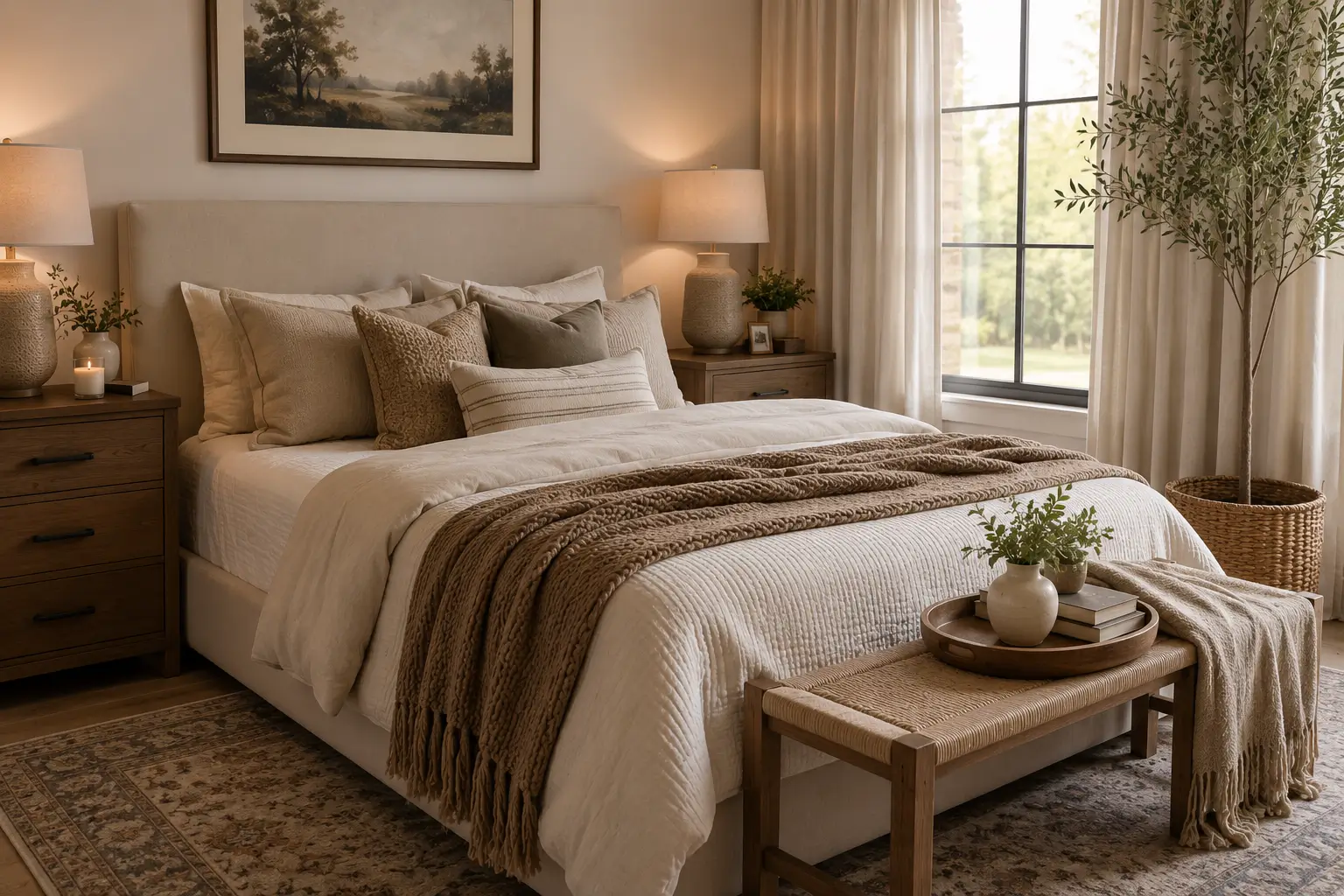
A neutral bedroom gets a bad reputation for feeling flat or boring, but that usually comes down to one mistake: using a single shade of white or beige everywhere instead of layering several different neutral tones and textures together.
This guide covers 18 real techniques for building a neutral bedroom that feels warm and layered rather than empty, and each one includes something specific: a shade comparison, a mixing ratio, a layering formula, or a cost range, so you can actually build the look instead of just admiring it in photos. The secret to a neutral room that works is almost never a new color. It’s texture, tone variation, and restraint.
Quick Idea Overview
| # | Idea | Best For | Effort Level |
|---|---|---|---|
| 1 | The Tonal Layering Method | Any neutral bedroom | Low |
| 2 | Warm White vs. Cool White Wall Test | Choosing the right base color | Low |
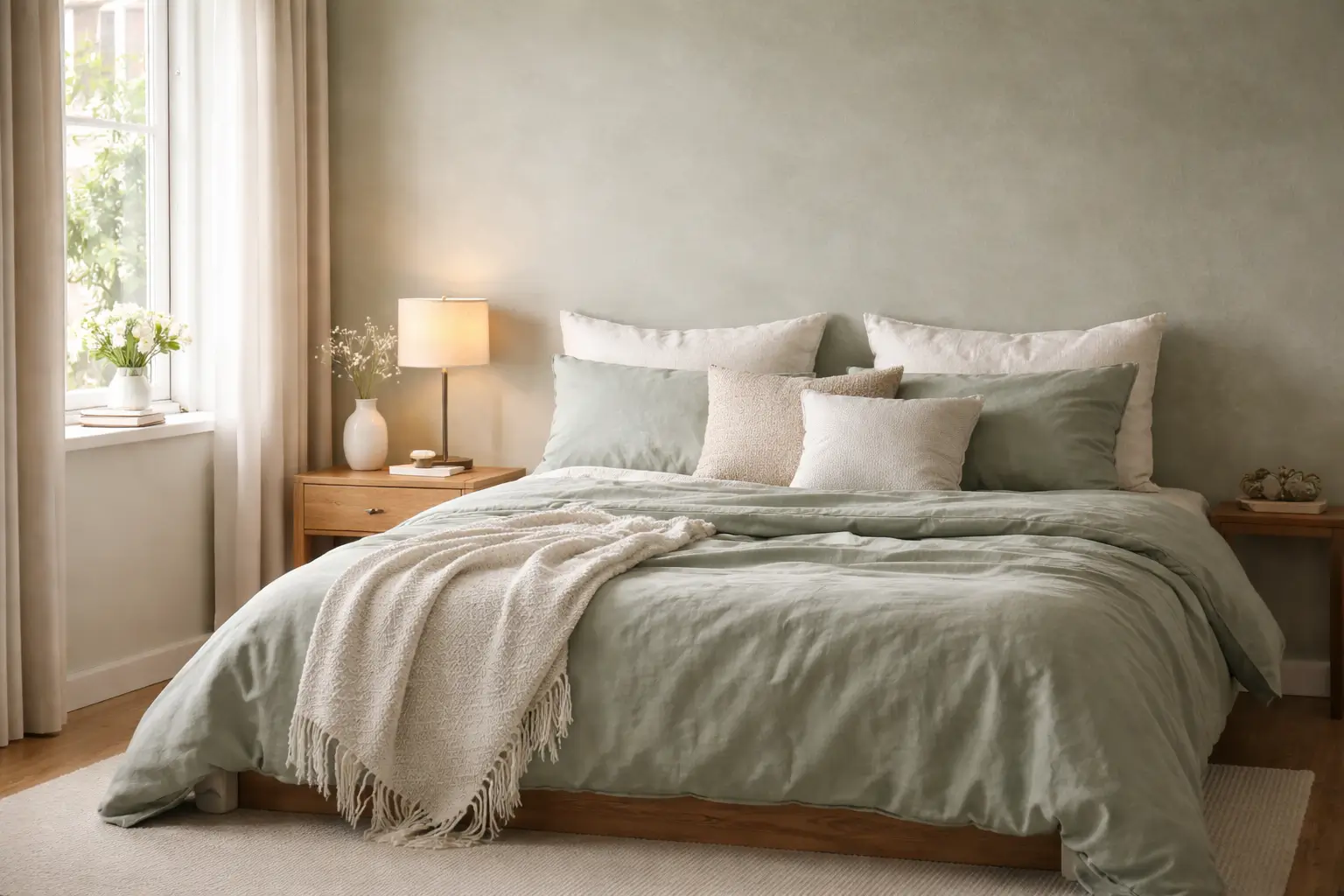
| 3 | Mixed Wood Tone Furniture | Rooms with existing furniture | Low |
| 4 | Textured Bouclé or Linen Headboard | Adding softness | Medium |
| 5 | Neutral Gallery Wall | Personalizing a plain wall | Medium |
| 6 | Chunky Knit Throw Layering | Instant coziness | Low |
| 7 | Woven Storage Baskets | Function plus texture | Low |
| 8 | Cream-on-Cream Bedding Layers | Soft, hotel-like beds | Low |
| 9 | Jute and Wool Rug Layering | Grounding a neutral floor | Low-Medium |
| 10 | Warm Brass or Bronze Accents | Adding richness | Low |
| 11 | Soft Neutral Linen Curtains | Filtering natural light | Low-Medium |
| 12 | Grasscloth Textured Wallpaper | Statement texture | Medium-High |
| 13 | Ceramic or Stone Lamp Bases | Small styling upgrades | Low |
| 14 | Layered Neutral Throw Pillows | Bed styling | Low |
| 15 | One Sculptural Furniture Piece | A single focal point | Medium-High |
| 16 | Wood Flooring Plus Wool Rug | Foundational warmth | Medium |
| 17 | Textured Trim on Curtains | Small custom detail | Low |
| 18 | Greenery in Neutral Ceramic Pots | Softening hard surfaces | Low |
Now let’s break down each idea, with the details you need to build it yourself.
1. The Tonal Layering Method
This is the foundational technique behind almost every neutral bedroom that actually feels warm: instead of one flat neutral, you layer three depths of the same tonal family across the room.
| Depth | Where to Use It |
|---|---|
| Lightest neutral | Walls and ceiling |
| Mid-tone neutral | Bedding, curtains, upholstered furniture |
| Darkest neutral | Small accents: a frame, a vase, a throw pillow |
A room using only the lightest tone everywhere is what usually reads as flat or sterile. A room using all three depths, even within the same beige or gray family, reads as intentional and layered.
2. Warm White vs. Cool White Wall Test
Not all “neutral” whites behave the same way, and the undertone you pick changes how every other color in the room reads, especially wood tones and metals.
| Undertone | How to Spot It | Best Paired With |
|---|---|---|
| Warm white (yellow or beige undertone) | Looks creamy or slightly golden in daylight | Warm wood, brass, terracotta accents |
| Cool white (blue or gray undertone) | Looks crisp, almost blue-gray in shadow | Black or chrome metals, gray-toned wood |
How to test it properly: paint a large swatch and view it at three different times of day (morning, midday, evening) before committing, since undertones shift dramatically under different light.
3. Mixed Wood Tone Furniture
Neutral bedrooms often include several wood furniture pieces, and mixing tones (rather than matching every piece exactly) actually looks more collected than a perfectly matched wood set.
The mixing rule: choose one dominant wood tone to cover roughly 60-70% of your wood furniture (bed frame and dresser, for example), then mix in one or two secondary tones for smaller pieces (a nightstand, a bench, or a mirror frame).
Perfectly matched wood furniture sets, all from the same collection, often read as more generic than a room where the tones vary slightly but stay in the same warm or cool family.
4. Textured Bouclé or Linen Headboard
A textured, upholstered headboard in an off-white, oatmeal, or warm gray bouclé adds tactile softness that a flat-painted wall or a smooth wood headboard can’t replicate on its own.
| Tier | What You Get | Approx. Cost |
|---|---|---|
| Budget | Headboard slipcover in a textured neutral fabric | $70-$180 |
| Mid-Range | Upholstered headboard, bouclé or linen | $250-$500 |
| Investment | Custom channel-tufted or curved textured headboard | $600-$1,400+ |
The texture itself does more visual work here than the exact shade of the fabric, since the goal is adding depth, not adding color.
5. Neutral Gallery Wall
A gallery wall built entirely from neutral-toned frames and matting, rather than colorful art, adds personality and visual interest without breaking the room’s calm palette.
Building it step by step:
- Choose frames in 2-3 coordinating finishes (natural wood, white, and one warm metal like brass).
- Use black-and-white or muted-tone prints rather than brightly colored art.
- Vary frame sizes, but keep matting color consistent (white or cream) across all pieces.
- Arrange on the floor first to test spacing before hanging anything.
This approach adds visual richness without introducing a color that could clash with your carefully layered neutral palette.
6. Chunky Knit Throw Layering
A chunky cable-knit or waffle-weave throw blanket, draped across the foot of the bed or over a chair, adds instant texture and a sense of coziness that smooth bedding alone doesn’t achieve.
Cost range: $30-$90 depending on material (acrylic blends at the lower end, chunky wool or alpaca at the higher end).
Styling tip: drape the throw loosely, folded once and draped diagonally across a corner of the bed, rather than perfectly folded, for a more lived-in, natural look.
7. Woven Storage Baskets
Baskets in natural seagrass, rattan, or jute add genuine texture to a neutral room while solving real storage needs, like extra blankets or off-season clothing.
Cost range: $20-$70 depending on size, with a large floor basket for blankets typically costing more than a small shelf basket.
Using 2-3 baskets in slightly varying but coordinating textures (not perfectly matched) throughout the room reinforces the layered, collected feel rather than looking like a single matching storage set.
8. Cream-on-Cream Bedding Layers
Layering several shades of cream and ivory bedding, rather than a single flat white sheet set, creates depth that’s easy to miss in photos but very noticeable in person.
A simple layering formula:
- Ivory or warm white fitted sheet as the base
- A slightly deeper cream or oatmeal quilt or duvet as the middle layer
- One textured throw (waffle weave or knit) in a third, warmer cream tone
- 2-3 pillows varying in texture but staying within the same cream-to-ivory range
The goal is tonal variation within a tight color range, not stark contrast, so the layers should feel closely related rather than clearly distinct.
9. Jute and Wool Rug Layering
Layering a natural jute rug as a base with a smaller, softer wool rug on top adds visual depth and genuine underfoot texture variation in an all-neutral room.
The sizing formula: the top rug should cover roughly two-thirds of the jute base rug’s surface area, with the jute edge showing evenly on all sides. Covering more than 80% of the base eliminates the layered look; covering less than 50% looks accidental rather than intentional.
Cost range: $80-$250 for the jute base, plus $100-$300 for a smaller wool or wool-blend rug on top.
10. Warm Brass or Bronze Accents
Metal accents in brass or bronze, rather than chrome or stainless steel, add warmth to a neutral room without introducing any new color at all.
The 60-30-10 approach:
| Element | Percentage | Where to Use |
|---|---|---|
| Neutral tones (walls, bedding, furniture) | 90% | Throughout the room |
| Warm metal accents | 10% | Lamp bases, drawer pulls, mirror frames, curtain rods |
Even at just 10% of the room’s visual weight, warm metal accents noticeably shift a neutral room away from feeling cold or clinical, especially paired with warm white walls.
11. Soft Neutral Linen Curtains
Curtains in a soft, slightly textured linen, in ivory or warm greige, filter daylight with a gentle warmth that blocks harsh direct sun without needing heavy, dark drapery.
Cost range: $40-$120 per panel, depending on fabric weight and length.
A quick care note: linen wrinkles visibly and can fade in strong, direct sunlight over time. In south- or west-facing windows, a linen-blend fabric holds up better long-term than 100% natural linen.
12. Grasscloth Textured Wallpaper
Grasscloth wallpaper, made from natural woven fibers, adds a subtle textural pattern to a wall without needing color, paint technique, or a bold print.
Before you commit, know this:
- Grasscloth is more delicate than vinyl wallpaper and can tear or stain more easily during installation and cleaning.
- It’s more sensitive to humidity than most wallpaper, so it works better in a bedroom than in a steamy bathroom.
- Seams are more visible than with printed wallpaper, since the natural fiber grain doesn’t perfectly match at the edges.
Cost range: $8-$20 per square foot for material, plus professional installation, which is recommended given how easily the material can tear.
13. Ceramic or Stone Lamp Bases
Swapping a plain metal or glass lamp base for one in textured ceramic or natural stone adds material variety to a nightstand without changing the room’s color at all.
| Base Material | Texture It Adds |
|---|---|
| Matte ceramic | Soft, slightly rustic texture |
| Textured stoneware | Organic, hand-thrown feel |
| Natural stone or alabaster | Cool-to-the-touch, subtly veined surface |
Cost range: $30-$90 per lamp, and pairing two lamps in the same finish on either side of the bed reinforces the room’s overall material story.
14. Layered Neutral Throw Pillows
Building a pillow arrangement using multiple textures within the same neutral color family, rather than one flat pattern or a single solid color, adds visual depth to the bed itself.
A simple layering formula:
- Two standard pillows in the same base tone as your bedding, tucked behind
- One or two smaller decorative pillows in a contrasting texture (velvet or bouclé) in a slightly deeper neutral
- One lumbar pillow in a subtle woven or textured pattern, still within the neutral family, placed in front
Cost range: $60-$150 total for a full pillow layering set, depending on how many pieces and fabric quality.
15. One Sculptural Furniture Piece
Rather than spending evenly across every furniture piece in the room, choosing one sculptural, statement-shaped item, like a curved chair or an organic-shaped side table, gives a neutral room a clear focal point.
Where to splurge vs. where to save:
| Splurge On | Save On |
|---|---|
| One sculptural chair or bench with a distinctive shape | Nightstands, which are rarely the visual focus |
| A well-made rug that anchors the room | Basic hardware and small accessories |
This approach concentrates your budget where it has the most visual payoff, rather than spreading it thin across every piece in the room.
16. Warm Wood Flooring Plus Wool Rug
Pairing warm-toned wood flooring, like honey oak or walnut, with a plush wool rug in a slightly lighter or darker neutral tone adds foundational warmth from the ground up.
Matching guide:
| Floor Tone | Best Rug Tone |
|---|---|
| Warm honey oak | Ivory or warm greige wool rug |
| Cool gray-washed wood | Warm oatmeal or camel wool rug (to balance the coolness) |
| Deep walnut | Lighter cream or sand-toned wool rug for contrast |
Pairing a cool-toned floor with an equally cool-toned rug is a common miss; adding warmth through the rug specifically helps balance a floor that leans cold.
17. Textured Trim on Curtains
Adding a woven tape trim, tassel fringe, or contrasting textured border along the edge of plain neutral curtains brings a custom, designer-made feel to ready-made panels.
DIY vs. buy:
| Option | Approx. Cost |
|---|---|
| DIY: sew or iron-on trim added to existing curtain panels | $15-$40 for trim materials |
| Buy: pre-made curtains with integrated trim detail | $80-$200 per panel |
Adding trim to curtains you already own is one of the more genuinely cost-effective upgrades on this list, since it transforms existing panels rather than requiring an entirely new purchase.
18. Greenery in Neutral Ceramic Pots
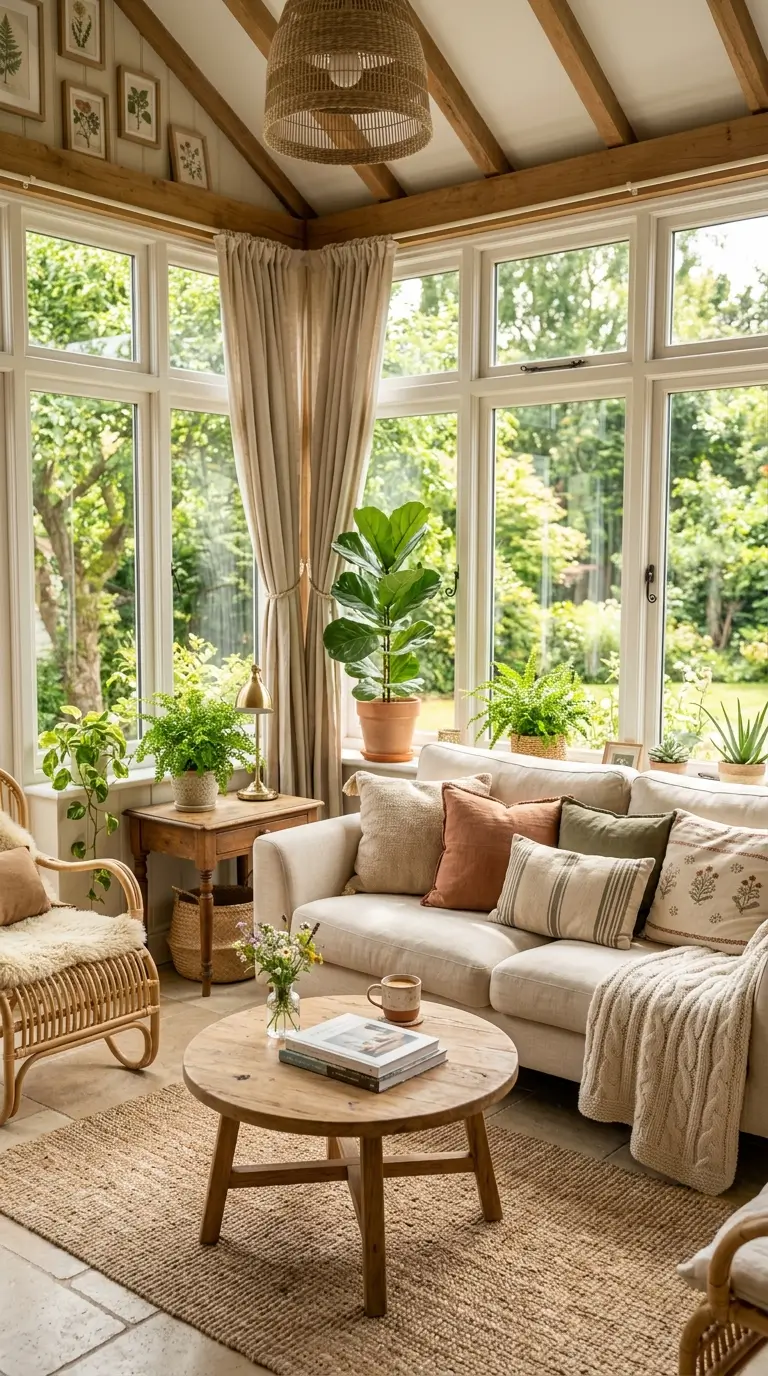
Real or high-quality faux plants in matte, neutral-toned ceramic pots soften the hard edges of furniture and walls, adding organic texture without introducing color into the room.
| Plant | Why It Works in a Bedroom |
|---|---|
| Snake plant | Tolerates lower bedroom light, low maintenance |
| Fiddle leaf fig (larger space) | Adds height and a strong sculptural silhouette |
| Pothos, trailing from a shelf | Soft, cascading texture near a dresser or shelf |
Cost range: $15-$60 depending on plant size, plus $15-$40 for a quality matte ceramic pot in a coordinating neutral tone.
Pick 2-3 techniques from this list, rather than trying to layer all 18 at once, and apply the tonal layering method first since it underpins almost everything else on this list. A neutral bedroom built from a single flat shade will always read flatter than one built from three tonal depths and a few varied textures, even if the overall color palette looks nearly identical from a distance.
Save your favorite neutral bedroom ideas to Pinterest so you have them ready when you’re ready to style your own room.
FAQs
Why do some neutral bedrooms look boring while others look stylish?
The difference almost always comes down to layering. A neutral bedroom using a single flat shade everywhere looks flat, while one using three tonal depths, mixed textures, and varied wood or metal finishes looks intentional and warm.
Should I use warm white or cool white paint in a neutral bedroom?
It depends on your existing wood tones and metal finishes. Warm white pairs best with honey wood and brass, while cool white pairs better with gray-toned wood and chrome or black metal accents.
How do I add warmth to a neutral bedroom without adding color?
Warm brass or bronze accents, mixed wood furniture tones, and natural textures like jute, linen, and bouclé all add warmth through material and texture, without introducing a new color into the room.
What’s the biggest mistake in neutral bedroom design?
Using one single flat neutral shade across walls, bedding, and furniture. This is the most common reason a neutral bedroom ends up feeling sterile rather than calm and layered.
Do I need to spend a lot to make a neutral bedroom feel high-end?
No. Concentrating your budget on one sculptural furniture piece or a quality rug, while keeping smaller items simple, creates more visual impact than spreading an equal budget across every single item in the room.