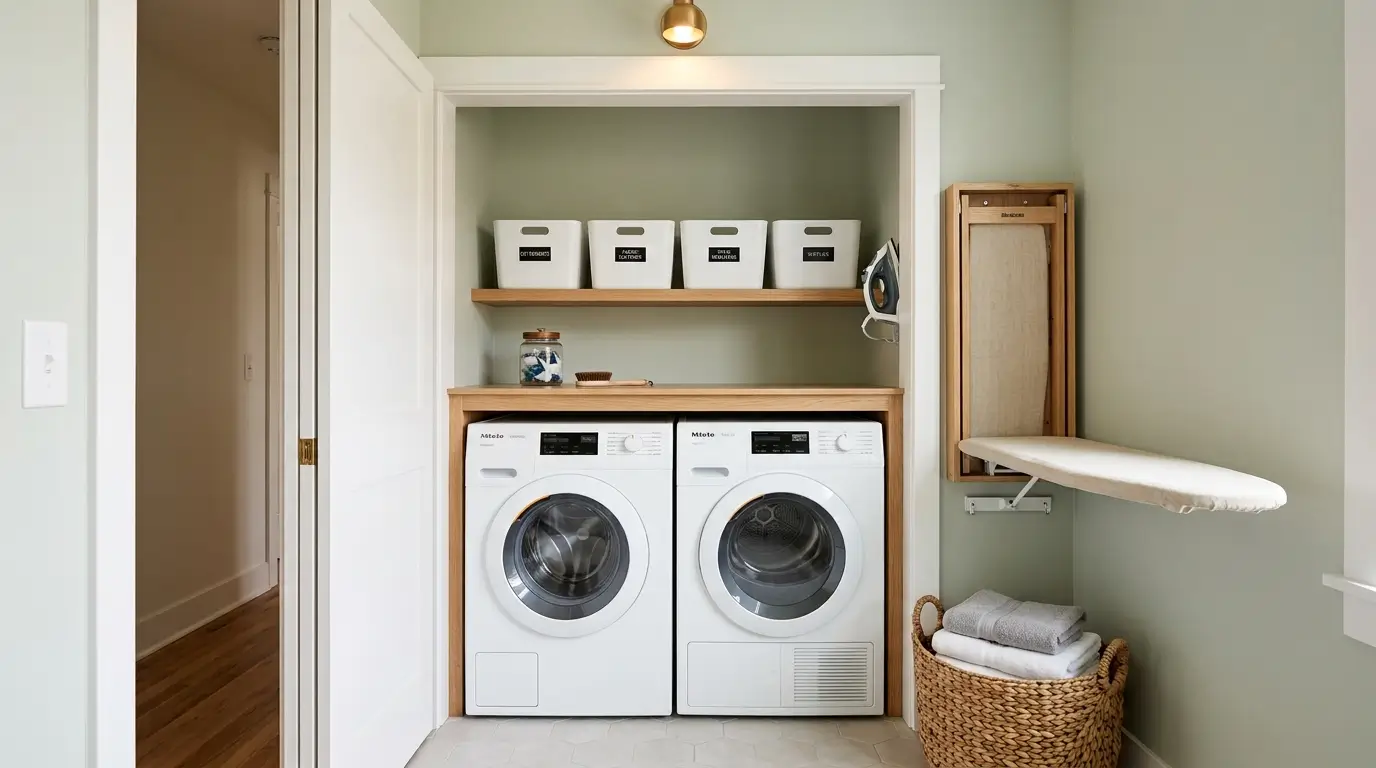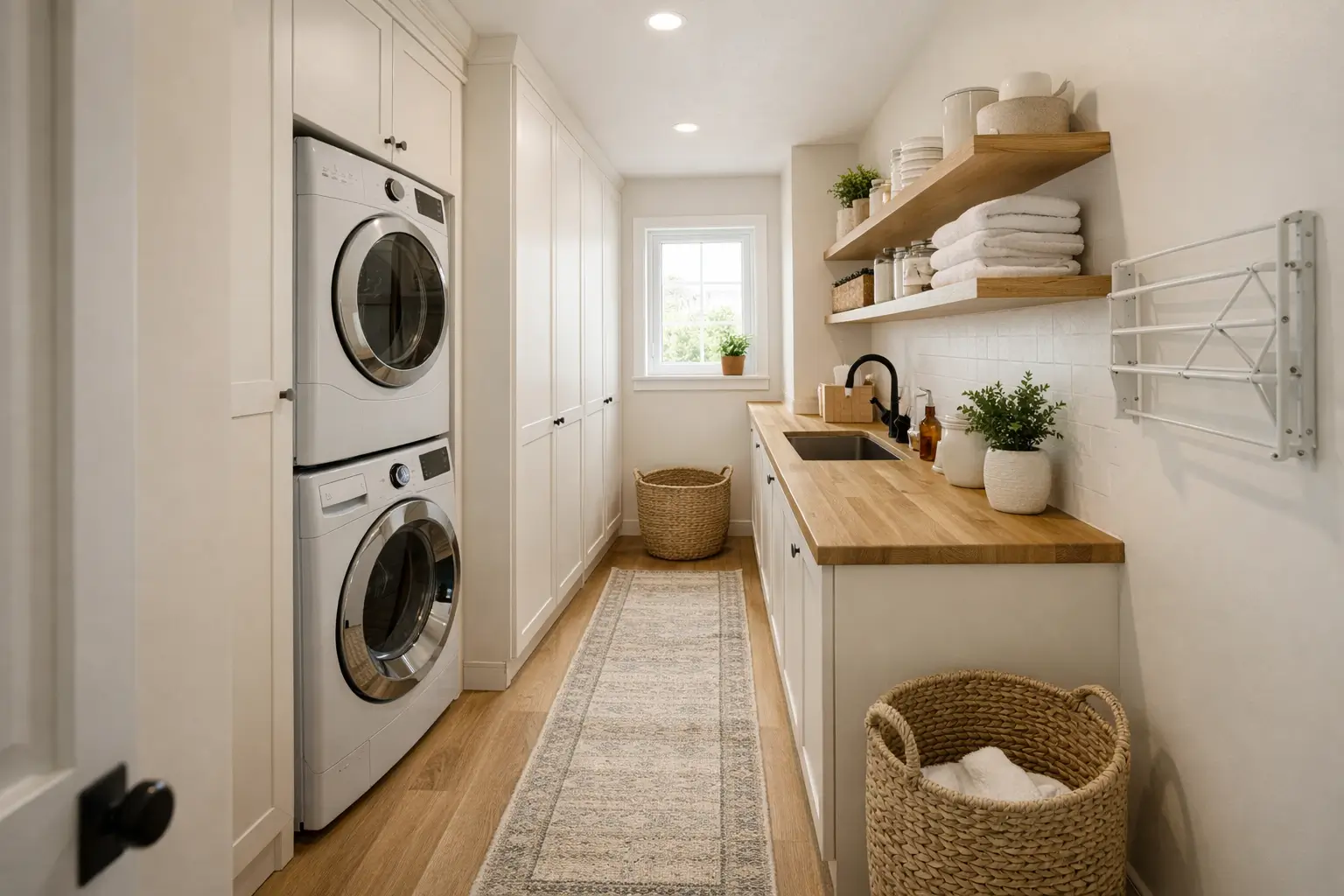
19 Laundry Room Shelves Ideas That Make Storage Look Stylish
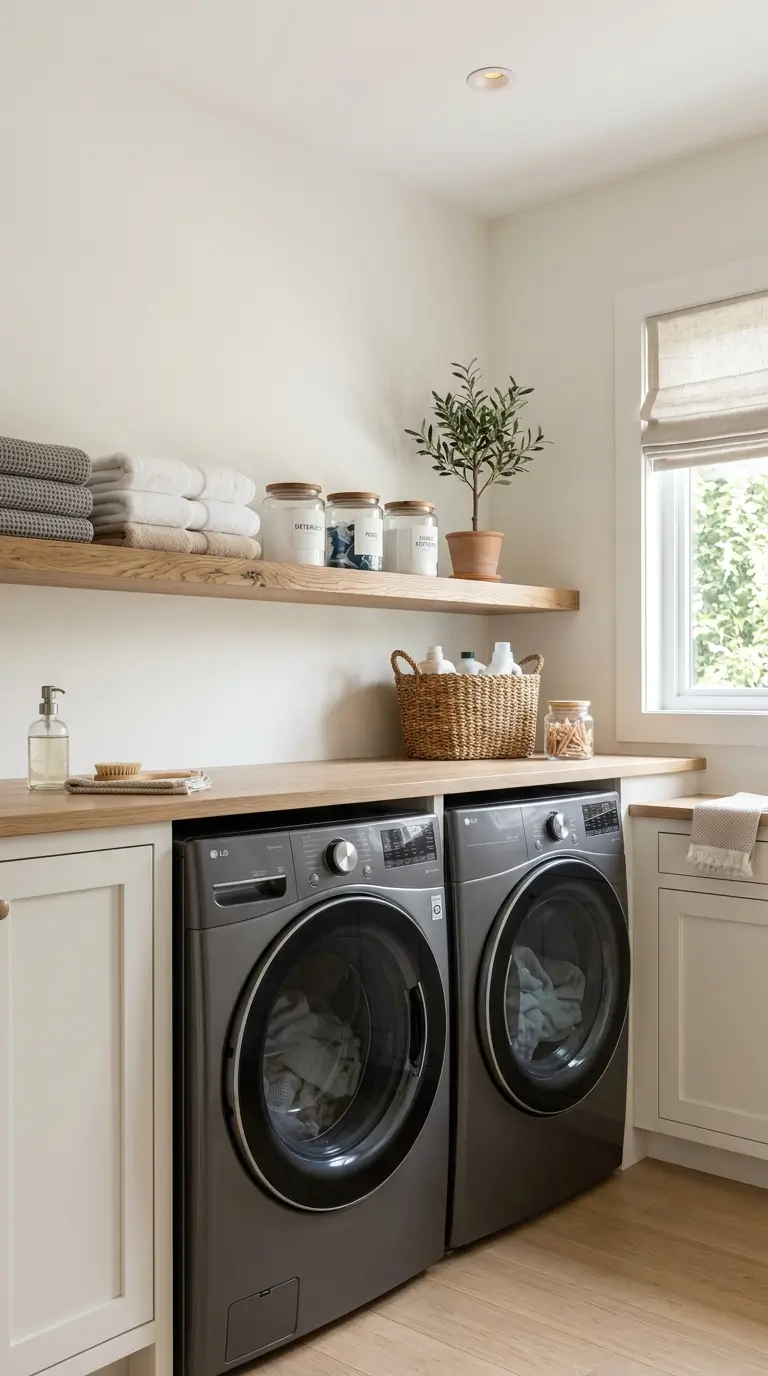
Laundry shelves fail in one of two predictable ways: they’re mounted too low to clear a top-load washer’s lid, or they’re rated for a candle and a picture frame instead of the 40 to 60 pounds of detergent, softener, and supplies a real laundry shelf ends up holding. These 19 laundry room shelves ideas start from the clearance and weight numbers that make a shelf actually work, then layer in the styling that makes it look intentional.
Match Shelf Height to Your Washer Type
Front-load and top-load washers need very different amounts of headroom, which changes where a shelf can safely start.
| Washer Type | Machine Height | Clearance Needed Above | Shelf Can Safely Start At |
|---|---|---|---|
| Front-load | 33–39″ | ~6–8″ (venting, no lid swing) | As low as 40–45″ |
| Top-load | 42–44″ | 20–24″ (lid swing) | 64–68″ or higher |
| Stacked front-load pair | 74–80″ total | ~6–8″ above top unit | 82–86″+ |
Match Brackets to What You’re Actually Storing
A full bottle of liquid detergent weighs 10 to 12 pounds, and fabric softener adds another 8 to 10; a loaded laundry shelf can easily reach 40 to 60 pounds in daily use, far more than most decorative shelf brackets are rated for.
| Bracket Type | Typical Weight Rating | Best For |
|---|---|---|
| Decorative rod or prong bracket | 25–30 lbs | Light decor only, not laundry supplies |
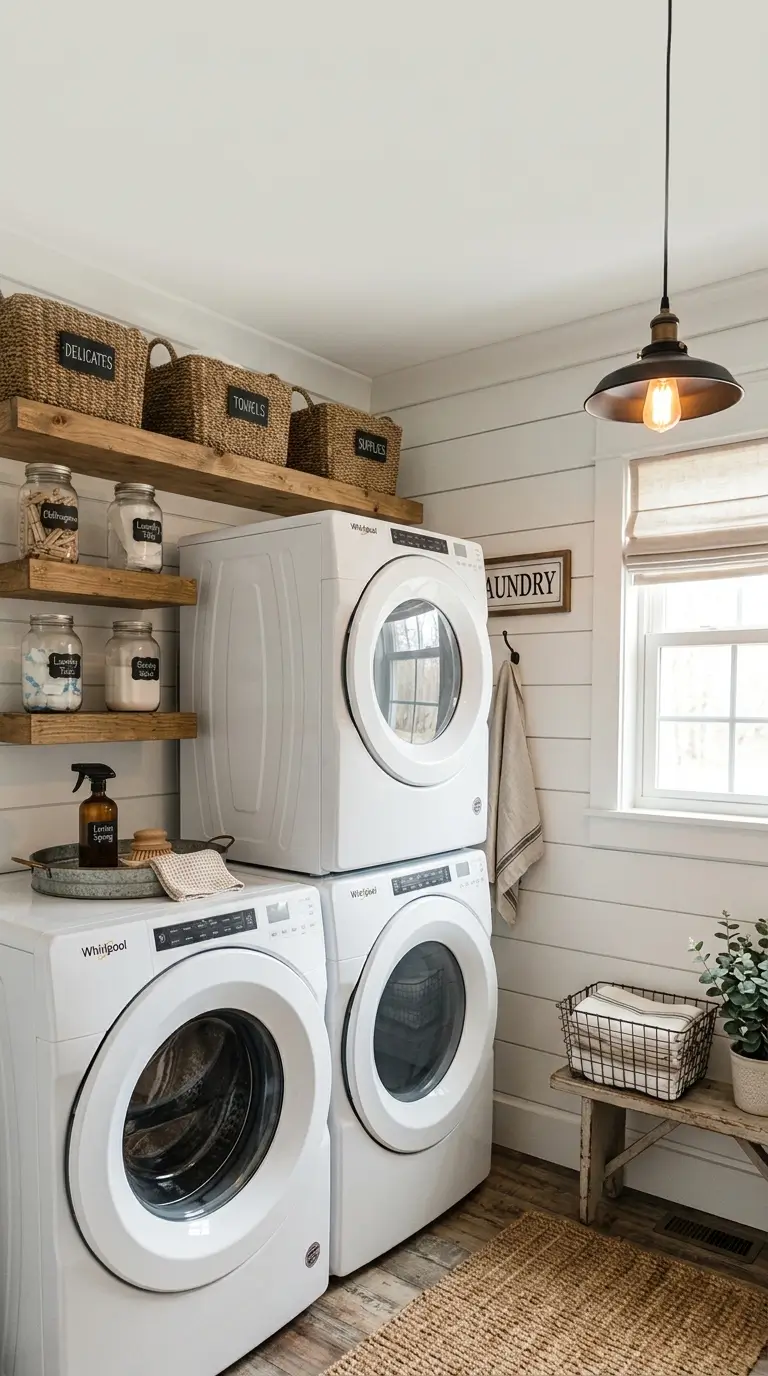
| Standard L-bracket, single stud | 75–100 lbs | Everyday detergent and supplies |
| Heavy-duty garage-style bracket | 150–260 lbs | Bulk supplies, baskets, multiple bottles |
| Stud-mounted hidden bracket | Up to 150 lbs per stud | Custom floating shelves carrying real weight |
1. Mount Shelves Based on Your Washer Type, Not a Guess
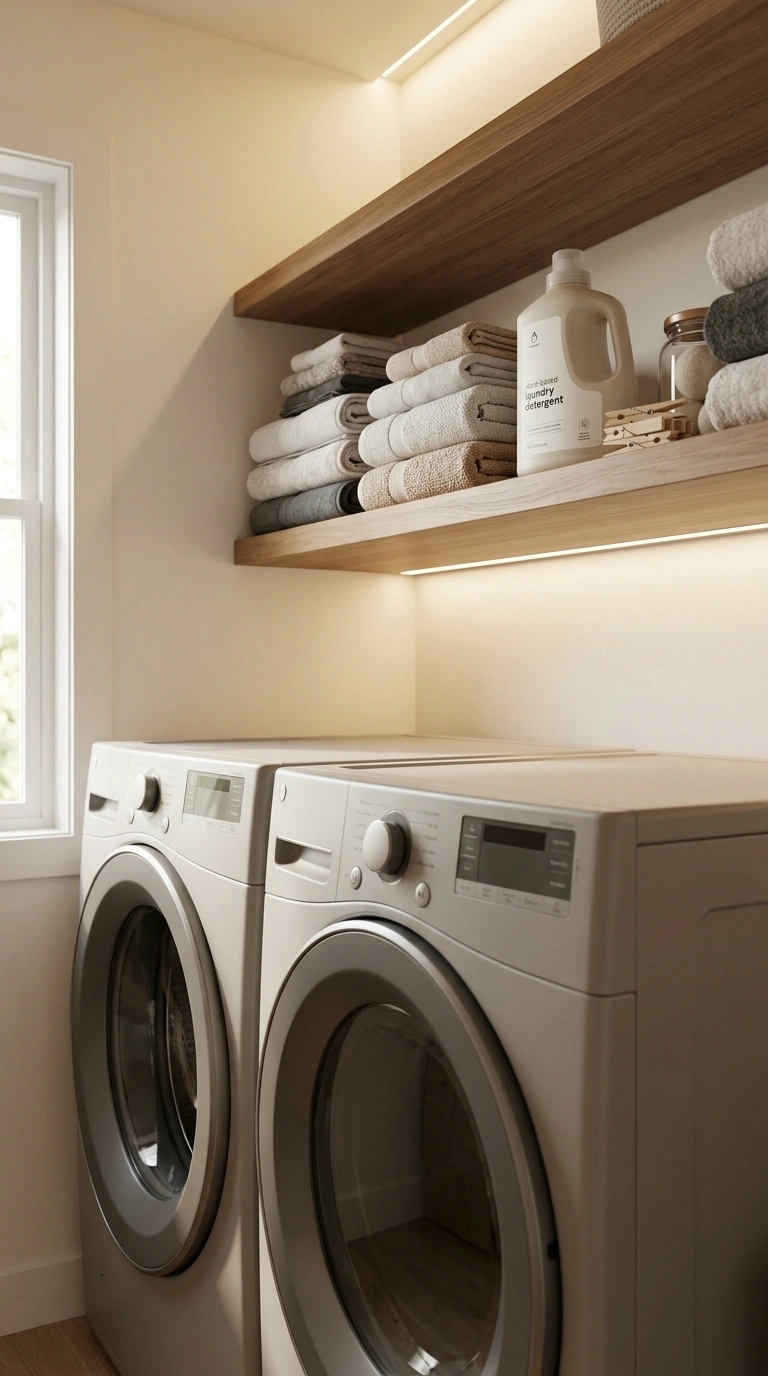
A shelf that clears a front-load washer’s 33- to 39-inch height by a comfortable margin will sit directly in the path of a top-load washer’s lid, which needs 20 to 24 inches of swing room above the machine. Before installing anything, measure your specific washer’s closed height and add the correct clearance from the table above, rather than eyeballing a height that “looks about right.” Many manufacturers list this “lid open height” spec directly in the product manual or model spec sheet online, so you don’t have to measure a showroom display model to get an accurate number.
Quick tip: If you’re not sure which clearance applies, open your washer’s lid or door fully and measure the actual highest point it reaches before placing a single bracket mark.
2. Skip Decorative Brackets and Use Stud-Mounted Hardware
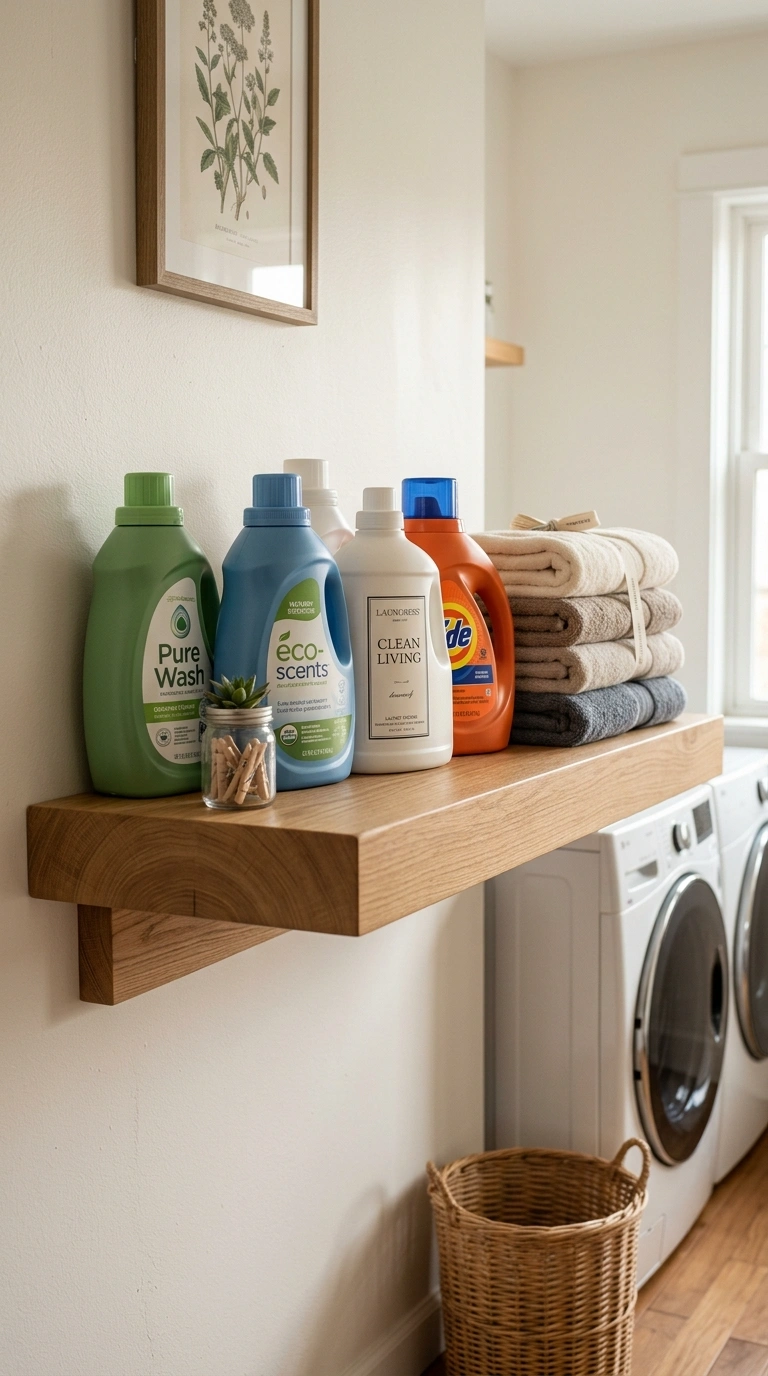
Most floating shelves marketed as “heavy duty” are rated for just 25 to 30 pounds, which sounds like plenty until a single detergent jug and a bottle of fabric softener already account for 18 to 22 pounds of that. Stud-mounted hidden brackets, rated up to 150 pounds per stud, are the more reliable choice for any shelf that will hold actual laundry supplies rather than purely decorative items. A simple stud finder costs under $15 and takes the guesswork out of bracket placement entirely, a small investment against the cost of a shelf pulling out of the wall under a full load.
What to avoid: Don’t rely on drywall anchors alone for a laundry shelf. Even “heavy-duty” drywall anchors are rated well below what a fully stocked shelf weighs once detergent, softener, and stain remover are all sitting on it.
3. Use Closed Cabinets Above a Top-Load Washer
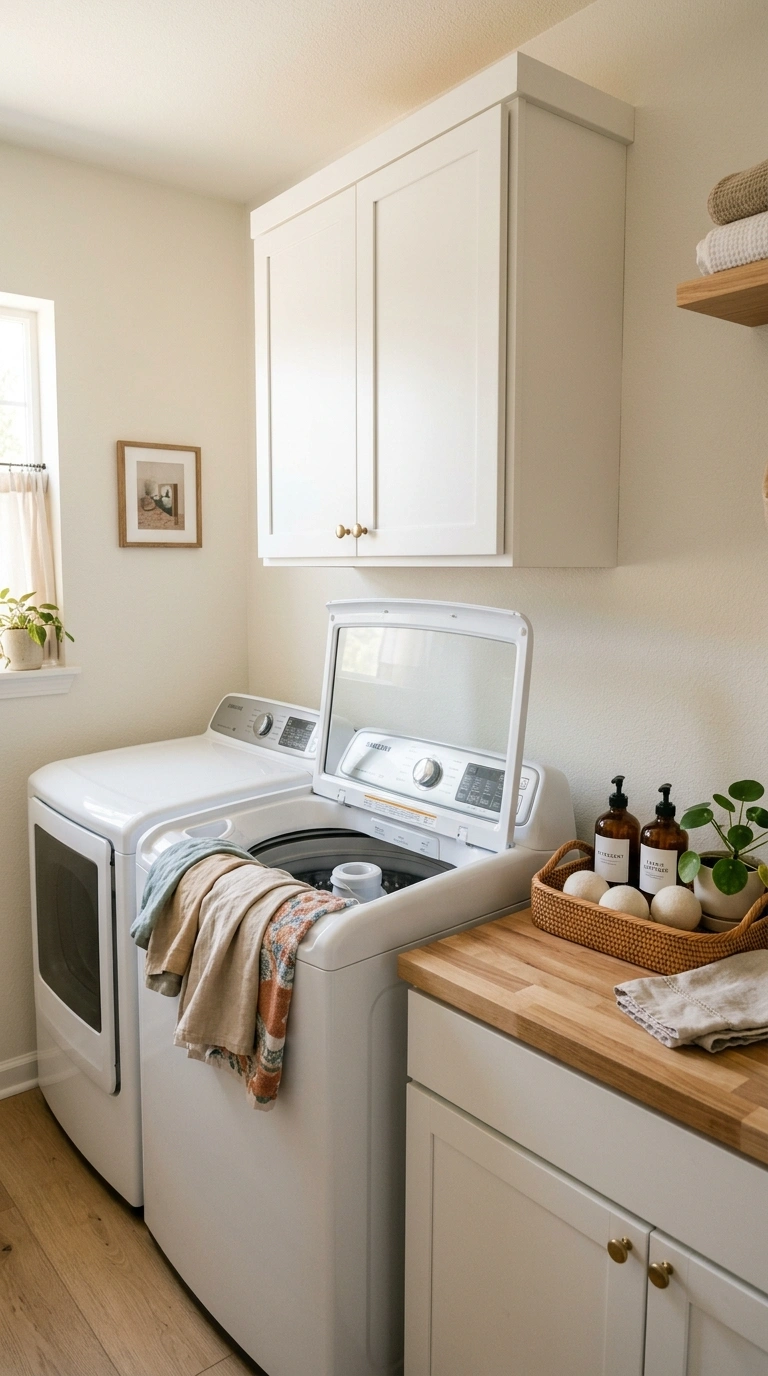
If your top-load washer doesn’t leave enough headroom for open shelving at a comfortable working height, a closed cabinet mounted higher up still gives you storage without a shelf edge sitting in the lid’s swing path. This also hides the visual clutter of a fully stocked shelf, which matters if your laundry room is visible from a hallway or connects to a mudroom. Measure the cabinet’s actual interior height too, not just where it starts on the wall, since a shallow cabinet can still crowd items that need to stand upright, like tall detergent bottles. Choose cabinet doors that swing up or slide rather than out, so the door itself doesn’t compete for the same overhead space the washer lid needs.
4. Add a Shelf Above the Door Frame for Rarely Used Items
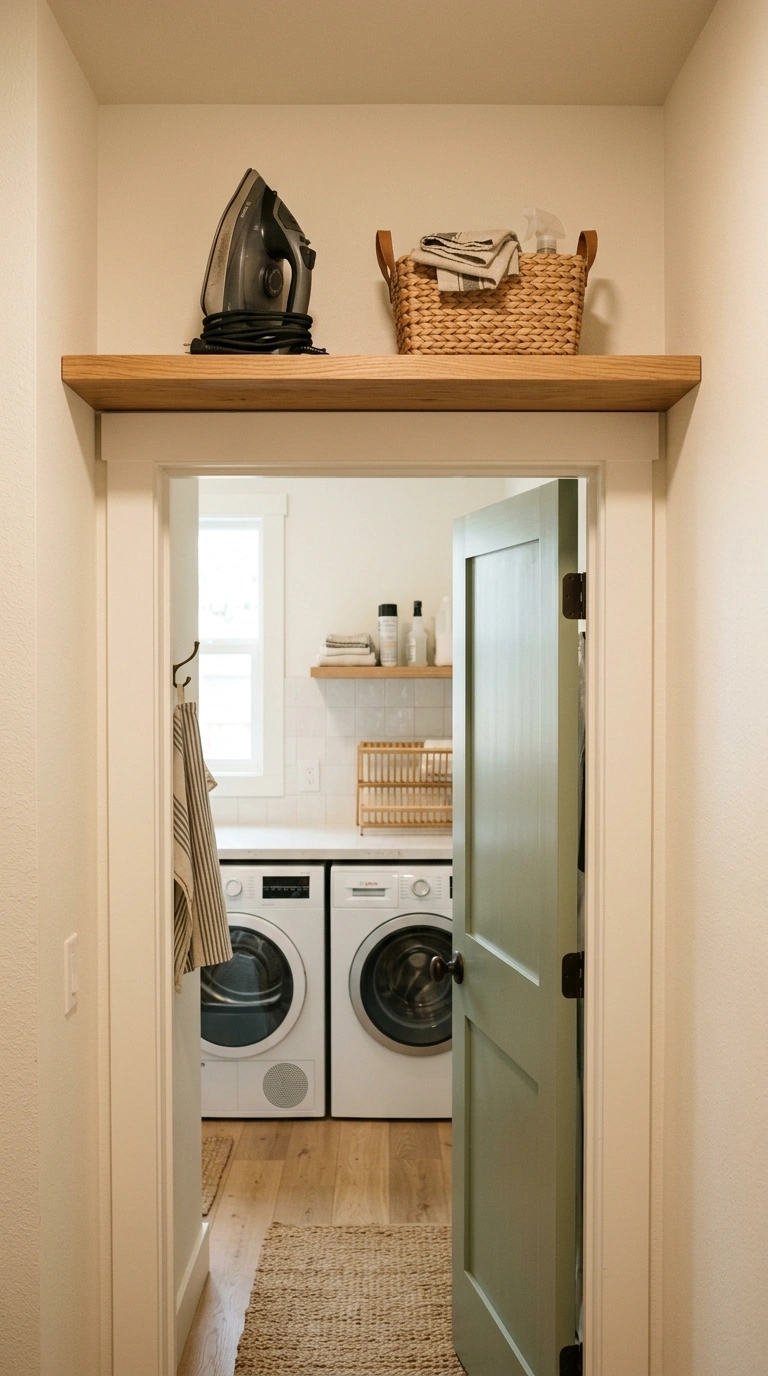
The space above a laundry room’s door frame is almost always empty, and a single shelf there works well for items you need only occasionally, like a spare iron, seasonal cleaning supplies, or an emergency stain kit. Because this shelf sits above eye level and isn’t accessed daily, it’s a good spot to route the lighter end of your storage rather than heavy, frequently used bottles.
This spot also works well for overflow paper products, like extra dryer sheet boxes, since lighter cardboard packaging is easy to lift down even from a shelf mounted eight or more feet up. Use a step stool intentionally for this shelf rather than skipping it; out-of-sight storage still needs to be genuinely reachable, not just theoretically accessible.
5. Choose Solid Wood or Laminate Over Wire in Finished Rooms
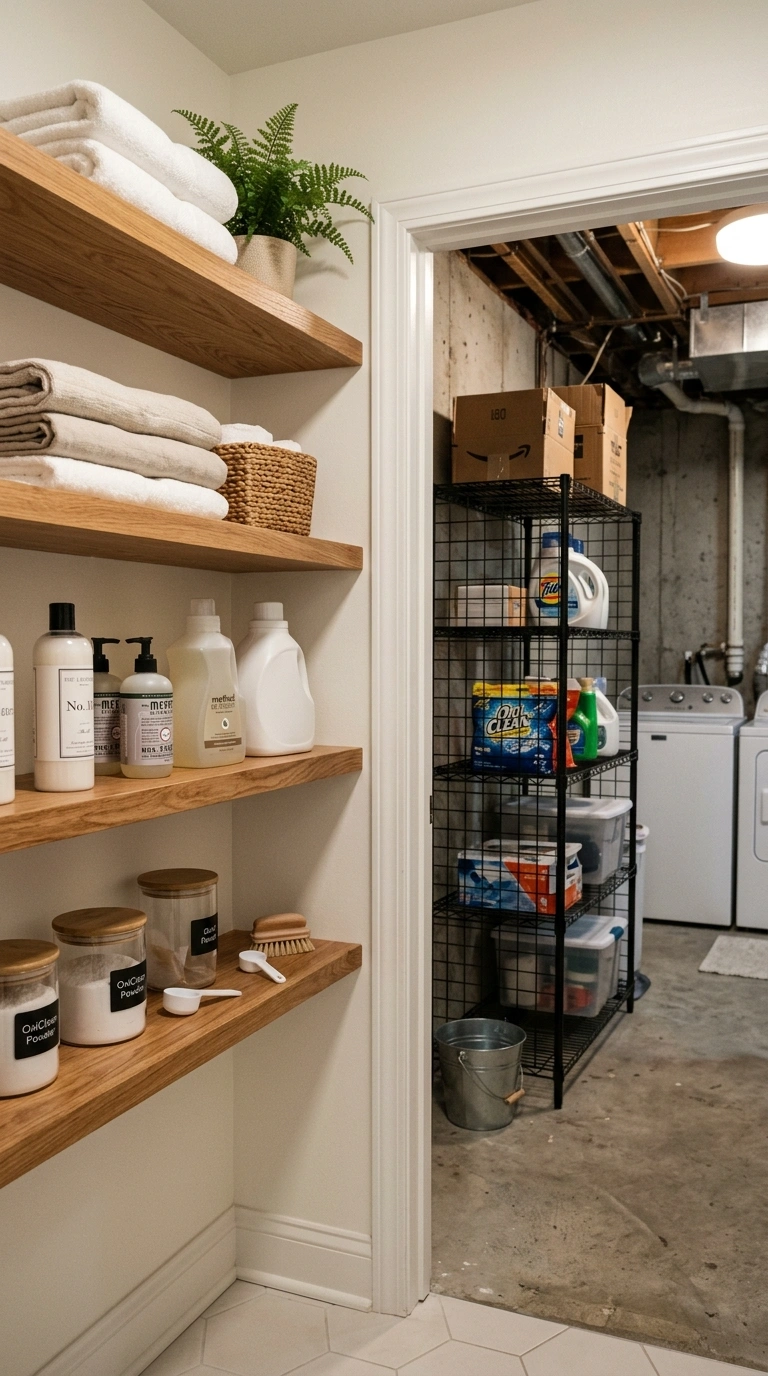
Wire shelving costs less upfront, but it flexes under real weight, can rust in a humid laundry room over time, and lets small items like dryer sheets or socks fall through the gaps. Solid wood or laminate shelving holds its shape better under the weight detergent bottles actually add, and gives you a flat surface that won’t leave ring marks on the bottoms of bottles the way wire grids sometimes do. If you already have wire shelving and it’s sagging, adding a support bracket at the shelf’s midpoint, not just the ends, often solves the problem without replacing the whole unit. Reserve wire shelving for unfinished basement laundry areas where ventilation matters more than appearance; in a finished room, solid shelving looks and performs better.
6. Put Heavy Bottles on Lower, More Accessible Shelves
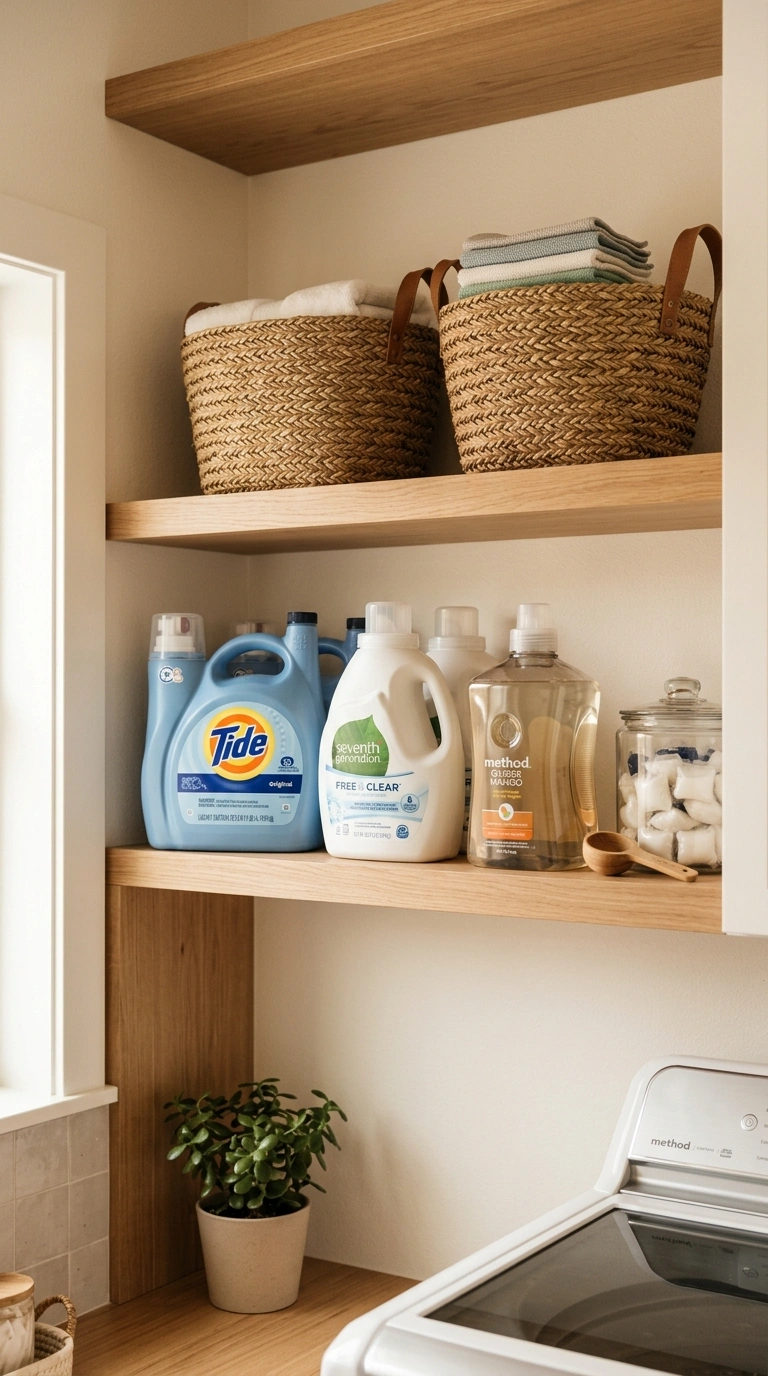
Keeping the heaviest items, full detergent jugs and bulk softener bottles, on a shelf between waist and shoulder height reduces the strain of lifting them down repeatedly and keeps the room’s visual weight lower rather than top-heavy. Reserve the highest shelves for lighter, less frequently used items, like spare filters, seasonal items, or decorative baskets that don’t need to move often. This same logic applies to shelving throughout the home, not just laundry rooms, but it matters more here specifically because the room’s contents are unusually dense and heavy for their size. A shelf at roughly 42 to 52 inches from the floor keeps most bottles at a comfortable lifting height for the average adult without bending or reaching overhead.
7. Add a Hanging Rod Beneath a Shelf for Air-Drying
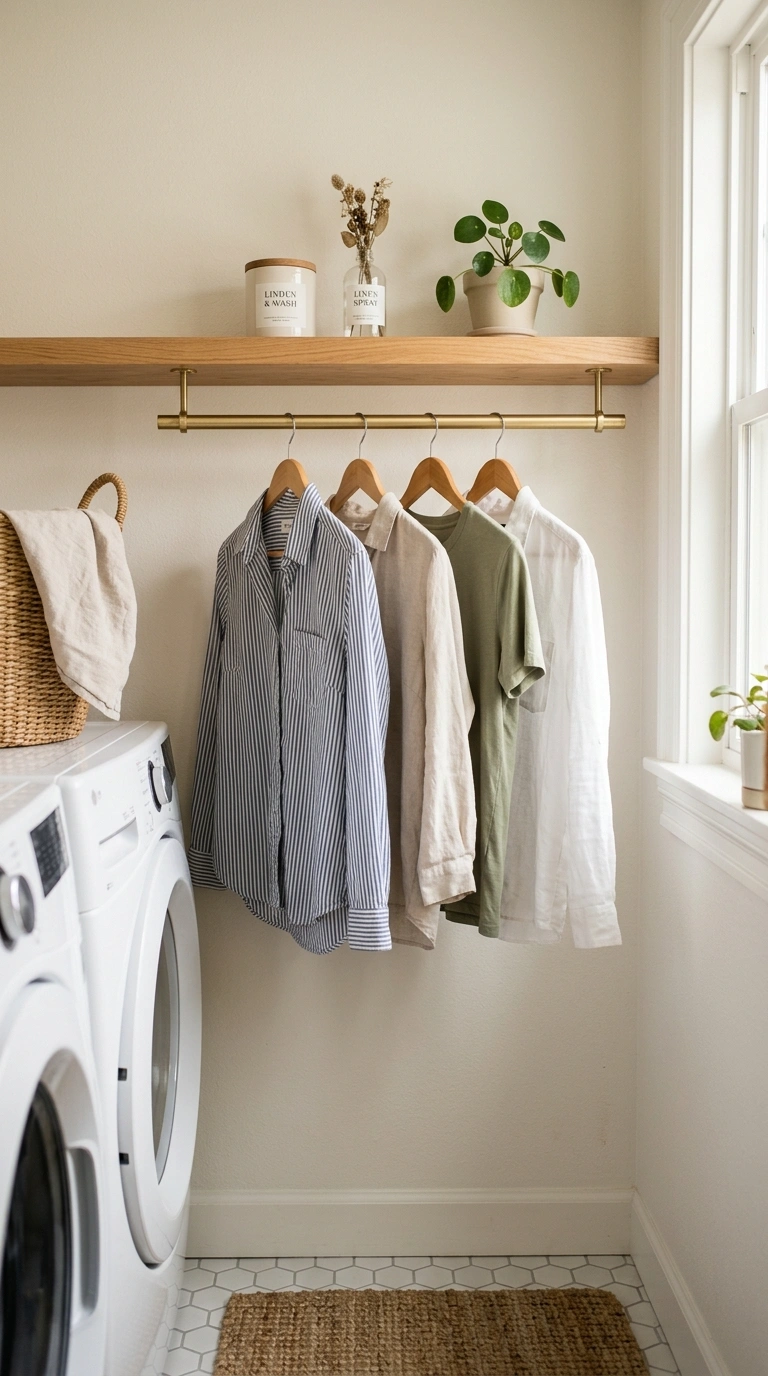
Mounting a slim rod just beneath a shelf gives you a dedicated spot to air-dry delicates or hang shirts straight from the dryer, without needing a separate drying rack that takes up floor space. This works especially well under a shelf positioned away from the direct washer or dryer footprint, so hanging items don’t interfere with loading or unloading either machine. A rod rated for at least 10 pounds comfortably handles several hangers at once; check the rod’s spec before assuming a repurposed curtain rod will hold real weight over time. Mount the rod at least 30 inches below the shelf so a hanger with a shirt on it clears the floor or any counter beneath.
8. Use Clear Bins or Labeled Baskets to Corral Small Items
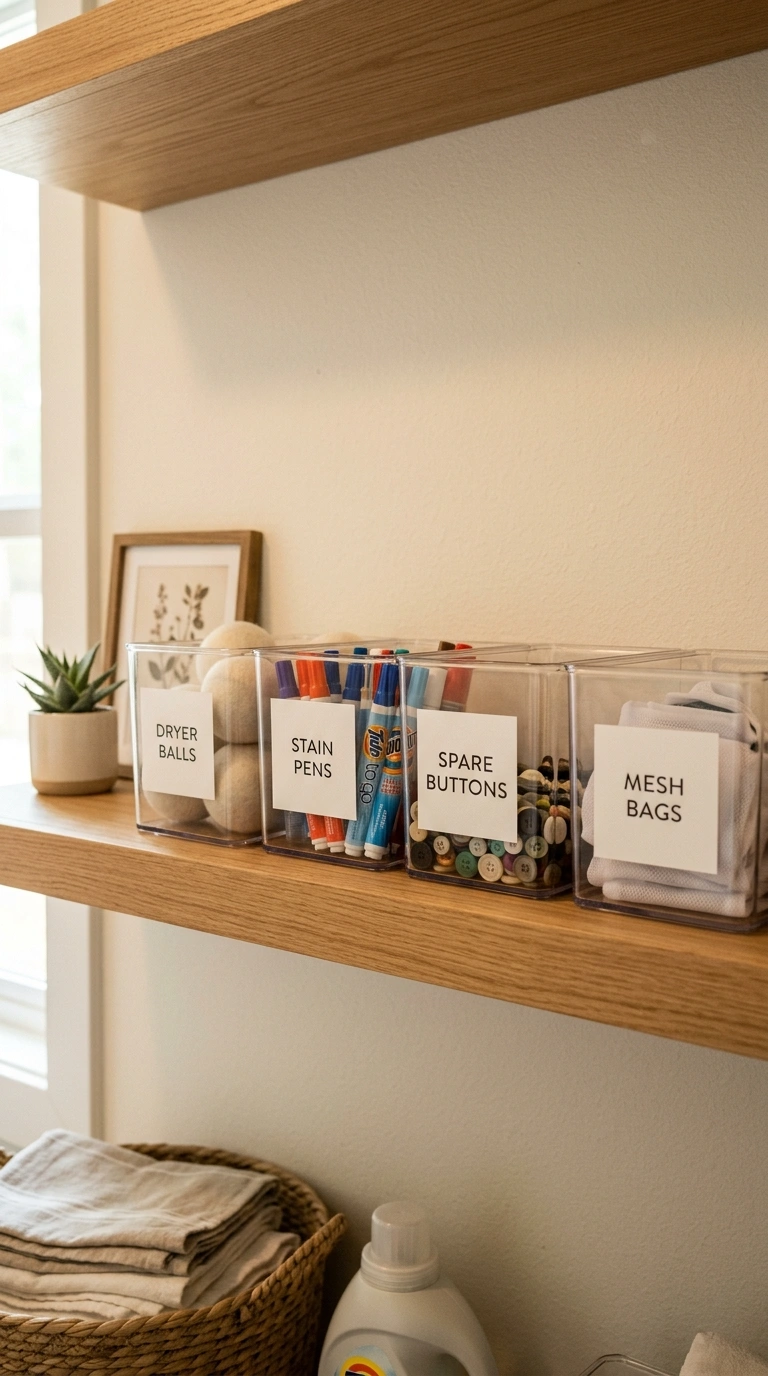
Loose items like dryer balls, stain pens, and spare buttons disappear into a general shelf fast; a labeled bin or clear basket keeps each category visible and contained without needing a full drawer system. This also makes the shelf easier to wipe down, since you’re moving one bin at a time instead of a dozen loose bottles and small objects. Buying bins in one consistent size, rather than whatever’s on sale, makes it easier to add more later without ending up with a mismatched row of containers. Choose bins with a flat, sturdy base over ones with a rounded bottom, since rounded bases can tip more easily on a shelf shared with other items.
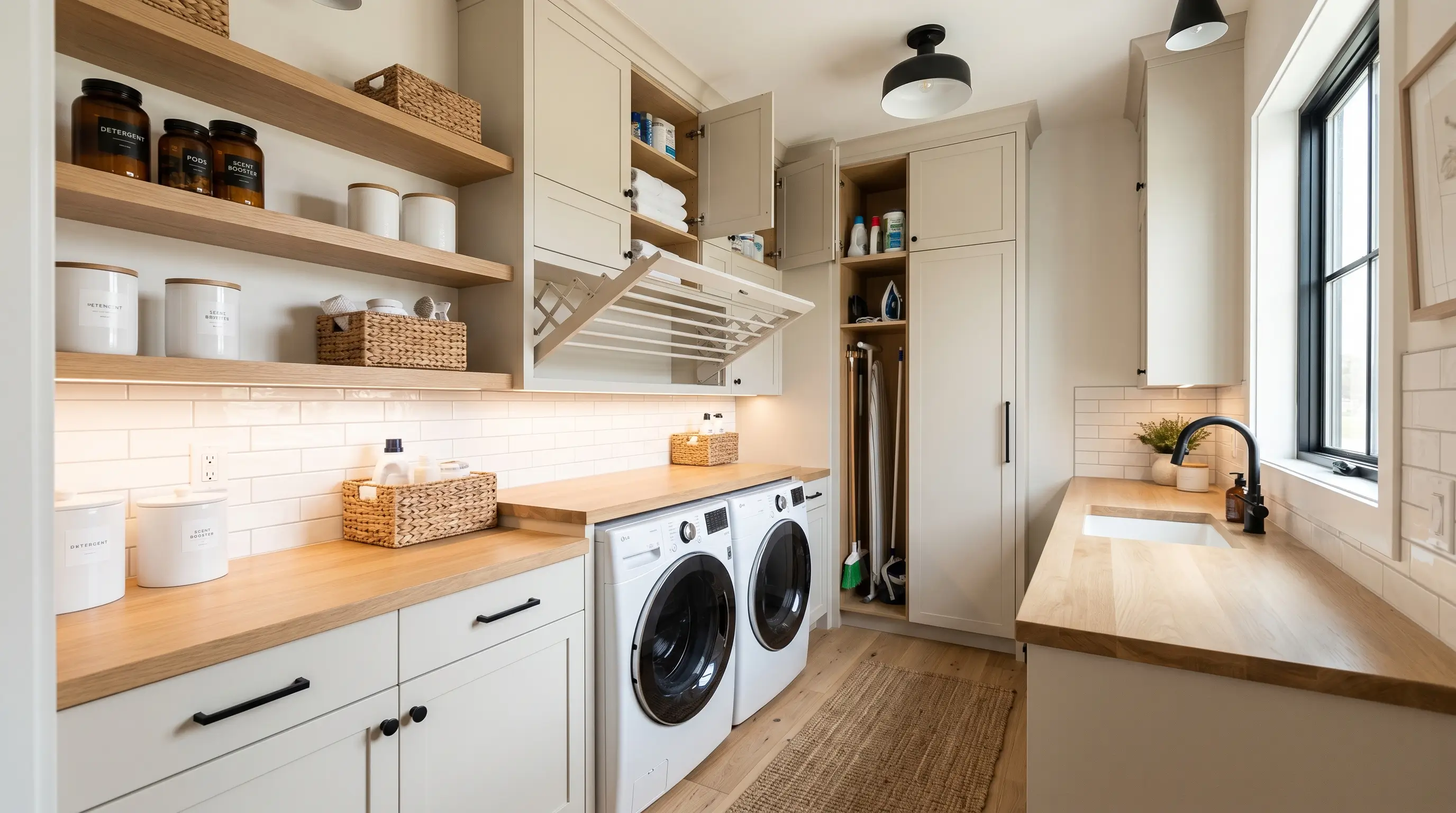
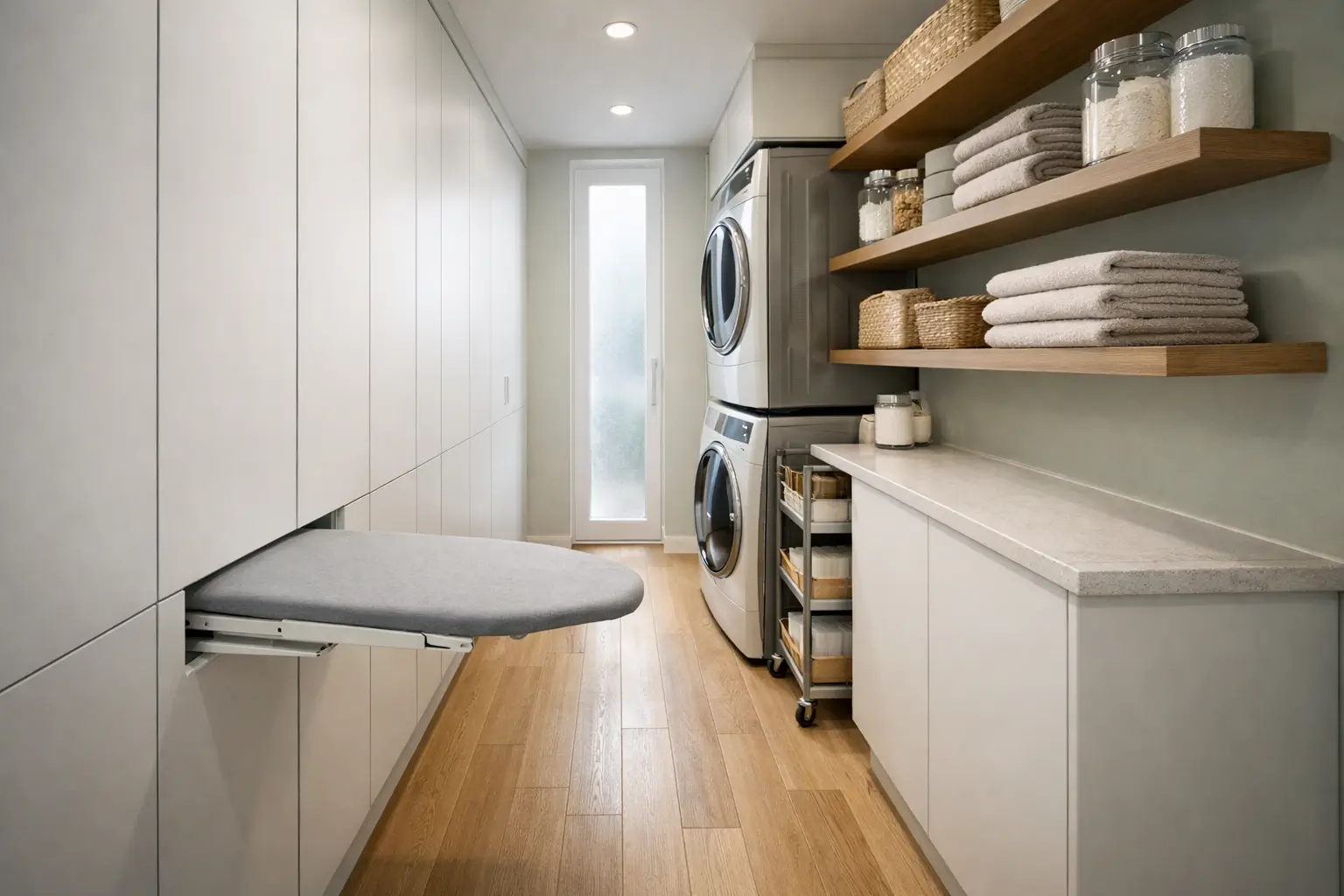
9. Build In a Fold-Down Shelf for Folding Laundry
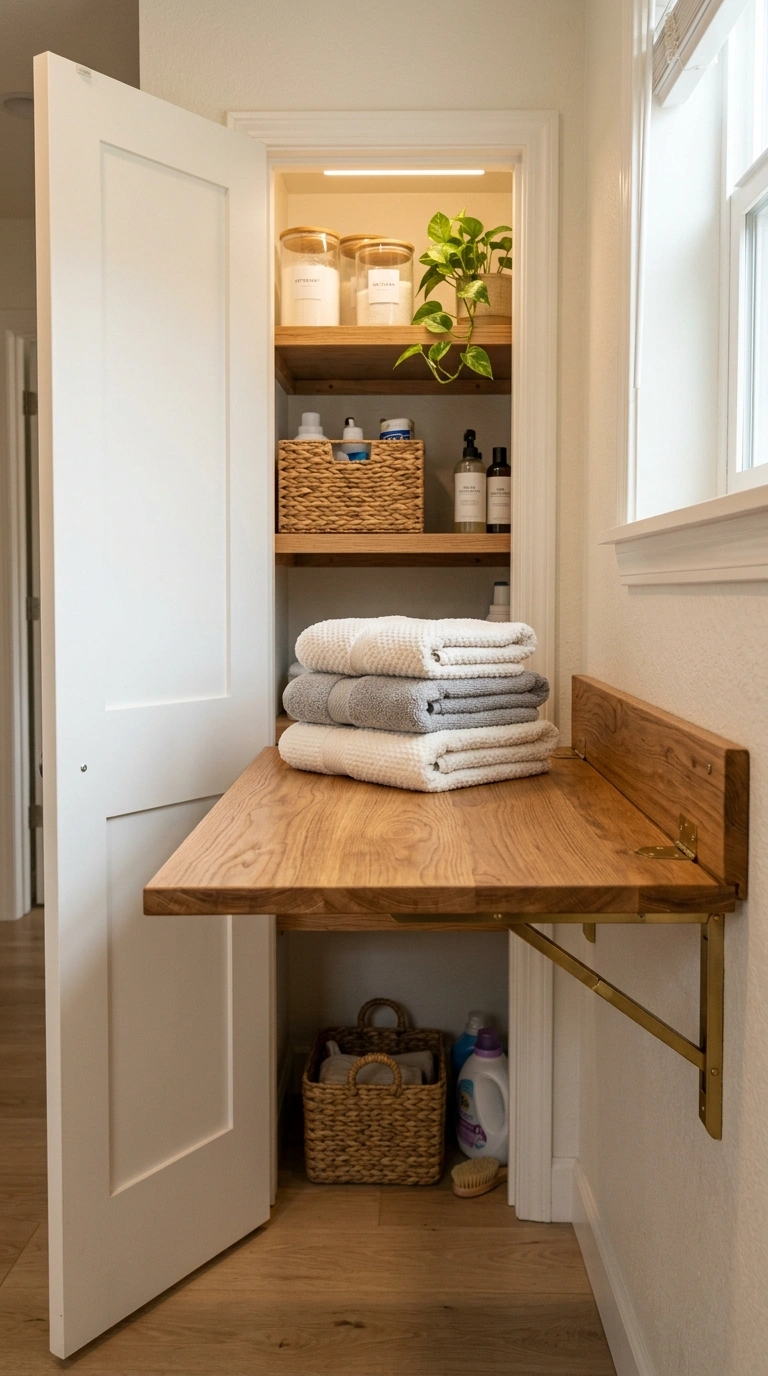
A hinged, fold-down shelf mounted at counter height gives you a folding surface when you need it and folds flat against the wall when you don’t, which matters most in narrow laundry closets with no room for a fixed counter. Choose a shelf rated for at least 25 to 30 pounds if you plan to fold a full basket of laundry directly on it rather than folding in smaller batches. Look for a folding bracket rated specifically for a fold-down table rather than a standard shelf bracket, since these are engineered for the repeated up-and-down motion a daily folding surface gets. Mount the fold-down shelf at standard counter height, 34 to 36 inches, so it feels natural to use without stooping.
10. Add a Small Pegboard Section With Mini Shelves
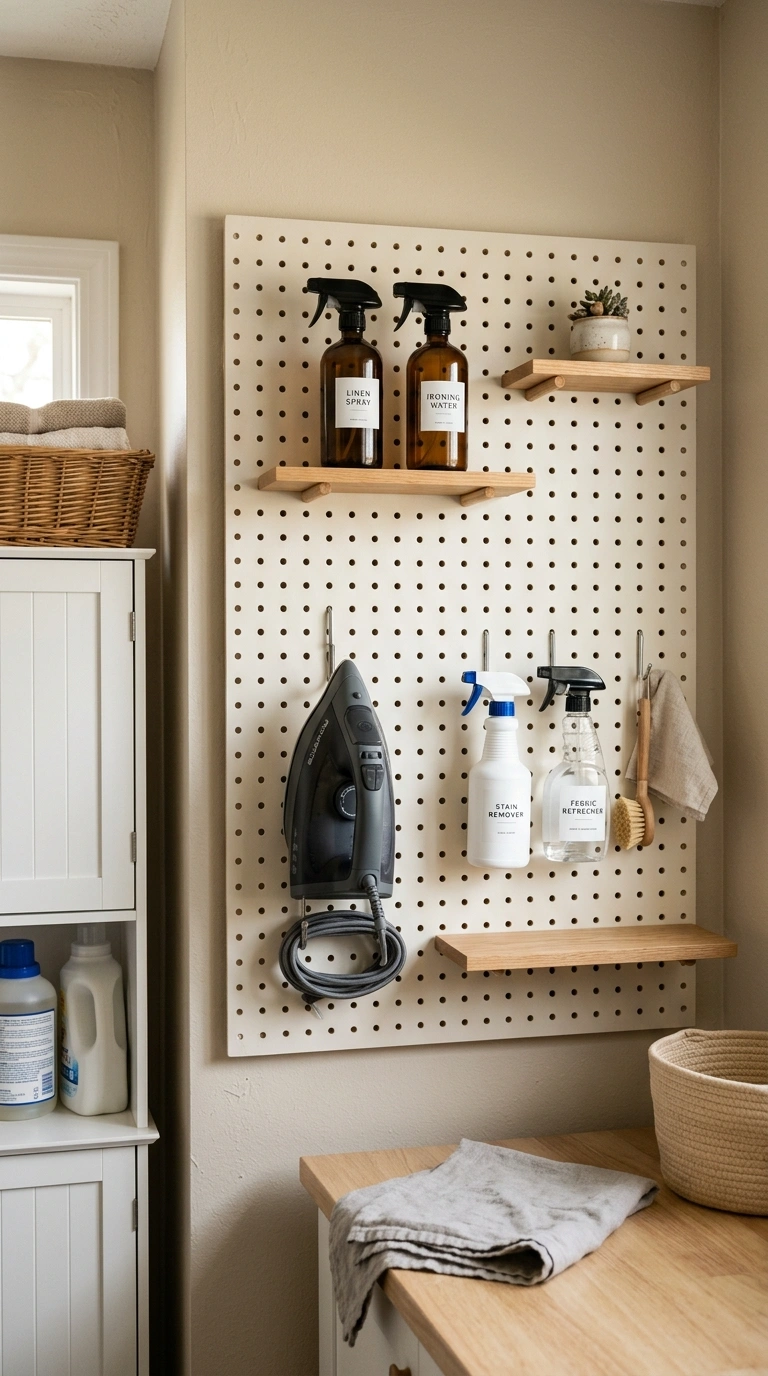
A pegboard wall fitted with small shelves and hooks keeps an iron, spray bottles, and a lint brush organized and visible, and lets you rearrange the layout anytime without adding new holes to the wall. This works especially well in a narrow laundry nook where a single wall is the only real storage surface available. Painted MDF pegboard resists warping better in a humid laundry room than unfinished particleboard versions, worth the small price difference in a room that regularly deals with steam and moisture. Use pegboard with 1/4-inch holes rather than the thinner hobby version, since it accepts sturdier hooks rated to hold small tools and spray bottles without bending.
11. Add Floating Shelves Above a Laundry Sink
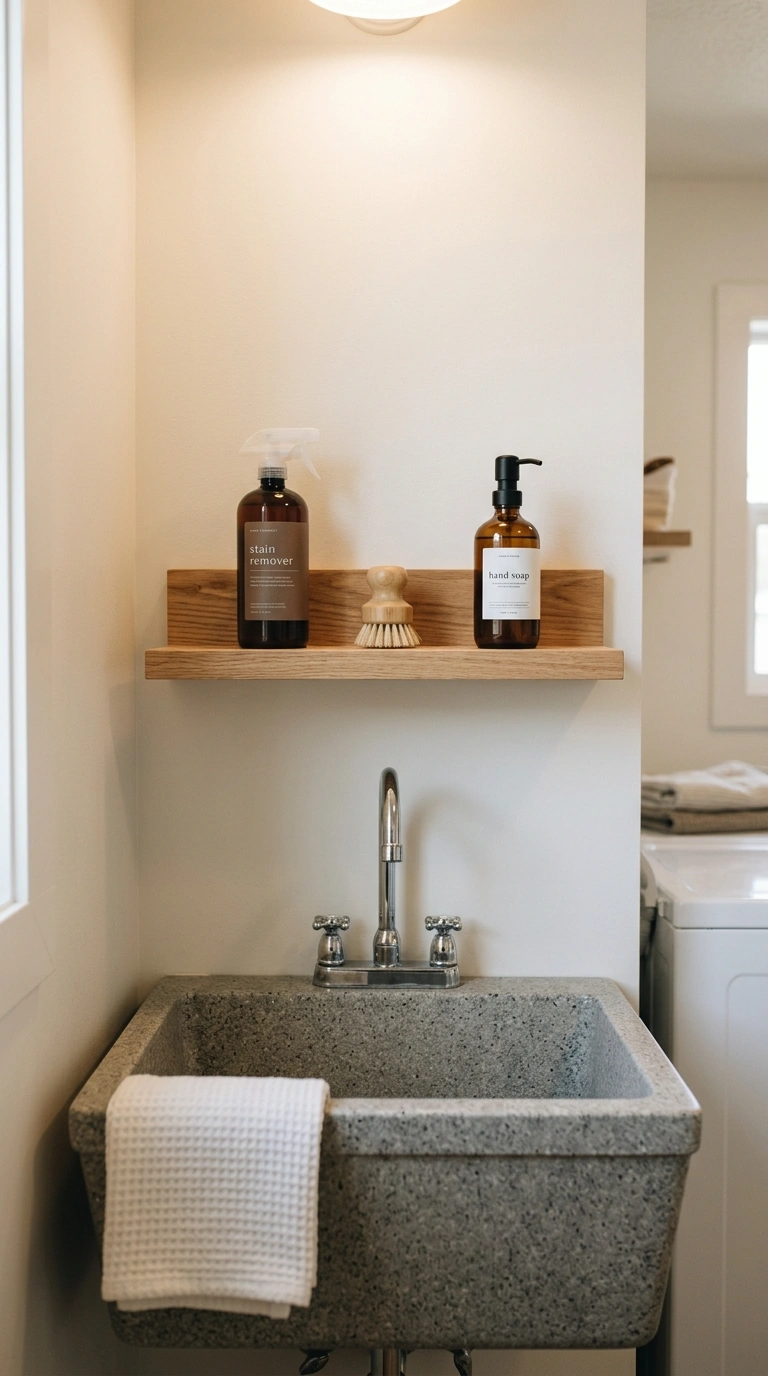
A shelf mounted above a utility sink keeps stain treatment, a scrub brush, and hand soap within reach of the exact spot you’re most likely to use them, rather than stored across the room. Keep this shelf shallow, around 8 to 10 inches deep, so it doesn’t crowd the space you need to actually work at the sink underneath it. A small lip or raised edge along the front of this shelf keeps bottles from sliding forward during regular use, which matters more here than elsewhere since this shelf gets bumped most often.
Quick tip: Choose a moisture-resistant sealed finish for any shelf mounted directly above a sink, since splashes here are more frequent than anywhere else in the room.
12. Style Open Shelving With Baskets for Towels and Linens
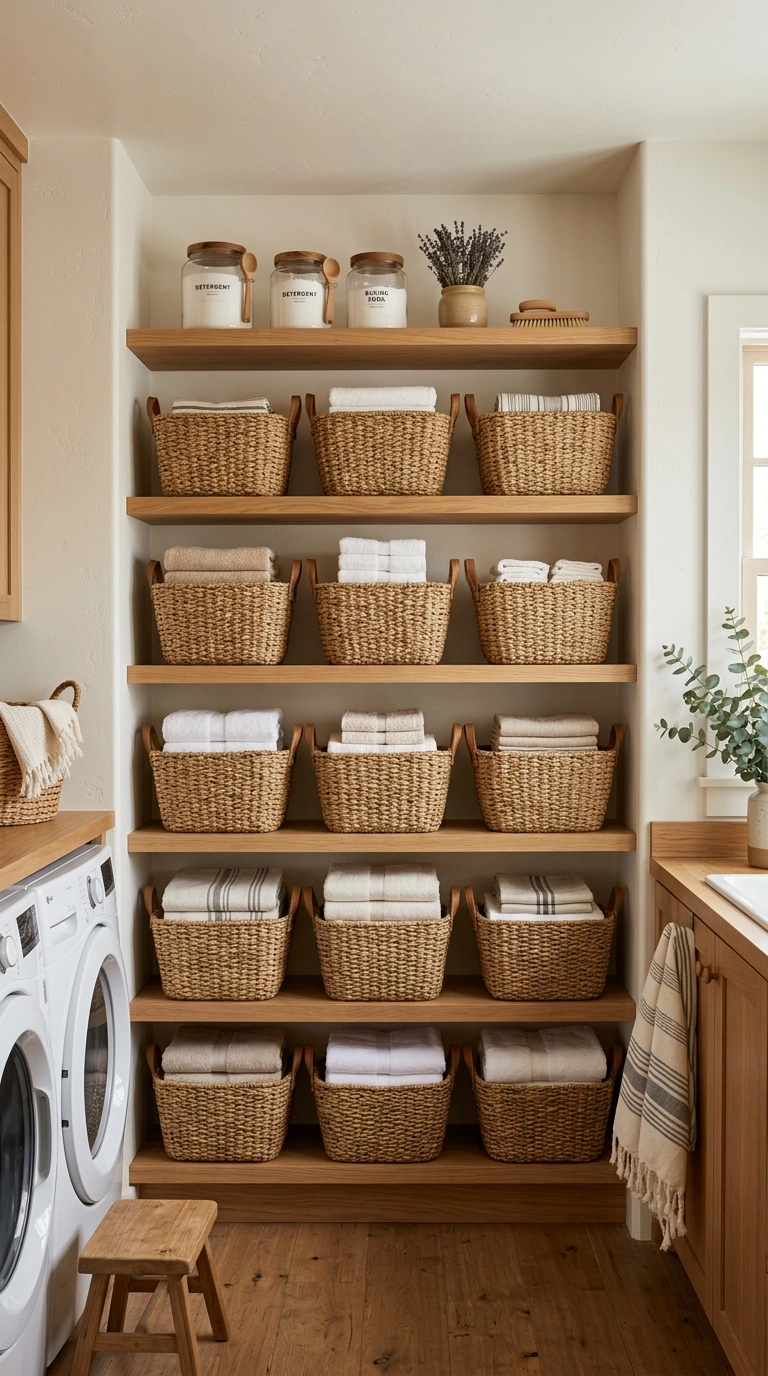
Open shelves lined with matching woven baskets give a laundry room the same organized, boutique feel as a linen closet, while keeping folded towels and sheets dust-free and tidy. This works especially well as the visual anchor of the room when the shelving is positioned where it’s seen first on entry, rather than tucked behind the door. Natural fiber baskets like seagrass or water hyacinth tend to hold their shape better over time than fabric bins, which can sag once loaded with heavier folded towels.
Quick tip: Measure your basket height before finalizing shelf spacing; most baskets need at least 10 to 12 inches of clearance to slide in and out without catching on the shelf above.
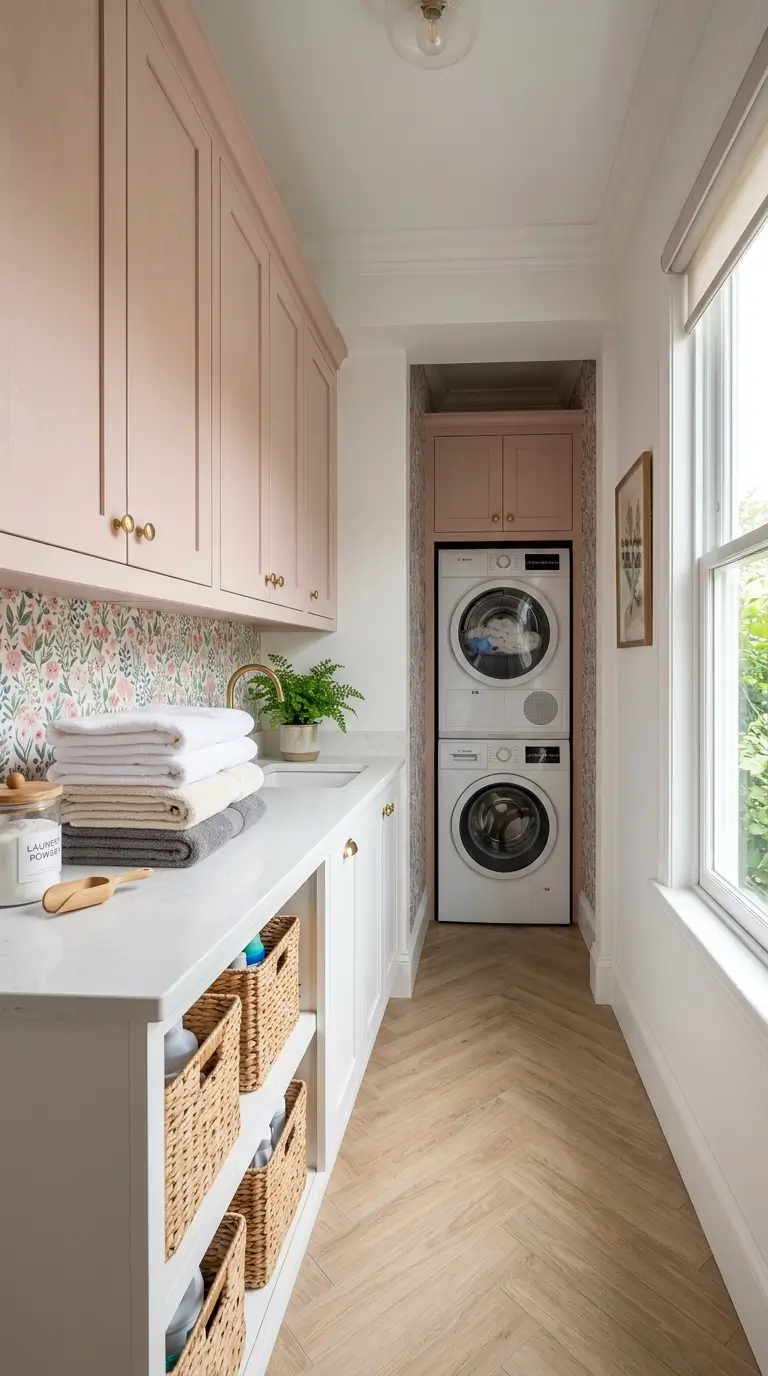
13. Use a Ladder Shelf in a Narrow Laundry Closet
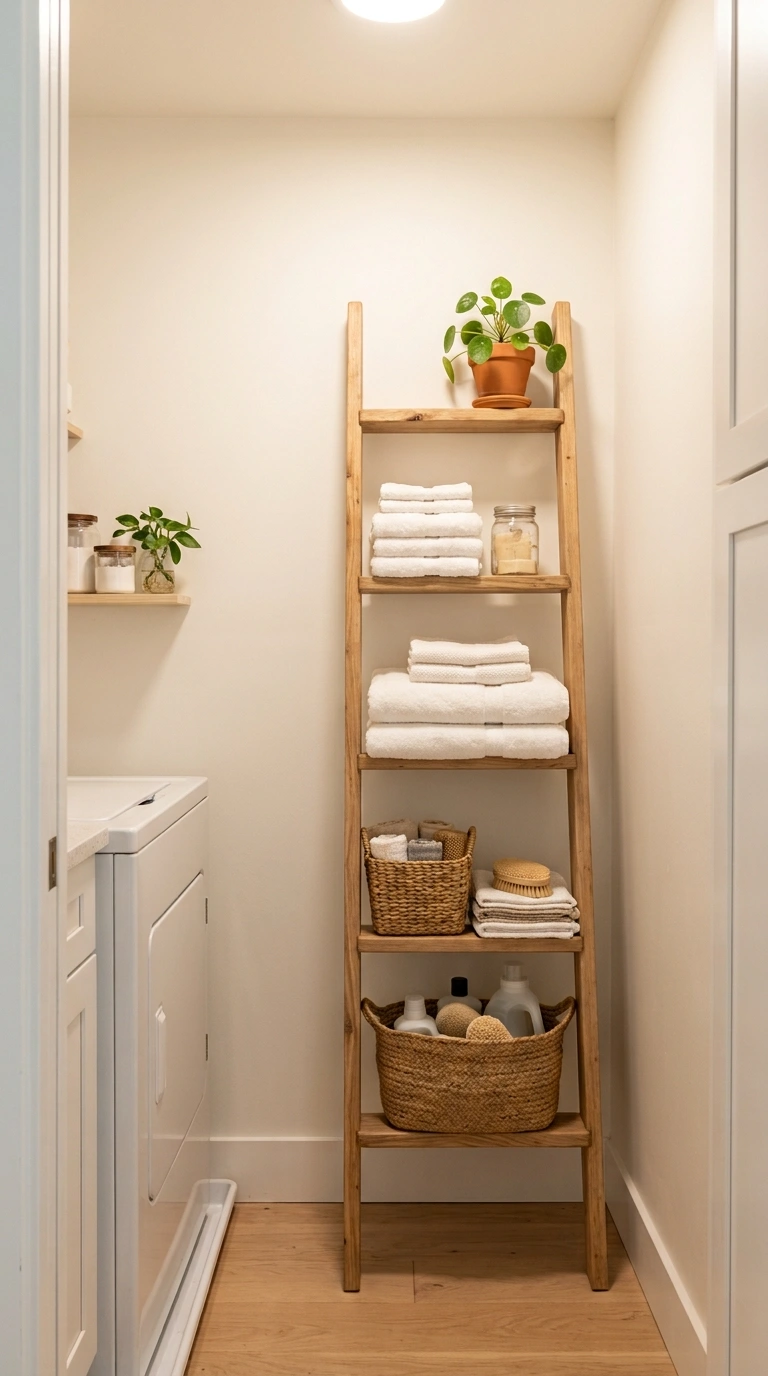
A leaning ladder shelf fits into laundry closets too narrow for traditional wall-mounted shelving, and it requires no drilling at all, which matters in a rental or a shared wall you’d rather not put holes in. Choose a ladder shelf with a wide, stable base relative to its height, since a narrow footprint in a small closet is more prone to tipping if bumped while loading laundry. Because ladder shelves aren’t anchored to the wall, keep them out of the direct path between the washer and dryer doors, where an accidental bump while loading laundry is most likely. Keep the heaviest items on the ladder’s lowest shelf, the same rule that applies to any freestanding shelving unit, to keep the overall piece stable.
14. Add a Shelf Above a Stacked Washer and Dryer
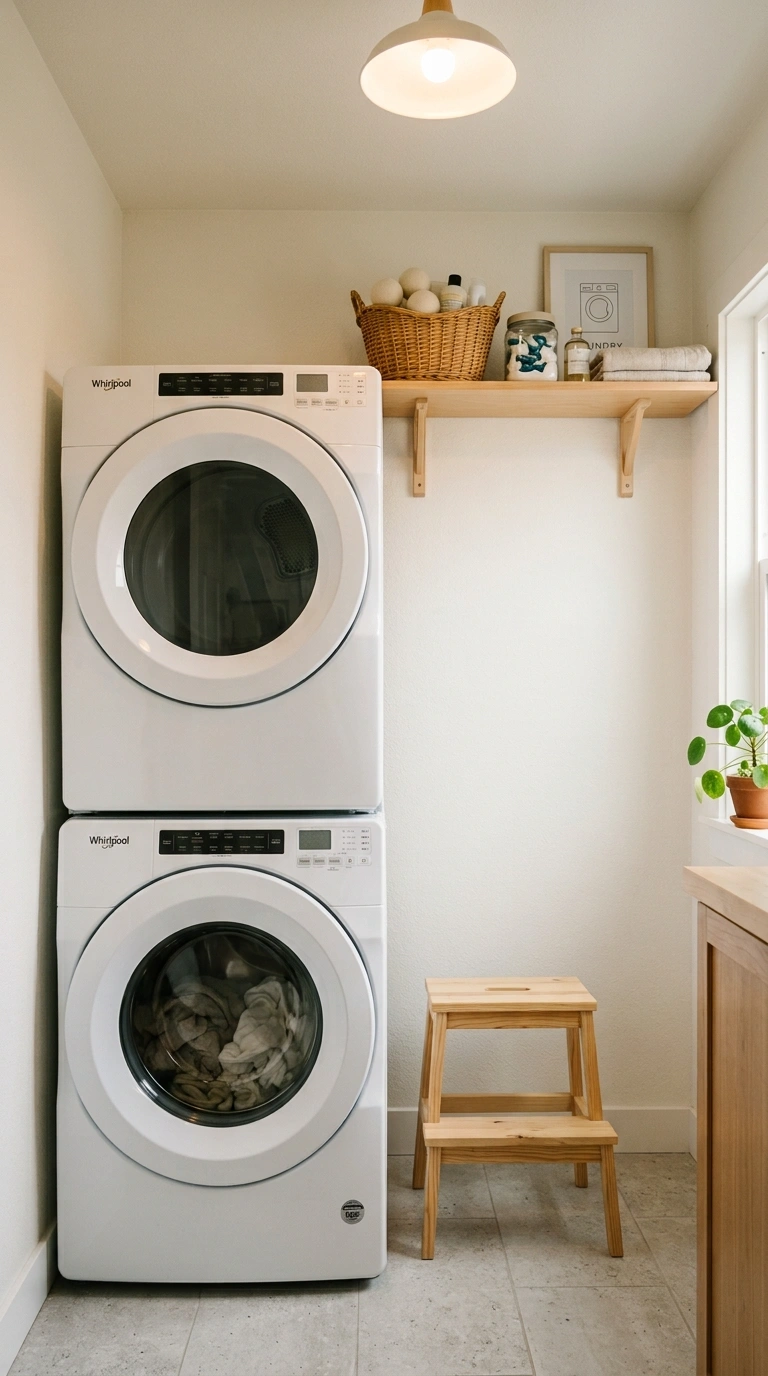
A stacked front-load pair reaches 74 to 80 inches total, so a shelf above it needs to start around 82 to 86 inches or higher, well above standard shelf height in most other rooms. Because this shelf sits so high, reserve it for lighter or less frequently accessed items, and consider a small step stool stored nearby specifically for reaching it. If reaching a shelf this high isn’t practical for daily use, treat it as archive storage only, spare parts or seasonal items, rather than anything you need on a regular basis. Check your ceiling height before planning a shelf above a stacked unit; an 8-foot ceiling leaves only 10 to 14 inches of usable clearance above an 82- to 86-inch starting point.
15. Turn a Dead Corner Into Corner Shelving
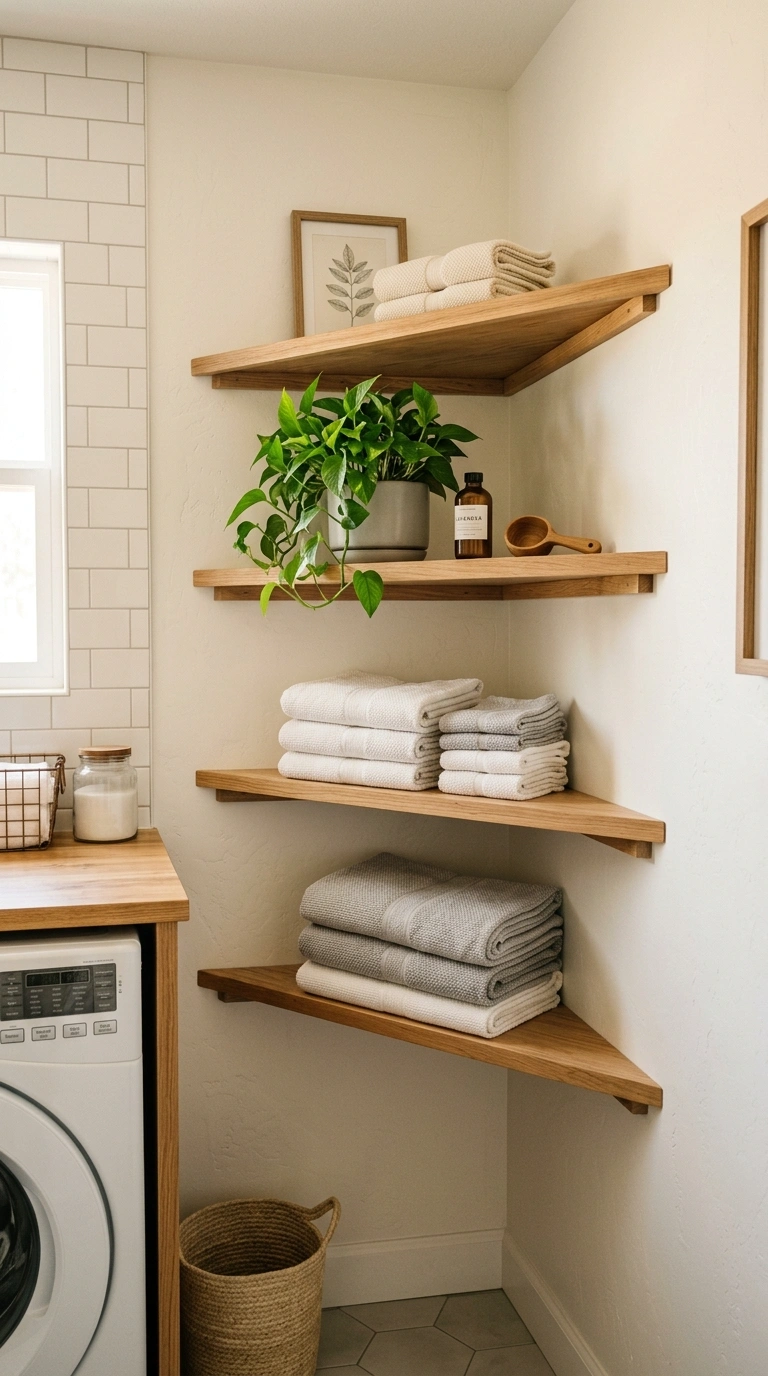
Angled corner shelves make use of the awkward triangular space that a laundry room’s corner often leaves empty, especially in rooms where the washer and dryer already take up most of the linear wall space. This works particularly well for lighter, more decorative storage, like folded hand towels or a small plant, since corner shelves generally support less weight than a straight wall-mounted shelf of the same size. Triangular corner shelves generally have less usable surface area than they appear to from across the room, so measure the actual depth at the shelf’s midpoint, not just its widest point, before planning what goes on it. Choose a slightly smaller corner shelf than the space technically allows; an oversized corner shelf can make the room feel more cramped rather than more organized.
16. Add Hooks Beneath a Shelf for Hanging Items
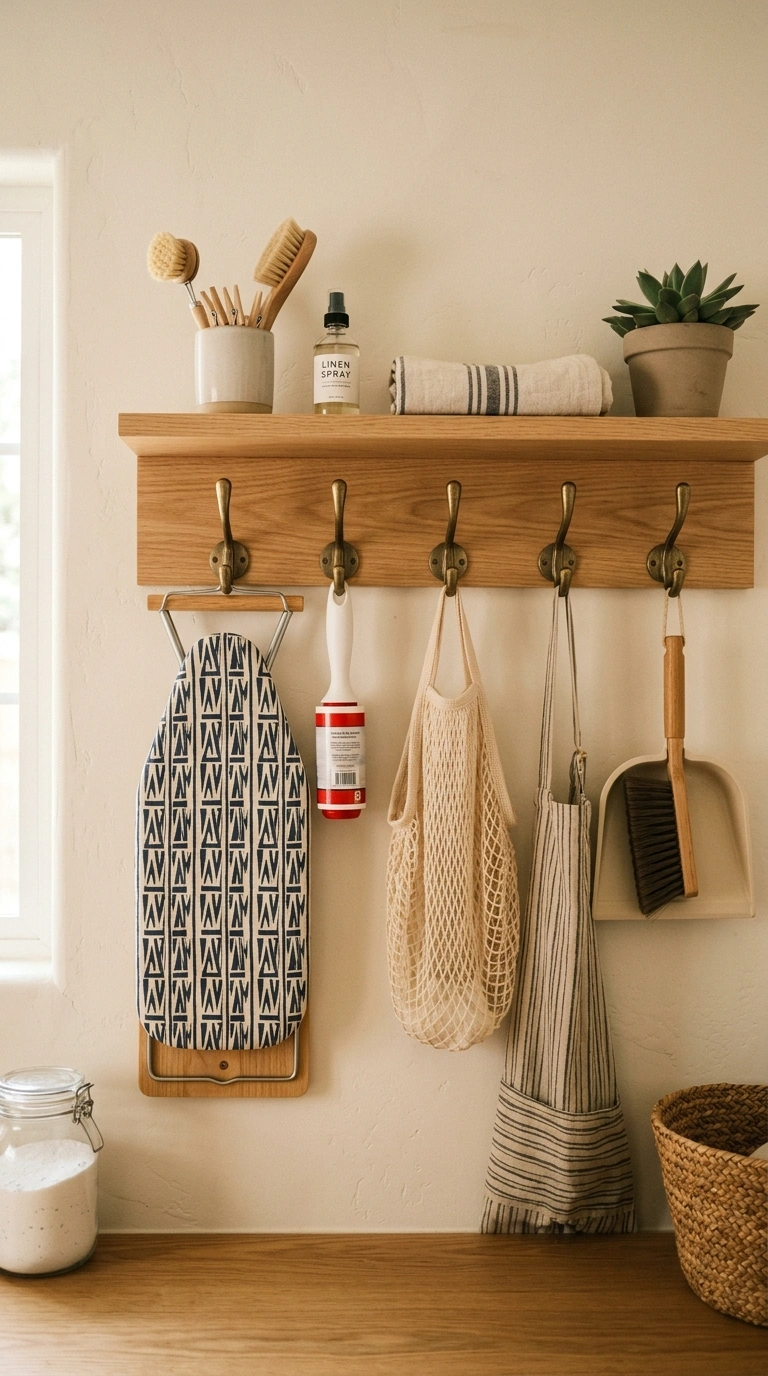
Mounting a row of hooks along the underside of a shelf gives you a spot for an ironing board, a lint roller, or a small broom without needing separate wall space for each item. This layered approach uses the same wall footprint for two types of storage, which matters most in laundry rooms too small to dedicate a full wall to hanging items alone. Choose hooks with a closed loop or curved lip rather than a simple straight peg, since items like ironing boards can slide off a straight hook more easily during regular use.
Quick tip: Space hooks at least 4 to 6 inches apart so hung items, especially anything with a wider handle, don’t overlap or knock into each other.
17. Display Detergent Pods and Powder in Glass Canisters
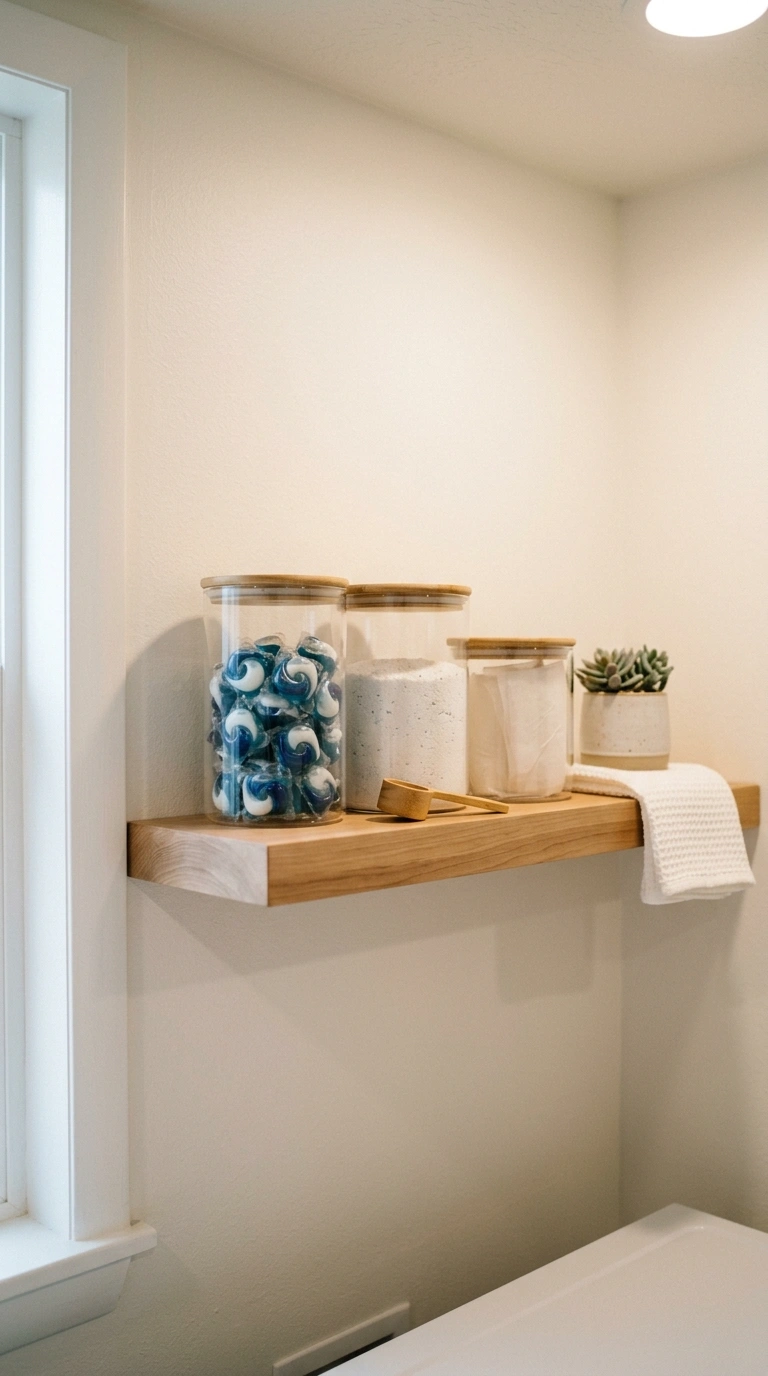
Transferring loose detergent pods or powder into matching glass canisters keeps a shelf looking curated instead of like a row of mismatched plastic packaging, while still keeping contents fully visible and easy to check at a glance. Choose canisters with airtight lids for powder detergent specifically, since exposure to humidity in a laundry room can cause powder to clump over time.
A funnel makes transferring loose powder detergent into a canister far less messy than pouring directly from the original box, and it’s worth storing right alongside the canisters themselves. Keep the original packaging’s usage instructions somewhere accessible, like taped inside a nearby cabinet door, since that information doesn’t transfer with the product into a canister.
18. Add a Designated Bin for Lost Socks and Small Items
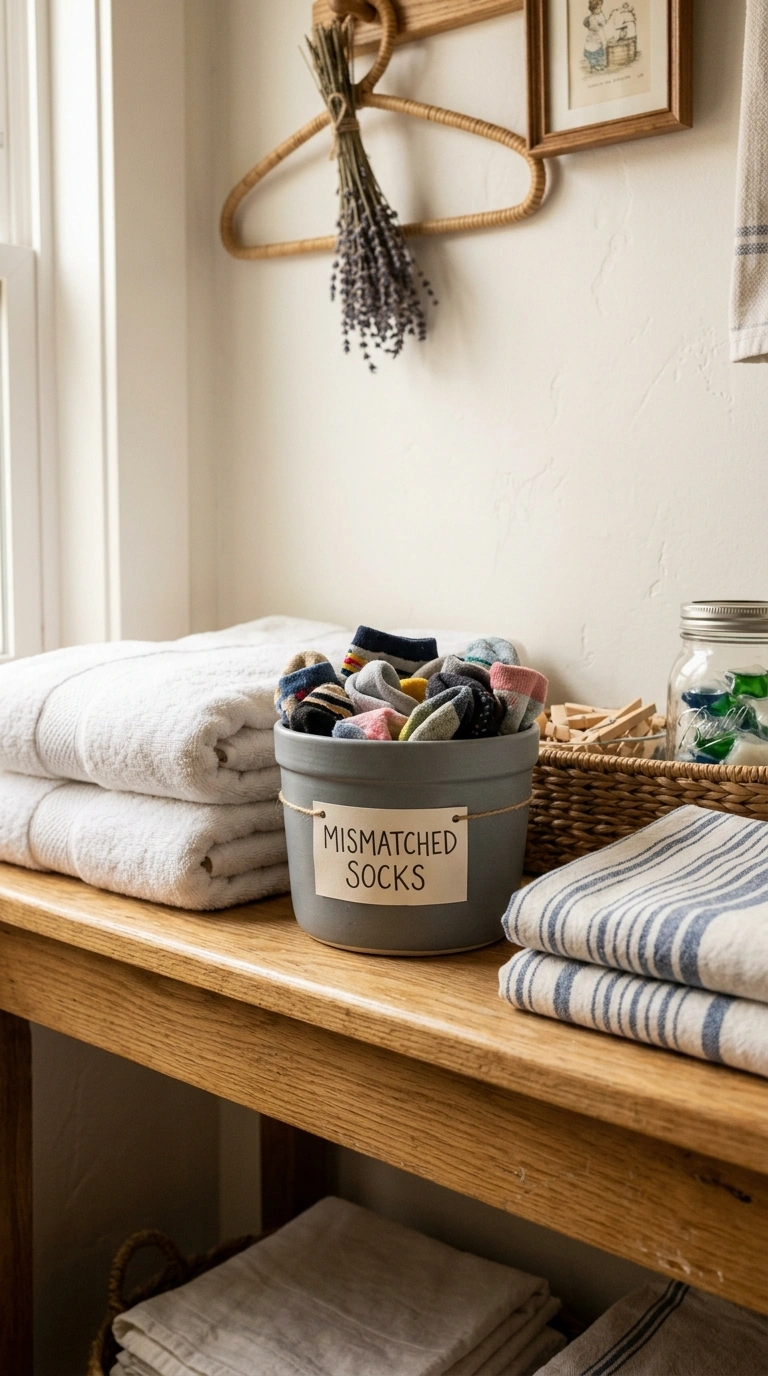
A small labeled bin just for mismatched socks, loose buttons, and other small items that turn up mid-laundry keeps them from cluttering a shelf meant for supplies, and gives you one spot to check when a missing item finally turns up. This is a small addition, but it solves a genuinely common laundry room annoyance with almost no extra shelf space required. Consider labeling the bin with a specific review date, like the first of every month, written directly on it, so checking it becomes a scheduled habit rather than something that only happens once it overflows.
Quick tip: Do a quick pass through the lost-item bin every month or two; most contents either find their match or can be donated or discarded by then.
19. Add Task Lighting Beneath a Shelf
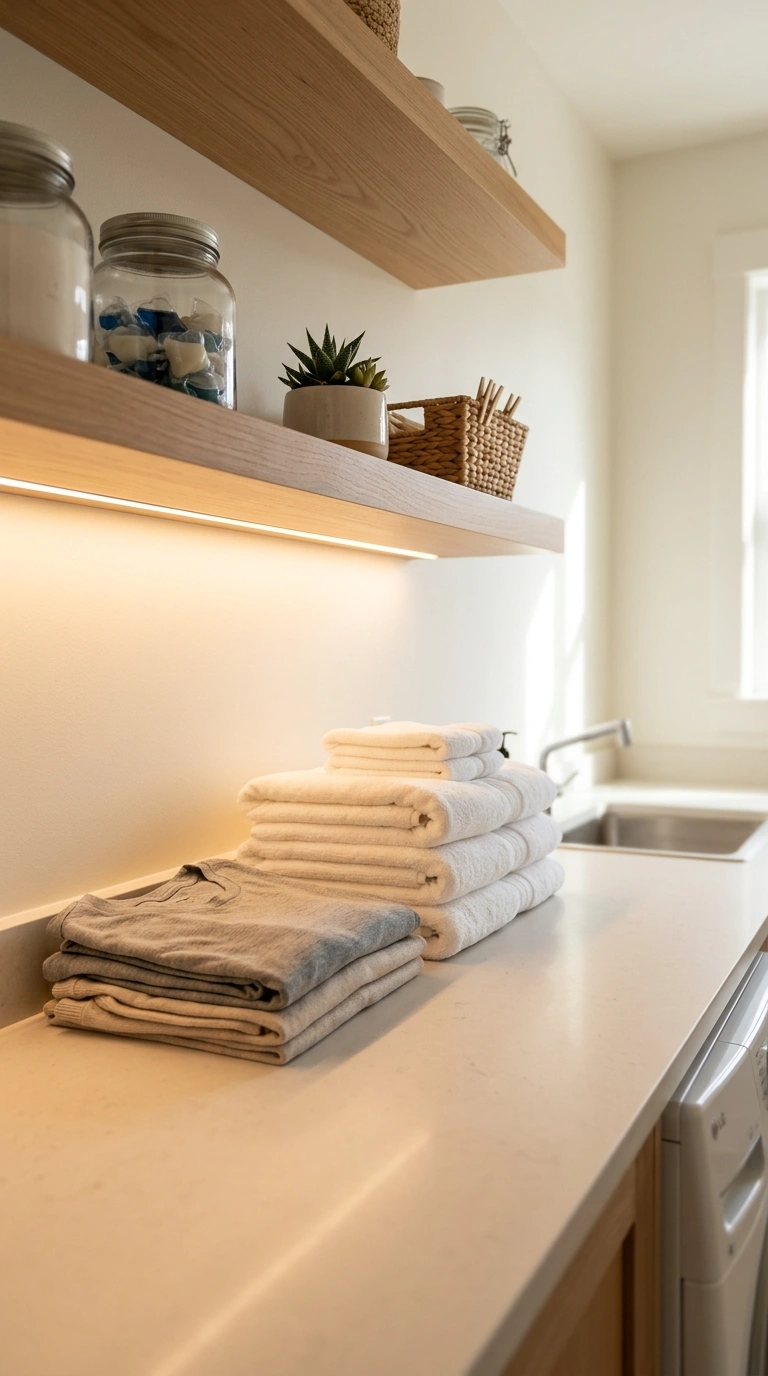
A slim LED strip mounted under a shelf directly above the washer or folding counter makes it easier to read labels, spot stains, and sort laundry accurately in laundry rooms that often rely on a single dim overhead fixture. Battery-powered stick-on strips are the simplest option for renters, while hardwired strips look more finished in a laundry room you plan to stay in long-term. Position the strip toward the front edge of the shelf rather than the back, so the light actually falls on the counter or machine below instead of shining into the back of the shelf’s contents.
Quick tip: Choose a warm white LED, around 2700–3000K, rather than a cool white strip, so the space feels welcoming rather than clinical.
Final Thoughts
The laundry shelves that actually hold up start with two numbers most people skip: the real clearance your specific washer needs, and the real weight rating your shelf hardware needs to carry once it’s fully stocked. Get those right first, then the styling, baskets, canisters, and warm lighting are what make the room look intentional instead of purely functional. Pick your favorite layout, save it to Pinterest, and start planning your own laundry room shelves this weekend.
FAQs
How high should a shelf be mounted above a top-load washer?
A shelf above a top-load washer should start at least 64 to 68 inches from the floor, since the machine itself stands 42 to 44 inches tall and the lid needs 20 to 24 inches of clearance above that to open fully. Front-load washers need far less clearance, so a shelf can start as low as 40 to 45 inches above one.
How much weight can a laundry room shelf hold?
It depends entirely on the bracket, not just the shelf material. Decorative floating shelf brackets are typically rated for only 25 to 30 lbs, while stud-mounted brackets can hold up to 150 lbs per stud, which matters since a fully stocked laundry shelf often weighs 40 to 60 lbs.
Is wire shelving or solid shelving better for a laundry room?
Solid wood or laminate shelving generally performs better in a finished laundry room, since wire shelving flexes under weight, can rust in humid conditions, and lets small items fall through the gaps. Wire shelving still makes sense in unfinished basement laundry areas where ventilation matters more than appearance.
How much does a full bottle of laundry detergent weigh?
A full bottle of liquid laundry detergent typically weighs 10 to 12 lbs, and a full bottle of fabric softener adds another 8 to 10 lbs. Between detergent, softener, and other supplies, a single laundry shelf can easily reach 40 to 60 lbs in daily use.
Can you put open shelving above a stacked washer and dryer?
Yes, but a shelf above a stacked front-load pair, which reaches 74 to 80 inches total, needs to start around 82 to 86 inches up. Check your ceiling height first, since an 8-foot ceiling leaves only 10 to 14 inches of usable clearance above that starting point.