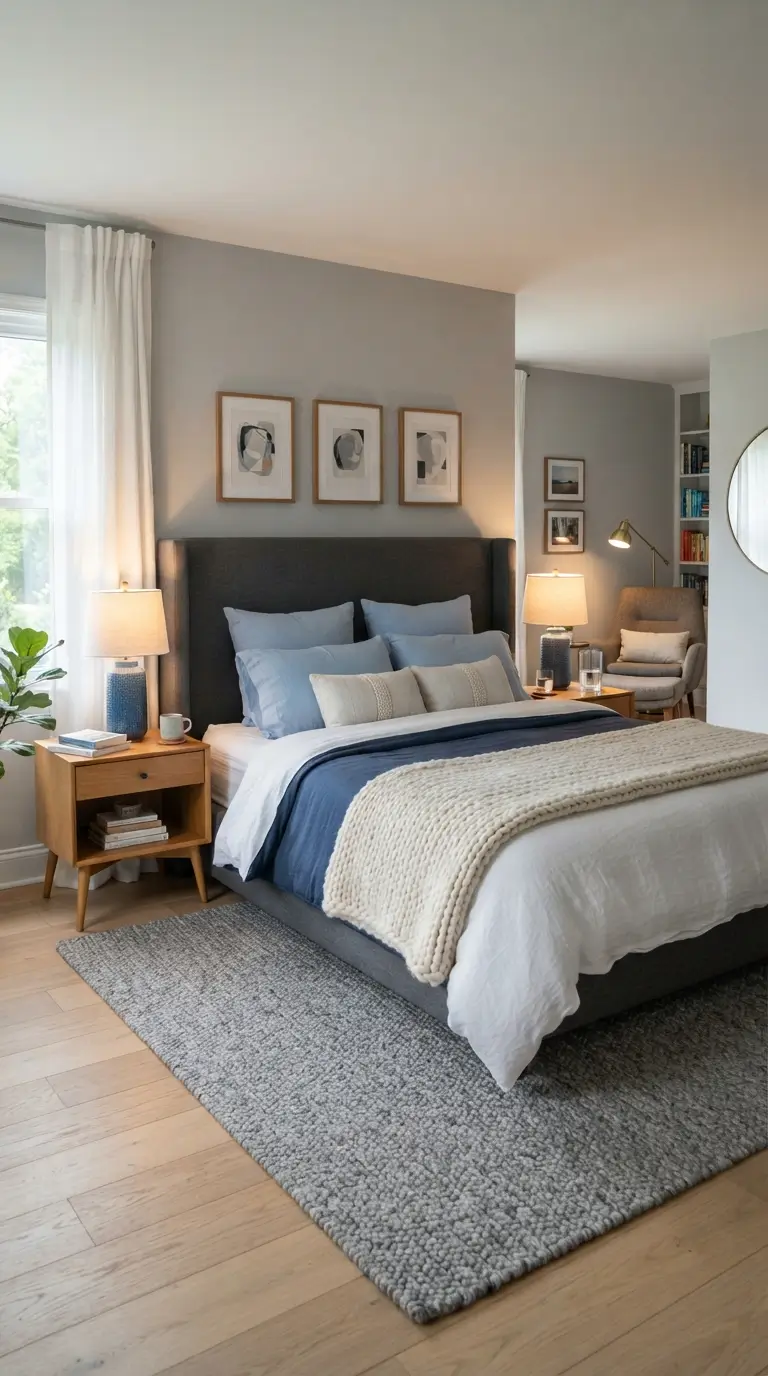
20 Bedroom Colors That Create a Calm and Relaxing Space
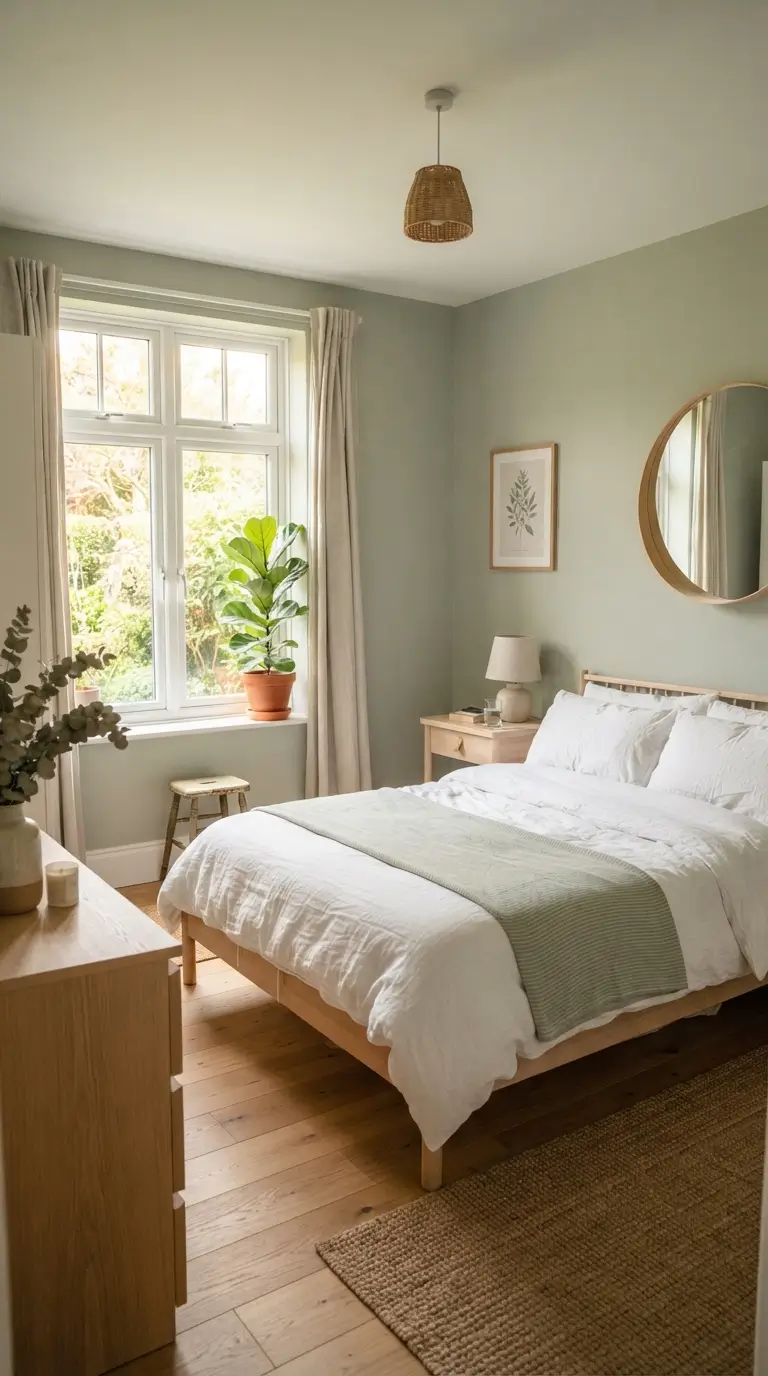
Some nights you fall asleep the second your head hits the pillow, and other nights your mind just will not slow down, and the color on your bedroom walls has more to do with that than most people realize. Bright colors and busy patterns can keep your brain a little too alert, while soft, muted tones send a signal that it is time to rest. The good news is you do not need a designer or a big budget to fix this. A can of the right paint color can change how a whole room feels within a single afternoon. Below are twenty bedroom colors that tend to help people relax, sleep better, and enjoy their space more, along with simple ways to use each one in a real bedroom you can picture right now.
1. Soft Sage Green
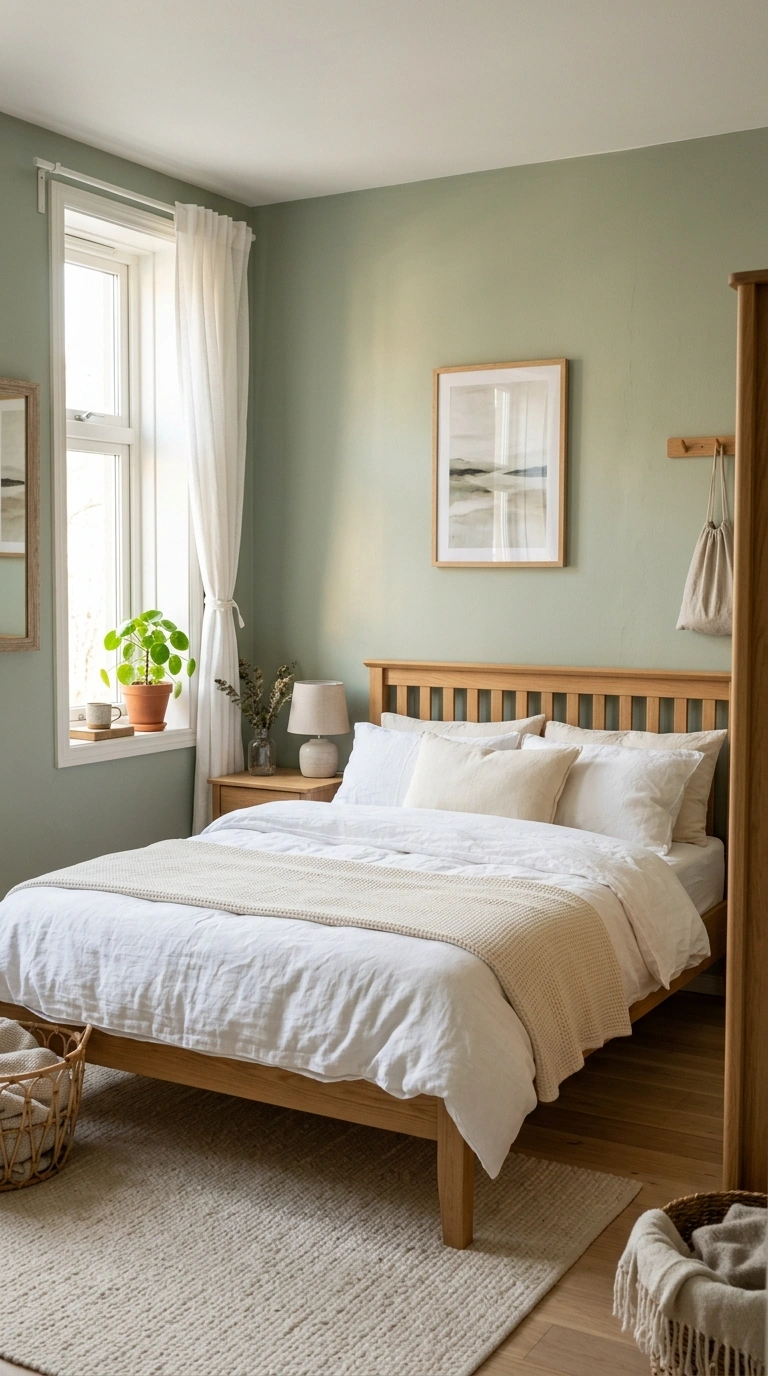
Soft sage green is one of the most calming colors you can choose for a bedroom, since it echoes the green tones found in nature without leaning too bright or too dark. Paint all four walls in this shade for a fully immersive, garden like feel, or use it on just one accent wall if you prefer a lighter touch. A matte finish works best here, since it softens the color and avoids any glare from windows or lamps.
Pair sage green walls with warm wood furniture, like an oak bed frame or walnut nightstands, since wood tones bring out the earthy quality of the green. White or cream bedding keeps the room feeling bright and airy rather than dark. Add a few houseplants in simple terra cotta pots on the windowsill or floor to tie the color scheme together even further. This combination works beautifully in bedrooms with lots of natural light, since sunlight makes sage green look soft and alive throughout the day.
2. Warm Beige Walls
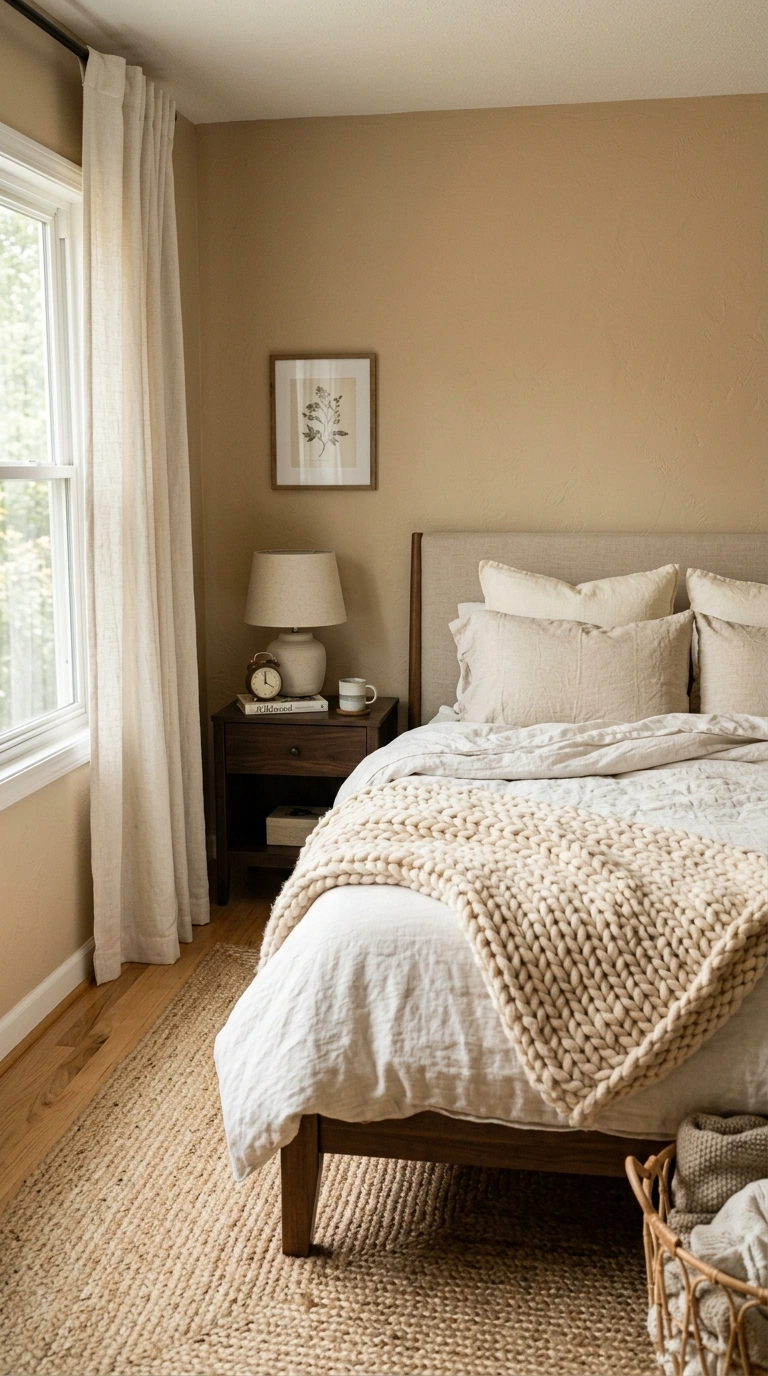
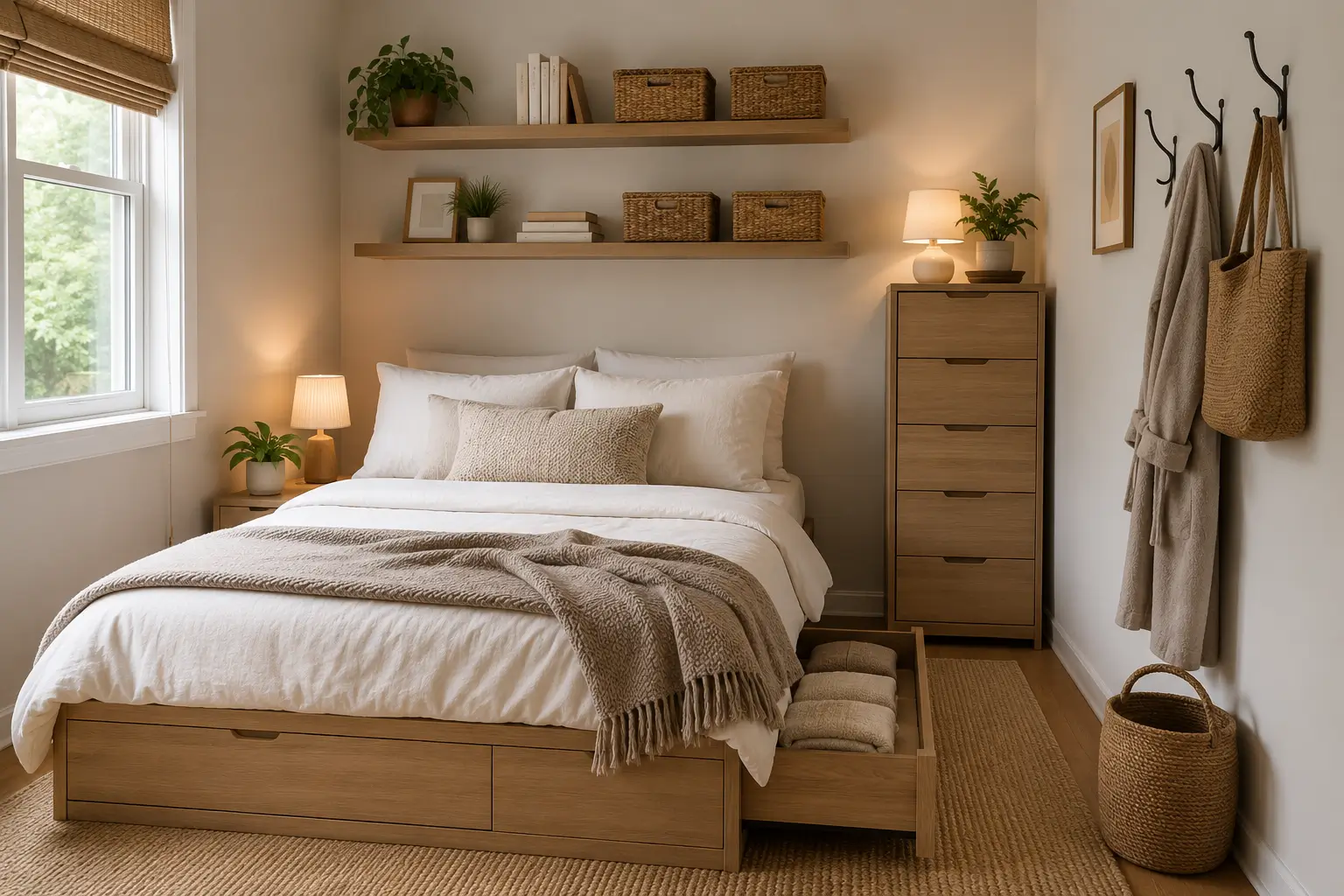
Warm beige is a classic bedroom color because it feels cozy without being boring, and it works with almost any furniture style you already own. Look for a beige with slightly warm undertones, avoiding shades that lean too pink or too yellow, since the wrong undertone can clash with your existing bedding and decor. A satin or eggshell finish gives the walls a soft, subtle sheen that catches light nicely.
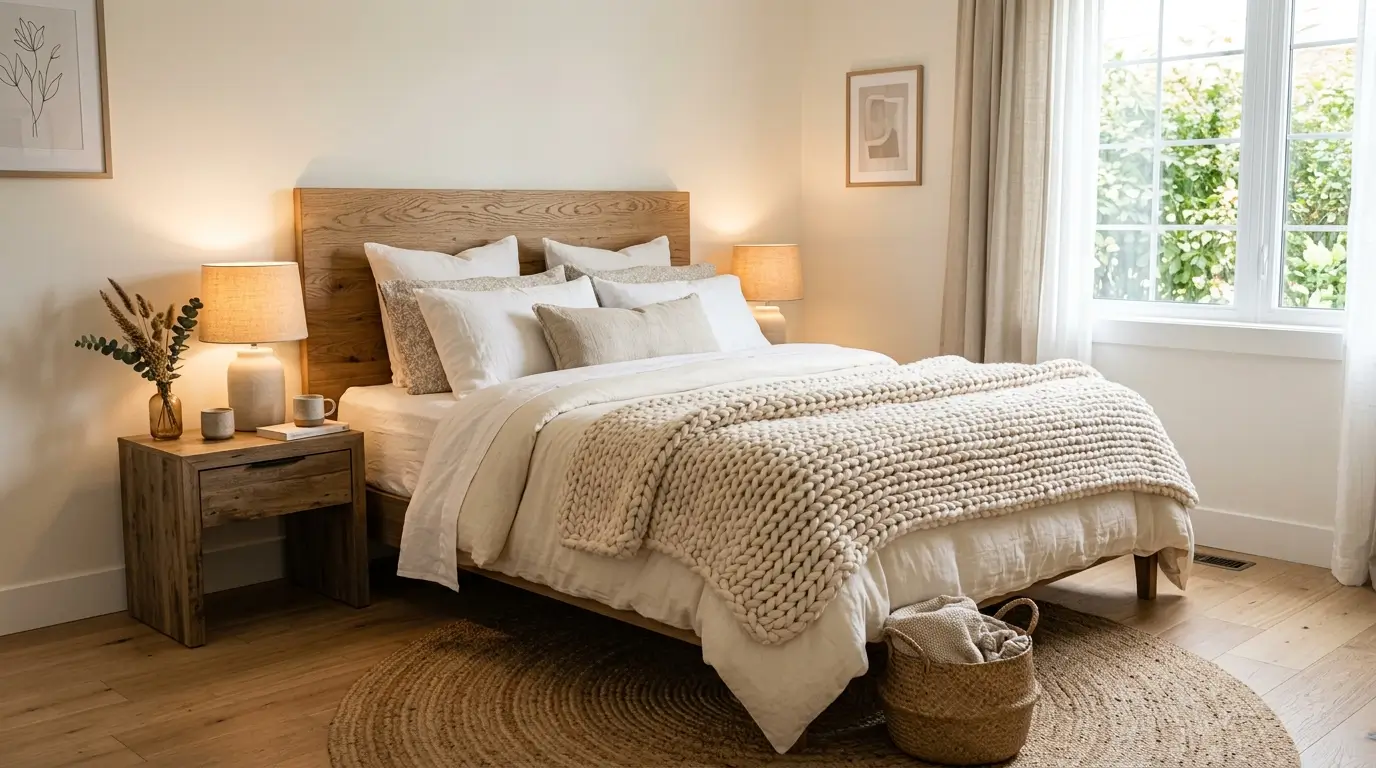
Style the room with layered textures, like a chunky knit throw at the foot of the bed, linen curtains, and a woven jute rug underfoot, since beige walls give you a neutral canvas to play with different materials. Add darker wood furniture or black metal light fixtures for contrast so the room does not feel flat or one note. Warm beige walls are especially useful in bedrooms that double as a home office corner, since the color stays calming even with a desk and chair added into the mix.
3. Dusty Blue Bedroom
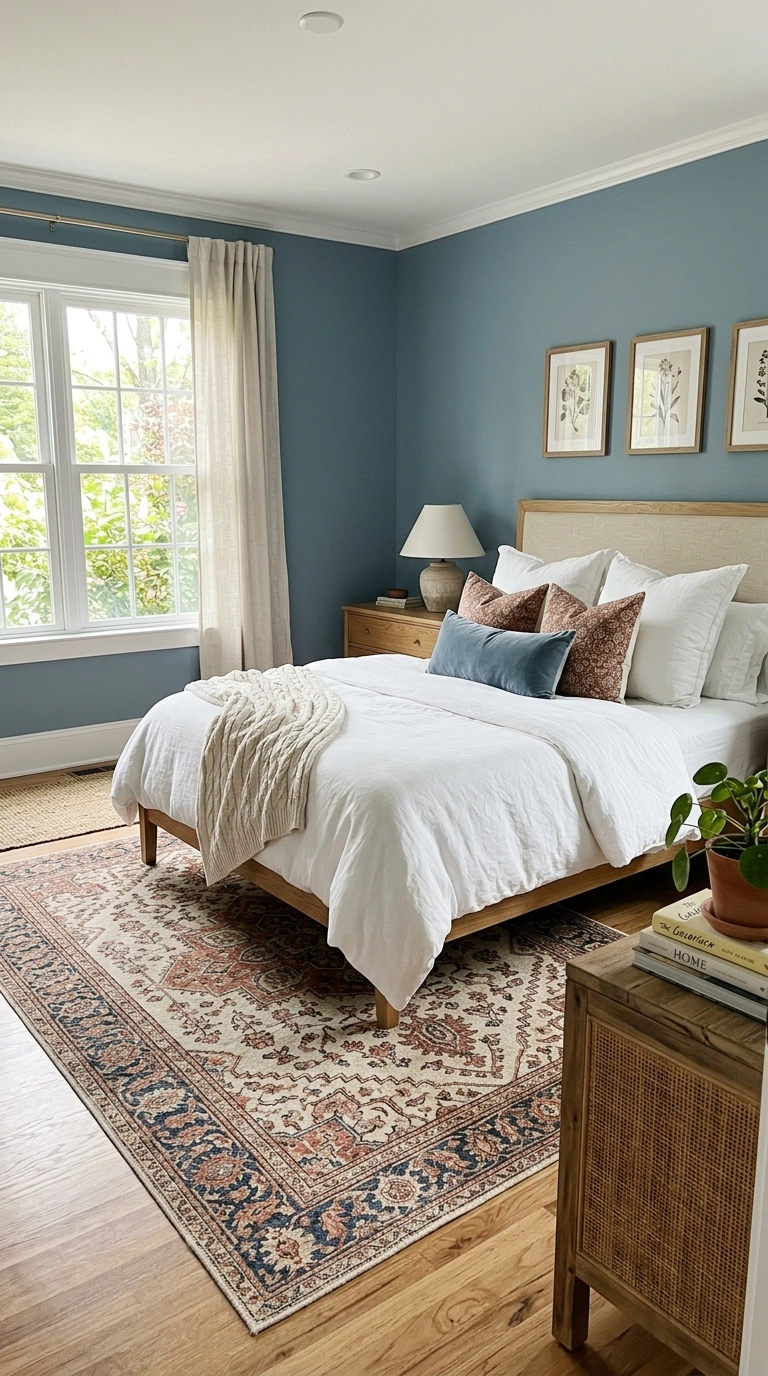
Dusty blue, sometimes called slate blue, brings a peaceful, almost sky like quality to a bedroom without feeling cold the way brighter blues sometimes can. This shade works well on all four walls, especially in bedrooms that get plenty of natural light throughout the day, since the sunlight keeps the blue from looking too somber in the evening. Choose a matte or eggshell finish for the softest look.
Pair dusty blue walls with white trim and crisp white bedding for a fresh, coastal feeling, or lean into warmer woods and brass fixtures for a slightly more traditional look. A patterned rug in navy, cream, and rust tones adds visual interest without overwhelming the calm blue backdrop. This color choice works particularly well in bedrooms used mainly for sleeping, since studies on color psychology often point to blue tones as one of the more relaxing choices for a restful night.
4. Muted Terracotta Tones
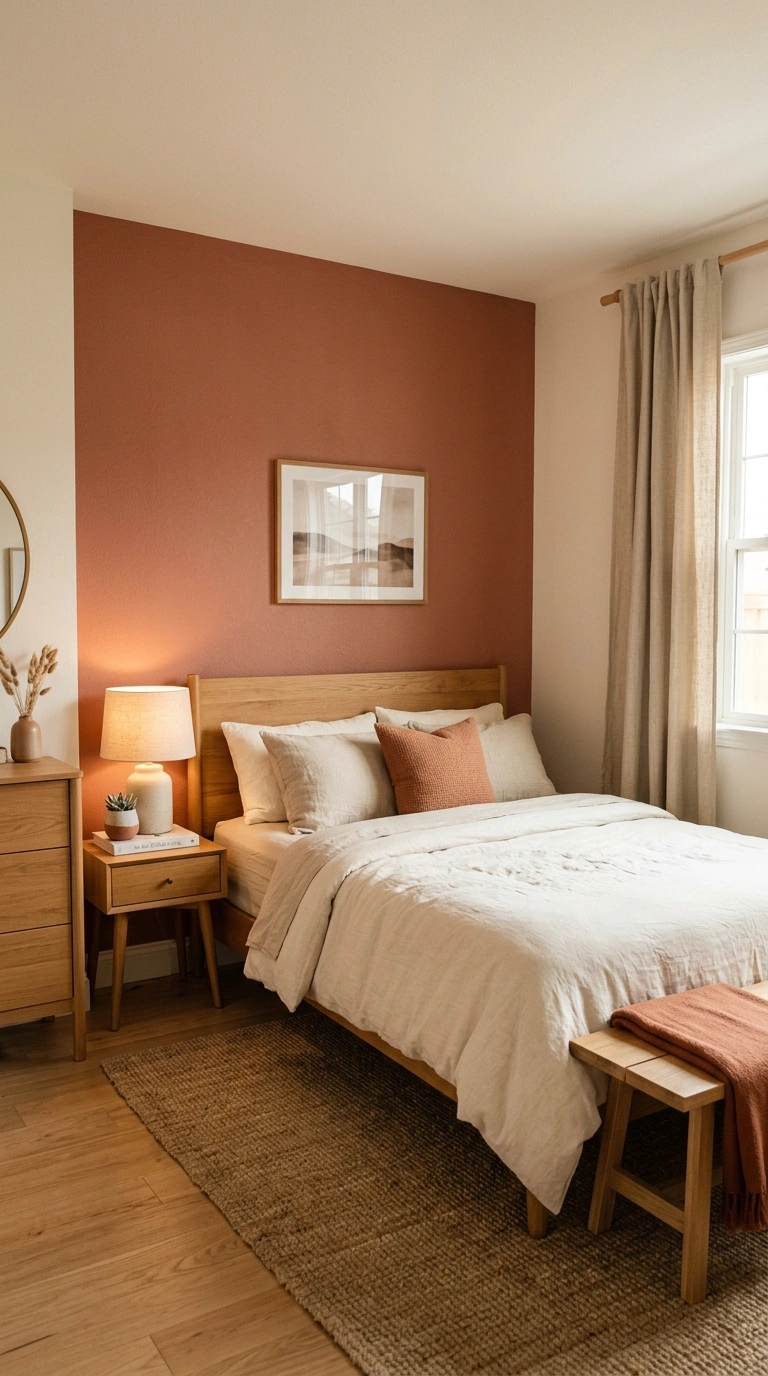
Muted terracotta brings warmth into a bedroom in a way that still feels calm rather than energizing, since the softer, dustier version of this color reads more like clay than bright orange. Use it on a single accent wall behind the headboard, or apply it to all four walls in smaller bedrooms where the warmth helps the space feel cozy rather than sparse. A matte finish suits this earthy tone best.
Pair terracotta walls with cream bedding, natural linen curtains, and simple wood furniture to keep the overall look grounded and warm. A woven wall hanging or a few ceramic pieces in a similar clay tone reinforce the color story throughout the room. This palette works especially well in bedrooms with south facing windows, since the natural light plays beautifully off the warm terracotta walls throughout the day, creating a cozy, sun washed feeling from morning through evening.
5. Pale Pink Walls
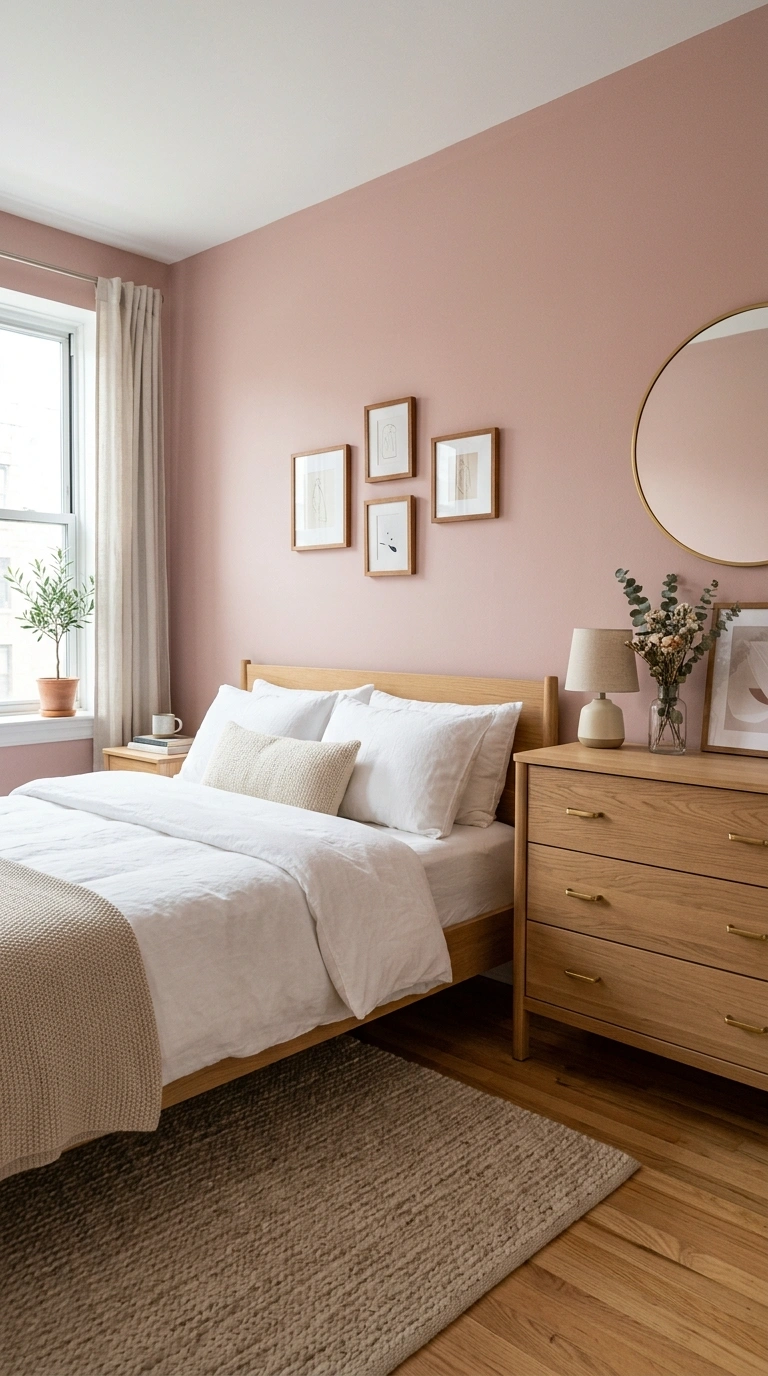
Pale pink, especially a dusty or muted version rather than a bright bubblegum shade, creates a soft and soothing bedroom that feels gentle rather than overly sweet. This color works well on all walls for a fully enveloping effect, or as an accent wall paired with white on the remaining three walls for a lighter touch. Choose a shade with gray or beige undertones to keep the pink looking sophisticated.
Style the room with white or cream bedding, natural wood furniture, and simple brass or gold hardware on dressers and nightstands, since metallics complement pink tones nicely. A woven rug in a neutral oatmeal tone grounds the room and keeps the pink from feeling too delicate. This color choice works well in bedrooms of any age or style, proving that a soft pink can feel just as calm and grown up as any neutral shade when styled thoughtfully.
6. Soft Gray Palette
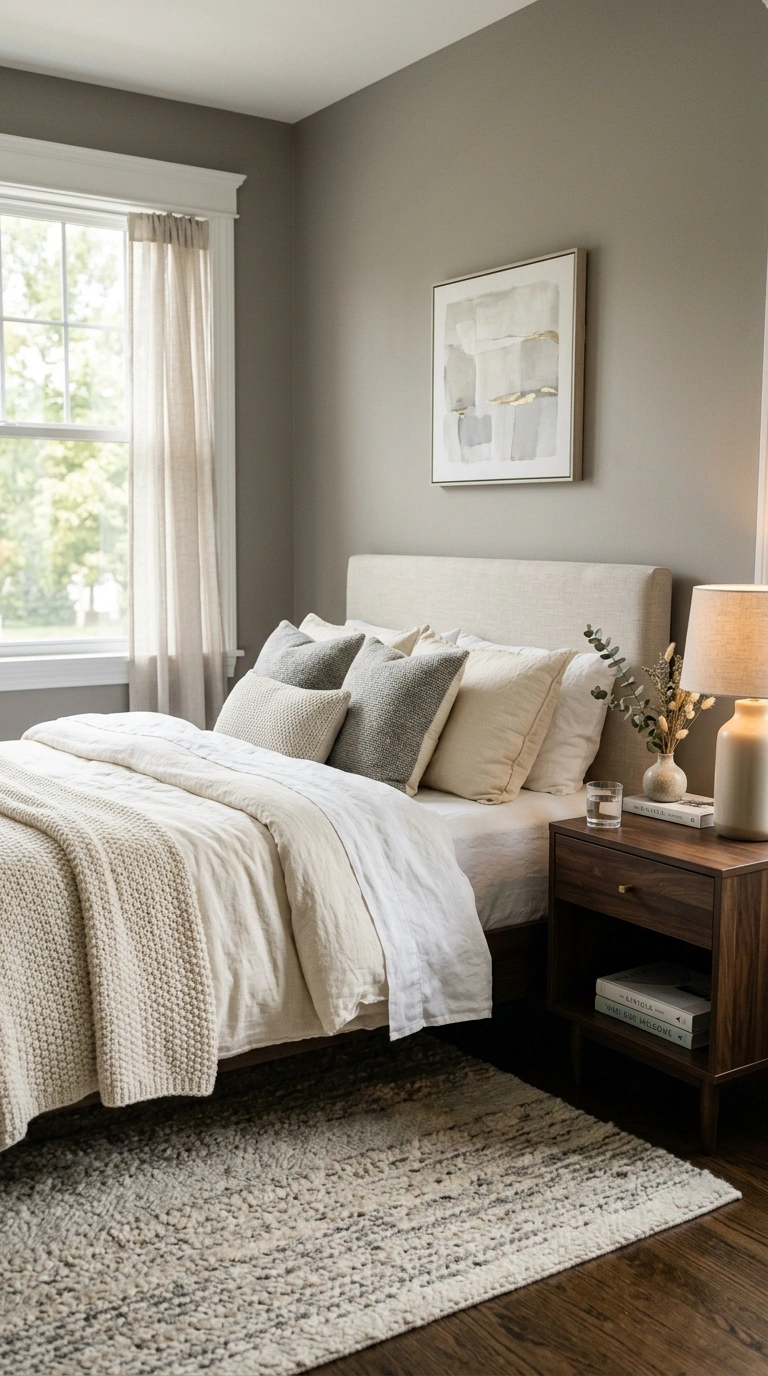
A soft, warm toned gray remains one of the most versatile calming colors for a bedroom, working equally well in modern, traditional, and minimalist spaces. Avoid grays with strong blue or purple undertones if you want the warmest, coziest feeling, and instead look for a gray described as warm or greige on paint swatches. A flat or matte finish helps the color look soft rather than industrial.
Pair gray walls with layered white and cream bedding, along with a few black or dark wood accents for contrast, like a nightstand or picture frames. Add texture through a chunky knit throw blanket and a soft area rug to keep the room from feeling too cool or sparse. This palette works particularly well for bedrooms shared by couples, since gray tends to appeal to a wide range of personal tastes while still creating a genuinely restful atmosphere.
7. Warm Taupe Bedroom
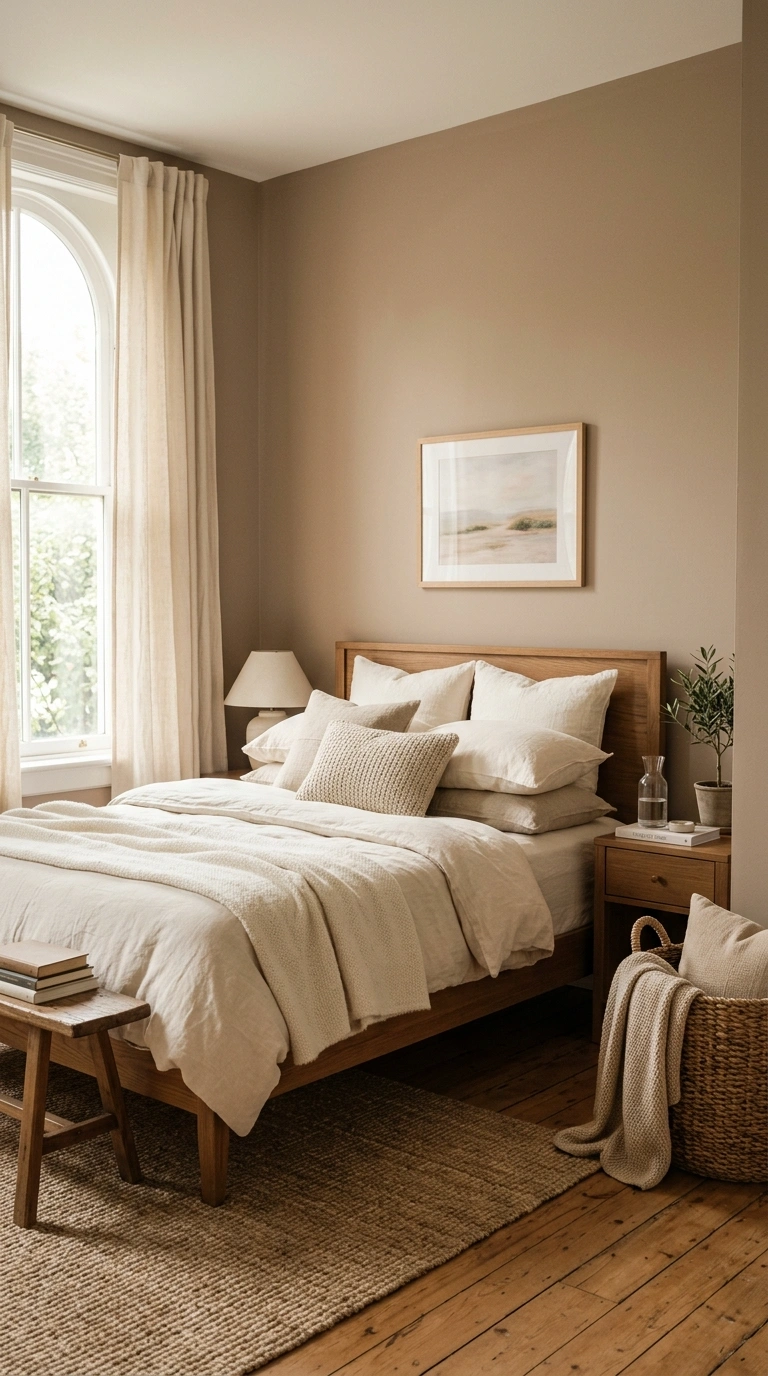
Warm taupe sits somewhere between beige and gray, and it brings a quiet, grounded feeling to a bedroom that works well no matter the season. Use it across all four walls for a cocoon like effect, especially in bedrooms without a lot of natural light, since taupe tends to look warm and inviting even under artificial lighting in the evening. A satin finish adds a gentle sheen without looking shiny.
Style the room with layered neutrals in cream, ivory, and soft brown tones, along with natural materials like linen curtains and a woven basket for extra storage. Wood furniture in a medium or dark tone complements taupe walls especially well, creating a warm and cohesive look throughout the room. This color choice works nicely in guest bedrooms too, since taupe tends to feel welcoming and comfortable to almost anyone who stays the night.
8. Sky Blue Ceiling
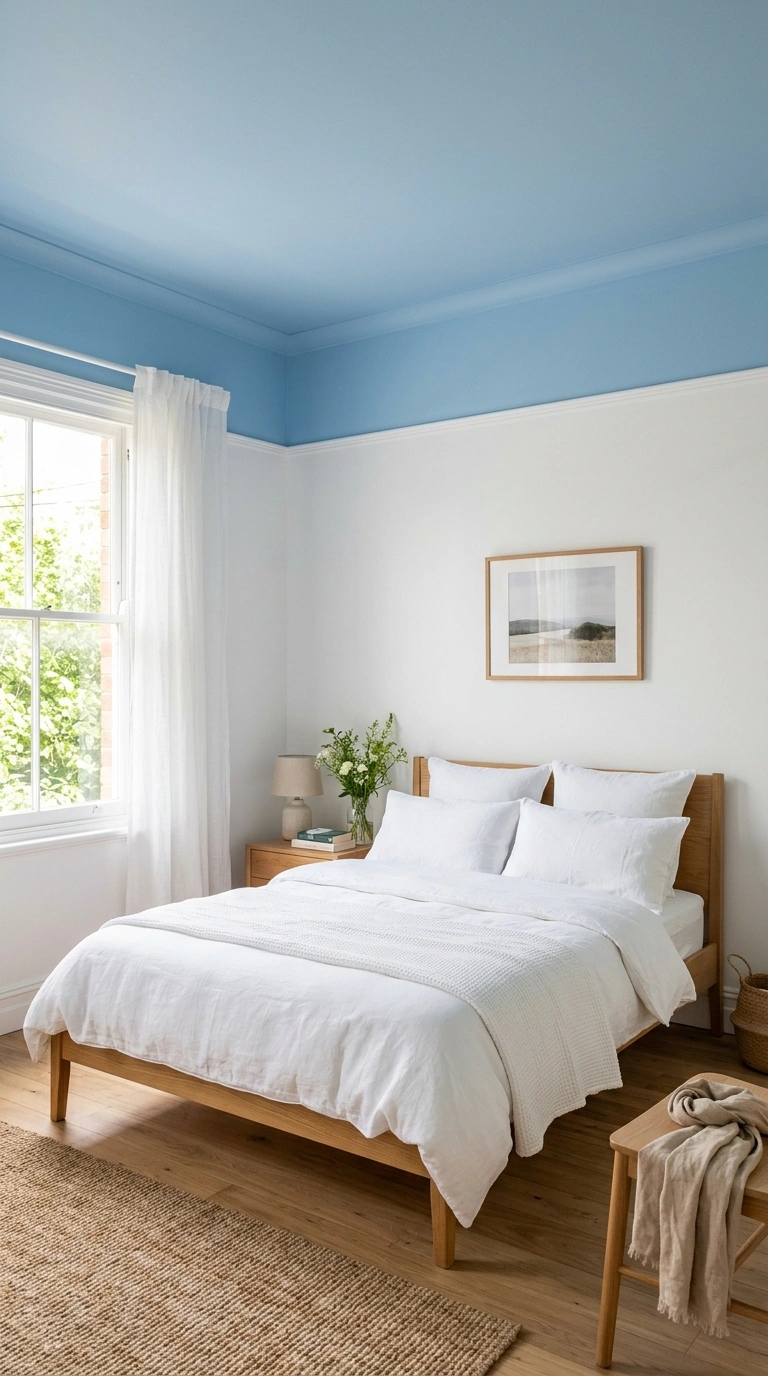
Painting the ceiling a soft sky blue while keeping the walls white or a light neutral creates a subtle, calming surprise every time you lie down and look up. This idea, sometimes called a haint blue ceiling, has roots in old porch traditions but works beautifully in modern bedrooms too. Choose a very pale, almost powdery blue rather than a saturated shade for the softest effect overhead.
Keep the walls in white, cream, or a light gray so the ceiling color feels like a gentle accent rather than an overwhelming statement. White bedding and simple wood furniture complete the airy, restful look. This idea works especially well in bedrooms with lower ceilings, since a light color overhead can help the room feel taller and more open, all while giving you something soft and pretty to look at right before falling asleep each night.
9. Soft Lavender Bedroom
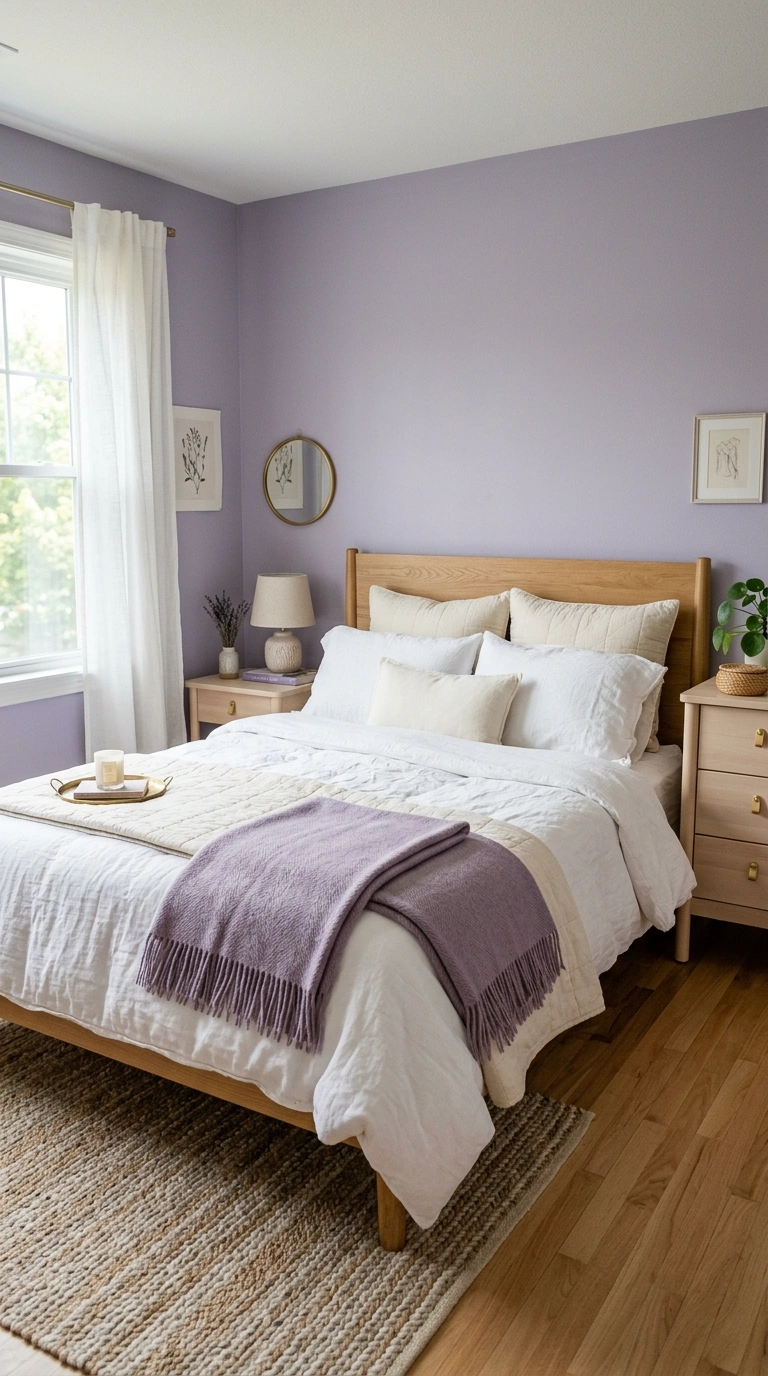
A soft, dusty lavender remains a favorite calming bedroom color because it sits right between cool and warm tones, giving it a gentle, soothing quality that few other colors can match. Paint all four walls for a fully calming retreat, or stick to one accent wall behind the bed if you prefer a smaller dose of color. A matte finish keeps the lavender looking soft rather than bright.
Pair the walls with white or cream bedding, light wood furniture, and simple brass hardware for a look that feels fresh and calm rather than overly sweet. A woven throw blanket in a slightly deeper purple tone adds depth without disrupting the peaceful mood. This color works particularly well in bedrooms used for both sleep and quiet activities like reading, since lavender has long been associated with relaxation and rest in both design and scent traditions alike.
10. Cream and White
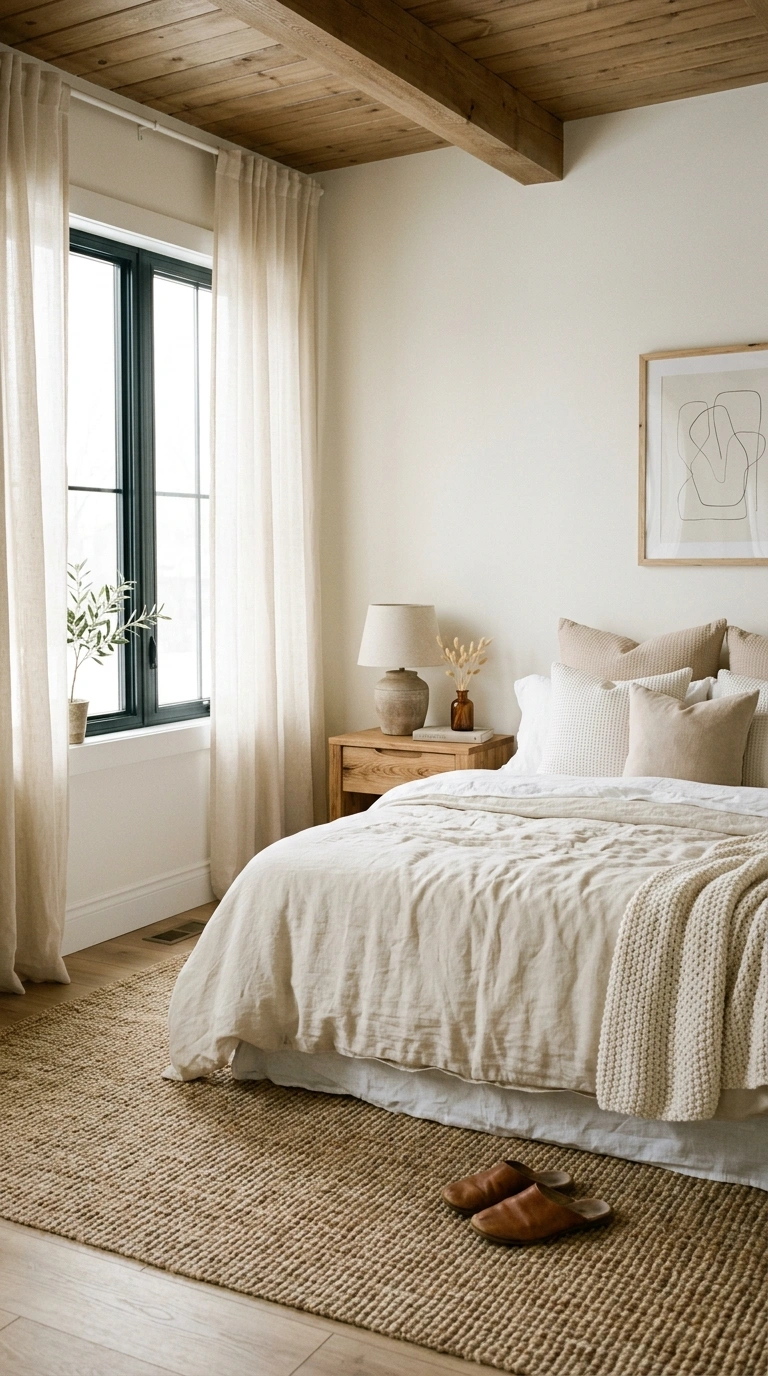
A layered palette of cream and white tones creates one of the most timeless and calming bedroom looks, since the lack of strong color lets the eye rest completely. Use a warm white on the walls, then bring in cream through bedding, curtains, and rugs, so the room has gentle variation rather than looking flat or sterile. A soft eggshell finish on the walls adds a subtle glow.
Layer different textures throughout the room, like a linen duvet cover, a chunky knit throw, and a woven jute rug, since texture becomes especially important when the color palette stays this simple. Add one or two wood furniture pieces to warm up the space and prevent it from feeling too cold or clinical. This color scheme works in almost any bedroom style, and it is especially forgiving for renters who want a calm look without committing to a bold paint color.
11. Soft Olive Green
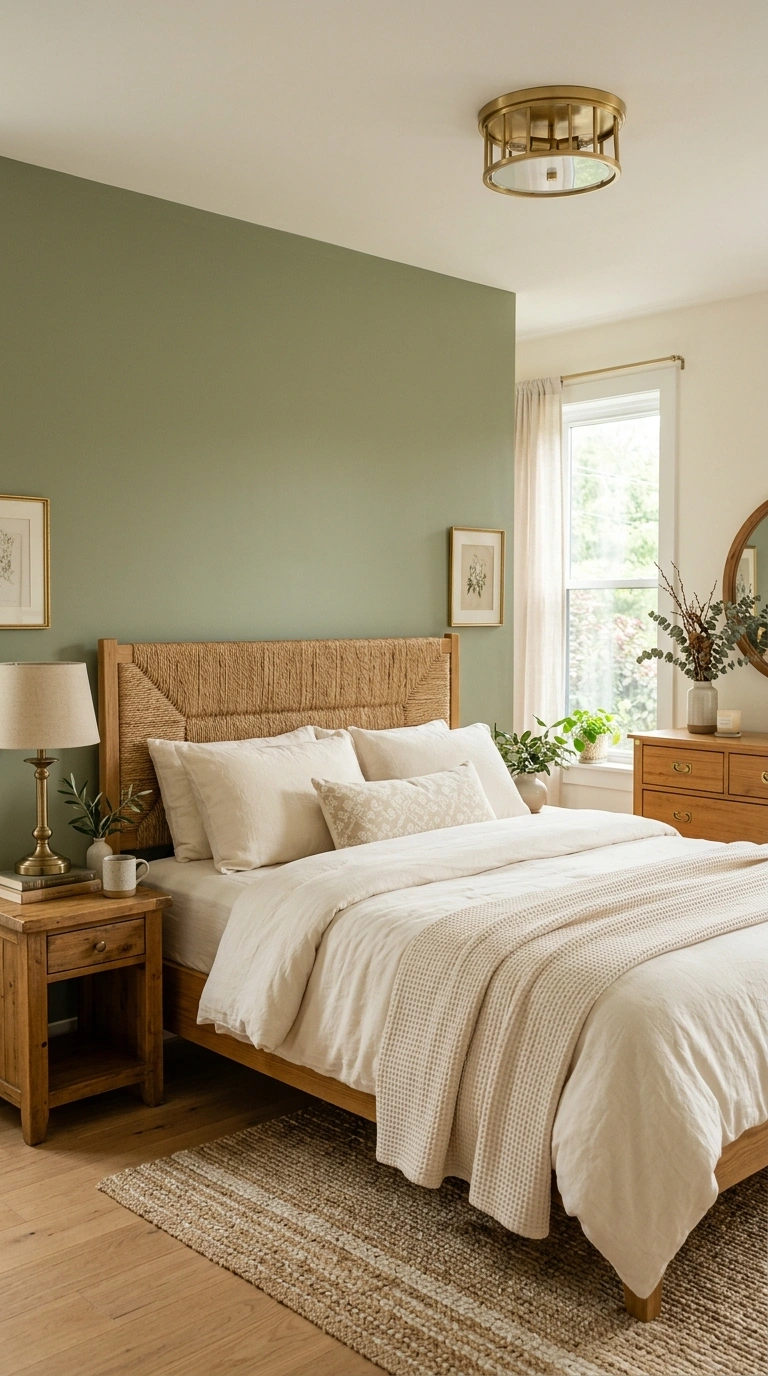
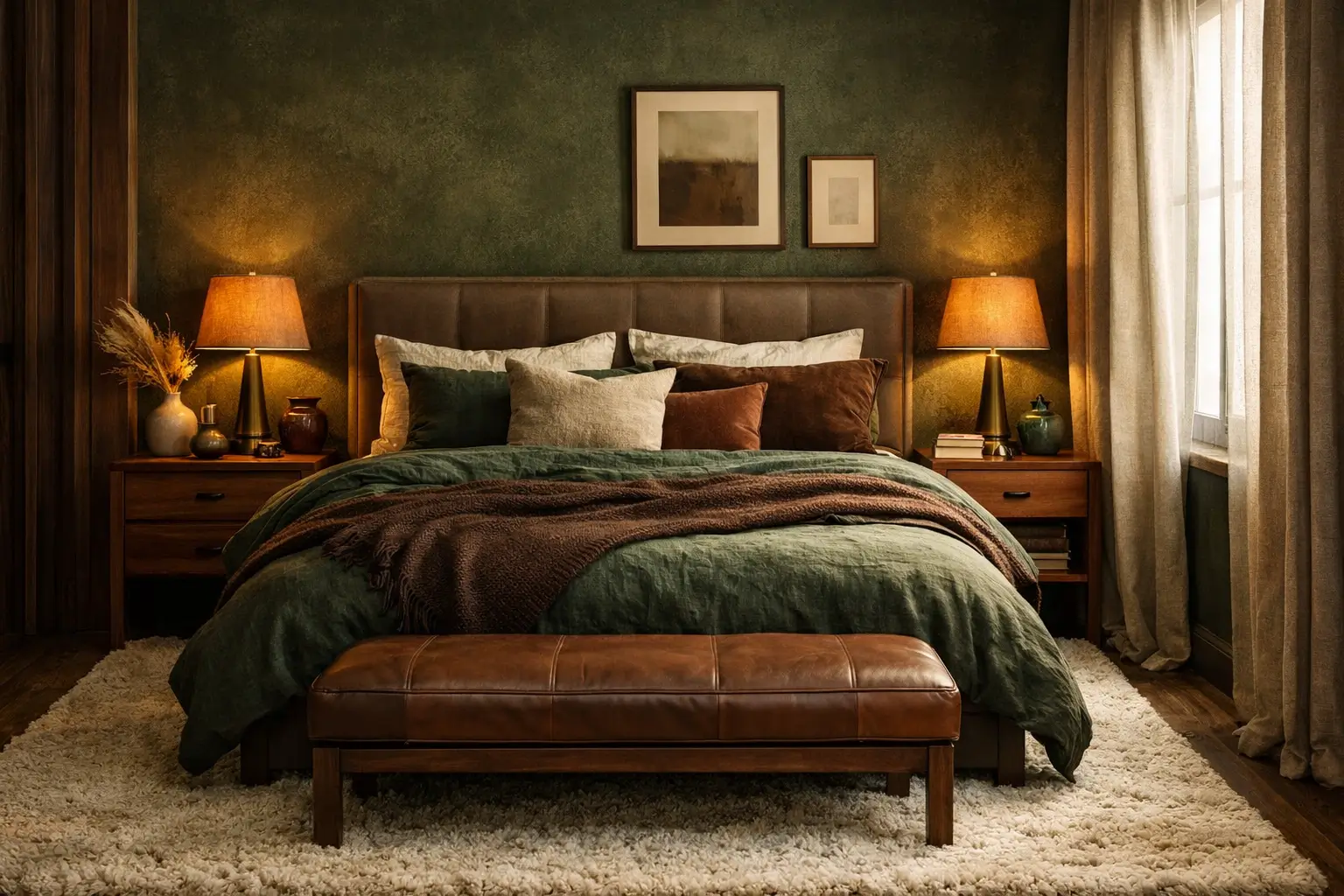
Soft olive green brings an earthy, grounded feeling to a bedroom, working especially well for anyone who wants a color with more depth than sage but still calming overall. Paint one accent wall in olive to keep the color from feeling too heavy, or use it throughout the room if you have good natural light to balance the deeper tone. A matte finish suits this rich, muted green particularly well.
Pair olive walls with cream or oatmeal colored bedding, along with wood furniture in a warm honey tone for a cohesive, natural look. Brass light fixtures and a woven rattan headboard reinforce the earthy feeling even further. This color choice works especially well in bedrooms styled with plants and natural materials, since olive green already echoes the outdoors, making houseplants and wood textures feel like a natural extension of the wall color itself.
12. Muted Mauve Walls
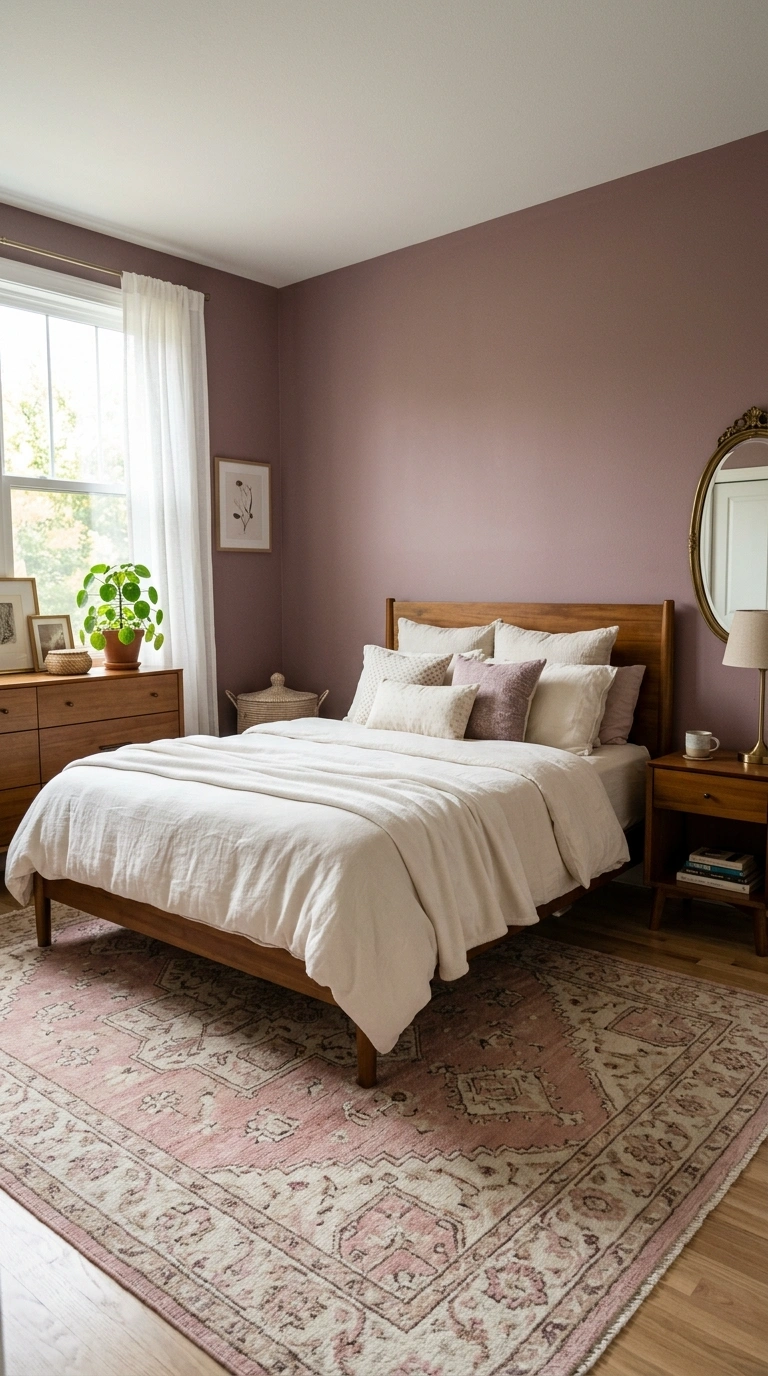
Muted mauve, a dusty blend of pink and purple, offers a slightly more sophisticated take on a soft bedroom color compared to standard pastel pink. This shade works beautifully across all four walls, creating an enveloping, cozy feeling, or as a single accent wall paired with warm white on the rest. A satin finish gives the mauve a soft sheen that looks lovely under lamp light in the evening.
Style the room with ivory bedding, wood furniture in a medium tone, and brass or gold accents on lamps and mirror frames. A patterned rug in soft pink, cream, and gray tones ties the room together without introducing anything too bold. This color works particularly well in bedrooms meant for winding down after a long day, since the warm undertones in mauve tend to feel comforting rather than energizing, even in the evening hours.
13. Warm Sand Tones
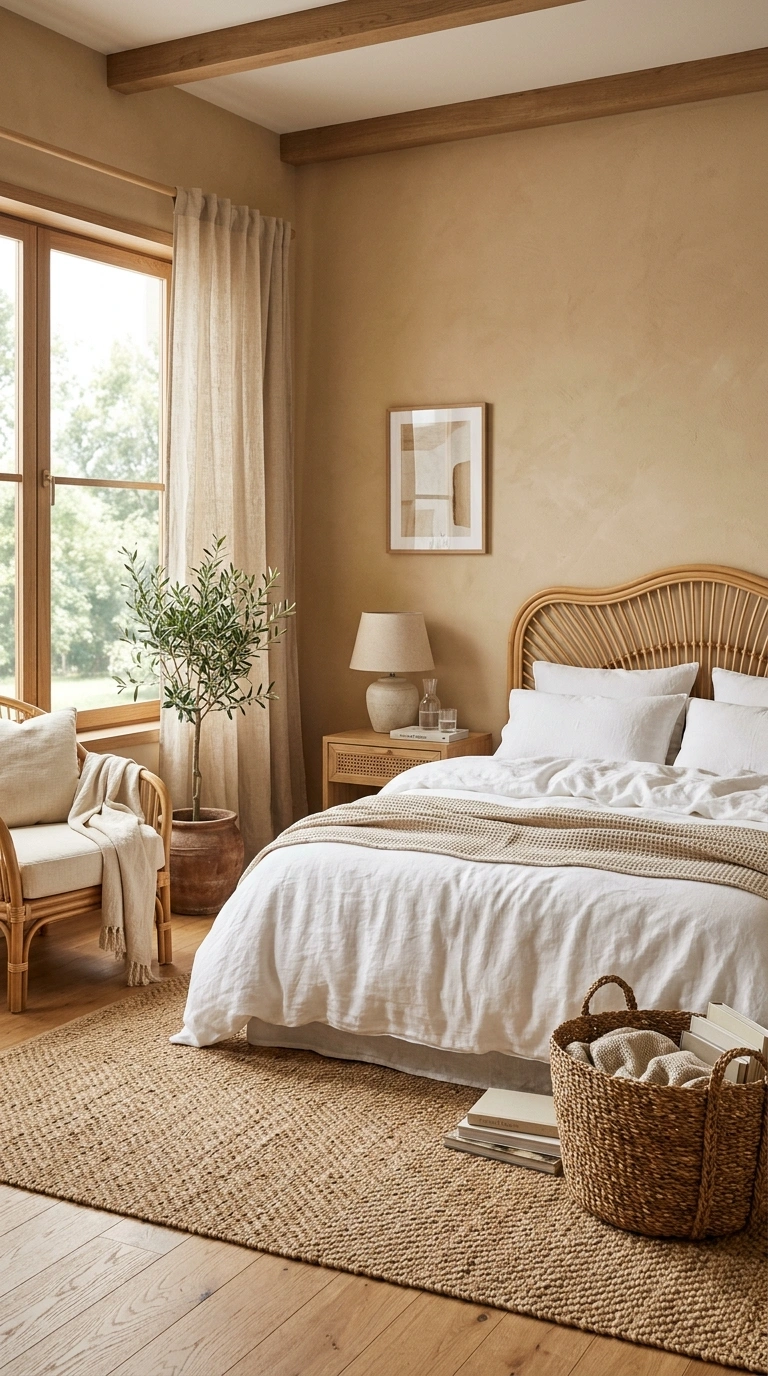
Warm sand, a soft beige with golden undertones, brings the relaxed feeling of a beach getaway into a bedroom without needing any nautical decor to reinforce the theme. Paint all four walls in this shade for a warm, enveloping effect that works well in bedrooms of any size. Choose a flat or matte finish to keep the color looking soft rather than glossy under daylight.
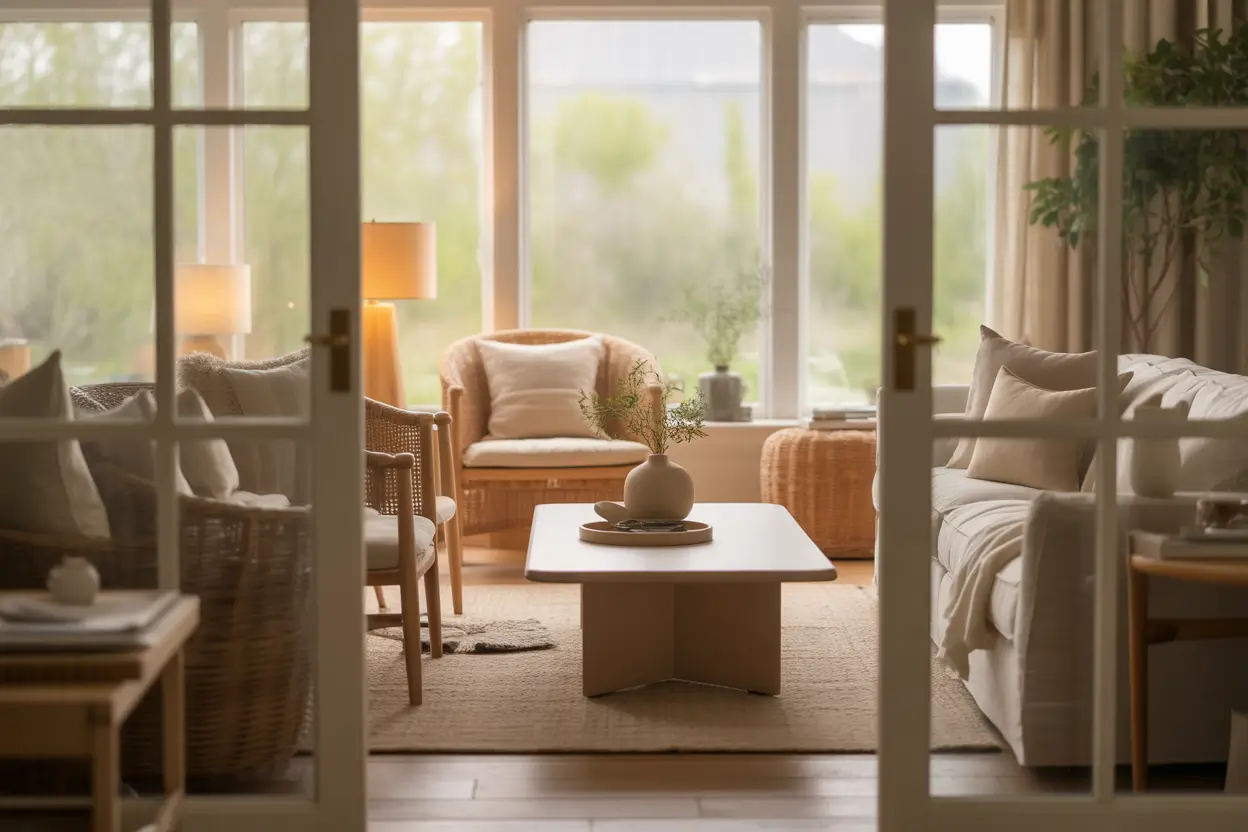
Pair sand colored walls with white linen bedding, natural rattan furniture, and simple woven baskets for storage, since these materials echo the relaxed, natural feeling of the wall color. A jute rug underfoot and linen curtains complete the look without adding any unnecessary pattern or color. This palette works especially well in bedrooms with wood flooring, since the warm tones in both the floor and walls play off each other, creating a naturally cohesive and restful space.
14. Soft Charcoal Accent
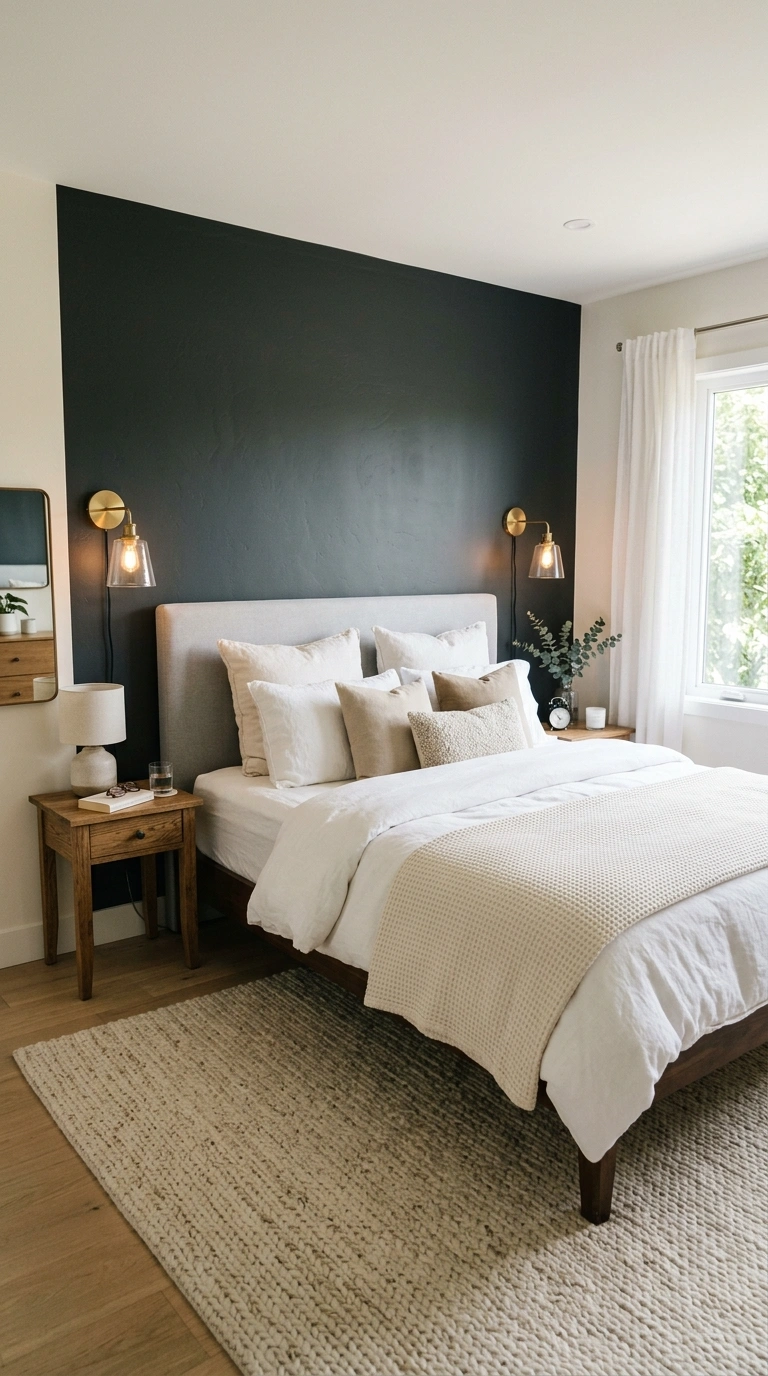
A soft charcoal accent wall, rather than a full room of dark gray, adds depth and coziness to a bedroom without making the space feel small or closed in. Paint the wall directly behind the headboard, since this placement lets the dark color frame the bed like a piece of art rather than overwhelming the whole room. Keep the remaining three walls white or a light warm gray for balance.
Style the bed with white and cream layered bedding to create contrast against the dark wall, along with brass or warm metal light fixtures on either side. A soft area rug in a light neutral tone keeps the floor feeling airy despite the dark accent wall nearby. This idea works particularly well in bedrooms with plenty of natural light, since the charcoal wall reads as cozy and intentional rather than heavy when balanced with enough brightness elsewhere in the room.
15. Pale Yellow Bedroom
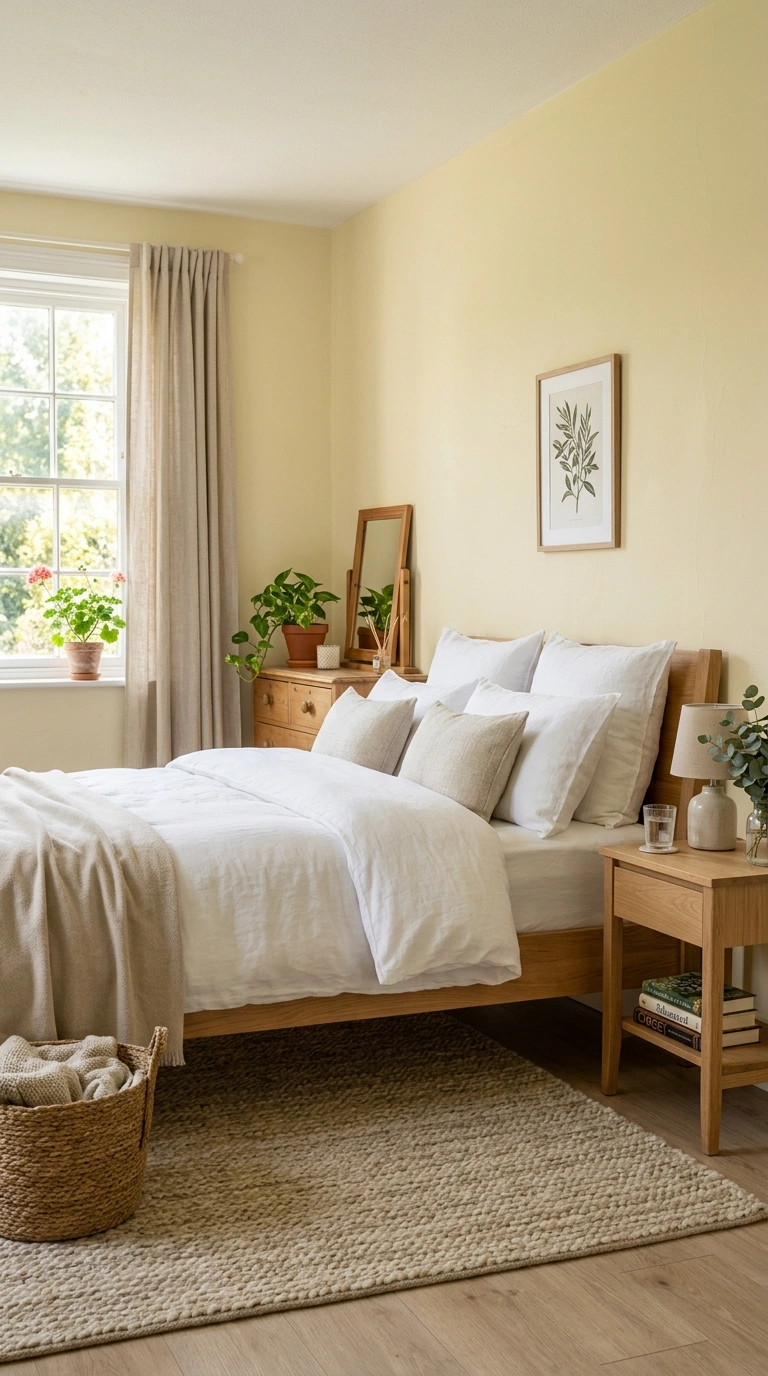
A very pale, muted yellow brings a gentle warmth to a bedroom, working best when the shade leans soft and buttery rather than bright or neon. This color can feel surprisingly calming when used correctly, especially in bedrooms that do not get much natural light, since the yellow mimics the effect of sunshine even on gray days. A matte finish keeps the color looking soft rather than overly cheerful.
Pair pale yellow walls with white bedding and natural wood furniture to keep the overall look fresh and grounded rather than childish. Add simple linen curtains and a woven rug in cream or oatmeal tones to soften the room even further. This color choice works especially well in bedrooms located in colder climates, since the warm undertone in the yellow helps counteract the grayness of long winters, creating a genuinely uplifting yet still restful space to sleep in.
16. Dusty Rose Walls
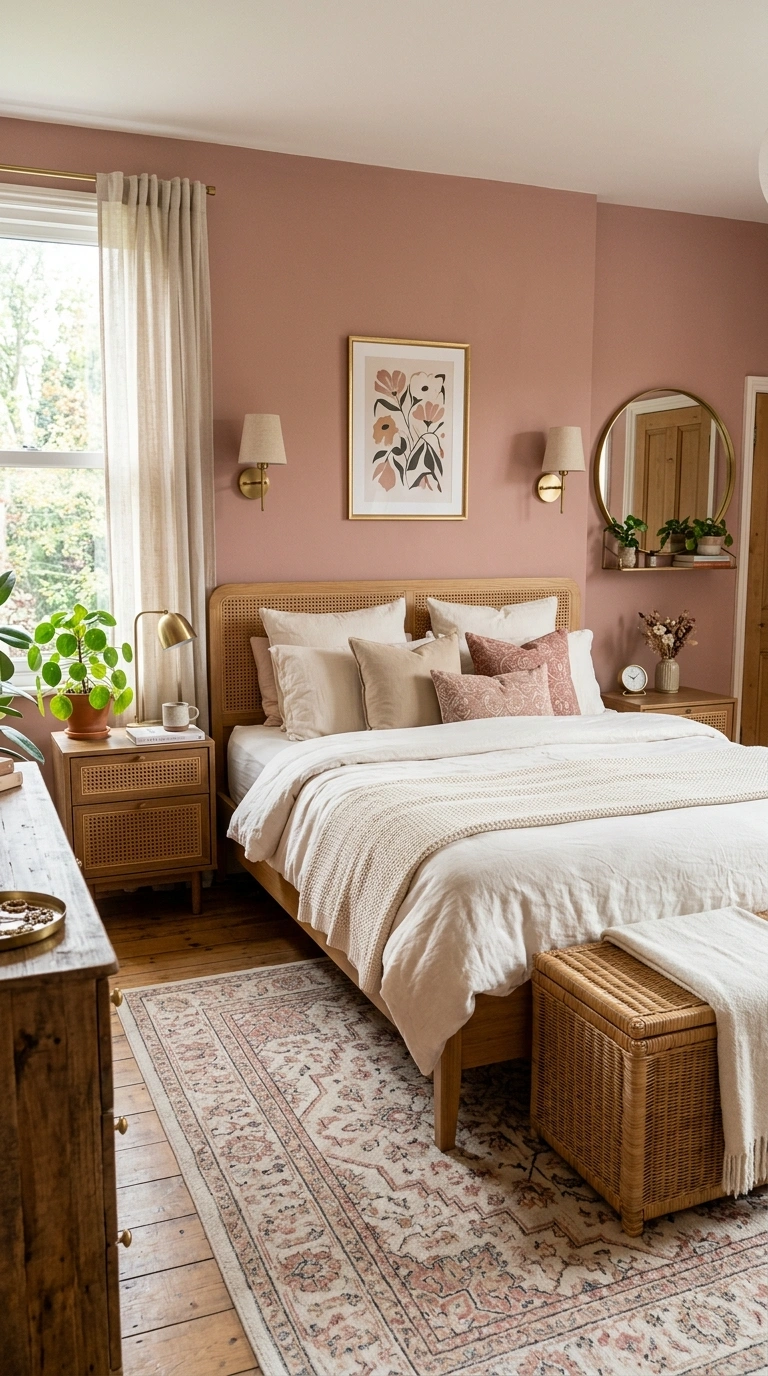
Dusty rose, a muted and slightly grayed down pink, gives a bedroom a soft romantic quality without tipping into overly sweet or juvenile territory. Paint all four walls for a fully cocooned feeling, or use the color as an accent behind the bed while keeping the rest of the room in a warm white. A satin finish helps the color glow gently under both natural and lamp light.
Style the room with ivory bedding, brass hardware, and a mix of wood and rattan furniture for texture and warmth. A patterned rug in cream, rose, and soft green tones adds interest while staying within the same soft color family. This palette works particularly well for bedrooms meant to feel like a personal retreat, since dusty rose carries a gentle, comforting quality that many people find soothing at the end of a long day.
17. Soft Slate Blue
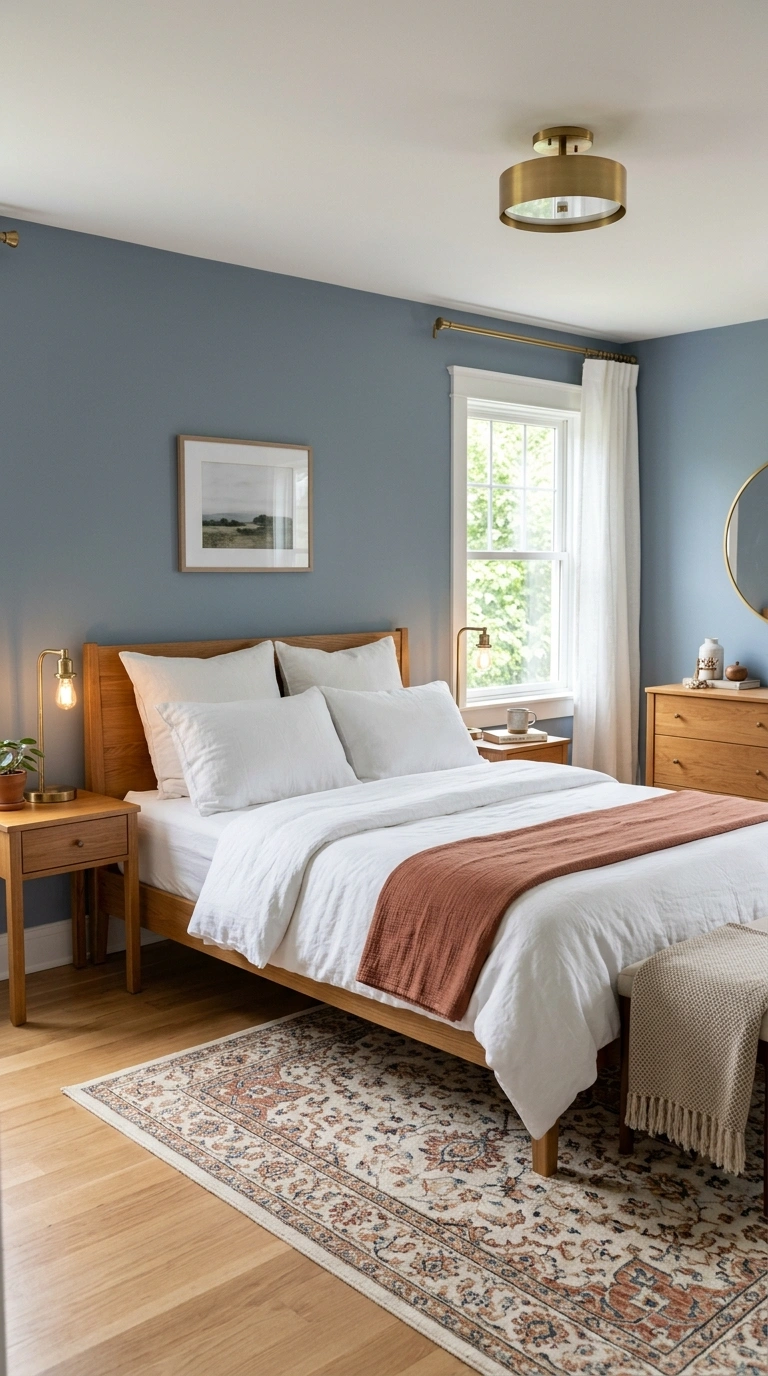
Soft slate blue, deeper than dusty blue but still muted, brings a grounded, restful quality to a bedroom that leans slightly more dramatic without losing its calming effect. Use it on all four walls in bedrooms with good natural light, or on a single accent wall in smaller or darker rooms to avoid making the space feel closed in. A matte finish suits this deeper blue tone well.
Pair slate blue walls with crisp white bedding and warm wood furniture to keep the room from feeling too cool overall. Brass or warm metal fixtures add a nice contrast against the blue, while a patterned rug in cream and rust tones brings in some warmth underfoot. This color choice works especially well in primary bedrooms meant purely for rest, since slate blue tends to feel serious and calming rather than playful, matching the mood of a true sleep sanctuary.
18. Warm Ivory Palette
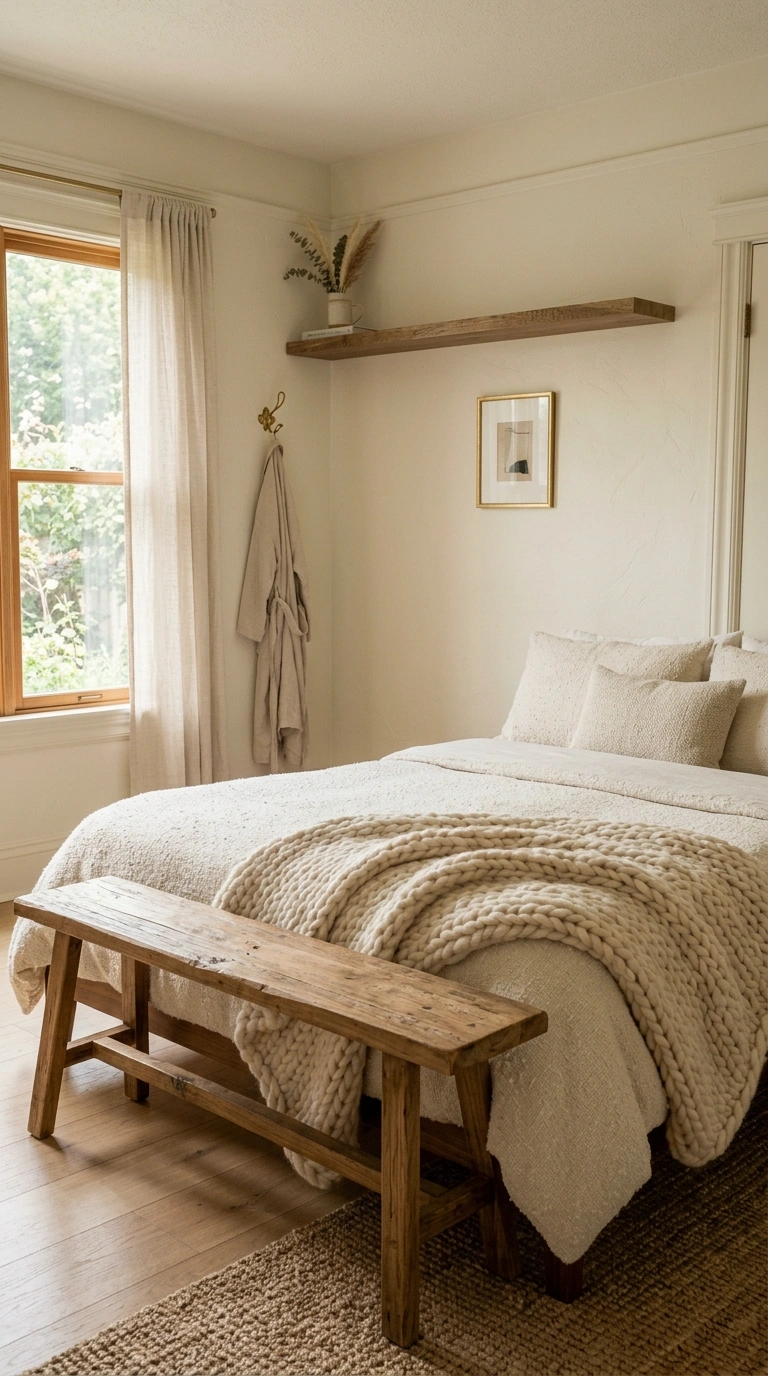
A warm ivory palette throughout the walls, trim, and even furniture creates one of the softest, most restful bedroom looks possible, since the near absence of strong color lets the whole room feel like a gentle exhale. Choose an ivory with slightly warm undertones rather than a stark, cool white, since warmth is what keeps this palette feeling cozy rather than clinical. An eggshell finish adds subtle depth to the walls.
Layer in texture through a nubby linen duvet cover, a chunky knit throw, and a woven rug in a similar tone, since texture becomes the main visual interest in a palette this quiet. Add one or two wood furniture pieces and simple brass hardware to keep the room grounded rather than floating. This palette works beautifully in small bedrooms, since the lack of contrast helps the walls recede and makes the whole space feel larger and calmer.
19. Soft Mint Green
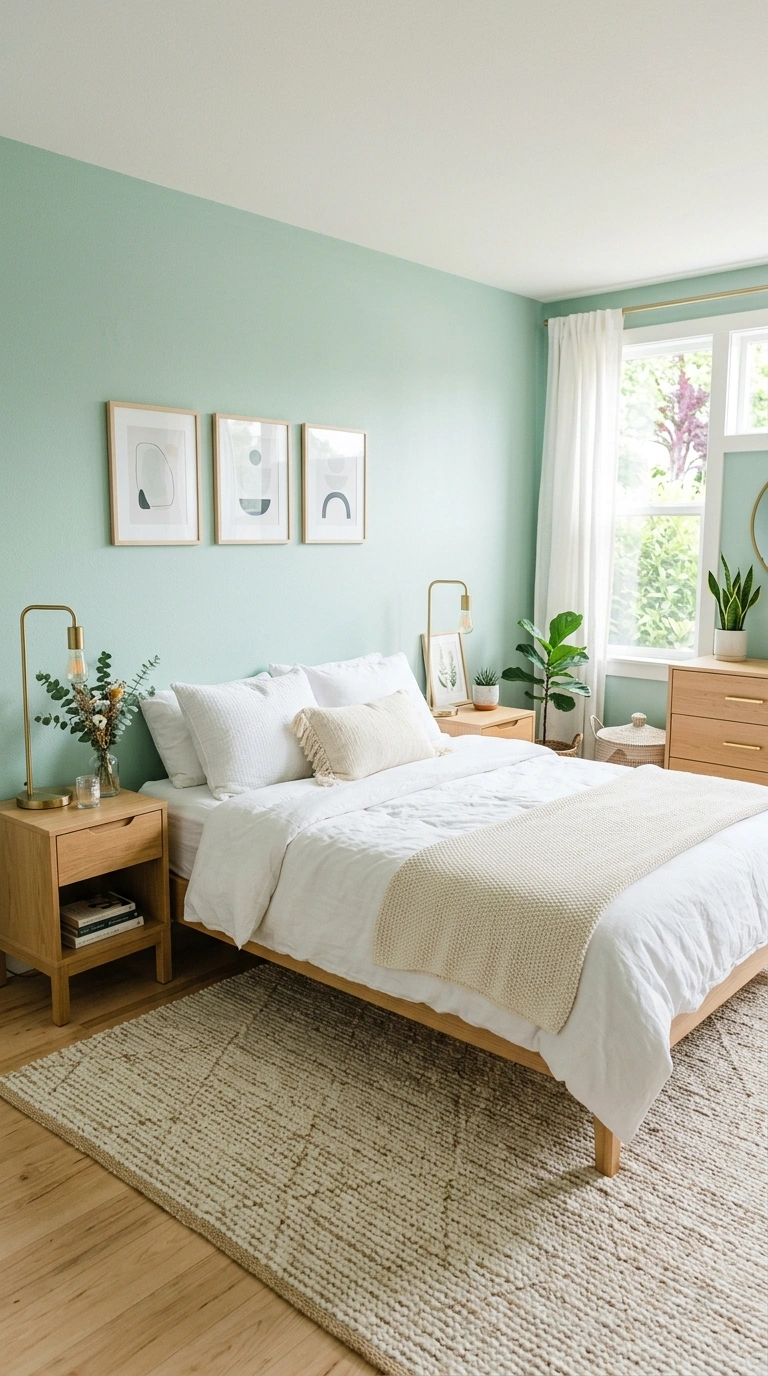
Soft mint green, a cooler and lighter cousin of sage, brings a fresh, clean feeling to a bedroom while still remaining calming rather than energizing. Use this color on all four walls in bedrooms with plenty of natural light, since mint can look a little cold in dim spaces without enough sunlight to warm it up. A matte finish keeps the tone looking soft rather than glossy or clinical.
Pair mint walls with white bedding, light wood furniture, and touches of brass for warmth, since the metal helps balance out the coolness of the green. A woven rug in cream or soft gray tones grounds the room without introducing any competing color. This palette works especially well in bedrooms located in warmer climates, since the fresh, minty tone feels appropriately cool and breezy, helping the room feel comfortable even during the hottest parts of the year.
20. Neutral Greige Bedroom
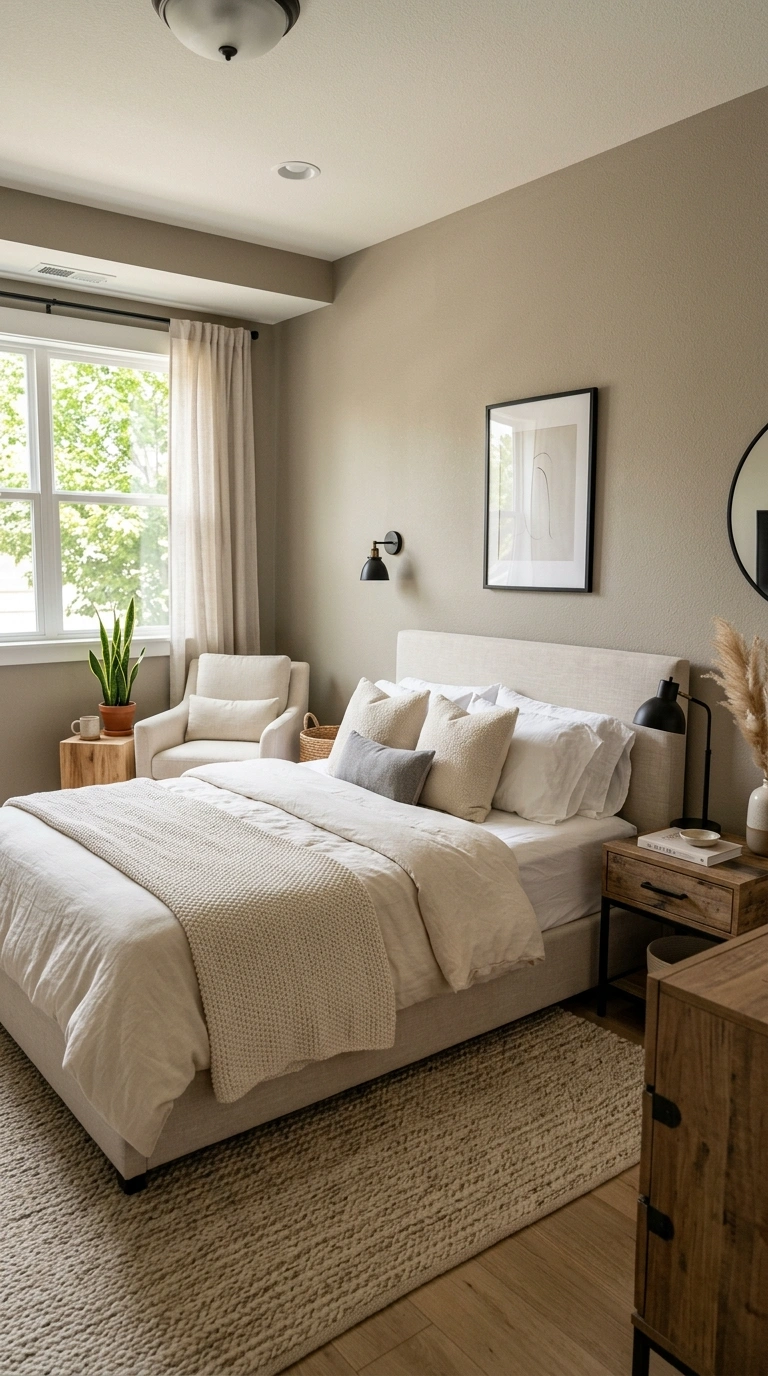
Greige, a blend of gray and beige, remains one of the most popular calming bedroom colors because it adapts to almost any lighting condition and furniture style you already own. Paint all four walls in a warm greige for a cohesive, enveloping feel, since this color tends to look slightly different throughout the day depending on the light, always staying soft and never harsh. A satin finish adds subtle depth without shine.
Style the room with layered white and cream bedding, along with a mix of wood and black metal furniture for contrast. A textured rug in a similar neutral tone keeps the floor feeling grounded and calm underfoot. This color choice works well for almost anyone, since greige tends to please a wide range of tastes while still creating a genuinely restful, quiet space, making it one of the safest and most reliable choices on this entire list.
Final Thoughts
Choosing a calming bedroom color really comes down to what makes you feel most at ease when you walk into the room at the end of the day. Try a few paint samples on your actual wall before committing, since lighting changes everything. Once you find the right shade, the rest of your bedroom decor tends to fall into place much more easily.