20 Tiny Kitchen Ideas That Maximize Space Beautifully
Key Takeaways
- Tiny kitchens can feel spacious with smart layouts, vertical storage, and light-reflecting materials.
- Open shelving and glass cabinet doors help reduce visual heaviness and make compact kitchens feel airy.
- Multi-functional furniture like rolling islands, fold-down tables, and hidden storage benches maximize every inch.
- Warm lighting layers create depth and make small kitchens feel cozy instead of cramped.
- Natural textures such as wood, linen, woven baskets, and ceramics add warmth without clutter.
- Two-tone cabinets and soft neutral colors help create balance while keeping the space bright.
- Corner storage solutions and pull-out pantry systems improve organization in tight layouts.
- Minimal countertops instantly make a tiny kitchen feel cleaner, calmer, and more functional.
- Plants and earthy accents bring life and personality into compact kitchens while maintaining a fresh look.
- Thoughtful design matters more than size when creating a beautiful and functional kitchen space.
Tiny kitchens can still feel stylish, bright, and highly functional when every inch works smarter. The best small kitchen designs do more than save space. They create a cozy flow, improve storage, and make daily cooking feel easier and more enjoyable. A few smart layout choices, layered textures, and light-enhancing details can completely change how a compact kitchen looks and feels.
This guide shares beautiful and practical tiny kitchen ideas that help small spaces feel larger without losing warmth or personality. You will find clever storage solutions, space-saving furniture ideas, lighting tricks, and Pinterest-worthy design details that make even the smallest kitchen feel thoughtfully designed. Whether you love modern minimalism, soft farmhouse charm, or warm natural textures, these ideas will help you create a kitchen that feels open, organized, and visually inspiring.
1. Use Vertical Storage From Counter to Ceiling
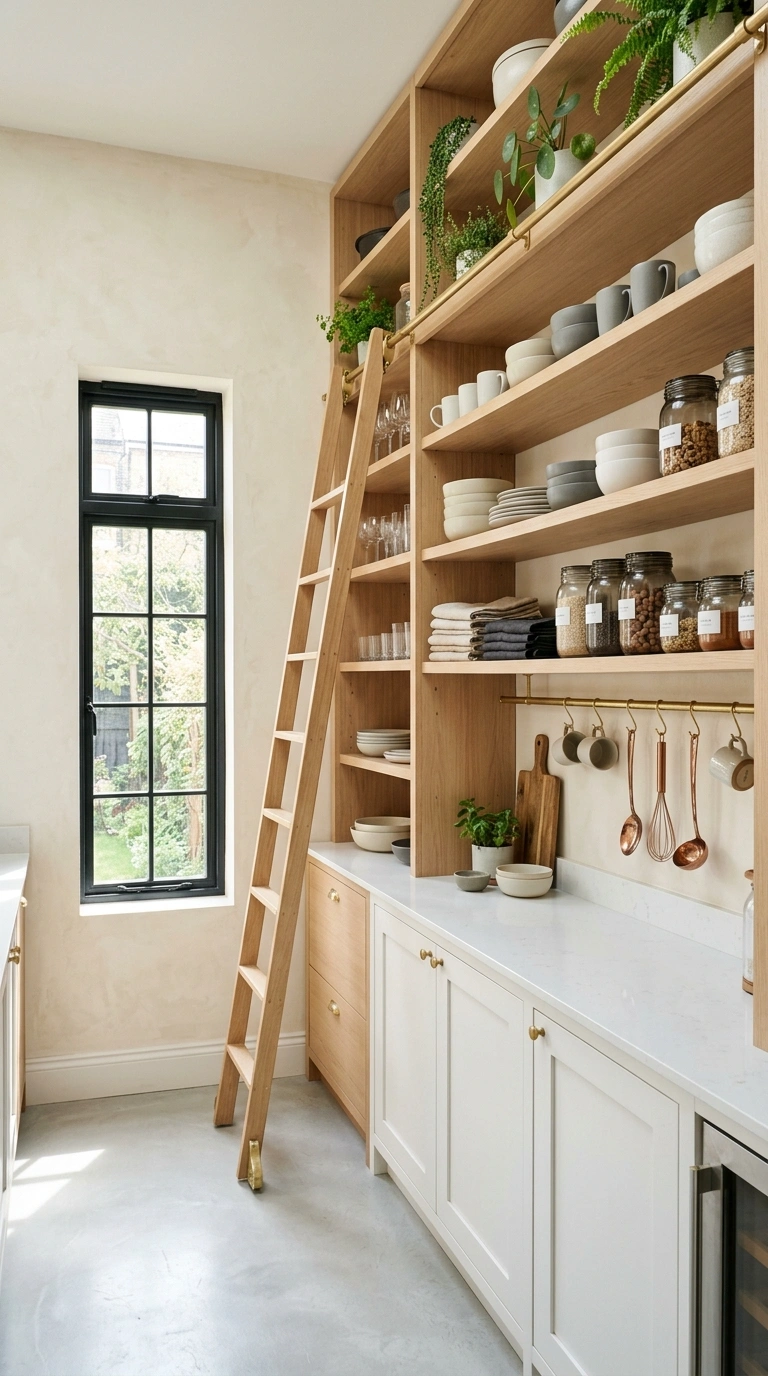
One of the smartest small kitchen storage ideas is using the full wall height instead of wasting empty vertical space. Tall cabinets, slim floating shelves, and stacked storage instantly make a tiny kitchen feel more organized. Light wood shelves paired with creamy white walls keep the room airy while adding warmth and texture.
Store everyday dishes on lower shelves and place rarely used items higher up. Clear glass jars filled with pasta, oats, or coffee beans create a clean Pinterest-style display while freeing cabinet space. Add slim brass rails under shelves for hanging mugs or utensils without cluttering counters.
This layout works especially well in narrow kitchens because it keeps the floor visually open. Warm LED strip lighting under shelves also creates a soft glow that makes the room feel larger at night. Vertical storage turns small walls into hardworking design features instead of forgotten empty space.
2. Choose Slim Open Shelving Instead of Bulky Cabinets
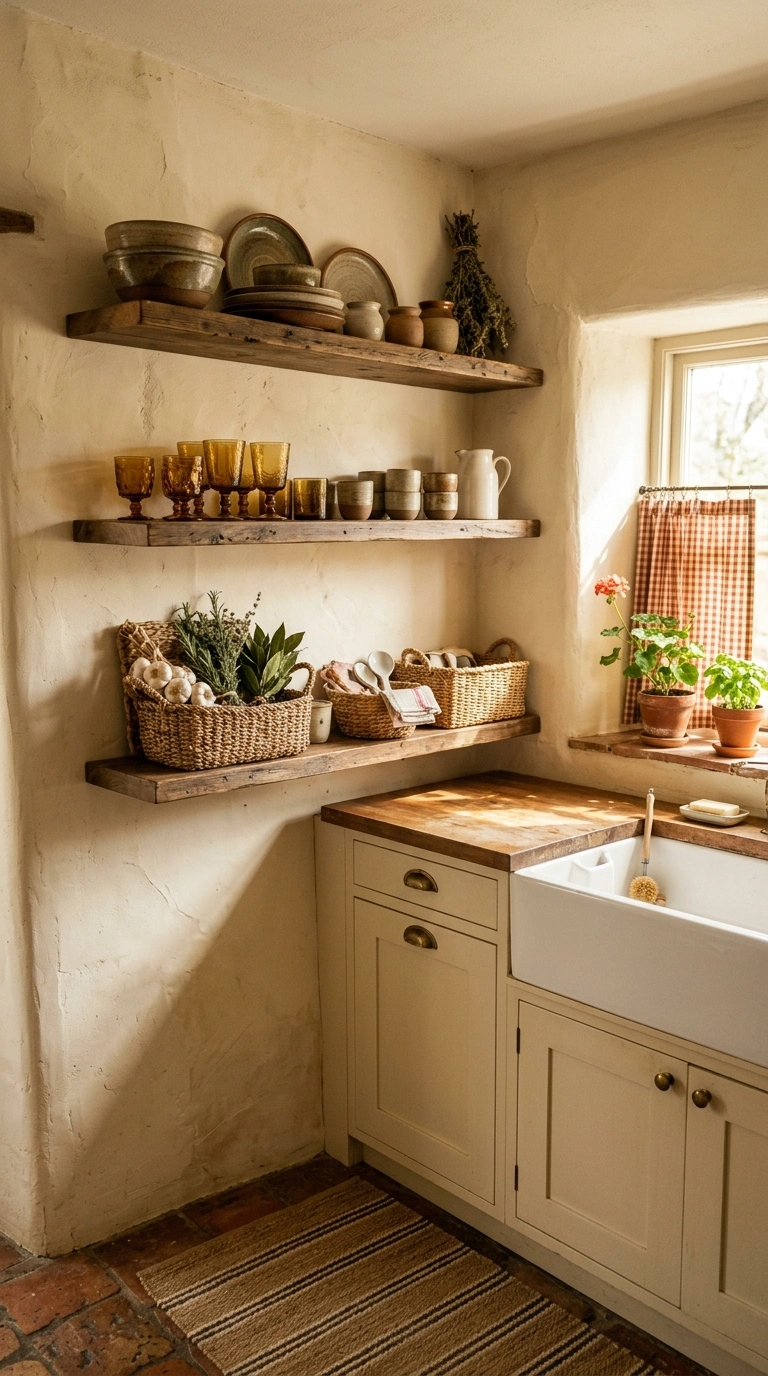
Heavy upper cabinets can make a tiny kitchen feel boxed in. Replacing some of them with slim open shelving creates breathing room and allows more light to move through the space. This simple update works beautifully in both modern and rustic kitchens.
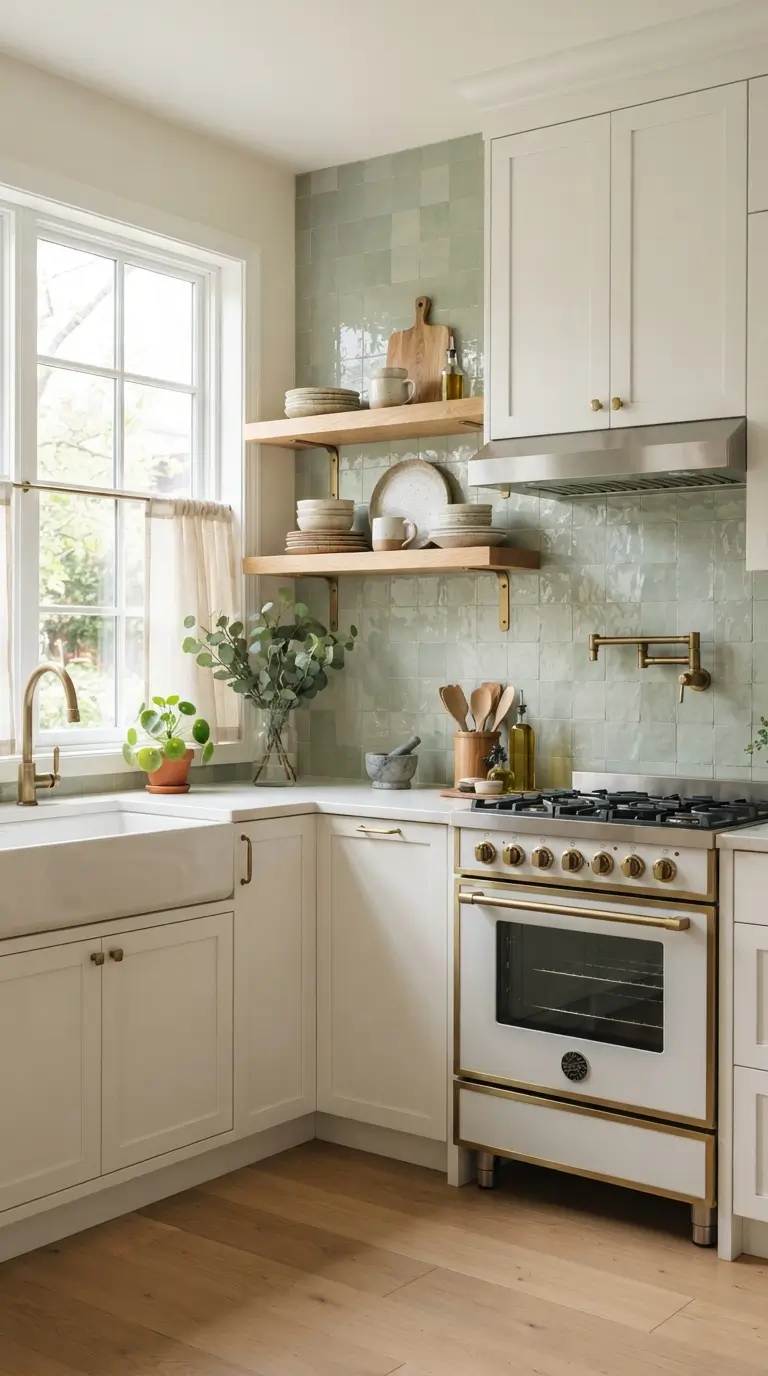
Try natural oak shelves against soft beige, sage green, or warm white walls for a cozy and fresh look. Keep styling minimal by displaying matching dishes, ceramic bowls, and textured glassware. Too many items can feel crowded, so focus on balanced spacing and practical décor.
Open shelving also encourages better organization because everything stays visible and easy to reach. Pair the shelves with matte black hooks or brushed gold brackets for contrast and visual interest. This design trick helps compact kitchens feel taller, brighter, and more relaxed without requiring a full renovation.
3. Add a Narrow Rolling Island for Flexible Space
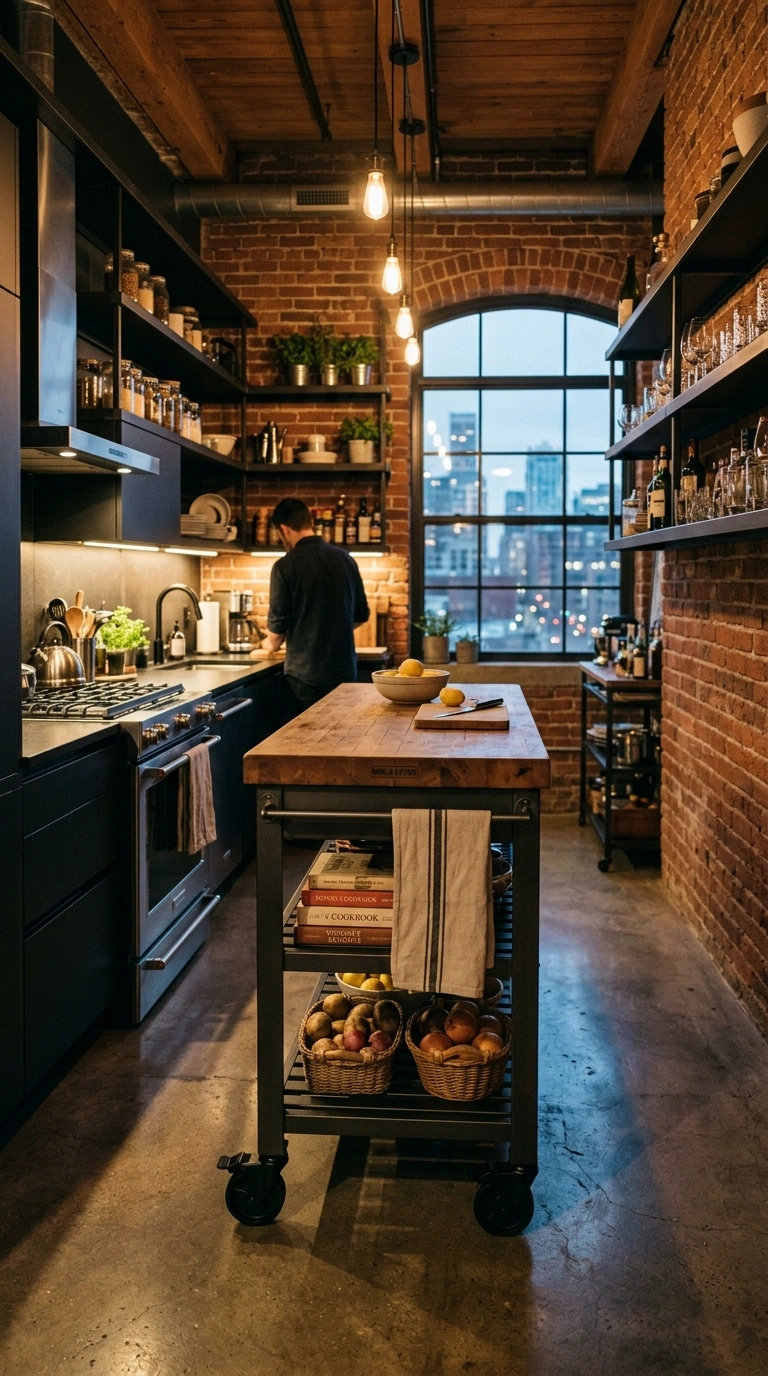
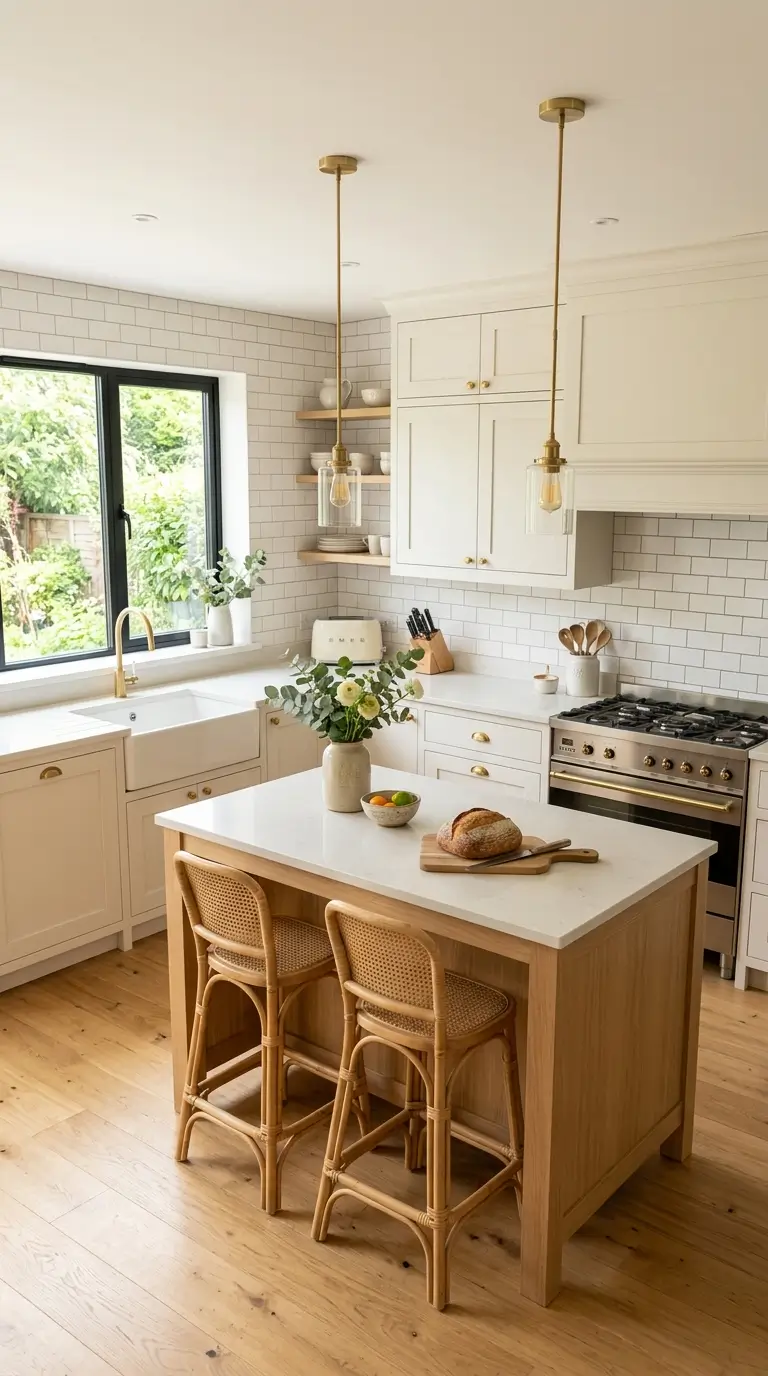
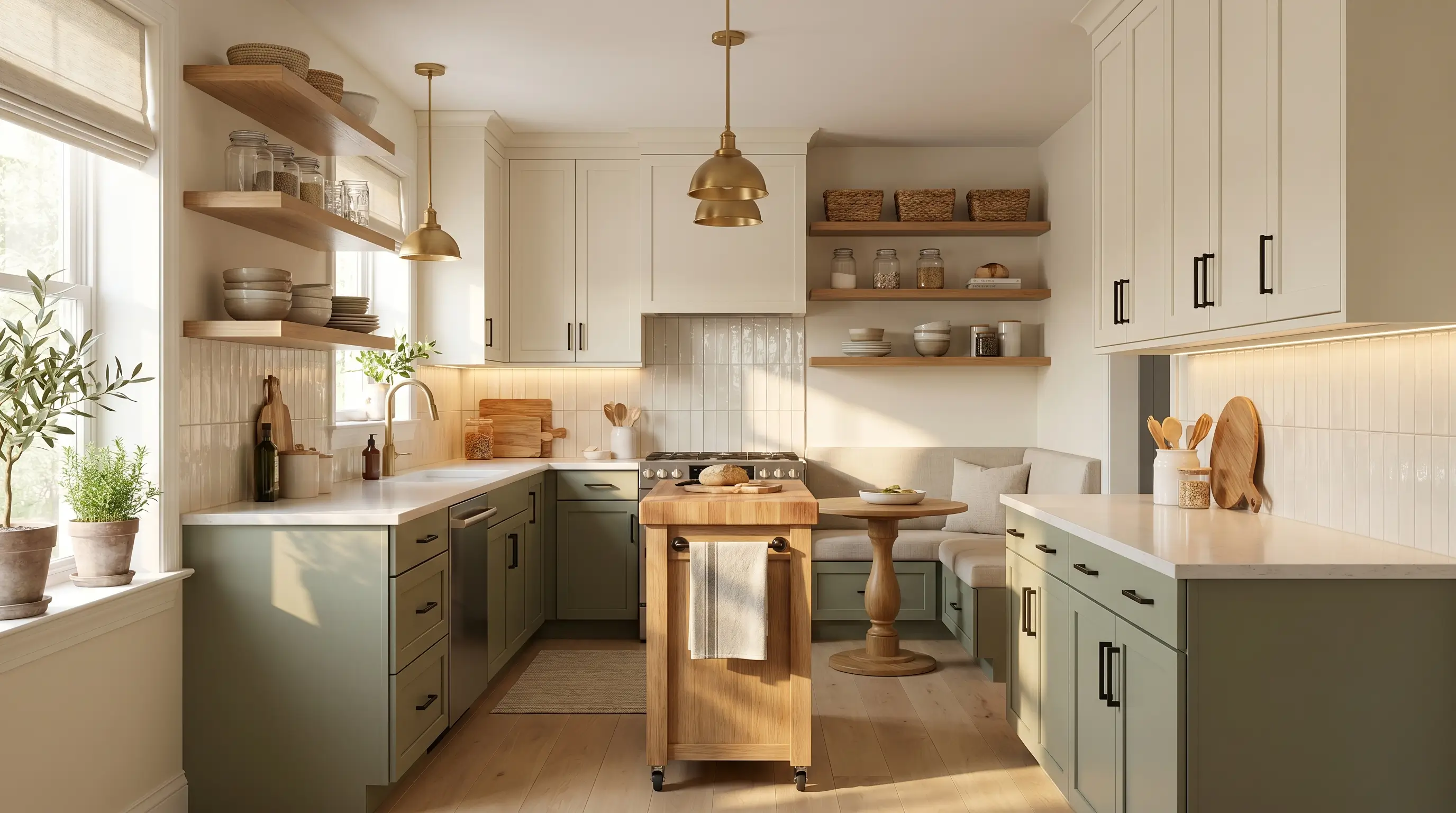
A narrow rolling island gives you extra prep space without permanently crowding the kitchen. This is one of the most practical tiny kitchen layout ideas because you can move it whenever needed. Choose a slim wood island with hidden shelves, baskets, or towel hooks to maximize function.
Light butcher block countertops bring warmth into modern kitchens while white or soft gray bases keep the room visually light. During cooking, the island creates extra workspace. Later, it can roll aside to open the walkway or serve as a small breakfast spot.
Add woven baskets underneath to store produce, folded linens, or cookware. Small caster wheels make movement easy while maintaining a clean built-in appearance. A rolling island works especially well in apartment kitchens where flexibility matters more than fixed furniture.
4. Brighten the Space With Reflective Surfaces
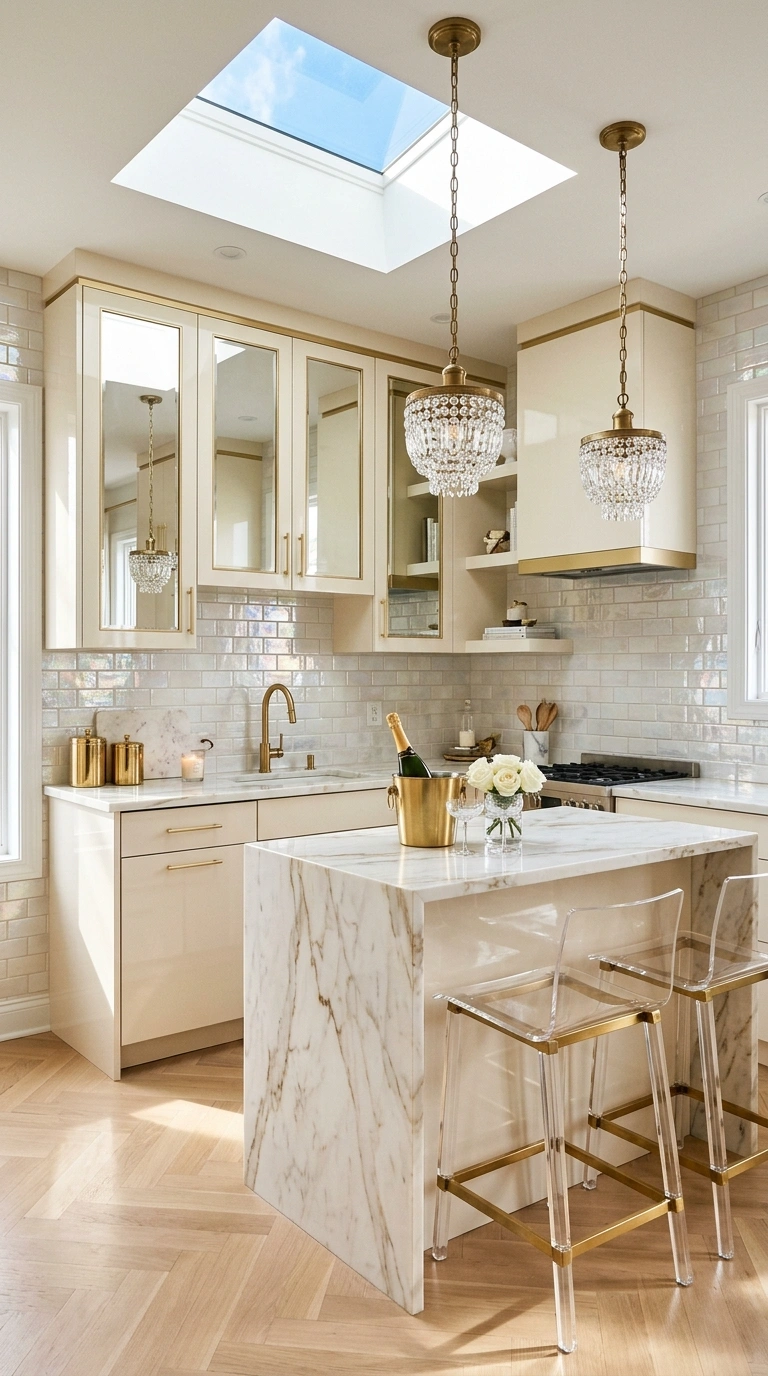
Reflective materials help tiny kitchens feel larger because they bounce light around the room. Glossy backsplashes, glass cabinet doors, polished countertops, and metallic accents all create a brighter and more open atmosphere.
A soft white subway tile backsplash with glossy grout reflects natural sunlight beautifully during the day. Pair it with brushed brass hardware or stainless steel fixtures for subtle shine without overwhelming the space. Even mirrored décor pieces or glass pendant lights can visually expand compact kitchens.
Keep the color palette soft and cohesive for the best effect. Pale gray, creamy white, warm taupe, and muted sage all work beautifully in small kitchens because they reflect light while still feeling cozy. Reflective finishes add depth and brightness without needing extra square footage.
5. Create Hidden Storage Inside Seating Areas
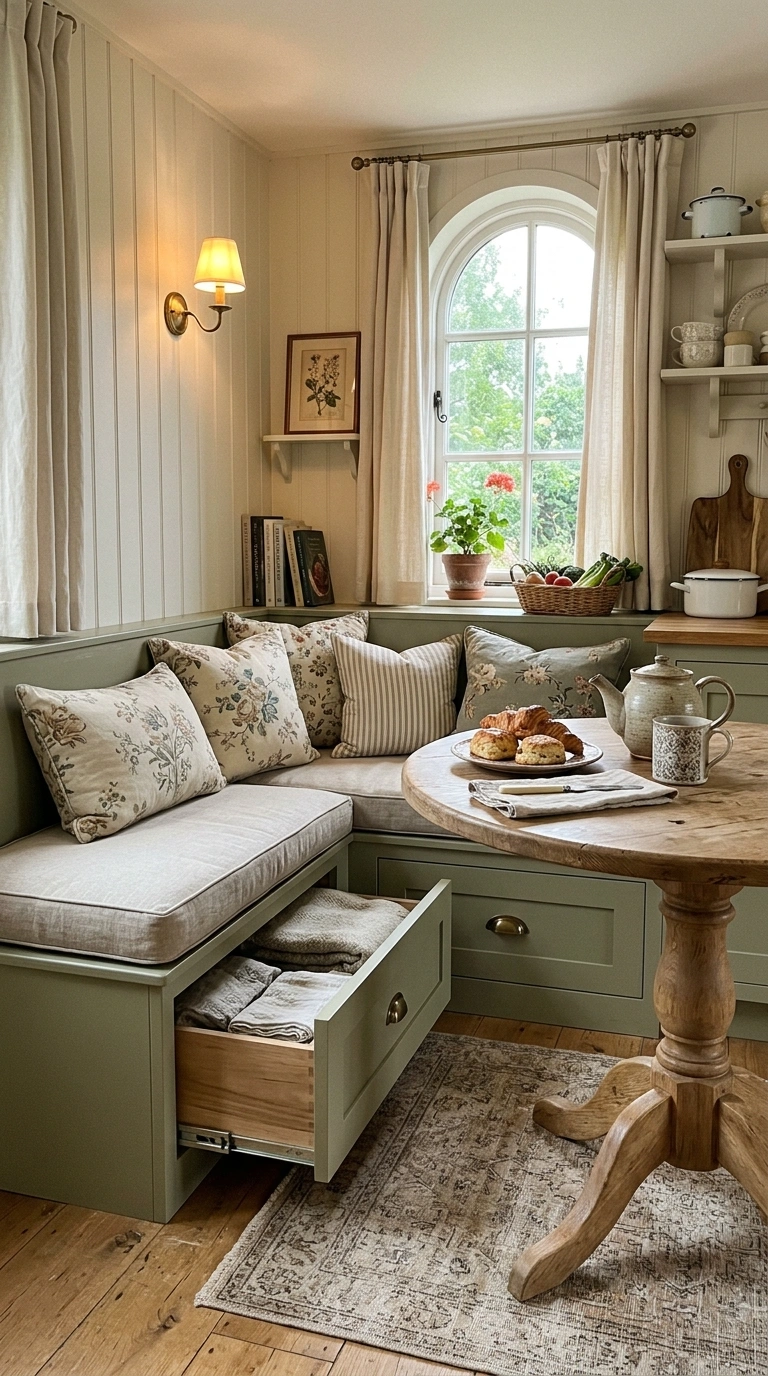
In tiny kitchens, furniture should work harder. Built-in benches or breakfast nooks with hidden storage underneath provide extra space without adding clutter. This idea feels especially cozy in corner kitchens or studio apartments.
A soft upholstered bench in warm linen fabric creates a comfortable dining area while storing cookware, pantry items, or seasonal dishes below. Pair the seating with a round pedestal table to improve movement around tight spaces. Round tables soften sharp kitchen angles and help small layouts feel smoother.
Layer textured cushions in earthy tones like olive green, terracotta, or cream for a warm Pinterest-inspired look. Wall sconces above the nook create soft evening lighting while freeing up table space. Hidden seating storage keeps essentials nearby while maintaining a calm and organized kitchen design.
6. Install Peg Rails for Everyday Essentials
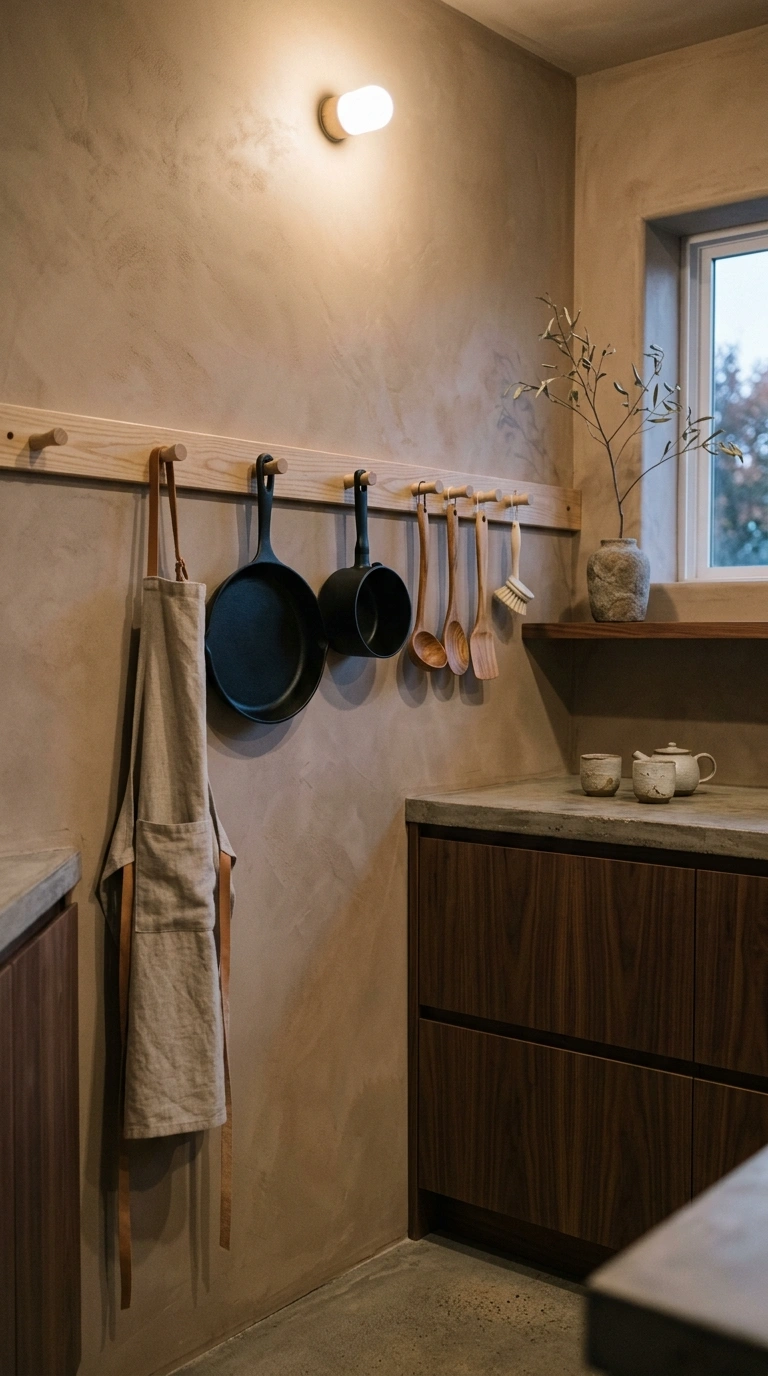
Peg rails save drawer space while adding charm and texture to small kitchens. Unlike bulky wall organizers, slim wooden rails keep cooking tools visible without overwhelming the walls. This idea works beautifully in farmhouse, Scandinavian, or minimalist kitchens.
Mount natural wood pegs along an empty backsplash wall or beside the stove. Hang cutting boards, linen towels, lightweight pans, or woven baskets for a functional display that also feels decorative. Keeping frequently used items accessible reduces counter clutter and improves workflow during cooking.
Choose matching wood tones to create visual consistency throughout the kitchen. Warm oak, walnut, or light ash finishes pair beautifully with neutral cabinets and matte hardware. Peg rails turn practical storage into a stylish design feature while making compact kitchens feel intentional and organized.
7. Use Soft Under-Cabinet Lighting for Depth
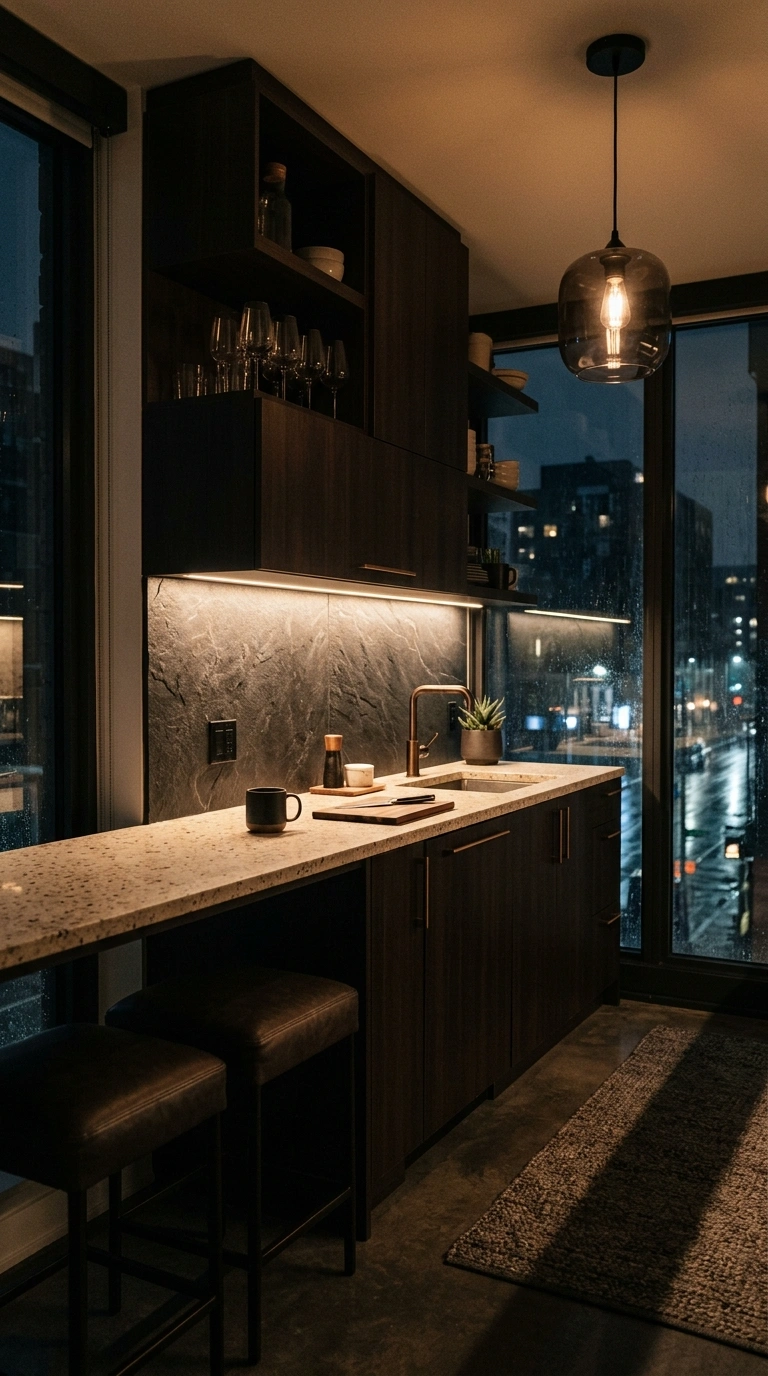
Lighting changes how a tiny kitchen feels more than almost any other design detail. Harsh overhead lighting can flatten small spaces, while layered lighting creates warmth and dimension. Soft under-cabinet LED lighting makes countertops brighter while visually expanding the room.
Warm white lighting works best because it feels cozy instead of clinical. Install hidden LED strips beneath cabinets or shelves to create a soft glow across backsplashes and countertops. This subtle lighting effect highlights textures like marble, wood grain, or handmade tile beautifully.
For extra ambiance, pair under-cabinet lighting with small pendant lights or wall sconces in brass or matte black finishes. Layered lighting helps tiny kitchens feel calmer, more inviting, and visually balanced during both daytime and evening use.
8. Try Two-Tone Cabinets for Visual Balance
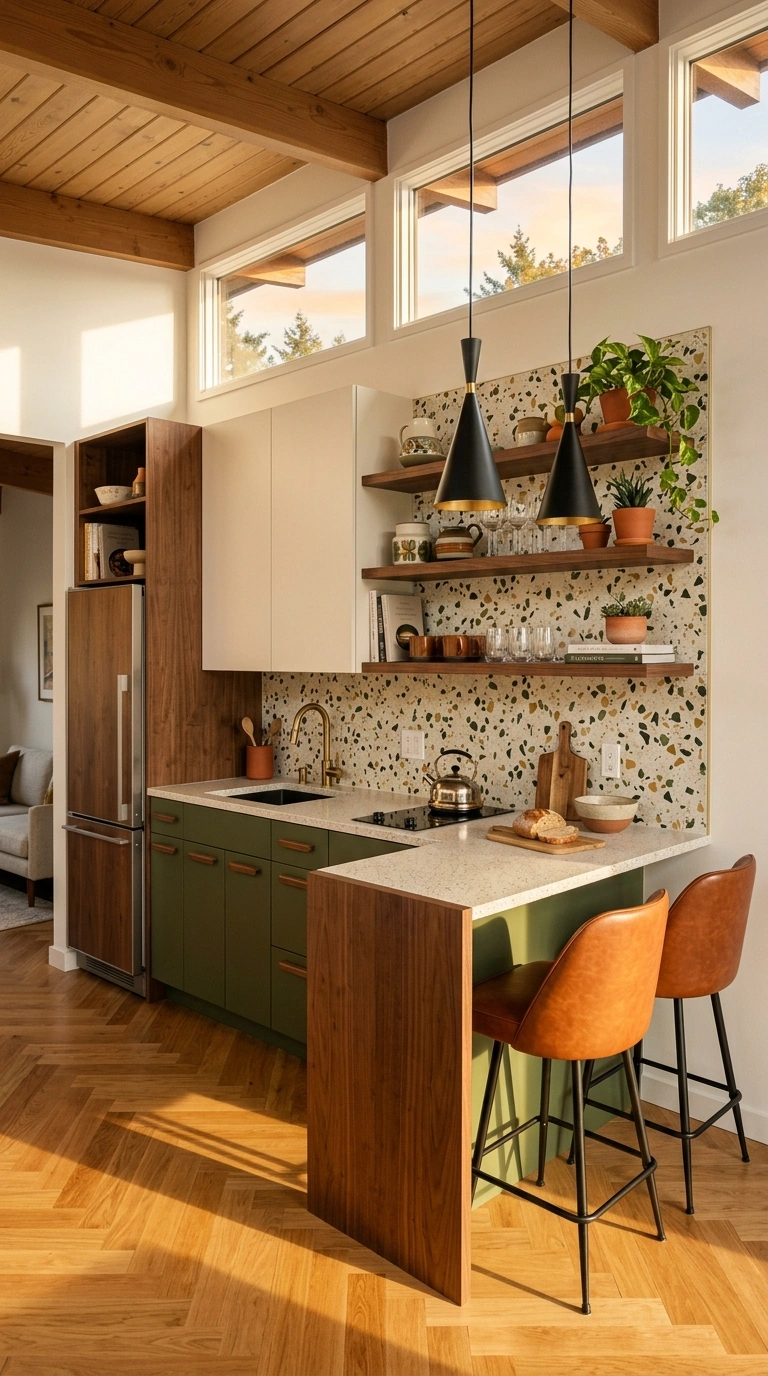
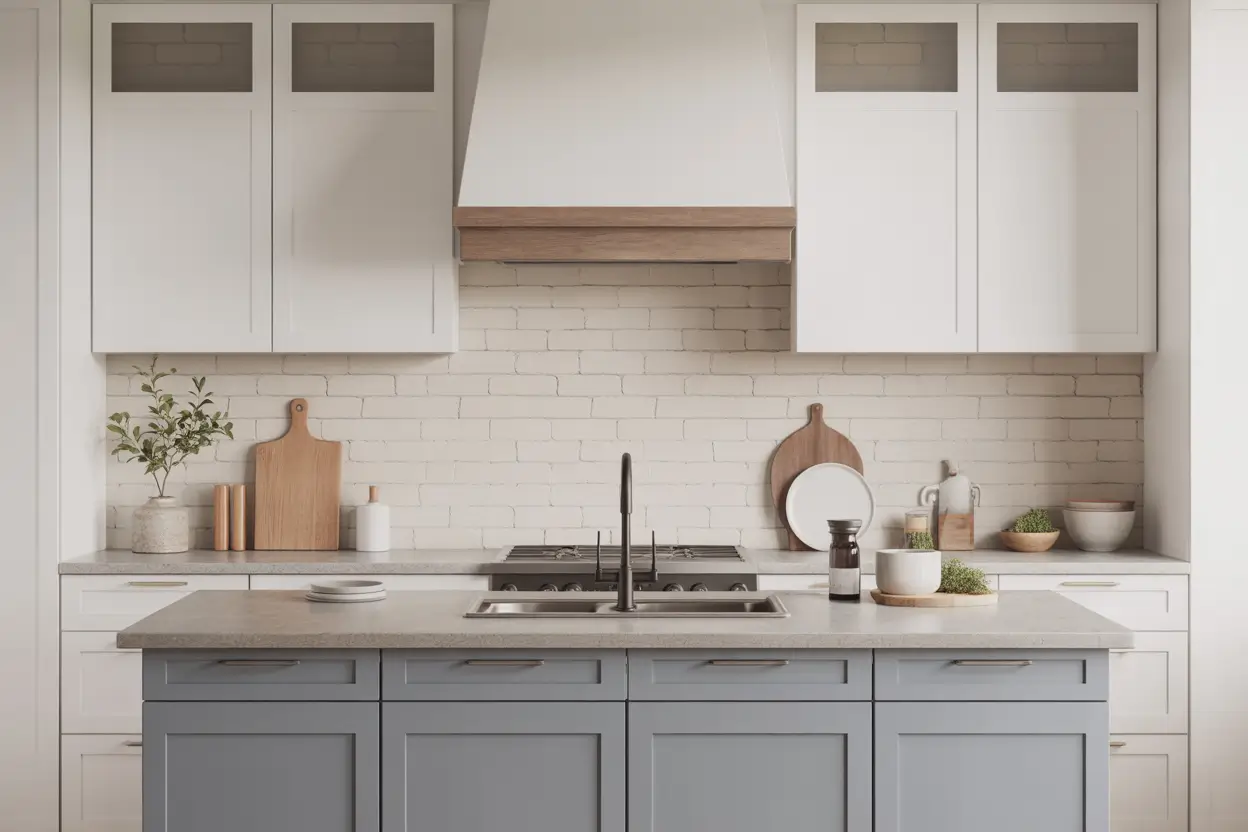
Using two cabinet colors can make a tiny kitchen feel more open when done correctly. Keep upper cabinets light to maintain brightness while using deeper colors below for grounding contrast. This approach adds personality without making the room feel crowded.
Cream upper cabinets paired with muted olive, dusty blue, or charcoal lower cabinets create beautiful depth in compact spaces. Natural wood accents help soften the contrast and add warmth. This layered color approach also prevents small kitchens from looking flat or overly sterile.
Use simple cabinet hardware and clean lines to avoid visual clutter. Thin shaker cabinets work especially well because they add texture while maintaining a timeless appearance. Two-tone kitchens feel thoughtfully designed while helping small spaces appear larger and more balanced.
9. Turn Awkward Corners Into Functional Storage
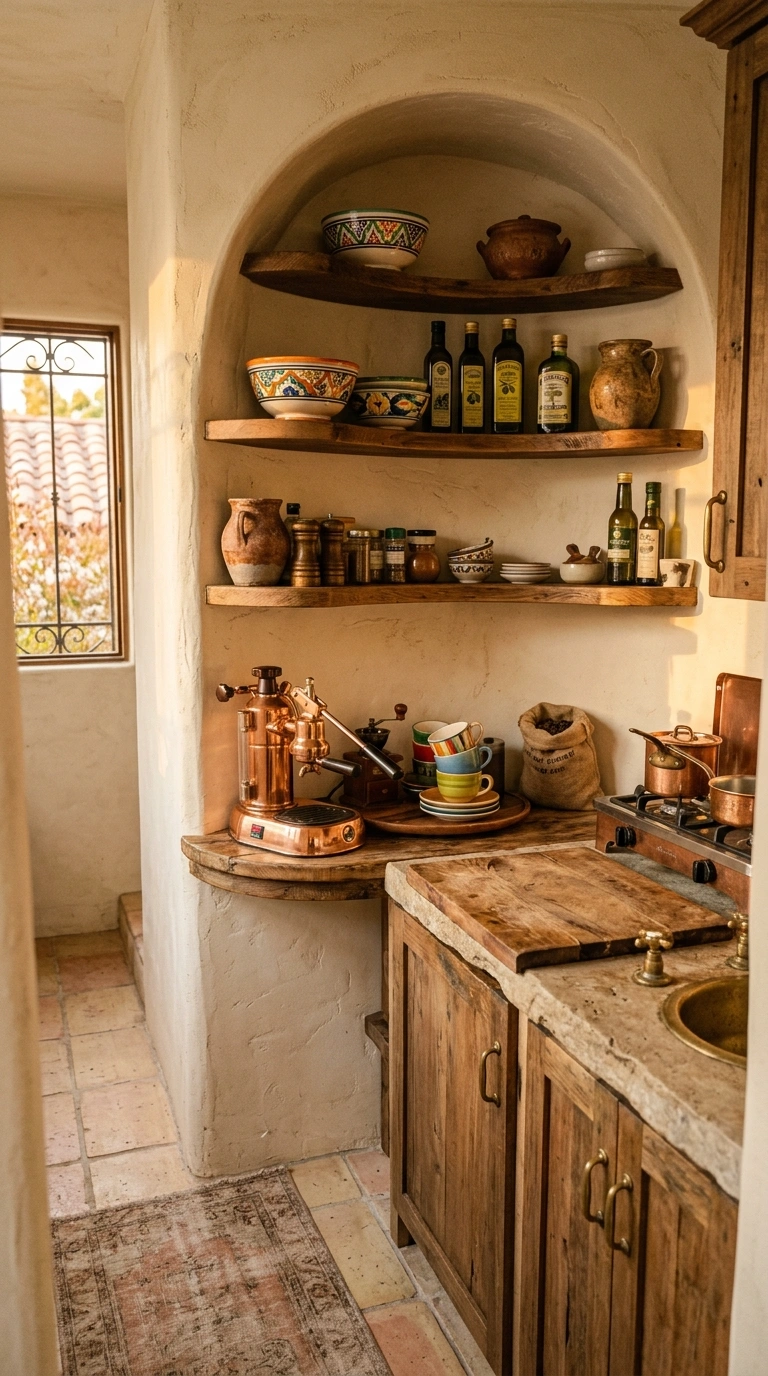
Tiny kitchens often have difficult corners that waste valuable space. Turning these awkward areas into functional storage zones can dramatically improve organization. Corner drawers, floating corner shelves, or angled cabinets help maximize every inch.
Install floating wood shelves in unused corners for spices, cookbooks, or small plants. A compact corner coffee station with mugs, jars, and a slim espresso machine also works beautifully in tight layouts. Soft lighting above corner shelves creates a cozy layered effect that makes the kitchen feel styled instead of cramped.
Using corners creatively prevents overcrowding elsewhere in the kitchen. Small kitchens work best when every area has a clear purpose. Thoughtful corner storage keeps essentials organized while improving the overall visual flow of the room.
10. Add Natural Textures to Warm Up Small Spaces
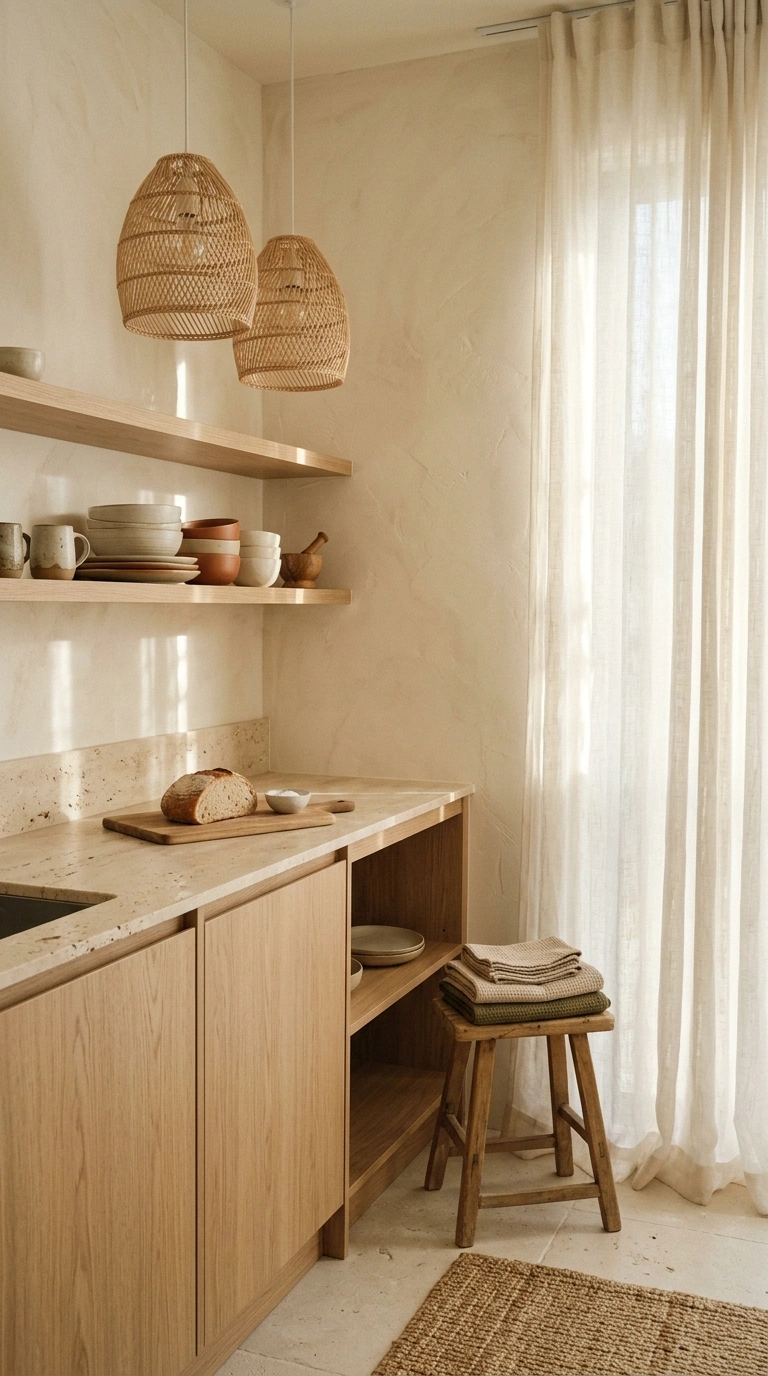
Tiny kitchens can sometimes feel cold when everything looks sleek and compact. Natural textures help soften the space and create warmth without adding clutter. Mixing wood, linen, woven materials, and ceramic finishes creates a cozy and welcoming atmosphere.
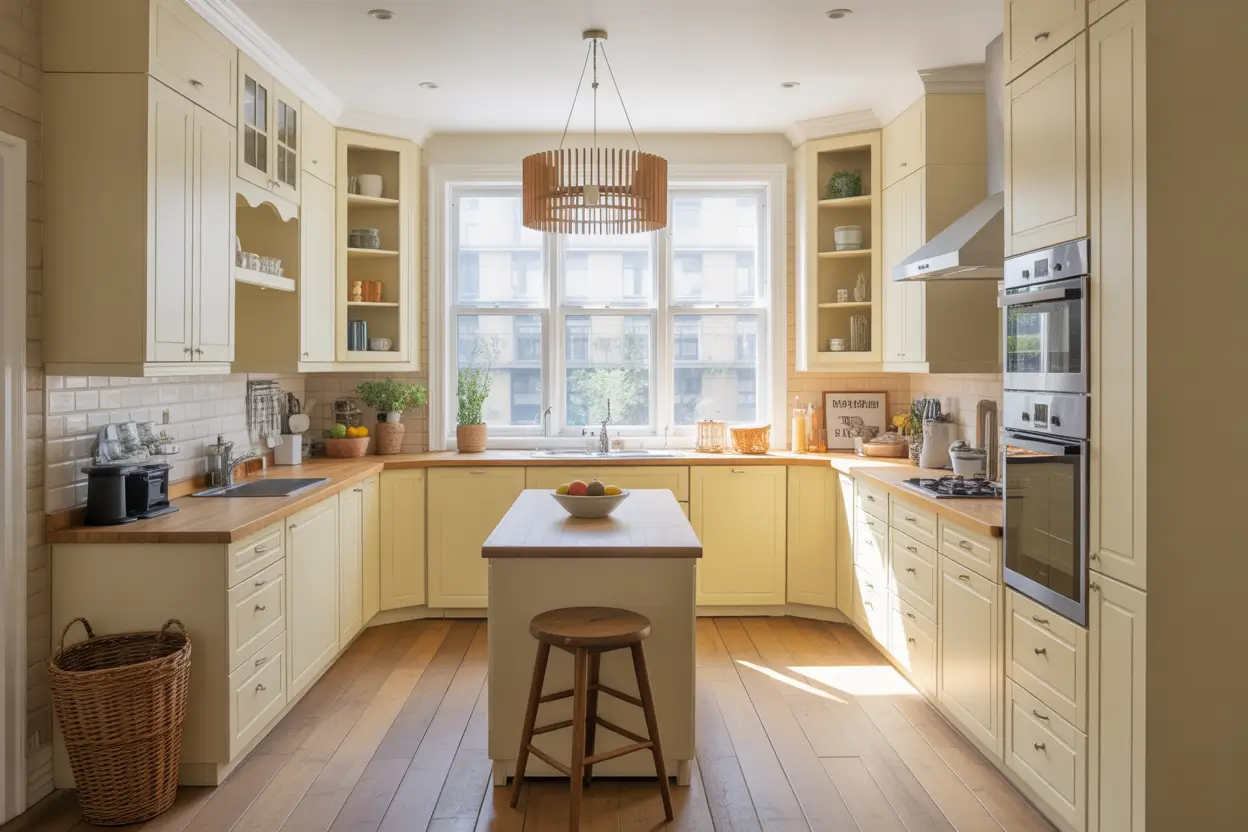
Try light oak stools, woven pendant lights, or textured ceramic dishes against smooth countertops and painted cabinets. Linen café curtains soften windows while allowing natural sunlight to brighten the room. Even simple additions like wooden cutting boards leaning against the backsplash can make the kitchen feel more layered and inviting.
Stick with a calming earthy palette like sand, warm white, muted green, clay, or soft brown for a relaxed Pinterest-inspired look. Natural textures make compact kitchens feel personal, comfortable, and beautifully lived in without sacrificing functionality.
11. Use Fold-Down Tables for Extra Function
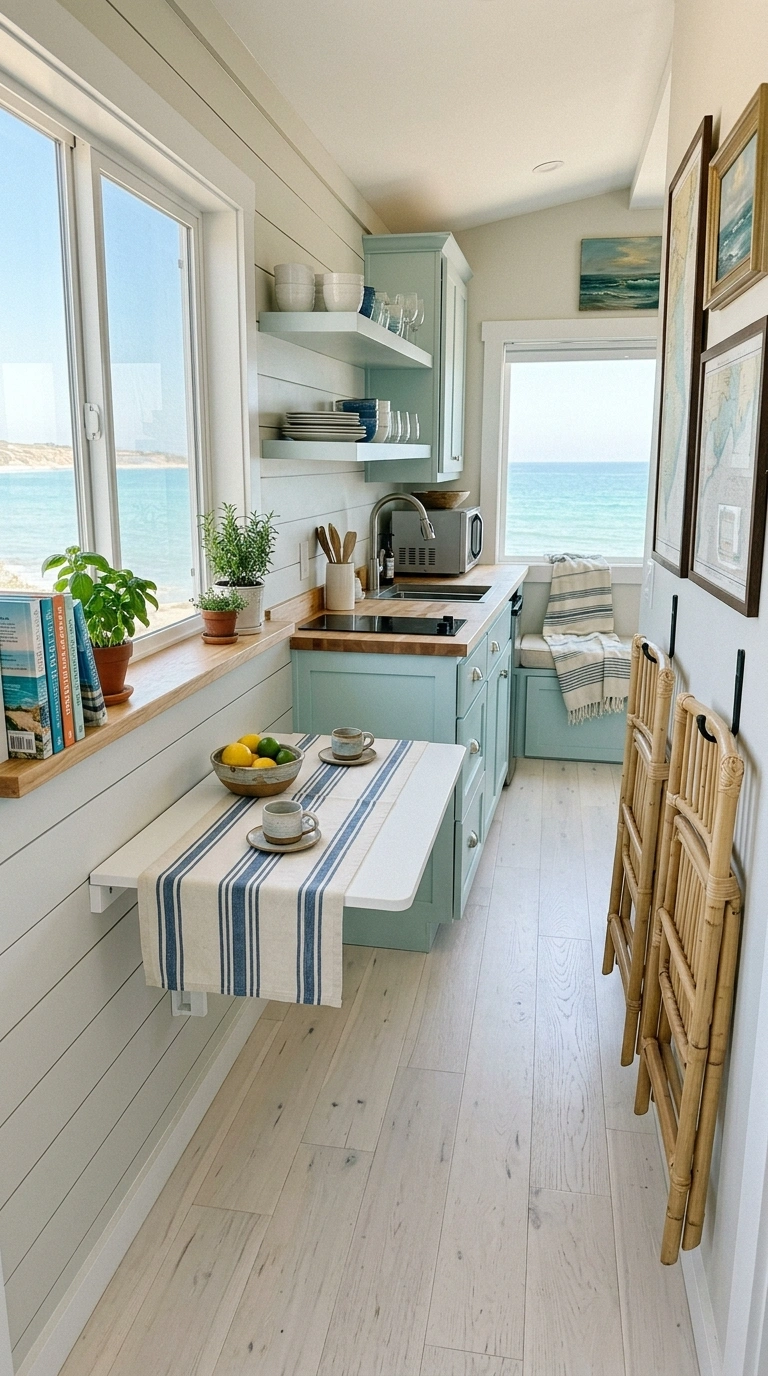
A fold-down table gives tiny kitchens extra workspace without permanently taking up room. This idea works especially well in studio apartments or narrow galley kitchens where every inch matters. When not in use, the table folds flat against the wall and keeps the floor area open.
Choose a light wood finish or a painted surface that matches the cabinetry for a seamless look. Pair it with slim folding chairs that slide into a nearby corner or hang neatly on wall hooks. This setup can work as a breakfast nook, coffee station, or even a compact meal prep area.
Add a small wall lamp above the table to create a cozy café-style feeling at night. Keeping the area visually simple helps the kitchen feel calm and spacious. Fold-down furniture adds flexibility while maintaining an uncluttered layout that feels practical and stylish.
12. Blend Appliances Into the Cabinet Design
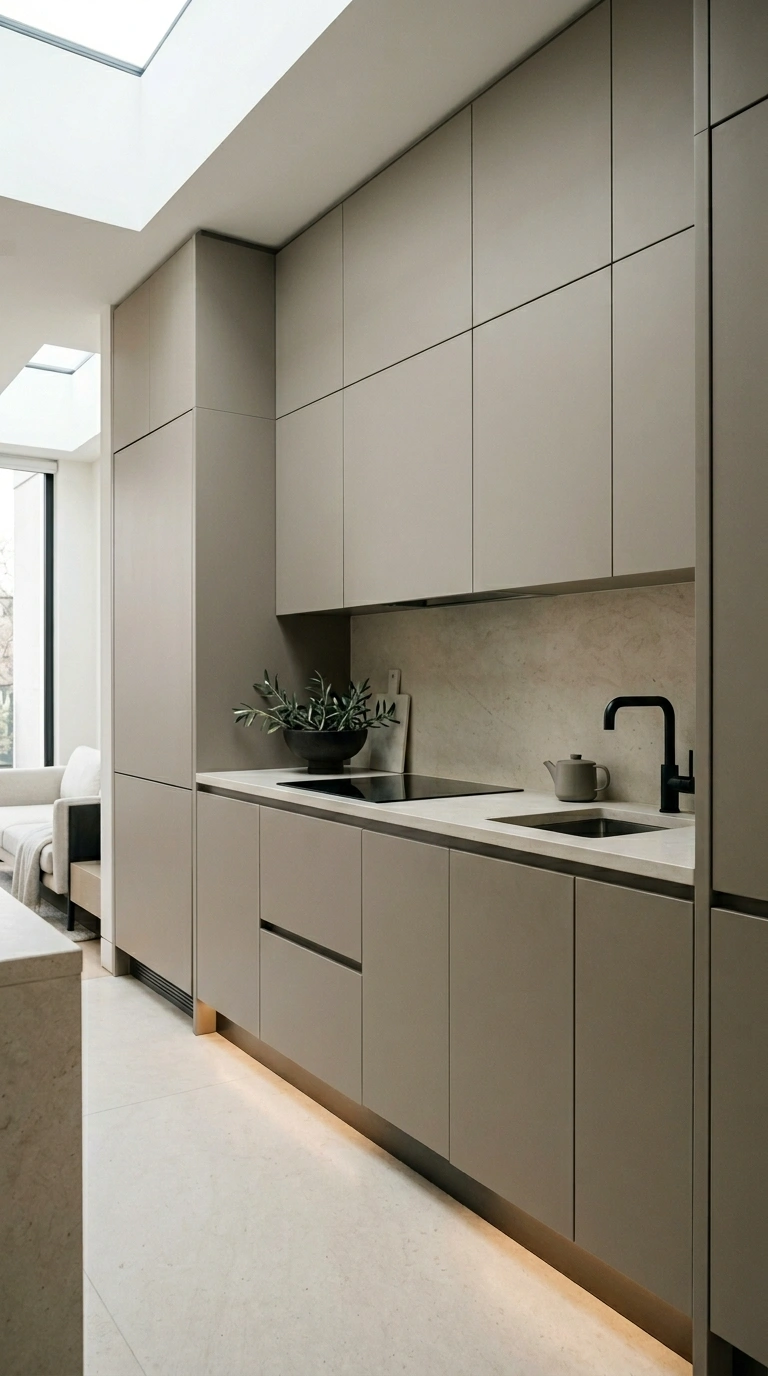
Large appliances can visually overwhelm a small kitchen. Panel-ready appliances or cabinetry-colored finishes help create a smoother and more open appearance. This simple design trick makes compact kitchens feel cleaner and less crowded.
A refrigerator hidden behind warm white cabinet panels blends naturally into the room and reduces visual heaviness. Slim dishwashers and compact microwaves also help maintain flow without sacrificing function. Keeping appliance colors consistent prevents the eye from stopping at bulky shapes.
Use minimal hardware and soft matte finishes for a calm modern look. Pair hidden appliances with textured backsplash tiles or wood details to keep the kitchen warm and inviting. A seamless design creates a polished feel that makes tiny kitchens appear more spacious and thoughtfully planned.
13. Add Glass Cabinet Doors for an Airy Look
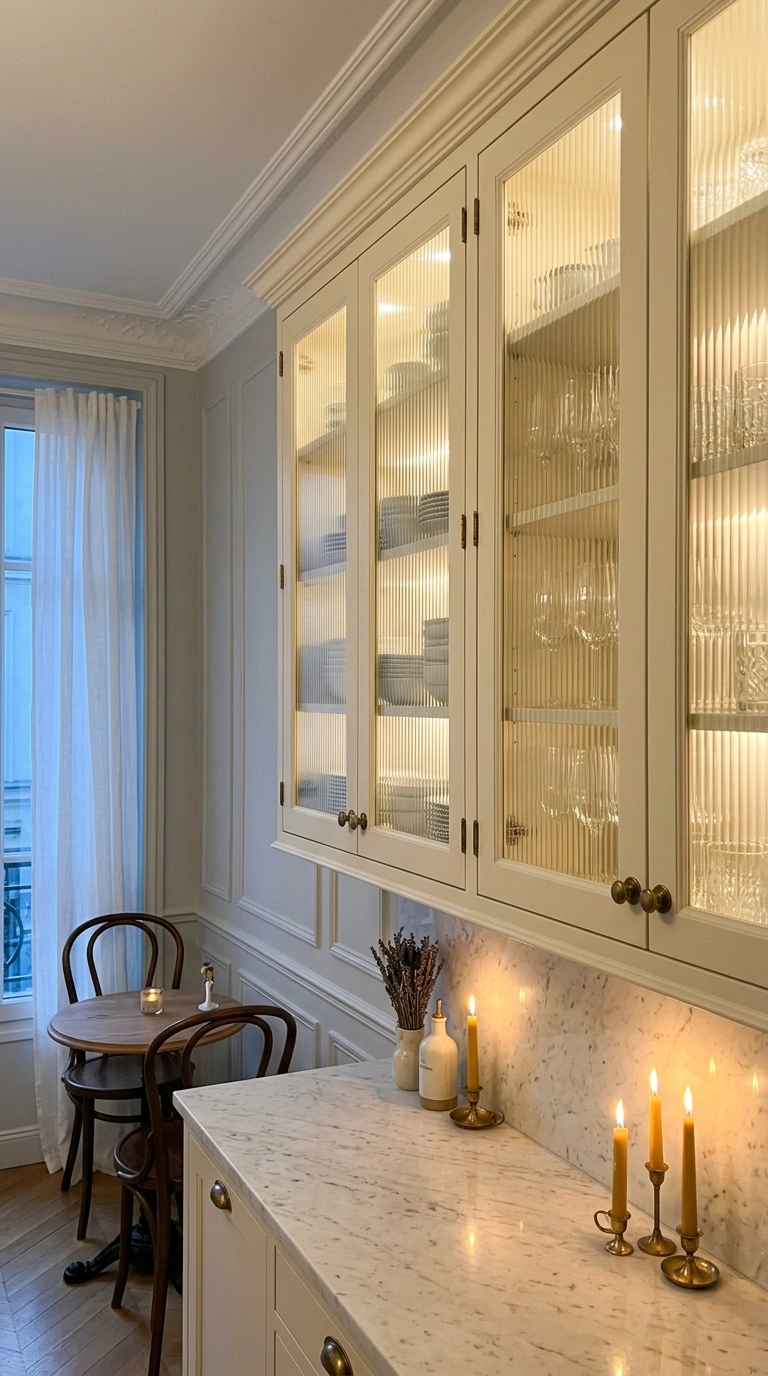
Glass-front cabinets create openness while still providing enclosed storage. Unlike solid upper cabinets, glass doors reflect light and reduce the boxed-in feeling common in tiny kitchens. This idea works beautifully in both classic and modern spaces.
Choose ribbed, frosted, or clear glass depending on the style you want. Ribbed glass adds texture and softly hides clutter, while clear glass creates a bright open display. Keep cabinet interiors organized with matching dishes and neutral-toned storage containers for a clean Pinterest-inspired look.
Soft interior cabinet lighting can make the kitchen glow beautifully during evening hours. Pair glass cabinets with warm brass handles or matte black hardware for subtle contrast. This small upgrade helps compact kitchens feel lighter, brighter, and more elegant without major remodeling.
14. Use One Bold Accent Instead of Many Small Details
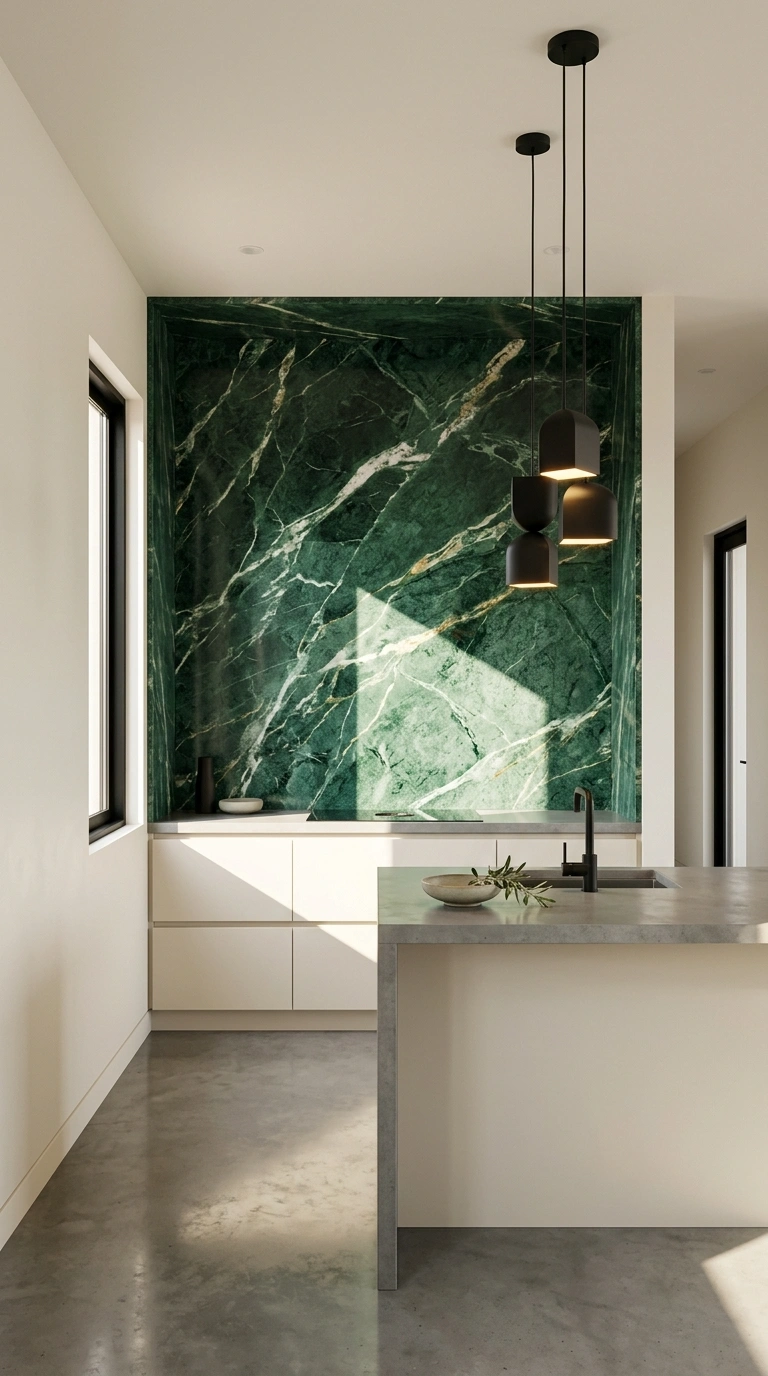
Tiny kitchens feel more balanced when they focus on one strong design feature instead of several competing accents. Too many colors, patterns, or decorative items can make the room feel chaotic. A single bold element creates personality while keeping the space visually calm.
Try a deep green backsplash, a dramatic stone countertop, or a statement pendant light above the sink. Keep surrounding surfaces simple so the accent becomes the focal point. Warm neutral walls and clean cabinetry allow bold features to stand out beautifully without overwhelming the room.
This approach also makes decorating easier because the kitchen feels intentional and cohesive. A carefully chosen statement piece adds character while preserving the open feeling that small kitchens need. One strong detail often creates more impact than many small decorative items.
15. Install Slim Pull-Out Pantry Storage
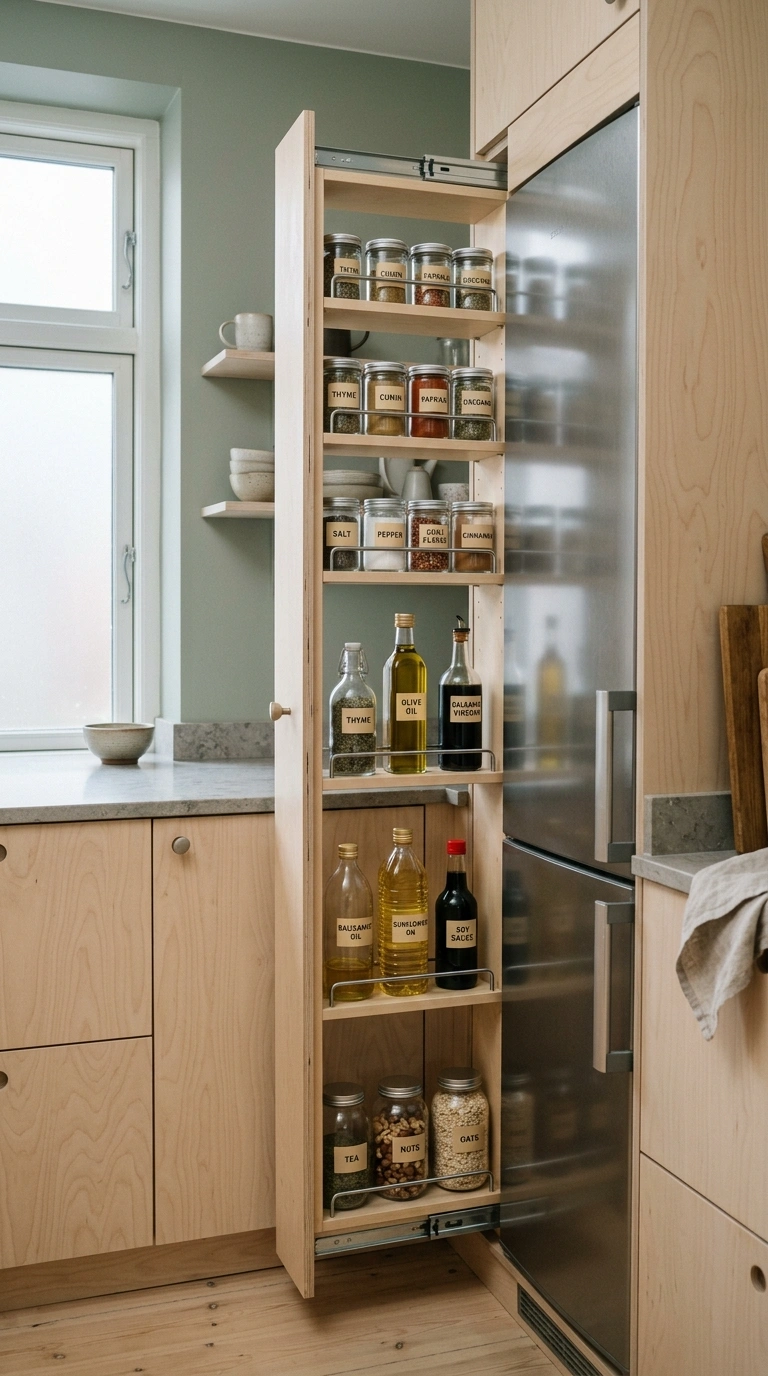
Pull-out pantry storage transforms narrow gaps into highly functional organization zones. Even small spaces beside refrigerators or cabinets can hold spices, oils, canned goods, or baking supplies when designed efficiently.
Choose slim wooden pull-outs with adjustable shelves to customize storage based on your needs. Keeping pantry items vertical and visible makes cooking faster while reducing cluttered countertops. Light-colored shelves and labeled glass jars help maintain a clean organized appearance.
This storage solution works especially well in modern tiny kitchens because it uses hidden space without adding bulky furniture. Pair pull-out storage with soft-close hardware for a smoother and quieter experience. Smart pantry organization helps compact kitchens feel surprisingly spacious and easy to maintain.
16. Bring in Small Plants for Freshness
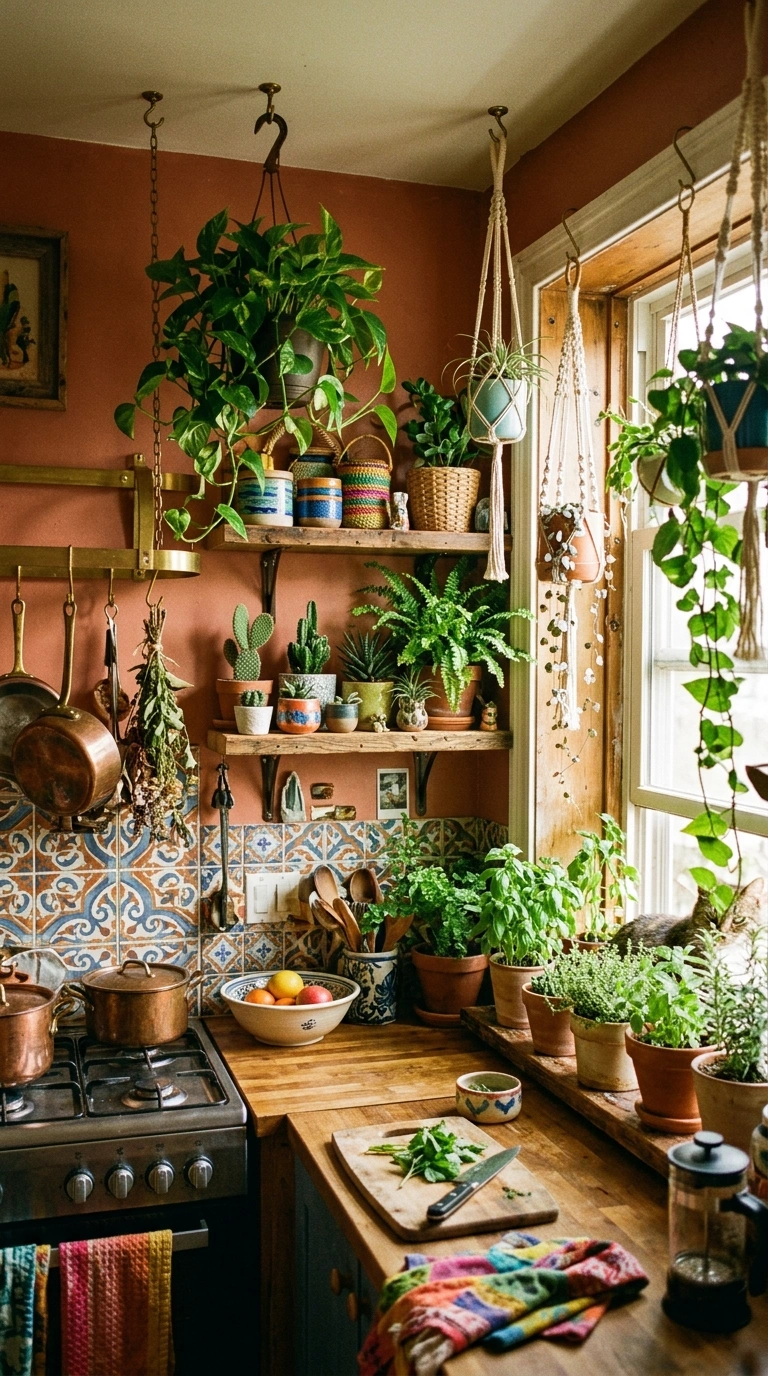
A few carefully placed plants can make tiny kitchens feel brighter, fresher, and more alive. Greenery softens hard surfaces and adds natural color without requiring major décor changes. Compact kitchens benefit most from simple plants that do not crowd counters.
Try hanging herbs near windows, placing small olive trees in corners, or adding trailing pothos plants on floating shelves. Terracotta pots, textured ceramic planters, and woven baskets introduce warmth and organic texture into the space.
Plants also pair beautifully with wood tones, white cabinets, and natural stone surfaces. Keep arrangements minimal to avoid visual clutter. Even one small plant near the sink can make the kitchen feel more inviting and relaxing. Fresh greenery brings movement and softness into compact layouts while maintaining a clean design.
17. Use Vertical Tile Patterns to Lift the Room
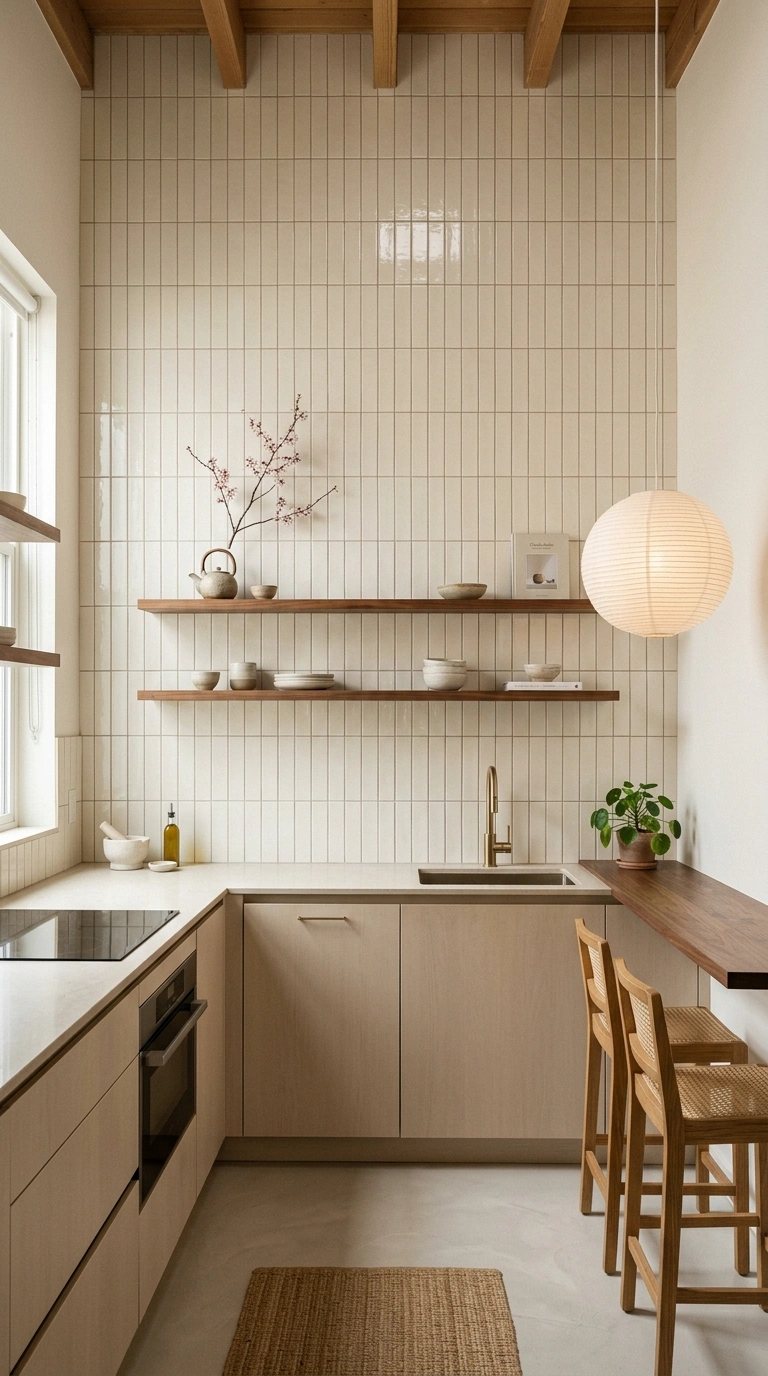
Tile direction can completely change how a tiny kitchen feels. Vertical tile layouts draw the eye upward and create the illusion of taller ceilings. This simple design trick makes compact kitchens appear more open and elegant.
Stacked vertical subway tiles in soft white, warm beige, or muted sage create a clean modern appearance while adding subtle texture. Glossy finishes reflect light beautifully and help brighten darker corners. Thin grout lines keep the look smooth and visually uncluttered.
Pair vertical tiles with floating shelves or slim cabinetry to emphasize height even more. This design works especially well in apartments with lower ceilings because it creates a sense of upward movement. Smart tile placement helps tiny kitchens feel visually expanded without requiring extra space.
18. Create a Mini Coffee Corner
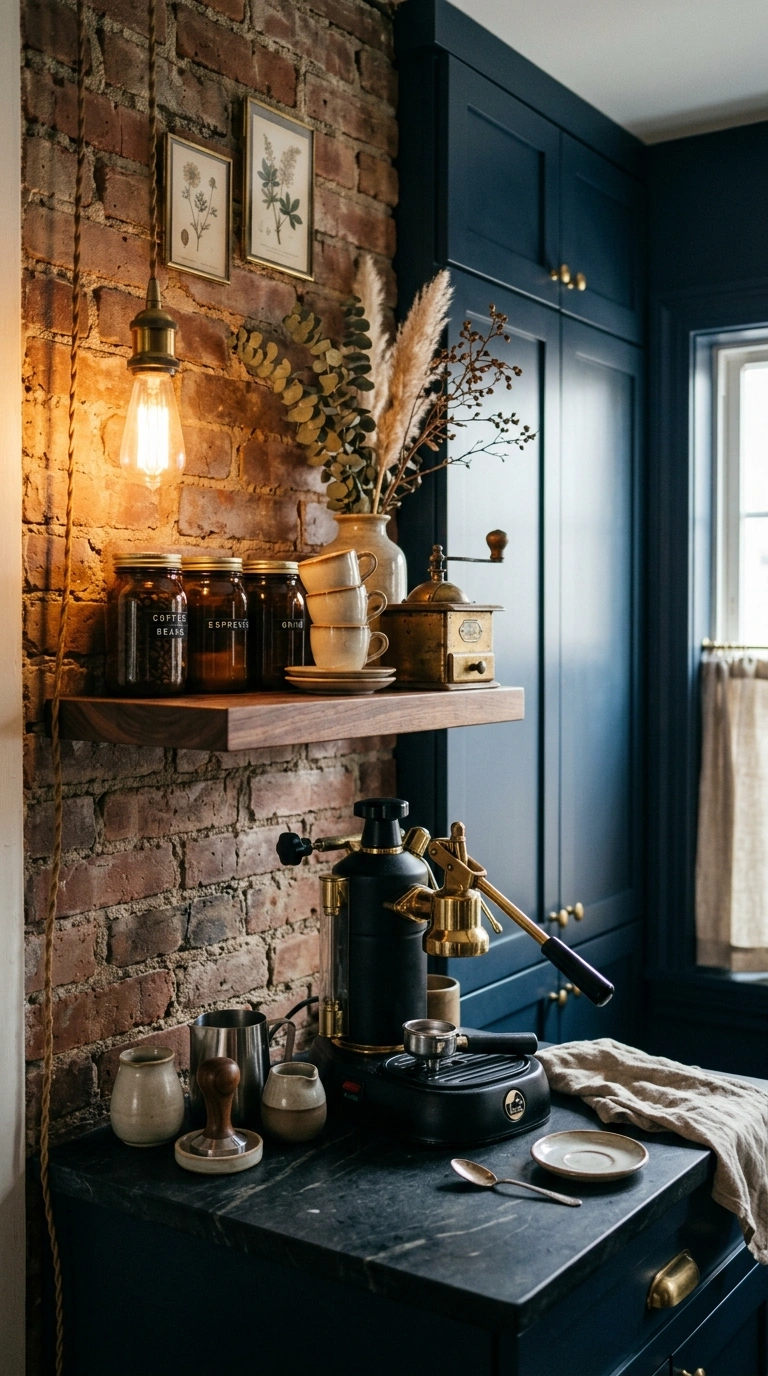
A dedicated coffee corner keeps countertops organized while adding personality to a tiny kitchen. Instead of spreading mugs, machines, and supplies across multiple surfaces, create one compact station with everything neatly grouped together.
Use a floating shelf above a slim counter section to hold mugs, coffee jars, and small décor pieces. Warm wood shelves paired with creamy walls create a cozy café-inspired atmosphere. Add soft lighting or a tiny framed print for extra charm.
Keeping the coffee area contained improves kitchen flow and reduces visual clutter. Small woven trays also help organize spoons, sugar jars, or tea bags while adding texture. A tiny coffee corner feels thoughtful and functional while making everyday routines more enjoyable.
19. Choose Light Flooring for an Open Feel
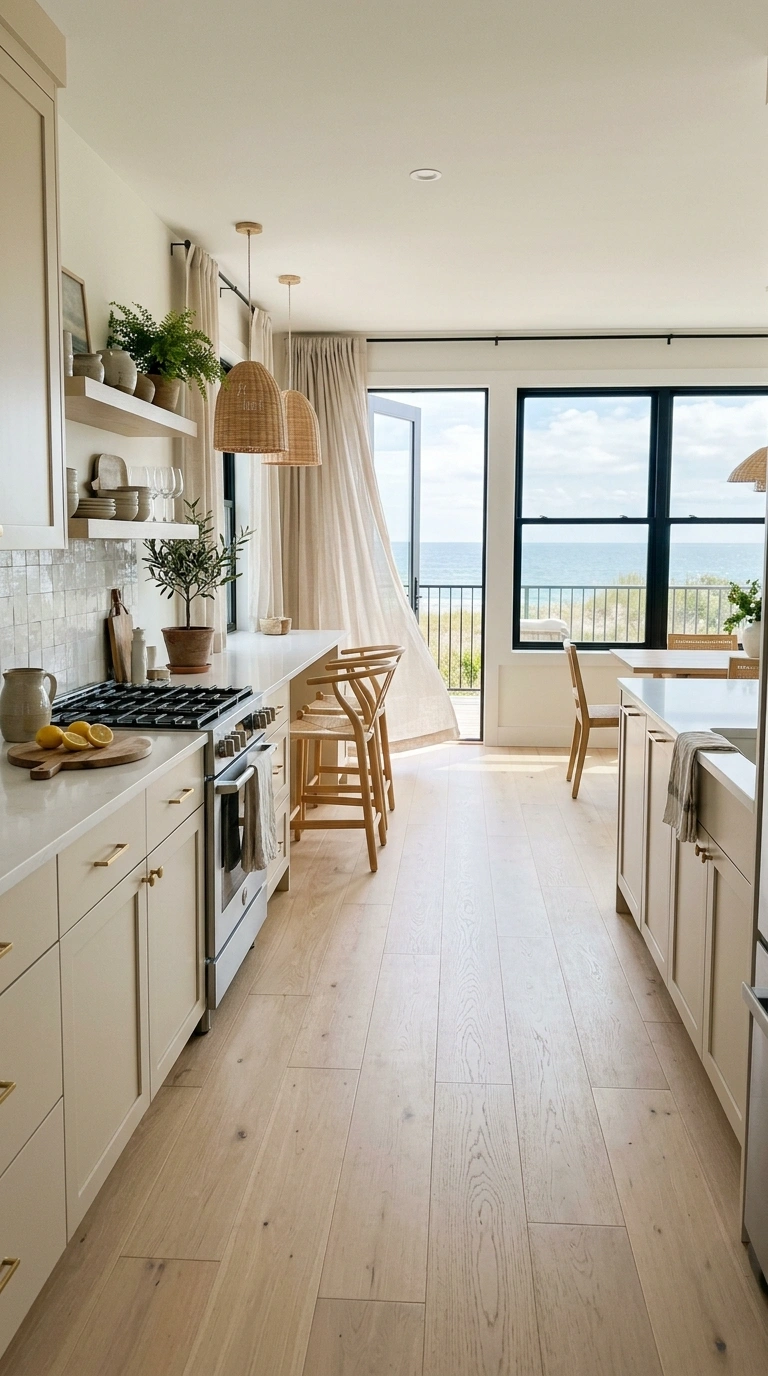
Flooring plays a huge role in how spacious a tiny kitchen feels. Dark floors can visually shrink compact layouts, while lighter tones reflect more light and create openness. Soft oak, pale tile, or warm beige flooring works beautifully in small kitchens.
Wide plank flooring with minimal pattern helps the room feel less busy. Running the flooring continuously into nearby spaces also creates a smoother visual flow that makes the kitchen appear larger. Matte finishes work especially well because they feel soft and natural instead of overly shiny.
Pair light floors with warm neutral cabinets and textured accents for a cozy balanced look. Consistent flooring tones help tiny kitchens feel airy while still maintaining warmth and comfort. Even small flooring updates can dramatically improve the overall atmosphere.
20. Keep Countertops Mostly Clear
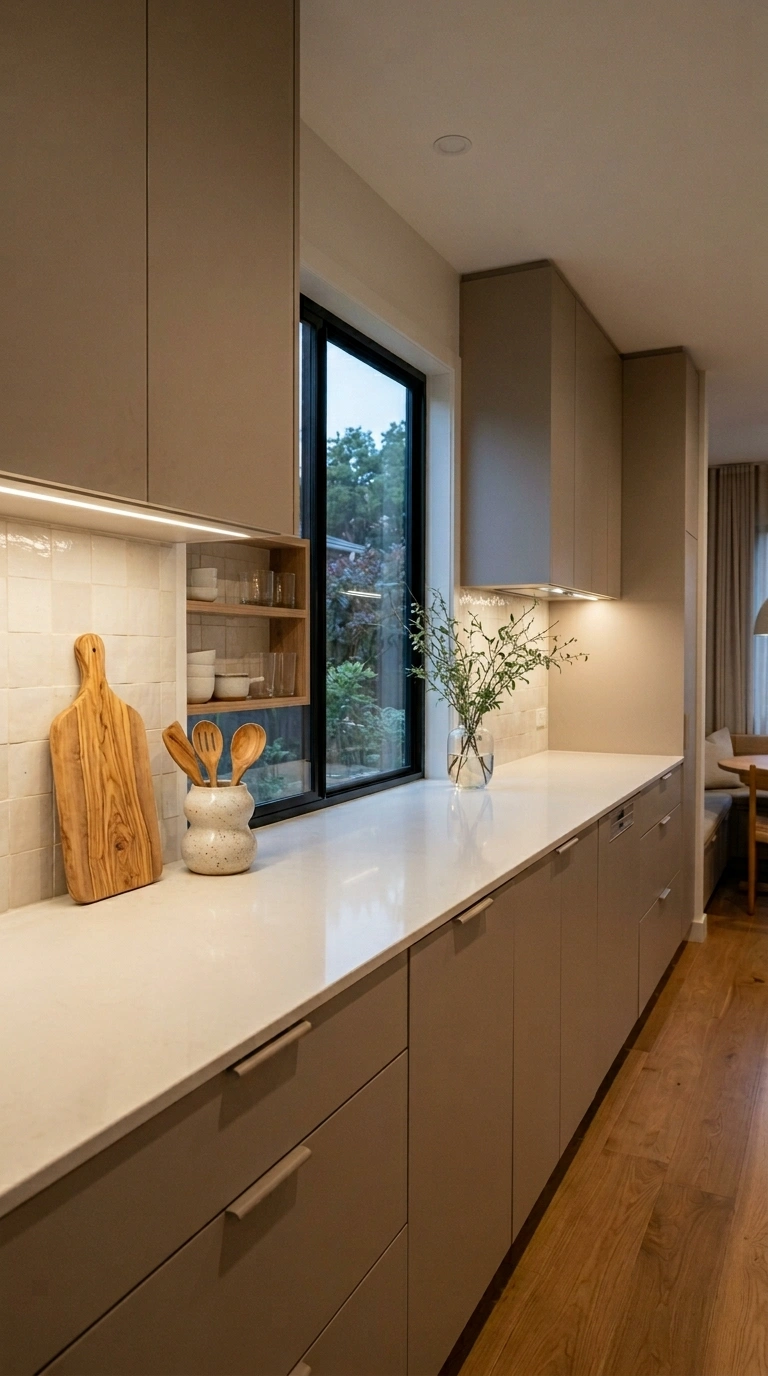
One of the easiest ways to make a tiny kitchen feel larger is keeping countertops simple and uncluttered. Too many appliances, containers, and decorative items quickly overwhelm compact spaces. Clear surfaces create calmness and improve everyday functionality.
Store bulky appliances inside cabinets whenever possible and display only essentials like a wooden cutting board, ceramic utensil holder, or small plant. Using trays can also help organize frequently used items without making counters look messy.
Neutral countertops with subtle texture work best because they reflect light while maintaining warmth. Quartz, light marble-look surfaces, or soft concrete finishes all create a clean modern appearance. Minimal countertops allow the kitchen’s textures, lighting, and layout to stand out beautifully while making the entire room feel more spacious.
Conclusion
A tiny kitchen can still feel stylish, functional, and welcoming when every detail works with purpose. Smart storage, layered lighting, warm textures, and thoughtful layouts help compact spaces feel larger without losing personality. Small changes like vertical shelving, hidden storage, reflective surfaces, and soft natural colors can completely transform how your kitchen looks and functions every day.
The best tiny kitchen ideas combine beauty with practicality. Instead of filling the room with unnecessary décor, focus on pieces that improve comfort, organization, and visual flow. Natural materials, cozy lighting, and space-saving furniture create a kitchen that feels calm and inviting no matter its size.
Save your favorite ideas, mix elements that fit your style, and start with one small update at a time. Even the tiniest kitchen can become a beautiful space you truly enjoy using every day.
FAQs
How can I make a tiny kitchen look bigger?
Use light colors, reflective surfaces, and layered lighting to create an open feeling. Keep countertops mostly clear and choose slim furniture that does not block movement. Vertical storage, glass cabinet doors, and open shelving also help small kitchens feel taller and brighter.
What colors work best in a small kitchen?
Soft white, warm beige, pale gray, muted sage, and light wood tones work beautifully in compact kitchens. These shades reflect light and create a calm atmosphere. Adding small accents in olive green, terracotta, or matte black can bring warmth without making the room feel crowded.
Are open shelves good for tiny kitchens?
Yes, open shelves can make tiny kitchens feel more spacious because they reduce visual heaviness. Slim wood shelves also create room for decorative storage using dishes, glass jars, and ceramic pieces. Keep styling simple so the kitchen stays clean and organized.
What is the best layout for a tiny kitchen?
Galley kitchens, L-shaped layouts, and single-wall kitchens often work best in small spaces. These layouts improve movement while maximizing storage and prep areas. Adding movable furniture like a rolling island can also increase flexibility without overcrowding the room.
How do I add storage to a small kitchen without remodeling?
Use wall-mounted peg rails, floating shelves, over-door organizers, and slim rolling carts. Hidden storage benches and pull-out pantry cabinets also help maximize unused areas. Even small changes like hanging mugs or storing items vertically can free up valuable counter space.
What lighting makes a small kitchen feel cozy?
Warm under-cabinet LED lighting, soft pendant lights, and wall sconces create a cozy layered effect. Avoid harsh overhead lighting alone because it can make the kitchen feel flat. Warm white lighting works best for creating a welcoming atmosphere.
Can dark colors work in a tiny kitchen?
Yes, but balance them carefully. Use darker shades on lower cabinets or as small accents while keeping walls and upper cabinets lighter. Deep olive green, charcoal, or navy can add depth and sophistication when paired with warm lighting and natural textures.
What type of furniture saves space in tiny kitchens?
Fold-down tables, rolling islands, slim stools, and built-in benches with hidden storage work especially well. Multi-functional furniture helps maximize every inch while keeping the layout open and easy to move through.
How do I decorate a tiny kitchen without cluttering it?
Focus on a few meaningful decorative details instead of many small items. Wooden cutting boards, textured ceramics, woven baskets, and small plants add warmth without overwhelming the space. Choose décor that also serves a practical purpose whenever possible.
Are tiny kitchens still trendy in 2026?
Yes, compact kitchens continue to grow in popularity because more people want efficient, functional, and beautifully designed spaces. Modern tiny kitchens focus on smart storage, calming colors, layered textures, and space-saving layouts that feel both stylish and practical.