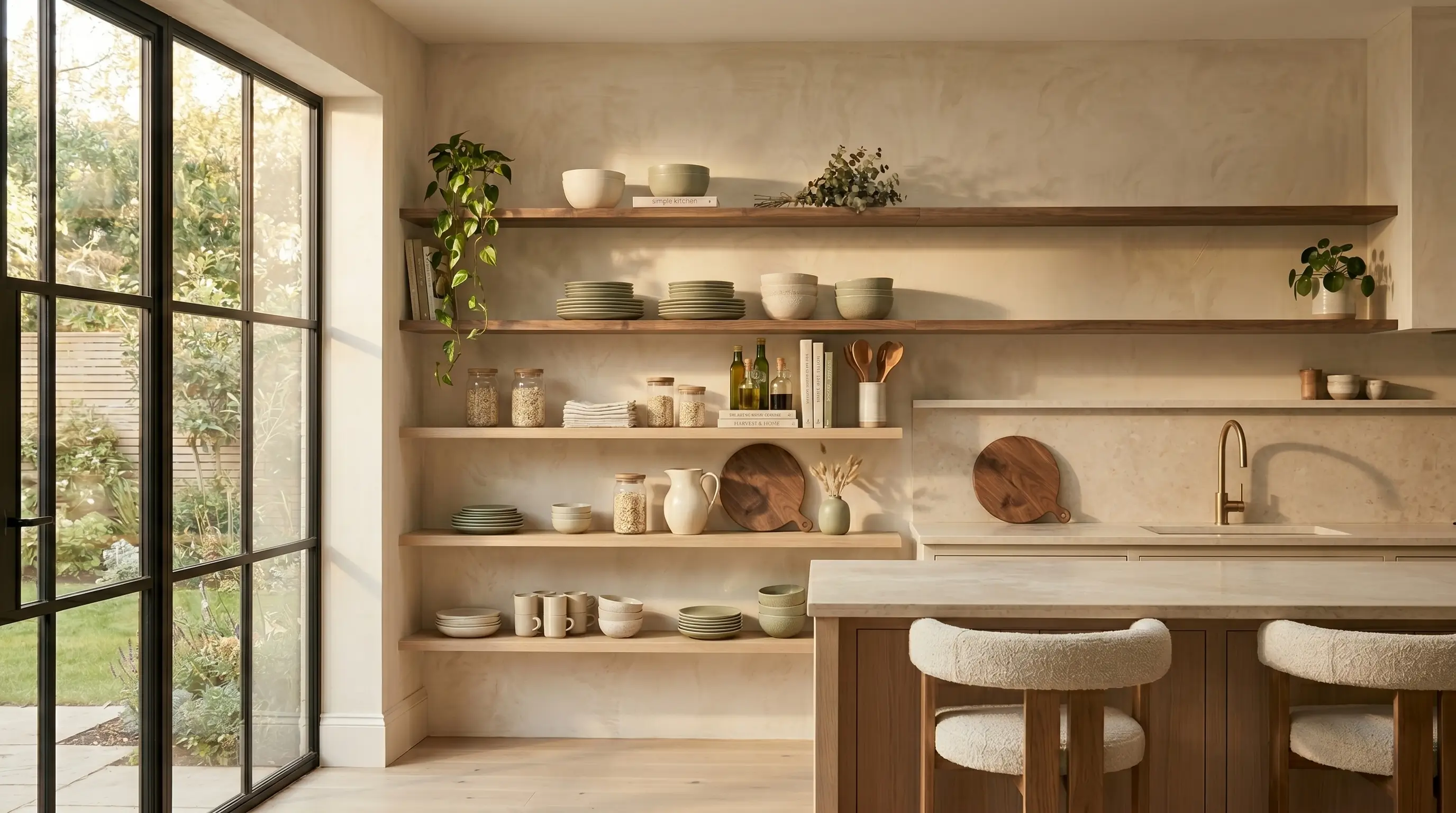
24 Beautiful Kitchen Ceiling Designs That Transform Ordinary Kitchens
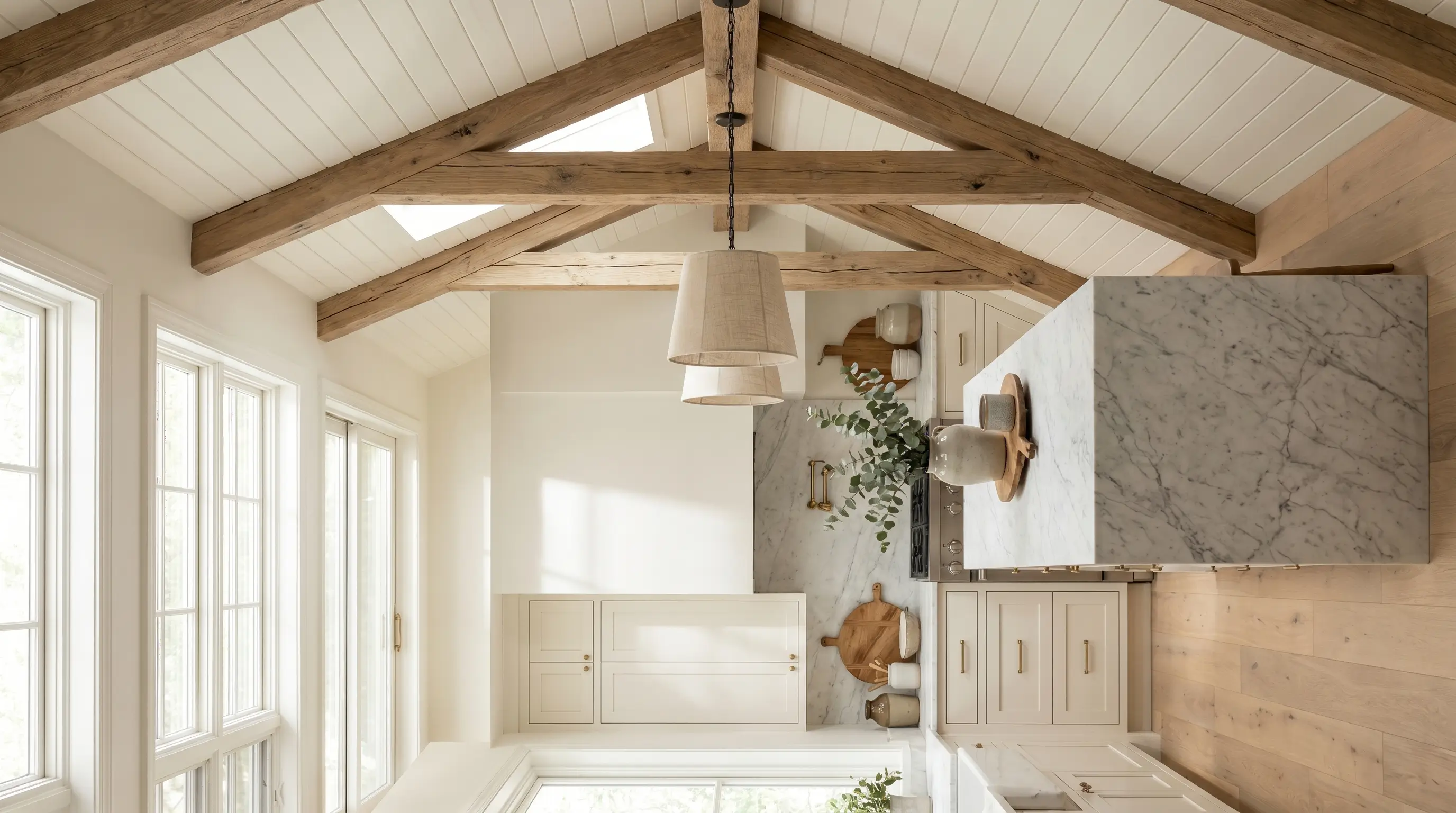
Key Takeaways
- Exposed beams and coffered grids add instant architectural drama and make ceilings feel taller.
- Painted black or sage green ceilings bring unexpected color overhead while staying timeless and livable.
- Wood plank, shiplap, and beadboard ceilings layer texture and warmth to balance cool stone counters.
- Vaulted ceilings with skylights flood kitchens with natural light and make the space feel grand.
- Wood slat and tray ceilings hide LED strip lighting for a warm, glowing effect after sunset.
- Match ceiling style to your kitchen vibe — farmhouse needs beams, modern needs slats, cottage needs beadboard.
- Always use warm 2700K bulbs in any ceiling lighting to keep the kitchen feeling cozy and editorial.
The ceiling is the most overlooked surface in most kitchens — and that is a missed opportunity. A well-designed kitchen ceiling adds height, warmth, and architectural drama that you feel the moment you walk in.
From exposed wood beams to coffered grids, painted statement colors, and skylights, there are countless ways to make this fifth wall work harder. This guide walks you through 24 fresh kitchen ceiling design ideas with real material tips, lighting tricks, and color pairings.
Whether you are remodeling, building new, or just dreaming, these designs will help you choose the perfect ceiling for your kitchen — one that feels timeless, beautiful, and completely you.
1. Exposed Wood Beam Ceiling
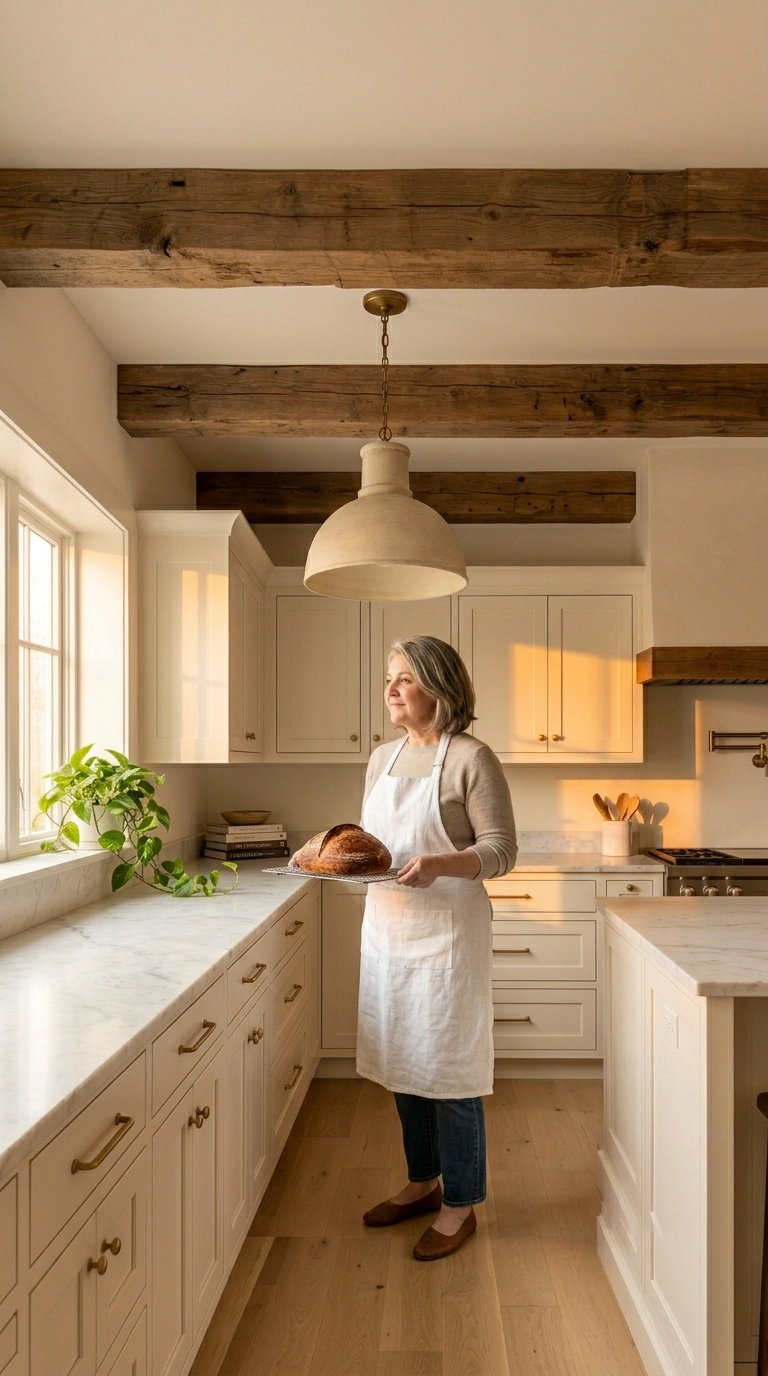
Exposed wood beam ceilings add instant warmth and character to any kitchen. The horizontal beams draw the eye upward, making ceilings feel taller and the room feel more architectural.
Choose reclaimed barn wood, aged oak, or warm walnut for the most authentic feel. Stain or leave the wood natural depending on your kitchen palette. Three to five evenly spaced beams work best in standard ceiling heights.
Pair beam ceilings with creamy white walls, warm white shaker cabinets, and aged brass hardware. Add a chunky farmhouse pendant light hung from one beam for cozy directional glow.
Skip recessed lighting entirely — it competes with the beams. Instead, use track lighting or pendants suspended between the beams for soft, layered illumination.
Real tip: install faux wood beams if real ones are too heavy for your structure. Today’s polyurethane beams look completely authentic and weigh almost nothing. Small architectural choices like this lift the entire kitchen from functional to genuinely beautiful and intentional.
2. Coffered Ceiling with White Trim
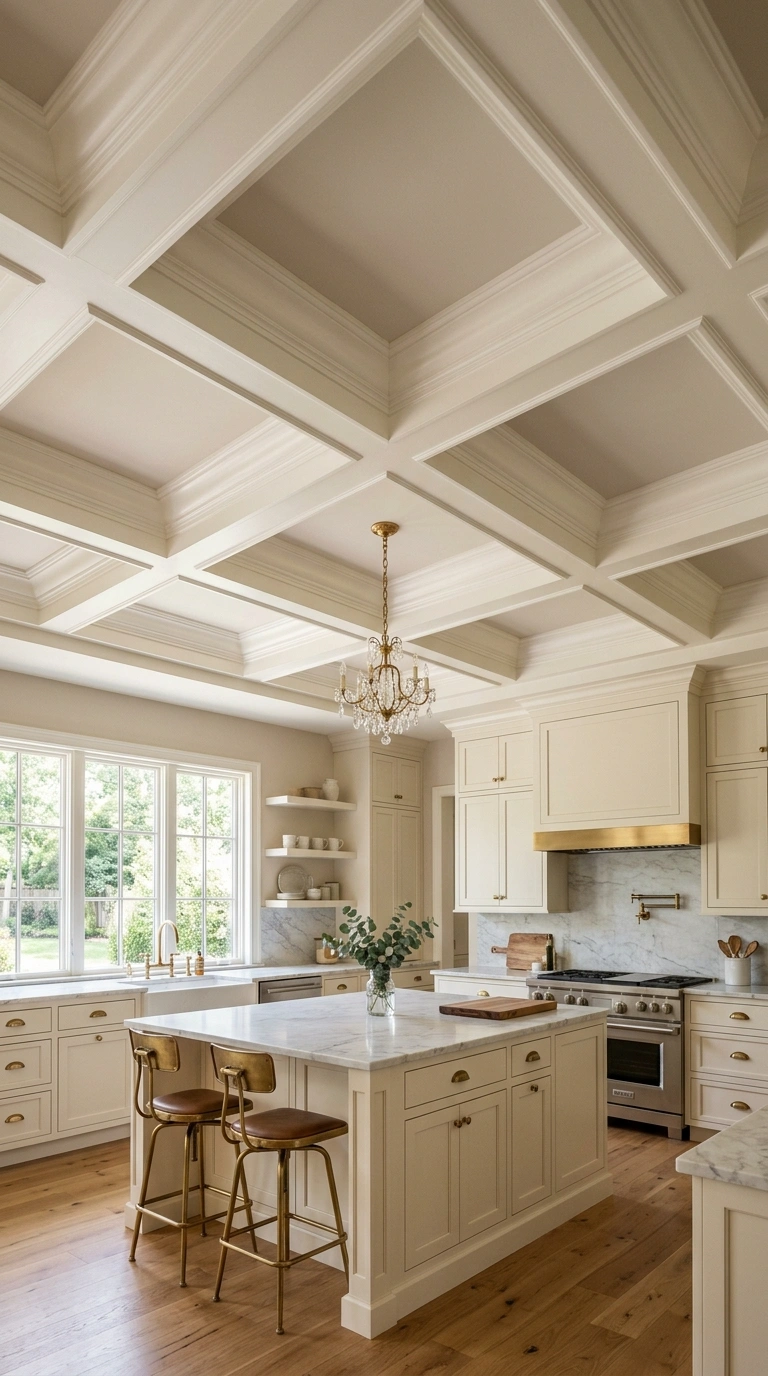
A coffered ceiling with crisp white trim adds traditional architectural grandeur to your kitchen. The grid of recessed panels creates rhythm, depth, and shadows that change throughout the day.
Choose square or rectangular coffers depending on your kitchen layout. Standard ten-inch trim looks balanced in most spaces. Paint everything in a slightly warm white like creamy alabaster or soft chalk for a fresh, timeless feel.
Pair with classic shaker cabinets in matching white, marble countertops, and aged brass fixtures. Add a single pendant light or a small chandelier in the center coffer for elevated lighting.
Use a slightly darker shade of white inside each recessed panel for subtle depth. The trick adds dimension without making the coffers feel heavy or formal.
Real tip: hire a finish carpenter for the trim work — clean miter joints and tight returns make the difference between a coffered ceiling and a flat-feeling pattern. Details this considered turn the ceiling into a true design feature rather than an afterthought above your head.
3. Tongue and Groove Plank Ceiling
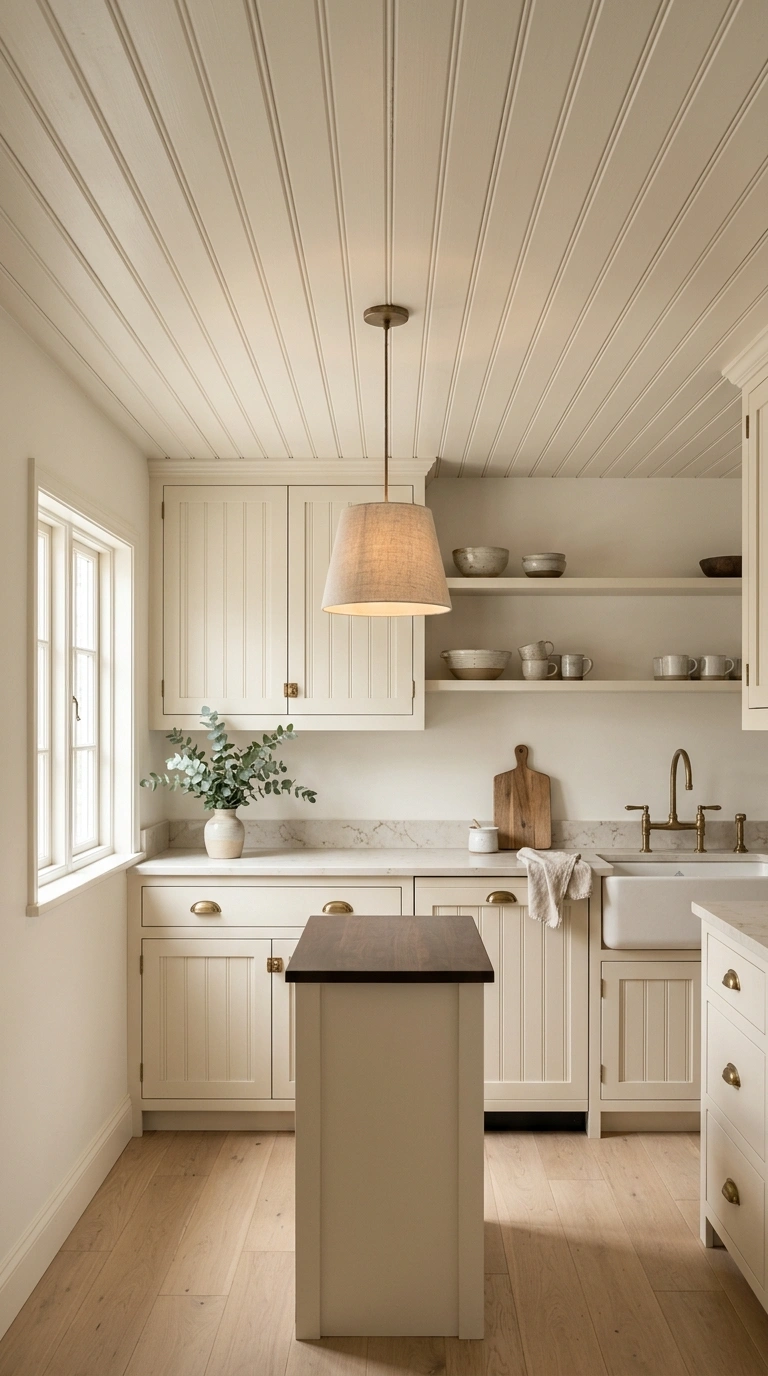
A tongue and groove plank ceiling brings cottage charm and warmth to your kitchen. The subtle grooves between planks add gentle texture and a sense of handcrafted detail.
Choose six-inch wide pine planks for traditional cottages or four-inch oak planks for modern farmhouses. Paint the planks soft creamy white or stain them in a warm honey tone depending on your preference.
Pair with shaker or beadboard cabinets in matching cream and natural quartz counters. The tonal layering creates a calm, cohesive look without feeling matchy-matchy.
Add a single linen-shaded pendant light over the kitchen island for soft diffused glow. Skip recessed cans which fight with the directional plank pattern.
Real tip: install planks running perpendicular to the longest wall — this visually widens narrow kitchens and adds movement to square ones. These small decisions make the difference between a kitchen that works and one that feels fully designed. Choices this thoughtful elevate your kitchen from ordinary to the kind of space that photographs beautifully.
4. Tray Ceiling with Recessed Lighting
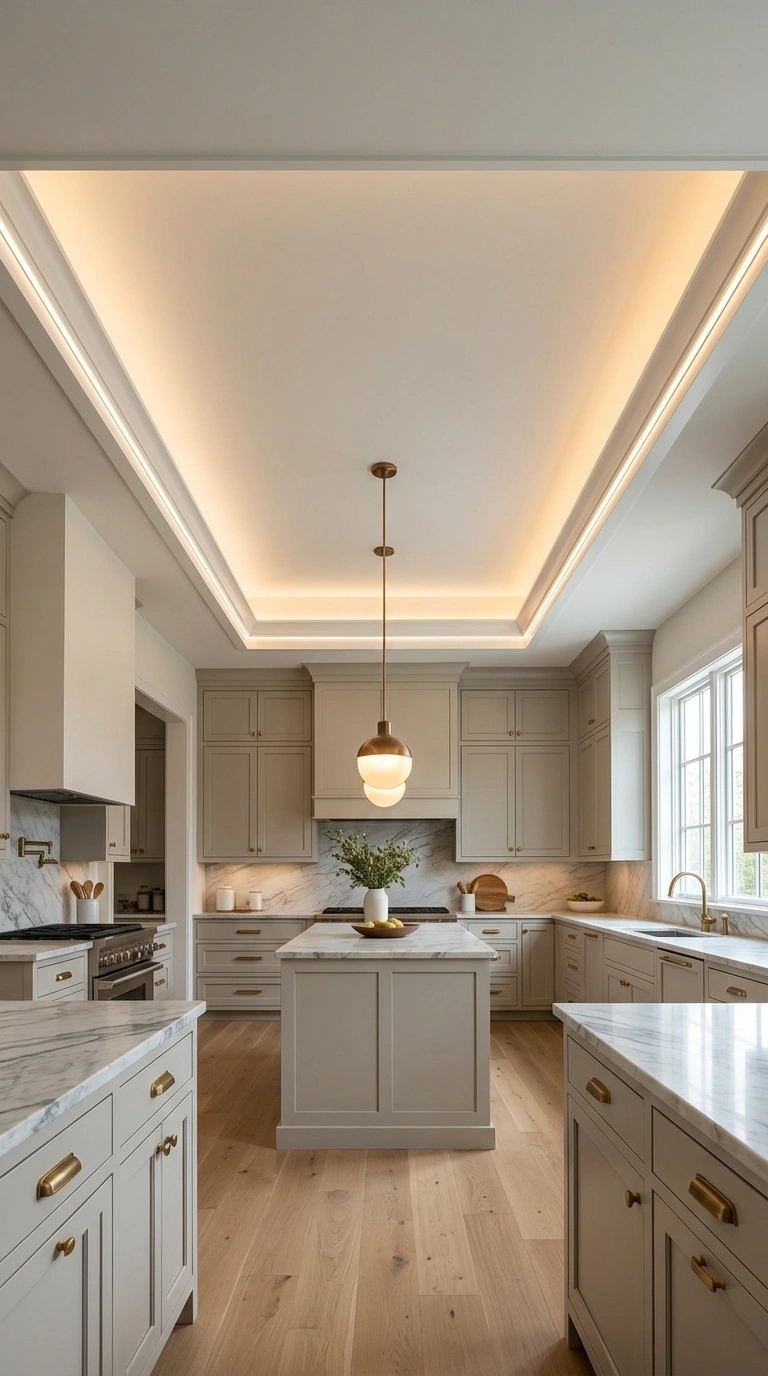
A tray ceiling lifts the center of your kitchen ceiling several inches higher than the perimeter, creating gentle architectural depth and a clear sense of design intent.
Frame the tray with a clean trim line in matching white for a quiet effect, or use contrasting wood trim in warm walnut for more drama. The center of the tray should sit six to ten inches above the surrounding ceiling.
Install slim LED recessed lights inside the perimeter of the tray for soft uplighting. The hidden glow makes the tray feel almost weightless and adds a luxe, hotel-like quality to evening cooking.
Pair with painted cabinets in soft greige or warm white, marble counters, and aged brass hardware. The tray becomes the architectural focal point without overwhelming the space.
Real tip: use 2700K warm bulbs in the tray uplighting — anything cooler feels clinical and ruins the cozy effect entirely. The right detail here transforms the whole kitchen from a working room into the heart of your home.
5. Vaulted Ceiling with Skylights
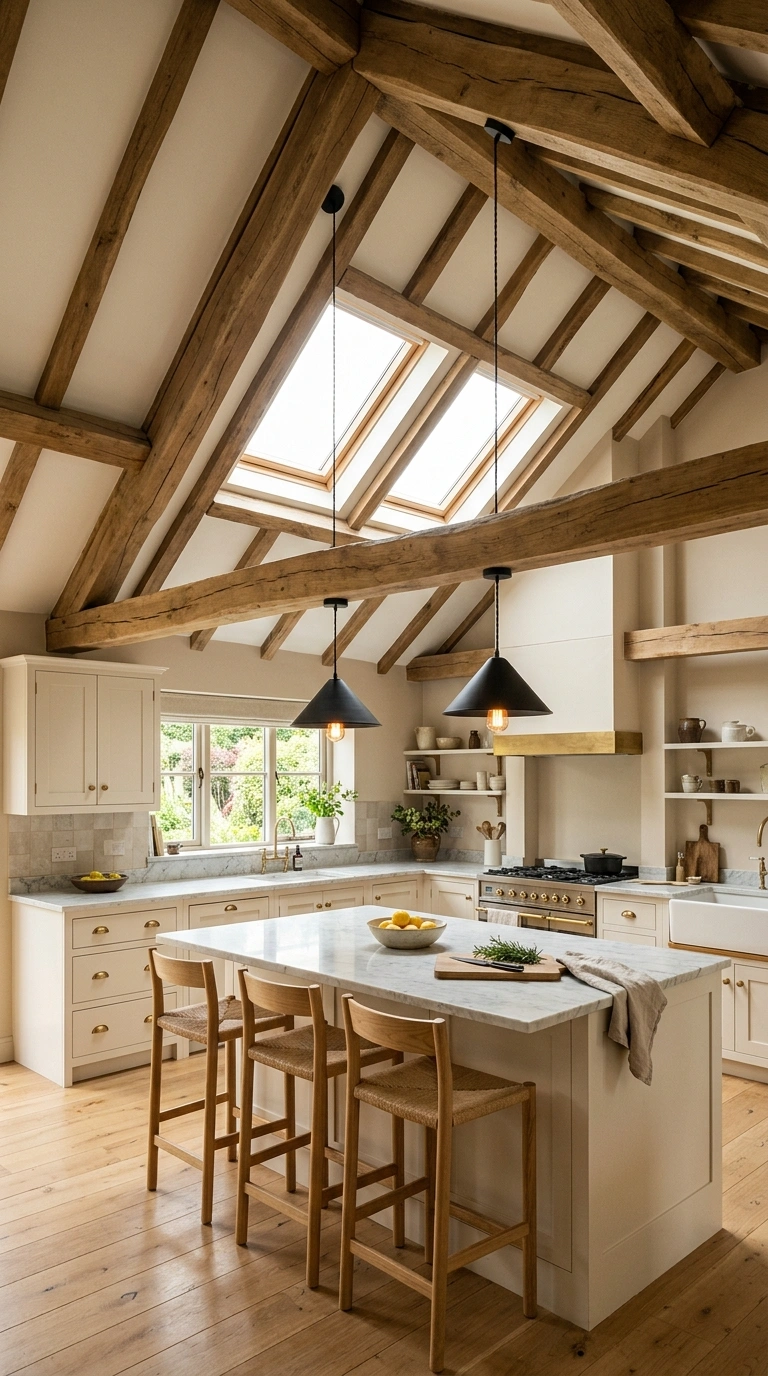
A vaulted ceiling with skylights transforms a kitchen into a sun-filled, airy space. The high pitched ceiling adds dramatic volume while the skylights flood the room with natural light from above.
Choose two or three rectangular skylights aligned with major kitchen zones — the island, sink, and prep area. The placement matters more than the size; well-positioned smaller skylights beat one giant one.
Pair with creamy white cabinets, marble counters, and warm wood floors for the brightest result. Add chunky aged oak beams along the vaulted slope for warmth and architectural rhythm.
Use long pendant lights with matte black or aged brass cords to anchor the high ceiling and bring task light closer to working surfaces below.
Real tip: choose skylights with electric blackout shades for hot afternoons. The shades control glare without losing the open, airy feel of the vaulted space. Small architectural choices like this lift the entire kitchen from functional to genuinely beautiful and intentional.
6. Painted Black Ceiling
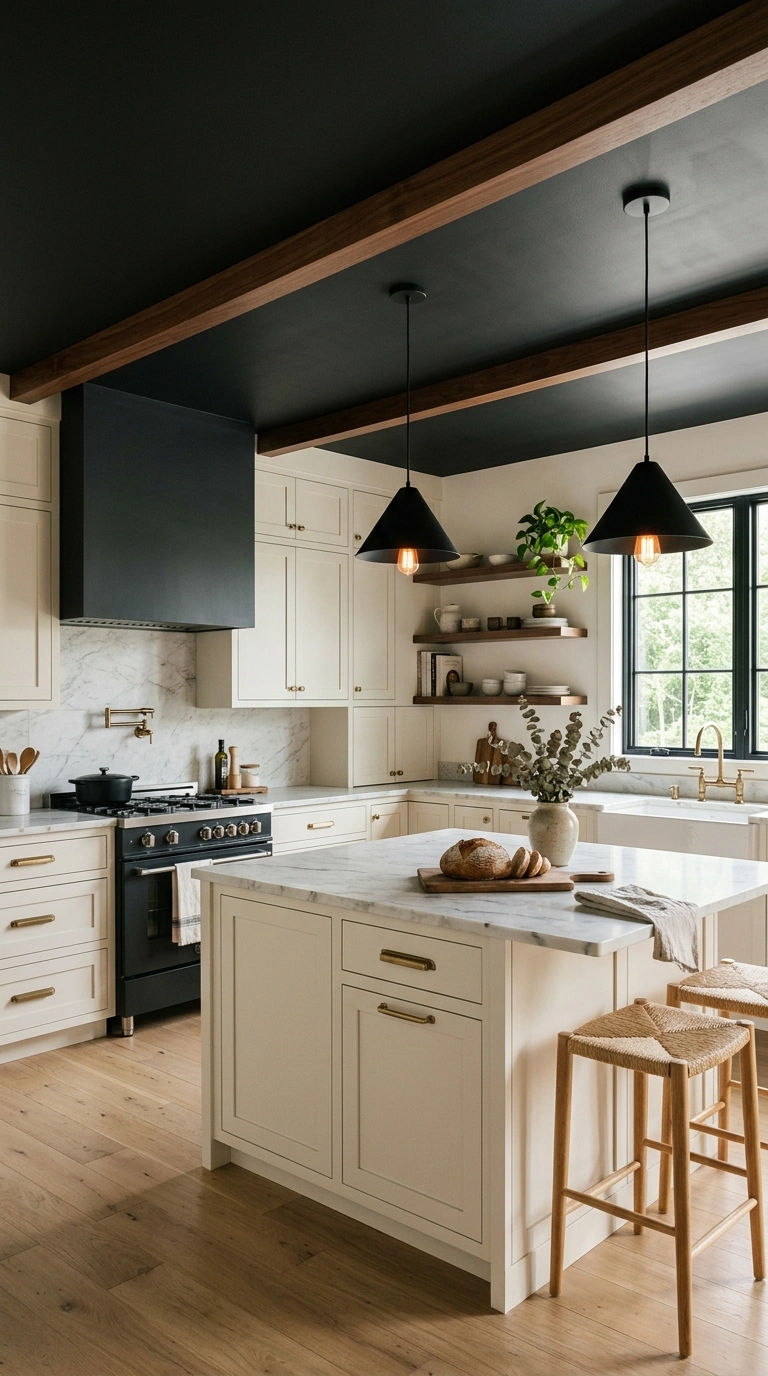
A painted black kitchen ceiling sounds bold but feels surprisingly grounded and intimate in person. The dark color recedes visually, making ceilings feel higher and creating dramatic contrast with light cabinetry.
Choose a soft black like deep charcoal, warm onyx, or the classic Tricorn Black for the most flattering result. Skip pure jet black — it can look flat and lifeless under kitchen lighting.
Pair with creamy white shaker cabinets, marble counters, and aged brass hardware. The high contrast feels editorial and intentional. Add white walls so only the ceiling carries the dramatic color.
Use brass or matte black pendant lights that disappear into the ceiling rather than competing with it. Add slim warm wood beams across the black for unexpected layering.
Real tip: choose a matte or eggshell finish — anything glossier shows imperfections and fingerprints from the slightest splash of grease or steam. Details this considered turn the ceiling into a true design feature rather than an afterthought above your head.
7. Beadboard Cottage Ceiling
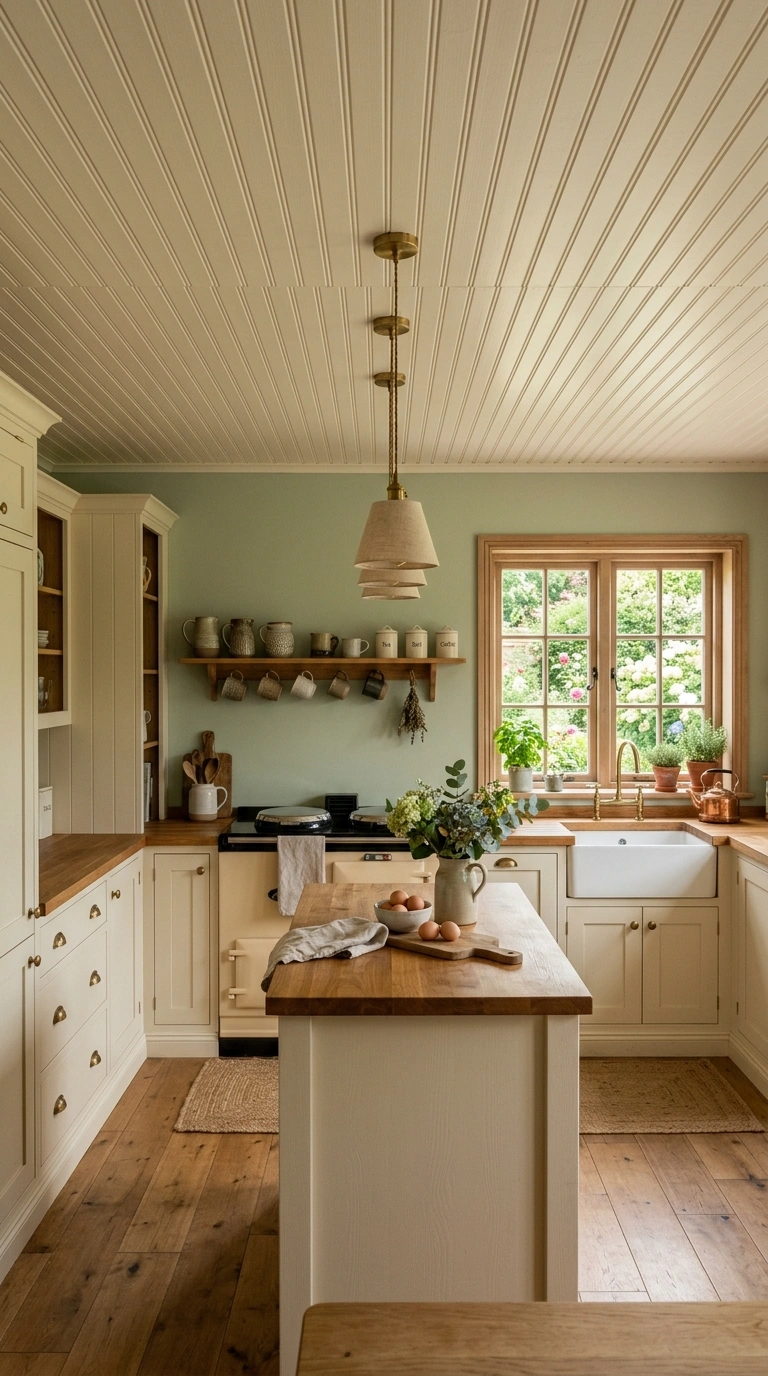
A beadboard cottage ceiling wraps your kitchen in vertical paneling that adds gentle texture and old-world charm. The look feels lived-in, warm, and slightly heritage.
Choose narrow-profile beadboard planks installed perpendicular to the longest wall. Paint everything in soft creamy white, warm bone, or pale sage green for the most cottage-feel result.
Pair with shaker cabinets in matching cream, butcher block counters, and aged brass hardware. Add an open shelf above the stove holding stoneware mugs and small ceramic canisters.
Hang two or three small linen-shaded pendant lights over the island. Choose a single pendant in matching cream above the sink for cozy task light.
Real tip: paint beadboard with a brush instead of a sprayer if you want the most authentic cottage feel. The slight brush marks add the gentle imperfection that makes the ceiling feel old and real. These small decisions make the difference between a kitchen that works and one that feels fully designed.
8. Reclaimed Wood Ceiling
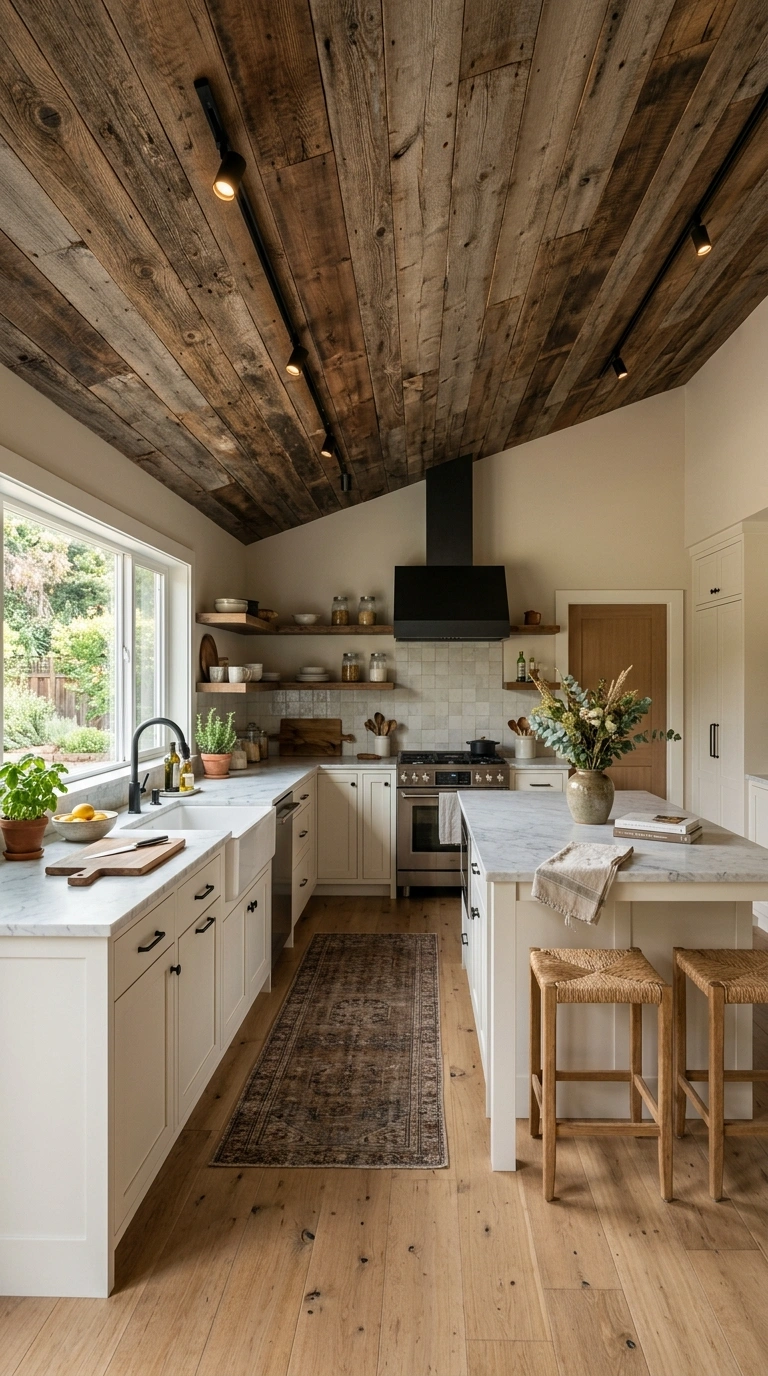
A reclaimed wood ceiling brings real history into your kitchen. Each plank carries knots, grain patterns, and patina that no new wood can replicate, adding instant warmth and character.
Source planks from local salvage yards or specialty dealers. Old barn boards, factory flooring, and weathered fence wood all work beautifully. The mismatched warmth makes even simple kitchens feel curated.
Pair with crisp white shaker cabinets, honed marble counters, and matte black hardware. The contrast between the rough wood and clean modern lines feels editorial and balanced.
Use slim track lighting in matte black mounted between the planks for task light. Skip recessed cans — drilling holes through old wood ruins the aged character you paid for.
Real tip: seal the underside of each plank with a clear matte sealer before installation. This locks in the patina and prevents wood dust from falling onto countertops below. Choices this thoughtful elevate your kitchen from ordinary to the kind of space that photographs beautifully.
9. Shiplap Ceiling
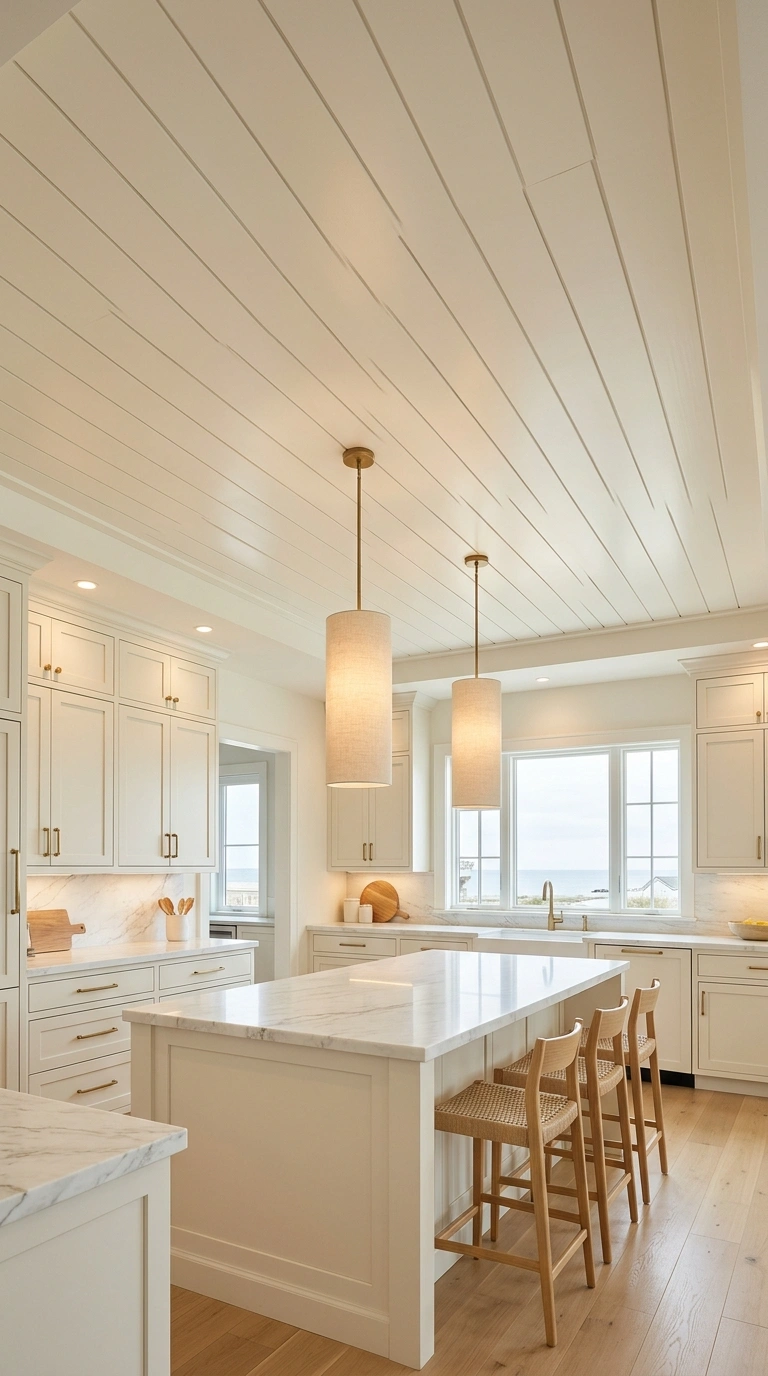
A shiplap ceiling uses overlapping horizontal planks with subtle gaps between them to create rhythm and texture. The look feels coastal, fresh, and modern-rustic at the same time.
Choose six-inch shiplap planks painted in soft creamy white, warm bone, or pale dove gray. The gaps between planks should be consistent — usually about an eighth of an inch — for the cleanest finished look.
Pair with shaker cabinets in matching paint, white marble counters, and aged brass hardware. The horizontal lines of the shiplap balance the verticals of cabinetry beautifully.
Hang two long linen-shaded pendant lights over the island. Use small puck lights along the perimeter for soft ambient glow that highlights the shiplap texture.
Real tip: install shiplap running perpendicular to the longest kitchen wall to widen the space visually. The trick is small but makes a real difference in narrow galley kitchens. The right detail here transforms the whole kitchen from a working room into the heart of your home.
10. Plaster Textured Ceiling
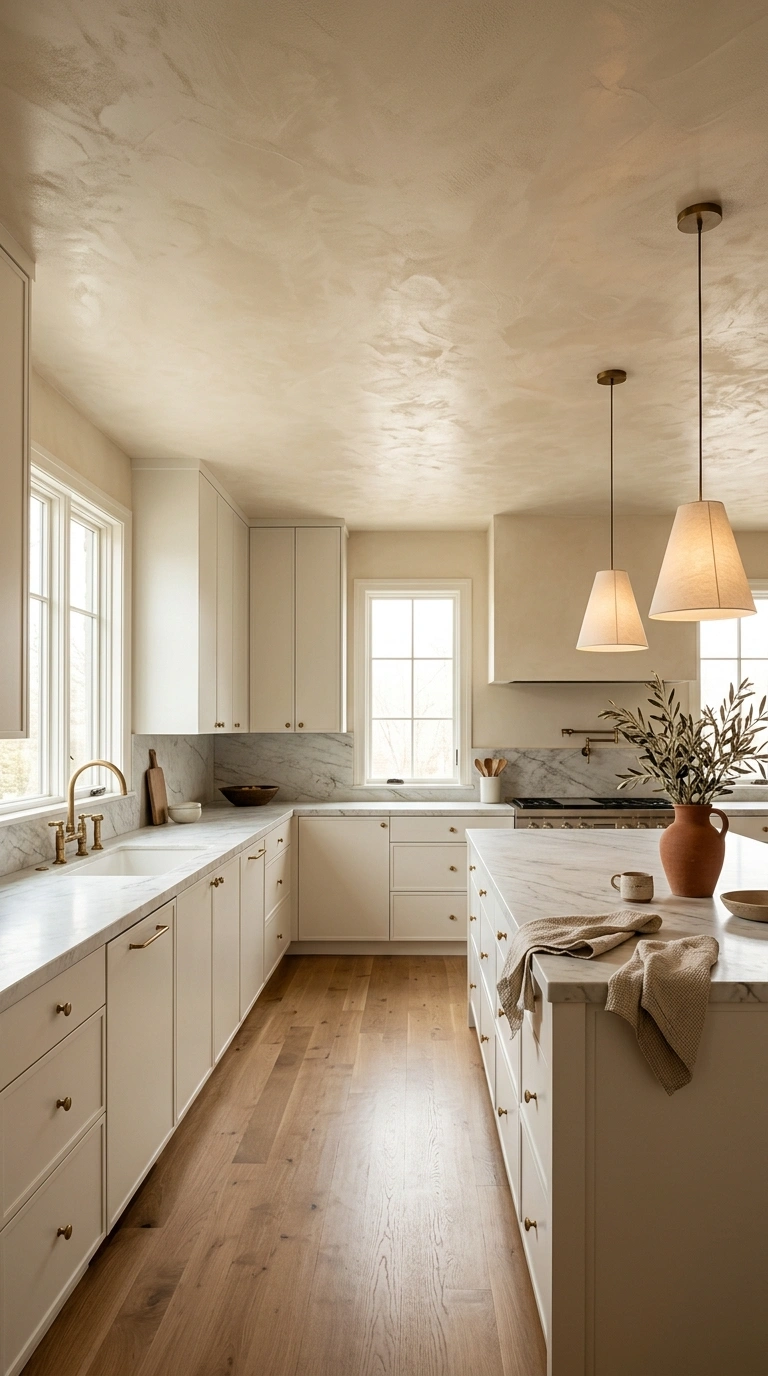
A plaster textured ceiling adds soft, organic depth to your kitchen. The hand-troweled finish catches light beautifully and creates gentle shadows that change throughout the day.
Choose a Venetian plaster finish in warm white, creamy oat, or soft greige. The texture should be subtle — just enough to feel handcrafted, not so much that it feels rustic or rough.
Pair with flat-front cabinets in soft white, honed marble counters, and aged brass fixtures. The plaster pairs especially well with European-style kitchens, modern Mediterranean looks, and contemporary rustic interiors.
Use slim modern pendant lights with paper or fabric shades. The diffused light highlights the plaster texture without creating harsh shadows.
Real tip: hire an experienced plasterer — the technique looks easy but takes years to master. A skilled hand creates the gentle movement that makes the ceiling feel alive. Small architectural choices like this lift the entire kitchen from functional to genuinely beautiful and intentional.
11. Vaulted Ceiling with Pendant Cluster
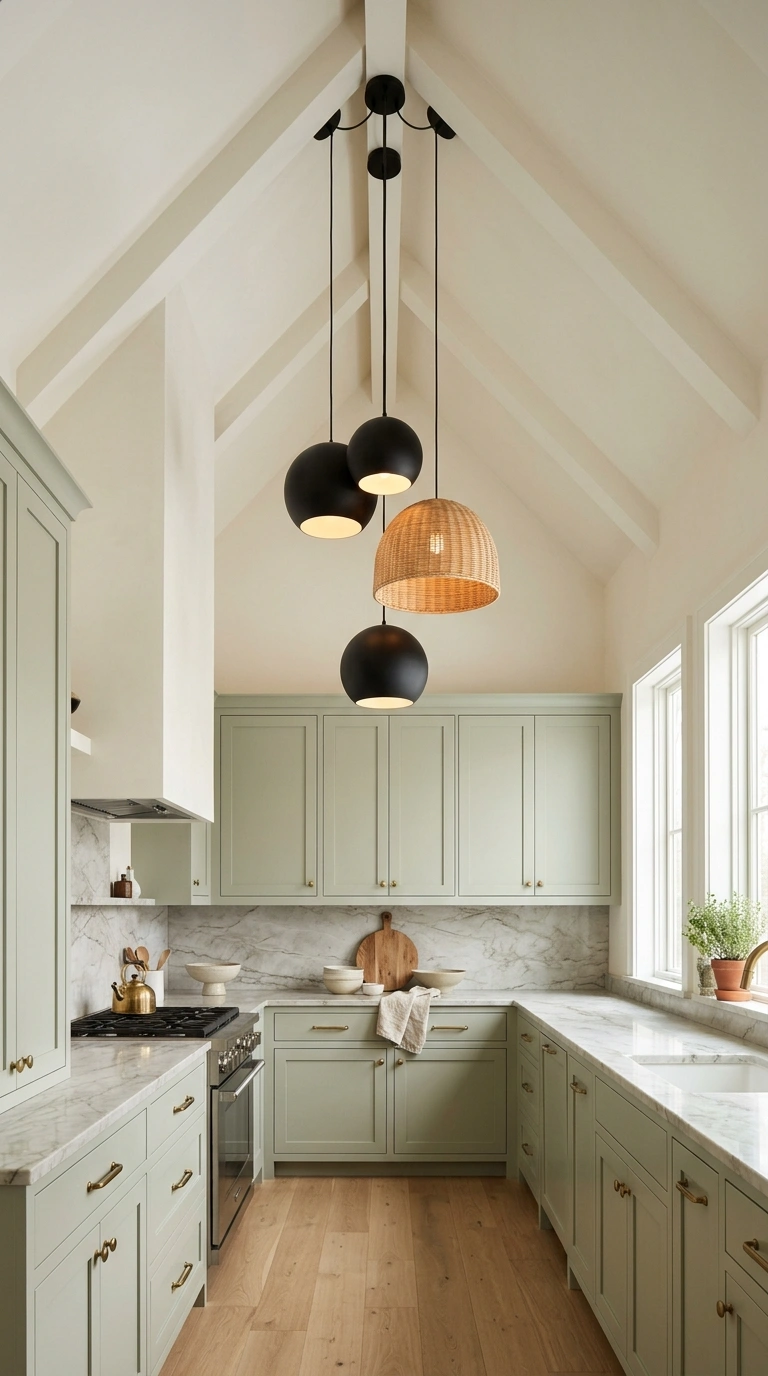
A vaulted ceiling with a pendant cluster combines architectural drama with sculptural lighting. The grouped pendants fill the high overhead space and bring task light closer to working surfaces.
Hang three to five pendants at varying heights from a central point in the vaulted ceiling. Choose pendants in mixed shapes — round globes, slim cones, or matte fabric drums — but stick to one or two materials for cohesion.
Choose matte black, aged brass, or warm woven rattan pendants depending on your kitchen style. The cluster should feel intentional, like a piece of art rather than a generic lighting solution.
Pair with creamy white walls, warm wood floors, and shaker cabinets in soft greige or sage. Skip a kitchen island chandelier — the cluster carries the lighting completely.
Real tip: hang each pendant at a different height to create visual movement. The varied drop heights feel sculptural and editorial. Details this considered turn the ceiling into a true design feature rather than an afterthought above your head.
12. Decorative Tin Tile Ceiling
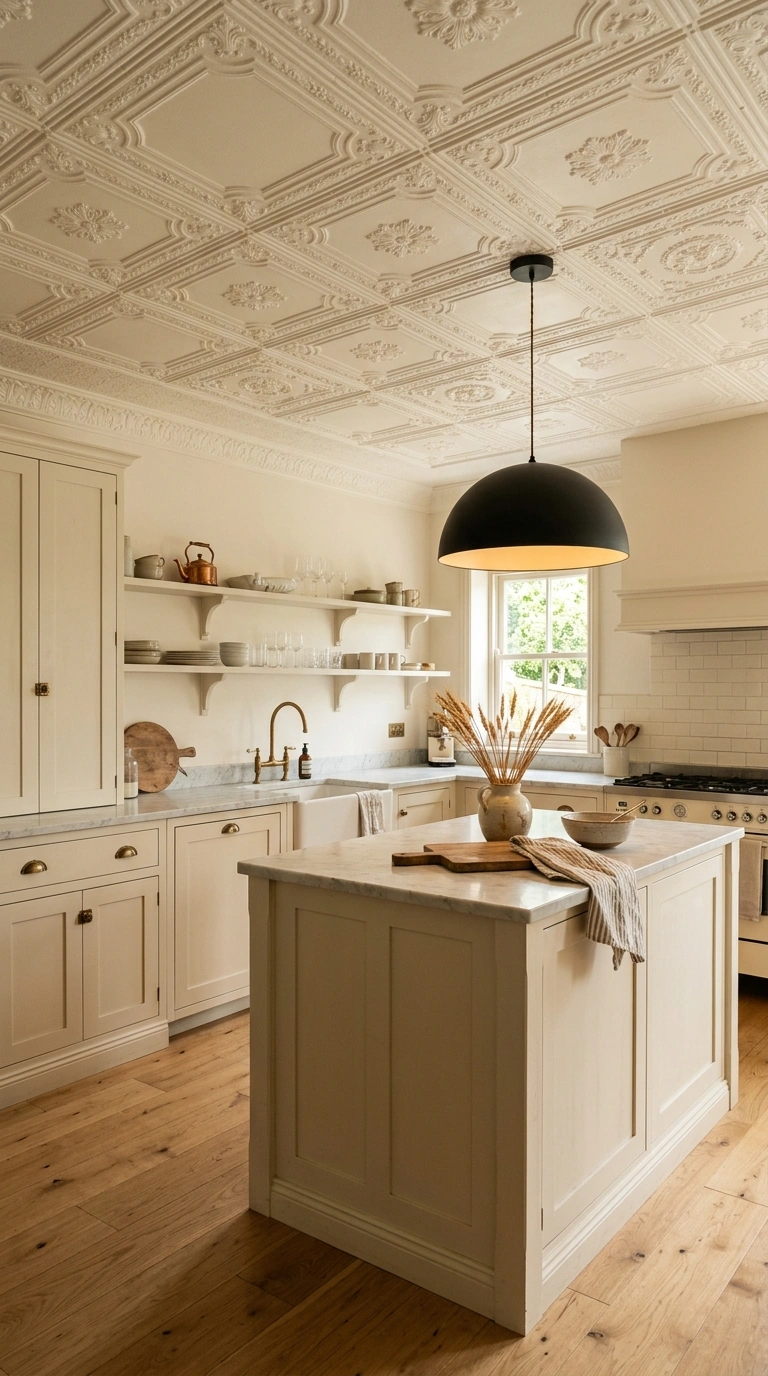
A decorative tin tile ceiling brings vintage Victorian charm into modern kitchens. The embossed metal panels add architectural detail and a slight industrial edge without feeling old-fashioned.
Choose tin tiles in a soft matte finish — painted creamy white, warm bone, or soft sage green. Skip shiny chrome or polished silver tiles, which look dated quickly. The matte finish keeps the look modern.
Pair with shaker cabinets in painted cream, marble counters, and aged brass hardware. The tin pattern adds visual interest while the rest of the kitchen stays calm and tonal.
Hang one large statement pendant in matte black or warm rattan over the island. The single fixture lets the tile pattern stay the focal point above.
Real tip: source PVC faux-tin tiles instead of real metal — they cost a fraction of the price, install easier, and look identical from the ground. These small decisions make the difference between a kitchen that works and one that feels fully designed.
13. Two-Tone Ceiling Design
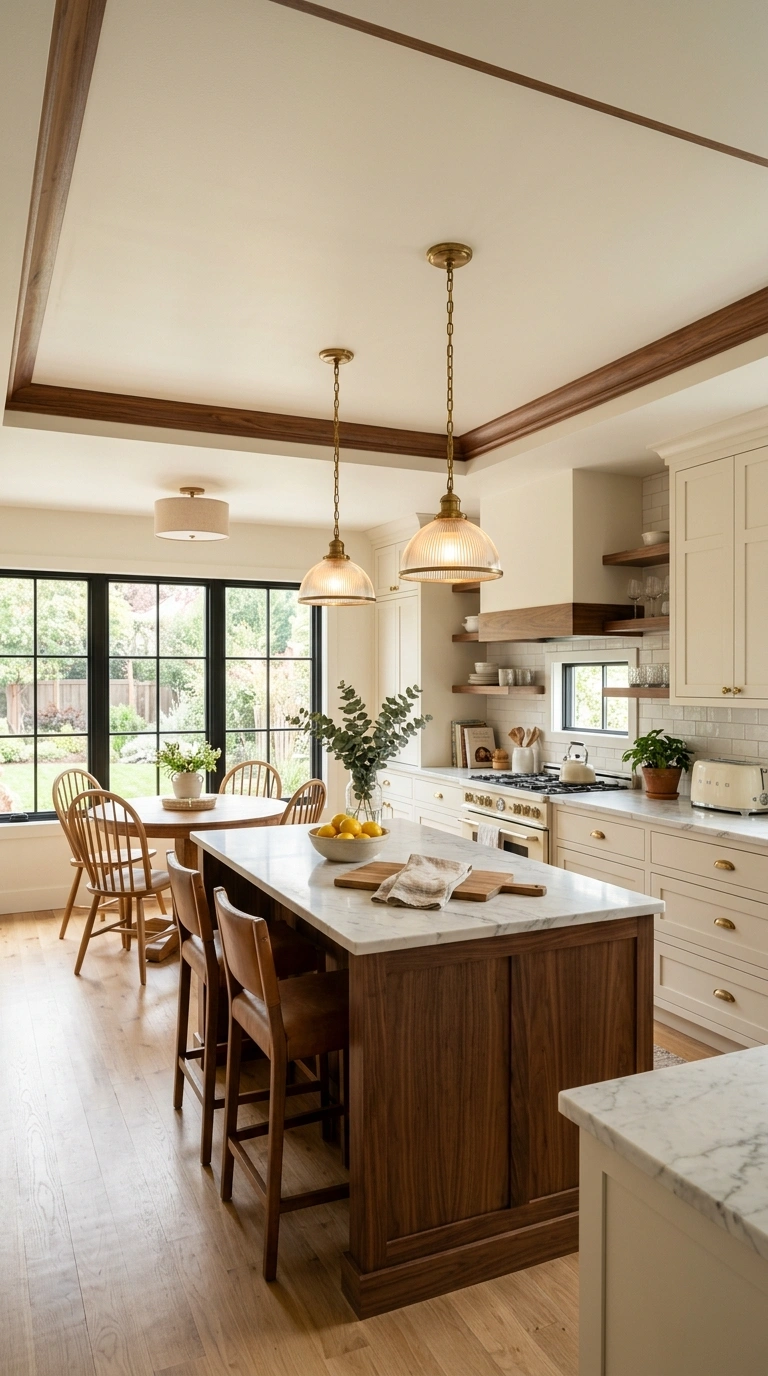
A two-tone ceiling design uses two different colors or materials to create gentle architectural division. The split adds visual interest while still feeling calm and intentional.
Try painting the ceiling soft creamy white and the perimeter trim in warm walnut wood. Or use a soft sage green ceiling with white shiplap planks. The contrast should feel soft, never jarring.
Pair with cabinets that pick up one of the ceiling tones — painted cabinets matching the lighter color or wood cabinets matching the darker. The repetition creates cohesion throughout the kitchen.
Use two complementary lighting fixtures: pendants over the island and a small chandelier or flush mount in the dining nook. The varied lighting echoes the two-tone design.
Real tip: paint the lower portion of the ceiling slightly lighter than the upper portion to make ceilings feel taller. This trick works especially well in standard eight-foot ceiling heights. Choices this thoughtful elevate your kitchen from ordinary to the kind of space that photographs beautifully.
14. Curved Arch Ceiling
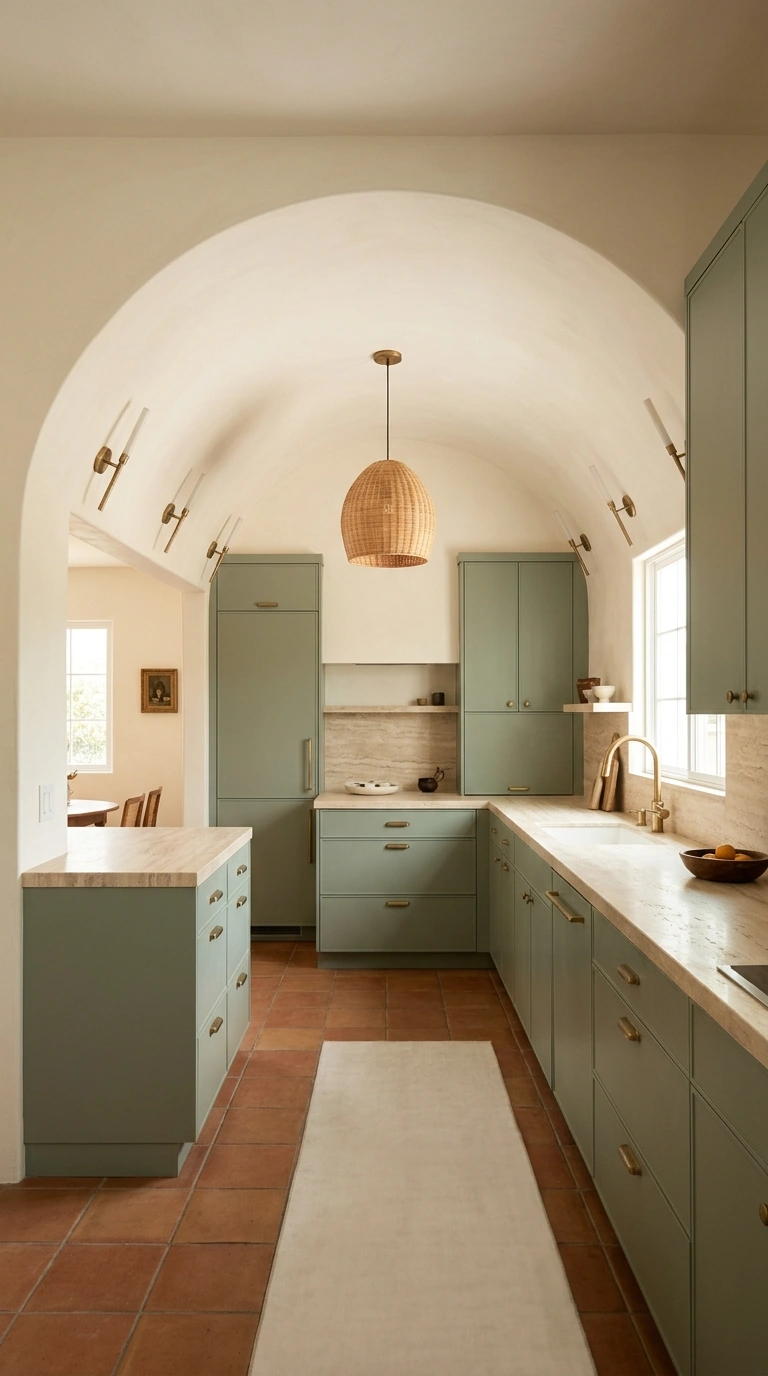
A curved arch ceiling softens the entire kitchen with gentle organic shape. The arch feels Mediterranean, romantic, and quietly architectural without going full European villa.
Frame an archway between the kitchen and an adjacent dining area or hallway. The arch should match the doorway proportions for cohesion. Plaster the arch in soft warm white for the cleanest finish.
Pair with flat-front cabinets in muted sage green, soft terracotta, or warm cream. Add natural stone counters in honed travertine or limestone. The earth tones balance the soft architectural curve.
Hang a single rattan or fabric pendant centered under the arch for warm directional light. Add slim wall sconces along the arch for evening glow.
Real tip: keep the arch radius gentle — sharp tight curves feel cartoonish, while soft wide curves feel naturally architectural and timeless. The right detail here transforms the whole kitchen from a working room into the heart of your home.
15. Wood Slat Ceiling
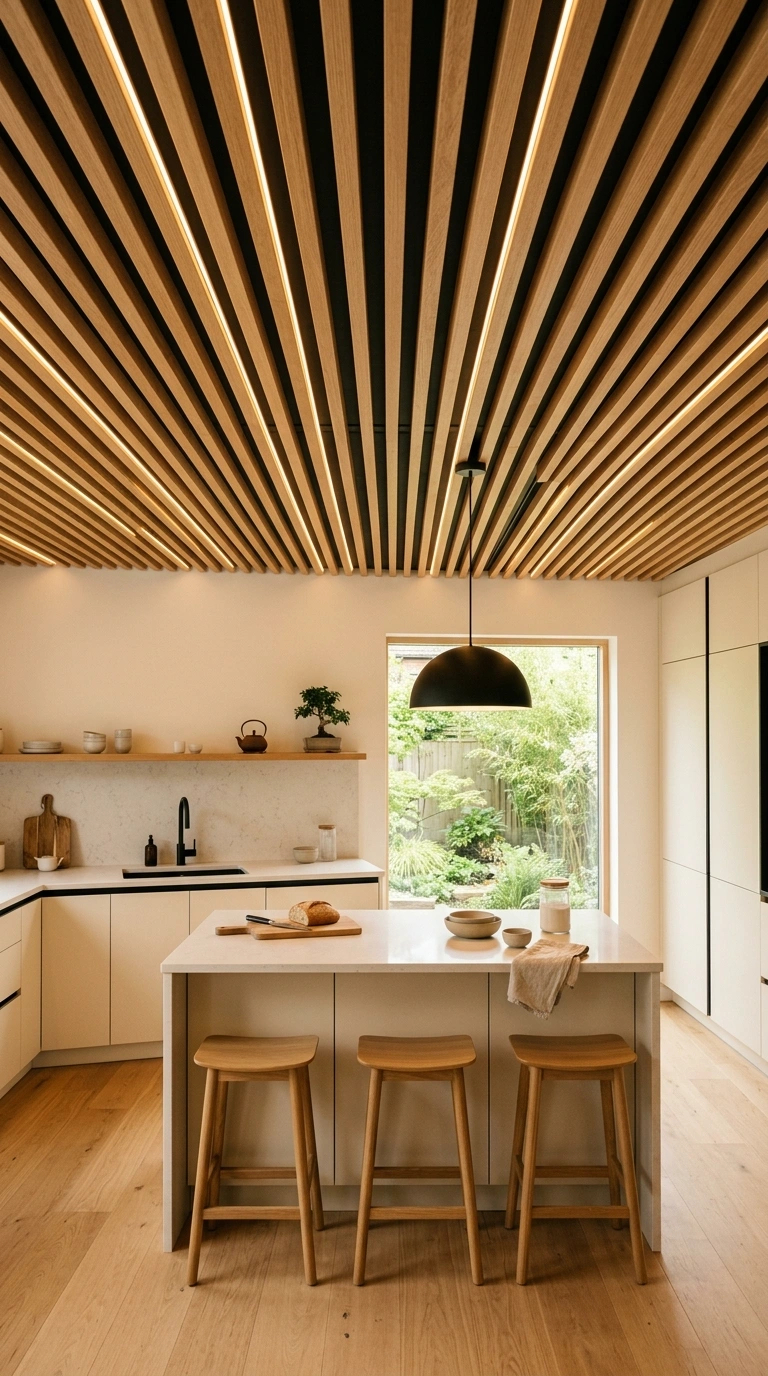
A wood slat ceiling uses narrow vertical wood strips spaced evenly apart for a modern, Japanese-inspired look. The repeated lines feel clean, architectural, and rhythmic.
Choose oak, walnut, or warm ash slats about two inches wide with one-inch gaps between them. Mount on a slim black or matching wood backing so the gaps look intentional, not accidental.
Pair with handleless flat-front cabinets in soft cream or warm white, honed quartz counters, and matte black hardware. The clean cabinet lines complement the rhythmic ceiling.
Hang a single statement pendant in matte black or aged brass over the island. The slat ceiling carries the visual texture, so lighting can stay simple.
Real tip: install LED strip lights inside the gaps for a luxe glow at night. The hidden lighting transforms the ceiling into a soft, glowing architectural feature after sunset. Small architectural choices like this lift the entire kitchen from functional to genuinely beautiful and intentional.
16. Cathedral Ceiling
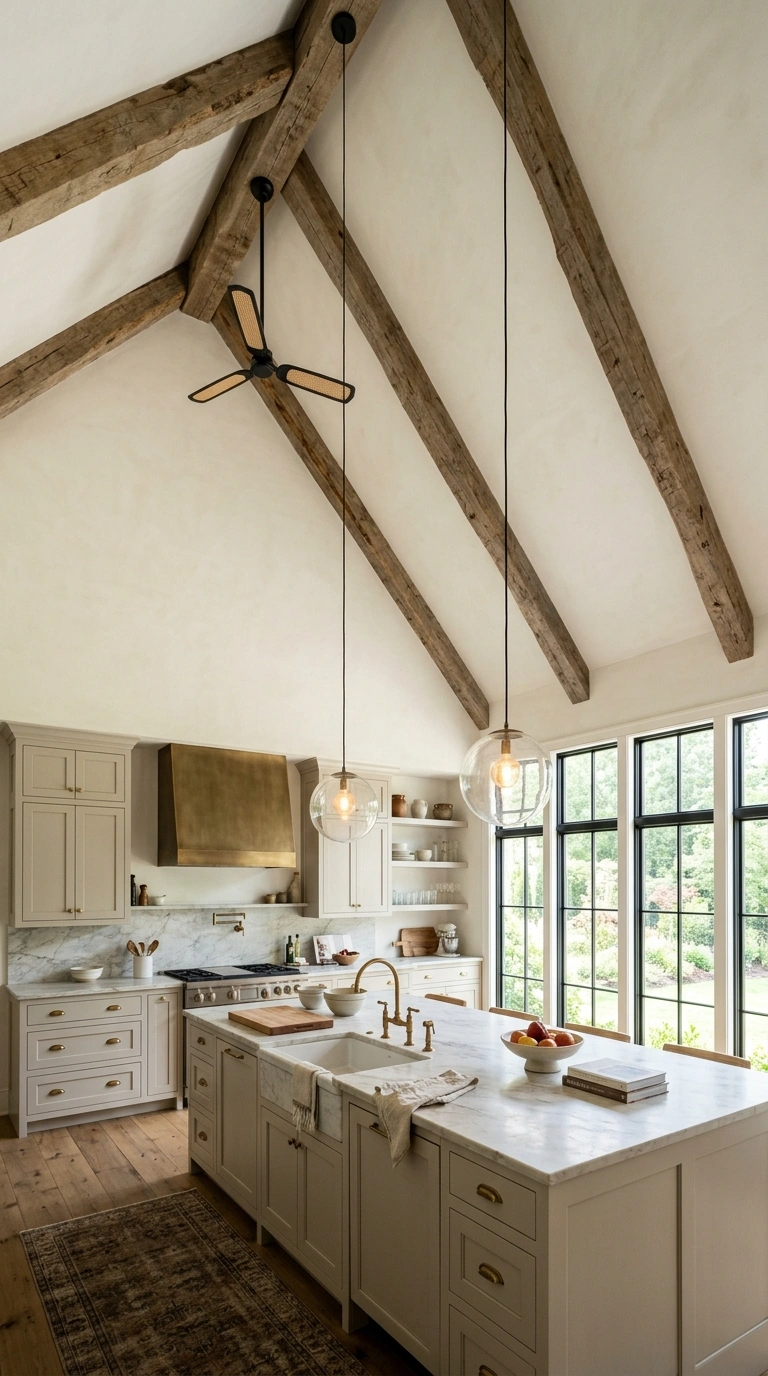
A cathedral ceiling rises to a dramatic peak in the center, creating soaring volume and a sense of grandeur. The look works especially well in farmhouse, transitional, and Mediterranean kitchens.
Plaster or paint the cathedral ceiling in creamy warm white for the airiest result. Add exposed wood beams along the slope in aged oak or walnut for warmth and architectural rhythm. Three to five beams work best.
Pair with shaker or flat-front cabinets, marble or quartz counters, and aged brass hardware. The cabinets should feel grounded and substantial to balance the soaring ceiling.
Hang two long pendants on extra-long cords from the peak above the island. Choose round globe pendants or matte fabric drums for soft, sculptural lighting.
Real tip: install a slim ceiling fan with downrod near the peak to circulate air during summer cooking. The fan keeps the soaring space comfortable without ruining the architectural feel. Details this considered turn the ceiling into a true design feature rather than an afterthought above your head.
17. Painted Sage Green Ceiling
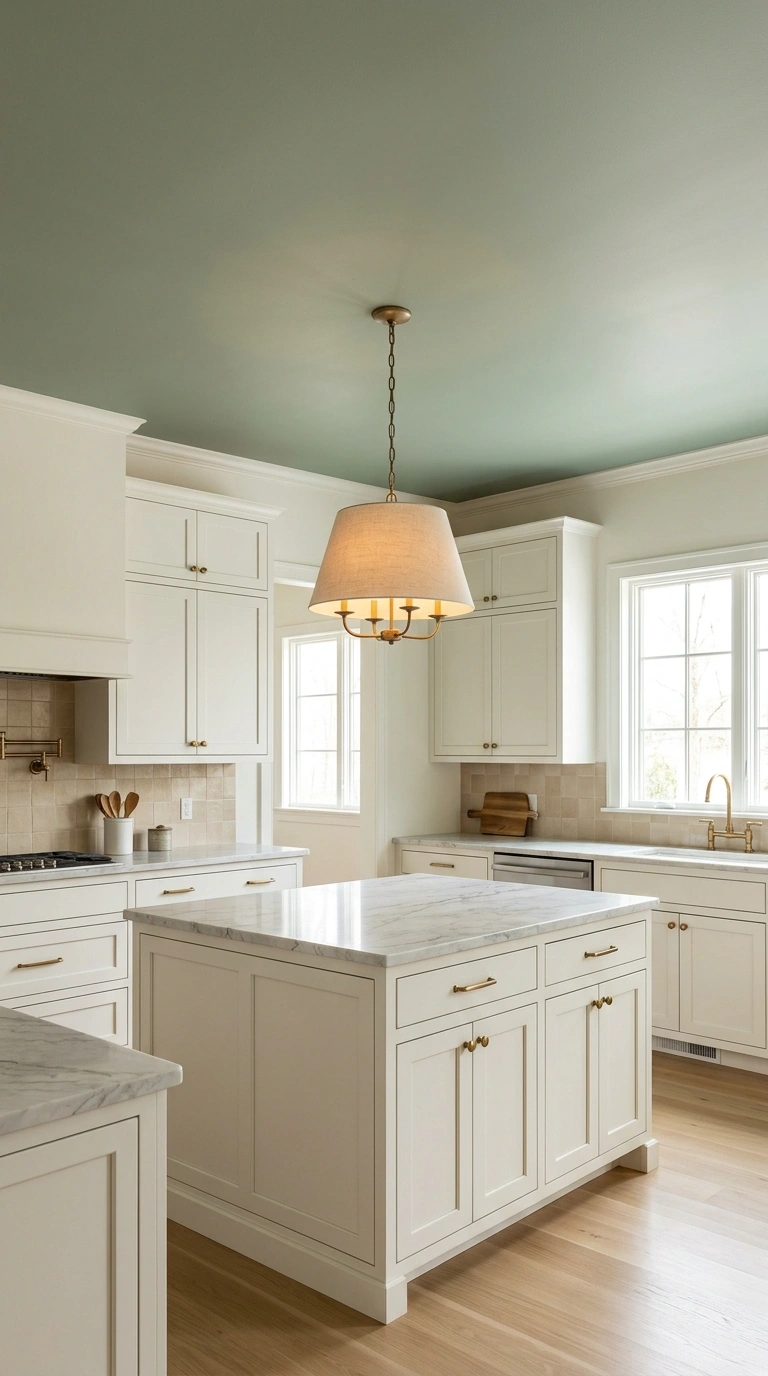
A painted sage green ceiling brings unexpected color overhead while staying soft and livable. The muted green feels organic, calm, and vintage-modern at the same time.
Choose a soft, dusty sage like Farrow & Ball Mizzle, Card Room Green, or Sherwin-Williams Sea Salt. The shade should feel barely there, almost neutral. Skip bright or saturated greens — they feel dated quickly.
Pair with creamy white walls, shaker cabinets in matching warm white, and aged brass hardware. The green ceiling adds gentle drama without overwhelming the rest of the kitchen.
Hang a single linen-shaded pendant or a small chandelier over the island. The fixture should feel quiet and complementary, never competing with the ceiling color.
Real tip: paint a small swatch on poster board and tape it to the ceiling for a few days. Sage greens shift dramatically with light, and you want one that flatters every time of day. These small decisions make the difference between a kitchen that works and one that feels fully designed.
18. Wallpapered Ceiling
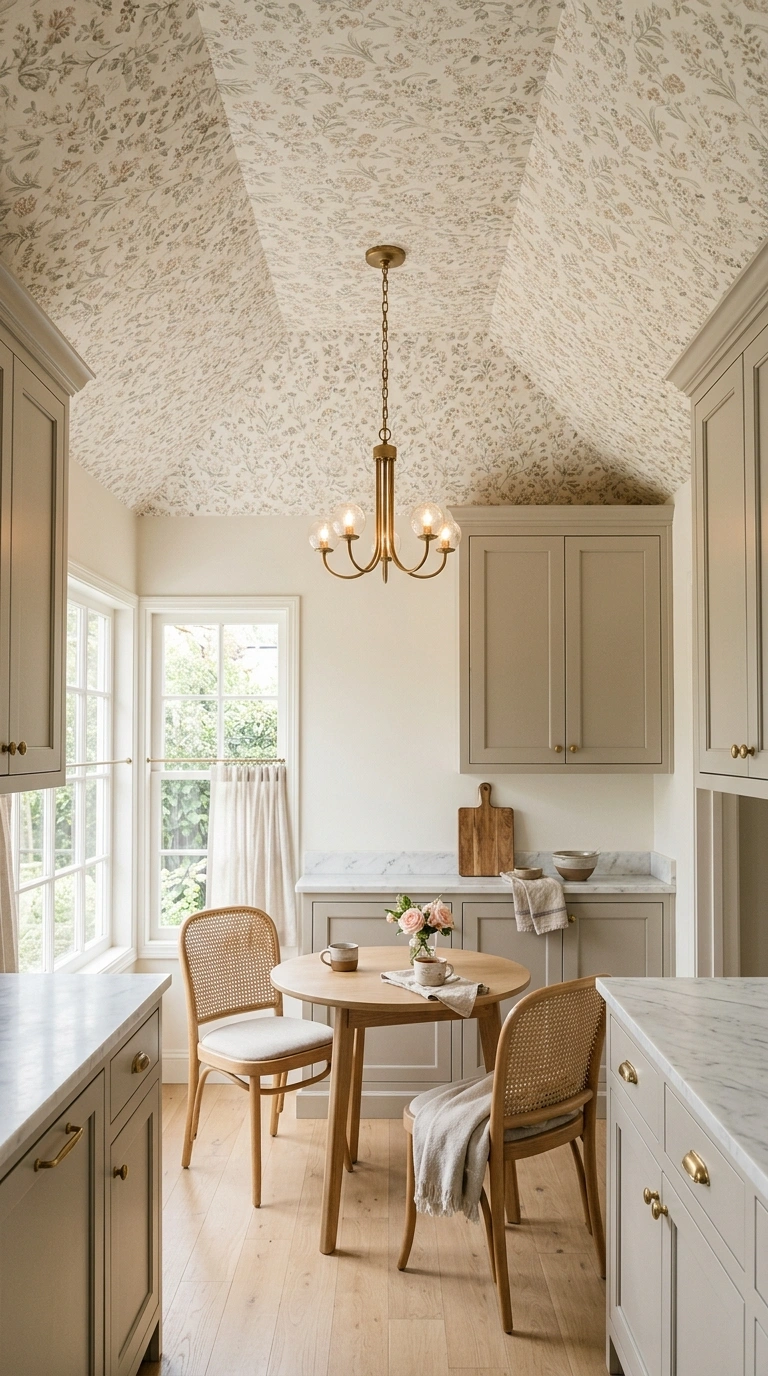
A wallpapered ceiling adds pattern, color, and unexpected personality overhead. The trick works especially well in small kitchens and breakfast nooks where the ceiling can become the visual star.
Choose a small-scale pattern in muted tones — soft botanical prints, fine geometric designs, or delicate florals in cream, soft sage, and dusty blush. Skip bold or saturated patterns that overwhelm the room.
Pair with painted cabinets in a calm neutral matching the wallpaper background, marble counters, and simple aged brass hardware. Keep walls in solid creamy white so only the ceiling carries the pattern.
Hang one statement pendant or chandelier centered in the room. Choose a fixture in matte brass or fabric to complement the wallpaper without competing with it.
Real tip: hire a professional installer for ceiling wallpaper — the application is much trickier than walls, and a poor job shows immediately. The investment is absolutely worth it. Choices this thoughtful elevate your kitchen from ordinary to the kind of space that photographs beautifully.
19. Stained Wood Plank Ceiling
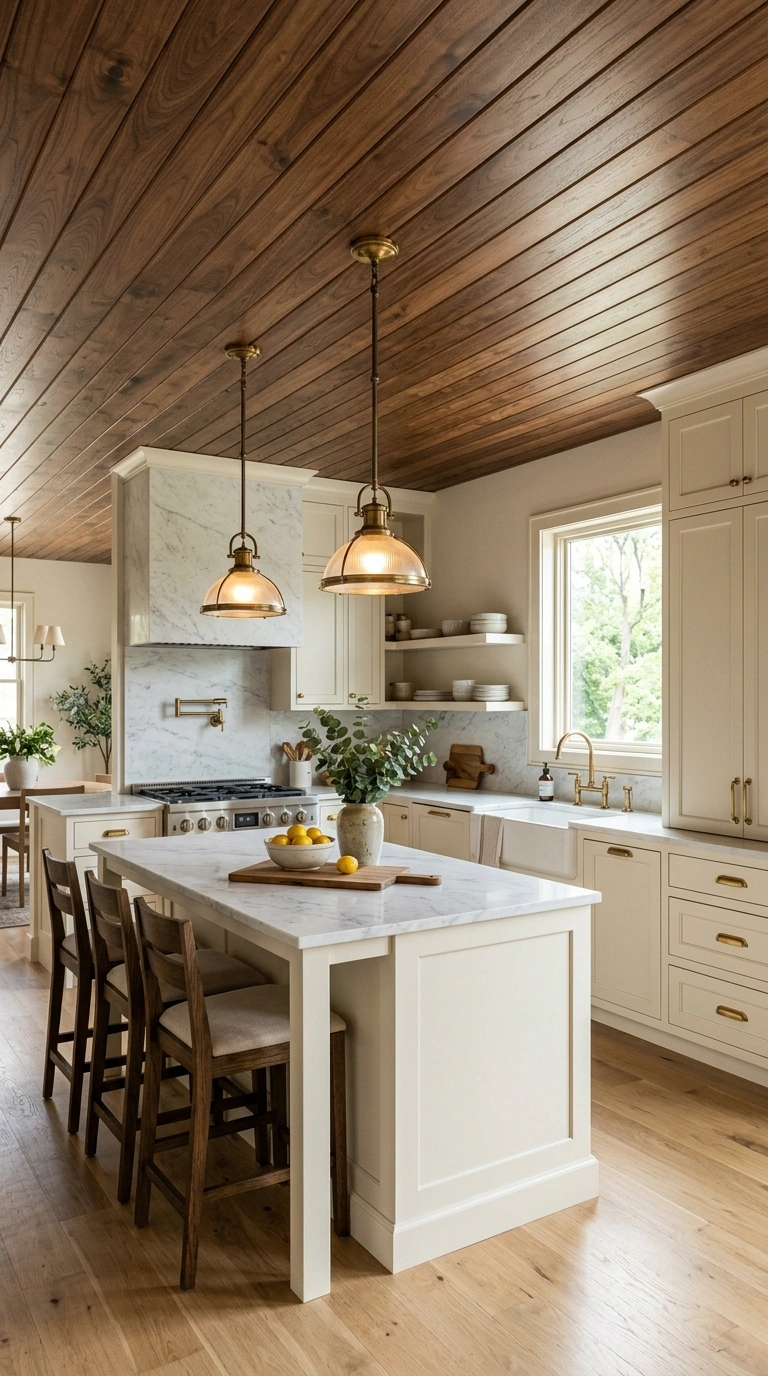
A stained wood plank ceiling brings rich warmth and character without the cost of reclaimed wood. The stain emphasizes the natural grain while keeping the look intentionally crafted and modern.
Choose six-inch pine, ash, or birch planks. Stain in warm walnut, honey oak, or rich cherry depending on your kitchen palette. Apply two coats for depth and seal with a matte polyurethane to prevent yellowing over time.
Pair with creamy white shaker cabinets, marble or honed quartz counters, and aged brass hardware. The warm stained ceiling balances cool stone surfaces beautifully.
Hang two matching pendants over the island in matte black or warm aged brass. Skip recessed cans — they puncture the warm wood plane and feel disruptive.
Real tip: test stain on a sample plank first and let it cure for forty-eight hours. The color shifts dramatically as the stain sets, and you want to see the final tone before committing.
20. Faux Beam Ceiling
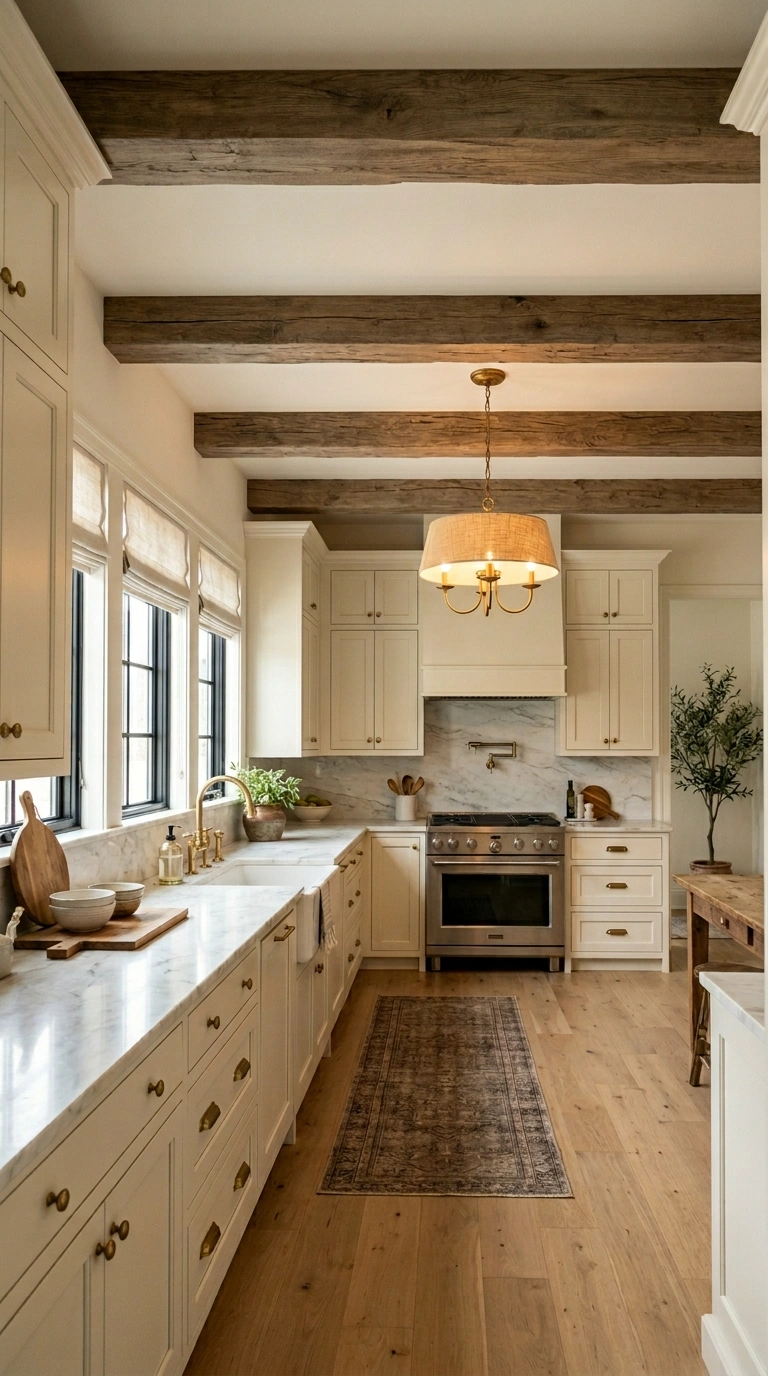
A faux beam ceiling delivers the look of solid wood beams without the structural weight or cost. Modern polyurethane and lightweight wood-veneer beams look completely authentic from the ground.
Choose three or four faux beams running parallel across the ceiling. Pick aged oak, weathered walnut, or whitewashed pine finishes depending on your style. Install with concealed mounting strips for a clean finished look.
Pair with shaker cabinets in painted cream or warm greige, marble counters, and aged brass hardware. The beams add architectural warmth that grounds the entire kitchen.
Hang a single farmhouse pendant or a sculptural chandelier from the center beam. The fixture should feel substantial enough to hold its own against the strong horizontal lines.
Real tip: choose hollow beams that allow you to run electrical wiring inside. The hidden wiring lets you mount pendants directly to the beams without visible cords or chase pipes. The right detail here transforms the whole kitchen from a working room into the heart of your home.
21. Industrial Concrete Ceiling
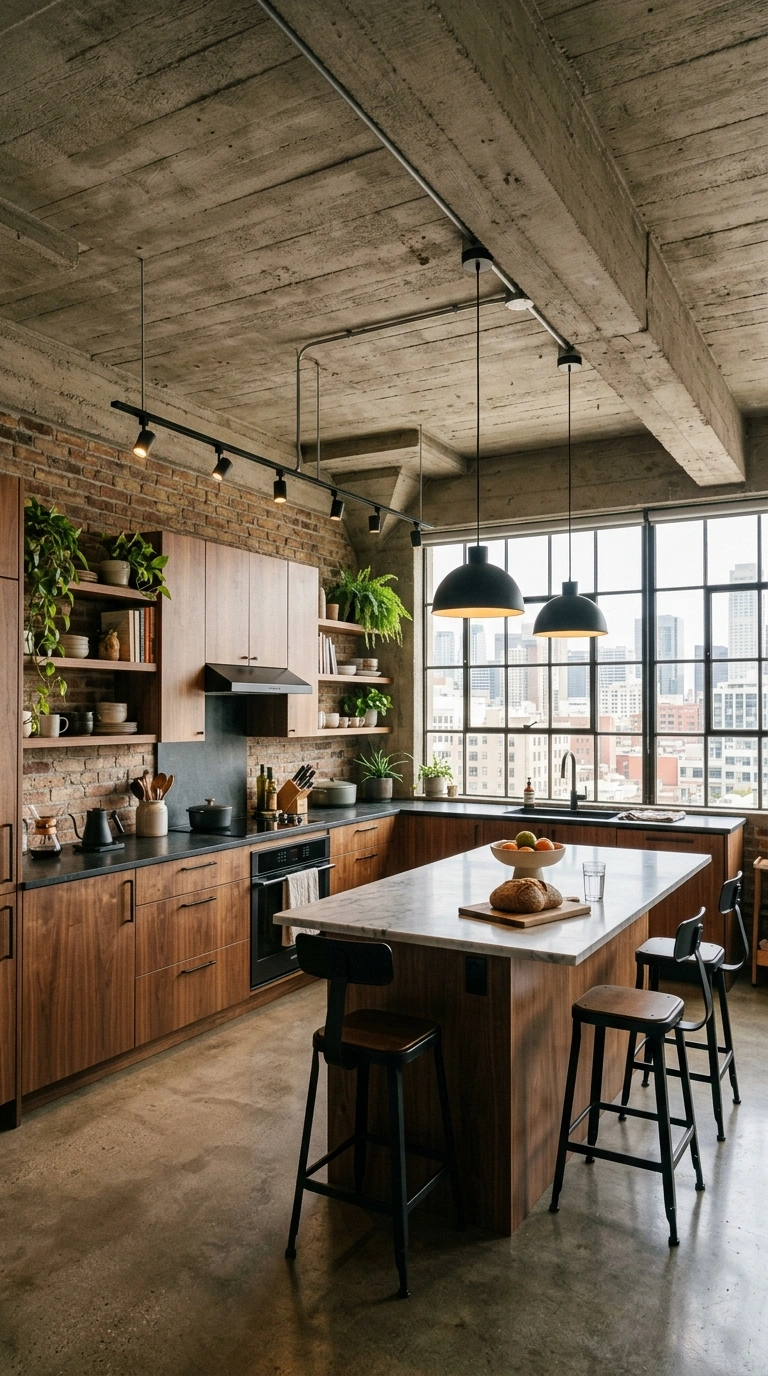
An industrial concrete ceiling brings raw, urban character to modern kitchens. The exposed concrete reads as architectural and slightly edgy, especially in lofts and converted spaces.
Leave existing concrete exposed if you have it, or apply a thin polished concrete finish over drywall for the look. Choose a soft warm gray tone — never anything too cold or blue. Seal with a matte clear sealer to prevent dust.
Pair with flat-front cabinets in warm walnut, soft sage green, or matte black. Add honed marble or warm quartz counters for softness. The combination feels grounded, modern, and intentional.
Hang slim track lighting or matte black industrial pendants. Skip warm wood beams — they fight the cool concrete. Instead, layer with warm 2700K bulbs for cozy contrast.
Real tip: add cork or felt acoustic panels to one nearby wall — concrete bounces sound harshly, and the soft material absorbs echo without ruining the industrial feel.
22. Bohemian Bamboo Ceiling
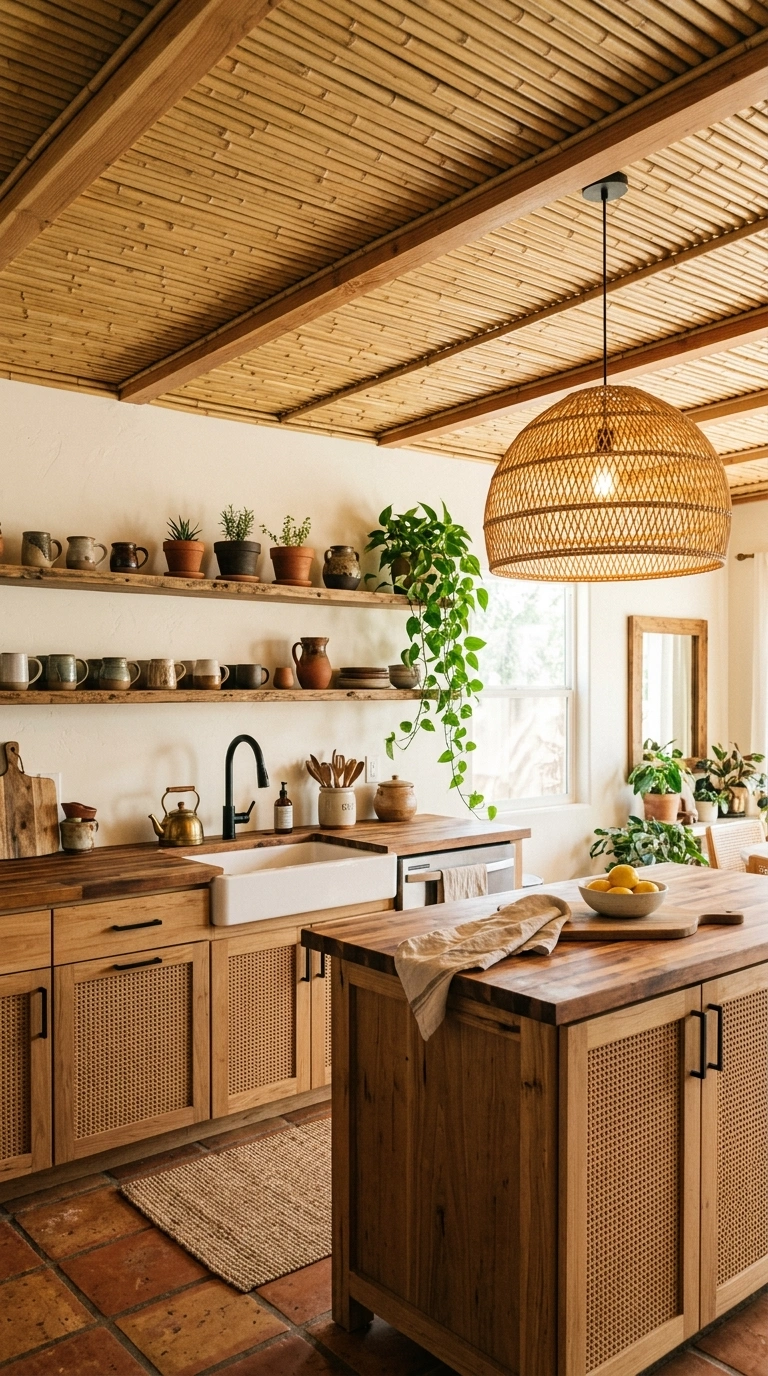
A bohemian bamboo ceiling brings tropical warmth and natural texture to your kitchen. The woven bamboo creates organic shadows and a relaxed, slightly islander vibe.
Install bamboo poles or panels across the ceiling, either tightly woven or with small gaps for airflow. Choose natural blonde bamboo for the warmest look or stained bamboo in honey oak for richer depth.
Pair with rattan-front cabinets, butcher block counters, and matte black or aged brass hardware. Add open shelves with stoneware mugs and small clay pots for collected, lived-in feel.
Hang a large rattan dome pendant over the island for warm filtered light. The bamboo ceiling and rattan pendant create natural, layered texture above the cooking zone.
Real tip: seal bamboo with marine-grade sealer in kitchens — the kitchen humidity from cooking can warp untreated bamboo over time, and the sealer prevents long-term damage. Small architectural choices like this lift the entire kitchen from functional to genuinely beautiful and intentional.
23. Modern Minimal Flat Ceiling
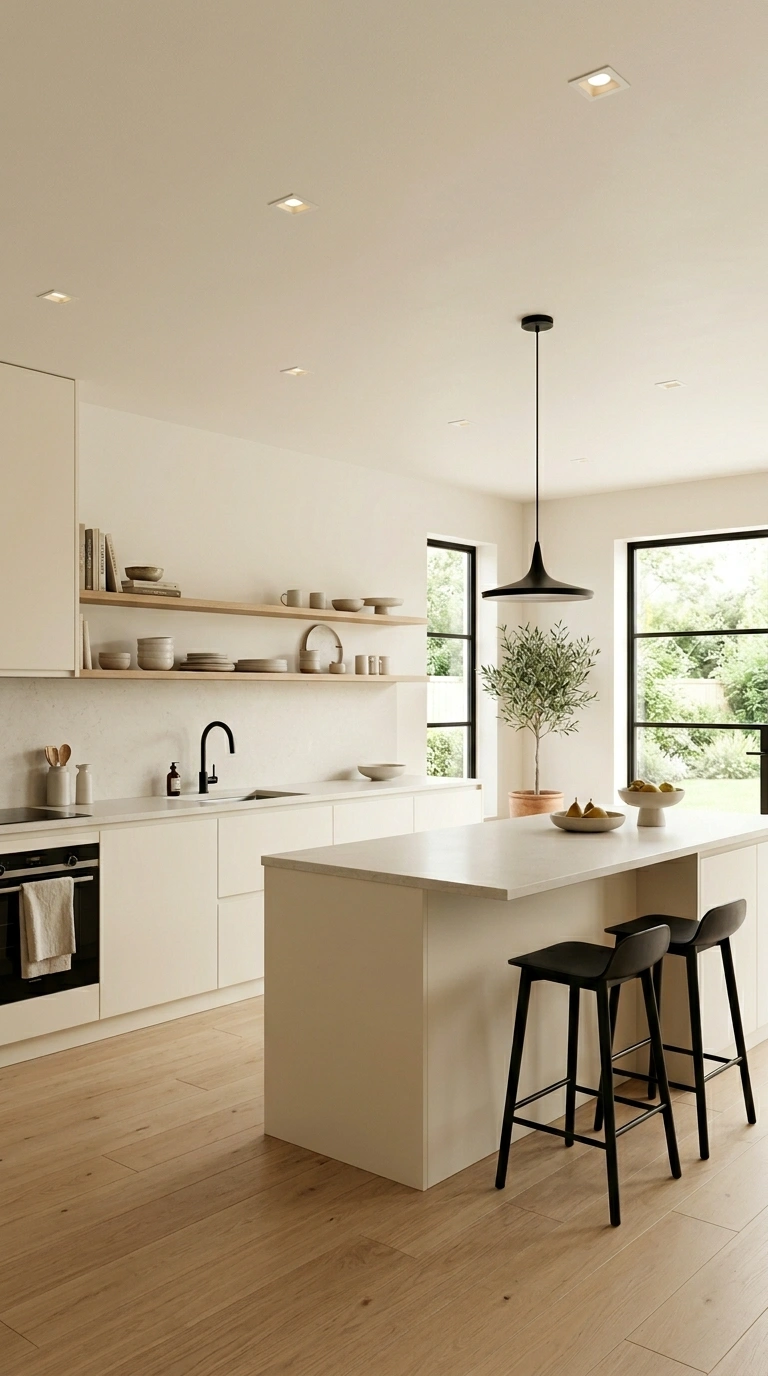
A modern minimal flat ceiling keeps things clean, simple, and intentionally quiet. The smooth painted surface lets cabinets, counters, and lighting take center stage without competing visual elements.
Apply a Level 5 drywall finish for the smoothest possible surface — no texture, no orange peel, no bumps. Paint in soft warm white or pure ivory in a flat or matte finish. Skip anything glossy.
Pair with handleless flat-front cabinets in warm cream or muted greige, honed quartz counters, and matte black or aged brass hardware. The kitchen feels gallery-clean and fully composed.
Use recessed slim LED downlights spaced evenly throughout the ceiling. Add one statement pendant over the island for warmth and visual anchor. Use 2700K bulbs throughout.
Real tip: invest in a Level 5 drywall finish from the start. Lower finish levels show every imperfection in raking light, and corrections after painting cost three times as much. Details this considered turn the ceiling into a true design feature rather than an afterthought above your head.
24. Skylight Tunnel Ceiling
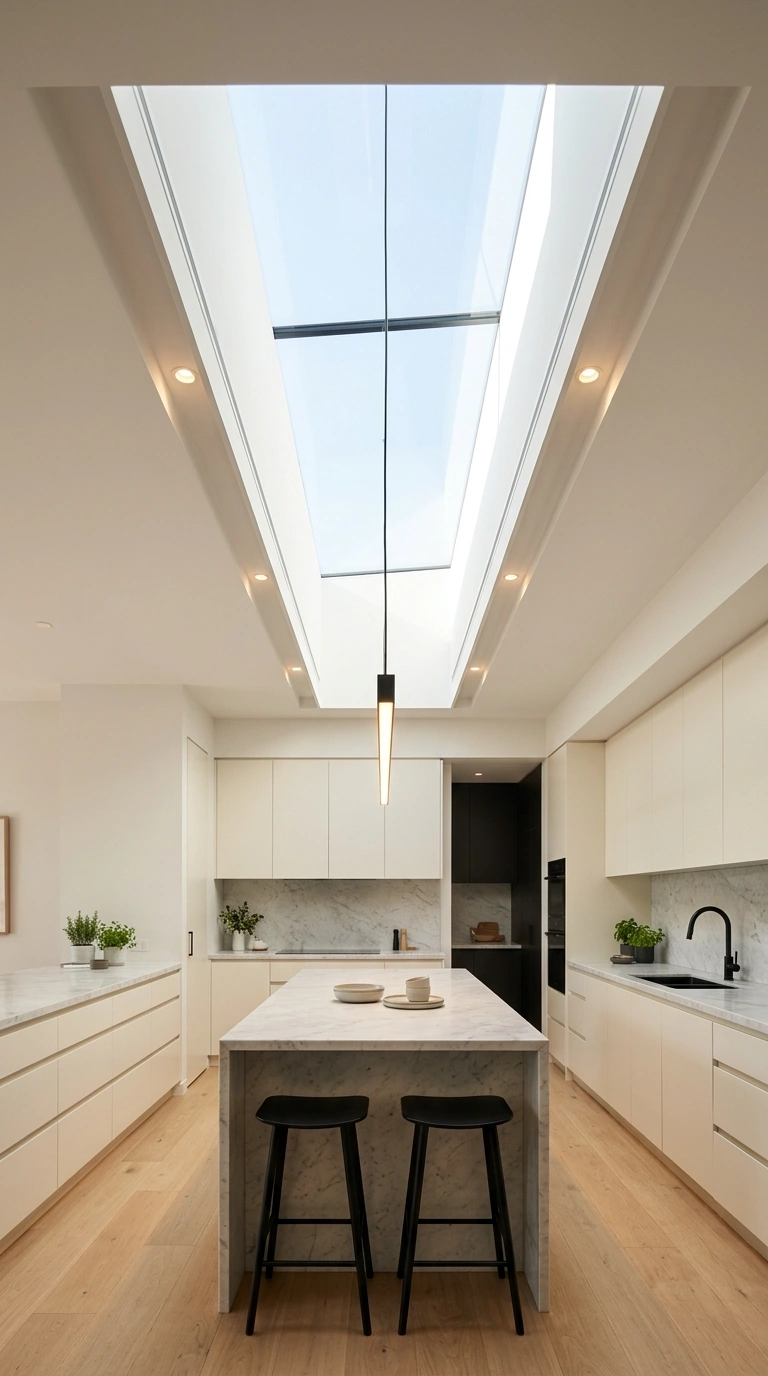
A skylight tunnel ceiling uses a long rectangular skylight tunnel to flood the kitchen with natural light from above. The architectural cut feels dramatic and modern, almost like a slice of sky cut into the ceiling.
Frame the skylight tunnel with clean white drywall or warm wood paneling depending on your kitchen style. The tunnel should run along the longest axis of the kitchen, usually above the island or main work zone.
Pair with handleless cabinets in soft cream, honed marble counters, and matte black hardware for a clean modern feel. The natural light becomes the lighting design element during the day.
Add slim recessed downlights inside the tunnel for nighttime use. Use warm 2700K bulbs to maintain cozy mood after sunset. Hang one matching pendant for additional task light.
Real tip: choose skylight glass with a low-E coating to reduce heat gain in summer. The coating keeps the kitchen comfortable without sacrificing the dramatic architectural light.
Final Thoughts
From rustic exposed beams to sleek skylight tunnels, kitchen ceiling designs offer endless ways to add warmth, height, and architectural character to the heart of your home. The right ceiling pulls everything else together and makes the kitchen feel intentional and complete.
Pick the style that fits your kitchen layout, then layer it with warm 2700K lighting, complementary materials, and thoughtful fixtures. Your kitchen will feel taller, warmer, and fully designed.
Try one of these ceiling ideas in your next remodel and save your favorites to Pinterest for future inspiration.
FAQs
Q1: What is the most popular kitchen ceiling design in 2026?
A1: Wood plank and exposed beam ceilings remain the most popular kitchen ceiling designs in 2026. Both add warmth, texture, and architectural character. Painted statement colors like soft sage green and warm charcoal black are also rising fast in popularity.
Q2: How can I make my kitchen ceiling look higher?
A2: Choose a tray ceiling with hidden uplighting, paint the ceiling slightly lighter than the walls, or install vertical wood slats. Cathedral and vaulted ceilings naturally feel taller. Avoid heavy textures or dark colors in low-ceiling kitchens.
Q3: Are wood ceilings practical in kitchens?
A3: Yes, wood ceilings work beautifully in kitchens when properly sealed. Apply a clear matte sealer to protect against moisture, steam, and grease. Choose hardwoods like oak or walnut, and install a strong range hood to keep cooking residue off the ceiling.
Q4: Should kitchen ceilings be the same color as walls?
A4: Not necessarily. White ceilings on slightly darker walls create classic balance, while colored ceilings on white walls add modern drama. Match the ceiling and walls when you want a calm, monochrome feel, and contrast them when you want architectural focus.
Q5: How much does a kitchen ceiling makeover cost?
A5: Kitchen ceiling makeovers range from $300 for a simple paint refresh to $15,000 or more for custom coffered ceilings or vaulted reframings. Wood plank and faux beam ceilings typically cost $2,000 to $6,000 installed, depending on materials and kitchen size.