21 Japandi Bedroom Ideas for a Calm Minimal Home
Key Takeaways
- Japandi bedroom ideas combine Japanese simplicity with Scandinavian warmth for a calm and cozy space.
- Soft neutral colors like beige, ivory, taupe, and muted gray create a peaceful atmosphere.
- Natural materials such as wood, linen, stone, bamboo, and woven textures make the room feel warm and organic.
- Low platform beds help bedrooms feel more open, grounded, and visually relaxing.
- Layering textures works better than using bold patterns in Japandi interiors.
- Warm lighting from paper lamps, fabric shades, and soft LEDs creates a cozy mood.
- Minimal furniture with clean lines keeps the bedroom functional and clutter-free.
- Floating furniture and hidden storage help smaller bedrooms feel airy and organized.
- Handmade décor and natural greenery add personality without overwhelming the space.
- Mixing light and dark wood tones creates depth while maintaining a balanced look.
- Japandi design focuses on intentional living, comfort, and timeless style rather than trends.
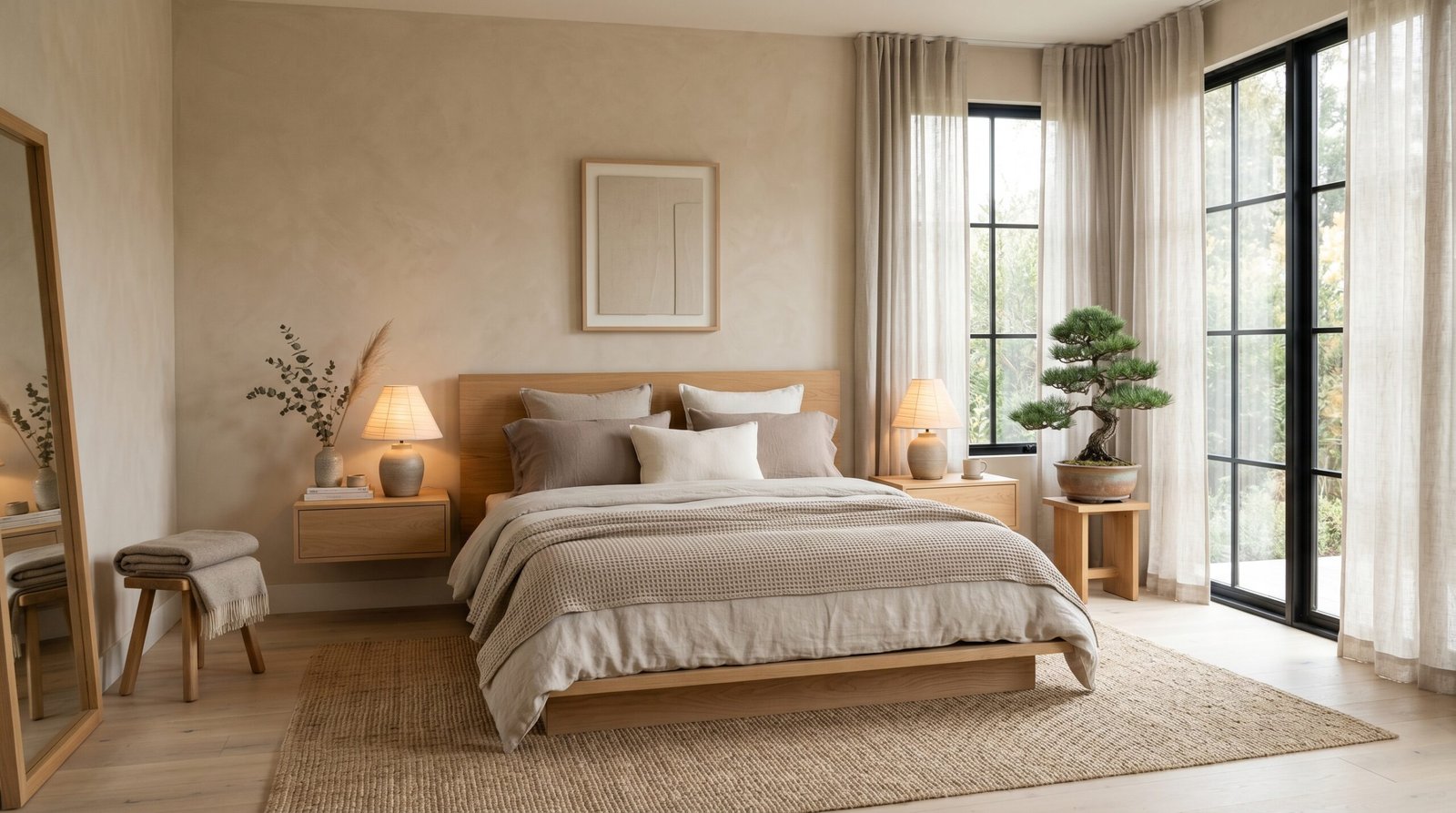
A calm bedroom can change the way your whole home feels. If your space feels busy, crowded, or stressful, Japandi style offers a simple solution that still looks warm and beautiful. Japandi bedroom ideas combine the clean lines of Japanese interiors with the cozy comfort of Scandinavian design. The result feels peaceful, practical, and timeless.
This style focuses on soft colors, natural textures, warm wood tones, and uncluttered layouts. Every piece has a purpose, yet the room never feels cold or empty. Instead, it feels relaxed, airy, and easy to live in every day.
In this guide, you’ll discover inspiring ways to create a bedroom that feels calm without losing personality. From low platform beds to textured linen layers and soft lighting tricks, these ideas will help you design a space that feels restful and visually balanced. Whether you love earthy neutrals or darker moody tones, these Japandi bedroom ideas can work in small apartments, modern homes, or cozy guest rooms.
1. Use Warm Beige and Soft Wood Tones
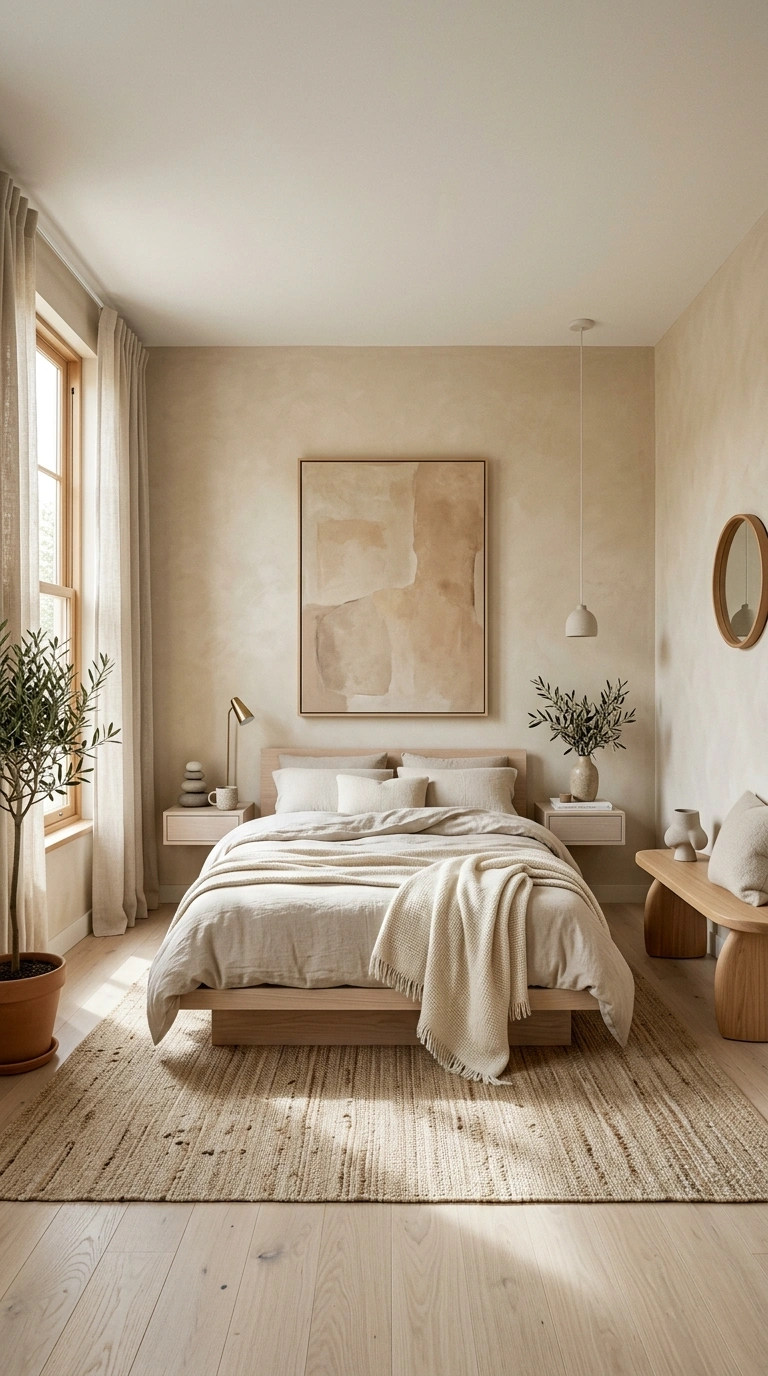
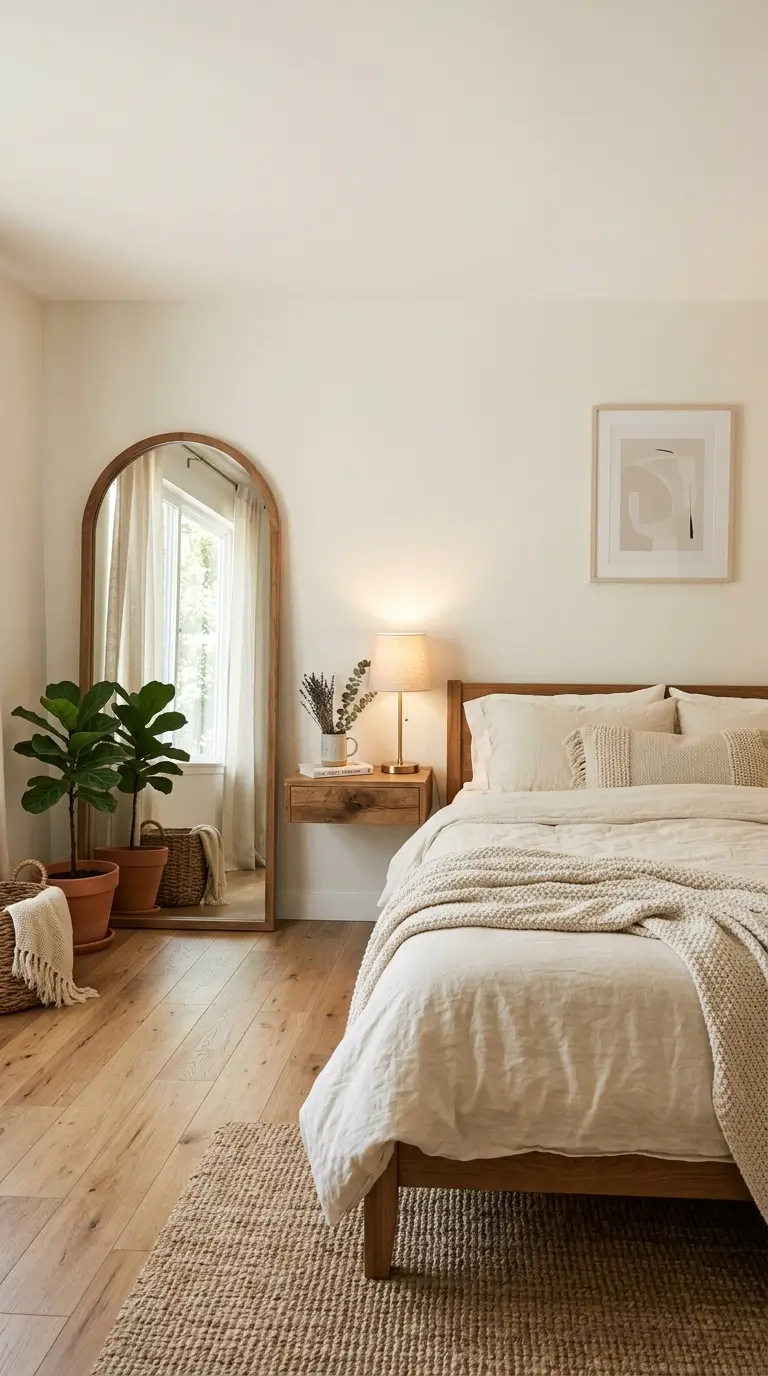
The easiest way to create a Japandi look is by starting with a soft, earthy color palette. Warm beige walls paired with light oak or ash wood furniture instantly make the room feel calm and balanced. This combination reflects natural light beautifully and creates a peaceful mood without looking plain.
Choose furniture with clean shapes and smooth finishes instead of heavy carved details. A low wooden bed frame, floating nightstands, and simple wood shelving work perfectly here. Add warmth through textured fabrics like oatmeal linen bedding, woven rugs, or cotton curtains that softly filter sunlight during the day.
To keep the room visually interesting, mix different wood tones instead of matching every piece exactly. A pale oak bed can look beautiful beside a walnut stool or bamboo lamp. This layered approach feels more natural and relaxed. Finish the space with ceramic décor, dried branches, or handmade pottery for a soft organic touch that fits the Japandi aesthetic perfectly.
2. Choose a Low Platform Bed for a Grounded Feel
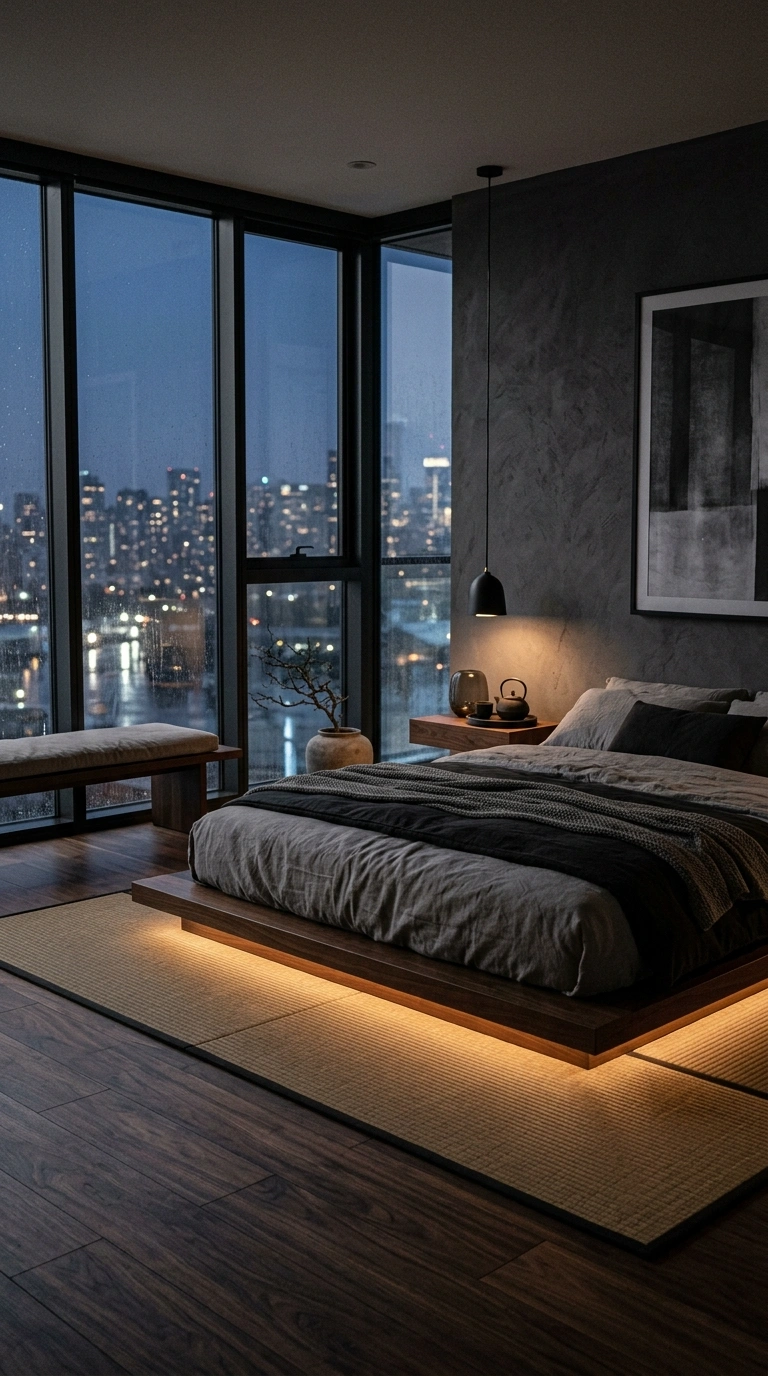
A low platform bed instantly gives a bedroom a calm Japandi atmosphere. The lower height creates a grounded feeling that makes the room appear more open and peaceful. It also brings attention to clean lines and empty space, which are important elements in Japandi interiors.
Choose a bed frame in natural wood with a simple silhouette. Avoid bulky headboards or oversized frames that take up visual space. A platform bed with slightly rounded corners can soften the room and make it feel more inviting. Pair it with crisp neutral bedding in shades like sand, ivory, warm gray, or muted taupe.
Keep styling minimal around the bed. Instead of large bedside tables, use compact wooden stools or floating shelves. A single ceramic vase with delicate branches can add enough decoration without cluttering the room. Soft lighting placed close to the floor also enhances the cozy mood. This layout works especially well in smaller bedrooms because it keeps the space feeling airy, balanced, and uncluttered.
3. Add Black Accents for Modern Contrast
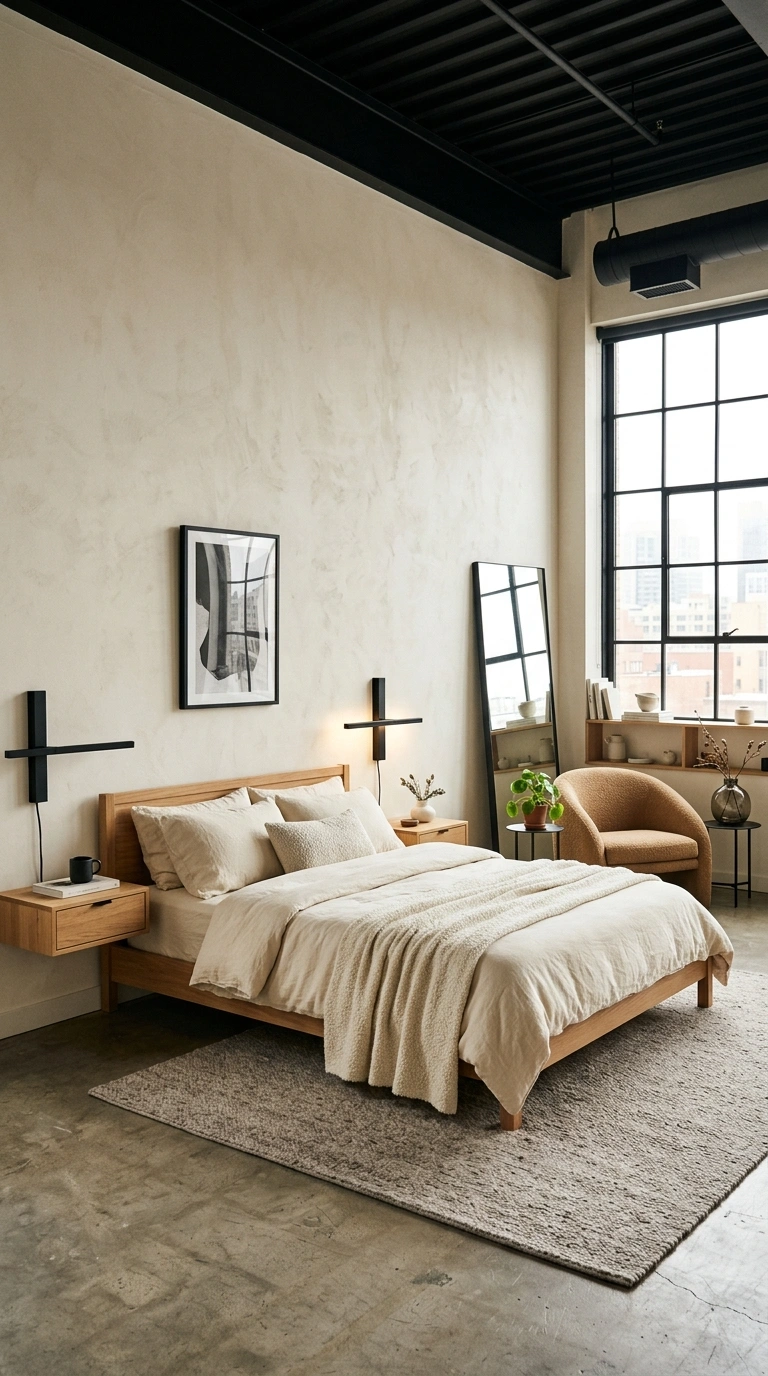
Japandi bedrooms often use soft neutral tones, but small black accents can create beautiful contrast and make the room feel more modern. The key is using black carefully so the space still feels calm and balanced instead of harsh.
Start with simple details like matte black wall sconces, slim picture frames, or dark metal cabinet handles. These small elements help define the room without overpowering the soft color palette. Black also pairs beautifully with warm woods, beige textiles, and creamy walls commonly found in Japandi interiors.
For a more dramatic look, try a charcoal linen throw blanket or black pendant lights above the bedside tables. You can also use darker wood tones like smoked oak or walnut to add depth while keeping the natural feel intact. Balance these darker pieces with plenty of light fabrics and natural textures so the room stays soft and welcoming.
This contrast creates a sophisticated style that feels clean, modern, and calming at the same time. It also photographs beautifully, making it perfect for Pinterest-worthy bedroom inspiration.
4. Layer Linen Textures Instead of Busy Patterns
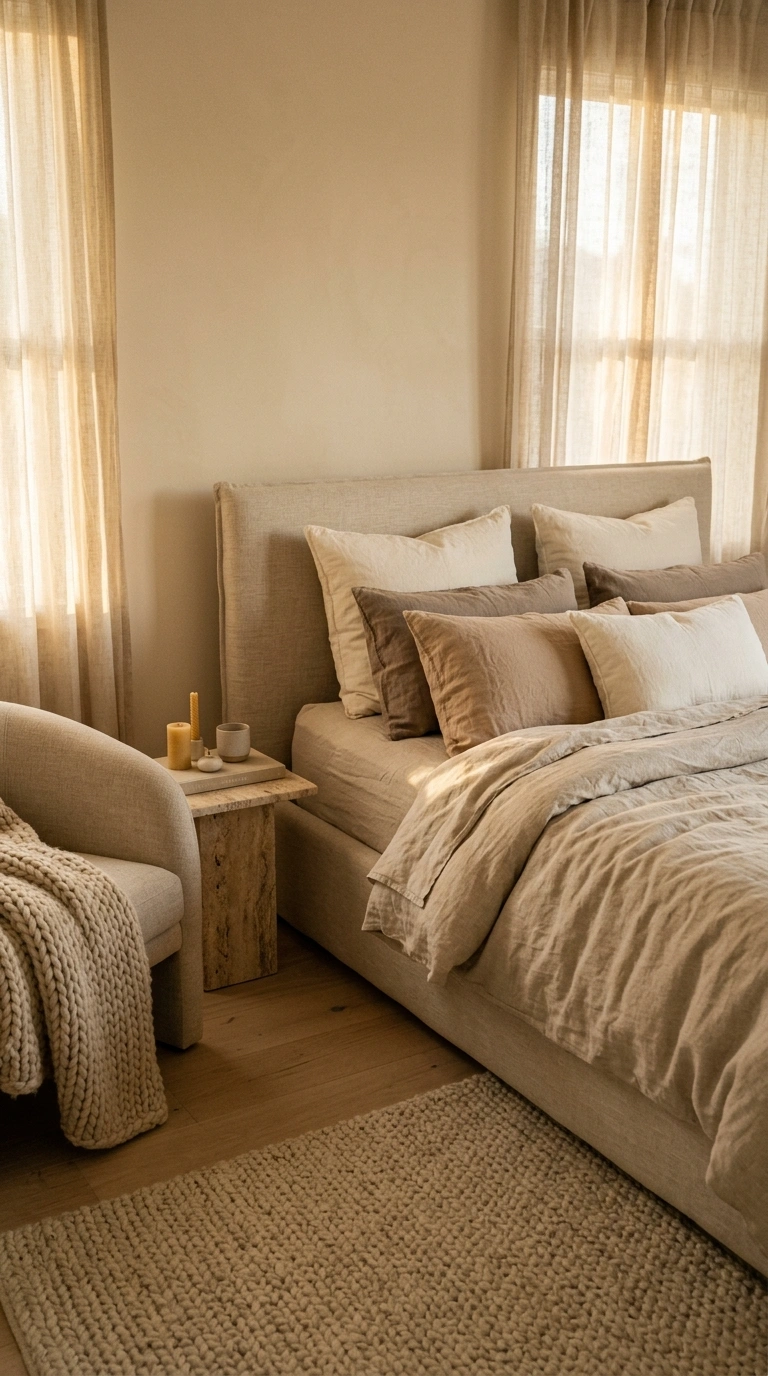
Japandi bedrooms feel calm because they focus on texture rather than loud patterns. Layering linen fabrics creates depth and warmth while keeping the space visually peaceful. This approach makes the room feel cozy without looking crowded or overly styled.
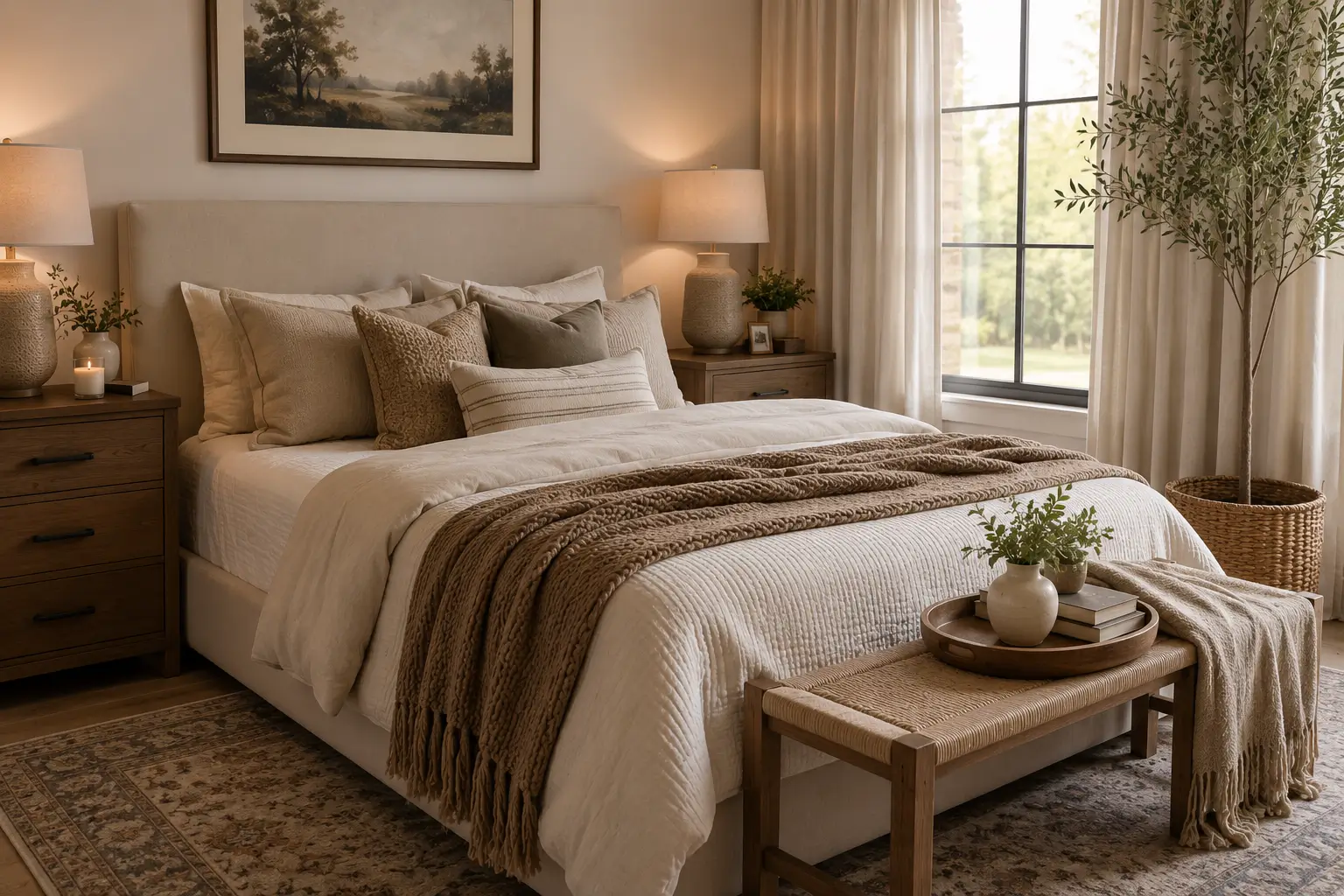
Start with soft linen bedding in neutral shades like warm white, stone, clay, or light gray. Then layer different textures using quilts, pillow covers, and lightweight throws. Wrinkled linen works especially well because it gives the room a relaxed and natural appearance instead of looking too polished.
Avoid bright prints or heavy patterns that interrupt the calm atmosphere. Instead, combine materials like woven cotton, boucle cushions, raw wood, and textured wool rugs. These subtle variations add interest while keeping the palette soft and cohesive.
Floor-length linen curtains can also transform the mood of the bedroom. They gently diffuse sunlight and create a soft glow throughout the space. This texture-focused styling method works beautifully in both modern and rustic homes because it feels timeless, warm, and easy to maintain every day.
5. Create Soft Lighting With Paper and Fabric Lamps
Lighting plays a huge role in making a Japandi bedroom feel peaceful. Harsh overhead lights can make the room feel cold, while soft layered lighting creates warmth and comfort. Paper lanterns and fabric lamps are perfect for achieving this relaxed atmosphere.
Choose warm-toned bulbs instead of cool white lighting. Soft golden light makes wood textures and neutral fabrics look richer and more inviting. Paper pendant lights add gentle diffused light that feels calm during the evening, while fabric lampshades create a cozy glow beside the bed.
Place multiple small light sources around the room instead of relying on one bright ceiling fixture. A bedside lamp, wall sconce, and small floor lamp can make the room feel layered and balanced. Hidden LED strips under floating shelves or behind the headboard also create a modern yet calming effect.
Natural materials like rice paper, linen, bamboo, and wood fit perfectly within Japandi design. These materials soften the light and help the room feel connected to nature. The final result feels peaceful, minimal, and ideal for relaxing at the end of the day.
6. Style Open Shelves With Minimal Decor
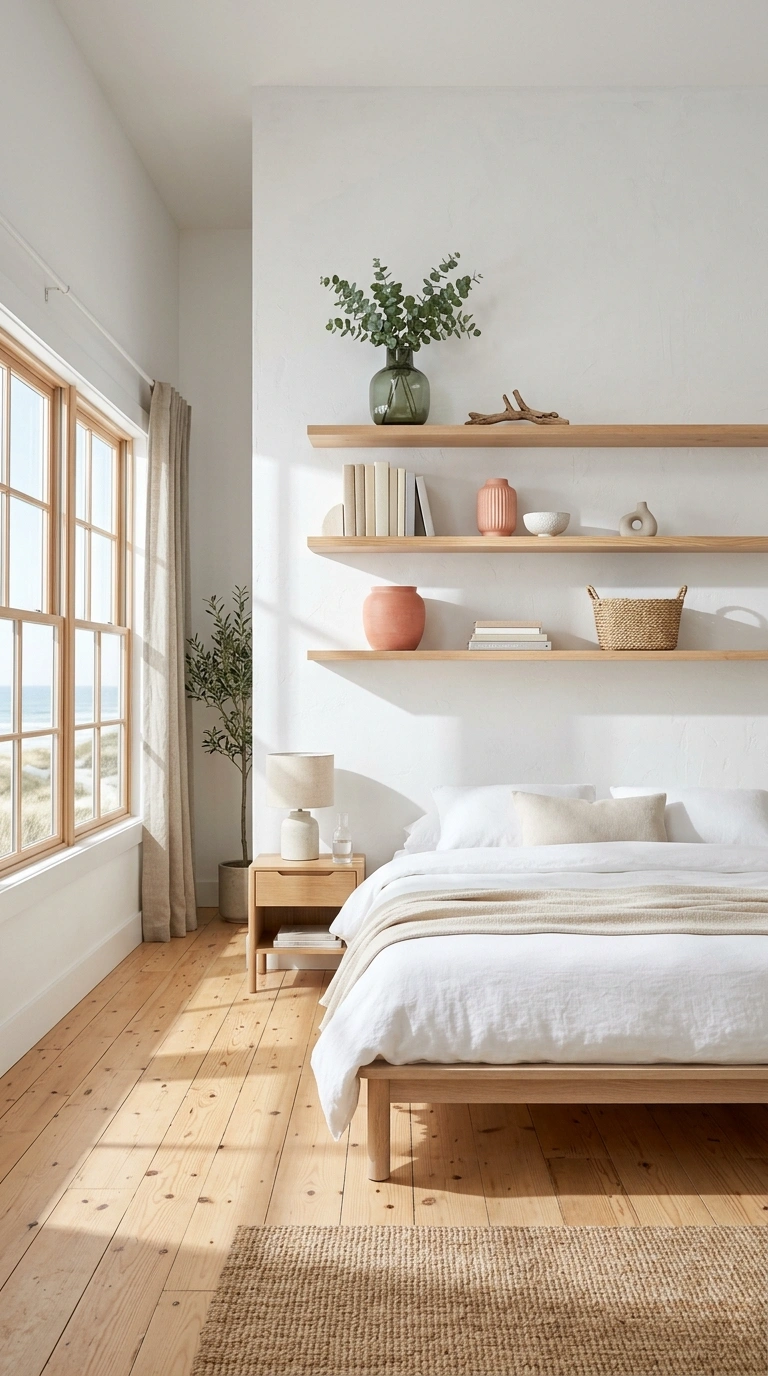
Open shelving can work beautifully in a Japandi bedroom when styled carefully. Instead of filling every shelf, focus on a few meaningful pieces that create a calm and balanced display. This keeps the room feeling light and uncluttered while still adding personality.
Choose floating wood shelves in natural oak, walnut, or bamboo finishes. Keep the styling simple with ceramic vases, stacked neutral books, handmade bowls, or small dried branches. The goal is to create breathing space between objects instead of crowded arrangements.
Mix smooth and textured materials for visual balance. A matte ceramic vase beside woven storage boxes or soft linen-covered books creates subtle contrast without overwhelming the room. Stick to earthy tones like cream, sand, charcoal, muted brown, and soft gray to maintain a cohesive palette.
You can also use shelves for practical storage in a visually pleasing way. Folded linen blankets, wooden trays, and woven baskets help organize the room while still fitting the Japandi aesthetic. This combination of beauty and function is one of the reasons Japandi interiors feel so calming and livable.
7. Mix Light and Dark Wood Finishes Naturally
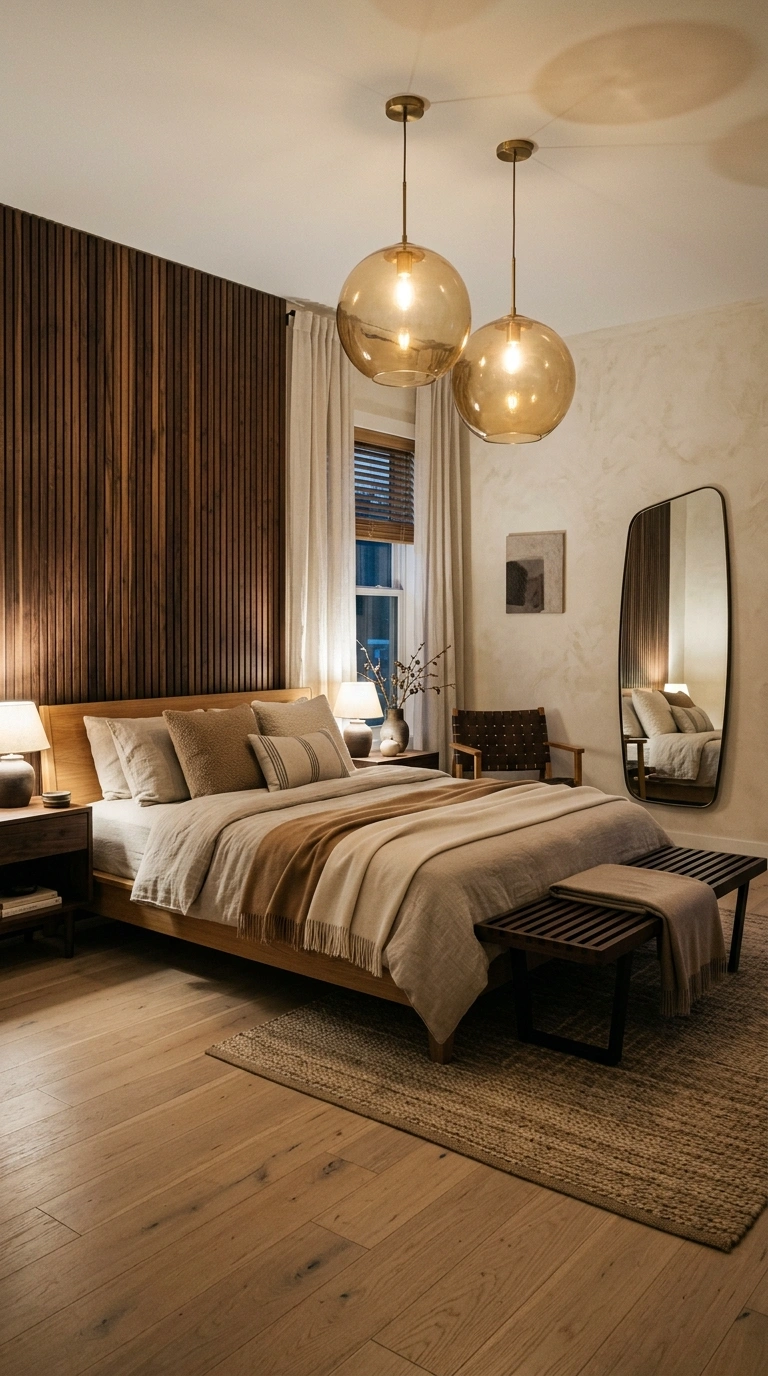
Many people think all wood tones must match perfectly, but Japandi style looks better when wood finishes feel layered and natural. Mixing light and dark woods adds warmth and depth while making the bedroom feel more collected over time.
Start with one dominant wood tone, such as pale oak flooring or a walnut bed frame. Then introduce smaller accents in contrasting finishes. For example, a dark wood bench at the end of a light oak bed creates beautiful visual balance without feeling too dramatic.
Keep the undertones similar so the room still feels cohesive. Warm woods pair best with other warm finishes, while cooler ash tones work better together. Mixing textures also helps create dimension. Smooth wood furniture can look stunning beside woven cane details or rough handmade stools.
This layered wood approach makes the bedroom feel organic instead of overly designed. It also gives the room more character while staying true to Japandi simplicity. Combined with soft textiles and minimal décor, these natural wood combinations create a cozy atmosphere that still feels modern and clean.
8. Bring Nature Indoors With Simple Greenery
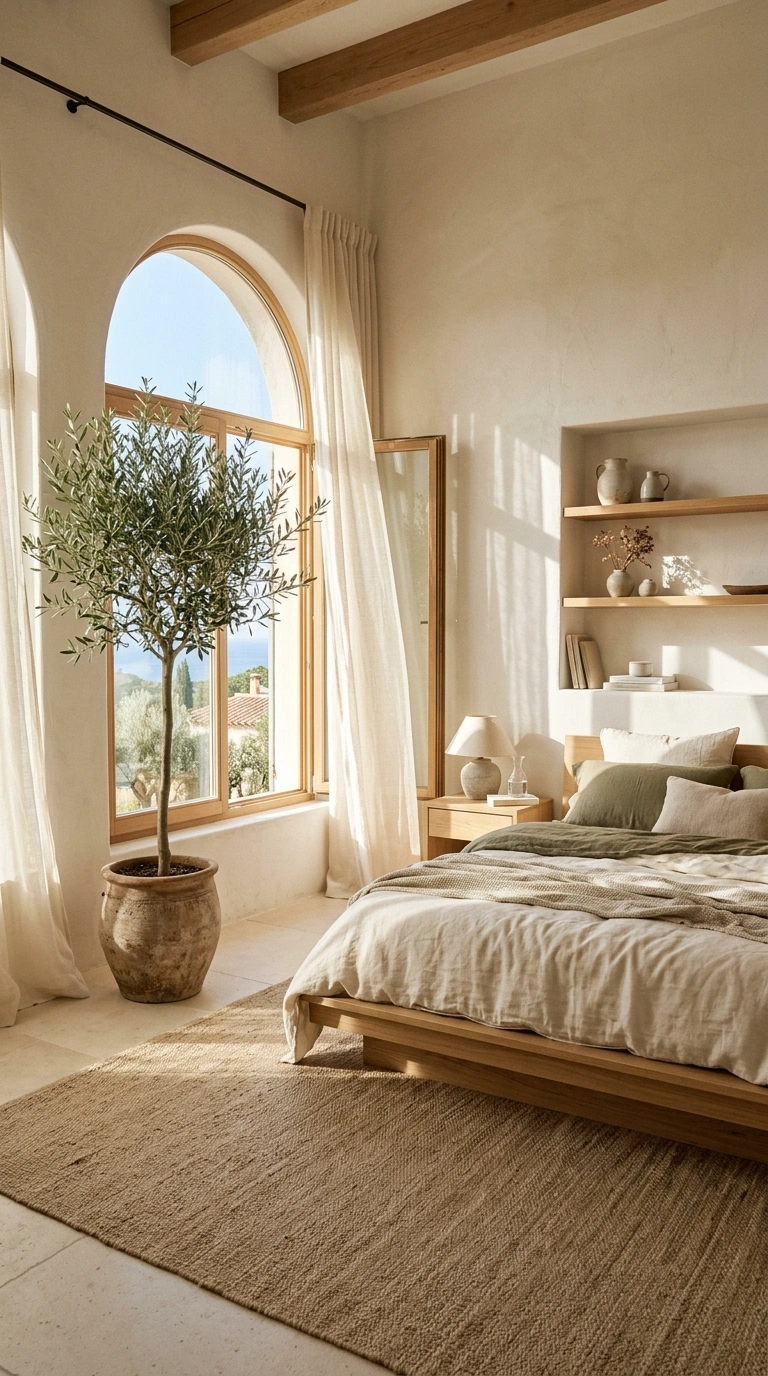
Natural elements are an important part of Japandi interiors, and greenery can instantly make a bedroom feel fresher and more relaxing. The key is choosing simple plants that complement the calm design instead of overpowering the space.
A single olive tree, bonsai, or tall branch arrangement can create a beautiful focal point beside the bed or near a window. Smaller plants like snake plants or eucalyptus stems also work well because they have clean shapes and soft muted tones.
Choose simple ceramic or stone planters instead of colorful pots. Neutral containers help the greenery blend naturally into the room’s palette. Place plants thoughtfully rather than scattering them everywhere. One large statement plant often looks more peaceful than several tiny decorations.
Natural light enhances the calming effect even more. Position greenery where sunlight softly highlights the leaves during the day. This creates movement and texture without adding clutter. Combined with warm woods and linen fabrics, indoor plants help the room feel balanced, grounded, and connected to nature in a very calming way.
9. Keep Furniture Simple and Functional
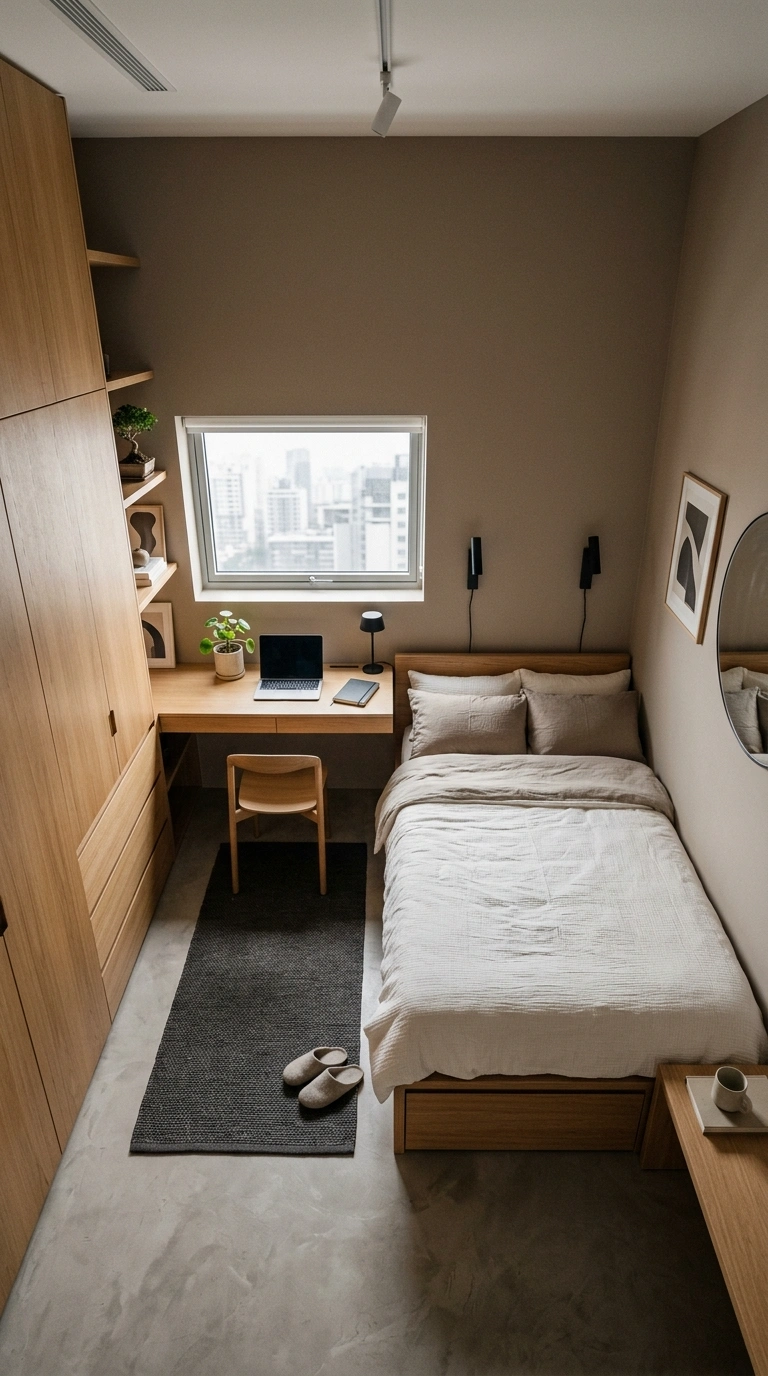
Japandi bedrooms feel peaceful because every furniture piece serves a purpose. Instead of filling the room with unnecessary décor or oversized furniture, focus on functional pieces with clean lines and timeless shapes.
Choose furniture with slim profiles and simple silhouettes. A wooden dresser with hidden handles, a compact bench, or a floating desk can keep the room organized without making it feel crowded. Avoid bulky furniture that blocks natural light or interrupts the room’s flow.
Multi-functional furniture works especially well in smaller Japandi bedrooms. A storage bench at the foot of the bed or nightstands with hidden drawers help reduce visible clutter while maintaining a clean aesthetic. Keep surfaces mostly clear except for a few meaningful items like a ceramic lamp or textured tray.
Spacing also matters. Leaving empty space around furniture helps the room breathe visually. This balance between simplicity and function creates a relaxing environment that feels intentional rather than empty. The result is a bedroom that supports calm daily routines while still looking warm and stylish.
10. Use Floor-to-Ceiling Curtains for a Softer Look
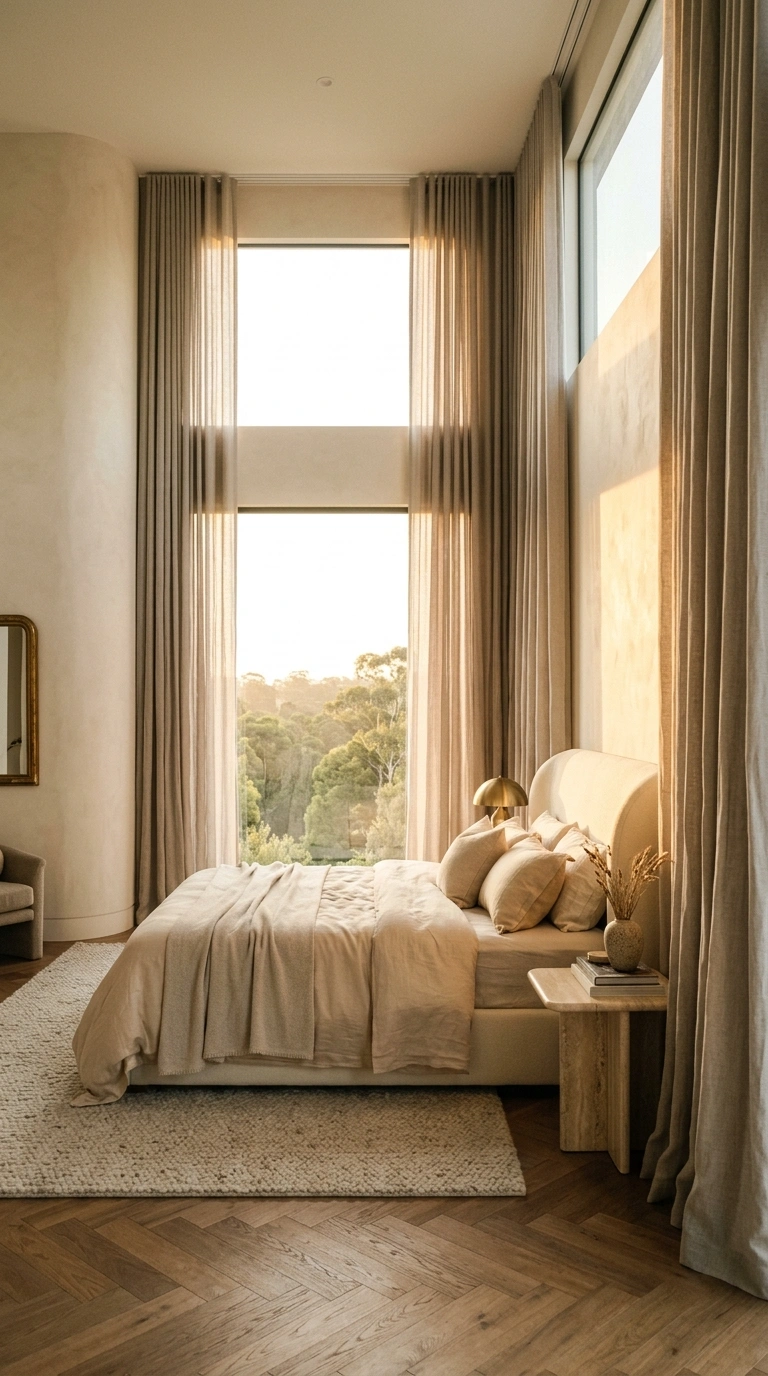
Floor-to-ceiling curtains can completely change the feeling of a Japandi bedroom. They make the room look taller, softer, and more elegant while helping natural light feel gentle and diffused throughout the day.
Choose lightweight fabrics like linen or cotton in warm neutral shades. Soft ivory, sandy beige, greige, or muted taupe work beautifully within a Japandi palette. Avoid heavy blackout curtains unless necessary because lighter fabrics create a more airy and peaceful atmosphere.
Hang curtain rods close to the ceiling instead of directly above the windows. This simple trick makes the bedroom feel larger and more luxurious. Let the curtains lightly touch the floor for a relaxed and organic appearance that feels effortless.
Layering sheer curtains with slightly thicker panels also adds beautiful texture without overwhelming the room. During the evening, warm lighting reflecting against soft fabric creates an inviting glow that enhances the cozy mood. These flowing fabric layers help balance the clean lines of Japandi furniture and make the bedroom feel calm and welcoming.
11. Add Handmade Decor for Organic Warmth
Handmade décor gives Japandi bedrooms warmth and personality while keeping the overall design simple. Small imperfect details make the room feel more natural and lived-in, which is an important part of the Japandi aesthetic.
Look for handcrafted ceramics, woven baskets, textured pottery, or wooden stools with visible grain patterns. These pieces add character because they feel authentic rather than mass-produced. Even a handmade linen pillow cover or clay vase can make the space feel softer and more personal.
Focus on quality instead of quantity. A few meaningful handcrafted items create more impact than shelves filled with decorations. Choose pieces with natural textures, earthy colors, and simple shapes that blend easily into the room.
Wall décor can also stay minimal and organic. A framed textured fabric panel, soft abstract artwork, or a single branch arrangement works beautifully without creating visual clutter. These subtle details make the bedroom feel calm, warm, and thoughtfully designed. They also help the space feel timeless instead of following short-lived decorating trends.
12. Create a Cozy Reading Corner With Soft Layers
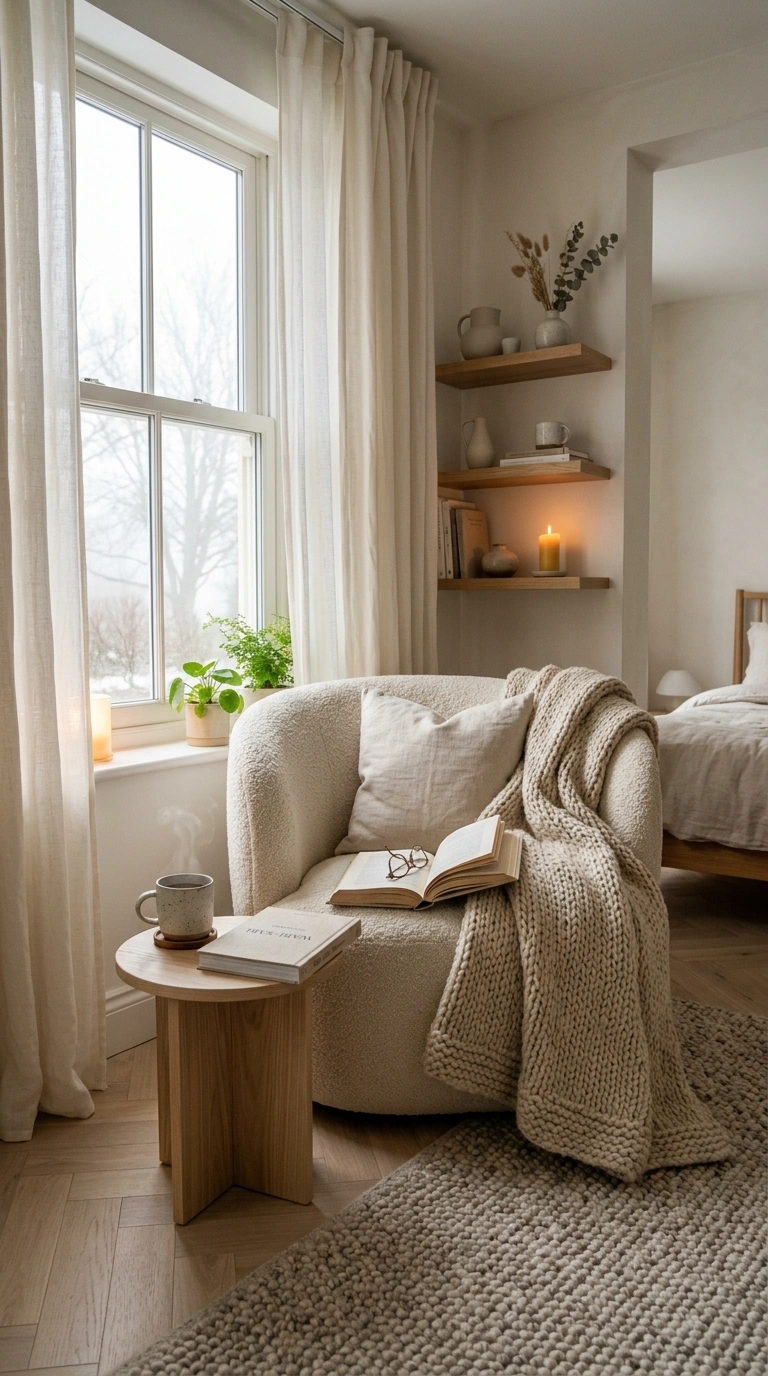
A small reading corner can make a Japandi bedroom feel more relaxing and personal. You do not need a large space to create one. Even a quiet corner beside a window can become a peaceful retreat with the right textures and furniture.
Start with a low accent chair in soft linen or textured cotton fabric. Add a light wool throw blanket and a simple cushion in warm neutral tones. A small wooden stool or round side table works perfectly for holding books, tea, or a ceramic candle. Keep the furniture low and minimal so the area still feels open and calm.
Lighting matters here too. A warm floor lamp with a paper shade creates a soft glow that feels cozy during the evening. Place the corner near natural light during the day if possible. This setup creates a slow and peaceful atmosphere that encourages rest without adding clutter to the room.
13. Use Stone and Clay Decor for Natural Texture
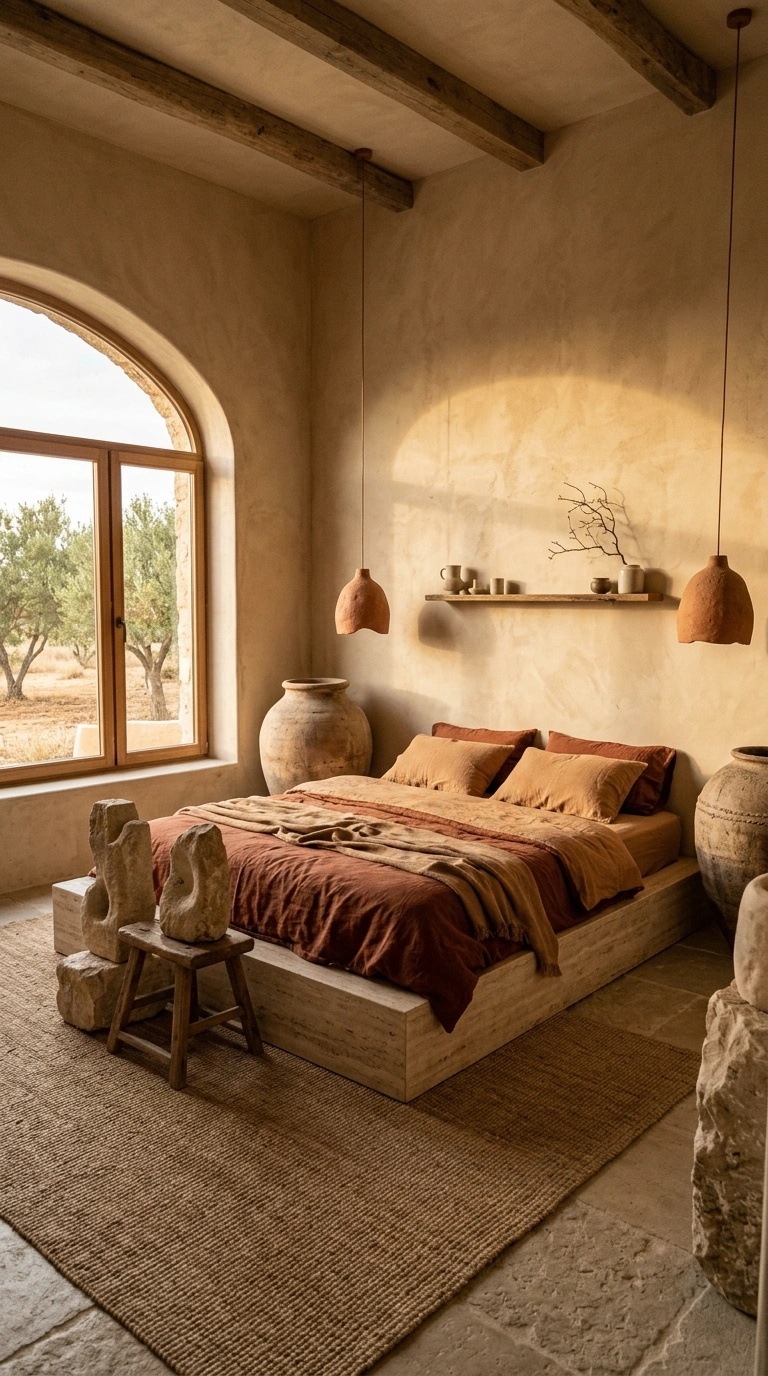
Japandi bedrooms feel grounded because they use materials inspired by nature. Stone and clay décor add quiet texture that makes the room feel warm, earthy, and balanced without needing bold decoration.
Try styling a bedroom with matte clay vases, travertine trays, or stone candle holders. These natural materials bring subtle contrast beside smooth wood furniture and soft linen fabrics. Their imperfect textures make the space feel organic instead of overly polished.
You can also use stone-inspired elements in furniture or lighting. A textured bedside lamp base, concrete planter, or limewash wall finish adds depth while keeping the palette soft and calm. Stick to muted colors like warm gray, sand, ivory, and soft brown for a cohesive look.
The beauty of these materials comes from their simplicity. They age naturally over time and make the bedroom feel timeless rather than trendy. Combined with soft lighting and neutral textiles, stone and clay accents create a peaceful environment that feels effortlessly relaxing.
14. Keep the Color Palette Muted and Calm
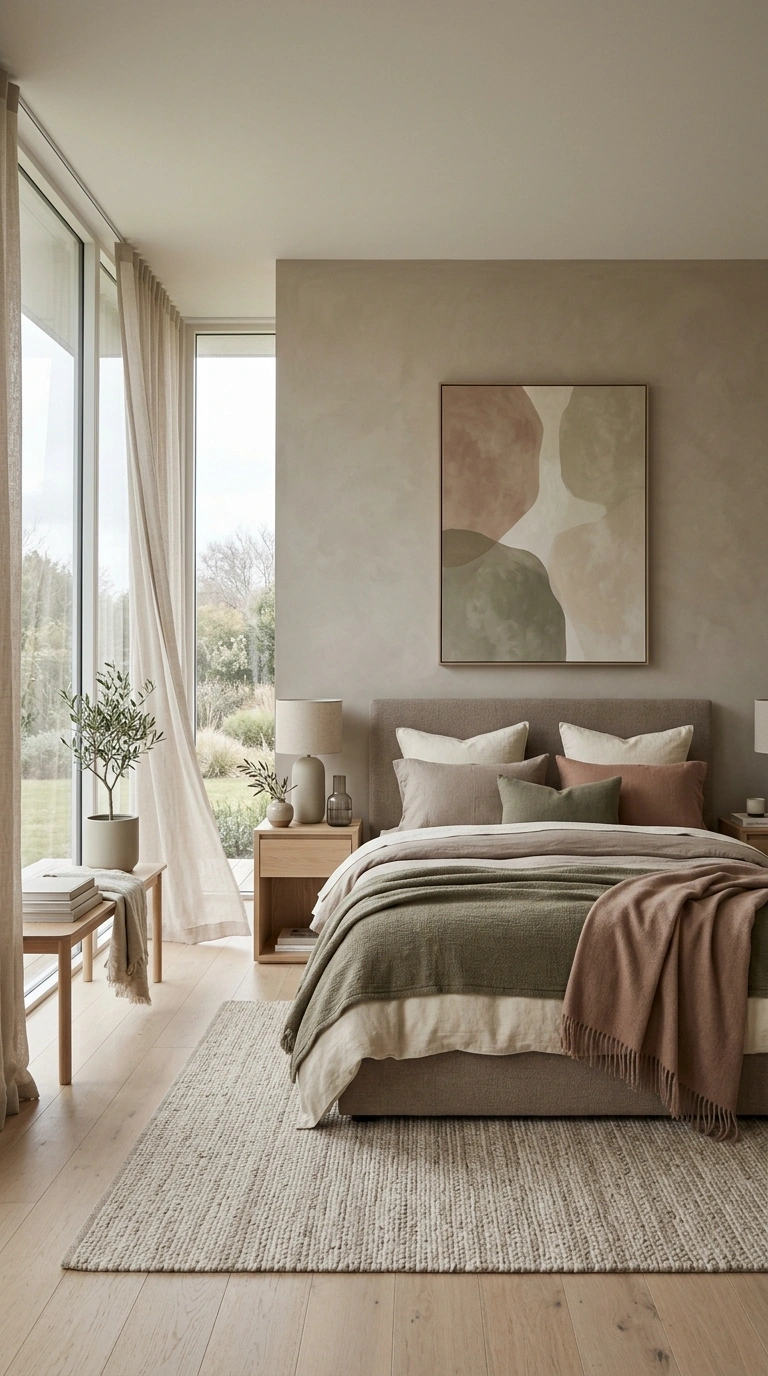
A muted color palette is one of the biggest reasons Japandi bedrooms feel so peaceful. Soft tones help the room feel visually quiet, which makes it easier to relax and unwind at the end of the day.
Focus on colors inspired by nature. Warm beige, mushroom gray, soft white, dusty olive, clay, and muted brown work beautifully together. These shades create depth without making the room feel busy. Instead of using sharp contrasts, let the colors gently blend into each other.
If you want to add darker tones, use them sparingly through charcoal pillows, dark wood accents, or black lighting fixtures. This keeps the room balanced while still adding visual interest. Avoid bright colors or shiny finishes because they can interrupt the calm mood.
Textiles also help soften the palette even more. Layering different neutral fabrics creates warmth without needing strong color combinations. This approach makes the bedroom feel cohesive, airy, and timeless. It also allows natural textures and lighting to become the main focus of the space.
15. Use Floating Furniture to Make the Room Feel Airy
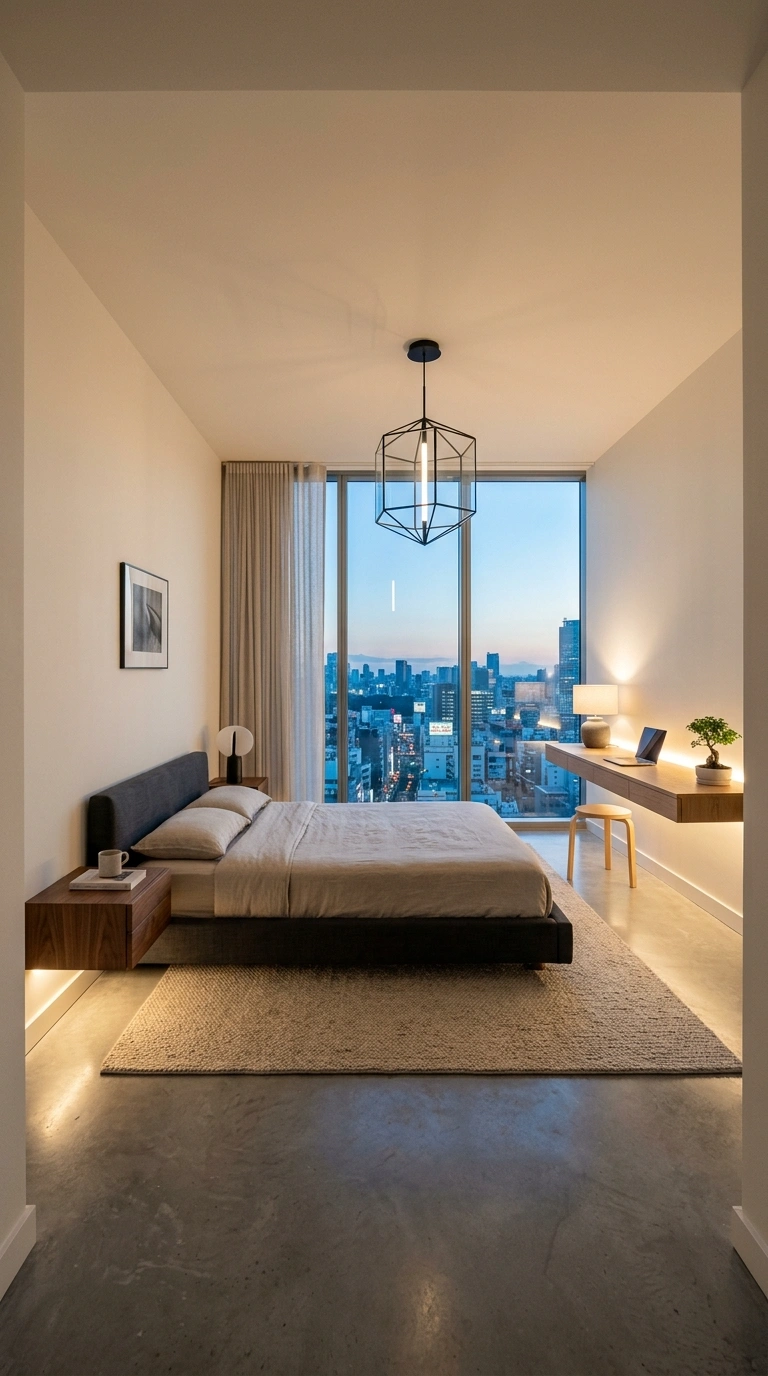
Floating furniture helps Japandi bedrooms feel lighter and more spacious. By keeping more floor visible, the room instantly appears cleaner, calmer, and less crowded. This idea works especially well in smaller bedrooms where space feels limited.
Try floating nightstands instead of bulky bedside tables. Wall-mounted shelves or desks can also create a more open layout while still providing practical storage. Choose simple wood finishes and clean lines to maintain the Japandi look.
Floating furniture pairs beautifully with soft lighting. Hidden LED lighting beneath shelves or bedside units creates a warm glow that adds depth during the evening. This subtle lighting effect makes the room feel modern while still staying cozy and relaxing.
Keep styling minimal on these surfaces. A ceramic vase, a linen-covered book, or a small candle is often enough. Too many objects can take away from the calm atmosphere. This design approach keeps the bedroom visually light and helps create a peaceful environment that feels functional and beautifully balanced.
16. Add Texture With Woven and Cane Details

Woven textures bring warmth into a Japandi bedroom without making the room feel heavy. Cane, rattan, and woven materials soften clean furniture lines and add natural character to the space.
You can introduce these textures through headboards, storage baskets, pendant lights, or accent chairs. A woven bench at the foot of the bed also creates a beautiful layered look while adding practical seating. These details work especially well beside smooth wood furniture because they create subtle contrast.
Stick to soft earthy colors to maintain the calming atmosphere. Natural tan, warm beige, honey wood, and muted brown tones blend perfectly with Japandi interiors. Layering woven textures with linen bedding and wool rugs creates a cozy look that still feels minimal and uncluttered.
The best part about woven materials is their timeless feel. They add visual interest naturally without needing bold patterns or bright colors. This helps the bedroom feel warm, balanced, and connected to nature in a simple and elegant way.
17. Design Around Natural Light Whenever Possible
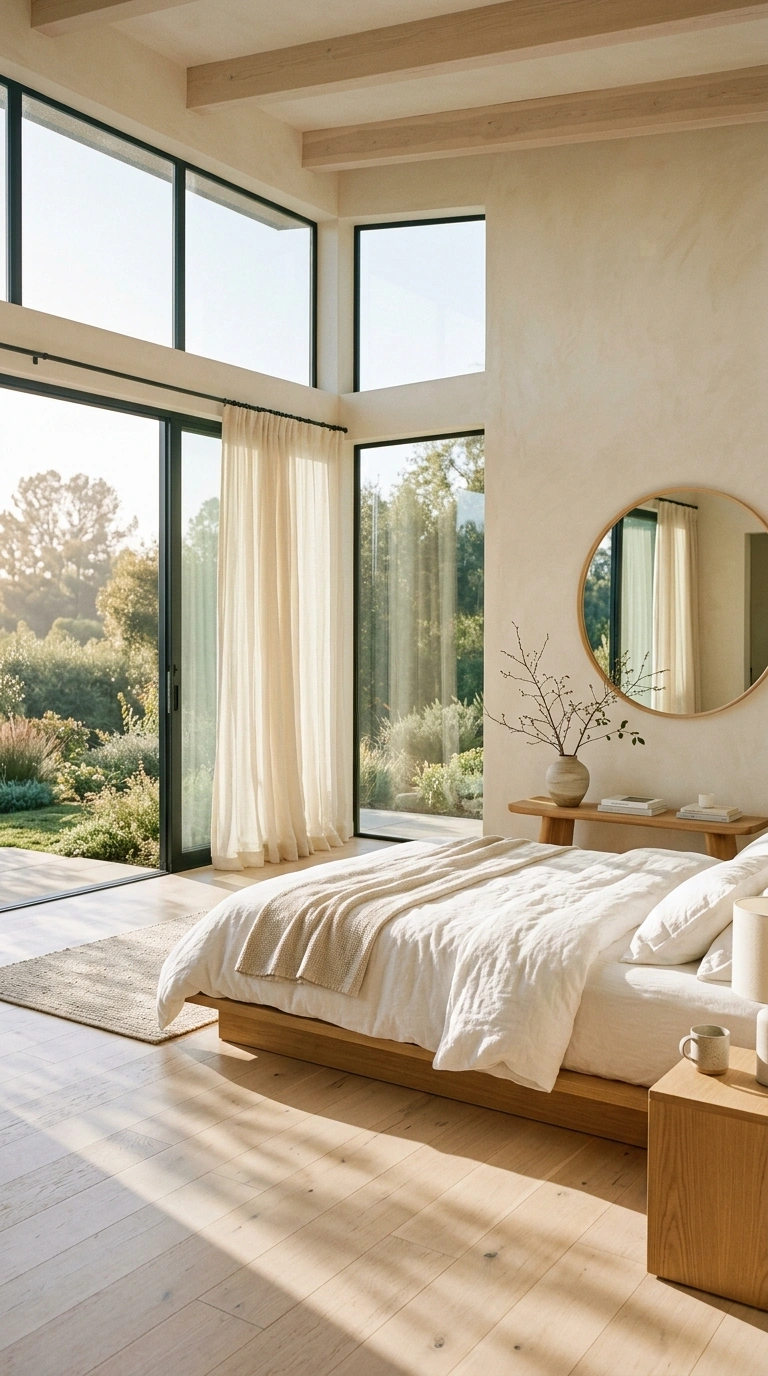
Natural light plays a huge role in Japandi design because it makes rooms feel softer, brighter, and more peaceful. Instead of blocking sunlight, Japandi bedrooms use light to highlight textures and create a calm atmosphere throughout the day.
Keep windows as open as possible during daylight hours. Use sheer linen curtains that gently filter sunlight instead of completely darkening the room. This creates a soft glow that makes neutral colors and wood tones appear warmer and more inviting.
Place mirrors carefully to reflect natural light around the room without making the space feel too sharp or modern. A simple round mirror with a thin wood frame works beautifully in Japandi interiors. You can also position furniture to allow sunlight to move freely through the space.
Morning light paired with soft bedding and natural materials creates a peaceful mood that feels refreshing every day. This connection to natural light helps the bedroom feel grounded, calm, and comfortable while enhancing every texture and detail in the room.
18. Try a Minimal Gallery Wall With Soft Artwork
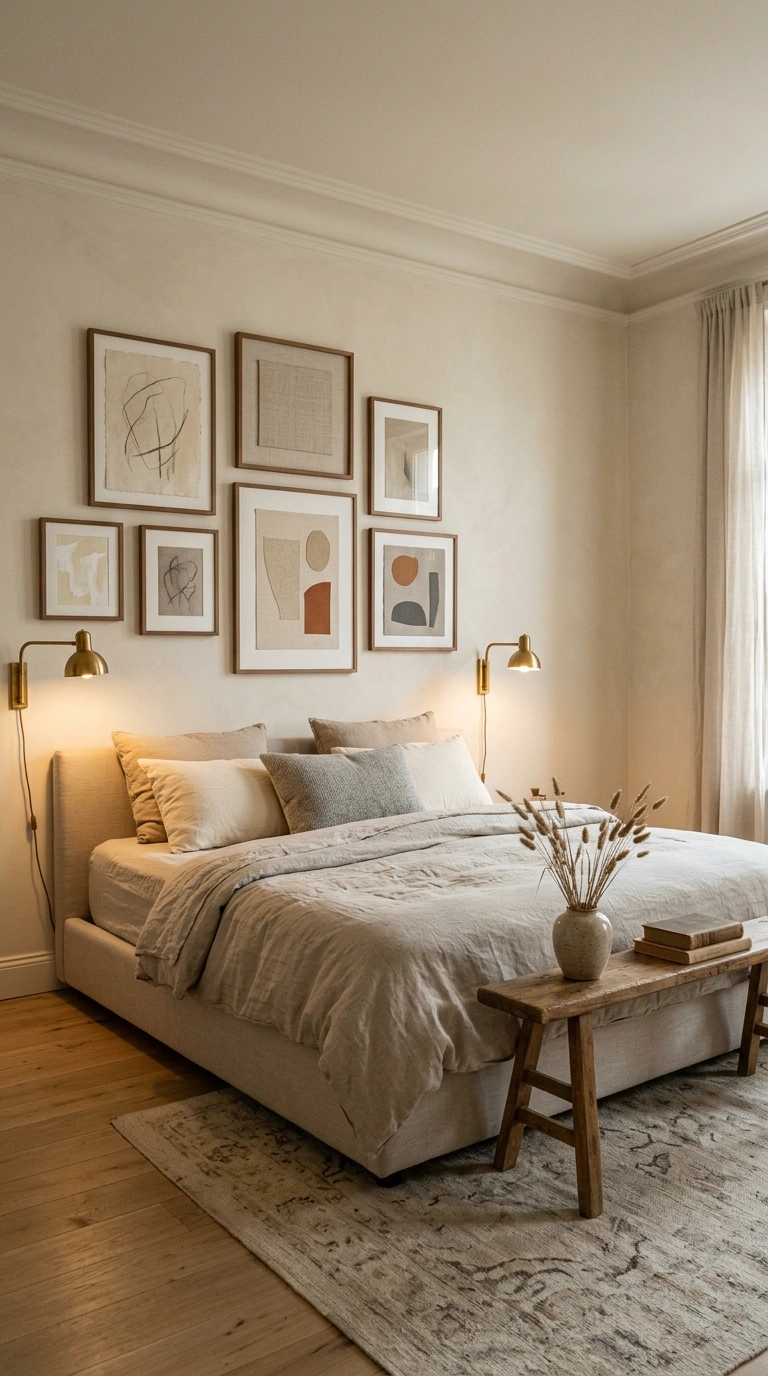
Wall décor in a Japandi bedroom should feel calm and intentional. A minimal gallery wall can add personality without making the space feel cluttered when done with soft colors and simple artwork.
Choose art pieces with muted tones, organic shapes, or textured designs. Abstract brush strokes, line drawings, soft landscapes, or minimalist botanical prints work beautifully within Japandi interiors. Thin wood or matte black frames keep the arrangement feeling clean and balanced.
Instead of covering an entire wall, create a smaller arrangement with breathing space between each frame. This keeps the display visually light and relaxing. You can also lean framed artwork on floating shelves for a more casual and effortless look.
Textured fabric art or handmade paper prints add extra warmth while maintaining simplicity. Keep the palette cohesive so the artwork blends naturally into the room instead of becoming overpowering. This subtle styling approach makes the bedroom feel thoughtful, artistic, and peaceful at the same time.
19. Combine Soft Rugs With Bare Wood Floors

Japandi bedrooms often balance soft textures with clean natural surfaces. One of the best ways to achieve this look is by combining cozy rugs with visible wood flooring. This creates warmth while still keeping the room airy and minimal.
Choose rugs with soft textures and subtle patterns. Wool, jute, or woven cotton rugs in neutral shades work perfectly here. Layering a smaller textured rug over larger natural flooring also adds depth without overwhelming the space.
Let some wood flooring remain visible around the edges of the room. This open space helps the bedroom feel uncluttered and highlights the beauty of natural materials. Light oak floors create a brighter atmosphere, while deeper walnut tones add warmth and coziness.
Position rugs strategically under the bed or reading chair to define areas gently. This makes the layout feel organized and calm. The contrast between soft fabric textures and smooth wood surfaces creates a balanced bedroom that feels inviting, simple, and visually relaxing.
20. Use Hidden Storage to Reduce Visual Clutter
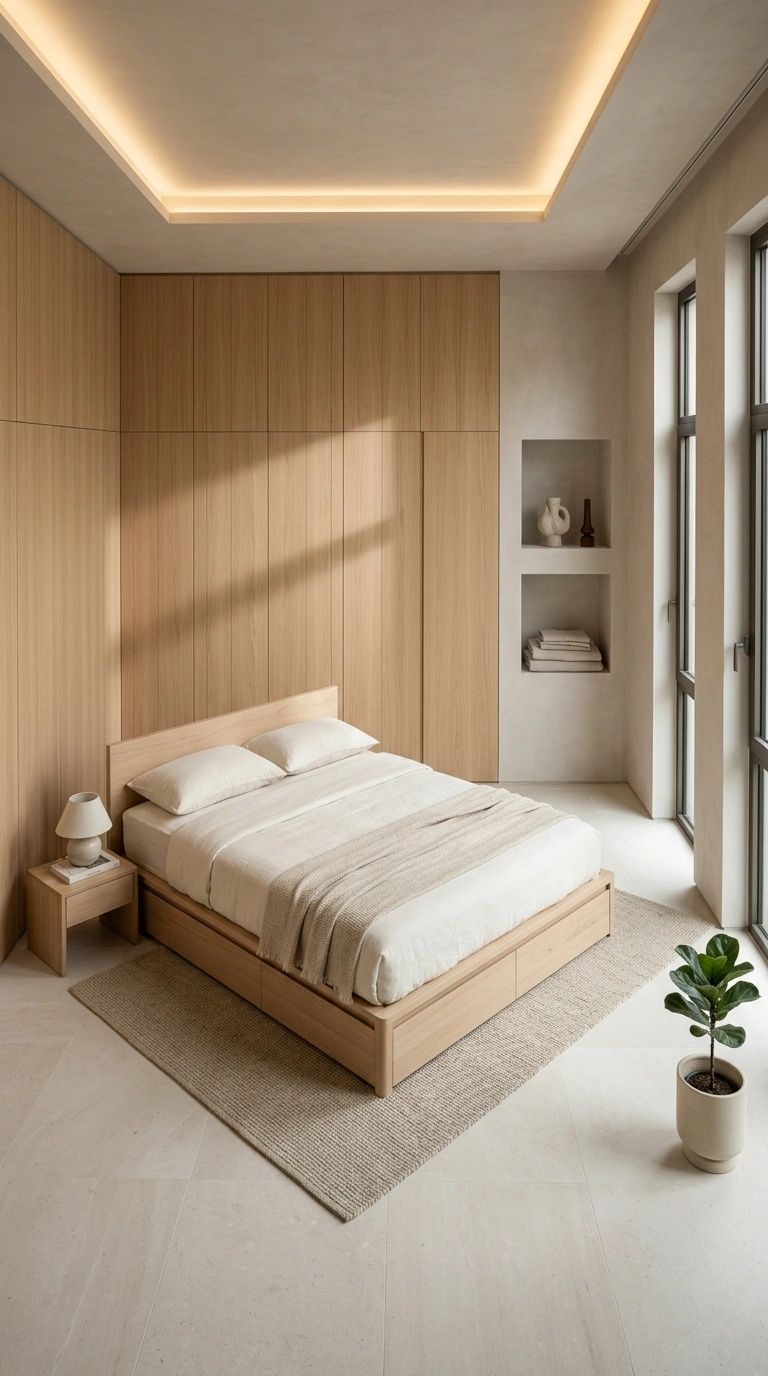
A peaceful Japandi bedroom depends heavily on keeping clutter out of sight. Hidden storage solutions help maintain the clean and calming look while still making the room practical for daily life.
Choose beds with built-in drawers or storage benches that blend naturally into the design. Floating cabinets and wardrobes with flat seamless doors also help the room feel visually smooth and organized. Avoid open storage packed with too many visible items because it can make the space feel busy.
Use woven baskets, fabric bins, or wooden boxes to organize smaller belongings neatly. These storage pieces still add texture and warmth while keeping the room tidy. Keeping surfaces mostly clear also improves the calm atmosphere dramatically.
The goal is not to make the room empty but to remove visual distractions that interrupt relaxation. When everything has a dedicated place, the bedroom instantly feels lighter, cleaner, and easier to enjoy every day. This simplicity is one of the most important parts of creating a successful Japandi space.
21. Blend Cozy Scandinavian Comfort With Japanese Simplicity
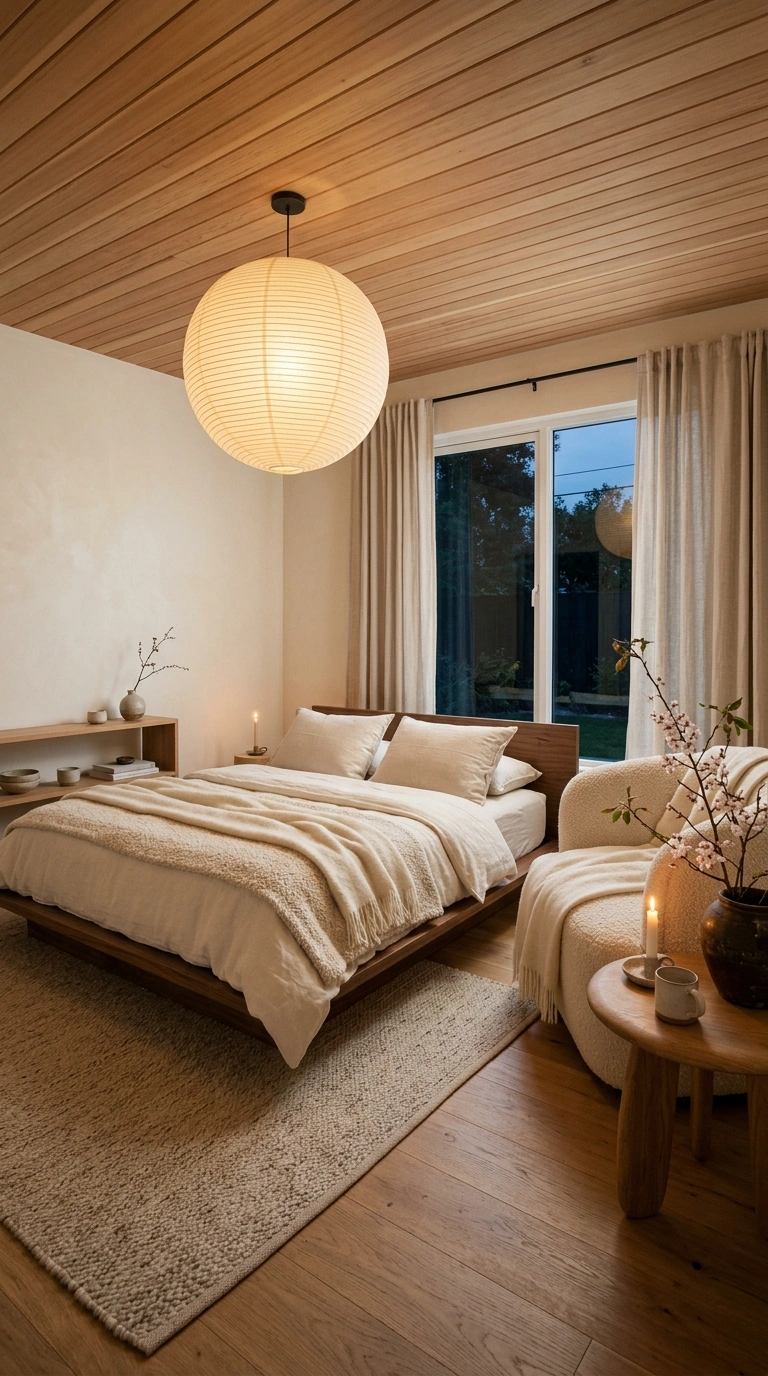
The true beauty of Japandi design comes from blending two styles into one balanced space. Scandinavian interiors bring warmth and comfort, while Japanese design adds simplicity and calm structure. Together, they create a bedroom that feels peaceful yet welcoming.
Focus on comfort through soft textures and practical layouts. Linen bedding, warm lighting, and cozy rugs make the room feel inviting without adding unnecessary decoration. Then balance those cozy details with clean lines, uncluttered surfaces, and carefully chosen furniture.
Natural materials help tie both styles together beautifully. Wood, stone, clay, cotton, and woven textures create a calm environment that feels timeless and grounded. Every item should feel intentional and useful while still contributing to the room’s overall mood.
This balance between comfort and simplicity makes Japandi bedrooms feel relaxing in a very natural way. The space never feels cold, overly decorated, or difficult to maintain. Instead, it becomes a quiet retreat that supports rest, comfort, and slow everyday living.
Conclusion
Creating a calm bedroom does not require complicated decorating or expensive furniture. The best Japandi bedroom ideas focus on balance, natural textures, soft lighting, and simple layouts that make everyday life feel more peaceful. Small changes like adding linen layers, choosing warm wood tones, or reducing clutter can completely transform how your space feels.
Japandi design works beautifully because it combines comfort with simplicity. The rooms feel cozy without becoming crowded and minimal without feeling cold. By mixing soft neutral colors, organic materials, and functional furniture, you can create a bedroom that feels timeless and relaxing for years to come.
Use these ideas as inspiration to build a space that matches your lifestyle and personal taste. Save your favorite designs, try a few simple updates, and create a bedroom that feels calm every time you walk inside.
FAQs
What is a Japandi bedroom style?
A Japandi bedroom combines Japanese minimalism with Scandinavian comfort. It focuses on clean lines, natural materials, soft neutral colors, and functional furniture. The style creates a calm and cozy atmosphere without too much decoration or clutter.
What colors work best in a Japandi bedroom?
Soft earthy shades work best in a Japandi bedroom. Popular choices include warm beige, ivory, taupe, muted gray, clay, olive green, and soft brown. These colors create a peaceful look and help the room feel relaxing and balanced.
How do I make my bedroom look Japandi on a budget?
You can create a Japandi look by making small changes first. Use neutral bedding, remove clutter, add warm lighting, and choose natural textures like wood, linen, or woven baskets. Simple furniture and soft colors can transform the room without a full renovation.
Is Japandi style good for small bedrooms?
Yes, Japandi style works especially well in small bedrooms because it focuses on simplicity and smart layouts. Low furniture, hidden storage, and minimal décor help the room feel more open and airy while still looking cozy and stylish.
What type of furniture fits a Japandi bedroom?
Japandi furniture usually has clean lines, natural wood finishes, and simple shapes. Low platform beds, floating nightstands, wooden benches, and minimal storage pieces fit perfectly within this style. Furniture should feel functional and uncluttered.
Can Japandi style include dark colors?
Yes, Japandi interiors can include dark colors in small amounts. Black accents, charcoal textiles, or dark walnut wood can add contrast and depth while still keeping the bedroom calm and balanced. The key is pairing darker tones with warm neutrals and soft textures.
What materials are commonly used in Japandi bedrooms?
Natural materials are very important in Japandi design. Common materials include wood, linen, cotton, stone, bamboo, clay, rattan, and wool. These textures make the room feel warm, organic, and connected to nature.
How do I keep a Japandi bedroom from looking empty?
Focus on layering textures instead of adding too much décor. Linen bedding, woven rugs, ceramic accessories, soft lighting, and natural wood finishes create warmth and depth while keeping the room simple and uncluttered.