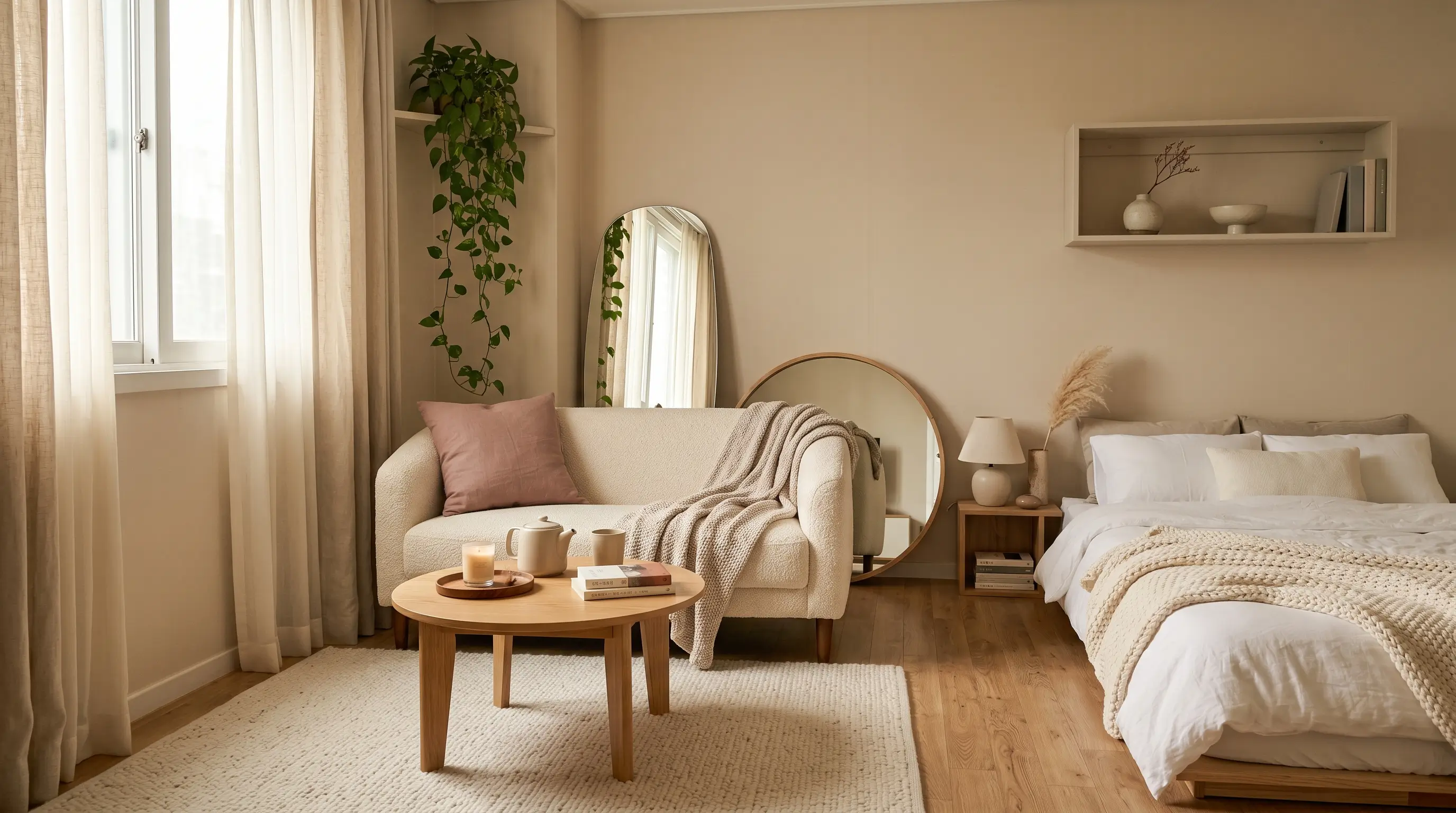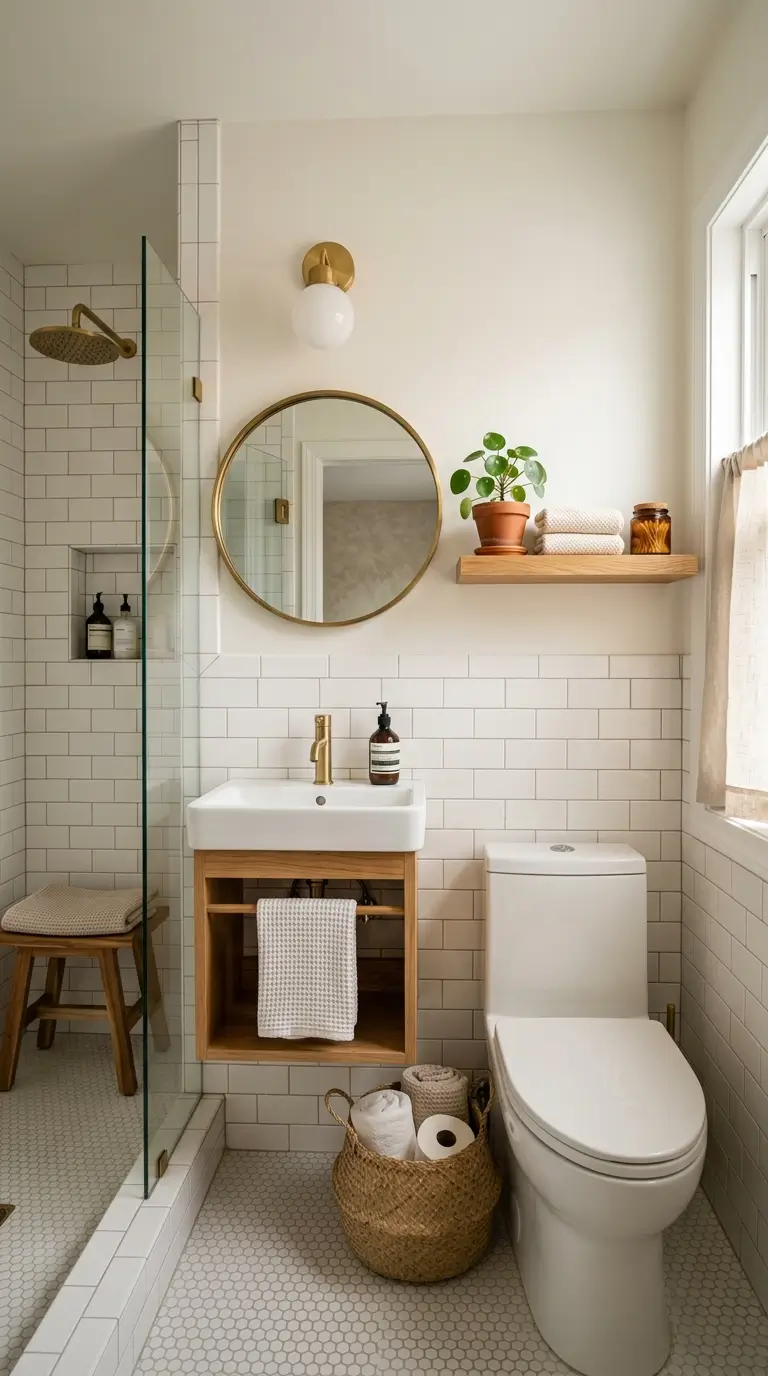
27 Interior Design Tips That Give You Real Inspiration
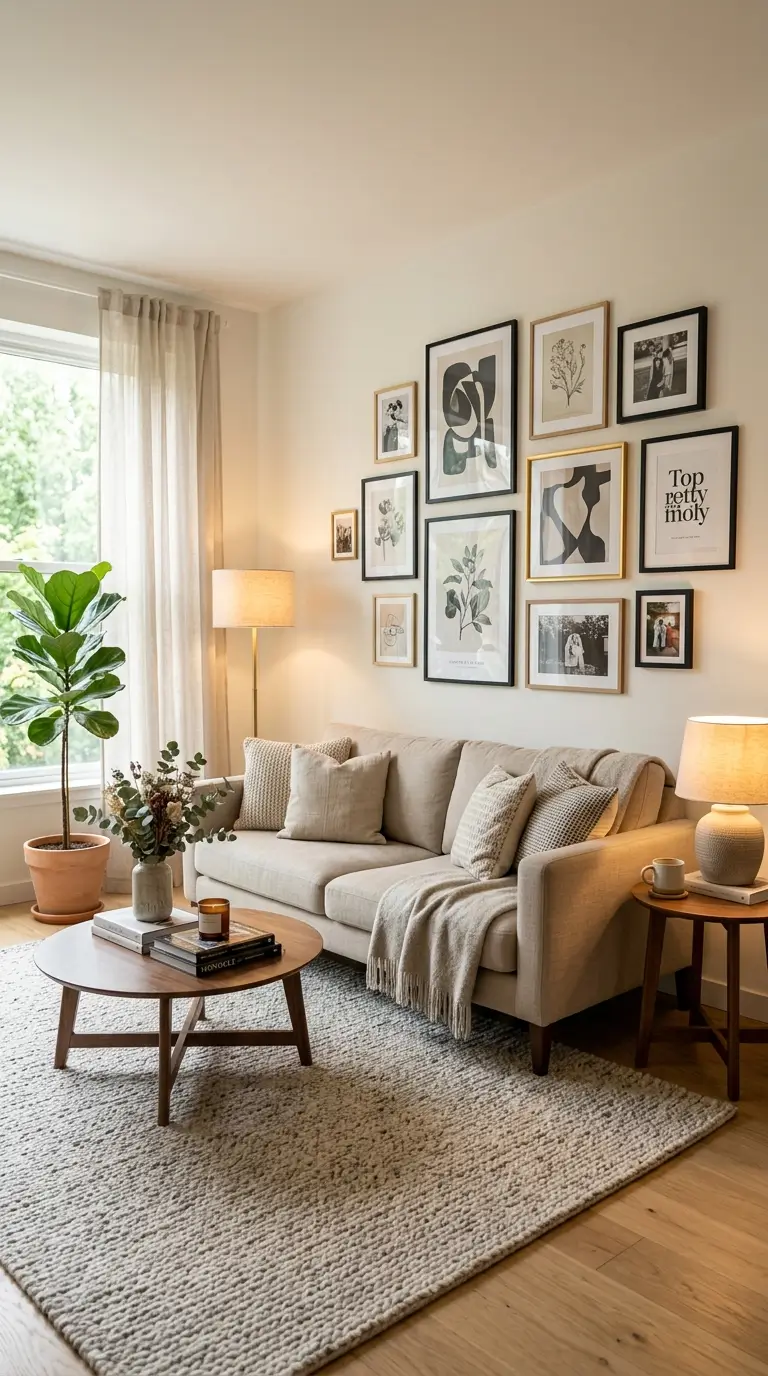
I get asked all the time why some rooms just feel right the moment you walk in, while others, even expensive ones, feel a little off. After years of styling homes and helping readers redo rooms on a budget, I have noticed the same handful of choices show up again and again in the spaces that work. It is rarely about spending more money. It is about lighting, scale, color, and a few small details that most people skip. This list of twenty-seven tips pulls together the ideas I come back to most often, whether I am helping someone style a rental apartment or a forever home. Some of these you can do in an afternoon. Others might take a weekend project. None of them require a designer’s budget or a full gut renovation. Read through and pick out the ones that fit your space and your taste, then start with just one or two.
1. Layered Lighting Plan
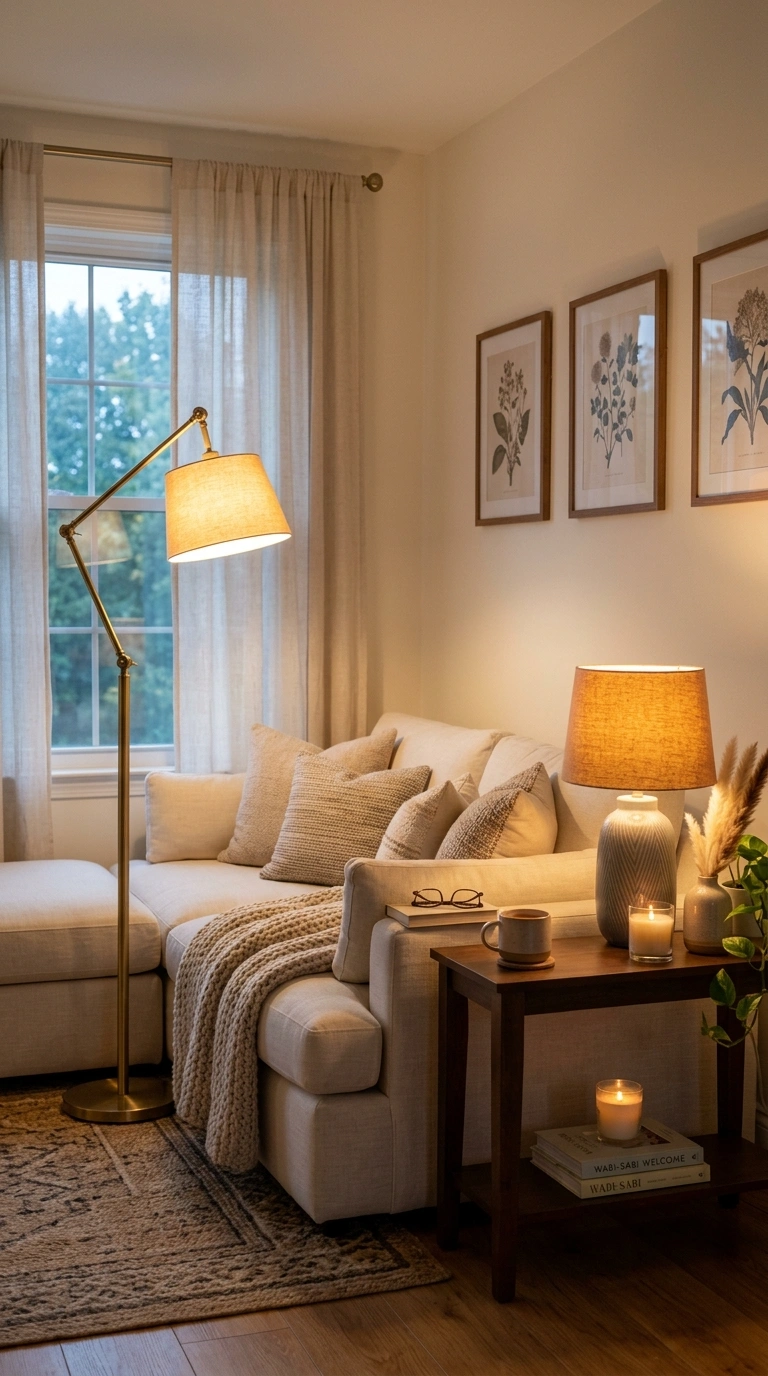
A single overhead light rarely does a room justice, no matter how nice the fixture is. Real warmth comes from layering at least three light sources in a room, an overhead fixture, a floor or table lamp, and something smaller like a plug-in sconce or string lights. In a living room, try a floor lamp beside the sofa, a table lamp on a side console, and dimmable overhead lighting for movie nights.
This layered approach lets you shift the mood of a room depending on the time of day or the activity happening in it. Bright, even light works for cleaning or hosting, while a single warm lamp in the corner feels better for reading or relaxing in the evening. Choose warm white bulbs around 2700K for most living spaces, since cooler tones can feel more like an office than a home.
2. Neutral Color Base
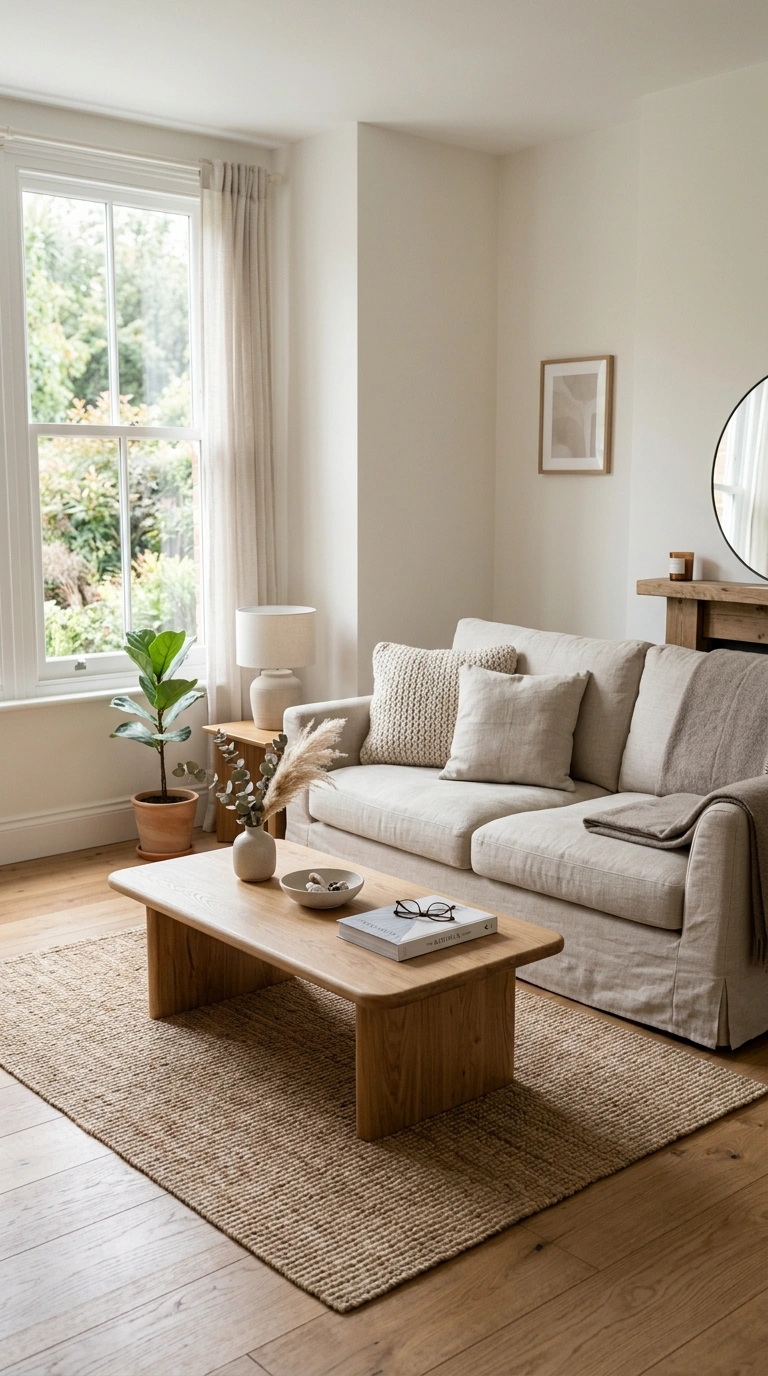
Starting a room with a neutral base, think warm whites, soft greiges, or light sand tones, gives you a calm backdrop that almost anything looks good against. Paint walls in a neutral shade and let your furniture, rugs, and art bring in color and personality instead. This approach also makes it much easier to update a room later, since you can swap pillows or a rug without repainting.
A neutral base does not mean boring. Layer in texture through linen curtains, a wool rug, or a wood coffee table so the room still feels rich even without bold color. This tip works especially well in smaller rooms, where light neutral walls help the space feel larger and brighter, particularly when paired with natural daylight from nearby windows.
3. Statement Rug Anchor
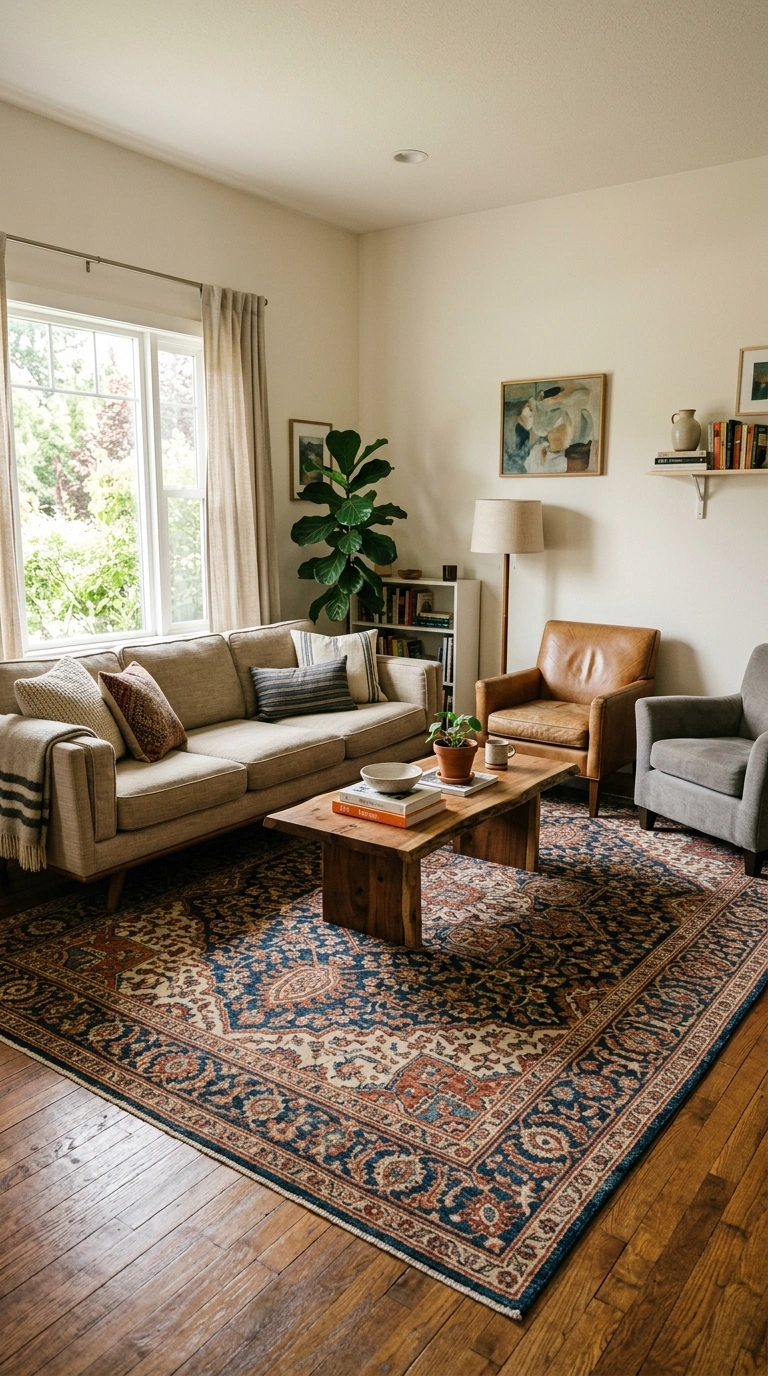
A rug does more work in a room than most people realize. It anchors the furniture into one grouping instead of letting pieces feel like they are floating separately around the walls. In a living room, choose a rug large enough that at least the front legs of your sofa and chairs sit on top of it, which visually ties the whole seating area together.
Pick a rug with a pattern or color that pulls from another element in the room, like a throw pillow or a piece of art, so everything feels connected without being matched exactly. In a bedroom, a rug placed so it extends past both sides of the bed makes the floor feel warmer underfoot and gives the whole room a finished, grounded look.
4. Gallery Wall Display
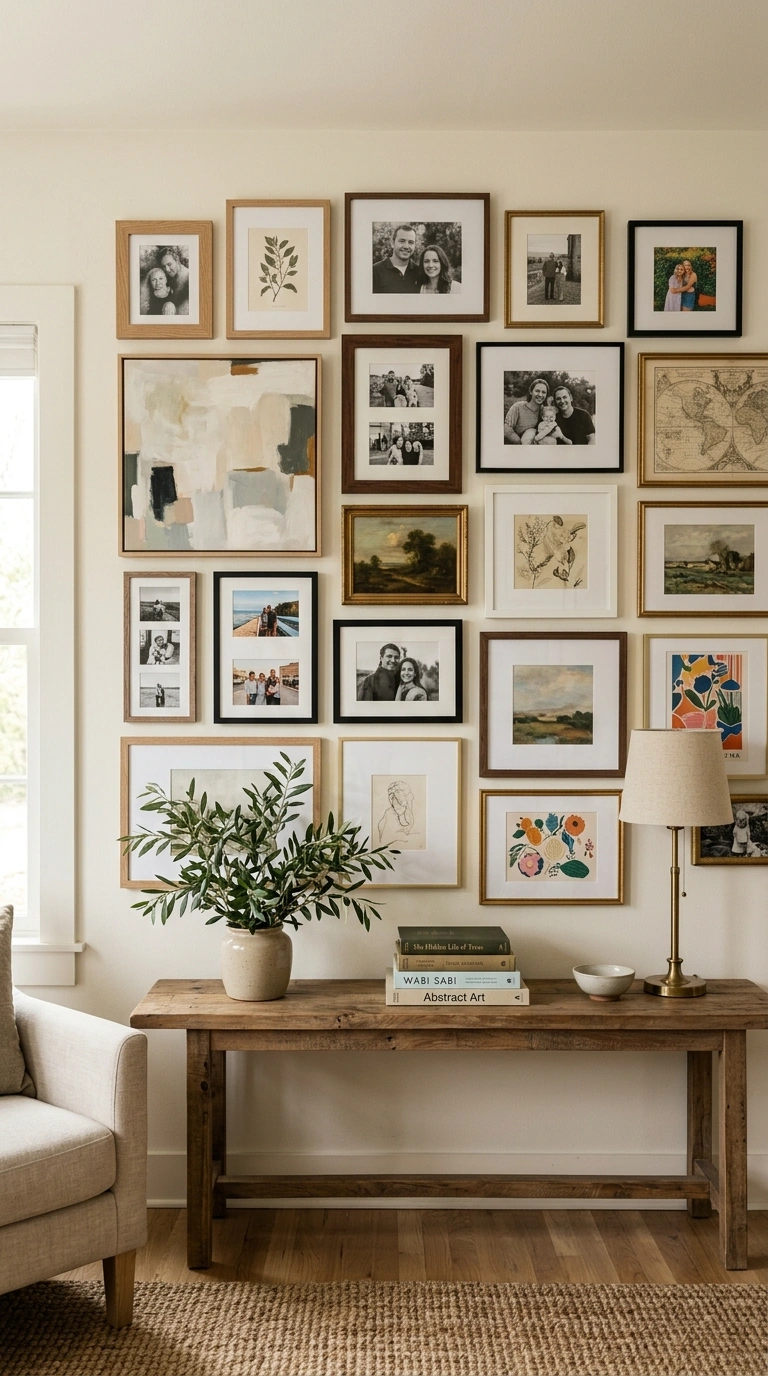
A gallery wall filled with framed art, photos, and a few small mirrors turns one blank wall into the most interesting spot in the room. Mix frame sizes and finishes rather than using a matching set, since a bit of variety looks more collected and personal over time. Lay the pieces out on the floor first to plan the arrangement before you commit to any nail holes.
This works especially well above a sofa, a console table, or along a staircase wall. Keep about two to three inches between frames so the grouping reads as one design rather than scattered pieces. Mixing in a few personal photos alongside prints or artwork makes the wall feel warm and specific to your home rather than something pulled straight from a store display.
5. Mixed Metal Accents
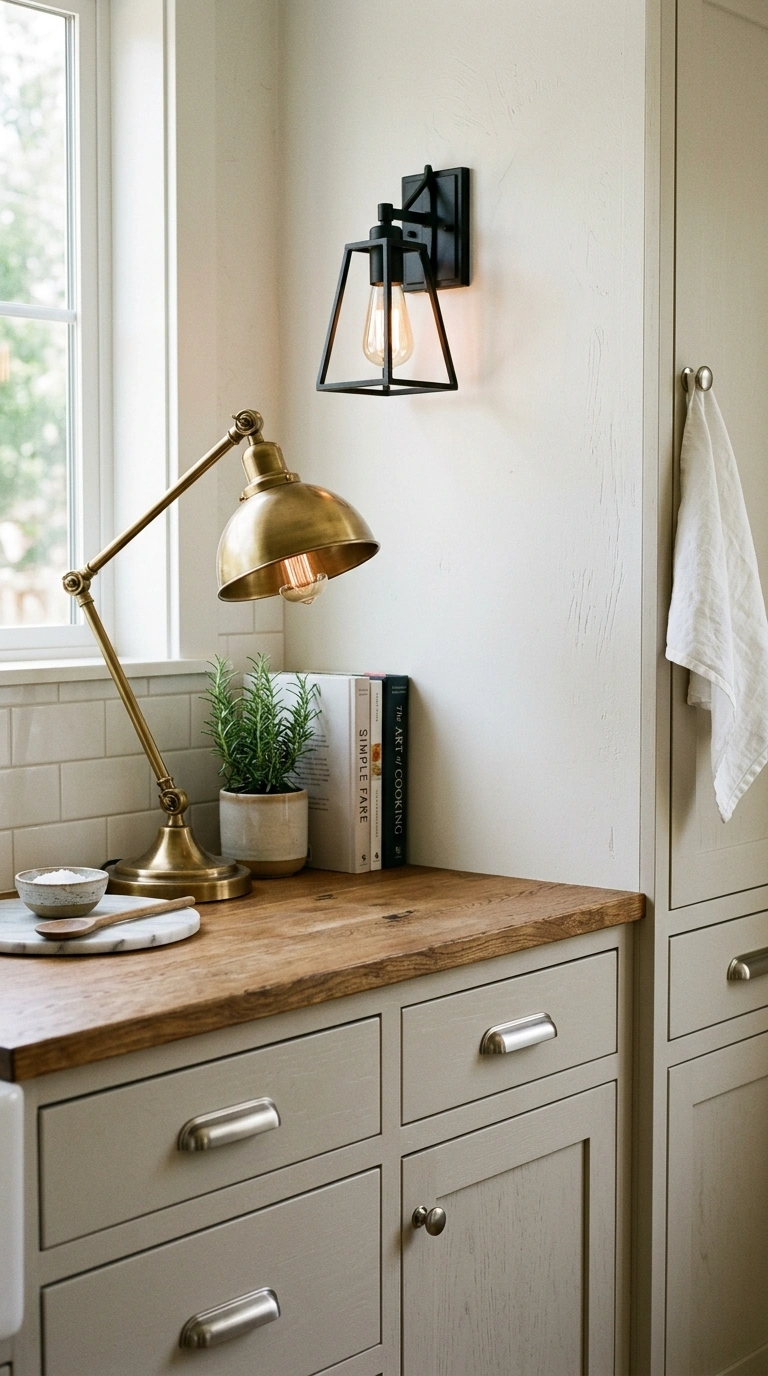
Mixing metal finishes, like black iron, brass, and matte nickel, adds depth to a room in a way that sticking to one metal never quite achieves. Use brass on a lamp base, black iron on a light fixture, and nickel on cabinet hardware, and the room will feel layered rather than mismatched, as long as one metal tone leads slightly more than the others.
This tip works especially well in kitchens and bathrooms, where hardware, faucets, and lighting all compete for attention. Pick one dominant metal to repeat most often, then add the second and third tones in smaller doses through smaller fixtures or decor pieces. The result feels intentional and collected, almost like the room was styled over time rather than bought all at once from a single catalog.
6. Textured Throw Pillows
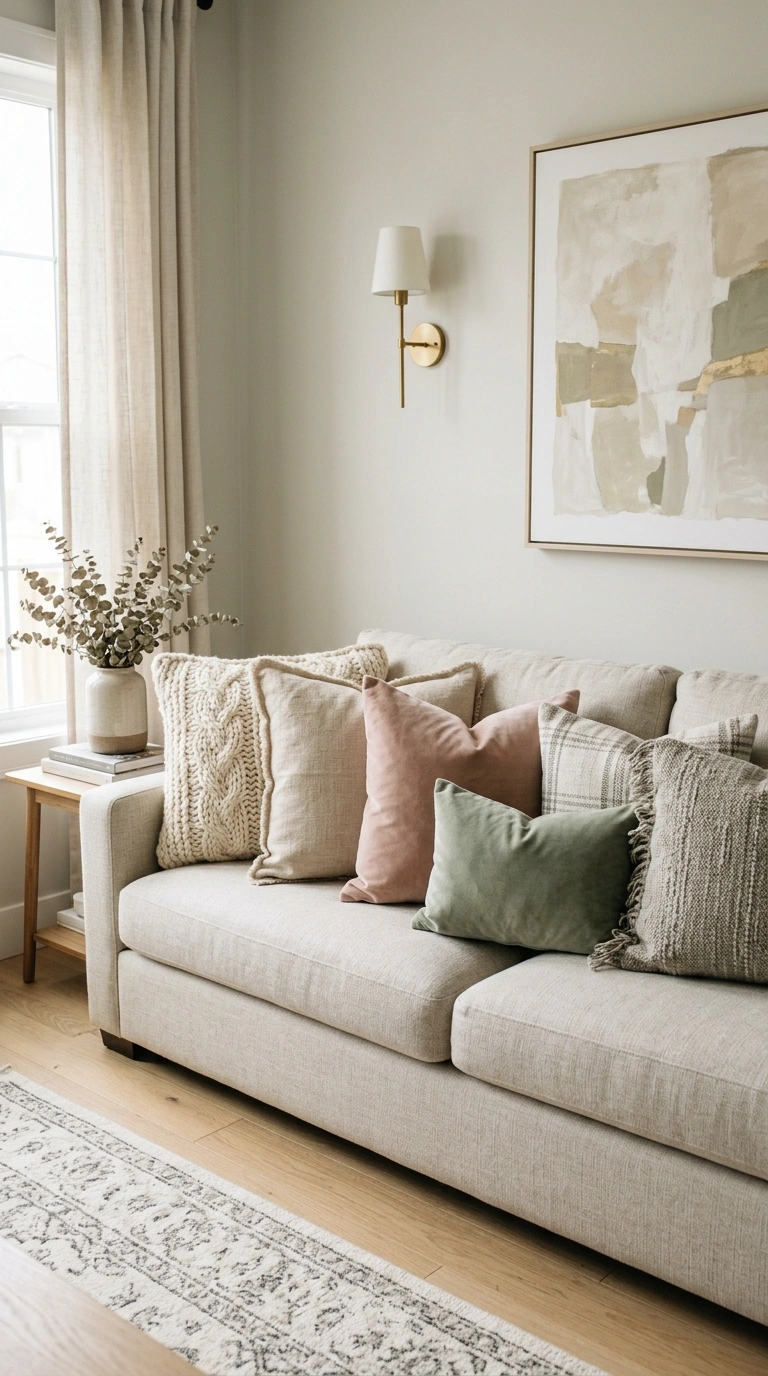
Pillows are one of the cheapest ways to change how a room feels, but the trick is mixing textures, not just colors. Pair a chunky knit pillow with a smooth linen one and a smaller velvet accent, and the sofa instantly feels more layered and lived in. Stick to two or three colors total so the mix still feels planned rather than random.
This tip is especially useful in rental homes, where you cannot repaint or replace furniture easily. Swapping pillow covers by season, heavier textures in fall and winter, lighter linen or cotton in spring and summer, is an easy way to refresh a room without spending much. Odd numbers, like three or five pillows across a sofa, tend to look more natural than an even, symmetrical row.
7. Sheer Curtain Panels
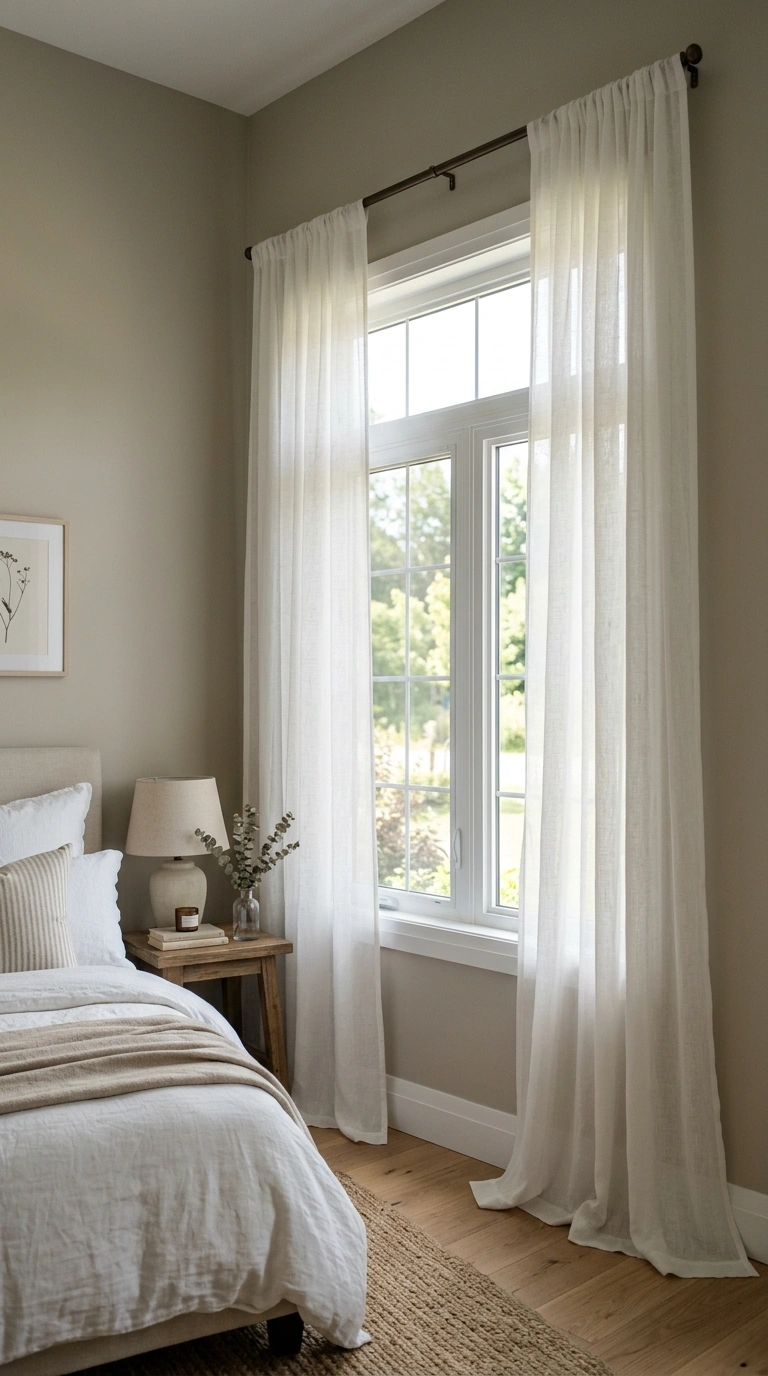
Sheer curtains hung close to the ceiling, rather than just above the window frame, make a room feel taller and let in soft, diffused light throughout the day. Use a simple rod mounted a few inches below the ceiling line, and choose panels long enough to just brush the floor, since curtains that stop short of the ground can make a window look smaller than it is.
Pair sheers with a slightly heavier curtain panel on the outside for privacy at night, layering the two for both light control and texture. This tip works in almost any room, but it makes the biggest difference in living rooms and bedrooms with average-sized windows, where the extra height and soft fabric trick the eye into seeing a bigger, brighter space.
8. Woven Basket Storage
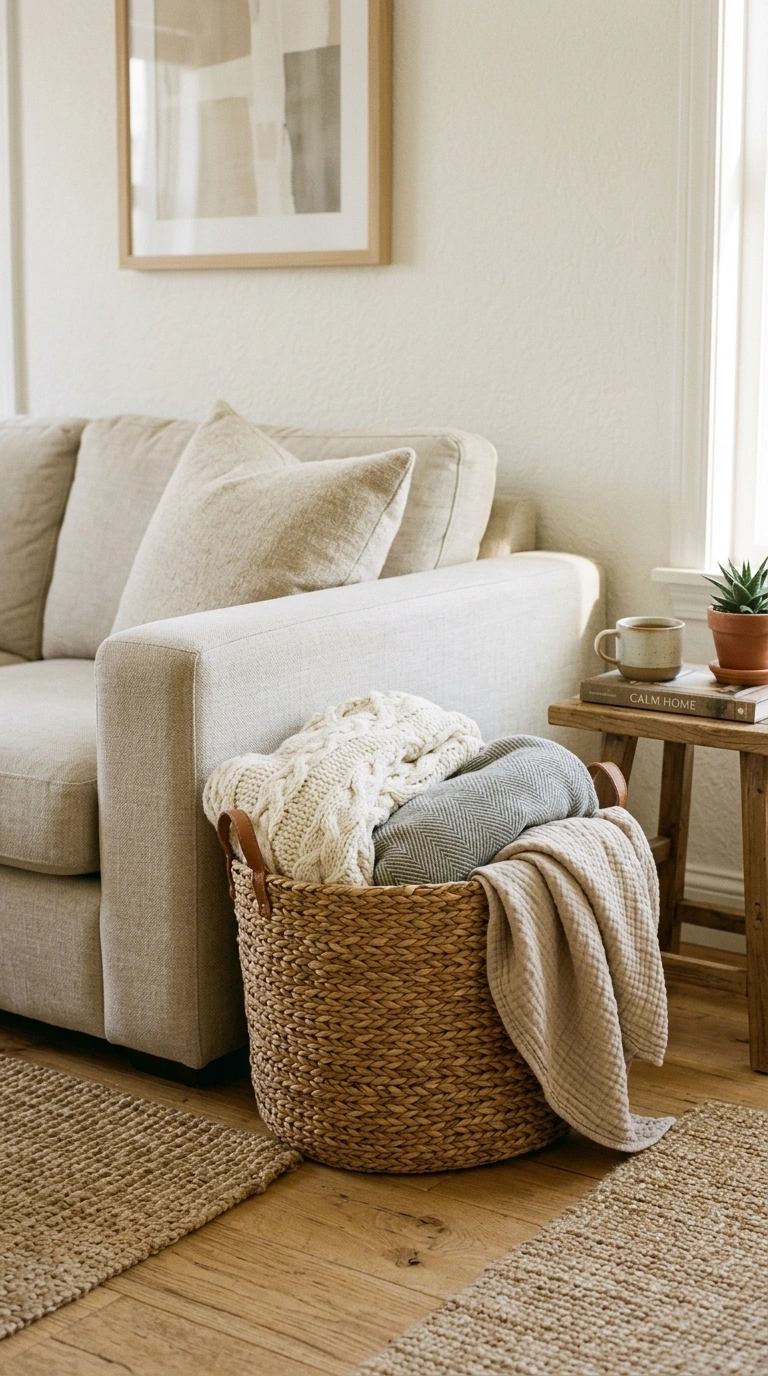
Baskets solve two problems at once, they hide clutter and add warm, natural texture to a room. Use a large woven basket beside the sofa for blankets, a smaller one on a shelf for remote controls or mail, and a floor basket near the entry for shoes. Natural fiber baskets, like seagrass or rattan, bring in texture that pairs especially well with a neutral color scheme.
This tip is one of the easiest ways to keep a room looking styled even on busy weeks, since a basket gives you somewhere fast to toss things before guests arrive. Choose a few different sizes so they stack or nest together when not in use, and repeat the same basket material in two or three spots around a room to tie the look together.
9. Bold Accent Chair
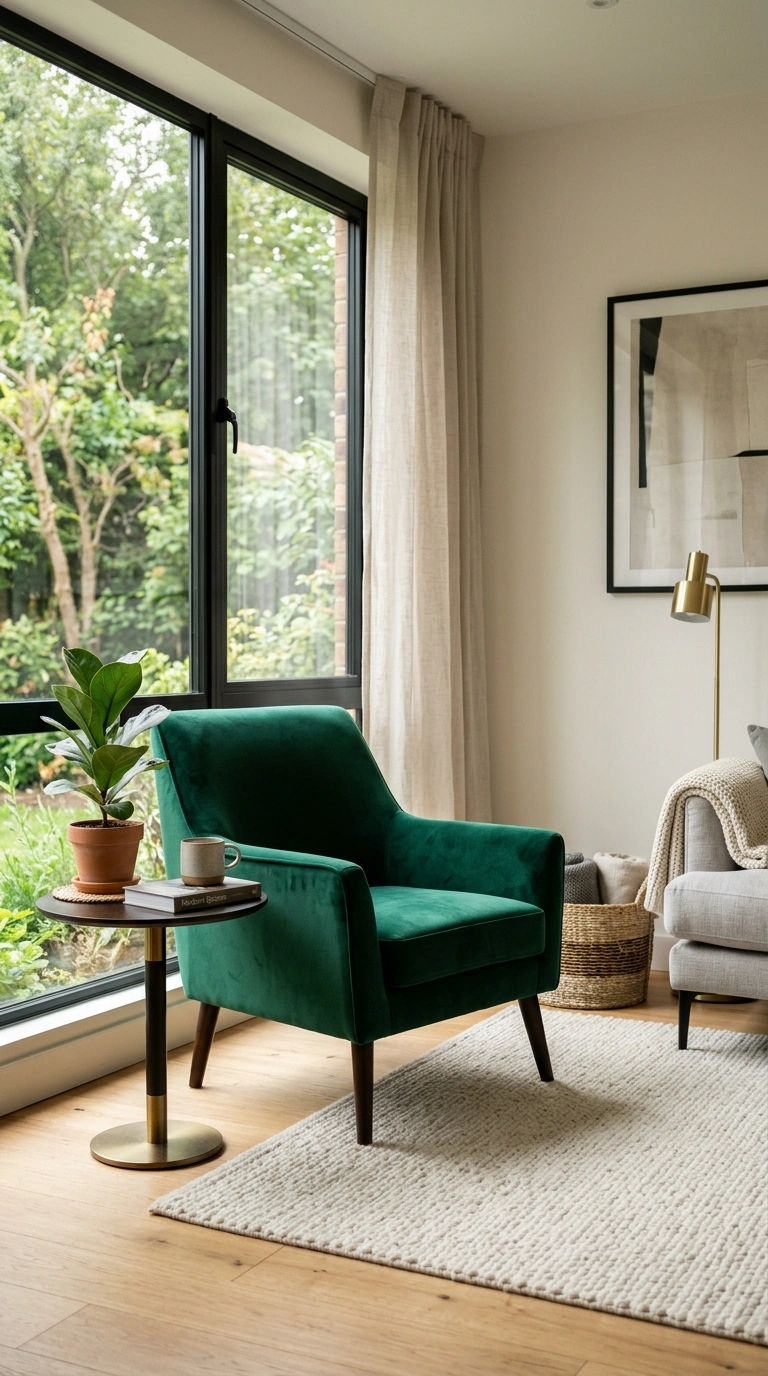
Adding one bold chair, whether in a bright color, a fun pattern, or an unusual shape, gives a neutral room a focal point without overwhelming the whole space. Place it near a window, in an empty corner, or angled toward the sofa to create a small conversation area. Because it is just one piece, you can commit to a color you would never choose for a whole sofa or wall.
This tip works especially well in living rooms and bedrooms that otherwise lean neutral and calm. A single statement chair in emerald velvet or a bold striped fabric becomes the piece people notice first when they walk in, and it makes the rest of the neutral furniture feel more intentional rather than plain, since the room clearly has a point of view.
10. Greenery in Corners
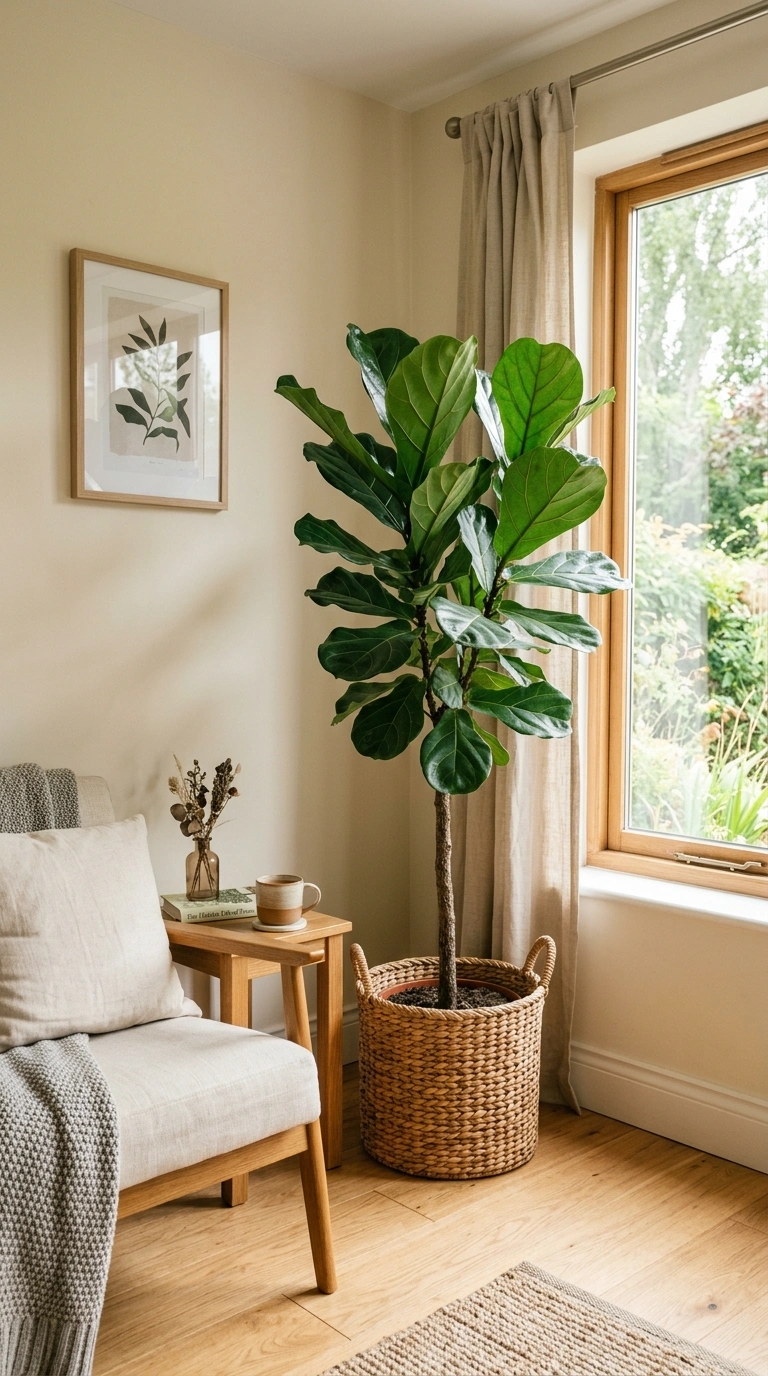
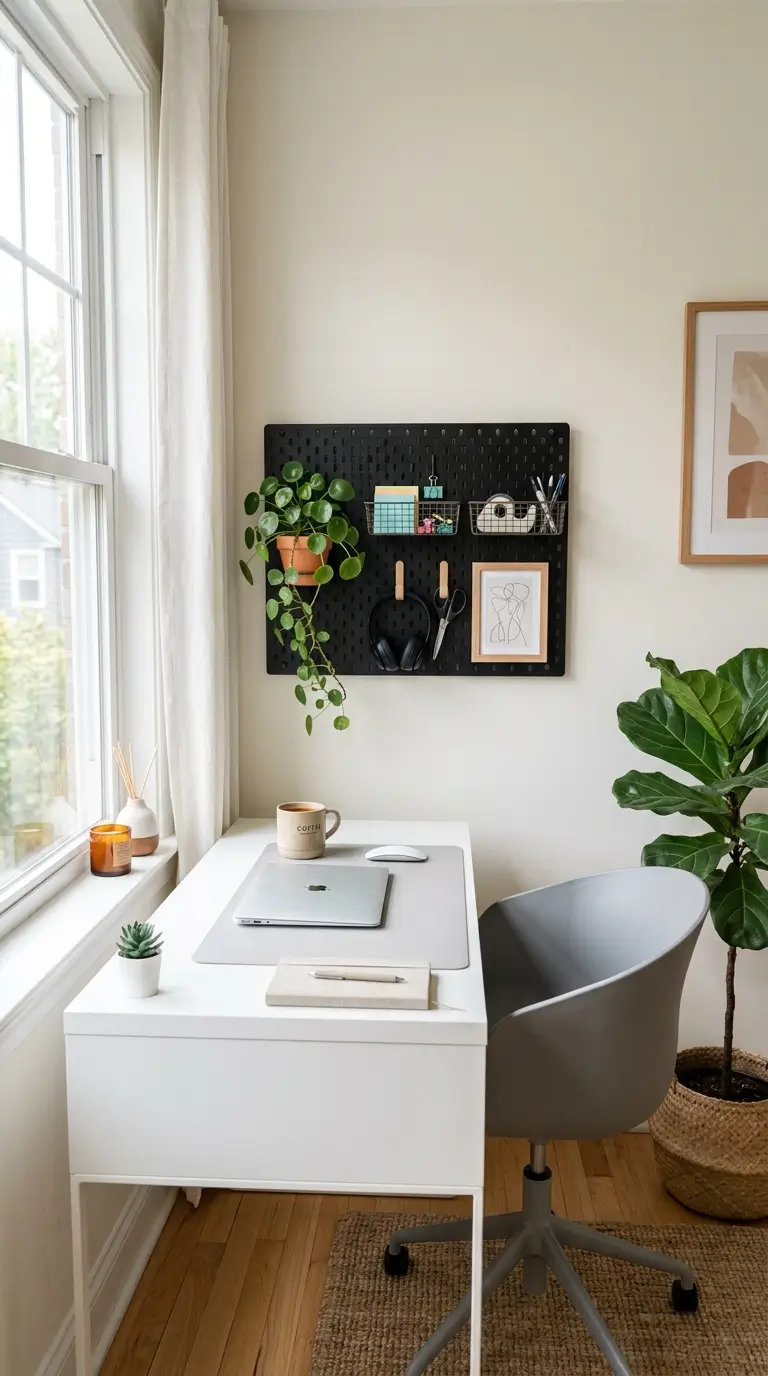
Empty corners are one of the most overlooked spots in a room, and a tall plant fills that gap better than almost anything else. A fiddle leaf fig, snake plant, or artificial olive tree in a woven or ceramic planter softens hard corners and adds a sense of life to the room. Place it near a window if it is a real plant, so it gets enough light to thrive.
This tip works in living rooms, bedrooms, and even bathrooms with the right low-light plant variety. A tall plant also draws the eye upward, which makes ceilings feel higher than they actually are. Pair it with a woven basket planter for texture, and keep the leaves dusted so the plant continues to look fresh and green in photos and in person.
11. Mirror Placement Trick
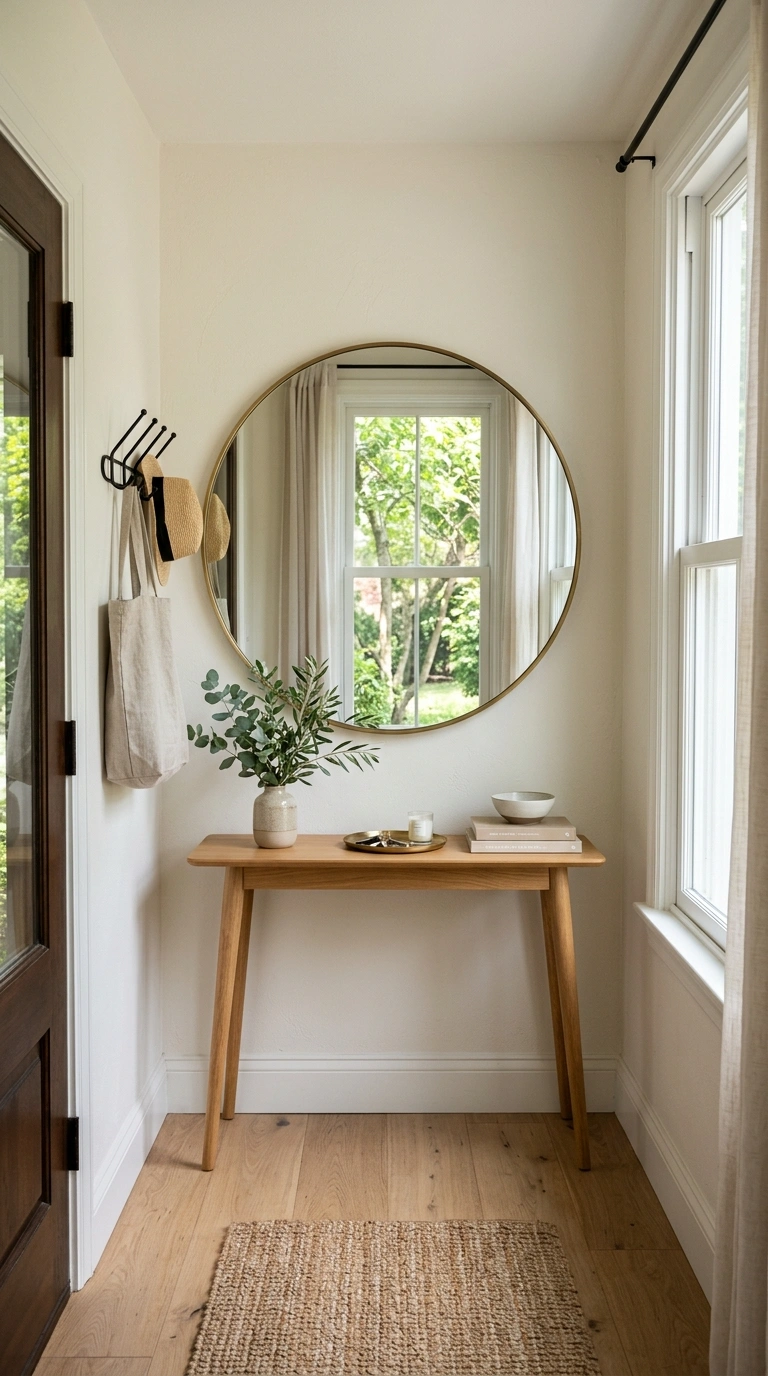
A well-placed mirror can make a room feel almost twice as bright and twice as large, but only if it reflects something worth seeing, like a window or a piece of art. Hang a large mirror across from a window so it bounces natural light deeper into the room throughout the day. In a smaller room, a floor mirror leaned against the wall adds height and depth without taking up much actual space.
This tip works especially well in dark hallways, small bedrooms, or entryways with little natural light. Choose a frame finish that matches your other metal accents in the room so the mirror feels part of the overall design rather than an afterthought. Even a simple round mirror above a console table can completely change how open a space feels.
12. Wood Tone Mixing
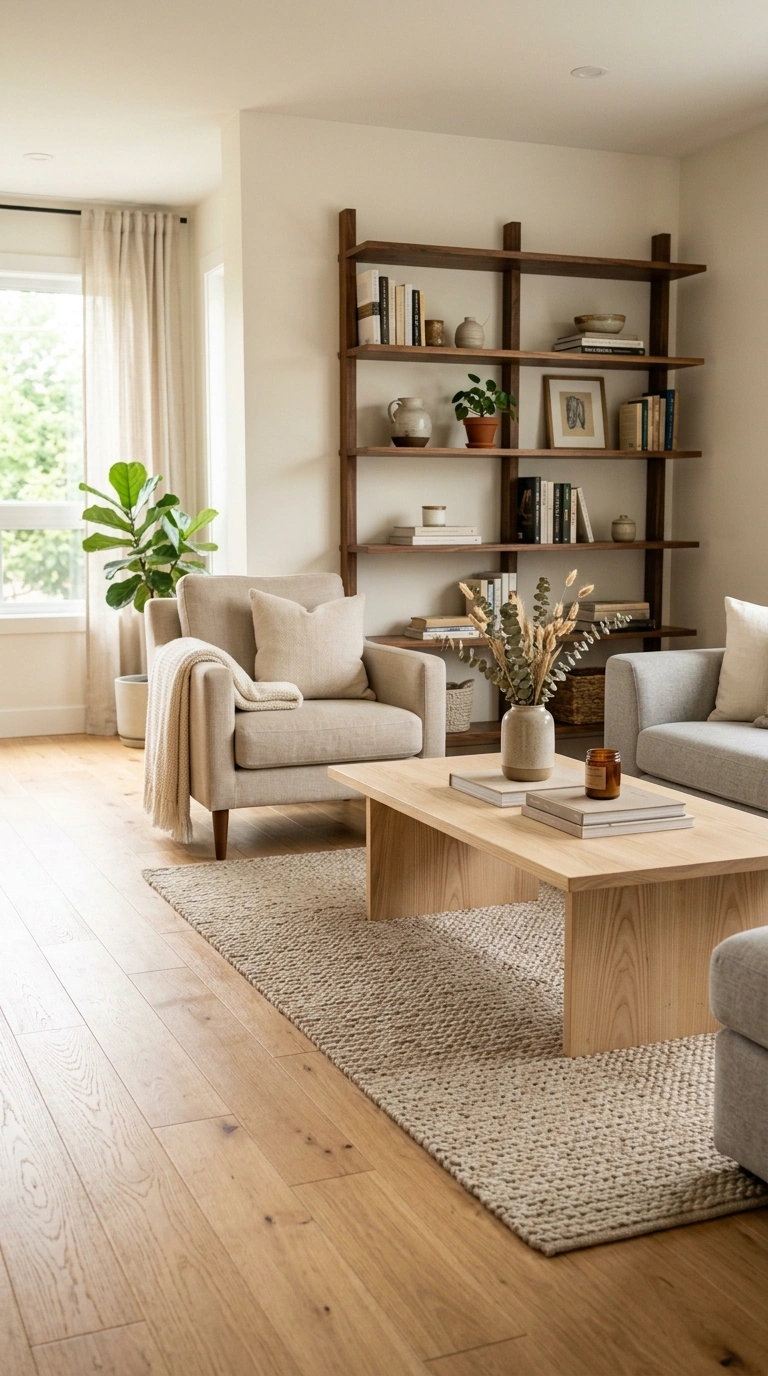
Matching every wood tone in a room, from the floors to the furniture to the trim, often makes a space feel flat and a little dated. Mixing two or three wood tones instead, a warm oak floor with a lighter ash coffee table and dark walnut shelving, gives a room more depth and a collected, natural feel. The key is keeping the undertones similar, either all warm or all cool, so the mix does not clash.
This tip is especially useful in open floor plans, where furniture from different rooms and different eras often ends up sharing one visual space. Rather than trying to match everything perfectly, aim for balance, spreading the different wood tones evenly around the room instead of clustering them all on one side.
13. Symmetrical Console Styling
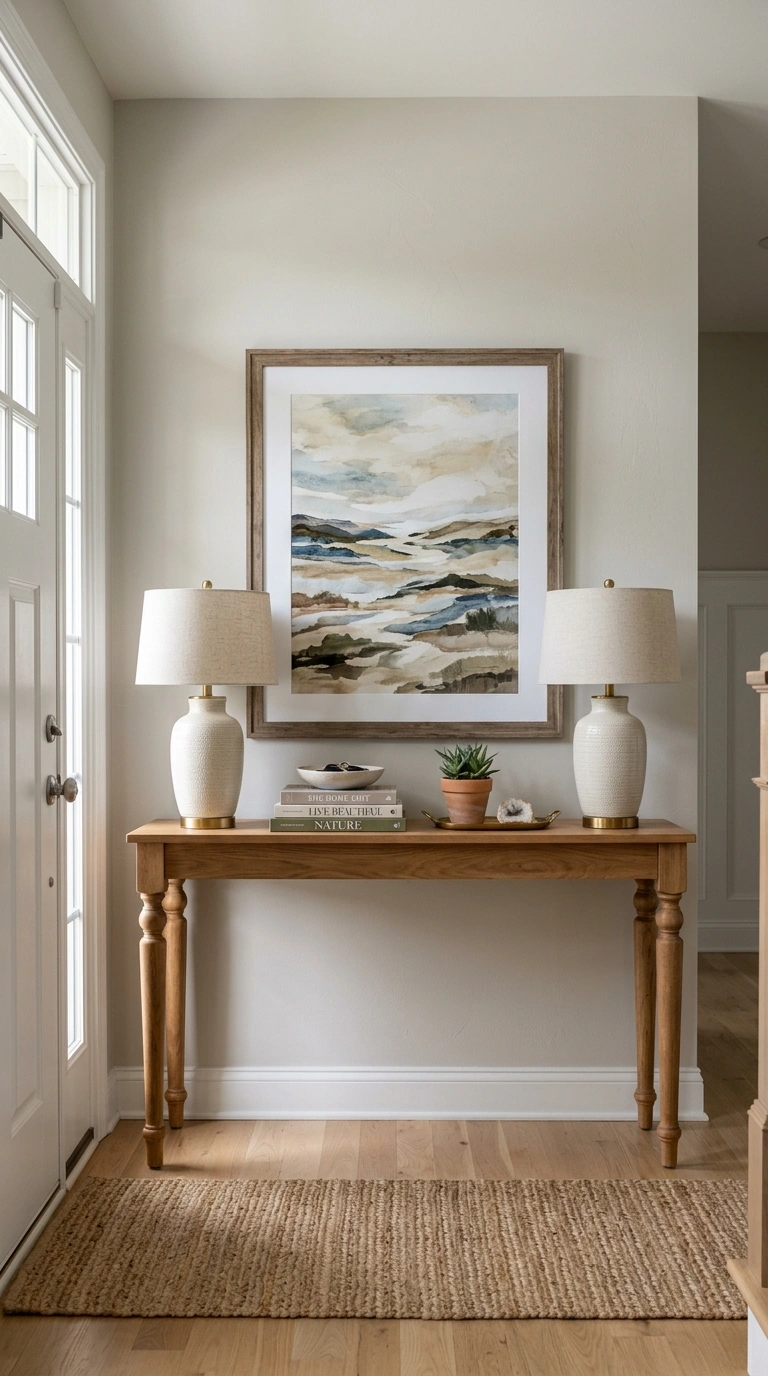
A console table styled with matching lamps on either side, a piece of art centered above, and a stack of books or a bowl in the middle instantly feels calm and put together. This kind of symmetry works especially well in entryways, hallways, and behind sofas, where the eye naturally looks for balance. Keep the tallest items, like lamps, at the same height on both sides.
Once the symmetrical base is set, add one small asymmetrical touch, like a single vase on one side only, so the styling does not feel too stiff or showroom-like. This tip is one of the fastest ways to make a plain entry table or console feel finished, since the eye reads symmetry as organized and intentional almost instantly.
14. Cozy Reading Nook
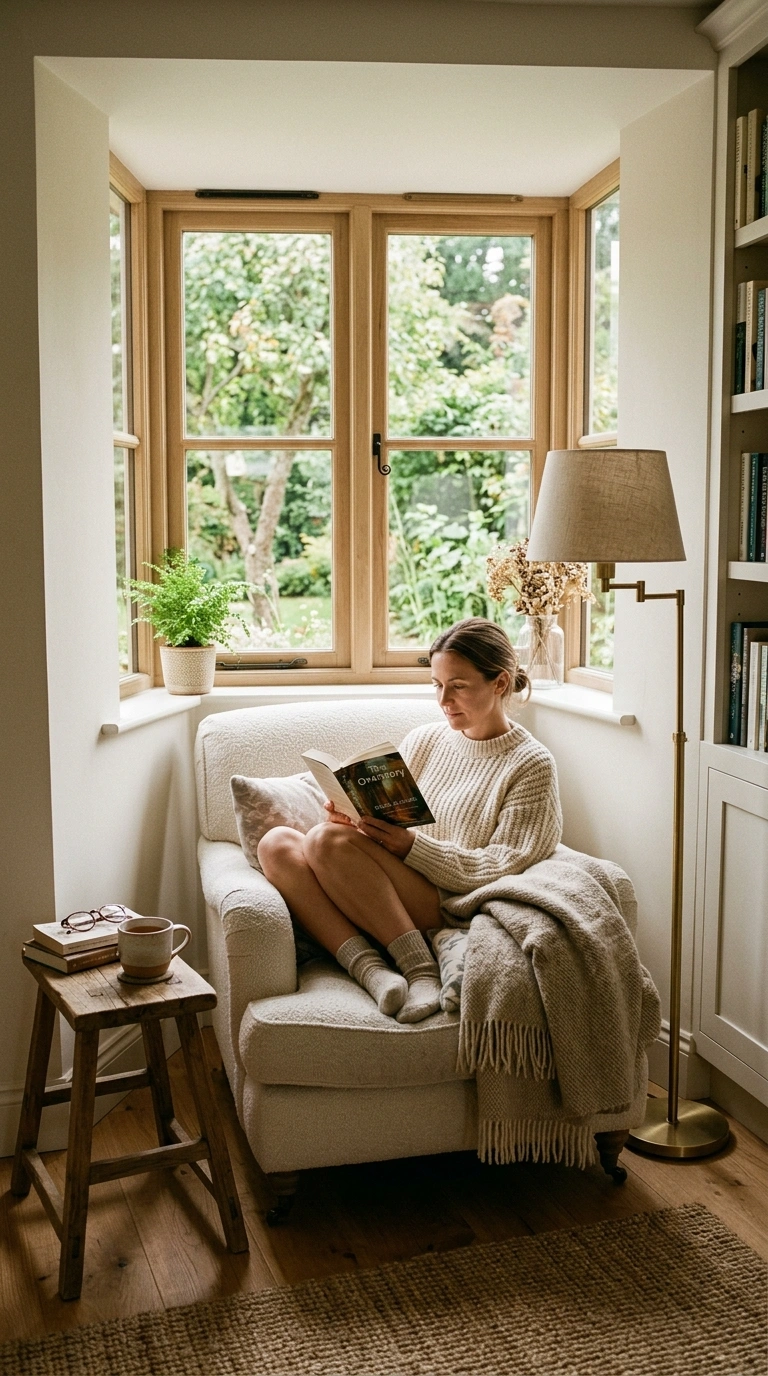
Turning an underused corner into a small reading nook adds personality and function to a room that might otherwise feel like wasted space. All you need is a comfortable chair, a small side table, a floor lamp, and a soft throw blanket draped over the arm. Place it near a window if possible, so natural light pours in during the day.
This tip works especially well in bedrooms, home offices, or a quiet corner of a living room. Add a small basket beside the chair for current books or magazines, and a plant nearby to soften the corner further. Even a small, simple nook like this gives a room a sense of purpose beyond just storage or seating, and it photographs beautifully with natural light.
15. Open Shelf Styling
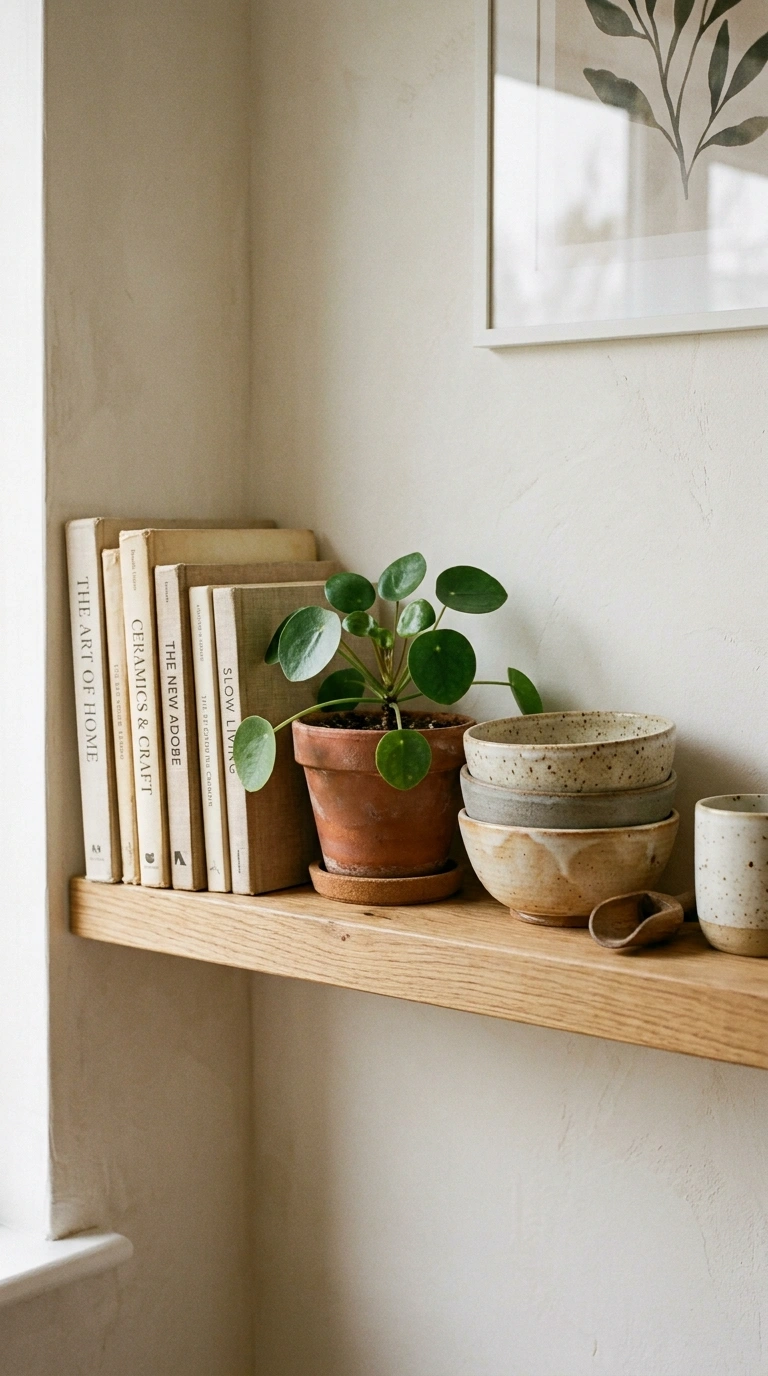
Open shelves in a kitchen or living room look best when they are styled with a mix of heights and textures rather than lined up like a store display. Group items in odd numbers, three books stacked with a small object on top, a plant beside a stack of bowls, so the eye has something interesting to land on at different points along the shelf.
Leave some breathing room between groupings rather than filling every inch, since empty space actually makes the styled items stand out more. This tip works well anywhere open shelving exists, from a kitchen wall to a living room built-in. Rotate a few pieces seasonally, swapping in a vase of flowers or a different color book, to keep the shelf feeling fresh throughout the year.
16. Layered Area Rugs
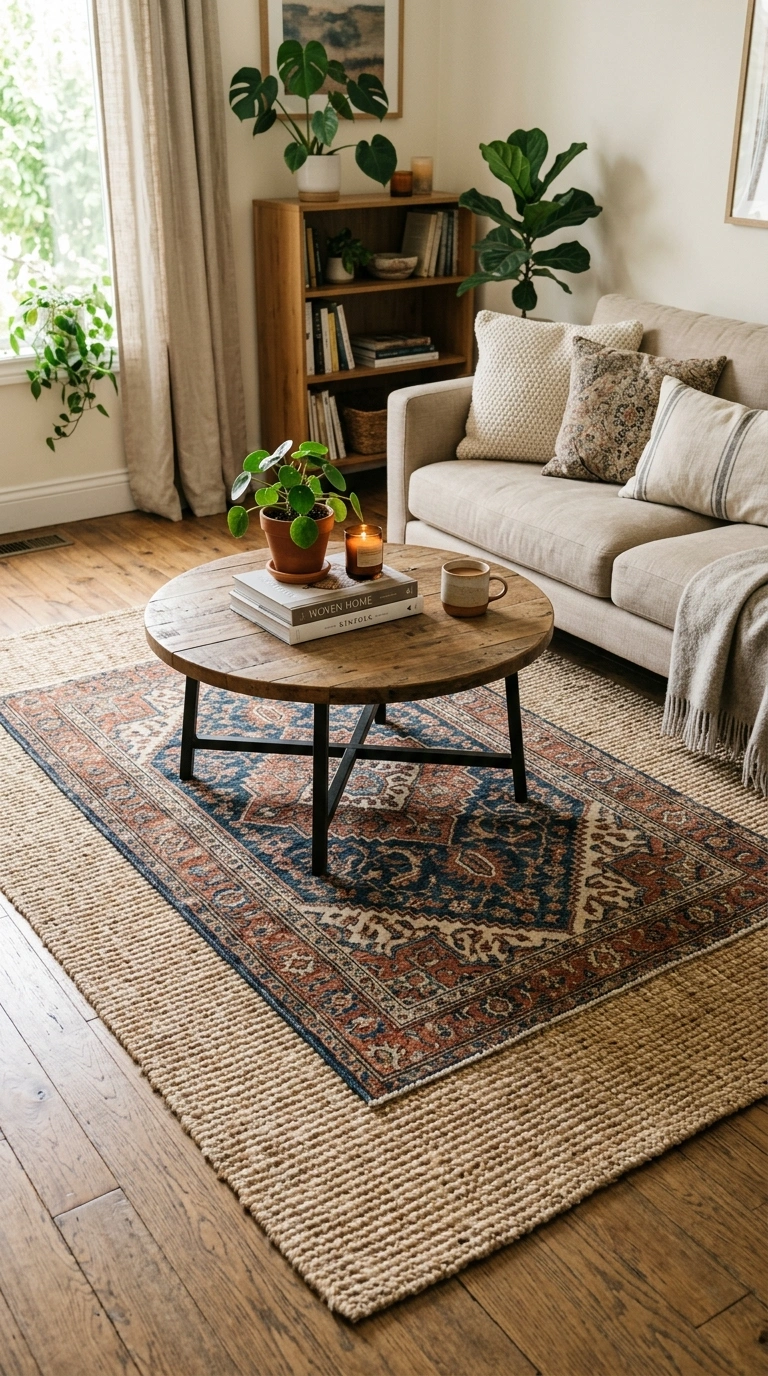
Layering a smaller patterned rug over a larger jute or sisal rug adds texture and visual interest to a room without committing to one bold rug across the whole floor. This works especially well in living rooms and bedrooms, where the larger natural fiber rug acts as a neutral base and the smaller rug on top brings in color or pattern under the coffee table or at the foot of the bed.
Choose rugs in complementary tones so the layered look feels planned rather than mismatched. This tip is a great option for renters or anyone who wants to change up a room’s look without buying new furniture, since swapping the top rug alone can shift the whole feel of a space in just a few minutes.
17. Statement Pendant Light
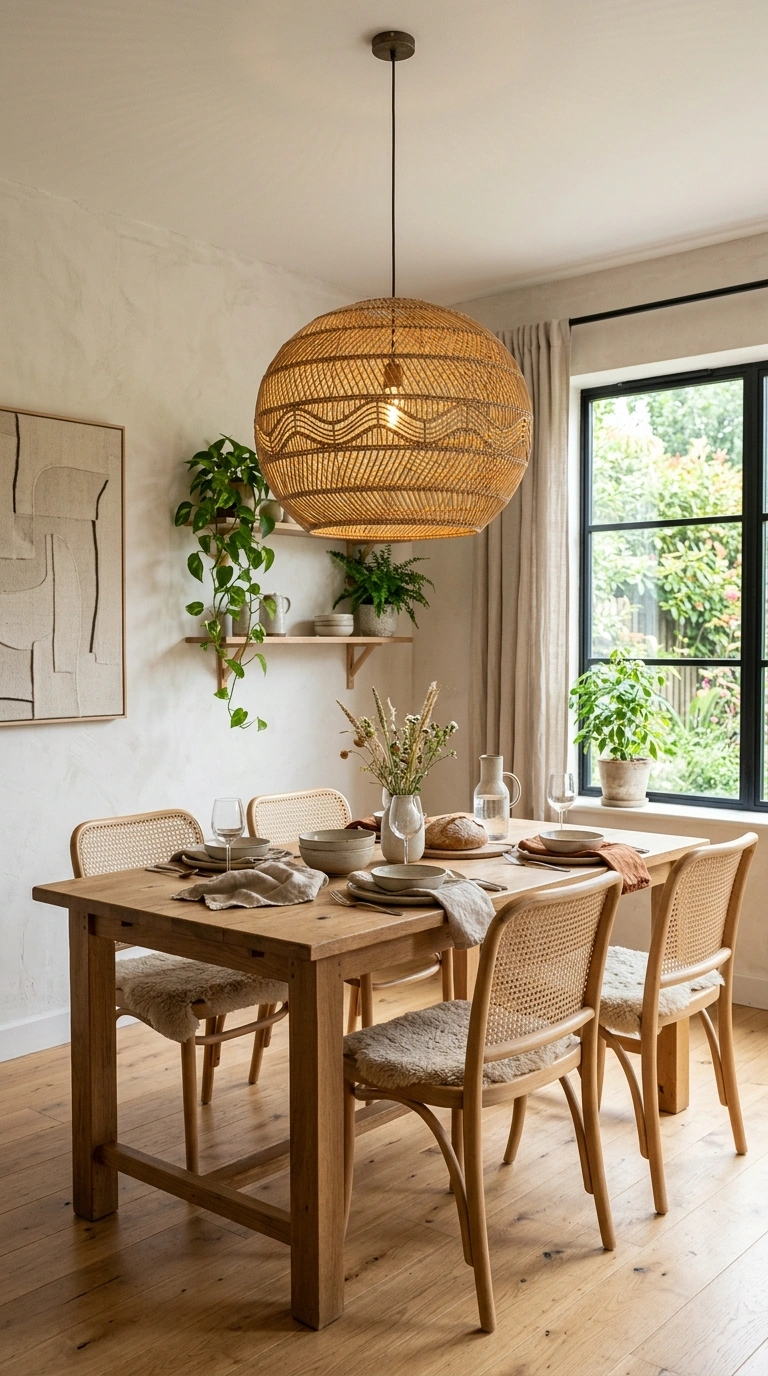
Swapping a plain overhead fixture for a statement pendant light instantly upgrades a room, even if nothing else changes. A woven rattan pendant over a dining table, or a sculptural glass fixture in an entryway, becomes a focal point the moment you walk in. Hang it at a height where it does not block sightlines across the table but still feels like part of the room below eye level for tall ceilings.
This tip works especially well in dining rooms, kitchen islands, and entryways, spots where a single fixture naturally draws the eye. Choose a finish that complements your other metal accents in the room, and consider a dimmer switch so the same fixture can provide bright task lighting or a softer glow depending on the time of day.
18. Vintage Furniture Piece
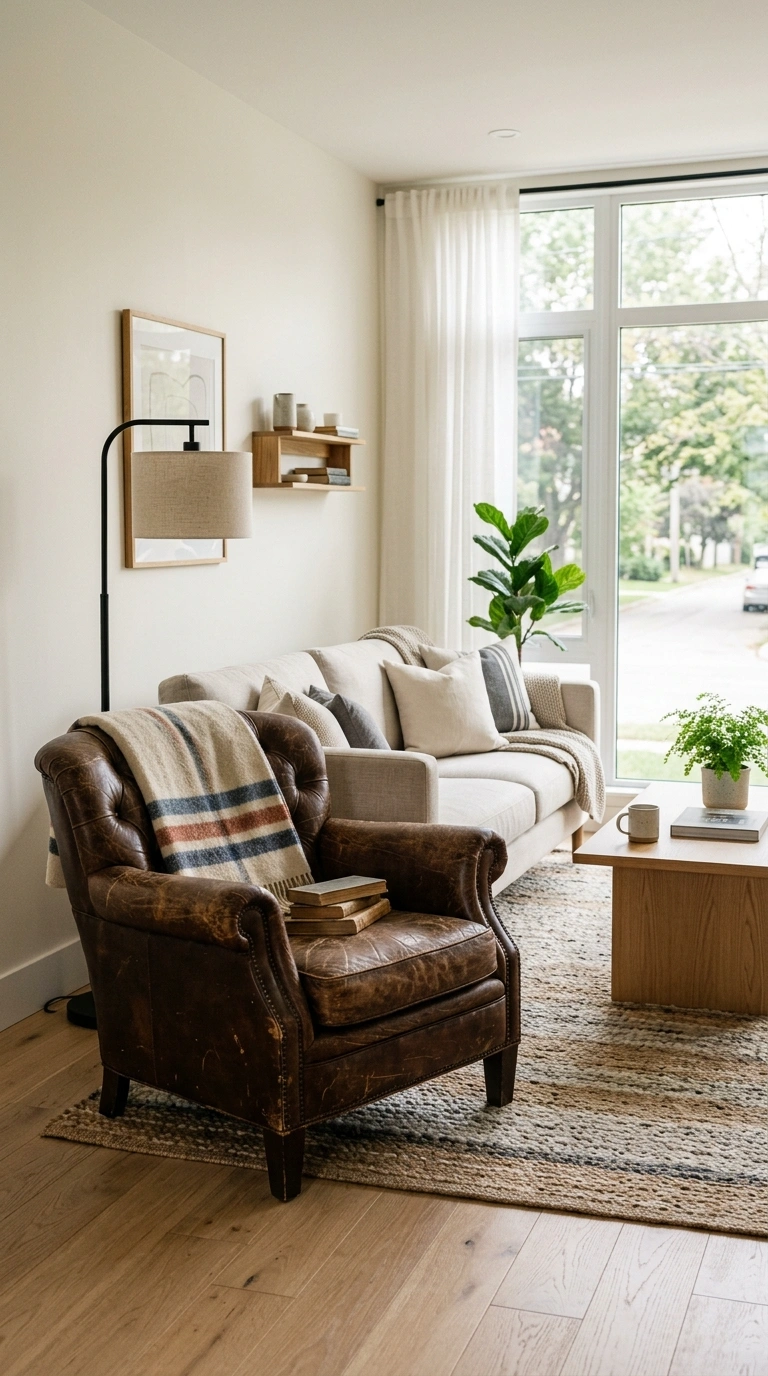
Adding one vintage or antique piece, an old wood dresser, a worn leather chair, or a carved side table, gives a room a sense of history that brand-new furniture alone cannot create. Look for pieces at estate sales, thrift stores, or online marketplaces, and do not worry if the finish needs a light refresh with wax or paint.
This tip works well in almost any room, but it makes the biggest impact in spaces that otherwise feel a bit too matched or showroom-perfect. One vintage piece, styled among newer furniture, breaks up the uniformity and makes the whole room feel collected over time rather than bought all at once from a single store.
19. Monochrome Bedroom Palette
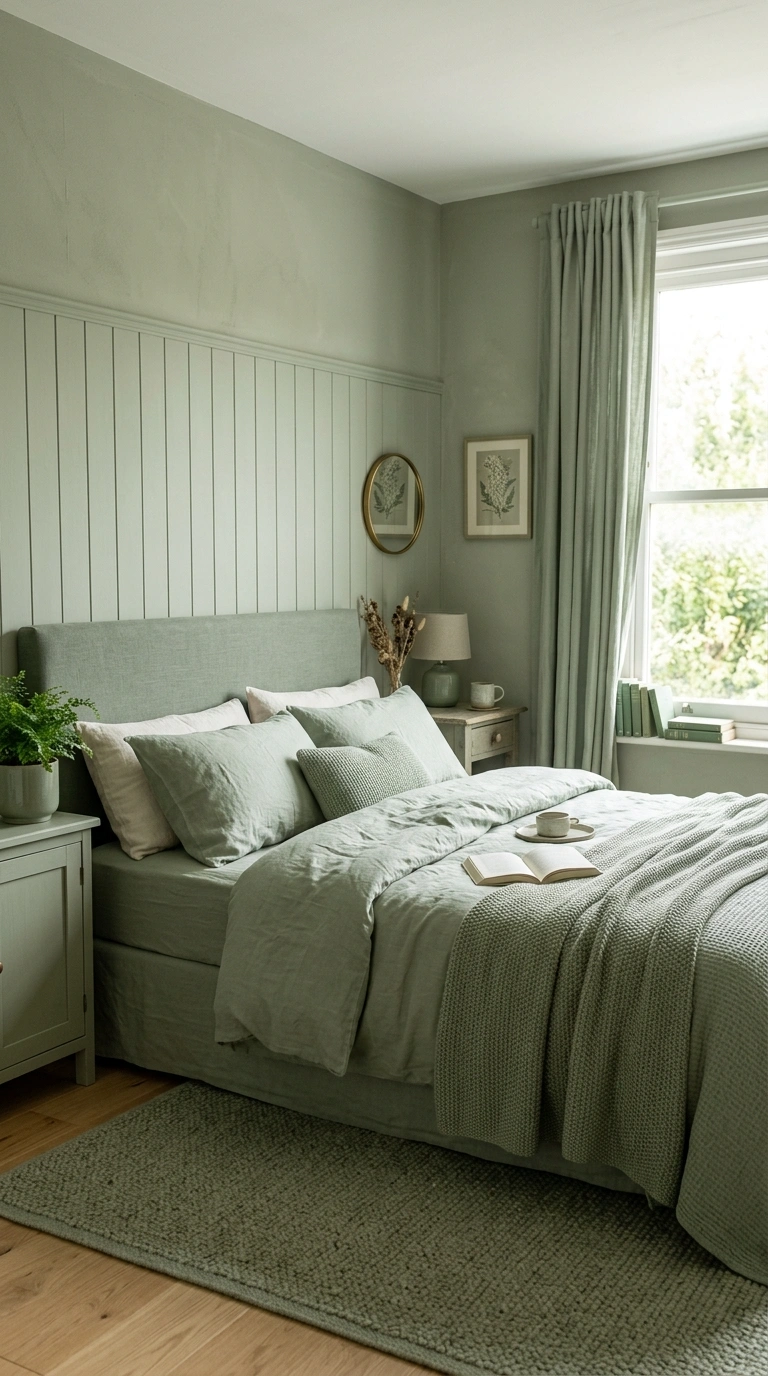
Keeping a bedroom in one soft color family, various shades of sage green or warm terracotta for example, creates a calm, cohesive feel that is easy to fall asleep in. Use the deepest shade on the walls or headboard, a mid-tone on bedding, and the lightest shade in curtains or a rug, so the room reads as intentional rather than one flat block of color.
This tip works especially well in smaller bedrooms, where too many competing colors can make the space feel busy or chaotic. Add texture through different bedding materials, linen sheets, a knit throw, a velvet lumbar pillow, so the monochrome look still feels rich and layered rather than plain, even though the color palette stays narrow and calm.
20. Natural Fiber Textiles
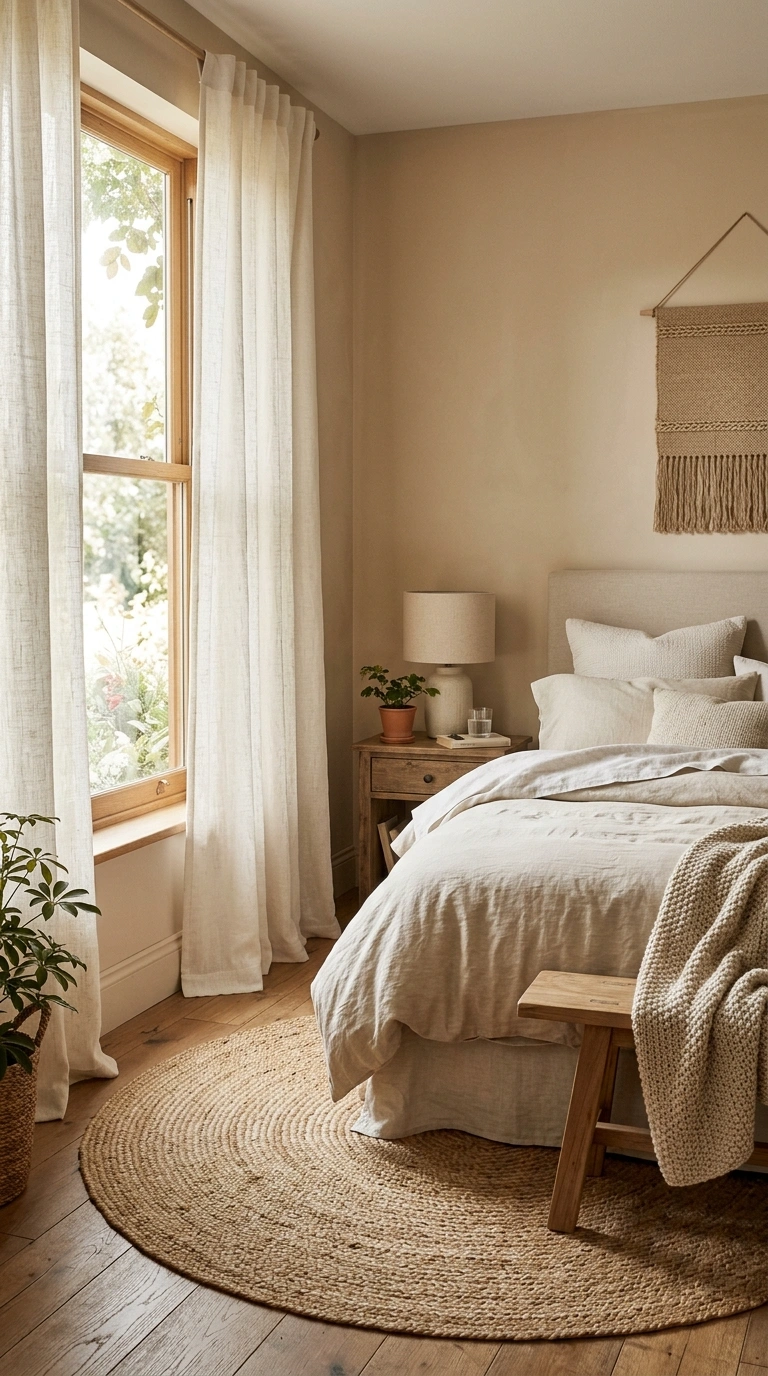
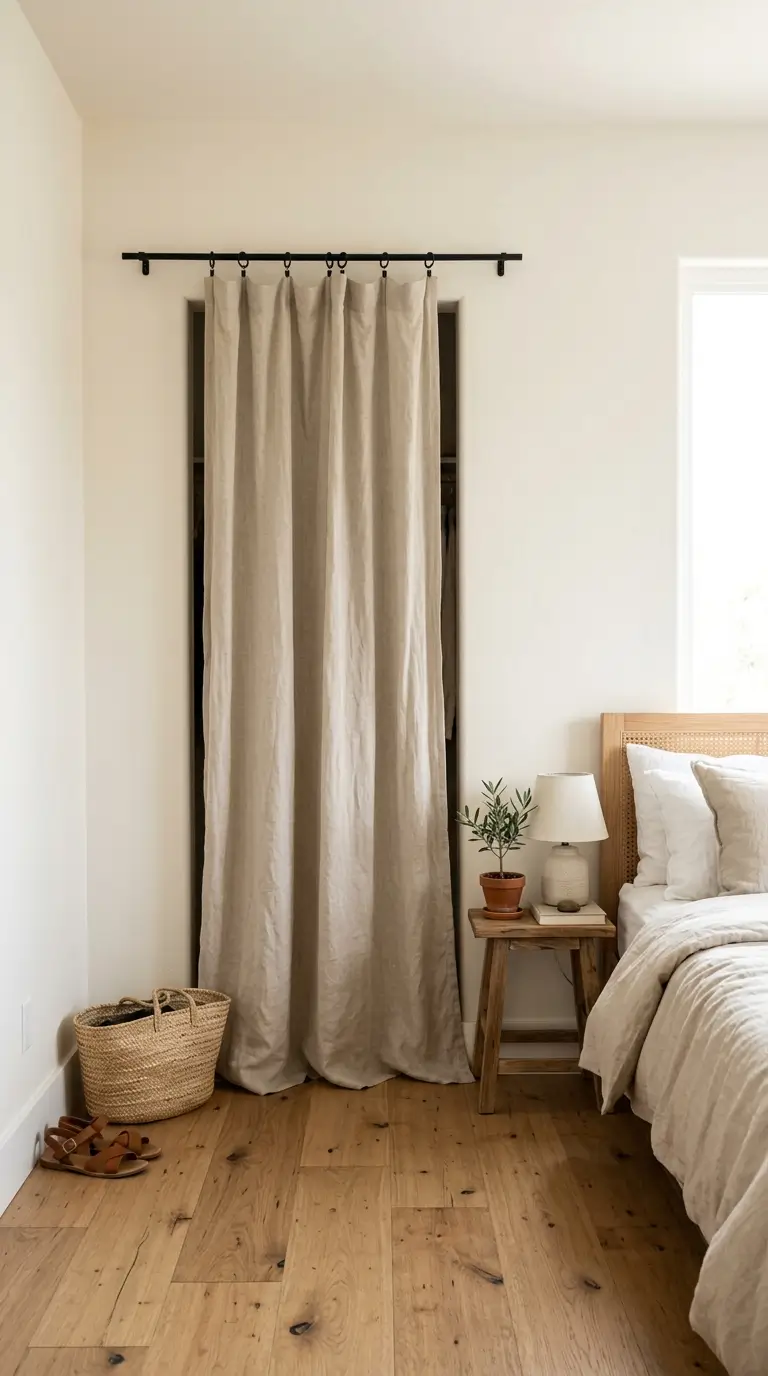
Choosing natural fiber textiles, linen curtains, a jute rug, cotton bedding, over synthetic materials adds warmth and texture that synthetic fabrics rarely achieve. These materials also tend to age well, developing a soft, lived-in look rather than looking worn out. Use linen for curtains and throw pillow covers, and save synthetic blends for high-wear items like outdoor cushions where durability matters more.
This tip works throughout the whole home, but it makes the biggest visual difference in living rooms and bedrooms, where texture is easy to see and touch. Mixing a few different natural fibers, wool, cotton, linen, jute, in one room adds depth without needing to add more color or pattern, which keeps a neutral room from feeling flat.
21. Coffee Table Styling
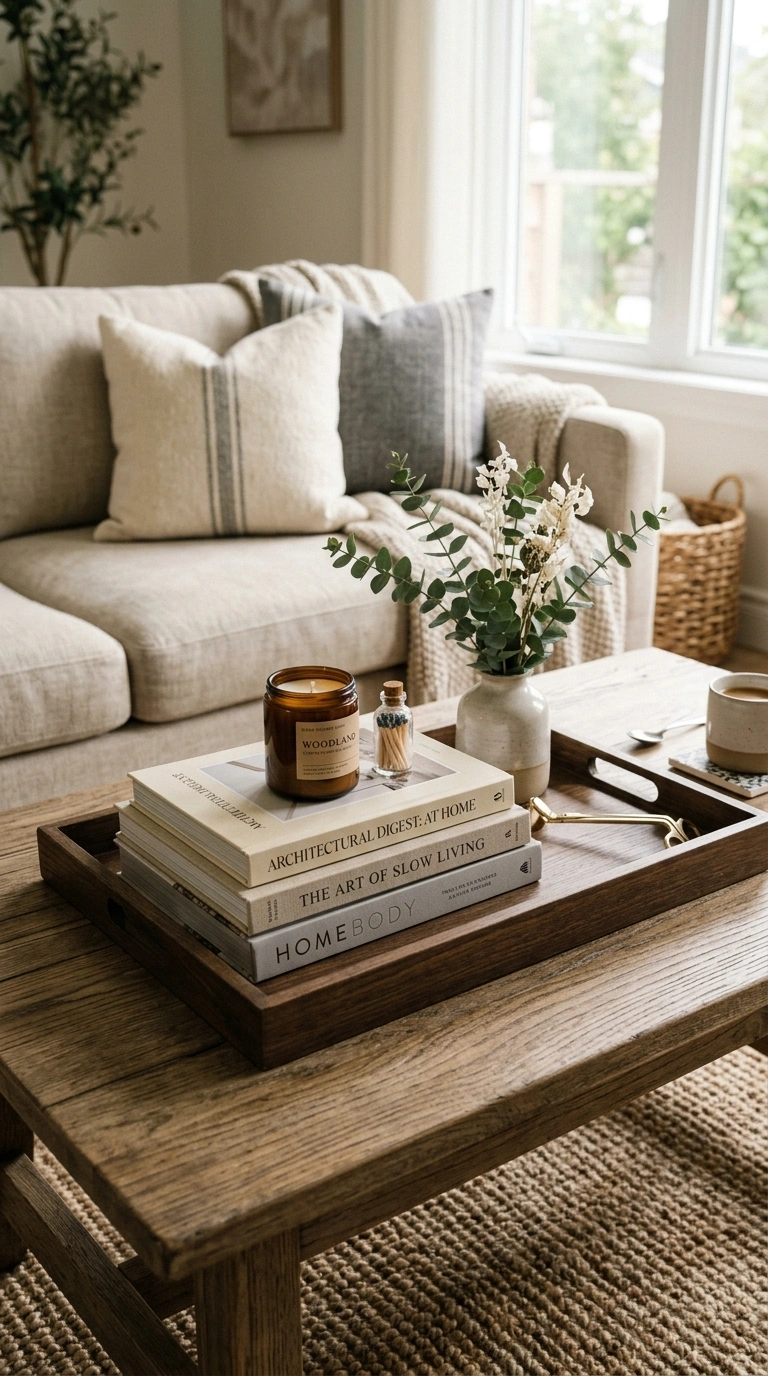
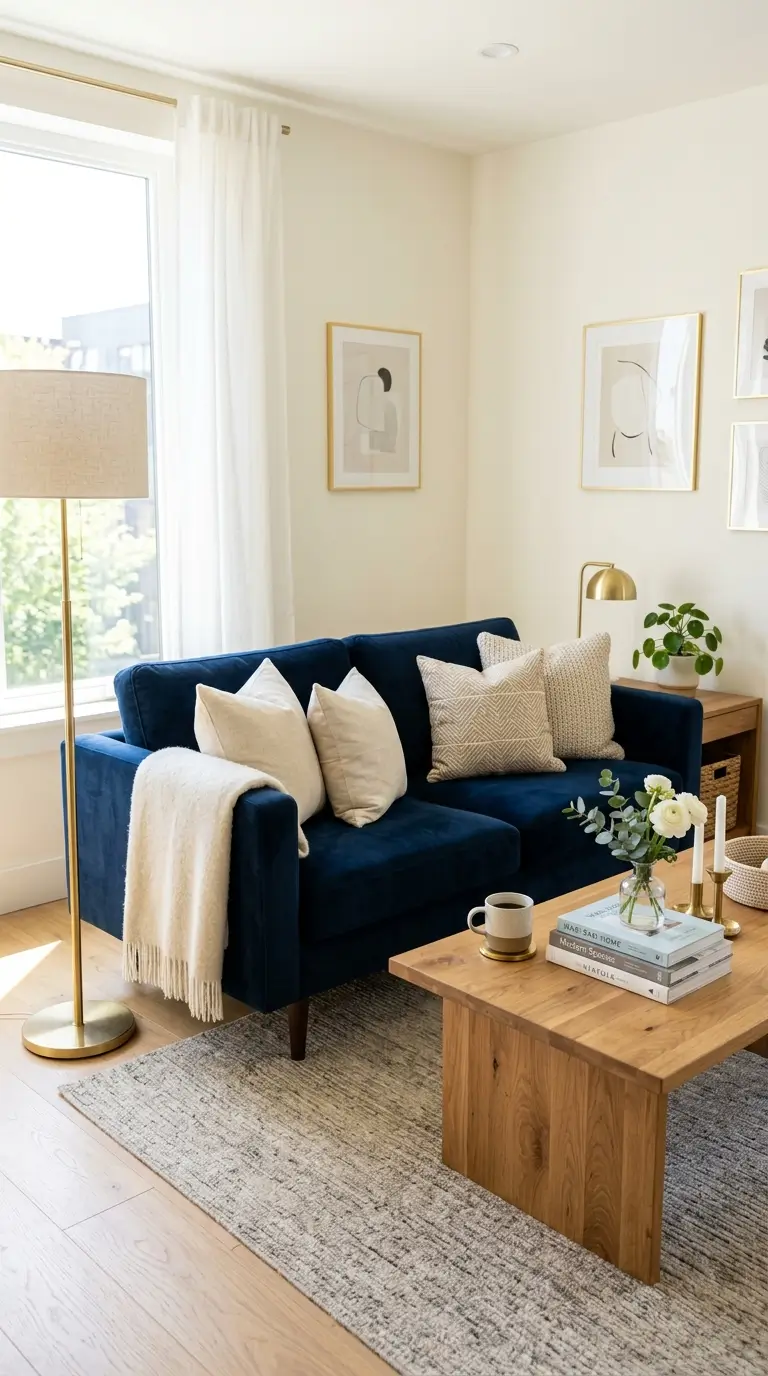
A coffee table styled with a large tray, a stack of books, and one small object like a candle or a small vase feels finished without looking overdone. Keep the tray as the base layer that holds everything together, then build height with the book stack on one side and let the other side stay more open for setting down a drink or a remote.
This tip is one of the simplest styling changes in this whole list, since most coffee tables already have the right pieces sitting somewhere in the house. Choose a color palette that matches your rug or pillows so the table feels connected to the rest of the room, and swap out the small objects seasonally to keep the space feeling current.
22. Wall Molding Accent
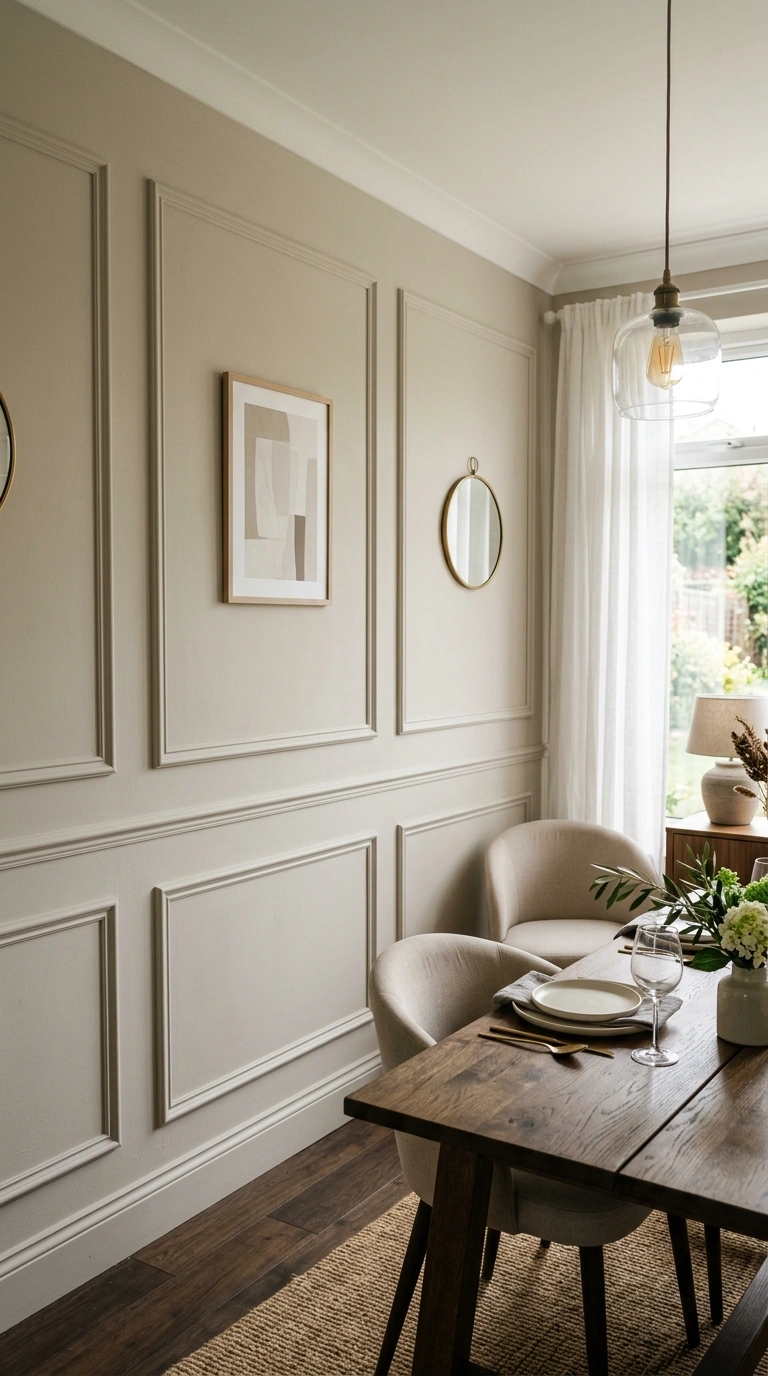
Adding simple picture frame molding to a plain wall brings architectural detail to a room without needing a full renovation. Basic wood trim, cut into rectangles and mounted with construction adhesive, then caulked and painted the same color as the wall, gives a flat surface real depth and shadow lines. This works especially well in dining rooms, entryways, or behind a bed as a headboard alternative.
Paint the molding and wall in the same color for a subtle, tone-on-tone look, or add contrast with a slightly darker or lighter shade inside each panel. This is a weekend project for most homeowners, and it adds a custom, higher-end feel to a room using materials from any hardware store, without needing to call in a contractor.
23. Curated Bookshelf Corner
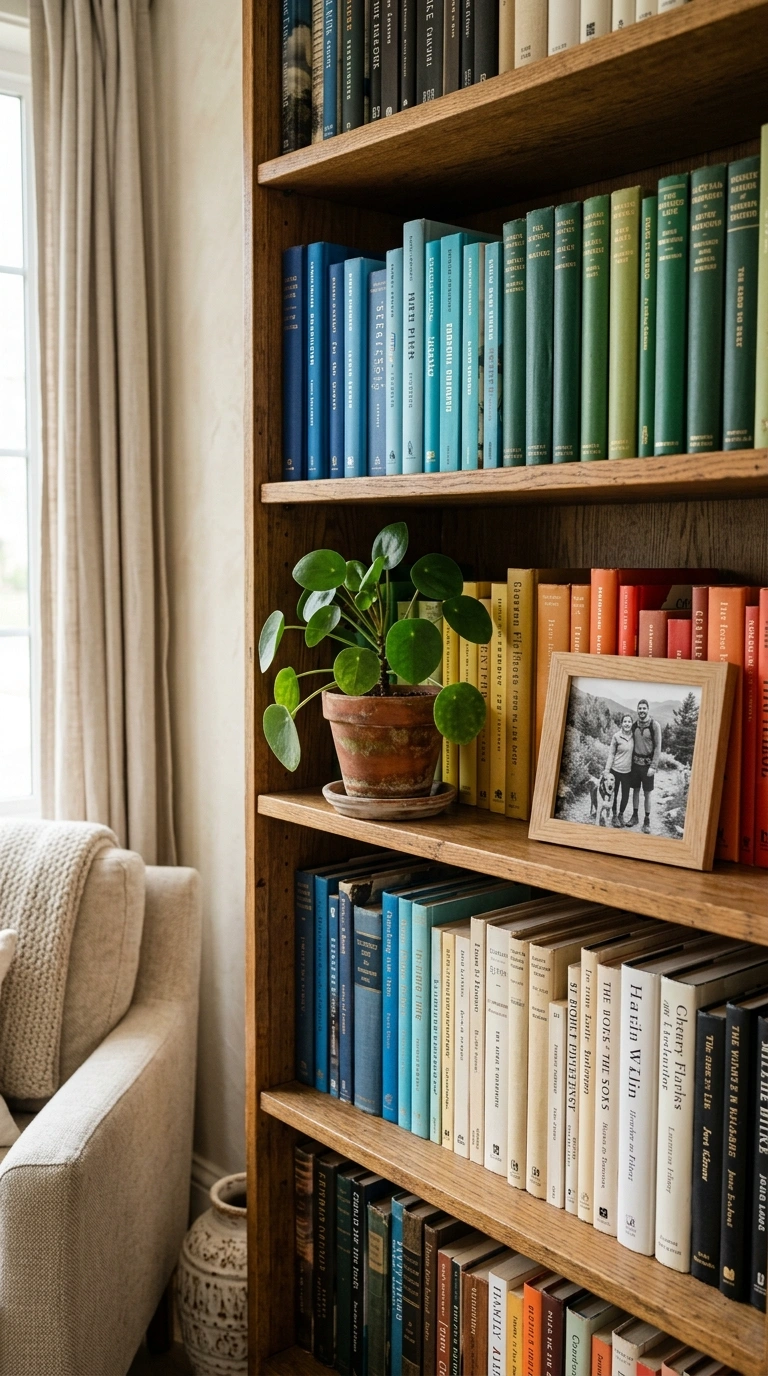
A bookshelf does not have to be filled edge to edge with books to look good. Leaving gaps for a plant, a small framed photo, or a stack of decorative boxes breaks up the visual weight and keeps the whole shelf from feeling heavy or cluttered. Group books by color or height on some shelves, and let others stay more open for display pieces.
This tip works well in living rooms, home offices, or a bedroom corner, anywhere a bookshelf serves as both storage and display. Turn a few books spine-in occasionally to show the page edges instead of the covers, which adds subtle texture variation. A curated shelf like this feels personal and collected, rather than like it was filled all at once from a single box.
24. Entryway Bench Setup
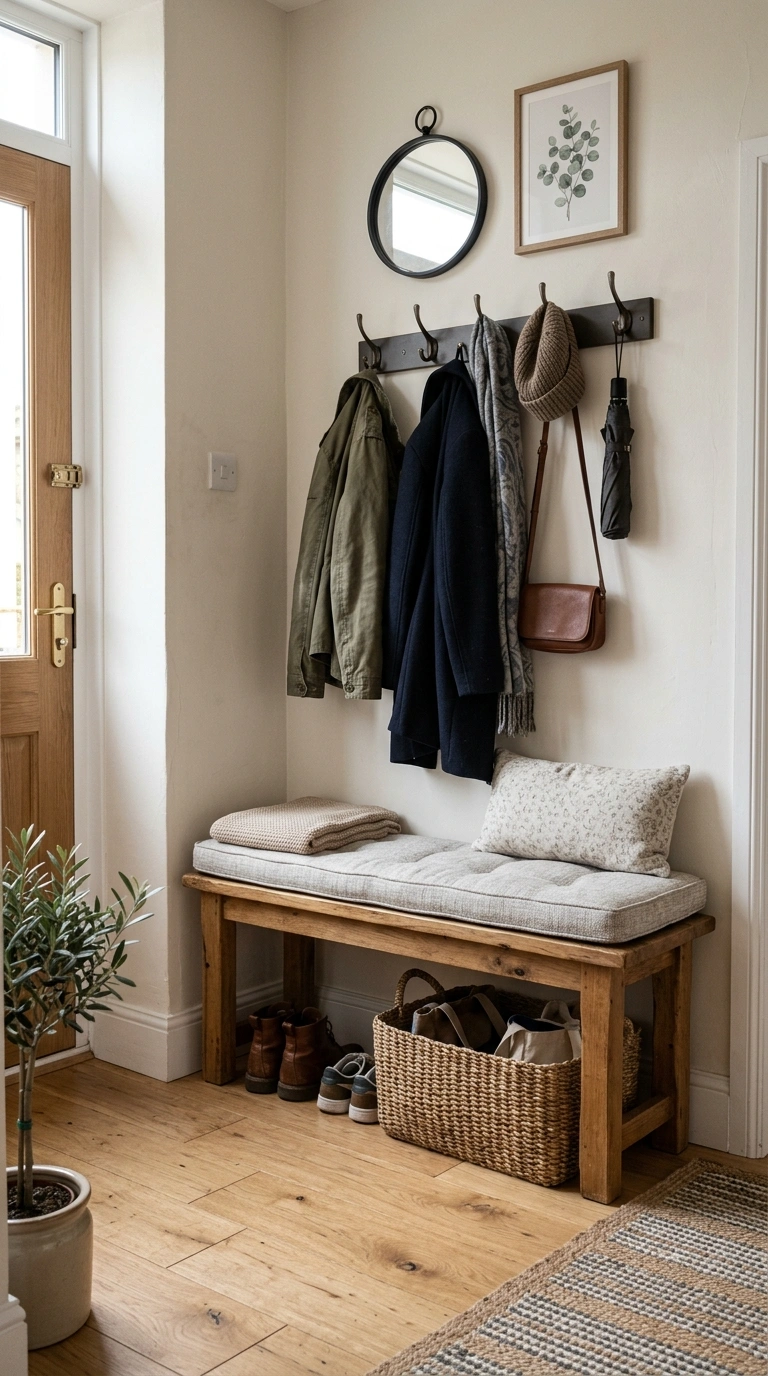
A small bench by the front door gives guests and family a place to sit while removing shoes, and it instantly makes an entryway feel more finished. Add a cushion on top, a few hooks above for coats and bags, and a woven basket underneath for shoes or umbrellas. Choose a bench with a simple wood or iron frame so it fits a variety of home styles.
This tip works especially well in narrow entryways where a full closet is not an option. Add a small mirror or a piece of art above the hooks to fill the wall space and give the spot a purpose beyond just function. A well-styled entry bench is often the first thing guests notice, so it sets the tone for the rest of the home.
25. Patterned Tile Backsplash
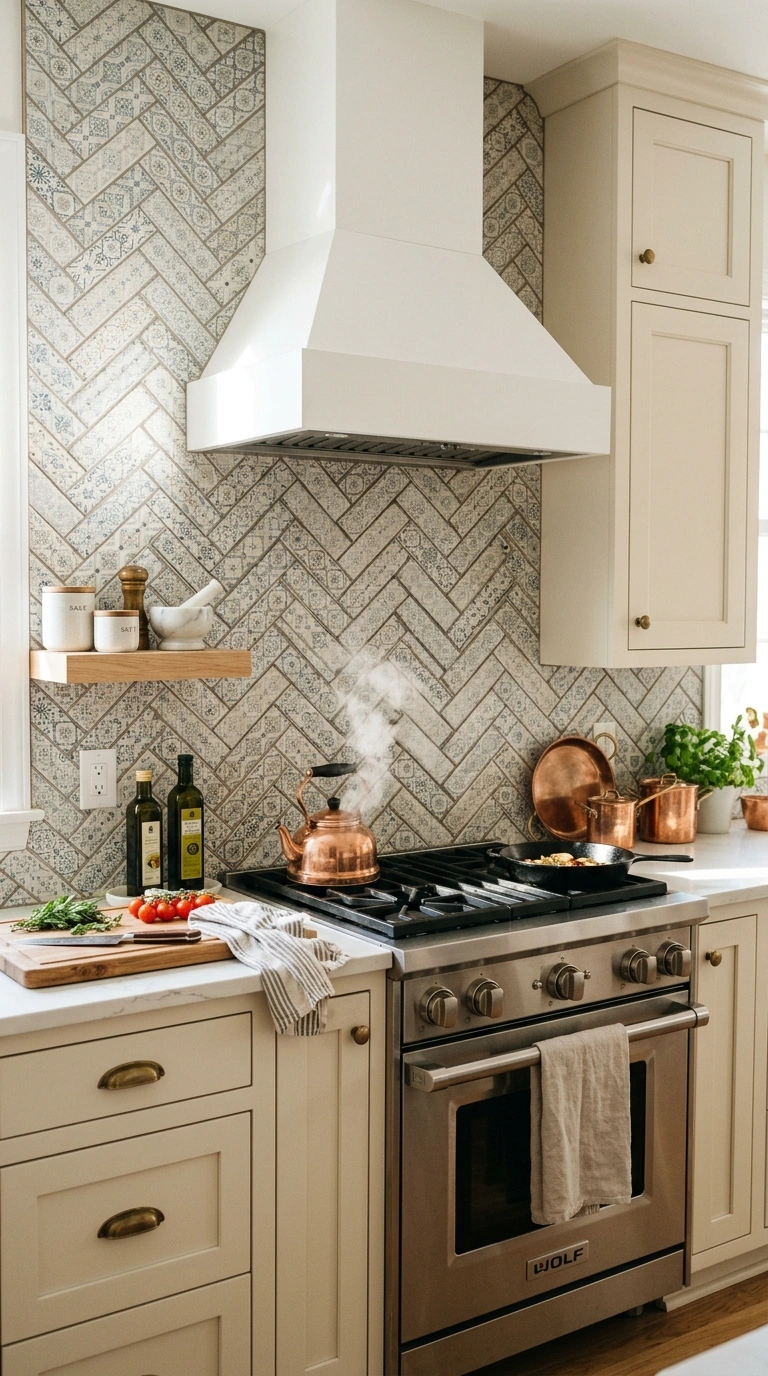
Swapping a plain backsplash for a patterned tile, whether classic subway tile laid in a herringbone pattern or a bold Moroccan-style design, adds personality to a kitchen without needing to touch the cabinets or counters. Choose a pattern that pulls in one or two colors from your existing kitchen palette so the new tile feels connected rather than out of place.
This tip works especially well behind a stove or sink, where the backsplash is already a natural focal point. A patterned tile in this spot draws the eye and can make an otherwise simple kitchen feel custom and designed with intention. Keep grout lines thin and choose a grout color close to the tile itself for a cleaner, more polished finish.
26. Canopy Bed Frame
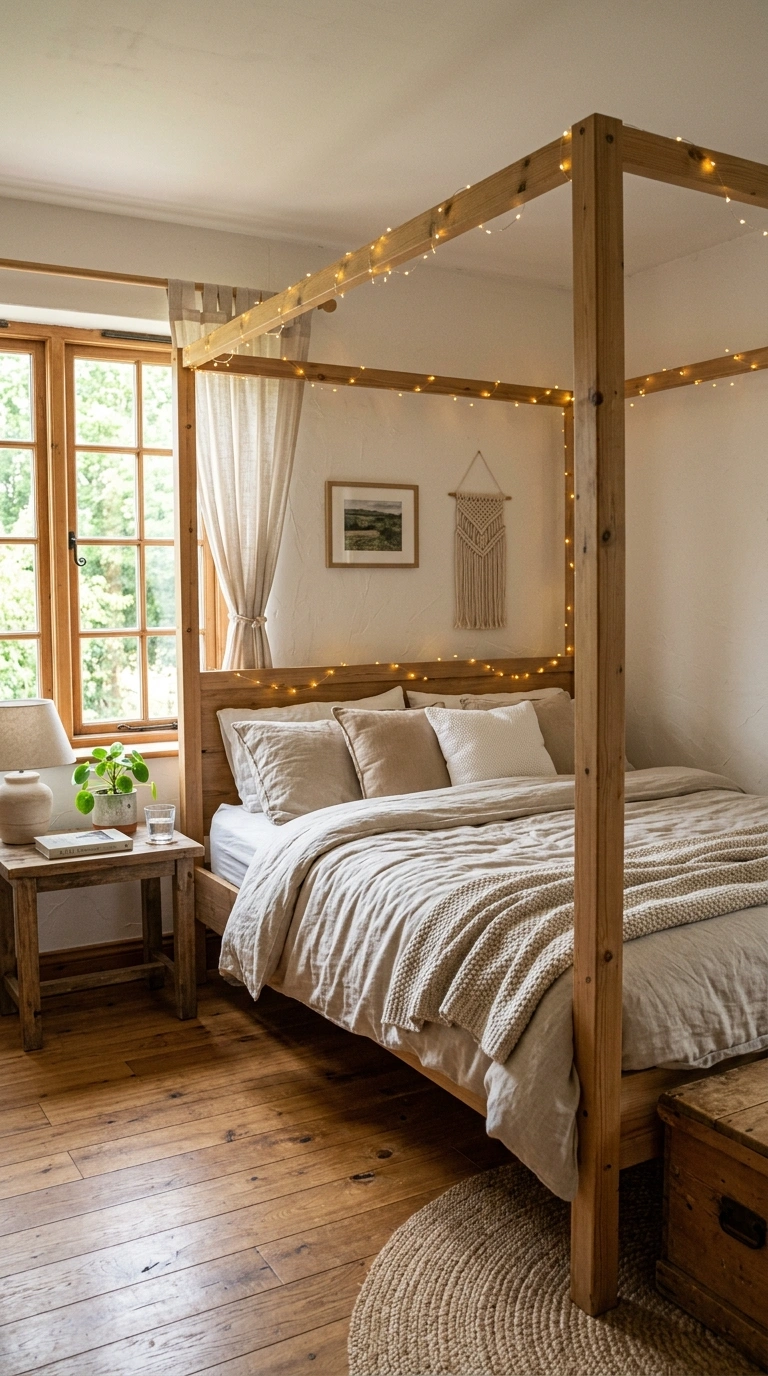
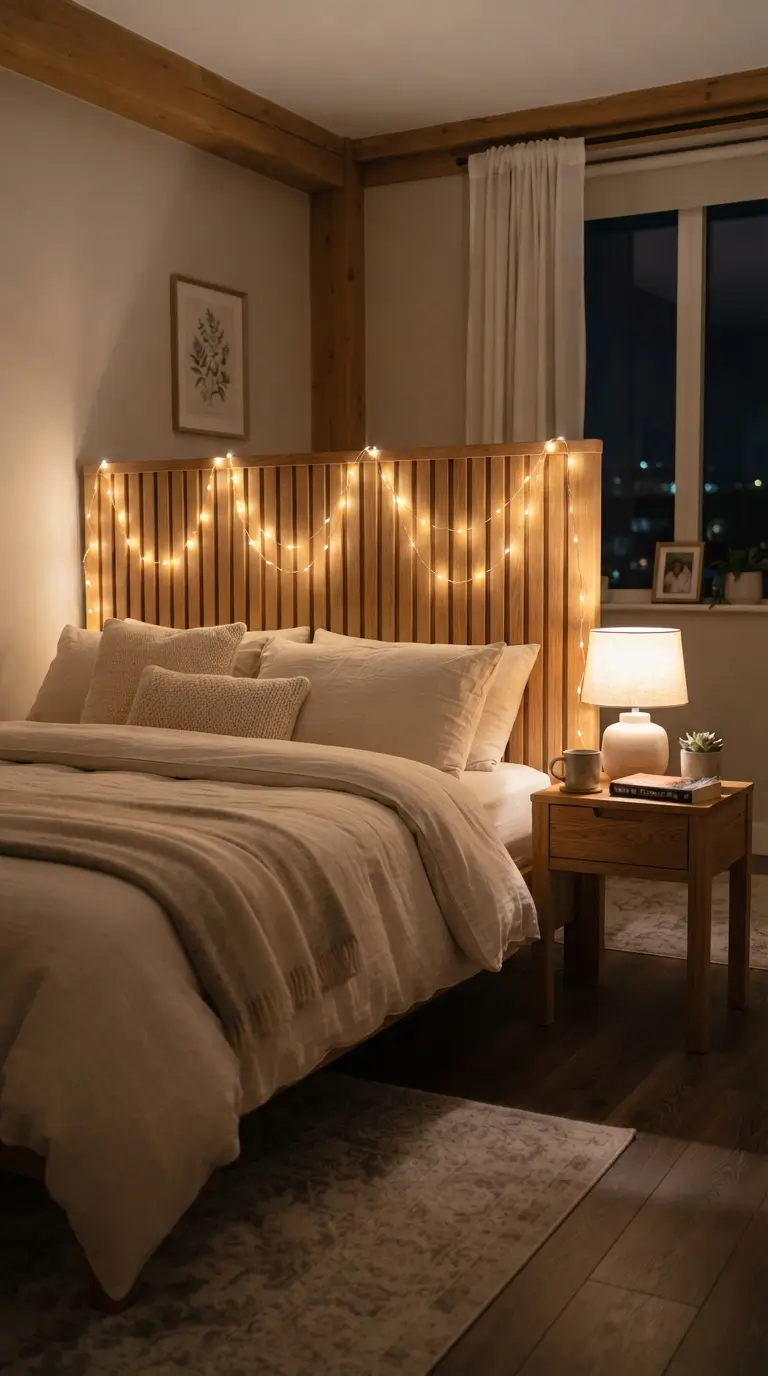
A canopy bed frame, even a simple open one without curtains, adds height and a sense of coziness to a bedroom that a standard headboard cannot match. Choose a wood frame in a tone that matches your other furniture, and drape a bit of sheer fabric or string lights across the top for a soft, romantic touch without going overboard.
This tip works especially well in bedrooms with higher ceilings, where the extra height of the frame fills the vertical space nicely. Keep the surrounding decor simple, neutral bedding and a couple of throw pillows, so the bed frame itself stays the clear focal point of the room rather than competing with too many other bold elements.
27. Balanced Furniture Scale
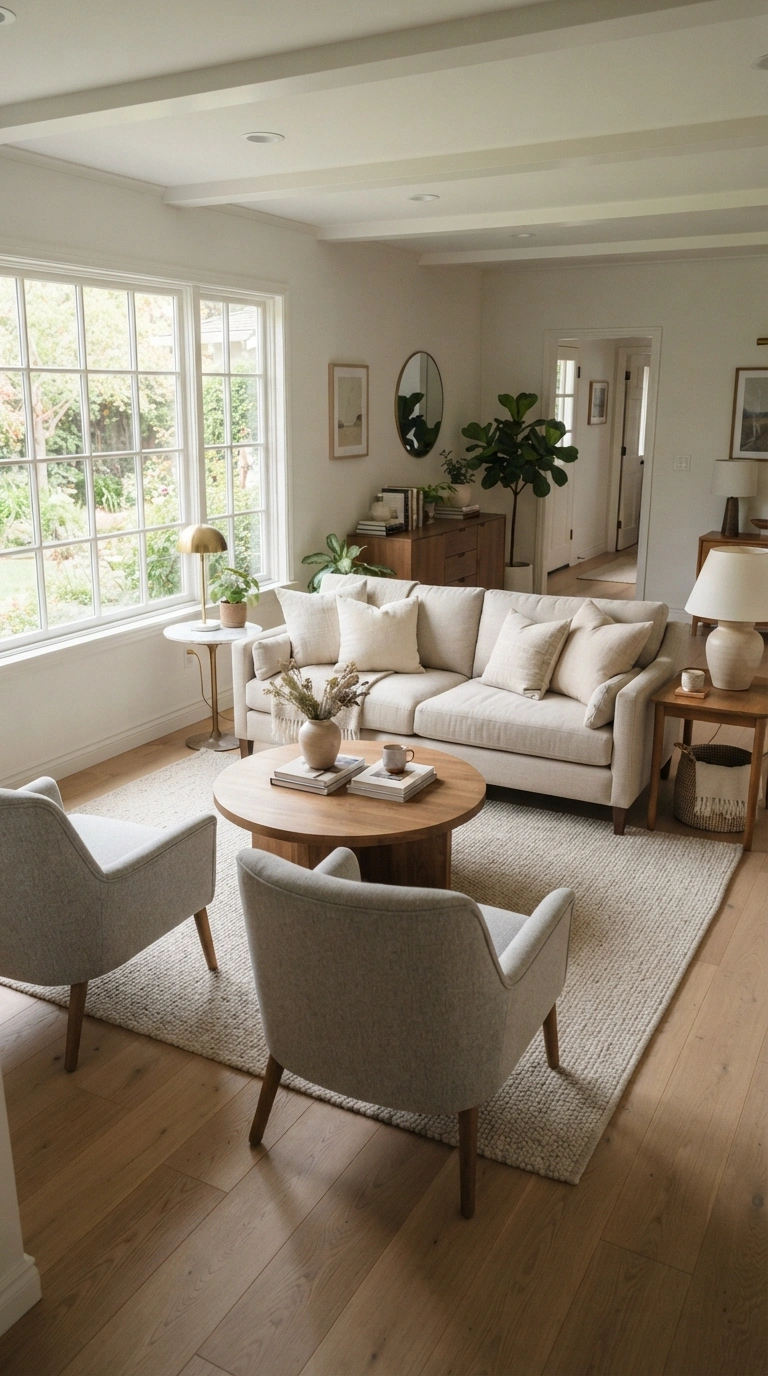
One of the most common styling mistakes is filling a room with furniture that is either too small or too large for the space, which throws off the whole balance of a room. In a large living room, a small love seat and tiny side tables can look lost, while in a small bedroom, an oversized dresser can make the whole room feel cramped and heavy.
Before buying new furniture, measure the room and leave enough walking space, ideally around three feet, between major pieces. This tip matters more than most people realize, since even beautifully chosen furniture and colors will feel off if the scale is wrong for the room. Getting this right first makes every other styling choice on this list work better.
A few small changes go a long way in any home. Try one tip this weekend, live with it for a bit, and add another when you are ready. That slow, steady approach usually beats trying to do everything at once.