One-Wall Kitchen Organization Ideas That Save Space
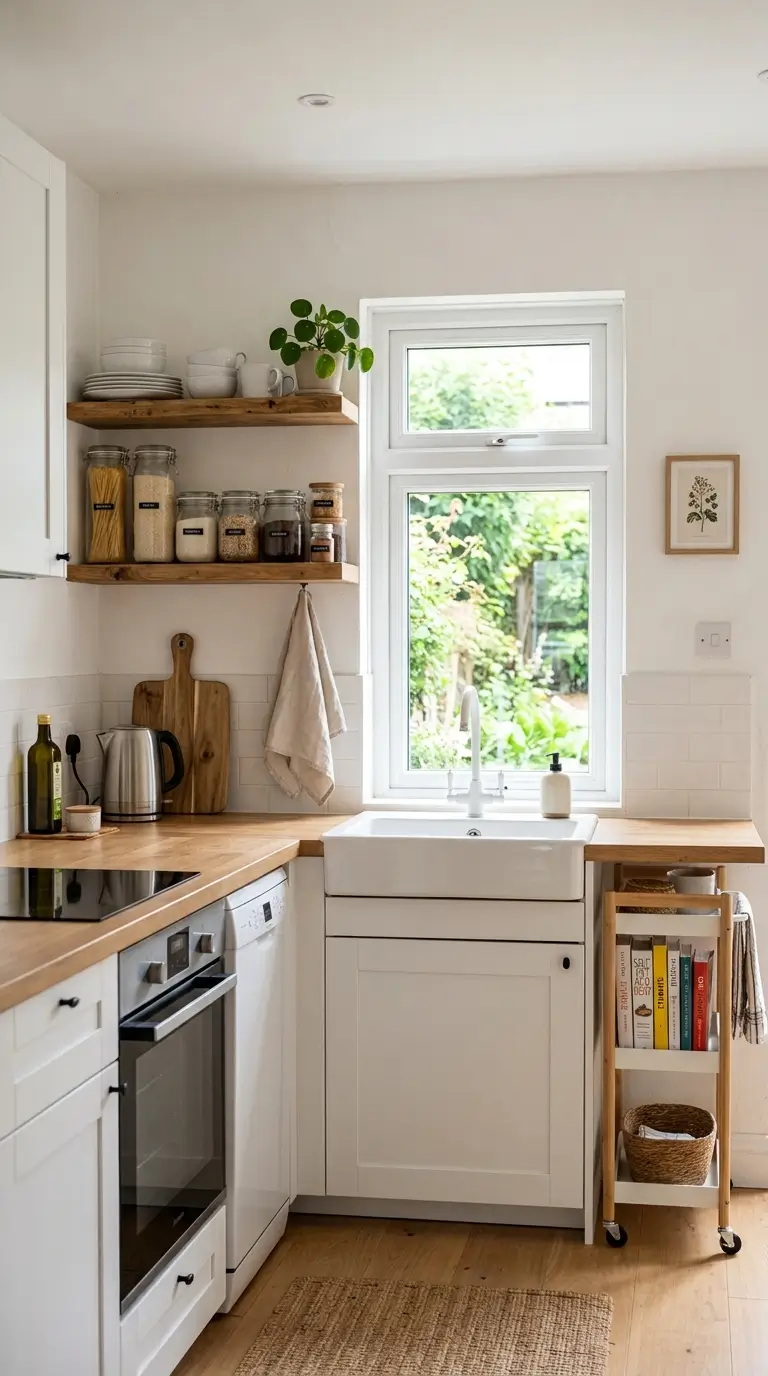
A one-wall kitchen sounds like it should be easy to plan, but anyone who has cooked in one knows the truth. Every inch matters, and there is no room for wasted space. I have spent years helping friends and neighbors squeeze more function out of these narrow layouts, and the good news is that a single wall does not mean you have to sacrifice storage or good looks. With the right shelves, cabinets, and a few clever tricks, a one-wall kitchen can hold just as much as a bigger one, sometimes more, because you are forced to be smart about it. This list walks through twenty-one ideas that real homeowners use every day. None of them need a full renovation. Most can be added this weekend with basic tools and a trip to the hardware store. Let’s get into it.
1. Vertical Shelf Wall
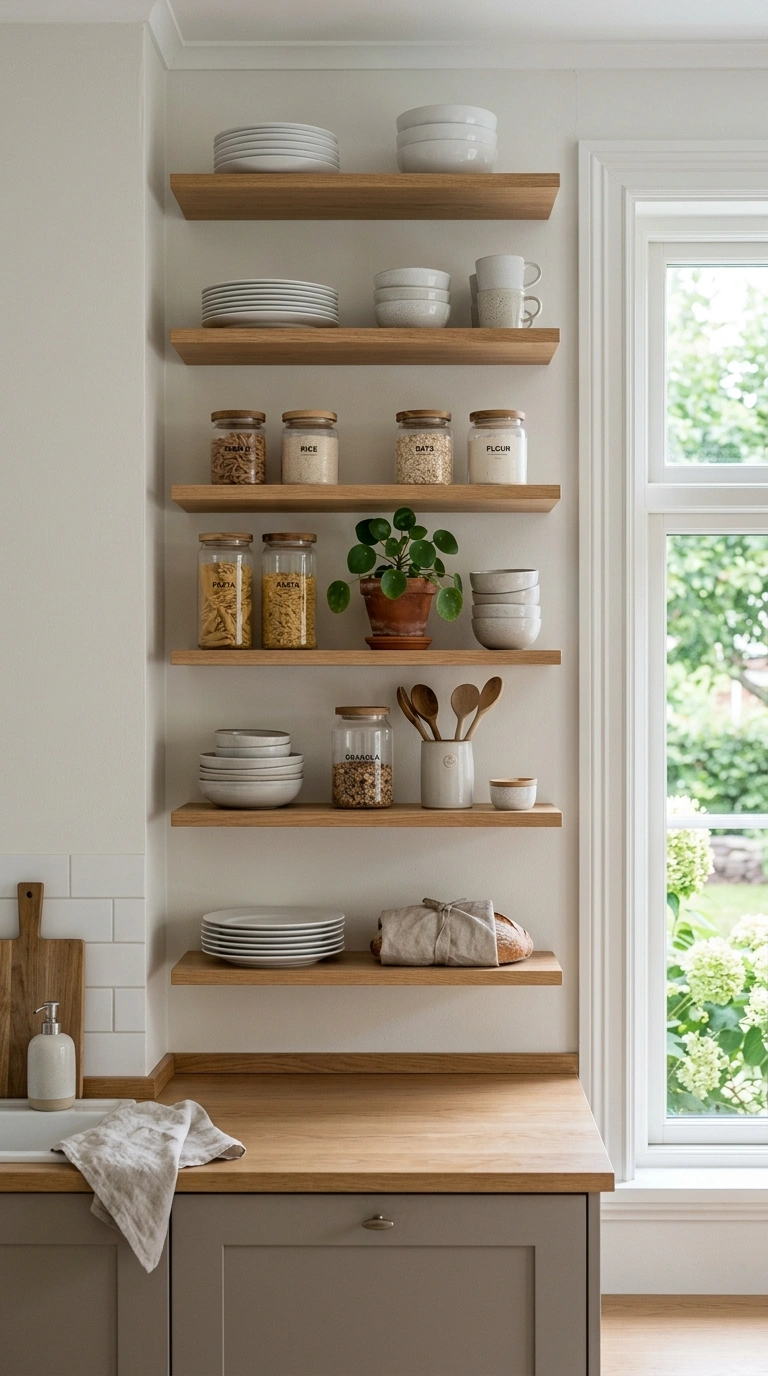
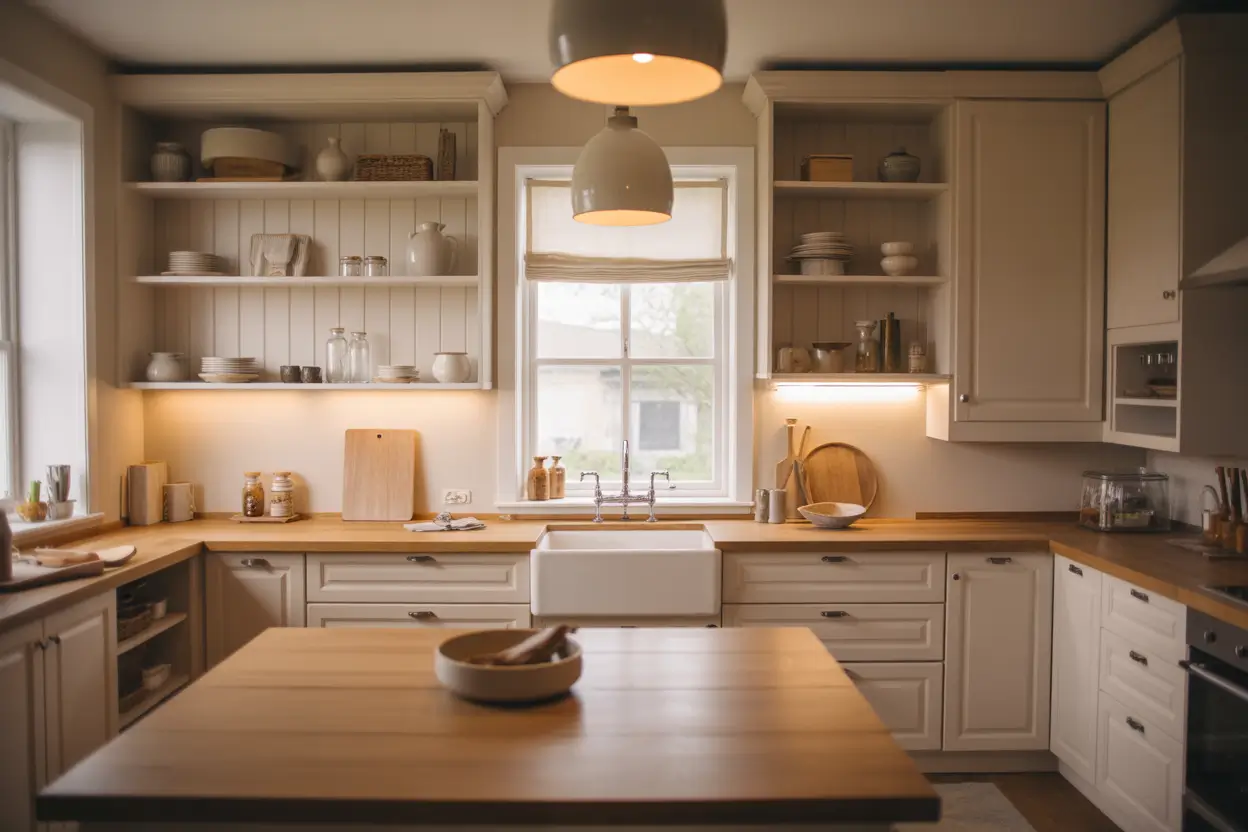
When your kitchen only has one wall to work with, the answer is almost always to look up. Floating shelves stacked from counter height to near the ceiling turn dead air into real storage. Use plain wood boards or simple metal brackets, and paint them to match your cabinets so the wall feels planned instead of pieced together. Stack plates, bowls, and glass jars on the lower shelves where you reach often, and save the top rows for things you use once a month, like a big soup pot or a cake stand.
This idea works best above a counter run that has no upper cabinets, or in a narrow galley section next to the stove. Keep the styling loose rather than perfectly matched. A mix of white dishes, a few glass canisters, and one plant adds warmth without looking cluttered. Because everything is visible, it also keeps you honest about how much stuff you actually own.
2. Pegboard Tool Wall
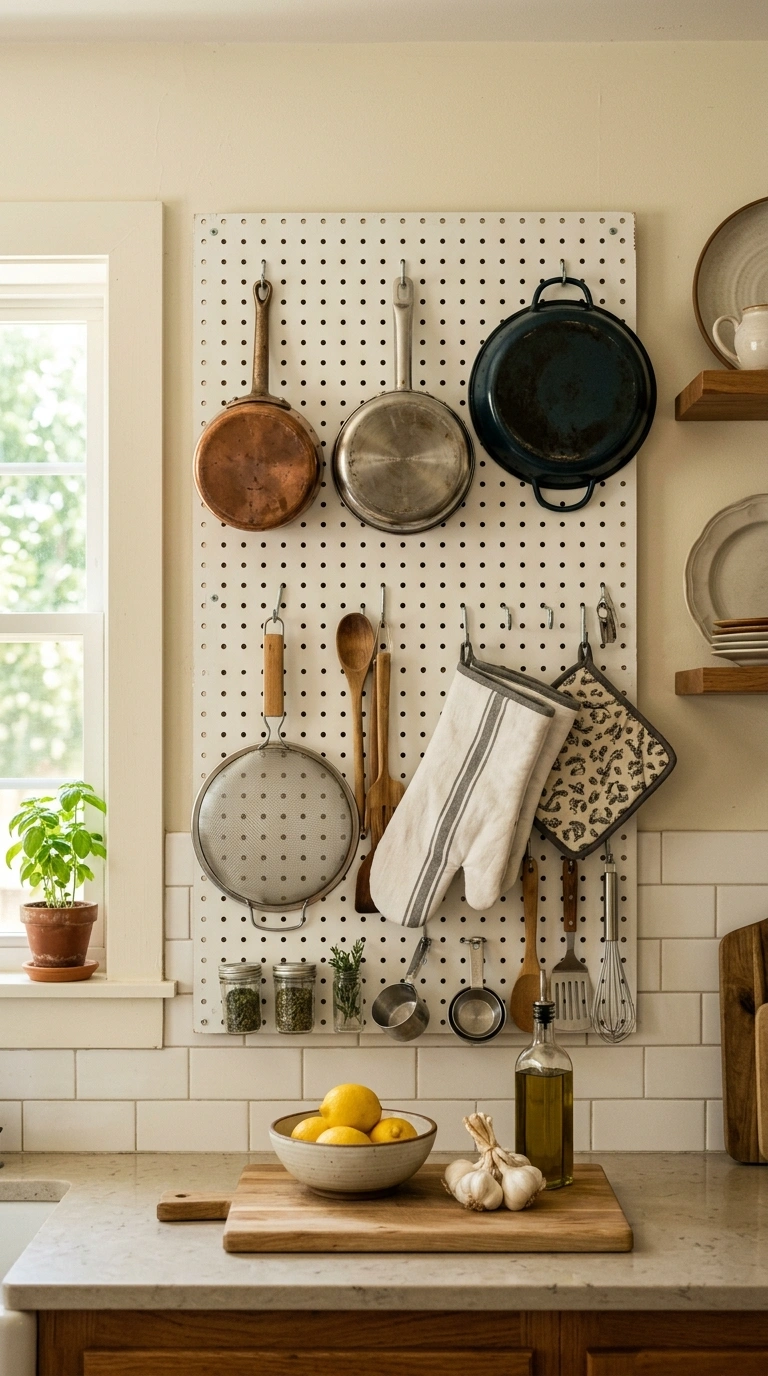
A pegboard panel mounted behind the stove or prep area gives you storage that moves whenever your needs change. Paint a sheet of pegboard the same color as your wall for a built-in look, or leave it in raw wood for a farmhouse feel. Hooks hold pots, strainers, oven mitts, and even small baskets for spice jars, so nothing sits in a drawer where you forget about it.
This works especially well in rental kitchens because it does not require drilling into cabinets or countertops. You can move pegs around in minutes as your cooking habits change, which is something fixed shelving cannot offer. Try grouping items by task, so all your baking tools sit together and all your everyday cooking tools sit in a separate section. It turns a plain wall into something that looks intentional and works hard every single day.
3. Rolling Cart Storage
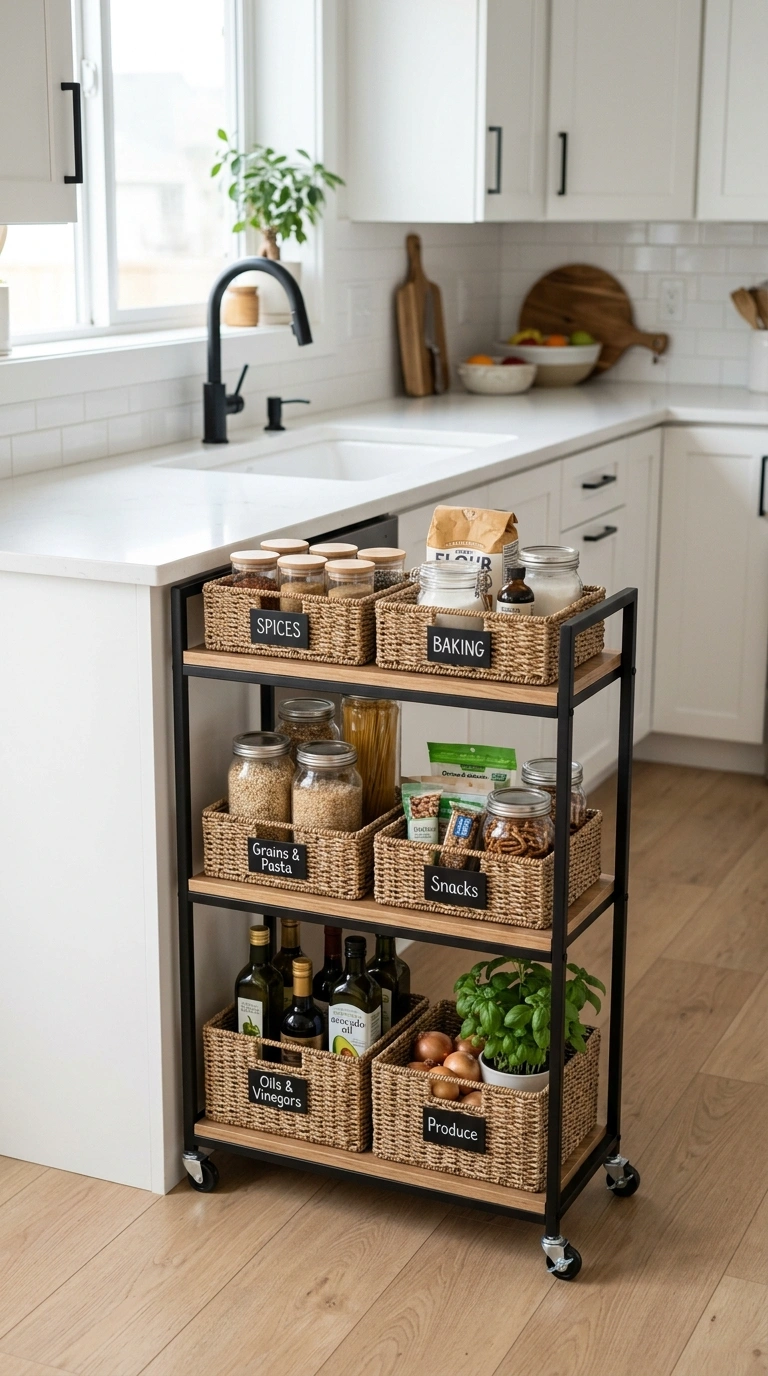
A slim rolling cart tucked at the end of your counter run adds extra storage without touching the wall at all. Look for a cart with two or three open shelves and a narrow profile, about twelve to fourteen inches wide, so it slides into gaps most furniture cannot fit. Use it to hold small appliances like a toaster or blender, or stack it with baskets for pantry items such as pasta, canned goods, and snacks.
Because it has wheels, you can pull it out for deep cleaning or roll it closer to the stove when you are cooking a big meal. Choose a cart with a butcher block top and you get a bonus prep surface too. Many people paint the frame a soft black or brass tone to match kitchen hardware, which makes it feel like part of the original design rather than an add-on piece.
4. Under-Sink Baskets
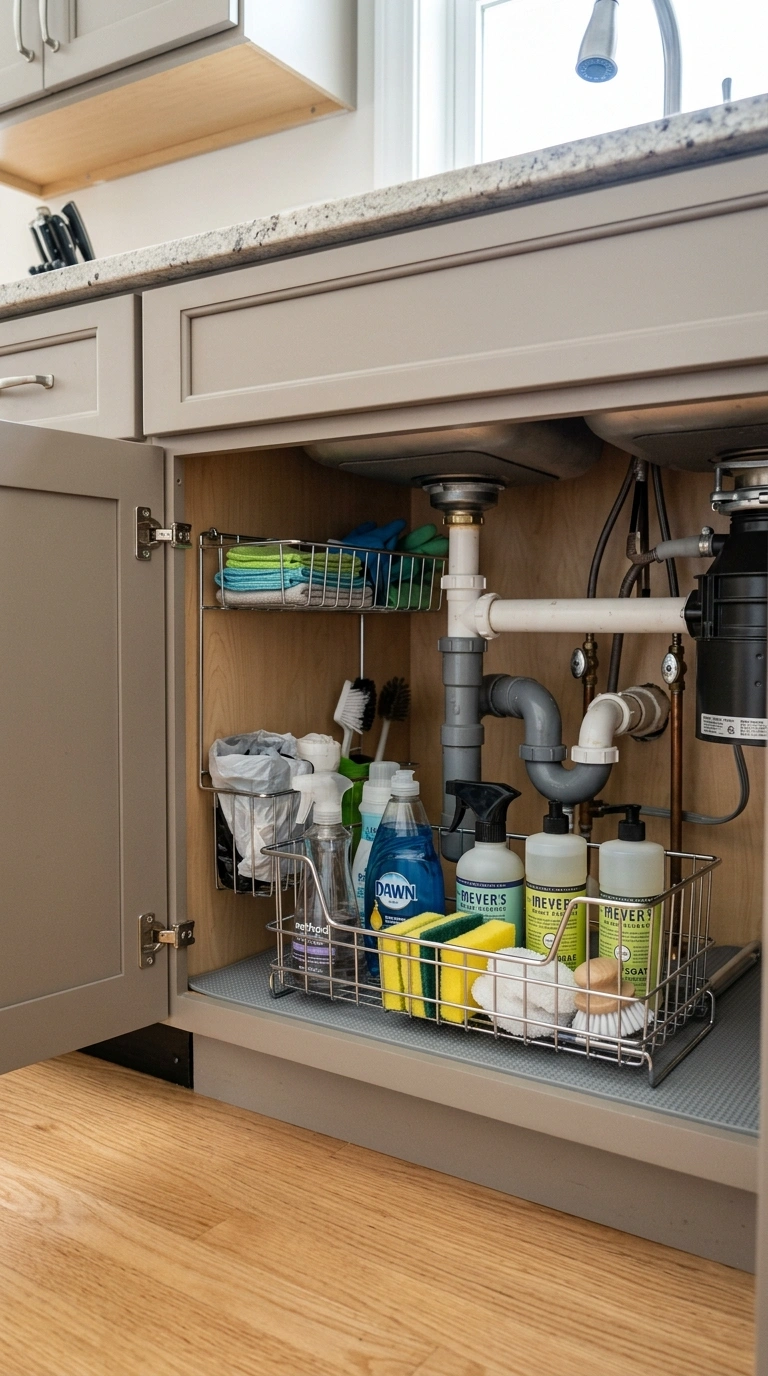
The cabinet under the sink is often the most disorganized spot in a one-wall kitchen, mostly because pipes get in the way of flat shelving. Wire baskets or stackable bins solve this problem by working around the plumbing instead of against it. Use a slim basket on one side for cleaning sprays and a taller bin on the other for trash bags and sponges.
Adding a small tension rod under the sink lets you hang spray bottles by their trigger handles, which frees up even more floor space inside the cabinet. Line the bottom with a rubber mat or leftover vinyl flooring so leaks do not stain the wood. This is one of those ideas that takes less than an hour but makes the whole kitchen feel more organized every time you open that door.
5. Open Shelving Corner
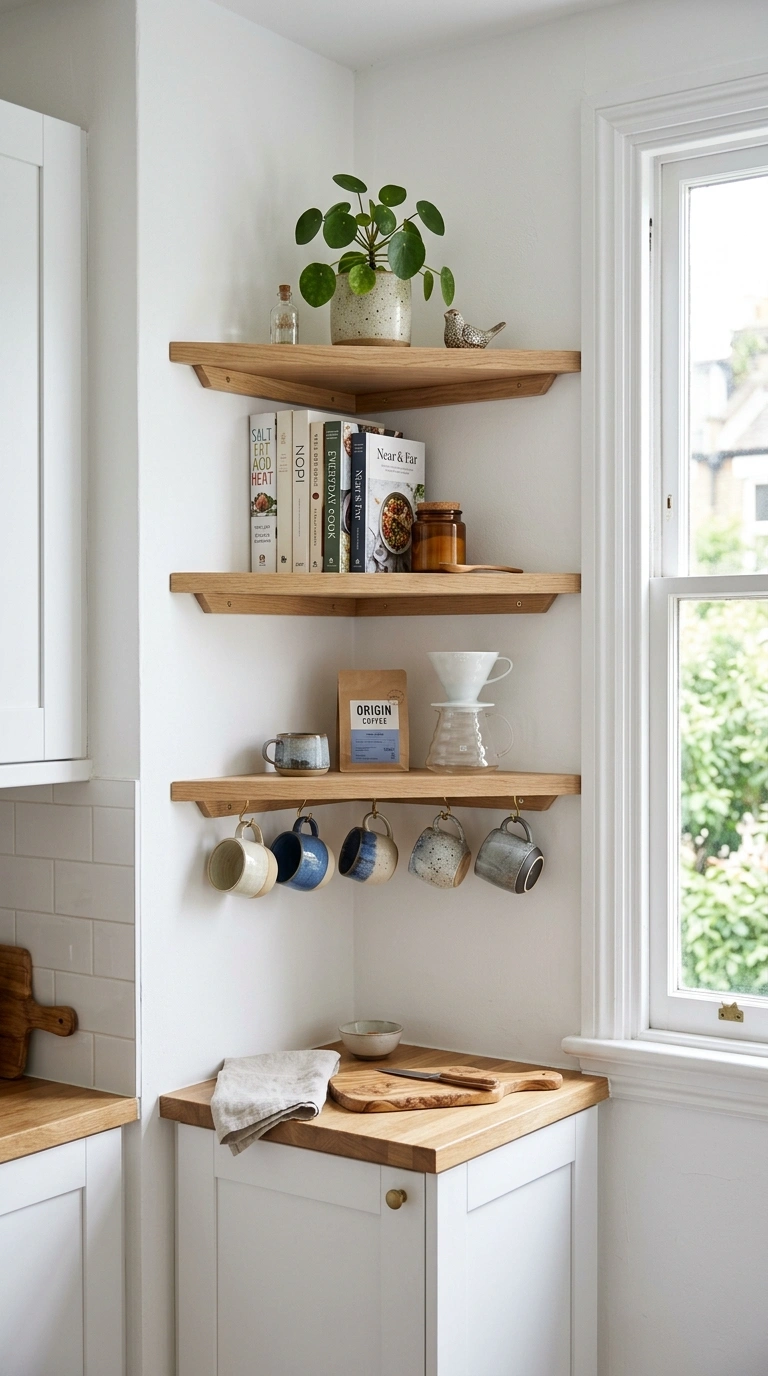
If your one-wall kitchen has an awkward end corner where cabinets do not quite fit, open shelving is the easiest fix. Corner shelves, either straight floating boards or a small triangular unit, use up that leftover space without needing custom carpentry. Style them with your everyday coffee mugs, a small stack of cookbooks, and one or two plants to soften the corner.
This spot works well for items you want within arm’s reach of the coffee maker or kettle. Keep the shelf depth shallow, around eight to ten inches, so items do not get lost or block the walking path. A woven basket on the bottom shelf can hold coffee pods or tea bags, keeping loose items contained while still looking tidy and lived in rather than staged.
6. Magnetic Knife Strip
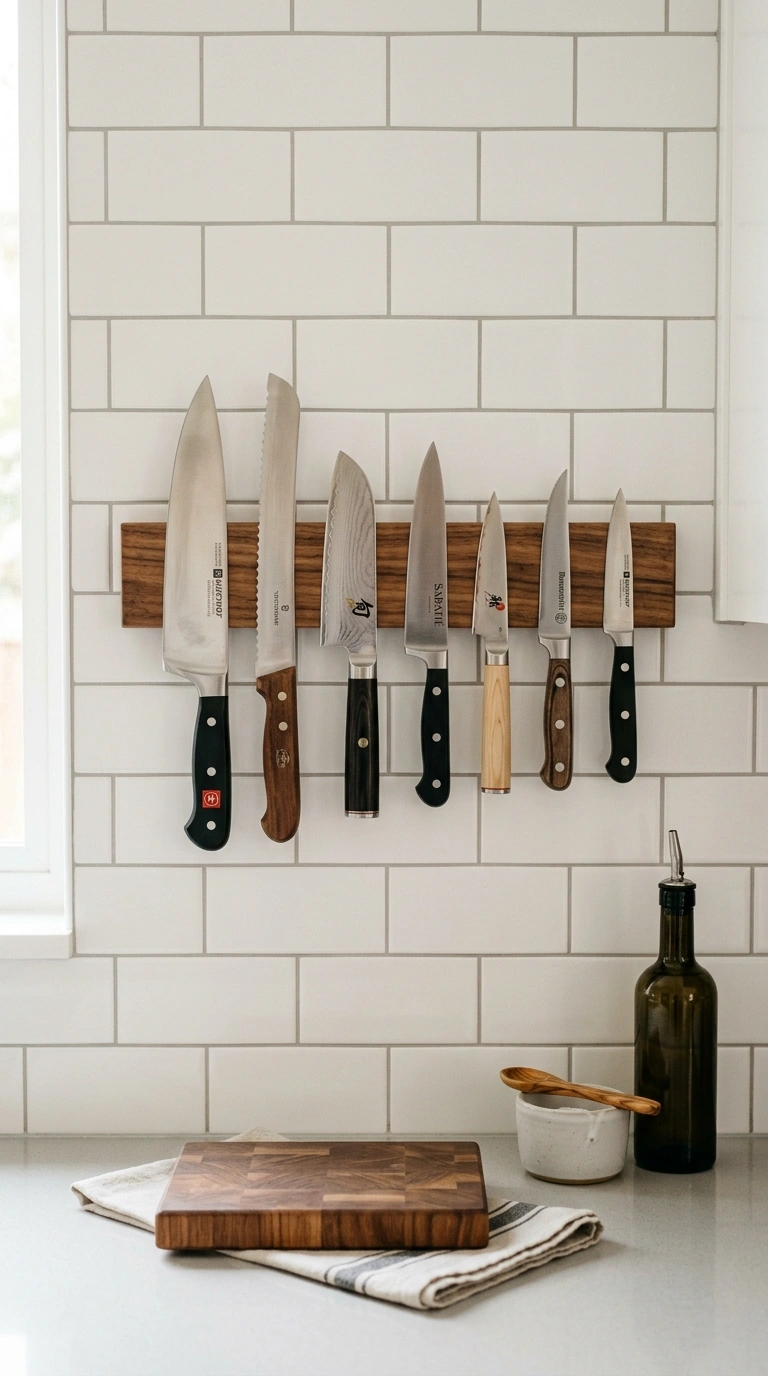
A magnetic strip mounted on the backsplash wall clears out a whole drawer and keeps knives sharper too, since they are not banging against other tools. Install it at a height where the blades sit just above counter level, out of reach of small hands but easy for you to grab while cooking. Choose a wood-backed strip if your kitchen leans warm and rustic, or a slim stainless one for a more modern look.
Beyond knives, the same strip can hold metal spice tins, scissors, or a small cutting board with a metal hook. This idea is especially useful in one-wall kitchens where counter space is tight, because it moves items off the counter and onto the wall where they are still easy to see and reach.
7. Stacked Cabinet Boxes
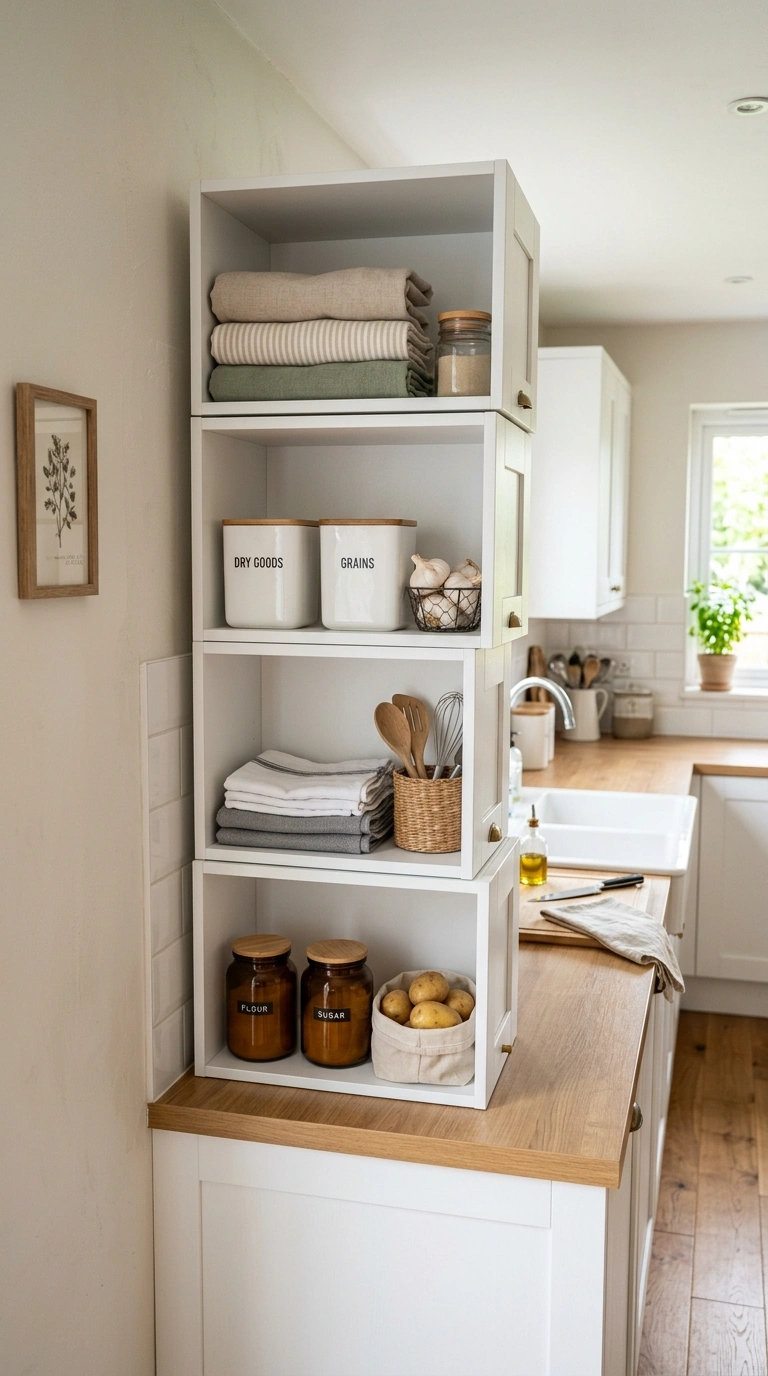
When floor space runs out, stacked cabinet boxes let you build storage upward instead of outward. Simple wood crates or closed cube shelving units, mounted or stacked at the end of your counter, create a small tower of enclosed storage for pantry goods, dish towels, or small appliances you do not use daily. Paint the boxes to match your cabinetry so the stack reads as one built-in piece rather than separate furniture.
Label each box or bin inside so you always know where things live, especially if the stack is tall enough that the top boxes are hard to see into. This idea is a great fit for the end of a one-wall run where a full cabinet would not fit but a slim vertical stack will slide right in.
8. Hanging Pot Rail
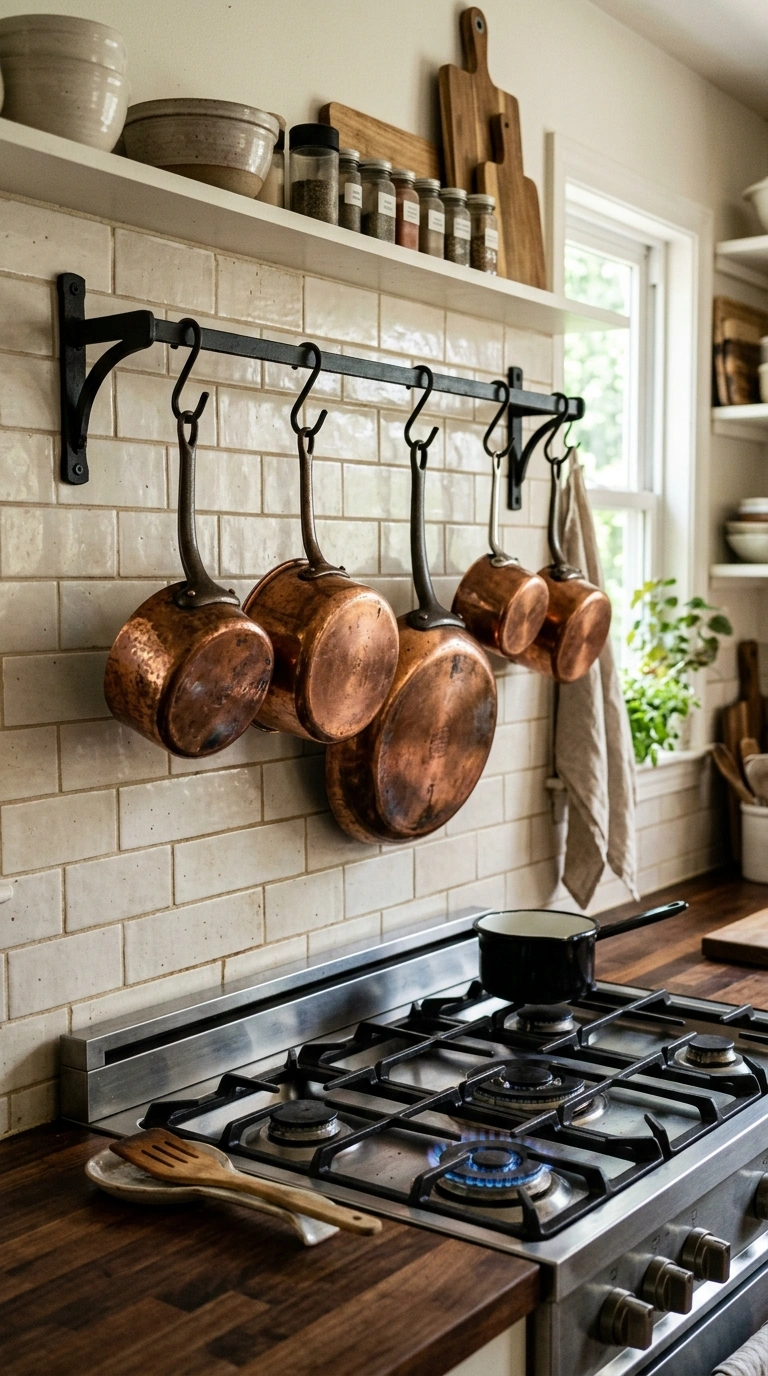
A wall-mounted rail with S-hooks turns your pots and pans into part of the kitchen’s look instead of a mess hiding in a cabinet. Mount the rail above the stove or on any open stretch of wall at a height that clears your head but keeps pots within easy reach. Copper or matte black pans look especially nice hanging out in the open, almost like kitchen decor.
This setup frees up an entire lower cabinet, which you can then use for baking trays or small appliances instead. Keep the arrangement simple, hanging your most-used pots at eye level and lighter items like strainers or ladles on the ends. It is a small change that makes a one-wall kitchen feel more like a real cooking space and less like a hallway with a stove in it.
9. Toe-Kick Drawers
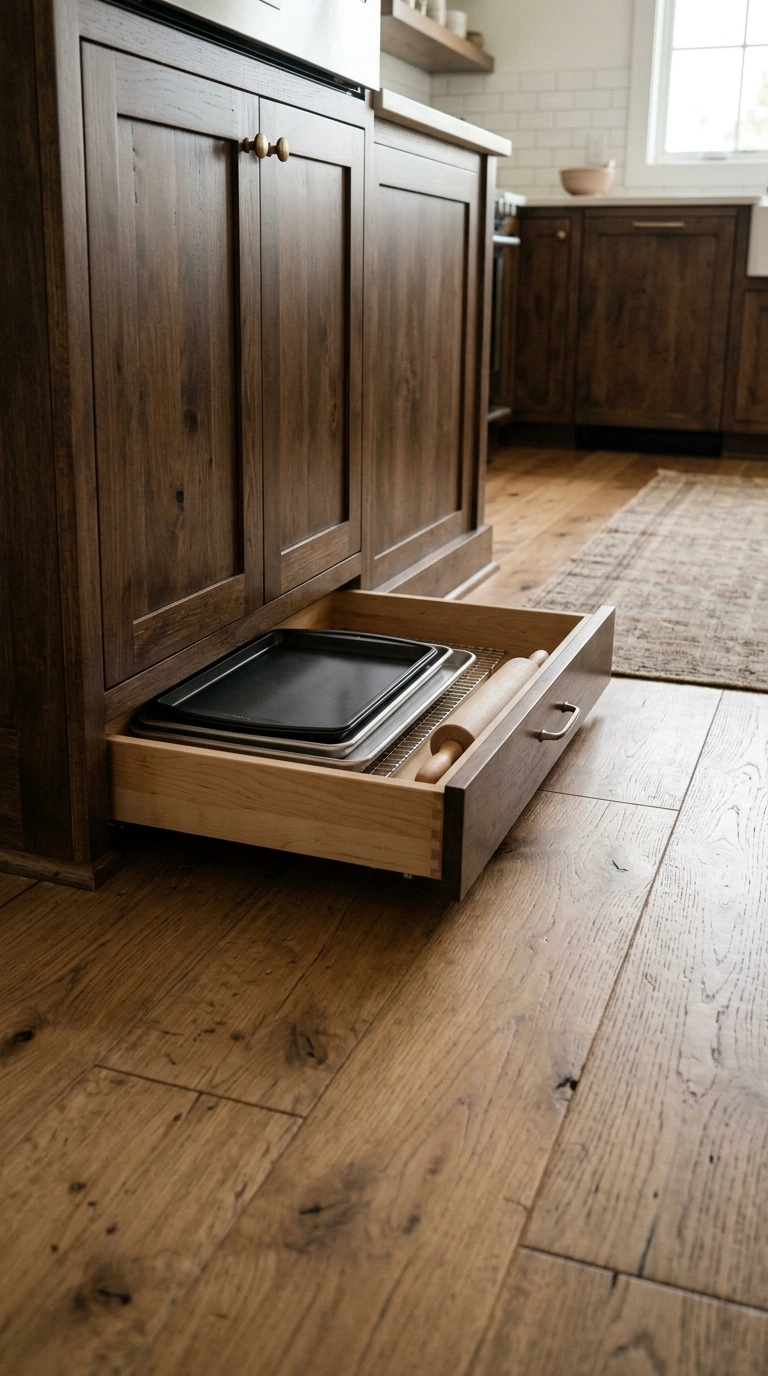
The gap under your lower cabinets, often called the toe-kick space, usually sits empty except for dust. Adding thin pull-out drawers in that space gives you a spot for flat items like baking sheets, cutting boards, or extra table linens. Because the drawers sit so low, they work best for things you do not need to grab every day but still want close by.
A local carpenter can build these in an afternoon, or you can find kits designed for standard cabinet openings if you want to do it yourself. This idea does not take up any visible wall or counter space, which makes it perfect for one-wall kitchens where every surface is already working hard. It is one of those upgrades guests never notice, but you will use constantly.
10. Ceiling Pot Rack
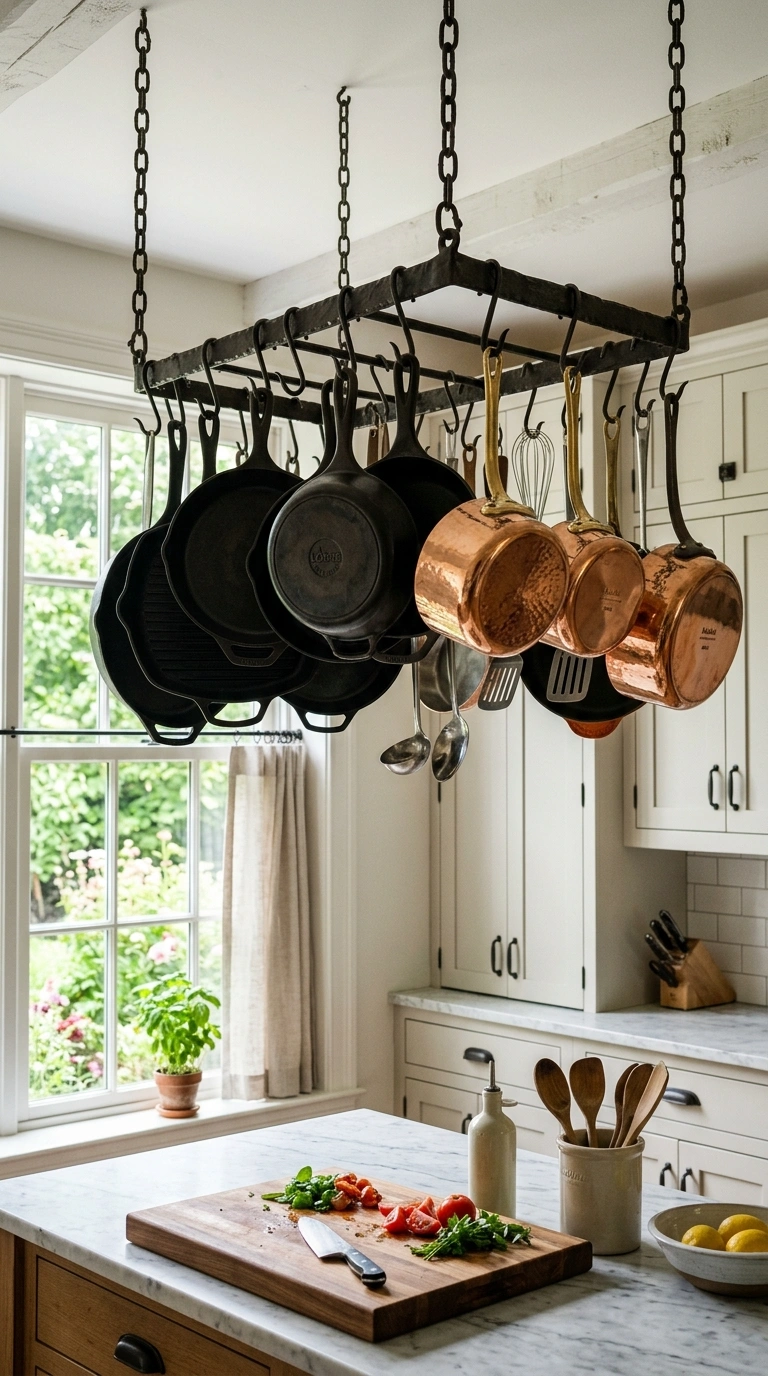
If your one-wall kitchen has decent ceiling height, a hanging pot rack overhead can free up a surprising amount of cabinet space. Choose a rack with a simple iron frame and S-hooks, mounted using ceiling joists for stability. This works especially well above a kitchen island or peninsula if you have one, or centered over the counter in a galley-style layout.
Hang your most-used pans at a height where you can lift them off without stretching, and keep sharp or heavy items toward the back edge for safety. A rack like this also becomes a visual focal point, especially with copper or cast iron cookware catching the light. It is a bold move for a small kitchen, but it works because it uses space nobody else is using, the air above your head.
11. Floating Spice Shelf
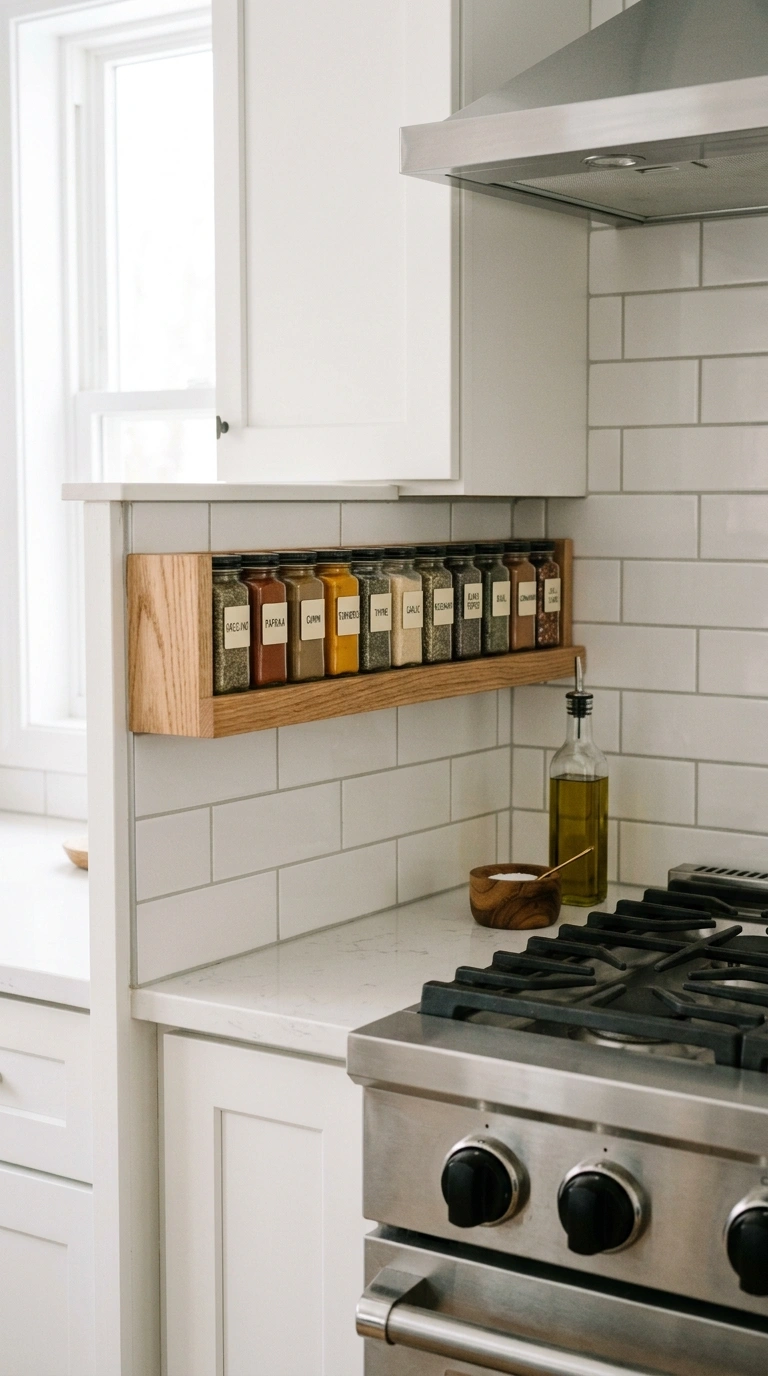
A row of thin floating shelves mounted beside the stove keeps spices visible and within reach without eating up cabinet space. Use narrow shelves, just deep enough to hold a single row of jars, so they do not block your view or bump your head while cooking. Glass jars with handwritten labels look tidy and let you see at a glance when something is running low.
This idea works best mounted at eye level or slightly above, close enough to the stove that you can grab oregano mid-stir without stepping away. Group jars by type, baking spices on one shelf and savory ones on another, so you are not hunting through a lineup every time you cook. It is a small detail, but it makes the whole cooking wall feel more organized and more like a space designed on purpose.
12. Appliance Garage Nook
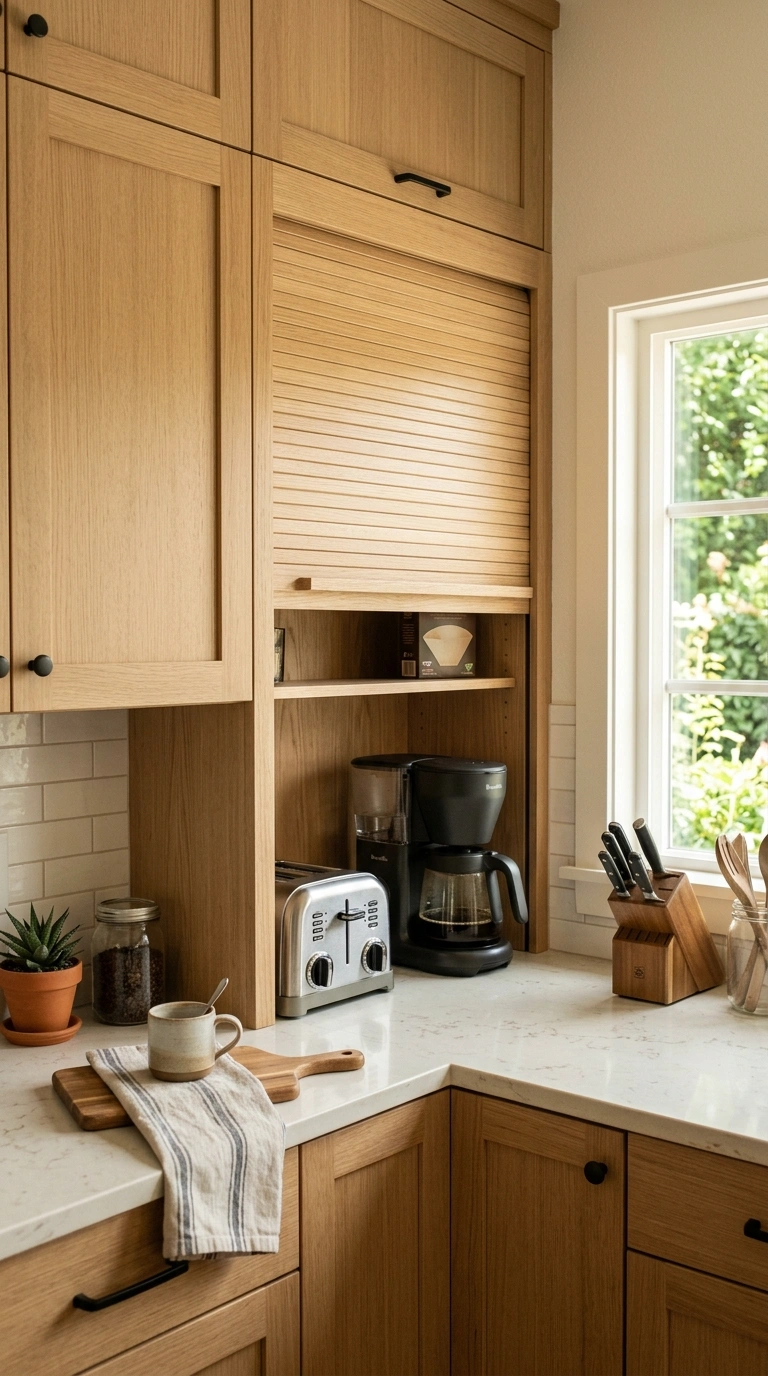
An appliance garage is a small cabinet built into the counter with a roll-up or hinged door that hides your toaster, coffee maker, or stand mixer when not in use. In a one-wall kitchen, this keeps the counter looking clear and calm even though you still have easy access to your daily appliances. Build one into an end cabinet, or retrofit an existing upper cabinet with a tambour door if a full renovation is not in the budget.
Plug in a power strip inside the nook so appliances can stay plugged in and ready to use without cords crossing the counter. This idea is especially helpful in small kitchens where every appliance normally sits out because there is nowhere else to put it. Hiding them behind one simple door makes the whole wall feel more finished.
13. Baker’s Rack Wall
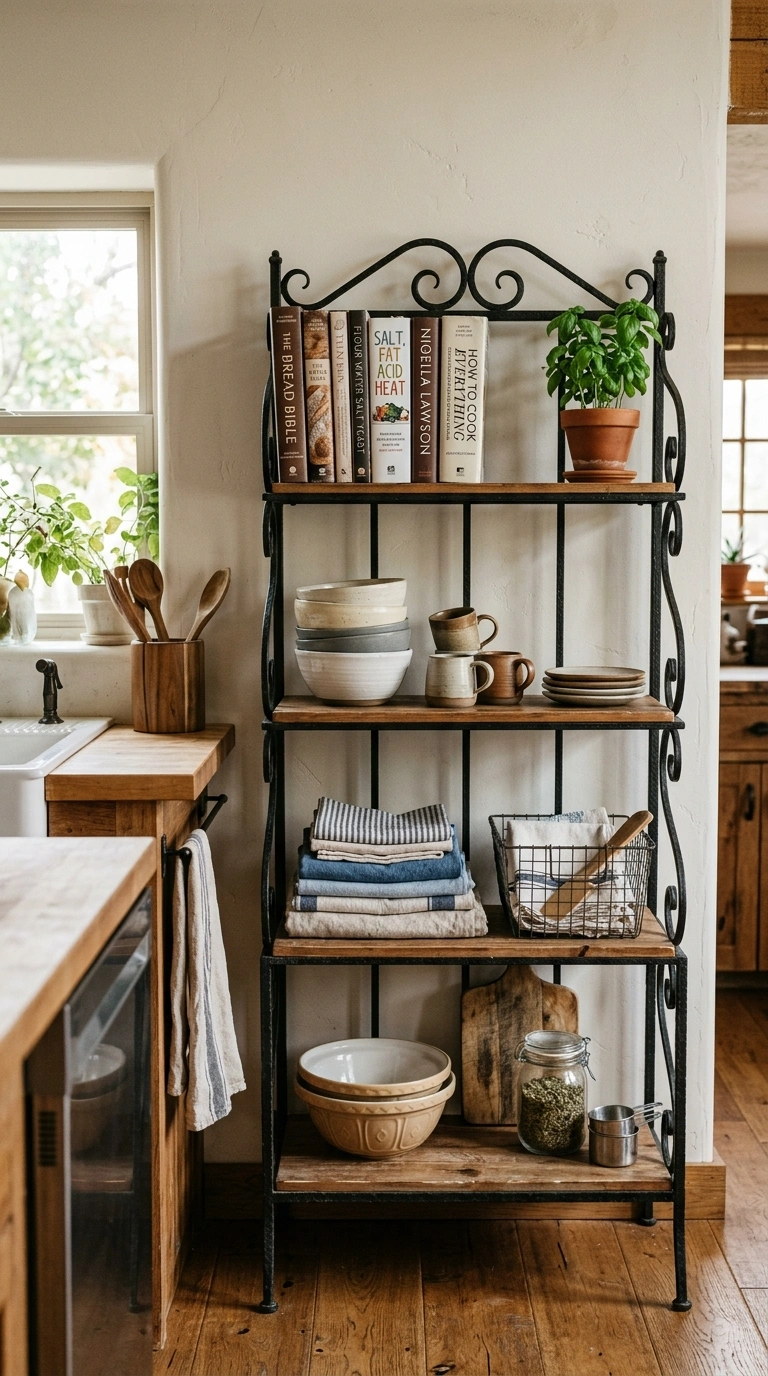
A freestanding baker’s rack placed at the end of your counter run adds shelving, hooks, and sometimes a small work surface, all without any construction. Look for a rack in wrought iron or wood with at least two open shelves and a bottom cabinet or basket for hiding less attractive items like cleaning supplies. Style the open shelves with cookbooks, a stack of cloth napkins, and a few pieces of everyday dishware.
This piece works especially well in kitchens that open into a dining area, since it can double as a small buffet or serving station during meals. Because it stands on its own, you can move it if you rearrange the room later, which gives a one-wall kitchen more flexibility than built-in cabinetry ever could.
14. Drawer Divider System
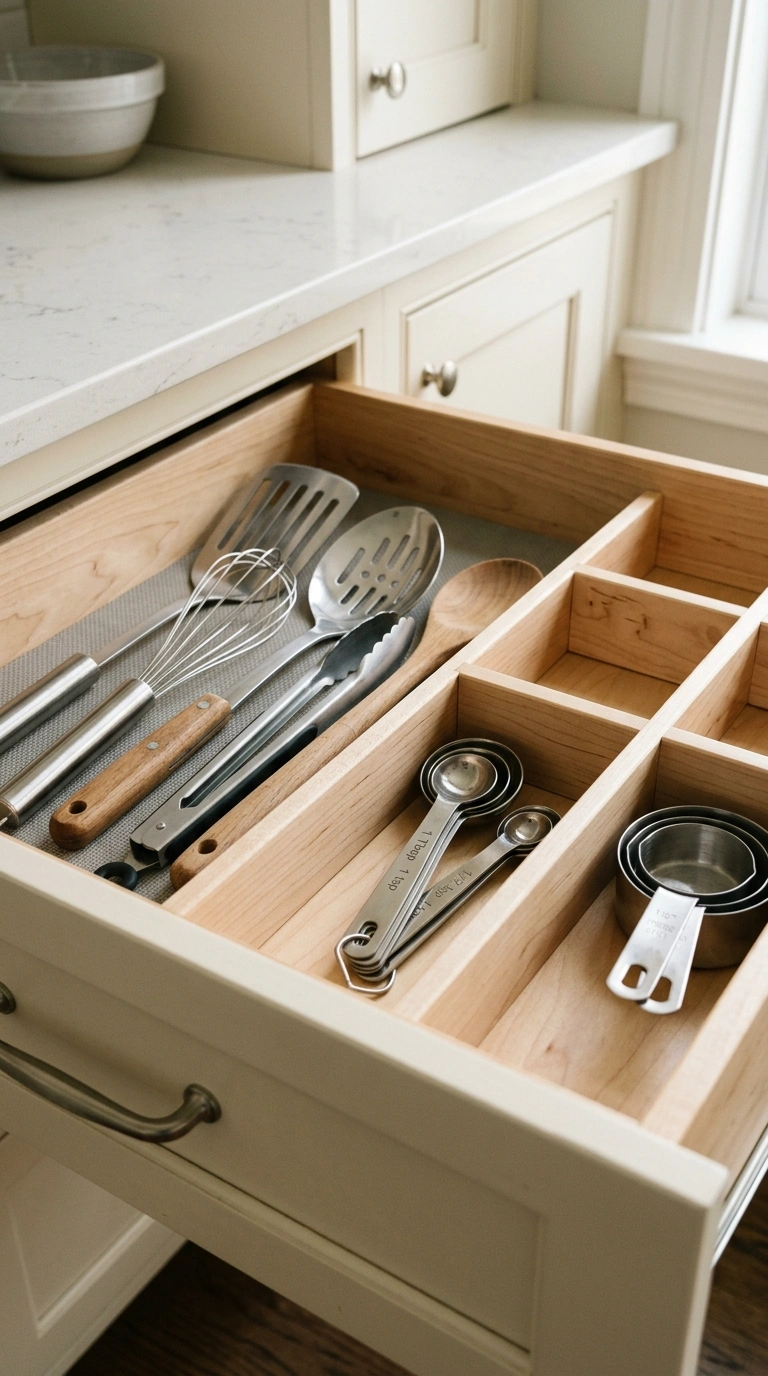
Inside your existing drawers, dividers turn a jumbled mess into a system you can actually use. Use adjustable wood or bamboo dividers to separate utensils, and add a shallow tray insert for smaller items like measuring spoons and bottle openers. In deeper drawers, stand up cutting boards and baking sheets vertically using a simple divider insert instead of stacking them flat where the bottom one never gets used.
This idea costs very little and takes under an hour per drawer, but it makes a real difference in how a one-wall kitchen functions day to day. When every drawer has a clear purpose, cooking moves faster because you are not digging through a pile to find the one spoon you need. It is one of the simplest upgrades on this list, and one of the most useful.
15. Wall-Mounted Jars
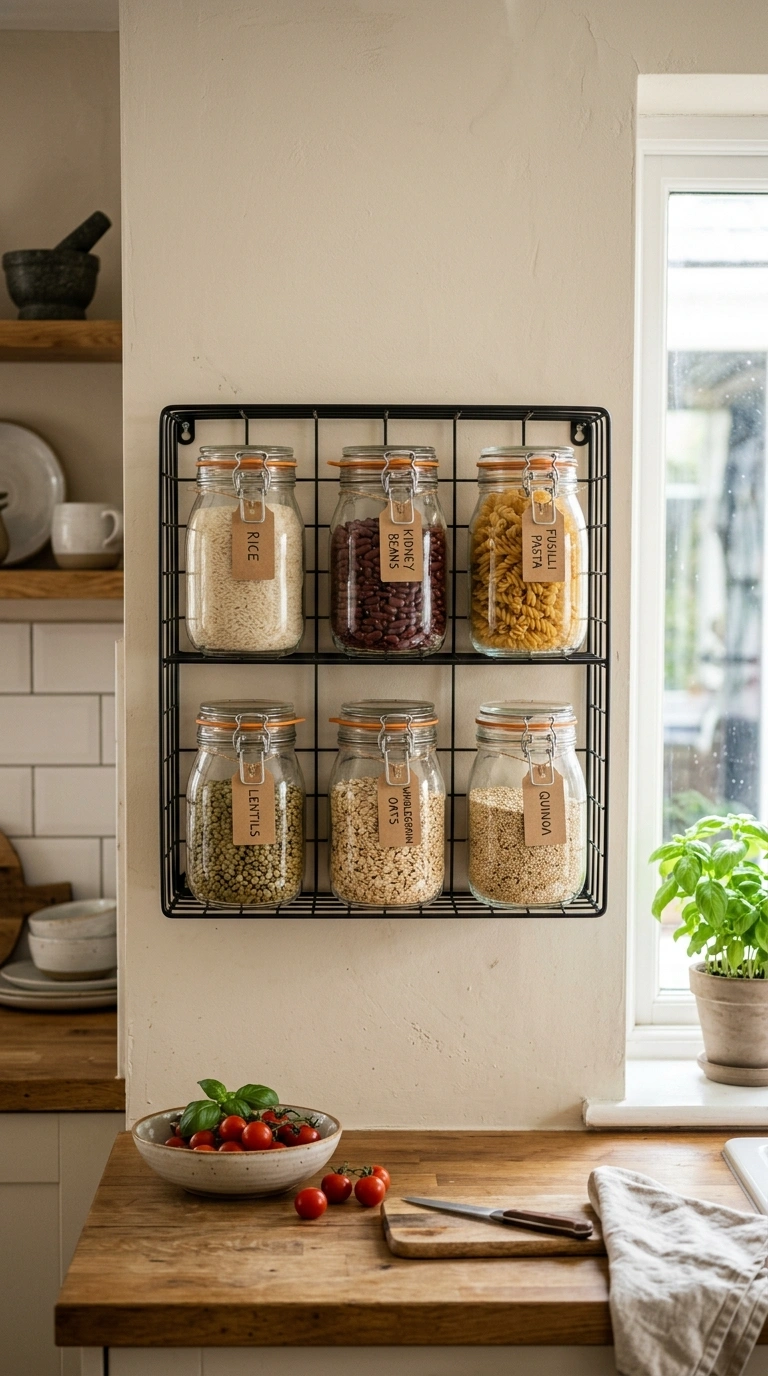
Small wire or wood-frame holders mounted on the wall can hold glass jars filled with dry goods like rice, beans, or pasta, turning your pantry staples into part of the decor. This works especially well on an empty stretch of wall near the stove or over a counter with no upper cabinets. Choose jars with clamp-top lids so they seal well and look neat in a row.
Group them by size and fill level so the wall reads as organized rather than random. This idea saves cabinet space for bulkier items and gives you a quick visual check of what needs restocking at the store. It also adds texture and warmth to a plain wall, since glass and wood-toned lids catch natural light nicely throughout the day.
16. Slim Pull-Out Pantry
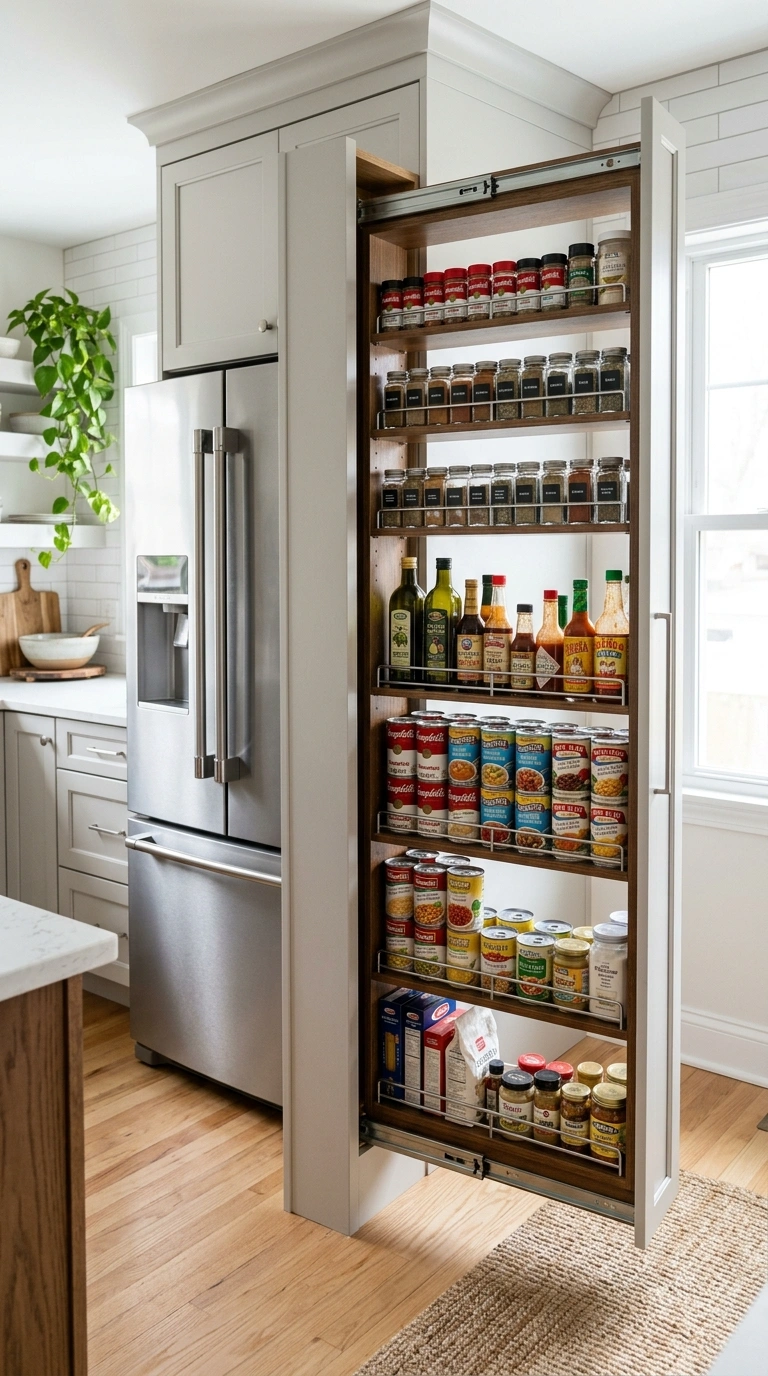
A pull-out pantry cabinet, sometimes only six to ten inches wide, can slide into the narrow gap beside your fridge or oven where nothing else would fit. Inside, it holds several shelves for canned goods, spices, or snack items, giving you pantry-level storage without needing a full pantry closet. Many home improvement stores sell these as ready-made units that just need to be secured in place.
This is one of the best space-saving tricks for a one-wall kitchen, since it turns a wasted six-inch gap into real storage. Label the shelves inside so items do not get buried, and keep the most-used goods at eye level. Because it slides out fully, you can see everything at once instead of reaching blindly into a deep, dark cabinet.
17. Corner Lazy Susan
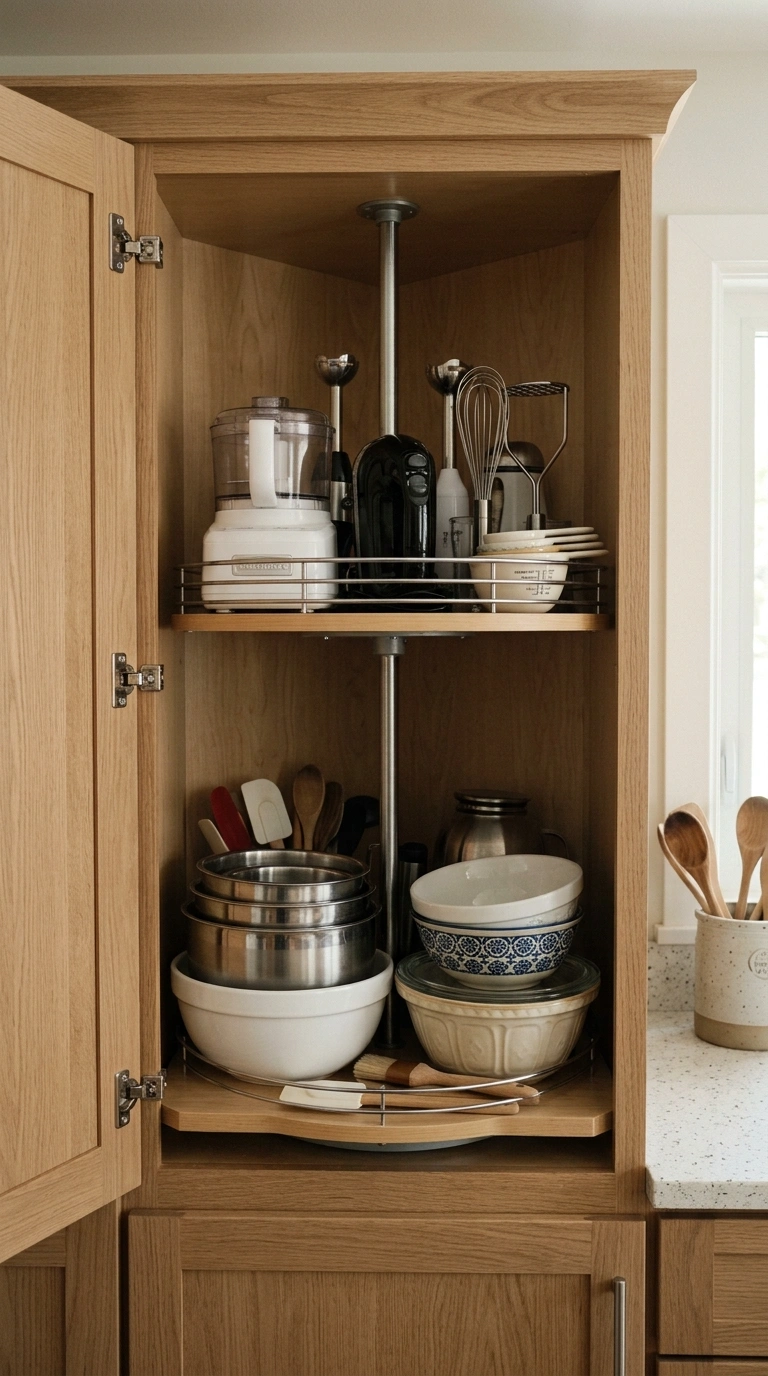
If your one-wall kitchen has a corner cabinet, a lazy susan turret makes that awkward, hard-to-reach space actually usable. The rotating shelves let you spin items into view instead of crawling on your hands and knees to find a pot lid in the back corner. Install a two-tier or three-tier turntable depending on the cabinet height, and use it for bulky items like mixing bowls, small appliances, or bulk pantry goods.
This upgrade is especially worth it in corner cabinets, which are often the most wasted space in a small kitchen. Once installed, you will likely notice you can fit more into that corner than you ever could before, simply because everything becomes visible and reachable with a simple spin instead of a struggle.
18. Over-Fridge Cabinet
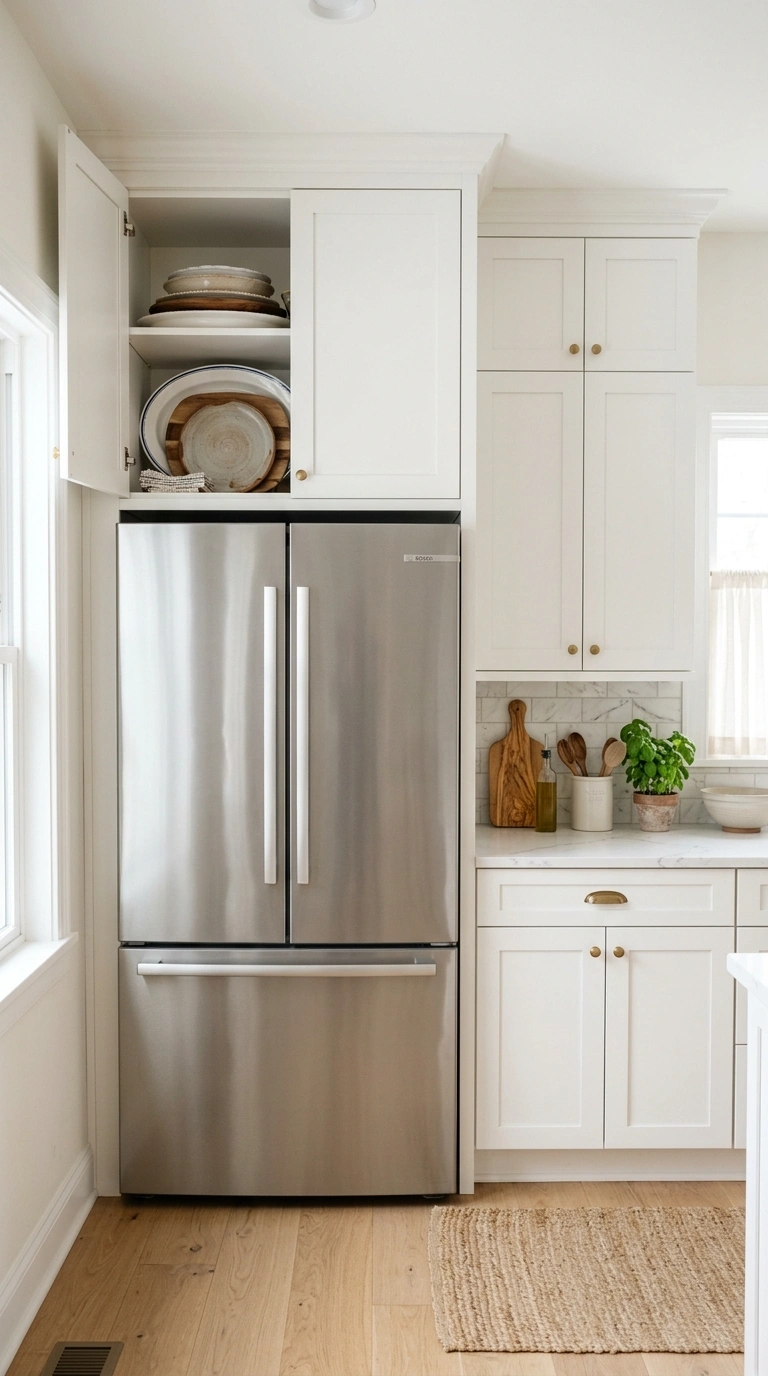
The space above the refrigerator often sits empty or becomes a dumping ground for random boxes. Adding a proper cabinet or open shelf above the fridge captures that height for storage you do not need every day, like large serving platters, holiday dishes, or extra small appliances. Match the cabinet finish to your existing units so it looks like part of the original build.
Use a small step stool kept nearby for easy access, since this space usually sits above comfortable reach. This idea is especially valuable in one-wall kitchens where the fridge takes up a chunk of your only wall, because it recovers storage from a spot that would otherwise just collect dust and clutter on top.
19. Window Sill Herbs
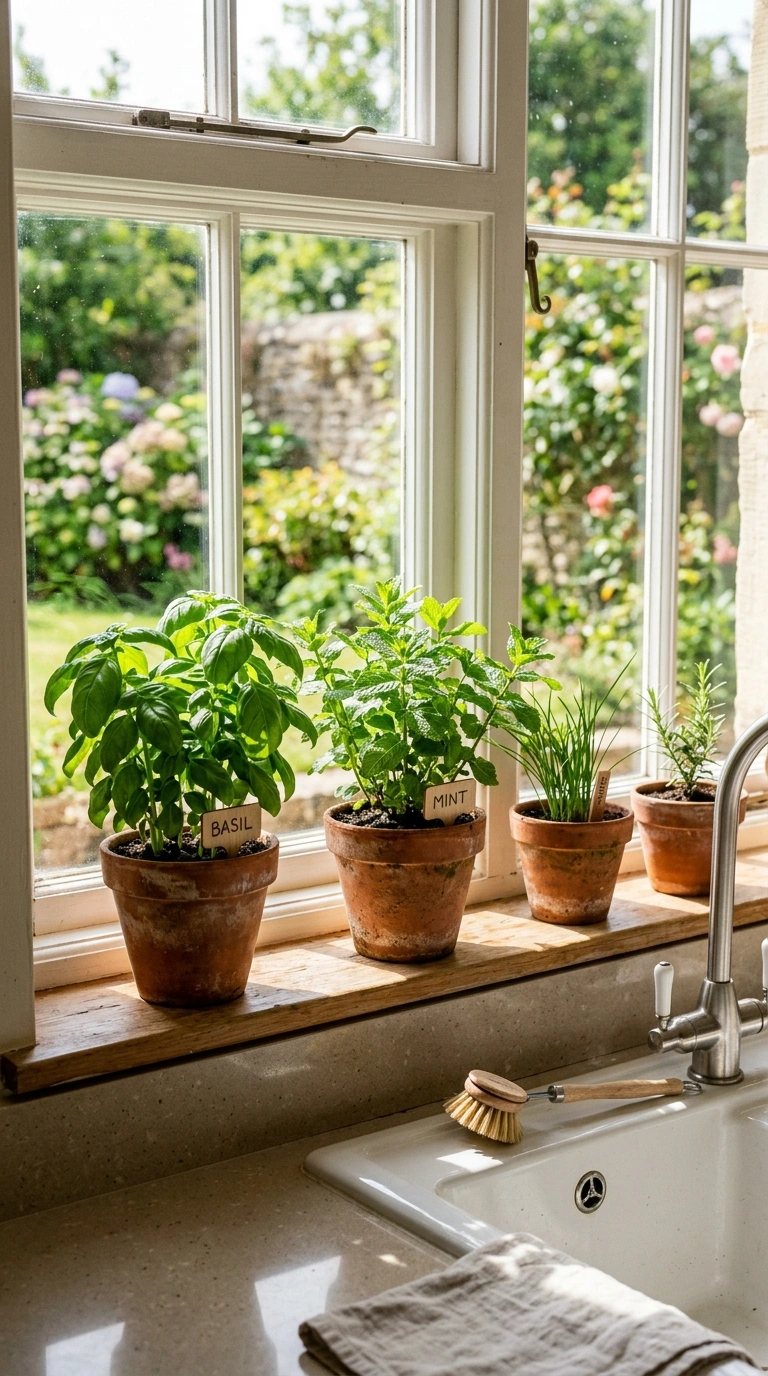
If your one-wall kitchen has a window above the sink or counter, the sill is a great spot for small potted herbs like basil, mint, or thyme. This adds a bit of green life to a kitchen that might otherwise feel flat, and it keeps fresh herbs within reach while you cook. Choose small terra cotta pots or a simple wood tray to keep the sill tidy and prevent water rings.
Beyond the herbs themselves, this idea makes the whole kitchen feel more cared for and less like a purely functional space. Rotate the pots occasionally so each one gets even sunlight, and trim the herbs often so they stay full and healthy rather than leggy. It is a small, low-cost touch that photographs beautifully and makes cooking a little more enjoyable.
20. Bench Seat Storage
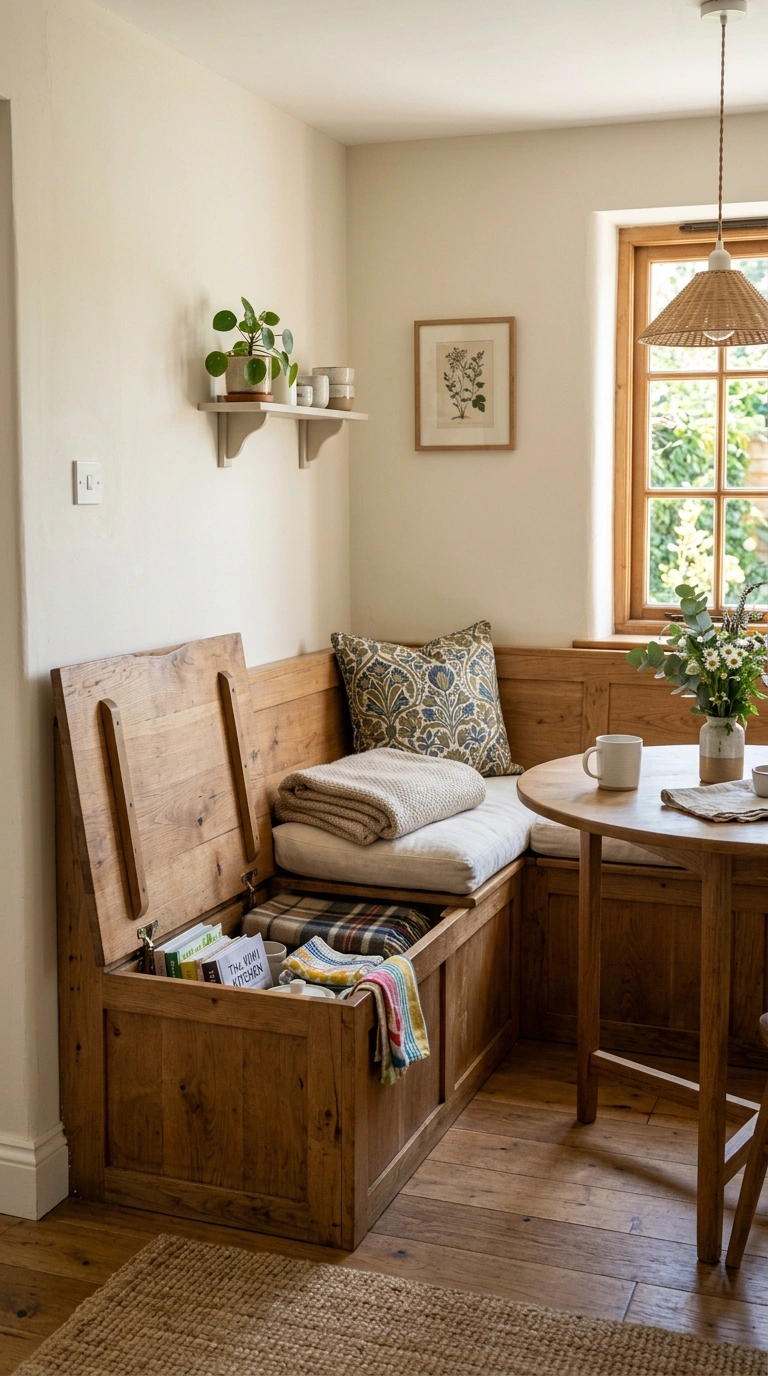
If your one-wall kitchen opens into a small dining nook, a bench seat with a lift-up lid gives you hidden storage plus a comfortable place to sit. Use the space inside for table linens, extra dishware, or seasonal items you do not need on a daily basis. Add a cushion on top in a fabric that matches your kitchen’s color scheme, and a few throw pillows to make the spot feel inviting.
This idea works especially well when floor space is tight, since the bench doubles as both seating and storage rather than needing two separate pieces of furniture. It also softens the practical, work-focused feel of a one-wall kitchen by adding a cozy spot for coffee or a quick breakfast.
21. Ladder Shelf Display
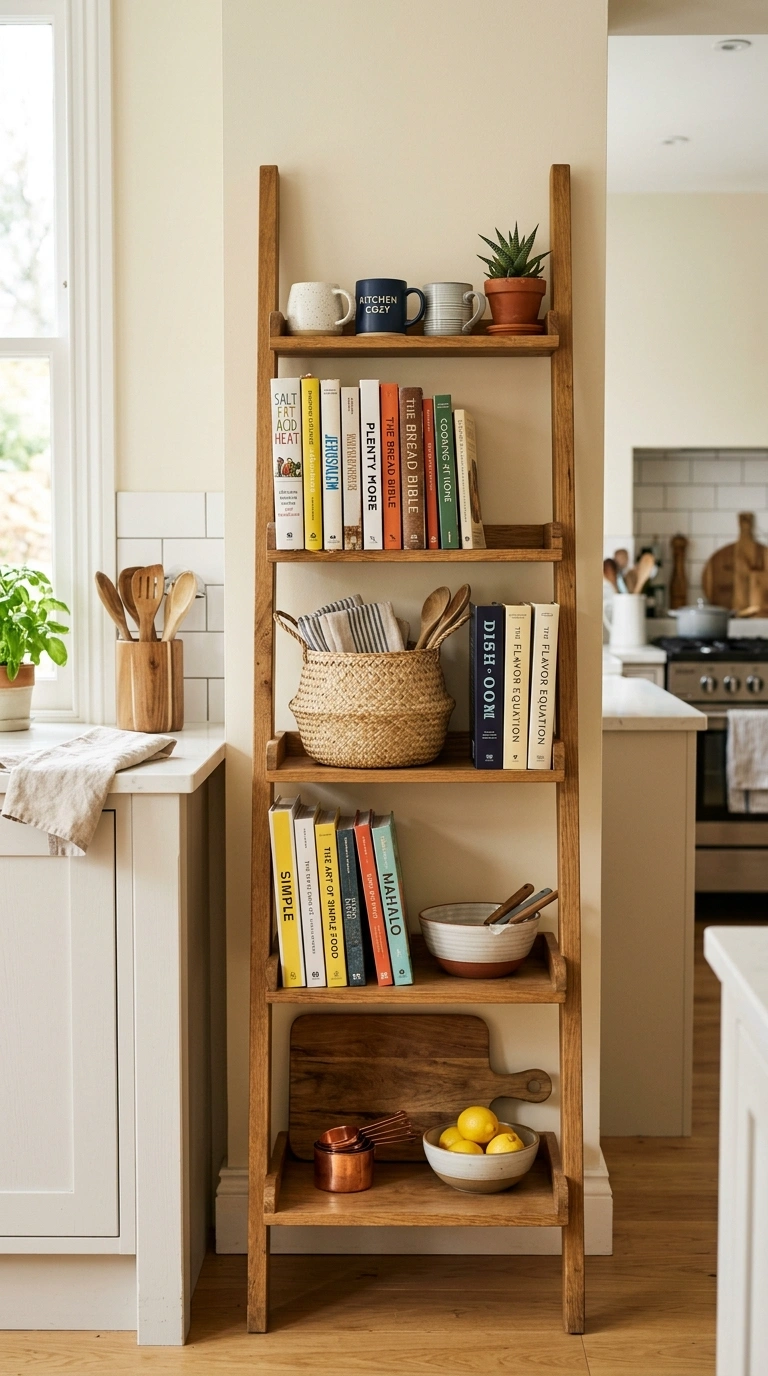
A ladder-style shelf leaned against the end of your counter wall adds several tiers of open storage without needing anchors or wall mounting. Use it to display cookbooks, a small collection of mugs, or woven baskets holding smaller pantry items. Because it leans rather than mounts, it is a good option for renters or anyone who likes to rearrange furniture from time to time.
Choose a ladder shelf in a wood tone that complements your cabinets, or a black metal frame for a more modern look. Keep the styling loose and a little uneven across shelves, since a too-perfect arrangement can look stiff. This piece works especially well at the end of a counter run where a full cabinet would feel too heavy for the space.
Small kitchens do not need big renovations to feel organized. Pick two or three ideas from this list that match your space and budget, and build from there. Once you see how much storage a single wall can actually hold, you will wonder why it took so long to try.