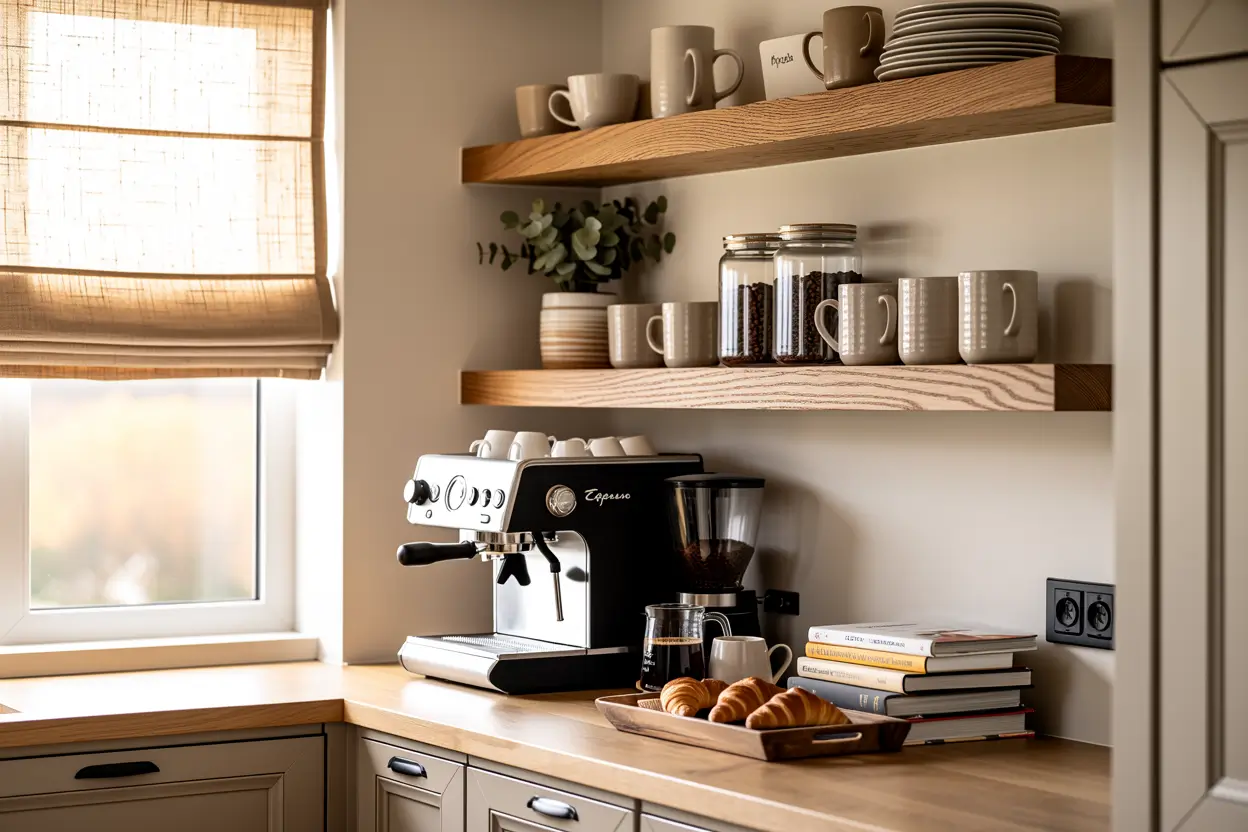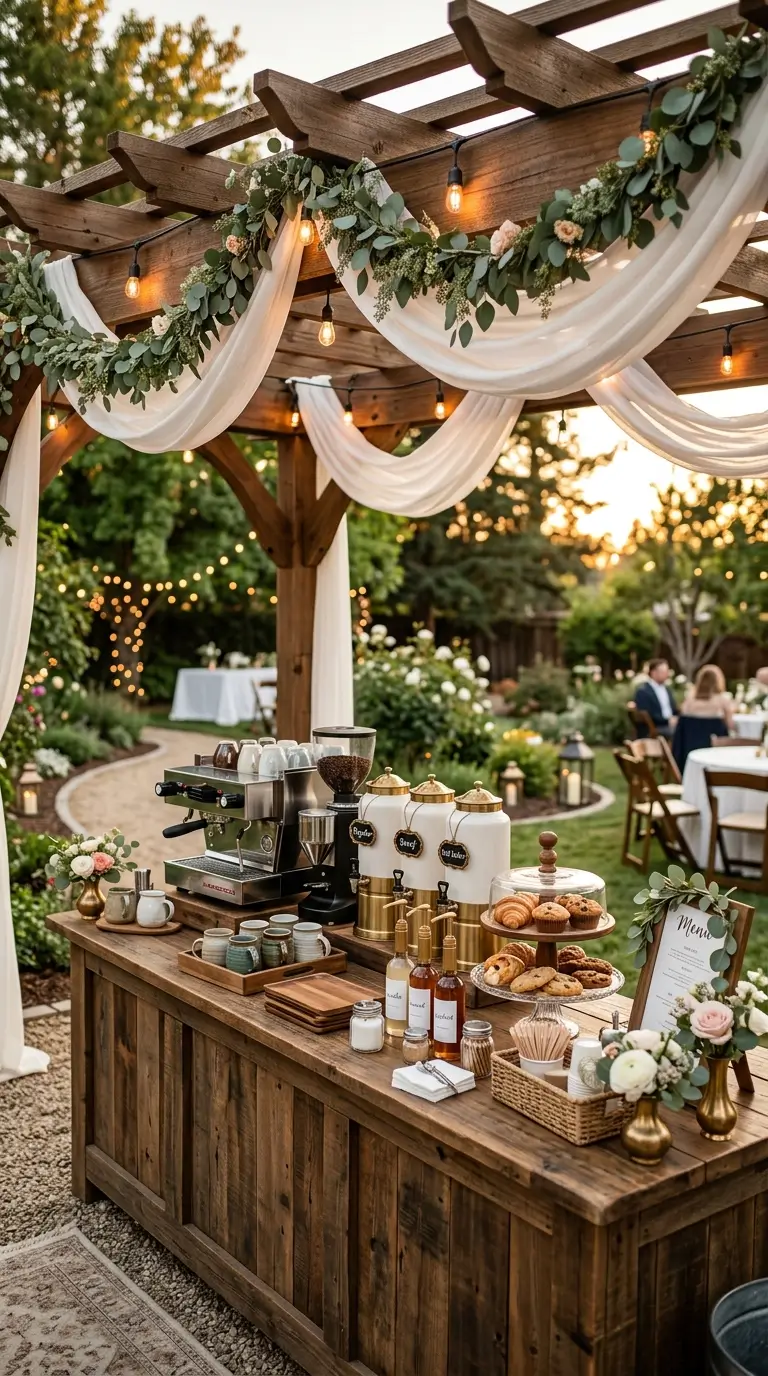
19 Home Coffee Bar Designs That Make Every Morning Better
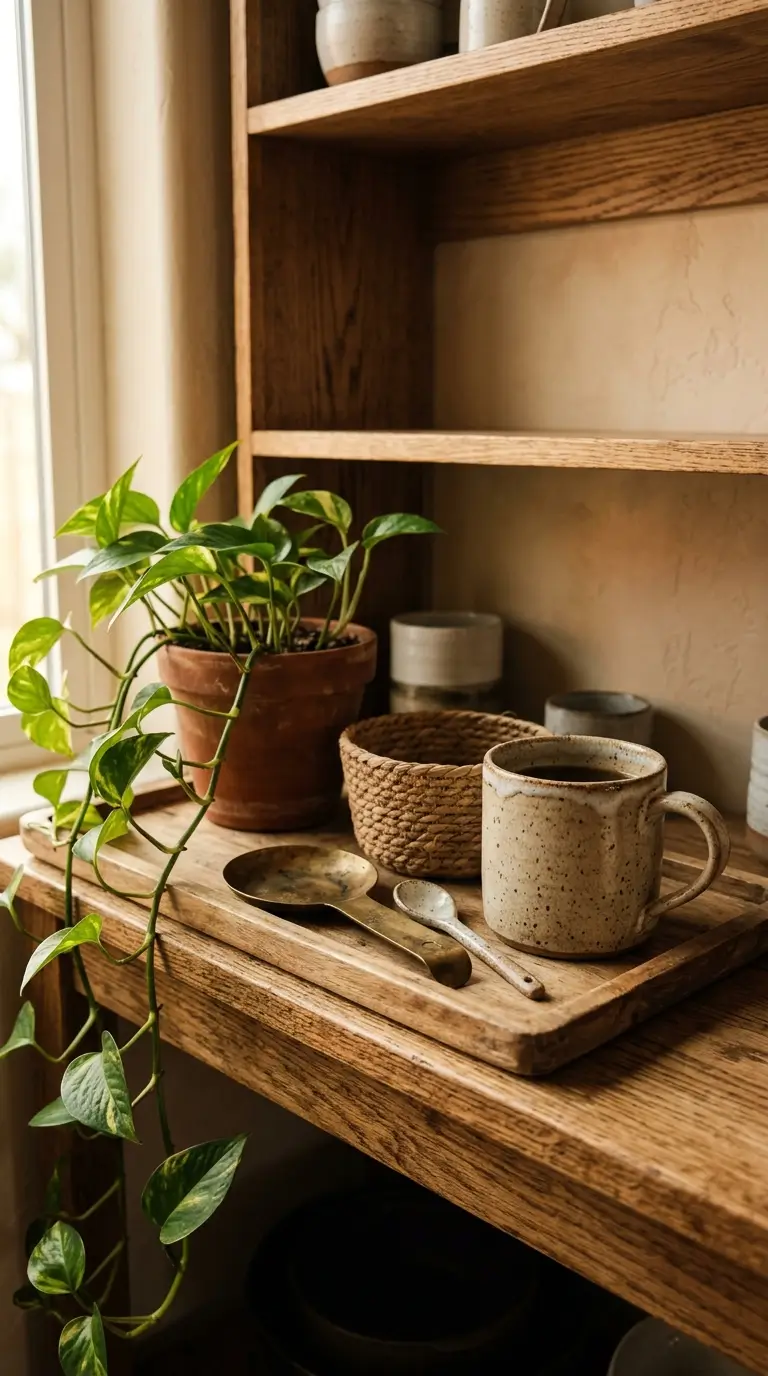
Two home coffee bar setups can use nearly identical products, brass hooks, a wood tray, the same coffee maker, and still feel completely different in person. One feels warm the second you walk toward it. The other feels staged, like it’s waiting for a photo rather than an actual morning.
The difference almost never comes down to a missing product. It comes down to lighting quality, restraint, and a few small signs that the space actually gets used. This guide covers 19 real techniques for building that effortless feeling, not just another shopping list of coffee bar accessories.
1. Warm, Low-Angle Lighting Instead of Overhead Light
A coffee bar lit only by a kitchen’s main overhead fixture reads as functional, not inviting, since bright, straight-down light flattens texture and creates hard shadows.
| Light Source | Effect |
|---|---|
| Overhead ceiling light only | Flat, functional, slightly clinical |
| Under-cabinet strip or a small lamp | Warmer shadows, texture becomes visible |
| Both, on separate switches | Bright for making coffee, soft for lingering afterward |
A small plug-in lamp with a 2700K bulb, positioned to the side rather than directly above, does more for the mood of this specific corner than almost any object you could add to it.
2. Layering Three Textures in a Small Footprint
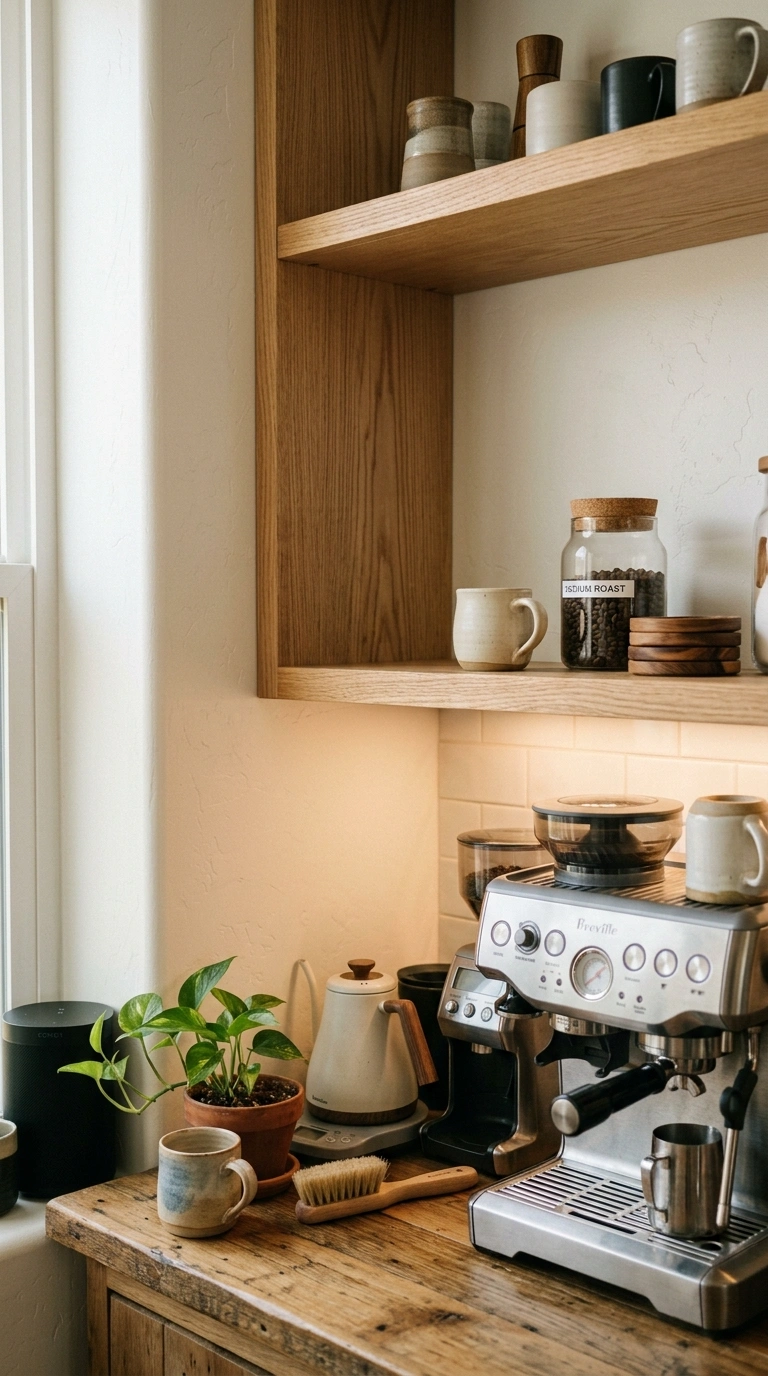
A coffee bar built from a single material, all ceramic, or all wood, reads as flatter than one where three different textures sit close together and catch light differently.
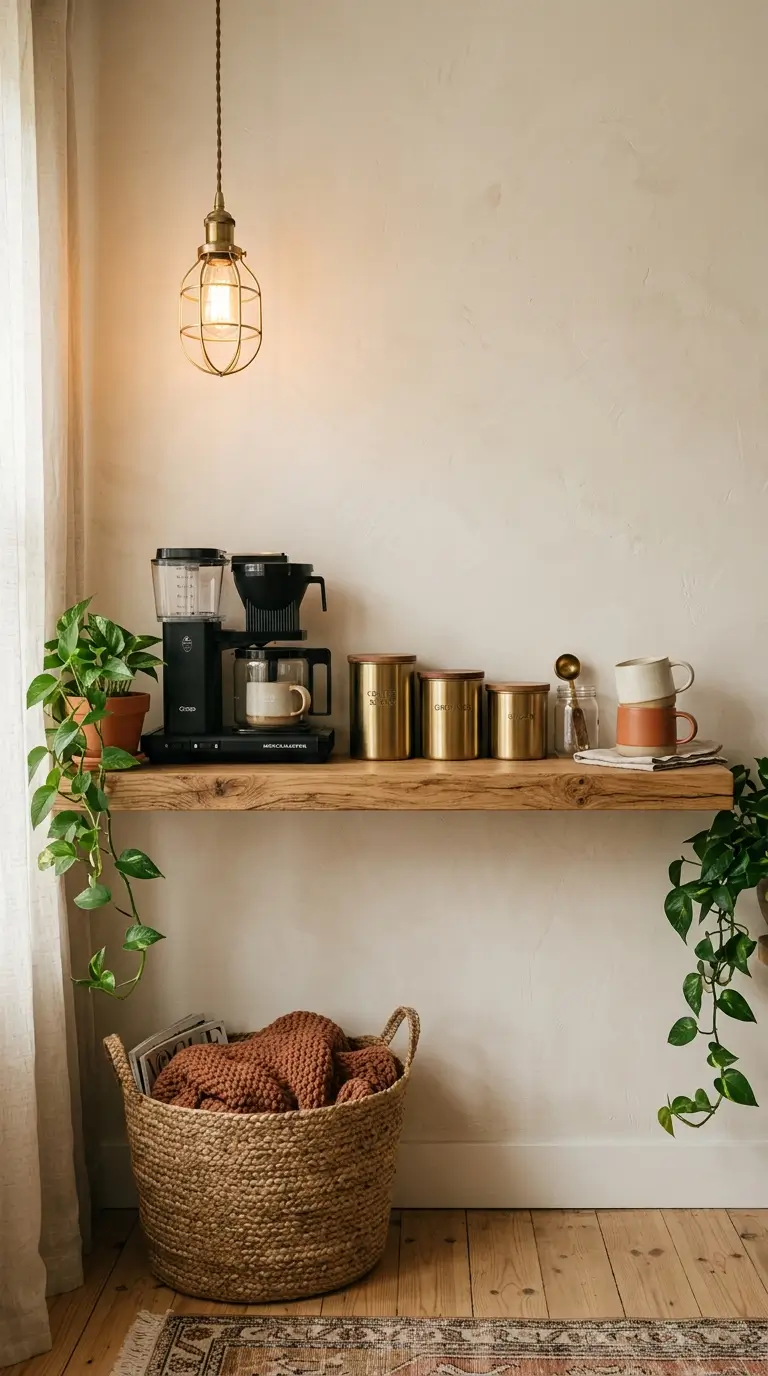
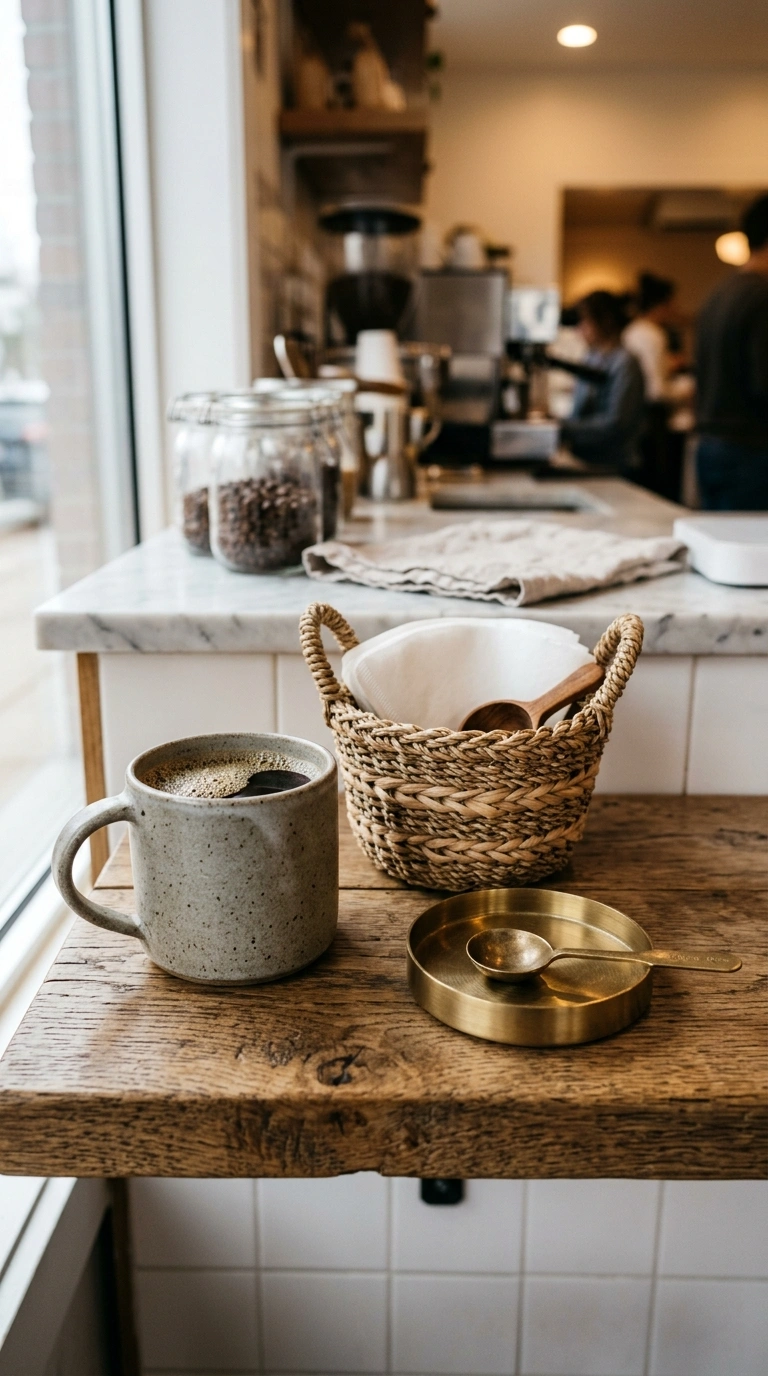
A reliable starting combination: one matte material (a stoneware mug), one woven material (a small basket or placemat), and one polished material (a brass spoon or a glass canister). The contrast between matte, woven, and polished surfaces is what makes a small vignette feel rich instead of one-note, even with just three or four objects total.
Also Read > 20 Tiny Kitchen Ideas That Maximize Space Beautifully
3. Leaving Genuine Negative Space
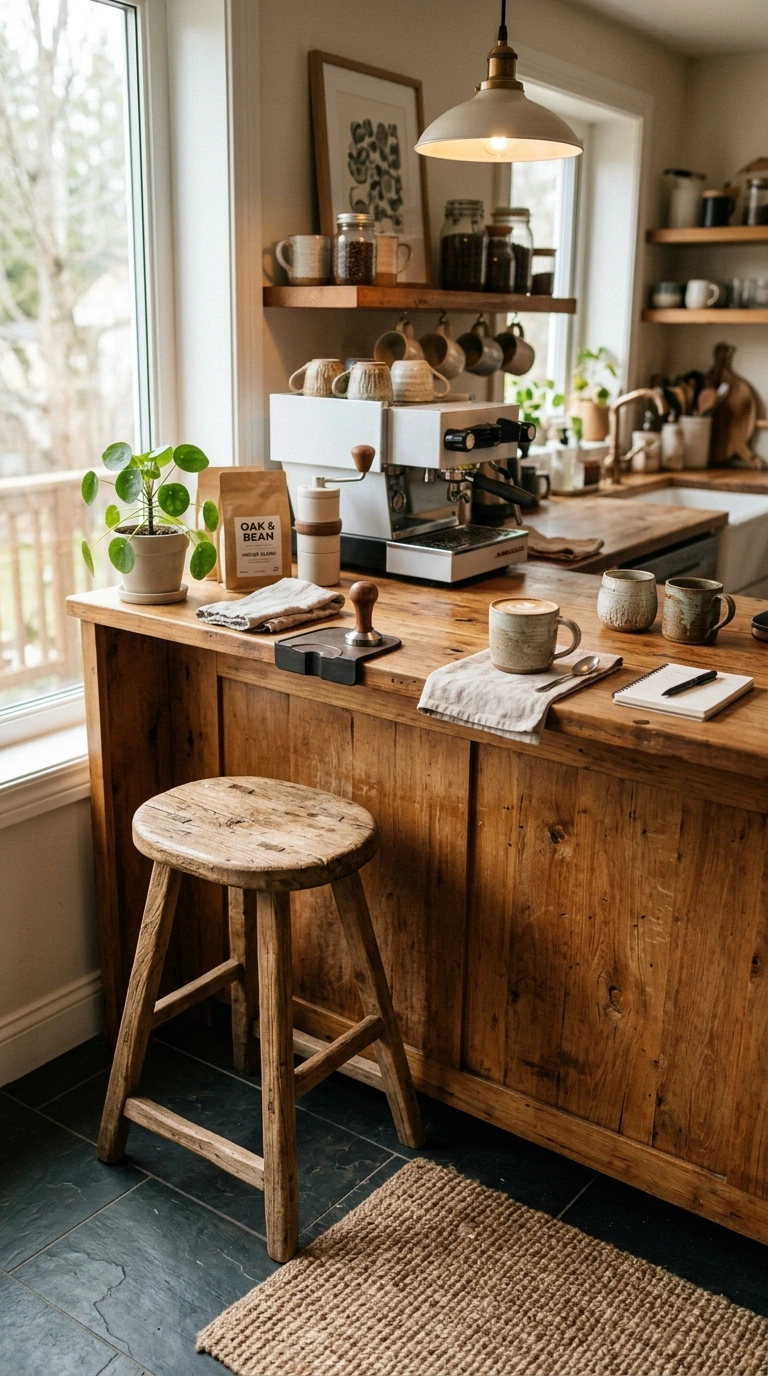
The instinct with a small styled corner is to fill every inch of it, but a coffee bar with visible empty space around each object reads as considered, while one with zero breathing room reads as cluttered no matter how nice the individual pieces are.
A simple rule: after you’ve placed everything you think the space needs, remove one item. Most coffee bars improve the moment something gets taken away rather than added.
4. One Handmade or Imperfect Object as the Focal Point
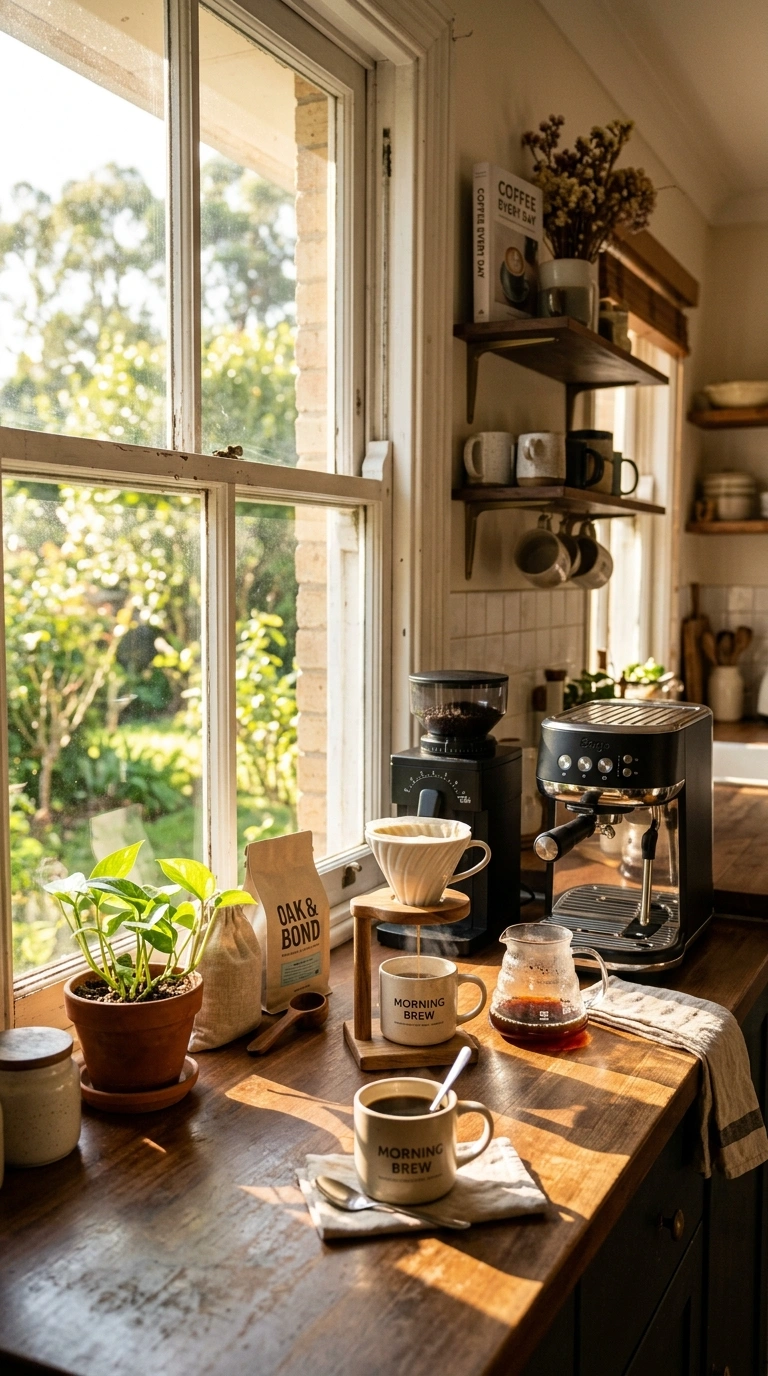
A single object with visible handmade irregularity, a hand-thrown mug with a slightly uneven rim, a chipped vintage creamer, a woven basket with an inconsistent weave, does more to make a space feel real than five perfectly matched, mass-produced pieces.
Where to find one: local pottery studios, craft fairs, and thrift stores are the most reliable sources, since the goal is genuine irregularity, not a manufactured “handmade-look” product designed to appear imperfect on purpose.
5. Everyday-Use Items Left Visible, Not Just Decor
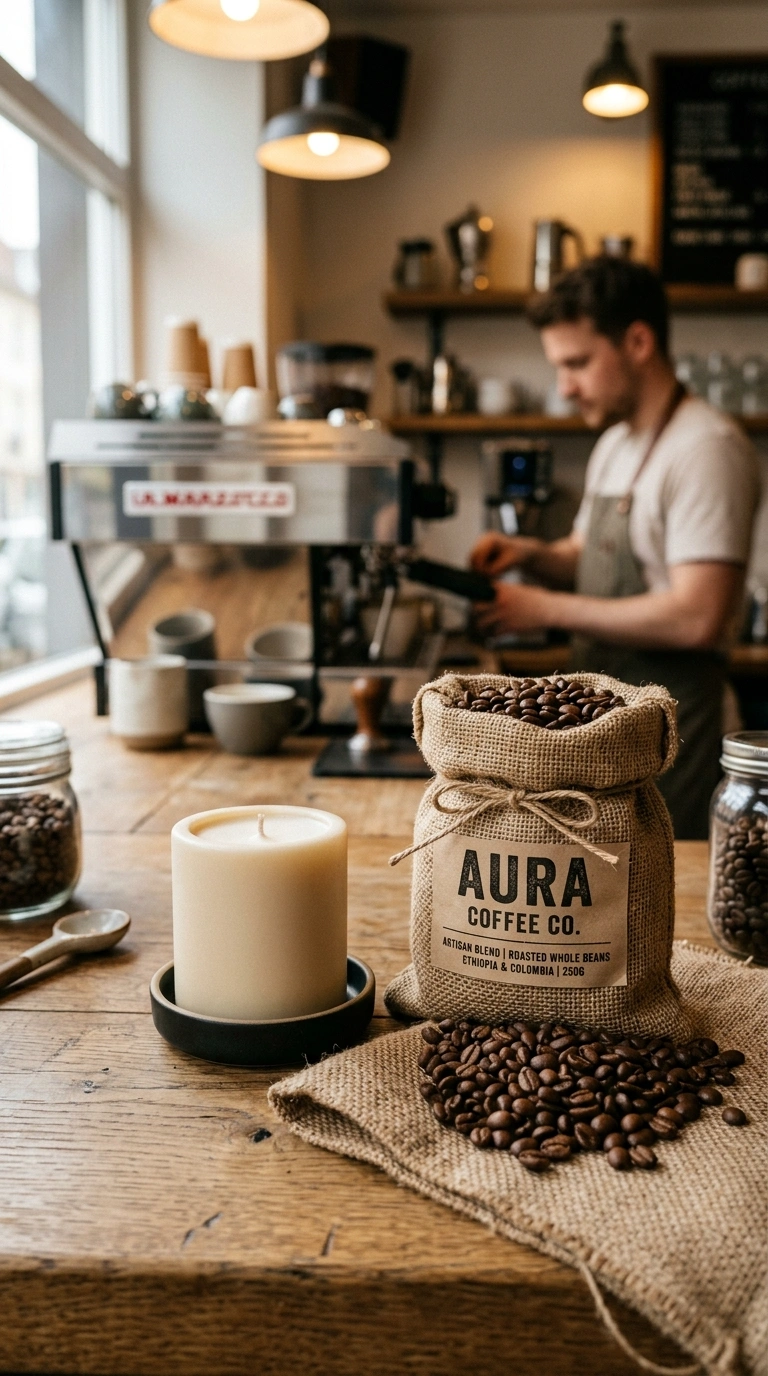
A coffee bar that only displays decorative objects, ones that never actually get touched, reads as a stage set. Leaving your actual daily items visible, the mug you use most, the spoon you reach for every morning, signals that the space is genuinely lived in.
What to leave out versus tuck away:
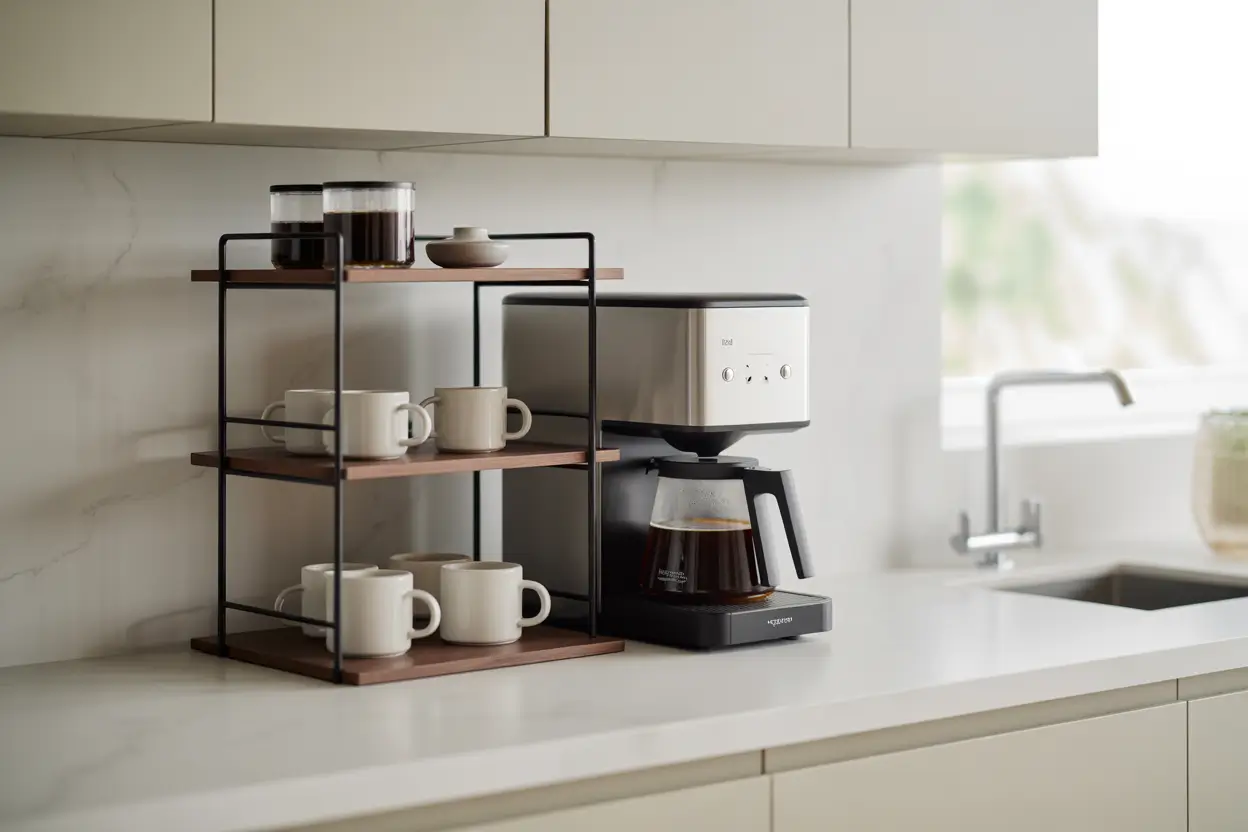
- Leave out: the coffee maker itself, your everyday mug, a spoon rest you use daily
- Tuck into a drawer or cabinet: backup supplies, extra mugs you don’t reach for, cleaning items
6. A Single Living Element
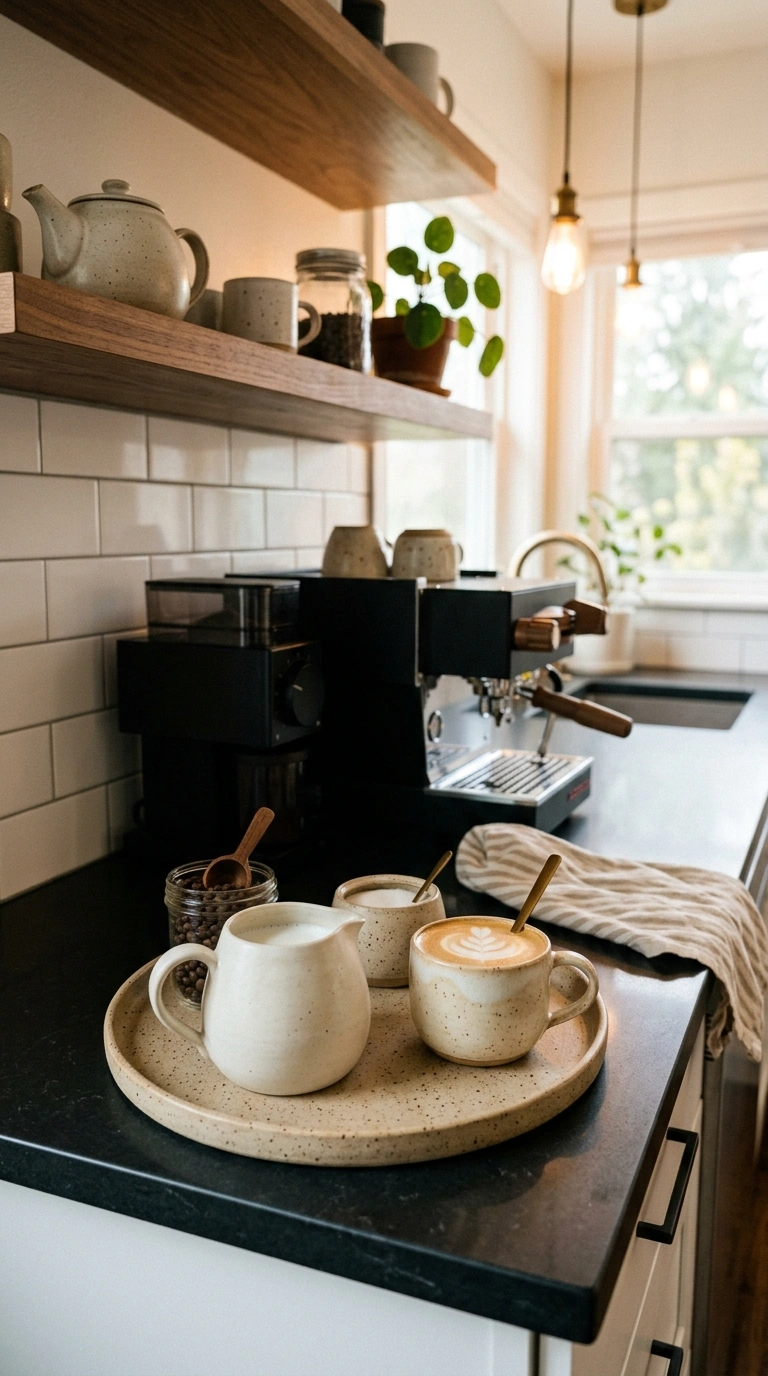
One plant or a small bunch of fresh flowers brings a coffee bar to life in a way that dried or artificial versions can’t fully replicate, since living things change subtly day to day.
| Option | Upkeep | Best For |
|---|---|---|
| Small potted pothos | Low, tolerates inconsistent watering | Corners with modest light |
| Fresh-cut stems in a bud vase | Needs replacing every 1-2 weeks | Anyone who wants ever-changing color |
| A single herb pot (mint, thyme) | Low to moderate | Coffee bars near a kitchen window |
7. Worn-In or Naturally Aged Materials
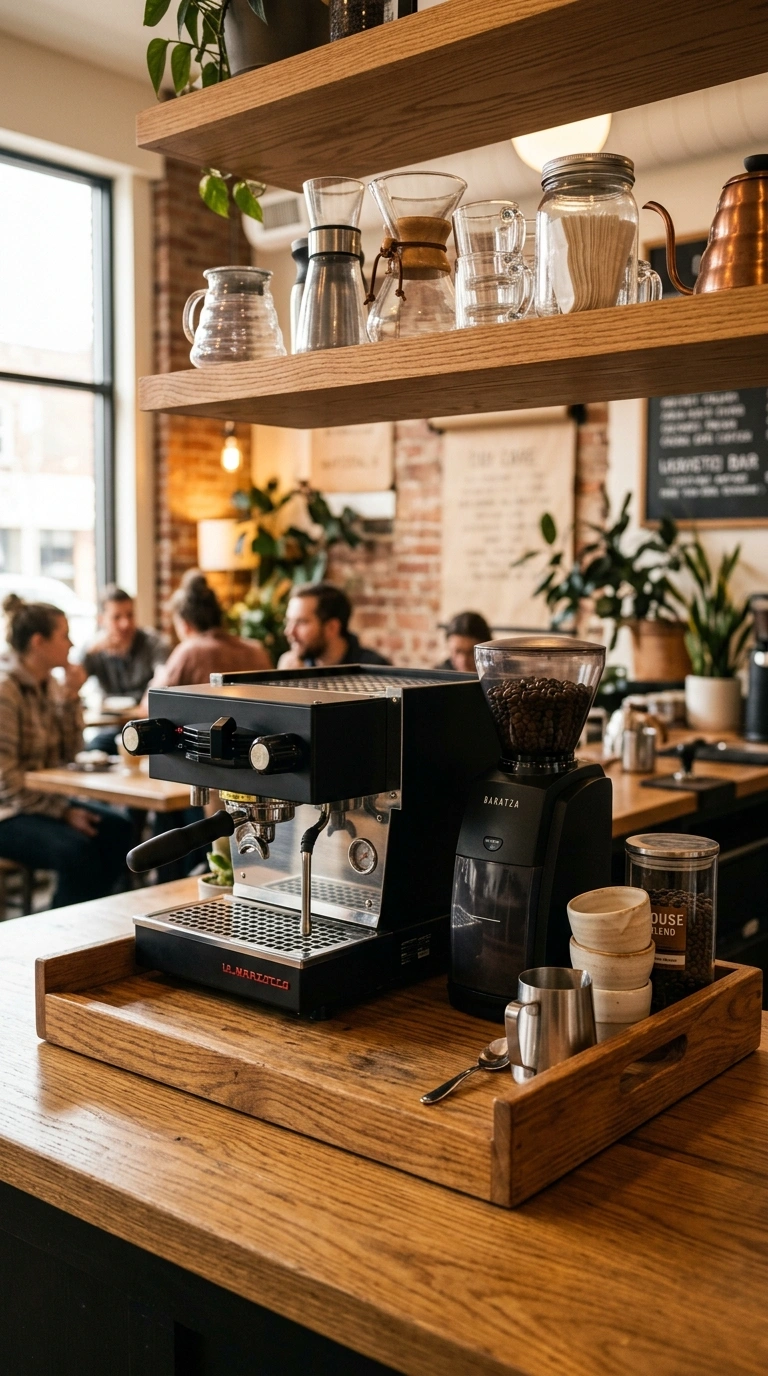
Brand-new brass, brand-new wood, and brand-new leather all look slightly stiff and self-conscious compared to versions that have picked up a bit of real wear. A coffee bar with at least one aged material feels settled rather than freshly assembled.
A quick way to get this without waiting years: source one piece secondhand, a vintage tray, an old wooden board, a well-used brass container, rather than building the entire vignette from new purchases made the same week.
8. One Personal Object With a Real Story
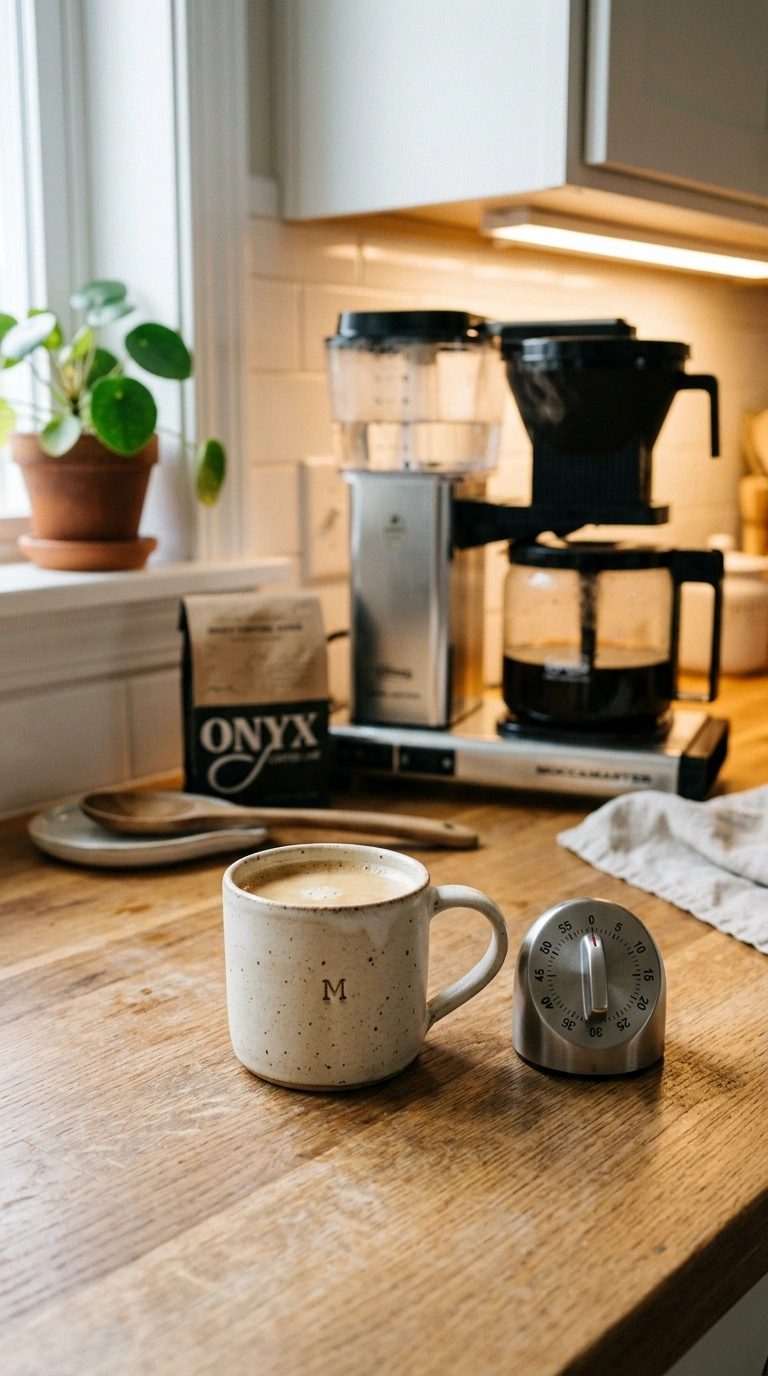
A single item connected to an actual memory, a mug from a trip, a grandmother’s creamer, a gift from a specific person, adds warmth that no amount of styling can replicate, because it signals the space belongs to a real person rather than a catalog.
Resist the urge to add more than one or two of these; a coffee bar covered entirely in sentimental objects starts to feel cluttered rather than personal, and the story behind each piece gets lost.
9. Soft Textiles to Soften Hard Kitchen Acoustics
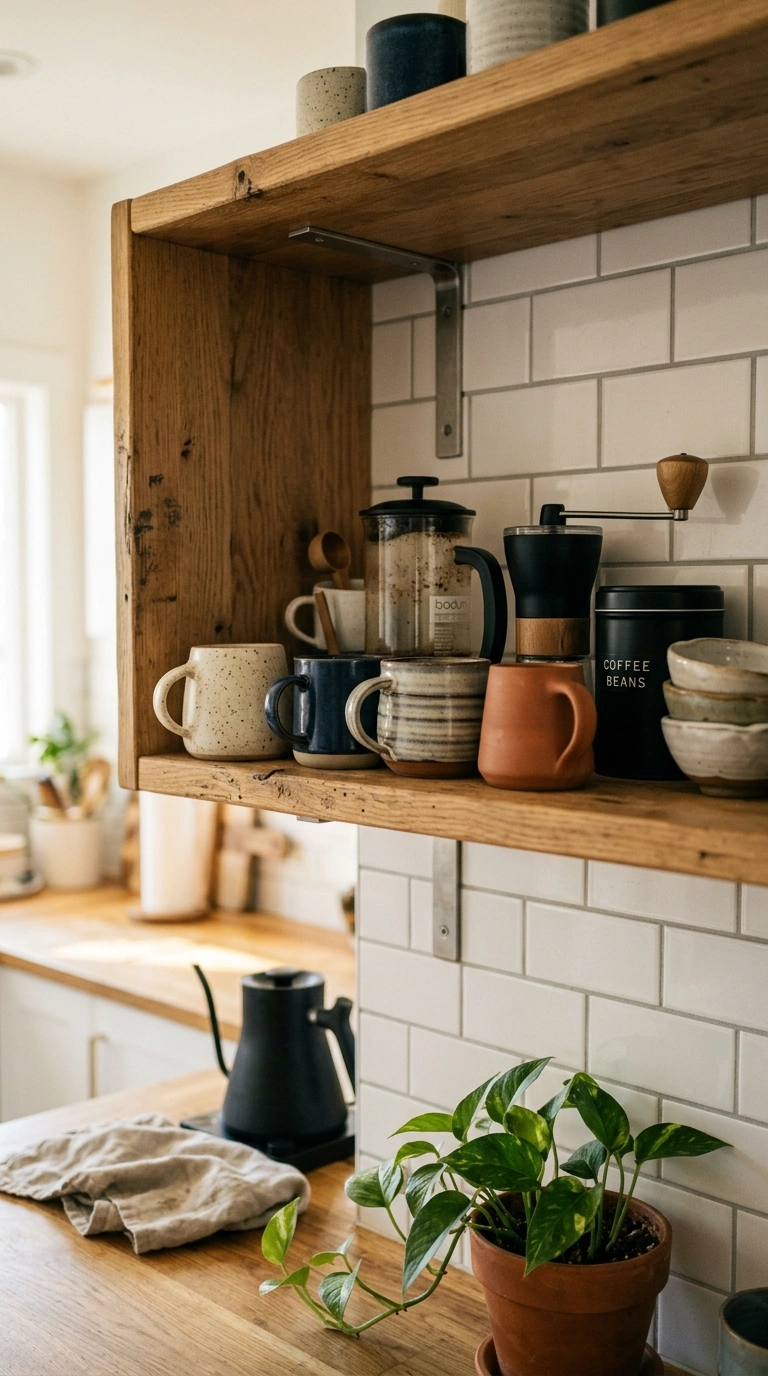
Kitchens are full of hard, sound-reflective surfaces, tile, glass, metal, stone, which is part of why a coffee corner in the middle of one can feel a little cold and clinical even when it looks good.
A small woven placemat, a folded linen napkin, or a fabric-lined basket absorbs some of that reflected sound and softens the corner both visually and acoustically. This is a subtle effect, but it’s part of why a coffee bar with textiles nearby tends to feel more relaxed than one sitting on bare stone or tile alone.
10. A Narrow, Consistent Color Palette
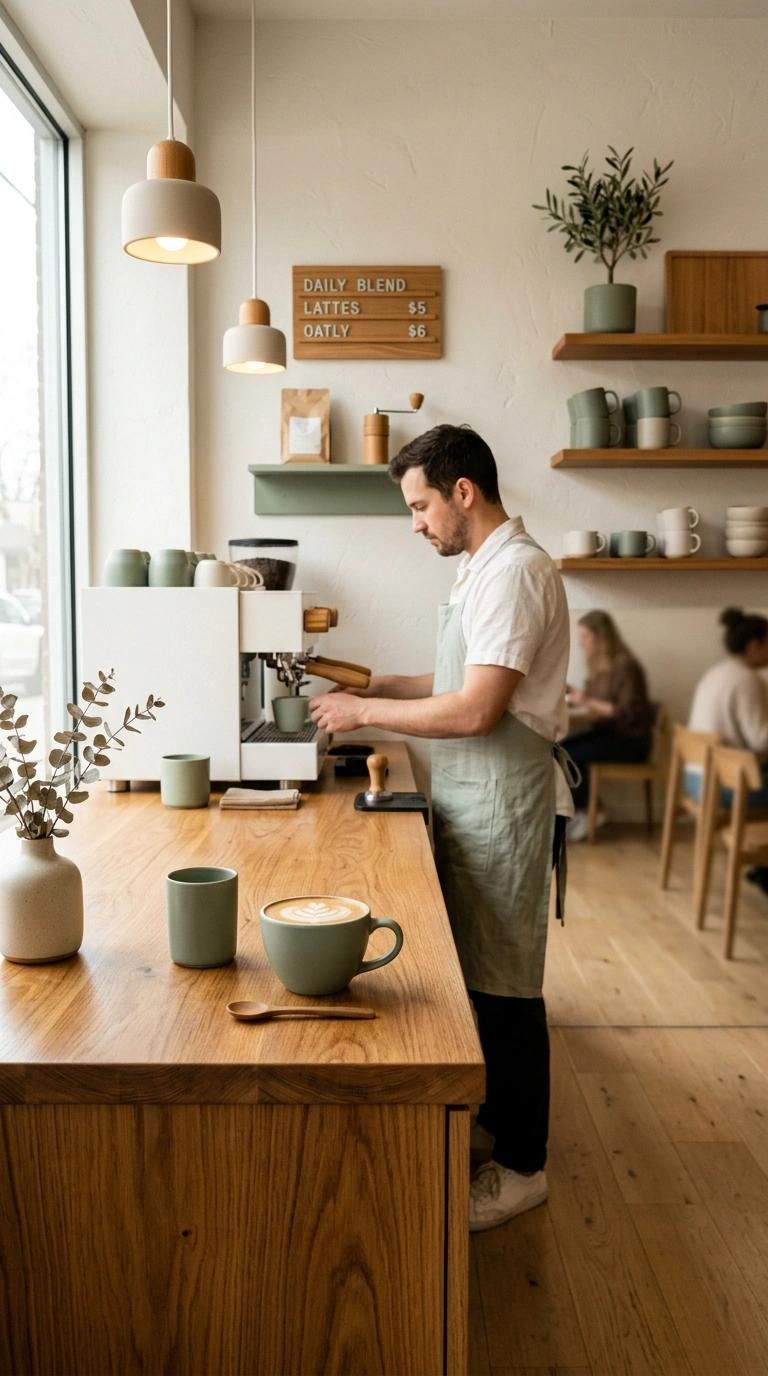
A coffee bar pulling from two or three colors total (say, warm white, honey wood, and one muted accent) reads as calmer and more intentional than one where every object is a different color and finish.
A simple check: count the distinct colors visible in your coffee bar right now. If it’s more than three or four, the space is working harder than it needs to; consolidating toward a tighter palette, even by swapping out just one or two mismatched pieces, usually reads as an immediate improvement.
11. Open Storage That Gets Genuinely Used
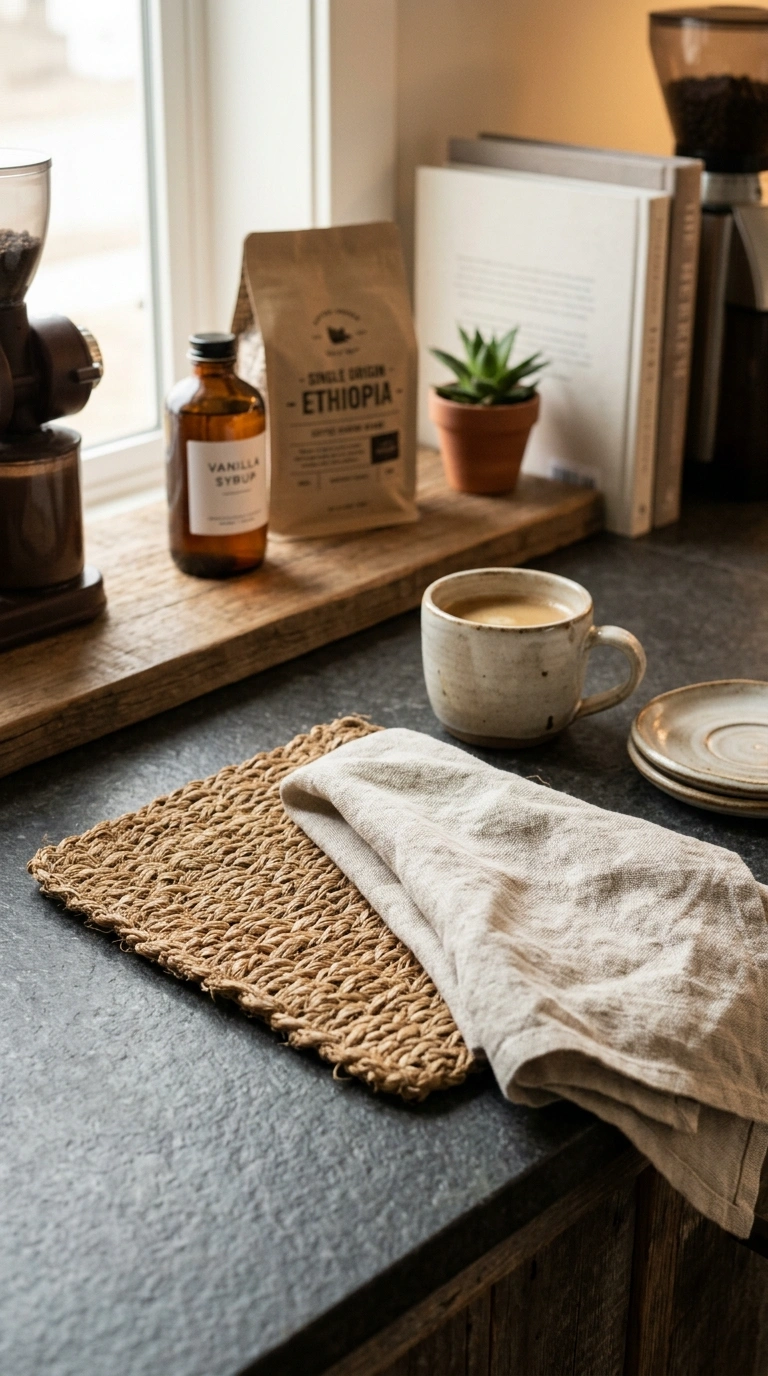
Open shelving styled with items that never actually get touched starts to look like a display after a few weeks, once dust settles evenly across everything. Open storage feels most inviting when it’s still in active rotation.
Do: keep 2-3 open items that get used weekly, and let their slightly imperfect daily arrangement stay as is, rather than restyling it back to a “perfect” position every day.
Don’t: style open shelving with items you never touch, purely for how they photograph; they’ll read as stiff and staged within a short time.
Also Read > 21 Coffee Bar Ideas That Make Your Home Feel Like a Café
12. A Small Ritual Object
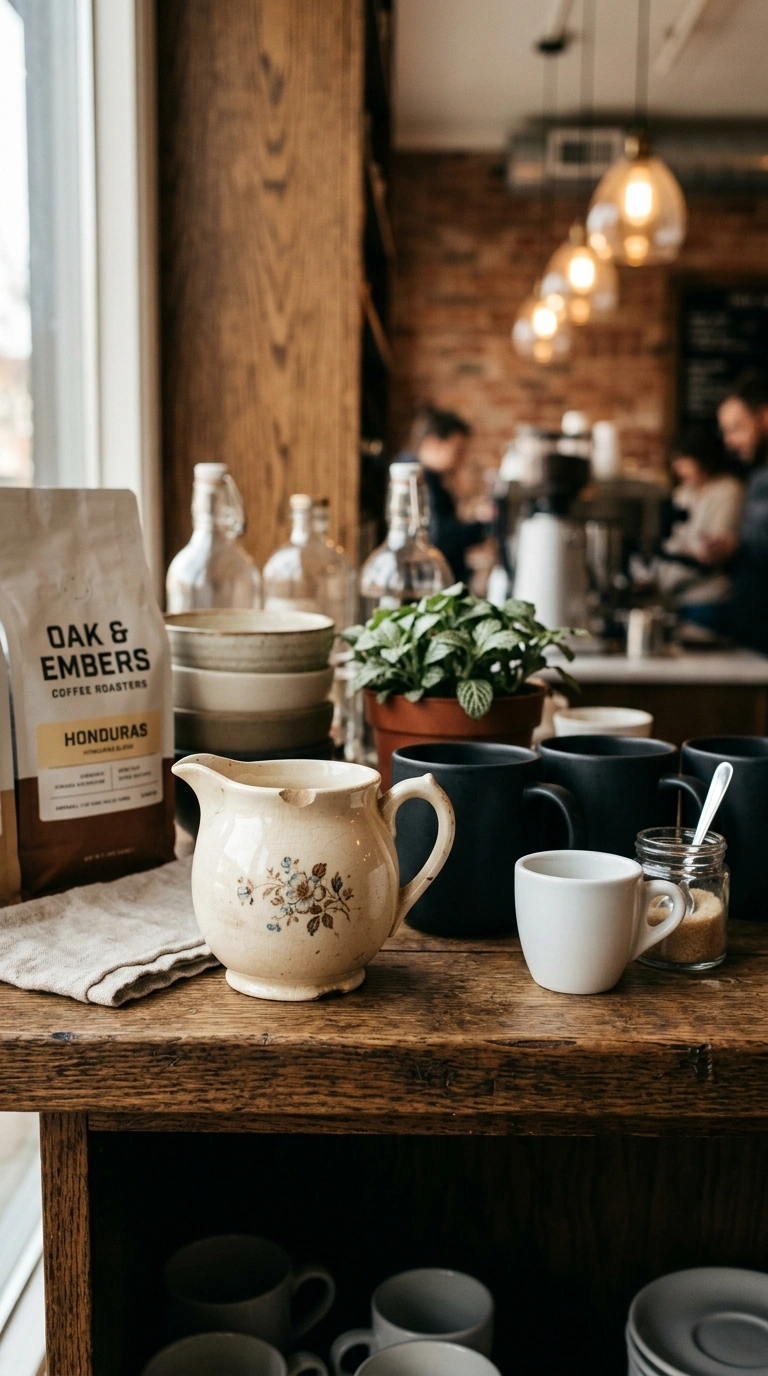
A specific mug reserved for one person, a small egg timer used for steeping, a particular spoon, small objects tied to a repeated daily habit add warmth because they hint at a routine rather than a one-time styling decision.
This is less about the object itself and more about what it signals: that mornings happen here often enough to develop small, specific habits around them.
13. Warm Wood as the Anchor Material
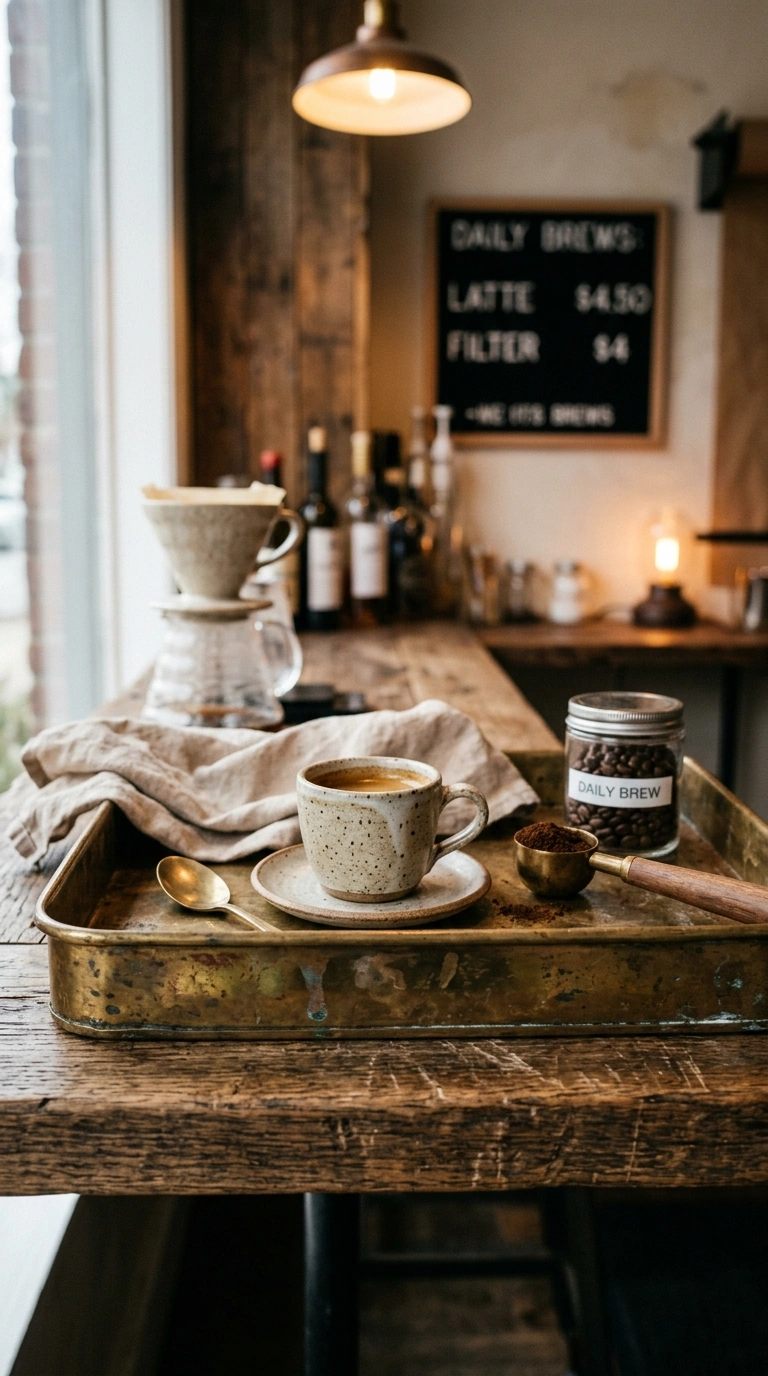
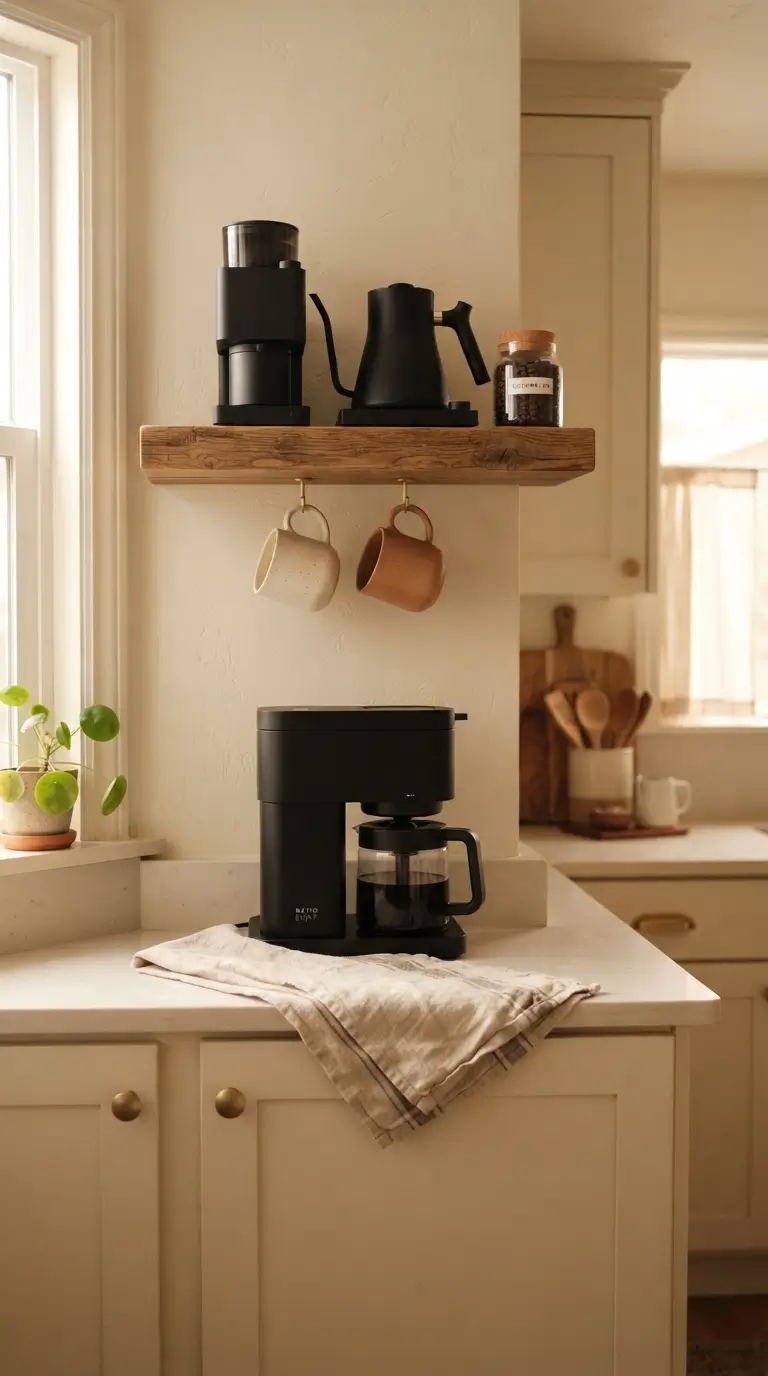
Across nearly every genuinely inviting coffee bar, one material tends to repeat as the base note: warm-toned wood, whether that’s a tray, a shelf, or a cart surface. Cooler materials (chrome, glass, white laminate) can layer on top, but a warm wood anchor underneath tends to keep the whole thing from feeling sterile.
Undertone matters: honey oak and warm walnut read as considerably cozier than gray-washed or cool-toned wood finishes, which can push a small vignette toward feeling more clinical than intended.
14. Curved or Organic Shapes to Soften Hard Lines
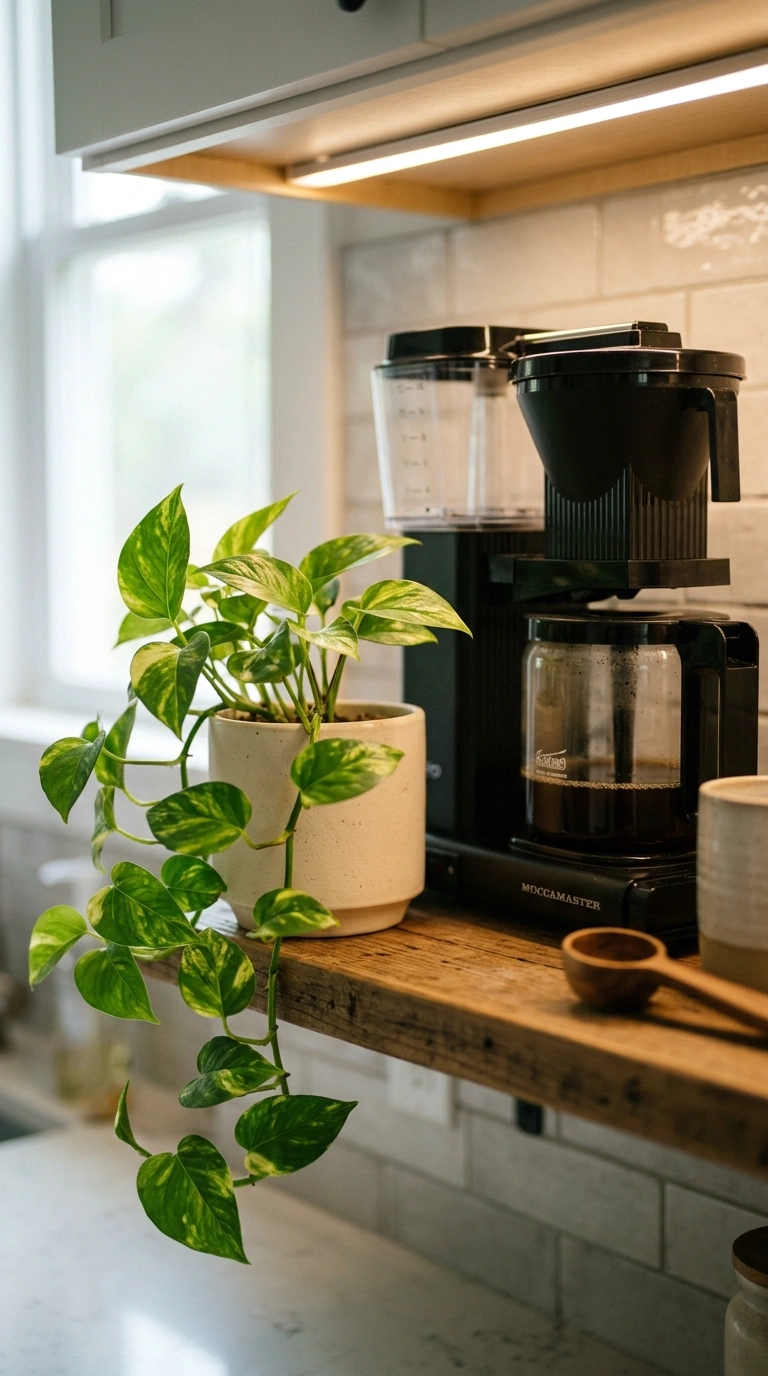
A coffee bar built entirely from straight edges and sharp corners, square trays, rectangular shelves, boxy canisters, reads as more architectural than welcoming. Introducing one or two curved or organic shapes softens that feeling meaningfully.
A round tray instead of a square one, a rounded ceramic pitcher, or an organically shaped dish are small swaps that shift the whole corner’s feeling without changing the color palette or materials at all.
15. A Layered Scent
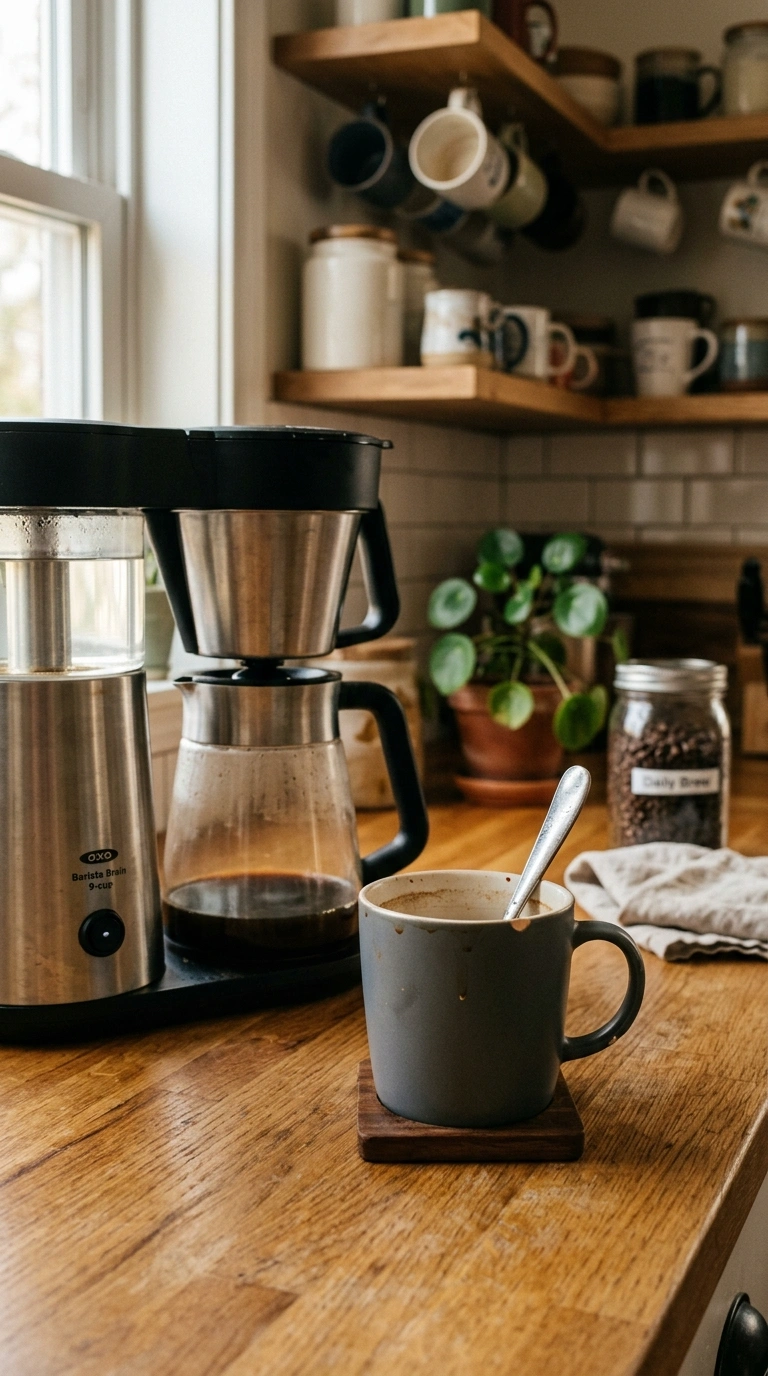
The smell of fresh coffee itself is the most obvious scent layer, but pairing it with one additional, subtle scent source, a small unlit candle nearby (lit only occasionally) or a bag of whole beans left slightly open, reinforces the sensory experience beyond what’s visible.
A quick safety note: if using a candle near this space, keep it at least 12 inches from any fabric or paper items, and never leave it burning unattended, especially in a high-traffic kitchen corner.
16. Positioning Near Morning Light
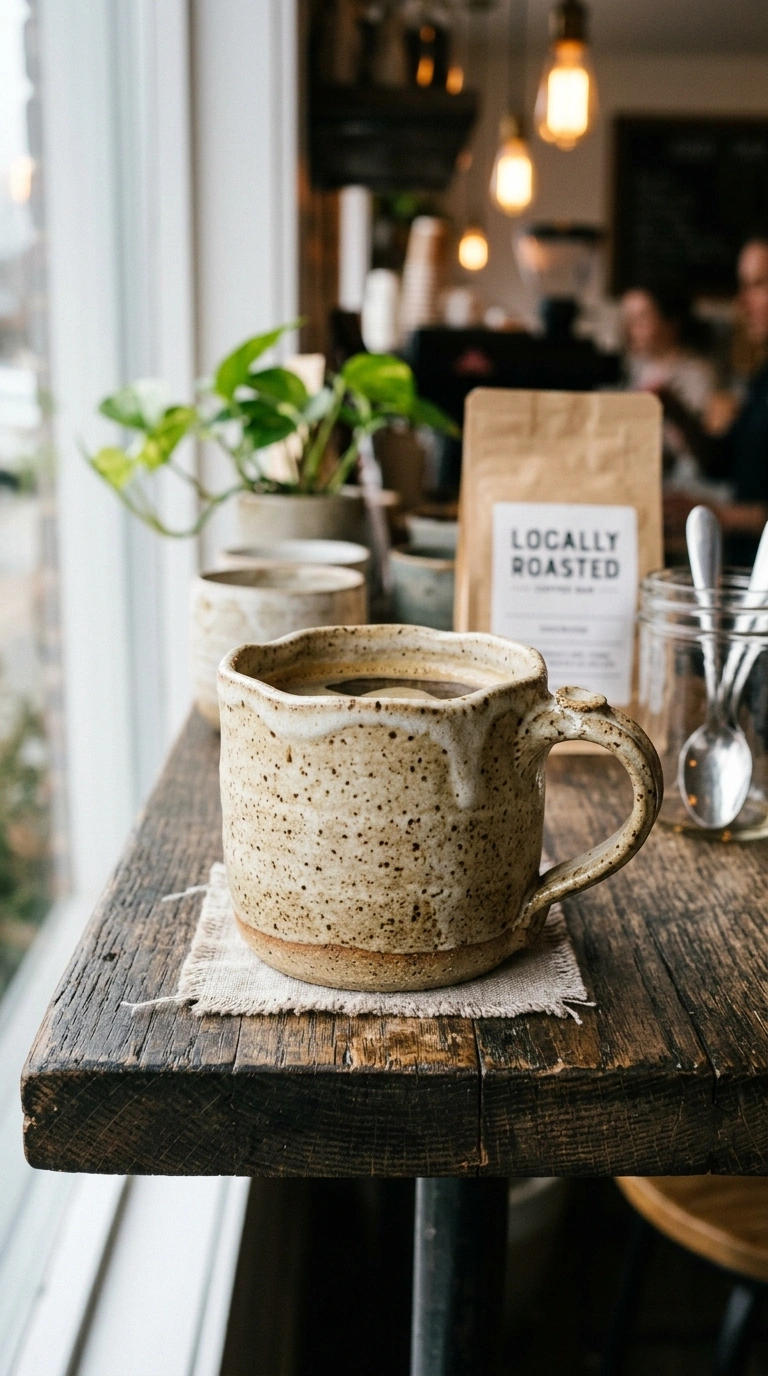
A coffee bar placed near a window that gets direct morning sun feels different at 7 a.m. than one tucked into a dim interior corner, even if every object in the space is identical. Light itself is doing a large part of the emotional work here.
If you can’t move it near a window: compensate with warm artificial light on a timer, set to turn on shortly before you typically wake up, so the corner is already glowing rather than dark when you first walk toward it.
17. A Small Stool or Seat Nearby
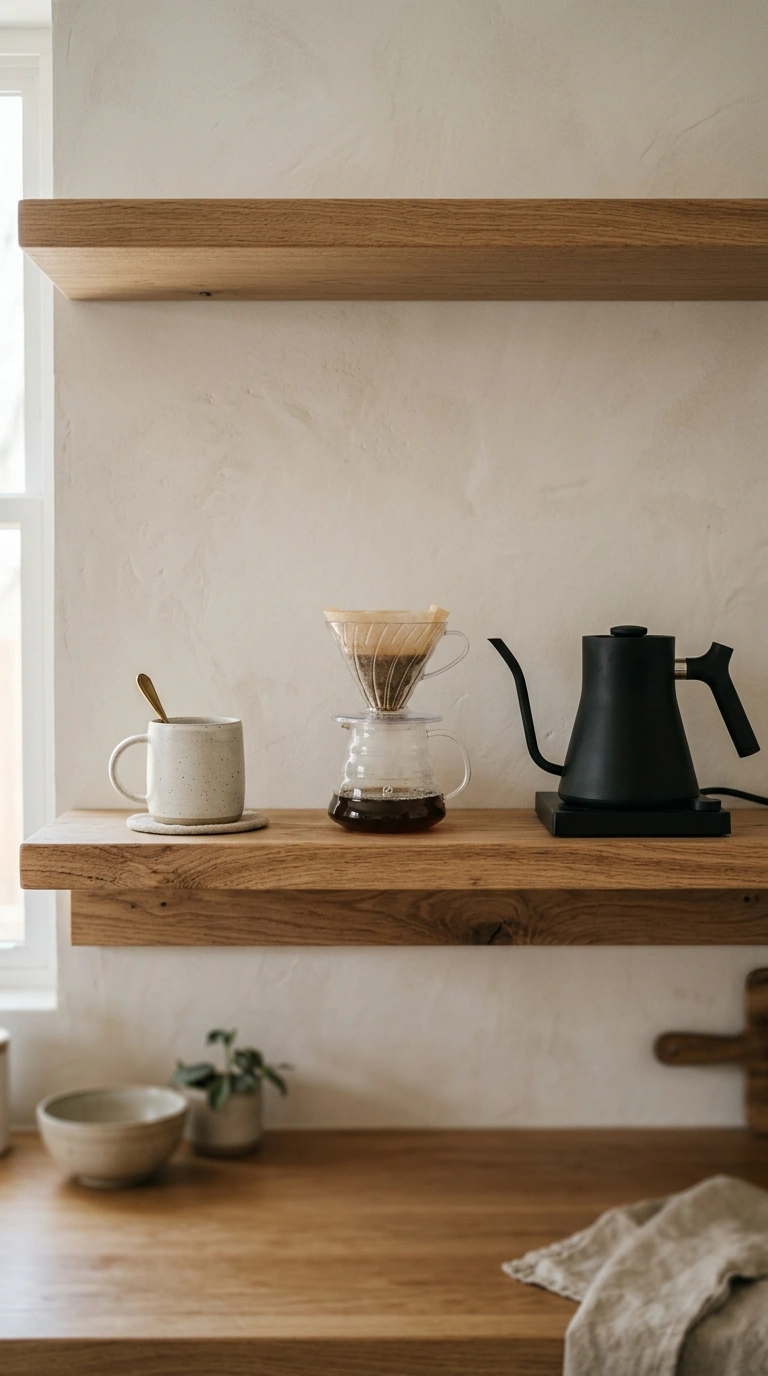
A coffee bar that’s purely a stand-and-go station feels more transactional than one with even a small stool or bench nearby, since a seat implies the possibility of lingering rather than just grabbing a cup and moving on.
This doesn’t need to be a full breakfast nook: a single small stool tucked to the side, used occasionally, changes how the whole corner reads, even on days it goes unused.
18. A Quiet Sound Layer
A small speaker playing something quiet, not a TV, not anything visually competing for attention, adds a sensory layer that makes the few minutes spent at a coffee bar feel more like a pause than a pit stop.
Keep the speaker itself out of sight or visually minimal if possible, tucked on a shelf rather than centered as a design object, so the sound adds to the mood without becoming the focal point.
19. Small Seasonal Rotation to Keep It Feeling Alive
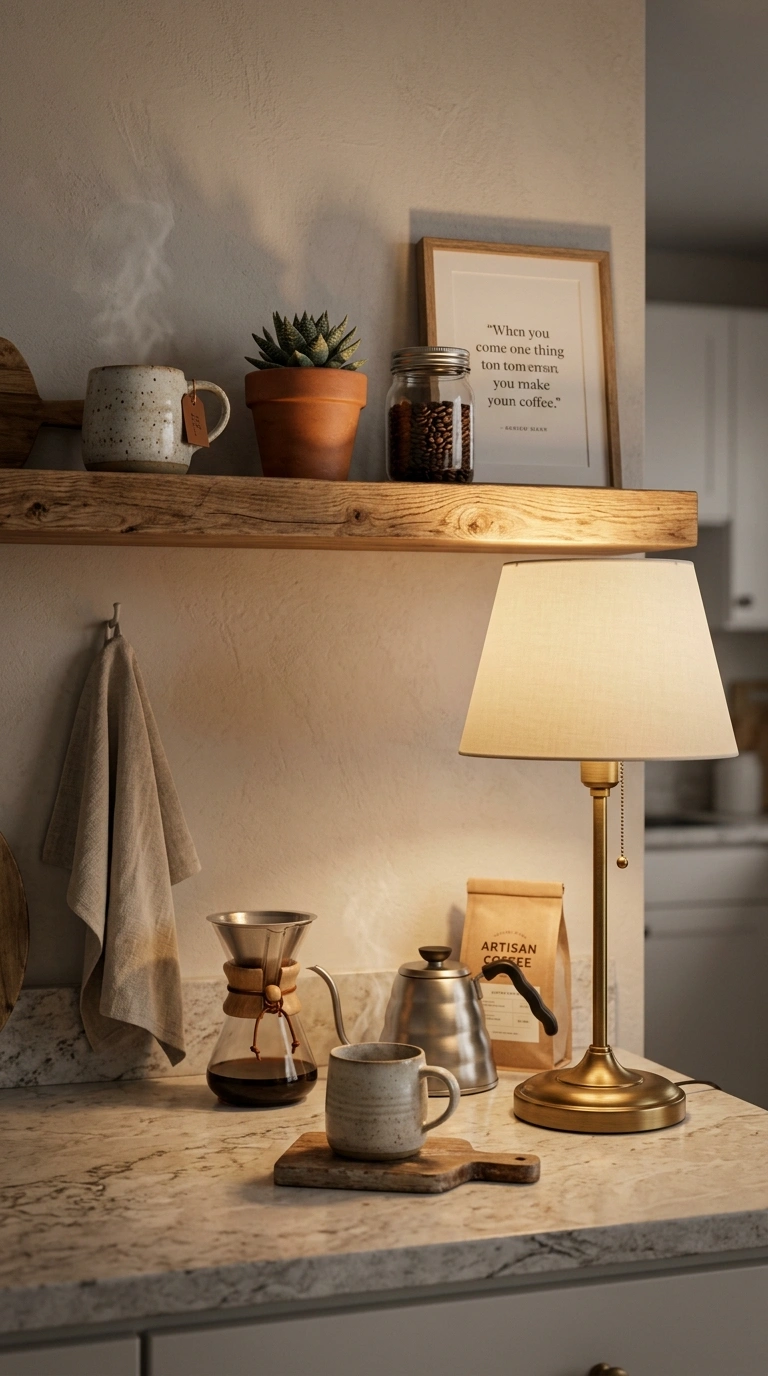
A coffee bar that looks exactly the same in July as it did in January starts to feel static, like a museum display rather than a living part of the home. Small, low-effort seasonal changes keep the space feeling current without requiring a redesign.
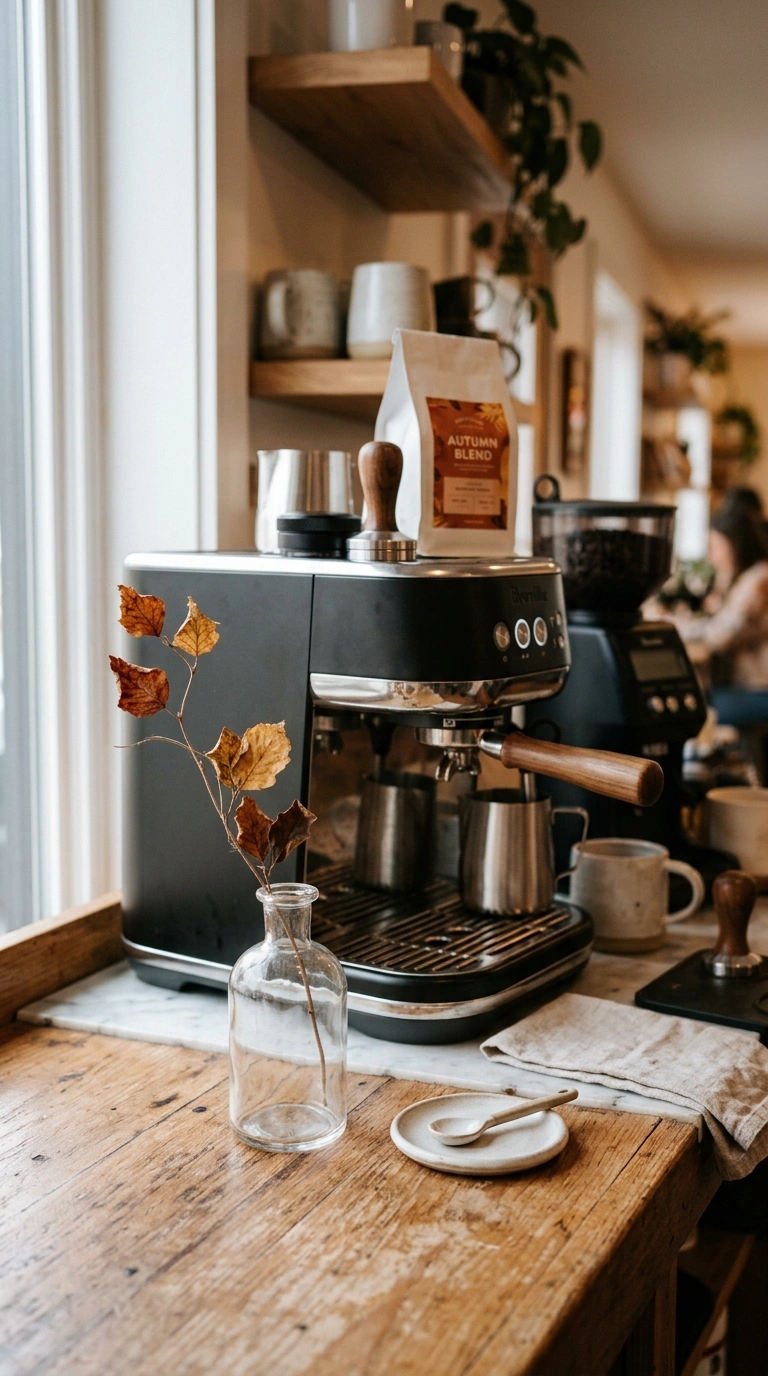
A simple rotation system: swap just one element per season, the stems in a bud vase, a candle scent, or a small seasonal mug, rather than restyling the whole corner each time. This keeps the change genuinely low-effort while still refreshing how the space feels.
Most of these ideas cost little or nothing to apply, since they’re mostly about restraint, light, and what you choose to leave visible rather than new purchases. Start with lighting and negative space, the two changes that affect how the whole corner feels the fastest, before worrying about any specific object at all.
Save your favorite ideas to Pinterest so you have them ready when you’re ready to adjust your own coffee bar.
FAQs
What’s the biggest thing that makes a coffee bar feel inviting instead of just styled?
Lighting quality and restraint matter more than any specific product. A home coffee bar lit with warm, low-angle light and given genuine negative space consistently feels more inviting than one with more objects but flat overhead lighting.
Should everything on my coffee bar be decorative?
No. Leaving your actual daily-use mug, spoon, or coffee maker visible, rather than only decorative pieces that never get touched, signals the space is genuinely used rather than staged for photos.
How many colors should a coffee bar palette include?
Two to three colors total tends to read as considered and calm; counting more than four distinct colors and finishes in the same small space is a sign it’s time to consolidate the palette.
Do I need new products to make my coffee bar feel more inviting?
Not necessarily. Many of the most effective changes, better lighting, more negative space, leaving daily-use items visible, cost little or nothing and rely on rearranging what you already have.
How often should I update or restyle a home coffee bar?
A small seasonal rotation, changing just one element like a candle scent or a bud vase stem, keeps the space feeling current without needing a full restyle every few months.