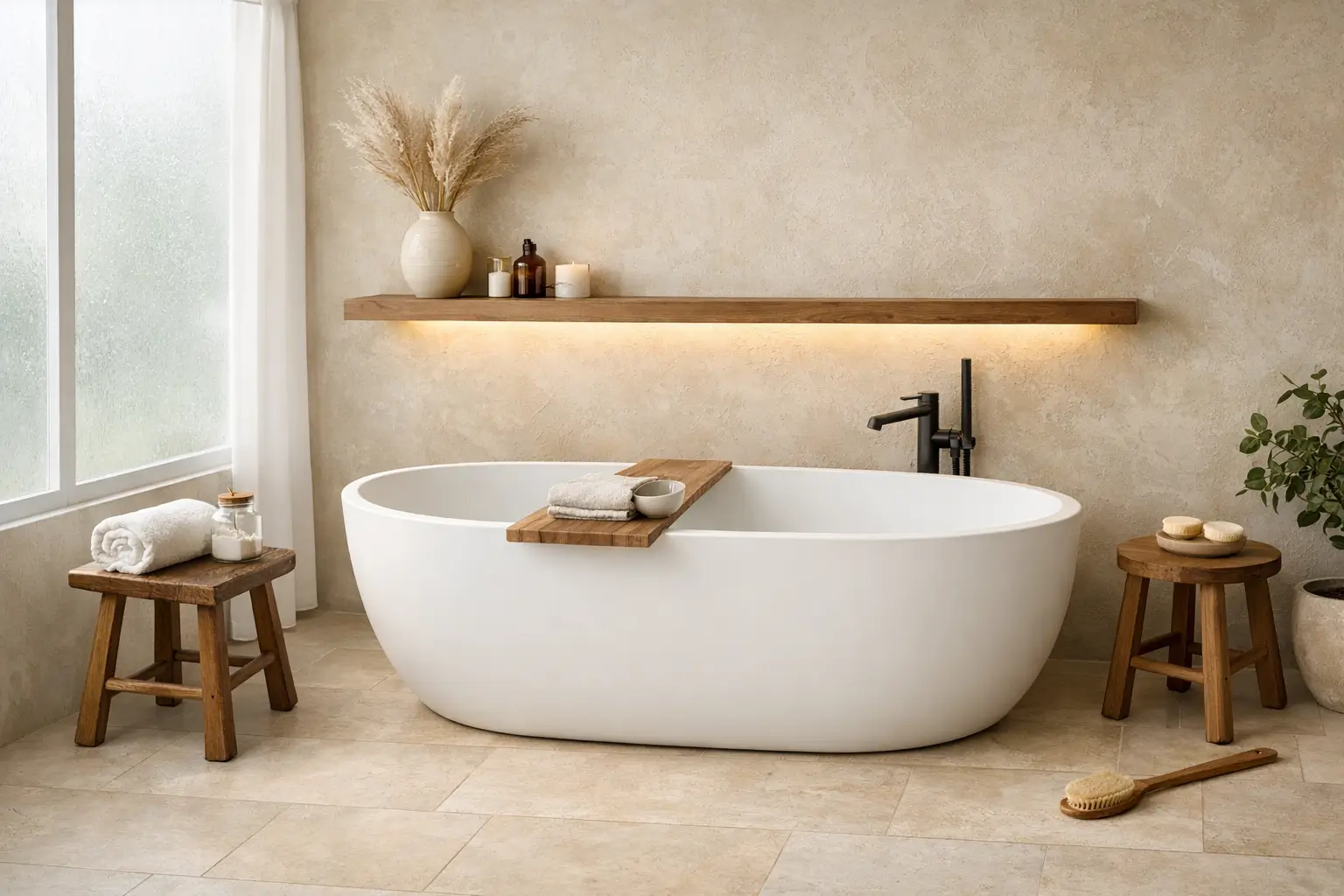
20 Neutral Tiny Bathroom Ideas With Spa-Inspired Style
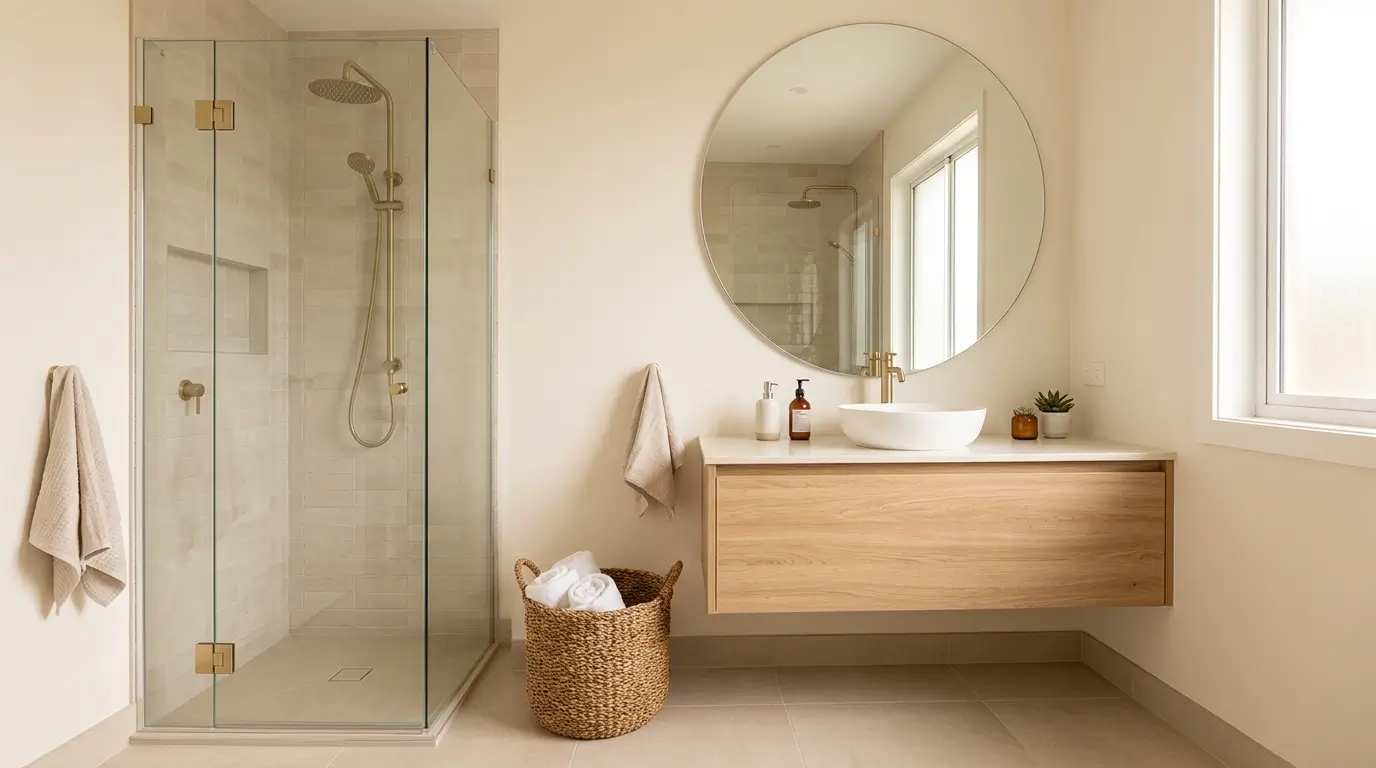
A tiny bathroom and a spa-like feel aren’t natural opposites, but getting there takes different choices than a full-sized spa bathroom would. Every material and fixture decision has to work double duty: making the room feel calmer and making it feel bigger at the same time.
This guide covers 20 real neutral tiny bathroom ideas, and each one includes something practical: a measurement, a cost range, a pros-and-cons breakdown, or a sizing guide, so every choice earns its place in a room where every inch counts. Pick ideas that address your specific space constraint first, whether that’s visual openness, storage, or actual floor clearance, before layering in purely decorative touches.
1. Large-Format Neutral Tile
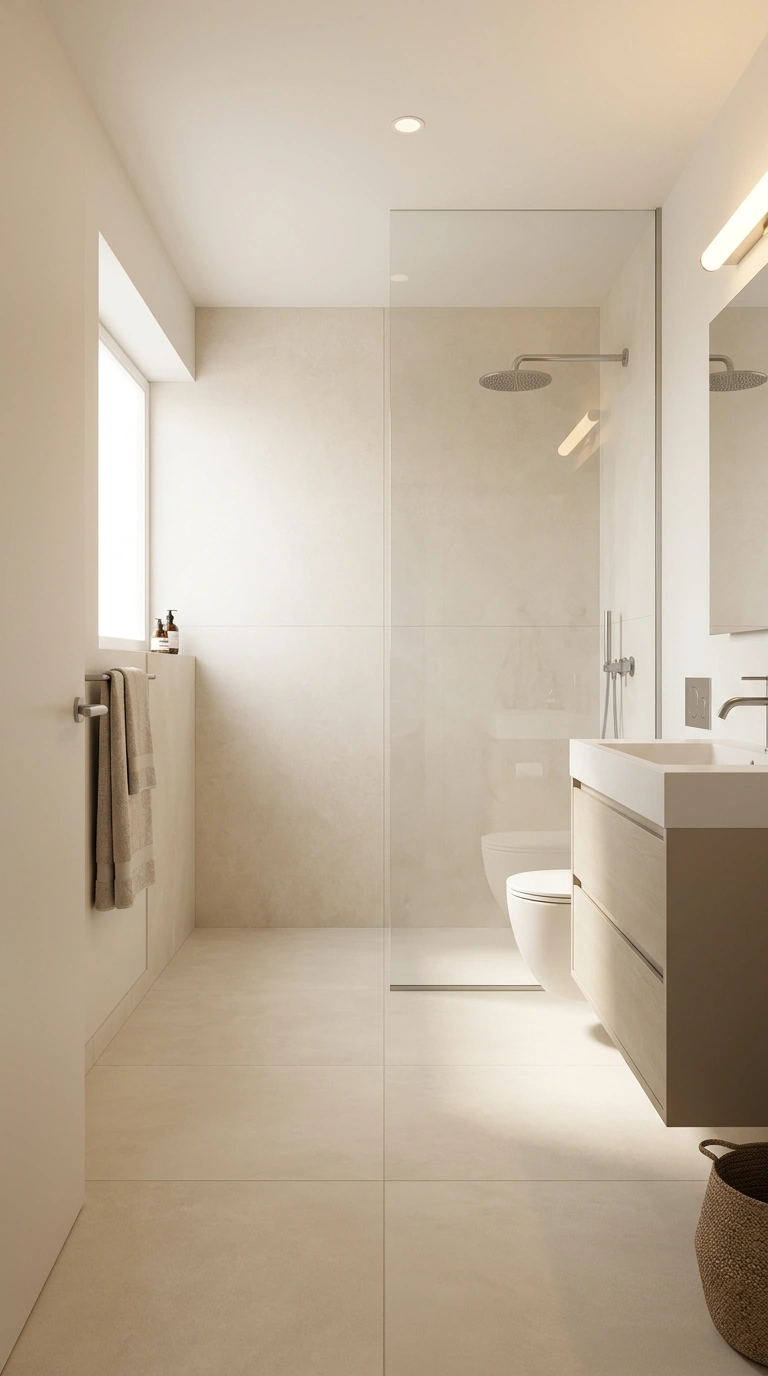
Large-format tile, meaning bigger individual pieces with fewer grout lines, makes a small bathroom floor or wall read as more continuous and open than the same square footage covered in small mosaic or subway tile.
| Tile Size | Visual Effect in a Small Bathroom |
|---|---|
| Small mosaic or penny tile | More grout lines, can visually shrink the room |
| Standard 12×12 or 12×24 inch tile | Balanced, moderate grout line visibility |
| Large-format 24×24 inch or larger | Fewest grout lines, reads as most spacious |
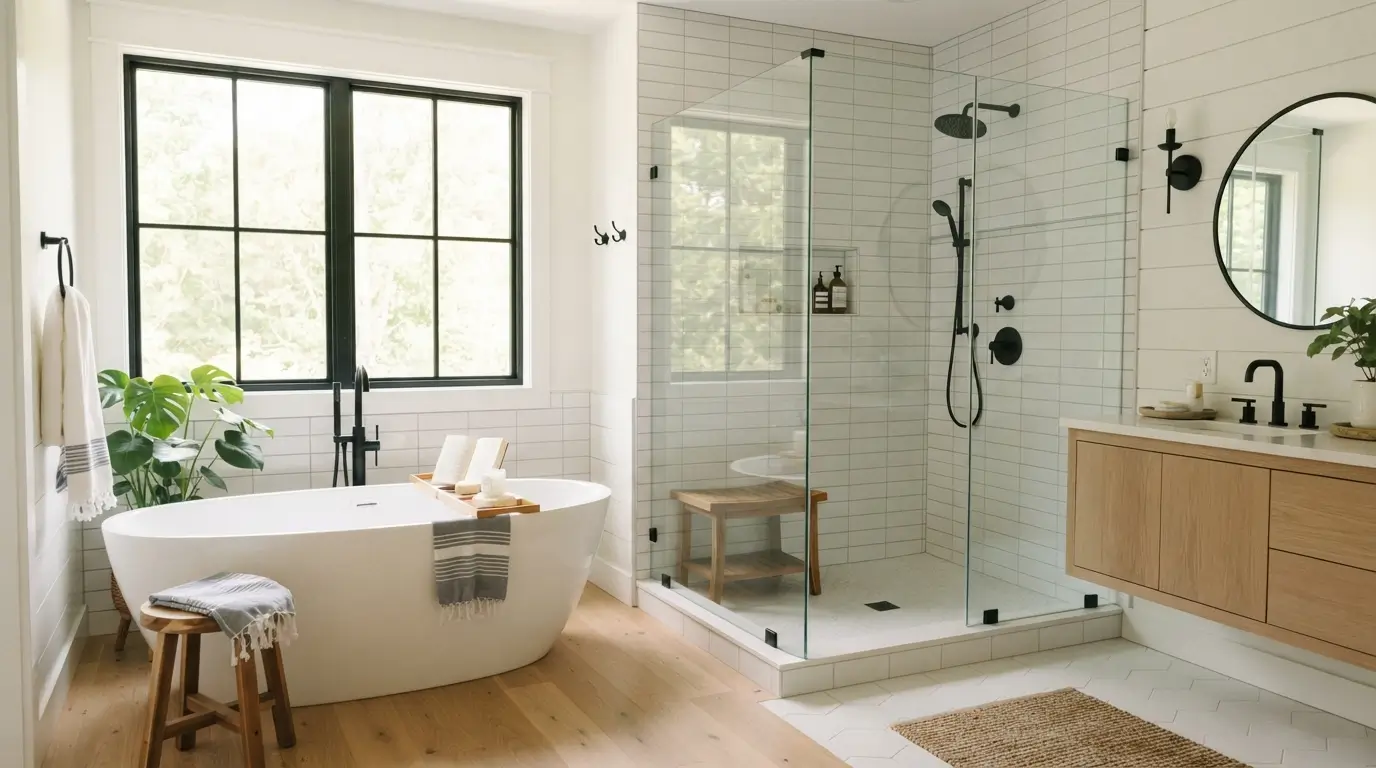
Cost range: $8-$20 per square foot for large-format porcelain, similar to standard tile pricing despite the different visual effect.
2. Floating Vanity
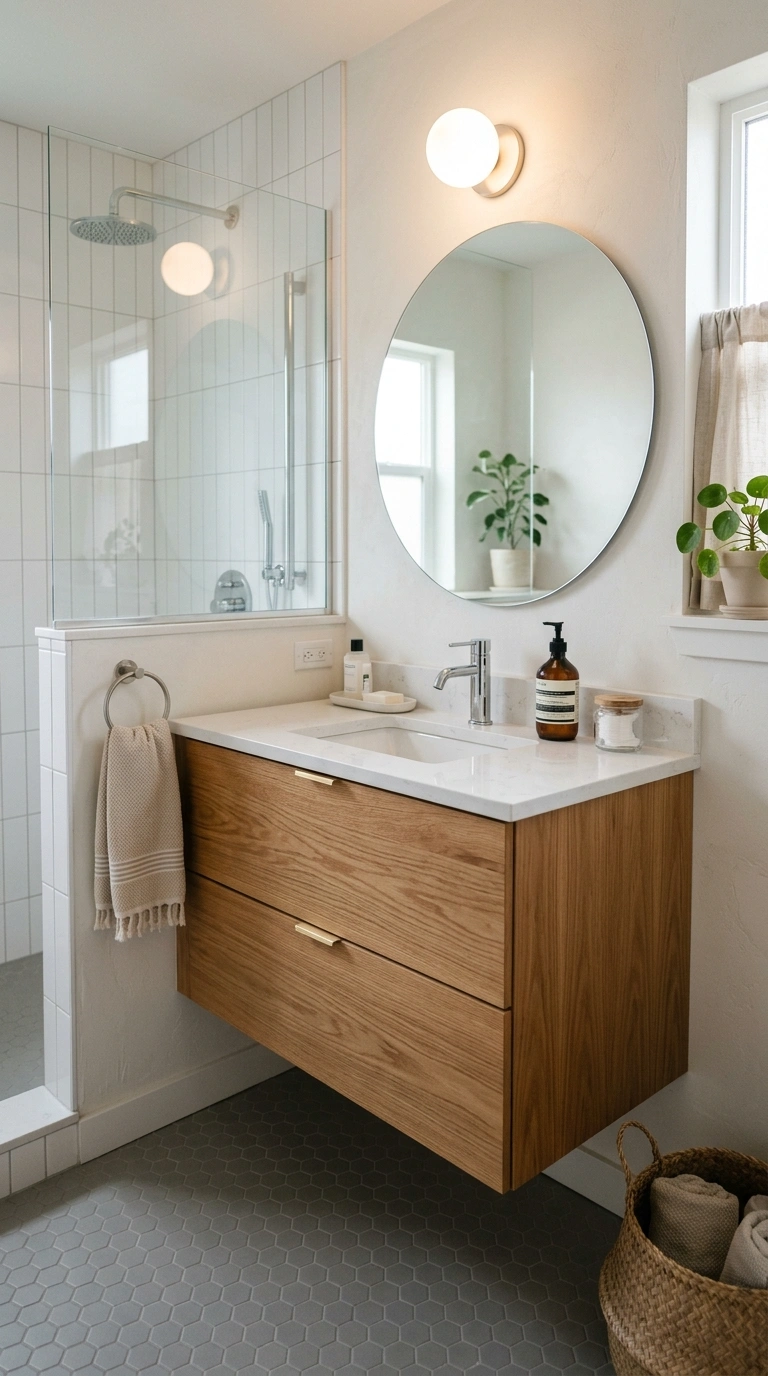
A wall-mounted floating vanity keeps the floor visibly open beneath it, which genuinely helps a small bathroom feel less cramped than a vanity with a full base cabinet touching the floor.
| Tier | What You Get | Approx. Cost |
|---|---|---|
| Budget | Pre-made floating vanity, compact size | $250-$500 |
| Mid-Range | Solid wood floating vanity, quartz top | $600-$1,100 |
| Investment | Custom floating vanity, natural stone top | $1,300-$2,500+ |
Leave at least 10-12 inches of visible floor space beneath the vanity to preserve the airy effect that makes this idea worth the cost in a small room.
3. Frameless Glass Shower Enclosure
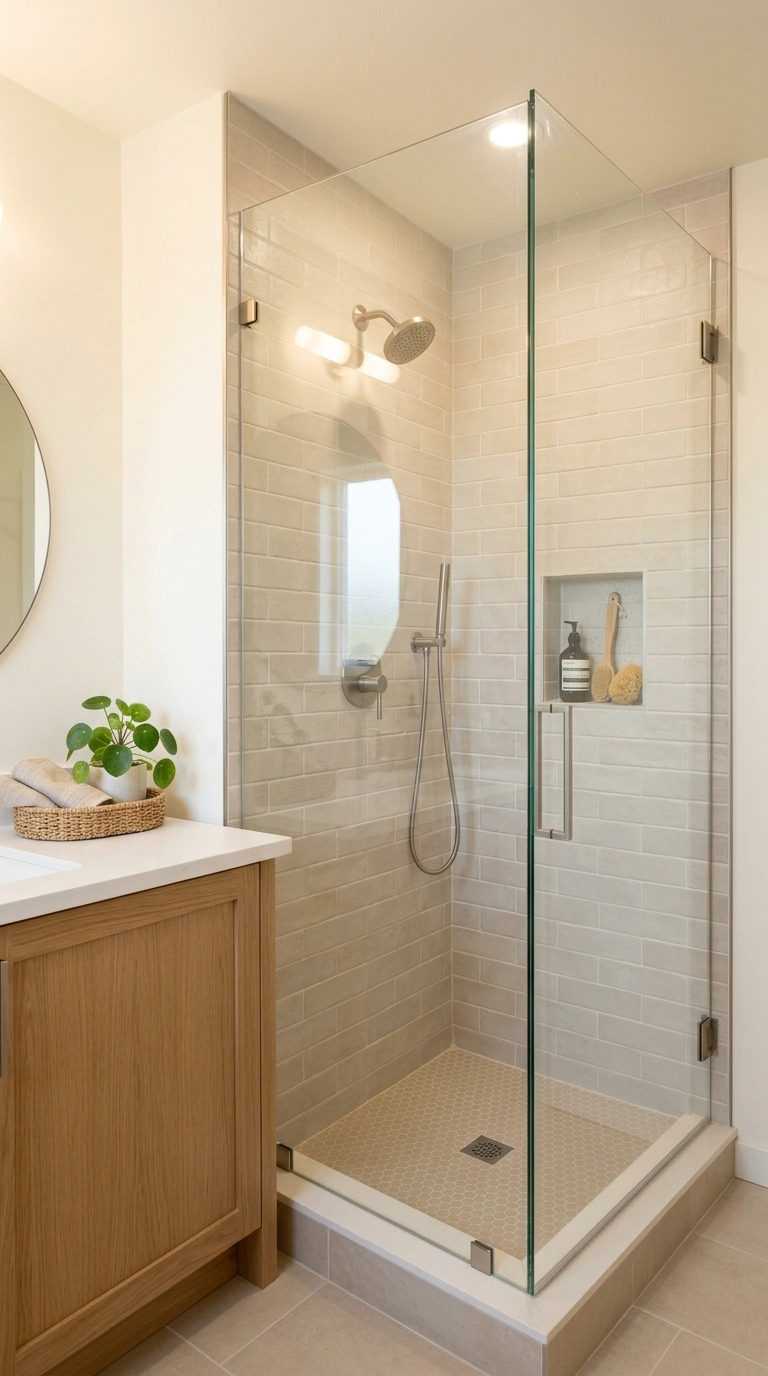
A frameless glass shower enclosure, without the visual break of a metal frame, lets sightlines travel uninterrupted across the room, which matters more in a small bathroom than a large one.
Cost range: $900-$2,500+ for a custom frameless enclosure, notably more than a framed version, since frameless glass needs to be thicker (typically 3/8 to 1/2 inch) to remain sturdy without frame support.
This is one of the higher-cost ideas on this list, but it’s also one of the few that removes a visual barrier entirely rather than just making an existing barrier feel lighter.
4. Tone-on-Tone Neutral Palette
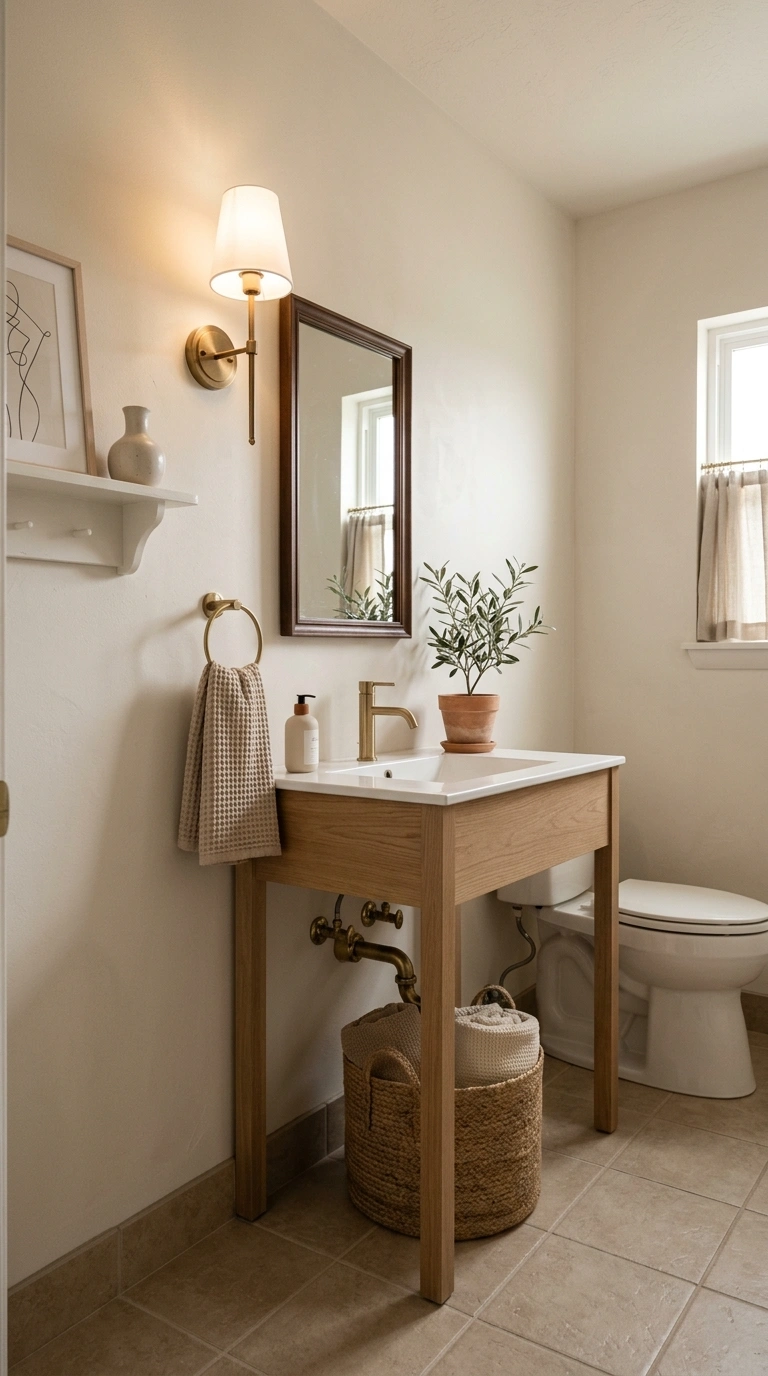
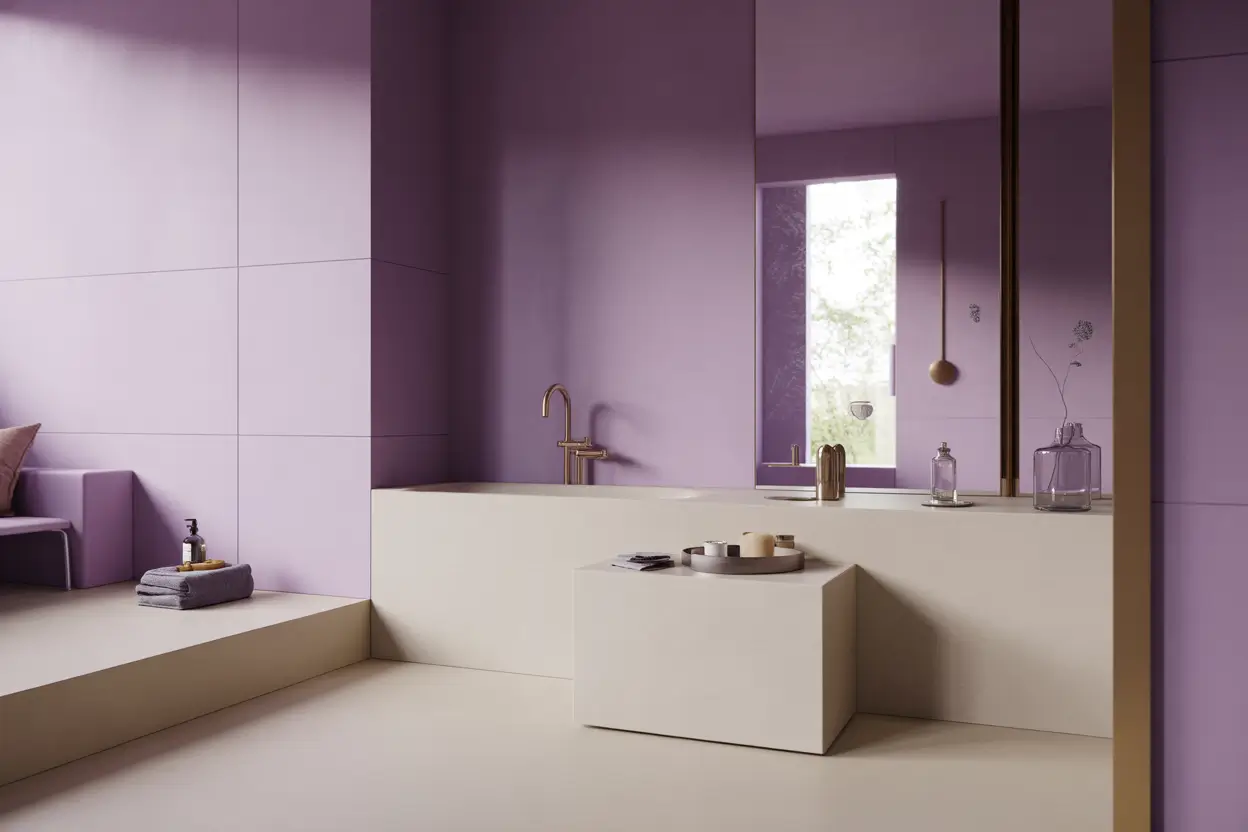
Using several depths of the same neutral tone, rather than introducing contrasting colors, avoids the visual “stopping points” that contrast creates, letting the eye travel more smoothly across a small room.
| Depth | Where to Use It |
|---|---|
| Lightest neutral | Walls and ceiling |
| Mid-tone neutral | Floor tile or vanity |
| Darkest neutral | Small accents only: a mirror frame, a small dish |
A small bathroom in three tonal depths of the same neutral family reads as calmer and more spacious than one using a bold contrasting accent color, which visually divides the small space into distinct zones.
5. Wall-Mounted Toilet
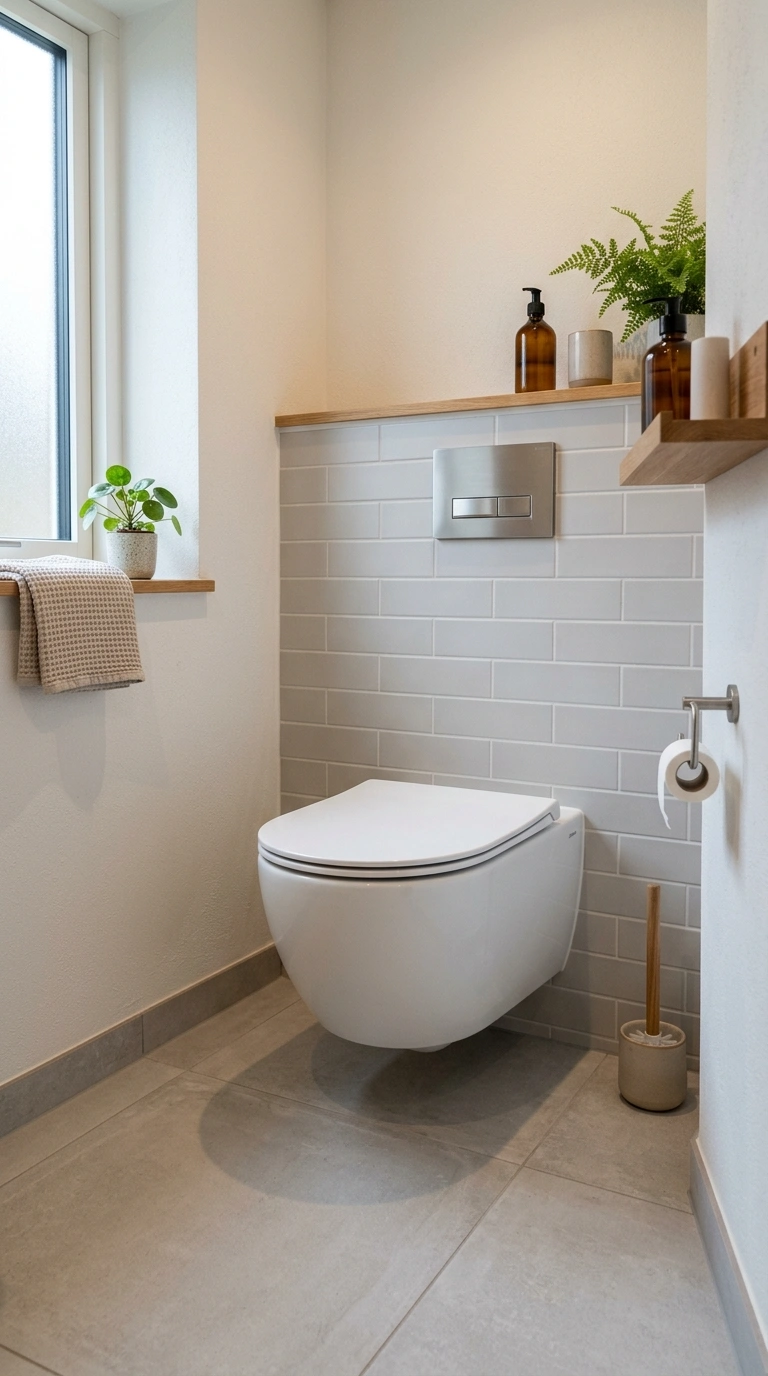
A wall-mounted toilet, with the tank hidden inside the wall, frees up real floor footprint since the base sits flush against the wall rather than extending outward like a standard floor-mounted model.
Works well if: you’re already doing a fuller renovation, since the in-wall tank requires access to the wall cavity during installation.
Skip it if: you’re doing a lighter refresh and not opening up walls, since retrofitting a wall-mounted toilet into an existing wall is a bigger project than swapping a standard floor model.
Cost range: $600-$1,500 for the toilet and in-wall tank system, plus installation labor, notably more than a standard floor-mounted toilet.
6. Tall Narrow Vertical Shelving
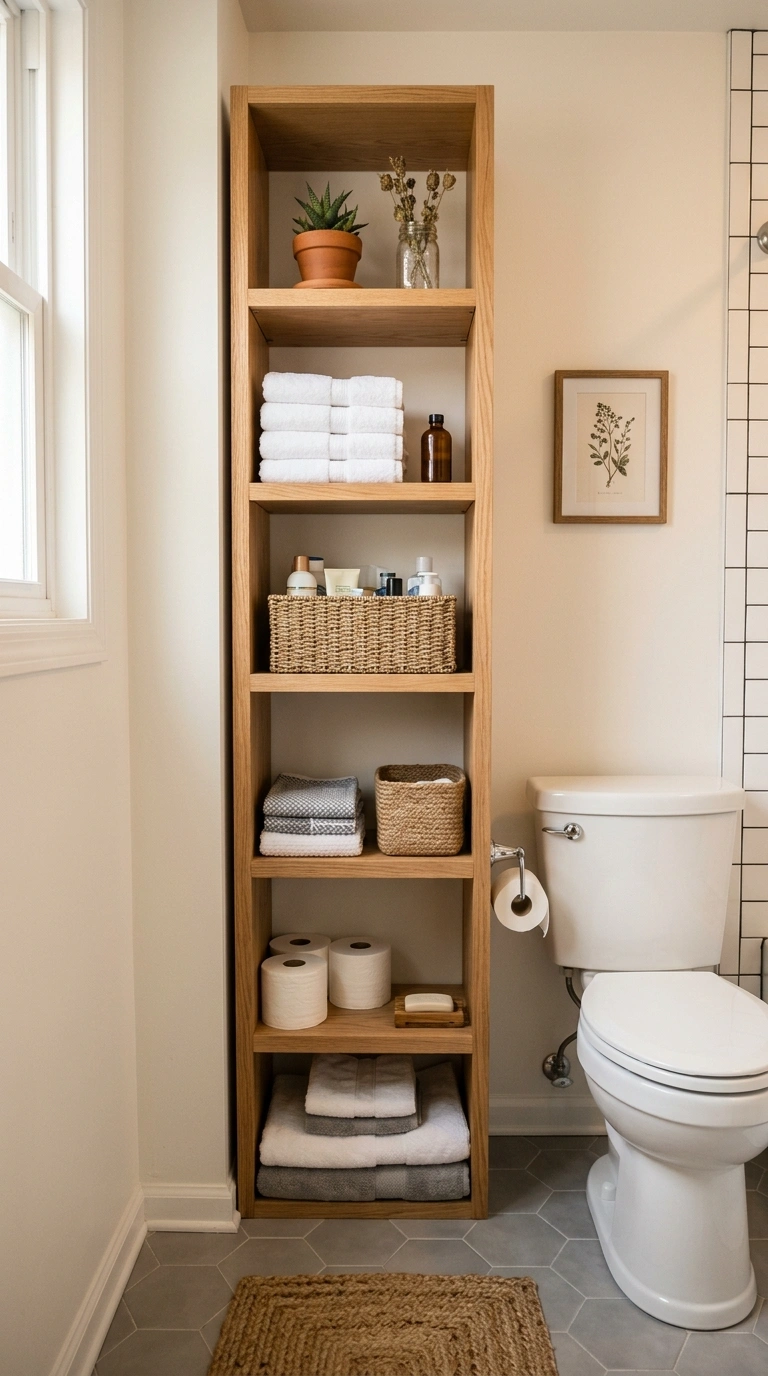
A tall, narrow shelving unit uses height rather than floor footprint, fitting into gaps as slim as 8-10 inches wide, which often exist beside a toilet or in a corner that would otherwise sit empty.
Cost range: $50-$150 depending on height and material, with taller units offering more storage per square foot of floor space used than any wide, low unit could.
7. Recessed Wall Niche Shelving
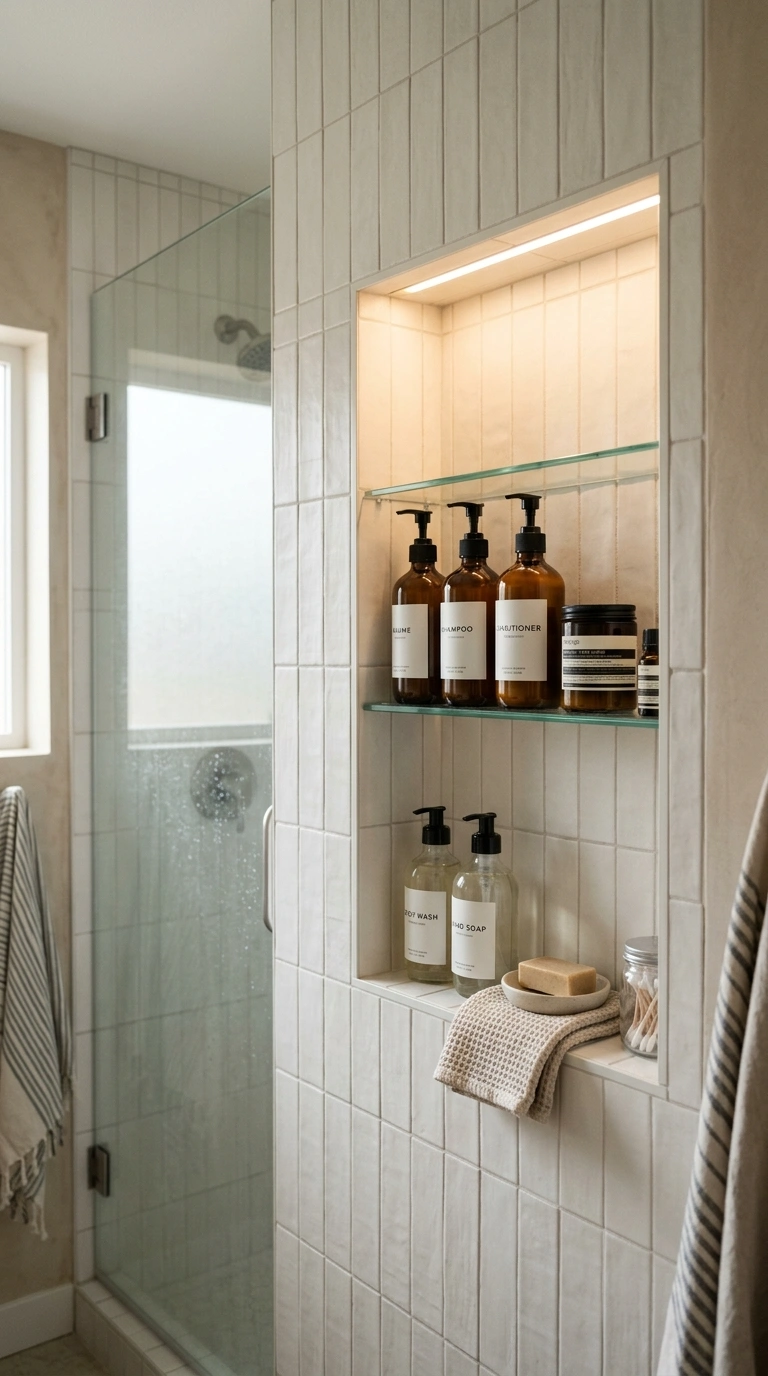
A shelving niche built into the wall itself, rather than mounted on the surface, adds storage with zero protrusion into the room, which matters in a bathroom too tight for any surface-mounted shelving at all.
| Option | Protrusion Into Room | Approx. Cost |
|---|---|---|
| Surface-mounted shelf | 6-12 inches | $30-$100 |
| Recessed wall niche | 0 inches (built into wall depth) | $200-$600 (requires opening the wall) |
The recessed option costs more and requires opening the wall, but it’s the only choice that adds real storage without taking up any usable floor or shower space.
8. Oversized Mirror
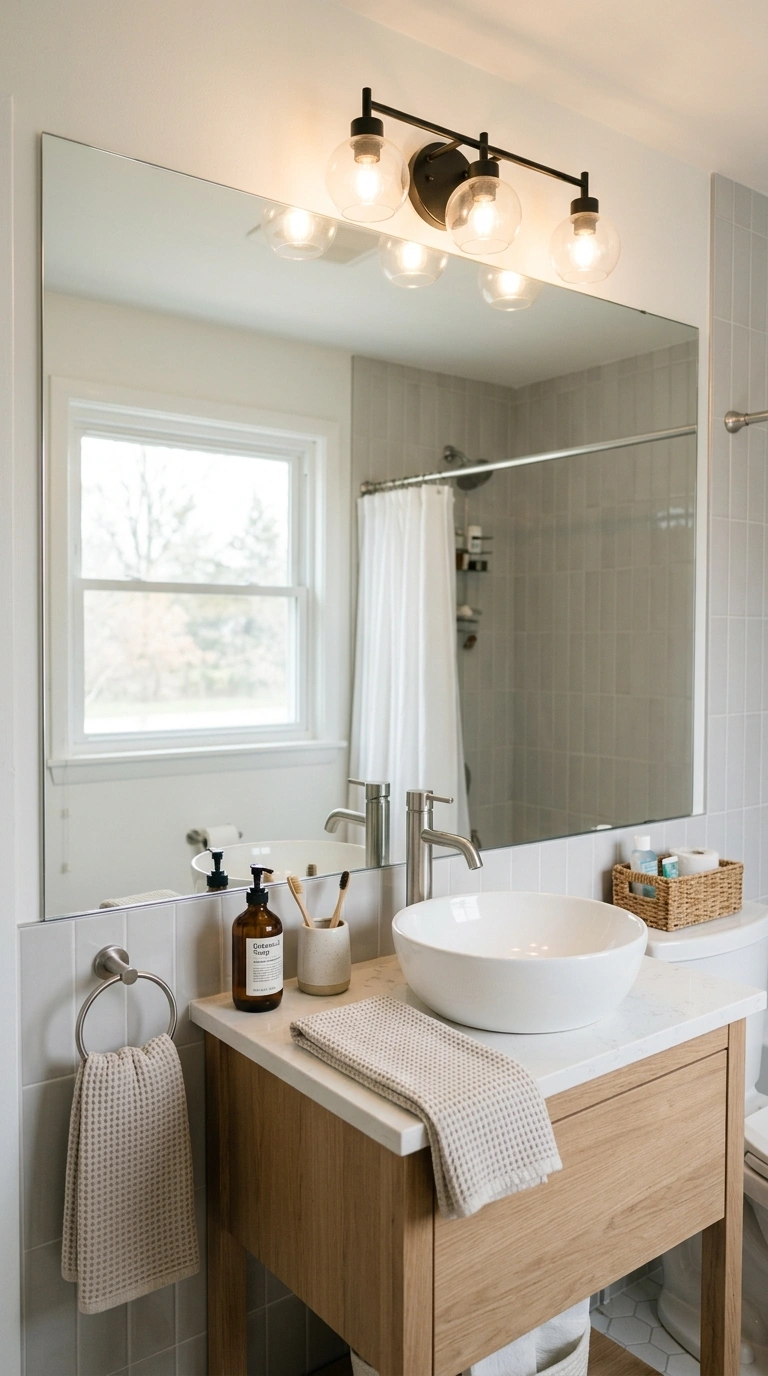
A mirror sized to span nearly the full width of the vanity, rather than a smaller standard mirror, reflects significantly more light and visual space back into a small bathroom.
Sizing guide:
| Vanity Width | Recommended Mirror Width |
|---|---|
| 24-30 inches | Mirror spanning 20-26 inches |
| 30-42 inches | Mirror spanning 26-36 inches |
Cost range: $60-$200 depending on size and frame style, with a frameless or thin-framed option often reading as more expansive than a heavily framed one.
9. Pocket Door Installation
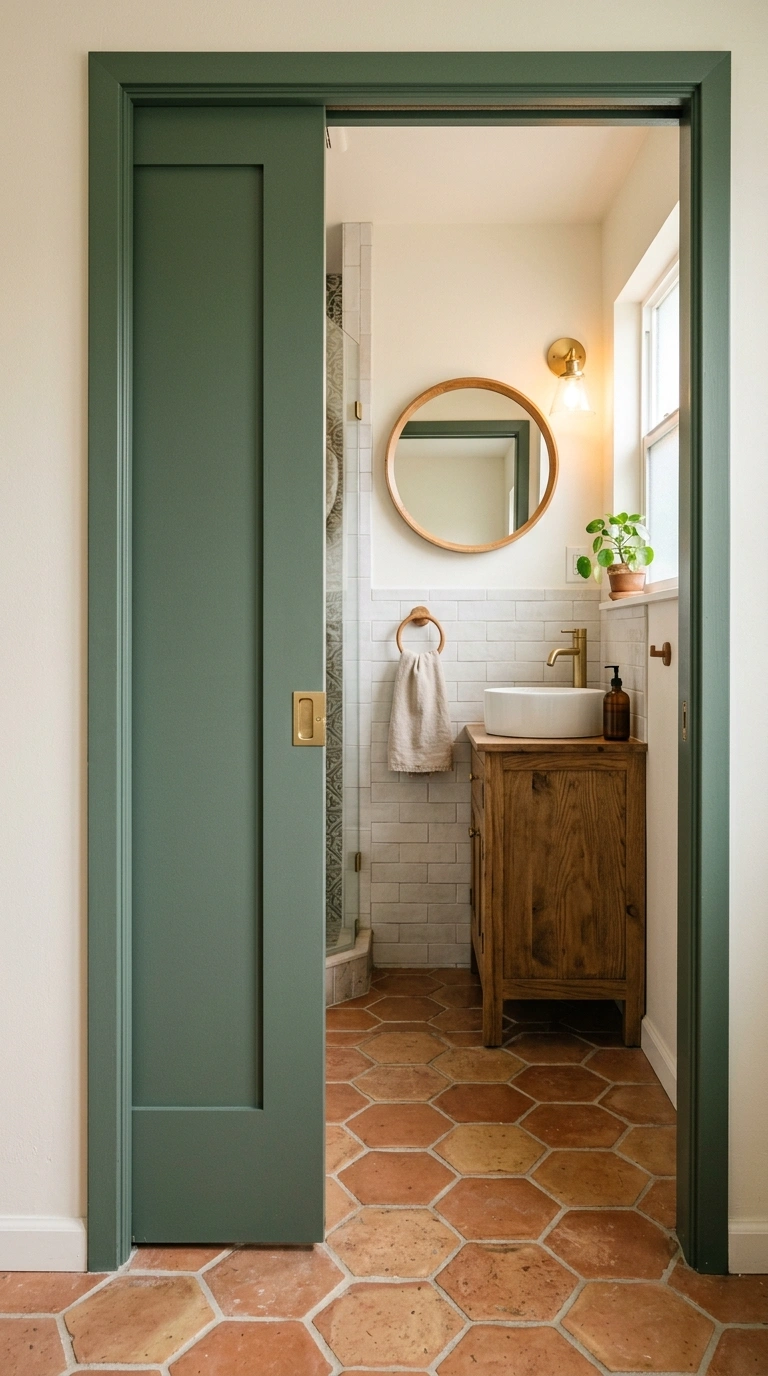
Replacing a standard swinging door with a pocket door that slides into the wall reclaims the floor space a swinging door’s arc would otherwise require, often 8-10 square feet in a small bathroom.
Feasibility checklist:
- Confirm the wall the door will slide into isn’t load-bearing, or budget for structural adjustment
- Check for plumbing or electrical lines inside that wall cavity before cutting into it
- Measure that the door’s full width has clear wall space to slide into
Cost range: $500-$1,500 including the door, hardware, and wall modification, a bigger investment but a genuine floor-space gain in a tight layout.
10. Warm Wood Vanity or Shelf Accents
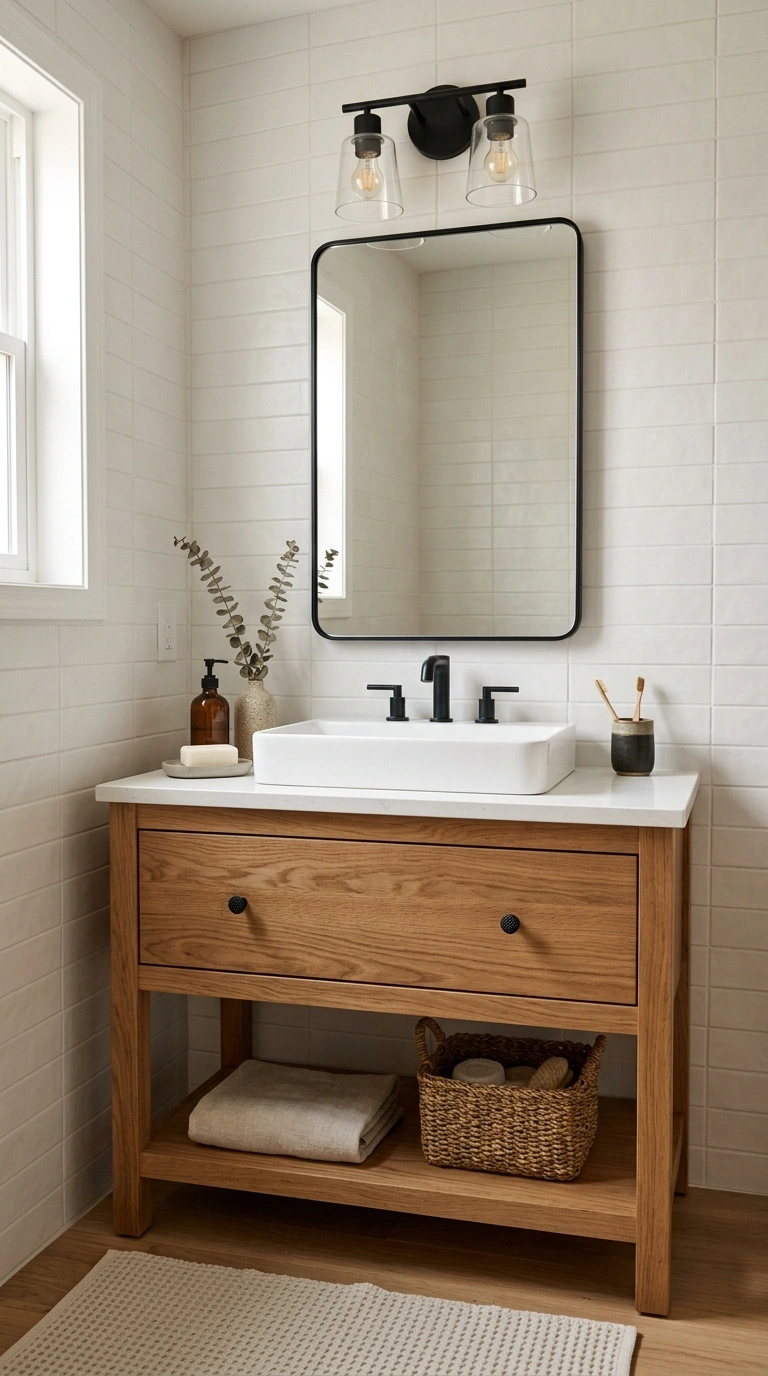
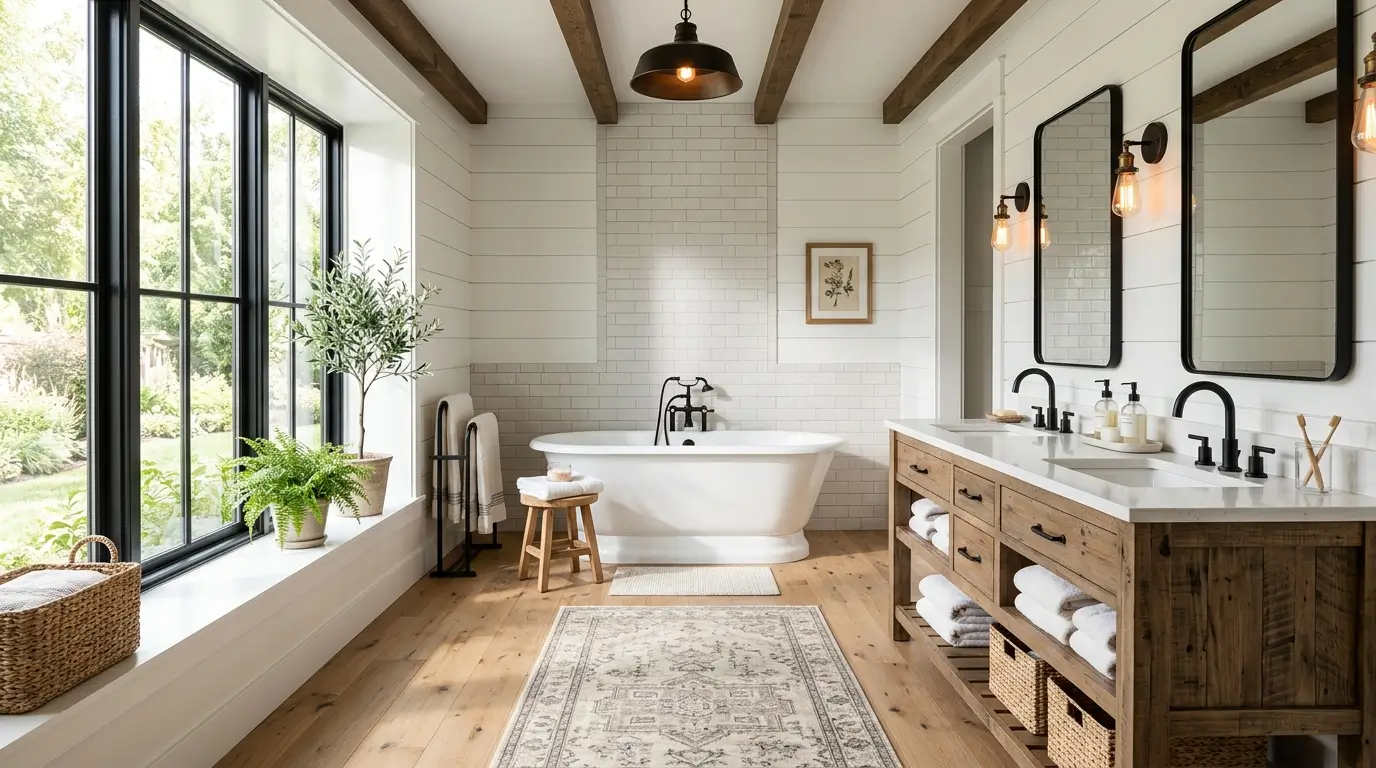
A single warm wood element, like a vanity, a floating shelf, or a small stool, prevents an all-neutral palette from tipping into feeling cold or clinical, which is a common risk in small, mostly-white bathrooms.
Best paired with: brushed brass or matte black hardware, either of which works well against warm wood without competing with the room’s overall neutral, spa-like feel.
Cost range: $150-$500 depending on whether you’re adding a wood vanity, a floating shelf, or a smaller wood accent piece.
11. Wall-Mounted Faucet
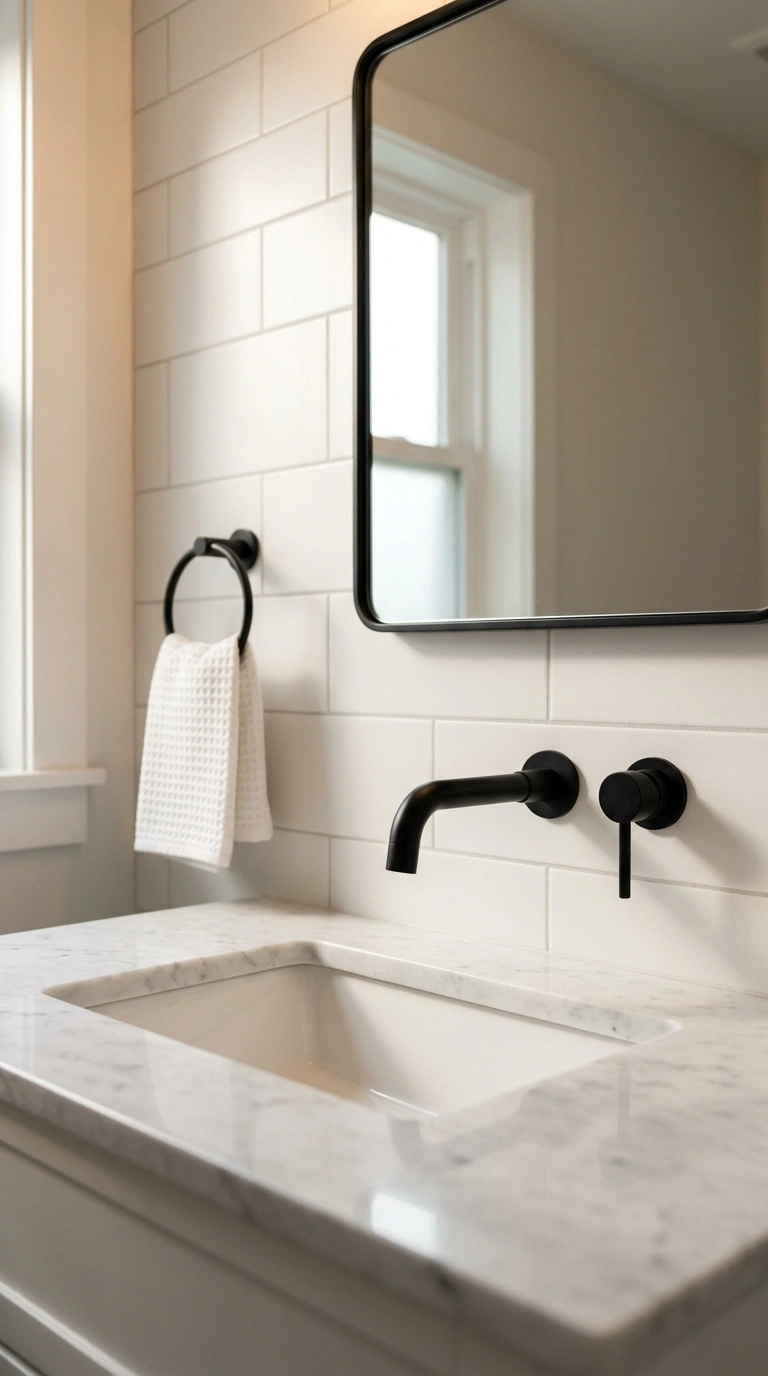
A wall-mounted faucet, rather than a standard deck-mounted one, frees up vanity counter space directly around the sink, which matters more in a small bathroom where every inch of counter is used daily.
Cost range: $150-$400 for the faucet itself, plus $150-$350 in additional plumbing labor if your existing setup doesn’t already have wall-mounted rough-in plumbing.
This idea is more of an investment than a deck-mounted faucet swap, but it delivers real, usable counter space back in exchange.
12. Corner or Curved Shower Layout
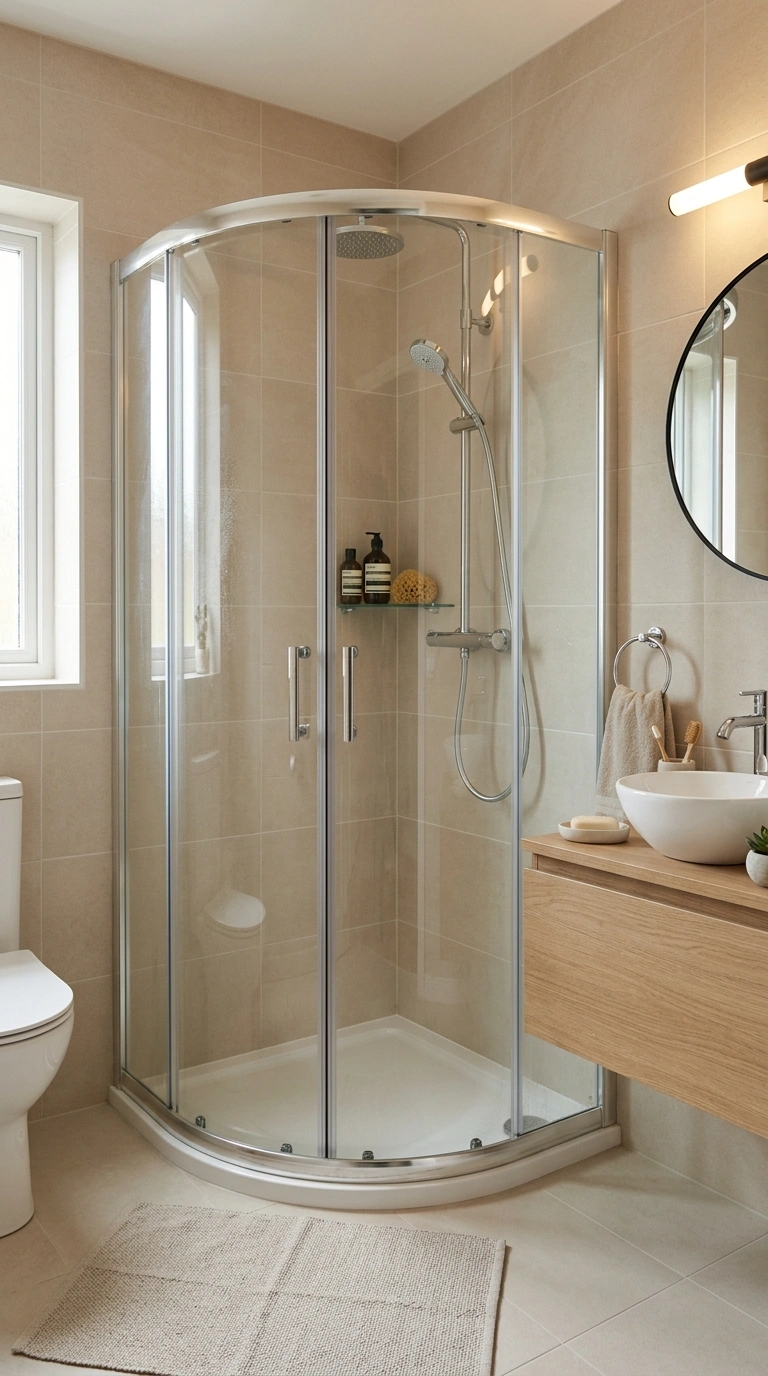
A corner shower unit, or one with a curved rather than rectangular footprint, can fit into awkward floor plans where a standard rectangular shower simply won’t fit the available space.
Space measurement guide: most compact corner shower units fit in as little as 32×32 inches, compared to the 36×48 inches or more a standard rectangular shower typically needs.
Cost range: $500-$1,800 for a corner shower unit and basic installation, depending on whether it’s a prefabricated kit or a custom-built enclosure.
13. Woven Natural Texture Accents
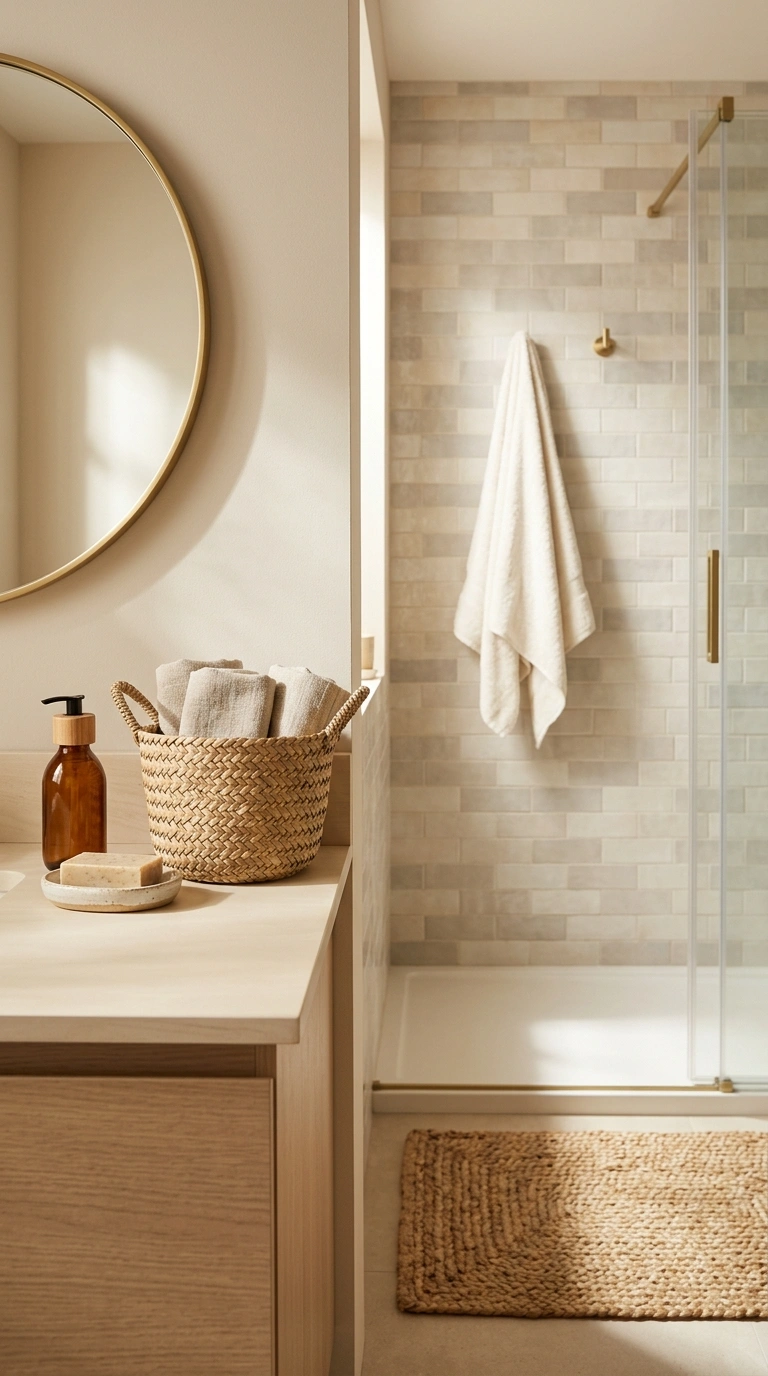
A woven basket, a natural fiber bath mat, or a small rattan stool adds warmth and material variety to a neutral palette without adding visual bulk or competing for the room’s limited sightlines.
Cost range: $15-$60 depending on the specific piece, and using 2-3 woven textures rather than one keeps the room from feeling like every surface is the same hard, flat material.
14. Skylight or Larger Window
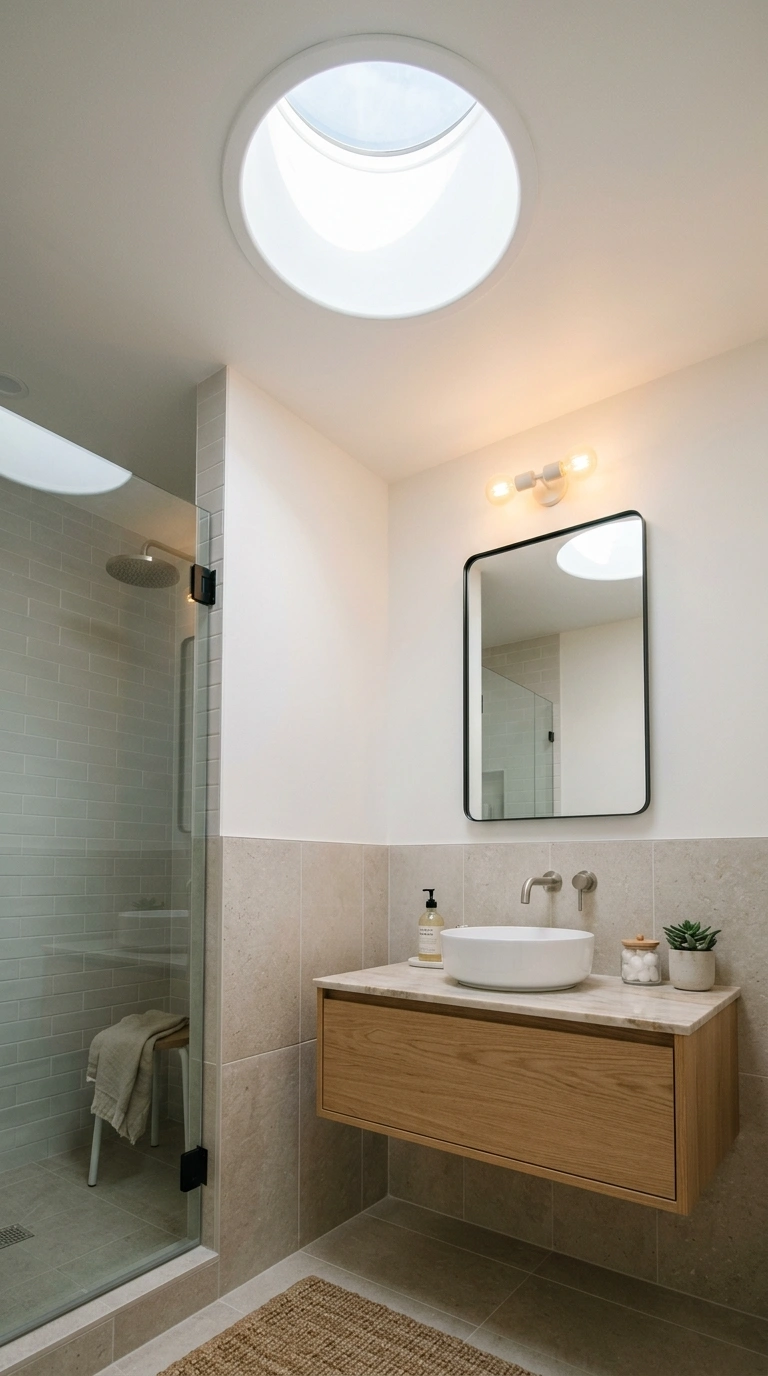
A skylight or an enlarged window brings genuine natural light into a small bathroom, which does more to make the space feel open than almost any paint color or fixture choice could on its own.
| Option | Approx. Cost |
|---|---|
| Tubular skylight (smaller, easier retrofit) | $500-$1,200 installed |
| Standard skylight | $1,500-$3,500 installed |
| Enlarging an existing window | $800-$2,500 depending on structural work needed |
This is one of the larger investments on this list, but genuine daylight consistently outperforms artificial light for making a small room feel more spacious.
15. Compact Furniture-Style Vanity
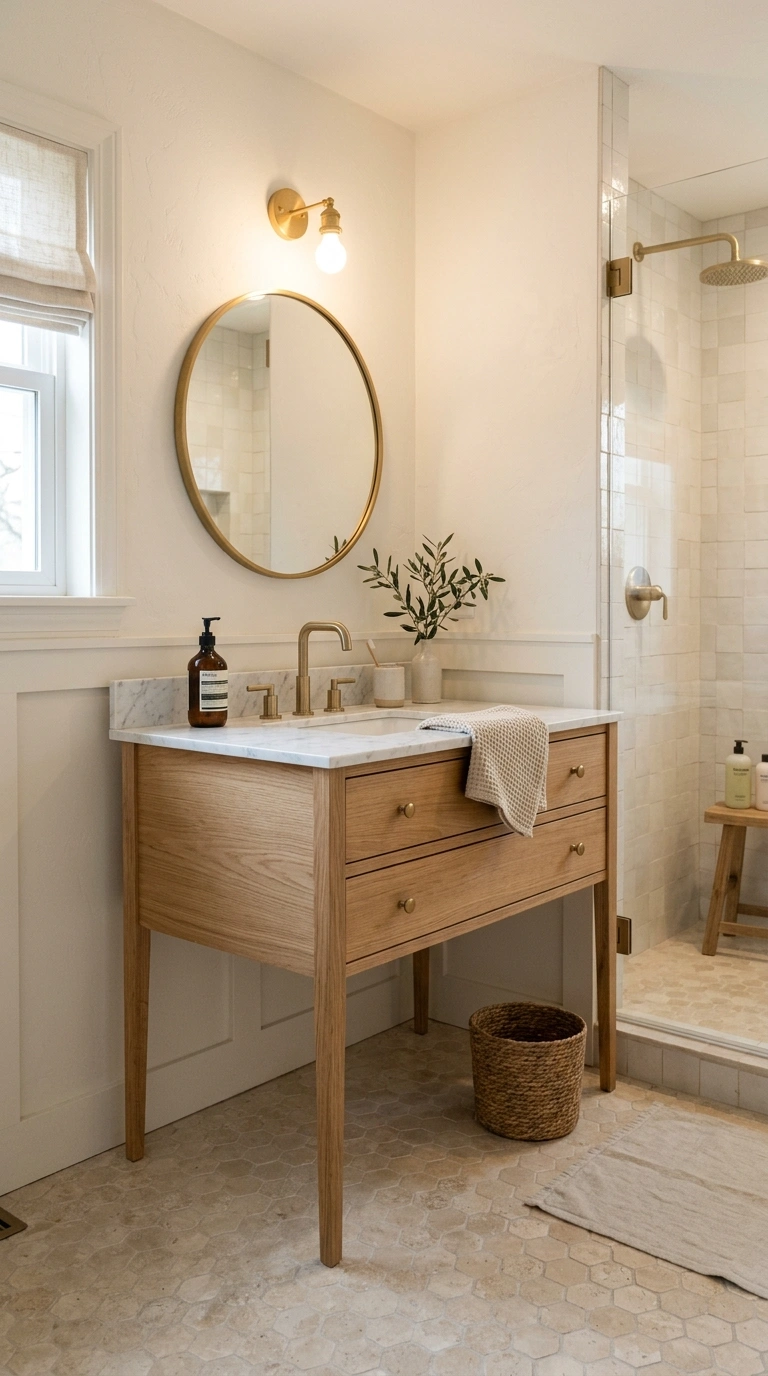
A furniture-style vanity, built with slimmer proportions and raised legs rather than a boxy full cabinet, brings visual lightness to a small bathroom while still providing storage.
Cost range: $300-$800 depending on material and size, generally sized 24-30 inches wide to fit genuinely tight bathroom footprints.
Works well if: your bathroom’s layout allows for a vanity with visible legs (rather than a floating vanity), since the open space beneath the legs creates a similar airy effect at a lower cost than a fully wall-mounted version.
16. Neutral Linen Shower Curtain
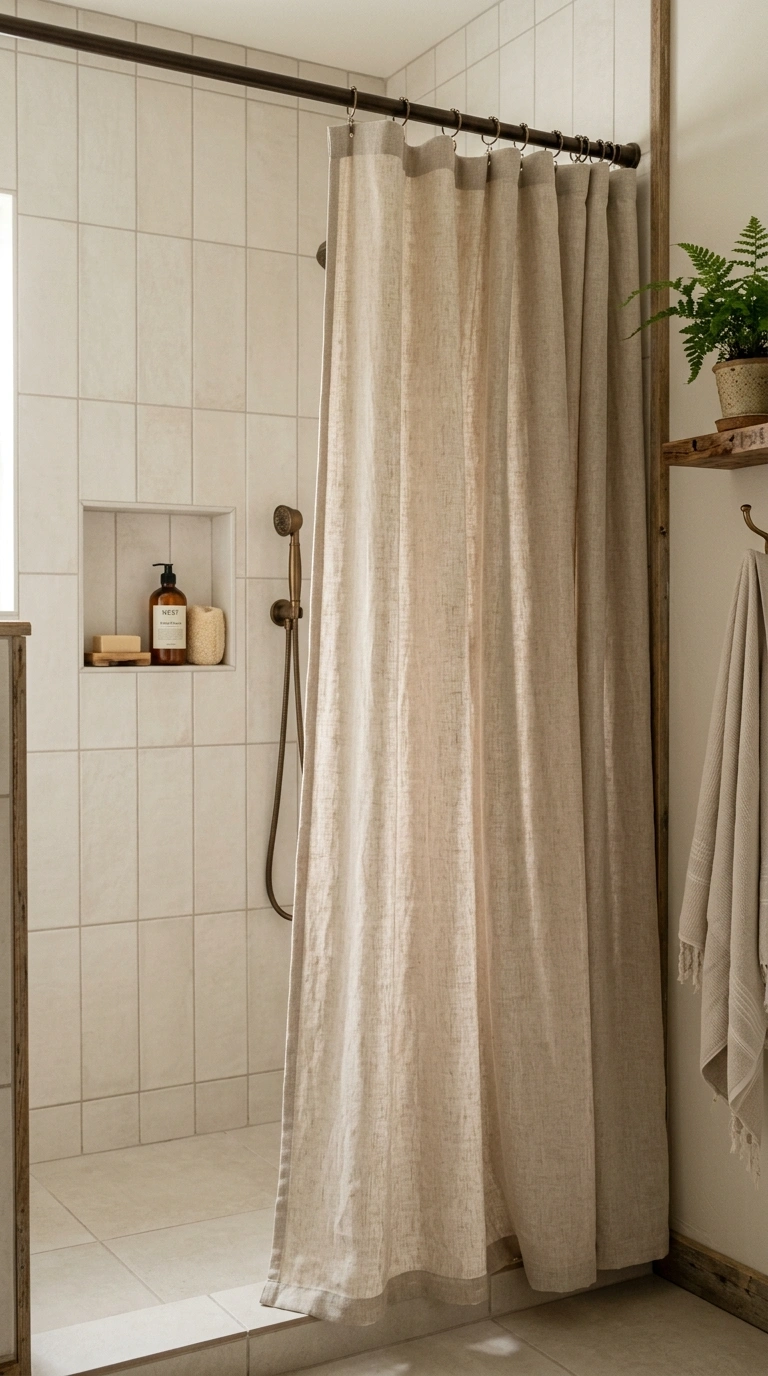
A linen or linen-blend shower curtain in a soft neutral tone provides a lower-cost, renter-friendly alternative to a frameless glass enclosure, while still keeping the overall look soft and spa-like.
Cost range: $30-$70 for a quality linen or linen-blend curtain, a fraction of the cost of a glass enclosure.
A quick care note: pure linen isn’t naturally water-resistant, so a liner underneath is typically needed for actual water protection, with the linen panel serving as the visible outer layer.
17. Zero-Threshold Shower Entry
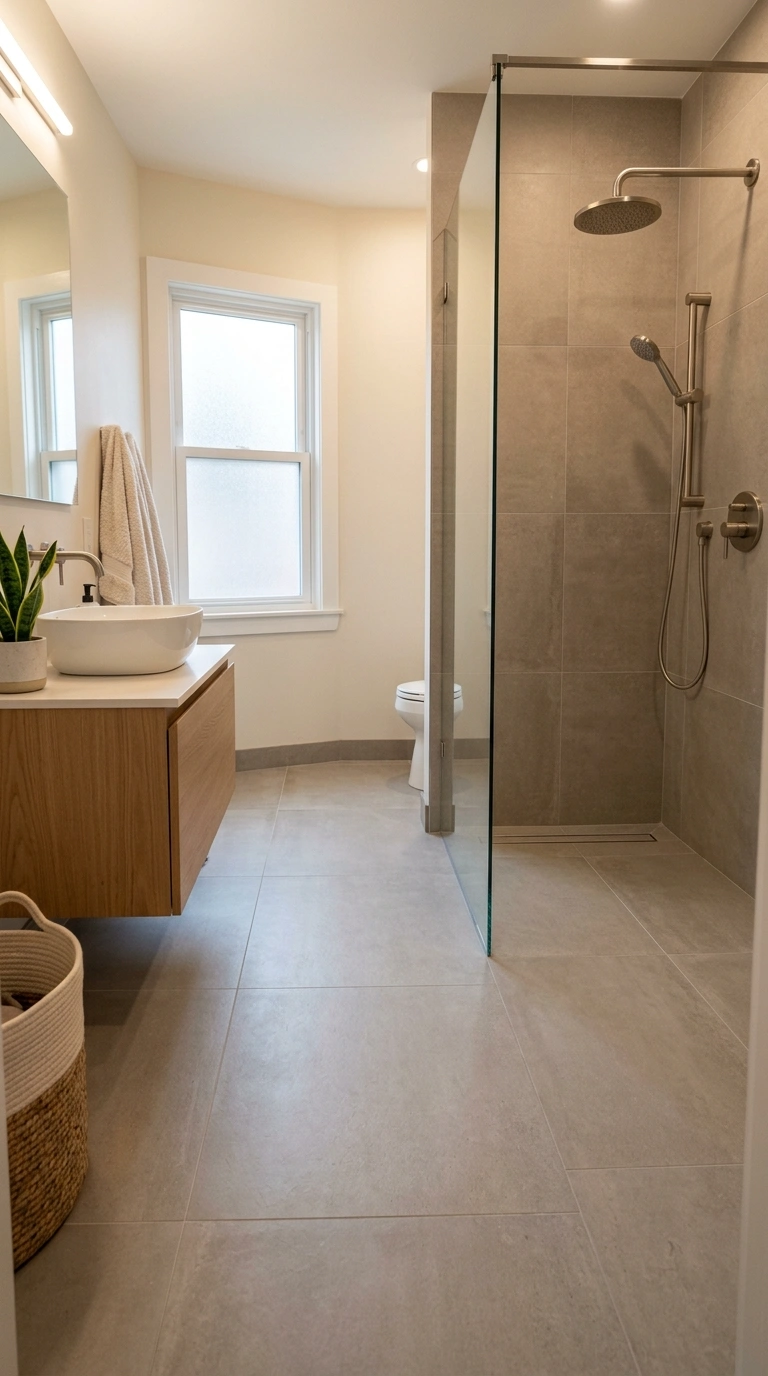
A zero-threshold, or curbless, shower entry removes the raised lip most showers have, creating a continuous, unbroken floor plane that visually (and physically) extends the room.
Feasibility checklist:
- Confirm your subfloor allows for the slight recessing needed to slope the shower floor toward the drain without a curb
- Budget for a linear drain, which typically works better than a standard center drain for a curbless design
- Check that this fits your renovation timeline, since it usually requires subfloor modification, not just a surface-level change
Cost range: $1,500-$4,000+ depending on the extent of subfloor work required.
18. Slim Heated Towel Bar
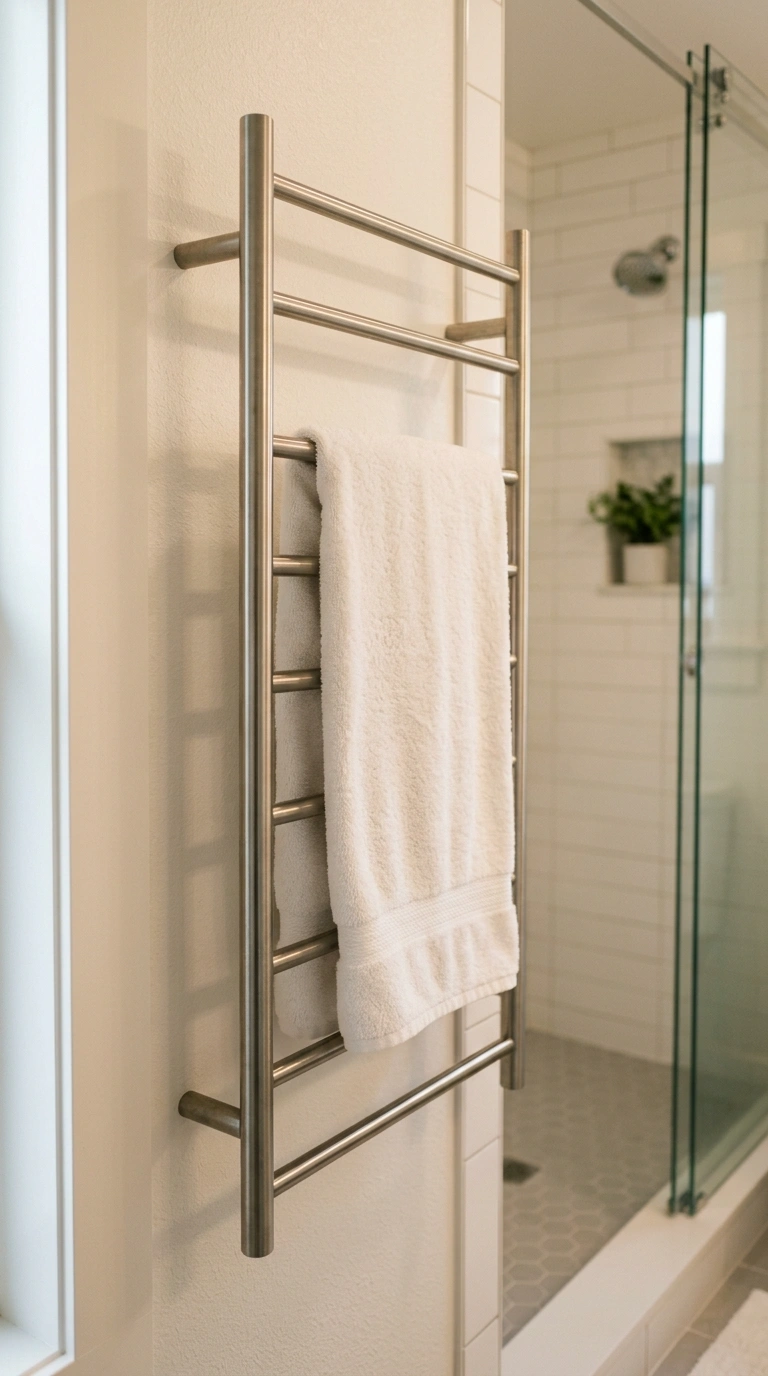
A narrow, vertically-oriented heated towel bar fits into tight wall space beside a shower or vanity, providing the warm-towel spa detail without needing the wall space a wider, horizontal rack would require.
Cost range: $100-$300 for a slim plug-in version, less than the hardwired versions covered in wider bathroom guides, since narrow units are typically sold at a lower wattage and simpler installation tier.
19. LED Light Strip Under the Vanity
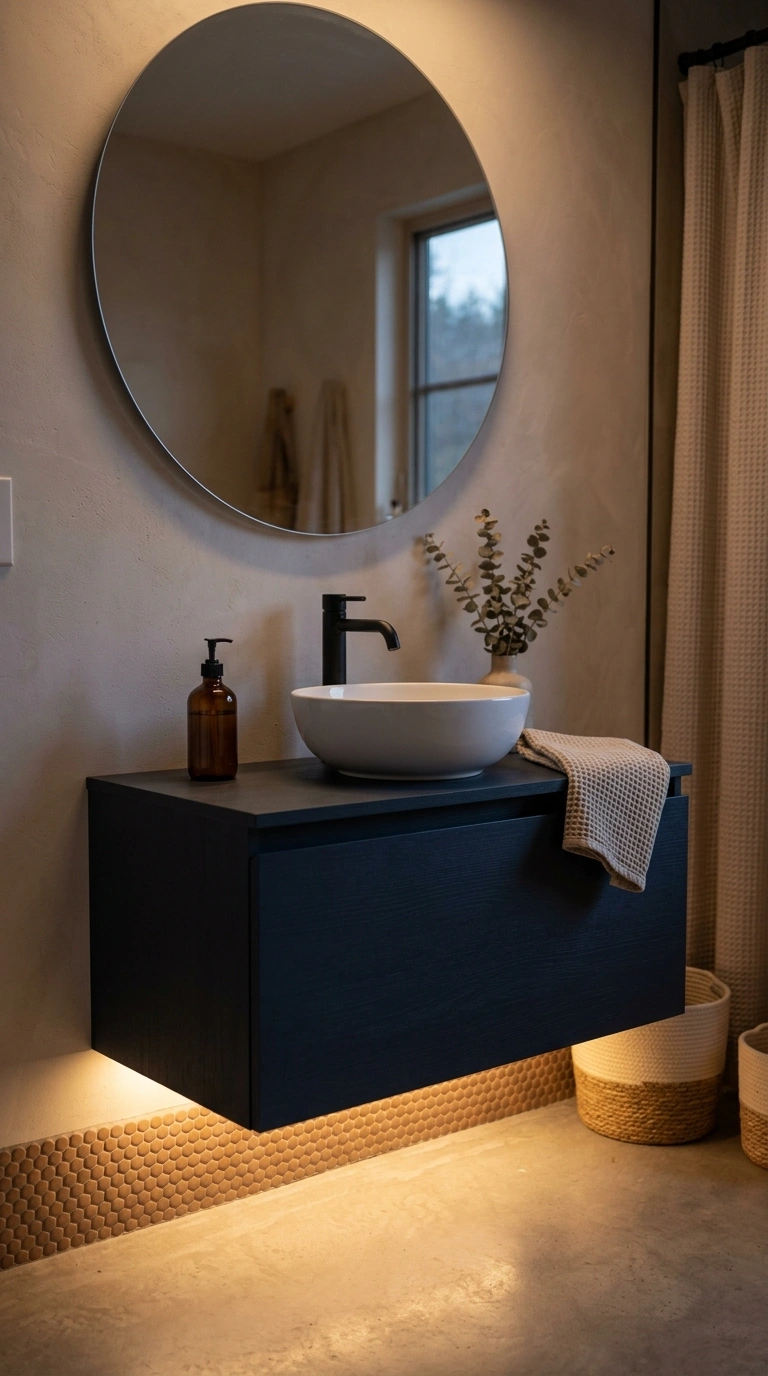
A warm LED light strip installed underneath a floating vanity adds a soft ambient glow at night without needing an additional fixture that takes up wall space.
Basic install steps:
- Measure the vanity’s underside width to determine strip length needed.
- Choose a warm color temperature (2700-3000K) rather than a cool white strip.
- Clean the mounting surface and apply the adhesive-backed strip.
- Connect to a plug-in adapter, or a simple switch if you’re comfortable with basic wiring.
Cost range: $20-$50 for a plug-in LED strip kit.
20. Minimalist Counter Styling
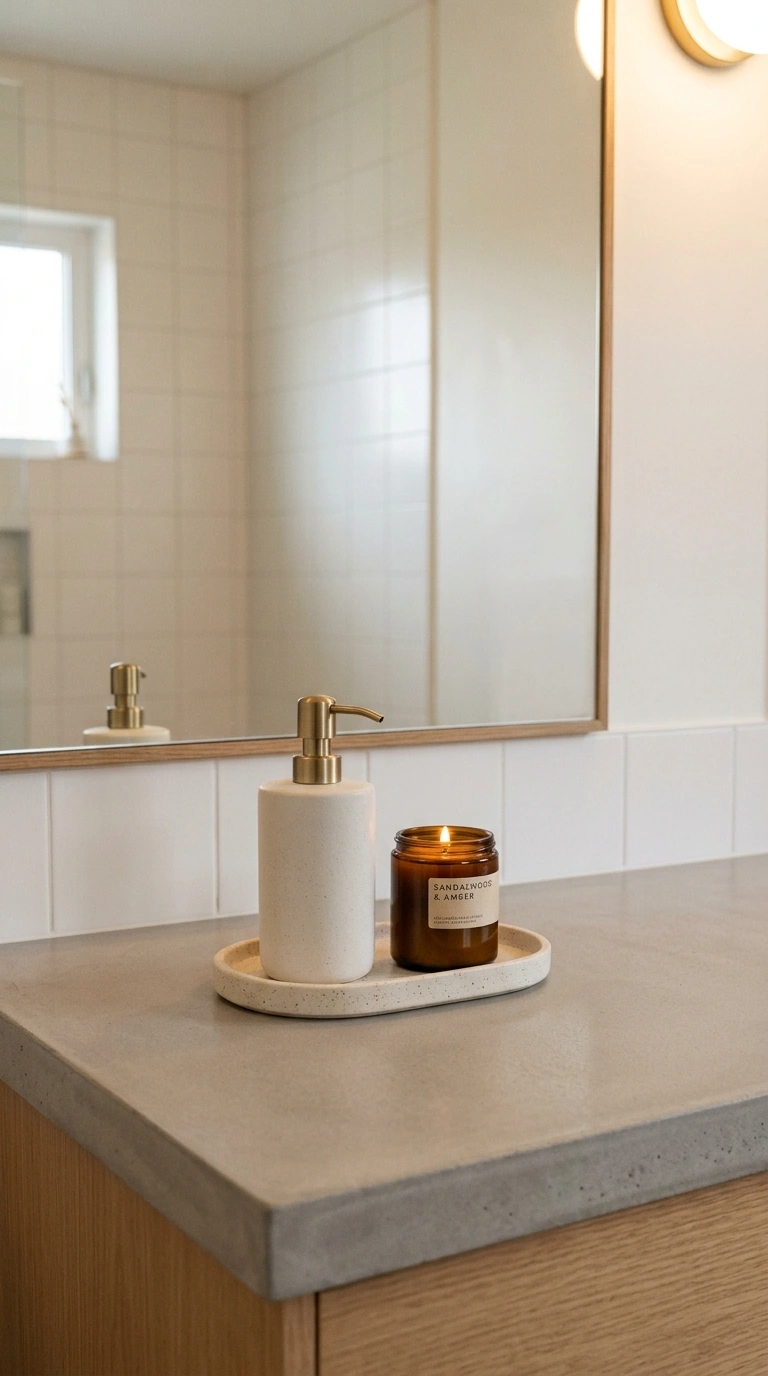
Keeping counter styling to just 2-3 items, rather than a fuller display, preserves clear sightlines and counter space in a bathroom where every visible surface reads as either open or cluttered, with little middle ground.
A simple restraint rule: one functional item (a soap dispenser), one styling item (a small plant or candle), and one storage item (a small tray or dish) is usually enough for a tiny bathroom counter to feel intentional without feeling bare or overloaded.
Pick 2-3 ideas that solve your bathroom’s biggest specific constraint, whether that’s visual openness, storage, or actual floor clearance, before adding purely decorative touches on top. In a genuinely tiny bathroom, the ideas that remove visual barriers (a frameless shower, an oversized mirror, a tone-on-tone palette) will always do more for the “spacious spa” feeling than any single decorative object could.
Save your favorite neutral tiny bathroom ideas to Pinterest so you have them ready when you’re ready to plan your own space.
FAQs
How do I make a tiny bathroom feel like a spa without a full renovation?
A tone-on-tone neutral palette, an oversized mirror, and warm wood accents are all lower-cost neutral tiny bathroom ideas that don’t require structural changes, unlike a frameless shower or a wall-mounted toilet.
What’s the best tile choice for making a small bathroom look bigger?
Large-format tile, meaning bigger individual pieces with fewer grout lines, consistently reads as more spacious than small mosaic or subway tile covering the same square footage.
Is a floating vanity worth it in a tiny bathroom?
Yes, for most small bathrooms. Leaving 10-12 inches of visible floor space beneath a floating vanity genuinely helps the room feel more open, and it’s one of the more moderately priced structural changes on this list.
What’s the most expensive way to make a small bathroom feel bigger?
Structural changes like a zero-threshold shower entry, a pocket door installation, or adding a skylight are the biggest investments on this list, typically running well over $1,000, compared to lower-cost styling and fixture swaps.
How many items should be on a small bathroom counter?
Around 2-3 intentional items, one functional, one decorative, and one for storage, tends to keep a neutral tiny bathroom counter feeling calm and spa-like rather than cluttered or bare.