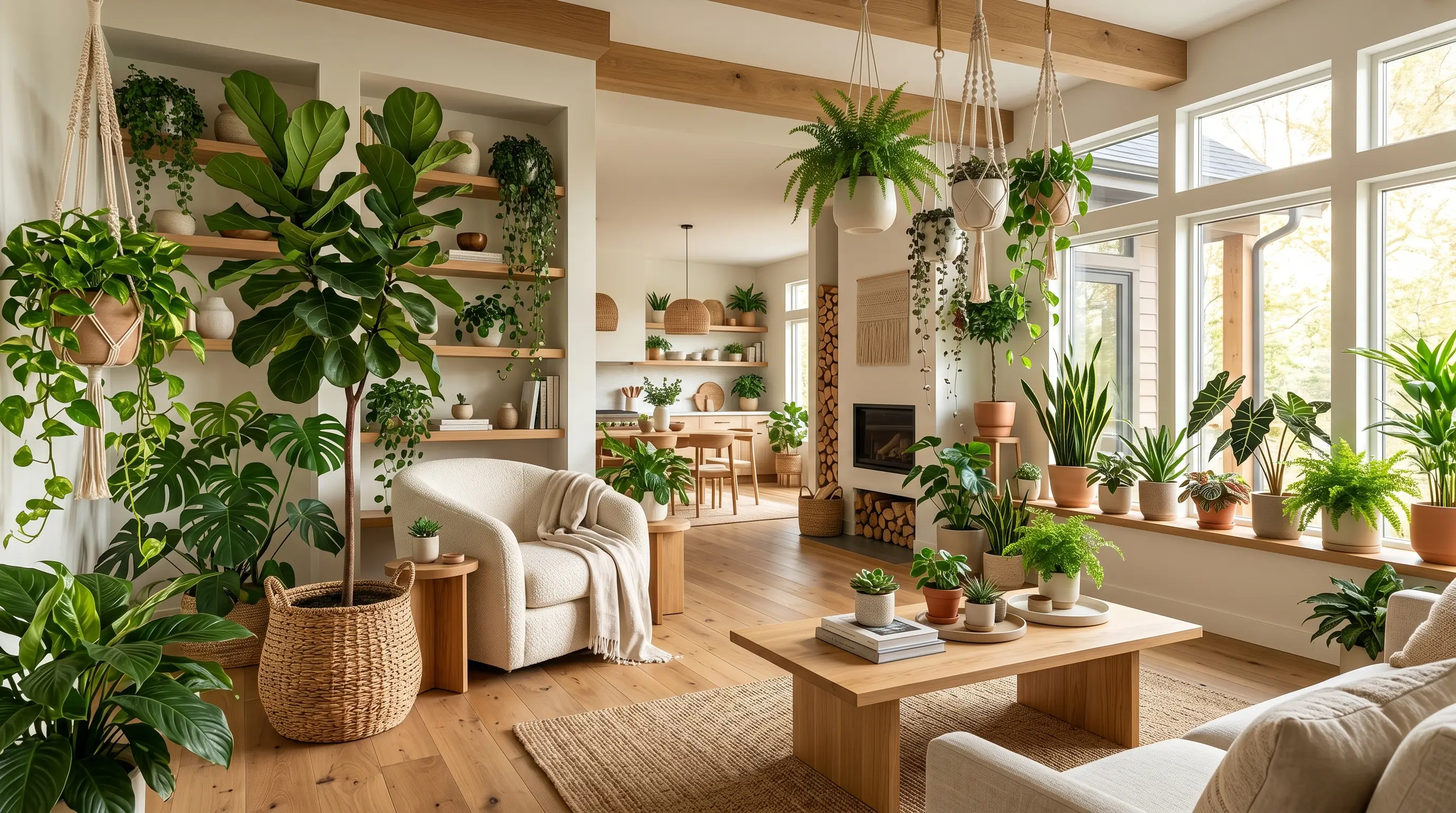
23 Double-Height Ceiling Designs for Grand, Airy Spaces
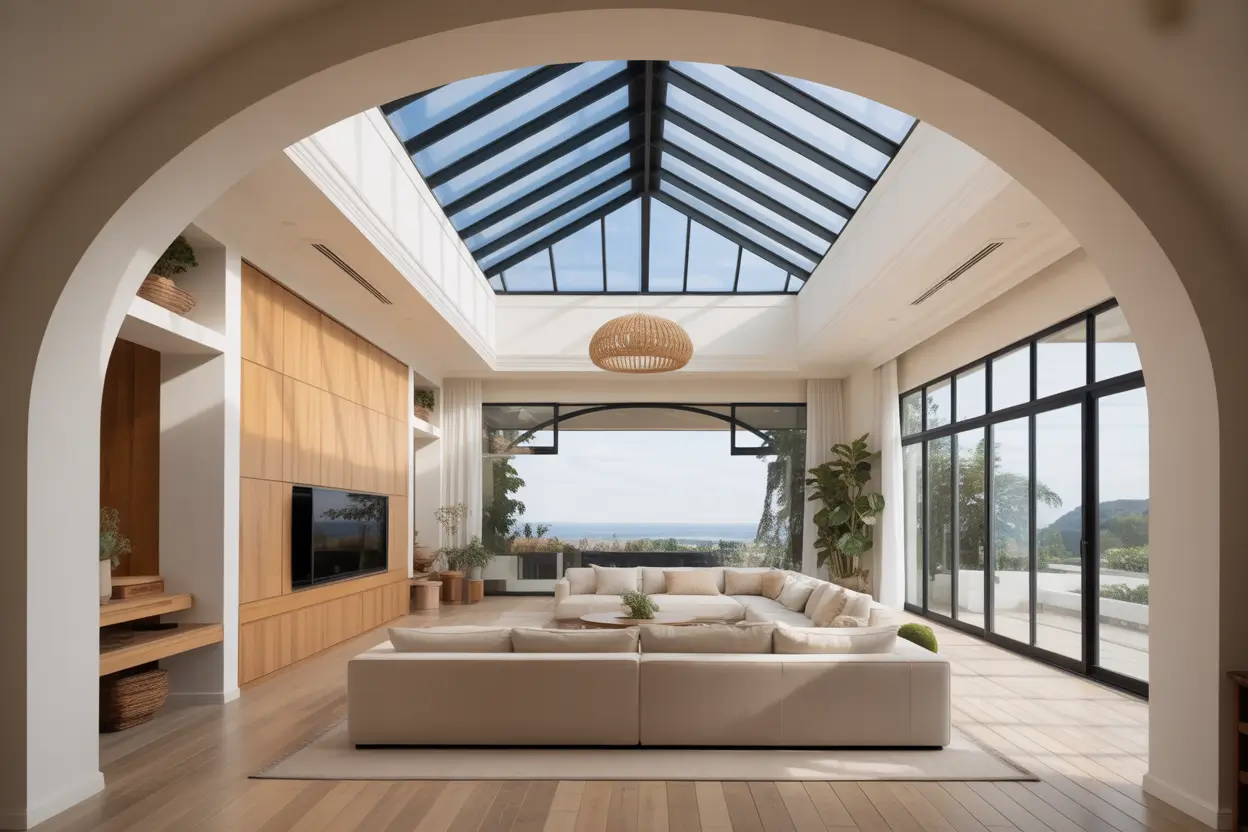
KEY TAKEAWAYS
- Use materials that fill vertical volume — full-height stone walls, wood-clad ceilings, two-story windows.
- Choose oversized art, drapery, and lighting in true scale rather than spreading small elements thin.
- Add architectural moves like mezzanines, walkways, and floating staircases to break up tall volumes.
- Layer lighting at multiple heights — chandelier, pendants, sconces — for warmth in the evening.
- Pair tall vertical surfaces with horizontal balance (mantels, beams, hearths) so the room feels grounded.
- Bring nature in with indoor trees and full-height window walls to keep grand spaces feeling alive.
- Balance hard architectural surfaces with soft textiles like linen drapery and woven rugs.
A double-height ceiling has the power to make a room feel cathedral-quiet and gallery-modern at the same time. These double-height ceiling designs show how stone walls, soaring beams, oversized art, and dramatic lighting can fill that vertical volume beautifully. You will see ideas that suit modern, traditional, farmhouse, and Mediterranean homes — proving the look adapts to almost any aesthetic. Each design below pairs the practical decisions (lighting, materials, scale) with the visual payoff that makes grand interior spaces feel intentional rather than empty. Save your favorites and use them as a reference whether you are renovating, building new, or just dreaming.
1. Floor-to-Ceiling Stone Fireplace Wall
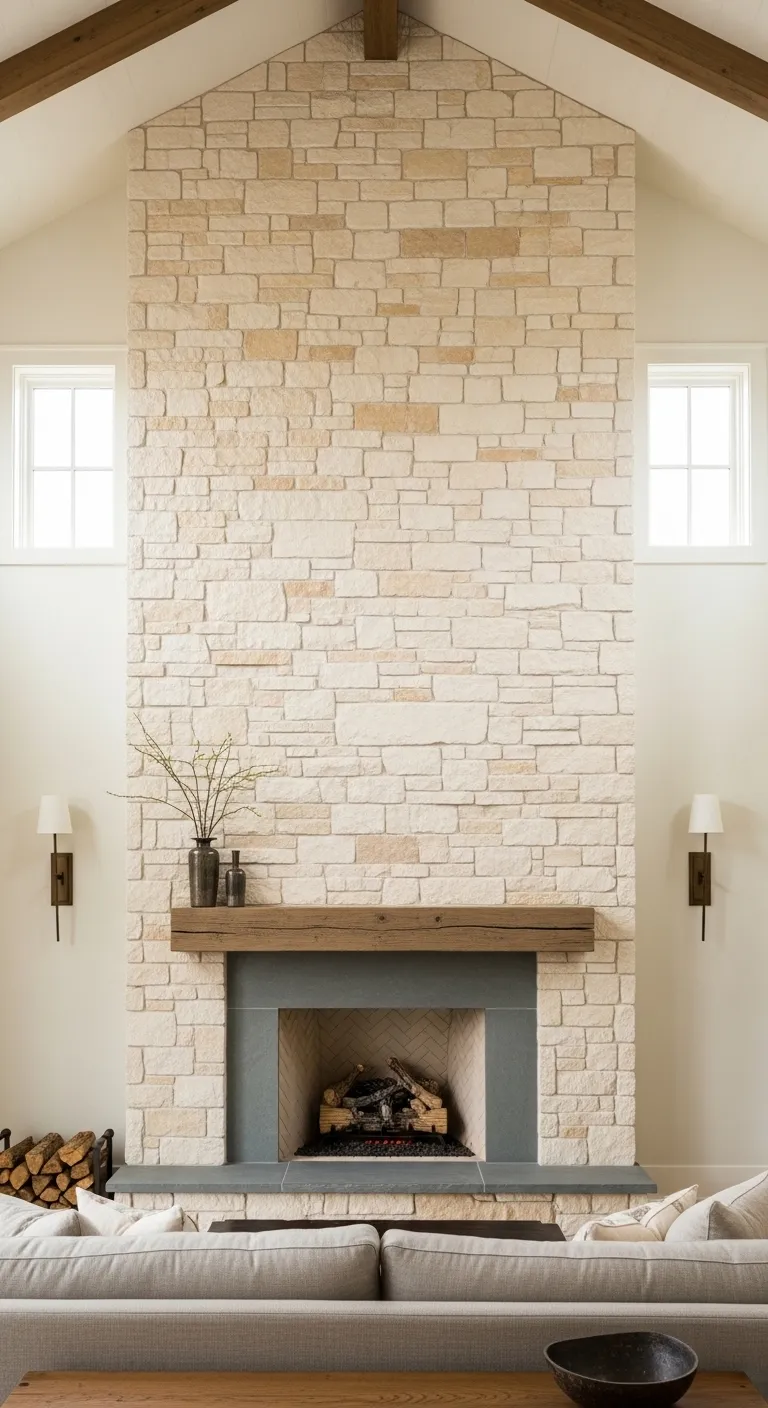
A massive natural stone fireplace stretching from the floor all the way to the peak of the ceiling becomes the unmistakable hero of a great room. Choose dry-stacked limestone, warm fieldstone, or honed travertine in soft cream and beige tones for a Mediterranean feel. The stone’s natural variation gives the wall organic texture that fills the vertical space without feeling busy. Pair with a long oak mantel and a low slate hearth for added horizontal balance. Light the wall with a single bronze sconce on each side in the evening for soft texture-revealing shadows.
2. Black-Painted Soaring Ceiling
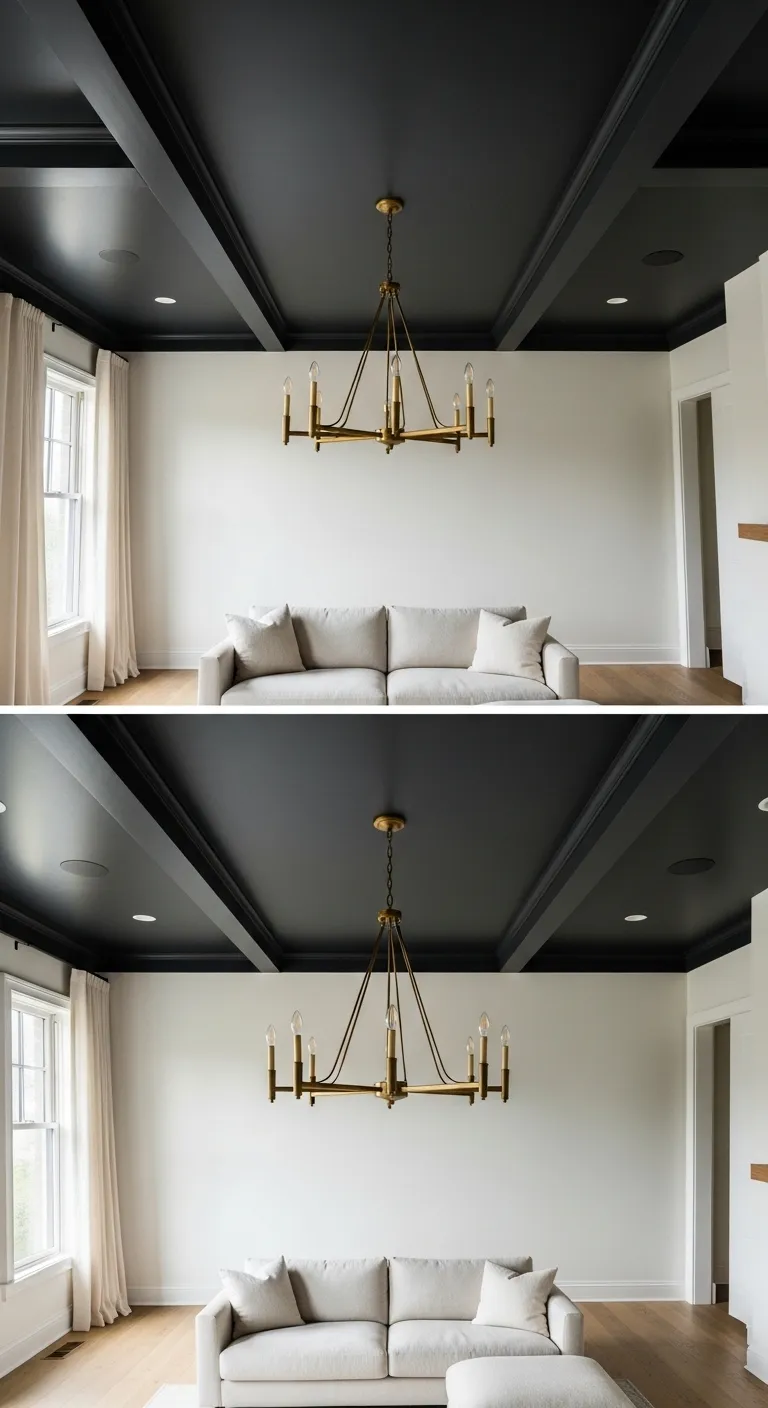
Painting the entire double-height ceiling matte deep black creates a dramatic, jewel-box effect even in an airy room. The dark color makes the walls below feel taller and the architecture more sculptural. Pair black ceilings with pale walls, warm wood floors, and rich brass lighting for the most striking contrast. Add a single oversized brass or matte black chandelier hung at the lower third of the ceiling height. The dark-above-light combination feels distinctly editorial and modern-traditional.
3. Massive Iron Chandelier Statement
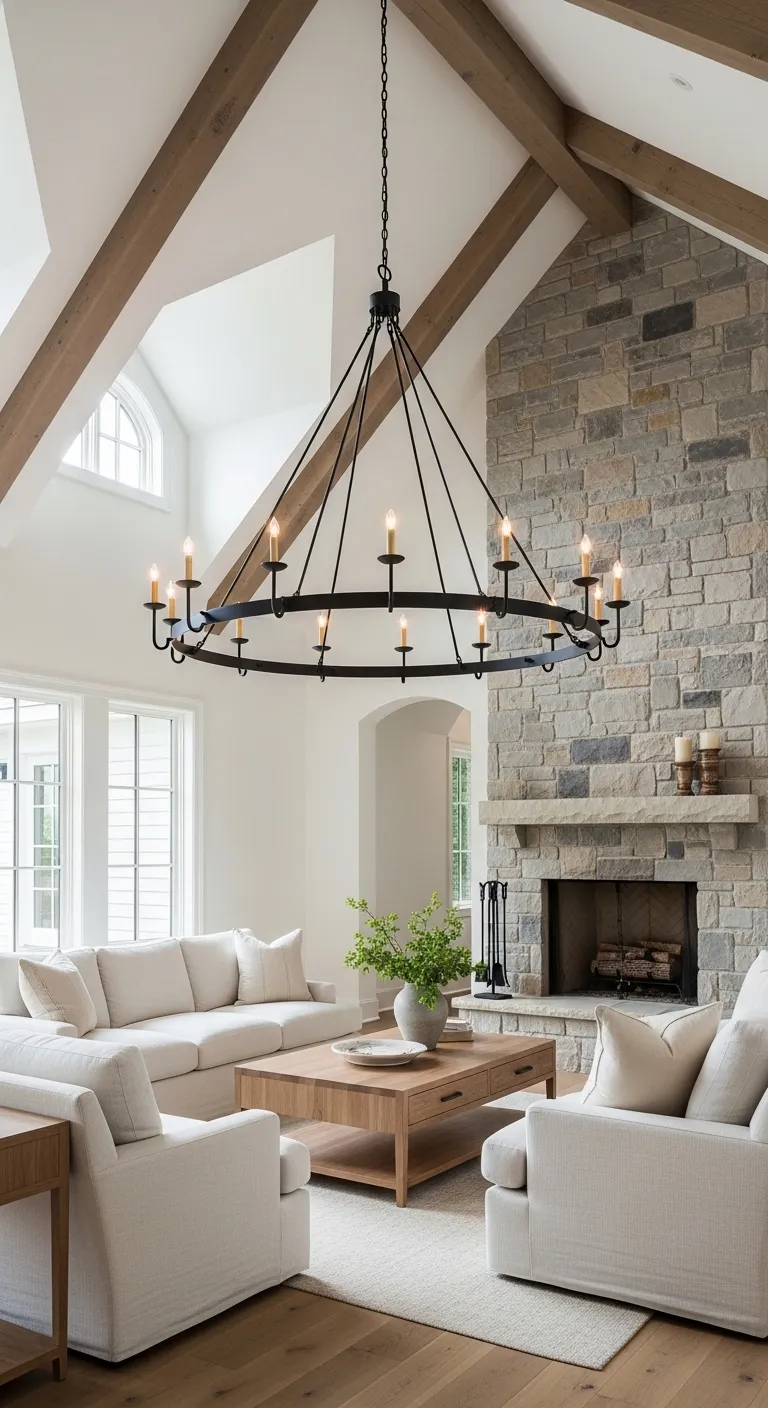
A truly oversized iron chandelier — six feet wide or more — hung from the apex of a double-height ceiling gives the room its visual anchor. Choose an organic, almost twiggy design or a more classic candle-style fixture depending on your aesthetic. The chandelier should hang low enough to be appreciated, ideally with the bottom around eight feet above the main floor. Pair with simpler wall sconces below for layered evening light. This single fixture can carry the entire identity of a great room.
4. Wood-Clad Cathedral Ceiling
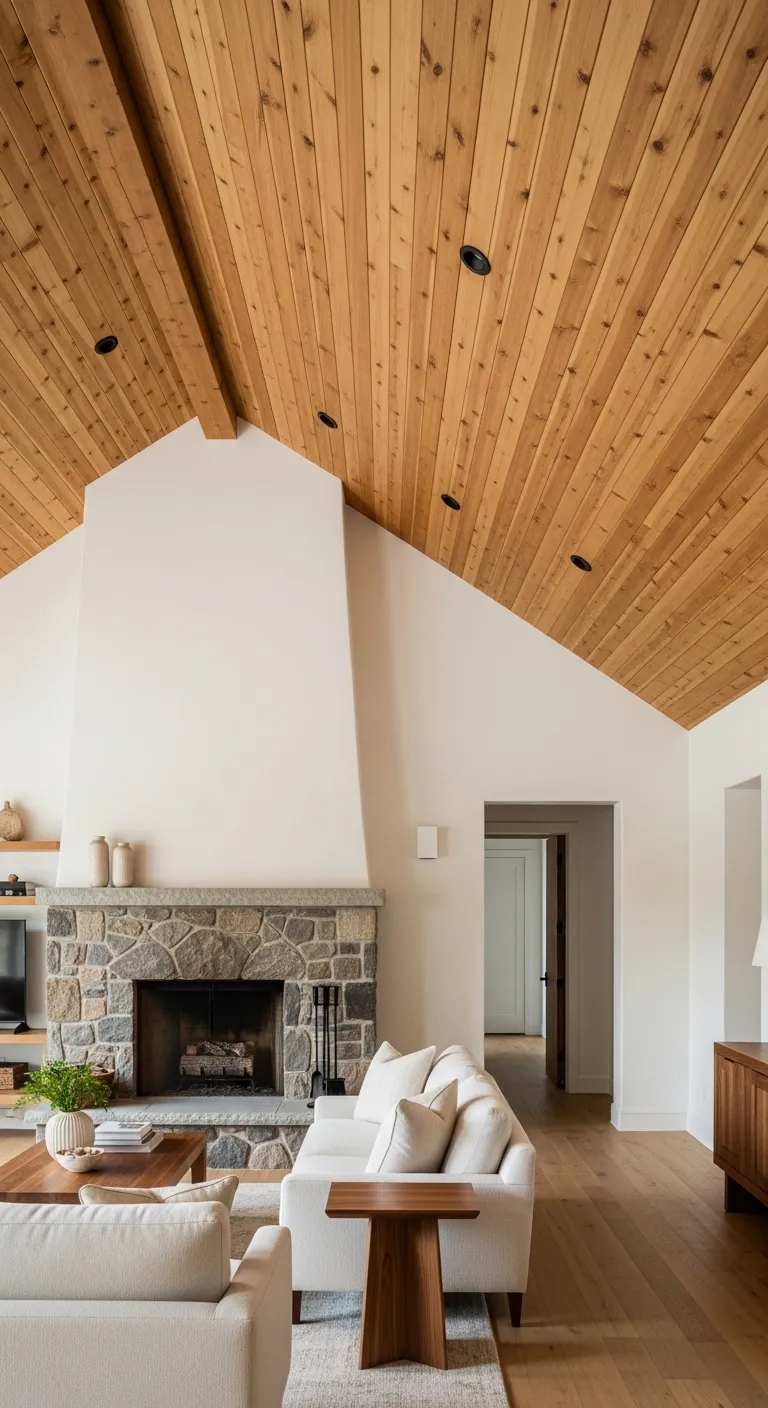
Cladding the entire vaulted ceiling in warm tongue-and-groove wood — pine, cedar, or oak — wraps the room in immediate warmth and texture. Choose planks running along the slope rather than across for a longer, more graceful read. The wood absorbs sound, which is especially welcome in tall rooms that can echo. Pair with white plaster walls and a stone fireplace for a classic mountain-modern combination. Finish the wood with a matte natural sealer to keep its raw, organic character.
5. Two-Story Window Wall
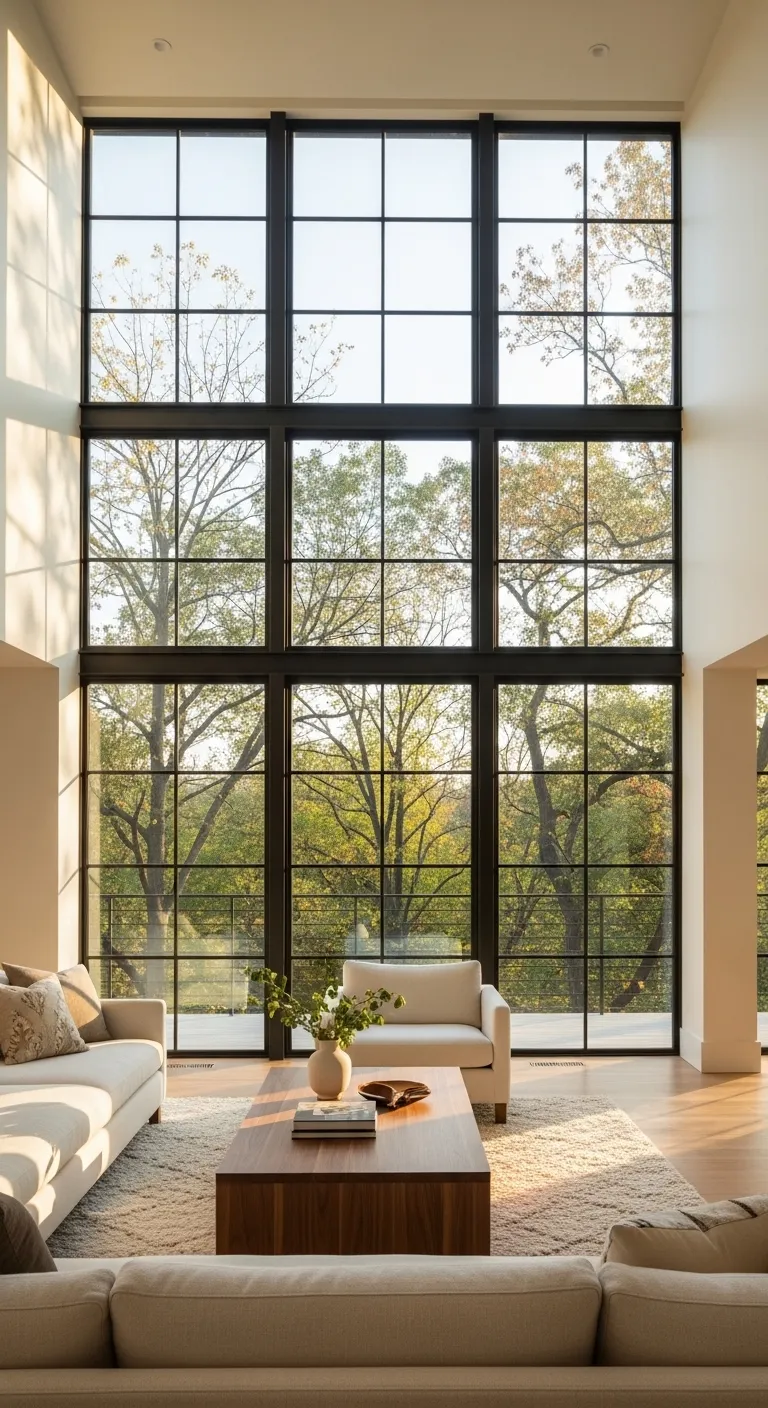
A wall of stacked floor-to-ceiling windows climbing two full stories floods the room with daylight and pulls the outdoors visually inside. Choose slim black steel or warm wood frames depending on your aesthetic preference. The natural light makes every other material in the room — wood, stone, fabric — read more accurately and beautifully. Add simple linen drapery on a track at the upper level for subtle privacy without losing the view. This window wall is the kind of architectural move that defines an entire home.
6. Exposed Steel Beam Structure
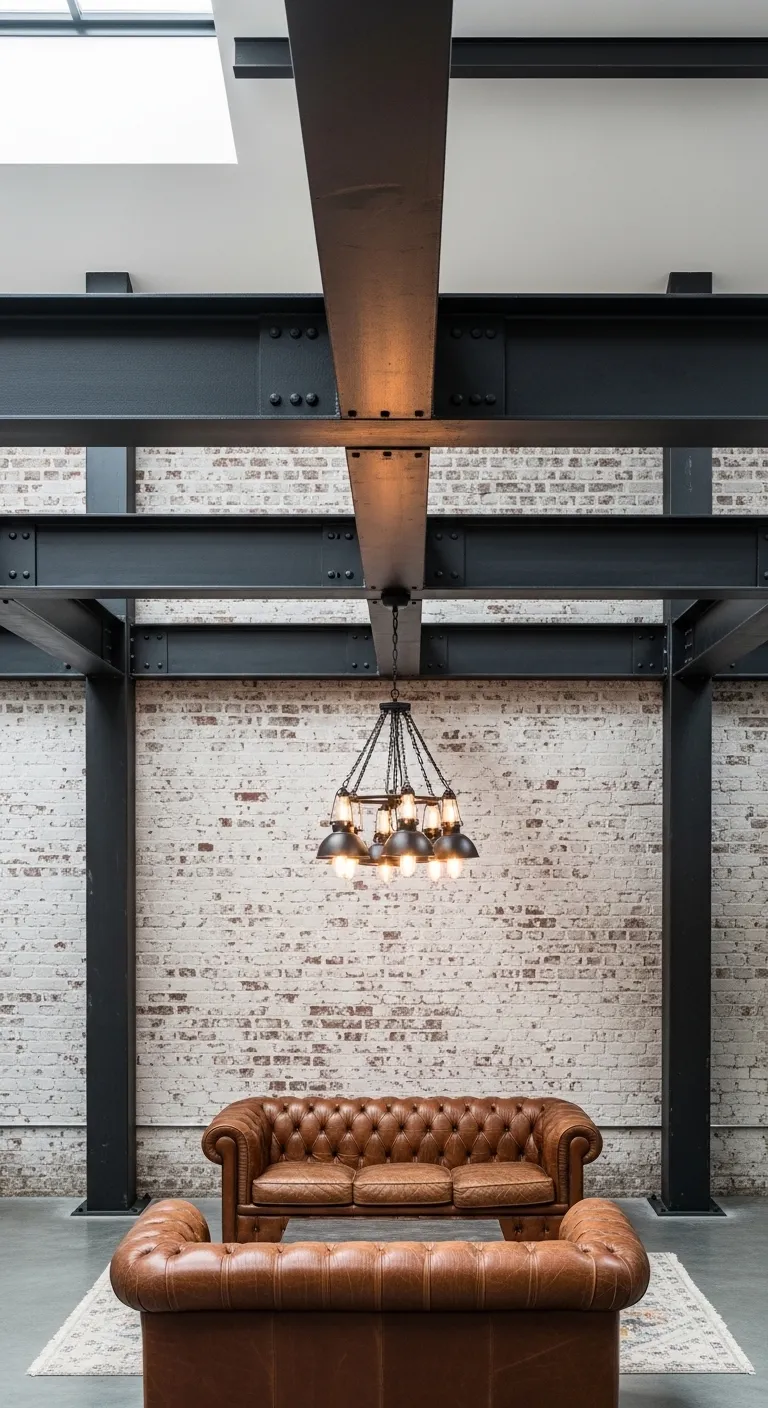
Leaving structural steel I-beams exposed in their natural matte black finish gives a double-height room a loft-industrial feel. The beams add visual rhythm and break up what could otherwise feel like a vast empty volume. Pair with whitewashed brick walls, polished concrete floors, and warm leather seating for a balanced industrial-luxe look. Add a single oversized pendant cluster between the beams for evening drama. This design is especially powerful in converted warehouses and modern new builds.
7. Loft Mezzanine Over Living Area
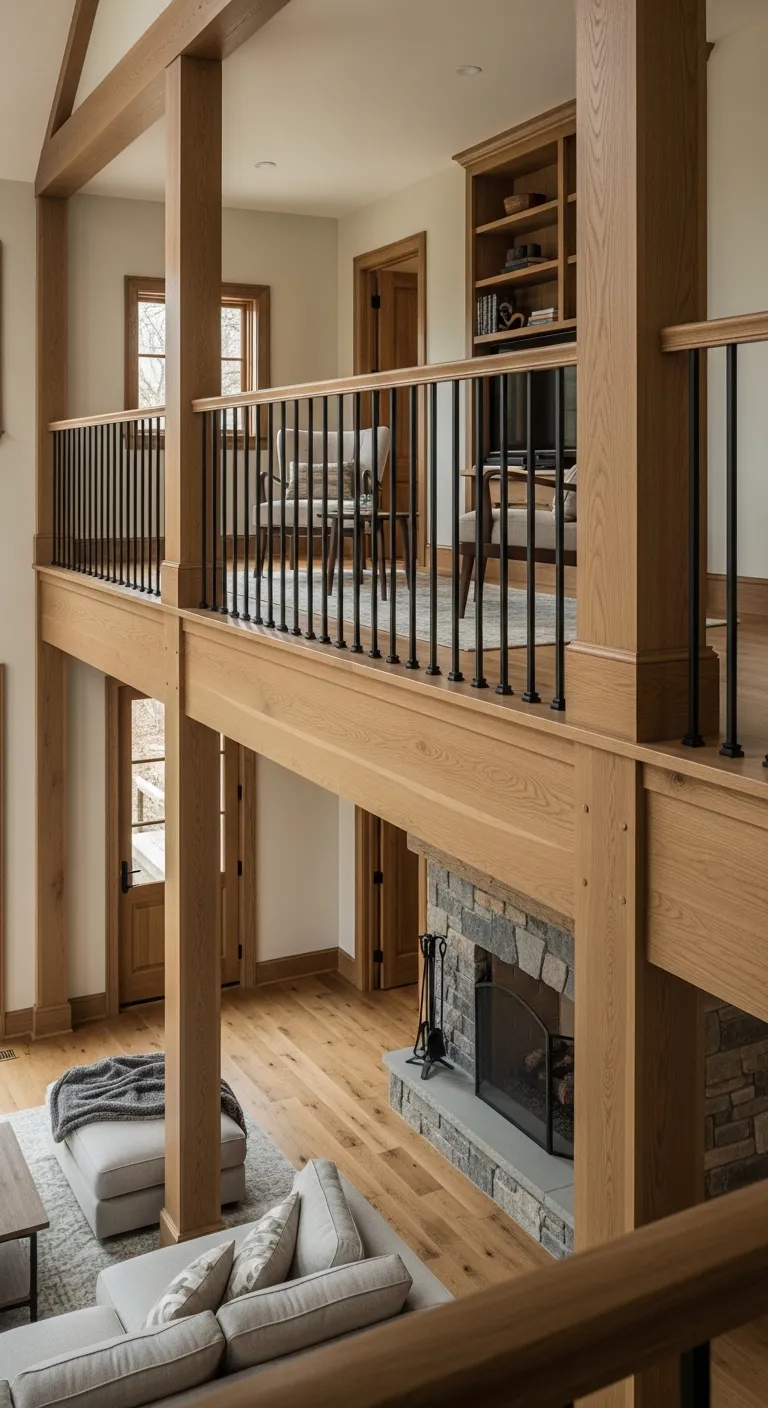
A wood or steel mezzanine running along one side of the great room creates a usable second-floor zone — a library, studio, or sitting area — without losing the open feel below. Add a slim cable, glass, or wrought iron railing depending on your style. The mezzanine breaks up the volume thoughtfully and creates a strong horizontal line in an otherwise vertical space. Use the underside of the mezzanine as a cozy lower-ceiling zone for a sectional sofa or dining nook. This combination delivers both grand and intimate within a single room.
8. Floor-to-Ceiling Bookcase Ladder Library
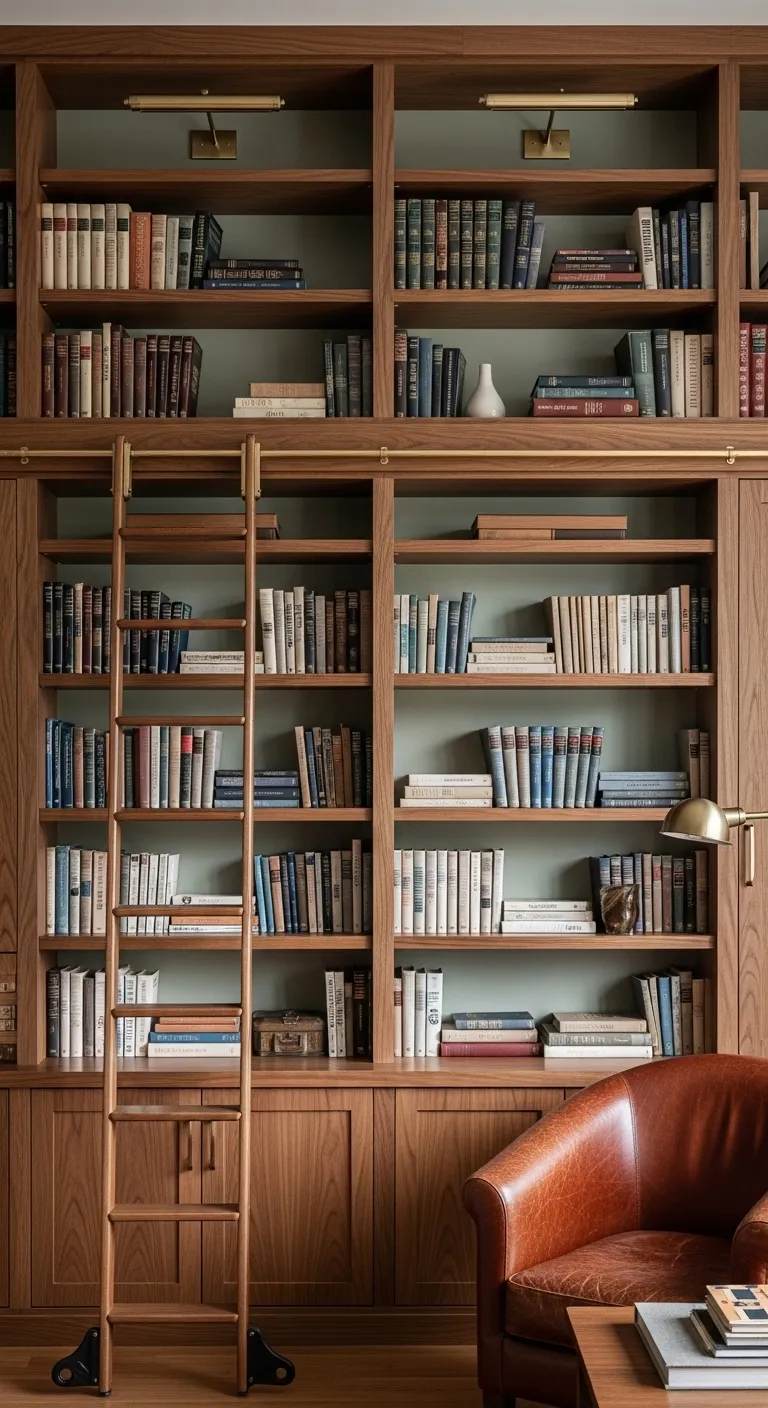
Wrapping one full double-height wall in built-in bookcases with a sliding wood ladder creates an immediate library feel of pure beauty. Choose warm walnut or oak shelves with painted backing in a soft sage, warm ivory, or muted navy for color depth. The vertical lines of all those book spines fill the height naturally and beautifully. Add a single deep armchair and a small table at the base for an intentional reading spot. This wall becomes part decor, part practical storage, and part dream library.
9. Plaster Vaulted Ceiling
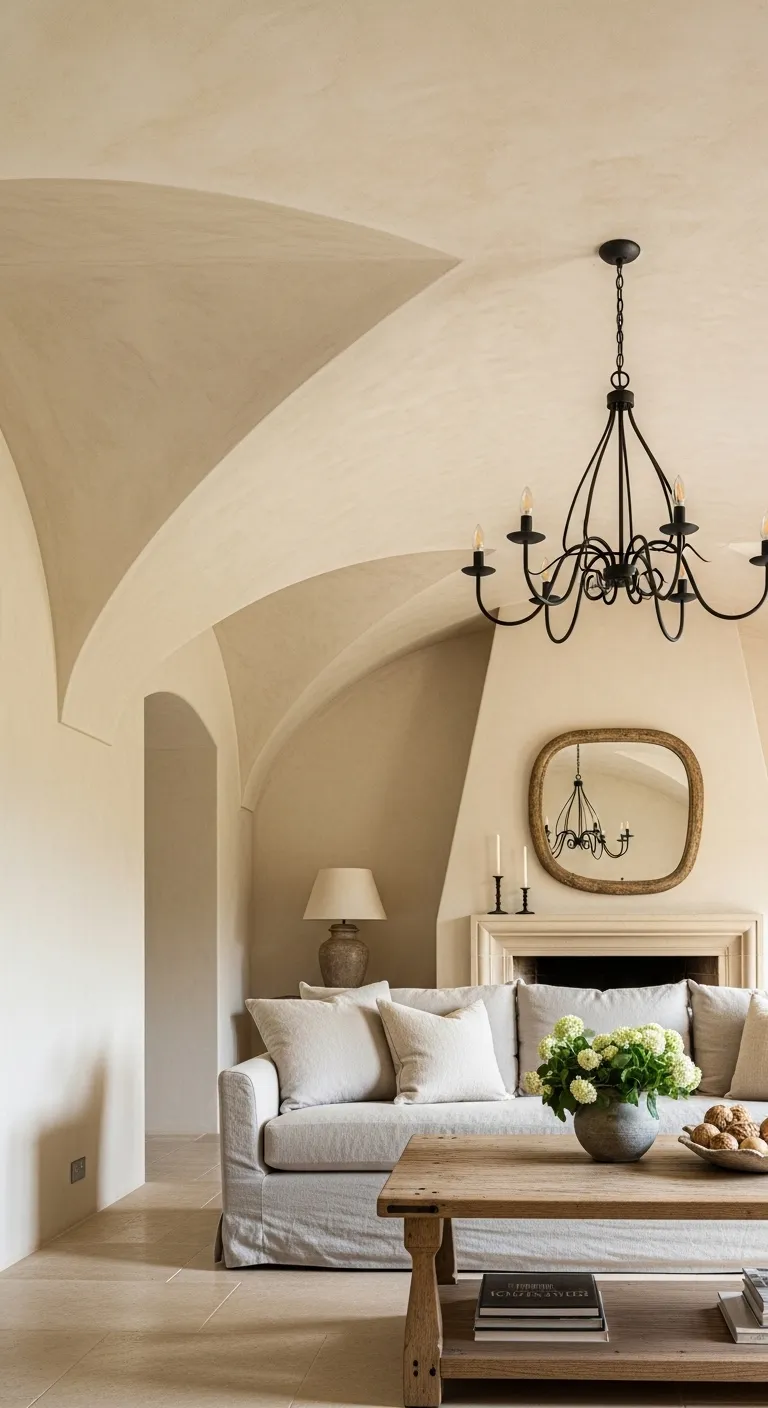
Hand-troweled plaster ceilings in warm ivory or chalky beige softening the angles of a vaulted space create an Old World, almost Provencal feel. The slight imperfections in the plaster catch afternoon light beautifully, giving the ceiling a living, breathing quality. Pair with limestone floors, soft linen sofas, and aged wood furniture for a layered Mediterranean palette. Add a wrought iron chandelier and pair of wall sconces in matte black or aged bronze. This treatment is timeless and feels at home in both new builds and renovated farmhouses.
10. Wraparound Second-Floor Walkway
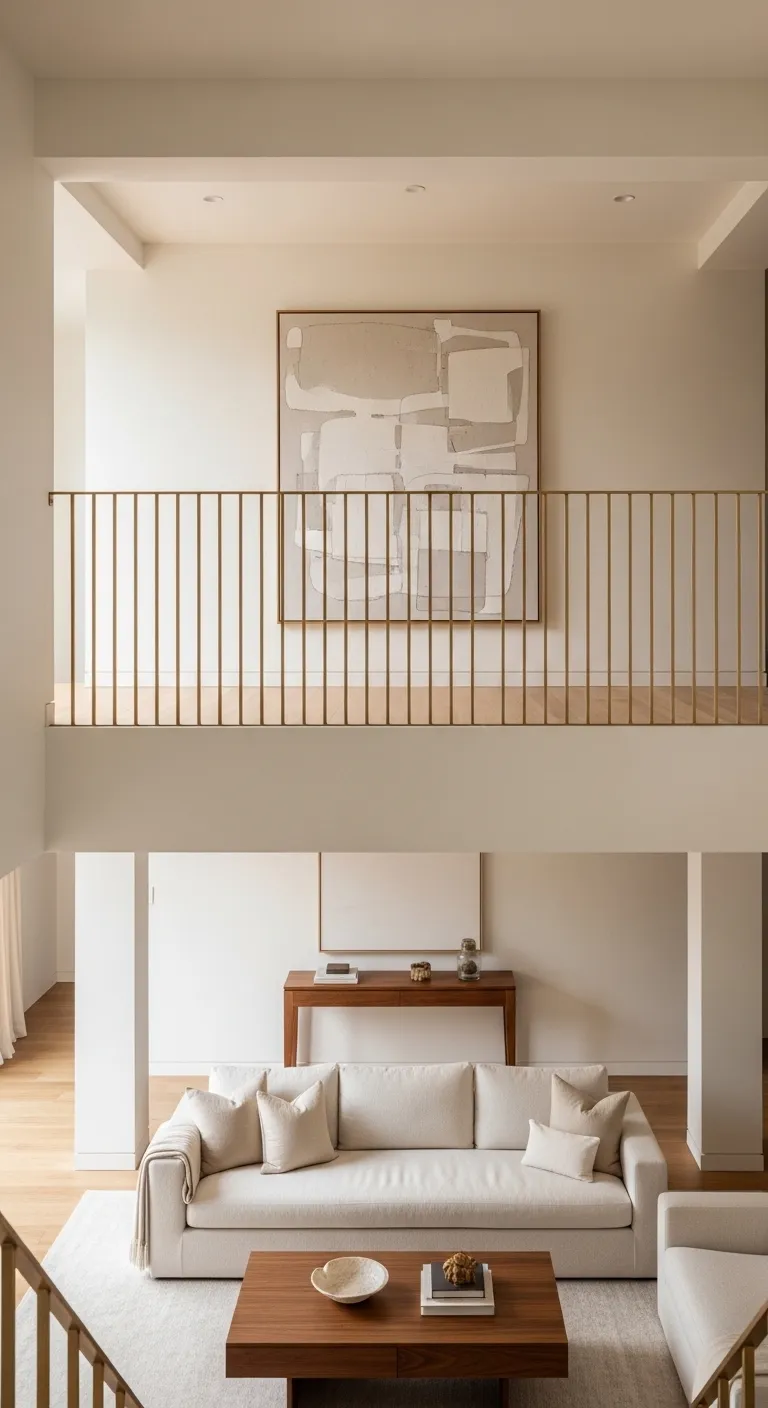
An open second-floor walkway visible from the main living area creates dynamic architectural interest and keeps the home connected. Add slim metal or glass railings to maintain sightlines through to the upper level. Hang a single piece of oversized art or a long woven tapestry on the wall behind the walkway as a background. The walkway itself should feel like part of the great room rather than a separate hallway. This feature works especially well in homes where bedrooms open onto the central living volume.
11. Skylight Ribbon Along the Ridge
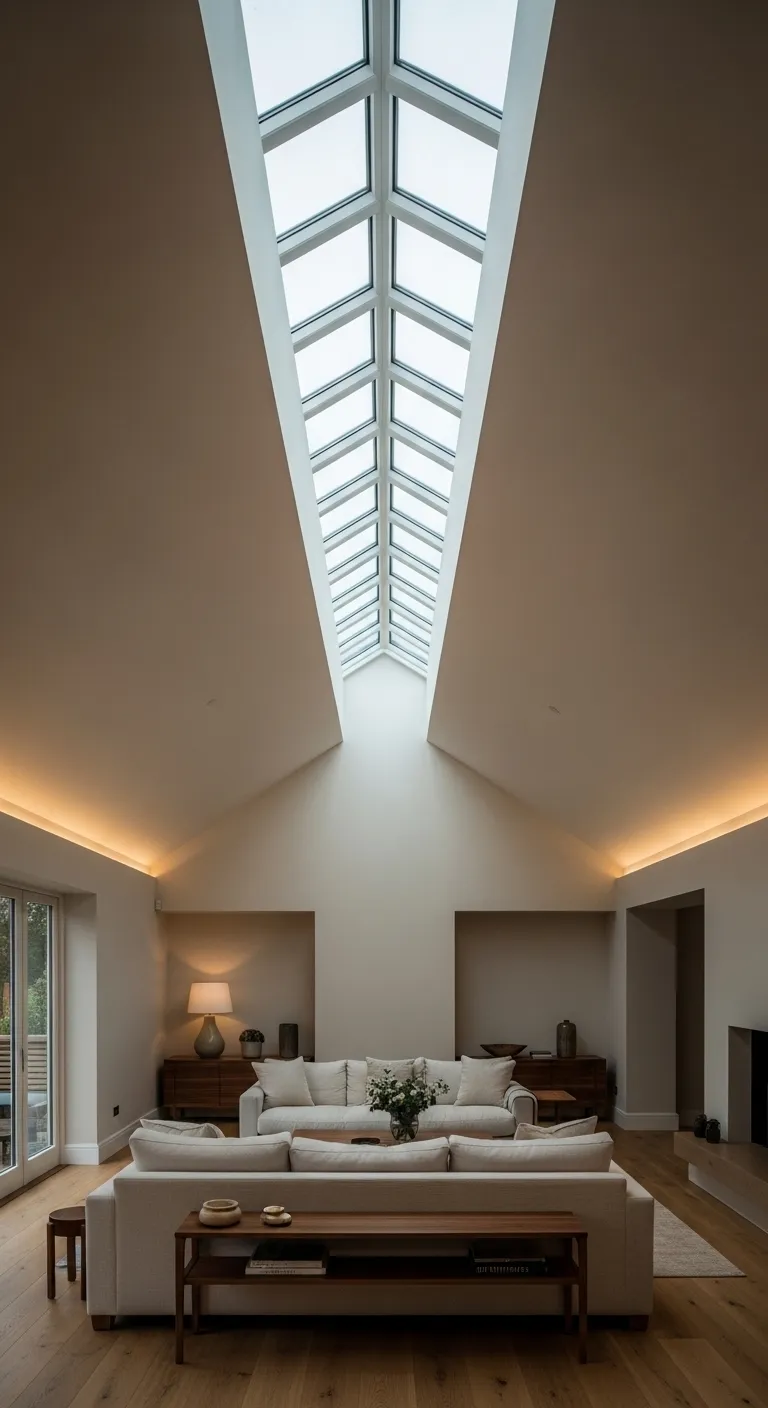
A long ribbon skylight running the full length of the ceiling ridge bathes the room in changing daylight throughout the day. Morning light falls golden, midday is bright and white, and evening shifts to soft amber as it sets. The skylight adds natural drama without requiring any wall windows or compromising privacy. Pair with neutral walls and warm wood floors so the changing light reads beautifully against simple surfaces. This single architectural detail can make even a modest great room feel cinematic.
12. Oversized Abstract Art on a Tall Wall
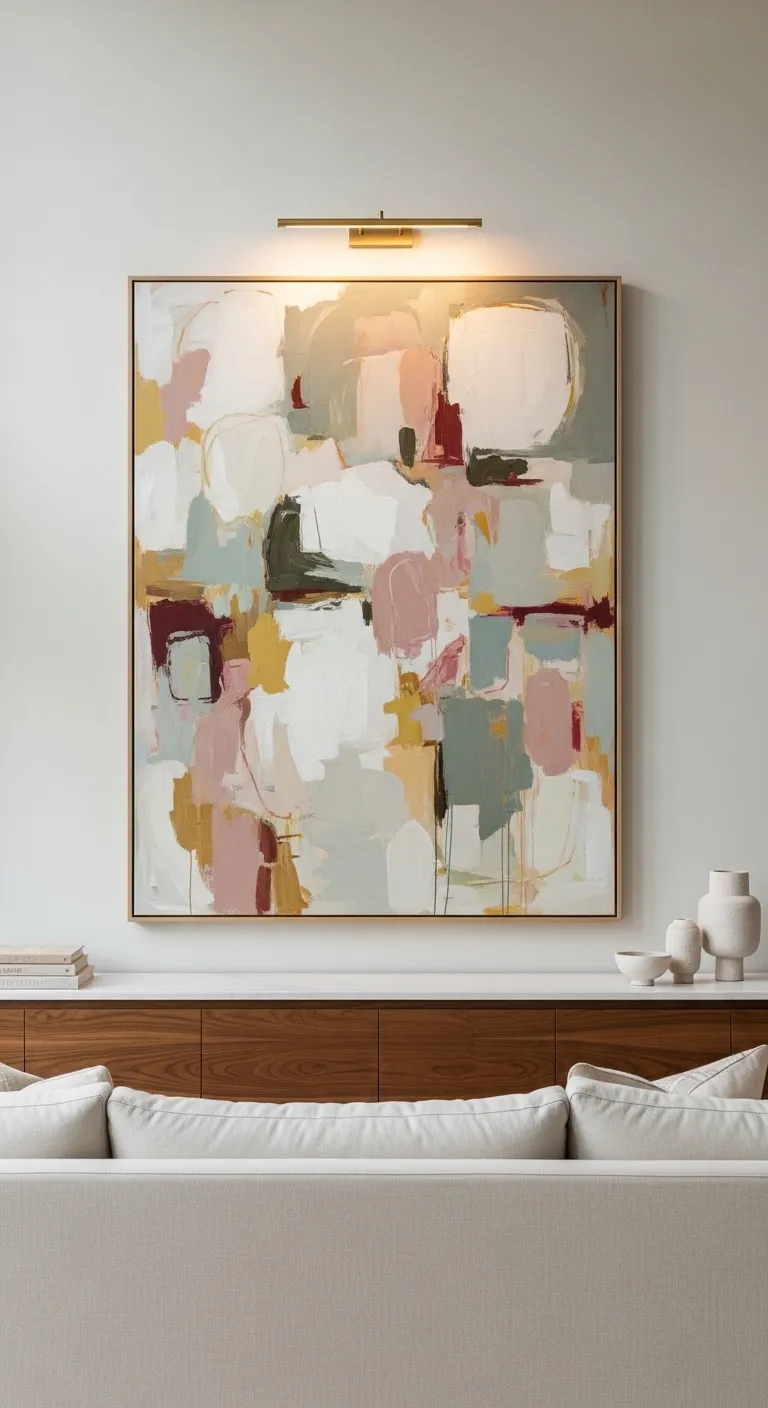
A single oversized abstract painting — eight feet tall or more — hung on the largest blank wall fills the volume with intention rather than emptiness. Choose a piece with strong color movement or muted tonal washes depending on your room’s palette. The art alone often feels stronger than gallery walls in spaces with this much vertical height. Light it from above with a slim picture light in brushed brass for evening drama. Commission a piece from a local artist if budget allows for a truly singular focal point.
13. Hanging Staircase as Sculpture
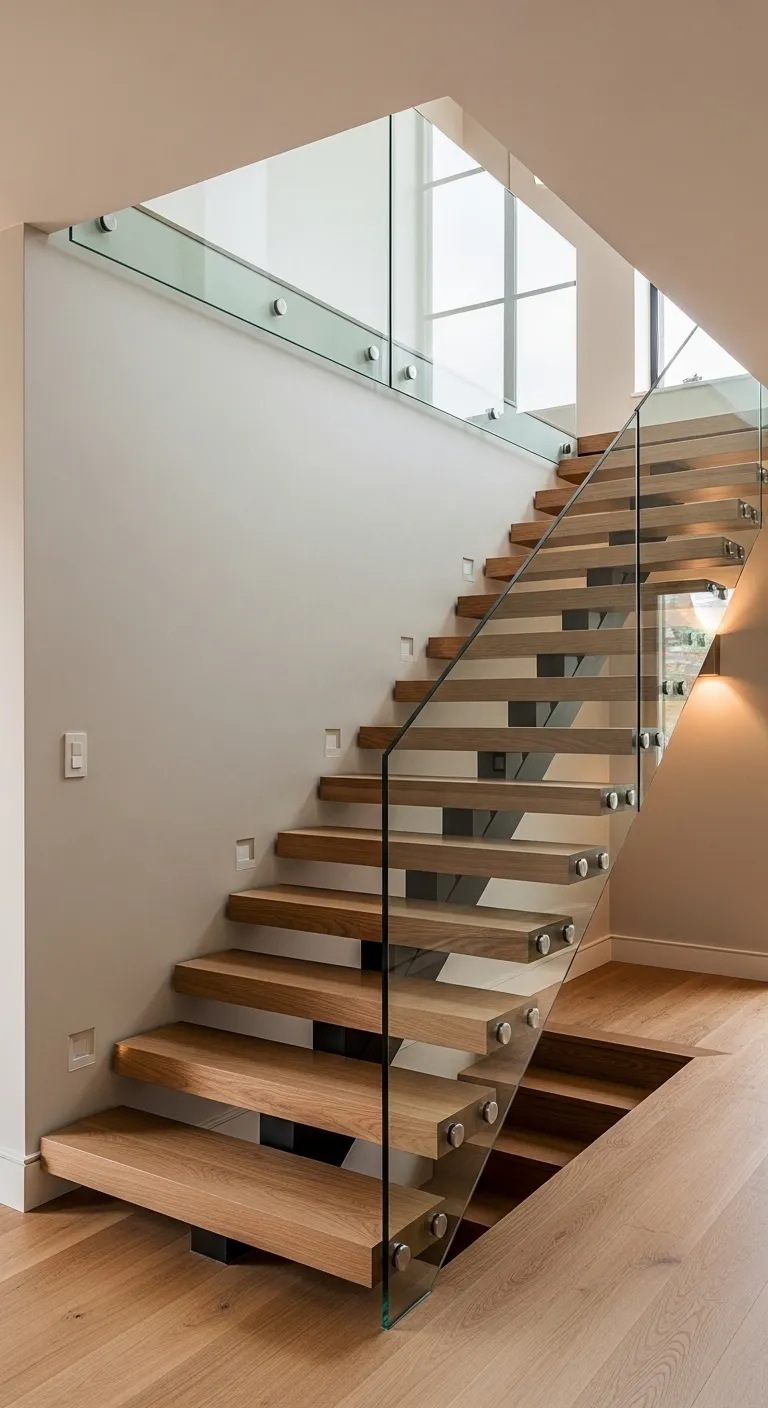
A floating cantilevered staircase with open wood treads or thin steel stringers becomes a sculptural element in a double-height room. Pair with a slim cable railing or a continuous glass panel for the cleanest, most modern read. The stair itself should be visible from the main living area, not tucked behind a wall. Choose warm walnut or oak treads for warmth against more industrial materials below. This is the kind of design move that turns a staircase into the home’s signature.
14. Tall Arched Windows with Linen Drapery
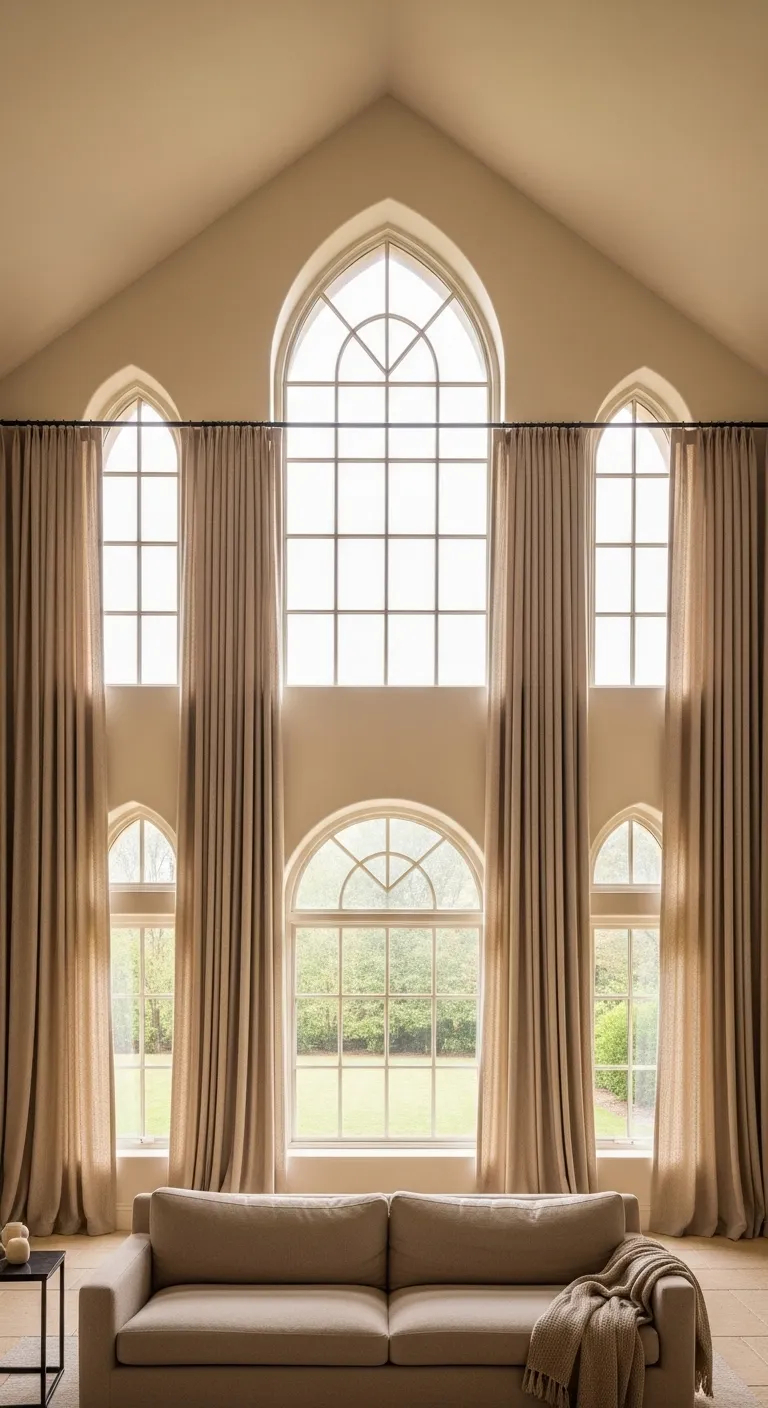
Tall arched windows reaching toward the peak of a vaulted ceiling read distinctly European and timeless. Pair them with full-length oatmeal linen drapery hung from the very top, draped softly to the floor. The arched shape adds movement and softness to what could otherwise be a very angular room. Choose simple iron rods and rings in matte black or aged bronze. This combination feels right at home in Mediterranean villas, English country homes, and stately modern builds alike.
15. Tongue-and-Groove Painted White Plank Ceiling
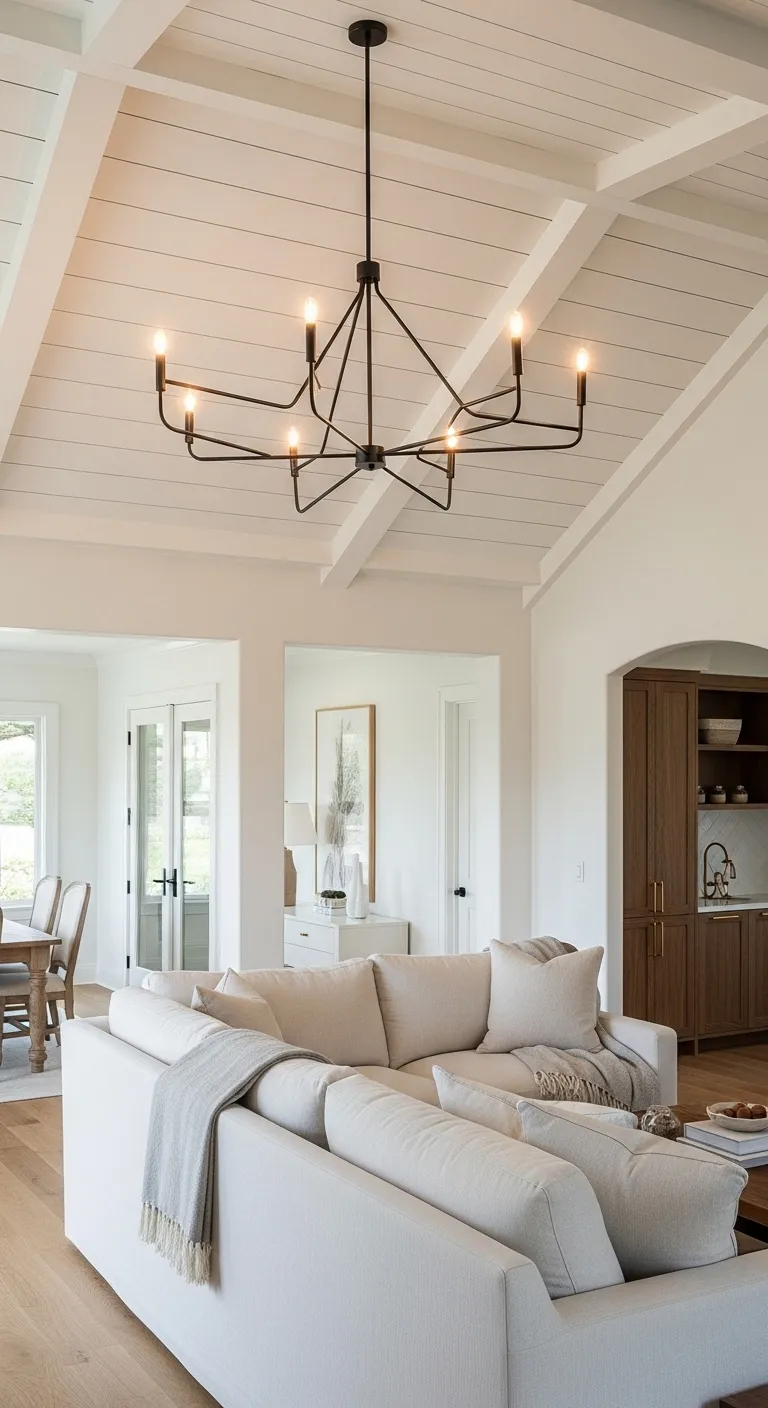
Cladding the double-height ceiling in tongue-and-groove planks painted in a soft warm white reads coastal, farmhouse, or modern depending on the rest of the room. The texture of the planks adds subtle interest while keeping the space airy and bright. Pair with warm oak floors, soft linen sofas, and a black iron chandelier for high-low contrast. The painted finish reflects light better than dark wood ceilings, keeping the room feeling open. This treatment is one of the more budget-friendly ways to fill vertical volume beautifully.
16. Beam-and-Truss Farmhouse Ceiling
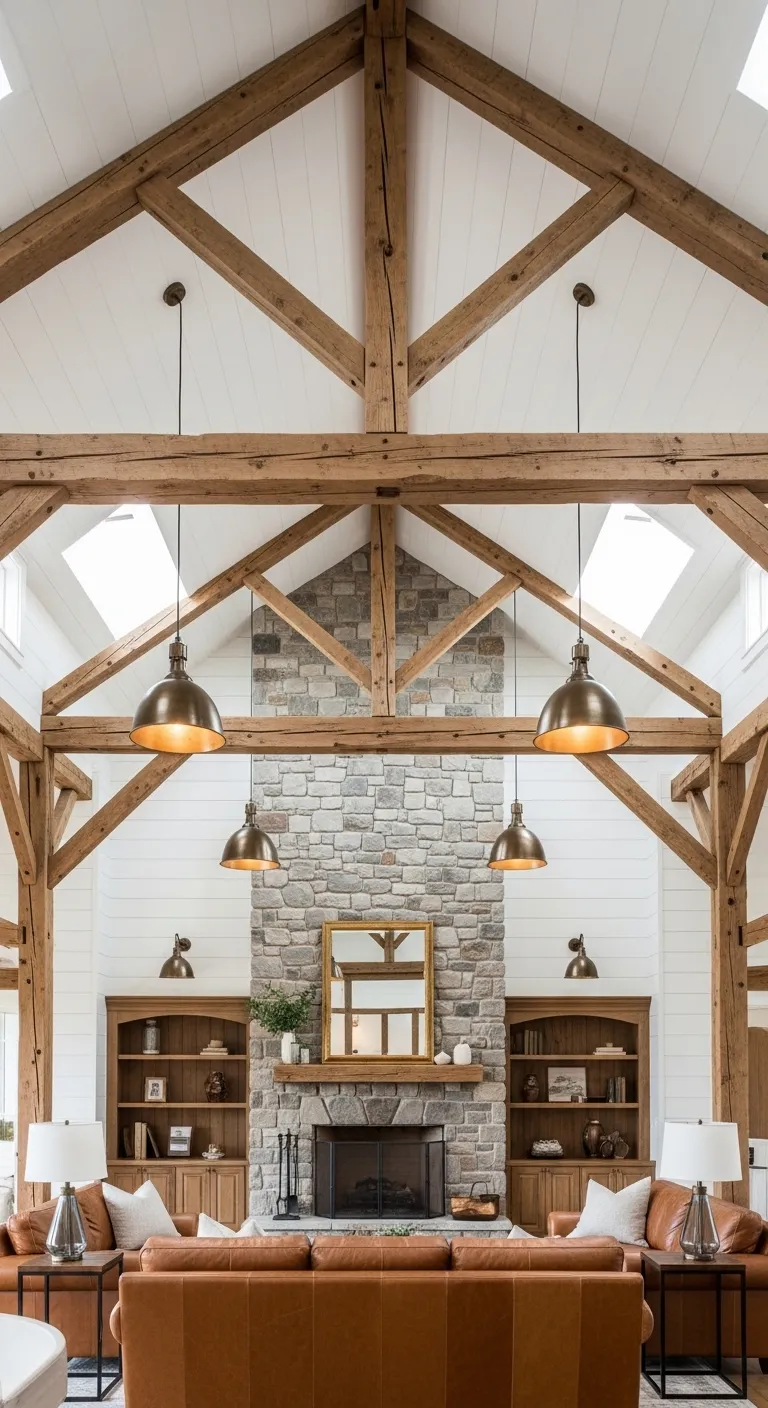
Heavy oak or pine trusses spanning the width of the great room give a distinctly farmhouse or barn-conversion feel. Choose reclaimed wood for character or new wood with a hand-hewn finish for a curated rustic look. The trusses create rhythm overhead and frame the volume naturally. Pair with whitewashed shiplap walls, a stone fireplace, and warm leather seating. Add a row of pendant lights hung from the trusses for evening warmth.
17. Indoor Tree or Oversized Plant
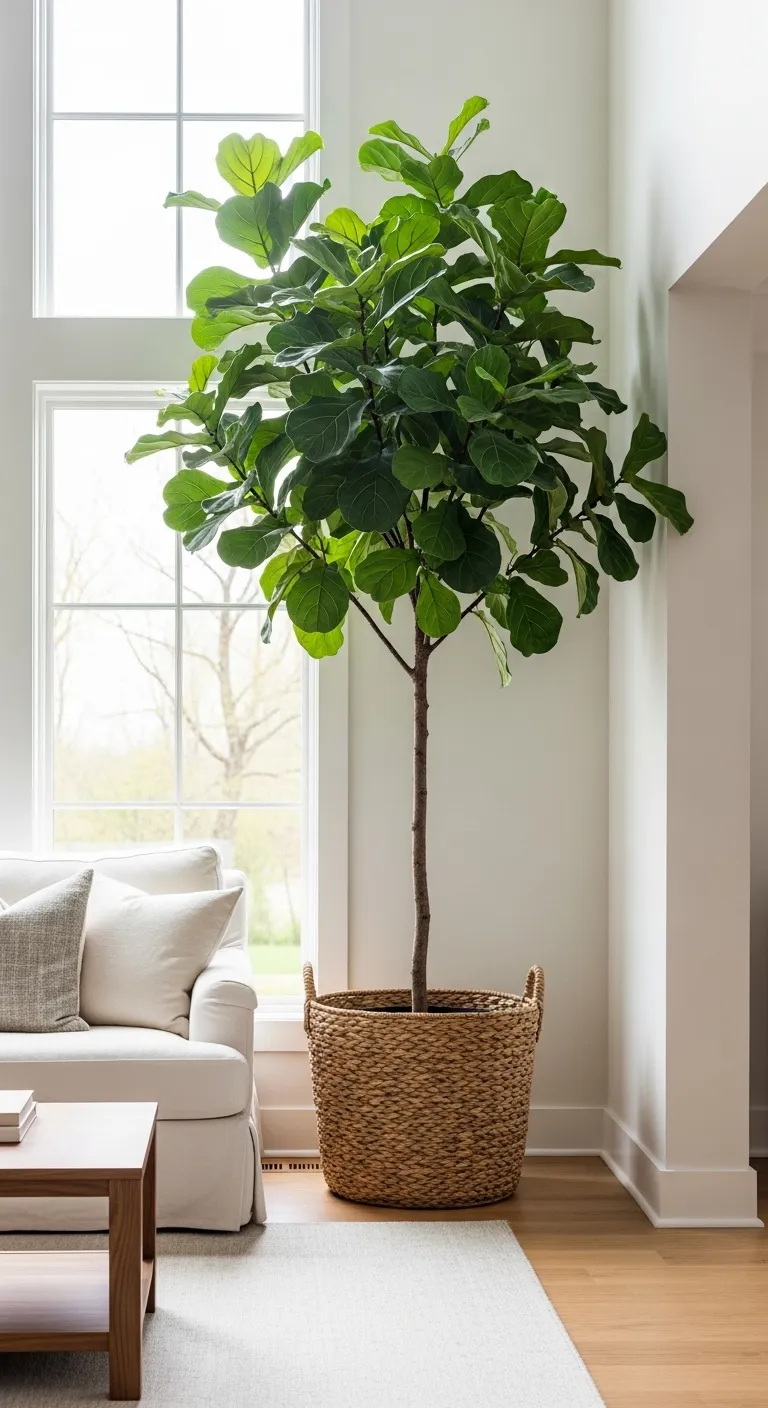
A real or artificial indoor tree — fiddle-leaf fig, olive, or large palm — placed near the window in a double-height room finally gives those vertical proportions a living focal point. The tree should be at least eight to ten feet tall to read in scale with the room. Choose a substantial woven basket or large terracotta pot at the base for a grounded, natural look. The greenery brings movement and softness against hard architectural surfaces. Position to catch natural light from the largest window for both health and visual drama.
18. Floor-to-Ceiling Drapery in a Great Room
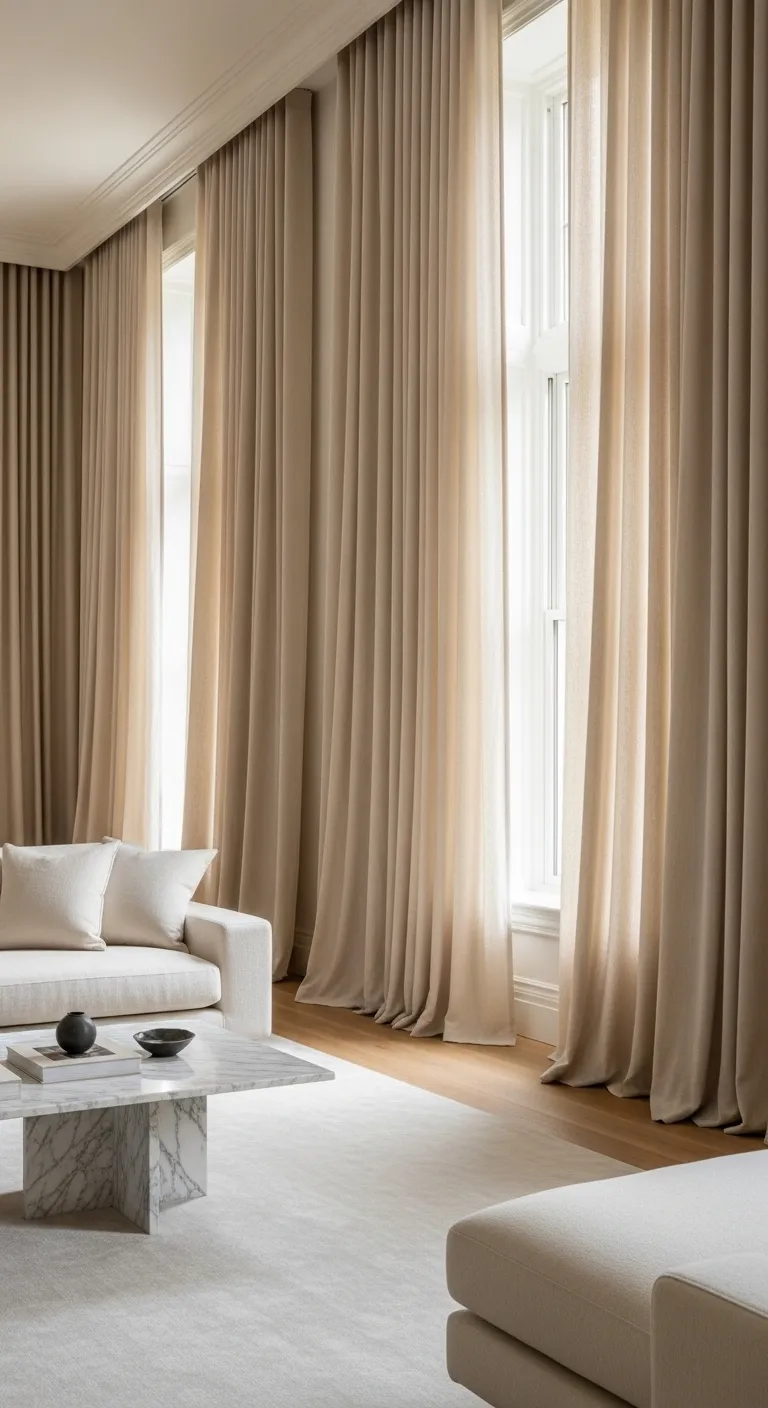
Lengths of soft natural linen drapery running floor-to-ceiling along an entire wall — even where there are no windows — soften the volume of a large room. The drapery adds texture, sound absorption, and a flowing visual element to balance hard surfaces. Choose warm ivory, oatmeal, or soft greige tones for a calming feel. The fabric layered against tall walls makes the room feel finished and intentionally dressed. Add a slim ceiling-mounted track for the cleanest, most architectural look.
19. Stacked Gallery Wall Climbing Two Stories
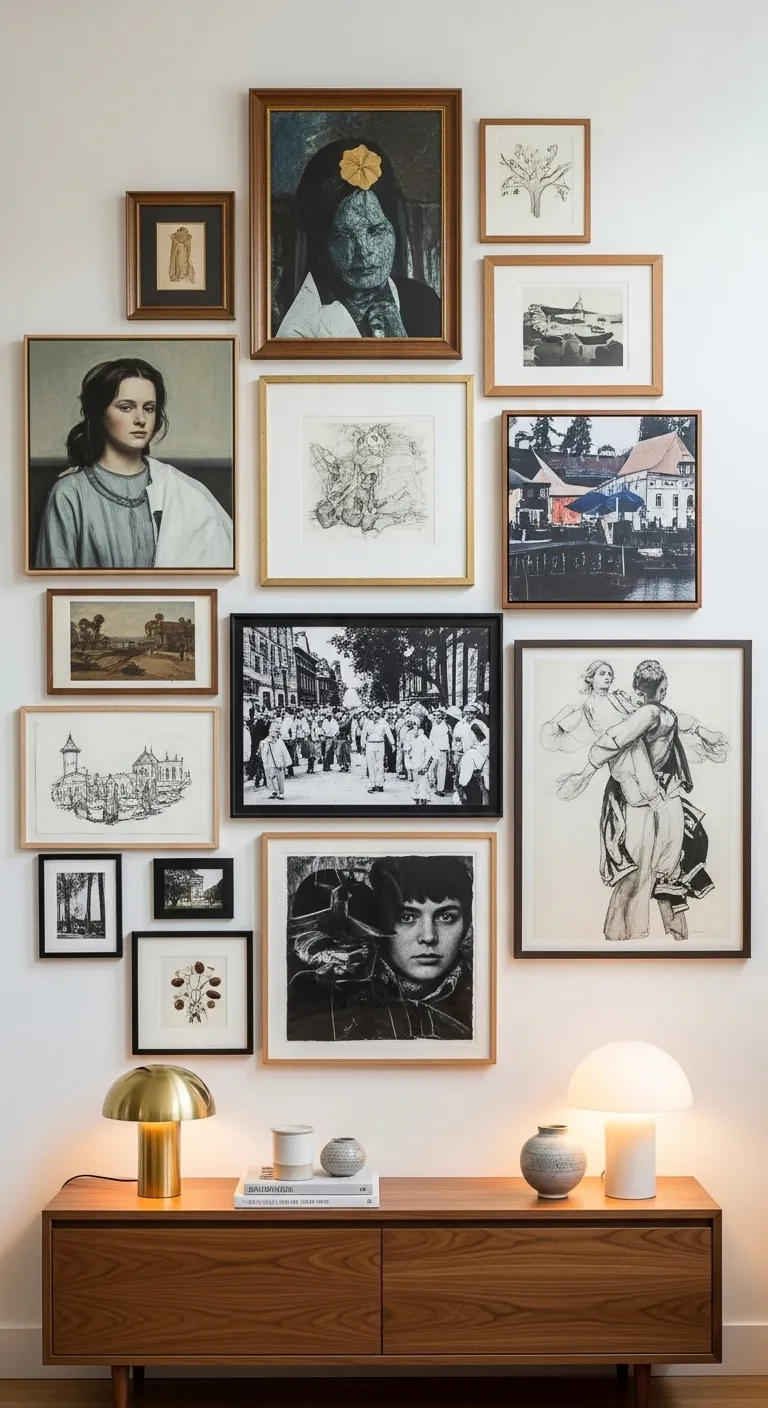
A salon-style gallery wall climbing the full height of a double-height room turns the volume into a personal art moment. Mix sizes, frames, and types — paintings, prints, photography, textiles — for layered visual interest. Stick to a tight color palette across the frames (all warm walnut, all aged brass, or a balanced mix) for cohesion. Start arrangement at the floor and build upward, leaving the smallest pieces at the top. This treatment is ideal for art collectors and travelers who want their stories visible.
20. Black Metal Pendant Cluster
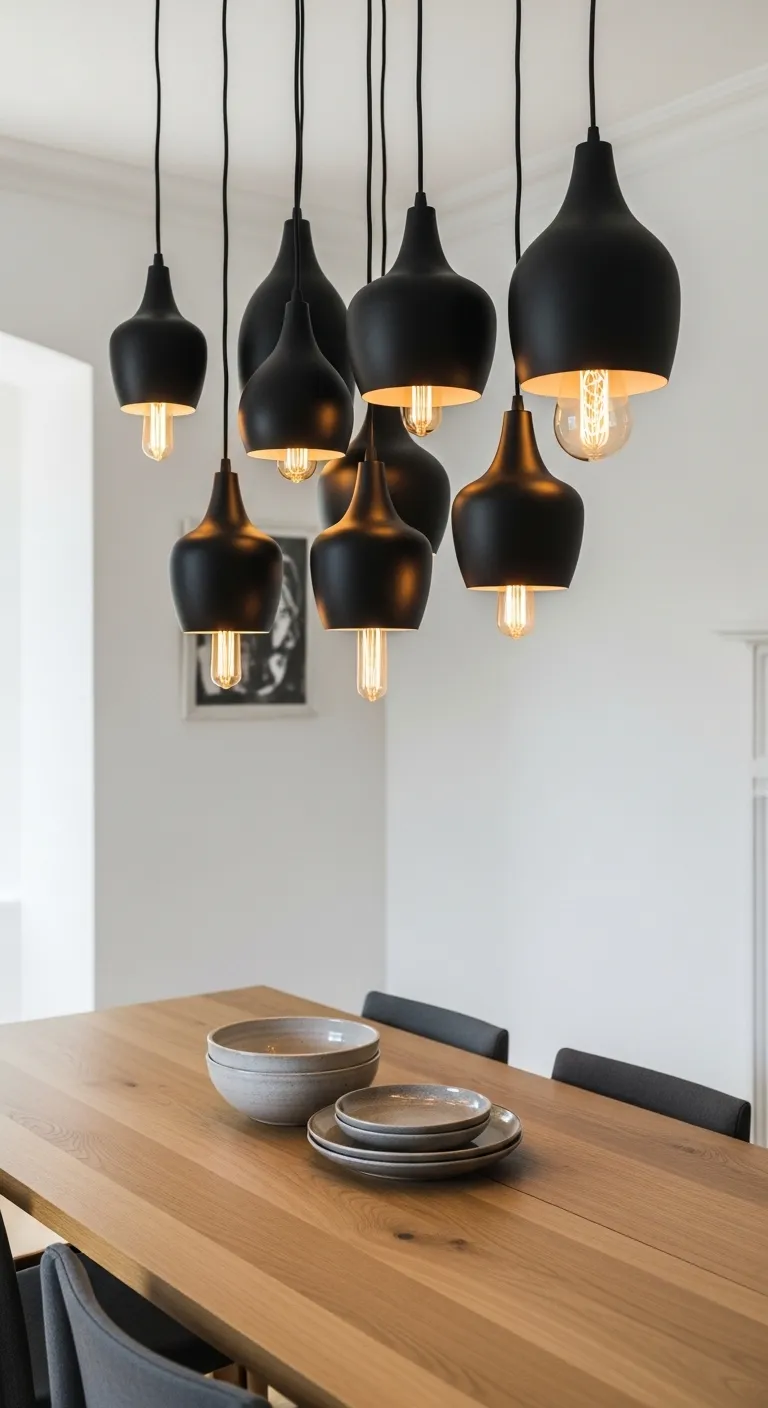
A cluster of multiple matte black or warm brass pendant lights hung at varying heights from a double-height ceiling fills the volume with sculptural lighting. Choose pendants of similar shape but different sizes for a curated rather than chaotic look. Group them above a dining table, kitchen island, or seating area as an evening focal point. The varying heights create depth and a constellation-like effect. Pair with simpler wall sconces below for layered, dimmable lighting throughout the room.
21. Loft Sleeping Nook Visible from Below
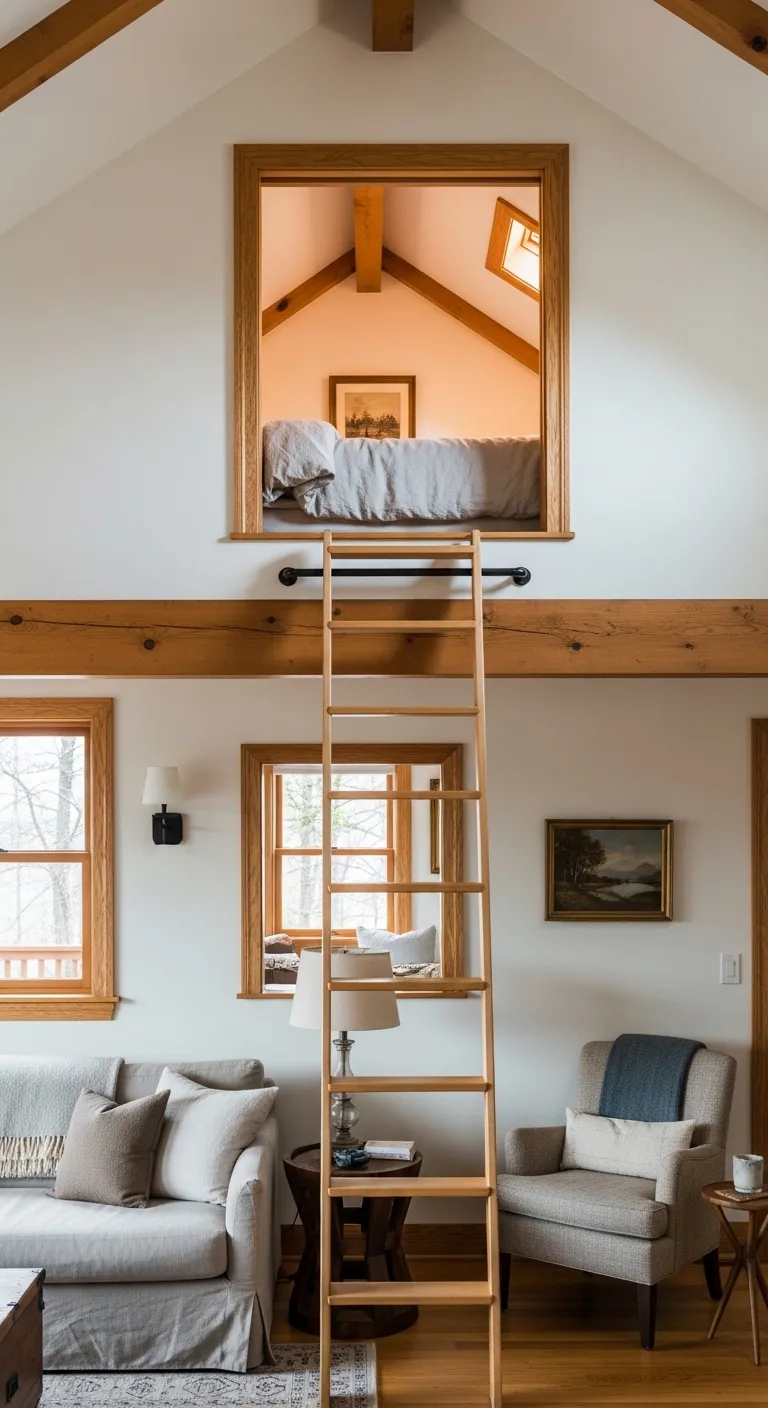
A small loft sleeping nook tucked into the volume above a single-story zone of a double-height room creates a charming, cabin-like feature. The nook stays cozy with its lower ceiling while the rest of the home feels open. Add a slim wooden ladder, a railing, and warm linen bedding to make it feel intentionally designed. The nook works beautifully in vacation homes, guest spaces, or kid-friendly homes. Frame the nook opening with warm wood beams to mark it visually from below.
22. Limewashed Double-Height Plaster Walls
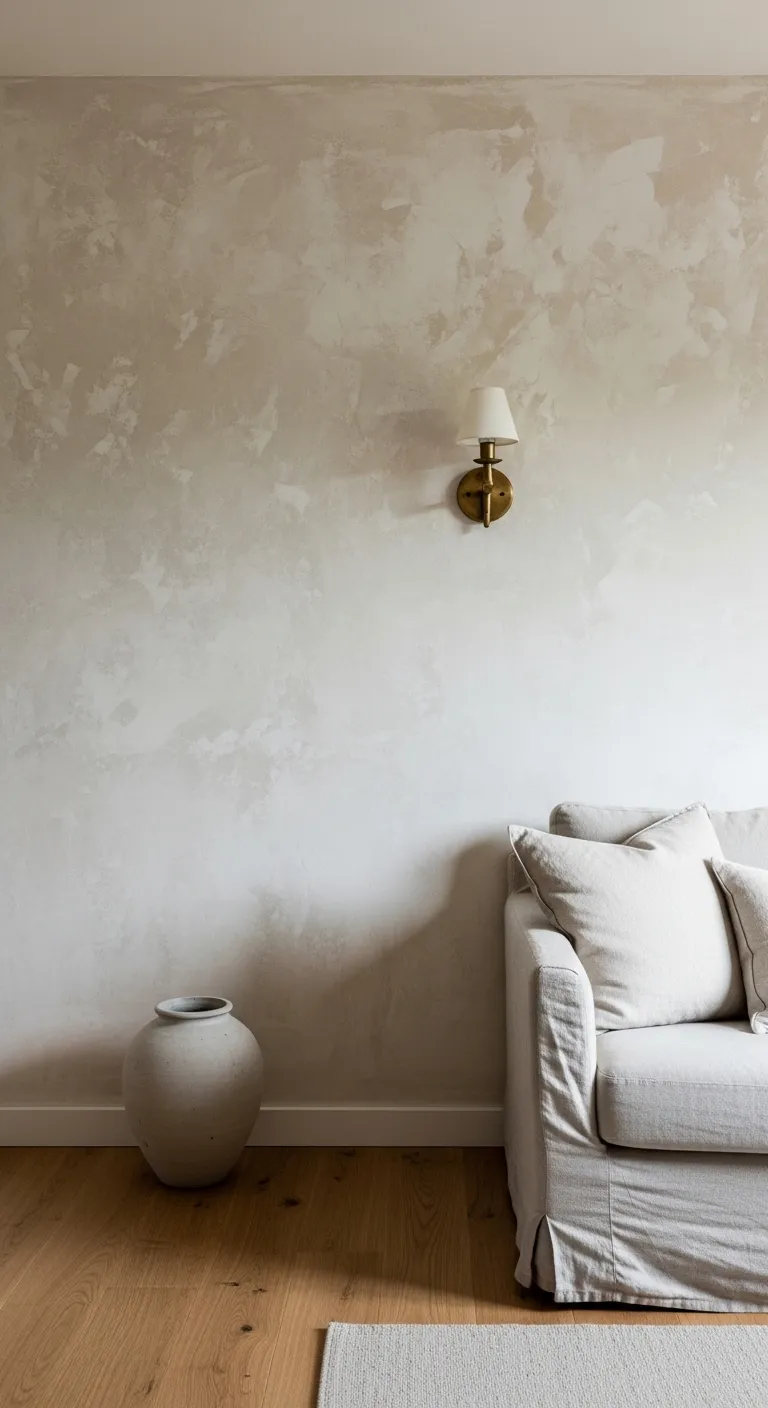
Limewashing the entire double-height plaster wall in a soft warm white, dusty sage, or chalky beige adds tonal depth and old-world character. The mottled, brushy finish catches light differently from morning to night, animating the wall itself. Pair with warm wood floors, simple linen seating, and aged brass hardware for a Mediterranean palette. The limewash feels distinctly hand-applied and intentional rather than flat or commercial. This treatment is forgiving over imperfect plaster and adds immediate character to new builds.
23. Floor-to-Ceiling Bookmatched Stone Slab
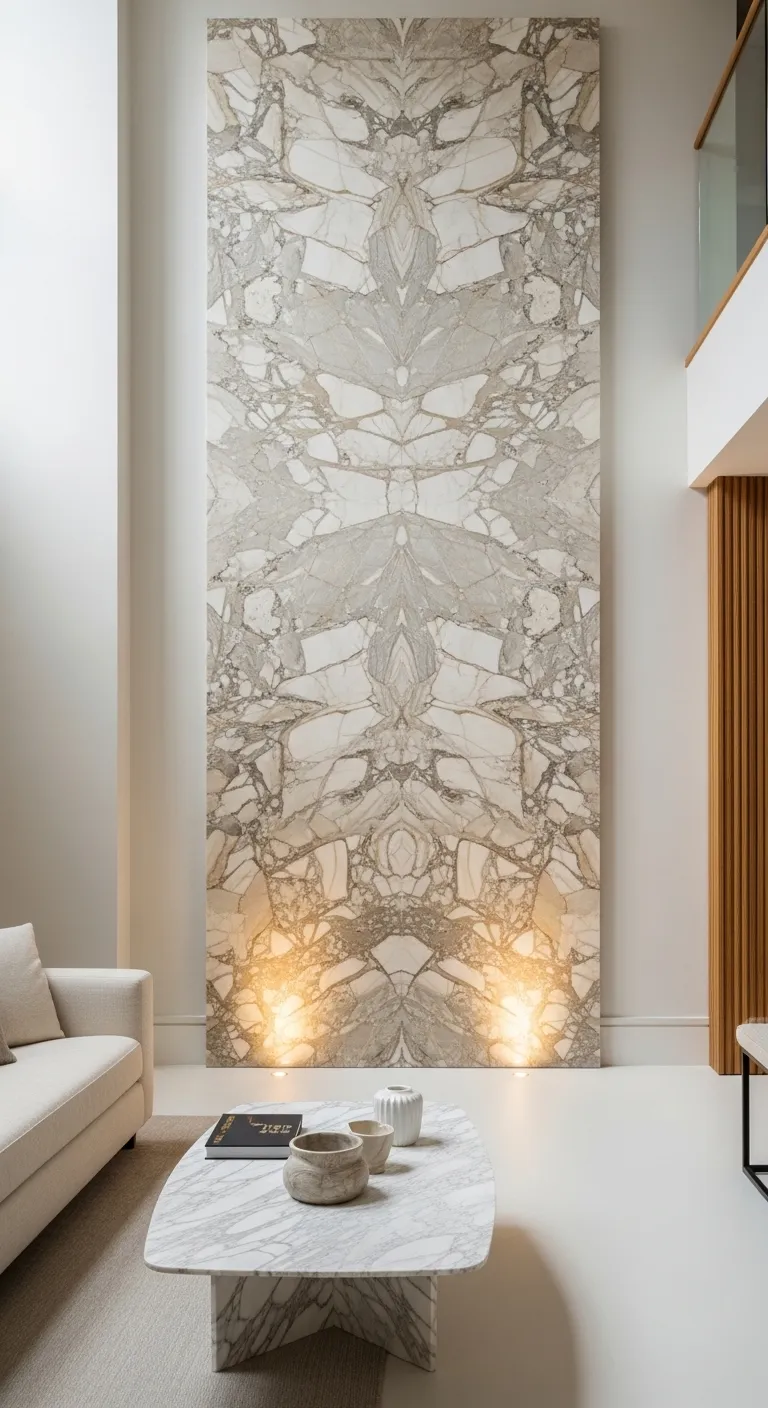
A single bookmatched stone slab — quartzite, marble, or onyx — running floor-to-ceiling on a featured wall reads pure architectural luxury. The mirrored veining creates a Rorschach-like pattern that fills the height with natural drama. Choose warm Calacatta, deep emerald quartzite, or honey-toned travertine depending on your overall palette. Light the wall with discreet floor uplights to make the veining glow at night. This is the kind of move that defines a home and rewards every glance.
Conclusion
These double-height ceiling designs prove tall vertical volume is an opportunity, not a styling problem to solve. Choose pieces of true scale — oversized art, dramatic lighting, full-length drapery, real indoor trees — rather than spreading small elements thin across the height. Save your favorite three concepts to Pinterest, walk through your space at different times of day to feel the natural light, and start picturing which design would suit your home best.
FAQs
How do you decorate a room with a double-height ceiling without it feeling empty?
Fill vertical volume with elements built to scale — oversized art, full-length drapery, large indoor trees, and dramatic lighting hung in the upper third of the ceiling. Double-height ceiling designs work best when the eye has something intentional to land on at every height. Avoid scattering small accessories along the walls, since they tend to disappear in tall rooms.
What kind of lighting works best for a double-height ceiling
Layer multiple light sources at different heights — a single oversized chandelier or pendant cluster from the apex, sconces at the wall mid-height, and table lamps at the seating level. This layered approach makes the room feel intentionally lit at every layer rather than hollow above. Choose dimmable fixtures so you can adjust the mood from morning bright to evening warm.
Are double-height ceilings hard to heat and cool?
Tall ceilings can challenge HVAC systems because warm air rises and cool air settles, but ceiling fans, zoned thermostats, and well-insulated construction balance the temperature. Add ceiling fans designed for tall rooms with extended down-rods to push warm air back down in winter. Heavy linen drapery on tall windows also reduces drafts and helps insulate the volume.
How do you fill a tall blank wall in a great room?
A single oversized abstract painting, a salon-style gallery wall climbing two stories, or a built-in bookcase with a sliding ladder all work beautifully. Grand interior spaces can also use a real or oversized faux indoor tree, a large woven tapestry, or a single architectural mirror to anchor a tall blank wall. Pick one substantial focal point rather than crowding the wall with smaller pieces.
What style suits double-height ceilings best?
Double-height ceilings adapt to almost any style — modern, traditional, Mediterranean, farmhouse, and industrial all benefit from the architectural drama. The materials you choose (stone, wood, plaster, glass) and the lighting style (modern pendant cluster vs. wrought-iron chandelier) define the aesthetic more than the height itself. Stay consistent with your home’s overall language so the great room feels like part of the whole.