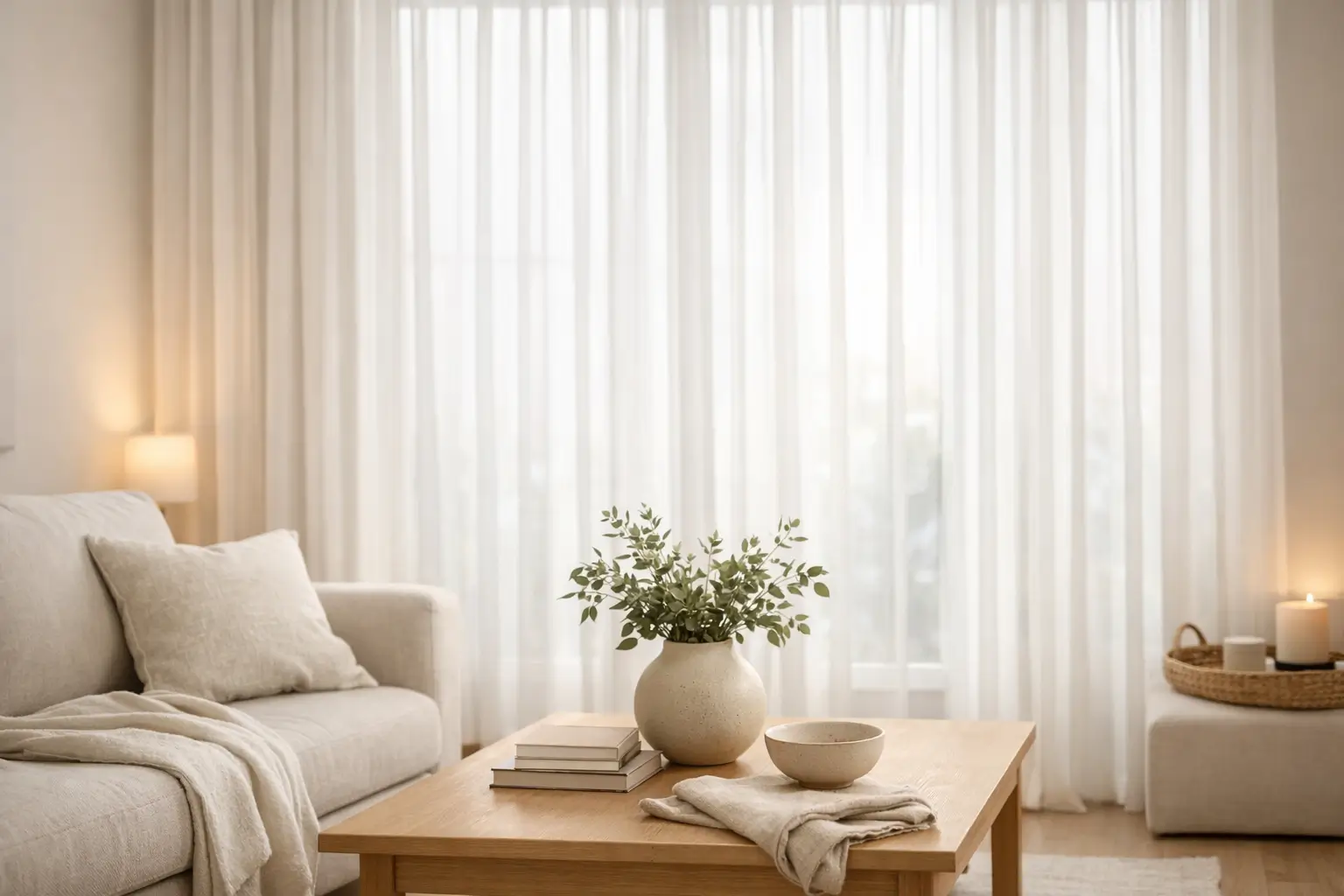
24 Roman Curtains That Add Sophisticated Style to Your Home
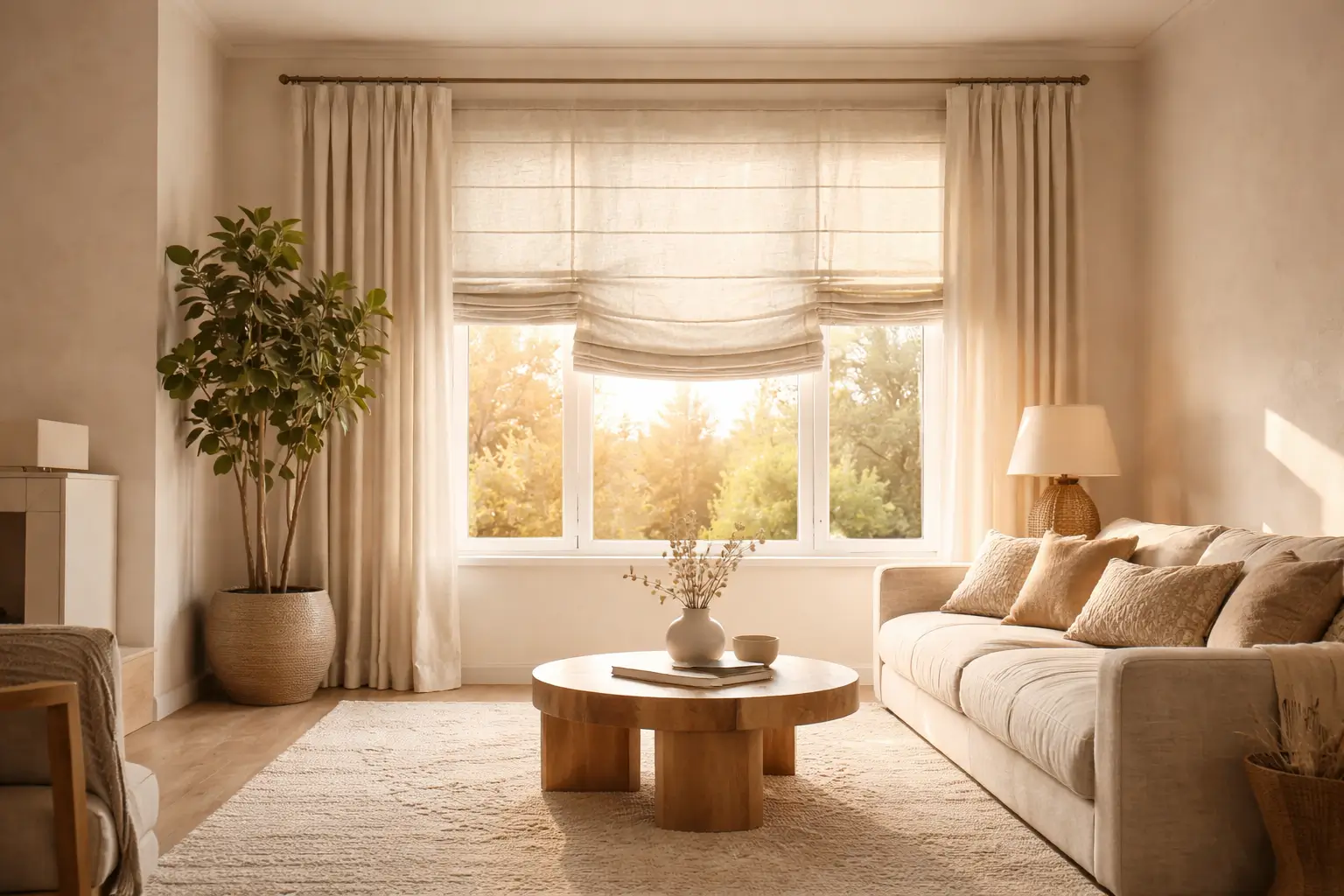
Roman curtains can completely change how a room feels without taking up extra space. If your windows look plain or your room feels unfinished, this simple upgrade can fix both fast. The right folds, fabric, and color can add depth, soften light, and create a polished look that feels calm and put together.
In this guide, you will find 24 fresh and practical Roman curtain ideas that bring a refined and stylish touch to your home. Each idea focuses on real details you can use right away—like fabric choices, color pairings, textures, and lighting effects. Whether your style is modern, classic, or cozy, these ideas will help you create a space that looks thoughtfully designed and easy to love.
1. Soft Linen Roman Curtains for a Calm, Airy Feel
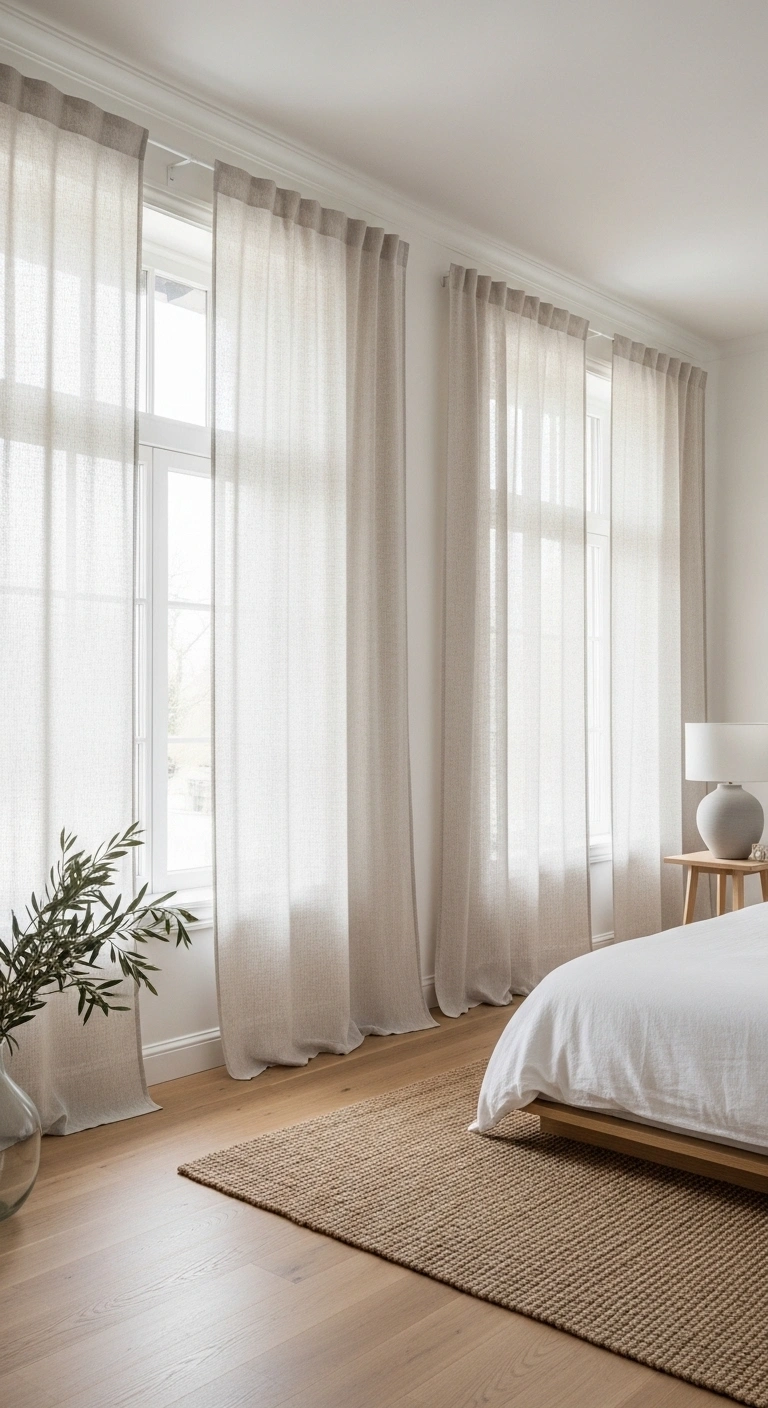
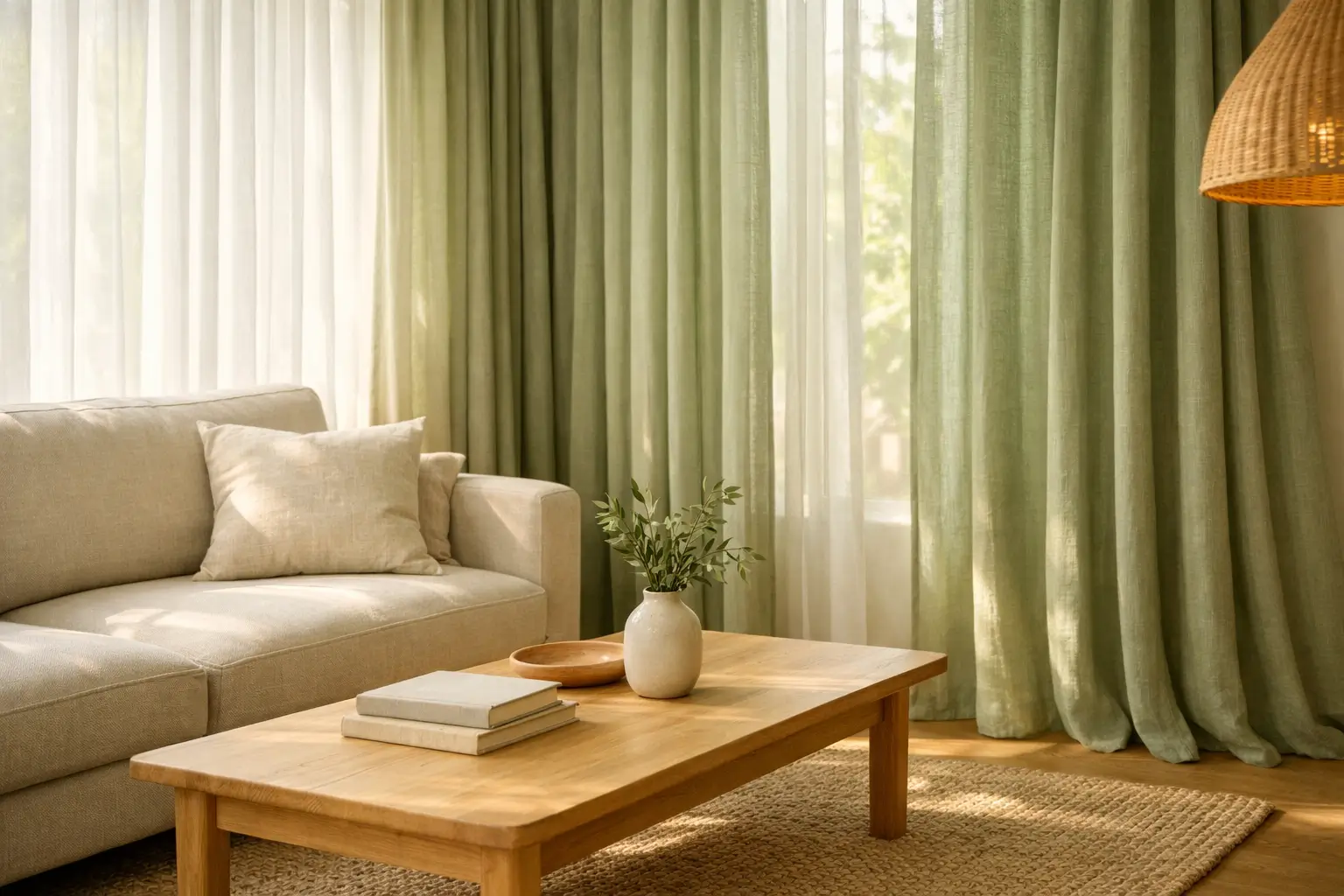
Soft linen Roman curtains create a light and peaceful mood in any room. Choose off-white, warm beige, or pale grey tones to let natural light filter through gently. The fabric should feel slightly textured, not stiff, so the folds fall naturally and look relaxed instead of rigid.
Pair these curtains with wooden furniture or light oak flooring to enhance the airy look. Add sheer layering behind them if you want more light control without losing brightness. This setup works especially well in bedrooms and living rooms where you want a quiet, uncluttered feel.
For a more styled finish, use matte black or brushed brass curtain hardware. Keep the surrounding décor minimal so the soft folds remain the main visual focus.
2. Velvet Roman Curtains for a Rich, Luxurious Look
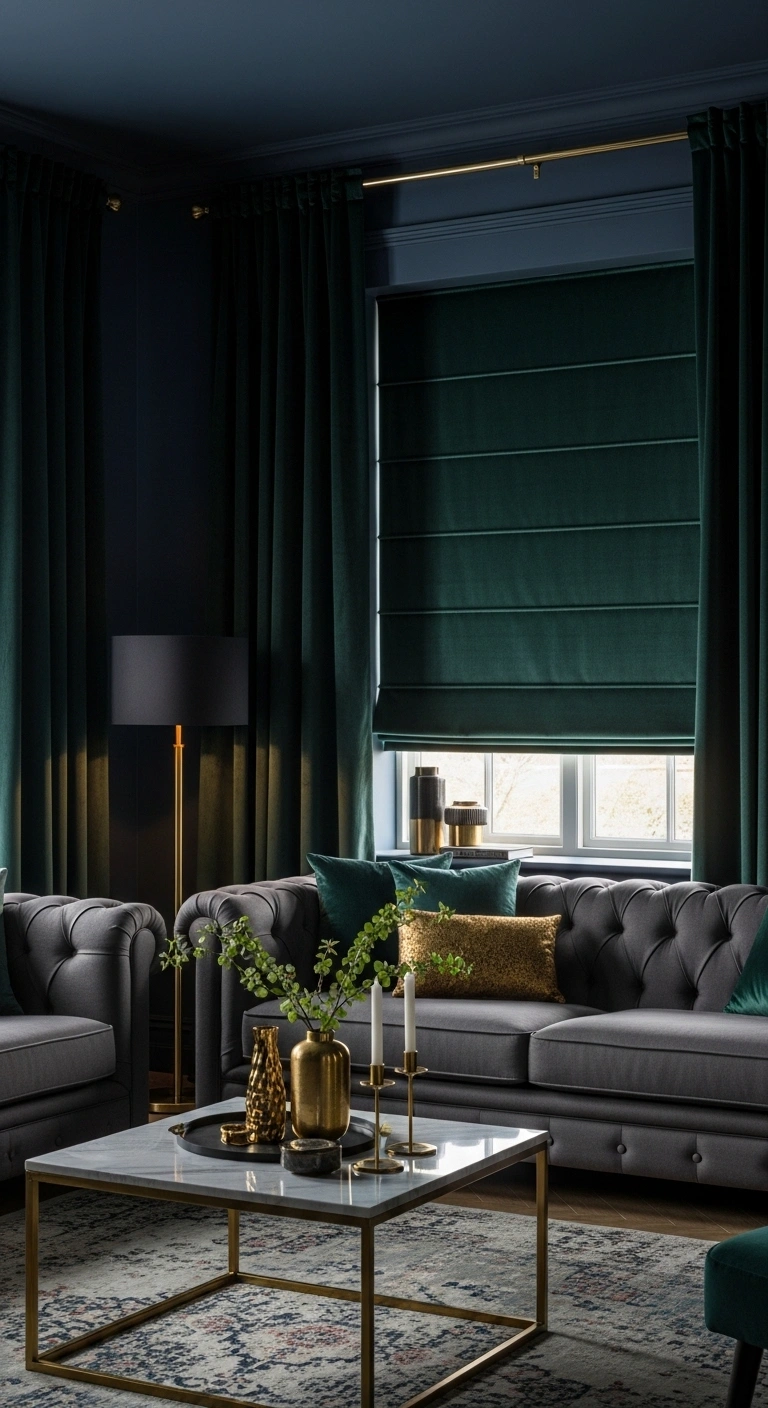
Velvet Roman curtains instantly add depth and richness to a space. Deep colors like emerald green, navy blue, or burgundy work best to create a bold yet elegant statement. The thick texture absorbs light slightly, making the room feel cozy and refined.
Use these in spaces where you want a strong visual anchor, like a formal living room or a master bedroom. Pair with metallic accents such as gold lamps or brass handles to enhance the luxurious feel.
Make sure the folds are structured and neat so the fabric doesn’t look heavy or bulky. Keep surrounding walls neutral to let the velvet stand out without overwhelming the room.
3. Neutral Layered Roman Curtains for Depth and Softness
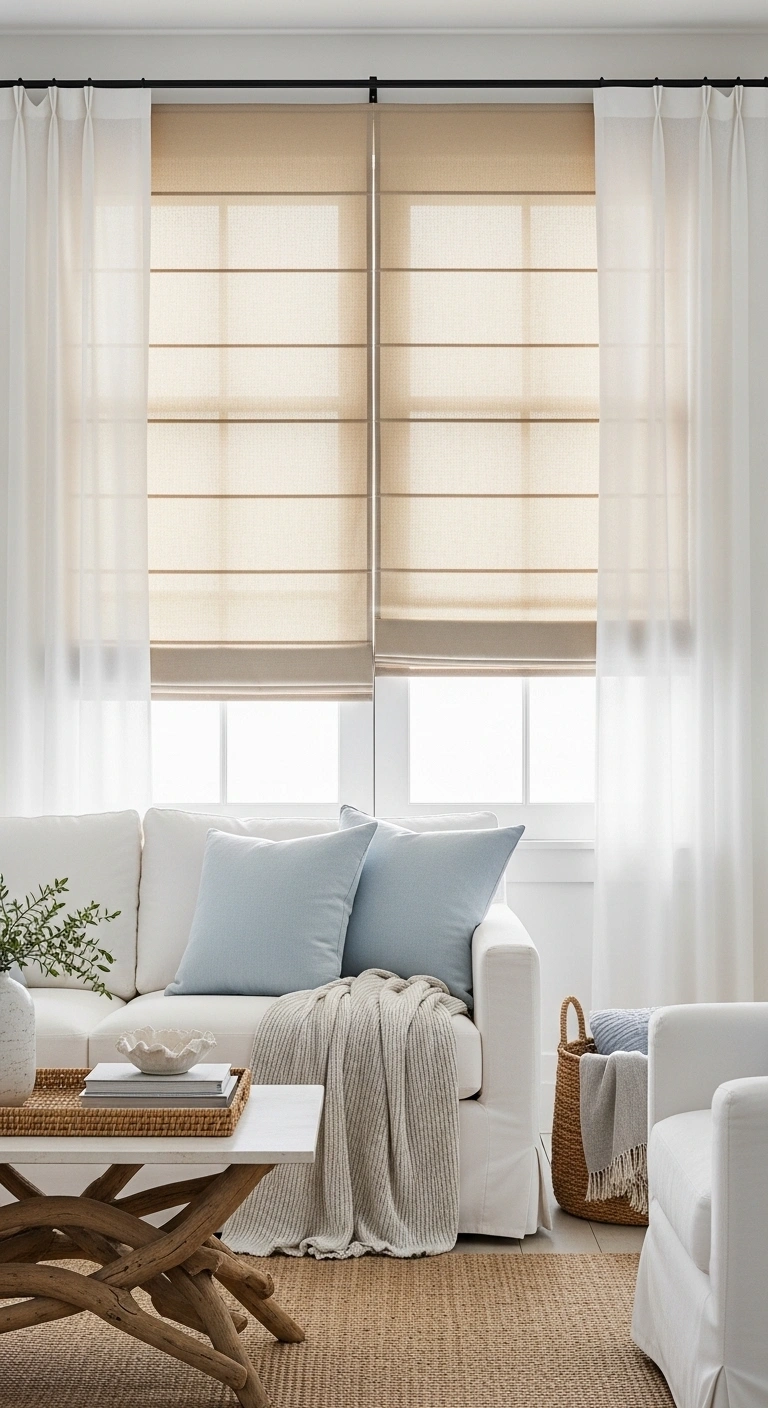
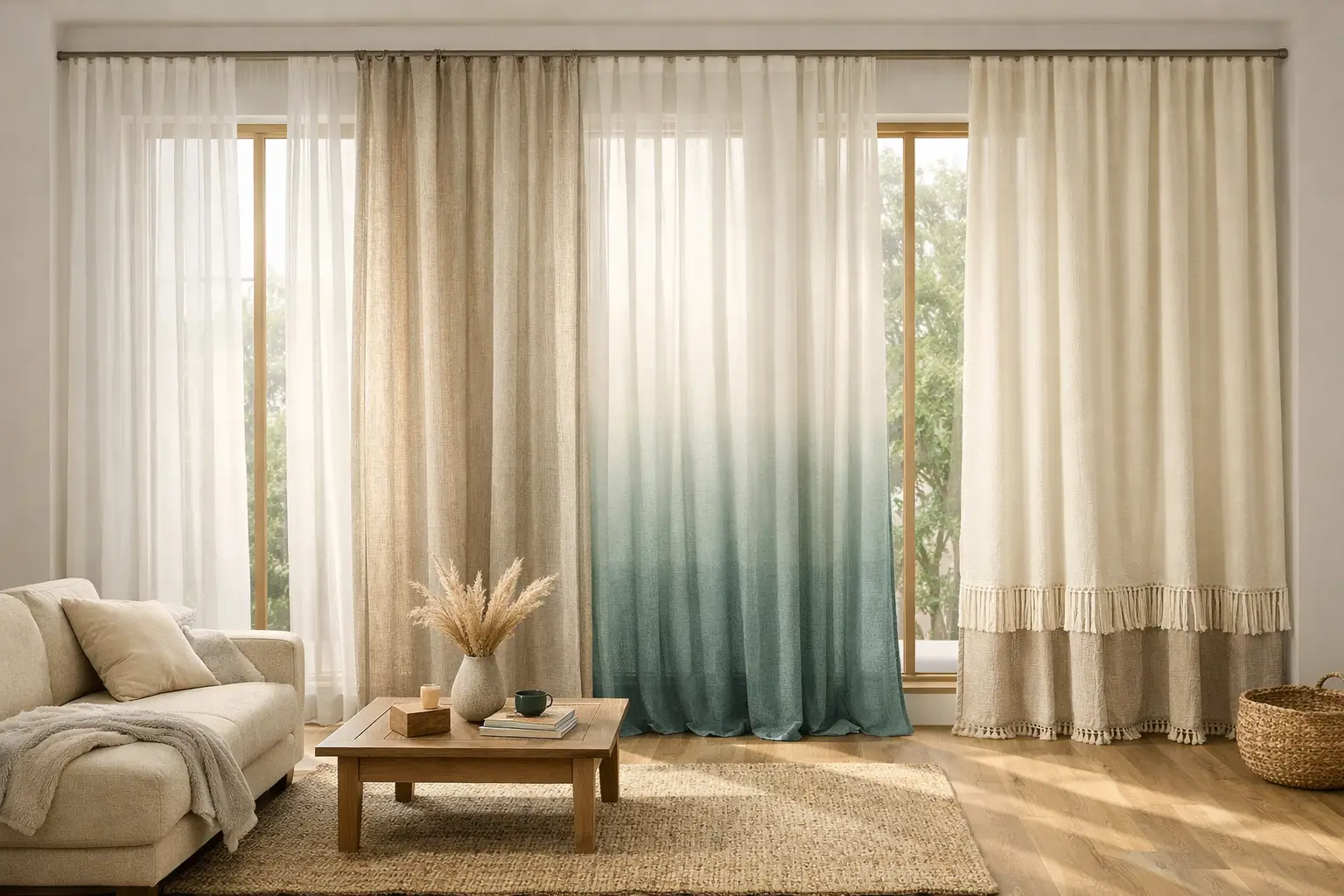
Layering Roman curtains with sheer panels adds both function and style. Start with a neutral Roman shade in cream or taupe, then add sheer white curtains underneath. This combination allows you to control light while creating a soft, layered look.
The contrast between solid fabric and sheer material gives depth without adding clutter. It works well in modern and transitional interiors where balance is key.
Use warm lighting near the window to highlight the layers in the evening. Keep furniture simple and let the window treatment become a quiet focal point.
4. Patterned Roman Curtains for Subtle Visual Interest
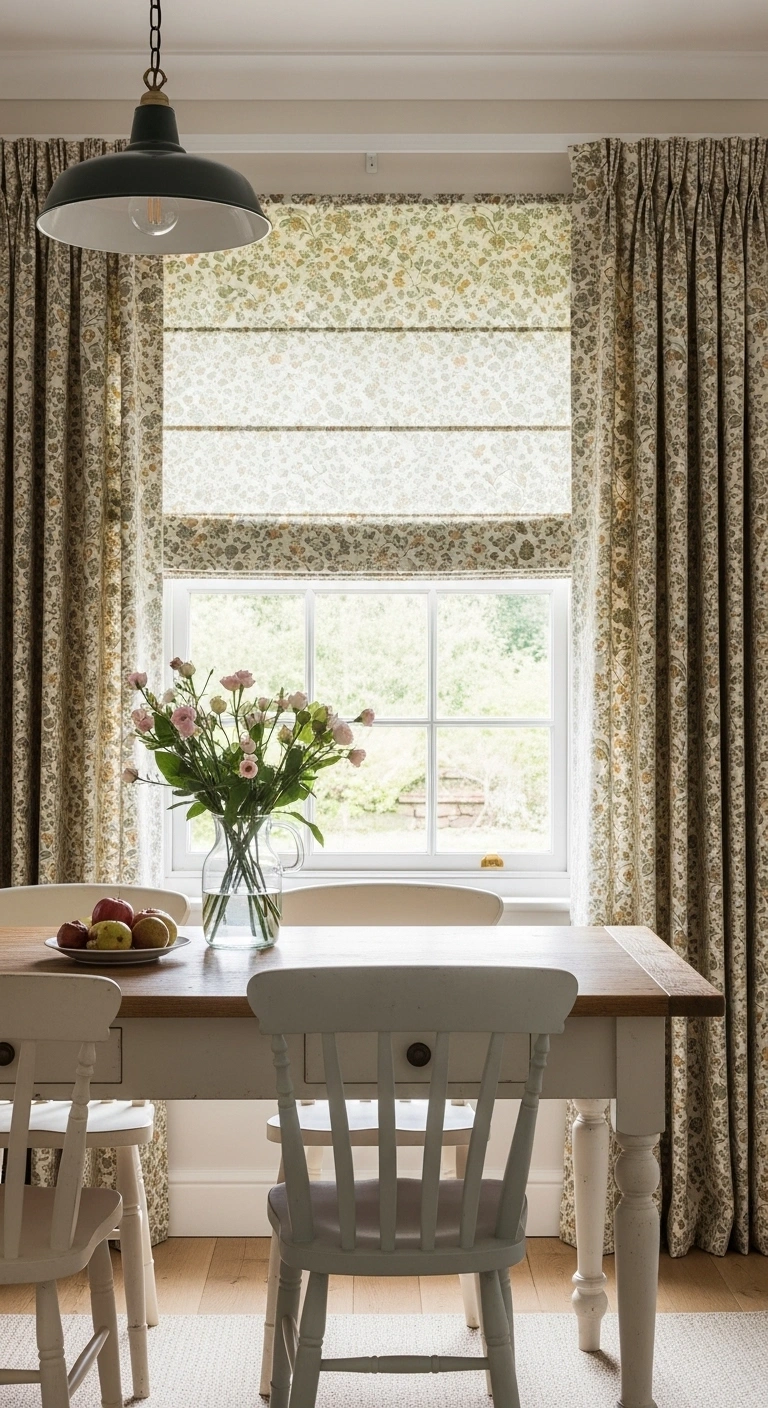
Patterned Roman curtains add personality without taking over the room. Choose small-scale patterns like stripes, soft florals, or geometric prints in muted tones. This keeps the design interesting but still sophisticated.
Use these in rooms that feel too plain or flat. Pair with solid-colored furniture to avoid visual overload. A simple color palette—like beige, white, and soft blue—helps keep everything cohesive.
Keep the folds clean so the pattern looks intentional and not distorted. This idea works especially well in dining areas and home offices where you want a bit of character.
5. Monochrome Roman Curtains for a Clean Modern Style
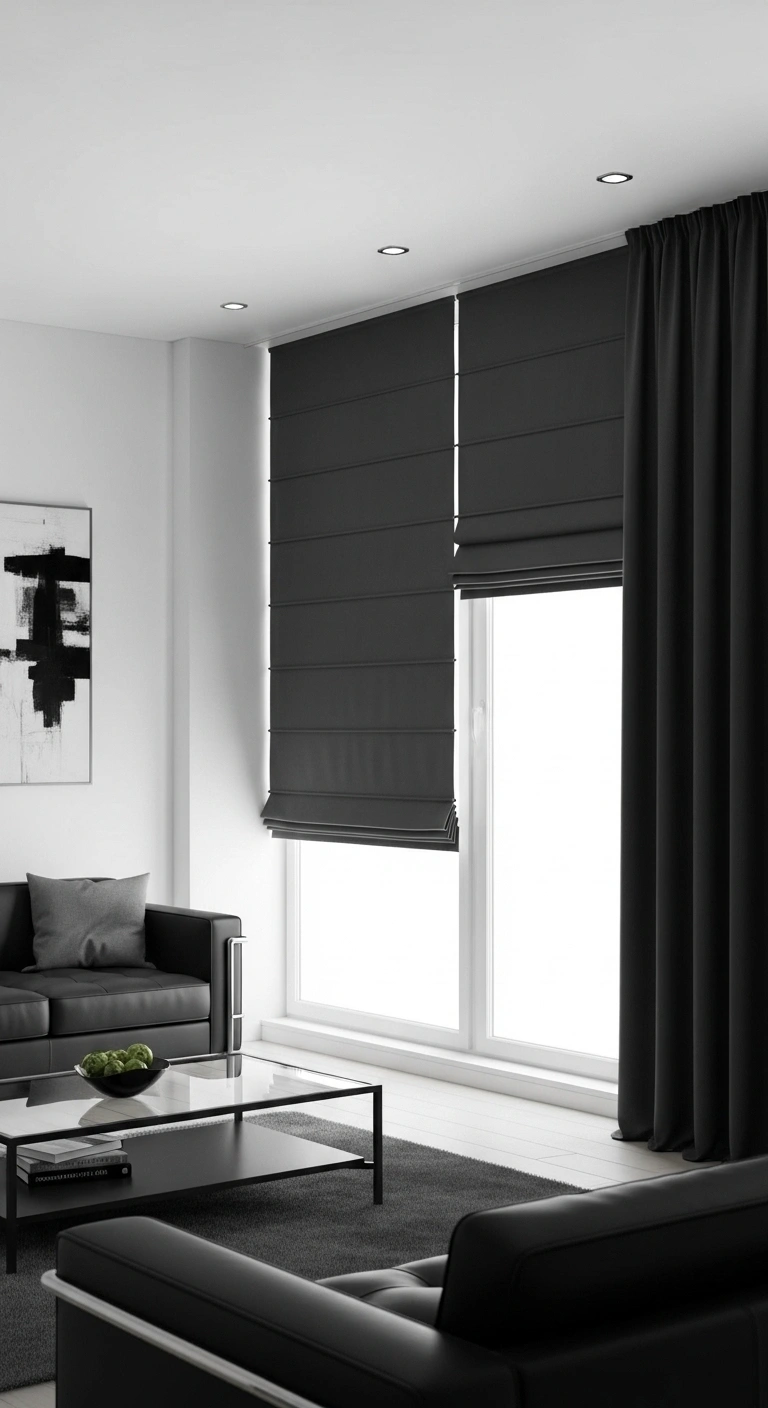
Monochrome Roman curtains use a single color palette to create a sleek and modern look. Think shades of grey, black, or white with minimal contrast. The simplicity keeps the space feeling clean and structured.
Choose a smooth fabric like cotton or a linen blend for a crisp finish. Pair with minimalist furniture and straight lines to enhance the modern feel.
Add texture through rugs or cushions so the room doesn’t feel flat. This approach works best in apartments or smaller spaces where visual clutter can make the room feel cramped.
6. Roman Curtains with Contrasting Borders
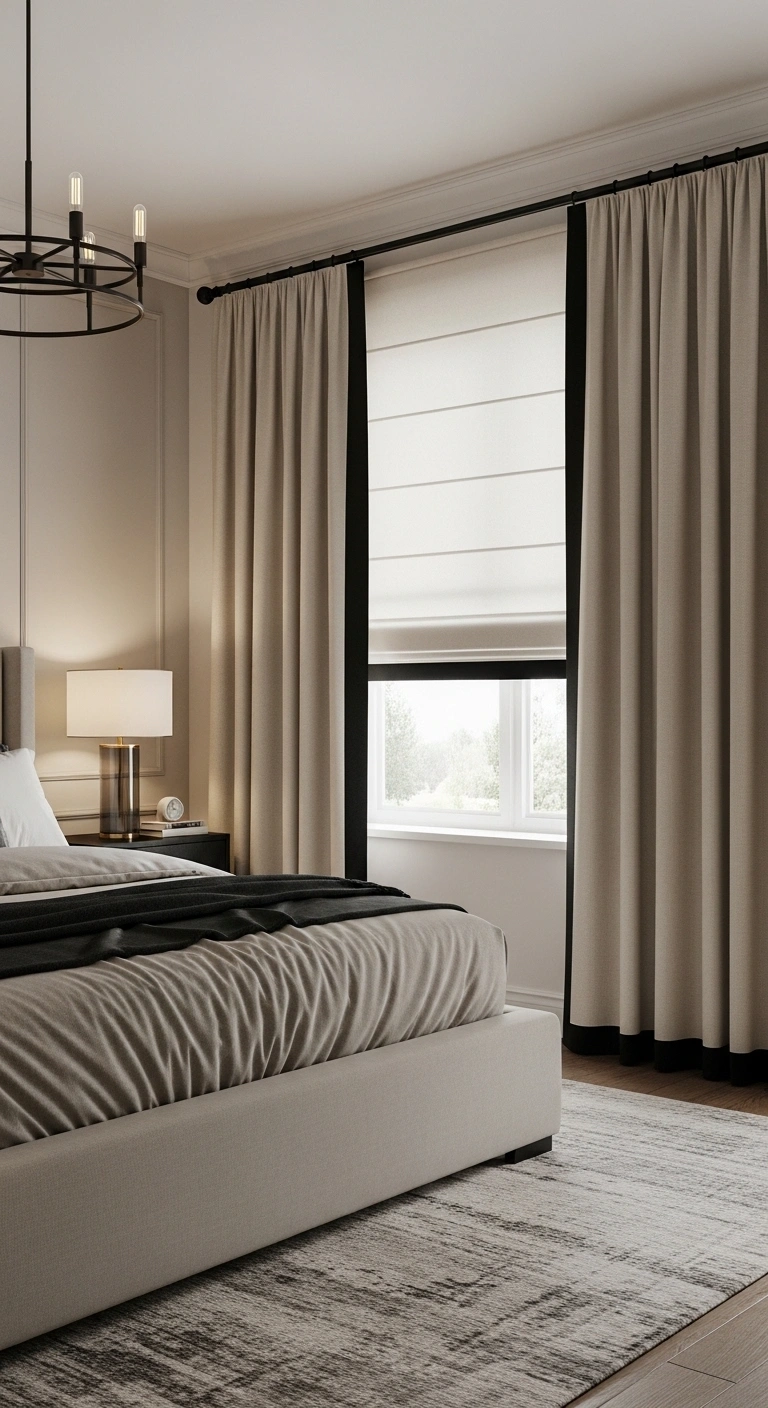
Adding a contrasting border gives Roman curtains a tailored and custom look. Use a neutral base fabric and add a darker or bolder trim along the edges. This small detail makes the curtains feel more designed and intentional.
For example, a cream curtain with a black border creates a sharp, elegant contrast. You can also use soft tones like taupe with dusty blue for a subtle effect.
This idea works well in living rooms and dining spaces where you want a refined finish without going too bold. Keep the rest of the décor simple so the border detail stands out.
7. Bamboo Roman Shades for Natural Texture
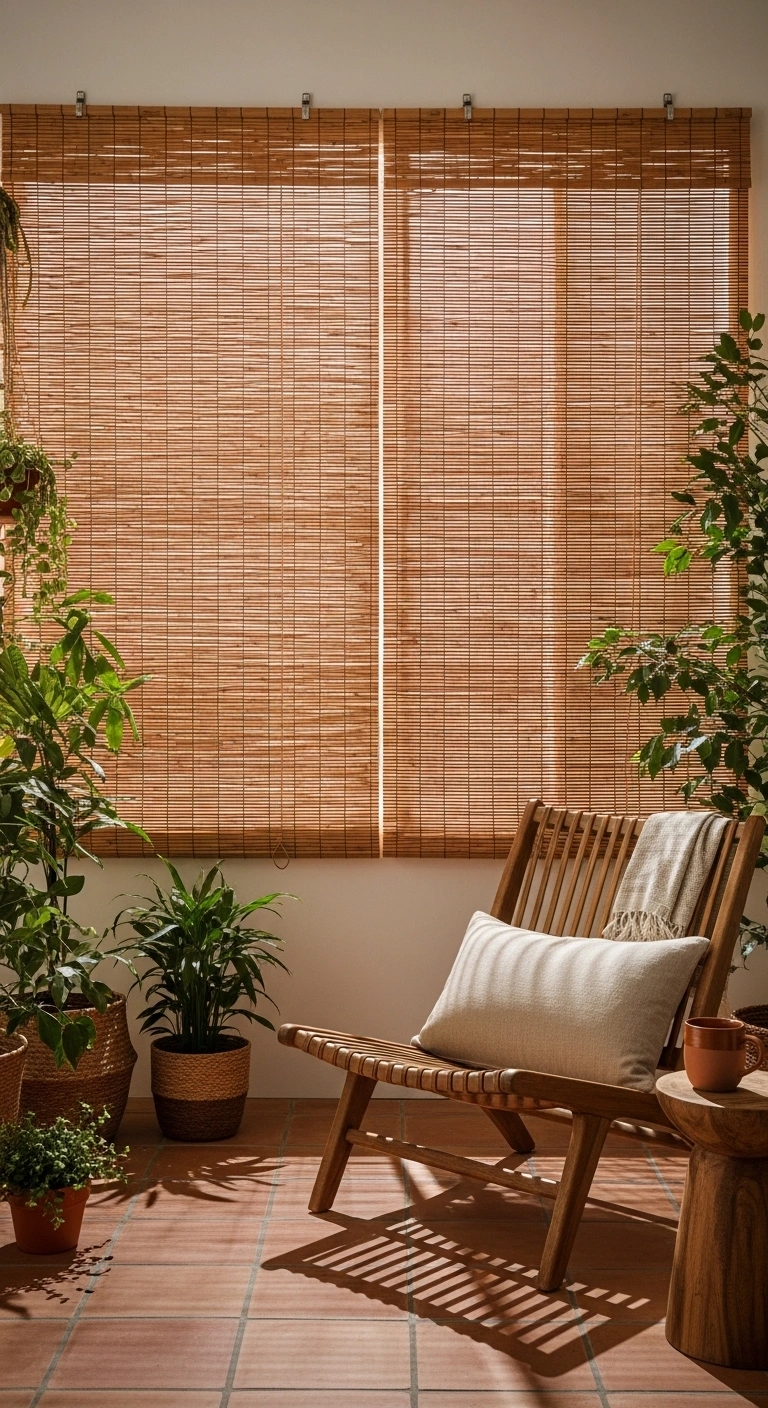
Bamboo Roman shades bring warmth and natural texture into your space. The woven material creates soft patterns of light and shadow when sunlight passes through.
Use these in rooms with earthy tones, wooden furniture, or plants. They pair well with neutral walls and organic materials like jute rugs or linen cushions.
For better light control, add a fabric liner behind the bamboo. This keeps the natural look while improving privacy. The texture adds interest without needing extra decoration.
8. Floor-to-Window Roman Curtains for a Taller Look
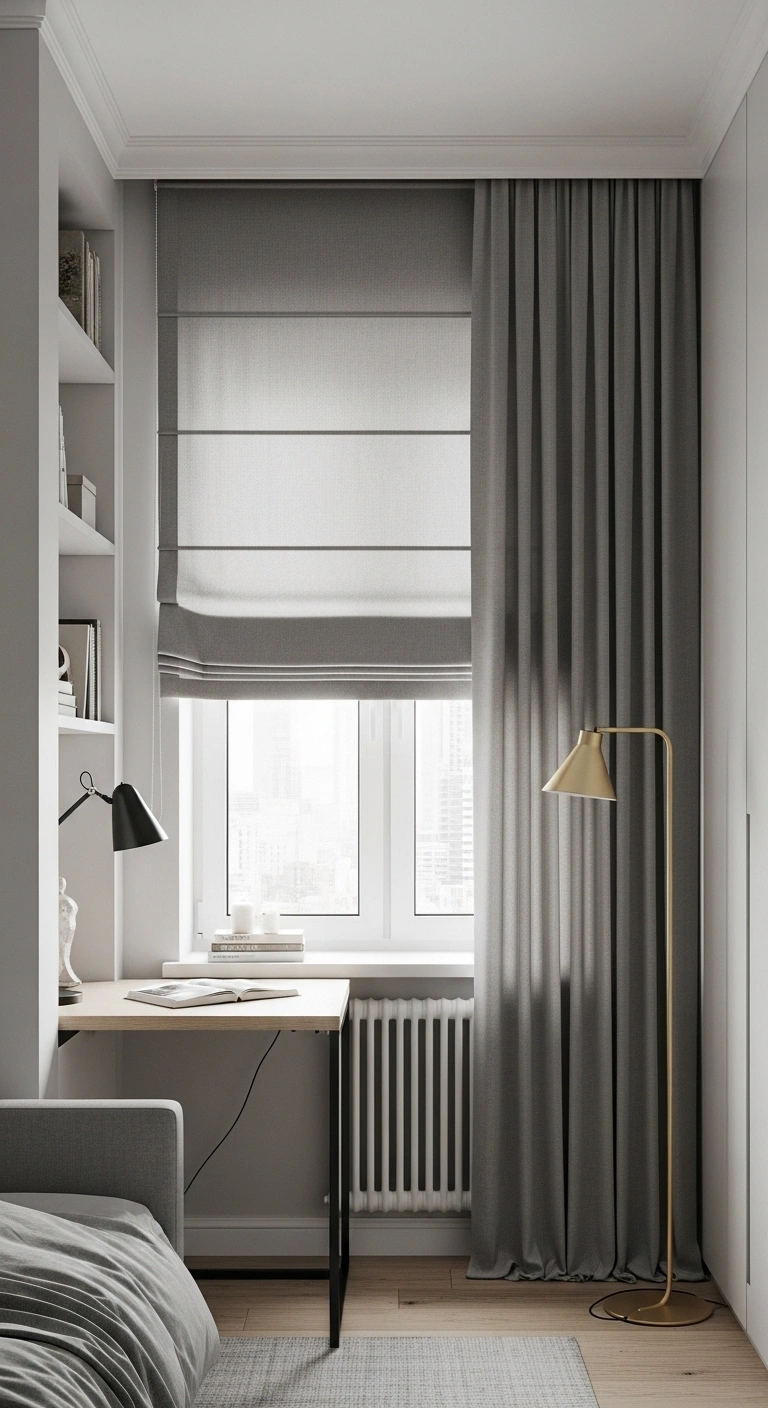
Installing Roman curtains higher than the window frame makes the room feel taller. Mount them closer to the ceiling so the fabric draws the eye upward.
Choose long, structured folds that stack neatly when raised. This keeps the look clean and avoids bulk at the top.
Use light colors to enhance the height effect, especially in smaller rooms. Pair with vertical elements like tall lamps or shelving to reinforce the sense of space.This simple placement trick can make a big visual difference without changing furniture or layout.
9. Sheer Roman Curtains for Soft Light Diffusion
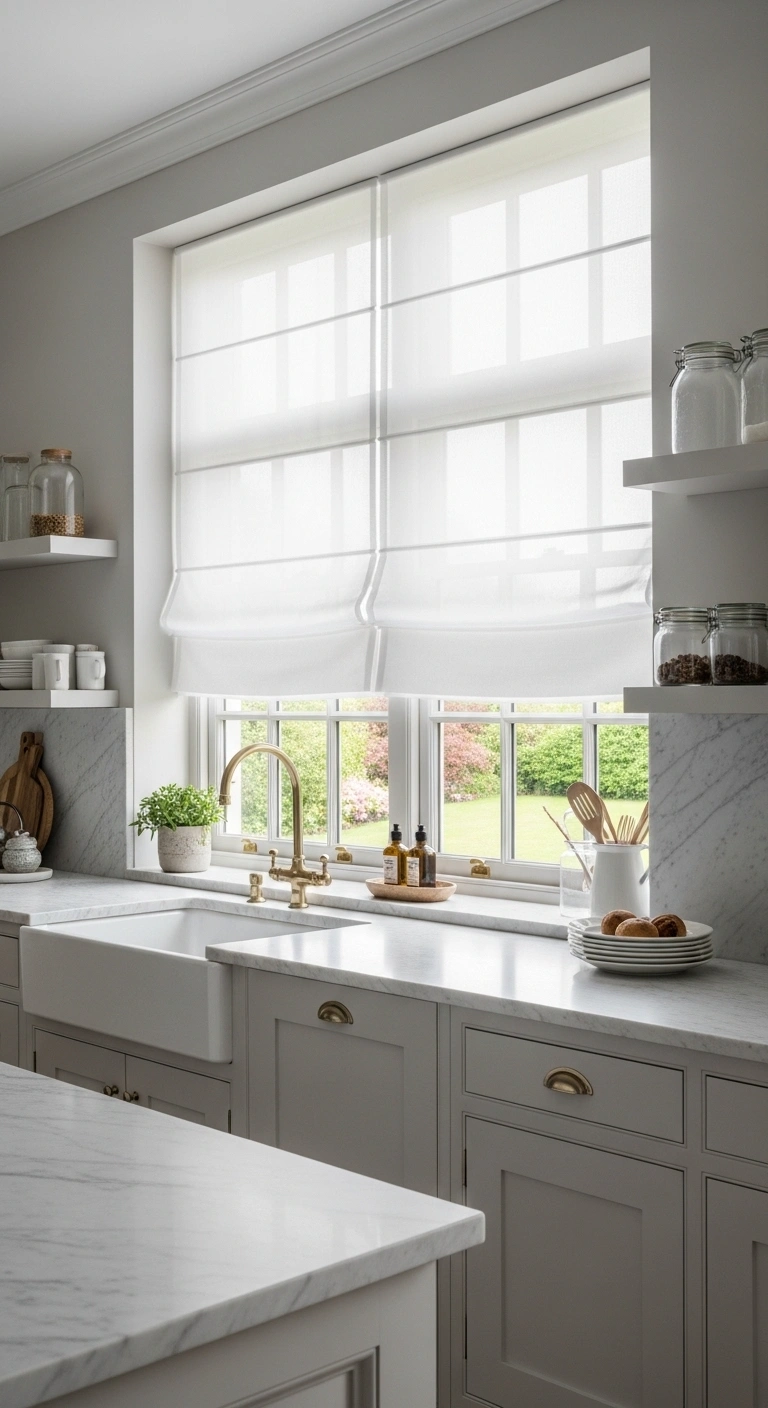
Sheer Roman curtains gently filter sunlight, creating a soft glow throughout the room. Choose lightweight fabrics like voile or chiffon in white or ivory tones.
These work best in spaces where you want natural light without harsh brightness, such as living rooms or kitchens. The soft folds add texture while keeping the space open and fresh.
Layer with blackout curtains if you need privacy at night. During the day, let the sheer fabric remain the focus for a light, breezy feel.
10. Roman Curtains in Earthy Tones for a Grounded Look
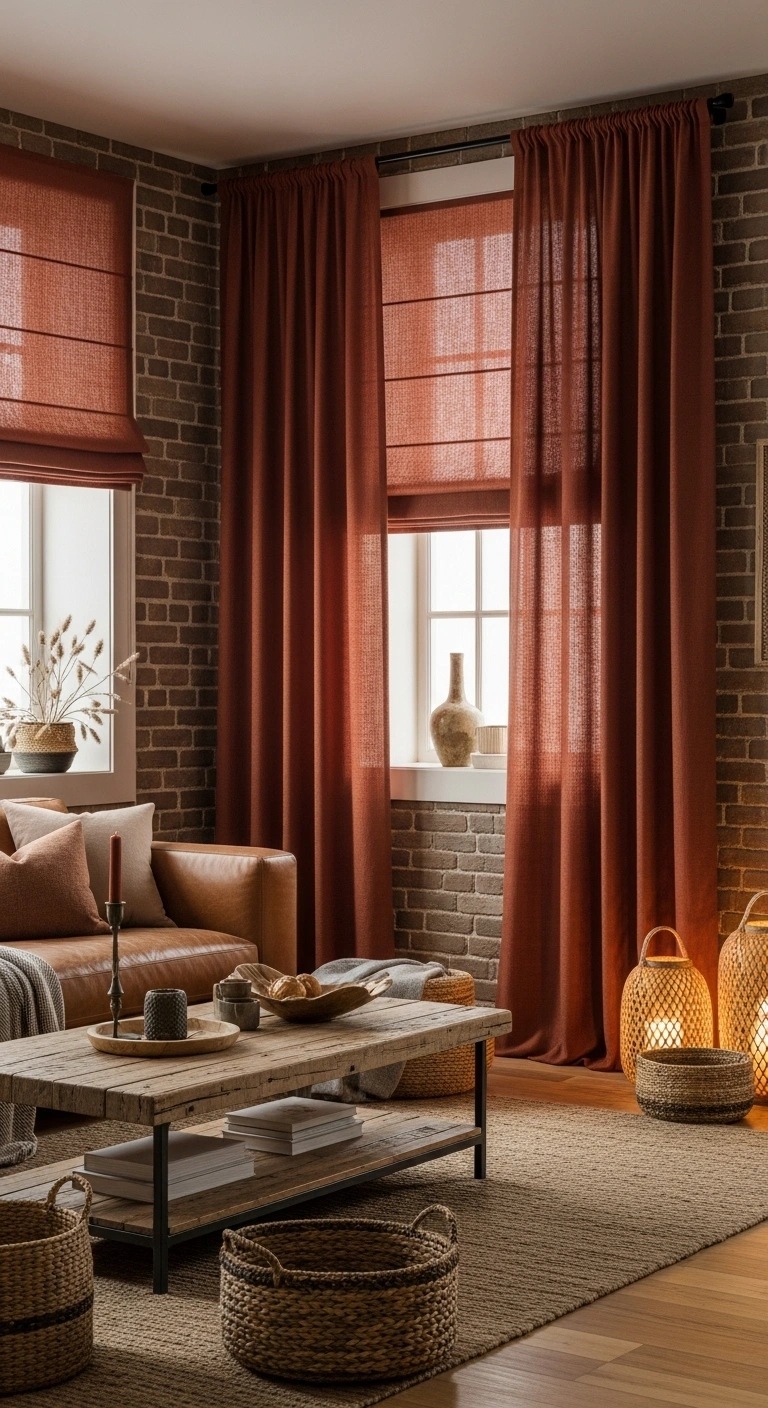
Earthy tones like terracotta, olive green, and warm brown create a grounded and cozy atmosphere. These colors connect well with natural materials and add warmth without feeling heavy.
Use textured fabrics to enhance the richness of the tones. Pair with wooden furniture, woven baskets, and soft lighting to complete the look.
This style works well in living rooms and bedrooms where comfort matters. Keep the color palette consistent to maintain a calm and cohesive feel.
11. Dual-Tone Roman Curtains for Subtle Contrast
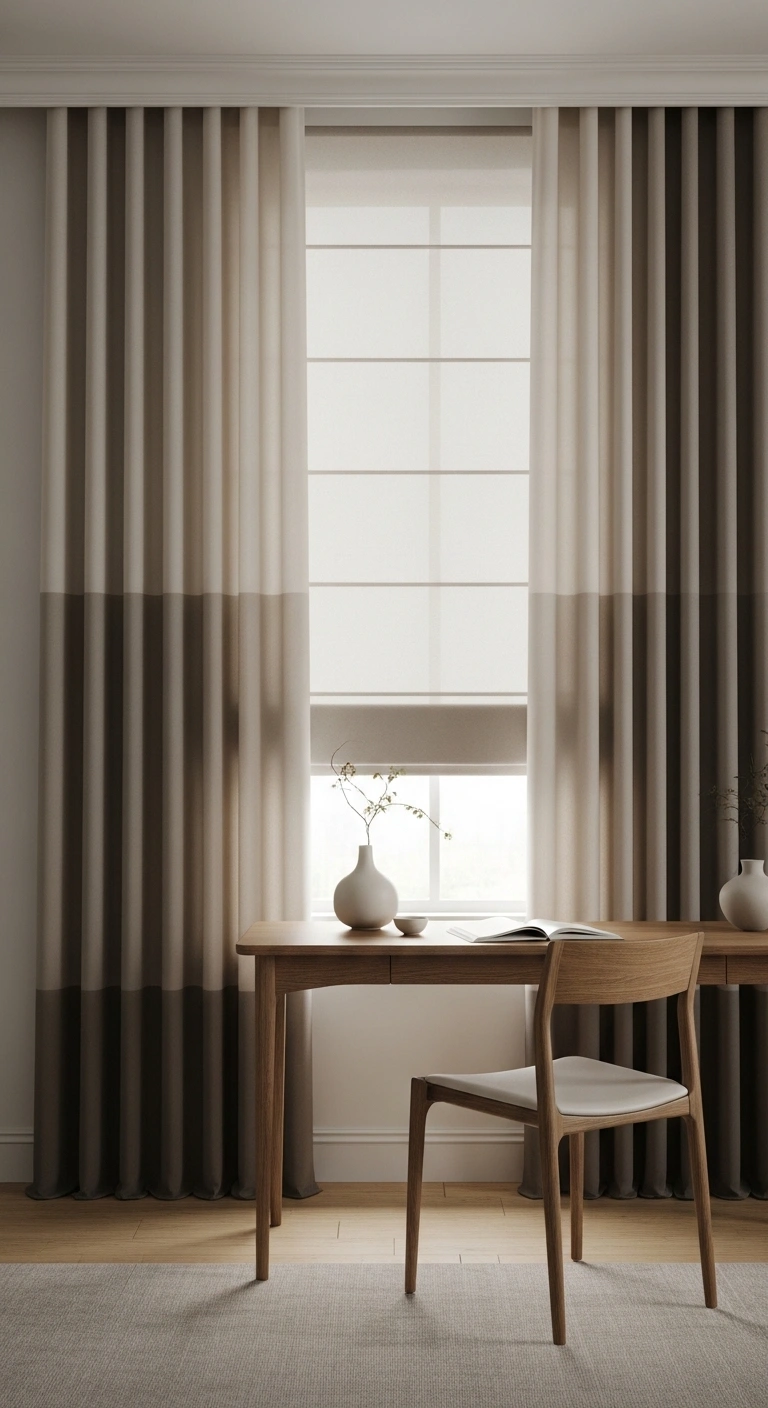
Dual-tone Roman curtains combine two colors in one design, often with a lighter top and a darker bottom. This creates visual interest while keeping the look balanced.
Choose colors within the same palette for a smooth transition, like light grey and charcoal or beige and brown. The contrast adds depth without being too bold.
Use these in modern or transitional spaces where you want a touch of creativity. Keep surrounding décor simple so the color shift remains the highlight.
12. Blackout Roman Curtains for Style and Function
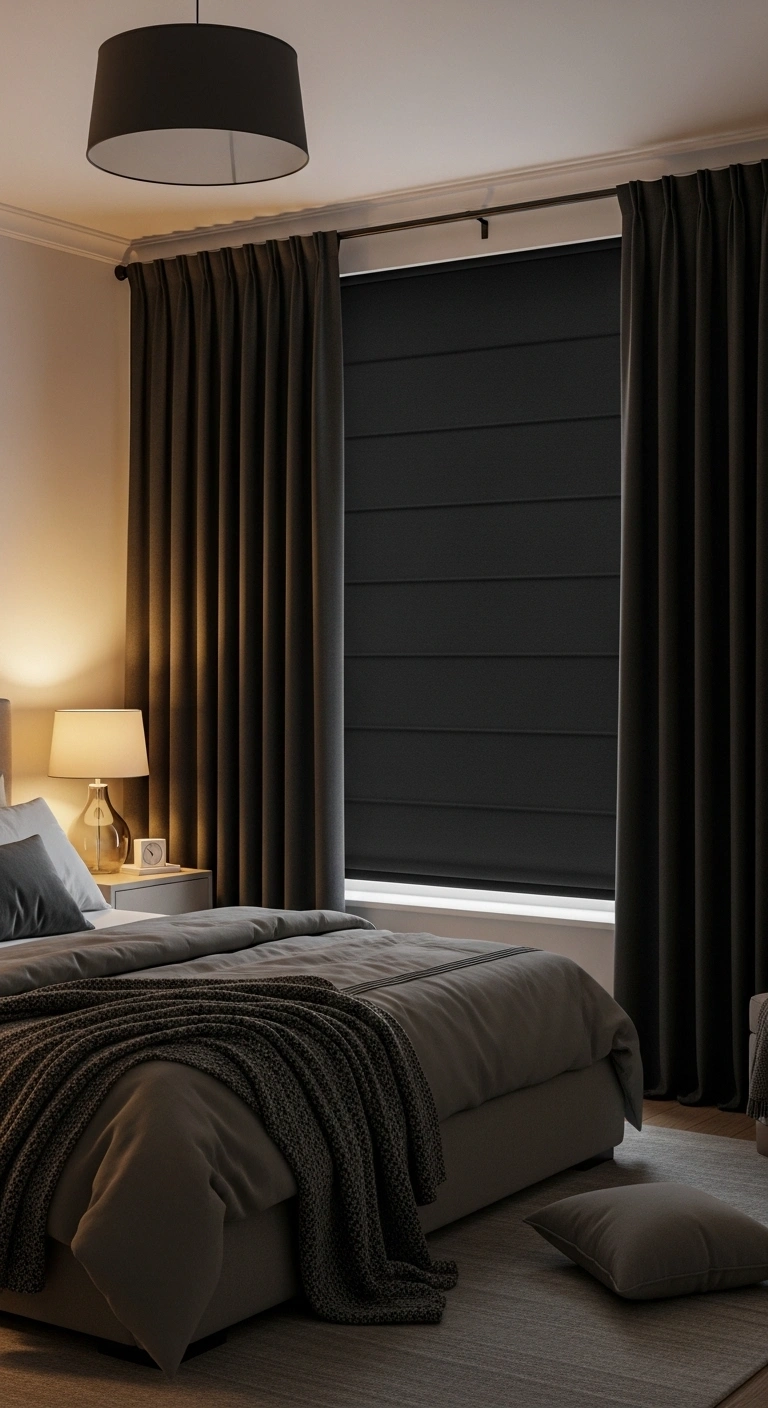
Blackout Roman curtains offer both elegance and practicality. They block light effectively while maintaining a clean, tailored appearance.
Choose fabrics that look soft on the outside but have a hidden blackout lining. This keeps the curtains stylish during the day and functional at night.
Use darker tones for a cozy feel or lighter shades for a softer look. These are perfect for bedrooms or media rooms where light control is important.Pair with warm lighting to balance the darker fabric and keep the room inviting.
13. Tailored Flat Roman Curtains for a Crisp Finish
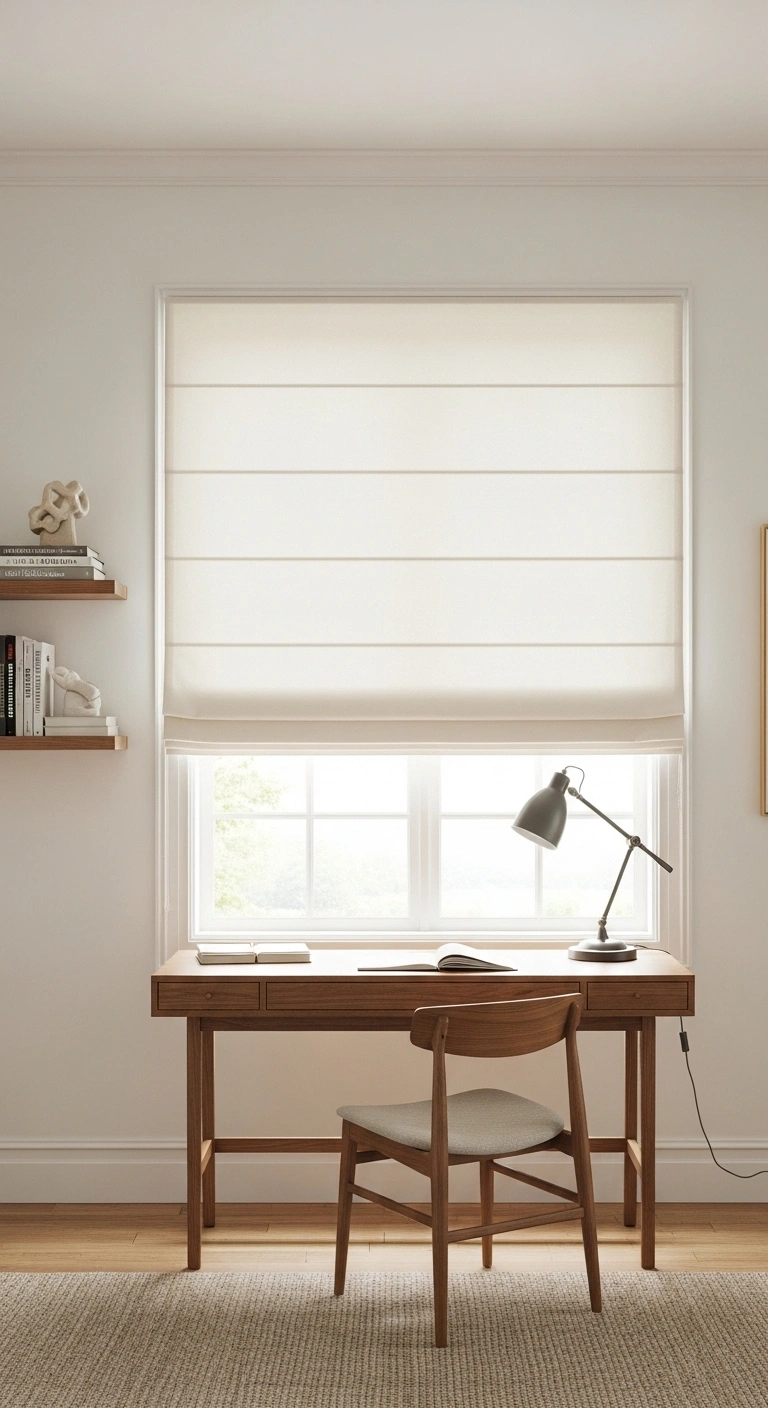
Tailored flat Roman curtains create a smooth, structured look with minimal folds. This style works best when you want clean lines and a polished finish. Choose medium-weight fabrics like cotton blends or smooth linen so the curtain stays flat when lowered.
Stick to neutral shades like soft white, sand, or light grey for a modern feel. Pair with sleek furniture and uncluttered spaces to highlight the simplicity. This design fits perfectly in home offices or dining rooms where a neat appearance matters.Use hidden mounting hardware for a seamless look. Keep surrounding décor subtle so the sharp, tailored lines remain the focus.
14. Roman Curtains with Subtle Metallic Threads
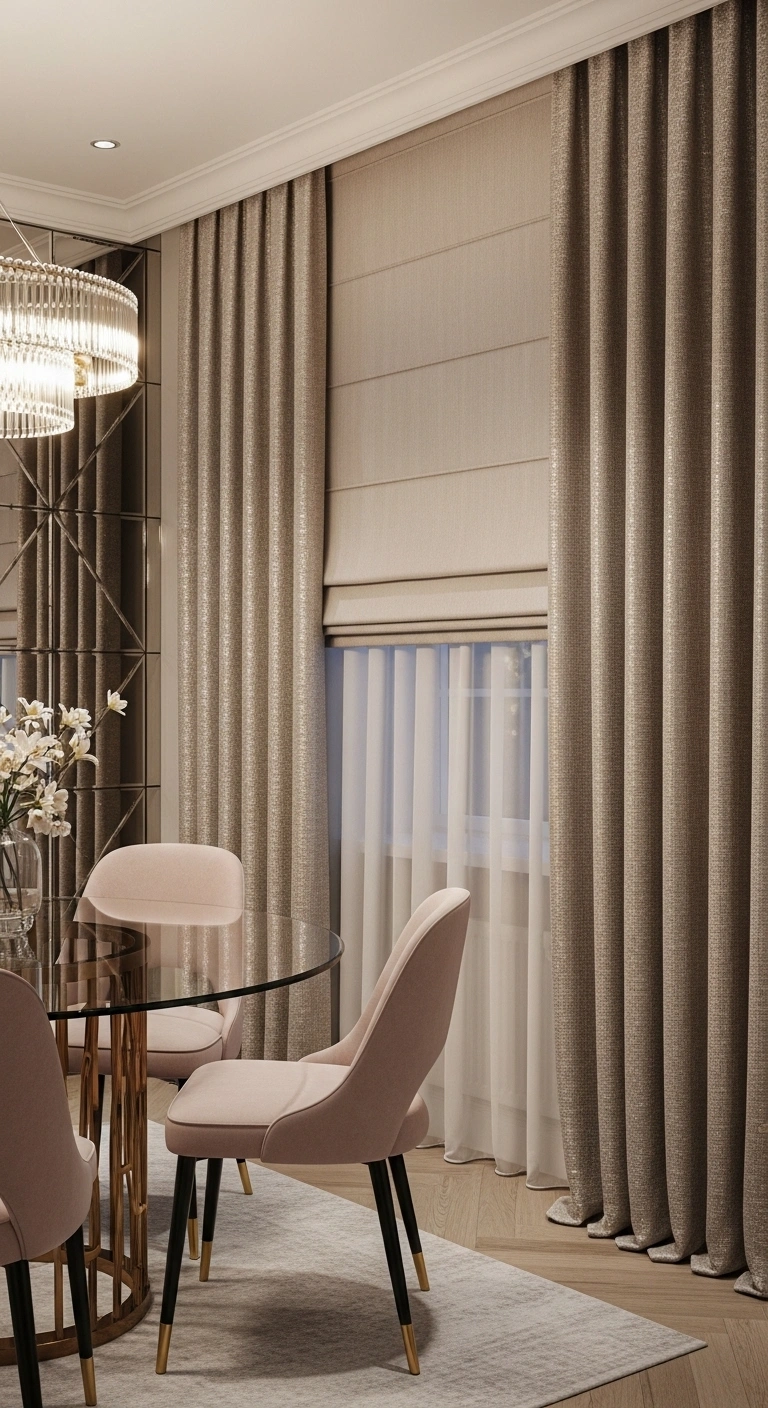
Roman curtains with fine metallic threads add a soft shimmer without feeling flashy. Look for fabrics woven with gold, silver, or champagne tones that catch light gently throughout the day.
This style works well in rooms that need a touch of brightness, especially if natural light is limited. Pair with neutral walls and reflective décor like mirrors or glass tables to enhance the glow.
Keep the color palette calm so the shimmer feels refined, not overwhelming. This idea adds quiet elegance while still feeling modern and easy to style.
15. Relaxed Roman Curtains for a Soft, Casual Look
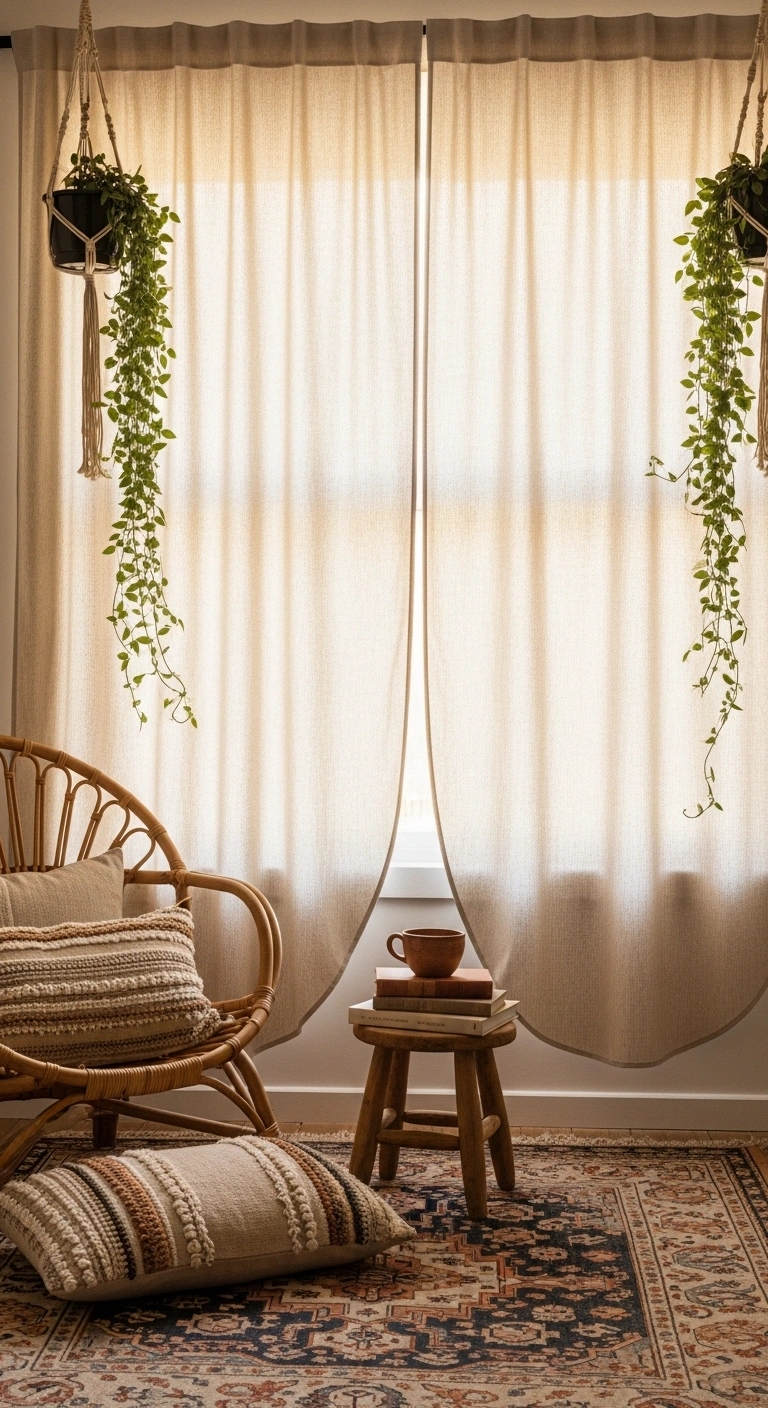
Relaxed Roman curtains have a gentle curve at the bottom instead of straight folds. This creates a softer and more casual feel, perfect for cozy spaces.
Choose lightweight fabrics like washed linen or cotton in warm tones such as cream, blush, or light taupe. The natural drape adds movement and comfort to the room.
Pair with soft textures like knitted throws or plush cushions. This style works well in bedrooms, reading corners, or casual living rooms where you want a welcoming atmosphere.Keep hardware simple to maintain the relaxed look.
16. Roman Curtains with Vertical Stripe Illusion
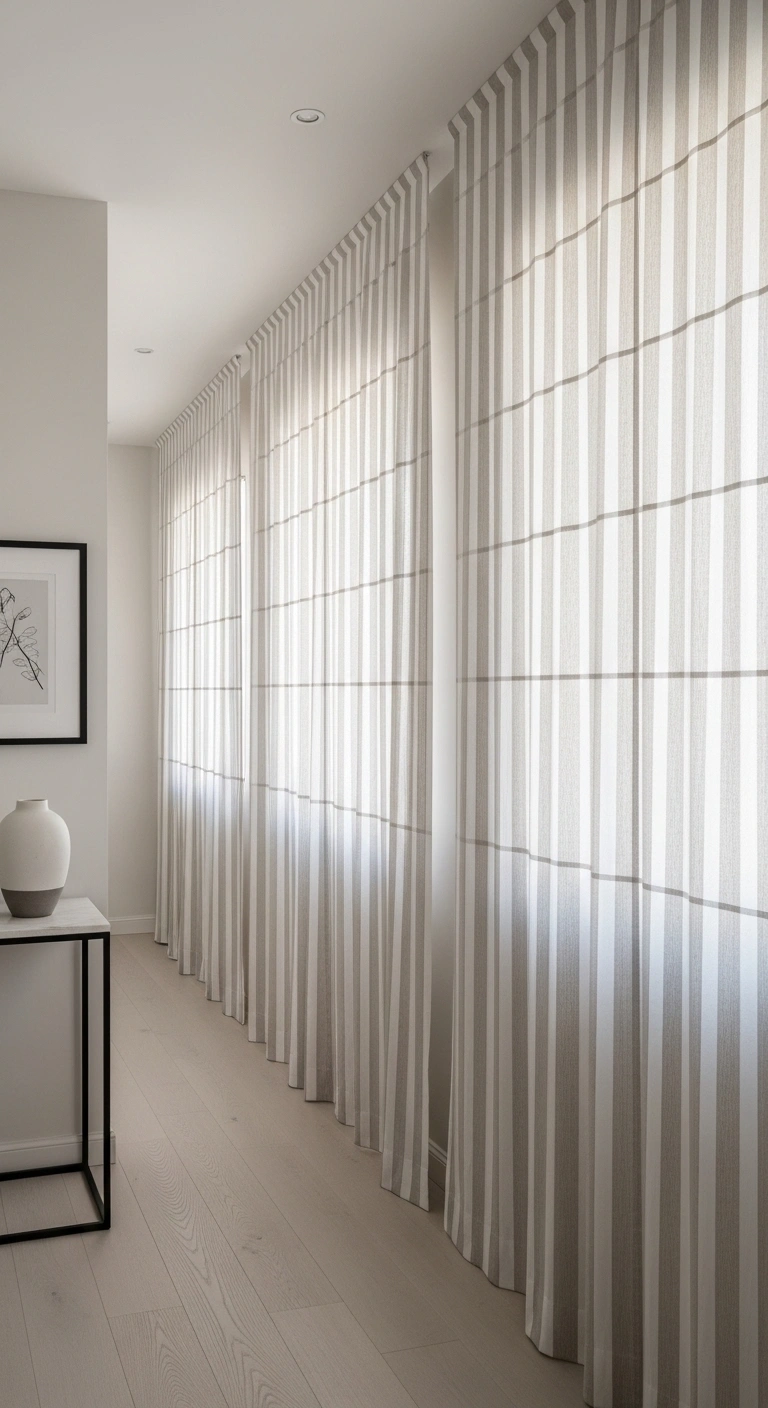
Vertical stripe Roman curtains help make windows appear taller. Even subtle stripes in similar tones can stretch the visual height of a room.
Choose soft color combinations like beige and ivory or grey and white for a refined effect. Avoid bold, high-contrast stripes if you want to keep the look sophisticated.
Pair with low-profile furniture so the vertical lines stand out. This idea works especially well in smaller rooms where height can make the space feel more open.Use natural lighting to enhance the stripe effect during the day.
17. Textured Weave Roman Curtains for Depth
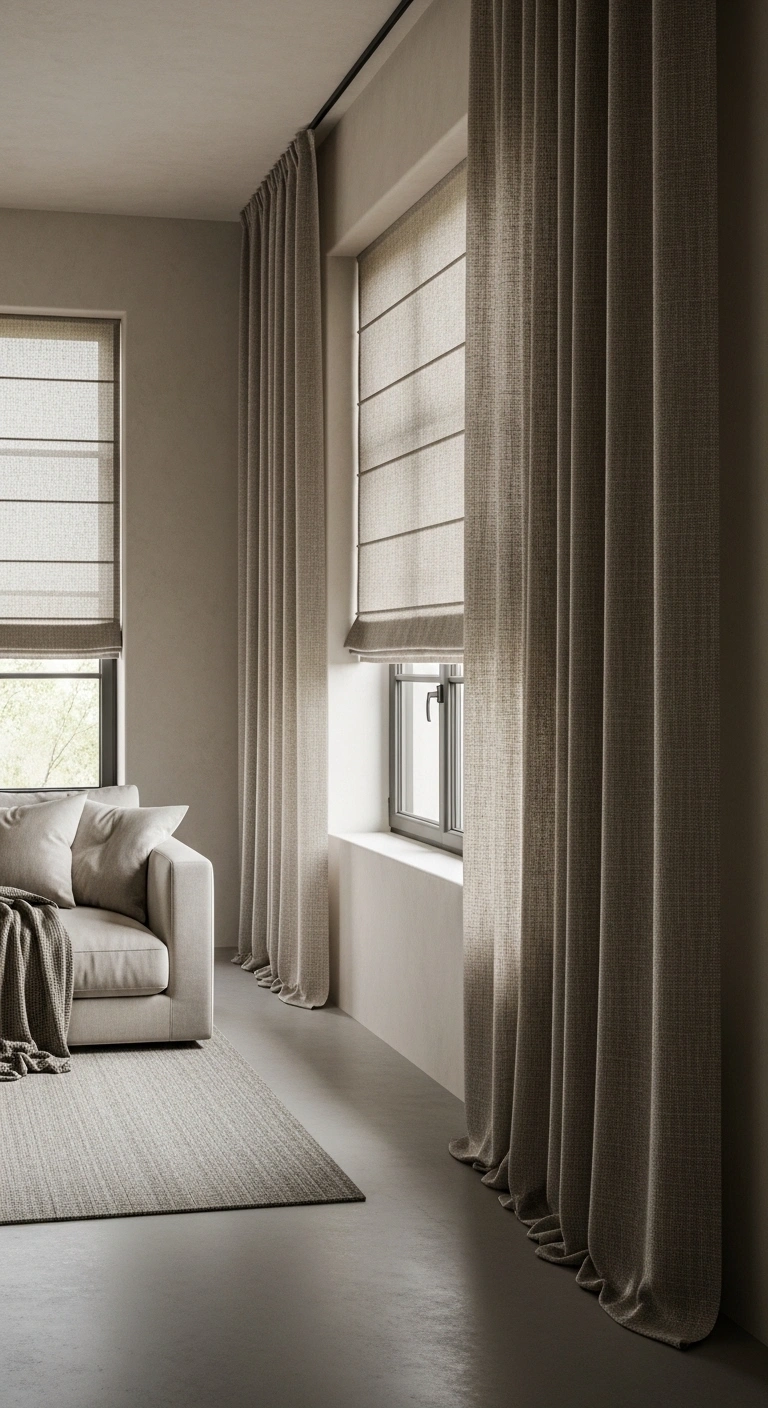
Textured weave Roman curtains add dimension without using bold colors or patterns. Fabrics like slub linen, jacquard, or woven cotton create subtle visual interest through texture alone.
Stick to neutral tones like oatmeal, stone, or warm grey. The texture will do the work instead of color. This approach keeps the space calm but still visually rich.
Pair with smooth surfaces like glass or polished wood to create contrast. This balance makes the texture stand out more clearly.This idea works well in minimalist or modern interiors that need warmth without clutter.
18. Roman Curtains in Soft Pastel Shades
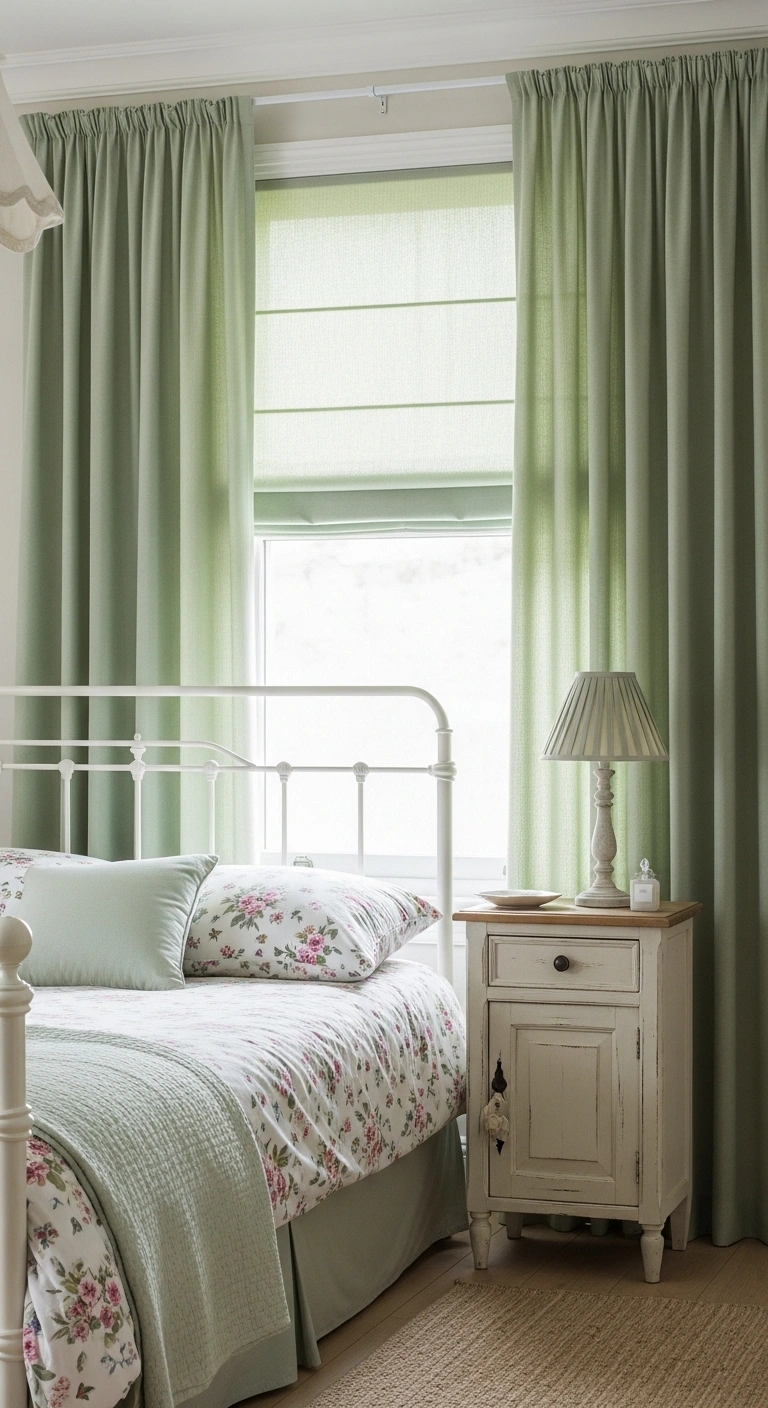
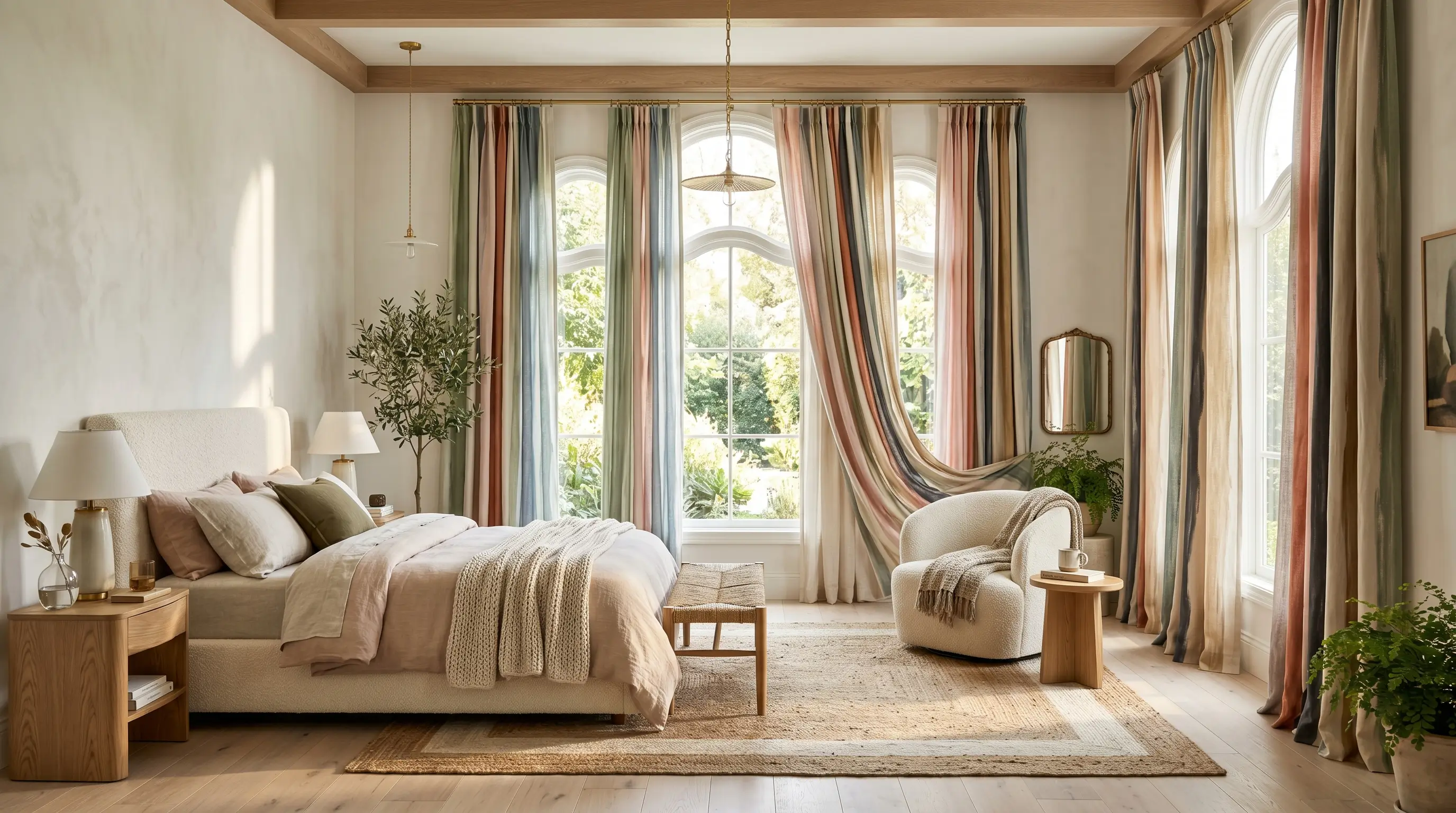
Soft pastel Roman curtains bring a gentle touch of color into your space. Shades like pale blue, sage green, or dusty pink add freshness without overwhelming the room.
Use light fabrics to keep the look airy and bright. Pair with white walls and light wood furniture for a clean and balanced feel.
Add small accents in similar tones, like cushions or artwork, to tie everything together. This style works beautifully in bedrooms, nurseries, or calm living spaces.Keep lighting warm to enhance the softness of the pastel shades.
19. Roman Curtains with Hidden Pattern Lining
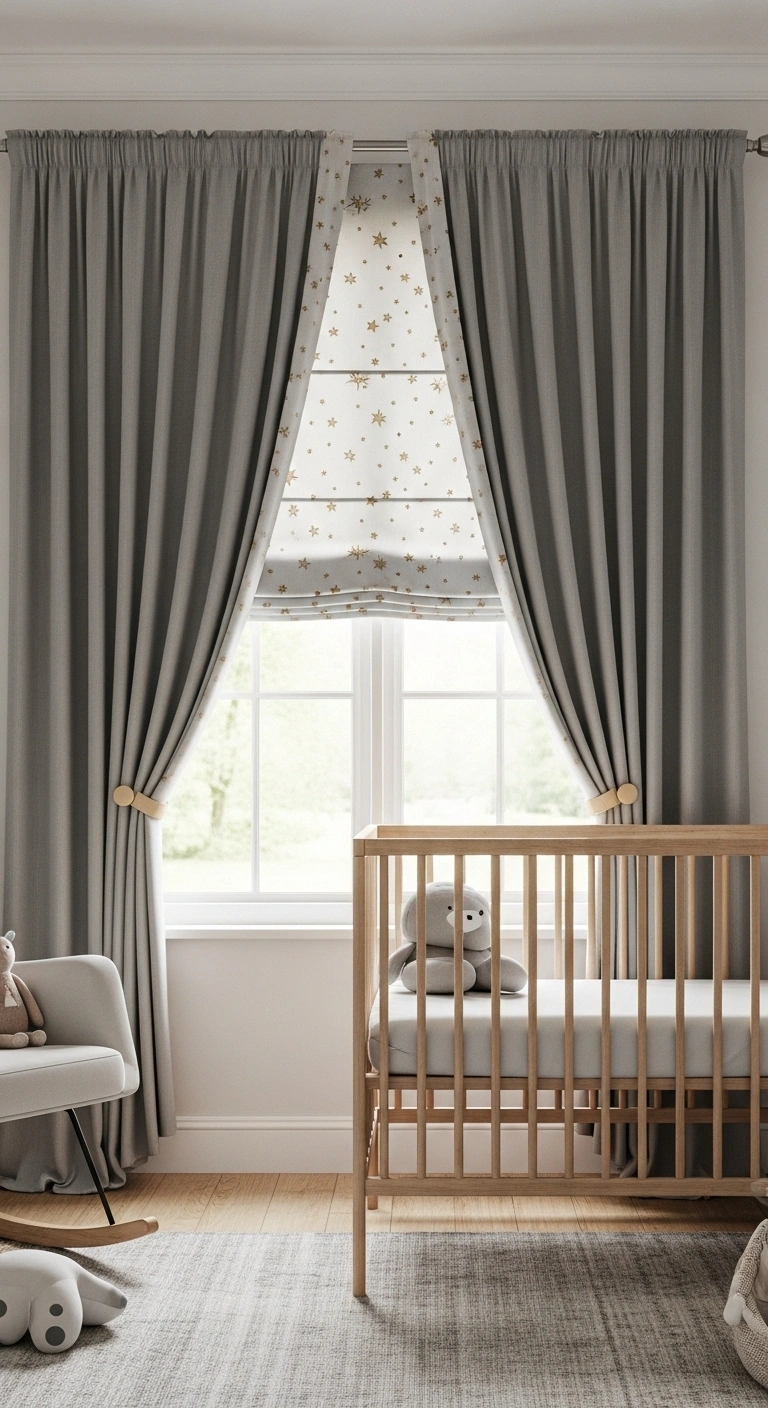
Roman curtains with a patterned lining add a surprise detail when raised. From the front, the curtain looks simple, but when folded, the inner pattern becomes visible.
Choose subtle prints like small florals or geometric shapes in soft colors. This adds personality without affecting the main room design.
Use a neutral outer fabric so the lining stands out only when needed. This idea works well in spaces where you want a mix of simplicity and creativity.It’s a small detail that makes the window treatment feel custom and unique.
20. Dark-Toned Roman Curtains for Dramatic Contrast
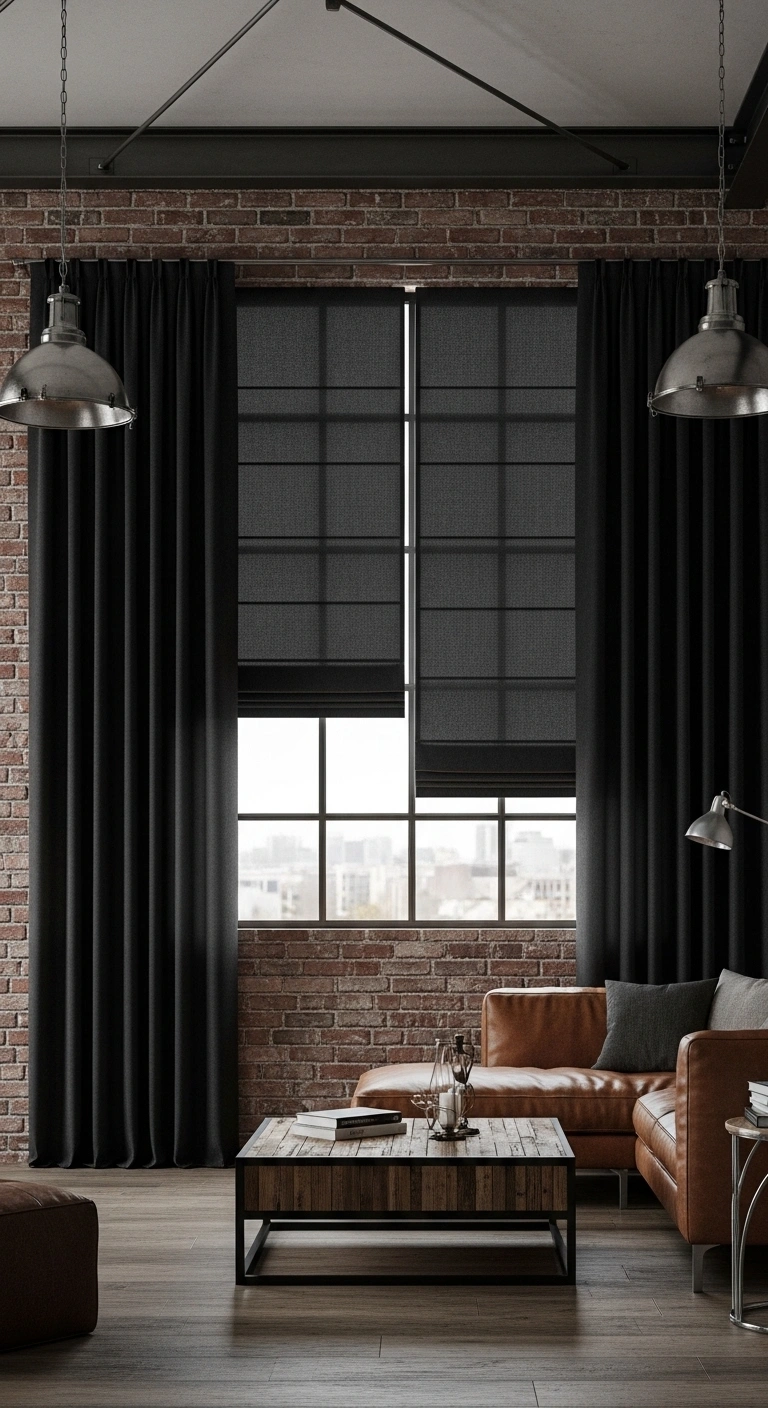
Dark Roman curtains create strong contrast, especially in rooms with light walls. Colors like charcoal, deep brown, or navy add depth and make the window stand out.
Use structured folds to keep the look clean and avoid heaviness. Pair with lighter furniture and metallic accents to balance the darker tones.
This style works well in modern living rooms or bedrooms where you want a bold but controlled look. Add warm lighting to soften the contrast in the evening.Keep décor minimal so the curtains remain the focal point.
21. Roman Curtains with Wooden Valance Accent
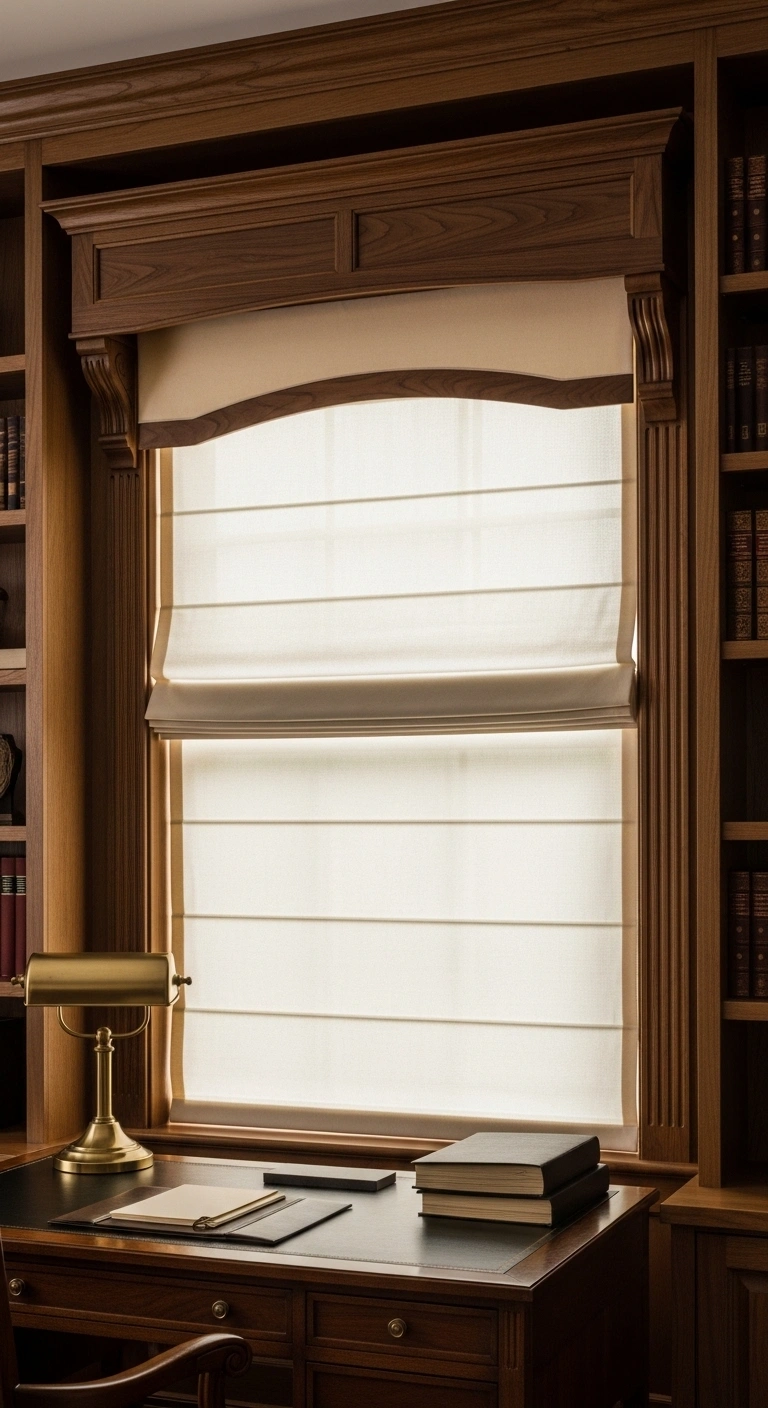
Adding a wooden valance above Roman curtains creates a layered and architectural look. The wood frame adds structure while the fabric brings softness.
Choose wood tones that match your furniture for a cohesive feel. Pair with neutral fabric curtains to keep the design balanced.
This idea works well in traditional or transitional interiors where layering adds richness. It also helps hide curtain hardware for a cleaner finish.Use warm lighting to highlight both the wood and fabric textures.
22. Minimal Edge Roman Curtains for a Sleek Look
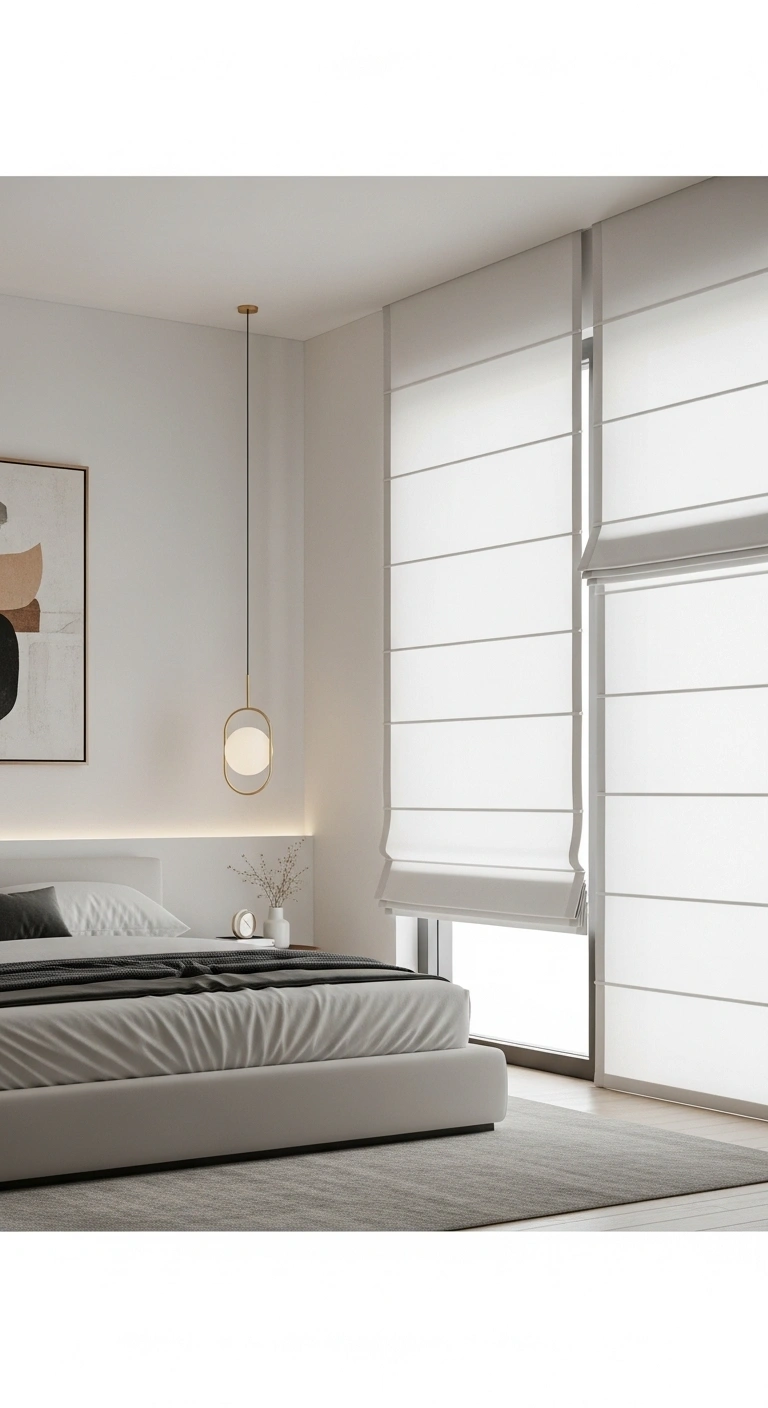
Minimal edge Roman curtains focus on simplicity with no visible seams or trims. The clean edges create a smooth and modern appearance.
Choose high-quality fabric so the simplicity still feels premium. Neutral shades like white, beige, or soft grey work best for this style.
Pair with modern furniture and uncluttered layouts. This approach keeps the room feeling open and organized.Use subtle lighting to highlight the folds without creating harsh shadows. This idea is perfect for contemporary homes.
23. Roman Curtains Paired with Statement Rods
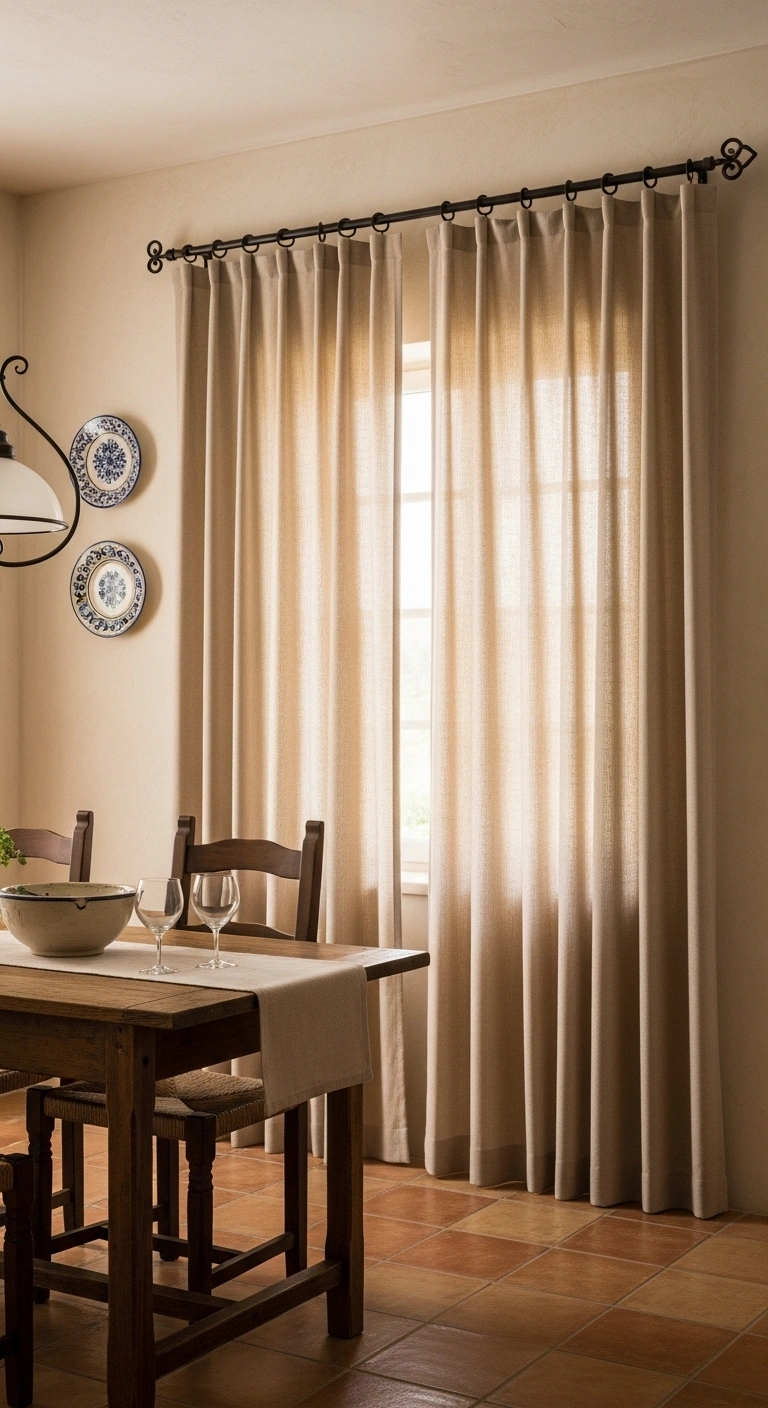
Using decorative rods with Roman curtains adds an extra design layer. Even though Roman curtains don’t always need visible rods, adding one can create a bold visual frame.
Choose rods in finishes like matte black, antique brass, or brushed gold. Pair with simple curtain fabric so the hardware stands out.
This idea works well in spaces where small details matter, like dining rooms or entryways. Keep other metal finishes consistent for a cohesive look.It’s an easy way to elevate a basic curtain setup.
24. Dual-Layer Roman Curtains for Maximum Flexibility
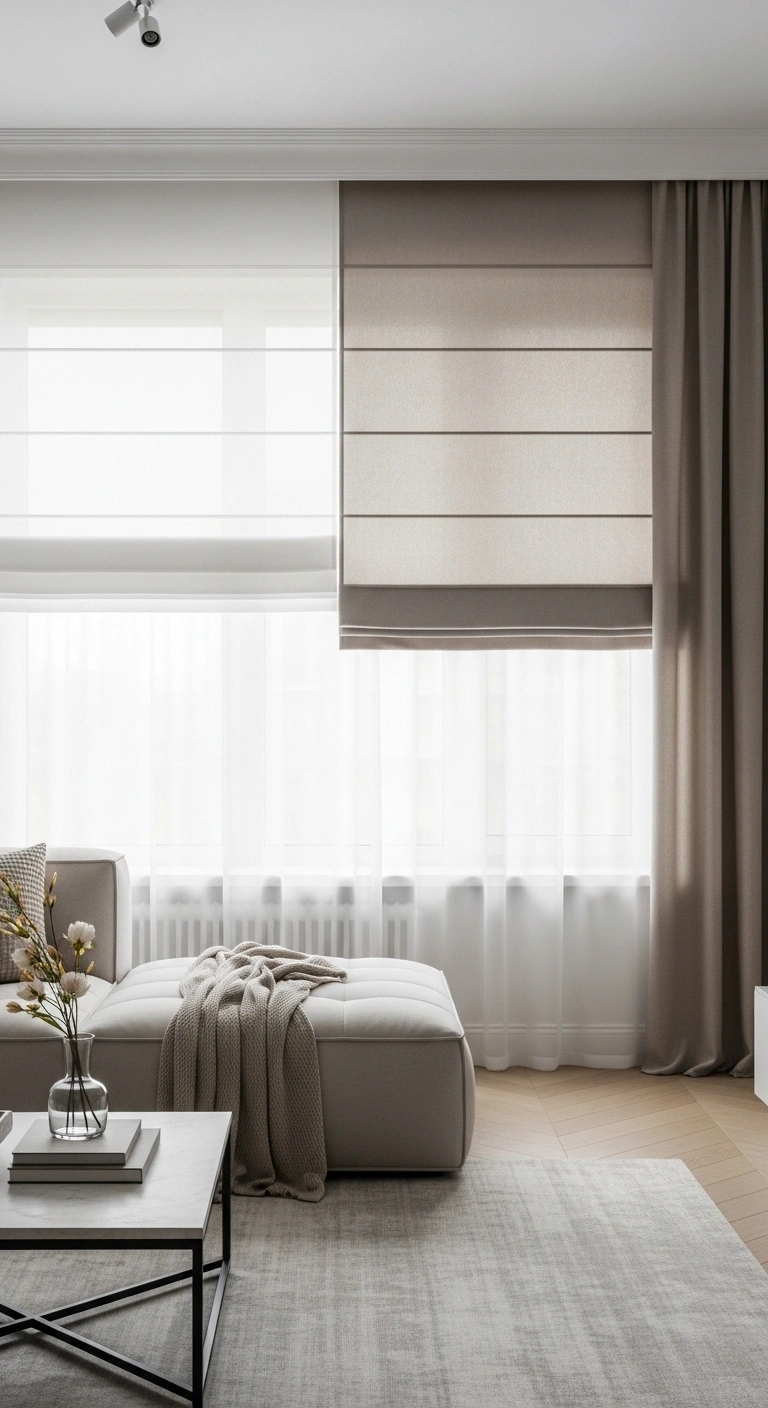
Dual-layer Roman curtains combine two fabrics in one system—usually a sheer layer and a thicker outer layer. This allows you to adjust light and privacy easily.
Use a light inner layer for daytime brightness and a heavier outer layer for evening privacy. Choose colors that complement each other for a cohesive look.
This setup works well in bedrooms and living rooms where lighting needs change throughout the day. It also adds visual depth through layering.Keep the mechanism smooth so both layers function easily without bulk.
Conclusion
These final 24 Roman curtain ideas show how small design choices can create a refined and stylish space. From textured weaves to layered systems, each option offers a practical way to improve both function and appearance.
Focus on combining fabric, color, and placement in a way that fits your space. Even one thoughtful update can make your room feel more complete and visually balanced. Save your favorite ideas, test one in your home, and build a look that feels both personal and polished.