22 Dining Room Wall Decor Ideas That Instantly Transform Blank Walls
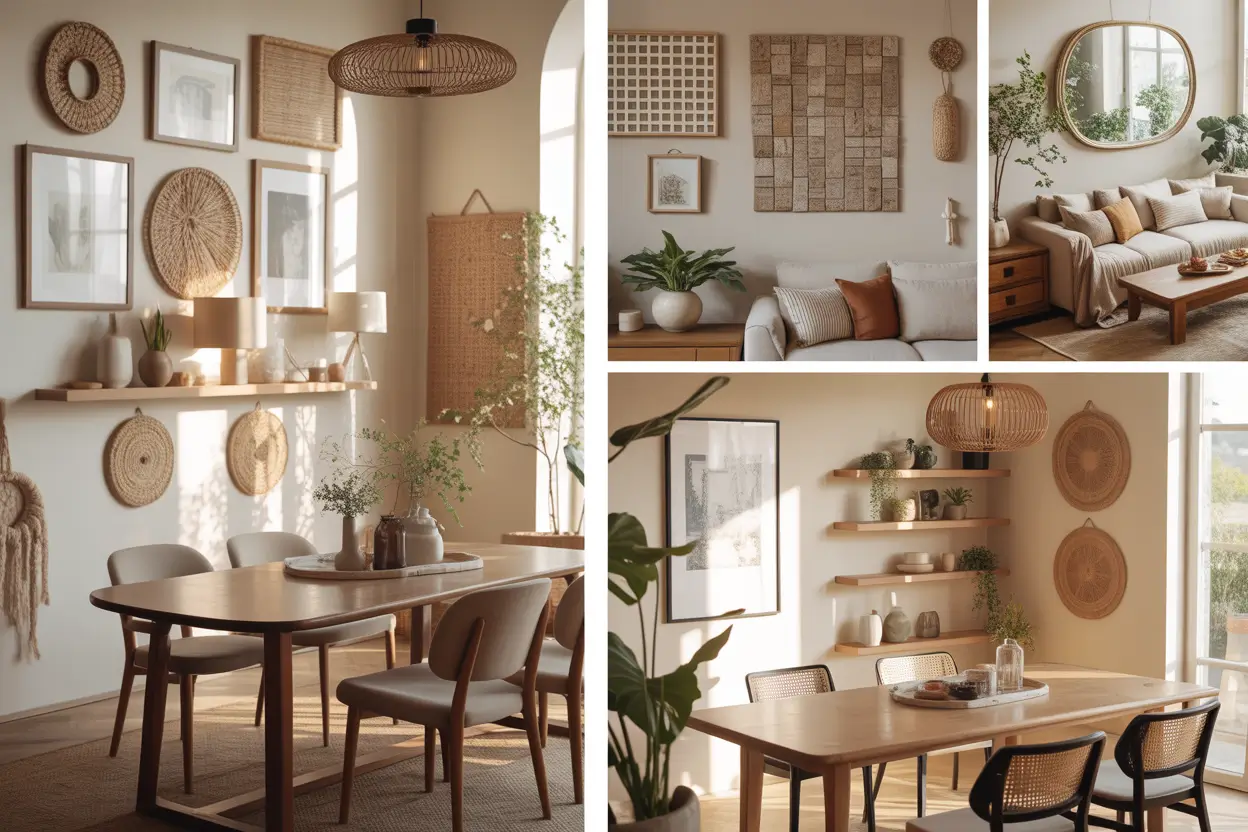
Your dining room walls set the mood for every meal. When they feel empty or plain, the entire space can look unfinished. The good news is that a few thoughtful details can completely transform the room without a full renovation.
These 22 dining room wall decor ideas focus on simple, creative ways to add personality, warmth, and visual interest. Each idea highlights color, texture, lighting, and layout so your dining space feels welcoming and stylish. Whether your dining room is modern, cozy, rustic, or minimal, the right wall design can become the focal point that ties the whole room together.
Below are the first 22 unique and practical ideas you can try right away.
1. Layered Wooden Frame Gallery
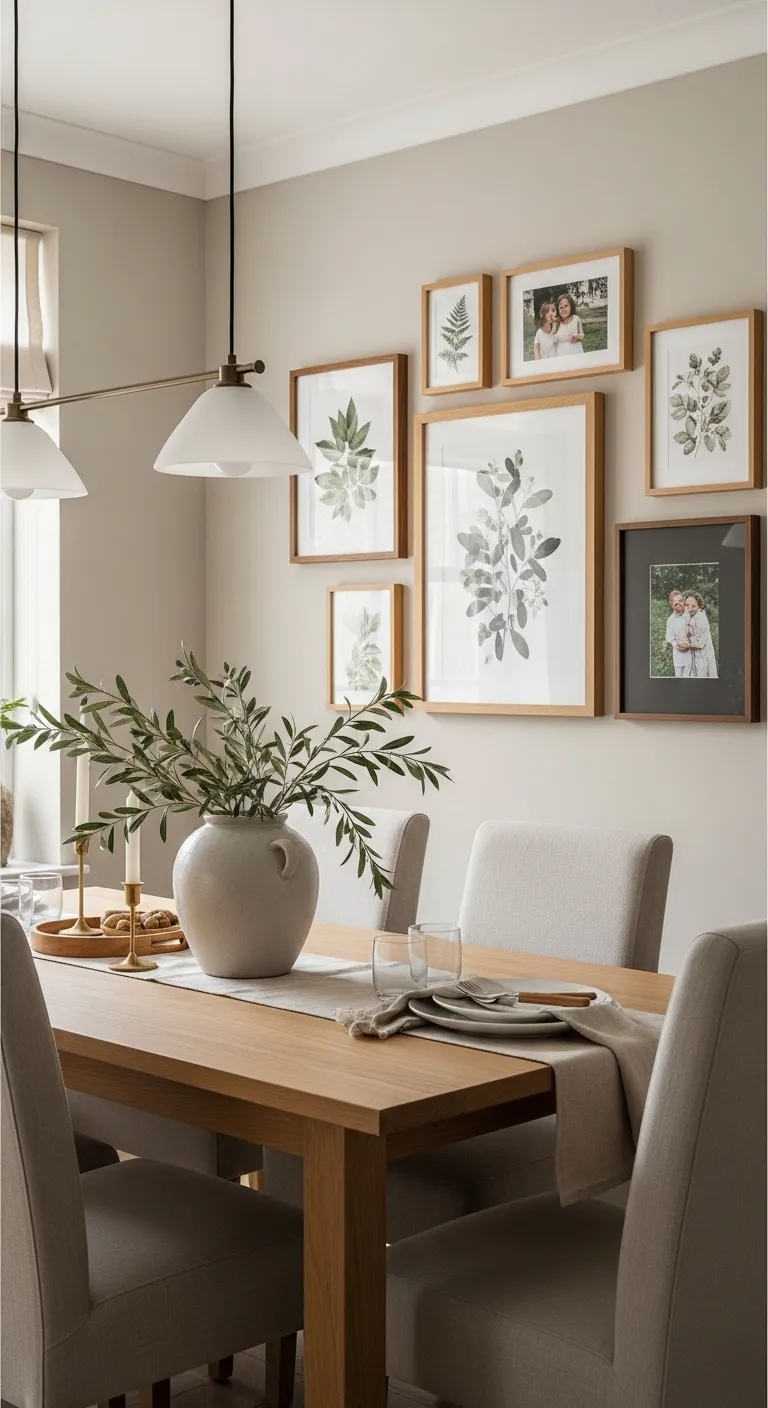
A layered wooden frame gallery creates depth and warmth on a dining room wall. Instead of placing identical frames in a straight line, mix frame sizes and wood tones to build a relaxed, curated look. Choose light oak, walnut, and natural pine frames for contrast. Fill them with soft landscape prints, family photos, or simple botanical illustrations. Arrange the frames so they slightly overlap visually but still feel balanced. This layout works best on the main wall behind the dining table. A warm overhead pendant light will highlight the wood texture and make the frames glow during evening meals. This approach turns a blank wall into a storytelling space that feels personal and inviting.
2. Vertical Panel Accent Wall
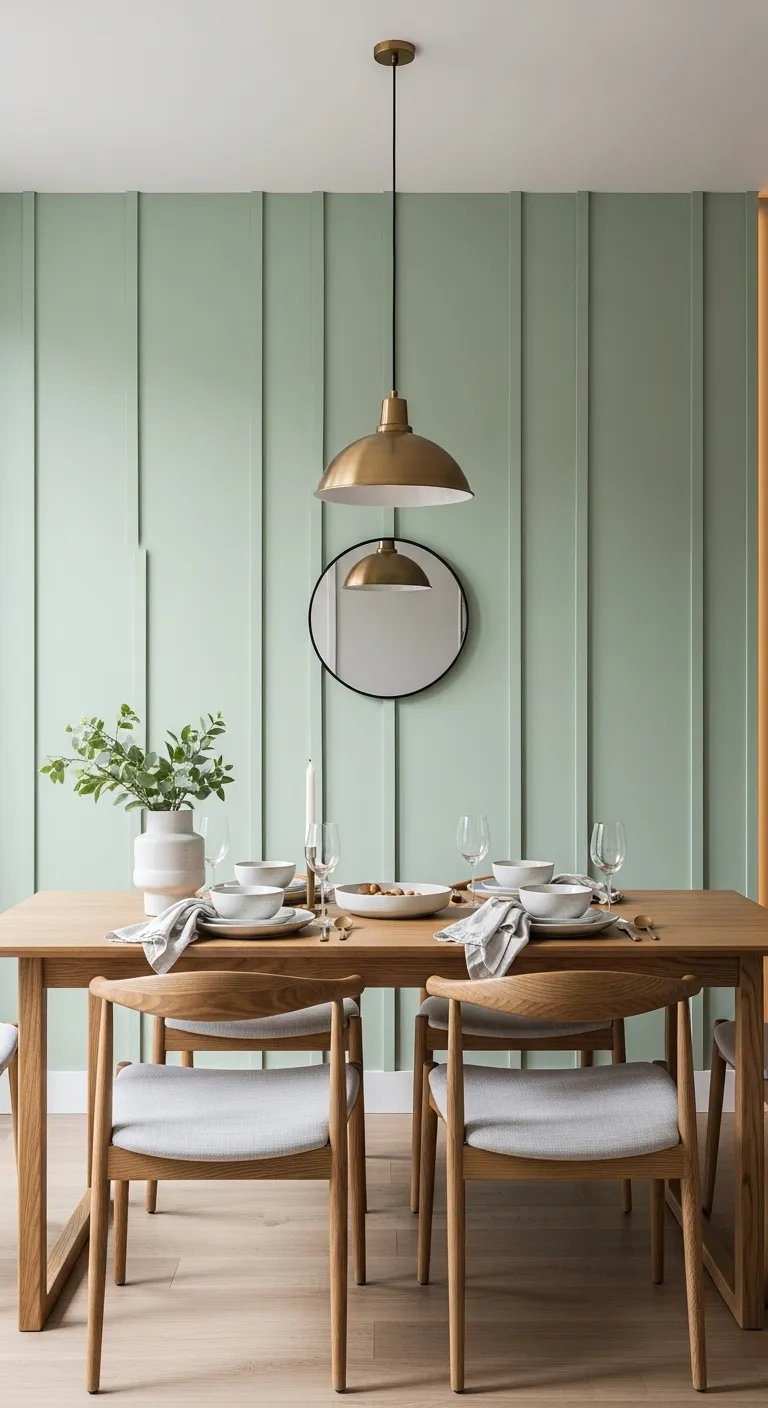
A vertical panel design instantly adds structure and height to the dining room. Install slim wooden or MDF panels from floor to ceiling with narrow spacing between each panel. Paint the panels in a soft neutral tone like warm beige, dusty sage, or muted charcoal. The vertical lines naturally draw the eye upward and make the room feel taller. Place a simple floating shelf or a minimalist mirror in the center of the wall to break the pattern and add visual interest. This idea works especially well in modern or Scandinavian dining rooms where clean lines and subtle textures create a calm and balanced atmosphere.
3. Oversized Botanical Canvas

One large botanical canvas can transform an empty wall into a bold focal point. Choose artwork featuring oversized leaves, soft watercolor florals, or tropical greenery. Look for calming tones like olive green, cream, and soft beige. These colors complement wooden dining tables and neutral dining chairs beautifully. Hang the canvas slightly above eye level so it feels centered with the dining table below. Add warm wall sconces on both sides for soft lighting that highlights the artwork at night. The simplicity of a single oversized piece keeps the room uncluttered while still making the wall feel intentionally styled.
4. Floating Shelf Styling Wall

Floating shelves provide both decoration and flexibility. Install two or three slim wooden shelves across the dining wall. Style them with a mix of items such as small ceramic vases, framed photos, sculptural bowls, and tiny plants. Use neutral tones with one or two accent colors like terracotta or deep green. The key is spacing. Leave small gaps between items so each piece stands out instead of crowding the shelf. Soft wall lighting above the shelves can highlight textures and create a cozy evening dining mood. This setup allows you to change decorations throughout the year without altering the wall itself.
5. Mirror Grid Arrangement
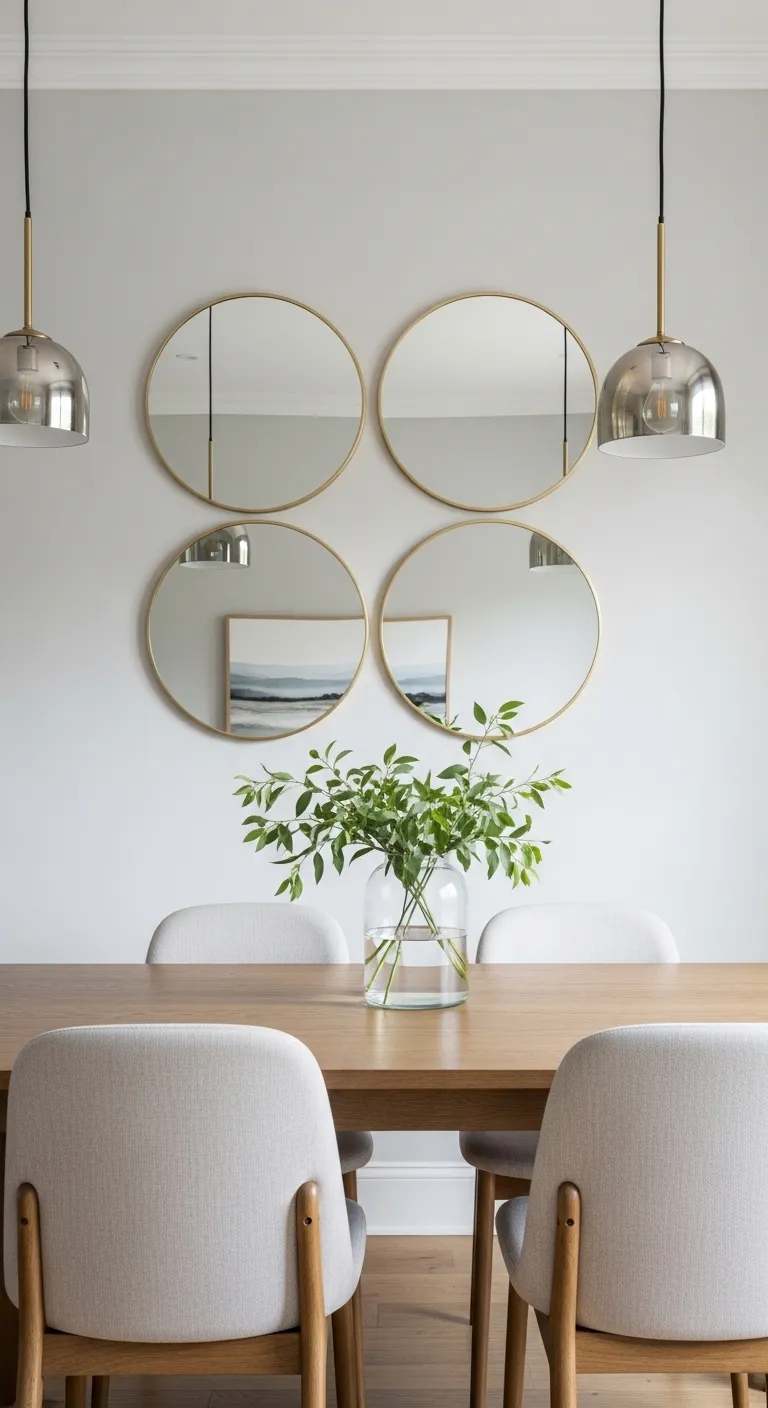
A mirror grid creates brightness and visual balance in the dining room. Use four or six identical mirrors arranged in a square or rectangular grid. Choose thin metal frames in black, brass, or brushed gold depending on the style of your room. The reflection helps bounce light around the space, making smaller dining rooms feel larger. Place the grid on the wall opposite a window or pendant light so it captures and reflects natural light. The symmetry of the mirrors gives the wall a clean, modern appearance while still adding decorative interest.
6. Plate Display Wall

Decorative plates can create a charming and artistic dining room wall. Instead of hiding beautiful plates in cabinets, mount them on the wall using simple plate hangers. Mix different sizes and patterns while staying within one color palette such as blue and white, warm earth tones, or soft neutrals. Arrange the plates in an organic pattern that spreads outward like a gentle wave. Start with a larger plate in the center and build around it with smaller ones. This display adds texture, color, and personality while celebrating the dining theme of the room.
7. Statement Wall Clock

A large statement clock adds both function and visual impact. Choose a clock with a diameter of at least 24–30 inches so it fills the wall properly. Metal frames with minimalist numbers work well in modern dining spaces, while wooden clocks suit farmhouse or rustic interiors. Place the clock on the main wall directly visible from the dining table. Pair it with subtle wall lighting or small decorative accents nearby to anchor the piece. A statement clock keeps the wall simple yet visually striking.
8. Wall Molding Frame Design
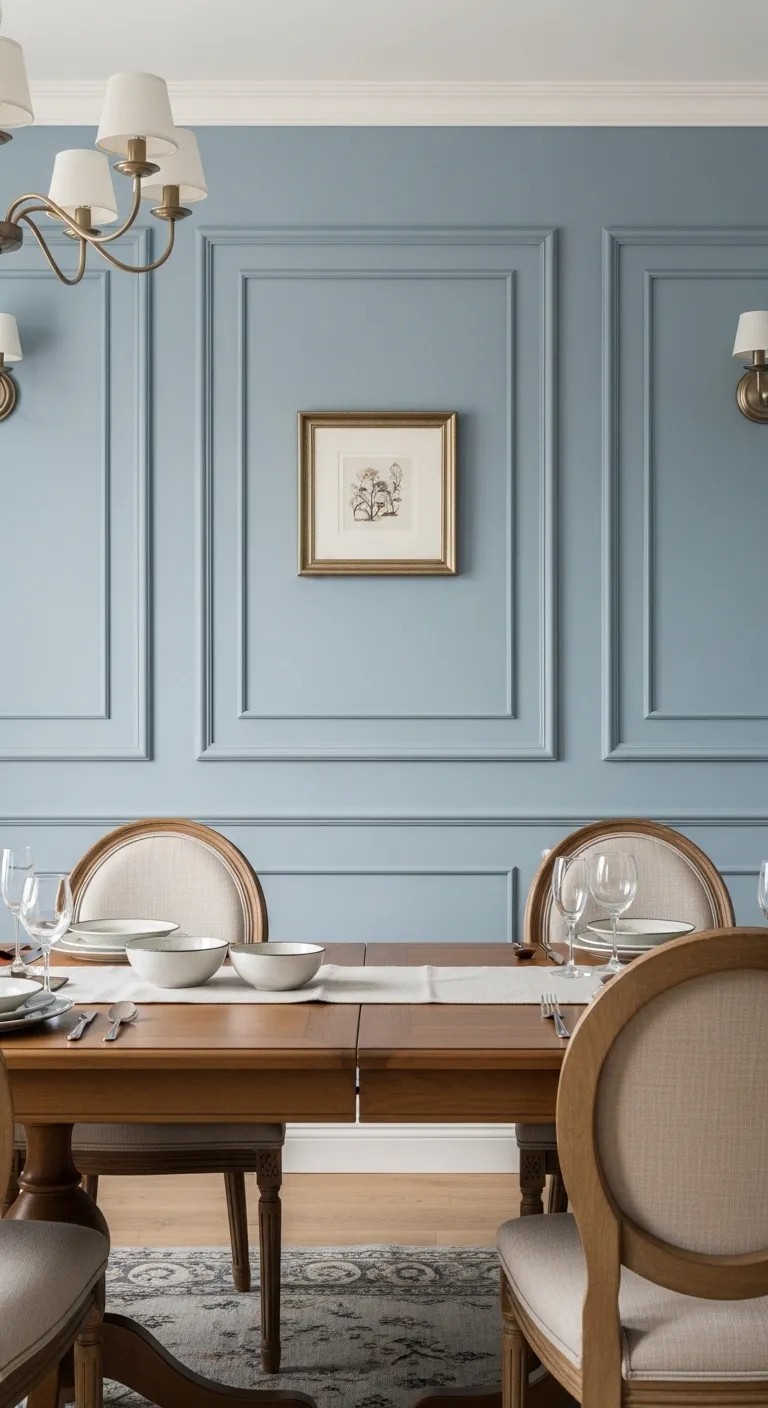
Decorative wall molding creates a refined and elegant dining room feature. Install rectangular molding panels across the wall to create a structured pattern. Paint the entire wall and molding the same color for a subtle effect. Soft tones like dusty blue, creamy white, or sage green work beautifully. inside one or two panels, hang small framed art pieces or minimalist prints to add detail without overcrowding the wall. This approach adds architectural depth and makes the dining space feel more polished and thoughtfully designed.
9. Rustic Wooden Ladder Display
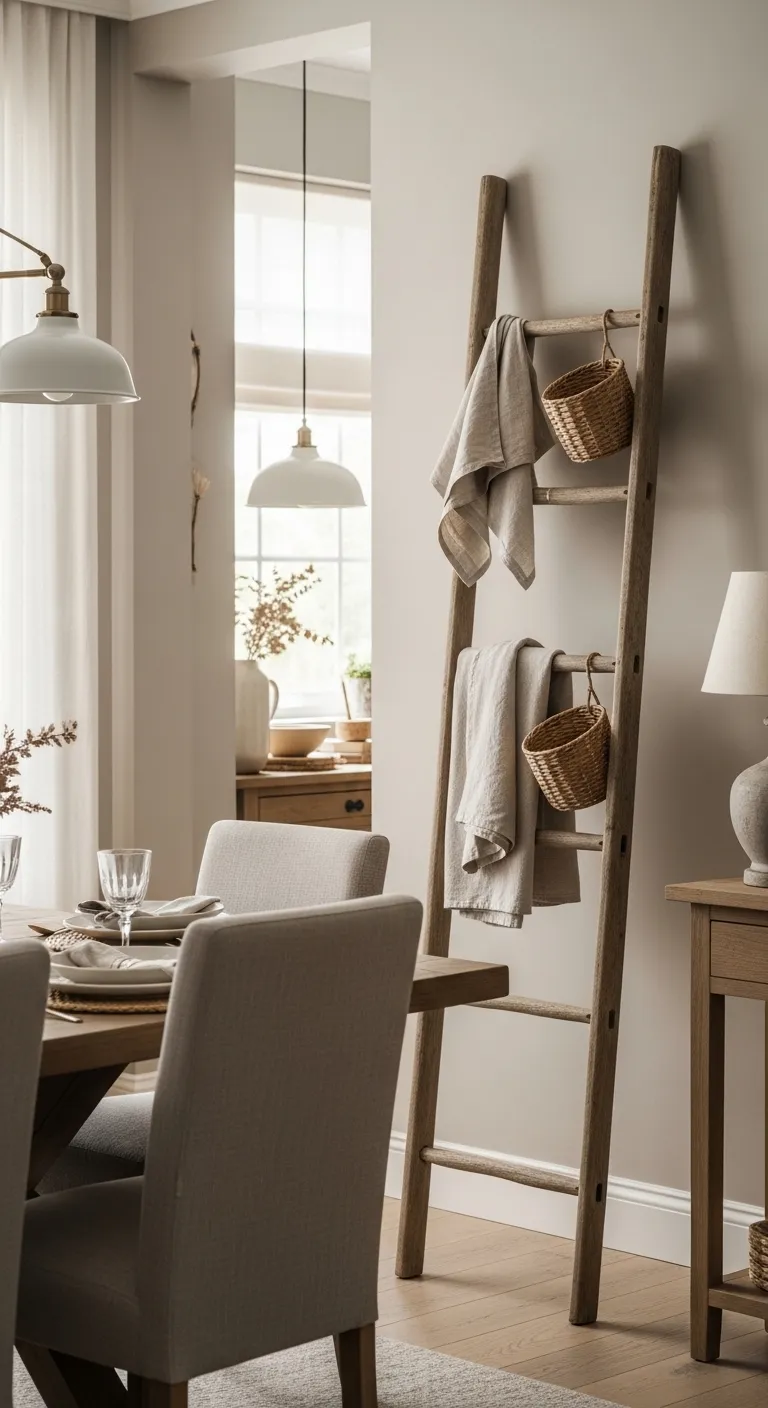
A decorative wooden ladder leaning against the dining wall introduces texture and height. Choose a natural wood ladder with a slightly weathered finish. Hang lightweight items on the rungs such as linen napkins, small woven baskets, or mini wreaths made from dried eucalyptus. You can also clip small art prints or seasonal décor pieces onto the ladder using wooden clips. The ladder works well in farmhouse or cozy dining rooms where natural materials and relaxed styling create a welcoming atmosphere.
10. Textured Wall Art Panels
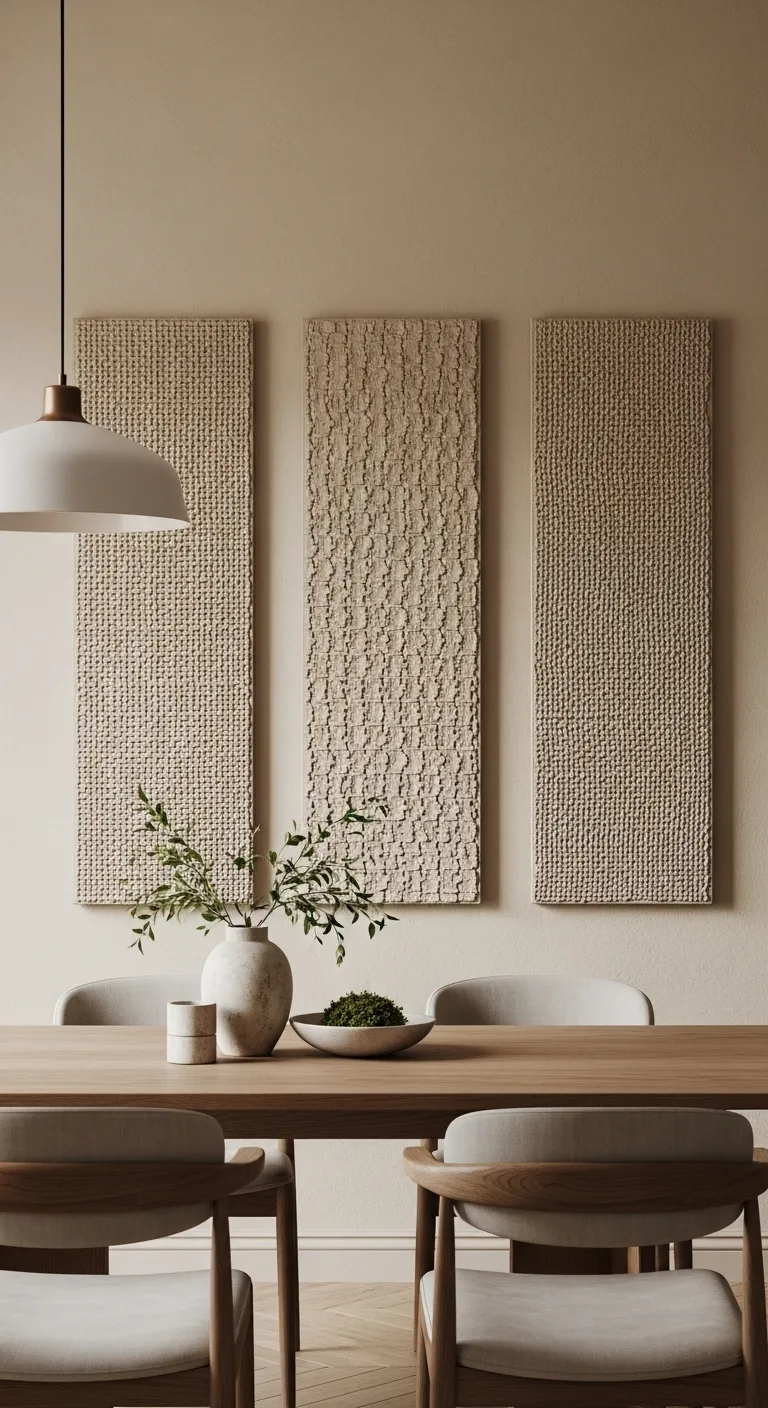
Textured panels bring depth and tactile interest to dining room walls. Choose panels made from woven fabric, carved wood, or sculpted plaster. Install two or three vertical panels side by side to create a balanced arrangement. Neutral tones such as sand, ivory, and clay allow the texture to stand out without overpowering the space. Soft side lighting enhances the shadows and highlights within the texture, giving the wall a layered appearance. This idea works especially well when the dining room furniture is simple, allowing the wall texture to become the main visual feature.
11. Sculptural Metal Wall Installation
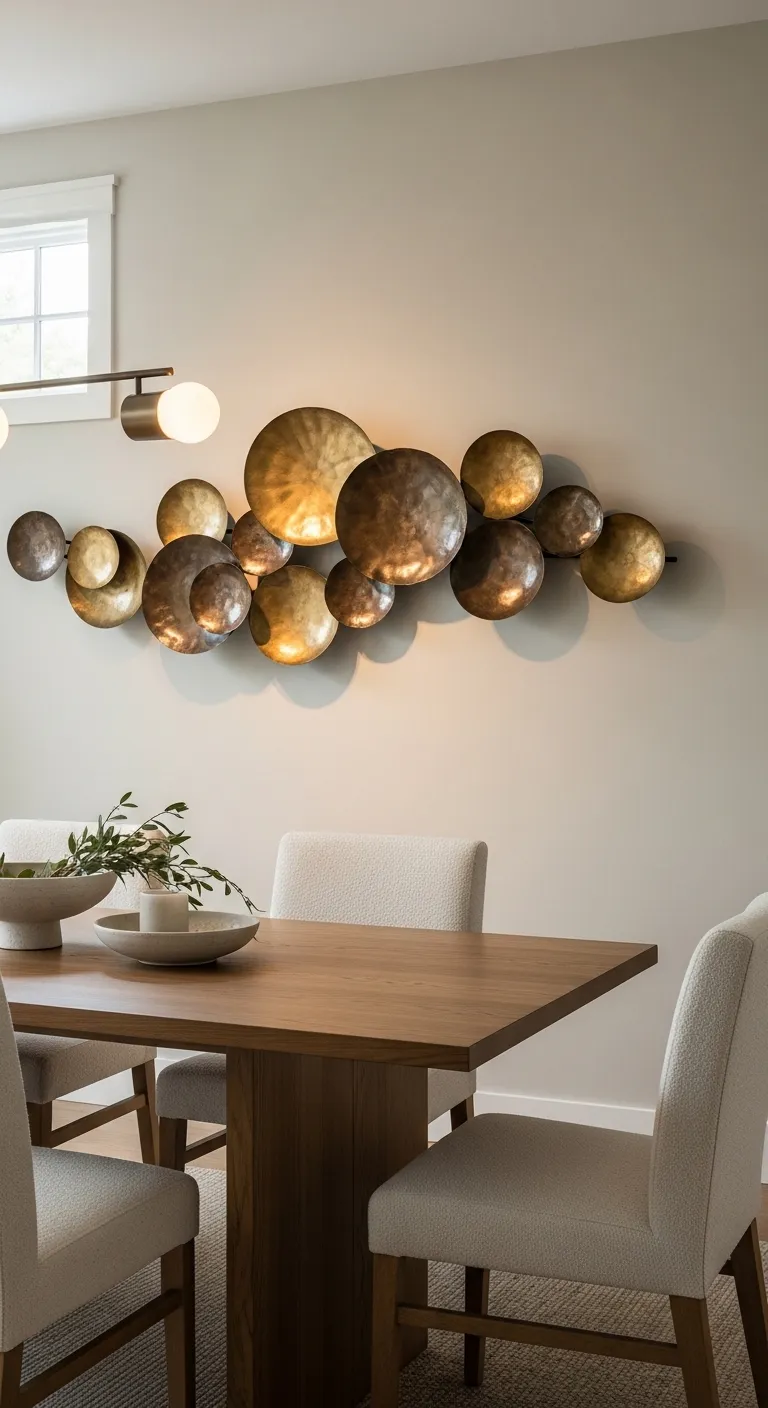
A sculptural metal installation can instantly turn a plain wall into an artistic centerpiece. Instead of traditional framed art, choose a large metal piece made from overlapping circles, abstract leaves, or flowing geometric shapes. The layered metal creates movement and catches light beautifully. Warm finishes like brushed brass, antique gold, or matte bronze work well in dining spaces because they reflect warm light from chandeliers and pendant fixtures. Hang the sculpture on the wall behind the dining table so it naturally becomes the focal point during meals. Pair it with simple furniture and neutral wall colors like warm white or soft taupe. This balance allows the metal texture and subtle shine to stand out without making the room feel busy.
12. Built-In Wall Niche Display

Wall niches create depth while offering a perfect place for decorative accents. Instead of placing artwork on a flat wall, install recessed niches that feel built into the architecture of the room. Paint the inside of the niches in a slightly darker tone than the wall, such as deep sage against a light beige wall or soft charcoal against white. This contrast naturally draws attention to the display area. Place ceramic vases, sculptural bowls, or small art pieces inside each niche. Add hidden LED strip lighting at the top of the niche so the objects glow softly in the evening. This design gives the dining room a custom and high-end appearance while keeping the wall organized and visually balanced.
13. Woven Basket Wall Arrangement
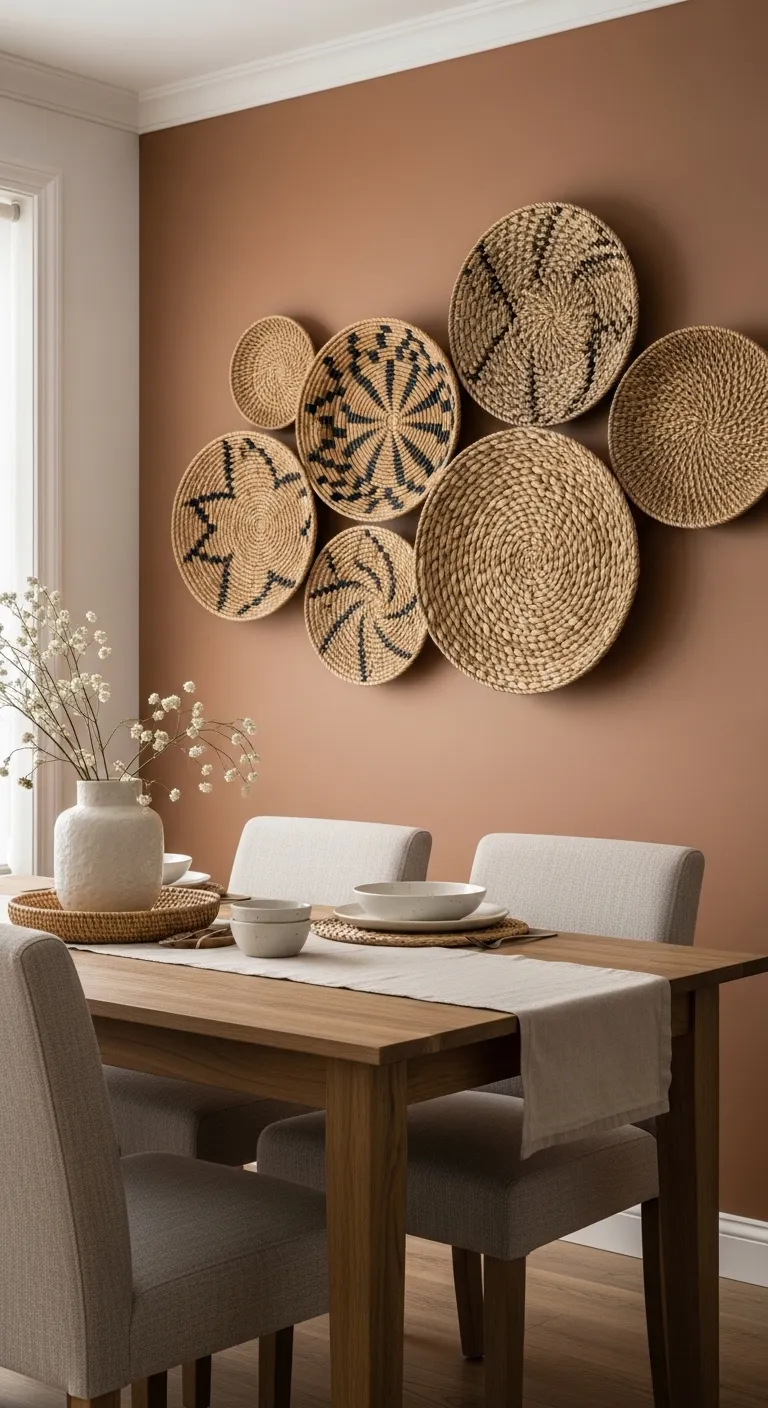
A woven basket wall adds natural texture and warmth that feels perfect for a dining space. Choose baskets made from rattan, seagrass, palm leaves, or woven bamboo. Instead of using identical baskets, mix various sizes and patterns while keeping the color palette neutral. Natural tan, soft brown, and cream tones blend easily with most dining furniture. Start with the largest basket in the center and arrange smaller baskets around it to create a circular or flowing layout. The woven textures add visual softness that contrasts nicely with smooth walls and wooden dining tables. Soft overhead lighting enhances the basket patterns and shadows, creating a cozy and welcoming atmosphere during dinner gatherings.
14. Picture Ledge Art Rotation Wall
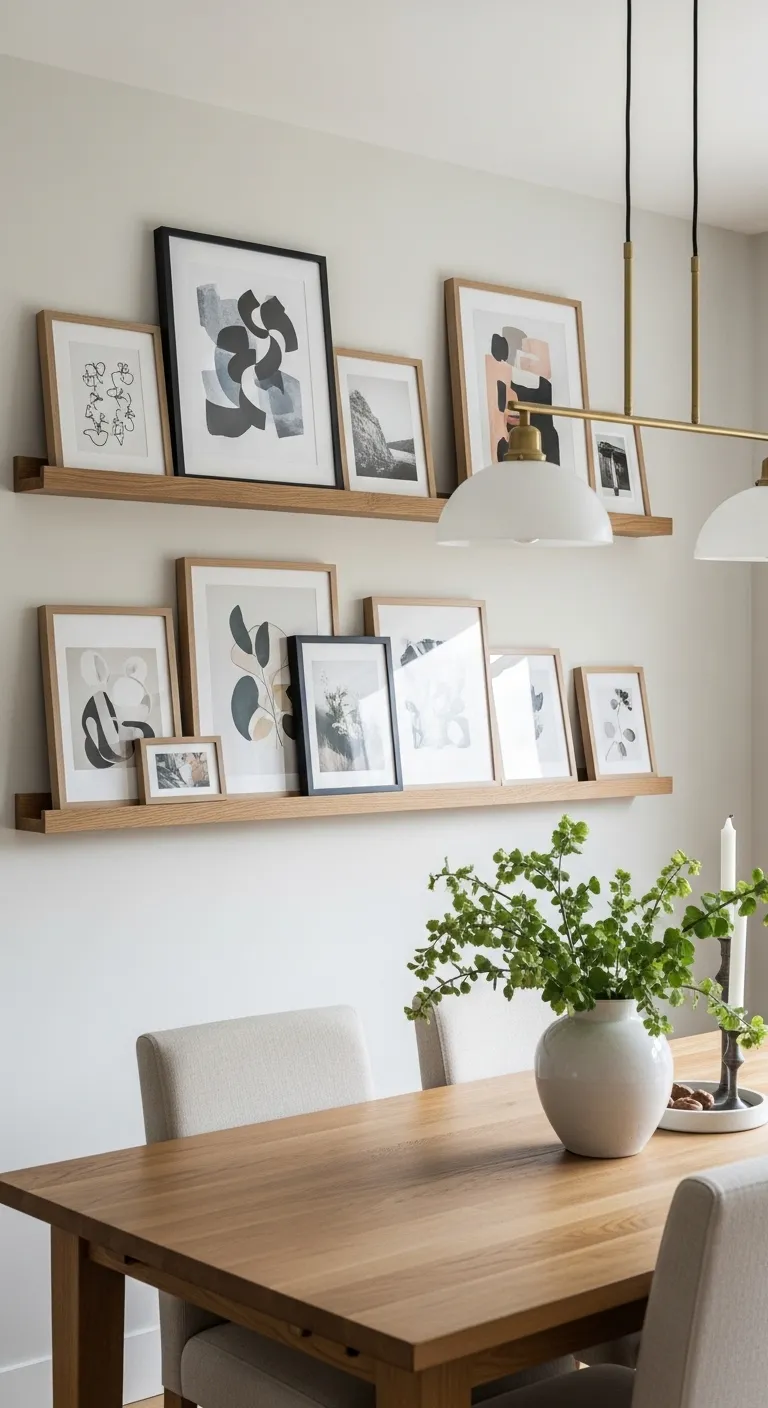
A picture ledge wall gives you freedom to change artwork whenever you want. Install two or three long picture ledges horizontally across the dining room wall. Lean framed art prints, photography, and small decorative objects along the ledges instead of hanging them permanently. This layered arrangement feels relaxed yet stylish. Choose frames in coordinated tones like black, oak, or white so the wall still feels cohesive even when the artwork changes. You can rotate seasonal prints, food photography, or abstract artwork throughout the year. The ledges also allow you to layer frames in front of each other slightly, creating visual depth that looks curated and creative.
15. Large Fabric Wall Hanging
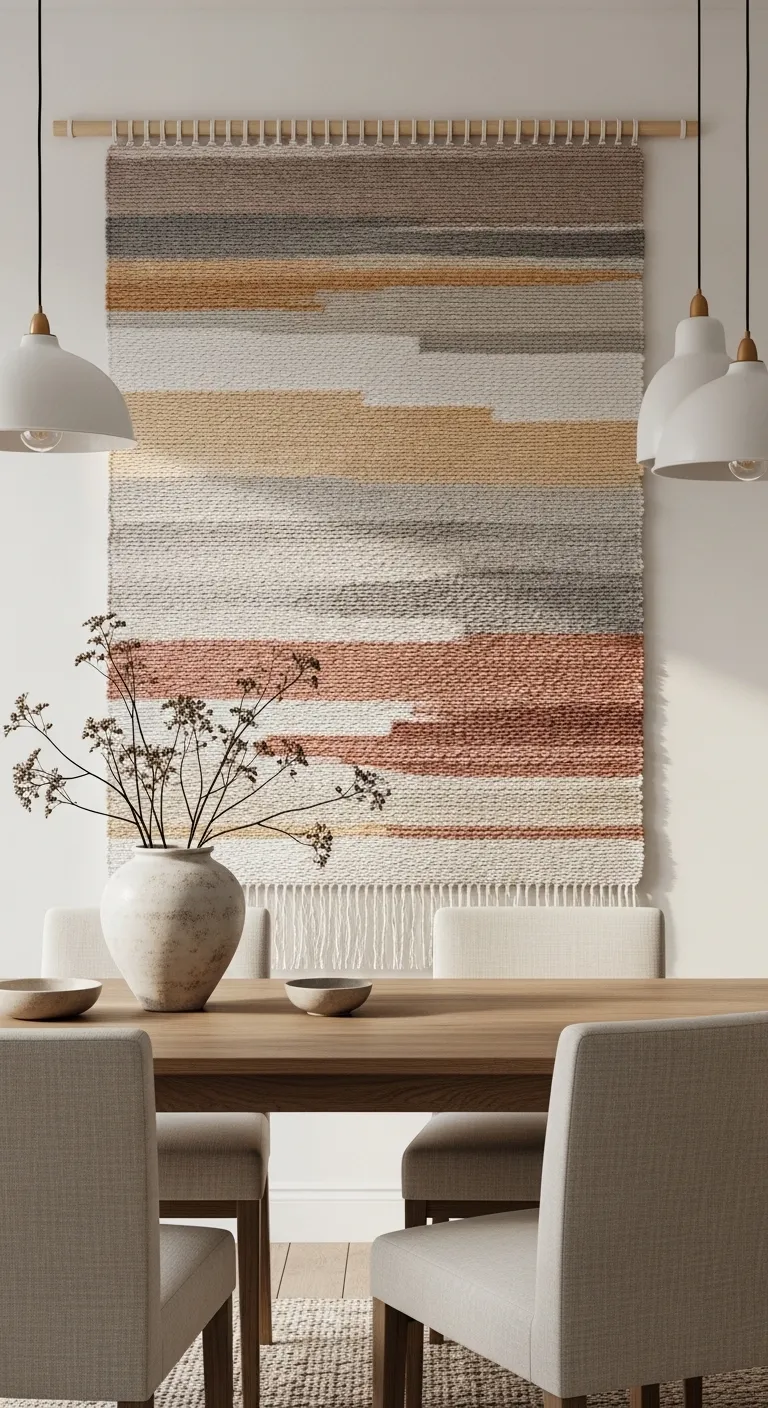
A large fabric wall hanging introduces softness and texture that painted walls cannot provide. Choose woven textile art made from cotton, wool, or linen with subtle patterns or handcrafted details. Neutral tones like sand, ivory, clay, and muted terracotta create a calm and welcoming dining environment. Hang the textile using a wooden dowel or slim rod so the fabric drapes naturally. The gentle folds and woven texture absorb light and soften the space, which works especially well in dining rooms with hard surfaces like wooden tables and tile floors. This style suits modern boho, rustic, and relaxed contemporary interiors where natural materials bring warmth and comfort.
16. Vintage Window Frame Wall Decor

Repurposed window frames create a charming architectural detail on dining room walls. Look for old wooden window frames with multiple glass panes or distressed wood finishes. Mount the frame directly on the wall as a decorative piece, or place a mirror behind it to reflect light through the window sections. The frame structure adds character while keeping the design simple. Soft neutral paint colors like cream or pale gray help the aged wood stand out without overwhelming the room. This idea works beautifully in farmhouse or cottage-style dining rooms where vintage elements add personality and a sense of history.
17. Color Block Accent Wall

A color block wall introduces bold visual energy without requiring complex décor pieces. Instead of painting the entire wall one color, divide the wall into large geometric sections. For example, paint the lower half of the wall in warm terracotta while keeping the upper half soft cream. Another option is a large arch shape painted behind the dining table in dusty blue or olive green. The color block acts like built-in artwork, creating a strong focal area for the table and chairs. Pair it with simple décor such as a minimal pendant light and neutral furniture so the painted shapes remain the highlight.
18. Floating Cabinet Display Wall
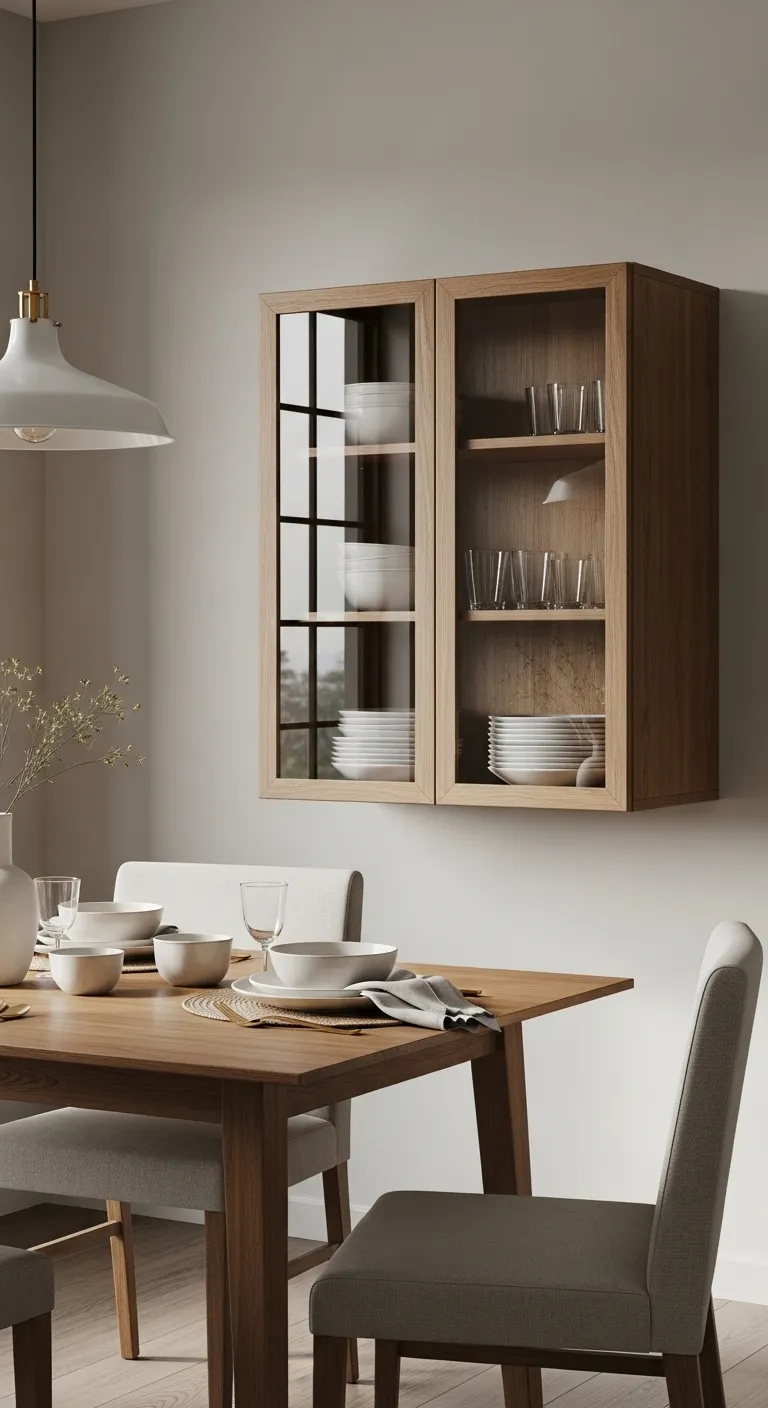
A slim floating cabinet adds both storage and style to a dining room wall. Choose a wall-mounted cabinet with glass doors or open shelving to display decorative pieces. Inside the cabinet, arrange ceramic plates, glassware, or small sculptures in an organized layout. Soft interior lighting can highlight the objects and create a warm glow during evening dinners. Wood finishes like walnut or oak add warmth, while matte black cabinets create a modern contrast against lighter walls. Because the cabinet floats above the floor, the wall still feels open and spacious while gaining a stylish functional feature.
19. Framed Wallpaper Art Panels
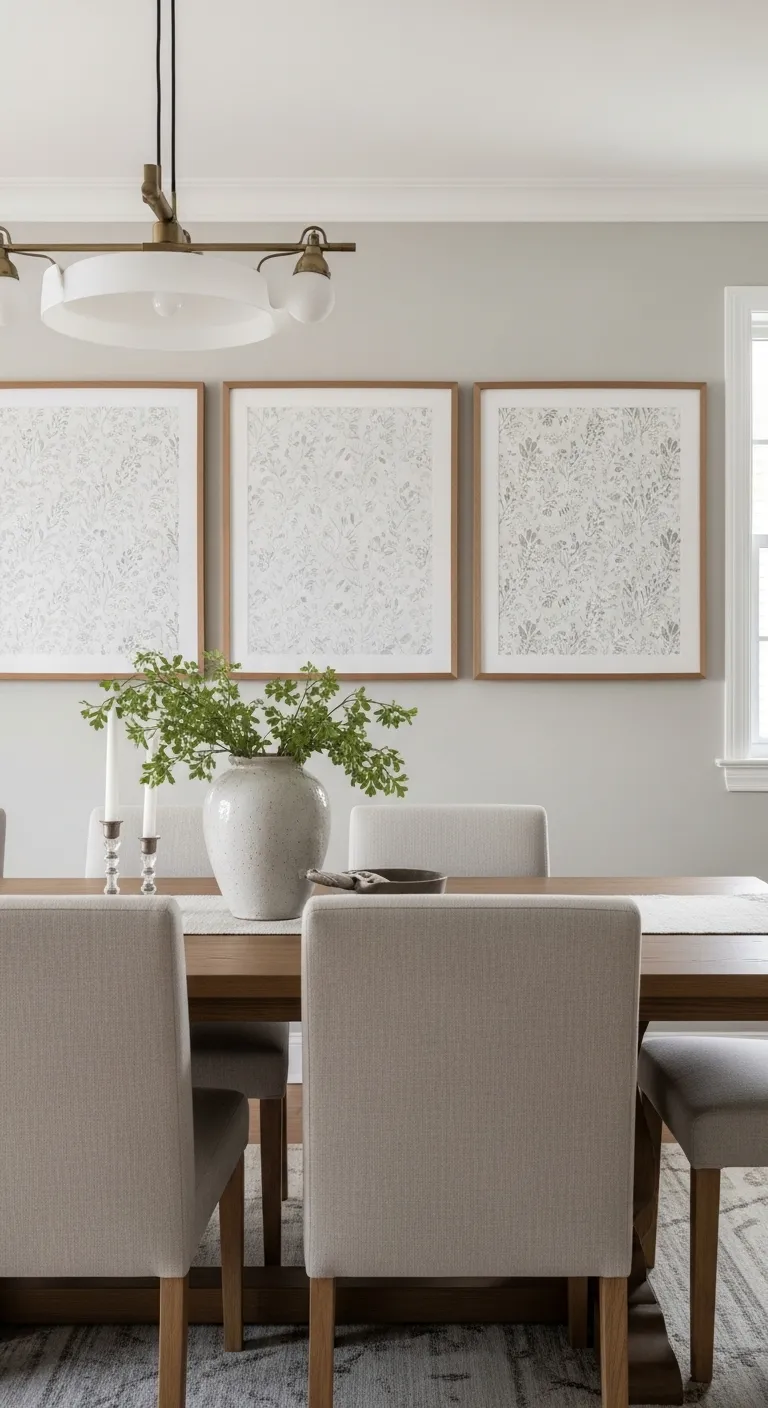
Wallpaper does not always need to cover an entire wall. Instead, frame sections of wallpaper like artwork to create decorative panels. Choose wallpaper with subtle botanical prints, delicate patterns, or textured designs. Place the wallpaper inside large frames and hang them evenly across the dining room wall. This technique adds pattern without overwhelming the room. It also allows you to use bold prints that might feel too strong for full wall coverage. Matching frames help unify the design, while the patterned panels add elegance and personality to the dining area.
20. Dining Quote Typography Art
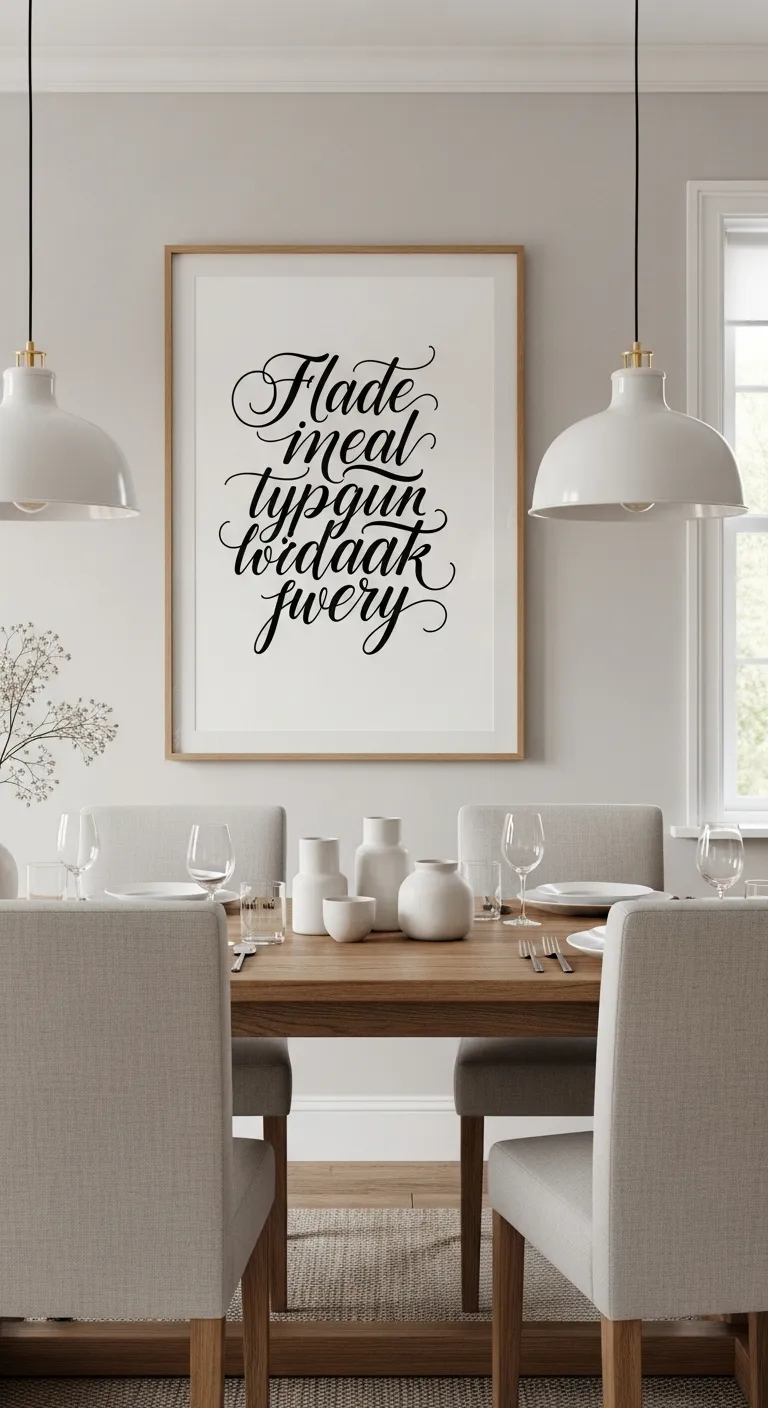
Typography wall art adds personality and conversation to the dining room. Choose a meaningful phrase related to gathering, sharing meals, or enjoying time together. Instead of a simple printed quote, select typography art that uses creative lettering styles and balanced spacing. Black lettering on a warm white background keeps the design clean and timeless.
Hang the artwork above a buffet table or centered on the main wall near the dining table. Pair it with small decorative pieces such as candles or plants to complete the scene. This idea works especially well in family dining spaces where meaningful words can enhance the welcoming atmosphere.
21. Arched Wall Feature with Subtle Lighting

An arched wall feature creates a soft architectural focal point that feels elegant and modern at the same time. Instead of hanging traditional artwork, paint or build a shallow arch shape directly on the wall behind the dining table. The curved shape instantly draws attention and frames the dining area beautifully. Choose warm and calming colors like muted terracotta, dusty blue, or olive green so the arch stands out without overpowering the room. Position the dining table so it sits naturally within the arch shape, making the design feel intentional.
22. Nature-Inspired Living Green Wall

A living green wall brings freshness and life directly into the dining space. Instead of traditional décor, install a vertical plant wall with small planters mounted in a structured grid. Choose easy indoor plants such as pothos, philodendron, ferns, or trailing ivy. These plants create soft greenery that adds texture and movement to the wall. The natural color instantly brightens the room and makes the dining area feel calm and refreshing.
Use wooden or matte black planters to keep the arrangement organized and visually balanced. Position the green wall near natural light so the plants stay healthy and vibrant. This design works beautifully with wooden dining tables, neutral chairs, and warm lighting. The natural greenery also improves the atmosphere of the room, making every meal feel more relaxed and inviting.
Conclusion
Your dining room walls offer endless opportunities to add character, warmth, and creativity. With these 22 dining room wall decor ideas, you can transform a plain wall into a space that feels thoughtful and visually inspiring. From textured panels and sculptural metal art to woven baskets and living plant walls, each idea brings its own personality to the dining area.
Small design choices like lighting, textures, and color combinations can completely change how the room feels. The key is choosing elements that reflect your style while keeping the space comfortable and welcoming.
Save the ideas that inspire you most, experiment with layouts, and start turning your dining room walls into a beautiful focal point that everyone notices when they sit down at the table.