22 Bold Colorful Living Room Ideas for Creative Homes
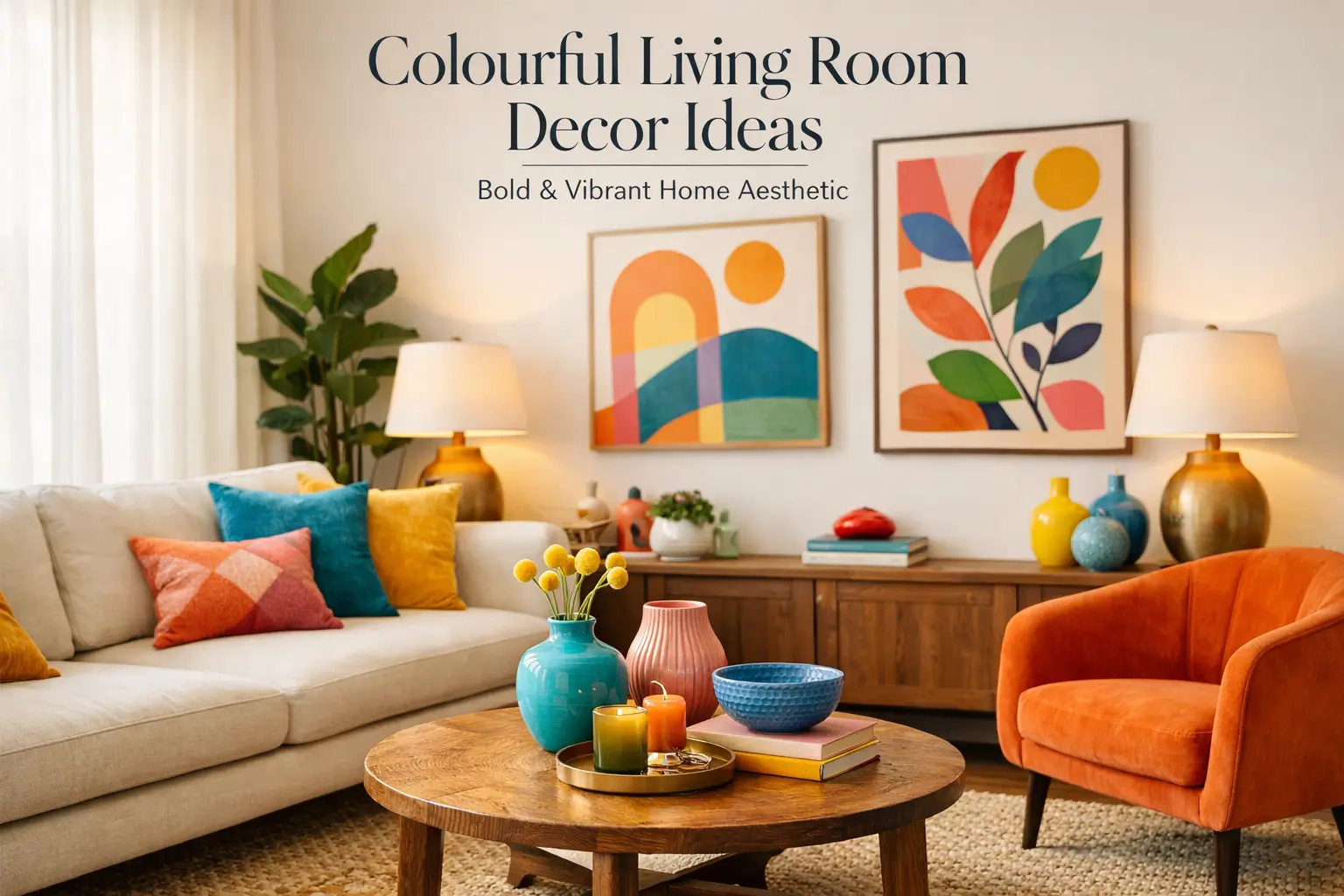
A bold colorful living room turns a plain space into a room full of life, personality, and confidence. If your space feels flat or dull, color is the fastest way to wake it up. You do not need a full remodel. You need smart color placement, strong contrast, and texture that makes the room feel layered.
In this guide, you will find creative ideas that go beyond painting one wall red. You will see how to mix rich jewel tones, playful pastels, patterned rugs, statement sofas, and layered lighting without making the room feel messy.
Each idea focuses on practical steps you can use right now, even in a small apartment.
1. Paint the Ceiling a Deep Statement Color
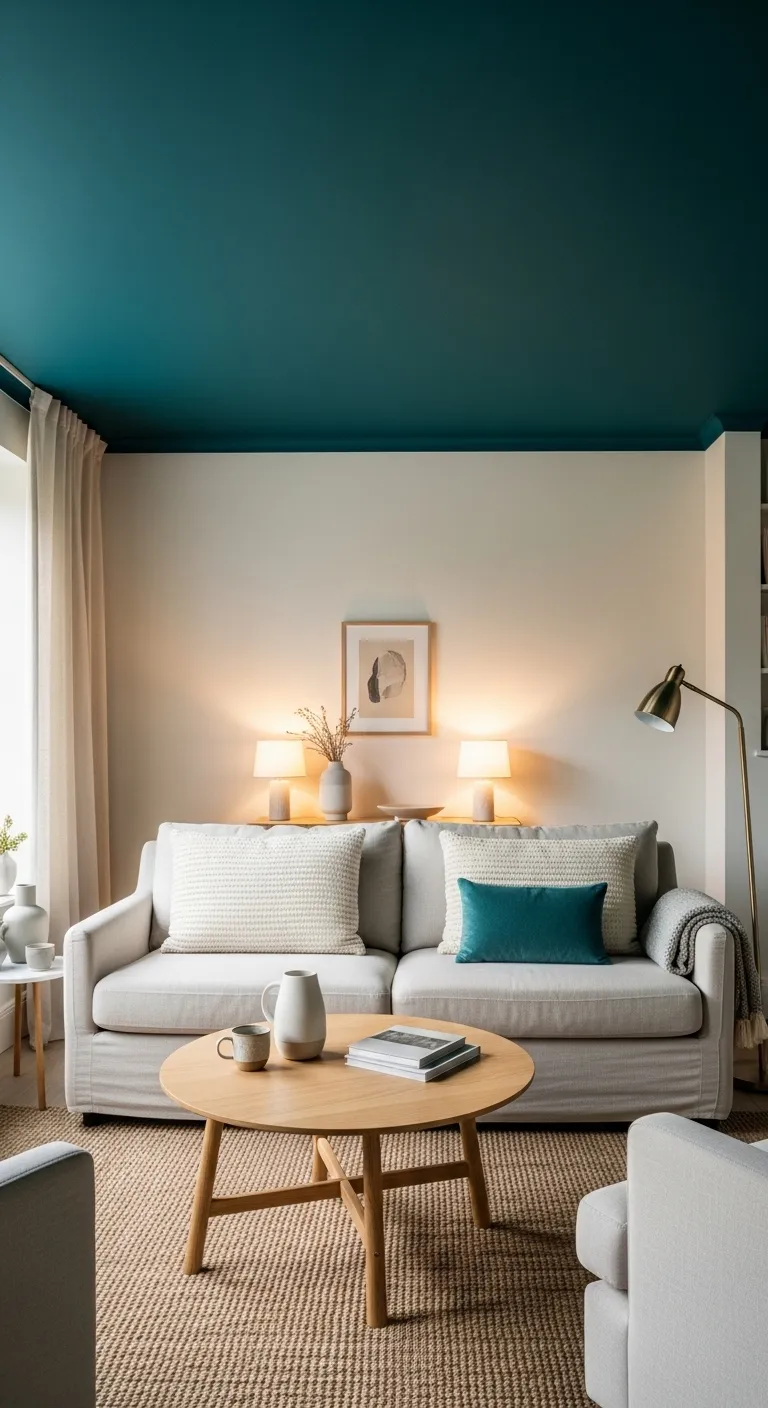
Paint the ceiling a bold shade to make your living room feel dramatic and cozy at the same time. Most people ignore the ceiling, but it is a large blank canvas. Try deep teal, plum, or burnt orange above white or light beige walls. This creates contrast without shrinking the room.
Add warm lighting like soft yellow bulbs or a brass chandelier so the ceiling color glows instead of looking dark. Pair this with neutral furniture so the ceiling becomes the star. If your room has crown molding, paint it white to frame the bold tone cleanly. This works especially well in rooms with high ceilings because it visually lowers the space and makes it feel intimate.
2. Use a Color Block Wall Behind the Sofa
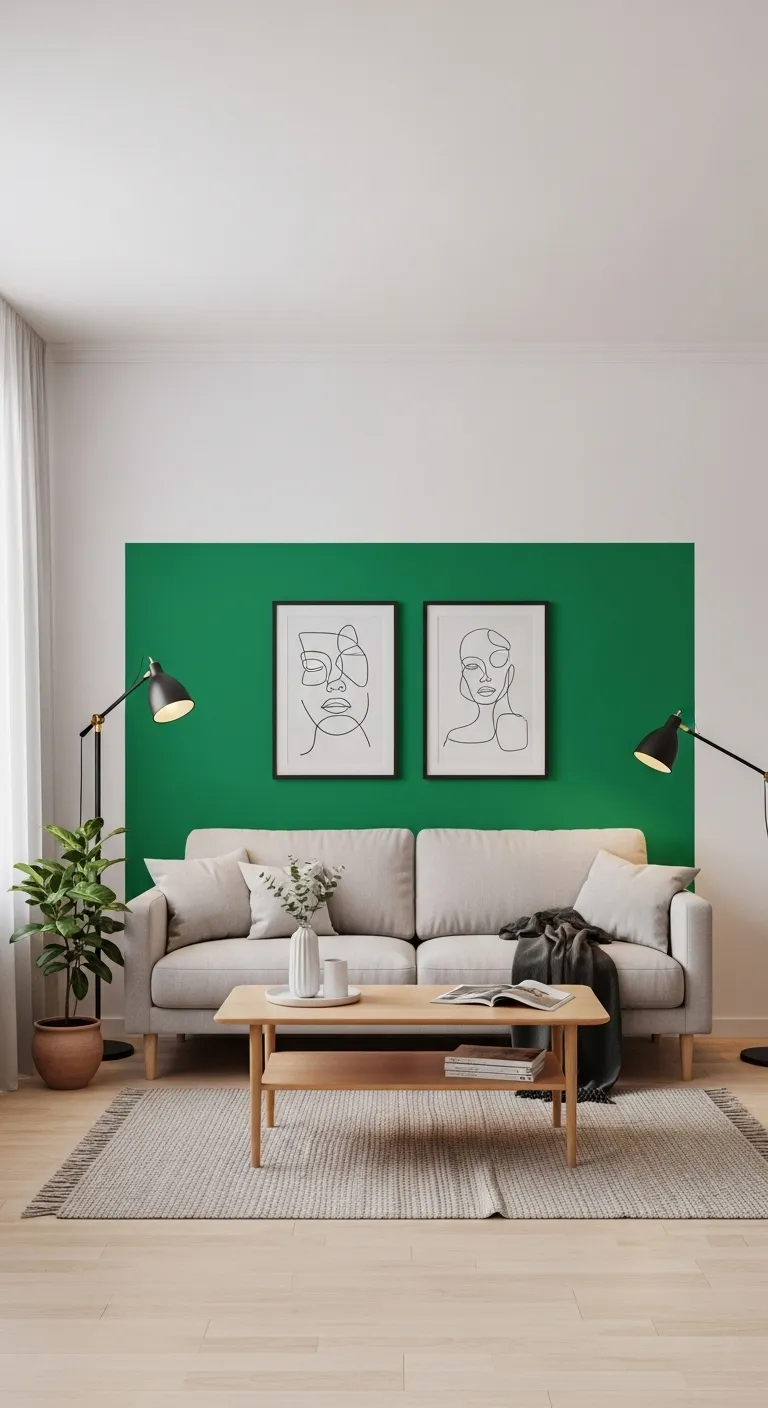
Create a strong focal point by painting a large rectangular block of color behind your sofa. Choose a rich shade like emerald green, cobalt blue, or mustard yellow. Keep the rest of the walls neutral so the block stands out clearly.
Make the block slightly wider than the sofa to frame it like artwork. Add floating shelves or black framed prints inside the painted area for extra depth. This idea works well in rentals too because you can repaint it easily later. It gives your colorful living room decor a structured and intentional look instead of random splashes of color.
3. Mix Two Bold Sofas in One Space
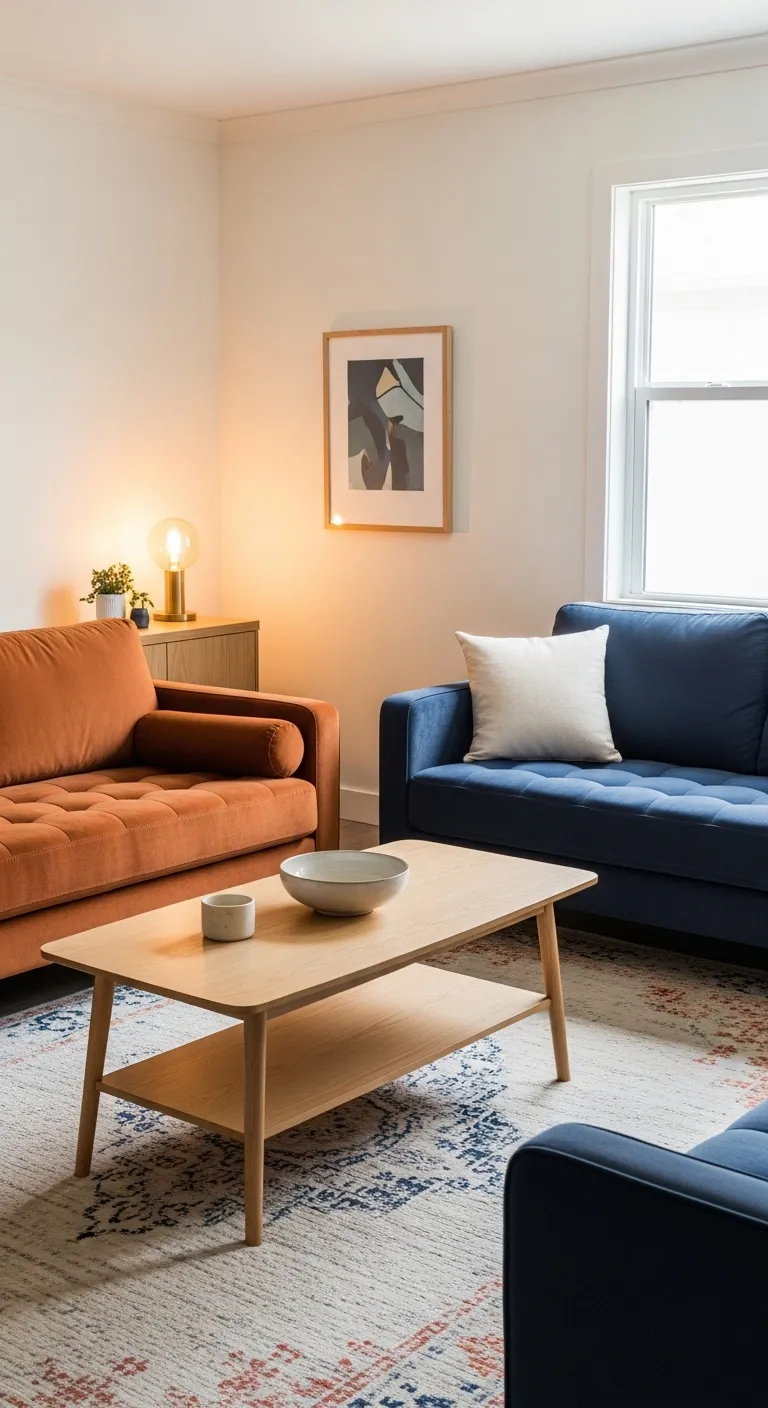
Place two different colored sofas in the same room to create visual tension in a good way. For example, combine a rust velvet sofa with a navy fabric loveseat. The key is balance. Keep the wall color soft so the sofas shine.
Tie both colors together with throw pillows that include hints of each shade. A patterned rug with touches of rust and blue can pull the whole layout together. Keep coffee tables simple in wood or glass so the space does not feel crowded. This setup works well in open floor plans where the seating area needs strong identity.
4. Layer a Bright Rug Over a Neutral Carpet
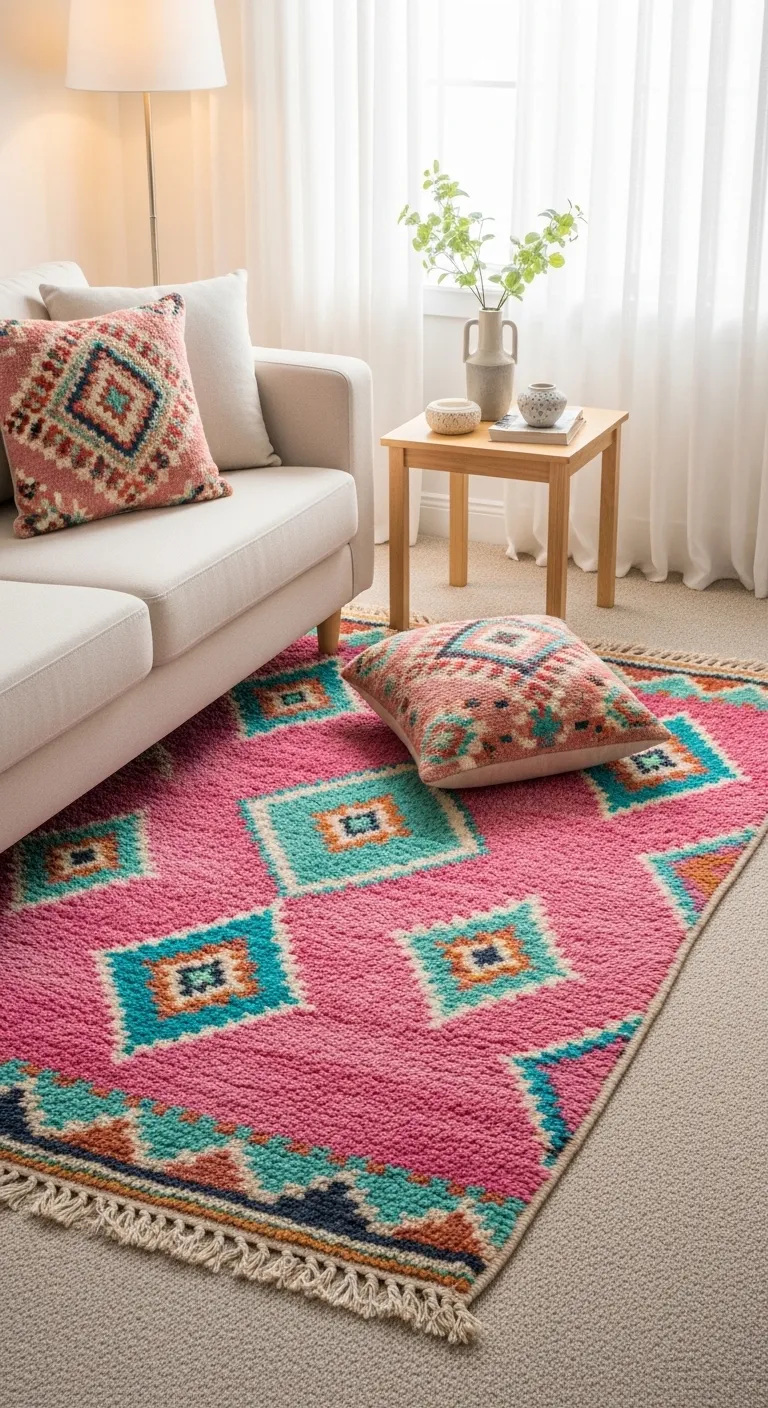
Lay a vibrant patterned rug on top of a plain carpet to add instant personality. Choose Moroccan prints, geometric shapes, or floral patterns in bold pink, orange, or turquoise. This method adds color without changing walls or furniture.
Make sure the top rug is slightly smaller than the seating area so it feels placed on purpose. Add cushions in one or two colors from the rug to create harmony. This trick is perfect if you want bold living room ideas that do not require paint or heavy changes.
5. Pair Jewel Tones with Matte Black Accents
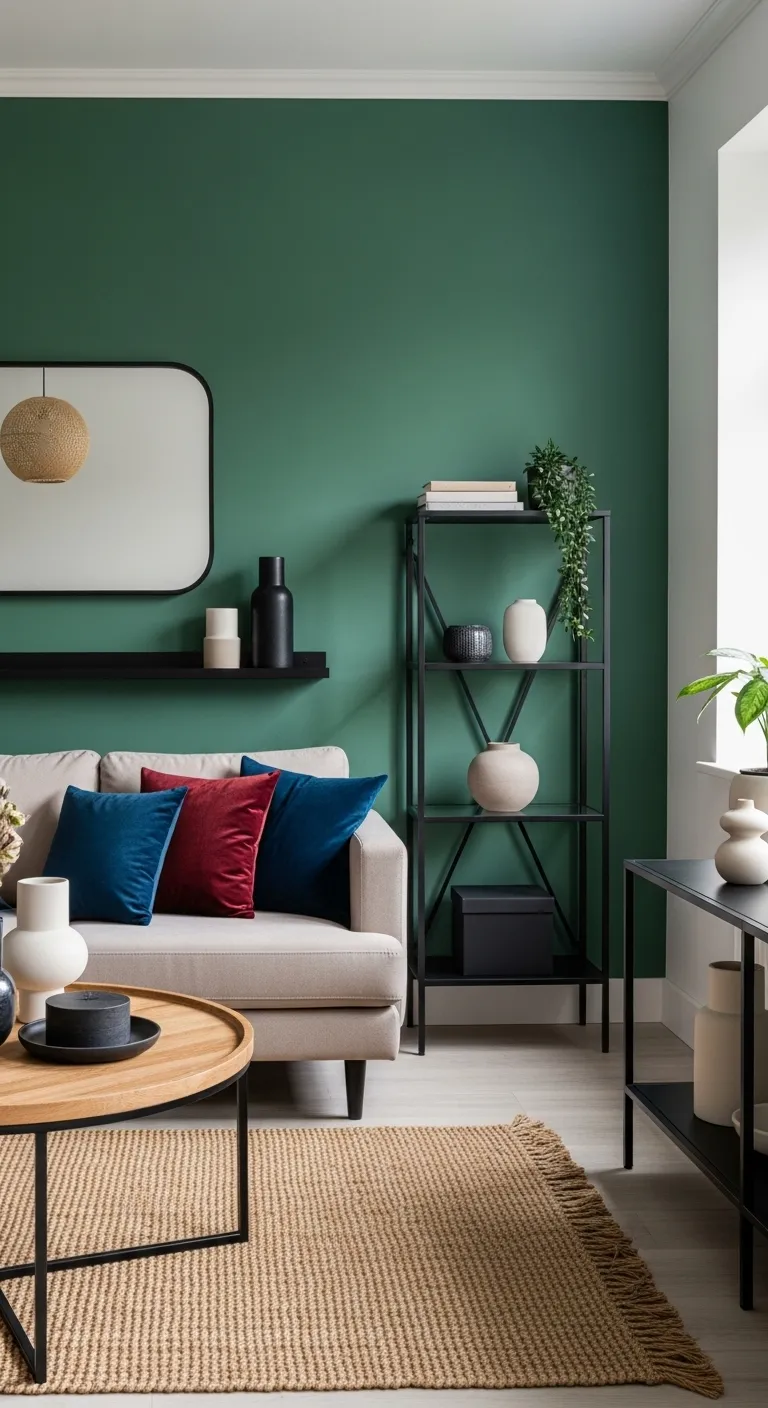
Combine jewel tones like sapphire, emerald, or ruby with matte black elements for a rich and grounded look. Paint one wall emerald green and place a black metal bookshelf against it. Add velvet cushions in deep blue or wine red.
Use warm lighting to soften the black so it does not look harsh. Brass or gold lamps work well here. The contrast between glossy velvet and matte black adds depth. This style feels artistic and confident without feeling chaotic.
6. Create a Gallery Wall with Colorful Frames
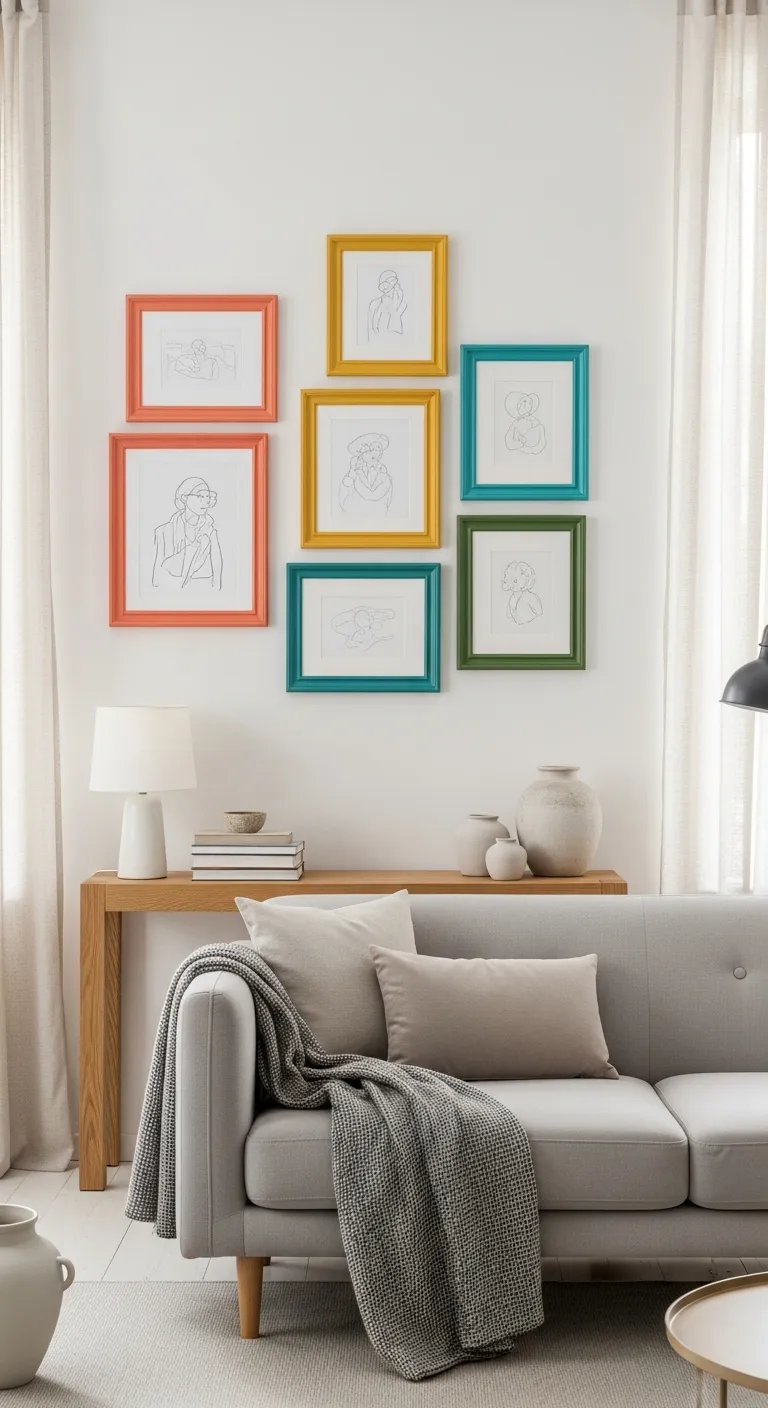
Design a gallery wall using frames in different bold colors instead of standard black or white. Choose frames in coral, teal, mustard, and forest green. Keep the art inside simple, such as line drawings or black and white photos, so the frames become the highlight.
Arrange the frames in a loose grid for a clean finish. Use painter’s tape first to test placement. This idea brings color into your modern living room decor without painting walls. It works well in small spaces where you want impact without heavy furniture.
7. Add a Painted Built In or Bookshelf
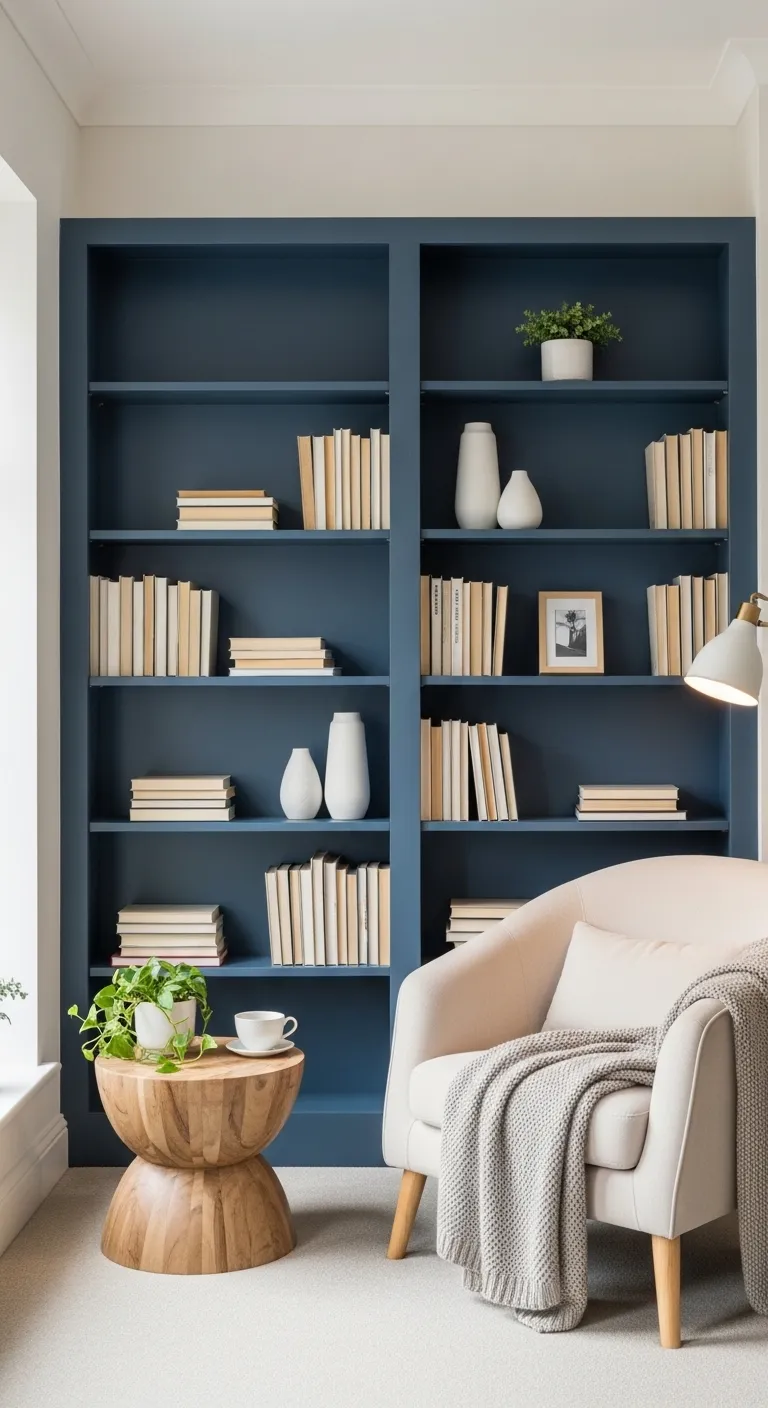
Paint a bookshelf or built in cabinet in a saturated shade like peacock blue or terracotta. Leave the surrounding walls neutral so the shelf pops. Then style it with books arranged by color for a rainbow effect.
Add small ceramic vases in contrasting shades. For example, use white ceramics against a dark background to create balance. This idea turns storage into a design feature. It also gives your space a custom look without changing the entire room.
8. Use Sheer Curtains in a Bold Hue
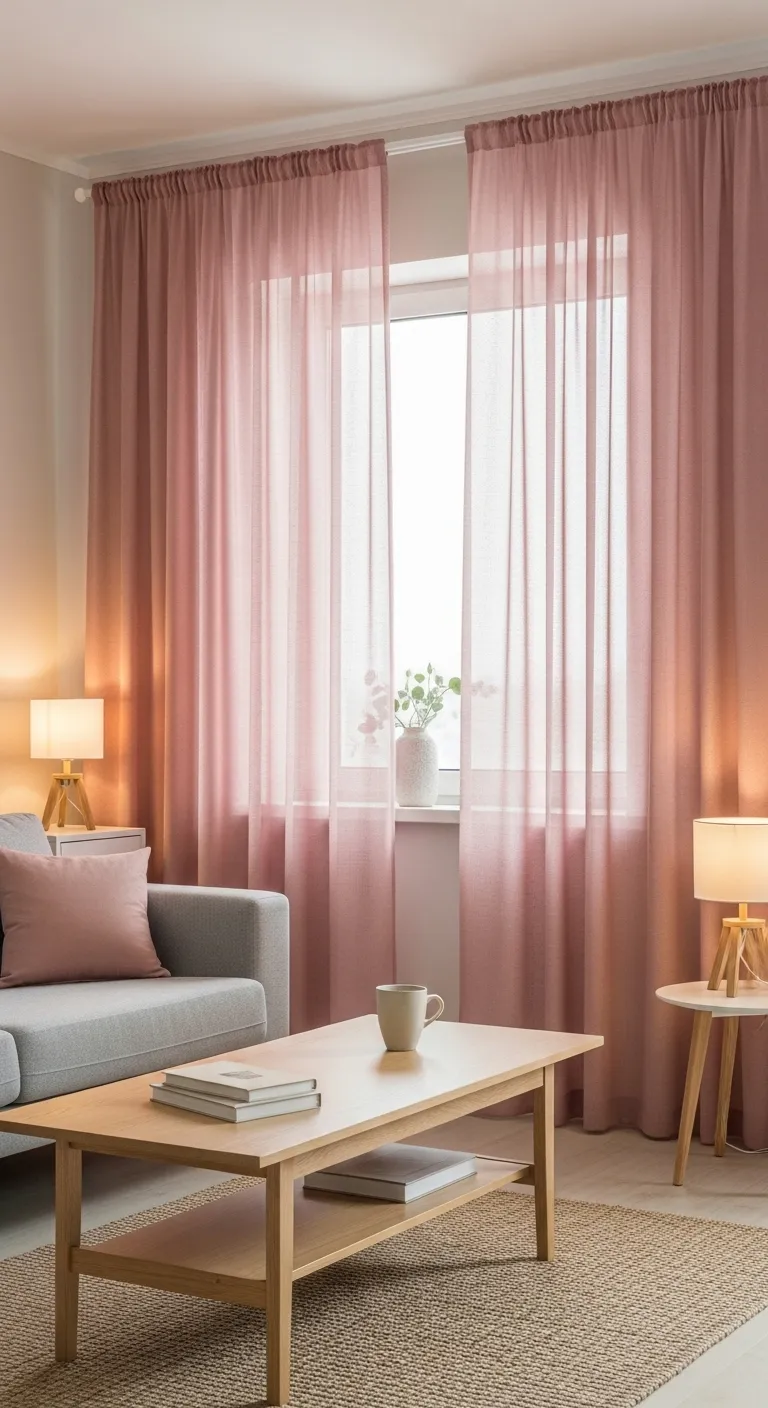
Replace plain curtains with sheer fabric in a bold tone like dusty rose, lime green, or sky blue. When sunlight hits the fabric, the room will glow softly in that color. It feels playful but not heavy.
Keep furniture simple so the curtains stay the focus. Use a curtain rod in gold or brushed nickel for a polished finish. This is a low cost way to test color in your bright living room ideas without making permanent changes.
9. Combine Warm and Cool Colors Intentionally
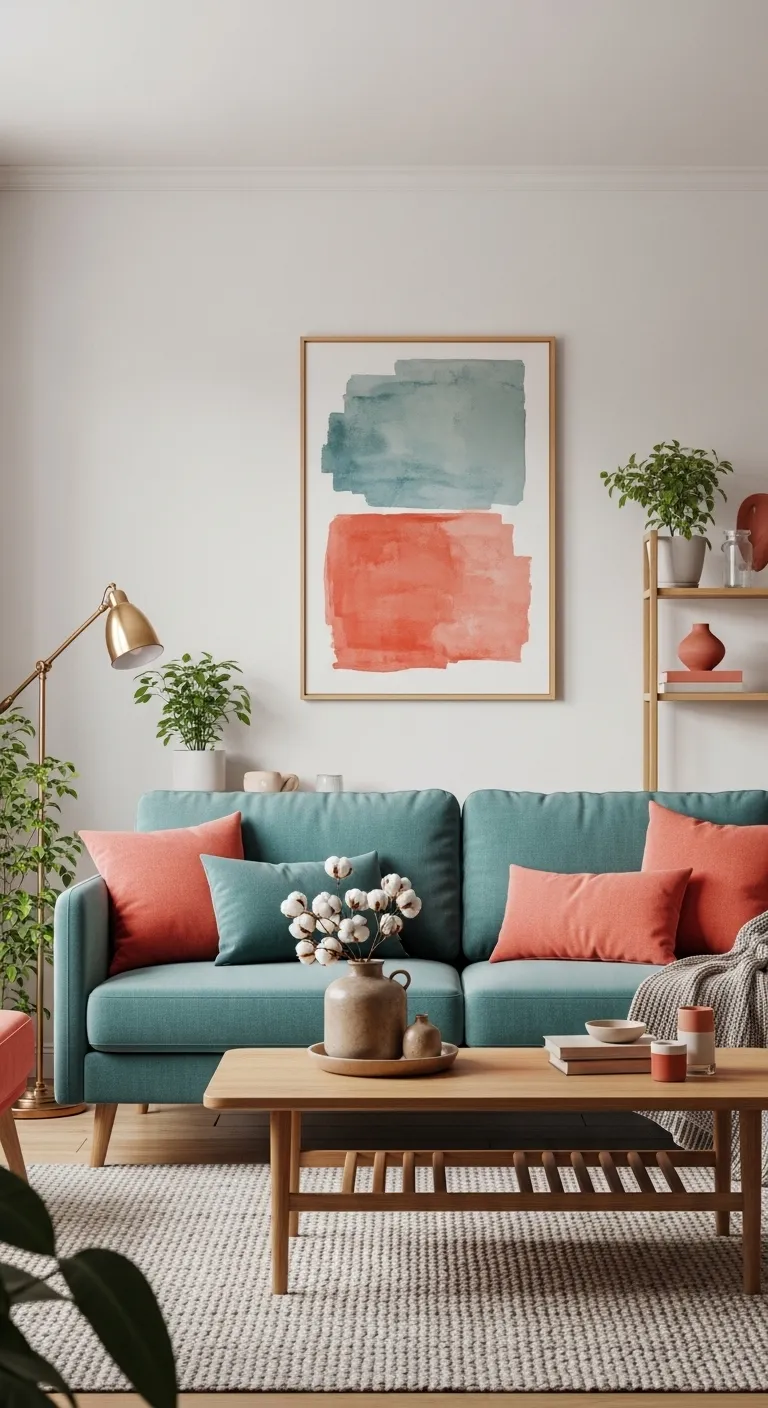
Mix warm tones like mustard and coral with cool tones like teal or navy in a planned way. Start with one main color and use the other as an accent. For example, use a teal sofa and add coral pillows and artwork.
Keep flooring and large furniture neutral to prevent overload. Add plants to soften the contrast and bring natural texture. When done right, this mix feels energetic but still balanced. The key is repeating each color at least twice in the room.
10. Introduce a Statement Painted Arch
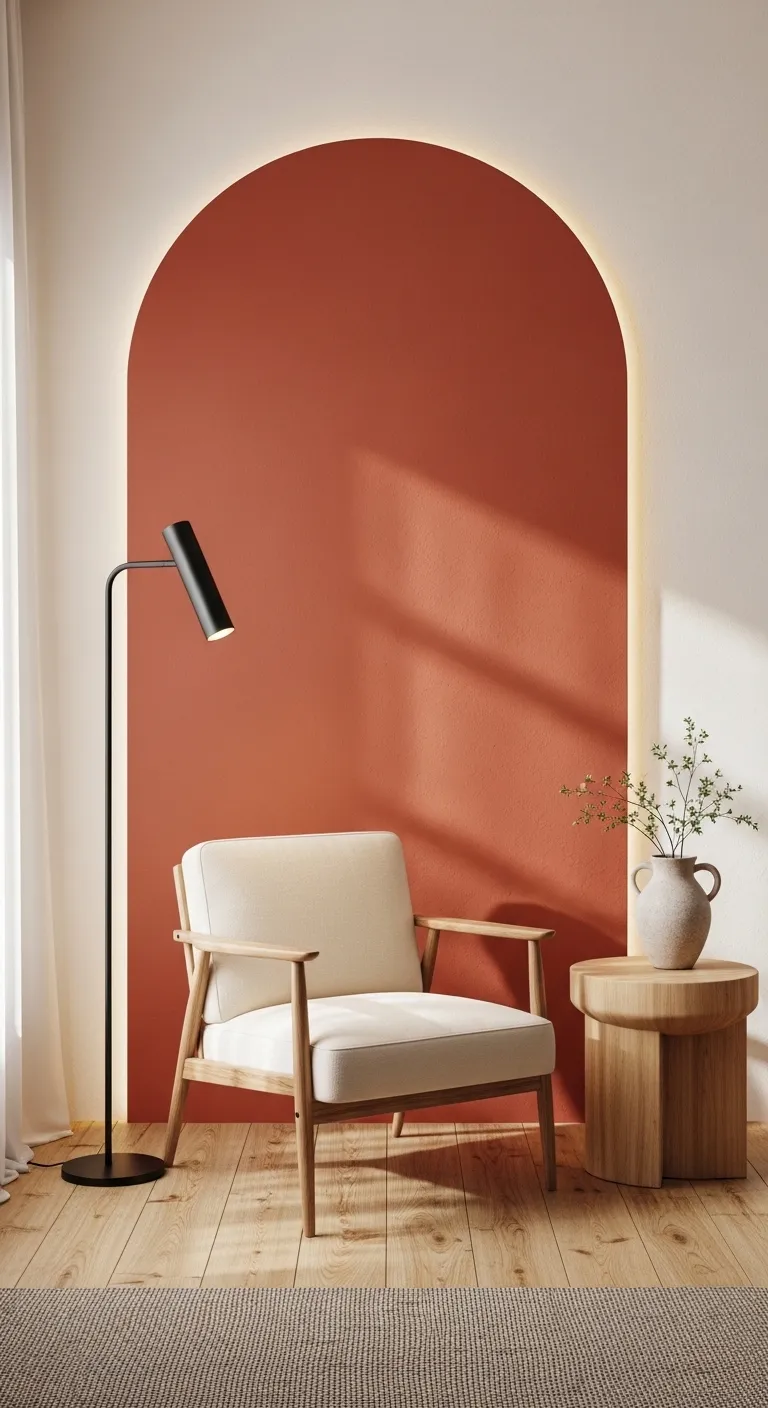
Paint a large arch shape on the wall behind a chair or console table in a bold shade. Choose clay red, royal blue, or deep purple. The curved shape adds softness while the color adds strength.
Place a simple armchair or bench in front of the arch to anchor it. Add a floor lamp to one side for height. This idea works well in minimalist spaces that need a pop of color without adding clutter. It also photographs beautifully, making it perfect for Pinterest saving.
11. Wrap the Room in One Saturated Color
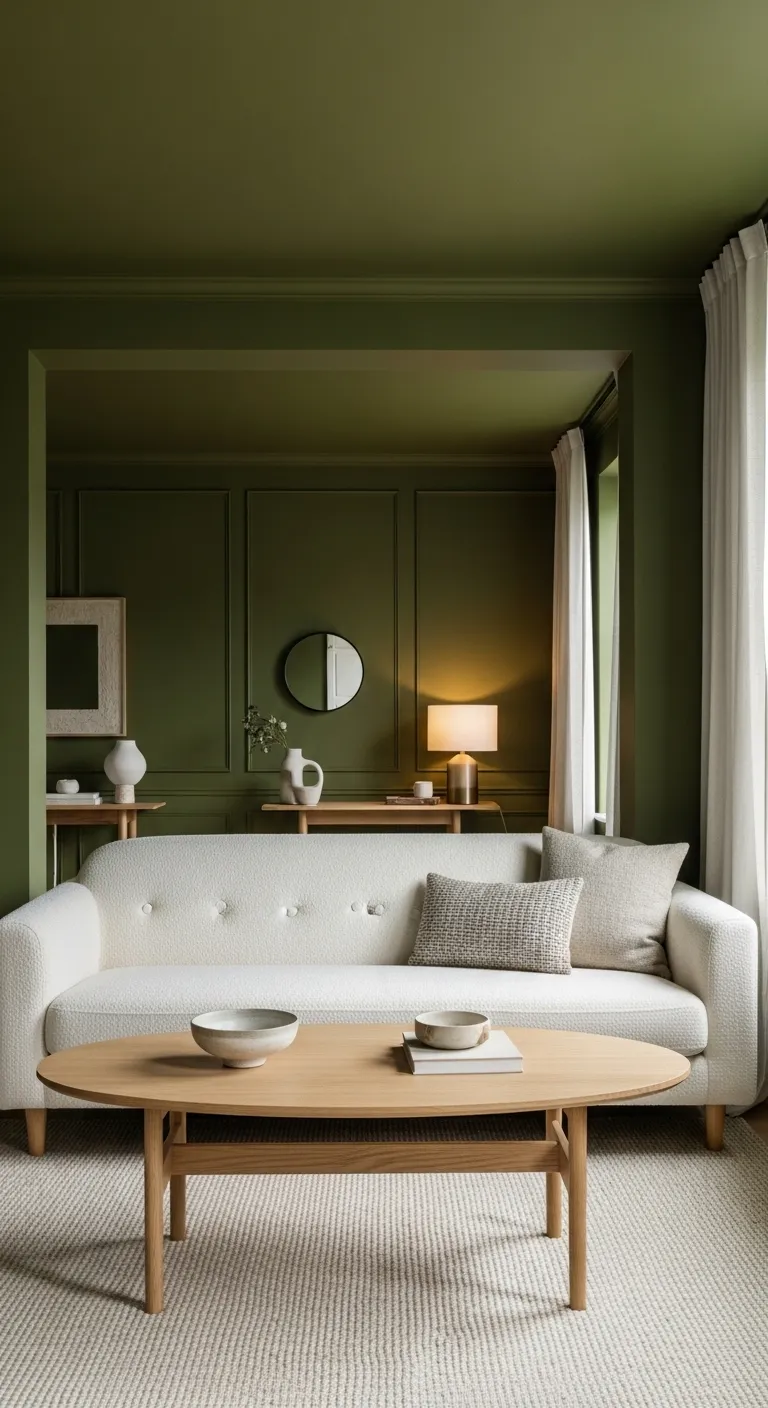
Paint all four walls in one rich tone to create a cocoon effect. Choose deep olive, smoky blue, or clay brown. When you commit fully to one shade, the room feels intentional instead of loud.
Balance the depth with lighter furniture such as cream sofas or pale wood tables. Add layered lighting using table lamps and wall sconces so the color looks warm at night. Use textured fabrics like linen or boucle to keep the space soft. This approach works well for a bold colorful living room that feels cozy instead of chaotic.
12. Choose a Bright Sofa as the Anchor
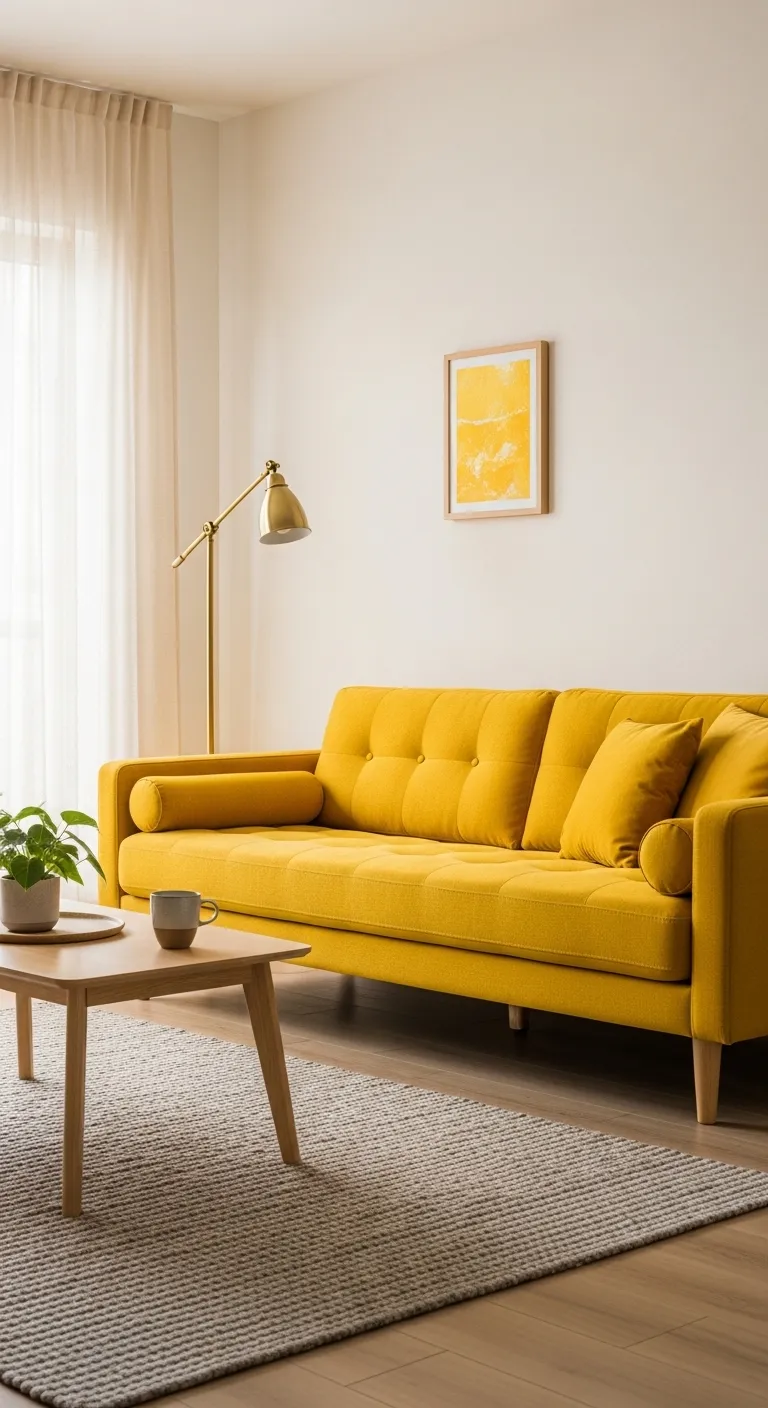
Place one vibrant sofa in the center of the room and let it lead the design. Think sunflower yellow, hot pink, or electric blue. Keep walls neutral so the sofa stands out clearly.
Repeat the sofa color in small details like a vase, artwork, or a throw blanket. Add a patterned rug with hints of that shade for balance. Avoid adding too many competing colors. One strong piece can carry the whole room if you support it with subtle accents.
13. Mix Glossy and Matte Finishes
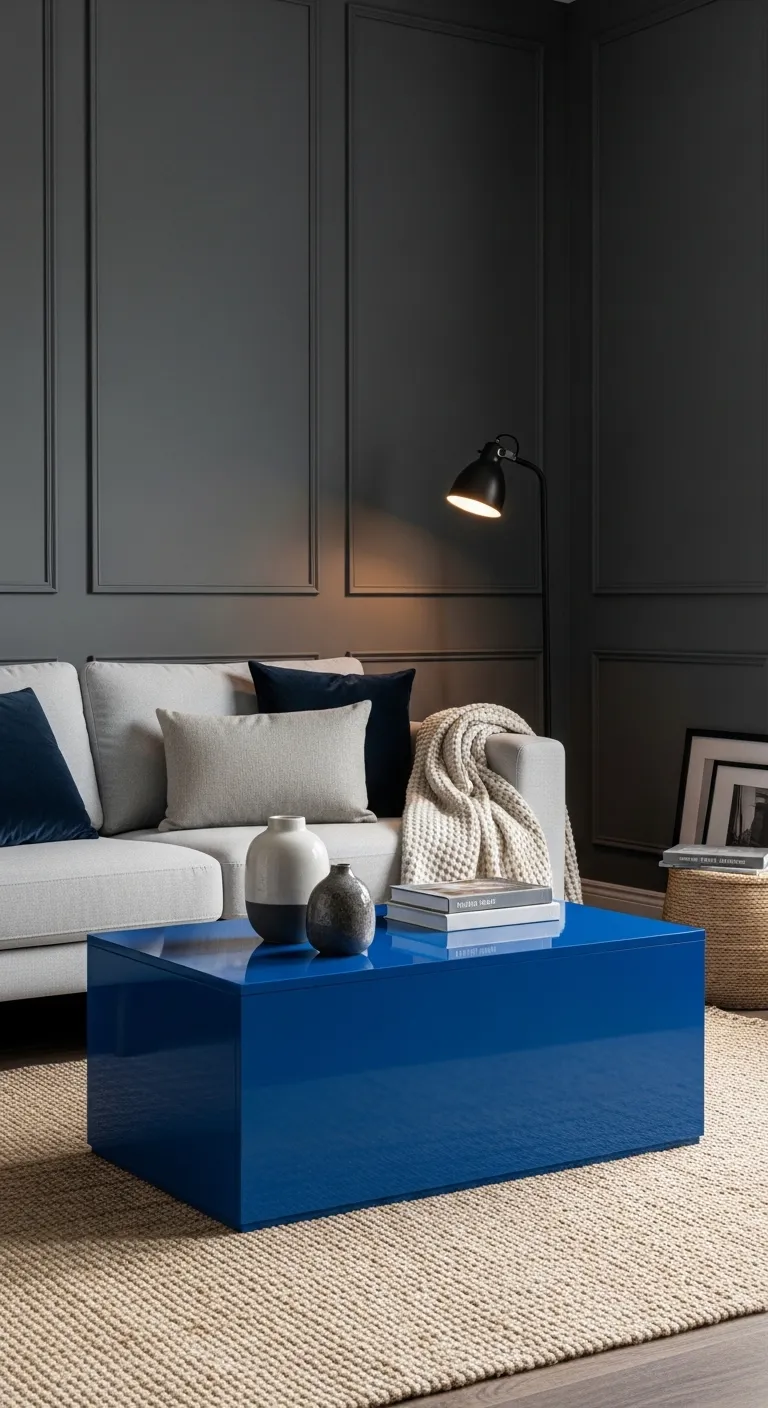
Combine shiny and flat surfaces to add depth without adding more colors. For example, pair a glossy cobalt coffee table with matte charcoal walls. Add velvet cushions and a soft woven rug.
The contrast in texture makes the room feel layered. Light will reflect differently on each surface, giving movement to the space. This method keeps your colorful living room decor interesting even with a limited color palette.
14. Paint Interior Doors a Contrasting Color
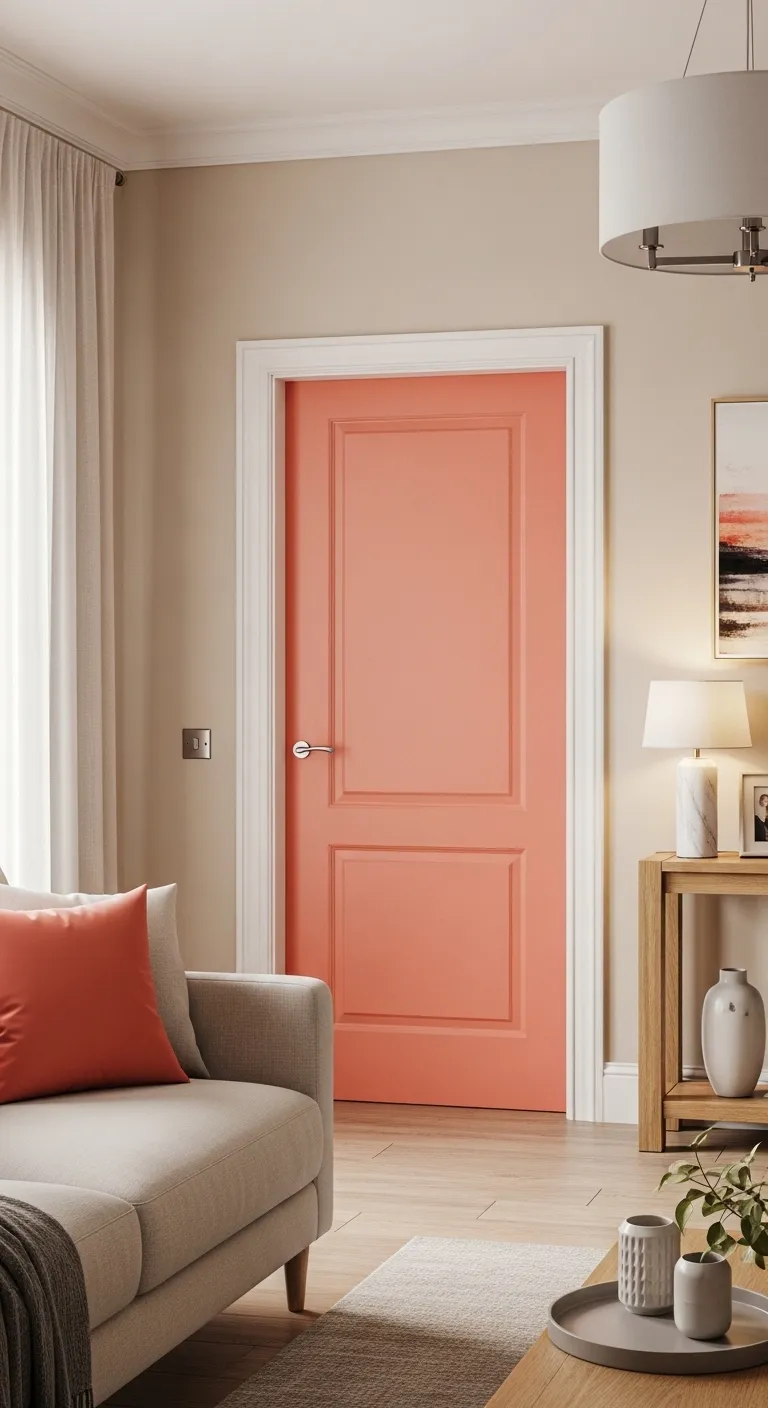
Paint your living room door in a bold shade like coral, mint green, or navy. Keep the surrounding trim white so the door becomes a feature instead of blending in.
This works well in open layouts where doors are visible from the sofa area. Add matching decor nearby, such as a cushion or artwork in the same tone. It is a small change with a strong visual impact, and it requires little effort.
15. Use Colorful Wood Stain Instead of Paint
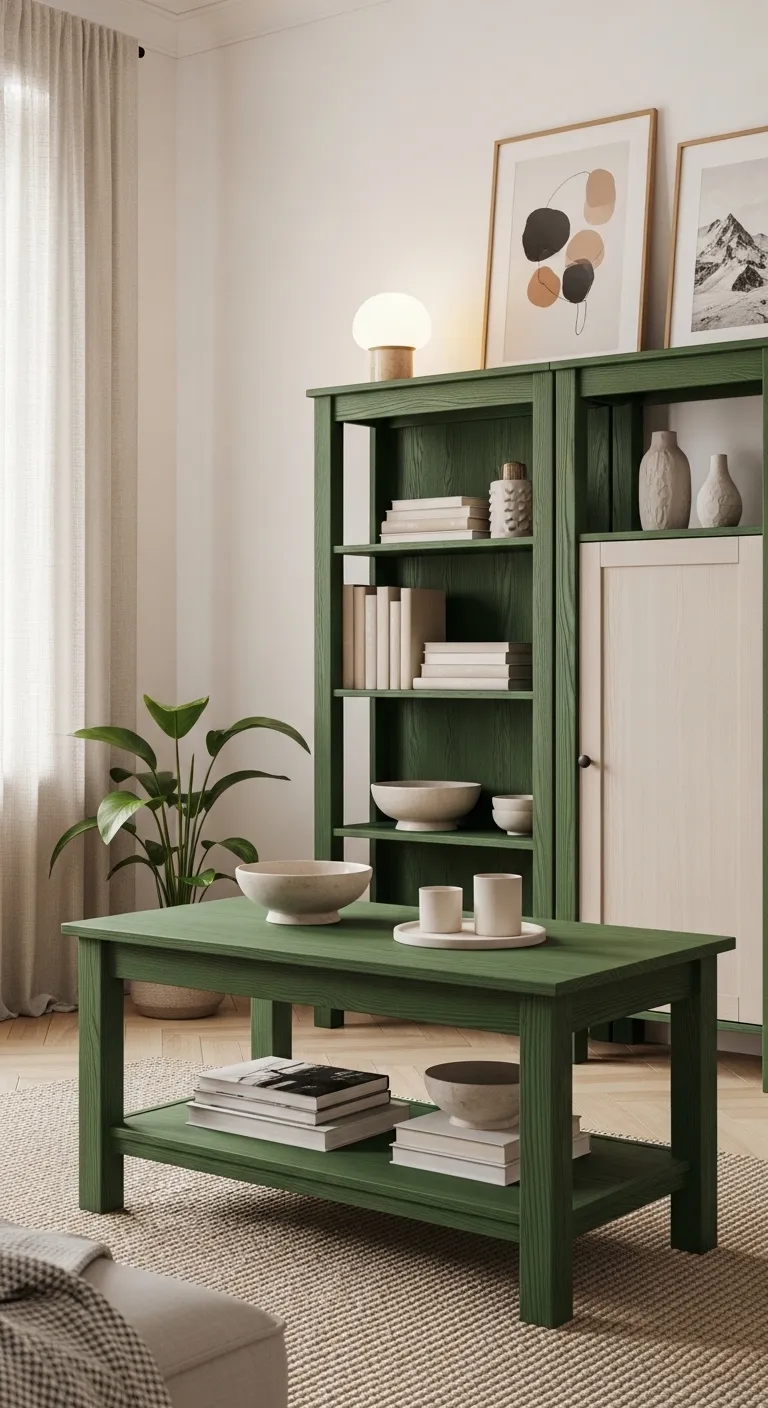
Apply tinted wood stains to furniture pieces like coffee tables or shelves. Try a deep red stain or a dark green finish that allows the wood grain to show through.
This adds color while keeping natural texture visible. Pair stained pieces with neutral upholstery for balance. The result feels artistic but grounded. It also gives older furniture a fresh look without replacing it.
16. Create a Two Tone Wall Split
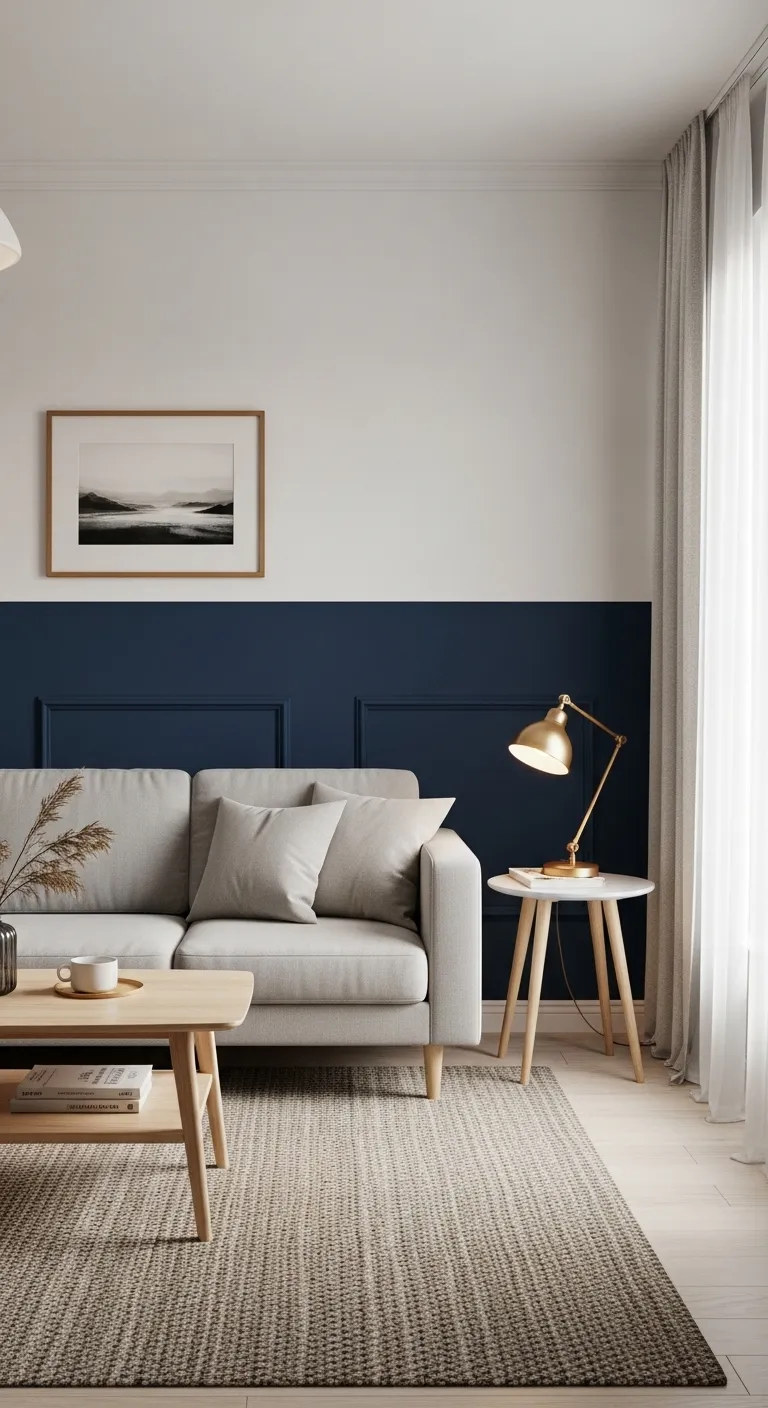
Paint the lower half of the wall in a bold color and keep the upper half light. Choose strong tones like navy, forest green, or terracotta below, and soft white above.
Add a thin molding strip where the colors meet for a clean finish. This technique visually lowers high ceilings and adds structure to plain rooms. Place simple art above the split line to keep the layout balanced. It works well in both small and large spaces.
17. Add a Patterned Accent Chair
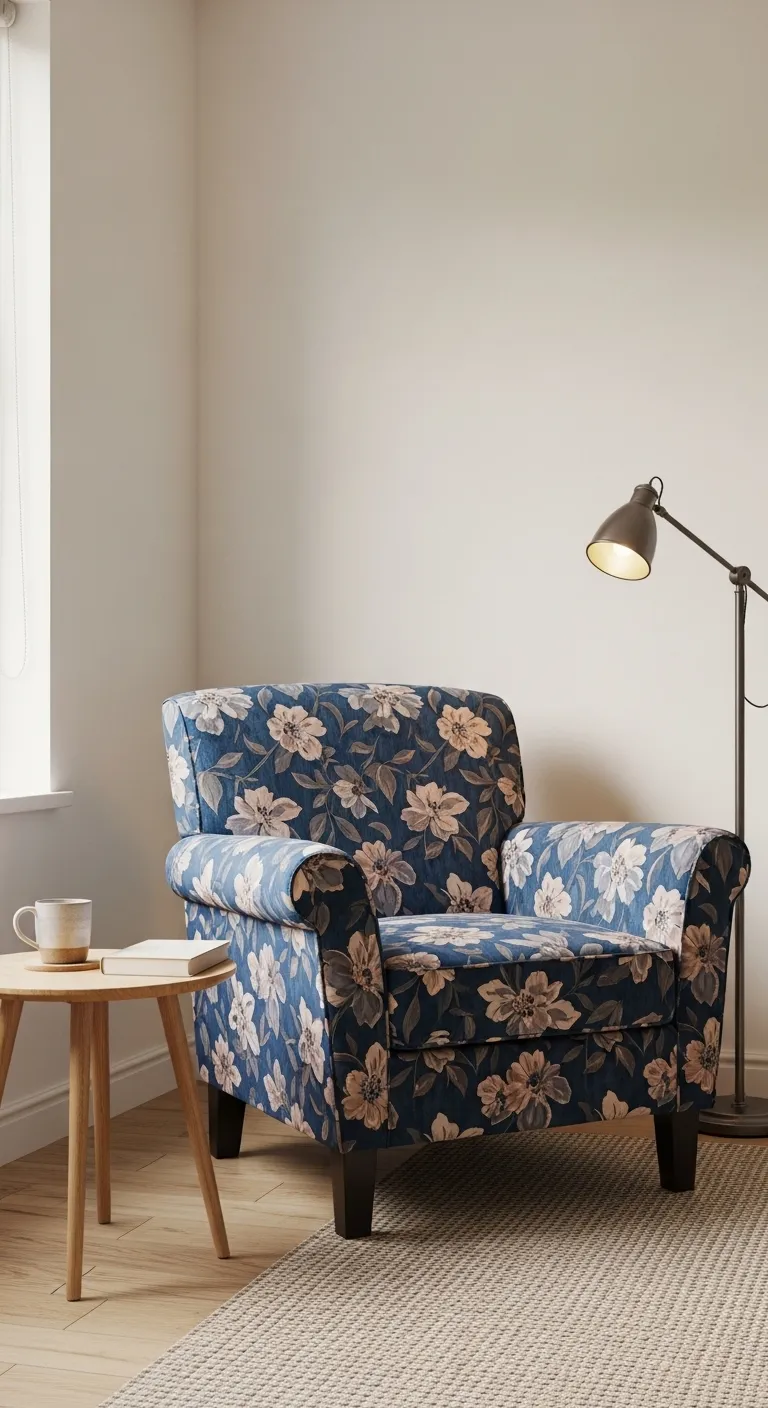
Place one statement chair in a bold print such as large florals, stripes, or abstract shapes. Choose colors that connect with your rug or pillows.
Keep the rest of the furniture simple so the chair shines. Position it near a window or floor lamp to highlight the pattern. This idea adds personality without overwhelming the room. It works well for renters who want strong color without painting.
18. Install Colored Wall Panels
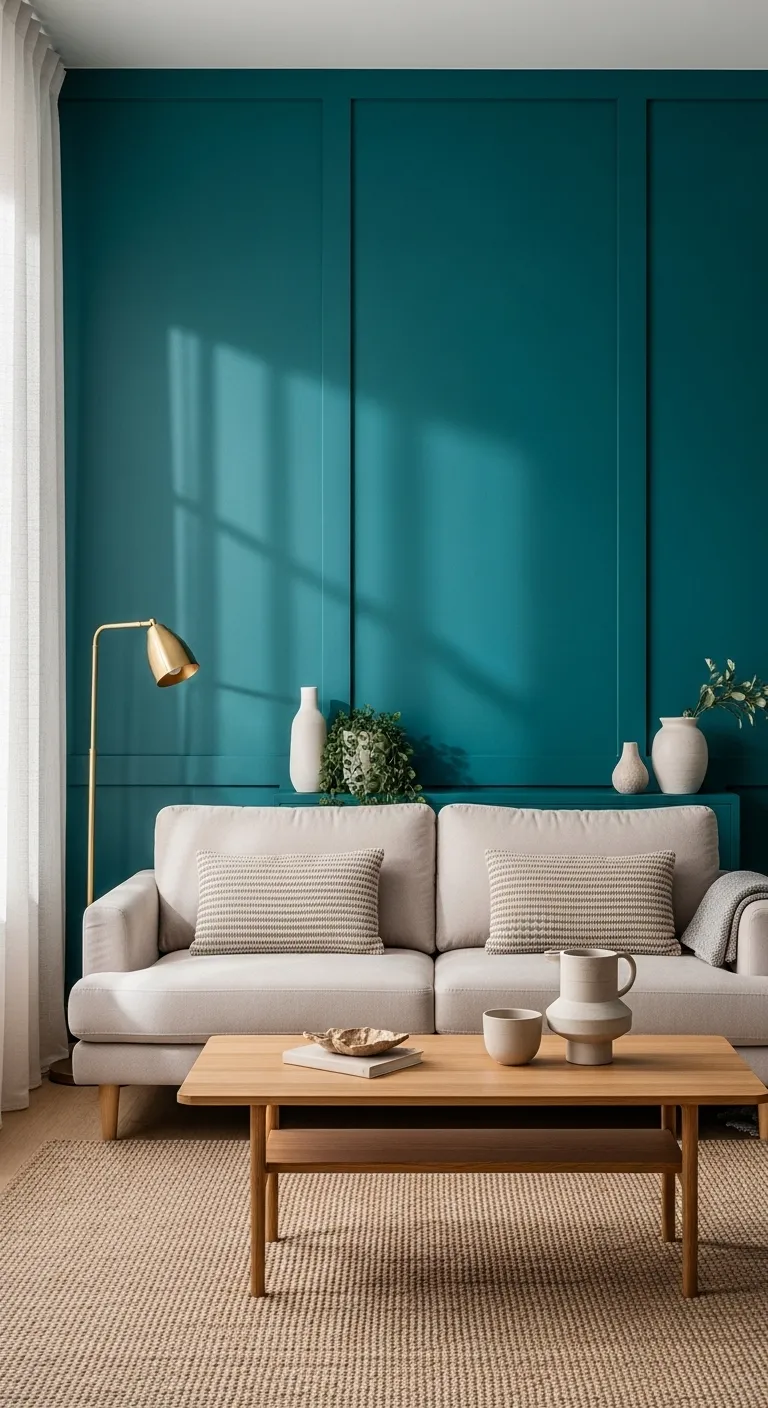
Add wall paneling and paint it in a deep or bright shade. Vertical panels in teal or berry can make ceilings look taller. Horizontal panels in mustard can make a room feel wider.
Use simple furniture shapes to avoid visual clutter. Add soft lighting to create gentle shadows between the panels. This adds texture and color at the same time, giving your bright living room ideas more depth.
19. Style a Color Themed Corner
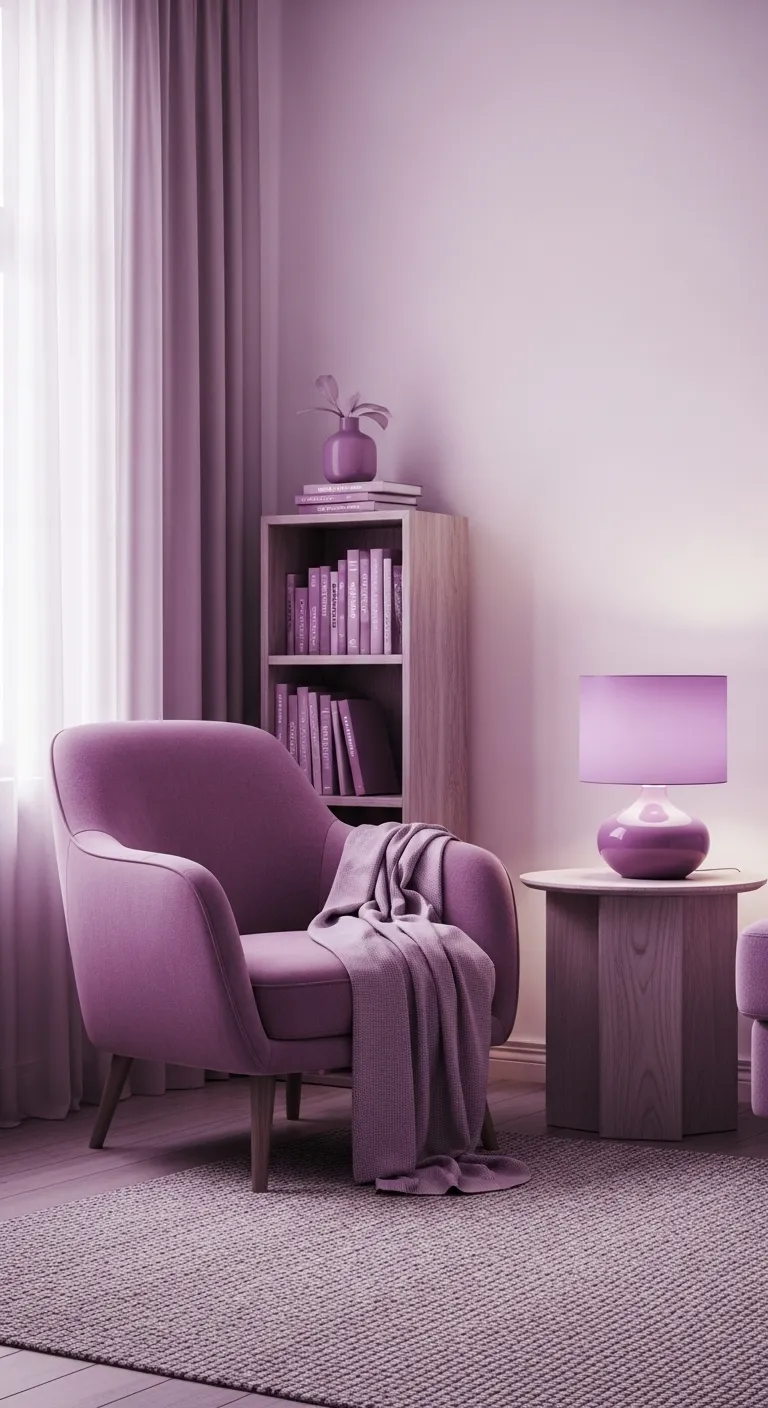
Design one corner around a single bold color. For example, create a purple reading nook with a plum chair, lavender throw, and a small violet lamp.
Keep the rest of the room neutral so the corner feels intentional. Add a small bookshelf with matching spines or covers. This approach allows you to test strong colors without changing the whole space.
20. Use Large Scale Abstract Art
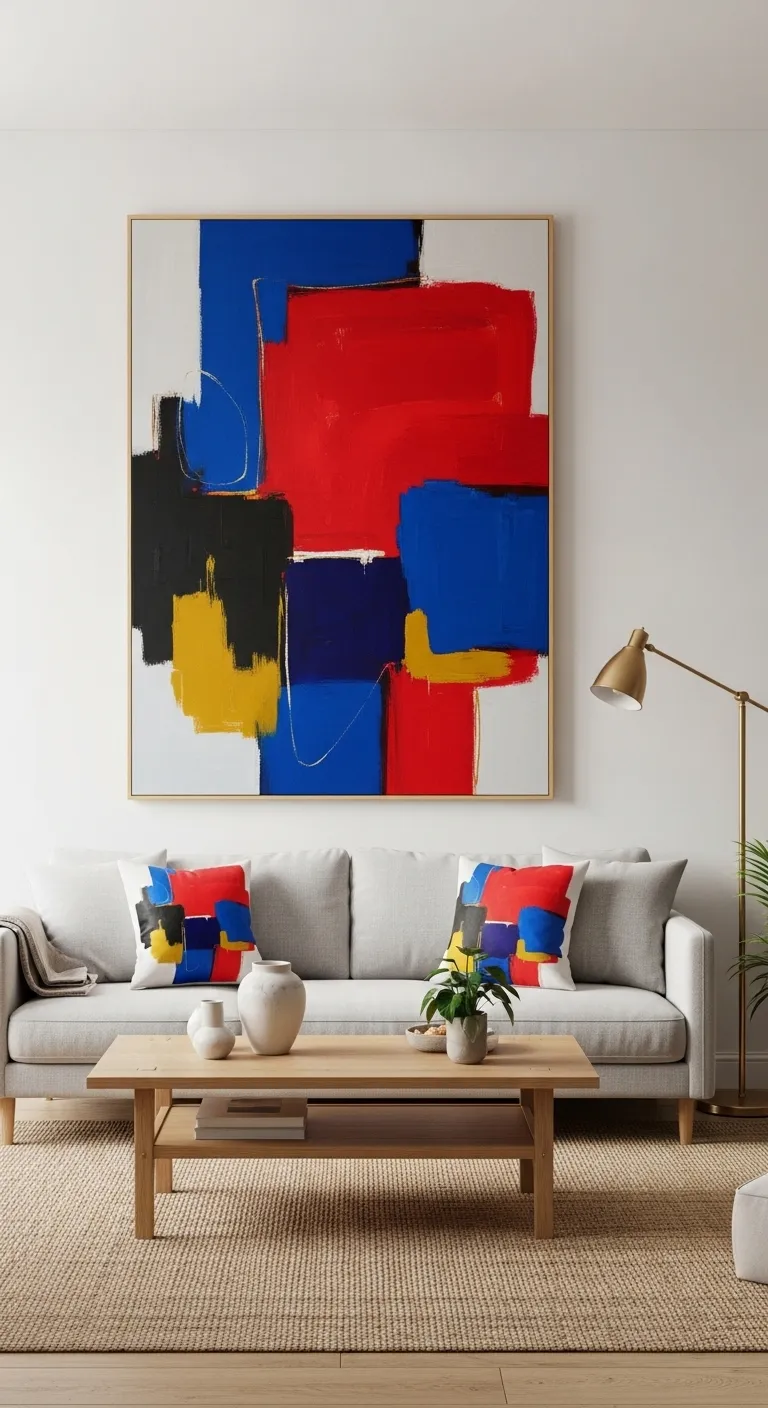
Hang one oversized abstract painting filled with bold strokes of red, blue, or yellow. Let the artwork guide the room’s palette.
Pull two or three colors from the painting and repeat them in small decor pieces. Keep the wall behind the art light so the colors stand out. Large art creates focus and prevents the room from feeling scattered.
21. Add Colored Lighting for Mood
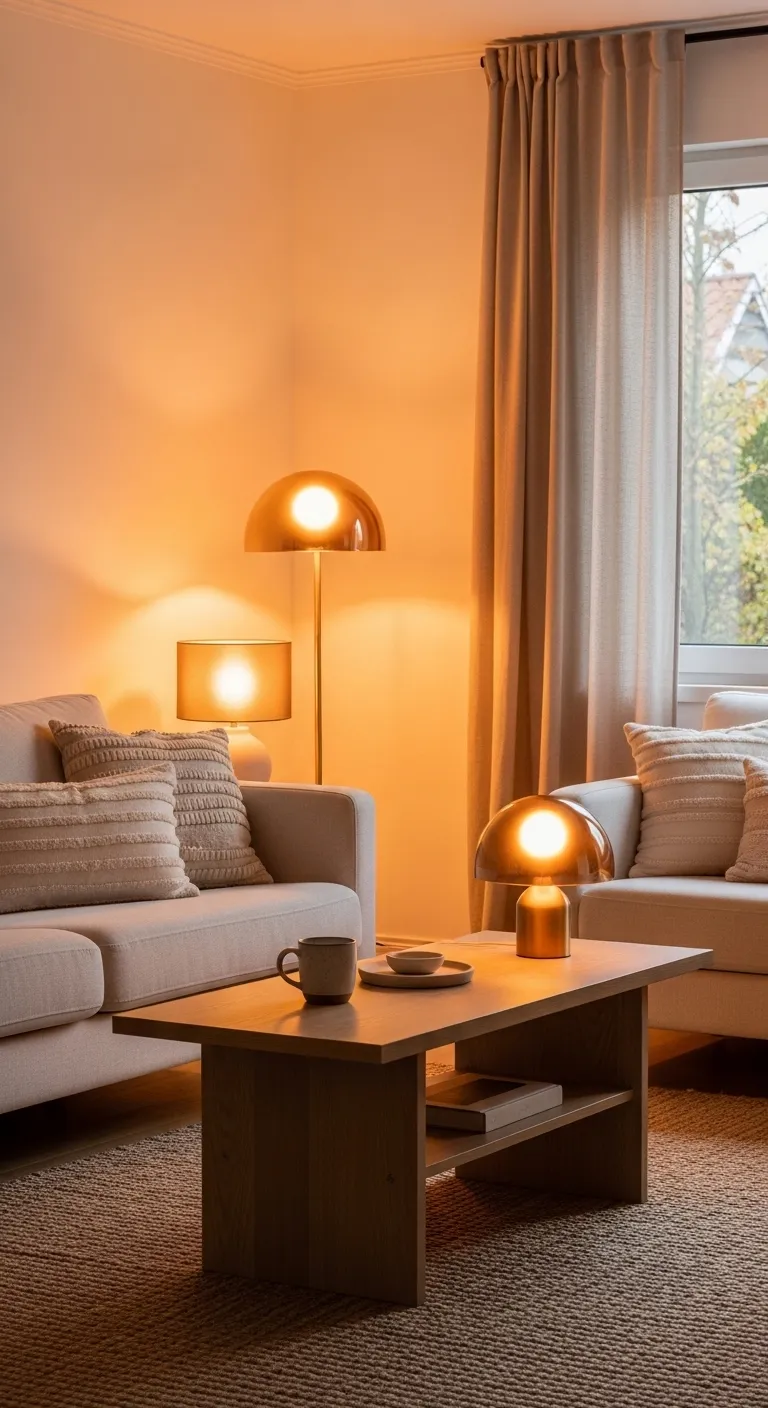
Use smart bulbs or tinted glass lamps to add subtle color in the evening. Soft pink or warm amber light can change the mood instantly.
Keep the daytime look neutral and use color lighting at night for a layered feel. Place lamps at different heights to avoid harsh shadows. This method adds drama without repainting or replacing furniture.
22. Mix Unexpected Material Combinations
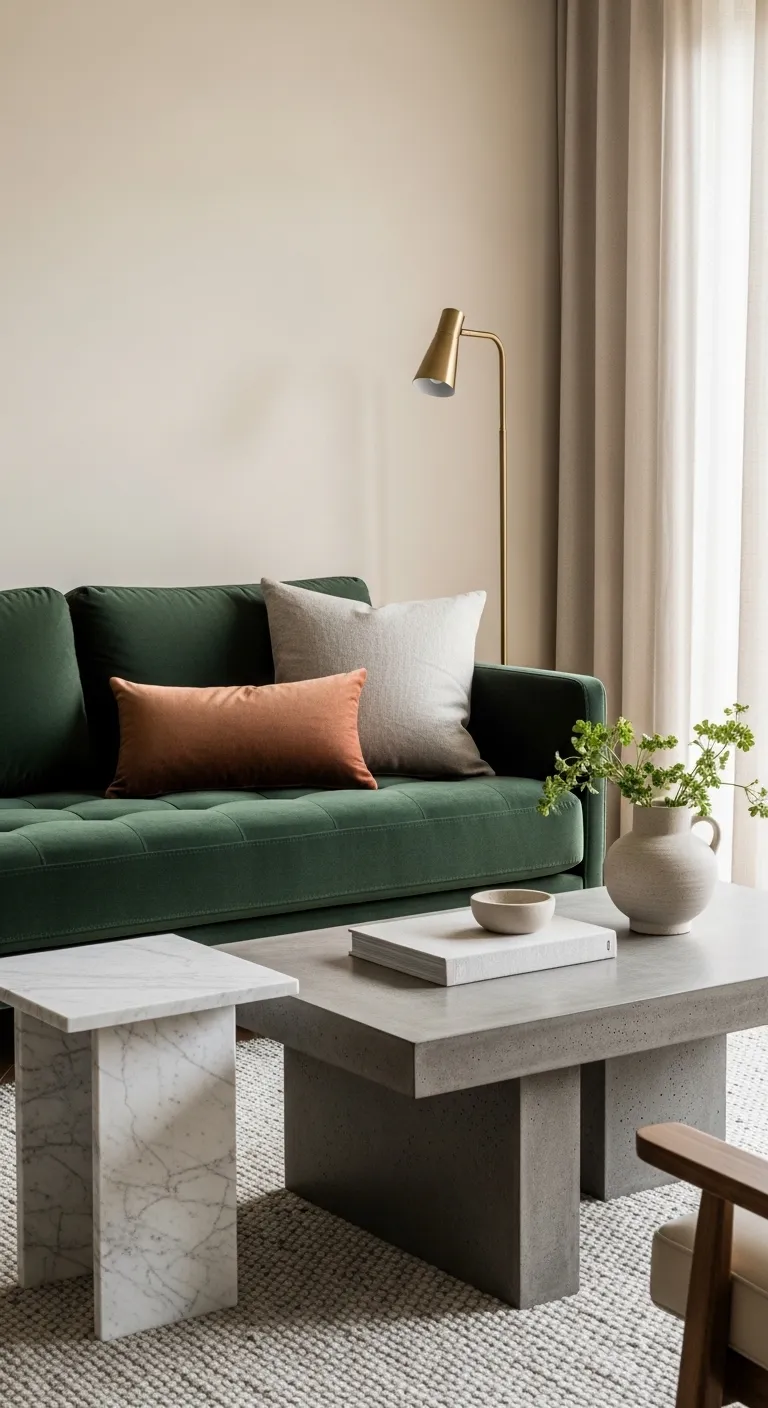
Pair bold colors with surprising materials. Combine a deep green velvet sofa with a concrete coffee table. Place a bright orange ceramic lamp on a marble side table.
Contrast smooth and rough textures to keep the room dynamic. Add natural plants to soften strong colors. This method creates balance while keeping the room visually rich.
Conclusion
A bold colorful living room does not require a full renovation. You can paint one surface, swap one chair, layer a rug, or change lighting to create impact. Strong color works best when you repeat it with intention and balance it with texture and light.
Start small if you feel unsure. Try one idea, observe how it feels, then build from there. Your living room should reflect your energy, not play it safe. Pick your favorite ideas, test them this week, and save the ones that speak to you most.