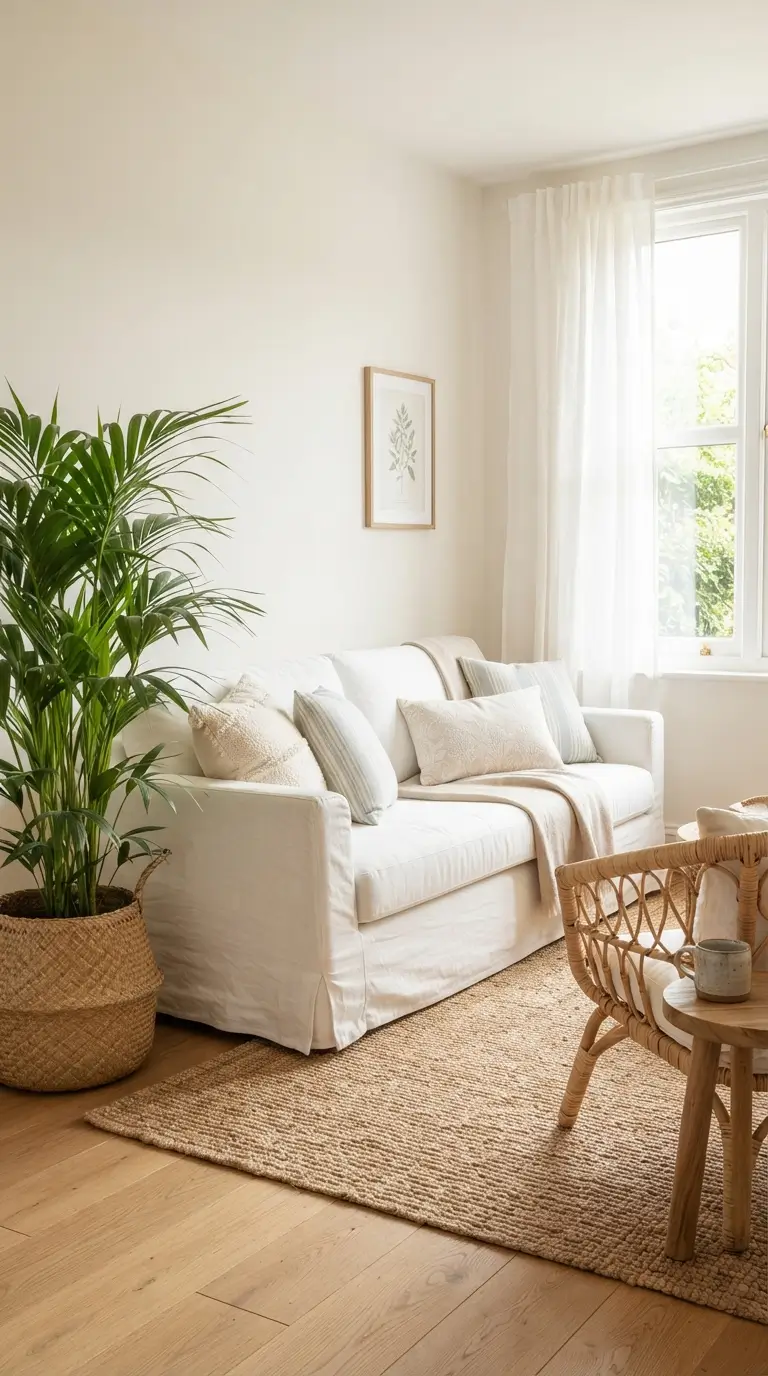
22 Cozy Living Room and Kitchen Combo Ideas for Homes

An open floor plan looks beautiful on paper, but it often feels cold or unfinished in real life. You might love the space between your kitchen and living room, yet still wonder why it does not feel warm or connected. The secret is not adding more décor. The secret is layering texture, light, layout, and color in smart ways that make the space feel unified and inviting.
In this guide, you will discover practical and visually rich ideas to create a cozy living room and kitchen combo that feels intentional and comfortable. Each idea focuses on mood, materials, furniture placement, and lighting that works in real homes. Whether you live in a small apartment or a spacious house, these ideas will help you design an open layout that feels warm, functional, and beautifully balanced..
1. Soft Neutral Base with Warm Wood Accents
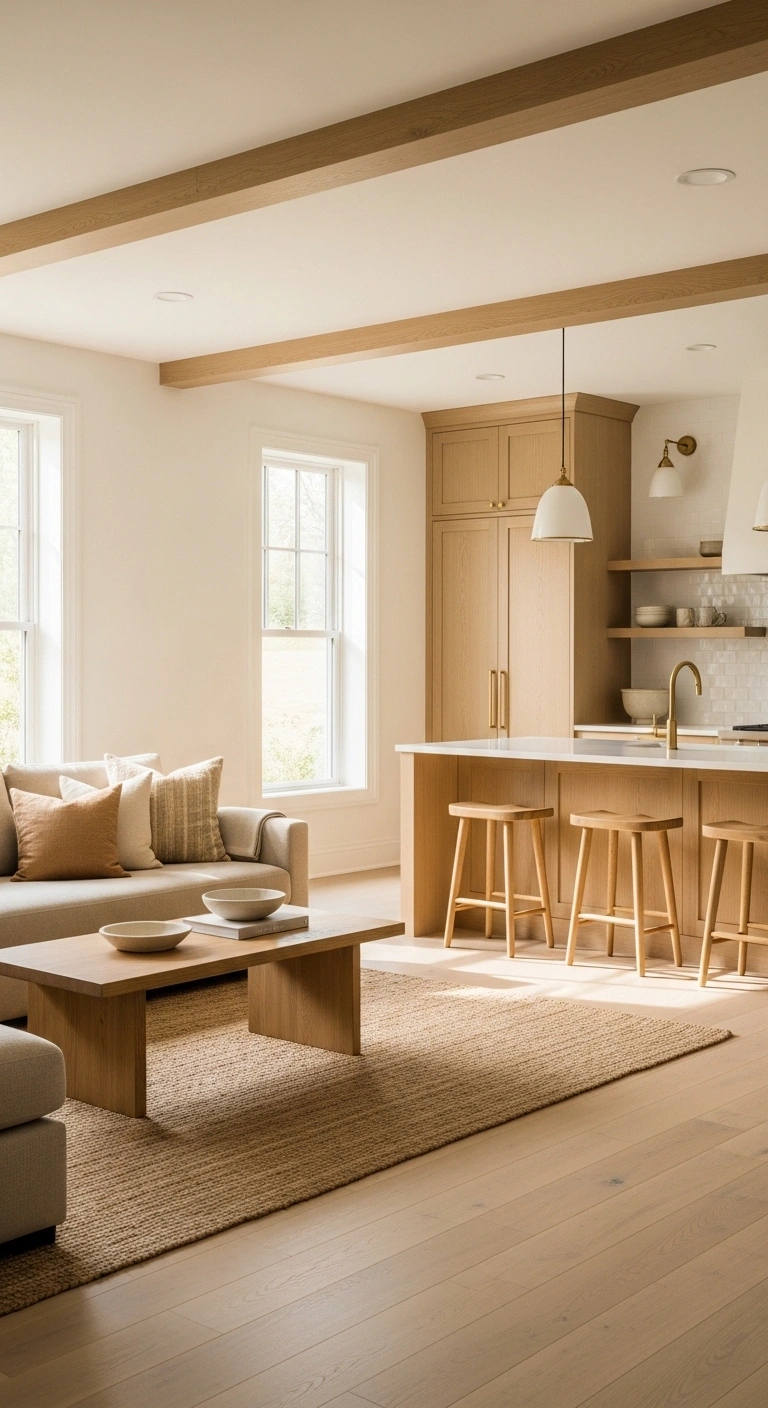
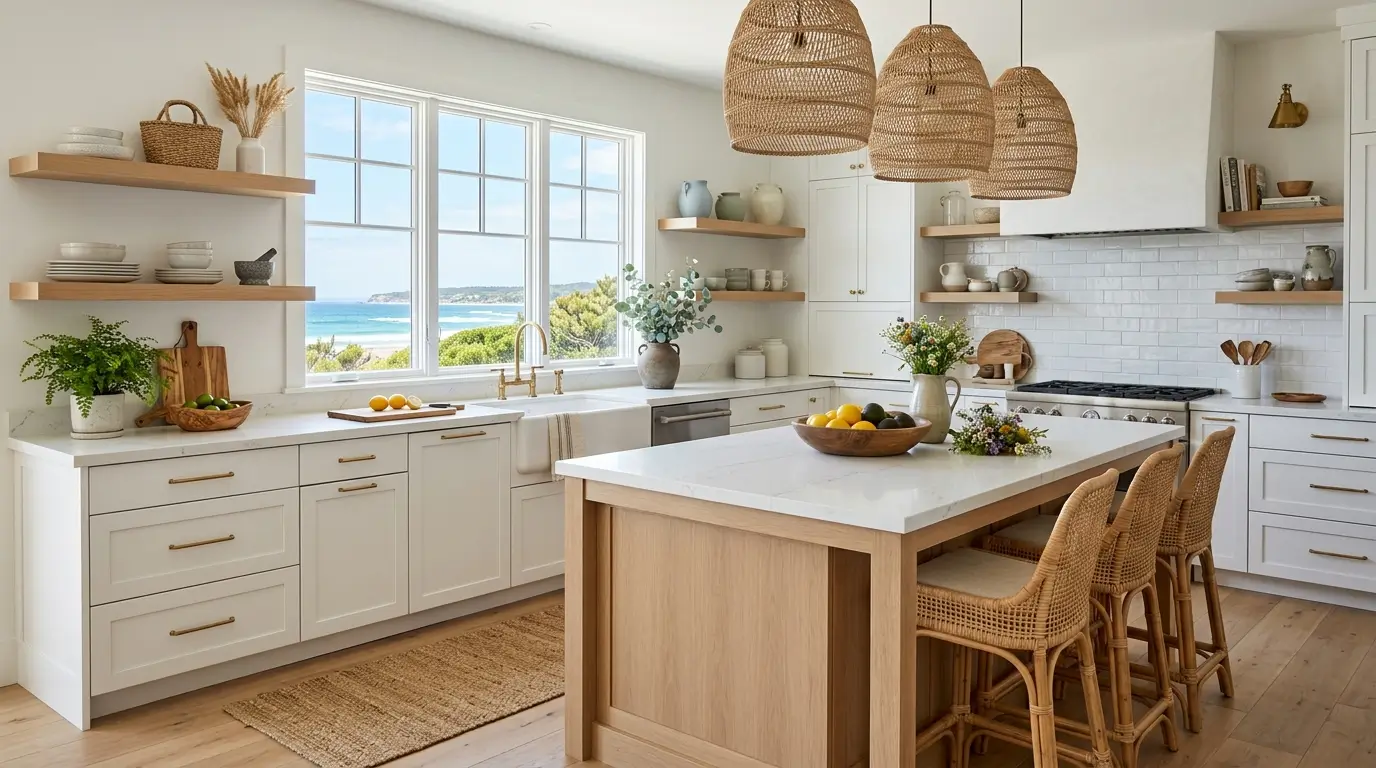
A soft neutral base creates the foundation for a truly cozy living room and kitchen combo. Imagine creamy white walls, warm beige upholstery, and natural oak cabinetry glowing under soft daylight. The look feels calm but never flat because warm wood tones add depth and life. A light greige sofa paired with honey-toned floors instantly softens the transition between kitchen tiles and living room rugs. Subtle brass hardware and woven textures prevent the palette from feeling cold. The entire space feels airy, relaxed, and welcoming from every angle.
To achieve this look, keep your largest surfaces neutral and layer warmth through materials instead of bold colors. Choose one primary wood tone and repeat it in the island stools, coffee table, and open shelving. Add a large textured rug under the sofa to visually anchor the seating area. Use warm white light bulbs instead of cool daylight tones to enhance the cozy effect. Incorporate woven baskets or rattan pendants to soften clean cabinet lines. This approach keeps the space cohesive while adding natural warmth.
2.Oversized Area Rug to Define the Living Zone
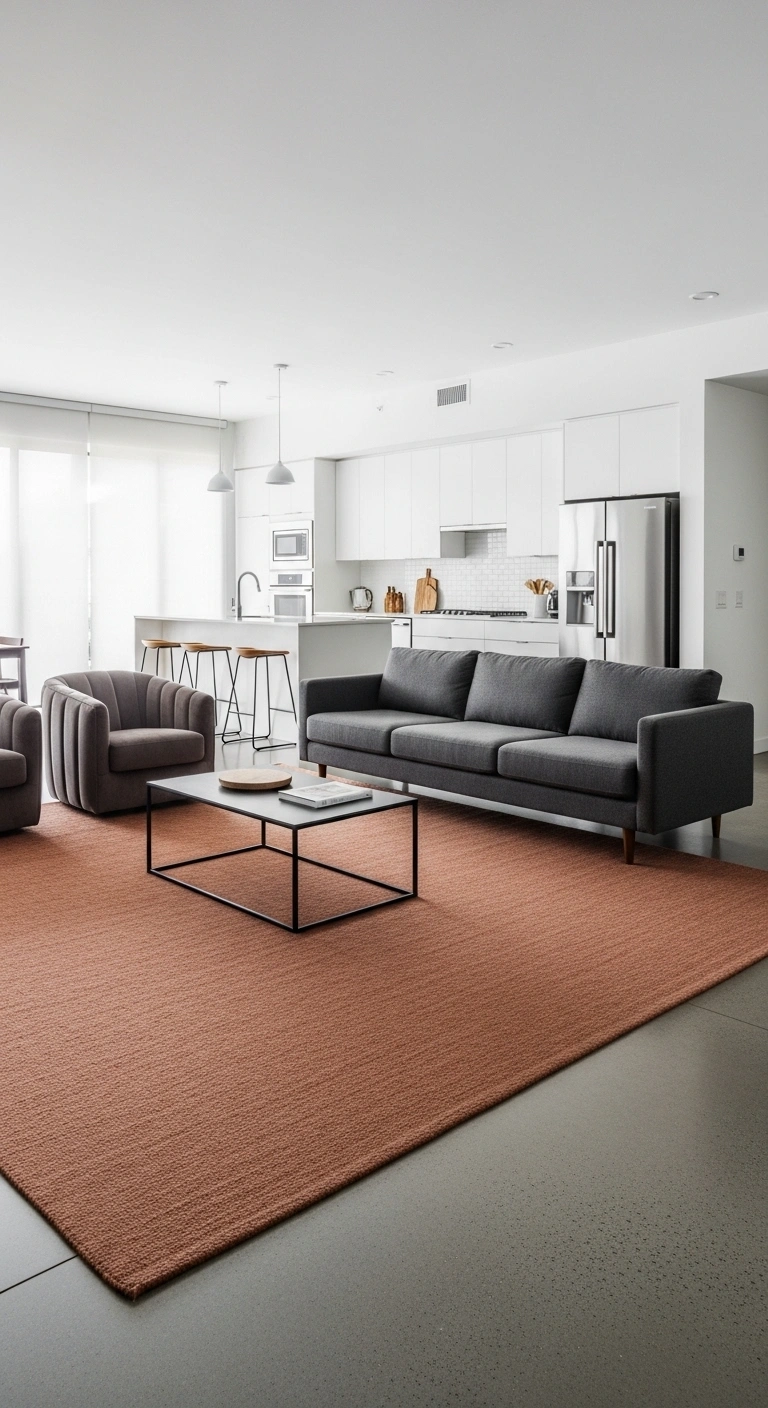
An oversized rug instantly defines the living area within an open layout without building walls. A thick wool or flatwoven rug in muted terracotta, soft taupe, or warm greige grounds the seating zone beautifully. It visually separates the lounge area from the kitchen while maintaining flow. Plush textures underfoot add comfort and quietness to hard flooring surfaces. When the sofa and chairs sit partially on the rug, the area feels intentional instead of floating. This simple layer makes the entire combo feel structured yet relaxed.
Choose a rug large enough so at least the front legs of all seating pieces rest on it. Avoid small rugs that make the space look fragmented or disconnected. If your kitchen has patterned tile, select a rug with subtle texture instead of bold prints. Add a rug pad underneath for softness and durability. Keep colors within your main palette so the transition feels seamless. This one design choice can dramatically improve comfort and visual clarity.
3. Two-Tone Kitchen Cabinets for Gentle Contrast
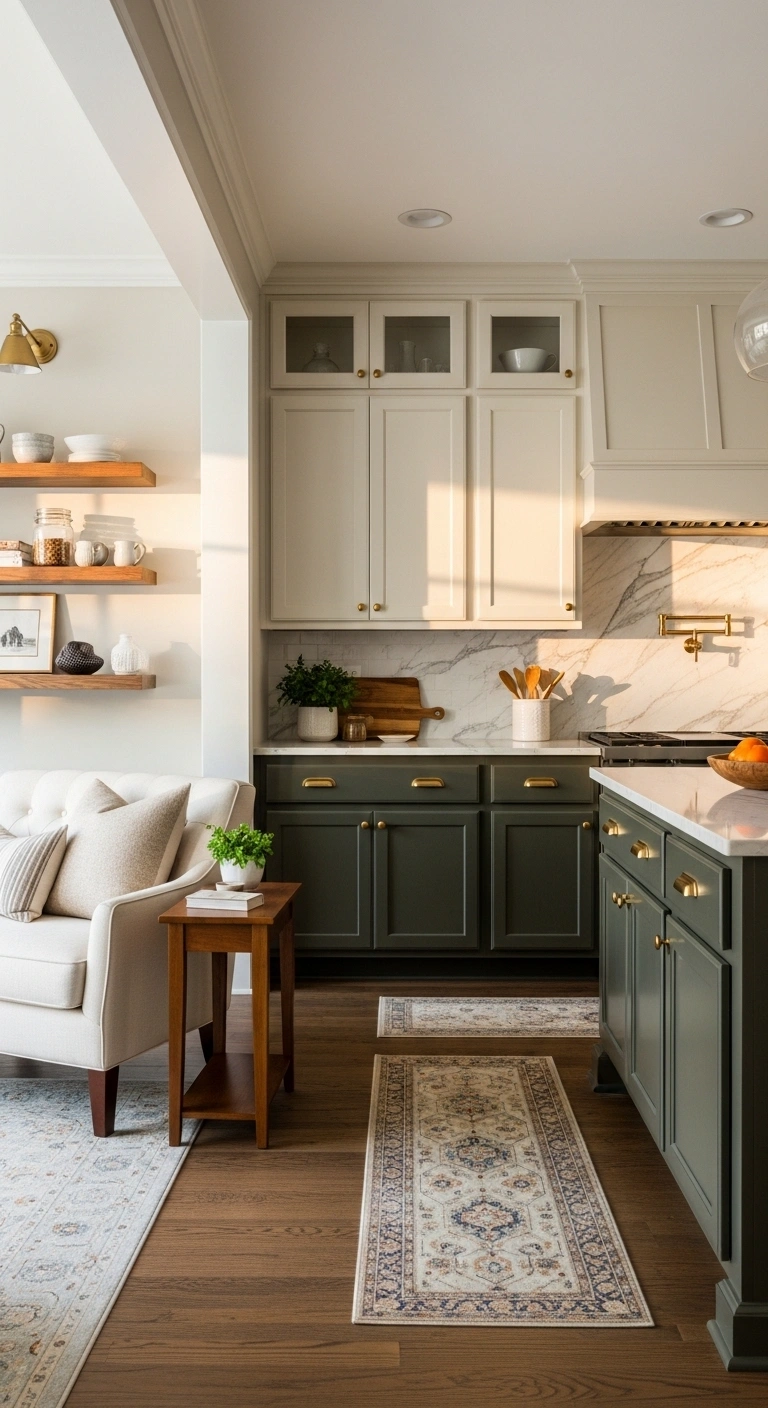
Two-tone cabinetry adds depth and character while keeping the open space balanced. Picture warm white upper cabinets paired with deep olive or muted navy lower cabinets. The contrast grounds the kitchen visually without overpowering the living room. Natural stone countertops and light wood shelves soften the darker base color. This layered effect keeps the kitchen from blending too much into the lounge area. The overall mood feels modern, calm, and inviting.
To apply this idea, keep the darker shade on lower cabinets to anchor the space. Repeat that deeper tone in living room accents like throw pillows or artwork frames. Use under-cabinet lighting to highlight backsplash texture and prevent shadows. Avoid overly glossy finishes that reflect too much light. Stick to muted, earthy shades for long-term appeal. This approach adds personality while maintaining warmth.
4. Upholstered Counter Stools for Seamless Comfort
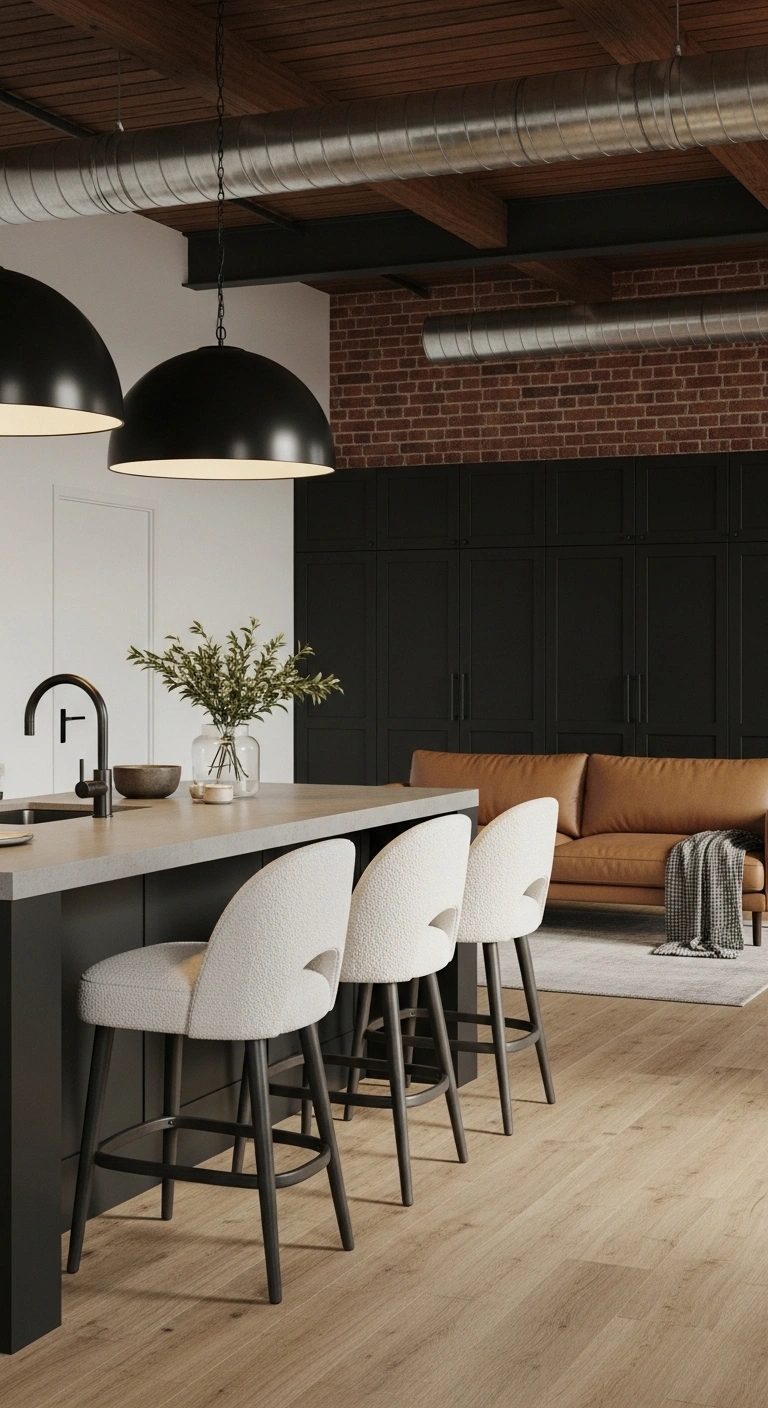
Upholstered counter stools make the kitchen island feel like an extension of the living room. Soft fabrics such as boucle, linen, or velvet instantly warm up sleek cabinetry. Choose earthy shades like clay, moss green, or creamy beige to blend with nearby seating. The padded texture reduces the visual hardness often found in kitchens. When paired with warm pendant lighting, the island becomes a cozy gathering spot. The transition between cooking and relaxing feels natural and smooth.
Select stools with supportive backs to encourage comfort during long conversations. Leave enough space between each stool for easy movement. Add dimmable pendant lights above the island to shift from bright cooking light to evening glow. If possible, align the sofa so it faces the island to strengthen connection. Keep the island surface uncluttered for a clean look. This small upgrade significantly improves comfort and flow.
5. Layered Lighting That Creates Evening Warmth
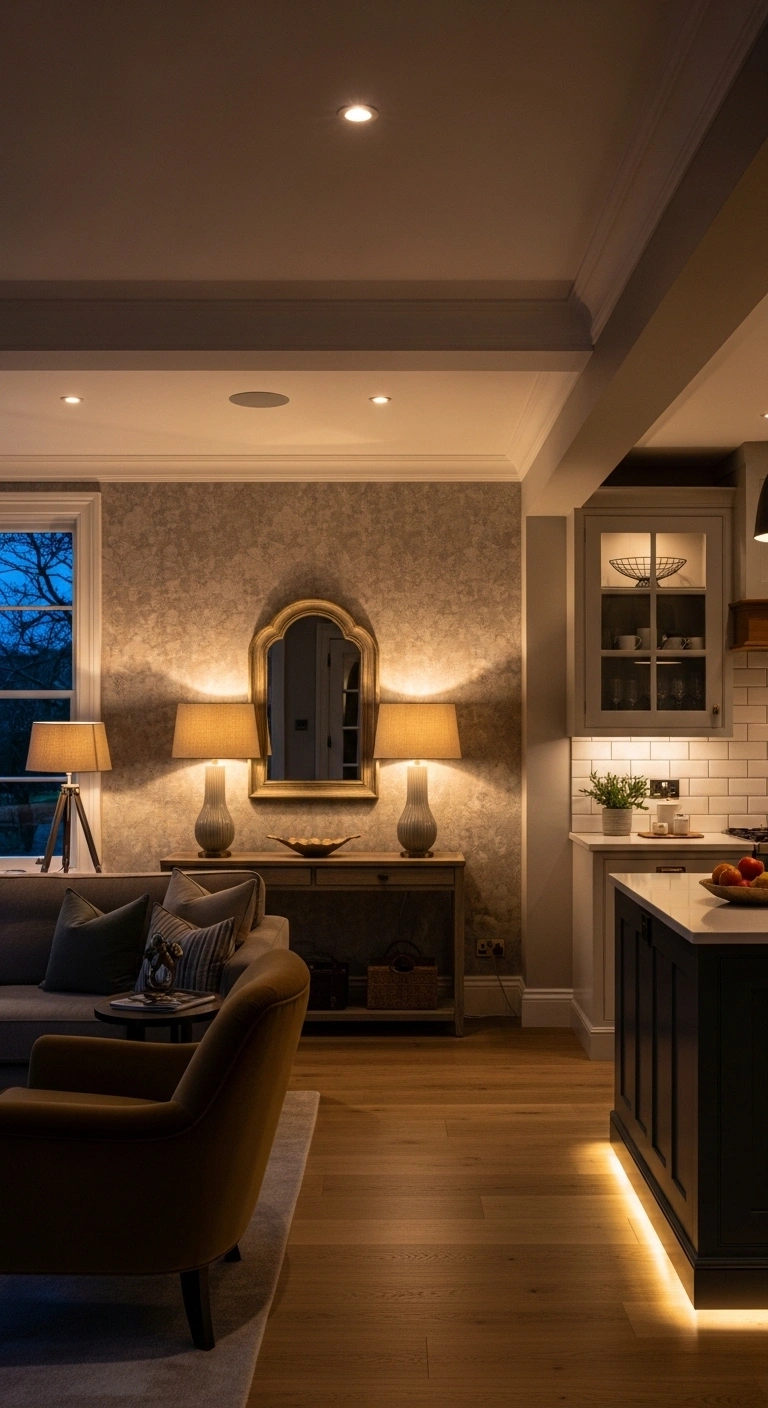
Layered lighting transforms a large open room into a warm retreat after sunset. Combine recessed ceiling lights, under-cabinet strips, table lamps, and a floor lamp near the sofa. Warm white bulbs cast a soft glow that enhances wood tones and textiles. Avoid relying only on overhead lights, as they can feel harsh and flat. Strategic lighting creates depth, shadow, and intimacy across both zones. The space instantly feels more inviting at night.
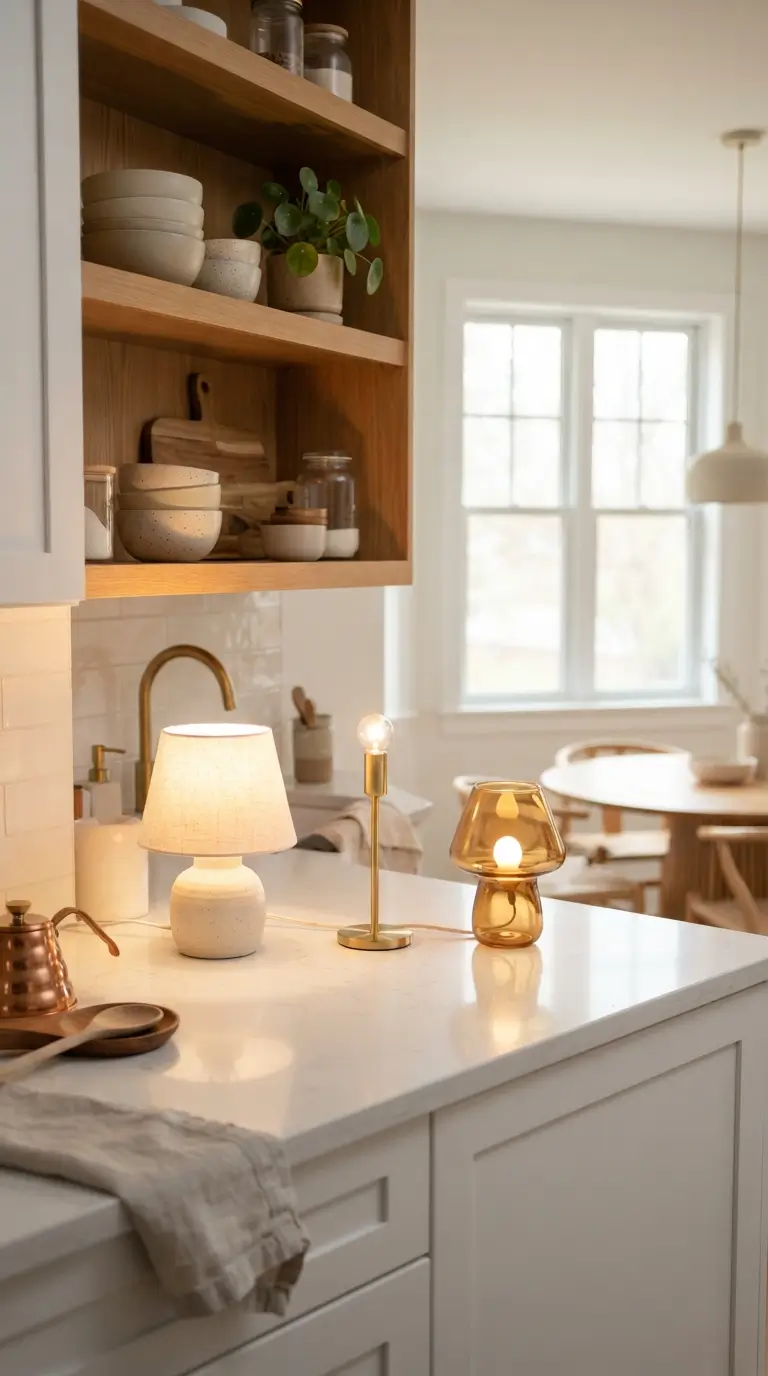
Install dimmer switches whenever possible to control brightness levels. Place a table lamp on a console behind the sofa for soft background light. Use under-cabinet lighting to prevent dark corners in the kitchen. Add a decorative lamp on open shelving to blend both spaces visually. Keep all bulbs within the same color temperature for consistency. Thoughtful lighting design is one of the most powerful cozy upgrades.
6. Half Wall Divider with Built-In Storage
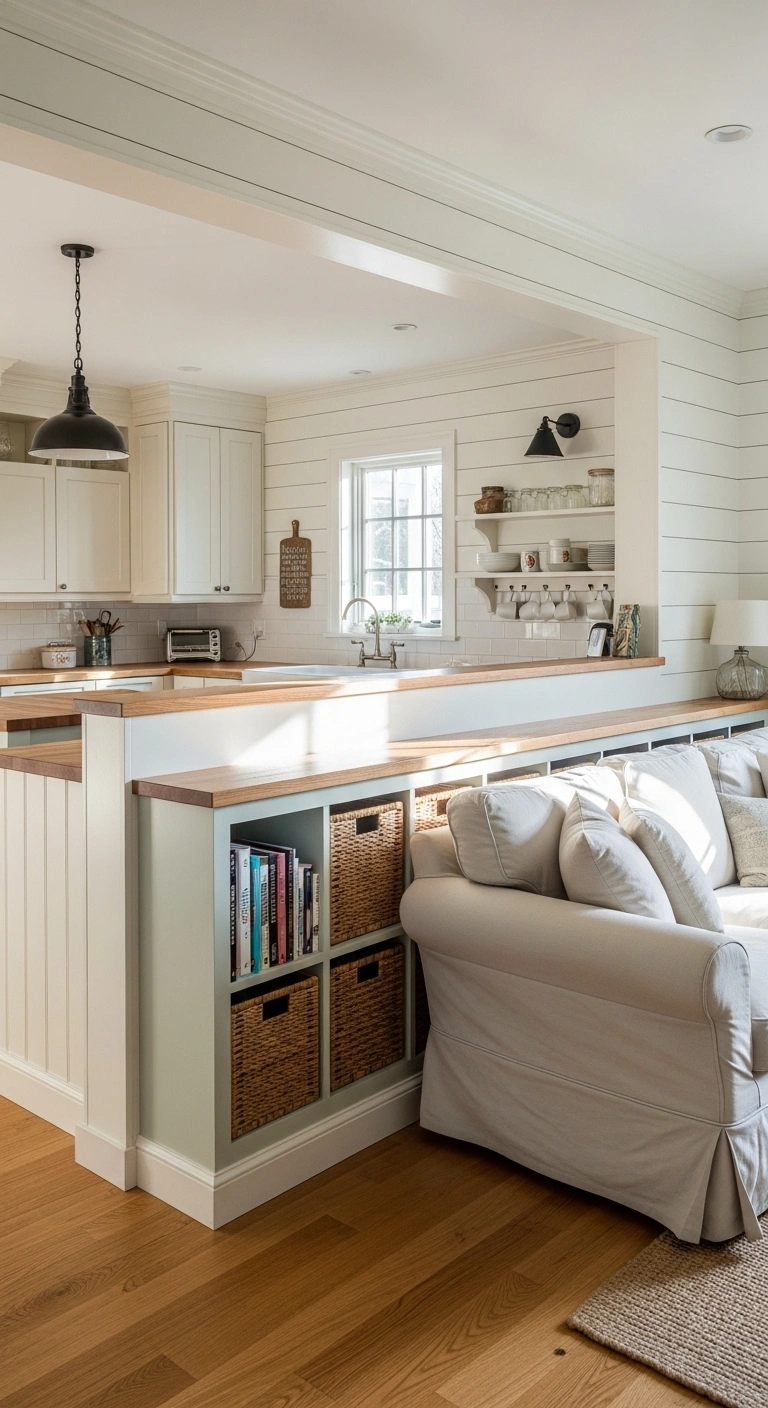
A half wall divider adds structure while maintaining openness in a cozy open kitchen living room. Painted in the same tone as the main walls, it feels subtle rather than bulky. A wooden cap on top introduces warmth and visual contrast. This low barrier defines the living area without blocking natural light. It gives furniture a natural boundary and prevents the room from feeling scattered. The space becomes organized while still airy.
Enhance the divider with built-in shelving facing the living room. Use the shelves to store books, baskets, or ceramic décor pieces. Keep styling minimal to avoid visual clutter. Match the wood tone of the top ledge with kitchen finishes for harmony. Ensure the height remains low enough to preserve sightlines. This practical solution balances separation and connection beautifully.
7. Repeating One Accent Color Across Both Spaces
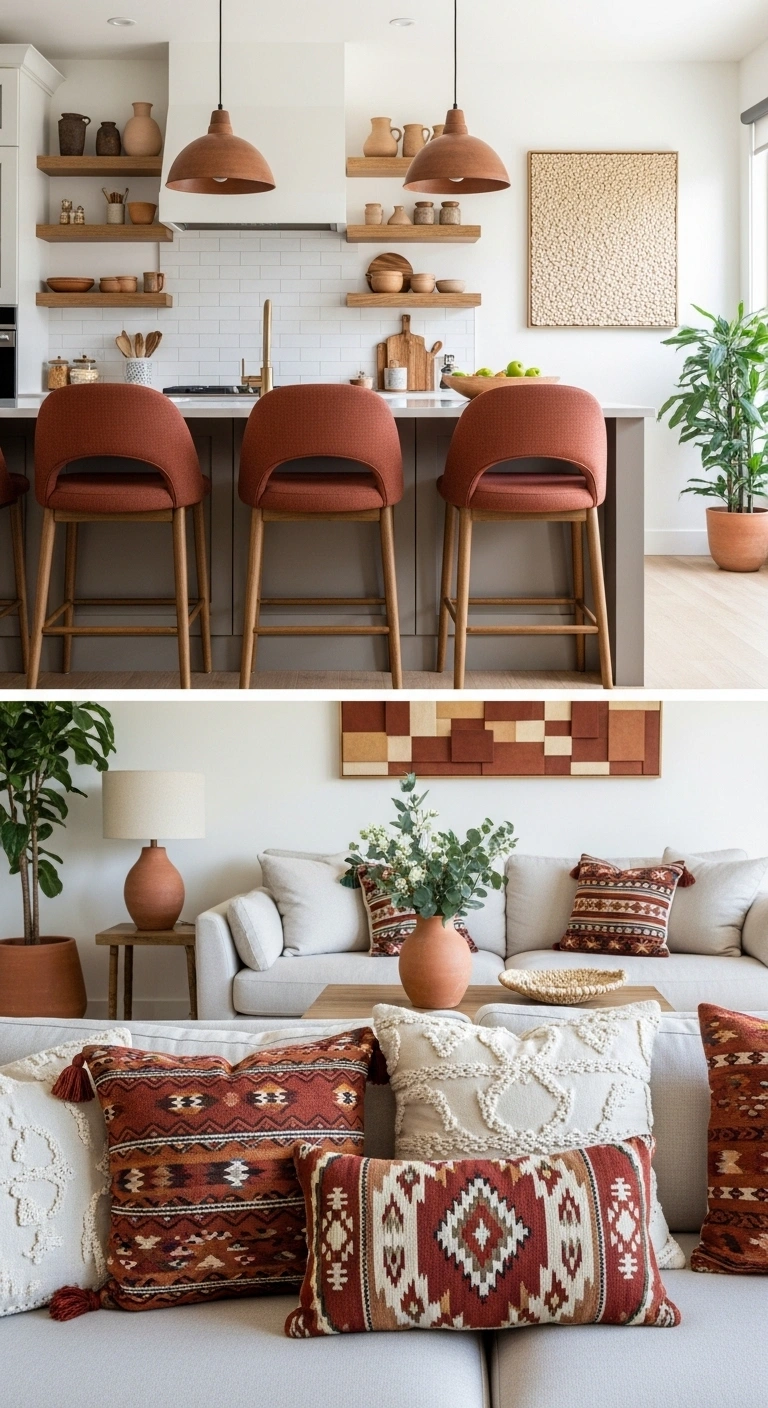
Repeating a single accent color across both zones creates visual unity. For example, a muted forest green can appear in kitchen bar stools and living room cushions. This repetition builds a subtle connection between the two areas. When balanced with neutral walls and floors, the accent feels intentional rather than overwhelming. Small touches of gold or brass can enhance the warmth. The overall look feels cohesive and thoughtfully designed.
Limit the accent color to three or four placements for a calm effect. Use artwork, vases, or textiles to echo the tone gently. Avoid bright neon shades that dominate the room. Choose earthy or muted hues that age well over time. Make sure the accent complements cabinetry and upholstery. This simple strategy strengthens flow without major renovation.
8. Built-In Bench Seating for Casual Dining
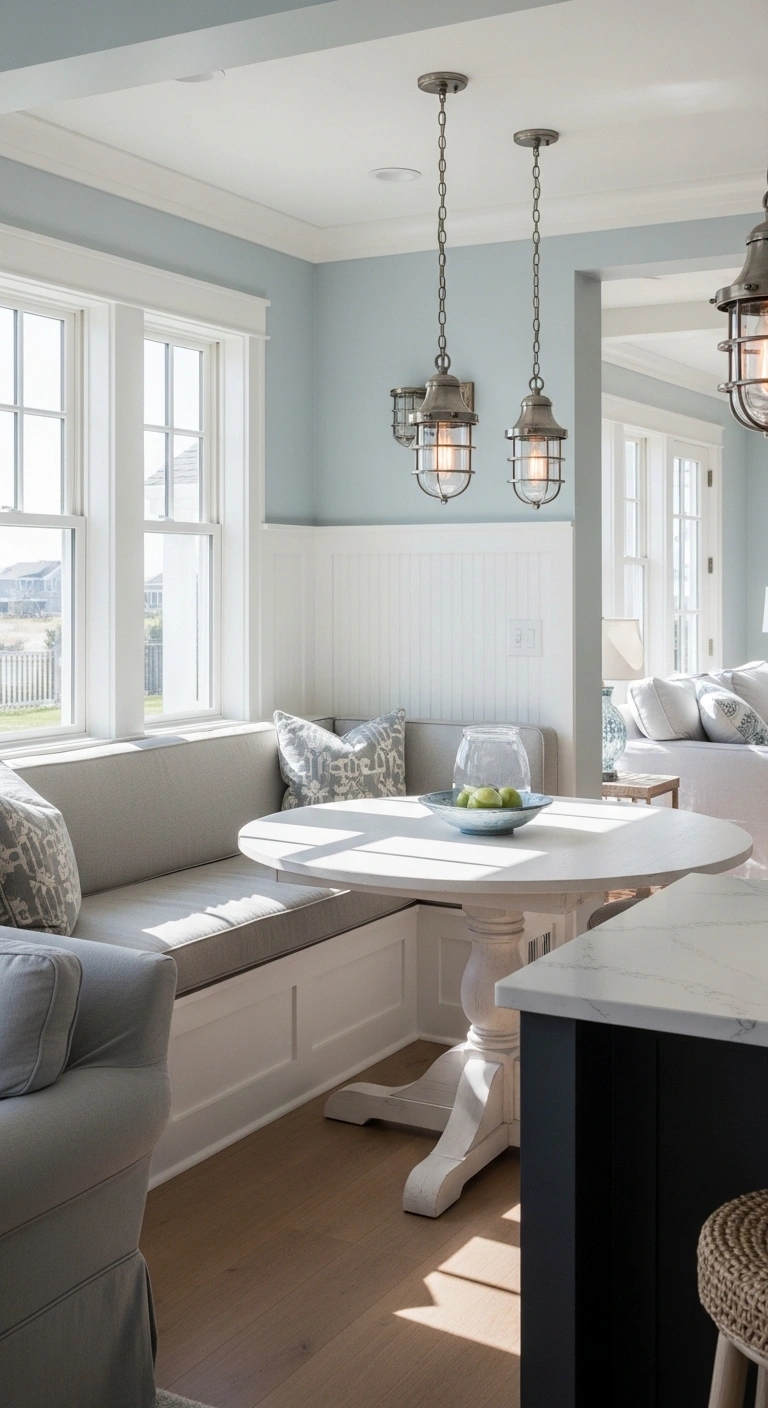
Built-in bench seating near the kitchen adds charm and practicality. Upholster the bench in warm linen or soft cotton in a neutral shade. Layer cushions in different textures for depth and comfort. Positioned along a wall, the bench creates a cozy dining nook that blends with the living space. The result feels custom and welcoming rather than temporary. It also maximizes seating without bulky chairs.
Include hidden storage beneath the bench for added functionality. Pair the seating with a round dining table to soften sharp lines in the kitchen. Install a pendant light above to create a focused zone. Keep nearby décor simple to prevent visual clutter. Match the bench fabric with living room textiles for cohesion. This idea adds both warmth and efficiency.
9.Large Statement Pendant to Anchor the Room
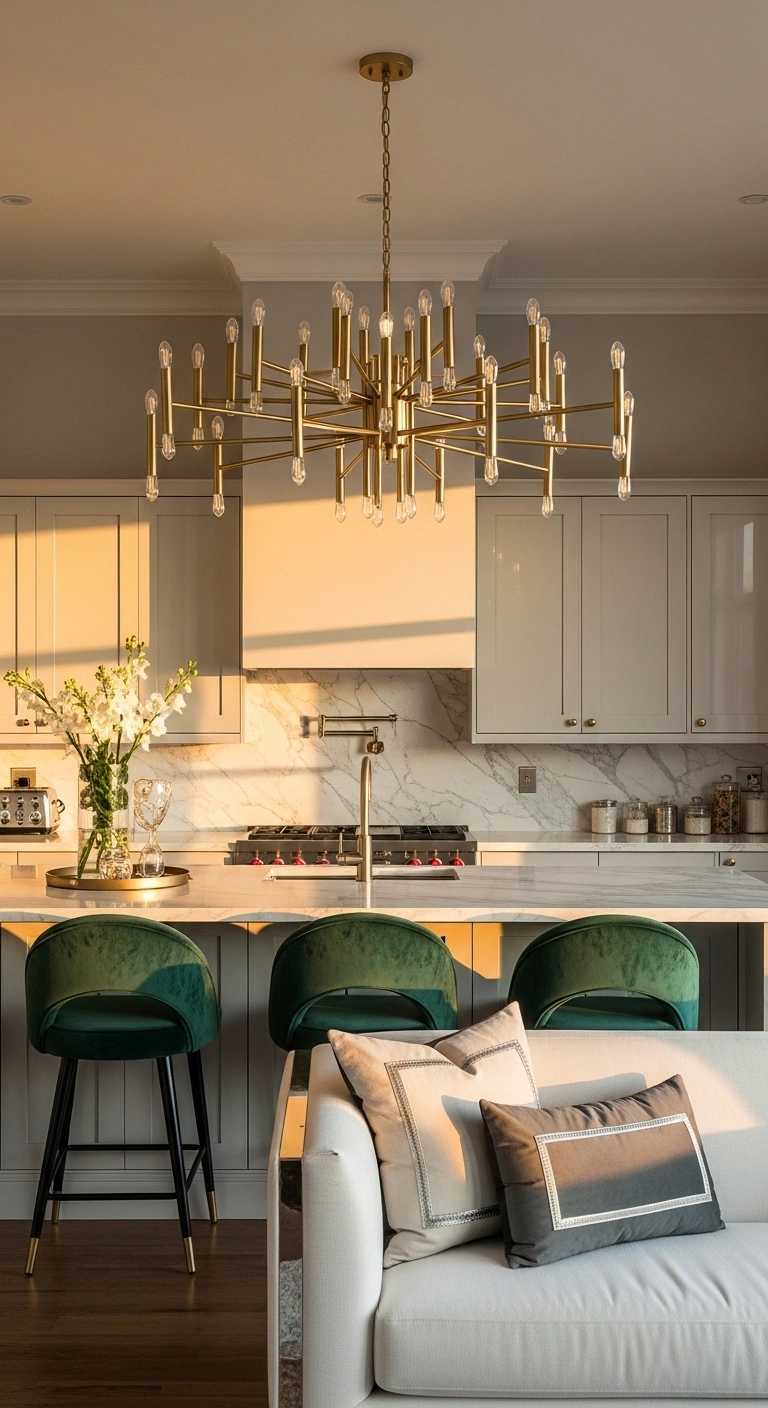
A large pendant light above the island can visually anchor the entire open layout. Materials like woven rattan, frosted glass, or matte metal create strong yet warm focal points. The scale draws attention upward and balances tall ceilings. This focal lighting connects the kitchen and living room in one unified design statement. When styled correctly, it adds personality without overwhelming the space. The room feels grounded and complete.
Choose a pendant size proportional to your island width. Hang it low enough to feel intimate but high enough to keep views clear. Pair it with smaller lamps in the living area for layered lighting. Stick to warm bulb tones for consistency. Avoid mixing drastically different fixture styles. This approach ensures harmony across the open layout.
10. Textured Feature Wall for Added Depth
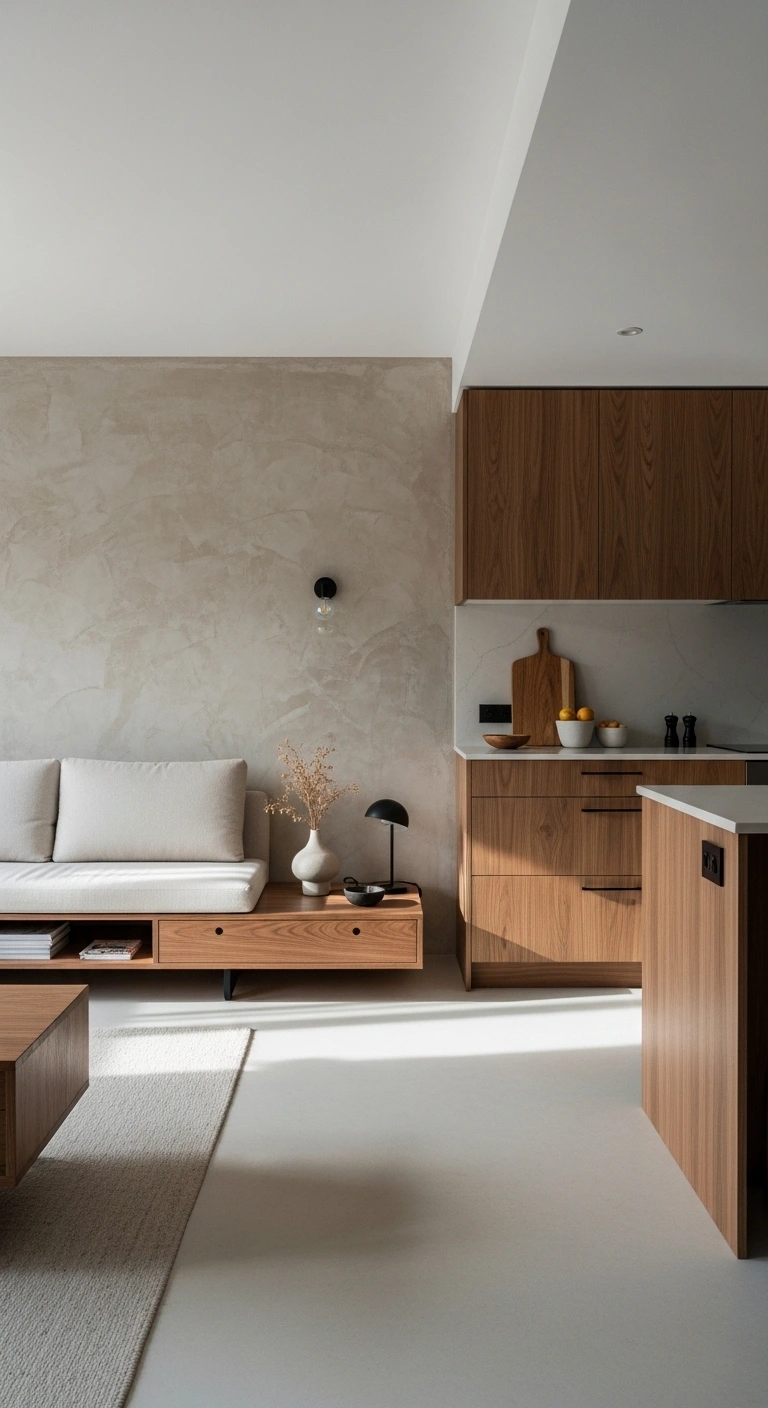
A textured feature wall adds dimension without cluttering your open space. Consider wood slat panels, soft limewash paint, or subtle wall molding. Warm clay or greige tones create a cozy backdrop for both the kitchen and living room. Texture reflects light differently throughout the day, adding movement and depth. It elevates the entire room without adding extra furniture. The atmosphere feels layered and intentional.
Keep surrounding décor simple to allow the texture to stand out. Repeat similar tones in cabinetry or textiles for balance. Avoid overly bold patterns that compete visually. Install subtle wall lighting to highlight the surface at night. Choose finishes that are easy to maintain. This design choice enhances warmth in a refined way.
11. Double-Sided Open Shelving as a Soft Divider
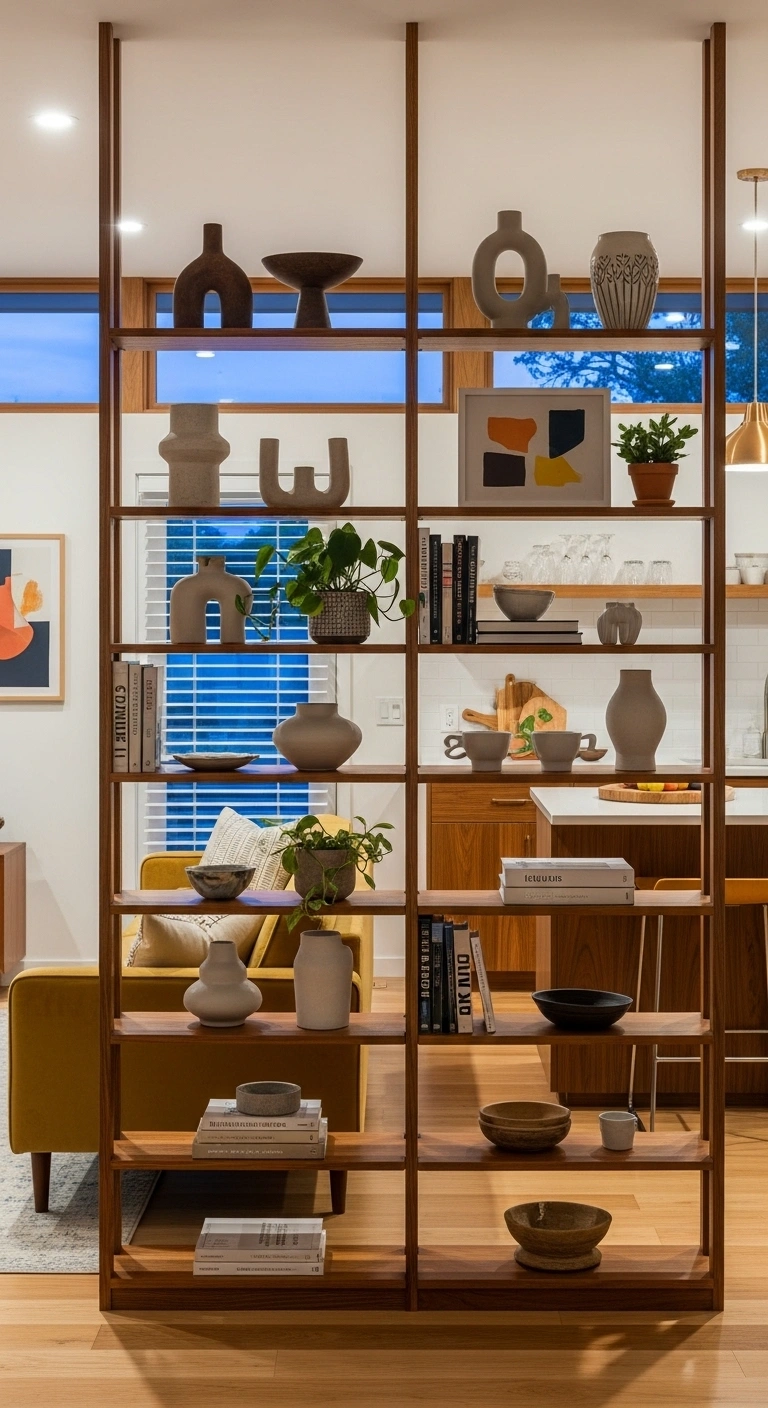
Double-sided open shelving creates separation without closing off your cozy living room and kitchen combo. Instead of a solid wall, imagine a slim wood or metal frame shelf unit placed between the sofa and kitchen area. The open structure allows light to pass through while subtly defining each zone. Styled with neutral ceramics, stacked books, small plants, and woven baskets, it adds warmth and personality. The layered objects create depth from every angle. This type of divider feels airy, functional, and visually interesting at the same time. It maintains openness while giving each area its own identity.
To use this idea effectively, choose a shelf height that does not block sightlines across the room. Keep the frame in a warm wood tone or matte black finish that matches your hardware. Style both sides intentionally so it looks balanced from the kitchen and living room. Avoid overcrowding the shelves to prevent visual clutter. Add small storage baskets on lower levels to hide everyday items. Place the unit slightly behind the sofa to create a natural boundary. This solution gives structure while keeping the space cozy and connected.
12. Fireplace Wall That Connects Both Zones
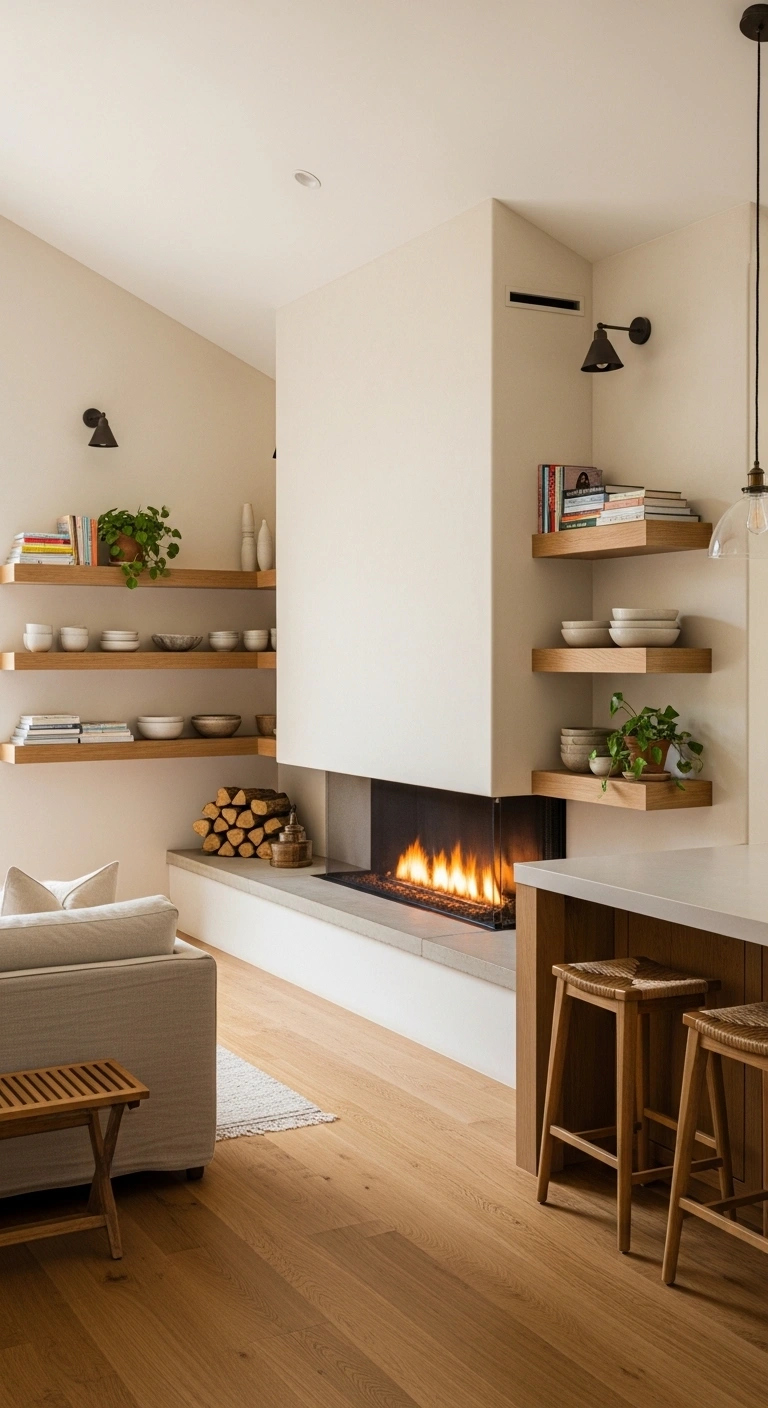
A fireplace wall instantly transforms a cozy living room and kitchen combo into a warm and inviting retreat. Imagine a slim linear fireplace framed in soft plaster or light stone that stretches across a shared wall. The gentle flame glow reflects off warm wood floors and creamy walls, creating depth and softness. Built-in shelves on each side display neutral ceramics and stacked books for balance. The fireplace becomes a natural focal point visible from both the sofa and the kitchen island. This shared visual anchor makes the open space feel grounded and connected.
To design this layout, position your sofa facing the fireplace to center the seating zone. Keep the mantel styling minimal with layered textures instead of clutter. Repeat the fireplace material subtly in the kitchen backsplash or island trim for cohesion. Install dimmable lighting nearby to enhance the evening glow. If a real fireplace is not possible, use an electric insert with a custom surround. This feature creates warmth without closing off the space.
13. Exposed Ceiling Beams for Architectural Warmth
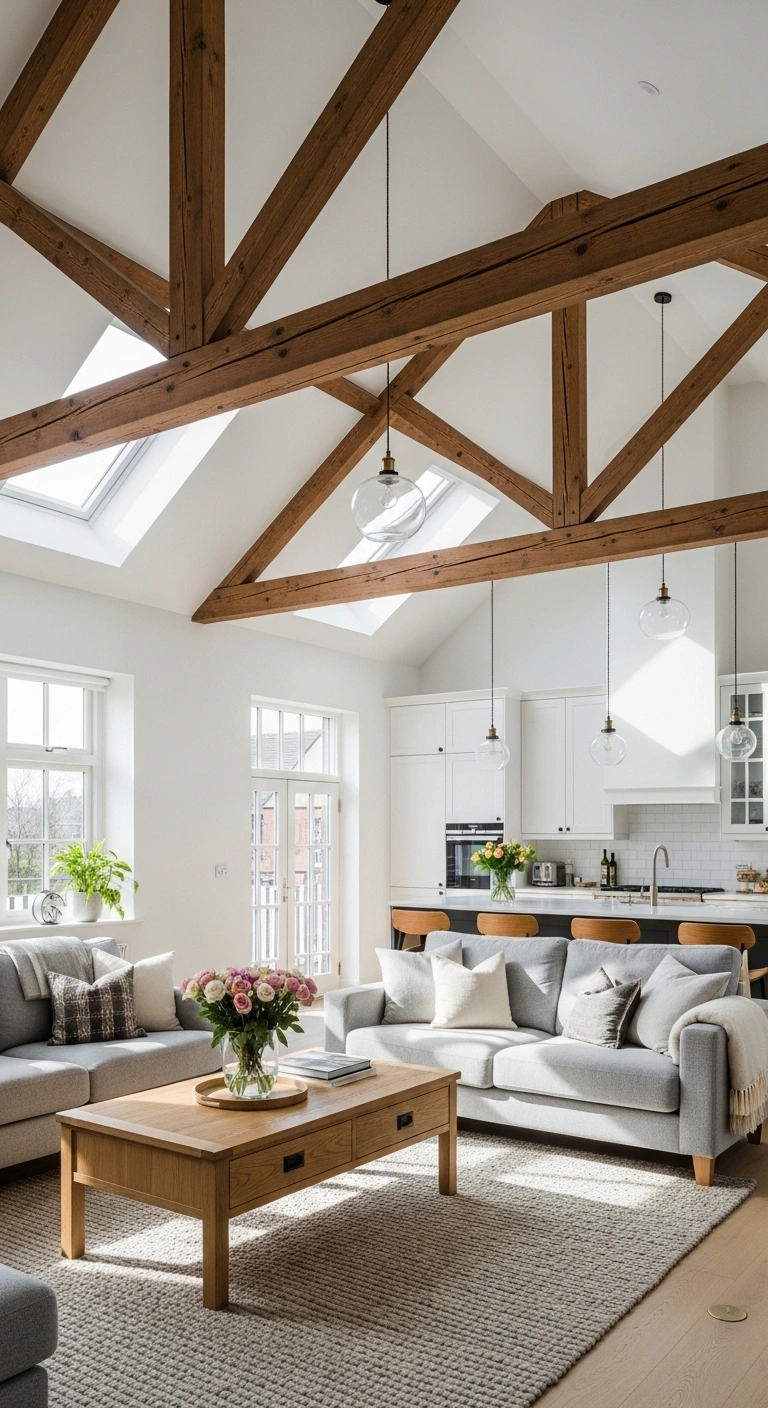
Exposed ceiling beams add architectural character and cozy charm to an open layout. Light oak beams create a soft Scandinavian feel, while darker walnut tones add dramatic warmth. The natural wood grain contrasts beautifully against smooth white ceilings and clean cabinetry. Beams visually lower tall ceilings, making large spaces feel more intimate. When paired with warm pendant lights, the effect feels layered and welcoming. This subtle structure adds personality without overwhelming the design.
If your home does not have real beams, consider installing high-quality faux wood beams. Match the beam tone with your dining table or coffee table for visual harmony. Keep other wood finishes within the same undertone family to avoid clashing. Space the beams evenly to maintain balance across the ceiling. Add recessed lighting between beams for soft illumination. This architectural detail enhances coziness instantly.
14.Sheer Curtains That Soften the Entire Space
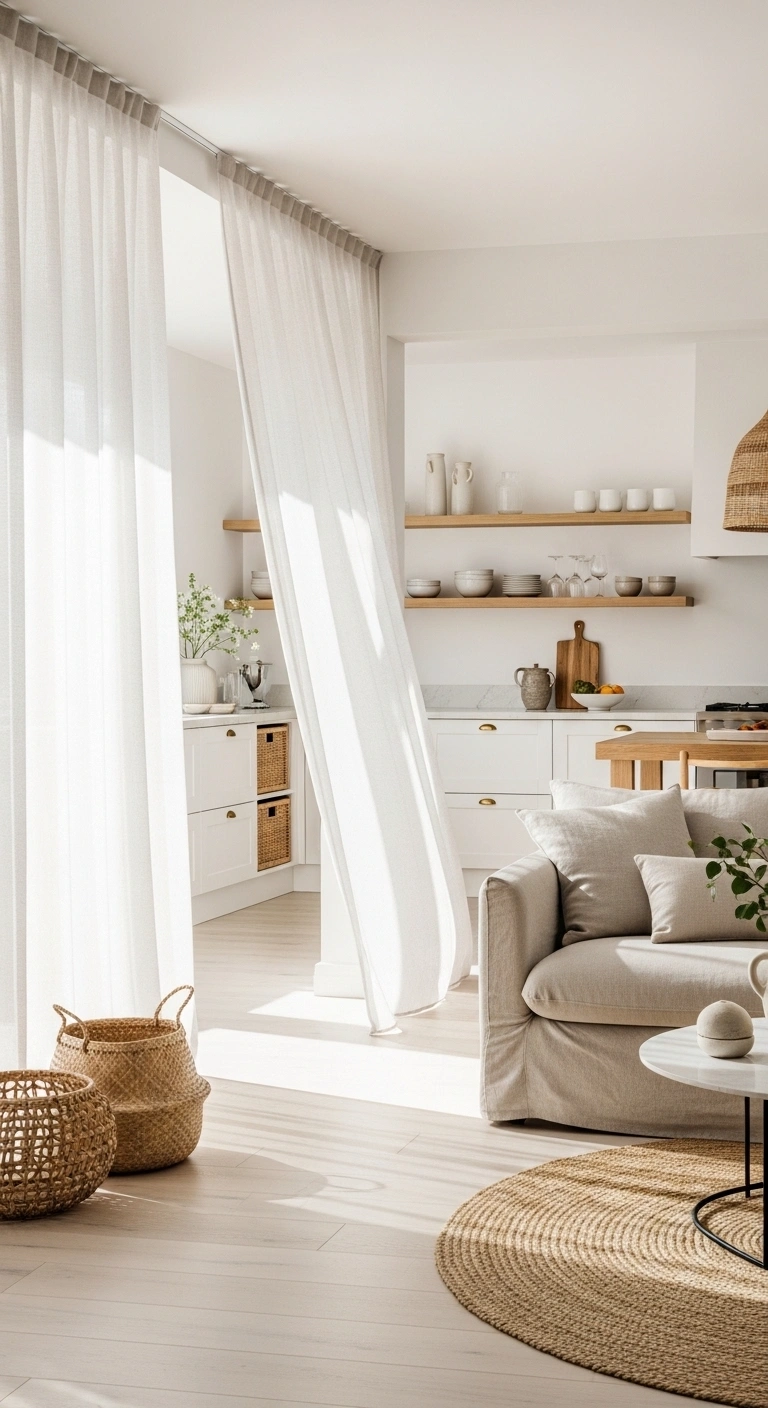
Sheer curtains soften large windows that often make open layouts feel exposed. Choose warm white or light beige linen panels that gently filter sunlight throughout the day. The fabric adds movement and subtle texture without blocking natural light. When the breeze flows through, the room feels airy yet calm. Paired with warm floors and layered rugs, the effect becomes cozy rather than stark. Curtains help the entire combo feel complete and styled.
Hang the curtains higher than the window frame to create height and elegance. Extend the rod slightly beyond the window edges for a fuller look. Avoid heavy dark drapes that visually shrink the room. Combine sheers with woven blinds if you need adjustable privacy. Keep the fabric tone aligned with your wall color for cohesion. This simple upgrade makes the space feel softer and more inviting.
15. Floating Shelves That Bridge Kitchen and Living Decor
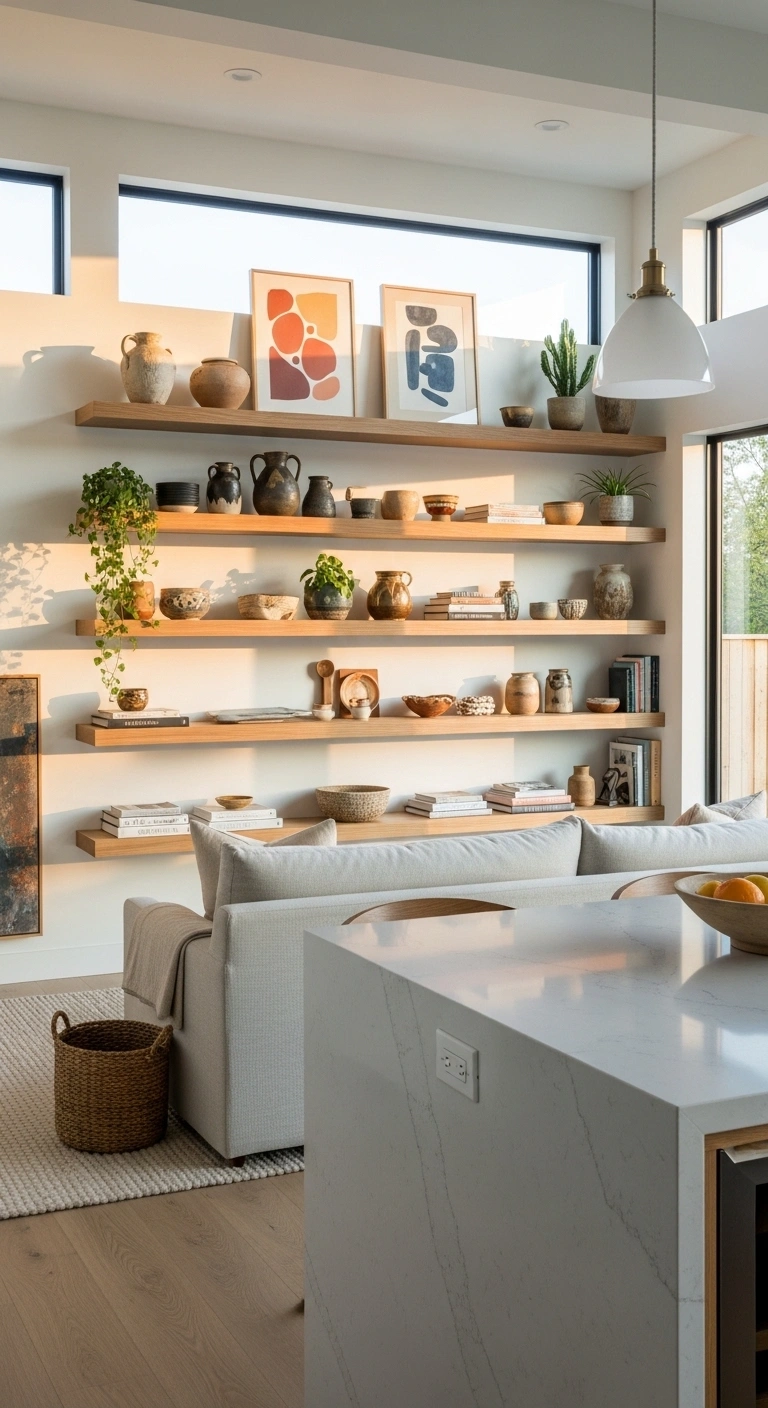
Floating shelves create a visual bridge between your kitchen and living room. Install warm wood or painted shelves along a shared wall for continuity. Style them with a mix of neutral dishware, small plants, framed art, and woven baskets. The layered arrangement blends functional kitchen storage with decorative living accents. This approach keeps the open layout cohesive and personalized. The shelves add warmth without bulk.
Keep styling balanced and avoid overcrowding the shelves. Use consistent color tones in ceramics and décor pieces for harmony. Add subtle under-shelf lighting to create a gentle glow at night. Mix vertical and horizontal stacking for visual interest. Repeat wood finishes from your cabinetry or coffee table. This idea keeps both spaces connected through thoughtful display.
16. Curved Furniture for a Softer Flow
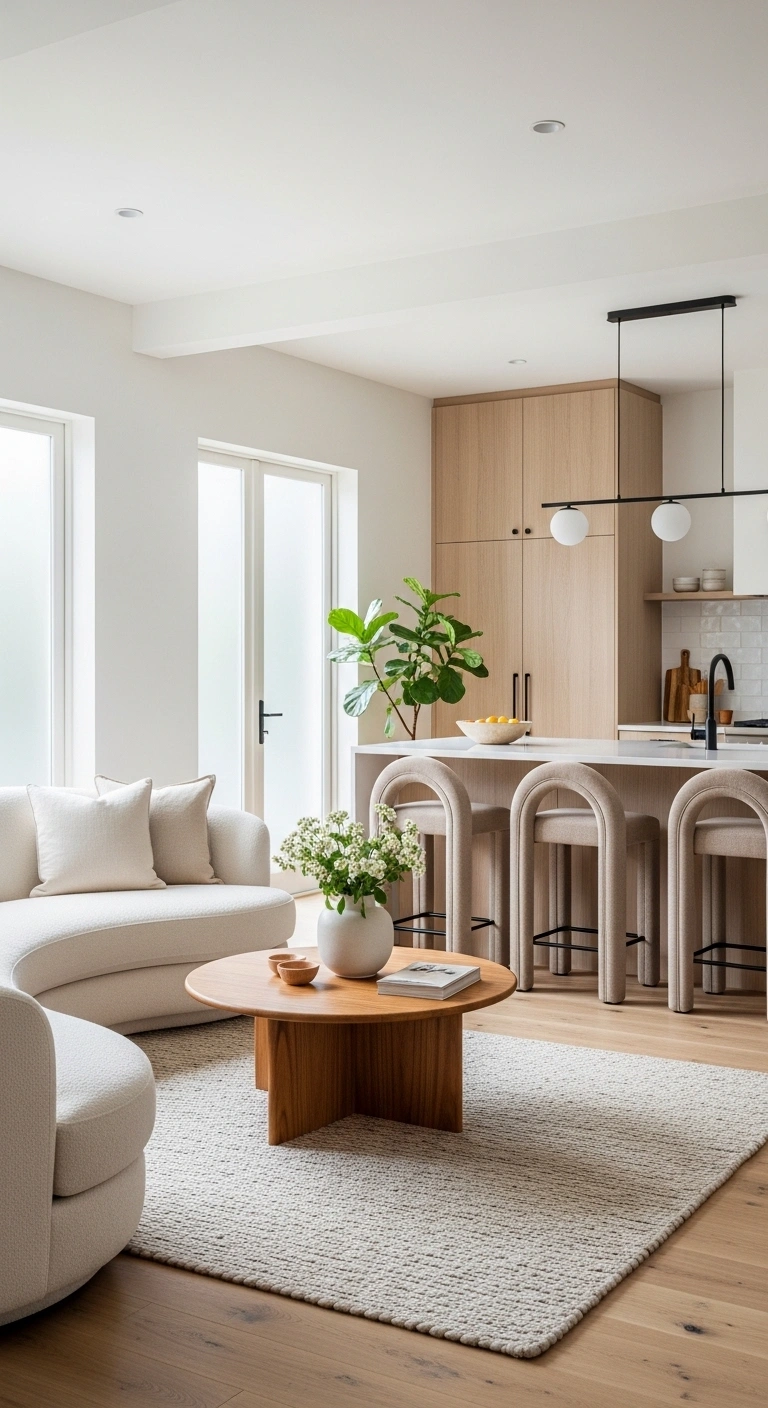
Curved furniture softens sharp lines in a cozy open kitchen living room. A rounded cream sofa paired with a circular coffee table encourages movement and flow. Arched bar stools or curved dining chairs echo the softness throughout the space. These organic shapes reduce visual tension created by straight cabinets and countertops. The room feels relaxed and welcoming instead of rigid. Curves add quiet elegance without extra decoration.
Balance curved furniture with simple cabinetry to maintain structure. Leave enough walkway space so the shapes enhance flow rather than crowd it. Choose textured upholstery like boucle or velvet for warmth. Repeat round elements in mirrors or pendant lights. Keep the color palette cohesive for visual calm. This subtle shift in shape changes the entire atmosphere.
17.Dark Lower Cabinets with Light Living Accents
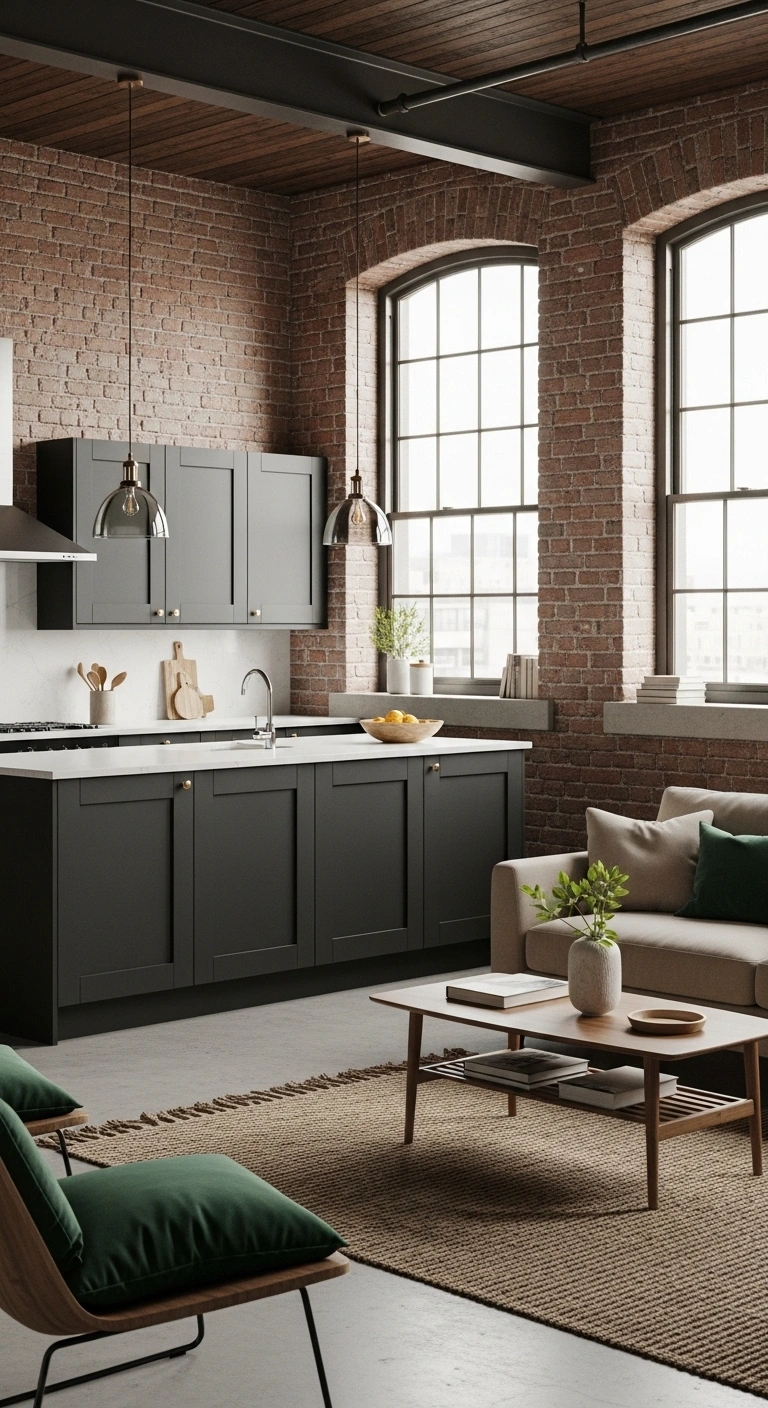
Dark lower cabinets paired with a light living area create cozy contrast. Deep navy, charcoal, or forest green grounds the kitchen visually. Meanwhile, soft beige sofas and pale rugs keep the lounge area airy. The contrast adds dimension without making the room feel smaller. Warm brass handles and wood shelves soften the darker tones. The space feels bold yet balanced.
Echo the cabinet color in small living room accents like pillows or art frames. Keep countertops light to prevent heaviness. Use warm lighting to enhance depth and richness. Avoid pairing dark cabinets with overly cool wall tones. Maintain consistency in undertones across both areas. This combination creates visual interest while preserving warmth.
18. Open Wood Shelving Instead of Upper Cabinets
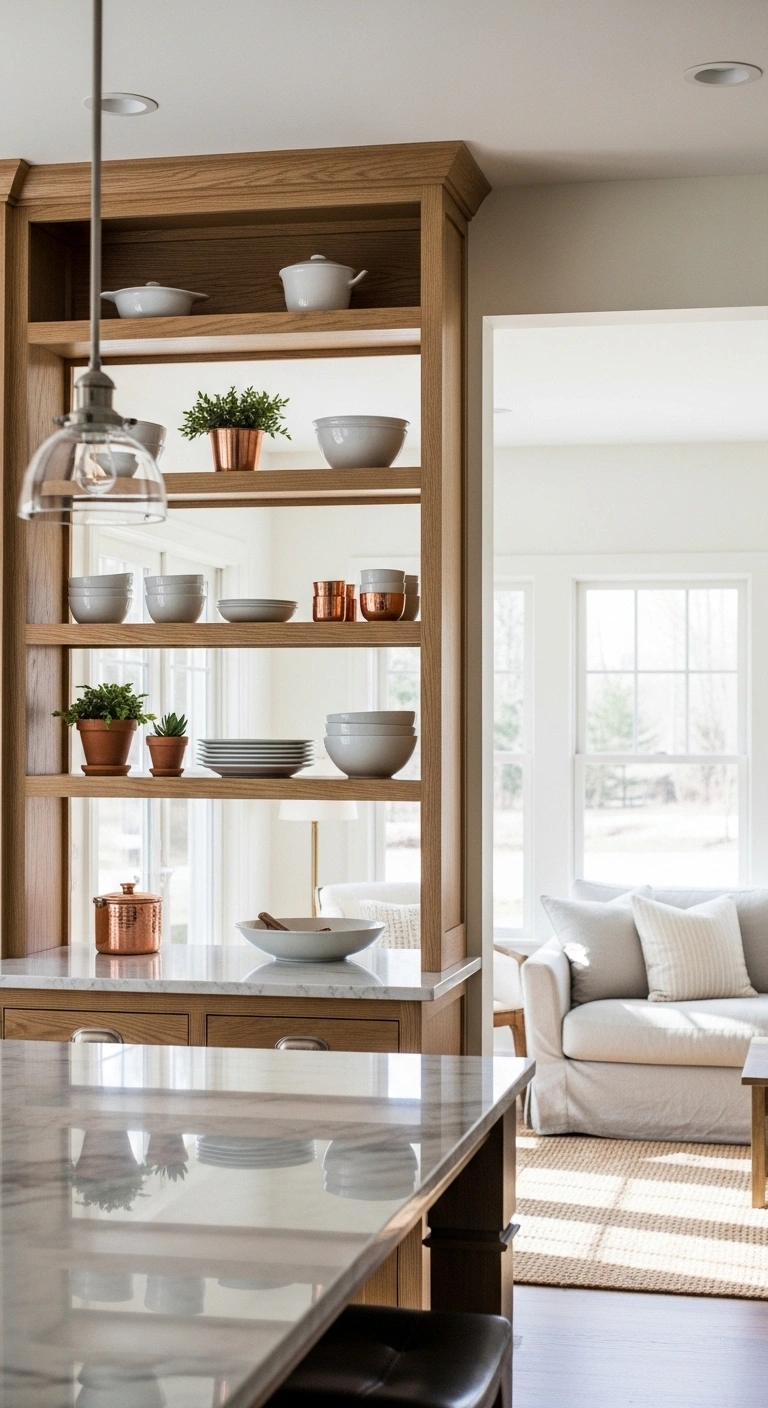
Replacing some upper cabinets with open wood shelving lightens the kitchen visually. Natural wood shelves introduce warmth that blends seamlessly with living room furniture. Display neutral dishes, glass jars, and small plants for a curated look. The open design makes the kitchen feel like part of the living area. The atmosphere becomes relaxed and approachable. This design reduces visual heaviness in open spaces.
Keep the shelves organized with matching containers for cohesion. Limit items to essentials to avoid clutter. Install under-shelf lighting to highlight textures during the evening. Pair open shelving with closed lower cabinets for balance. Choose a wood tone that complements nearby furniture. This mix keeps the design practical yet cozy.
19. Soft Color Blocking for Subtle Separation
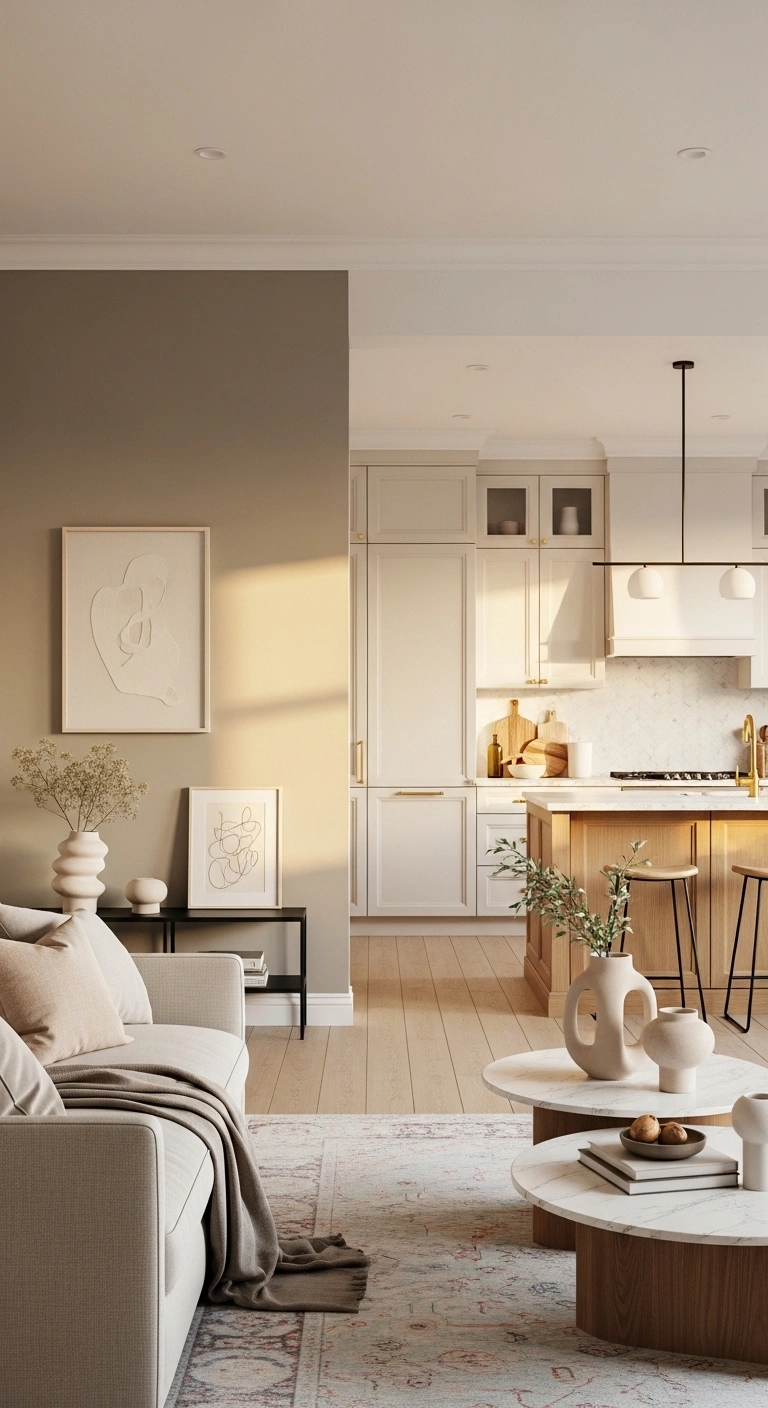
Soft color blocking gently separates zones without building barriers. Paint the living area wall in warm greige and keep the kitchen in creamy white. The subtle contrast defines each space while maintaining flow. Coordinated décor pieces blend both shades together naturally. The effect feels intentional rather than dramatic. This method preserves openness while adding dimension.
Choose shades within the same undertone family to avoid clashing. Repeat each color in textiles or accessories across the opposite zone. Use rugs and artwork to soften the visual boundary. Avoid harsh paint lines or bold stripes. Keep transitions gradual and cohesive. This strategy adds structure without sacrificing warmth.
20. Layered Textiles for Maximum Comfort
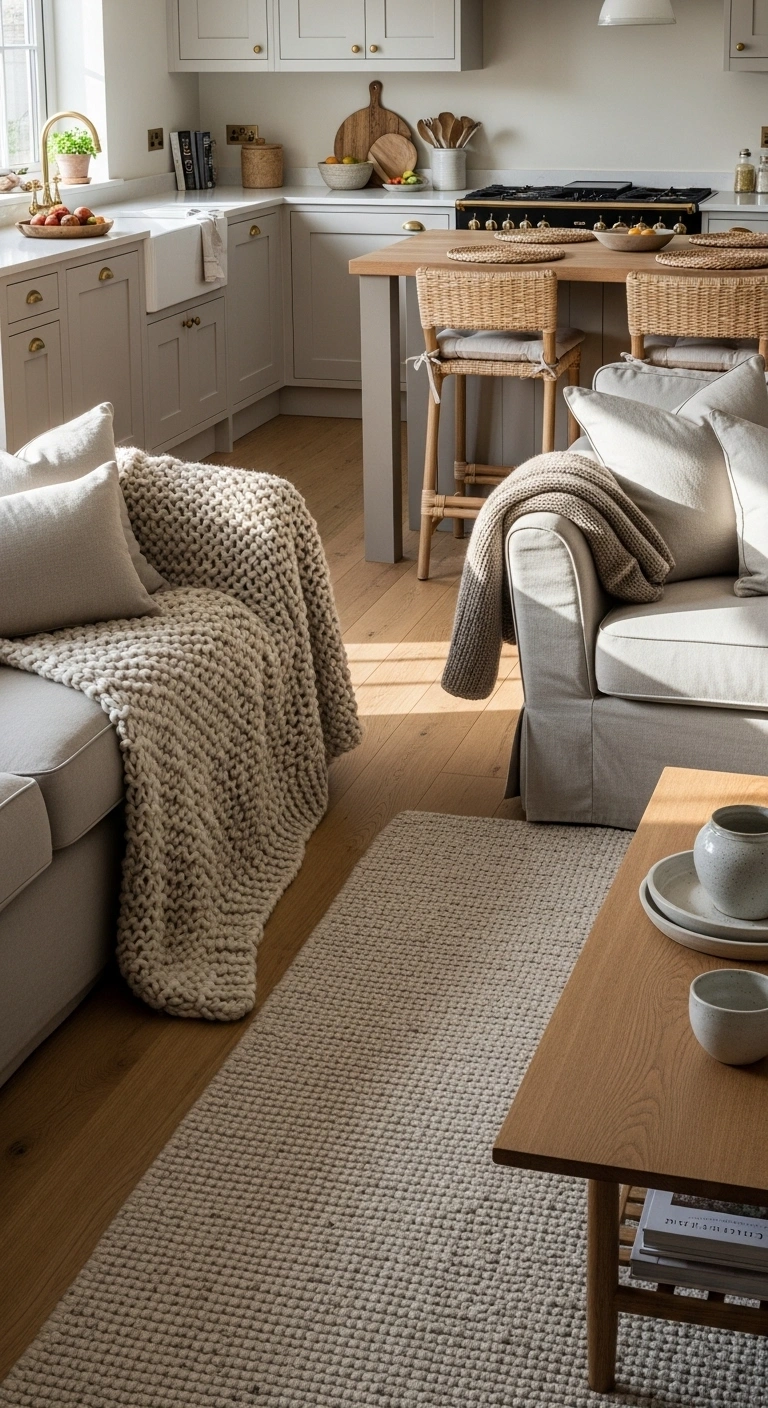
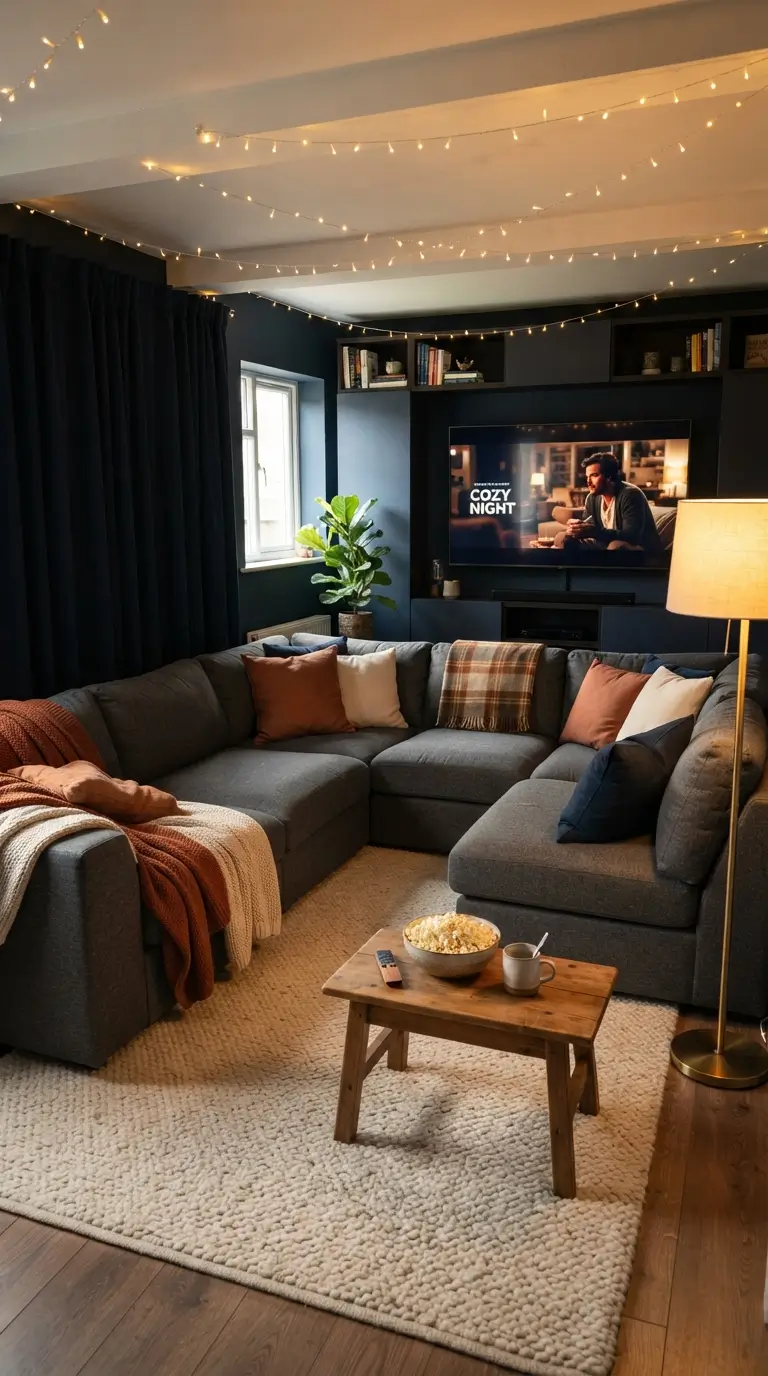
Layered textiles bring comfort and warmth to an open layout instantly. Add chunky knit throws, soft linen cushions, and a plush rug in the living area. Introduce similar textures in the kitchen through seat cushions or woven placemats. The repeated softness ties both zones together naturally. Warm fabrics absorb sound and create a quieter atmosphere. The room feels lived-in and welcoming.
Stick to a consistent color palette to maintain harmony. Mix textures instead of bold patterns to avoid visual clutter. Choose washable materials for easy maintenance. Rotate heavier textiles in winter and lighter ones in summer. Keep layers balanced rather than excessive. This approach blends comfort with practicality.
21. Compact Reading Corner Near the Kitchen
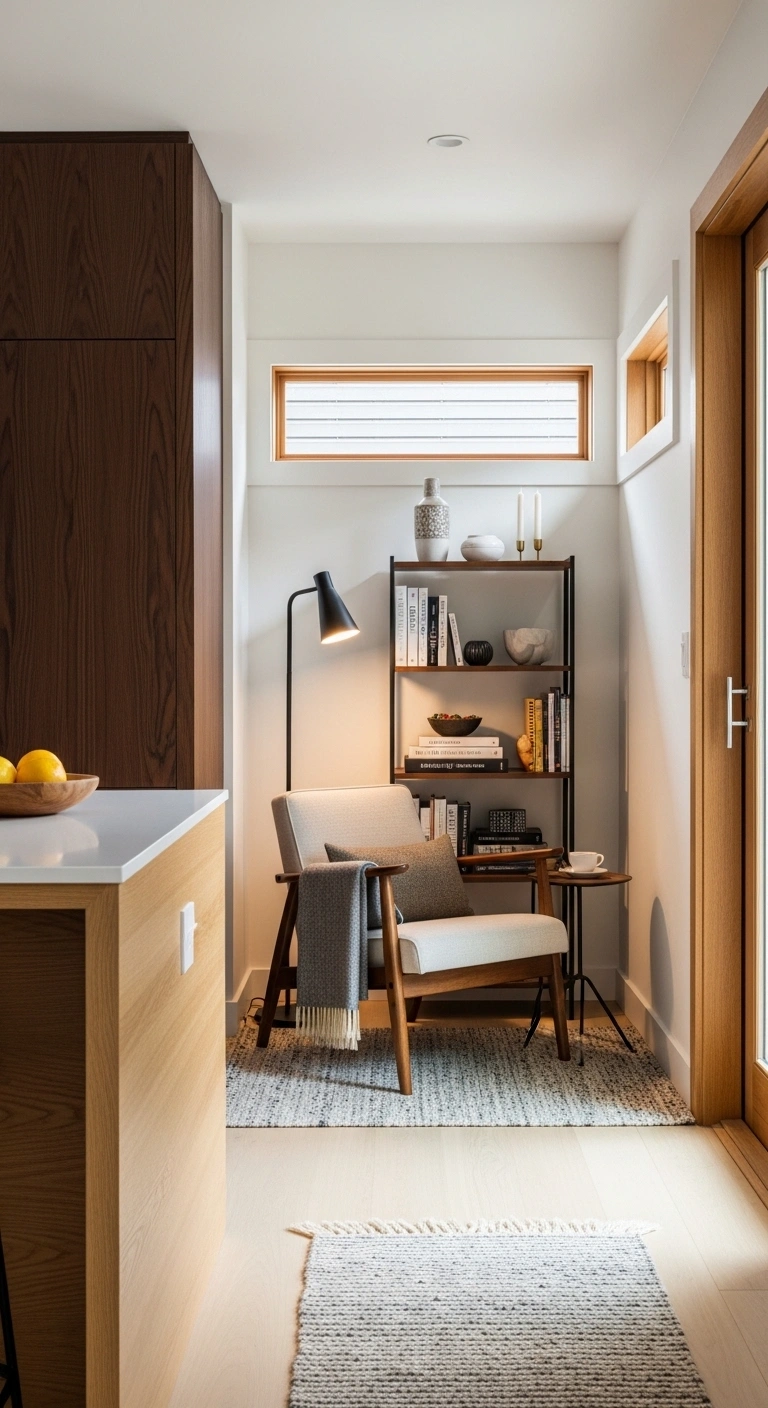
A compact reading corner adds personality and depth to the open layout. Place a comfortable armchair with a soft throw near a window or unused corner. Add a slim floor lamp with warm lighting for cozy evenings. A narrow bookshelf nearby keeps the area functional without bulk. This quiet spot balances the activity of the kitchen. It creates a layered and thoughtful environment.
Position the chair where it does not interrupt walkways. Use vertical storage to save floor space in smaller homes. Choose upholstery that complements kitchen finishes. Keep wall décor simple to avoid distraction. Add a small side table for practicality. This cozy nook enhances comfort without crowding the room.
22. Mixed Metal Accents for Subtle Depth
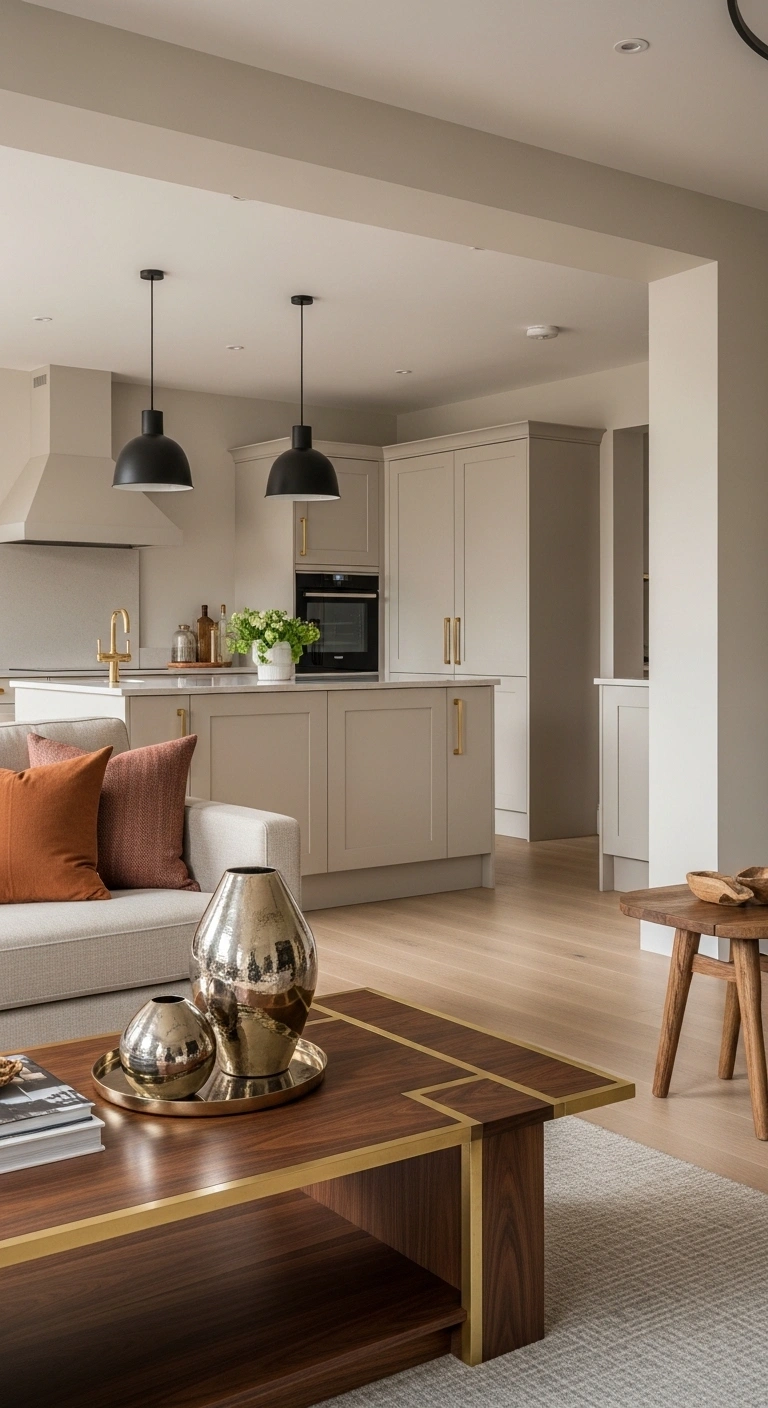
Mixing metal finishes adds dimension and richness to your living room and kitchen combo. Combine brushed brass cabinet handles with matte black light fixtures. Add small chrome or nickel touches in décor accents for balance. The blend creates layered sophistication without overpowering the design. Warm metals reflect soft light beautifully in the evening. The overall effect feels modern yet cozy.
Limit your palette to two or three metal finishes for consistency. Repeat each metal at least twice across the space. Avoid overly shiny finishes that create glare. Pair metals with warm wood and soft textiles for balance. Ensure lighting complements the metal tones you choose. This subtle detail elevates the entire open layout effortlessly.
Conclusion
Designing a cozy living room and kitchen combo is all about balance. You want openness without emptiness, warmth without clutter, and style without sacrificing function. By layering texture, choosing cohesive colors, and placing furniture thoughtfully, you can transform any open floor plan into a welcoming retreat.
Focus on materials that feel warm, lighting that creates depth, and layouts that encourage connection. Small upgrades like rugs, textiles, lighting changes, or subtle architectural details can dramatically shift the mood of your space. When every element works together, your open layout will feel intentional, comfortable, and beautifully cohesive.