23 Small Playroom Ideas to Maximize Fun & Space
Key Takeaways
- Go vertical with peg rails, pegboards, and wall-mounted tables to free up every inch of floor for play.
- Use clear bins with picture labels so even pre-readers can clean up without help.
- Keep the palette muted (sage, warm cream, dusty rose) so bold toys read as decor instead of chaos.
- Add at least one cozy quiet zone (teepee, loft nook, under-stair cave) for sensory balance.
- Always layer warm 2700K–2800K lighting to keep the room inviting past sunset.
- Choose furniture that shape-shifts — fold-down tables, stackable cubes, swing chairs — so the room grows with your kids.
- Anchor the room with one large round rug to instantly make it feel designed and photo-ready.
A small playroom should feel like a magical little world where creativity flows, not a cluttered corner where toys pile up by Sunday. If you want your tiny space to work harder while still looking beautiful in photos, these twenty-three small playroom ideas will give you smart, doable solutions. You’ll find storage hacks, creative zones, cozy nooks, and statement features that turn every square inch into something playful and purposeful.
Each idea is tested for real family life, which means nothing feels fragile, fussy, or too Pinterest-perfect to actually use. Expect pegboards, fold-down tables, reading teepees, magnetic walls, chalkboard doors, and cube benches that make cleanup fast. You’ll walk away with a clear plan for your tiny playroom, plus exact color, texture, and lighting cues you can copy to make the space feel intentional and warm.
1. Use a Peg Rail for Hanging Toys
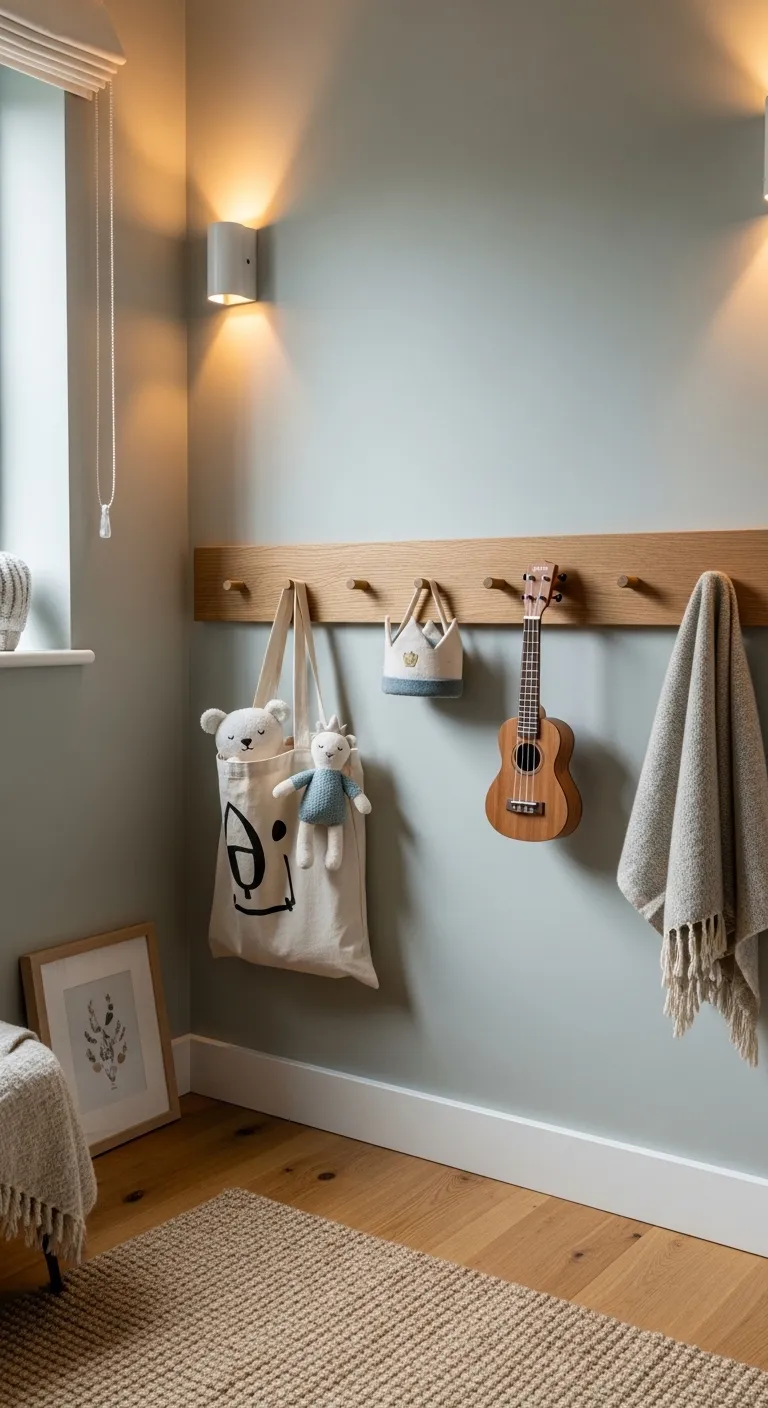
A simple peg rail running along one wall turns toys, bags, and dress-up costumes into easy-access wall art. Choose a warm oak or natural pine rail with round pegs and mount it about 90 cm off the floor so young kids can reach everything themselves. Hang cotton tote bags filled with plushies, a few musical instruments, and a small fabric crown or two to add playful color. Paint the wall behind the rail in a soft muted sage or dusty clay so the warm wood pegs pop subtly.
This idea frees up precious floor space while teaching kids daily tidy-up habits without a fight. Add a small framed print nearby and warm 2800K wall sconces to keep the look calm and editorial.
2. Add a Fold-Down Play Table
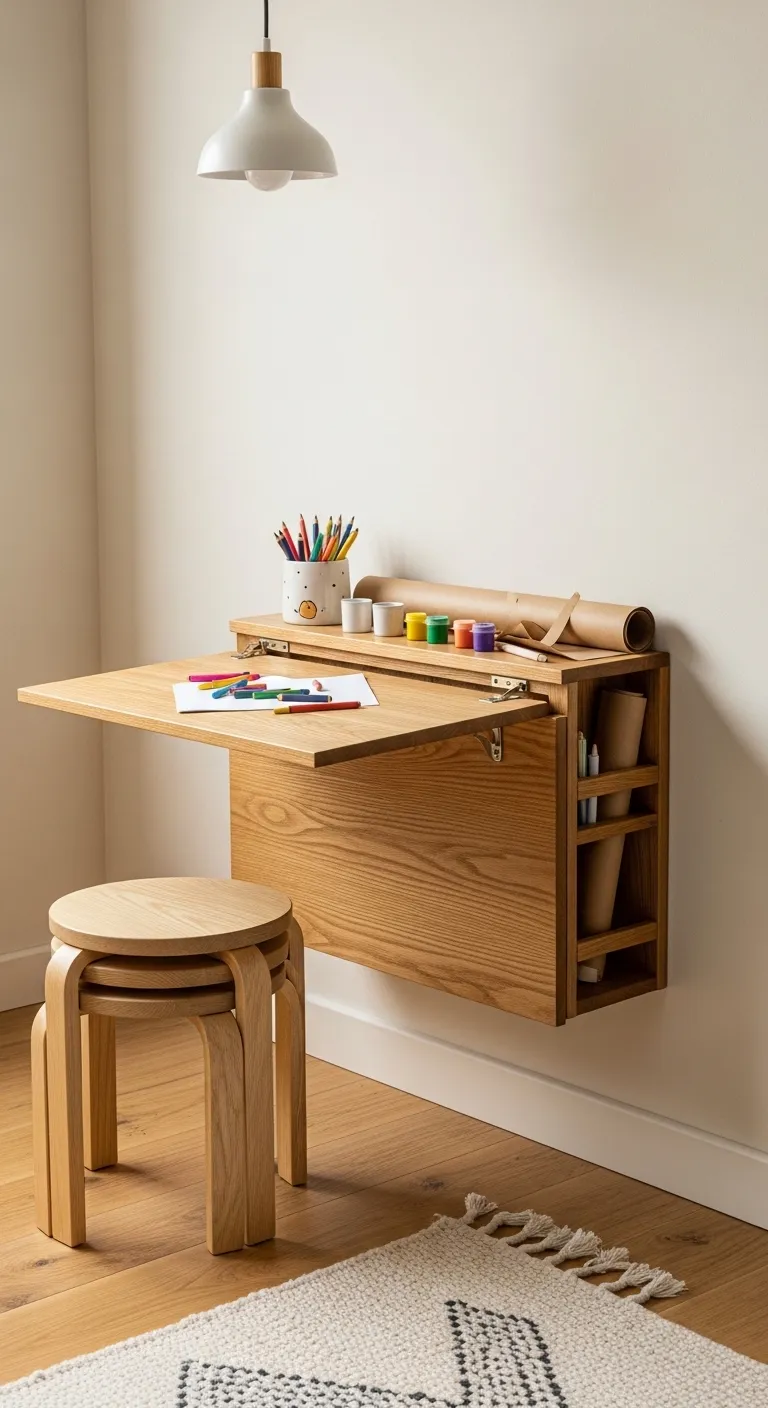
A wall-mounted fold-down table gives you a full craft surface that disappears the moment play ends. Choose a warm oak or matte white folding panel hinged to the wall, about 80 cm wide, and pair it with two lightweight stackable stools. When folded up, the table doubles as a magnetic or chalkboard surface for extra play value. Add a small narrow shelf beside it to hold crayons, small pots of paint, and rolled paper.
Keep the wall color soft, like warm ivory or pale sage, so the table reads as intentional joinery rather than clutter. This setup is perfect for small playrooms under eight square meters that need to shape-shift throughout the day.
3. Install a Loft Play Nook
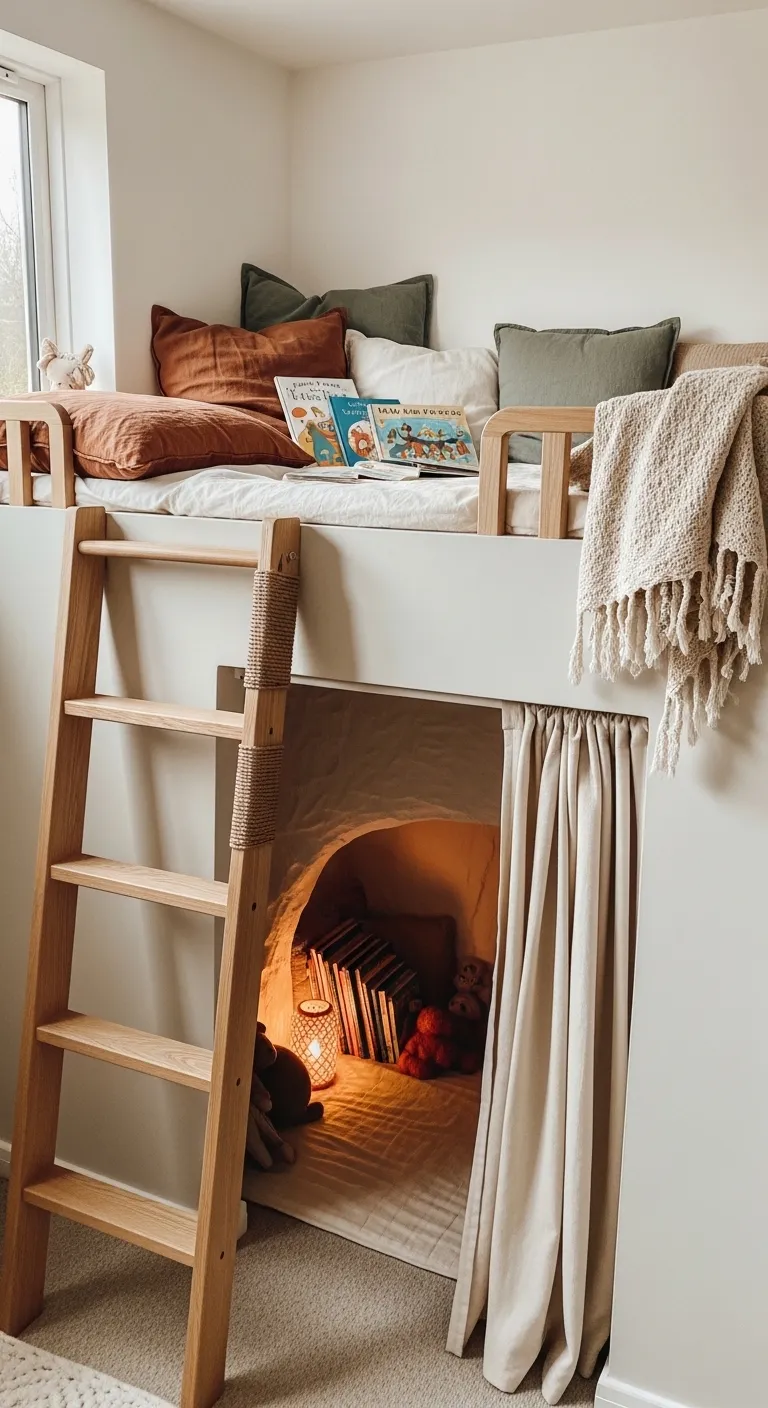
A small raised loft nook squeezes two zones out of one square meter of floor space. Build a low loft platform about 90 cm high with a short oak ladder, topped with a thin mattress, cushions, and a small pile of books. Use the space below the loft as a reading cave, puppet theater, or cozy hideout with a fabric curtain across the front. Style the loft with muted terracotta, cream, and dusty sage pillows for a warm, lived-in feel.
Hang a small battery-powered warm lantern inside the cave below for a gently magical glow. This is one of the smartest small playroom ideas for rooms with even 2.4 meter ceilings because you double the usable floor by going vertical.
4. Create a Reading Teepee Corner
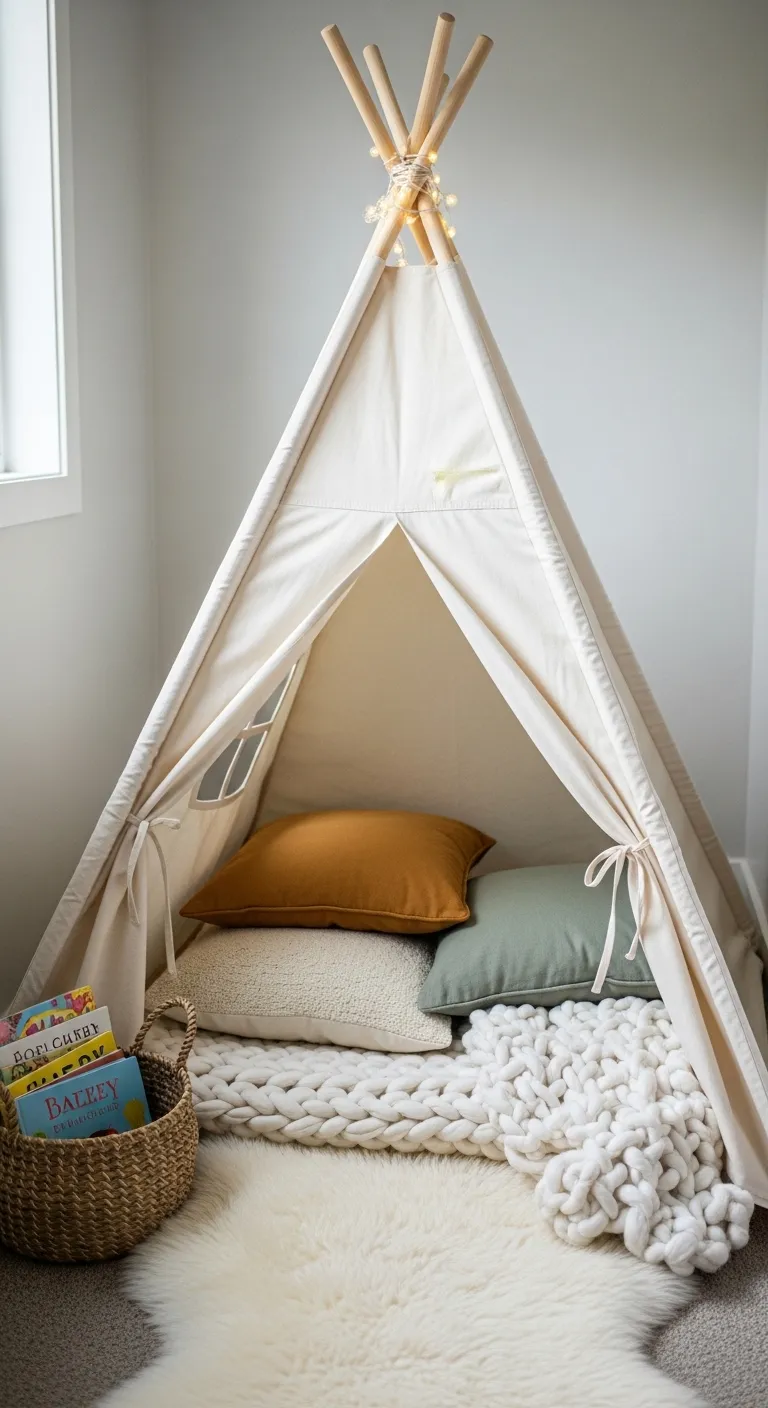
A natural canvas teepee creates an instant quiet zone where kids can retreat with books or stuffed animals. Choose a cream or natural linen teepee with light pine poles, roughly 120 cm tall, and place it in the least busy corner of the room. Layer the inside with a thick sheepskin rug, two small cushions, and a chunky cotton throw for cozy floor seating. Add a small woven basket of picture books outside the teepee opening so little hands can grab one quickly.
Hang warm fairy lights inside the top for that soft 2700K glow every Pinterest photo loves. Teepees fold flat in seconds, which means your playroom can double as guest space or yoga corner when needed.
5. Use Clear Bins with Picture Labels
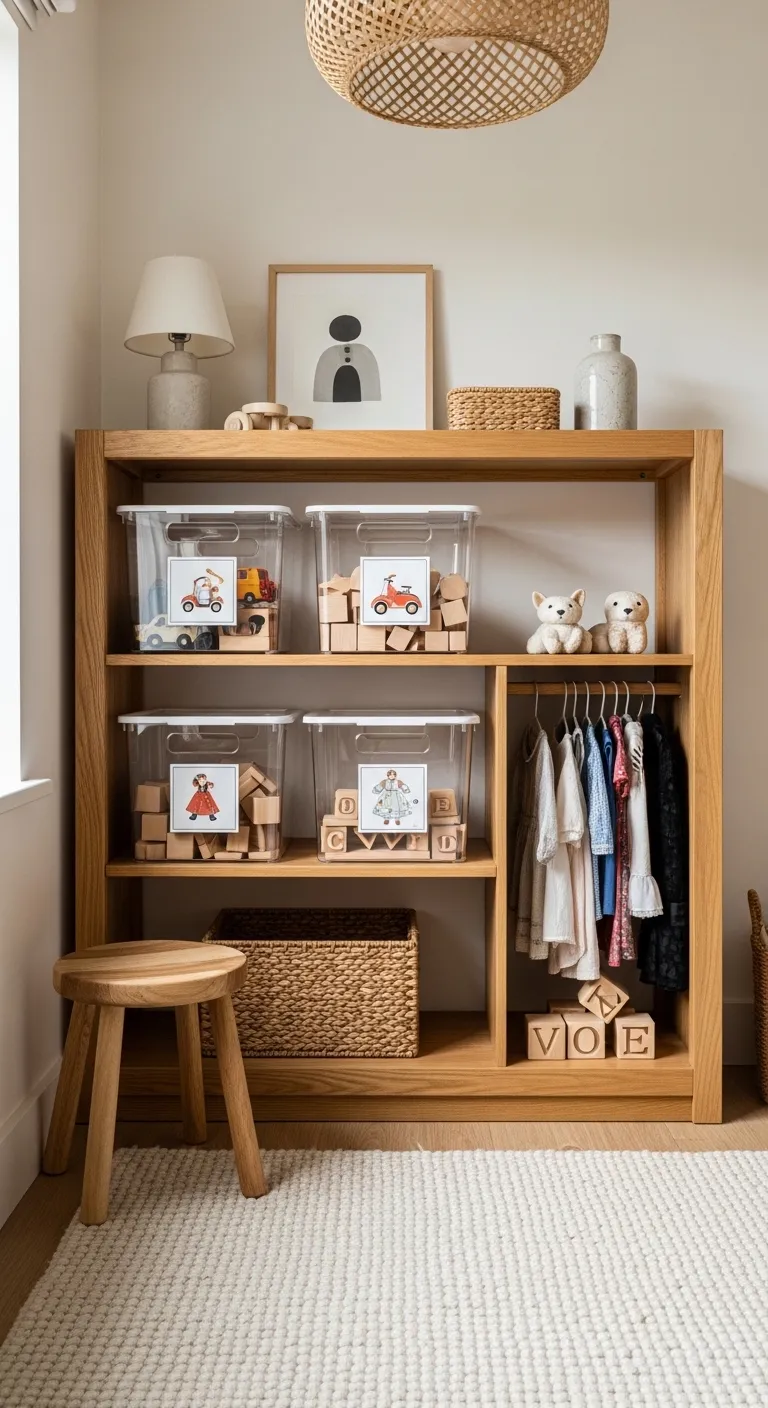
Clear acrylic bins with picture labels make cleanup doable for kids who can’t yet read words. Use identical square bins with slim wood tops or lids, arranged on open oak shelves with little labels showing a photo of what’s inside. Cars go in the car bin, blocks in the block bin, and dress-up in the costume bin — zero guessing, zero chaos. Keep the bin contents slightly loose so kids can see quickly what they own.
Mount the shelves floor to about 110 cm high so everything stays kid-accessible and the top shelf doubles as a styling surface. This simple system cuts cleanup time roughly in half and looks tidy in photos even when mid-play.
6. Build a Climbing Triangle Zone
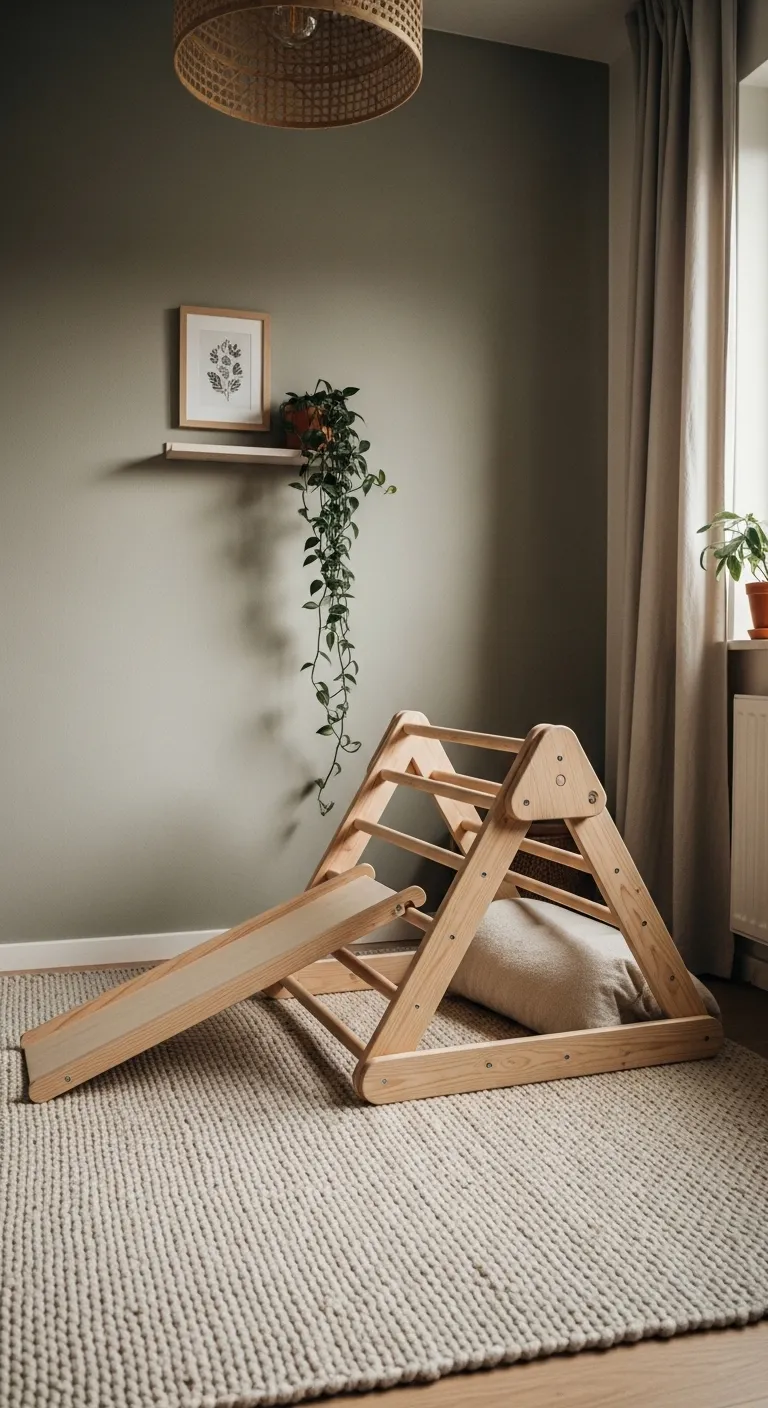
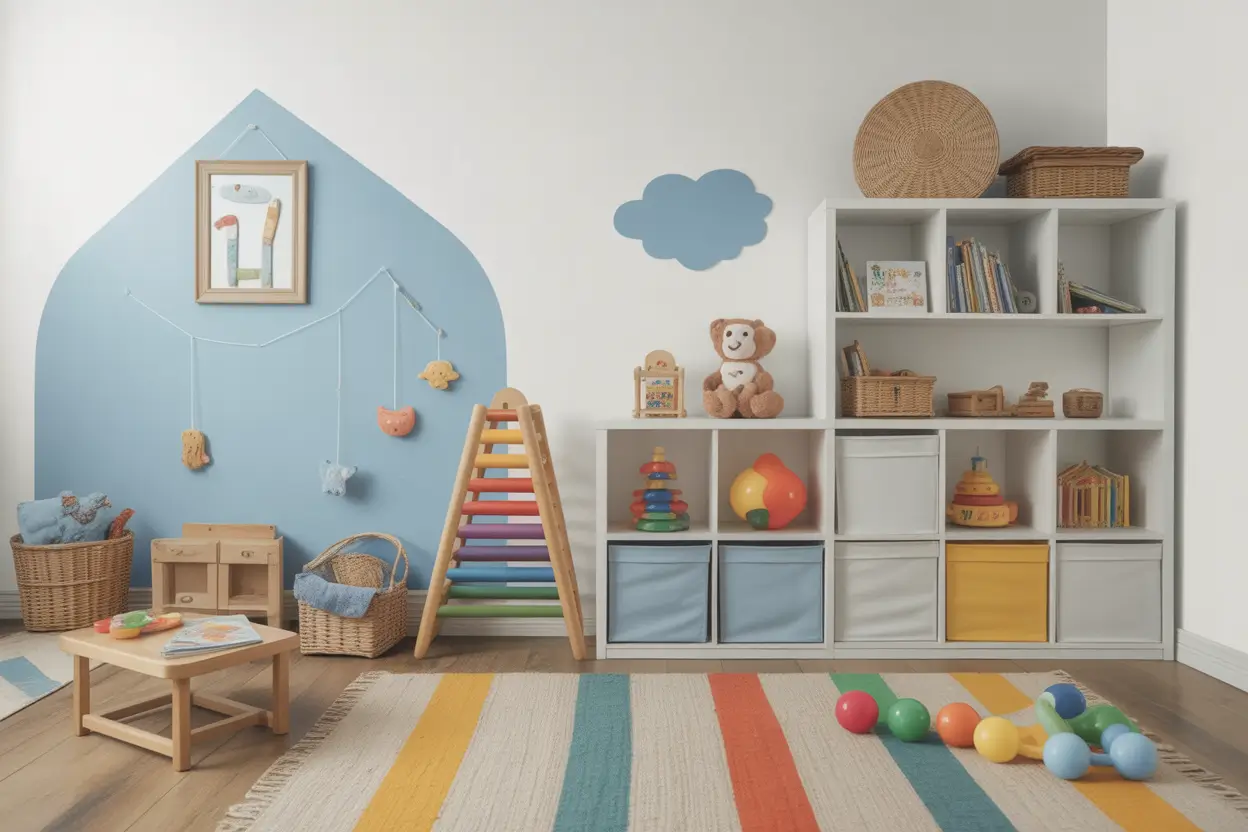
A Pikler-style climbing triangle adds safe physical play to a tiny playroom without dominating the floor. Choose a natural pine or warm oak triangle with a smooth matte finish, about 60 cm wide, which folds flat for storage when needed. Pair it with a small wooden slide ramp or a climbing arch to extend play for kids ages one through six. Place a thick wool or cotton rug below in warm cream or oatmeal for soft landings and instant cozy styling.
Keep the surrounding walls calm in muted sage or warm greige to let the wood climber stand out as sculpture. Style the corner with a single framed print and a small trailing plant for a warm, grounded look.
7. Add a Mini Art Wall with Paper Roll
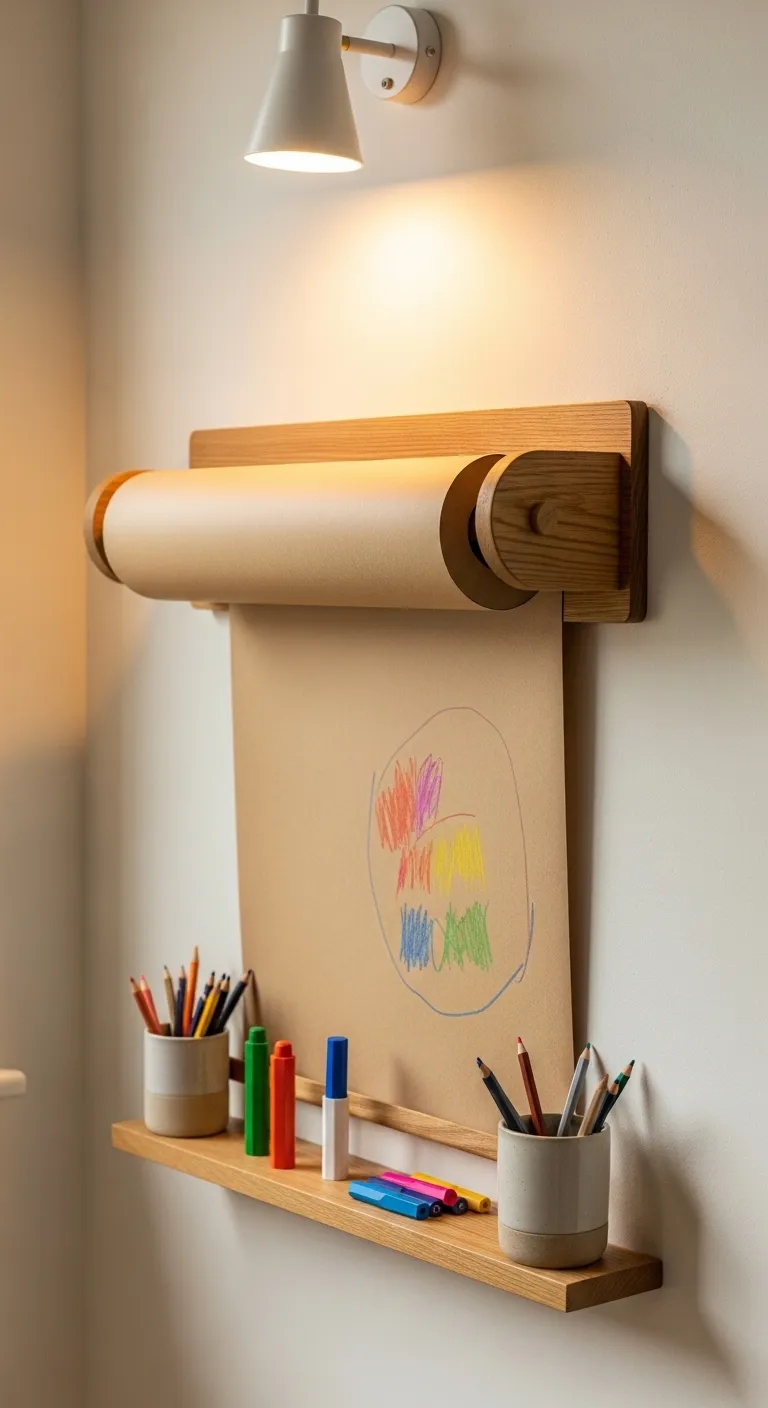
A wall-mounted paper roll holder gives kids a never-ending canvas that takes up zero floor space. Install a warm oak or matte black holder about 80 cm wide at a kid-friendly height, loaded with a roll of thick kraft or white drawing paper. Add a small shelf below to hold chunky crayons, paint sticks, and a ceramic cup of colored pencils. Paint the surrounding wall in a warm ivory or soft sage so bold marker colors pop against a calm background.
Change out the paper roughly once a week and save kids’ best drawings in a flat file as real art. Add a warm 2800K picture light above to turn the whole wall into a mini studio corner at night.
8. Use a Bay Window Seat with Storage
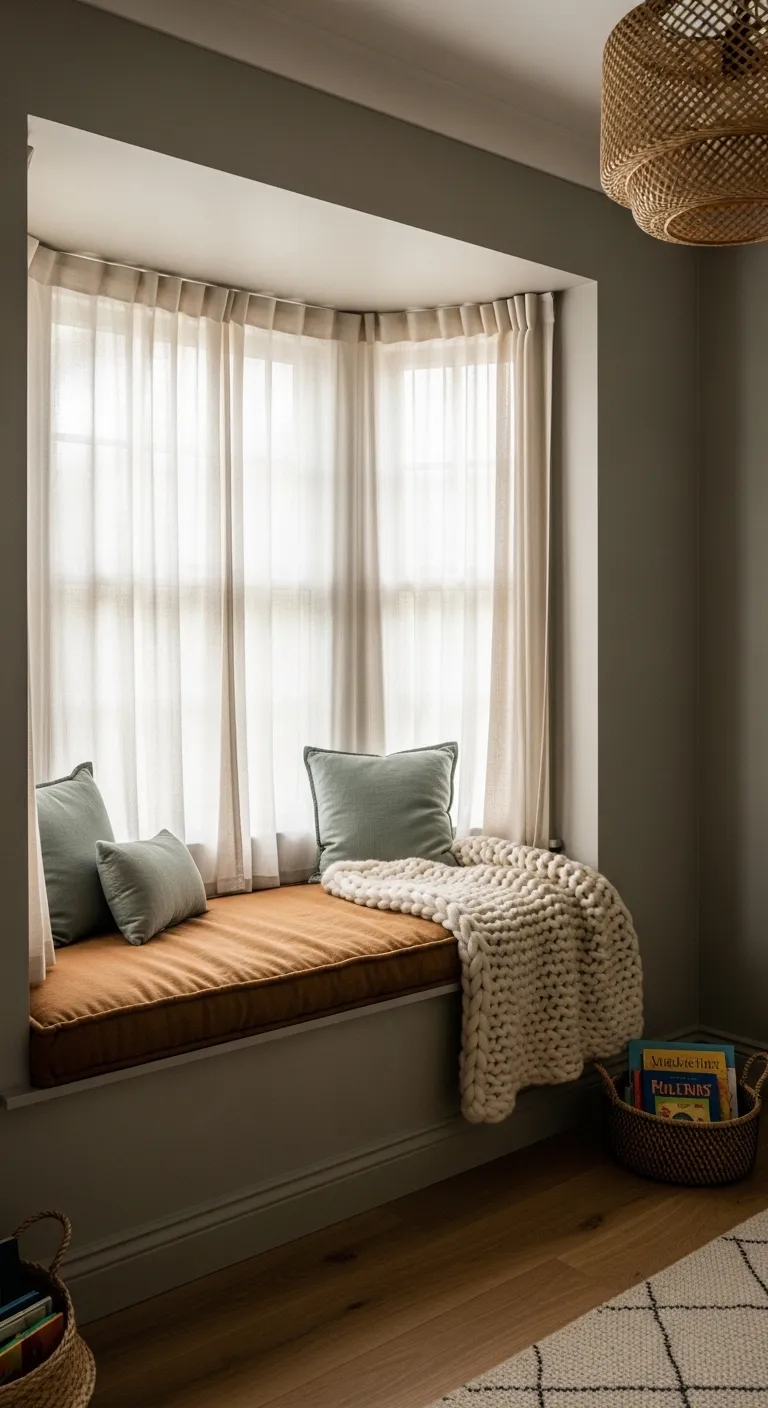
A bay window seat with hidden storage underneath is dreamy for tiny playrooms with an awkward window bump-out. Build a bench seat the width of the window with a hinged top or deep front drawers inside for puzzles, art supplies, and books. Top the seat with a thick custom cushion in warm linen oatmeal and add two small dusty sage pillows and a chunky knit throw. Frame the window with a pair of soft sheer cream curtains for diffused daylight.
Paint the inside of the bay in a muted sage or dusty rose to make the nook feel like a little reading cocoon. This setup works equally well as a play corner, reading spot, or quiet calm-down zone.
9. Hang a Hammock Swing Chair
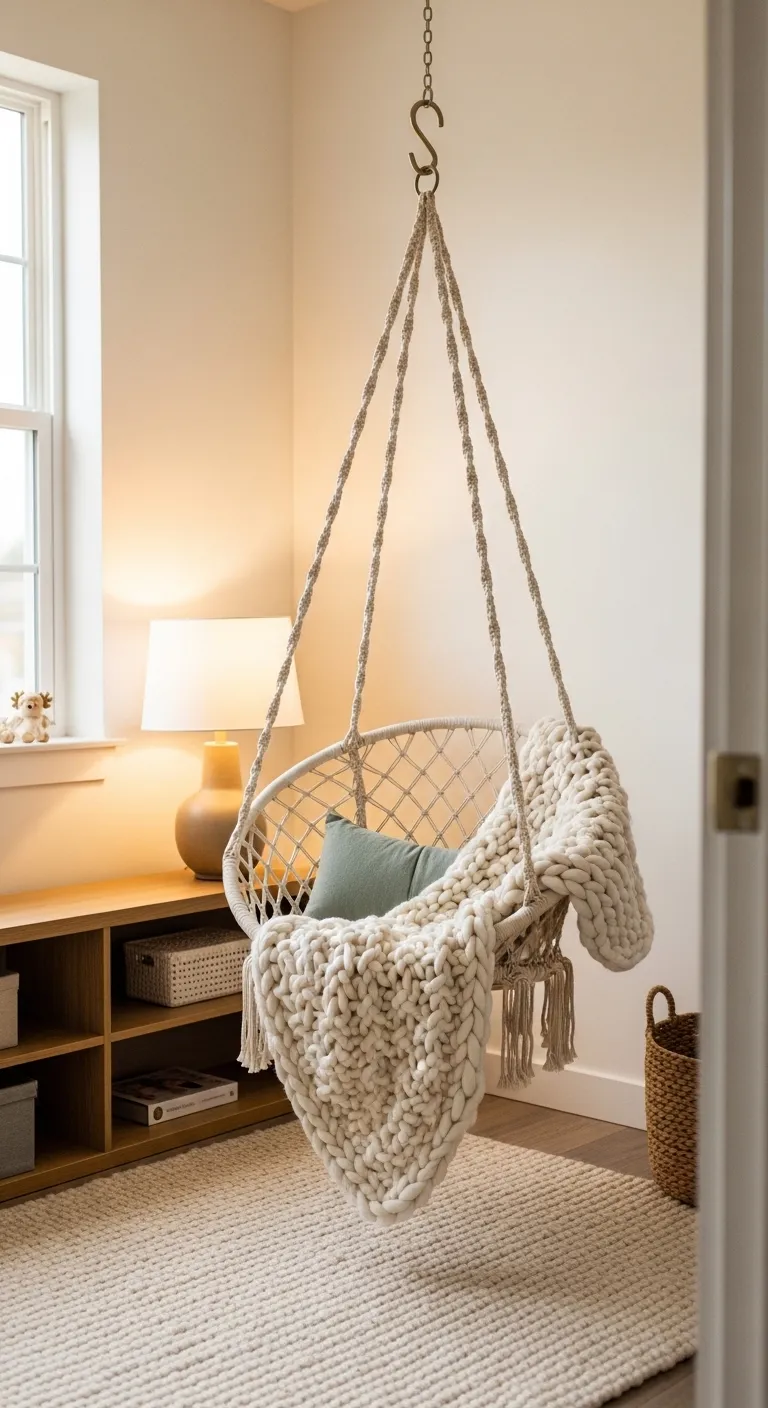
A small hanging hammock or swing chair adds gentle movement and sensory calm to a tiny playroom. Choose a natural macramé or woven cotton swing chair in warm cream, mounted from a solid ceiling joist with a strong brass hook. Layer a chunky knit throw and a small pillow inside for a soft inviting seat. Place a thick oatmeal wool rug underneath to cushion any landings and warm the whole space.
Pair this with a low nearby bookshelf and a warm 2700K floor lamp for that cozy reading-corner feel. Swinging regulates the nervous system, so this one idea doubles as calm-down tool and decor statement.
10. Install Pegboard Craft Organizer
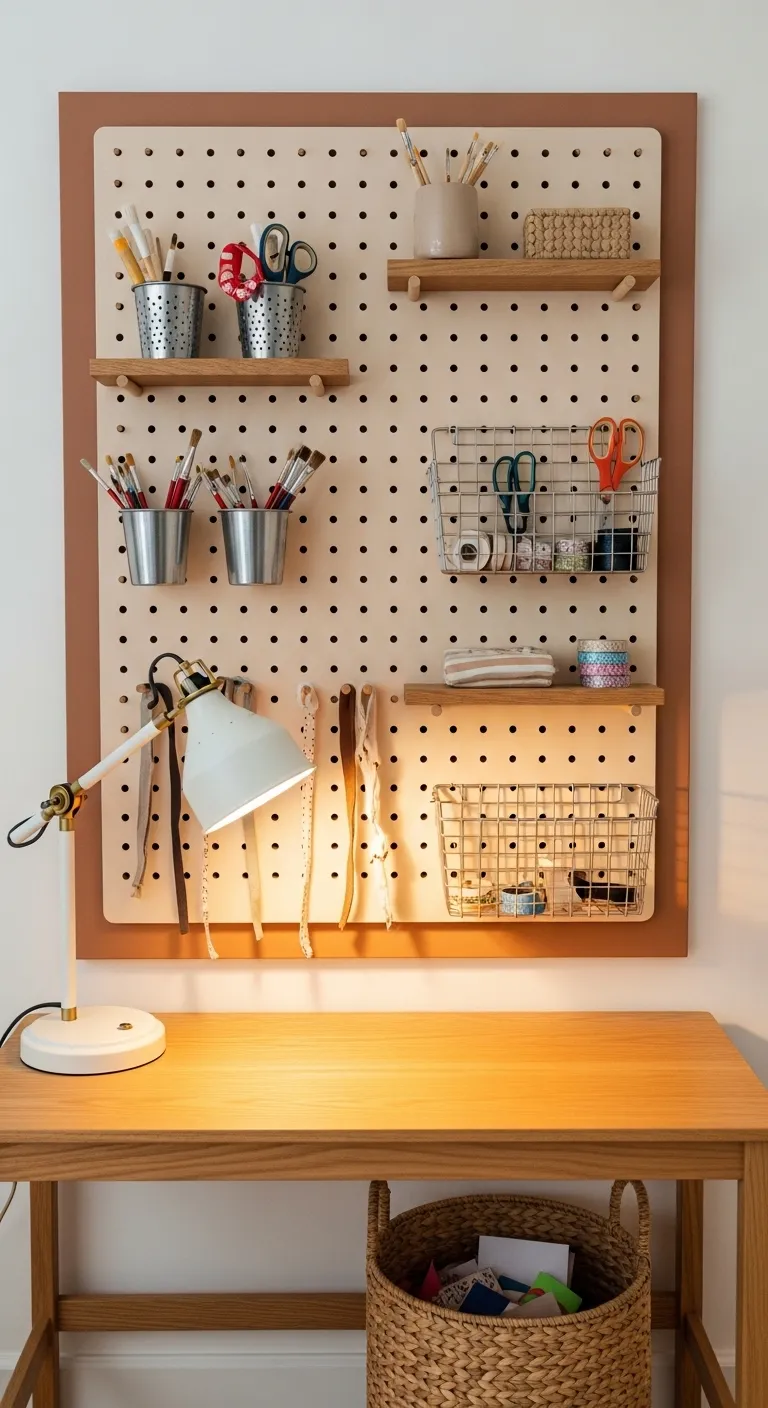
A full pegboard wall turns messy craft supplies into a beautiful, organized display. Mount a large pine-stained pegboard above a low craft desk and add wooden pegs, small shelves, metal cups, and wire baskets at different heights. Hang scissors, ribbons, washi tape, and paintbrushes where they’re easy to grab but stay visually clean. Paint the pegboard backing warm clay or muted slate so the supplies pop without screaming.
Add a warm 2800K desk lamp and a small woven basket below for paper scraps. This setup makes craft time faster to start and faster to clean up, which turns art play into a real daily activity rather than an occasional mess.
11. Add Rainbow Floor Cushions
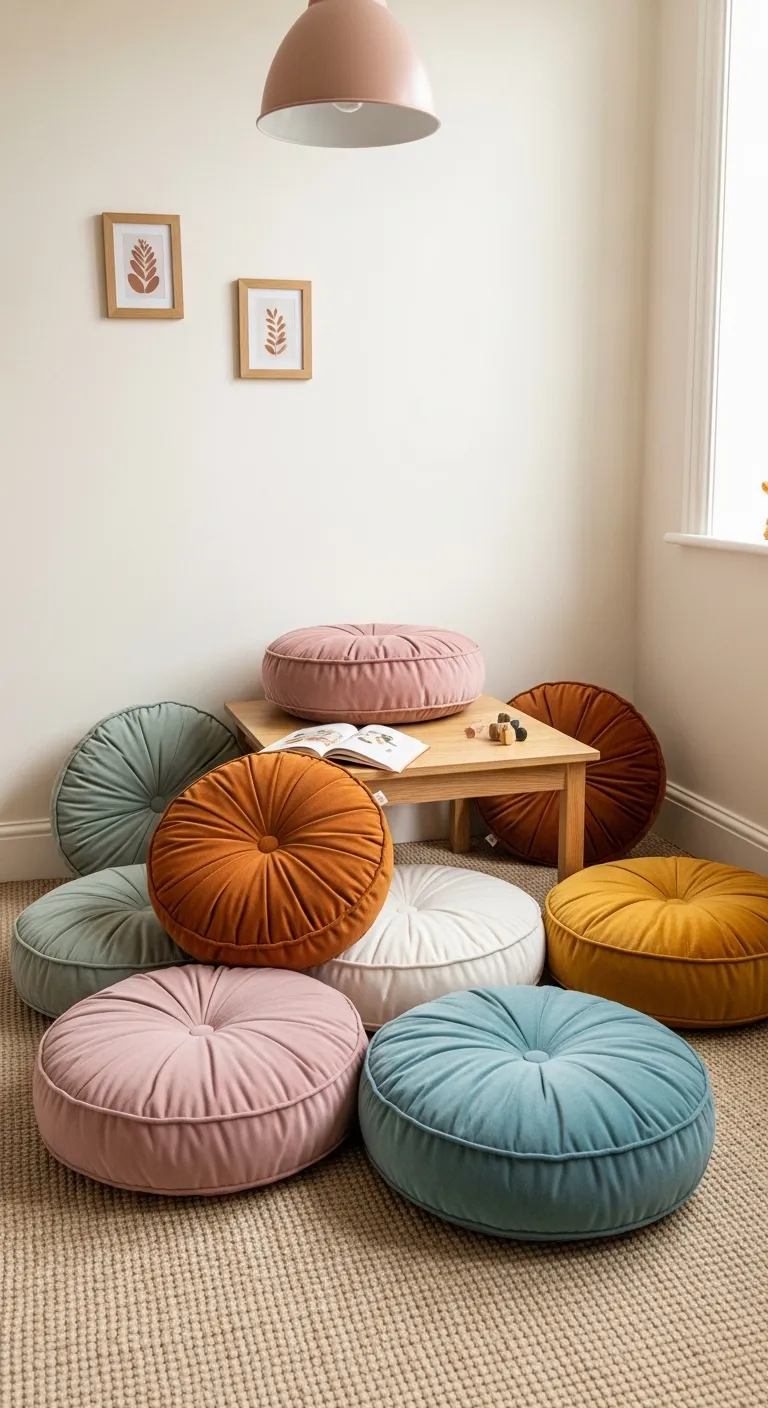
Rainbow floor cushions turn plain floor space into playful movable seating kids actually use. Choose six to eight round cotton or velvet cushions in muted sage, dusty rose, warm rust, mustard, cream, and soft teal — avoid primary colors for a calmer palette. Stack them in a corner when not in use and scatter them around a low table during group play or family reading time. Lay a soft oatmeal jute rug below to ground the whole arrangement.
Style the wall behind with one or two framed prints in matching tones for visual unity. This is one of those small playroom ideas that costs little but gives huge photo and play impact.
12. Build a Mini Kitchen Corner
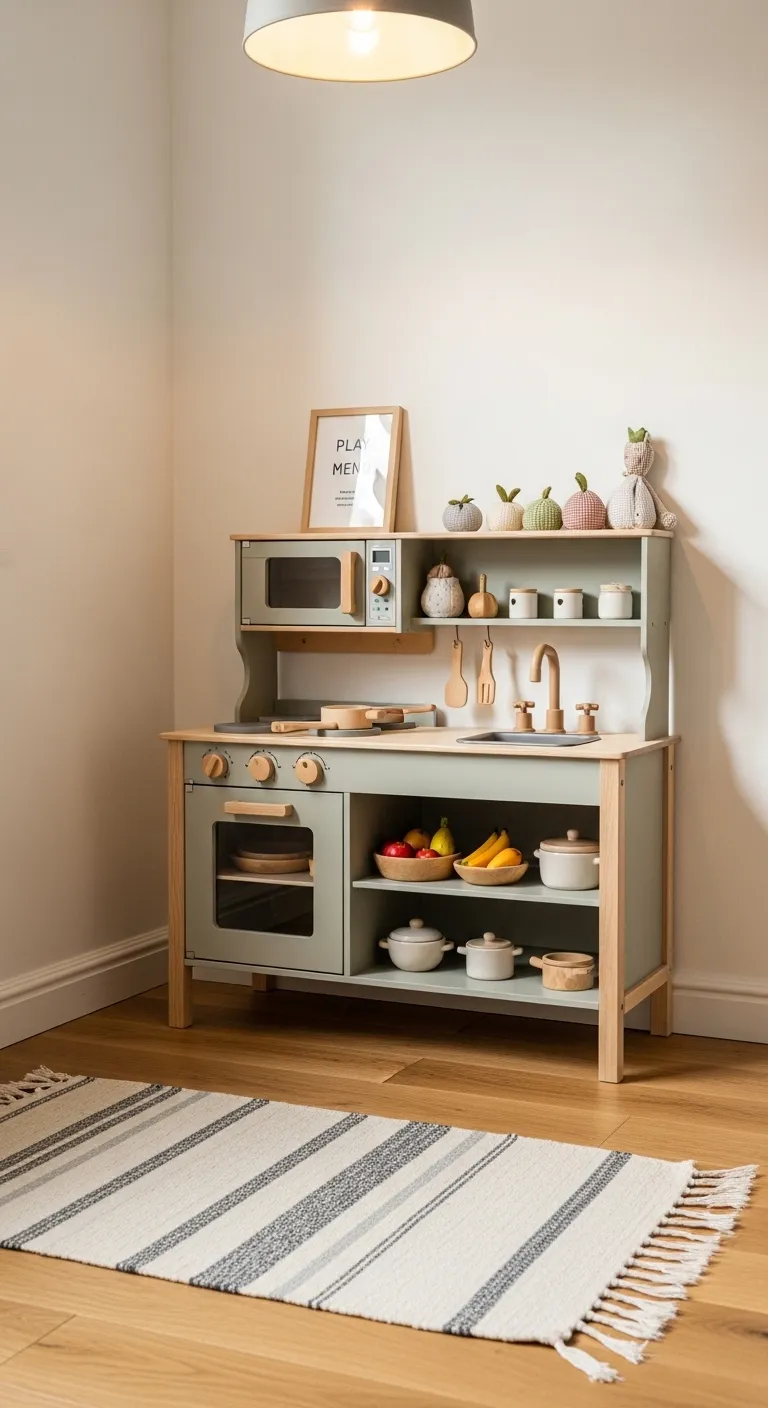
A mini play kitchen corner delivers endless imaginative play in less than half a square meter. Choose a compact wooden play kitchen in warm oak or muted sage with realistic knobs, a tiny oven door, and a small sink. Add a miniature open shelf next to it holding fabric fruits, tiny ceramic pots, and wooden utensils for accessible cooking fun. Paint the wall behind in a soft warm ivory with a small framed menu or print for whimsy.
Keep the floor clear with a simple muted striped runner rug that defines the kitchen zone. This play kitchen looks charming in photos and grows with kids from age two up to about seven.
13. Create a Chalkboard Door Feature
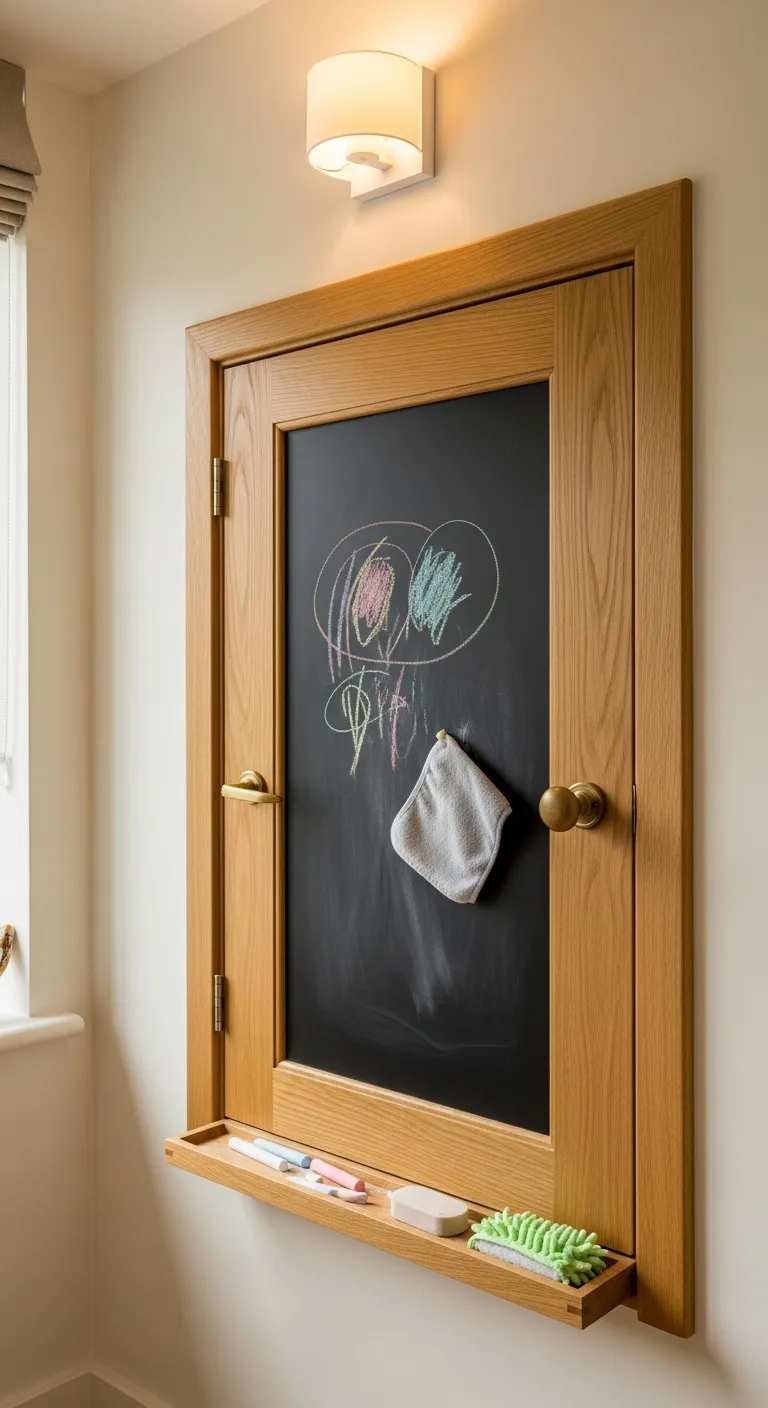
Turn the back of the playroom door into a giant chalkboard and reclaim space that normally does nothing. Paint the full interior side of the door in matte black chalkboard paint and frame it with thin warm oak trim for a finished look. Mount a narrow oak tray at the bottom holding white and colored chalk plus a soft microfiber eraser. Kids use it daily for doodles, games, or practicing letters without taking up any floor or wall.
Keep surrounding walls light — warm cream or soft sage — so the black door reads as intentional, not dark. Add a small warm sconce nearby to light the chalkboard during evening play.
14. Use Under-Stair Playroom Space
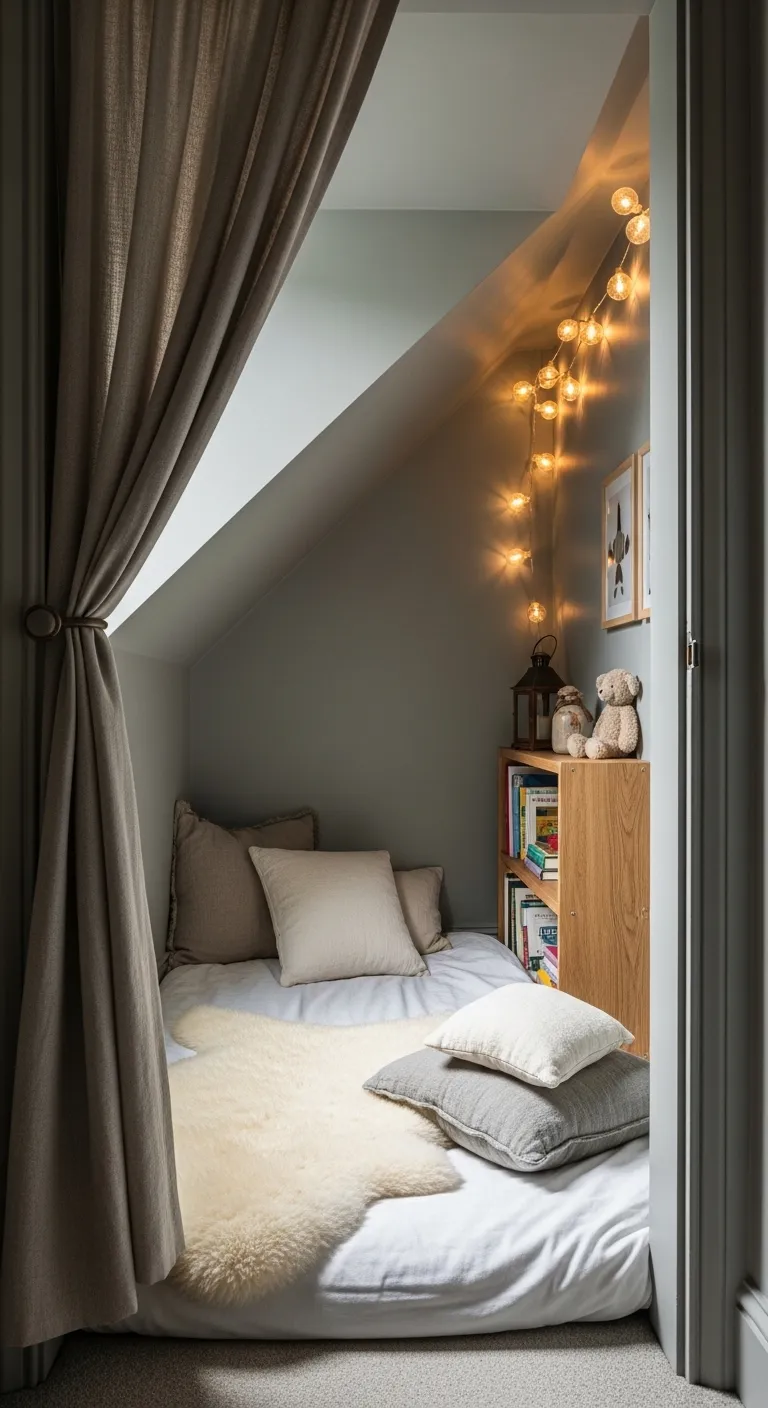
An under-stair alcove is gold for a tiny playroom because it’s already cozy and cave-like. Paint the ceiling of the alcove in a dusty sage or muted terracotta to make it feel like a tiny magical room. Add a thin mattress or sheepskin rug on the floor, two soft cushions, and a strand of warm 2700K fairy lights along the slope. Install a small low shelf on one side for books, a small lantern, and stuffed animals.
Frame the entrance with a soft linen curtain for a little privacy and theater flair. Under-stair spaces often go wasted, but they become the most-loved spot in the whole house when styled well.
15. Add a Sensory Light Panel
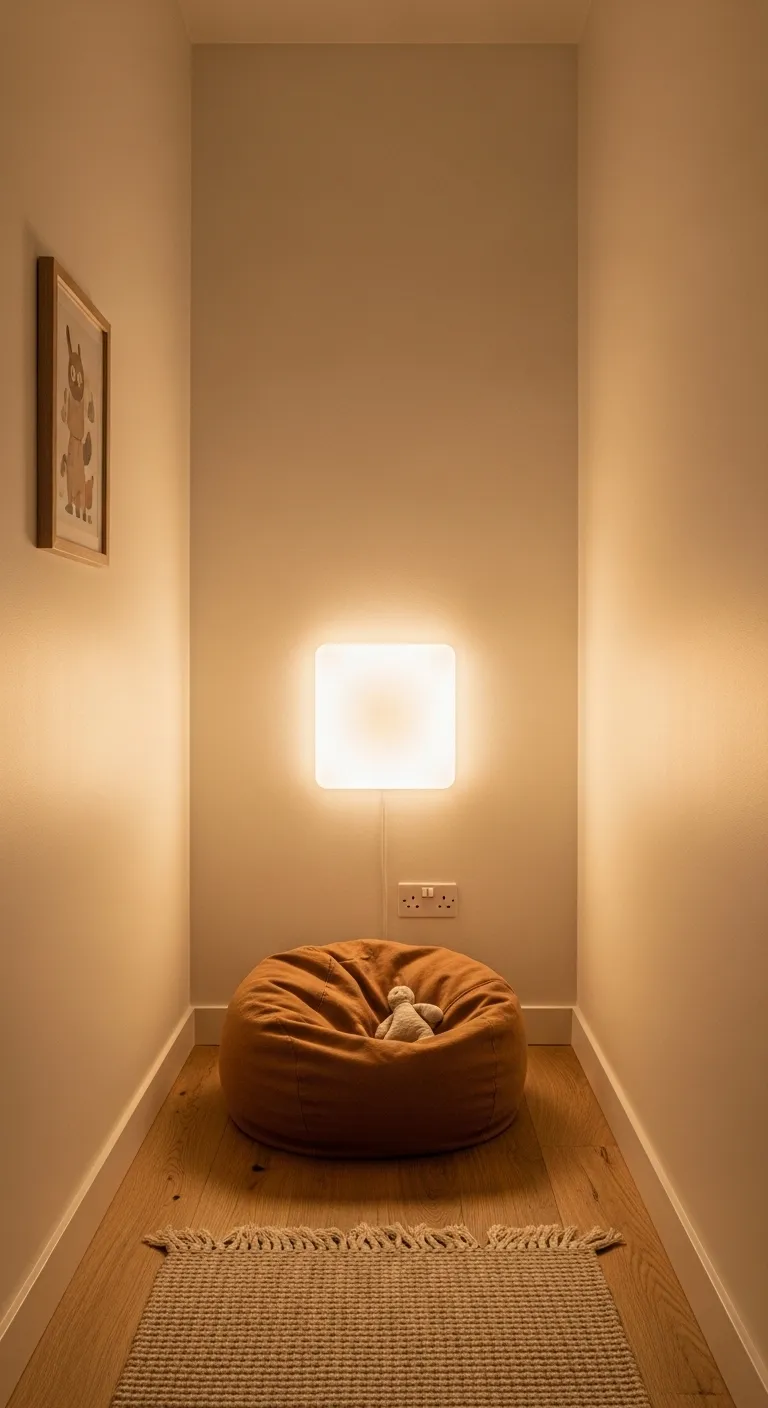
A wall-mounted sensory light panel adds calming color and texture without eating up floor space. Choose a fiber-optic or LED color-changing panel in warm dimmable tones — avoid harsh flashing lights — and mount it at kid eye level on a neutral wall. Kids can watch the gentle color shifts during wind-down time or play, which helps regulate mood and energy. Pair it with a soft wool rug below and a single beanbag for a calm corner vibe.
Keep the rest of the wall simple with one small framed print so the panel stays the clear focus. This works especially well for kids who need sensory calming or a gentle nightlight alternative.
16. Install Wall-Mounted Lego Tables
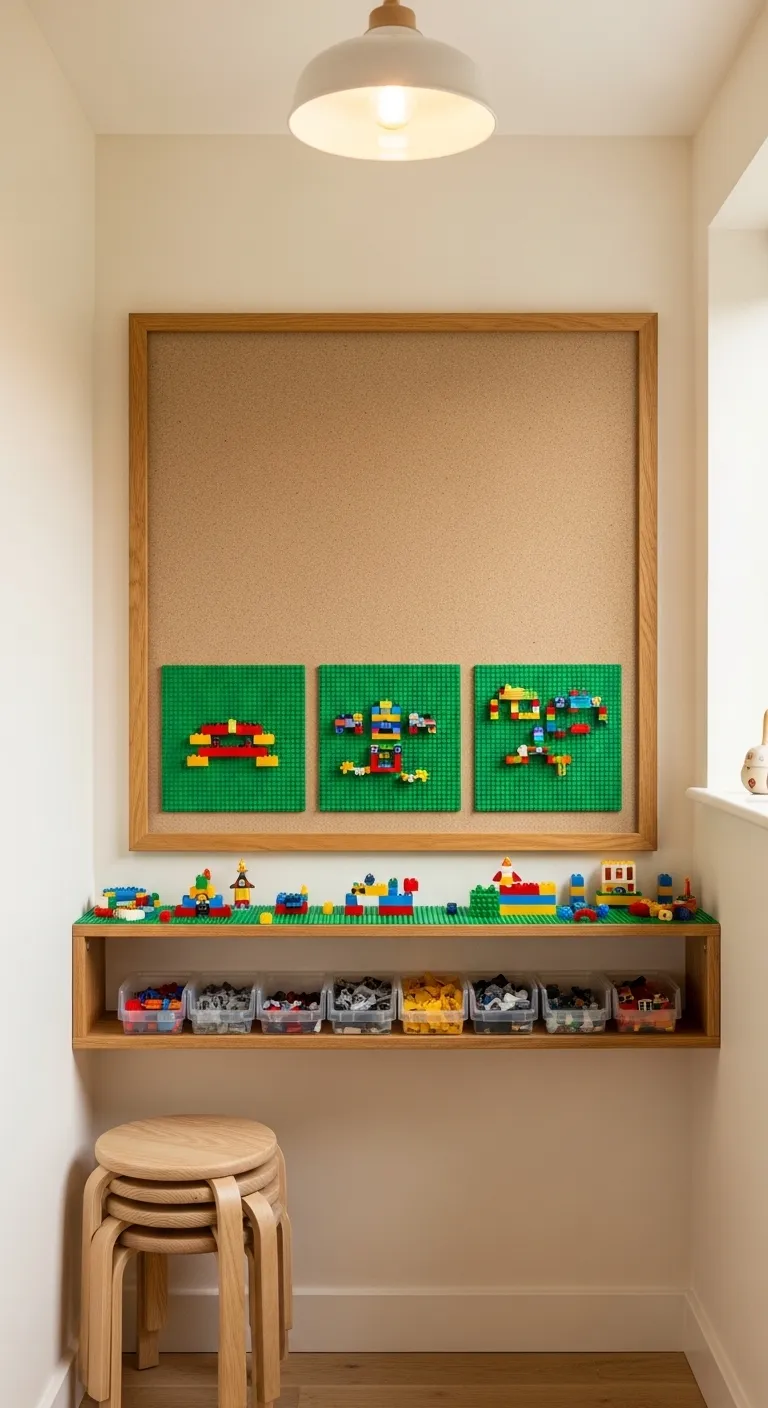
A wall-mounted Lego play surface gives builders a permanent home without stealing floor space. Mount two or three green Lego baseplates onto a framed warm oak panel at kid height, roughly 80 cm off the floor. Add a narrow shelf below the panel to hold small bins of sorted Lego pieces and a few assembled creations. Paint the surrounding wall in warm ivory so the green plates and colorful bricks stay the stars.
Pair this with a small stackable stool that tucks under the shelf when not in use. Kids can build standing up or sitting down, and you free up the entire floor for other types of play.
17. Hang a Book Ledge Display
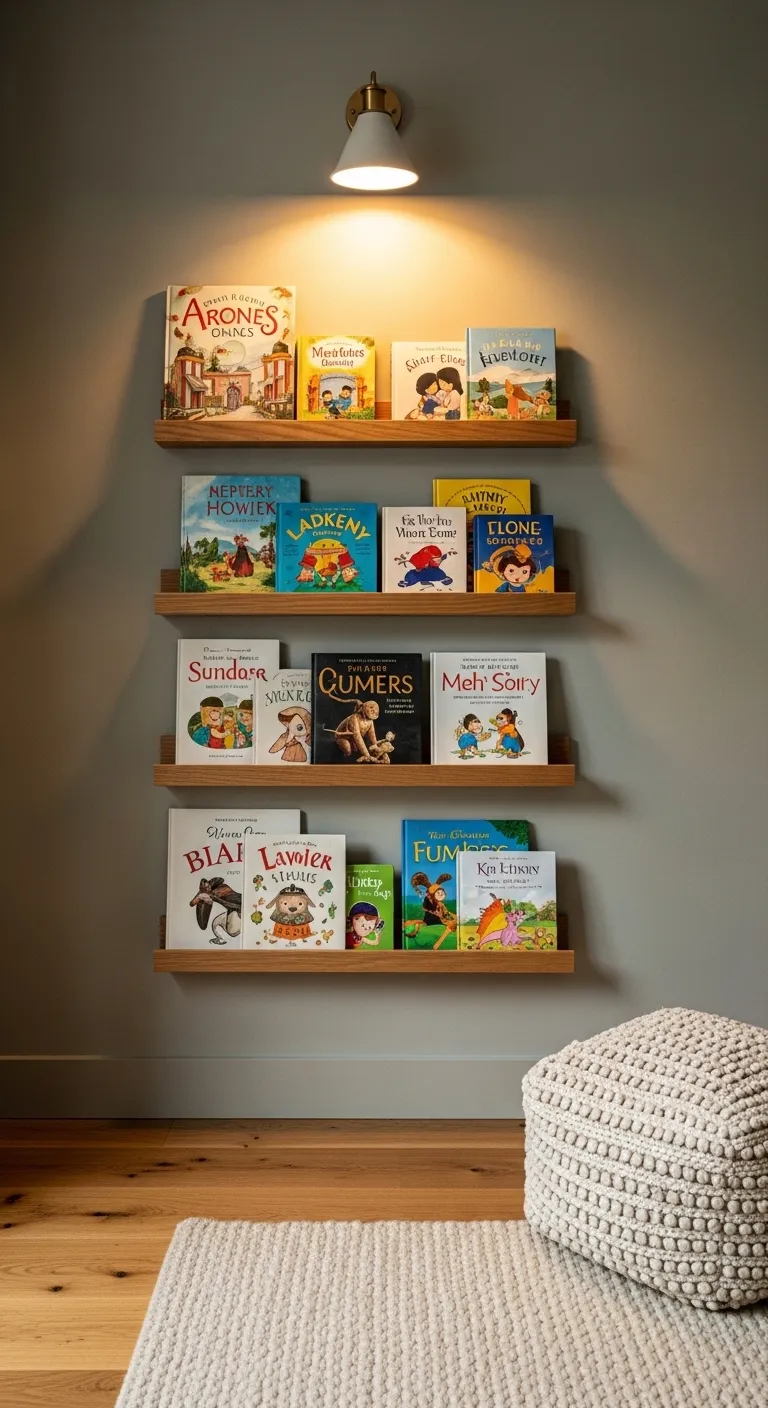
Floating book ledges turn children’s picture books into rotating wall art while freeing up floor shelf space. Install three or four slim warm oak ledges on one wall, each about 80 cm long, spaced 35 cm apart vertically. Display books with the covers facing outward in small groups of four or five so kids pick by visual interest. Rotate the books weekly to keep the display fresh and reading exciting.
Paint the wall a soft muted sage or warm greige so the book covers pop like gallery art. Add a warm 2800K picture light above the top ledge for a calm evening reading-corner glow.
18. Use a Teepee Tent as Quiet Zone
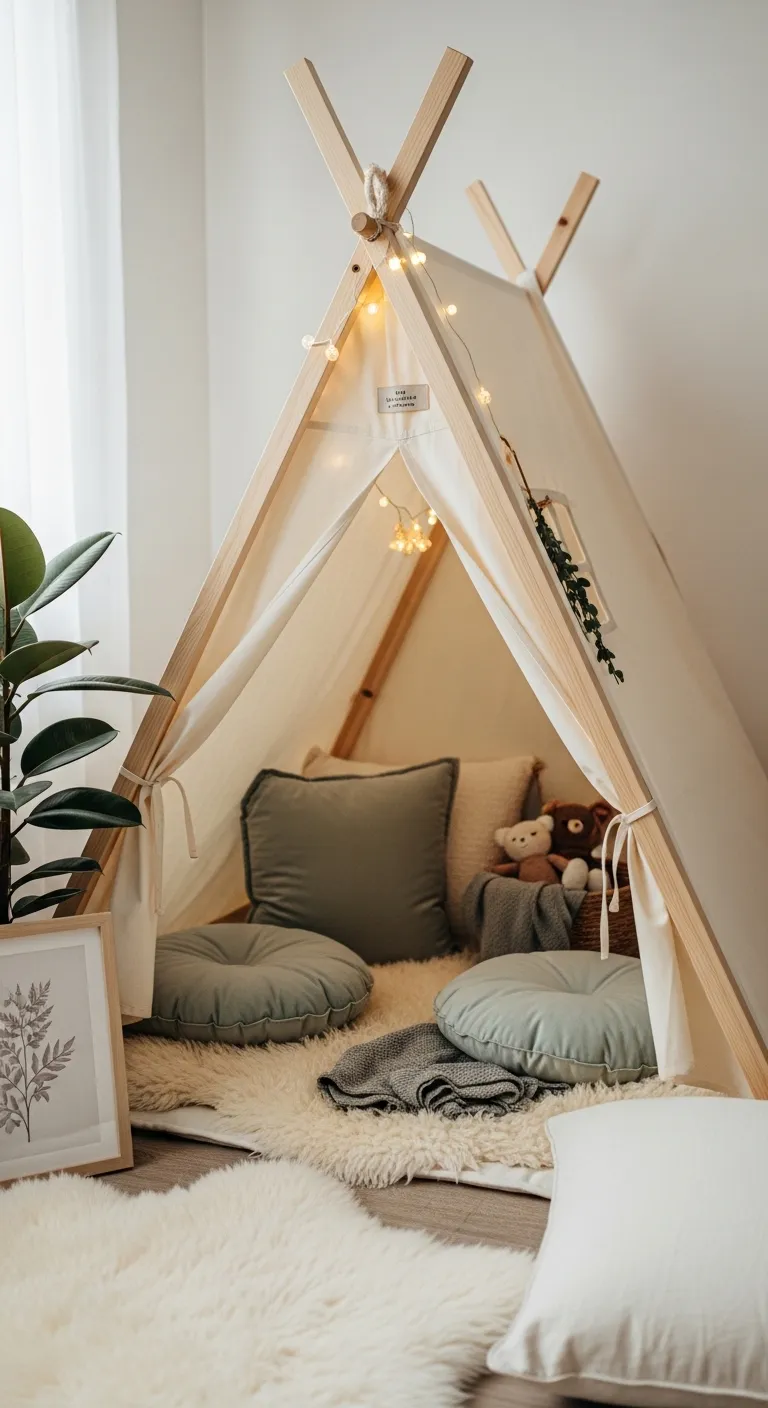
A small teepee or A-frame tent creates a dedicated quiet zone kids can retreat into when they need calm. Choose a compact natural linen or cream canvas tent with light pine poles, roughly 100 cm wide, placed against the calmest wall. Line the inside with a thick sheepskin or wool rug, two soft cushions, and a muted throw for snug floor seating. Add a small string of warm battery fairy lights inside for gentle glow and a tiny basket of favorite plushies.
Teepees are brilliant for sensory breaks, sibling arguments, or just quiet solo play. Style the outside with a small fiddle-leaf plant or framed print for a grown-up mood.
19. Add a Round Play Rug Anchor
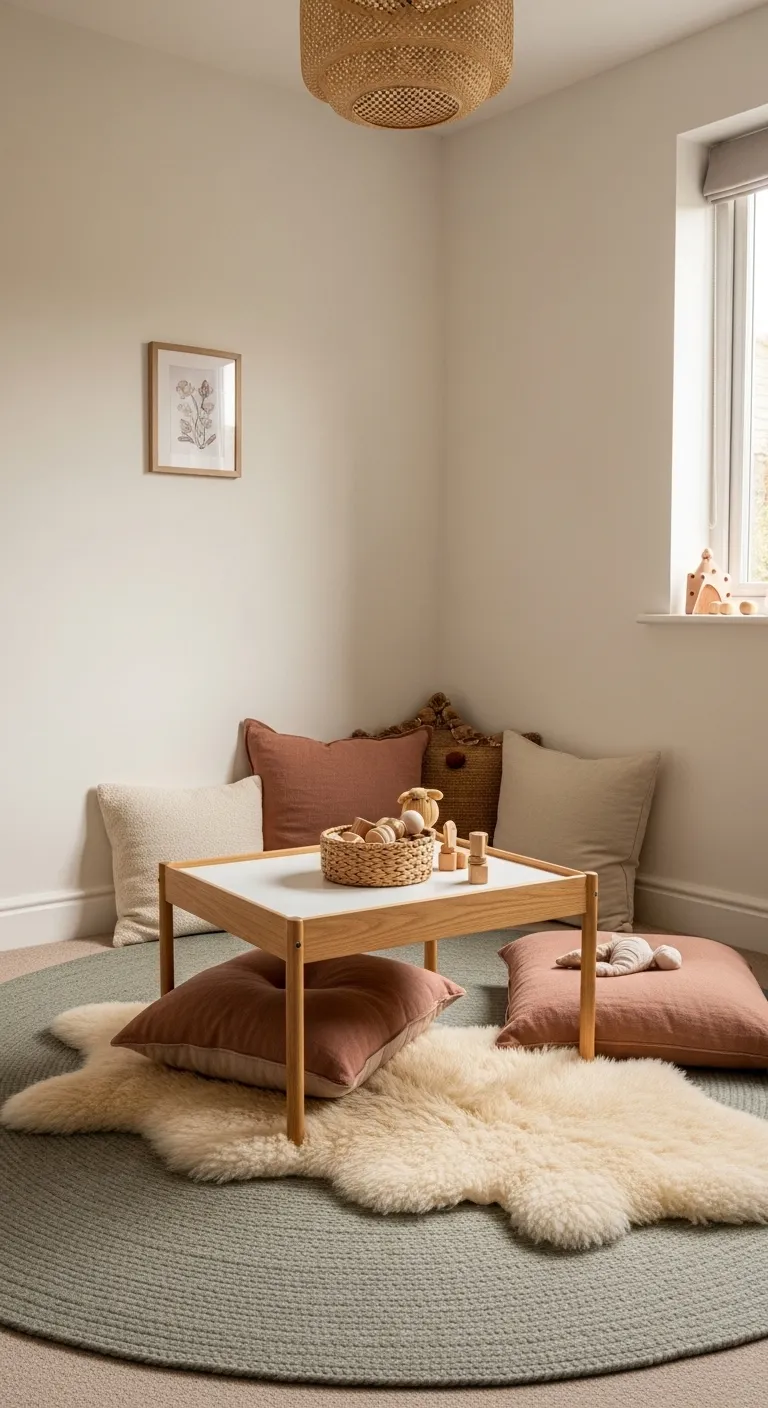
A large round play rug instantly anchors a small playroom and defines the main play zone. Choose a soft low-pile cotton or wool rug roughly 150 cm in diameter in muted sage, warm cream, or a subtle tonal pattern. The round shape feels softer than square rugs and naturally invites kids to sit together in a circle for group play. Layer a thinner sheepskin or small shag rug on top in a complementary tone for texture play.
Place the rug in the center of the room with key play zones (reading, building, art) arranged around the edges. This one purchase makes the whole room feel designed rather than thrown together.
20. Build a Dress-Up Station Closet
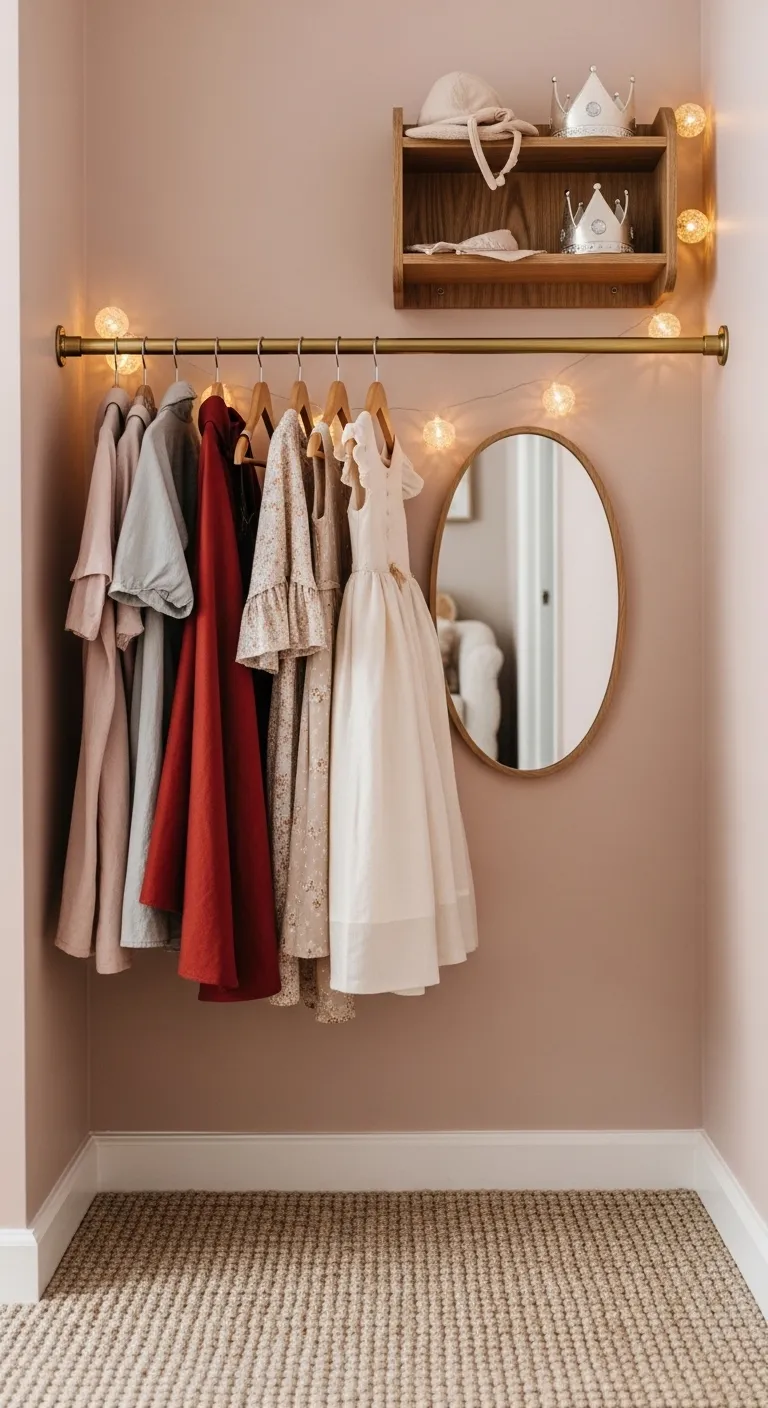
A small dress-up station closet makes pretend play organized and photo-ready. Claim a small nook or the inside of a narrow closet, add a warm oak or brass hanging rail, and line up costumes, capes, and dresses on child-size hangers. Mount a small oval mirror at kid height and add a tiny shelf or small basket for hats, crowns, and sunglasses. Paint the inside of the nook in soft dusty rose or muted sage for a storybook feel.
Hang a warm 2800K string light along the top of the rail for a mini boutique vibe. Kids will put clothes back on the rail themselves because the space feels so special.
21. Create a Magnetic Wall Play Area
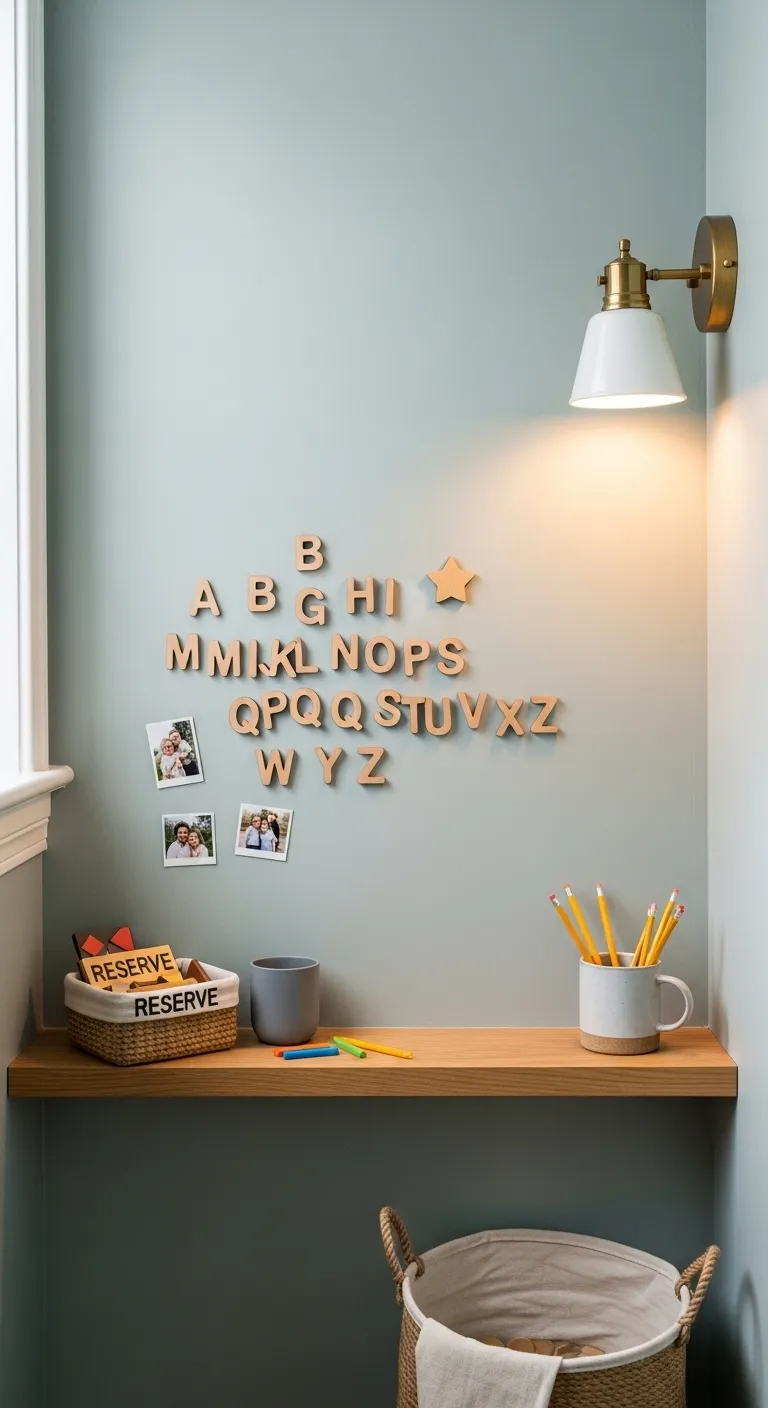
A full magnetic wall turns plain vertical space into a playground for letters, shapes, and art magnets. Install a 120 cm wide sheet of magnetic metal behind a coat of soft sage or warm ivory magnetic paint so the surface still looks like a normal wall. Stock it with wooden magnetic letters, shape tiles, and a small basket of family photo magnets for free play. Mount a narrow oak shelf below to hold reserve magnet sets and small art prompts.
Add a warm 2700K wall sconce to keep the area inviting after sunset. This simple setup supports early literacy, pattern play, and creative arrangement all on one calm wall.
22. Install Rope Ladder Bookshelves
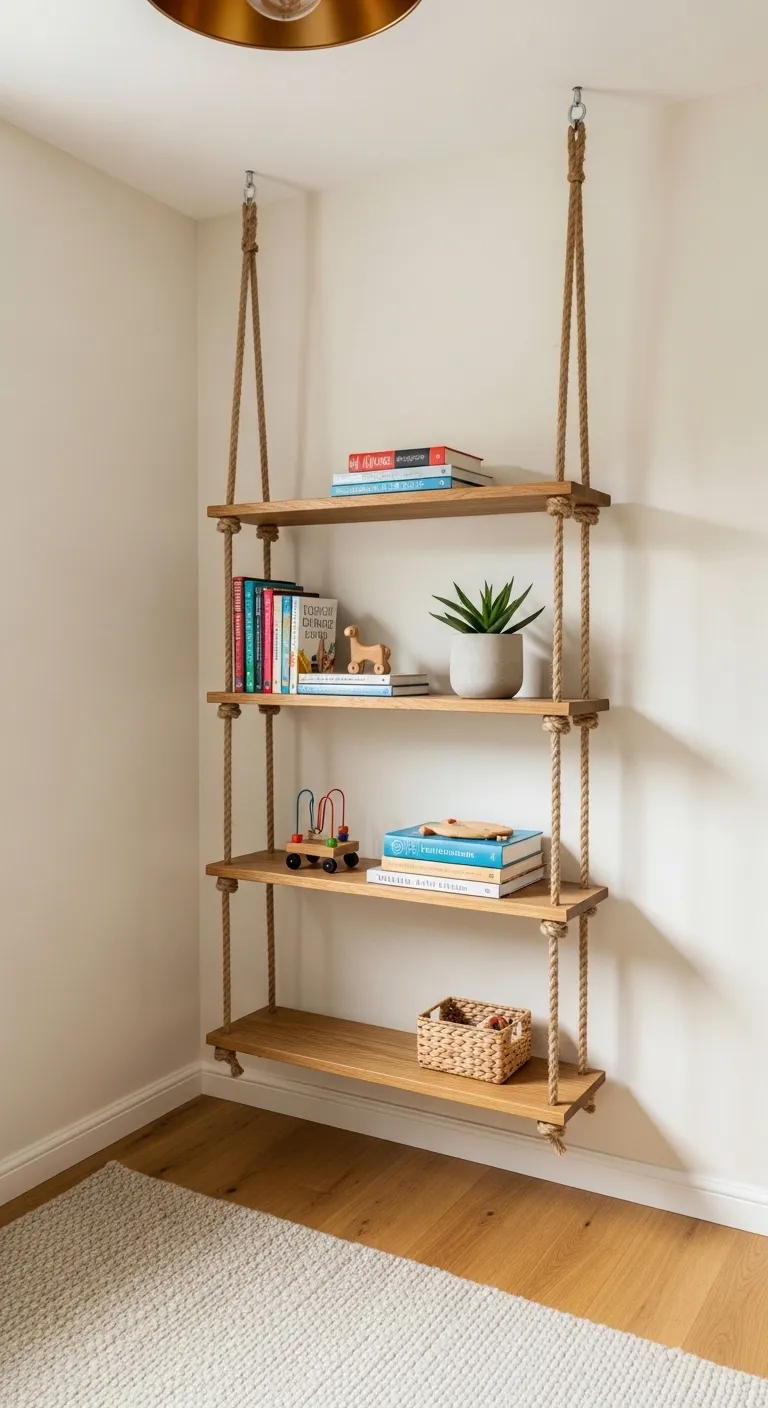
A rope-suspended shelving unit adds a playful, slightly nautical feel that fits adventure-loving small playrooms. Install two or three warm oak or pine shelves held up by thick natural jute ropes running floor to ceiling, anchored firmly at the top. Style each shelf with a small mix of chapter books, a potted succulent, and a tiny toy or woven basket. Keep the wall behind soft — warm ivory or muted sage — so the ropes and wood stand out.
This setup reads as part storage, part sculpture and looks incredible in Pinterest photos. It keeps the floor completely clear and adds vertical visual interest without feeling heavy.
23. Use Stackable Cube Storage Benches
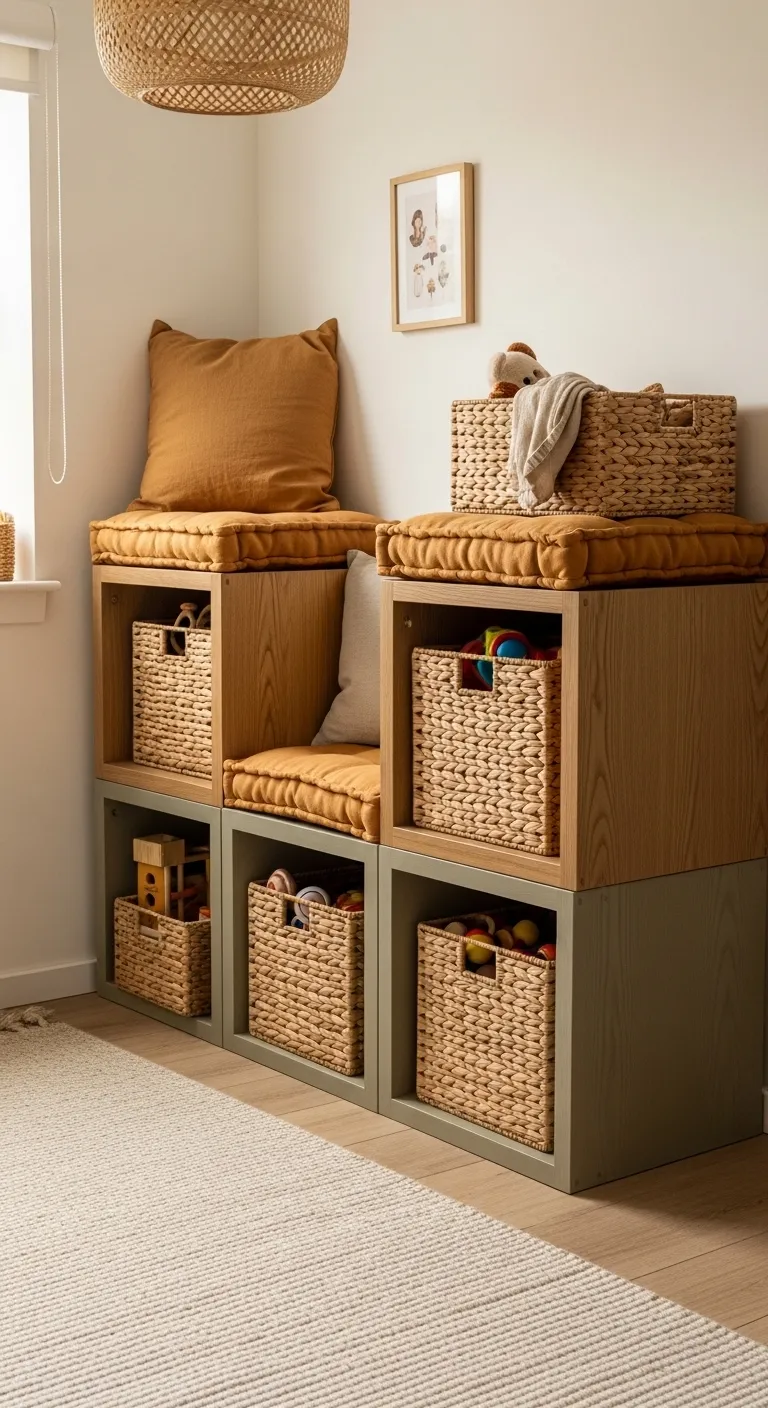
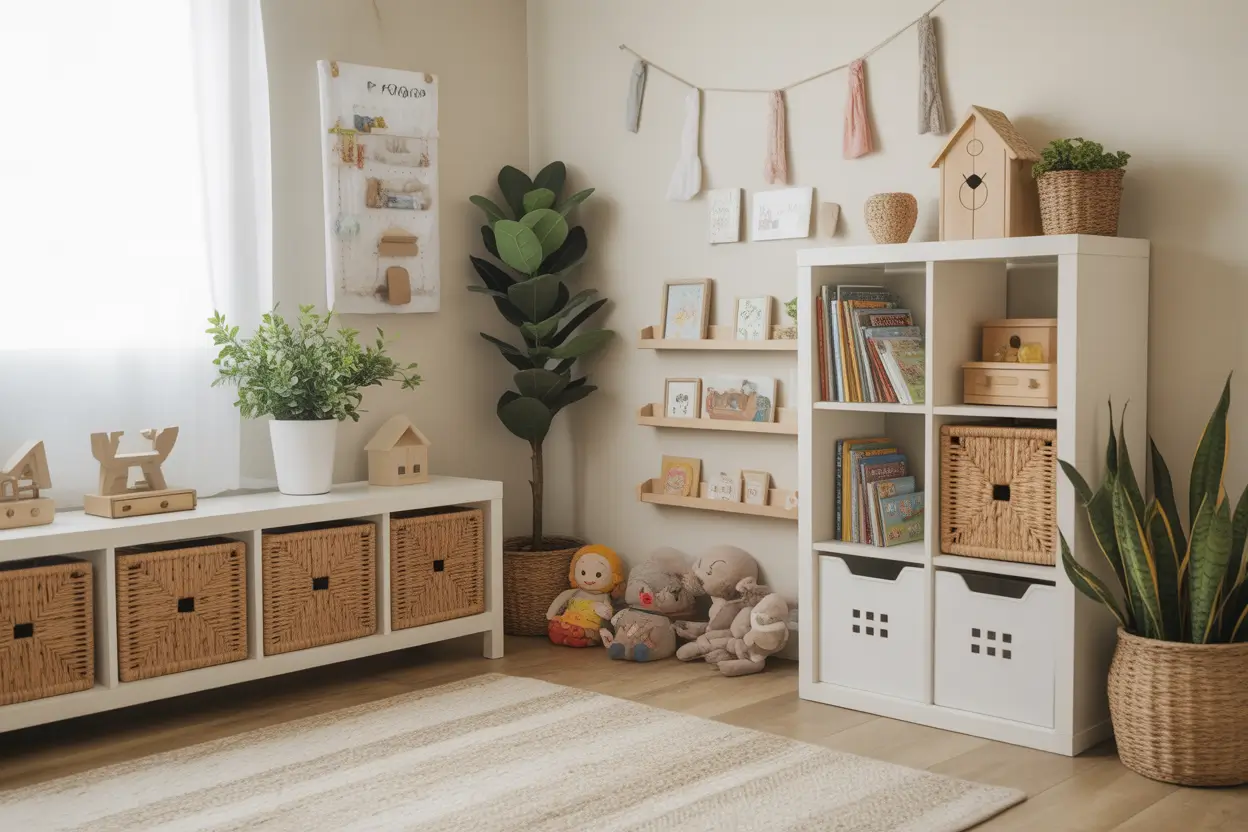
Stackable cube storage benches give you toy storage, extra seating, and movable walls in one product. Choose four to six sturdy warm oak, muted sage, or dusty clay cube units, each about 40 cm square, that stack or stand alone as needed. Fill each cube with woven seagrass baskets holding sorted toys — cars in one, blocks in another, plushies in a third. Add soft cushion tops in warm linen to turn some cubes into quick extra seating for visitors or siblings.
Arrange the cubes along one wall or use them to divide play zones within the room. This one of the most flexible small playroom ideas because the layout can shift every few months as your kids grow.
Conclusion
A small playroom can hold huge imagination when you lean on smart vertical storage, soft muted colors, and one or two statement features like a teepee or climbing triangle. Pick three or four of these small playroom ideas that match your space and your kids’ favorite kinds of play, then build outward from there. Try one this weekend, save the rest to Pinterest, and watch the room come alive for your whole family.
FAQs
How do I design a playroom in a small space?
Start by going vertical with peg rails, pegboards, and book ledges to clear floor space. Use clear labeled bins on open shelves so cleanup is fast, and add one anchor piece like a round rug or teepee to define the zone. These small playroom ideas help tiny rooms feel intentional and tidy.
What are the best colors for a small playroom?
Muted, warm tones work best — soft sage, warm cream, dusty rose, and warm ivory keep the room calm while letting colorful toys act as accents. Avoid loud primary color walls because they make small rooms feel busier and smaller. Warm neutrals also photograph beautifully on Pinterest.
How can I organize toys in a small playroom?
Use a three-zone system: open shelves with clear picture-labeled bins for daily toys, stackable cubes for rotating toys, and a pegboard for craft supplies. This keeps everything visible, accessible, and easy to put away. Rotate toys weekly to keep the room feeling fresh without buying new stuff.
Can a small playroom also be a bedroom?
Yes — use a loft bed to free up the floor for play, add stackable cubes that double as toy storage and quiet-time seating, and build in a teepee or reading nook for calm. Keep the color palette soft and unified so both zones blend visually. Good small playroom ideas always consider dual-purpose furniture.
How much should I spend on a small playroom?
A beautiful small playroom can come together for under three hundred dollars if you focus on three anchor pieces: a round rug, a teepee or climbing triangle, and a storage solution like cubes or a pegboard. Add DIY features like a chalkboard door or paper roll wall to stretch your budget further. Save big spends for quality items kids will use daily.