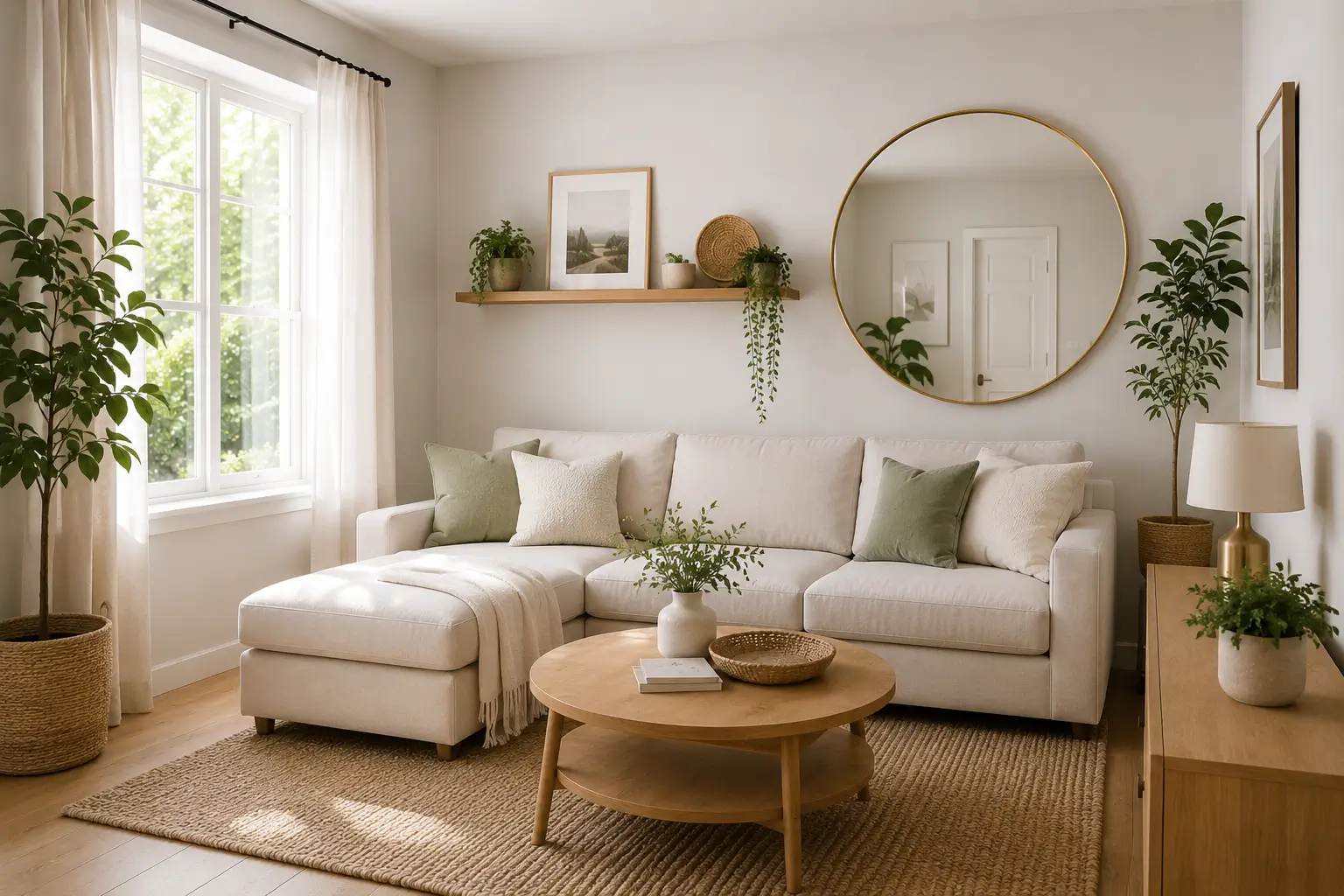
Home Lighting Guide: How to Layer Light in Every Room
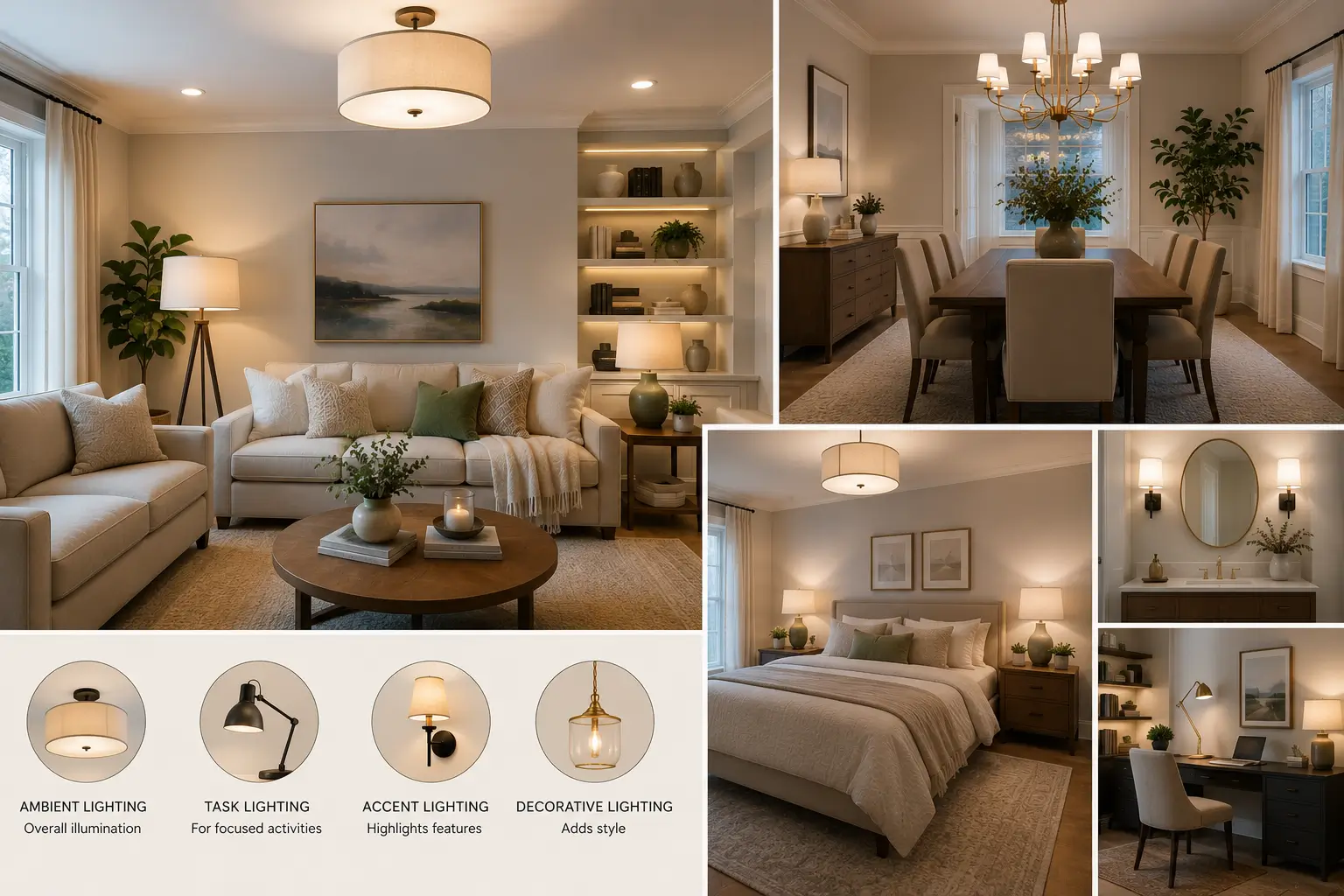
Most rooms look “off” for one simple reason: there’s only one light source doing all the work. A single overhead fixture flattens a room and leaves shadows in every corner, no matter how nice the furniture looks.
Good home lighting isn’t about buying an expensive fixture. It’s about layering different types of light so a room feels warm, balanced, and usable at any hour. This guide covers the three layers every room needs, how to pick bulb temperature and brightness, room-by-room lighting tips, and where smart lighting is actually worth the investment.
The Three Layers of Lighting
Every well-lit room uses three types of light working together, not one fixture trying to do everything.
| Layer | Purpose | Examples |
|---|---|---|
| Ambient | General overall light | Ceiling fixture, recessed lights |
| Task | Focused light for specific activities | Desk lamp, under-cabinet lighting |
| Accent | Mood and highlight lighting | Floor lamp, wall sconces, candles |
A room with only ambient light feels flat and clinical, like an office. Adding even one task lamp and one accent light instantly makes the same room feel warmer and more finished, because the light is coming from multiple heights and directions instead of one flat source overhead.
Tip: Aim for at least three light sources at different heights in any main living space — one near the ceiling, one at seating height, and one lower, like a floor lamp or table lamp.
Choosing the Right Bulb Temperature
Bulb temperature is measured in Kelvin (K), and it changes how a room feels more than almost any other decor choice. Most people never check this number, which is why some rooms feel harsh even with nice fixtures.
| Kelvin Range | Light Appearance | Best For |
|---|---|---|
| 2700K–3000K | Warm, soft, golden | Living rooms, bedrooms |
| 3500K–4000K | Neutral white | Kitchens, home offices |
| 5000K+ | Cool, bright, bluish | Garages, workshops |
For most home decor, staying in the 2700K–3000K range keeps rooms feeling warm and cozy instead of clinical. Save cooler bulbs for task-heavy spaces like a garage or laundry room, where visibility matters more than atmosphere.
How Many Lumens Do You Actually Need
Brightness matters just as much as color temperature, and it’s measured in lumens rather than watts. Older habits of shopping by wattage don’t translate well to LED bulbs, which produce far more light per watt than older incandescent bulbs did.
As a rough guide, living rooms generally need 1,500 to 3,000 total lumens spread across all fixtures in the room, while a kitchen may need 3,000 to 4,000 lumens because of the detailed tasks happening at the counters. Bedrooms can work well with less, often 1,000 to 2,000 lumens total, especially once task lamps are added at the bedside.
| Room | Approximate Total Lumens Needed |
|---|---|
| Living Room | 1,500–3,000 |
| Kitchen | 3,000–4,000 |
| Bedroom | 1,000–2,000 |
| Home Office | 2,000–3,000 |
| Bathroom | 2,000–3,000 |
Lighting by Room
Different rooms need different lighting strategies based on how they’re used throughout the day.
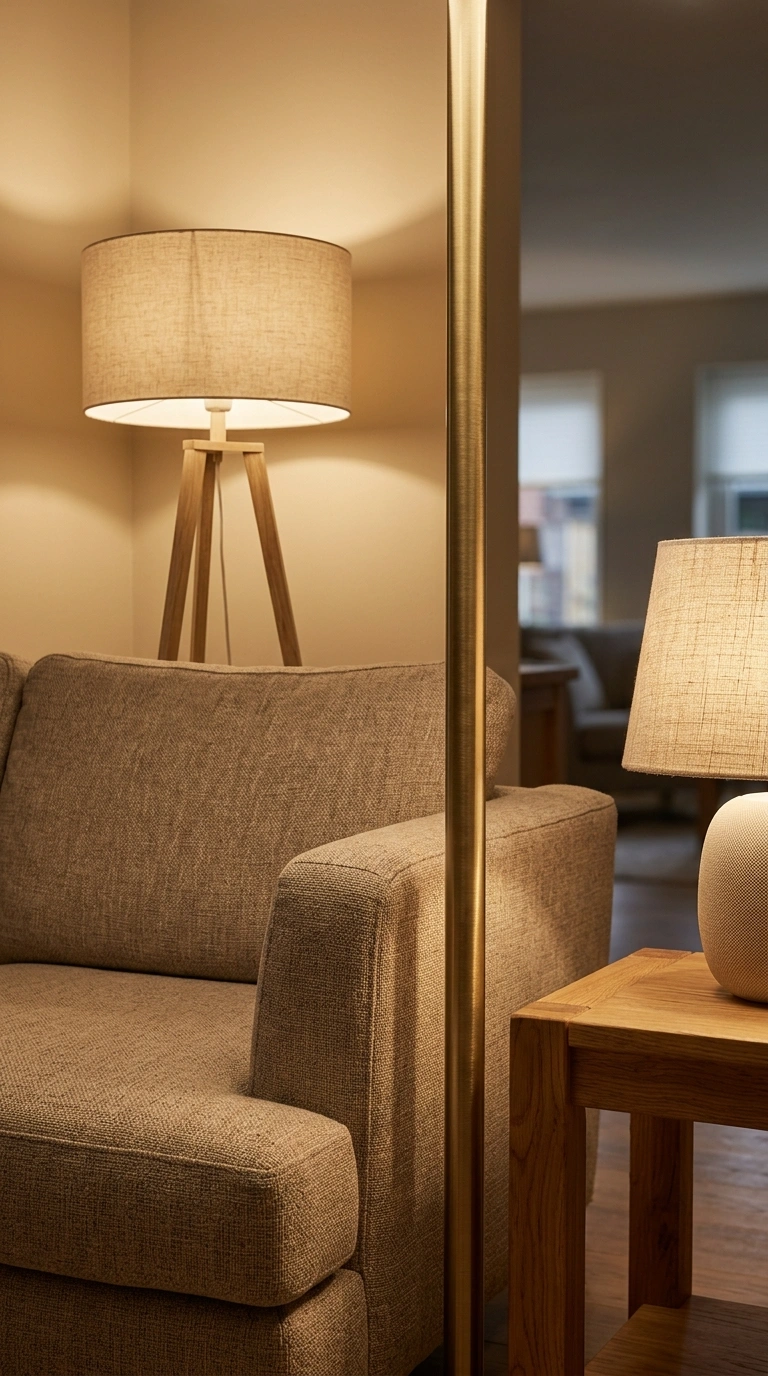
Living Room: Combine a ceiling fixture with a floor lamp in one corner and a table lamp near the sofa. This creates soft pools of light instead of one harsh source overhead, and it means the room still feels lit even with the main fixture off during a relaxed evening.
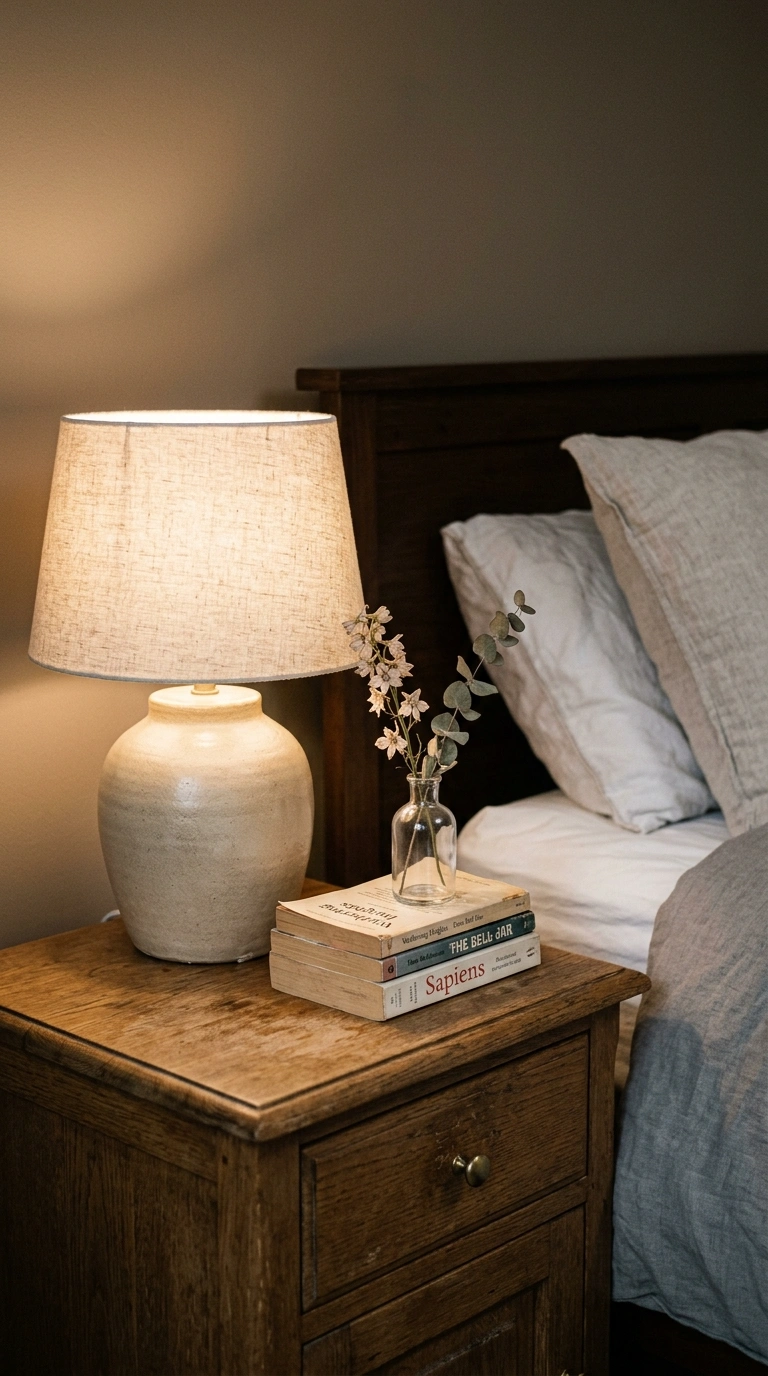
Bedroom: Skip overhead-only lighting. Use bedside lamps at a warm 2700K, and consider a dimmer switch so the room can shift from bright and functional in the morning to soft and calm in the evening without needing to swap bulbs or fixtures.
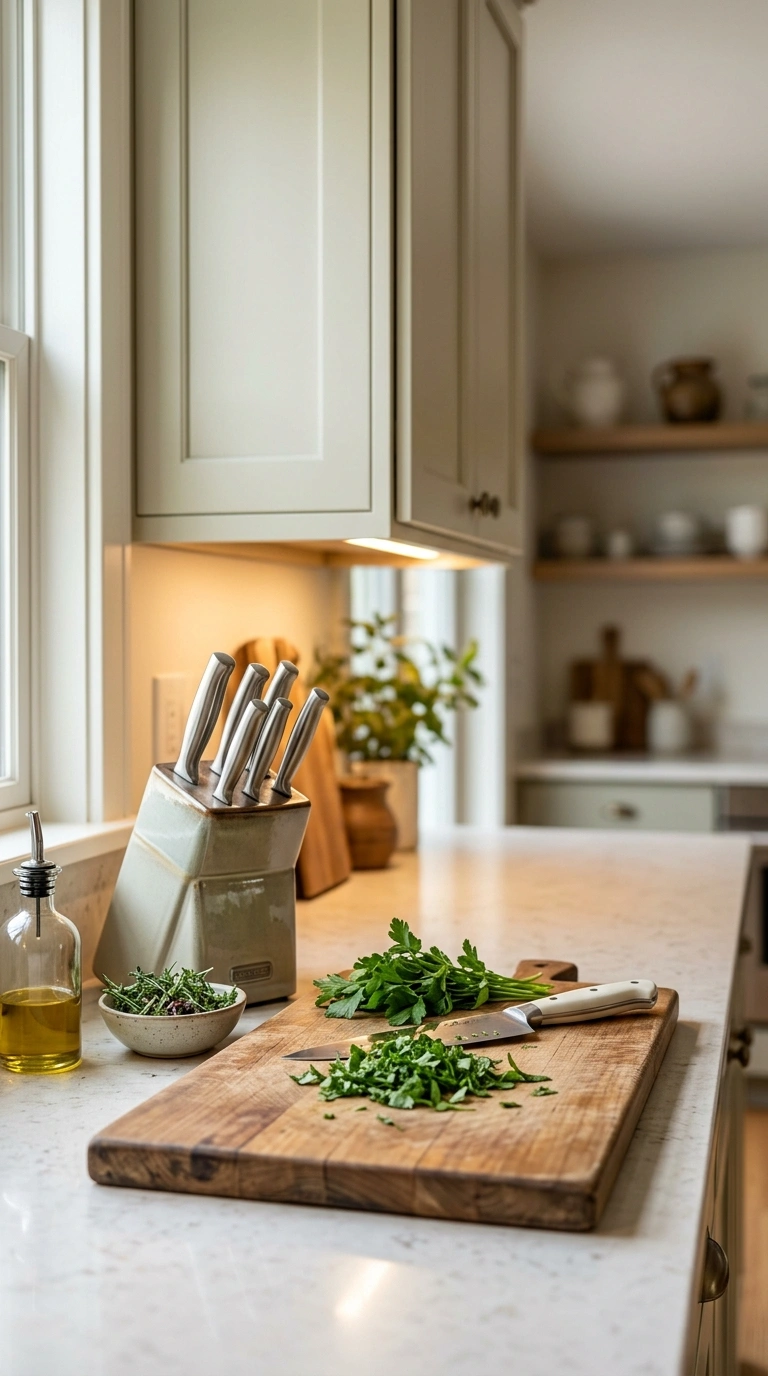
Kitchen: Layer under-cabinet task lighting with a slightly cooler 3000K–3500K overhead fixture so you can actually see what you’re chopping without shadows falling across the counter from your own body blocking the overhead light.
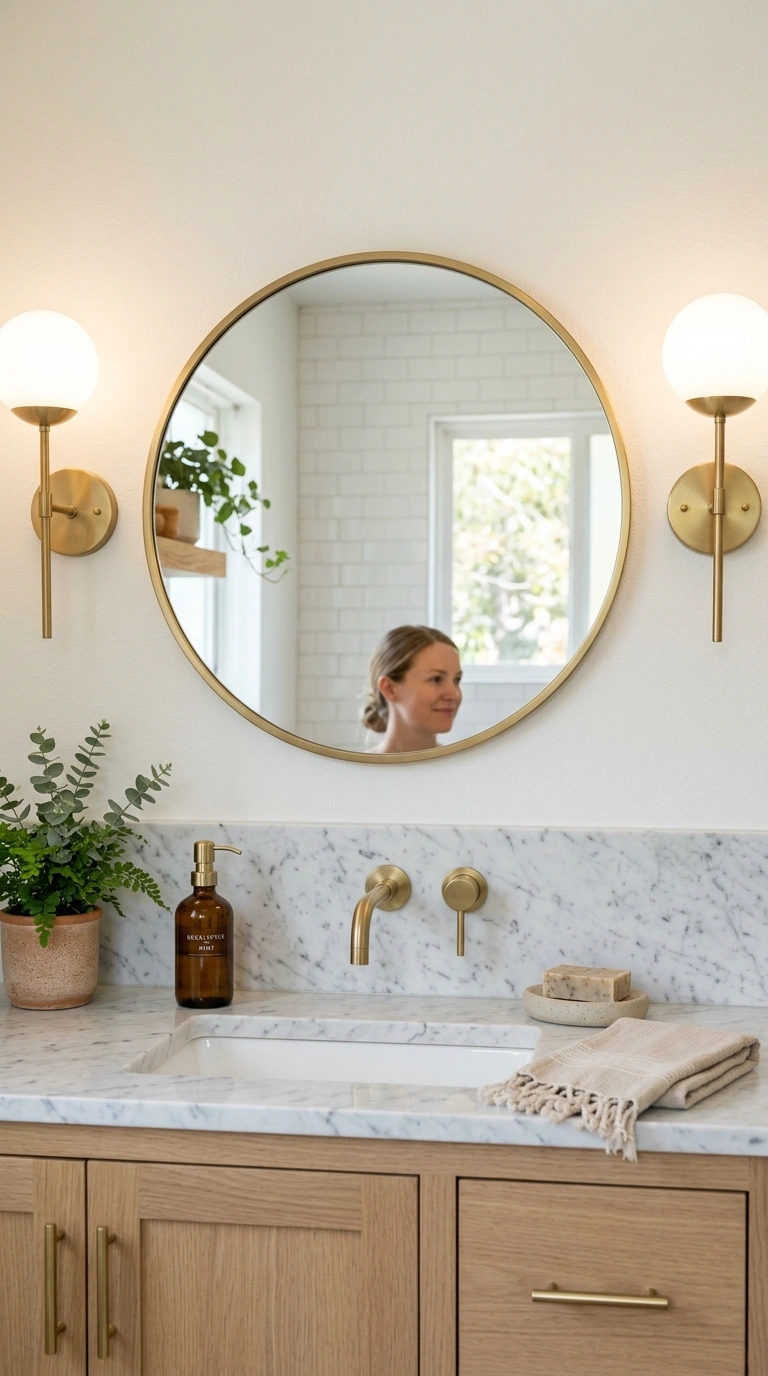
Bathroom: Place lighting on both sides of the mirror instead of just above it. Overhead-only lighting creates shadows under the eyes and chin that make grooming tasks harder, and it can distort how makeup or skincare actually looks once you step outside the bathroom.
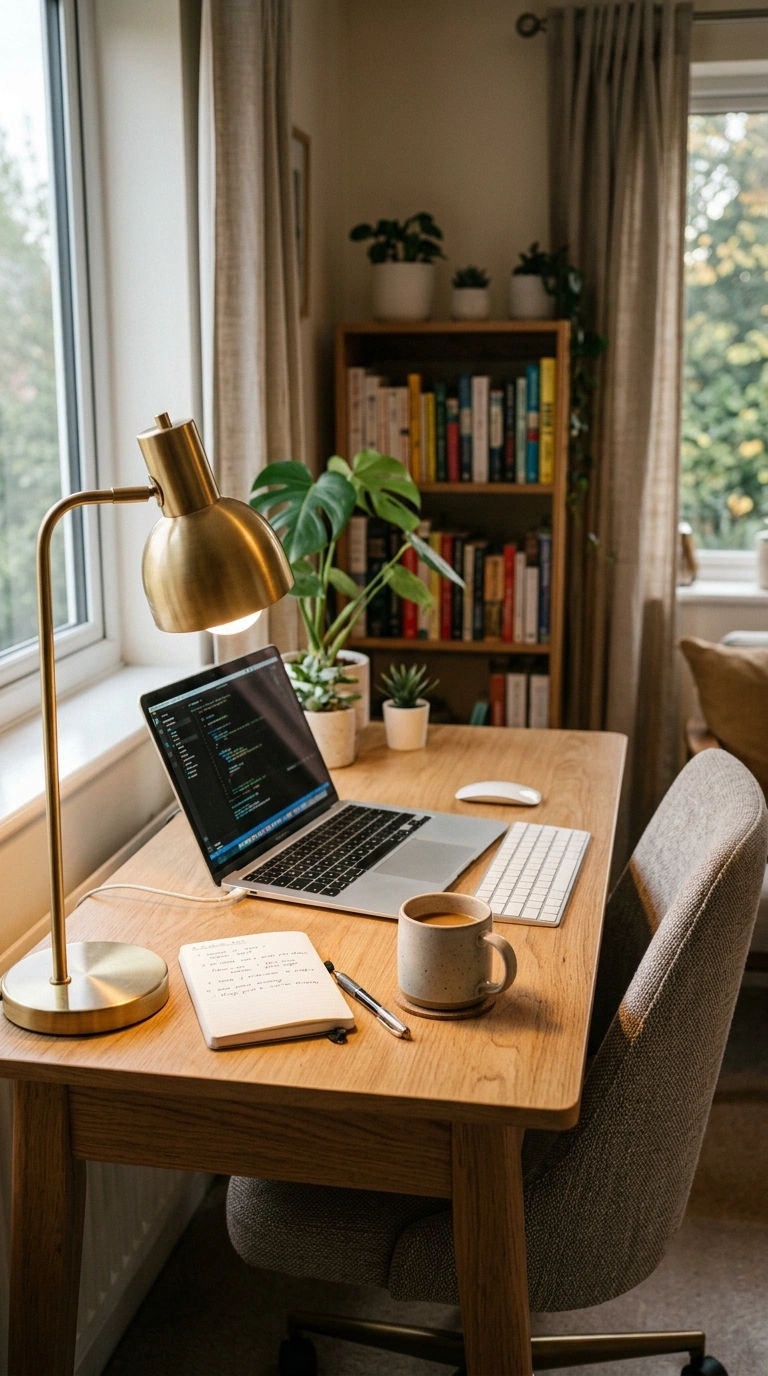
Home Office: Use a focused desk lamp at 3500K to reduce eye strain, paired with softer ambient light in the rest of the room to avoid glare on screens. A lamp placed directly behind a monitor can cause more strain than one placed to the side.
How to Size a Ceiling Fixture
An overhead fixture that’s too small for the room is one of the most common lighting mistakes, and it’s rarely about the light output. It’s about proportion — a tiny pendant in a large living room looks lost, no matter how bright the bulb inside it is.
A simple formula helps here: add the room’s length and width in feet, then convert that number to inches to get a rough fixture diameter. A 12-by-14-foot room, for example, adds up to 26, which suggests a fixture around 26 inches in diameter for the main ceiling light.
| Room Size | Suggested Fixture Diameter |
|---|---|
| Small (up to 10×10 ft) | 14–18 inches |
| Medium (10×12 to 12×14 ft) | 20–26 inches |
| Large (14×16 ft+) | 28–36 inches |
For dining tables specifically, the fixture should generally measure about half to two-thirds the width of the table, and hang roughly 30 to 36 inches above the tabletop so it lights the surface without blocking sightlines across the table.
Layering Lamps and Fixtures
Mixing lamp styles adds visual interest while covering more of the room evenly. A brushed brass floor lamp in one corner and a matte black table lamp in another still work together as long as the bulb temperature matches.
Place table lamps at seated eye level, roughly 58 to 64 inches from the floor once placed on furniture. This keeps the light source out of your direct line of sight while still lighting the space effectively.
Tip: Use a lamp with a fabric shade instead of an open or metal shade in bedrooms and living rooms. Fabric shades diffuse light and remove harsh spots, giving the room a softer overall glow rather than a single visible bright point.
Smart Lighting and Dimmers Worth Considering
Smart bulbs and dimmer switches have become affordable enough that they’re worth considering even in a budget-friendly lighting plan. The biggest advantage isn’t convenience, it’s flexibility: the same fixture can serve as bright task lighting in the morning and warm accent lighting in the evening.
A basic dimmer switch on an overhead fixture solves most of the “too bright at night” problem without buying new lamps. For a more flexible option, smart bulbs that adjust both brightness and color temperature let a single bedside lamp shift from a neutral white for reading to a warm amber tone for winding down before sleep.
You don’t need to automate an entire house to benefit from this. Starting with one or two rooms, typically the bedroom and living room, covers the spaces where lighting flexibility matters most throughout the day.
Common Lighting Mistakes to Avoid
Most lighting problems in a home trace back to one of a handful of repeated mistakes, and almost all of them are fixable without an electrician.
- Relying on a single overhead fixture as the only light source in a room
- Mixing bulb temperatures within the same room, which makes the space feel disjointed
- Placing lamps too high or too low relative to where people actually sit
- Skipping dimmer switches in bedrooms and living rooms
- Choosing fixtures based only on looks without checking brightness (lumens) needed for the space
- Positioning a desk lamp directly behind a monitor, which increases glare instead of reducing it
Lighting for Small Spaces
Small rooms benefit even more from layered lighting because a single bright overhead light can make the space feel stark. Use a floor lamp with an upward-facing shade to bounce light off the ceiling, which spreads brightness without adding visual clutter at eye level.
Wall-mounted sconces are also worth considering in tight rooms, since they free up surface space that a table lamp would otherwise take up. Placed at roughly 60 to 66 inches from the floor, sconces add a layer of warm light on either side of a bed or sofa without needing a nightstand or side table underneath them.
Good lighting is one of the fastest, most affordable upgrades in any home. Start by swapping one overhead-only room for a layered setup with a warm floor lamp and a table lamp, and notice how much softer and more finished the space feels immediately, often before you’ve changed anything else in the room.
Save your favorite lamp styles and bulb temperatures so you can recreate the look in every room, and keep a note of which Kelvin range worked best in each space so future purchases stay consistent.
Key Takeaways:
- Every room needs three layers of light — ambient, task, and accent — not just one overhead fixture.
- Stay within 2700K–3000K for warm, cozy living spaces and save cooler bulbs for task-heavy rooms.
- Check lumens, not just watts, to make sure a room has enough brightness for its size and use.
- Match bulb temperature across all fixtures in the same room to avoid a disjointed look.
- Place bathroom lighting on both sides of the mirror, not just above it.
- A basic dimmer switch solves most “too bright at night” problems without buying new fixtures.
- Floor lamps that bounce light off the ceiling work especially well in small rooms.
FAQs:
What’s the best bulb temperature for a living room?
A warm 2700K to 3000K bulb keeps a living room feeling cozy and inviting, rather than the harsher, bluish tone of higher Kelvin bulbs.
How many light sources should a room have?
Aim for at least three at different heights — one ambient source near the ceiling, one task light, and one accent light like a floor or table lamp.
Why does my room feel harsh even with a nice light fixture?
It’s likely the bulb temperature or brightness. Cooler bulbs above 4000K create a clinical, bluish light, and too many lumens for the room size can feel harsh no matter how nice the fixture looks.
Where should bathroom lighting be placed?
Place lighting on both sides of the mirror at face height instead of only above it, which prevents shadows from falling across the face.
Is it worth installing dimmer switches?
Yes, especially in bedrooms and living rooms. Dimmers let the same fixture shift from bright and functional to soft and relaxing depending on the time of day.