How to Pick the Right Rug for Every Room
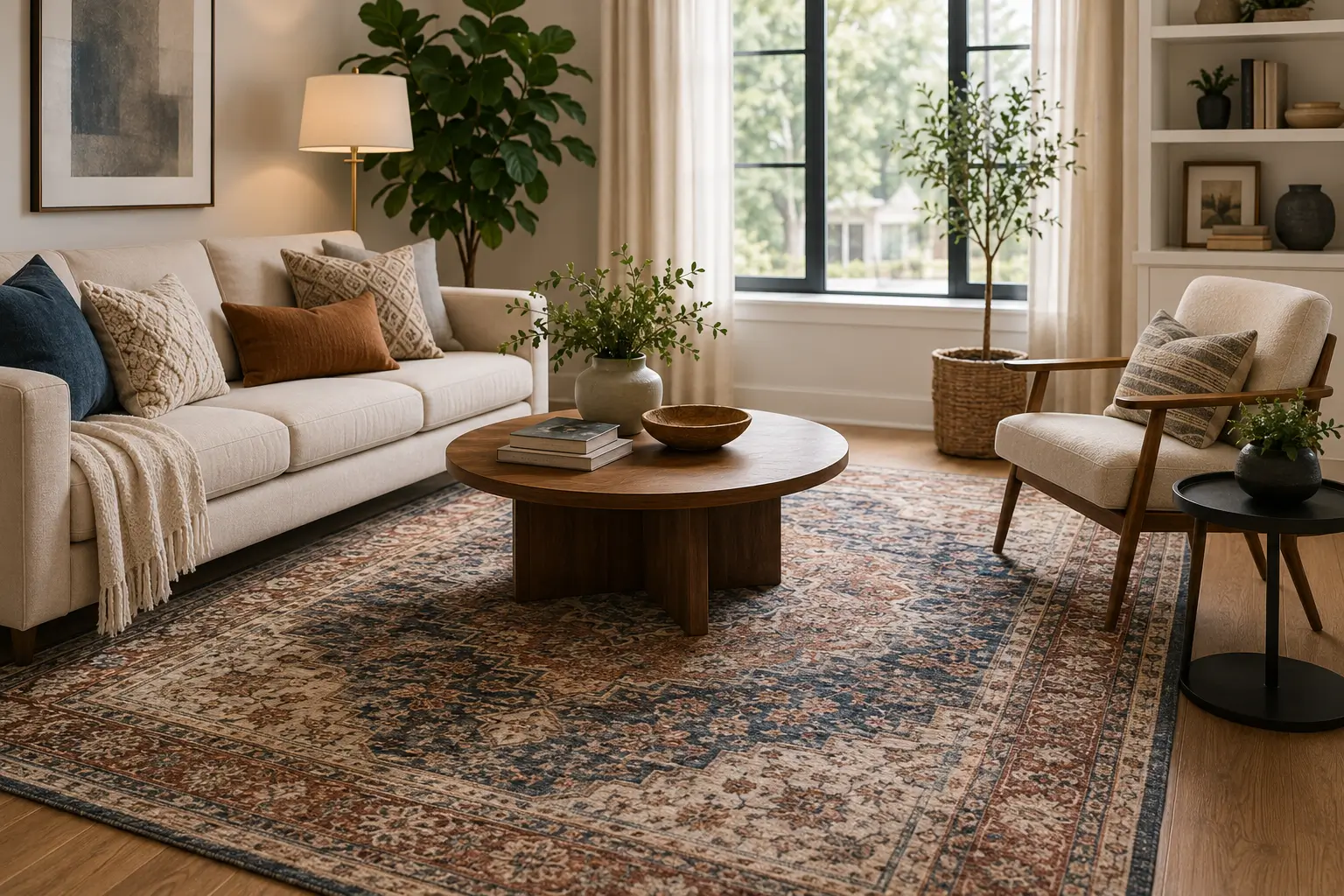
A rug that’s the wrong size is one of the most common decorating mistakes, and it’s also one of the easiest to fix once you know the rules. A rug that’s too small makes an entire room feel disconnected, like the furniture is floating in the middle of nowhere.
This guide gives you exact sizing charts for the living room, bedroom, and dining room, plus tips for choosing rug shape, layering rugs, picking the right material, and avoiding the mistakes that make a space feel off-balance.
Why Rug Size Matters More Than Rug Style
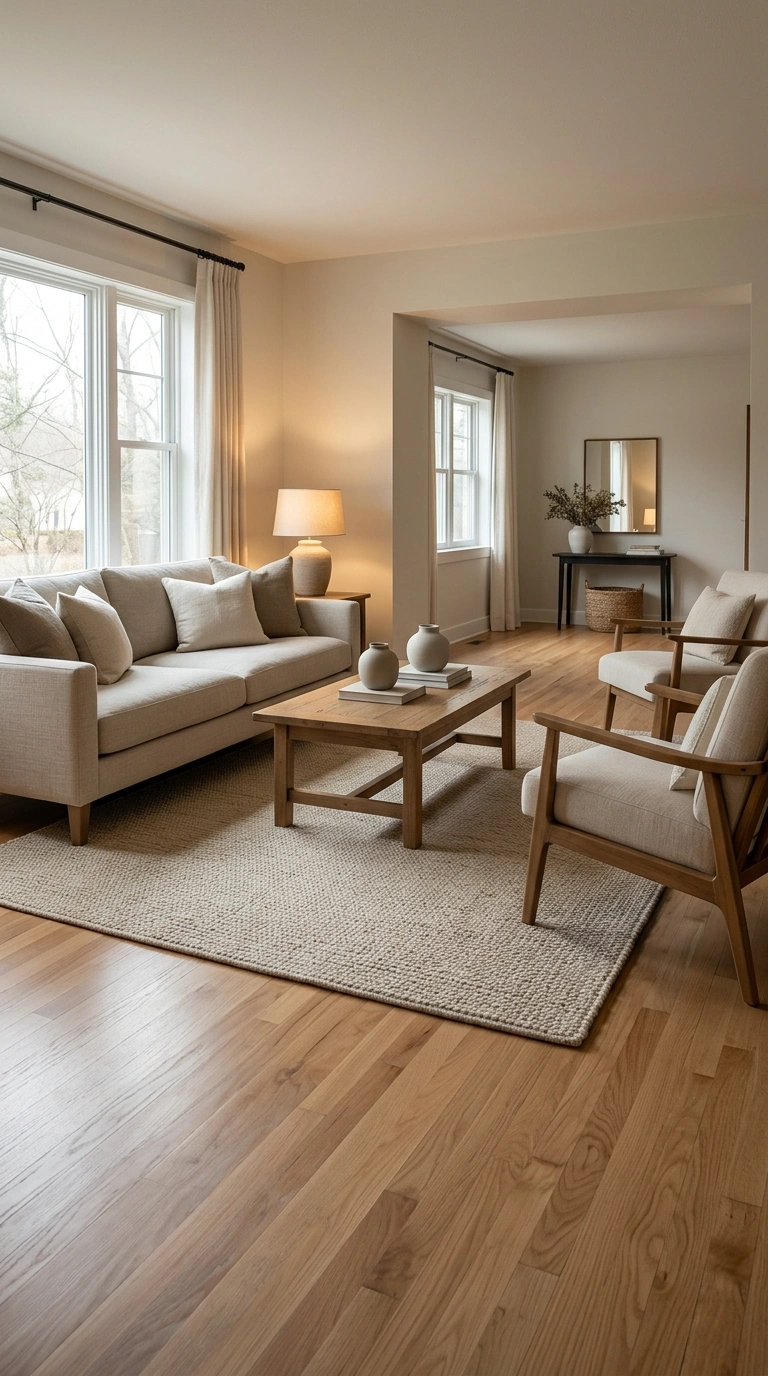
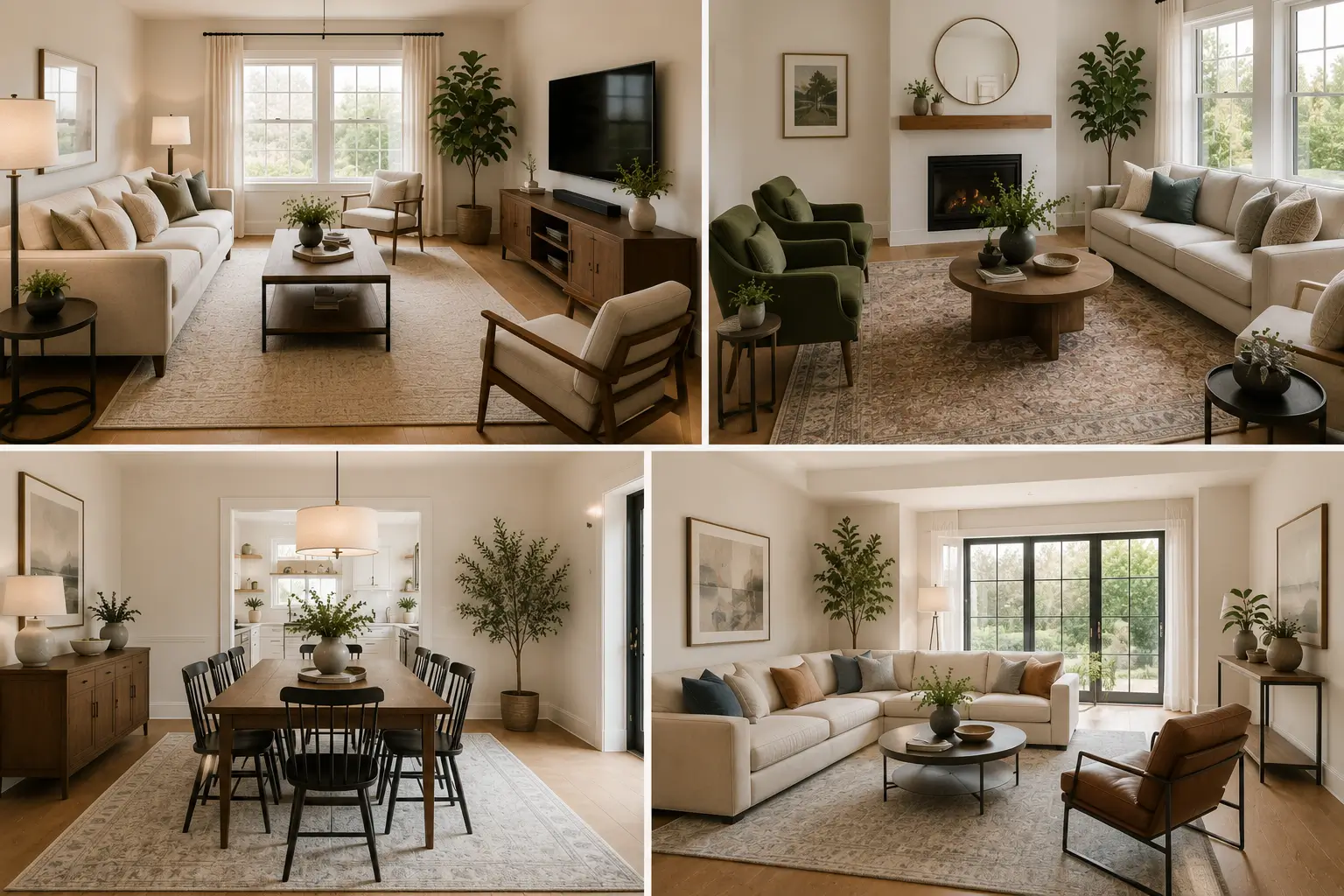
A beautiful rug in the wrong size still makes a room look unfinished. The goal is for the rug to visually anchor the furniture around it, tying the seating area or bed together as one grouping instead of separate floating pieces.
The most common mistake is buying a rug sized for an empty room instead of the furniture that will sit on it. Always measure your furniture layout first, then shop for the rug — not the other way around. It also helps to use painter’s tape to outline the rug’s footprint on the floor before buying, so you can see exactly how it will interact with existing furniture placement.
This matters most in open-concept homes, where a rug also has to do the job of visually separating one zone from another. In that setting, an undersized rug doesn’t just look small, it fails to define the space it’s supposed to anchor, leaving the seating area feeling disconnected from the rest of the room.
Living Room Rug Sizing
| Sofa Size | Recommended Rug Size | Placement Rule |
|---|---|---|
| Small (under 78″) | 5′ x 8′ | Front legs of sofa and chairs on rug |
| Medium (78″–90″) | 8′ x 10′ | All furniture legs on rug |
| Large (90″+) or Sectional | 9′ x 12′ or larger | All furniture legs on rug |
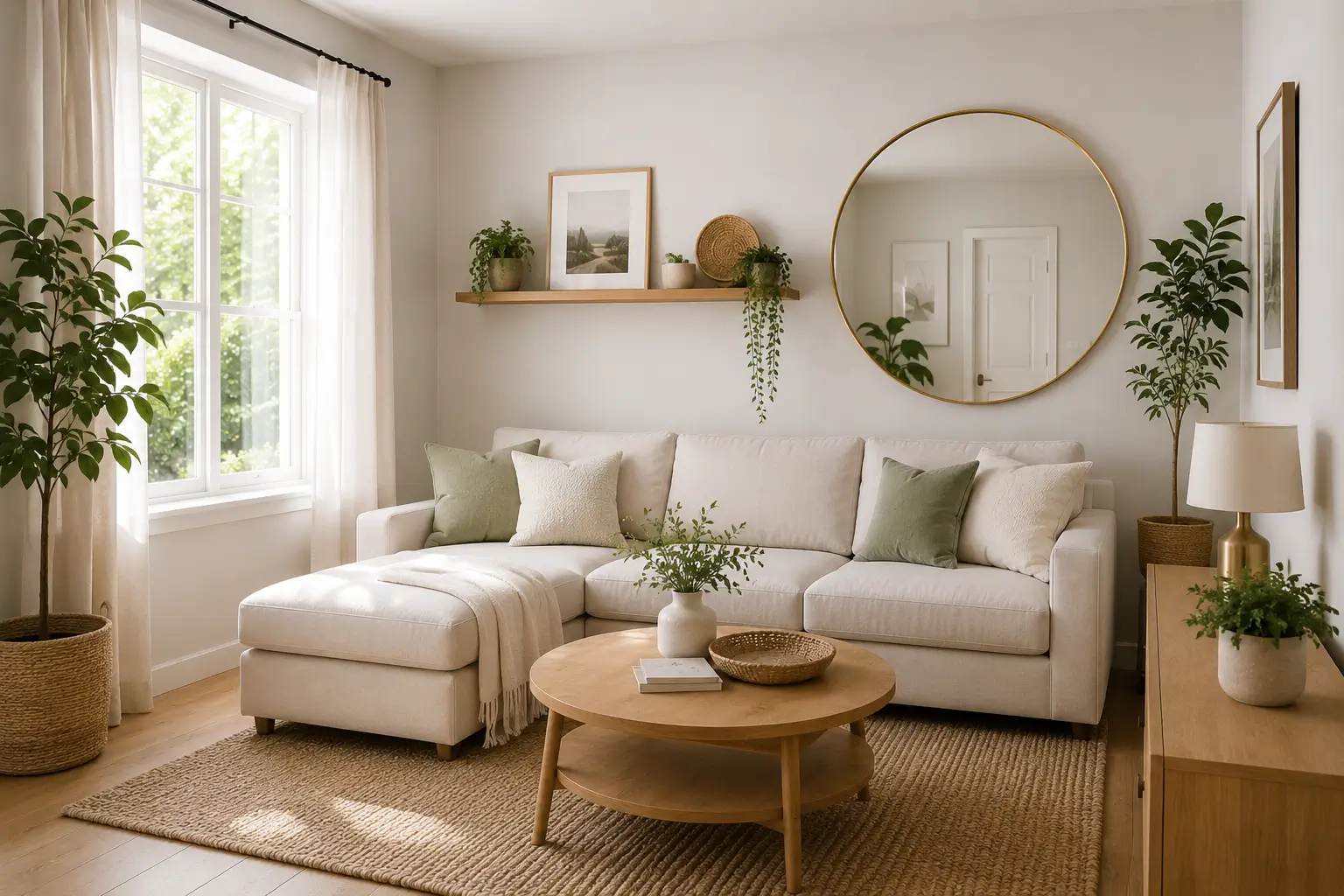
A safe rule for most living rooms: leave 12 to 18 inches of bare floor between the rug’s edge and the wall. This keeps the room feeling intentional instead of like the rug was an afterthought, and it applies whether the room is rectangular, square, or an open-concept layout.
Tip: If your living room is long and narrow, choose a rug that’s slightly rectangular rather than square. A square rug in a rectangular room can make the space feel oddly boxed in, breaking up the natural flow of the walls.
Bedroom Rug Sizing
| Bed Size | Recommended Rug Size | Placement Rule |
|---|---|---|
| Twin | 5′ x 7′ | Rug extends past the sides and foot of the bed |
| Full/Queen | 8′ x 10′ | Rug extends at least 24″ past each side |
| King | 9′ x 12′ | Rug extends at least 24″ past each side |
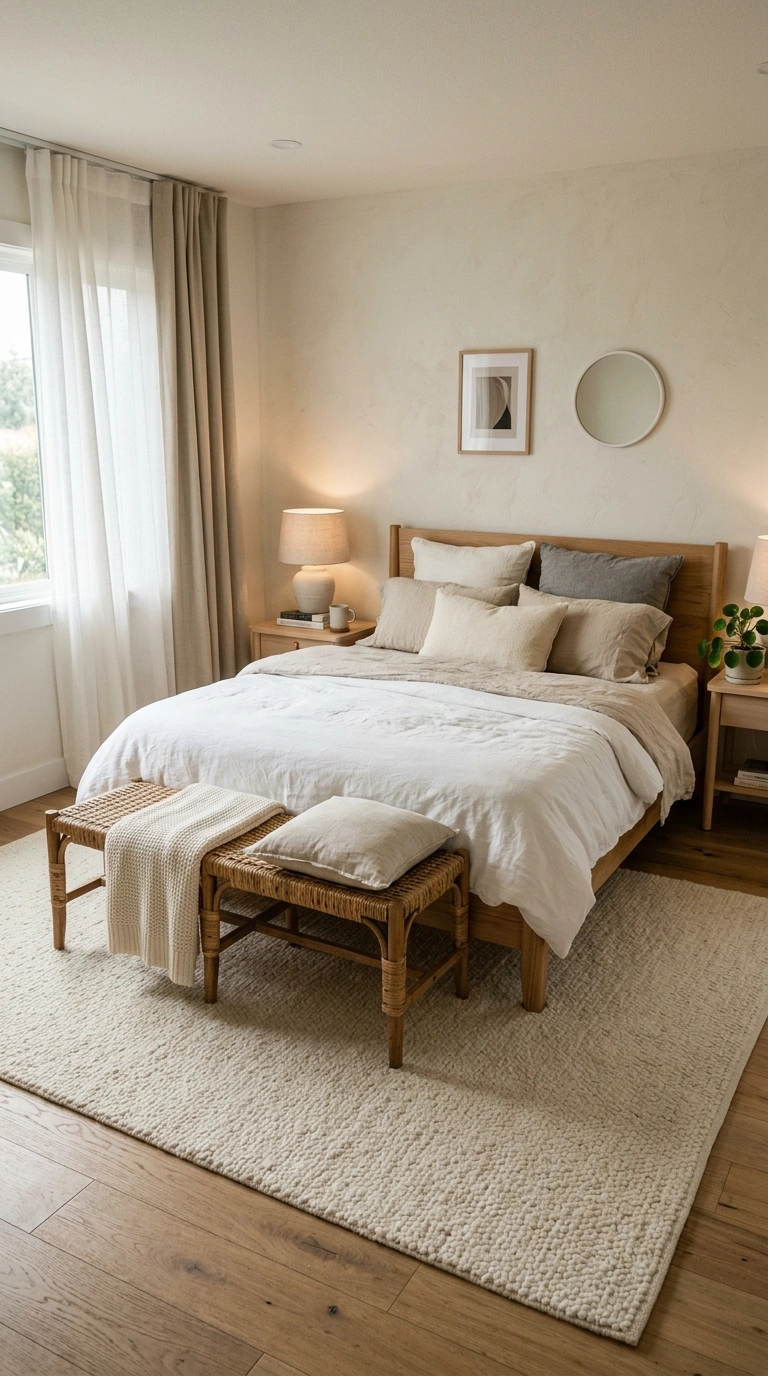
For bedrooms, the goal is for your feet to land on the rug when you get out of bed, on both sides. A rug that only peeks out from under the bed frame usually reads as too small once the bed and nightstands are in place, since the eye naturally expects the rug to extend well beyond the mattress edges.
Tip: If a full-size rug feels like too much, use two smaller runners on each side of the bed instead of one large rug underneath. This works especially well in smaller bedrooms and is often more budget-friendly than a single oversized rug.
Dining Room Rug Sizing
| Table Size | Recommended Rug Size | Placement Rule |
|---|---|---|
| Small (4-seat) | 6′ x 9′ | Chairs stay on rug even when pulled out |
| Medium (6-seat) | 8′ x 10′ | Chairs stay on rug even when pulled out |
| Large (8-seat) | 9′ x 12′ | Chairs stay on rug even when pulled out |
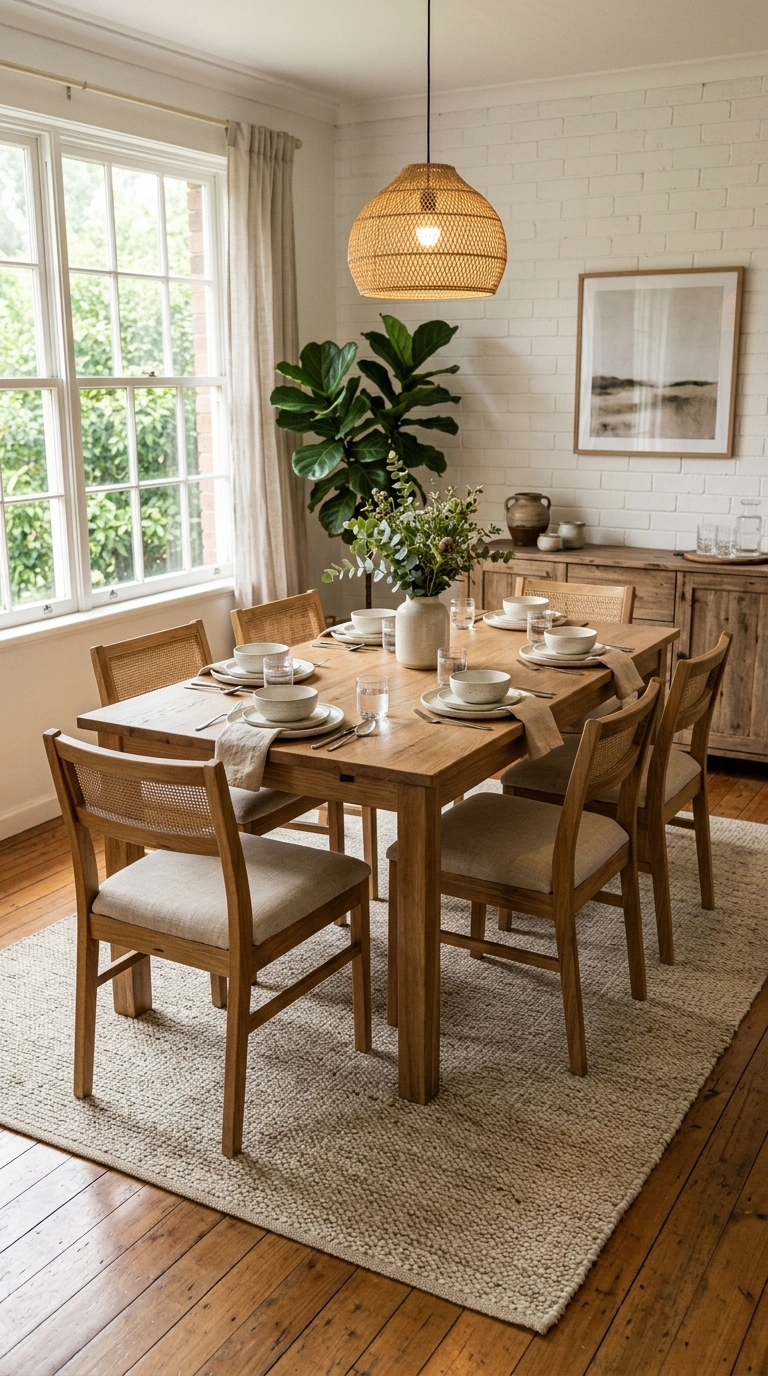
The most important rule for dining rooms: add at least 24 inches of rug beyond the edge of the table on all sides. This keeps chair legs from catching the rug edge when guests pull out their seats, which is one of the most frustrating outcomes of an undersized dining rug.
Choosing the Right Rug Shape
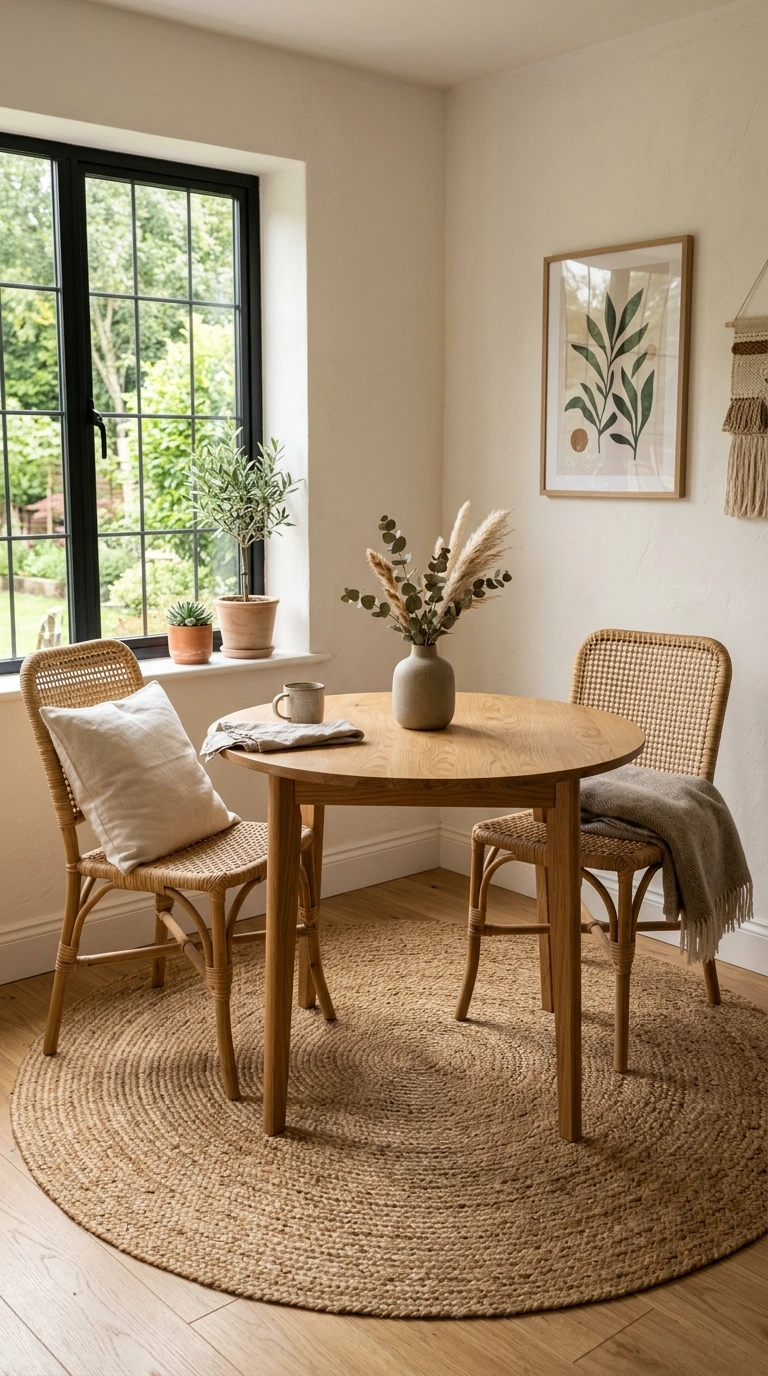
Shape matters as much as size, and matching the rug shape to the furniture arrangement makes the whole grouping feel more cohesive. A rectangular rug generally suits a rectangular seating arrangement or a standard dining table best, since the edges line up naturally with the furniture around it.
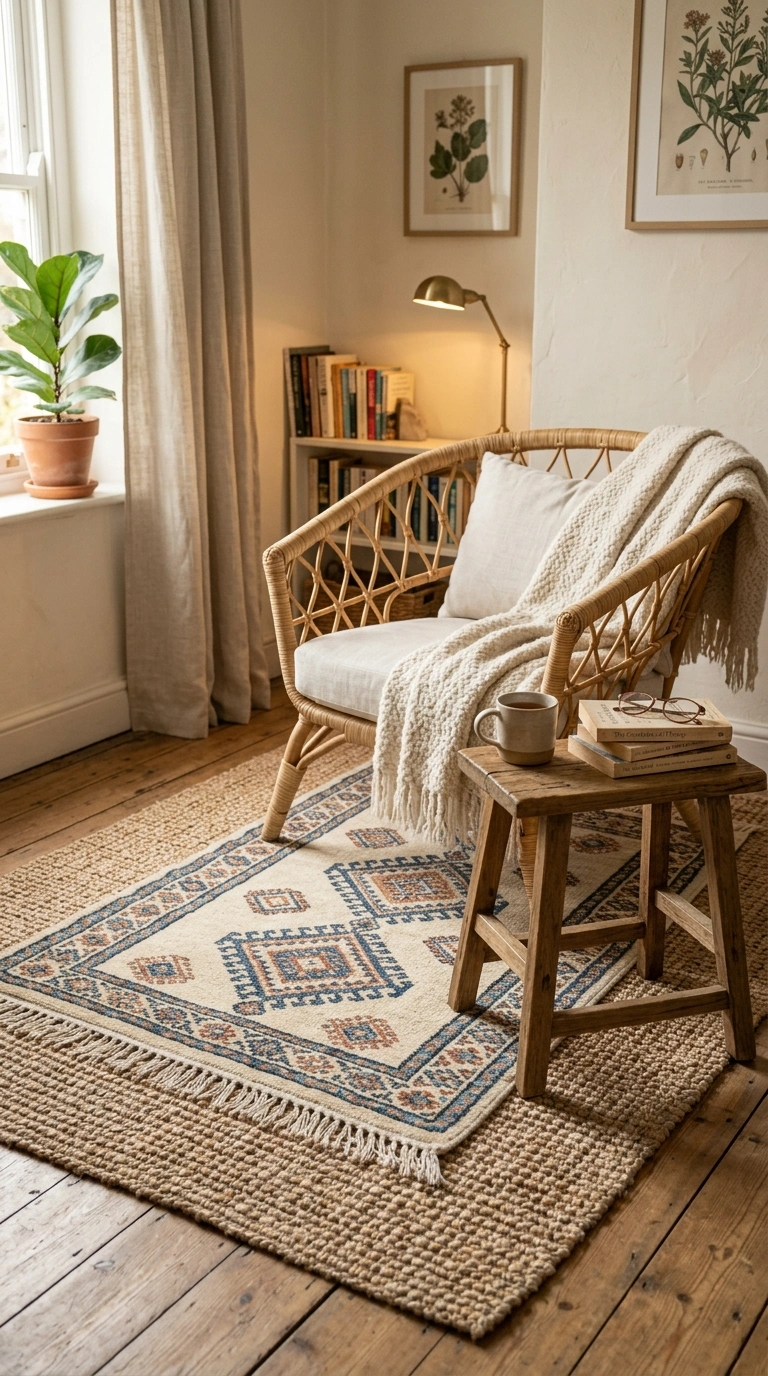
Round rugs work well under round dining tables or in a reading nook with a single chair and small side table, where a rectangular shape would leave awkward, uneven gaps at the corners. Oval rugs soften a room with a lot of straight lines and hard furniture edges, and can be a good option for a bedroom with a rounded headboard or a living room with a mix of curved and straight furniture.
| Furniture Shape | Best Rug Shape |
|---|---|
| Rectangular sofa/sectional | Rectangular rug |
| Round dining table | Round rug |
| Mixed curved and straight furniture | Oval or round rug |
| Standard rectangular dining table | Rectangular rug |
Rug Material and Where It Works Best
Material affects both feel and durability, and different rooms call for different priorities. Wool rugs are durable, naturally stain-resistant, and soft underfoot, making them a strong choice for living rooms and bedrooms where comfort matters most.
Jute and sisal rugs bring in natural texture and work well in lower-moisture areas like entryways or under a dining table, though they can be rougher underfoot and aren’t ideal for bare feet in a bedroom. Synthetic performance rugs, often made from polypropylene blends, hold up well in high-moisture or high-traffic spots like mudrooms and outdoor-adjacent areas, since they resist staining and are easier to clean than natural fiber options.
- Wool: soft, durable, great for living rooms and bedrooms
- Jute/Sisal: textured, natural, best for entryways and low-moisture areas
- Synthetic/Performance: stain-resistant, ideal for high-traffic or outdoor-adjacent spaces
- Cotton flatweave: lightweight, affordable, works well layered over a larger rug
How to Layer Rugs
Layering two rugs adds texture and depth, especially in a room that feels flat with just one flooring surface. The most common approach is placing a smaller patterned or textured rug on top of a larger neutral jute or sisal rug.
Keep the bottom rug at least 12 inches larger on all sides than the top rug so the layering looks intentional rather than accidental. Stick to one bold layer — if both rugs have heavy pattern, the combination competes instead of working together.
- Jute or sisal base rug (neutral, textured)
- Smaller patterned or solid-color rug on top, centered or slightly offset
- Works especially well in entryways, living rooms, and reading nooks
Rug Pads: Why They’re Worth the Extra Cost
A rug pad is easy to skip when budgeting for a new rug, but it does more work than most people expect. Beyond keeping a rug from sliding on hardwood or tile, a good pad extends the rug’s lifespan significantly by reducing friction between the rug backing and the floor with every step.
Pads also add a layer of cushioning that makes a thinner rug feel more substantial underfoot, which matters especially in living rooms where people sit or lie directly on the rug. For rugs placed over hard flooring, choose a pad roughly one to two inches smaller than the rug on all sides so it stays hidden from view while still providing full support.
On carpeted floors, a thin grip pad is usually enough to prevent bunching and shifting, while rugs on hardwood or tile benefit from a slightly thicker felt-and-rubber combination pad for both grip and cushioning.
Common Rug Mistakes to Avoid
- Buying a rug based on the room size instead of the furniture layout
- Choosing a rug so small that only the front legs of furniture reach it in a large room
- Ignoring the 24-inch overhang rule for dining tables, which leads to chairs catching the edge
- Mixing two heavily patterned rugs when layering
- Skipping a rug pad, which shortens the rug’s lifespan and lets it slide on hard floors
- Choosing rug shape based only on looks without considering the furniture arrangement around it
Getting rug size right changes how finished a room feels almost instantly. Measure your furniture first, follow the sizing charts above, and don’t be afraid to size up if you’re stuck between two options — a slightly larger rug almost always looks more intentional than one that’s too small. Save this chart so you have it on hand next time you’re shopping, and bring the exact measurements with you so you’re not relying on memory once you’re standing in front of a wall of rolled-up rugs.
Key Takeaways:
- Measure your furniture layout before shopping for a rug, not the room size alone.
- In living rooms, aim for all furniture legs to sit on the rug whenever possible.
- Bedroom rugs should extend at least 24 inches past each side of the bed.
- Dining room rugs need 24 inches of clearance beyond the table so chairs don’t catch the edge.
- Match rug shape to furniture shape: rectangular for rectangular arrangements, round for round tables.
- Choose rug material based on the room’s traffic and moisture levels, not just appearance.
- Layered rugs work best with one textured neutral base and one smaller accent rug on top.
FAQs:
What size rug should I get for a small living room?
For a small sofa under 78 inches, a 5′ x 8′ rug usually works well, as long as the front legs of the sofa and chairs rest on it.
How far should a rug extend past a dining table?
At least 24 inches past the edge of the table on all sides, so chairs can be pulled out without catching the rug’s edge.
Can a rug be too big for a room?
It’s rare, but leave at least 12 to 18 inches of bare floor between the rug and the walls so the room still feels balanced.
What’s the best rug material for a high-traffic room?
Wool or a synthetic performance blend both hold up well in high-traffic areas, resisting stains and wear better than delicate natural fibers like jute.
How do I layer two rugs without it looking messy?
Use a larger neutral, textured rug as the base and a smaller patterned or solid rug on top, keeping at least 12 inches of the base rug visible on all sides.